Alternative Roofing Materials: A Guide for Historic Structures
←
→
Page content transcription
If your browser does not render page correctly, please read the page content below
Alternative Roofing
U.S. Department
of Agriculture

                               Materials: A Guide for
Forest Service

National Technology &

                               Historic Structures
Development Program

2300—Recreation Management
0723 1812—SDTDC
September 2007

     EST SERVICE
  FOR
                        UR E
DE P

 A RT
        MENT OF AGRIC U L T
Alternative Roofing
Materials: A Guide for
Historic Structure

Martha (Marty) Willbee—Recreation Planner

U.S. Forest Service
San Dimas Technology & Development Center
San Dimas, CA 91773-3198

September 2007
Information contained in this document has been developed for the guidance of employees of
the U.S. Department of Agriculture (USDA) Forest Service, its contractors, and cooperating
Federal and State agencies. The USDA Forest Service assumes no responsibility for the
interpretation or use of this information by other than its own employees. The use of trade,
firm, or corporation names is for the information and convenience of the reader. Such use
does not constitute an official evaluation, conclusion, recommendation, endorsement, or
approval of any product or service to the exclusion of others that may be suitable.

The U.S. Department of Agriculture (USDA) prohibits discrimination in all its programs and
activities on the basis of race, color, national origin, age, disability, and where applicable,
sex, marital status, familial status, parental status, religion, sexual orientation, genetic
information, political beliefs, reprisal, or because all or part of an individual’s income is
derived from any public assistance program. (Not all prohibited bases apply to all programs.)
Persons with disabilities who require alternative means for communication of program
information (Braille, large print, audiotape, etc.) should contact USDA’s TARGET Center at
(202) 720-2600 (voice and TDD). To file a complaint of discrimination, write USDA, Director,
Office of Civil Rights, 1400 Independence Avenue, S.W., Washington, D.C. 20250-9410, or
call (800) 795-3272 (voice) or (202) 720-6382 (TDD). USDA is an equal opportunity provider
and employer.
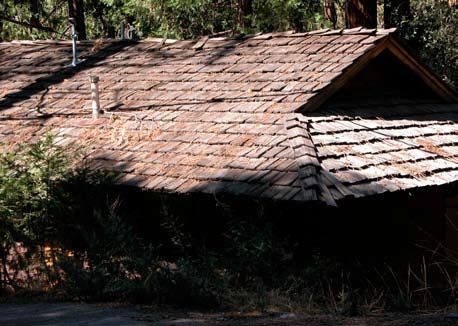
TABLE OF CONTENTS

Introduction................................................................................................. 1

Background and General Guidelines for Appropriate Substitutes.............. 1

Historic Wood Shingles.............................................................................. 3

Modern Wood Shakes and Shingles.......................................................... 3

Alternatives to Wood Shakes and Shingles................................................ 6

           Composition shingles..................................................................... 6

           Engineered molded shingles.......................................................... 8

           Metal shingles................................................................................ 8

           Concrete tile shingles................................................................... 12

           Clay and stone............................................................................. 14

Appendix

           Fire classes.................................................................................. 19

           Impact-resistant classes............................................................... 19

           Useful Web sites.......................................................................... 19

                                                                                                                  v
INTRODUCTION              The task of replacing roofs on historic Forest Service, U.S.
                          Department of Agriculture, structures presents forest heritage
                          and facilities employees with the challenge of identifying possible
                          alternative materials that are historically appropriate, cost effective,
                          easy to install, and functional in wildland fire environments. Forest
                          heritage and facilities professionals are spending increasing
                          amounts of time trying to identify alternative roofing materials for
                          cedar shakes and shingles.

                          The objective of this guide is to identify alternative roofing materials
                          to cedar shakes and shingles that are available in today’s market.
                          The guide discusses the characteristics and qualities of cedar
                          shakes and shingles and identifies look-alike cedar roofing material
                          alternatives that are available. A table compares various roofing
                          materials for cost, fire resistance, weight, and other qualities
                          important when selecting an alternative material. The guide also
                          provides a list of manufacturers who make alternative materials for
                          cedar shakes and shingles and their Web sites and Web links to
                          historic information and preservation requirements, treatments, and
                          other related information. This guide is written for Forest Service
                          engineers, and heritage and facilities staffs involved in reroofing
                          historic structures.

BACKGROUND AND GENERAL
GUIDELINES FOR
APPROPRIATE SUBSTITUTES   For a Forest Service reroofing project, first determine whether
                          the building is a significant historic structure. If the structure is
                          not significant, any suitable material may be used. Refer to the
                          Forest Service’s Built Environment Image Guide for ideas about
                          appropriate roofing materials based on looks and longevity.

                          If the structure is significant (listed or eligible for listing on the
                          National Register), the Forest Service is required to consult with the
                          State Historic Preservation Office (SHPO) under Section 106 of the
                          National Historic Preservation Act. Contact SHPO through the forest
                          or district archeologist or architectural historian whenever making
                          changes to significant historic buildings. The Forest Service INFRA
                          database should show the historic status of buildings, but check
                          with the archeologist to make sure. Also, there may be structural
                          issues with new roofing materials, so check with the facilities
                          engineer.

                                                                                                  1
One reason for consultation is to determine whether there will be
    an adverse effect on the historic building. If so, work with SHPO to
    mitigate that adverse effect. This is a legal and sometimes lengthy
    process that culminates in a Memorandum of Agreement (MOA).
    One way to avoid an adverse effect and save time and money
    on developing an MOA is to follow the Secretary of the Interior’s
    Standards and Guidelines for Treatment of Historic Properties, as
    the Forest Service Handbook 7309.11, Chapter 40–Management. In
    addition, the Department of the Interior, National Park Service, has
    published a number of technical guides for maintaining, stabilizing,
    rehabilitating, and restoring various materials, finishes, and
    architectural components.

    The link to the Secretary of the Interior’s Standard and Guidelines
    for Treatment of Historic Properties is http://www.cr.nps.gov/hps/tps/
    standards_guidelines.htm.

    The National Park Service’s Technical Preservation Services’
    Preservation Brief Number 16 states that “Some preservationists
    advocate that substitute materials should be avoided in all but the
    most limited cases. The fact is, however, that substitute materials
    are being used more frequently than ever in preservation projects,
    and in many cases with positive results. They can be cost effective,
    can permit the accurate visual duplication of historic materials, and
    can last a reasonable time. Growing evidence indicates that with
    proper planning, careful specifications and supervision, substitute
    materials can be used successfully in the process of restoring the
    visual appearance of historic resources.” For more information, go
    to: http://www.cr.nps.gov/hps/tps/briefs/brief16.htm.

    Losing the character and patina of an old roof is always regrettable,
    but there are circumstances when a new alternative roof becomes
    necessary. Regarding replacement materials in general, the
    National Park Service stresses that they “be compatible with
    historic materials in appearance.” As outlined in Preservation Brief
    Number 16, The Use of Substitute Materials on Historic Building
    Exteriors, the new, substitute material “should match the details
    and craftsmanship of the original, as well as the color, surface
    texture, surface reflectivity and finish of the original material. The
    closer an element is to the viewer, the more closely the material and
    craftsmanship must match the original.” See http://www.cr.nps.gov/
    hps/tps/briefs/brief16.htm.

2
Because there is so much useful information on the Web sites
                         listed in the appendix regarding historic information, historic
                         preservation requirements, traditional building materials,
                         contractors, treatments, and other information, this guide will not
                         repeat this information. This information is covered very well by
                         the National Park Service, Heritage Preservation Services, in their
                         preservation briefs. See http://www.cr.nps.gov/hps. For detailed
                         information on the repair and replacement of historic wooden
                         shingle roofs, see http://www.cr.nps.gov/hps/tps/briefs/brief19.htm.

HISTORIC WOOD SHINGLES   For the past 100 years wood shakes and wood shingles have been
                         used for roofing Forest Service structures. The two most commonly
                         used woods are Alaska yellow cedar and western red cedar
                         wood. Other wood alternatives to cedar wood shakes or shingles
                         are white oak and sugar pine. White oak is primarily found in the
                         East; it is amazingly durable and has been know to last 75 to 100
                         years. Decay-resistant sugar pine is primarily found in the West,
                         particularly in California.

                         The differences between historic shingles and modern shakes
                         and shingles are discussed in Preservation Brief Number 19,
                         see: http://www.cr.nps.gov/hps/tps/briefs/brief19.htm. This brief
                         also discusses the differences in historic and modern installation
                         methods and structural requirements. While this guide is only about
                         available alternative materials, architects and engineers can assist
                         with identifying appropriate methods for historic buildings.

MODERN WOOD SHAKES
AND SHINGLES             Wood roofs are a traditional, beautiful, and rustic look that is
                         appropriate in a woodland setting. Nothing compares to the beauty,
                         earthy colors and texture, flexibility in design, and insulating
                         properties of a natural cedar shake roof (figures 1and 2).

                         Figure 1—Cedar shake roof.

                                                                                           3

    Figure 2—Cedar shake roof.

    The difference between a shake and a shingle is that generally a
    shingle is sawn on both sides from a block of cedar and is thinner at
    the butt than a shake. Cedar shingles are sawn on both faces and
    have a smooth face.

    A shake is typically split on one or both sides, which gives a rustic
    appearance. Hand-split and resawn cedar shakes have a split face,
    which allows the natural grain to be exposed to the elements. They
    are thicker than shingles. The exception is the taper-sawn shake,
    which looks like a thick shingle. Taper-sawn shakes are sawn as
    well but are thicker than shingles and are applied like shakes.
    Another difference is the amount of exposure. An 18-inch shingle is
    applied with a 5 ½-inch exposure to the weather, while an 18-inch
    shake is applied at 7 ½-inch exposure to the weather. Shingles
    applied at 5 ½ inches become a 3-ply roof, which means that there
    are three layers of shingles at any location on the roof. Shakes are
    2 ply. Shakes are layered with felt between each layer, thus having
    two layers of felt at any location. No felt is required between each
    layer of the shingle application.

    Cedar shakes and shingles are hail and wind resistant. Cedar
    shakes and shingles contain oils that make them naturally
    decay resistant. Also, wood roofing is a renewable resource. It
    is biodegradable, pollution minimizing, energy conserving, and
    100-percent recyclable.

4
Wood roofing presents fire resistance problems, especially when
the wood is not treated. The Forest Service requires that roofs be
fire resistant. Therefore, this guide does not discuss nontreated
wood roofing materials. Fire-resistant treated shingles are not
available in colors and painting or staining voids the warranty.

The Cedar Shake and Shingle Bureau (http://www.cedarbureau.
org) is an association of member mills, distributors, treatment
companies, installers, and maintenance technicians. It is the
industry “watch-dog” of cedar wood products. The Cedar Shake and
Shingle Bureau recommends looking for the Certi-Label™ when
selecting cedar shakes and shingles. This label is one way the
consumer is assured of the highest possible ratings of cedar wood
products.

Treated cedar shakes and shingles are available in two forms,
pressure impregnated, fire-retardant treated wood and pressure
treated wood with chromated copper arsenate preservative.
Permanent fire protection is provided by pressure impregnating
fire-retardant polymers into the innermost cells of cedar shakes and
shingles. Select the Certi-Guard™ permanent label if fire-retardant
is needed where the threat of fire exists. This treatment results in a
Class A rating for fire resistance (figure 3).

Figure 3—Fire-retardant treated wood shingles.

Chromated copper arsenate (CCA) preservative protects wood
against fungal decay associated with high heat and humidity
conditions. Select the Certi-Last™ CCA label if preservative-

                                                                   5
treatment is needed. Certi-Last™, treated for decay, mold, moss,
algae, mildew, and fungus, is recommended for high humidity
areas.
See http://www.cedarbureau.org for information on how the wood
is treated for both fire and rot resistance. See the appendix for
definition and further discussion on fire resistance classes.
Maintenance is important for any type of roof. A cedar shake
roof should last 25 to 30 years or more when properly selected,
installed, and maintained. It is more cost effective to maintain a
roof properly at regular intervals than to replace it. To prolong the
roof’s life, it should be checked periodically for signs of wear and
maintenance should be performed to clean loose debris from roofs
and gutters.
For further information on caring for wood shakes and shingles, see
the following links:
1. Care and Maintenance of Wood Shingle and Shake Roofs:
http://extension.oregonstate.edu/catalog/pdf/ec/ec1271.pdf
2. Wood Shakes and Shingles for Roof Applications – Tips
for Longer Life: http://www.fpl.fs.fed.usdocumnts/finlines/
knaeb98d.pdf
ALTERNATIVES TO WOOD
SHAKES AND SHINGLES There is a wide range of alternative materials available, such as
treated cedar shakes and shingles, composition, metals (aluminum,
steel, and copper), stone and slate, and concrete and clay tiles.
The potential for fire damage to wood roofs and the desire for more
durability and longevity highlights the need for cedar shake and
shingle alternatives discussed below. Each one has its advantages
and disadvantages. In the case of a significant historic structure, the
substitute material must be acceptable to SHPO. The final decision
also should consider the use, location, and historical aspects of
the building, as well as cost, maintenance, and longevity for that
particular building.
Composition Shingles The dictionary defines composition shingles as a type of shingle
used in steep-slope roofing and generally comprised of weathering-
grade asphalt, a fiberglass reinforcing mat, an adhesive strip, and
mineral granules. It also can be defined as a complex material,
such as wood or fiberglass, in which two or more distinct,
structurally complementary substances, especially metals,
6ceramics, glasses, and polymers, combine to produce structural or
functional properties not present in any individual component.
Examples of composite materials are asphalt shingles (figures 4
and 5) made from laminated fiberglass that mimic wood shakes.
These look similar to the real thing, but generally only from a
distance. Some are rated Class A fire resistant, wind resistant, and
have up to a 50-year limited lifetime warranty. There also is a super
heavyweight-plus product for ultimate durability. Many companies
make asphalt shingles.
Figure 4—Asphalt shingles.
Figure 5—Asphalt shingles.
7Engineered Molded Shingles Made of engineered rubber, plastic, polymer, asphalt, or resin,
engineered molded synthetic shingles are usually blended with
a fire retardant and ultraviolet stabilizers to ensure long life and
durability. Some synthetic shingles are composed of recycled
materials such as tires, milk bottles, and fiberglass. Some include
ground wood or stone and some are 100-percent resin (figures 6
and 7). Molded synthetic shingles are usually fire resistant, durable,
and can last up to 50 years. There are many colors available. The
molded synthetic material usually will not fade and turn gray with
use as will natural wood material. The properties of engineered
molded shingles vary widely. Check the manufacturer’s literature to
be sure the product will work for your application.
Figure 6—Rubber tiles—EcoStar.
Figure 7—Synthetic molded tiles—DaVinci.
Metal Shingles Metal roofing has long been used on forest buildings. Now metals
also are made to mimic cedar shakes and shingles (figure 8).
Metal is rot-proof, lightweight, fire resistant, fairly easy to install,
excellent for steep-pitched roofs in heavy snow areas, and available
in many colors. Metal roofing can be applied as shingles. Most
metal roofing is approved for Class A, B, and C fire ratings and is
recognized widely for its resistance to airborne sparks and burning
8debris. Metal conducts electricity; consequently, if in a lightening-
prone area, the roof should be grounded by a lightening-protection
specialist. Insulation in the roof and solid decking reduces noise
transmission from rain.
Figure 8—Metal shingle—Classic Products.
Figure 9—Metal shingle with coating—Gerard Roofing Technologies.
Types of metal roofing are steel (available plain or with factory
applied paint or baked on colored finishes), galvanized (coated with
rust-resistant zinc), Galvalume® (steel coated with aluminum and
zinc), stainless steel, aluminum, copper, and zinc alloys (figure 9).
The metal can be installed as standing-seam sheets (figures 10
and 11) or made as shingles (figure 9) or shakes to resemble wood
shakes, clay tiles, or shingles. Standing seam is the oldest style of
metal roofing on traditional and restored buildings.
Metal roofs are durable, offering a high-strength to low-weight ratio.
These roofing systems are almost maintenance-free, need no
cleaning or pressure washing, and will not lose impact resistance
with age. Metal roofs are lightweight and can be installed over many
existing roofs. (http://www.tradtional-building.com.) They are energy
9efficient, and are made from 60- to 65-percent recyclable material.
They can withstand winds over 110 miles per hour. If installed
properly, the expected life of metal ranges from 50 to 100 years.
Galvanized steel is coated with rust-resistant zinc. It is the least
expensive metal roof. It is affordable, has excellent structural
capabilities, and is warranted against corrosion for up to 20
years. The recycled content of galvanized steel is approximately
35 percent. Because of its strength, it is a good option for hail-
prone areas, although unusually large hail may dent the roofing or
damage colored finishes. “The Metal Roofing Alliance recommends
the use of only G-90 for roofing applications.” G-90 is the weight
of zinc on steel (90 ounces per square foot), not the weight of the
overall metal thickness (http://www.traditional-building.com).
“Galvalume® steel combines metallic coatings of both aluminum
and zinc. This combination joins the healing properties of zinc
with the superior barrier protection of aluminum” and “offers
superior weathering properties”(http://www.traditional-building.
com). However, since Galvalume® steel isn’t able to self-protect
any scratches or cracks as well as galvanized steel does, it is
best used for simple profiles such as standing seam because
there is not as much bending in the metal. Recycled content is
approximately 35 percent (http://www.classicroof.com).
Aluminum roofing is produced in standing-seam (figures 10 and
11), shake, shingle, tile, and slate-look forms. It is lightweight,
durable, and corrosion resistant. It does not require structural
reinforcement, and will not split, rot, curl, dry out, lift, or invite
insects, mildew, moss, or fungus. Generally, it is wind and
wind-driven-rain proof at speeds up to 110 miles per hour.
Most aluminum roofing is prepainted. The recycled content is
approximately 95 percent (mostly post-consumer), and it is very
light—as low as 45 pounds per square foot. When aluminum
is heavily formed, it adds to its structural strength. A formed
aluminum, such as an aluminum shingle, is more hail resistant than
a less-formed aluminum, such as standing-seam.
Terne steel is a zinc-tin alloy coating over base carbon steel. Terne
II is often selected for historical retrofit projects because of its dull
gray color, which patinates into a weathered gray. It is durable
and corrosion resistant. It will last for centuries and costs about as
much as copper (http://www.classicroof.com).
10TCS II, Terne Coated Stainless, is stainless steel coated with
the zinc-tin alloy. It looks very similar to Terne’s dull gray color,
although it is more durable and costly because stainless steel is
considered an exotic metal (http://www.classicroof.com).
Figure 10—Standing-seam roof.
Figure 11—Standing-seam roof.
11Figure 12—Copper and aluminum tiles–Zappone.
Zinc—very soft and malleable—starts out as dull gray and patinates
into an attractive charcoal color. It commonly is used in standing-
seam applications, but also comes in preformed shingles. It is very
expensive, and although it’s been used for hundreds of years in
Europe, it’s relatively new in the United States.
Copper, while beautiful and durable, is used rarely due to its high
cost. It is still measured by the ounce because it is considered a
precious metal. The cost per 100 square feet is about $1,000 or
more. A green patina or crust of copper sulfate or copper chloride is
formed on copper after exposure to the elements over a period of
time. The patina acts as a barrier against corrosive elements and is
part of the reason for copper’s extremely long life. Copper can last
100 to 200 years or longer (figure 13).
Figure 13—Copper roof on Chilao Visitor Center, Angeles National Forest.
Concrete Tile Shingles A roof is always exposed to the elements, and concrete is among
the most durable products available. Concrete roof tile does not
degenerate or wear out and gets harder with age. It is made
of Portland cement, sand, water, with oxide for color. Concrete
12tiles— regular and lightweight—are used for roofs. The tiles can
be shaped as shakes and shingles (figure 14). Most products
have Class A fire ratings, are easily installed, and last for decades.
Breakage is a concern with concrete tiles (figures 15 and 16). Only
periodic maintenance is required for metal flashings and ventilation
systems. It has a 50-year product warranty. See http://www.westile.
com/homeowner.asp?img=1&cat=own.
Figure 14—Concrete tile roof.
Figure 15—Concrete tiles.
13Figure 16—Concrete tiles.
Clay and Stone Clay tiles are one of the most distinctive and decorative historic
roofing materials because of their great variety of shapes, colors,
profiles, patterns, and textures. Traditionally, clay tiles were formed
by hand, and later by machine extrusion of natural clay, textured or
glazed with color, and fired in high-temperature kilns. The unique
visual qualities of a clay tile roof often make it a prominent feature in
defining the overall character of a historic building. The significance
and inherently fragile nature of historic tile roofs dictate that special
care and precaution be taken to preserve and repair them. Clay
tile has one of the longest life expectancies among historic roofing
materials—generally about 100 years and often several hundred
(figure 17).
Figure 17—Clay tiles, Gladding McBean & Co.
14Slate is one of the finest roofing materials available. It is fireproof,
resists hail damage, possesses unquestionable beauty, and often
has a service life of 100 years or more (figure 18).
Figure 18—Slate tiles, Tru-Slate.
Installation techniques are fairly standard for most alternative
roofing materials. Some materials may require specialized
knowledge by an installer. This is a consideration when selecting
material. Most manufacturers’ Web sites provide detailed
information on installation procedures.
NOTE: The prices listed in the following table are estimates only.
Actual pricing is dependent on specific material, shipping costs, and
manufacturer. These alternative selections, while not exhaustive,
are based on the manufacturers’ claim that the product looked
similar to wood shakes or shingles.
15Table 1. Roofing materials and specifications
16
Roofing Fire Wind Impact Freeze- Low Special Recyclable Durability Fade Price Weight
Material Resistant Resistant Resistant Thaw Maintenance Skills (years) Resistant ($) (pound
(mph) Resistant Required Per per
for Square square
Installation 1 square
= 100 ft²)
Cedar
Treated Class A 245 Class 3- 4 Yes Yes No Yes 25 to 30 Weathers 170 to 260 to
Shakes to a silver- 200 450
gray
Treated Class A 173 Class 3- 4 Yes Yes No Yes 25 to 30 Weathers 170 to 260 to
Shingles to a silver- 200 450
gray
Metal
Aluminum
Zappone Class A,B,C 110 Yes Yes Yes No Yes 50 to 100 Yes 196 42
Shingles
Classic Non- 120 Class 4 Yes Yes No Yes Lifetime Yes 250 to 50
Metal combustible 400
Coated Steel
Gerard Stone Class A 120 Class 4 Yes Yes No Yes Lifetime Yes 140
Copper
Zappone Class A 110 Yes Yes Yes No Yes 100 to Patinates 1,120 124
Shingles 200
Composition
DaVinci Class A 80 to 90 Class 4 Yes Yes No Yes 50 Yes 370 to 304 to
100% pure 420 342
resin
Enviroshake® Class C 87 Class 3 Yes Yes No Yes 50 Lightens 330 to 325
to a 350
silver/
greyTable 1. Roofing materials and specifications (continued)
Roofing Fire Wind Impact Freeze- Low Special Recyclable Durability Fade Price Weight
Material Resistant Resistant Resistant Thaw Maintenance Skills (years) Resistant ($) (pound
(mph) Resistant Required Per per
for Square square
Installation 1 square
= 100 ft²)
Asphalt
CertainTeed Class A 110 Not rated Yes Yes No Fiberglass 50 Yes 140 480
Presidential yet composition
Shake TL
CertainTeed Class A 110 Not rated Yes Yes No Fiberglass 50 Yes 100 355
Presidential yet composition
Shake
CertainTeed Class A 110 Not rated Yes Yes No Fiberglass Lifetime Yes 130 355
Centennial yet composition
Slate
CertainTeed Class A 110 Class 4 Yes Yes No Fiberglass Lifetime Yes 85 to 340
Landmark composition 90
TL IR
CertainTeed Class A 110 Class 4 Yes Yes No Fiberglass 40 Yes 75 260
Landmark composition
Special IR
Clay
Ludowici Class A 150 Class 2 Yes Yes No Clay tile 75 Yes 300 to 900 to
800 1,200
Gladding, Non- Not rated Yes Yes Yes No Clay tile 75 Yes 350 to 1,120
McBean combustible 375
Stone
TruSlate Non- 100 hail Yes with Yes Special Yes Lifetime Yes 275 650 to
(nautral) combustible resistant special system 75 years 750
under- for inter-
layment layment
17Table 1. Roofing materials and specifications (continued)
18
Roofing Fire Wind Impact Freeze- Low Special Recyclable Durability Fade Price Weight
Material Resistant Resistant Resistant Thaw Maintenance Skills (years) Resistant ($) (pound
(mph) Resistant Required Per per
for Square square
Installation = 100 ft²) 1 square
Polymerica
EcoStar Class A 70 to Class 4 No Yes No Yes 50 Minimal 544 to 220 to
Majestic Slate 120 issue 752 290
TPO and EPDM
synthetic rubber
EcoStar Class A 70 to 120 Class 4 Yes Yes No Polymer- 50 Minimal 562 to 220 to
Seneca Cedar w/Gold rubber and 712 251
Shake Tiles Star recycled
Warranty industrial
plastic
EverShake Class A Class 3 Yes Yes No Polymer 40 Minimal 300
Re-New Wood Class A 70 to Class 4 Yes Yes No Recycled 40 to No 240 244
Eco-Shake 110 PVC and 50
wood fiber
Crowe Class A, 110 Class 4 Yes Yes No Yes 40 to Yes 300 223 to
Building B, or C Recycled 50 260
Products plastic and
Authentic rubber and
2000 (Slate TPO
look-alike)
Concrete
Westile Class A 85 to Class 4 Yes Yes No Yes 50 Yes 55 to 6 to
100 100 10
Eagle Roofing Class A 80 to 110 Not rated Yes Yes No Concrete Lifetime Lightens 300 to 720 to
Products yet slightly 400 1,000APPENDIX
FIRE CLASSES Fire resistant classes, A, B, and C measure roof assemblies’
relative resistances to external fire exposures. See http://www.
professionalroofing.net/past/nov99/qa.asp.
Class A uses a class B fire retardant product plus an Underwriters
Laboratories (UL)-rated fire retardant fiberglass cap sheet underlay.
It is not readily flammable, has a high degree of protection, does not
slip, and does not have a flying-brand hazard.
Class B provides a moderate degree of protection, is not readily
flammable, does not slip from position, and poses no flying-brand
hazard.
Class C provides light fire exposure protection, is not readily
flammable, and there is a measurable degree of fire protection.
IMPACT-RESISTANT
CLASSES UL 2218 classifies the resistance of roofing products to impact
damage. In the test, steel balls are directed at roof samples, and
damage is observed. Products that receive a Class 4 rating from UL
2218 are the most resistive to hail damage.
Several standards set by the American Society for Testing and
Materials (ASTM International) and Underwriters Laboratories (UL)
test impact and wind resistance including: ASTM D 3161: Standard
Test Method for Wind-Resistance of Asphalt Shingles; UL 997: Wind
Resistance of Prepared Roof Covering Materials (for wind ranging
from 55 to 63 miles per hour); and UL 2218: Impact Resistance of
Prepared Roof Covering Materials. See http://www.toolbase.org/
Technology-Inventory/Roofs/wind-resistant-asphalt-shingles.
USEFUL WEB SITES The following Web sites provide historical information:
http://fs.web.mtdc.wo.fs.fed.us/toolbox/his/his02.htm
http://www.cedarbureau.org
http://www.cr.nps.gov/hps/tps/recentpast/
http://www.cr.nps.gov/hps/tps/standguide/
http://www.oldhousejournal.com
http://www.oldhouses.com
http://www.recentpast.org
http://www.traditional-building.com
http://www.watkinsawmills.com
19Consumer Reports magazine has tested shingles. You can sign up
for a subscription and see the ratings on composition shingles.
http://www.consumerreports.com
http://www.oldhousejournal.com
http://www.roofsandroofing.com/index.html
Below are some links to roofing manufacturers that make
alternatives to rustic roofing products:
Polymer http://www.davinciroofscapes.com
Composites http://www.alltheindustrials.com
http://www.atlasroofing.com
http://www.buildinggreen.com
http://www.elkcorp.com
http://www.enviroshake.com
http://www.greenbuilder.com
http://www.owenscorning.com
http://www.premiumroofs.com
http://www.stonewayroofing.com
http://www.traditional-building.com
Wood http://www.askthebuilder.com
http://www.bcfshake.com
http://www.cedarbureau.org
http://www.stavelake.com
http://www.wescocedar.com
http://www.woodroof.com
Rubber http://www.redwoodrubber.com
http://www.rubberconcepts.com
Metal The Metal Roofing Alliance “is a not-for-profit coalition of metal
roofing manufacturers, paint companies, coil coaters, associations,
and contractors formed to introduce homeowners to the many value
benefits of metal roofing.” See http://www.metalroofingalliance.com
for more information on metal roofing.
http://accelroofing.com/
http://atas.com/
http://www.bethsteel.com
http://www.classicroof.com
http://www.custombiltmetals.com
http://www.duralock.com
http://www.hometips.com
http://www.kasselandirons.com
20http://www.mbci.com
http://www.metalroofing.com
http://www.metroroofproducts.com
http://www.perfectionusa.com
http://www.wbdg.org
http://www.zappone.com
Clay http://www.gladdingmcbean.com
http://www.ludowici.com
http://www.oldhousejournal.com
Concrete http://www.cement.org/homes/ch_bs_roofing.asp
http://www.monierlifetile.com/
http://www.thetileman.com
Fasteners for clay and
concrete tile http://www.newportfastener.com
http://www.wire-works-inc.com
Underlayments http://www.carlisle-syntec.com
http://www.cetco.com/BMG/
http://www.fieldscorp.com
Vendors for roofing products http://www.alliedbuilding.com
Asphalt Roofing Manufacturers Association (ARMA)
ARMA is a trade association representing the majority of North
America's asphalt roofing manufacturing companies, plus their raw
material suppliers.
http://www.asphaltroofing.org/
Auburn Tile, Inc.
909–984–2841
http://www.auburntile.com
Certainteed
800–782–8777
http://www.certainteed.com
Columbia Concrete Products Limited
877–388–8453
rooftile@crooftile.com
Crowe Building Products
905–529–6818
http://www.authentic-roof.com
21DaVinci Roofscapes Monier Lifetile
800–328–4624 800–598–8453
http://www.davinciroofscapes.com http://www.monierlifetile.com/
EcoStar Owens Corning
800–211–7170 1–800–GET–PINK
http://www.premiumroofs.com http://www.owenscorning.com
Elk Richmond Precast Concrete Products
800–354–7732 Richmond, VA
http://www.elkcorp.com 804–231–0100
Royal Building Products
Follansbee Steel 866–852–2791
800–624–6906 http://www.royplas.com
http://www.follansbeeroofing.com/
Tamko
GAF Materials Corporation 800–641–4691
973–628–3000 http://www.tamko.com
http://www.gaf.com
Vande Hey-Raleigh
Gerard Roofing Technologies 800–236–8453
http://www.gerardusa.com/ http://www.vhroof-tile.com
Gladding, McBean
800–964–2529 For additional information on alternative roofing
http://www.gladdingmcbean.com materials contact Marty Willbee at 909–599–1267.
IKO SDTDC’s national publications are available on
888–456–7663 the Internet at: http://www.fs.fed.us/eng/pubs/
http://www.iko.com
Ludowici Roof Tile Forest Service and U.S. Department of the
800–699–9988 Interior Bureau of Land Management employees
http://www.ludowici.com also can view videos, CDs, and SDTDC’s
individual project pages on their internal computer
network at:
http://fsweb.sdtdc.wo.fs.fed.us/
22About the Author...
Martha Willbee, Outdoor Recreation Planner, came to the San Dimas
Technology and Development Center in 1991 and served as Administrative
Assistant. Marty joined the Recreation Program in 2002. She holds a B.A. in
Recreation Administration from Chico State University in California. Her prior
work background was in banking and insurance.
23You can also read


