WHERE DID THE FOUNDERS GET THEIR IDEAS? - AMERICA'S MACHIAVELLIAN MOMENT AND THE ORIGINS OF THE ATLANTIC REPUBLICAN TRADITION WALTER A. MCDOUGALL
←
→
Page content transcription
If your browser does not render page correctly, please read the page content below
Where did the Founders Get their Ideas?
America’s Machiavellian Moment and the
Origins of the Atlantic Republican Tradition
Walter A. McDougall

           Foreign Policy Research Institute

All rights reserved. Printed in the United States of America. No part of this publication may be
reproduced or transmitted in any form or by any means, electronic or mechanical, including
photocopy, recording, or any information storage and retrieval system, without permission
in writing from the publisher.

© 2018 by the Foreign Policy Research Institute

COVER: Philadelphia, Pennsylvania, USA at Independence Hall. Adobe Stock

July 2018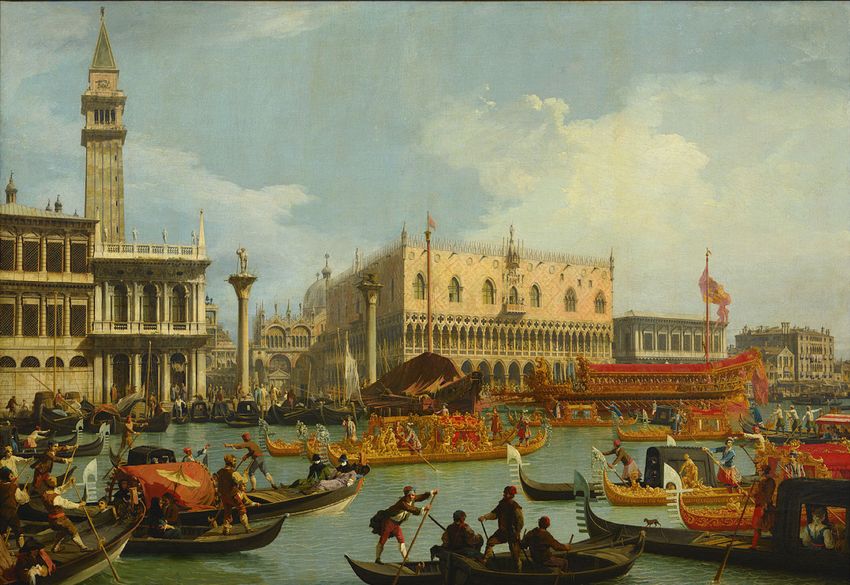
Foreign Policy Research Institute

     Mission

     The Foreign Policy Research Institute is dedicated to bringing the insights of scholarship to
     bear on the foreign policy and national security challenges facing the United States. It seeks
     to educate the public, teach teachers, train students, and offer ideas to advance U.S. national
     interests based on a nonpartisan, geopolitical perspective that illuminates contemporary
     international affairs through the lens of history, geography, and culture.

     Educating the American Public: FPRI was founded on the premise than an informed and educated
     citizenry is paramount for the U.S. to conduct a coherent foreign policy. Today, we live in a world
     of unprecedented complexity and ever-changing threats, and as we make decisions regarding
     the nation’s foreign policy, the stakes could not be higher. FPRI offers insights to help the public
     understand this volatile world by publishing research, hosting conferences, and holding dozens
     of public events and lectures each year.

     Preparing Teachers: Unique among think tanks, FPRI offers professional development for high
     school teachers through its Madeleine and W.W. Keen Butcher History Institute, a series
     of intensive weekend-long conferences on selected topics in U.S. and world history and
     international relations. These nationally known programs equip educators to bring lessons of a
     new richness to students across the nation.

     Training the Next Generation: At FPRI, we are proud to have played a role in providing students
     – whether in high school, college, or graduate school – with a start in the fields of international
     relations, policy analysis, and public service. Summer interns – and interns throughout the year
     – gain experience in research, editing, writing, public speaking, and critical thinking.

     Offering Ideas: We count among our ranks over 120 affiliated scholars located throughout the
     nation and the world. They are open-minded, ruthlessly honest, and proudly independent. In
     the past year, they have appeared in well over 100 different media venues- locally, nationally
     and internationally.
Where did the Founders Get Their Ideas?
                          America’s Machiavellian Moment and
                      the Origins of the Atlantic Republican Tradition

This essay is based on the First Annual Ginsburg-Satell Lecture on American Character and Identity
 delivered on May 15, 2018, hosted and co-sponsored by the Museum of the American Revolution.

By: Walter A. McDougall

Walter A. McDougall is the Ginsburg-Satell Chair of FPRI’s Center for the Study of America and
the West. He is also Co-Chair of FPRI’s Madeleine and W.W. Keen Butcher History Institute and
the Alloy-Ansin Professor of International Relations and Professor of History at the University of
Pennsylvania. His honors include a Pulitzer Prize, election to the Society of American Historians,
and appointment to the Library of Congress Council of Scholars.

After service in the U.S. Army artillery during the Vietnam War, McDougall took a PhD under
world historian William H. McNeill at the University of Chicago (1974). The following year he was
hired by the University of California, Berkeley, and taught there until 1988, when he was offered
the chair at Penn.

His articles and columns have appeared in the New York Times, Wall Street Journal, Los Angeles
Times, Commentary, and other national publications. An unabashed generalist, his books range
from France’s Rhineland Diplomacy 1914-1924: The Last Bid for a Balance of Power in Europe (1978),
and …the Heavens and the Earth: A Political History of the Space Age (1985), to Let the Sea Make a
Noise: A History of the North Pacific From Magellan to MacArthur (1992), Promised Land, Crusader
State: The American Encounter with the World Since 1776 (1997), Freedom Just Around the Corner:
A New American History 1585-1828 (2004), and Throes of Democracy: The American Civil War Era
1829-1877 (2008), which was chosen by the Athenaeum of Philadelphia as best book of the year
by a local author.

His latest book is The Tragedy of U.S. Foreign Policy: How American Civil Religion Betrayed the National
Interest (Yale University Press, 2016).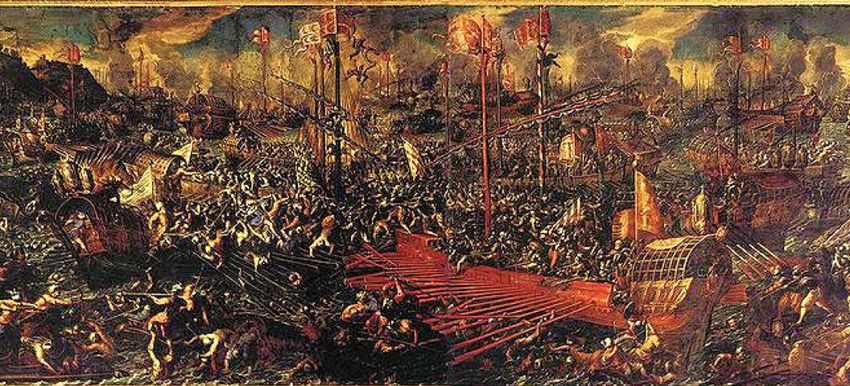
American Myths: The Strange Career                  Hence, “exceptionalism” is more trouble than
of “American Exceptionalism”                        it’s worth: it either means nothing or altogether
                                                    too much. But the principal reason to banish
What does it mean to speak of American              the term from historical discourse is that
Exceptionalism? If it just means unique, then       the moniker didn’t even exist until the mid-
the claim is unexceptional because no two           20th century! No Puritan colonist, founding
countries are alike. If it means Americans          Patriot, Civil War statesman, 19th century
believe their great country is special, then        poet, pastor, or propagandist ever invoked the
again that’s nothing exceptional because            term. To be sure, Alexis de Tocqueville called
all great nations cherish national myths. If it     America’s geography exceptional insofar as
means Americans are exceptionally virtuous          it was separated from Europe, and German
given their devotion to liberty, equality,          sociologist Werner Sombart thought American
justice, prosperity, social mobility, and           society an exception to Europe’s rules in that
peace, then ipso facto they have also been          Socialism had little appeal for workers in the
exceptionally vicious for having fallen so short    United States. But neither wrote of “American
of those ideals. If it means that Americans are     exceptionalism.”
exempted from the laws of entropy because—
as Bismarck reportedly quipped—“God looks           And the first ones who did—Pope Leo XIII
after fools, drunks, and the United States of       in the 1890s and American Communist Jay
America,” then such exceptionalism can only         Lovestone in the 1930s—used exceptionalism
be proven sub specie aeternitatis. Indeed, the      as a term of opprobium. Not until the 1950s
very illusion that one’s nation is under divine     did Max Lerner, then Daniel Boorstin and many
dispensation may perversely inspire the pride       more authors turn American Exceptionalism
that goeth before a fall (“thou shalt not tempt     into a badge of honor and trace its roots to
the Lord thy God”) or the many bad ends to          Puritan New England.
which reckless adolescents are prone. Finally, if
Exceptionalism means that its “indispensable”       Finally, Presidents John F. Kennedy and
status renders the United States exempt from        Ronald Reagan made it a benign household
the rules of behavior it makes and enforces         phrase in order to exhort Americans to victory
on other nations, then enemies, neutrals, and       in the Cold War. But its malign implications
allies alike are sure to push back.                 became apparent after the Cold War when
                                                    Americans pretended their exceptional values
                                                    and institutions ought to become universal,
                                                    whether or not other cultures wanted them.

                                                    So what if the ur-historical claims made
                                                    for American Exceptionalism amount to a
                                                    civil religious myth? Don’t the truths they
                                                    symbolize about Americans’ New World
                                                    character remain valid? Not really, because
                                                    common sense tells us New Worlds cannot
                                                    baptize themselves! Only people from a
                                                    self-conscious Old World can conjure a New
                                                    World, which is exactly what happened in the
                                                    centuries since 1492.

                                                    As a British skeptic has observed, “Not even
                                                    the Puritans were impelled by a unique
                                                    or exceptional American impulse. On the
           Alexis de Tocqueville                    contrary, they were products of European

                                                                                                        1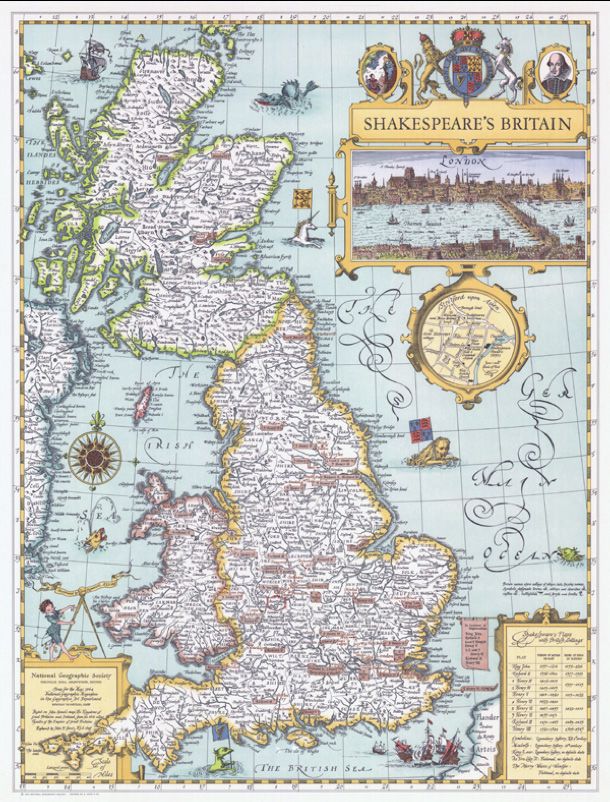
education, European culture, European piety,       Rabbi Sacks has also explained why many
    and were engaged in a great European quarrel       English scholars in the mid-17th century
    called the Protestant Reformation.” Some 140       suddenly became eager to learn Hebrew and
    years later, representatives of the American       read rabbinical midrash literature. They wanted
    colonies did gather in Philadelphia to reject      to know whether the Bible ordained monarchy
    European rule, but the principles they invoked     or condemned it, in which case Parliament’s
    were “the beliefs of the English Revolution and    Puritan rebellion against King Charles I in
    the Whig tradition, in the English, Scottish,      the 1640s was God’s will. In Deuteronomy
    and French Enlightenments, and in the ancient      17, Moses prophesies that the Israelites will
    principles of English Common Law – in short,       eventually desire a king, and he warns them
    in the core beliefs of a European civilization.”   to appoint only kings chosen by the Lord who
                                                       adhere strictly to the law. Evidently, therefore,
    Historians have in fact dug deeply into the        the Lord does permit monarchy. But in 1
    political theories of early modern Britain         Samuel, chapter 8, the prophet is angered when
    and unearthed the ideas that led, in the           the Israelites demand a king “so as to be like all
    fullness of time, to the American Founding.        the nations.” The Lord laments this because it
    One familiar source is the Bible, especially       is He whom the people have rejected. Yet, He
    the Hebrew Republicanism mandated in the           instructs Samuel to anoint for them a king. In
    book of Deuteronomy and realized during the        so doing, the Lord established the principle of
    three centuries after the conquest of Canaan       popular sovereignty—government by consent
    as recounted in the book of Judges. Former         of the governed. Predictably—as prophesied
    Chief Rabbi of the British Commonwealth,           by both Moses and Samuel—the kings and
    Sir Jonathan Sacks, has explained that the         their subjects in the unified monarchy, then
    Covenant made by the Lord through Moses            in divided Judah and Israel, apostatize and
    was a blessing, but also a curse: a blessing       suffer under a nearly unbroken succession of
    if the children of Israel obeyed God’s             wicked kings until at last both kingdoms are
    commandments, but a curse if they turned           conquered. Such was the price to be paid
    away to other gods in the Promised Land.           by free people who failed to do justice, love
    “See, I have set before you today life and         kindness, and walk humbly with their God.
    good, death and evil.... Therefore, choose life,
    that you and your offspring may live.”             Professor Eric Nelson, in his book The Hebrew
                                                       Republic: Jewish Sources and the Transformation
    Thus did the Torah establish, for the first        of European Political Thought, has studied in
    time in history, the spiritual principle of free   depth the supporters of Oliver Cromwell’s
    will, but Rabbi Sacks points out that it also      republican experiment who pored over these
    established three political principles. First,     Old Testament texts and their rabbinical
    divine sovereignty does not remove human           commentary. The process was greatly enabled
    responsibility. Moses warns the people that        when Cromwell dramatically repealed the
    unless they remain faithful, neither armies nor    expulsion of Jews from England, which dated
    allies can save them. Second, the Israelites       from the year 1290. For instance, the great
    are collectively responsible: the archetype of     poet and statesman John Milton concluded
    what the American Founders would call, “We         that the Lord permitted monarchy, but
    the People.” As Michael Walzer put it in God’s     nevertheless condemned it as tantamount
    Shadow: Politics in the Hebrew Bible, the twelve   to idolatry. Algernon Sydney and James
    tribes constituted an “almost democracy.”          Harrington likewise damned monarchy for
    Third, this political order was centered on God    sacred as well as secular reasons and endorsed
    because He was the law-giver. Hence, the           republicanism. Moreover, Professor Nelson
    Israelites were the first to imagine themselves    shows that Sydney and Harrington derived
    “one nation under God.”                            corollaries from their Hebrew Republicanism
                                                       including a redistribution of wealth inspired

2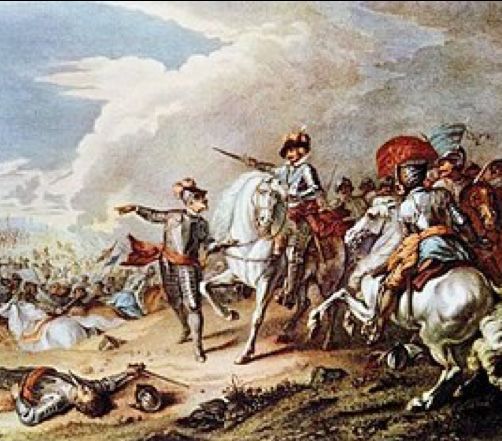
told Americans they were a new chosen
                                                 people, and sang with their congregations
                                                 revolutionary hymn, “To the king they shall
                                                 sing hallelujah / And all the continent shall
                                                 sing / Down with this earthly king: no king but
                                                 God!”

                                                 That’s the familiar source. But there was
                                                 another, far less familiar one. A source which
                                                 many republican philosophers of the 17th and
                                                 18th centuries consciously suppressed lest
                                                 they repel their audiences. That second source
                                                 was such a surprise to historians that they did
                                                 not even stumble on it until after World War
                                                 II. That second source was born in southern
              Oliver Cromwell                    Europe, Catholic Europe, and seemed the
                                                 antithesis of Biblical morality. That second
by the elaborate inheritance laws of the Torah
                                                 inspiration for the English Commonwealthmen
and—most surprisingly—religious toleration.
                                                 was the notorious observer of Renaissance
                                                 statecraft and founder of modern political
To be sure, Britain’s Puritan Commonwealth did
                                                 science, Niccolo Machiavelli.
not long survive Cromwell’s death. Parliament
restored the Stuart king and Anglican Church
                                                 Everyone knows his essay The Prince because
in 1660. But the ideas survived and partially
                                                 it’s short, provocative, and highly quotable:
triumphed in Britain’s Glorious Revolution
                                                 what the French call a succès de scandale. In
of 1688. A century later, those same ideas
                                                 it, Machiavelli seemed to advocate arbitrary
inspired colonists such as John Witherspoon,
                                                 rule, ruthless tactics, deceit, brute force,
the President of the College of New Jersey (as
                                                 and the principle that the ends justify the
Princeton was originally known), and Scots
                                                 means. He had no use for established religion
Presbyterian who educated James Madison
                                                 except as a sedative for the lower classes
and a host of other American Founders.
                                                 and believed moral corruption necessary
                                                 for political success. The kindest label given
All that is deep background to a very familiar
                                                 to him is realist. The worst is monster. In
event. In 1774, Tom Paine sailed from England
                                                 England, he was so notorious that “Old Nick”
to Philadelphia and within 18 months published
                                                 even became a sobriquet for the devil. Later,
the pamphlet that persuaded Congress to
                                                 we shall challenge that stereotype. But first,
declare independence. Paine himself was an
                                                 allow me to take you on a tour of a city some
Enlightenment skeptic who had no use for
                                                 of you probably know well, but which I only
religion. Yet, the central argument of Common
                                                 came to know four years ago when I gazed
Sense was precisely God’s prophecies about
                                                 into a distant mirror.
the evils of monarchy. Paine had lifted the
argument directly from John Milton.
                                                 Distant Mirrors
Thus, Hebrew Republicanism, filtered through
early modern England and transplanted to the     The Medieval as Modern
colonies, was one familiar source of American
institutions and values, and explains why        In 1978, Barbara Tuchman wrote a book
clergymen throughout the colonies—not just       called A Distant Mirror: The Calamitous 14th
in New England—preached revolution from          Century in which she described the crises
their pulpits, made the Exodus their metaphor,   that wrecked the High Medieval Era. They
                                                 included bubonic plague, which killed a third
                                                                                                   3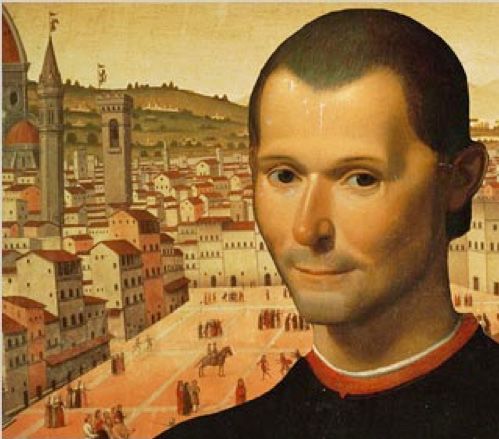
to a half of all Europeans, the Hundred Years        she did all the logistics and planning and I just
    War between England and France, the terrible         followed her lead like a joyful dog out for a
    Muslim onslaught of the Ottoman Turkish              walk. Everything about Italy—the history,
    Empire, the crisis of religious authority born       art, architecture, scenery, and cuisine—was
    of a papal schism, and more. And by “distant         sublime. But, for me, the capstone was Venice.
    mirror,” she meant to imply that the 1970s
    reflected similar existential crises.                Americans take pride in having lived under
                                                         their Constitution for 230 years. The British
    I thought Tuchman’s analogy overwrought. The         have lived under their unwritten Constitution
    Vietnam War, Arab oil embargo, stagflation,          for 330 years. But did you know that the
    and Watergate were certainly bad, but hardly         “most serene republic of Venice” lasted over
    equivalent to those Medieval calamities.             a thousand years, from the 700s until 1797,
    Nevertheless, over my long career, I have            when that brigand Napoleon abolished it.
    come to appreciate “distant mirrors” because         Imagine peering into churches built 400 or 500
    the High Medieval Era also reflects so much          years before Columbus discovered America!
    that we value today and flatter ourselves to
    think of as “modern.” Consider this list of things   The islands in the lagoons at the northern
    whose roots lie in the Middle Ages: the rule         edge of the Adriatic Sea were first settled
    of law, English Common Law, the separation           by refugees of the Lombards, one of the
    of church and state, limited monarchy,               barbarian tribes that overran ancient Rome.
    parliamentary government (Magna Carta,               Then, Venice was reinforced by the Lombards
    recall, dates from 1215), the first universities     themselves as they fled from the Frankish
    founded in the 11th and 12th centuries, Natural      armies of Charlemagne who invaded Italy
    Rights (the first expression of what we call         around the year 800.
    human rights), rural and commercial capitalism,
    all sorts of technological breakthroughs from        For a few centuries, the colony’s politics
    the mouldboard plow and mechanical clock             were turbulent, but the creative Venetians
    to the waterwheel and the printing press,            took advantage of their unique geography
    and the restless, curious, ambitious spirit that     to consolidate a city-state devoted to sea
    moved Europeans to build ocean-going ships           power, aggressive commerce, and precocious
    and start to map the world.                          republican institutions to preserve their
                                                         liberties. Their leader was an elected duke,
    We only think of the Medieval era as stagnant,       or Doge, who served for life under a sacred
    superstitious, and brutal because Renaissance        pledge not to abuse his powers. And as the
    humanists imagined their own era a rebirth           centuries passed, his executive powers came
    of ancient Greece and Rome, hence they               to be checked and balanced by a Senate, a
    dismissed the Medieval millennium rather than        Great Council, an executive Council in charge
    admit the obvious fact that the Renaissance          of war and diplomacy, and special councils
    itself had grown out of it. The Puritan John         for other functions including a secret bureau
    Adams, who had no affection for the Catholic         for internal security and another for naval
    Church, grudgingly granted that fact when he         construction and recruitment.
    wrote that somehow “people in the middle
    ages became more intelligent in general.”            By the 14th century, Venice fashioned
                                                         a thalassocracy—a maritime empire—
    La Serenissima Repubblica di Venezia                 throughout the Adriatic and eastern
                                                         Mediterranean and pioneered trade routes to
    The distant mirror also reflects exquisite           northern Europe, the Byzantine Empire, the
    beauty, which is something I learned when            Ottoman Empire, Persia, and thanks to Marco
    I finally accompanied my wife Jonna on a             Polo, China!
    journey to Italy. I say “accompanied” because

4
La Serenissima Repubblica di Venezia

This surprisingly modern commercial republic in     a crypt in Alexandria, Egypt. According to
the midst of Medieval Europe grew immensely         legend, the raiders smuggled the relics past
wealthy thanks to its shrewd Doges, Councils,       Muslim officials by stuffing them inside a
and merchants, and thanks to the intelligence       shipment of pork. The iconographic symbol
gathered by permanent embassies stationed           for St. Mark is a wingèd lion, which one
abroad (a Venetian invention). Venetians            encounters all over Venice to this day. The city
outfitted the Crusades and claimed the lion’s       fathers honored the Catholic Church calendar,
share of the plunder. Venetians monopolized         but also celebrated civic triumphs with feasts,
the spice trade. Venetians patronized               carnivals, and liturgies. The Doge’s palace is a
exquisite art, music, and public works. But         treasury of frescoes and sculptures displaying
perhaps their most achievement was a highly         the glorious history of Venice and celebrating
developed civil religion. Venice was nominally      its republican virtue.
Roman Catholic, but was able to defend its
liberty against the pretensions of the Popes        The Sala del Maggior Consiglio is the largest
and Holy Roman Emperors. Venetians were             room in Europe. There, the Great Council’s
also receptive to anyone contributing to their      1,500 members convened in a spirit of
economy, including Muslims, Jews, Greek             equality under a frieze round the ceiling made
Orthodox, and later Protestant Germans,             up of busts of the first 76 doges. The grand
Britons, and Dutch.                                 fresco by Tintoretto was supposed to depict
                                                    the coronation of the Virgin Mary as Queen of
What Venetians really worshipped was the            Heaven, but Tintoretto’s son, who completed
city itself, symbolized by its patron saint, Mark   this largest painting in Europe, changed
the Evangelist, whose very bones a Venetian         the theme to “The Virgin Mary Interceding
expedition, in the year 828, purloined from         with Christ On Behalf of Venice.” Still more
                                                                                                       5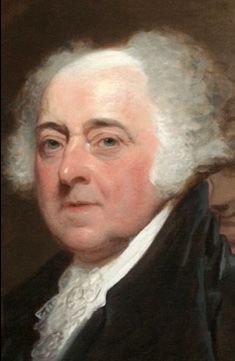
The Battle of Lepanto
    frescoes pay obeisance to Neptune and Mars,
    the Classical gods of the sea and of war, as if       The Machiavellian Moment in England
    the Venetians were hedging their bets.
                                                          What has that distant mirror to do with
    The Doge’s palace and St. Mark’s Basilica             England, much less the United States? A
    are quite literally joined at the hip, a proud        surprisingly good deal, it turns out, and not
    expression of the civil religion.                     only because they came to resemble the
                                                          Venetian commercial republic in many ways...
    In war and diplomacy, the Venetians shunned
    entangling alliances except in emergencies            ... but also because of what J. G. A. Pocock
    when they organized coalitions. The most              described in his 1975 classic The Machiavellian
    famous of them was the Holy League, whose             Moment: Florentine Political Thought and the
    combined fleets routed the Ottoman Turks in           Atlantic Republican Tradition. In it, he argued
    the 1571 Battle of Lepanto. But Tintoretto,           that the modern political theory of 18th
    forgetting the other members of that coalition,       century America mirrored that of 17th century
    commemorated the battle with his allegory             England, which in turn mirrored that of 16th
    entitled “The Triumph of Venice.”                     century Italy. Pocock drew on the writings
                                                          of Renaissance figures such as Francesco
    Alas, by the 16th century, Venice was beginning       Guicciardini, but especially Machiavalli’s long
    to suffer the effects of the dire historical trends   and serious treatises such as Discourses on
    that hurled it into a long, languid decline: the      Livy and Florentine Histories, written between
    Ottoman conquest of Byzantium in 1453,                1510 and 1530. Pocock meant to educate
    the Spanish and Portuguese discoveries of             English readers on the real Machiavelli, the
    sea routes to America and India in the 1490s,         brilliant and brutally honest student of politics
    the perennial wars ravaging Italy following           whose purpose was not to advocate cruelty
    invasions by France and the Empire after 1494,        and deceit, but to describe, empirically, how
    and the rise of national monarchies in Spain,         real princes behaved in the real world. And if
    France, and England. It speaks to the credit of       most were amoral in their pursuit of power
    Venetian institutions, civil religion, and artistic   and wealth, then it behooved high-minded
    genius that the city’s brilliant sunset lasted all    princes to do likewise in defense of their
    the way down to the French Revolution.                subjects’ liberty and well-being. To be sure,
                                                          Machiavelli was hostile to the Christianity
                                                          of his day, but that isn’t surprising given the

6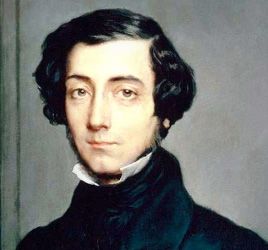
Papacy had plummeted to its decadent nadir
during the Renaissance. But his purpose in
separating moral judgments from the facts of
political life was simply scientific.

What is more, Machiavelli did not mean the
word “prince” to imply a dynastic ruler, but
anyone in charge of a state, be he a nobleman
like the Duke of Milan, a plutocrat like
Lorenzo di Medici, or a military condottieri like
Francesco Sforza. Indeed, he preferred that
princes, whatever their background, be men
of virtú, that Renaissance ideal which meant,
not Christian virtue, but ancient Roman ideals
such as manliness, energy, guile, and courage.
And Machiavelli insisted that princes—as                          Niccolo Machiavelli
opposed to tyrants—use their power on behalf
of “the common good.” In his Discourses on           a new republic confront the question of how
Livy, that ancient chronicler of the rise and fall   to build institutions capable of enduring, like
of the Roman Republic, he made it clear that         those of Venice, for centuries.
he preferred republican government. And that
preference made it imperative for him to learn,      Machiavelli’s reputation was besmirched
from the histories and discourses of Classical       during his troubled life—among other things,
Greece and Rome, why republics so often              he suffered torture and exile—and it only
succumbed to tyranny, anarchy, or conquest,          grew even worse after his death. The Catholic
or aborted in the manner of Renaissance              Church banned his books. Protestants reviled
Italy’s ephemeral republics. And his voyage          him because he denied natural rights and
of discovery—Machiavelli likened himself             advocated republicanism on strictly utilitarian
to Columbus—taught him surprising things             grounds. That is, he believed that people
including the positive value of factionalism         preferred liberty, not because they valued its
because creative competition among rival             intrinsic dignity or had any natural right to it,
parties and interest groups fostered a division      but simply because it worked: “Cities have not
of powers and checks and balances. He thus           grown either in dominion or riches when not
considered it healthy for a state to contain         in a condition of liberty.”
plebeian or populist factions opposing
patrician or princely factions, and he welcomed      But for that very same reason, Machiavelli’s
the occasional tumults that resulted because         science of politics lived on among practical
they inspired the reforms periodically needed        men intent on propagating and preserving
to rejuvenate a republic. He advocated an            conditions of liberty. So it was, a century later
independent judiciary. Finally, he promoted          and half a continent away, when a Parliament
commercial and military expansion because            declared its king a tyrant, waged civil war
he discovered the wellsprings of republican          against him, cut off his head, then founded a
polities to be popular greed and fear.               republic in 1649, that England faced its own
                                                     Machiavellian moment.
Now, Machiavelli and Guicciardini were
both natives of Florence. But you will not           The leader of the Parliamentary army,
be surprised to learn that for both the              Oliver Cromwell, claimed his purpose was
ideal, model republic was Venice. And by             to establish a godly Commonwealth, but he,
“Machiavellian moment,” Pocock referred to           in fact, exploited power in the manner of a
a historical conjuncture when the founders of        Machiavellian prince to make himself Lord

                                                                                                         7
Protector, in effect a military dictator whose were the famous books written to justify
regime oppressed the English and crushed the Glorious Revolution of 1688. Locke was
the Irish and Scots. Yet, the Commonwealth also discreet in that he never revealed how
did create space for republican thought to profound Machiavelli’s influence had been on
flourish and into that space rushed such his thought. He was in fact an avid collector
creative thinkers as Marchamont Nedham of the Florentine’s writings, studied them
and James Harrington, whose greatest with great care, shared his antipathy toward
works, The Excellencie of a Free State and religious moralizing, and diverged from
The Commonwealth of Oceana, were both Machiavelli only insofar as he favored peaceful
published in 1656. They restated, refined, commerce rather than martial expansion.
and adapted Classical Republican ideas about
liberty emerging from the tensions between But Machiavelli got that right as well: popular
patricians and populists, the importance of regimes are just as belligerent as autocratic
mixed government and checks and balances, regimes. For the so-called Glorious Revolution
and the value of tumults, commerce, and war. defended by Locke was in fact an inglorious
They also cited Machiavelli as their principal coup d’état by a war party in Parliament and
source. Harrington’s utopia described in the Army who called themselves Whigs. They
Oceana was especially influential—only it drove James II into exile for the crimes of
wasn’t utopian. It was the Venetian republic baptizing his son a Catholic and emulating
with English characteristics, in which a natural Louis XIV’s absolute monarchy, but also for
aristocracy expertly trained in commerce, the crime of pursuing peace with France
science, and law governs the republic in the rather than war. So the Whigs invited James’s
best interests of all. Harrington explicitly wrote Protestant daughter Mary and her husband,
that nowhere else is there “so undisturbed the Dutch stadtholder William of Orange,
and constant a tranquillity and peace ... as to reign over England, where they promptly
in Venice” because civil perfection “hath no declared the first in a long line of what
pattern in the universal world, except that of American colonists came to call the French
Venice.” And the purpose of his Oceana was and Indian wars.
to design an “immortal Commonwealth” that
would not decay. However, the Whigs did have an ambitious
domestic agenda of a decidedly Republican
Of course, Harrington’s grand design was cast. Between 1689 and 1707, they established
never attempted because the English people Parliamentary supremacy over the crown, the
and Parliament grew weary of Cromwell’s Bill of Rights, the Act of Succession banning
authoritarian zeal and restored the Stuart Catholics, the Act of Union with Scotland, and
monarchy after his death. the Bank of England to fund a floating national
debt to finance Britain’s imperial wars.
But again, the Classical Republicanism largely
inspired by Machiavelli did not die. On the Over the course of the 18th century, those
contrary, it stormed back forcefully during institutions made Britain the world’s greatest
the Restoration in the works of philosophers power. Moreover, it was during that century
such as Algernon Sydney, whose Discourses that the intellectual movement called the
Concerning Government of 1680, was an Enlightenment spread throughout Europe
assault on monarchy so brazen that it cost him and across the ocean to the quickly maturing
his life. Rather more prudent was Sydney’s American colonies. The hyper-rational, social-
contemporary John Locke. He skirted charges scientific character of Enlightenment thought
of treason by fudging his opposition to meant that the influence of sectarian religion
monarchy and then coming to terms with was sharply circumscribed by comparison
a limited, constitutional monarchy in his to the era of the Reformation and Counter-
Two Treatises on Government of 1689. Those Reformation, and, in such a climate, it isn’t
8Tricks, / Was, by their happy Influence, / Made
Friends with Vice: And ever since / The worst
of all the Multitude / Did something for the
common Good.”
Viscount Bolingbroke, in his 1738 classic The
Patriot King, even reconciled monarchy with
republicanism when he admonished kings
to imagine themselves the nation’s chief
executive on behalf of the public interest.
Delegates at the Constitutional Convention
had that book much on their minds while
designing of the office of President of the
United States.
Which brings us at last to America. So far, it
would appear that I fully endorse Pocock’s
thesis about the direct reflections of 16th
century Florentine thought on 17th century
English ideas and 18th century American ones.
In fact, I do not because various intellectual
historians have challenged Pocock since
1974. One of the most prominent, Hillsdale
College Professor Paul Rahe, summed up the
their findings as follows: while they all agree
surprising that Machiavelli became even with Pocock that Machiavelli had considerable
more influential, if not more respectable. The influence on later British and American
French Baron de Montesquieu, the Scotsman thought, they believe the cause-and-effect
David Hume, and the American Benjamin connections between his Machiavellian
Franklin were just a few of the 18th century moments are too direct. They caution that
philosophers who postulated that human historical actors should not be read as semi-
nature was imperfect and immutable and that conscious speakers of someone else’s political
Christian virtue was a fragile foundation on language, but as fully conscious agents for
which to build a republic. Rather, republican whom Machiavellian insights, while important,
durability required precisely those sturdy must be weighed alongside other sources as
institutions the British Whigs had built up, well as their own experiences.
indeed institutions that resembled Venetian
ones so closely that Montesquieu even called In any case, Machiavelli’s legacy was bound
Britain “a republic in monarchical disguise.” to become diffuse over the 250 years
separating Renaissance Florence from colonial
In 1705, the Dutchman Bernard Mandeville Philadelphia.
observed those institutions and wrote a
satire The Fable of the Bees, describing the Finally, we must remember that men such
Machiavellian modes by which Whigs pursued as Franklin, George Washington, Thomas
parliamentary, commercial, and imperial Jefferson, Alexander Hamilton, James
power: Madison, and John Adams were not abstract
theorists like Harrington, Sydney, or Locke.
“Thus every Part was full of Vice, / Yet the Rather, they were statesmen-practitioners
whole Mass a Paradice ... And Vertue, who from engaged in designing real institutions they
Politicks / Had learn’d a Thousand cunning hoped would foster justice as well as liberty
9and prosperity. That moral imperative as Sydney, Locke, Montesquieu, and Hume,
precluded a wholesale adoption of the and their libraries contained Machiavelli’s
Florentine’s system. Indeed, Washington, works. For Madison, Machiavelli had been
however realistic his statecraft in war and assigned reading at Witherspoon’s college,
peace, displayed a character the very opposite and one of his most trenchant contributions
from that of a serpentine Machiavellian to the Constitution—the celebration of
prince. Nevertheless, the years between the political factionalism—was an especially
summoning of the First Continental Congress Machiavellian insight. On the other hand,
in 1774 and the ratification of the Constitution Madison’s abhorrence of war was certainly
in 1789 were assuredly another Machiavellian not Machiavellian, but his arch-rival Hamilton
moment in that earnest men deliberated on thoroughly agreed with the Florentine’s
how to craft a republic that might endure like observations that republics are warlike and
the Venetian. that successful ones need an energetic
executive ready and willing to prepare for war.
For instance, the Founders all saw the wisdom
of such Machiavellian notions as separation of No American devoted more thought to
powers, checks and balances, an independent the Florentine’s writings than John Adams.
judiciary, sacrosanct private property, robust He not only studied his works, he quoted
commerce, and political tumult. Recall extensively from the Discourses on Livy and
that Jefferson wrote, “I hold it that a little Florentine Histories in own Defense of the
rebellion now and then is a good thing, and Constitutions of the United States of America
as necessary in the political world as storms published in 1788. Moreover, Adams drew
in the physical.” Jefferson and Madison never heavily on English Commonwealthmen such
admitted to having Machiavellian ideas, but as Nedham and Harrington, whom he also
they were influenced by people who did, such discussed at some length in the Defense of
10John Adams Thomas Jefferson James Madison
the Constitutions. Needless to add, the New all is ordered by chance, I should believe that
England Puritan also critiqued Machiavelli on chance had ordered the Jews to preserve and
various constitutional points and broke with propagate to all mankind the doctrine of a
him entirely on moral questions. Adams, like supreme, intelligent, wise, almighty sovereign
Washington, believed religious faith to be an of the universe, which is the essential
indispensable buttress for a healthy republic, principle of all morality, and consequently all
and he obviously thought it possible to fashion civilization.”
a republic through collective reflection rather
than princely force and deceit. So what is it we find when we study the
origins of the Atlantic Republican tradition?
And therein lies the most trenchant critique We find that American institutions derived
of Pocock’s thesis, because the American from a Classical Republicanism leavened
Founders, while eminently practical men by Hebrew Republicanism; a Machiavellian
and exponents in most cases of the Scottish body quickened by a Biblical spirit; a civil
Enlightenment’s Common Sense philosophy, government inspired by a civil religion.
were not simply utilitarian, which brings us
full circle back to the Bible. In his classic The I therefore agree with Professor Rahe that while
Roots of American Order, historian Russell Kirk no American Founder adopted Machiavelli’s
explained that while the U.S. Constitution ideas without at least some reservations,
owed little to the example of the Israelites the Founders and those who came after
recounted in Deuteronomy and Judges, the them nevertheless owe Machiavelli a very
American moral order could not have existed great debt. Rahe concludes: “To sort out the
without it. He noted that in John Adams’s character of the American Revolution ... one
corpus of works, which drew so heavily on would do well to begin with the astonishing
Machiavelli’s studies of Greece and Rome, wave of political speculation that took place
one finds no account of Israel and Judah. Yet, in the English revolution, which itself was a
Adams understood their true import. In 1809, product of that great revolution initiated in
he wrote, “I insist that the Hebrews have done 16th century Florence ... by the sage after
more to civilize men than any other nation. whom the devil himself came to be called “Old
Even if I were an atheist who believes that Nick.”
11Selected Sources
John Adams, A Defense of the Constitutions of Government of the United States of America
in Charles Francis Adams, ed., The Works of John Adams (Boston: Little,
Brown 1850-56), vol. 6: 3-216
Bernard Bailyn, The Ideological Origins of the American Revolution (Cambridge, Mass.: Harvard
University, 1967)
William J. Bouwsma, Venice and the Defense of Republican Liberty in the Age of the Counter-
Reformation (Berkeley: University of California, 1968)
Gene A. Brucker, Renaissance Florence (Berkeley: University of California, 1969)
J. C. D. Clarke, The Language of Liberty 1660-1832: Political Discourse and Social Dynamics in
the Anglo-American World (New York: Cambridge University, 1994)
Zera S. Fink, The Classical Republicans: An Essay on the Recovery of a Pattern of Thought in
Seventeenth-Century England (Evanston, Ill.: Northwestern University, 1962)
David Hackett Fischer, Albion’s Seed: Four British Folkways in America (New York: Oxford
University Press, 1994)
Richard M. Gamble, In Search of the City on a Hill: The Marking and Unmaking of an American
Myth (London: Continuum, 2012)
Francesco Guicciardini, Selected Writings, Including Considerations on the Discourses on Livy of
Machiavelli (Oxford, Eng.: Oxford University, 1965)
Moshe Halbertal and Stephen Holmes, The Beginning of Politics: Power in the Biblical Book of
Samuel (Princeton, N.J.: Princeton University, 2017)
Russell Kirk, The Roots of American Order (La Salle, Ill., Open Court, 1974)
Niccolo Machiavelli, The Prince , Angelo M. Codevilla, trans. (New Haven, Ct.: Yale
University, 1997)
Niccolo Machiavelli, Discourses on Livy , Harvey C. Mansfield, trans. (Chicago: University
of Chicago, 1997)
Harvey Mansfield, Machiavelli’s Virtue (Chicago: University of Chicago, 1966)
Walter A. McDougall, Freedom Just Around the Corner: A New American History, 1585-1620
(New York: HarperCollins, 2004)
John M. Najemy, Italy in the Age of the Renaissance: 1300-1550 (New York: Oxford University,
2004)
John M. Najemy, A History of Florence, 1200-1575 (Malden, Mass.: Blackwell, 2006)
12Eric Nelson, The Hebrew Republic: Jewish Sources and the Transformation of European Political
Thought (Cambridge, Mass.: Harvard University, 2010)
John Julius Norwich, A History of Venice (New York: Knopf, 1982)
J. G. A. Pocock, The Machiavellian Moment: Florentine Political Thought and the Atlantic
Republican Tradition (Princeton, N.J.: Princeton University, 1975)
Paul A Rahe, Republics Ancient and Modern: Classical Republicanism and the American Revolution
(Chapel Hill: University of North Carolina, 1992)
Paul A. Rahe, ed., Machiavelli’s Liberal Republican Legacy (New York: Cambridge University, 2006)
Paul A. Rahe, Against Throne and Altar: Machiavelli and Political Theory under the English Republic
(New York: Cambridge University, 2008)
Caroline Robbins, The Eighteenth-Century Commonwealthman: Studies in the Tranmission ... of
English Liberal Thought (Cambridge, Mass.: Harvard University, 1959)
Jonathan Sacks, “The Politics of Freedom,”:
https://www.chabad.org/parshah/article_cdo/aid/1928705/jewish/The-Politics-of-
Freedom.htm
Jonathan Sacks, “The Consent of the Governed,” August 21, 2017:
http://rabbisacks.org/consent-governed-shoftim-5777/
Eran Shalev, American Zion: The Old Testament as a Political Text from the Revolution to the
Civil War (New Haven, Ct.: Yale University, 2014)
Leo Strauss, Thoughts on Machiavelli (Chicago: University of Chicago, 1958)
Michael Walzer, Exodus and Revolution (New York: Basic Books, 1985)
Michael Walzer, In God’s Shadow: Politics in the Hebrew Bible (New Haven, Ct.: Yale University,
2012)
Gordon S. Wood, The Creation of the American Republic, 1776-1787 (Chapel Hill: University of
North Carolina, 1969)
13Foreign Policy Research Institute
The Foreign Policy Research Institute is a non-
partisan, non-profit 501 (c)(3) organization
dedicated to bringing the insights of
scholarship to bear on the foreign policy and
national security challenges facing the United
States. It seeks to educate the public, teach
teachers, train students, and offer ideas to
advance U.S. national interests based on a
non-partisan, geopolitical perspective that
illuminates contemporary international affairs
through the lens of history, geography, and
culture.
Foreign Policy Research Institute
1528 Walnut Street, Suite 610
Philadelphia, PA 19102
215-732-3774 www.fpri.org
20You can also read


