APPROACHES TO STRENGTHEN SUPPLY AND DEMAND FOR CHILDREN'S BOOKS IN RWANDA - March 24th 2021 - USAID
←
→
Page content transcription
If your browser does not render page correctly, please read the page content below
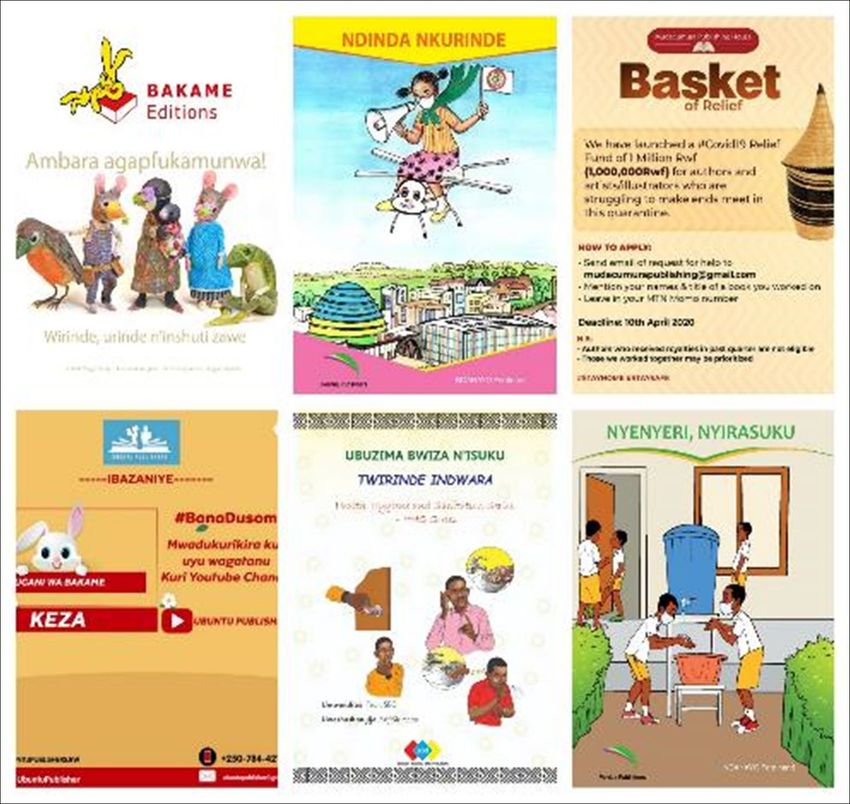
APPROACHES TO STRENGTHEN SUPPLY
AND DEMAND FOR CHILDREN’S BOOKS
IN RWANDA

MUREKE DUSOME Activity

March 24th 2021

                                  1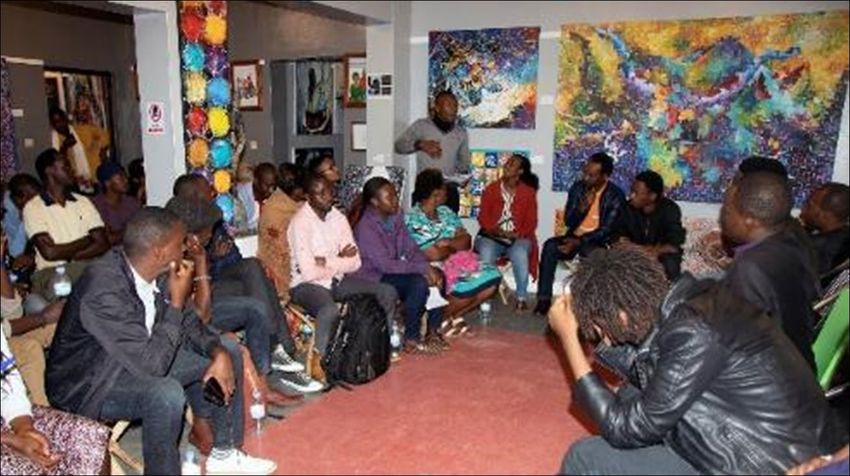
INTRODUCTION AND BACKGROUND

                                                                    Save the Children has been
                                                                    strategically layering literacy
                                                                    projects to increase a culture
                                                                    of reading in Rwanda since
                                                                    2013, including:

                                                                         •   DFID-funded Rwanda
                                                                             Children’s Book
                                                                             Initiative (RCBI) 2013-
   Rwanda                                                                    2016
  Children’s
Book Initiative   USAID-   School For                                    •   First Read (2013- 2015)
                                           REACH-           ACR
                  funded    Change      funded Reading   UnrestrICTed
                  Mureke                                                 •   Comic Relief funded
                                            Ready         Challenge
  First Read      Dusome                                                     Literacy Boost (LB)
                                                                             2013-2017
Literacy Boost
                                                                         •   USAID-funded Mureke
                                                                             Dusome 2016-2021
                                                                         •   IKEA-funded School
                                                                             For Change ( 2018-
                                                                             2021)
                                                                         •   REACH-funded Reading
                                                                             Ready (2019-2021)
                                                                         •   ACR UnrestrcICTed
                                                                             Challenge (2021-2023)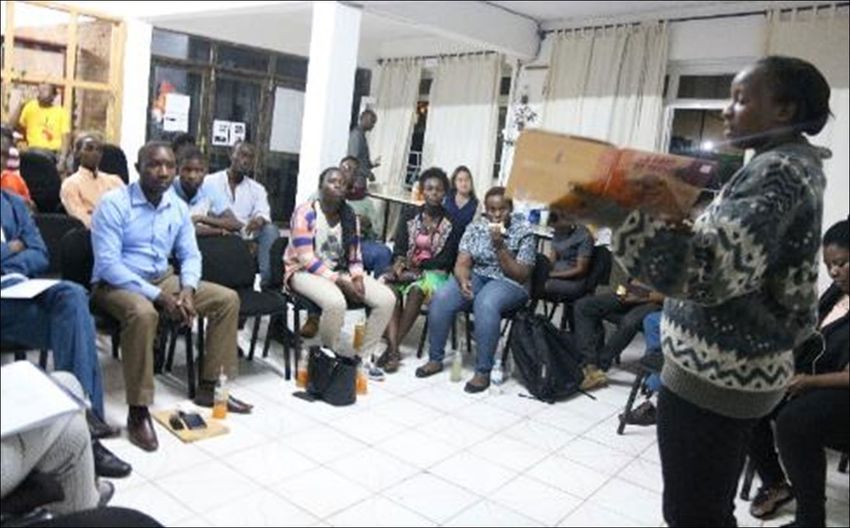
INTRODUCTION AND BACKGROUND ( CONT.)
                                                         Sustain capacity
                                                       strengthening for
                                                       school leadership
                                                      to promote school-
Overview of Mureke                                         community
                                                        partnerships and
Dusome Activity ( 2016-                                 improve student
                                                             literacy
2021)

                                  Sustain increased     Improve             Promote equity in
                                                                            literacy work, with
                                effective community     Literacy             a focus on gender
                                     and parental
                                   involvement to      Outcomes             empowerment and
                                                                               the inclusion of
                                  improve literacy     for P1-P3                children with
                                         skills
                                                       Learners                  disabilities.

Mureke Dusome is a
USAID activity that aims to
foster partnerships between
schools and the broader                                     Sustain
                                                       Improvements to
community in a bid to improve                           the Culture of
P1-P3 students’ literacy                                   Reading
outcomes.
                                                                                                  3
Mureke Dusome’s Book Chain’s Theory of Change

    The Challenge   The Barriers                          The Impact
                                     The Actions

07/09/2021 11:35                                                       4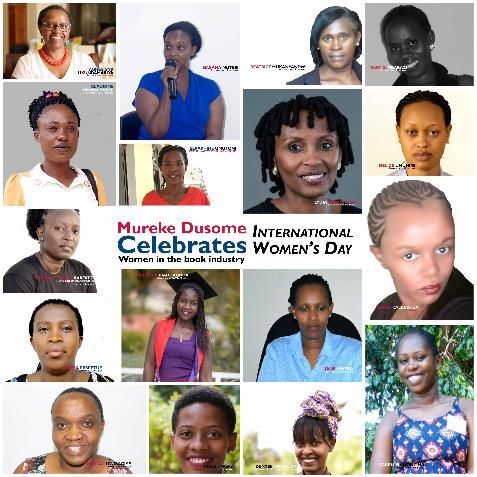
TRAININGS AND MENTORSHIP PROVIDED TO BOOK SECTOR
ACTORS
• Organized writers’, illustrators’,
  designers’, publishers’ workshops
• Leveraged SC global
  partnerships to engage
  internationally recognized publishing
  sector actors to train, coach and
  mentor publishers:
    • Penguin Random House
    • Leslie Patricelli,                  • Engaged gender & disability
                                            experts
    • Terry, etc
                                          • Promoted home-grown
                                            mentorship/coaching by in-
                                            country first professional children’s
                                            book editors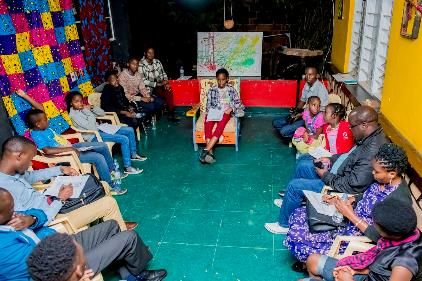
TRAININGS AND MENTORSHIP TO THE BOOK SECTOR ACTORS –
CONT.
Results
                                         Increased production of
                                         high quality, age
                                         appropriate, more
                                         inclusive children’s books

                                    Improved professionalism,
                                    motivation, and better
                                    sustainable mechanisms among
                                    local publishing sector actors

                                         Increased
                                         exposure to local
                                         and international
                                         markets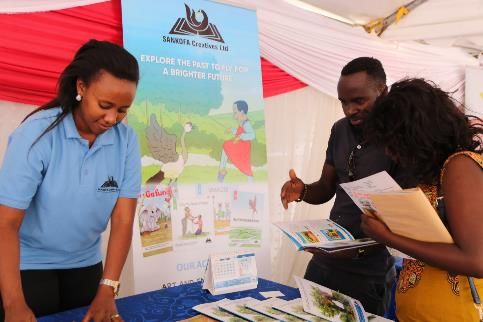
PROMOTING PROFESSIONAL SYSTEMS
 Supply:
• Meet and Greet events permitted writers and
  illustrators to pitch their stories to publishers
  and enhance their collaboration
• Abana Writer’s Café brought together young
  writers and other professionally experienced
  writers to discuss newly written stories, give
  feedback, and meet publishers in and outside
  Kigali
Demand:
• Book exhibitions targeted potential buyers
  like book sellers, NGOs, schools, community
  libraries, & the general public,

• Book Talks organized by publishers attracted
  parents and other potential buyers
   • Both contributed to more people
      (parents, organizations, etc) buying books
      for children (i.e. increased access)
STIMULATING THE DEMAND
Campaigns:
Gira Igitabo Aho Uri Campaign
Chocolate Book Campaign
Regular media collaborations
RCBO Conferences
Book Fairs
National Book Exhibitions organized by the
Ministry of Youth and Culture in collaboration
with the Ministry of Education with support
from Save the Children
National Bibliography
Book talks
Media campaign
Book Launches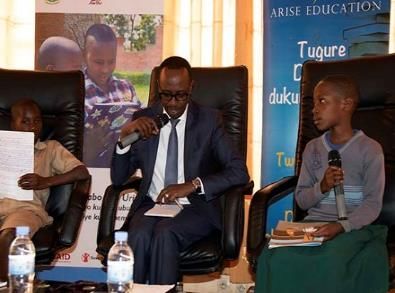
READING MATERIALS DISTRIBUTION
  From procurement to distribution

                            Classroom-
                            based
                            REB book
              Framework     review ,
Expression                  final
              contract
of Interest                 samples      Book
              with local                               Quality
with clear                  approval     procurement              Sorting,
              publishers/                              check of
requiremen                               and           received   Packing,
              Advance                    warehouse                Distribution
ts and                      Non-                       books
              market                     management
expectation                 classroom
              commitme
s                           based
              nt
                            SC book
                            samples
                            review and
                            signing

                                                                                 9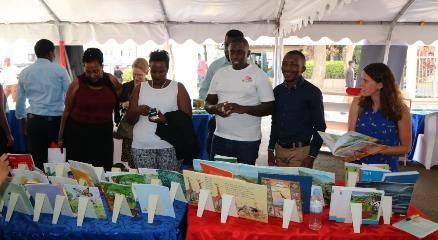
DISTRIBUTION OUTLETS
Schools, Reading Clubs and Communities Libraries

                                                              Community                        Child
   Booksellers                 Reading Clubs                                               Safeguarding
                                                               Libraries
• From 1 bookshop to 6        • More than 430494 age       • Train 67 librarians on    • Train book distributors on
  bookshops selling locally     appropriate                  book use and                child safeguarding during
  made children’s books         Kinyarwanda                  management, conducting      distribution process;
• Community booksellers         storybooks to reading        children’s reading
• Book case sellers             clubs established in all     activities;               • Avoid having children
  partnerships with local       30 districts.                                            involved in distribution
  publishers                  • Partnerships between       • 23,000 Kinyarwanda          activities
• Community book selling        schools and                  story books distributed
  points                        communities                  to 44 community
                                                             libraries

                                                                                                                      10
MONITORING BOTH THE DEMAND AND
SUPPLY
Children’s Readership Preferences Improvement in content, topics, characters,
Study, 2016 Fiction/non fiction, urban/rural setting, etc
More production of books with girls and children
Gender and disability representation
with disabilities as main characters and well
in children’s books study
portrayed in stories, braille books.
Regular book inventory & updating Filling missing contents/ topics cataloguing more than
book catalogue 1500 titles of children’s books
Distribution of children’ story books in the
Community Libraries’ Needs Assessment
local language, training of librarians on
by the Ministry of Education, 2019
organizing children’s reading activities
Improve illustrations, design, paper quality, use of
Regular monitoring of the use of books
colors, diversity ( topics, genres, formats, children’s
through observations and surveys books, magazines, chapter books, etc)GENDER INCLUSION
• Curriculum and training
• Provision of materials to female
illustrators, promote equity in
illustrating workshop
• He4She approach
• 2019 social media campaign for
women in publishing
• Women in publishing meeting with
the Director of Mission
• Book evaluation criteria
• Challenges: resistance to boys and
men representation in storytelling,
gender vs sexuality; reproductive vs
productive; resistance to
transformative approach
07/09/2021 11:35 12DISABLITY INCLUSION
• Braille
• Partnerships
• Disability representation in
children's books
• Book evaluation
• Challenges: local capacity and
infrastructures
07/09/2021 11:35 13COMMUNITY PARTICIPATION
• Teachers writing groups
• AWCs
• Book selling points through
business-community
partnerships
• Reading events
• Book review meetings (via RR)
• Challenges: quality assurance
07/09/2021 11:35 14CHILD PARTICIPATION
• Campaigns
• Writing
• Readership Preferences Study
• RCBO awards most favorite
book
• Abana Writers Café with Sankofa
Creatives
• Reading Competitions
• Challenges: budgeting
07/09/2021 11:35 15CHALLENGES
Writers, illustrators, and publishers do not have access to quality raw materials to
make high quality children’s books
The underdeveloped printing industry and the high costs of paper lead to high costs of
children’s books (economies of scale)
Underdeveloped culture of reading/reading market due to uncoordinated policies and
EGR activities, lack of awareness, and low appreciation of local languages
Children’s book makers and partners do not have sufficient skills, infrastructures, and
access to affordable resources to make accessible children’s books (Braille)
The increasing children’s reading demand cannot be satisfied by one EGR activity
Step back caused by COVID19
07/09/2021 11:35 16LESSONS LEARNED
• Campaigning together with government ( different ministries: MYCULTURE,
MINEDUC, MINALOC, KPL, etc) is very key to sustain a culture of reading;
• Partnerships among book sector actors and other stakeholders strengthens
the voice in the publishing industry;
• Working with existing structures including community libraries and increasing
community participation are keys to sustain children’s access to reading
materials in their local community;
• The engagement of experts in specific topics ( disability inclusion, gender,
etc) is key to ensure quality and proper representation;
• Diversity of materials ( topics, formats, story books, children’s magazine, etc)
is a foundation to increase the love for reading;
26 April 2016 17COVID 19 RESPONSE: LESSONS LEARNED
Resilience and capacity to adapt to the
ongoing health crisis
• The COVID-19 crisis has served as a
wake-up call to publishers in adopting
digital solutions.
• A strong reliance on schools was
damaging.
• Children’s book prices will likely
increase.
• Preparing for future opportunities.
Impact on literacy programs
• Quality of books vs. Pricing
• New needs require new solutions
• Procurement
07/09/2021 11:35 18SUSTAINABILITY
Advocacy and Government Engagement:
Advisory support on new book initiatives such as the annual National Book Exhibition
Advisory and technical support on revising existing activities such as community libraries management
Government officials involvement in the Book Review Committee
Provided technical support to the government of Rwanda to develop a National Book Policy that supports the local publishing
industry (in progress).
Partnership with other relevant government institutions and existing structures: Rwanda Basic Education Board (REB); Kigali Public
Library; Community Libraries ; Ministry of Youth and Culture & Ministry of Education
Private Sector Engagement:
• A local publishing sector active in promoting a culture of reading and collaborating with the government and partners to improve early
grade reading efforts.
• Established professional organizations such as RCBO, Arise Education and Sankofa Creatives seeking to sustain a production of high
quality, age-appropriate children’s books and children’s magazines ( Karame magazine);
• Integrated new technologies to enhance reading experiences through open source platforms and other relevant channels using
audiobooks, e-books, and more materials;
Global collaborations
• Growing collaborations with ADEA and Global Book Alliance started with Mureke Dusome; now the collaborations have extended to
open licensed levelled books and advocacy on national book and reading policiesPROMOTING SUSTAINABLE NETWORKS
To ensure publishing sector actors maintain a sustainable business
model for high quality children’s books, networking is key:
International Book Fairs
• ADEA/Global Book Alliance Workshop for African Publishers in Abidjan in
January 2018 and Kigali in December 2019
• Frankfurt Book Fairs
• Bologna Children’s Book Fair
• Shanghai International Children’s Book Fair in November 2018
Rwanda Children’s Book Organization (RCBO):
A publishing collaborative which currently consists of 17 local
publishers.
Support to RCBO’s organizational development led the organization
to find partnerships with government institutions, NGOs, and foreign
institutions
Karame Magazine publication
Product and services diversification and digitization
Through Mureke Dusome’s mentoring support, local publishers
produced their first digital and accessible books. A strategy that proved
crucial since the outbreak of COVID19.
Increased publishing sector role in advocacy effortsBuilding on Mureke Dusome’s Book Chain Work
REACH-Reading Ready Project Continued collaborations with
with World Bank Rwanda All Children Reading other COs and partners
UnrestrICTed Challenge with
eKitabu Support in building the Senegal Children’s
Improving Book Development, Book Book Initiative
Access and Book Use in Rwanda with
Provide children with disabilities with literacy, Collaboration with the Global Book Alliance
Results-based Financing Approach language and learning support grounded in and ADEA on national book and reading
Open licensed materials in Kinyarwanda Universal Design for Learning at home and at policies in Africa
and English in collaboration with local school.
Digital accessible levelled and library children’s Improved book availability, access,
publishers distribution, and use through EdTech
books
Collaboration with Global Digital Library Collaboration with local publishers Replicate the approach to strengthen the toy
Strengthening digital book use by Intervention in schools, communities, and homes supply chain to support ECD programs
community librarians and parents
26 April 2016 2122
You can also read


