ARTS2876 Understanding the Self - Term One // 2021 - Arts, Design & Architecture
←
→
Page content transcription
If your browser does not render page correctly, please read the page content below
School of Social Sciences // UNSW Arts and Social Sciences
ARTS2876
Understanding the Self

Term One // 2021

  ARTS2876 Term 1, 2021 published at 17-01-2021 // © University of New South Wales, 2021
                                                                                           1
Course Overview
Staff Contact Details
Convenors

Name                 Email                                     Availability       Location     Phone
Joseph Alizzi        j.alizzi@unsw.edu.au                      Zoom, Skype and/or Online or    TBD
                                                               Teams by           Morven Brown
                                                               appointment

School Contact Information

School of Social Sciences

Room 159

Morven Brown C20

email: soss@unsw.edu.au

phone: 02 9385 1807

                  ARTS2876 Term 1, 2021 published at 17-01-2021 // © University of New South Wales, 2021
                                                                                                           2
Course Details
Credit Points 6
Summary of the Course
Each of us has a self and an identity by virtue of being human. But do other living beings have a self? Do
other living beings have society in the same way humans do? In this course, you will consider some
traditional assumptions of selfhood (e.g., the capacity for reason, speech, and memory) from different
sociological perspectives. You will consider some interdisciplinary challenges to these assumptions.
You will examine arguments for and against extending selfhood to other living beings in order to add
complexity and texture to sociological attempts to understand the self. This course will give you many
opportunities to consider the relevance of theories of the self for further studies in Sociology and
Anthropology and for other disciplines in the humanities and social sciences.
Course Learning Outcomes
1. Explain key issues relevant to sociological perspectives on the self
2. Distinguish between sociological perspectives on the self
3. Apply sociological perspectives on the self to lived experience
4. Use skills associated with scholarly inquiry including those related to critical analysis, argument
and written expression.
Teaching Strategies
Rationale:
This course is based on the following principles:
1. To create an intellectually stimulating space for students that rewards active engagement with
challenging concepts
2. To read primary texts without the use of secondary sources, commentaries or digested
summaries.
3. To foster dialogue in and out of class between students, and with their teachers in order to create
a community of learners
4. To read generously
5. To create a cooperative learning environment
6. To encourage student responsibility to the broader academic community
Teaching Strategies:
This course will consist of a two-hour lecture and one-hour tutorial and associated online learning
activities.
Lectures: The lectures will combine the techniques of a traditional lecture with the interaction and
dialogue typically associated with tutorials. Students are encouraged to participate actively in lectures by
questioning and commenting on the course material. Lectures will rely on textual commentary, film and
visual imagery to explicate the concepts found in the readings.
ARTS2876 Term 1, 2021 published at 17-01-2021 // © University of New South Wales, 2021
3Tutorials: Tutorials will be used to organise small groups to establish a collaborative working
environment where students can learn from one another.
Reading Questions: For each weekly reading, you will find reading comprehension questions posted to
the University LMS. These will help to orient you with respect to the arguments presented in the
assigned readings.
ARTS2876 Term 1, 2021 published at 17-01-2021 // © University of New South Wales, 2021
4Assessment
You will have an opportunity to get ungraded feedback on your first workbook entry
You will have online activities that help you develop skills for writing your workbook and essay
Both assessments rely only on the texts considered in the course
You will be able to progressively build on your knowledge so that your final essay is informed by
each week's consideration of ideas and examples
Assessment Tasks
Assessment task Weight Due Date Student Learning
Outcomes Assessed
Workbook 60% 1, 2, 3
Essay 40% 2, 3, 4
Assessment Details
Assessment 1: Workbook
Length: Approximately 500 words per week
Details:
Students will prepare written entries of 1-2 pages on the assigned readings each week. The work will be
submitted and assessed periodically through the term.
Feedback: Written comments and graded against a criteria sheet.
Additional details:
TBD
Turnitin setting: This assignment is submitted through Turnitin and students can see Turnitin similarity
reports.
Assessment 2: Essay
Length: 1500 words
Details:
Students will write an essay (1500 words) that reflects on 2-3 critical learning experiences in relation to
course content
Feedback: Written comments and graded against a criteria sheet.
ARTS2876 Term 1, 2021 published at 17-01-2021 // © University of New South Wales, 2021
5Additional details:
TBD
Turnitin setting: This assignment is submitted through Turnitin and students can see Turnitin similarity
reports.
ARTS2876 Term 1, 2021 published at 17-01-2021 // © University of New South Wales, 2021
6Attendance Requirements
Students are strongly encouraged to attend all classes and review lecture recordings.
Course Schedule
View class timetable
Timetable
Date Type Content
Week 1: 15 February - 19 Lecture Introduction
February
Online – See Moodle for details
Thursday February 18th
No assigned reading
Tutorial Tutorials begin this week, ensure you know the
time and location for the tutorial - either online or in
the allocated room on campus
Online Activity See Moodle for details
Week 2: 22 February - 26 Lecture Thinking the Self – Descartes
February
Thursday February 25th
Online – See Moodle for details
Reading Descartes, R. ([1638]1986) Meditations on First
Philosophy (Cottingham, J. [trans]), Cambridge
University Press, Cambridge, Excerpts, pp.12-15,
16-23
Tutorial As scheduled
Online Activity See Moodle for details You may submit your first
workbook effort (before/after entries) for ungraded
feedback
Assessment You may submit your first workbook effort
(before/after entries) for ungraded feedback
Week 3: 1 March - 5 Lecture Society and the Self - Durkheim
March
Thursday March 4th
Online – See Moodle for details
Reading Durkheim, E. ([1914]2005), ‘The dualism of human
ARTS2876 Term 1, 2021 published at 17-01-2021 // © University of New South Wales, 2021
7nature and its social conditions’, Durkheimian
Studies, vol.11, pp.35-45
Tutorial As scheduled
Week 4: 8 March - 12 Lecture The Unconscious and the Self - Freud
March
Thursday March 11th
Online – See Moodle for details
Reading Freud, S. (1989) ‘Civilization and its discontents’, in
Gay, P. (ed.), The Freud Reader, W.W.Norton, NY,
pp.722-772
Tutorial As scheduled
Online Activity See Moodle for details
Week 5: 15 March - 19 Lecture Labour and the Self - Marx
March
Thursday March 18th
Online – See Moodle for details
Reading Marx, K (2000) ‘Economic and philosophical
manuscripts’ in McLellan, D. (ed.), Karl Marx:
Selected Writings, 2nd edn., Oxford University
Press, Oxford, Excerpts pp.83-95
Tutorial As scheduled
Online Activity See Moodle for details
Week 6: 22 March - 26 Online Activity Flexibility Week! There are no scheduled
March lectures or tutorials this week.
In lieu of lecture/tutorial, please complete this
online activity (see Moodle for details).
Reading (For Online Activity)
Coetzee, J.M. (1999) ‘The philosophers and the
animals’ in The Tanner Lectures on Human Values,
Delivered at Princeton University, October 15,
1997, pp.113-143
Kafka, F. (1971) ‘A report to an academy’, in Franz
Kafka: The Complete Stories, Schocken Books,
New York, pp.250-259
Tutorial No tutorial this week
Week 7: 29 March - 2 Lecture The Animal and the Self - Descartes, Derrida
April
Thursday 1st April
ARTS2876 Term 1, 2021 published at 17-01-2021 // © University of New South Wales, 2021
8Reading Descartes, R. (1988) ‘Discourse on the method –
part V’, in Descartes: Selected Philosophical
Writings, (Cottingham, J. & Stoothoff, R. trans.),
Cambridge University Press, Cambridge pp.40-46
Derrida, J. (2004) ‘Violence against animals’ in For
What Tomorrow: A Dialogue, Stanford university
Press, Stanford pp.62-76
Tutorial No tutorial due to public holiday, online activity.
Online Activity Activity in lieu of tutorial - See Moodle for details
Week 8: 5 April - 9 April Lecture Morality and the Self - De Waal
Thursday 8th April
Online – See Moodle for details
Reading De Waal, F. (2003) ‘Morality and the social
instincts: Continuity with the other primates’, The
Tanner Lectures on Human Values, delivered at
Princeton University, November 19-20, 2003,
pp.3-39
Tutorial As scheduled
Online Activity See Moodle for details
Week 9: 12 April - 16 Lecture Time and the Self - Bergson
April
Thursday 15th April
Online – See Moodle for details
Reading Bergson, H. ([1907]1983), Creative Evolution,
Macmillan Press, London, excerpts pp.10-16, and
17-23
Tutorial As scheduled
Assessment Workbook: your entries for weeks 2, 3, 4, 5, 7, 8, 9
(6 in total) are due on Sunday April 18, before
11.59pm.
Week 10: 19 April - 23 Lecture Death and the Self - Becker
April
Thursday 22nd April
Online - See Moodle for details
Reading Becker, E. (1973) The Denial of Death, selections
ARTS2876 Term 1, 2021 published at 17-01-2021 // © University of New South Wales, 2021
9Tutorial As scheduled.
Assessment Essay
Your essay is due on Friday April 30 before
11.59pm
ARTS2876 Term 1, 2021 published at 17-01-2021 // © University of New South Wales, 2021
10Resources
Prescribed Resources
Print copies of the weekly assigned readings have been compiled into an 'ARTS2876 Study Kit' which is
available for purchase at the UNSW Bookshop. Electronic copies of the readings are also available on
the ARTS2876 Moodle page: http://moodle.telt.unsw.edu.au
Recommended Resources
Course Evaluation and Development
Student feedback will be gathered through myExperience surveys, and you will be given opportunities
throughout the semester to give informal feedback. ARTS2876 Understanding the Self was last taught in
2019. That cohort of students gave positive feedback on the course.
Based on the feedback, the following changes to the course have been made:
1. Content - the content has been modified in order to privilege depth rather than breadth given the
pressures of the trimester system;
2. Announcements - video segments may be uploaded to Moodle in order to address issues related to
assessment and course business. This will give us more time in lectures to discuss course content.
The feedback was very much appreciated, and I look forward to implementing these suggestions in
2020. Best wishes for the coming term!
ARTS2876 Term 1, 2021 published at 17-01-2021 // © University of New South Wales, 2021
11Submission of Assessment Tasks
Turnitin Submission
If you encounter a problem when attempting to submit your assignment through Turnitin, please
telephone External Support on 9385 3331 or email them on externalteltsupport@unsw.edu.au . Support
hours are 8:00am – 10:00pm on weekdays and 9:00am – 5:00pm on weekends (365 days a year). If you
are unable to submit your assignment due to a fault with Turnitin you may apply for an extension, but you
must retain your ticket number from External Support (along with any other relevant documents) to
include as evidence to support your extension application. If you email External Support you will
automatically receive a ticket number, but if you telephone you will need to specifically ask for one.
Turnitin also provides updates on their system status on Twitter.
Generally, assessment tasks must be submitted electronically via either Turnitin or a Moodle
assignment. In instances where this is not possible, it will be stated on your course’s Moodle site with
alternative submission details.
For information on how to submit assignments online via Moodle: https://student.unsw.edu.au/how-
submit-assignment-moodle
ARTS2876 Term 1, 2021 published at 17-01-2021 // © University of New South Wales, 2021
12Academic Honesty and Plagiarism
Plagiarism is using the words or ideas of others and presenting them as your own. It can take many
forms, from deliberate cheating to accidentally copying from a source without acknowledgement.
UNSW groups plagiarism into the following categories:
Copying: using the same or very similar words to the original text or idea without acknowledging the
source or using quotation marks. This also applies to images, art and design projects, as well as
presentations where someone presents another’s ideas or words without credit.
Inappropriate paraphrasing: Changing a few words and phrases while mostly retaining the original
structure and/or progression of ideas of the original, and information without acknowledgement. This also
applies in presentations where someone paraphrases another’s ideas or words without credit and to
piecing together quotes and paraphrases into a new whole, without appropriate referencing.
Collusion: working with others but passing off the work as a person’s individual work. Collusion also
includes providing your work to another student before the due date, or for the purpose of them
plagiarising at any time, paying another person to perform an academic task, stealing or acquiring
another person’s academic work and copying it, offering to complete another person’s work or seeking
payment for completing academic work.
Inappropriate citation: Citing sources which have not been read, without acknowledging the "secondary"
source from which knowledge of them has been obtained.
Duplication ("self-plagiarism"): submitting your own work, in whole or in part, where it has previously
been prepared or submitted for another assessment or course at UNSW or another university.
Correct referencing practices:
Paraphrasing, summarising, essay writing and time management
Appropriate use of and attribution for a range of materials including text, images, formulae and
concepts.
Individual assistance is available on request from The Learning Centre (http://www.lc.unsw.edu.au/).
Students are also reminded that careful time management is an important part of study and one of the
identified causes of plagiarism is poor time management. Students should allow sufficient time for
research, drafting and proper referencing of sources in preparing all assessment items.
UNSW Library also has the ELISE tool available to assist you with your study at UNSW. ELISE is
designed to introduce new students to studying at UNSW but it can also be a great refresher during your
study.
Completing the ELISE tutorial and quiz will enable you to:
analyse topics, plan responses and organise research for academic writing and other
assessment tasks
effectively and efficiently find appropriate information sources and evaluate relevance to your
needs
use and manage information effectively to accomplish a specific purpose
better manage your time
ARTS2876 Term 1, 2021 published at 17-01-2021 // © University of New South Wales, 2021
13understand your rights and responsibilities as a student at UNSW
be aware of plagiarism, copyright, UNSW Student Code of Conduct and Acceptable Use of
UNSW ICT Resources Policy
be aware of the standards of behaviour expected of everyone in the UNSW community
locate services and information about UNSW and UNSW Library
Some of these areas will be familiar to you, others will be new. Gaining a solid understanding of all the
related aspects of ELISE will help you make the most of your studies at UNSW.
http://subjectguides.library.unsw.edu.au/elise/aboutelise
ARTS2876 Term 1, 2021 published at 17-01-2021 // © University of New South Wales, 2021
14Academic Information
For essential student information relating to:
requests for extension;
late submissions guidelines;
review of marks;
UNSW Health and Safety policies;
examination procedures;
special consideration in the event of illness or misadventure;
student equity and disability;
and other essential academic information, see
https://www.arts.unsw.edu.au/current-students/academic-information/protocols-guidelines/
Image Credit
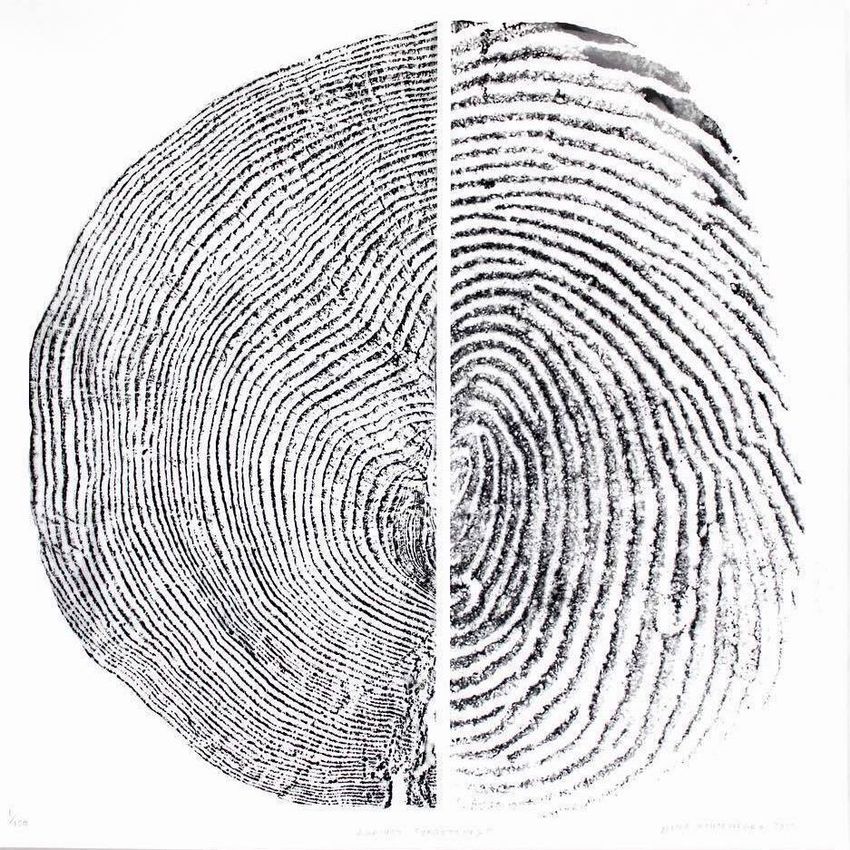
Image: Tree ring & human fingerprint
Date: May 2019
Source: Reddit (Accessed 15 January 2021)
URL: https://www.reddit.com/r/pics/comments/grcz20/tree_ring_human_fingerprint/
CRICOS
CRICOS Provider Code: 00098G
Acknowledgement of Country
We acknowledge the Bedegal people who are the traditional custodians of the lands on which UNSW
Kensington campus is located.
ARTS2876 Term 1, 2021 published at 17-01-2021 // © University of New South Wales, 2021
15
Powered by TCPDF (www.tcpdf.org)You can also read


