ARTS2035 American Literature: Past and Present - Term Three // 2020 - UNSW Arts & Social Sciences
←
→
Page content transcription
If your browser does not render page correctly, please read the page content below
School of the Arts and Media // UNSW Arts and Social Sciences
ARTS2035
American Literature: Past and Present

Term Three // 2020

  ARTS2035 Term 3, 2020 published at 10-08-2020 // © University of New South Wales, 2020
                                                                                           1
Course Overview
Staff Contact Details
Convenors

Name                 Email                                     Availability               Location     Phone
Sigi Jottkandt       s.jottkandt@unsw.edu.au                   By appointment             Webster 311J 0293856813

School Contact Information

School of the Arts and Media

Room 312, Level 3, Robert Webster Building (G14)

Phone: (02) 9385 4856

Email: sam@unsw.edu.au

Website: www.arts.unsw.edu.au/sam

The School of the Arts and Media would like to Respectfully Acknowledge the Traditional Custodians,
the Bedegal (Kensington campus), Gadigal (City and Art & Design Campuses) and the Ngunnawal
people (Australian Defence Force Academy in Canberra) of the lands where each campus of UNSW is
located.

                  ARTS2035 Term 3, 2020 published at 10-08-2020 // © University of New South Wales, 2020
                                                                                                               2
Course Details
Credit Points 6
Summary of the Course
This course provides a rich survey of the major movements and dynamics of American literature,
situating some of the most significant works of American prose and poetry within historical and social
frameworks.
The course is structured around coherent modules that juxtapose contemporary and historical texts, and
argue for a distinctive national tradition. Themed modules such as 'Roads' and 'Outsiders' will blend
primary with secondary reading materials and construct a compelling literary and critical portrait of the
world's most powerful nation.
Course Learning Outcomes
1. Identify, describe and critically evaluate major developments in American literature
2. Gain insight into the concept of 'America' in a variety of its applications
3. Develop an awareness of the relationship between American literature and other dynamics in
19th and 20th century American society, including racial, sexual and class inequality
4. Explain key themes in American literary studies
5. Write and speak about American literature in a way that is appropriate to the academic discipline
of English
Teaching Strategies
Rationale:
This course introduces students to some of the major works of the American canon - as well as some
less respectable and more challenging texts - from the period of early European exploration to the later
half of the 20th century. We have chosen texts that seem exemplarily to promote an understanding of
key social and political trends in American cultural life. The course uses the theme of a road-trip as an
organizing point to explore topics such as the Puritan experience, American exceptionalism, revolution
and the Civil War, the philosophy and aesthetics of American transcendentalism, the Gilded Age,
industrialism and the rise of consumerism, suburbia, multiculturalism and other issues. Particular
attention will be paid to questions of race and gender as well as authorship and representation. The idea
of the course is that by examining the literary record through the lens of American '??place'? in
different historical periods, we can note the persistence, mutation and transformation of genres, styles
and forms.
Teaching Strategies:
The teaching methods used and the assessment components you are required to complete have been
developed to reflect a philosophy of learning and teaching which
fosters an engaging and inclusive learning experience
promotes dialogical teaching through tutorial discussions
seeks to give every student a stake in, and an opportunity to contribute to, the course as a forum
for learning.
ARTS2035 Term 3, 2020 published at 10-08-2020 // © University of New South Wales, 2020
3Lectures, tutorials and assessment in this course should give you the skills necessary to perform
intelligent, independent readings of American literary texts and to communicate those readings in cogent
speech and prose
ARTS2035 Term 3, 2020 published at 10-08-2020 // © University of New South Wales, 2020
4Assessment
We favour the Chicago Manual of Style, 17th edition, for all style and referencing matters.
http://www.chicagomanualofstyle.org/tools_citationguide/citation-guide-1.html
We also like to see a strong independent voice in all written tasks. Find confidence in your own views
and judgments, while testing them against the ideas of other critics and thinkers.
Assessment Tasks
Assessment task Weight Due Date Student Learning
Outcomes Assessed
Take Home Exam 35% 26/11/2020 05:00 PM 1,2,3,4,5
Minor Writing Assignment 25% 17/11/2020 11:00 PM 1,2,3,4
Research Essay 40% 31/10/2019 05:00 PM 1,2,3,4,5
Assessment Details
Assessment 1: Exam
Start date: Not Applicable
Details:
Take-home examination set in the formal examination period. The exam will consist of two equal parts
over the equivalent of two hours. This is the final assessment task.
Brief written comments and marksheet grid with criteria provided.
Turnitin setting: This assignment is submitted through Turnitin and students do not see Turnitin
similarity reports.
Assessment 2: Minor Writing Assignment
Start date: Not Applicable
Length: 1500
Details:
1500 words.
Brief written comments and marksheet grid with criteria provided.
Submission notes:Through Moodle
ARTS2035 Term 3, 2020 published at 10-08-2020 // © University of New South Wales, 2020
5Turnitin setting: This is not a Turnitin assignment
Assessment 3: Research Essay
Start date: Not Applicable
Length: 2500
Details:
2500 words.
Written comments and marksheet grid with criteria provided.
Turnitin setting: This assignment is submitted through Turnitin and students do not see Turnitin
similarity reports.
ARTS2035 Term 3, 2020 published at 10-08-2020 // © University of New South Wales, 2020
6Attendance Requirements
Students are strongly encouraged to attend all classes and review lecture recordings.
Course Schedule
View class timetable
Timetable
Date Type Content
Week 1: 14 September - Lecture Claudia Rankine, Citizen
18 September Online Activity American Literature X
Introduction to working collaboratively.
Week 2: 21 September - Lecture Frederick Douglass, Narrative of the Life of
25 September Frederick Douglass, An American Slave (1845)
Tutorial Rankine
Online Activity American Literature X
Collaborative writing
Week 3: 28 September - Lecture Herman Melville, Benito Cereno
2 October Tutorial Frederic Douglass
Online Activity American Literature X
Collaborative writing
Week 4: 5 October - 9 Lecture Nathaniel Hawthorne, The Scarlet Letter: A
October Romance (1850)
Tutorial Melville
Online Activity American Literature X
Collaborative writing
Week 5: 12 October - 16 Lecture Flannery O'Connor, A Good Man is Hard to Find
October and other short stories
Tutorial Hawthorne
Online Activity American Literature X
Collaborative writing
Week 6: 19 October - 23 Reading Reading Week (no lecture or tute)
October
Week 7: 26 October - 30 Lecture Truman Capote, In Cold Blood (1966)
October Tutorial O'Connor
Online Activity American Literature X
Collaborative Writing
Week 8: 2 November - 6 Lecture Walt Whitman and Emily Dickinson
November Tutorial Capote
ARTS2035 Term 3, 2020 published at 10-08-2020 // © University of New South Wales, 2020
7Online Activity American Literature X
Collaborative Writing
Week 9: 9 November - Lecture Elizabeth Bishop, (poems on Moodle)
13 November Tutorial Whitman and Dickinson
Week 10: 16 November - Tutorial Bishop
20 November
ARTS2035 Term 3, 2020 published at 10-08-2020 // © University of New South Wales, 2020
8Resources
Prescribed Resources
Some of these will be found on the course Moodle site. The rest are available through the bookstore.
Elizabeth Bishop (selected poems [Moodle]
Truman Capote, In Cold Blood (1966)
Emily Dickinson, selected poems [Moodle]
Frederick Douglass, Narrative of the Life of Frederick Douglass, an American Slave, Written by Himself
(1845) [Moodle]
Nathaniel Hawthorne, The Scarlet Letter (1850)
Flannery O'Connor, A Good Man is Hard to Find and other short stories (2016)
Herman Melville, Benito Cereno (1856)
Claudia Rankine, Citizen (2014)
Walt Whitman, Leaves of Grass (1855 and 1891) [Moodle]
Recommended Resources
See Moodle
Course Evaluation and Development
We regularly revise and update this course, partly in response to student feedback and contributions.
Please feel free to make suggestions to the course convenor, tutors or student representatives in the
course.
ARTS2035 Term 3, 2020 published at 10-08-2020 // © University of New South Wales, 2020
9Submission of Assessment Tasks
Turnitin Submission
If you encounter a problem when attempting to submit your assignment through Turnitin, please
telephone External Support on 9385 3331 or email them on externalteltsupport@unsw.edu.au . Support
hours are 8:00am – 10:00pm on weekdays and 9:00am – 5:00pm on weekends (365 days a year). If you
are unable to submit your assignment due to a fault with Turnitin you may apply for an extension, but you
must retain your ticket number from External Support (along with any other relevant documents) to
include as evidence to support your extension application. If you email External Support you will
automatically receive a ticket number, but if you telephone you will need to specifically ask for one.
Turnitin also provides updates on their system status on Twitter.
Generally, assessment tasks must be submitted electronically via either Turnitin or a Moodle
assignment. In instances where this is not possible, it will be stated on your course’s Moodle site with
alternative submission details.
For information on how to submit assignments online via Moodle: https://student.unsw.edu.au/how-
submit-assignment-moodle
ARTS2035 Term 3, 2020 published at 10-08-2020 // © University of New South Wales, 2020
10Academic Honesty and Plagiarism
Plagiarism is using the words or ideas of others and presenting them as your own. It can take many
forms, from deliberate cheating to accidentally copying from a source without acknowledgement.
UNSW groups plagiarism into the following categories:
Copying: using the same or very similar words to the original text or idea without acknowledging the
source or using quotation marks. This also applies to images, art and design projects, as well as
presentations where someone presents another’s ideas or words without credit.
Inappropriate paraphrasing: Changing a few words and phrases while mostly retaining the original
structure and/or progression of ideas of the original, and information without acknowledgement. This also
applies in presentations where someone paraphrases another’s ideas or words without credit and to
piecing together quotes and paraphrases into a new whole, without appropriate referencing.
Collusion: working with others but passing off the work as a person’s individual work. Collusion also
includes providing your work to another student before the due date, or for the purpose of them
plagiarising at any time, paying another person to perform an academic task, stealing or acquiring
another person’s academic work and copying it, offering to complete another person’s work or seeking
payment for completing academic work.
Inappropriate citation: Citing sources which have not been read, without acknowledging the "secondary"
source from which knowledge of them has been obtained.
Duplication ("self-plagiarism"): submitting your own work, in whole or in part, where it has previously
been prepared or submitted for another assessment or course at UNSW or another university.
Correct referencing practices:
Paraphrasing, summarising, essay writing and time management
Appropriate use of and attribution for a range of materials including text, images, formulae and
concepts.
Individual assistance is available on request from The Learning Centre (http://www.lc.unsw.edu.au/).
Students are also reminded that careful time management is an important part of study and one of the
identified causes of plagiarism is poor time management. Students should allow sufficient time for
research, drafting and proper referencing of sources in preparing all assessment items.
UNSW Library also has the ELISE tool available to assist you with your study at UNSW. ELISE is
designed to introduce new students to studying at UNSW but it can also be a great refresher during your
study.
Completing the ELISE tutorial and quiz will enable you to:
analyse topics, plan responses and organise research for academic writing and other
assessment tasks
effectively and efficiently find appropriate information sources and evaluate relevance to your
needs
use and manage information effectively to accomplish a specific purpose
better manage your time
ARTS2035 Term 3, 2020 published at 10-08-2020 // © University of New South Wales, 2020
11understand your rights and responsibilities as a student at UNSW
be aware of plagiarism, copyright, UNSW Student Code of Conduct and Acceptable Use of
UNSW ICT Resources Policy
be aware of the standards of behaviour expected of everyone in the UNSW community
locate services and information about UNSW and UNSW Library
Some of these areas will be familiar to you, others will be new. Gaining a solid understanding of all the
related aspects of ELISE will help you make the most of your studies at UNSW.
http://subjectguides.library.unsw.edu.au/elise/aboutelise
ARTS2035 Term 3, 2020 published at 10-08-2020 // © University of New South Wales, 2020
12Academic Information
For essential student information relating to:
requests for extension;
late submissions guidelines;
review of marks;
UNSW Health and Safety policies;
examination procedures;
special consideration in the event of illness or misadventure;
student equity and disability;
and other essential academic information, see
https://www.arts.unsw.edu.au/current-students/academic-information/protocols-guidelines/
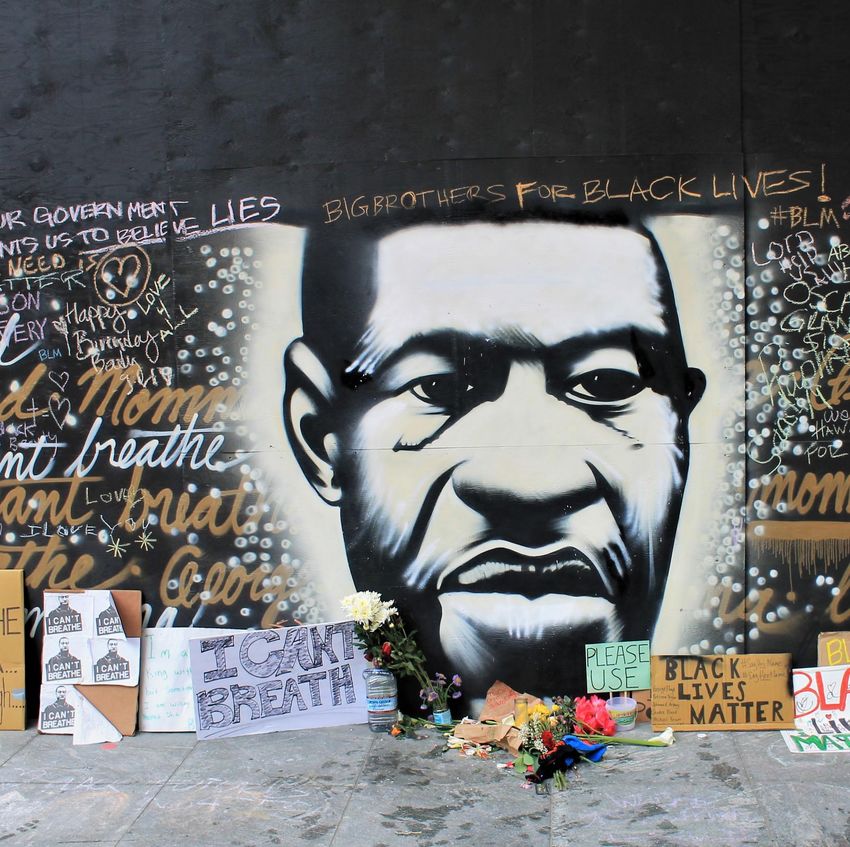
Image Credit
This is a George Floyd memorial located along the walls of the Apple Store in downtown Portland,
Oregon. This photograph was taken in June of 2020. By Rickmouser45, 9 June 2020, Creative
Commons Attribution-Share Alike 4.0
International, https://commons.wikimedia.org/wiki/File:George_Floyd_Memorial_in_Portland,_Oregon.jpg
CRICOS
CRICOS Provider Code: 00098G
Acknowledgement of Country
We acknowledge the Bedegal people who are the traditional custodians of the lands on which UNSW
Kensington campus is located.
ARTS2035 Term 3, 2020 published at 10-08-2020 // © University of New South Wales, 2020
13
Powered by TCPDF (www.tcpdf.org)You can also read


