MUSC2116 School of the Arts and Media UNSW Arts, Design and Architecture - UNSW Sydney
←
→
Page content transcription
If your browser does not render page correctly, please read the page content below
School of the Arts and Media
                                                UNSW Arts, Design and Architecture

MUSC2116
Sound, Society and Self in World Music

Term 3, 2021

               MUSC2116 // Term 3, 2021 // published at 09-08-2021 © UNSW Sydney, 2021
                                                                                         1
Course Overview
Staff Contact Details
Convenors

 Name                Email                                     Availability              Location      Phone

 Dr. John Napier     j.napier@unsw.edu.au                      Contact via email         Webster 113   n/a
                                                               to arrange a
                                                               consultation time.

Tutors

 Name                Email                                     Availability              Location      Phone

 Ryan Martin         ryan.martin@student.unsw.ed               please contact by         n/a
                     u.au                                      email to arrange a
                                                               consultation

School Contact Information

School of the Arts and Media

Room 312, Level 3, Robert Webster Building (G14)

Phone: (02) 9385 4856

Email: sam@unsw.edu.au

Website: www.arts.unsw.edu.au/sam

                        MUSC2116 // Term 3, 2021 // published at 09-08-2021 © UNSW Sydney, 2021
                                                                                                               2
Acknowledgement of Country

UNSW Arts, Design and Architecture Kensington and Paddington campuses are built on Aboriginal
Lands. We pay our respects to the Bidjigal and Gadigal peoples who are the Custodians of these lands.
We acknowledge the Aboriginal and Torres Strait Islander peoples, the First Australians, whose lands,
winds and waters we all now share, and pay respect to their unique values, and their continuing and
enduring cultures which deepen and enrich the life of our nation and communities.

    Image courtesy of the Office of the Pro Vice-Chancellor Indigenous UNSW's Indigenous strategy

                       MUSC2116 // Term 3, 2021 // published at 09-08-2021 © UNSW Sydney, 2021
                                                                                                    3
Course Details
Units of Credit 6
Summary of the Course
Music is part of the life of people everywhere, and as George Eliot once said, there is no feeling, except
the extremes of fear and grief, that does not find relief in music. Universal though these truths might
appear to be, the various musical expressions of the world’s peoples are as diverse, unique, and
sometimes strange, as the natural and cultural worlds that make them. Today we can access that
musical diversity easily. We can buy it, download it, iPod it. But just how much do we know about the
peoples, histories, sentiments, and lives of the musicians and singers that produce this music? How
much do we grasp the beauty, the yearning, and the spirituality in that music? What can we learn that
will deepen our appreciation, understanding, and perhaps performance of the many musical expressions
available to us today?
This World Music course surveys and examines the relationships between music, the society in which it
is performed, and individual selves. It explores both traditional and contemporary music of Aboriginal
Australia, South-east Asia, India, Central Asia and the Middle East, West Africa and the Caribbean, and
marginal Europe. It examines how musical practices express, shape, and allow for the individual and
collective construction and negotiation of identity, ethnicity, gender, spirituality and class. It investigates
how transformations in music both as social practice and as sound chart responses to modernity, state
intervention, globalisation, conflict, dispossession and migration. The course also fosters direct
experience of music in diverse cultural contexts through field work.
Course Learning Outcomes
1. Locate diverse genres of world music within historical, socio-cultural, and global contexts.
2. Recognize diverse genres of world music on basis of their aesthetic differences.
3. Analyse world music, in terms of sound, text, and performative dimensions, as social and cultural
behaviour.
Teaching Strategies
Students attend a weekly two-hour lecture and one-hour tutorial. Lectures are augmented with videos,
film, slides, sound recordings, and powerpoint presentations. Tutorials involve discussions of readings,
aural analysis of selected musical examples, demonstrations, and hands-on practical work. Set readings
and listening requiring students responses will be directed towards historical, social, cultural, and
aesthetic differences in the world music genres studied. Students will maintain a reflective journal or blog
to record their responses to set readings and listening and record the processes involved in the
ethnographic team research project. This project will require students to collaborate on investigating and
documenting community-based music-making in multi-cultural contexts in Sydney.
MUSC2116 // Term 3, 2021 // published at 09-08-2021 © UNSW Sydney, 2021
4Assessment
Assessment task Weight Due Date Course Learning
Outcomes Assessed
1. Ethnographic research 40% 17/11/2021 11:00 AM 1, 2, 3
project/presentation
2. Discussion blog 30% Not Applicable 1, 2, 3
3. Listening Test 30% Not Applicable 1, 2, 3
Assessment 1: Ethnographic research project/presentation
Assessment length: 2000 words for report 15 mins for presentation
Due date: 17/11/2021 11:00 AM
In groups of 4-5 students students must complete two components – a research report worth 20% (min.
2000 words) and an oral presentation (15 mins) worth 20%.
Students will be provided with written feedback online after submission of the research report.
This assignment is submitted through Turnitin and students can see Turnitin similarity reports.
Additional details
The presentations will be in the tutorials in week 10. The written report is due on Friday 26th November,
11:59 PM. The written report is submitted through Turnitin.
Assessment 2: Discussion blog
Assessment length: 500 words each
Students will be required to submit three blogs of 500 words each at times specified.
Students will be given feedback on blogs after they have been posted.
This is not a Turnitin assignment
Additional details
You will be required to submit three blogs of 500 words each via Moodle. These will be due on Sunday
26th September, Sunday 17th October, Sunday 31st October11:59 PM.
Assessment 3: Listening Test
This assessment task consists of two tests of equal weighting. Tests will be 30 mins each in duration.
This is the final assessment task.
Test papers will be returned with marks and comments as necessary.
MUSC2116 // Term 3, 2021 // published at 09-08-2021 © UNSW Sydney, 2021
5Additional details
The conditions of these test may vary depending on mode of delivery at the time. These tests are no
longer the 'final assessment task', and will be held in weeks 5 and 9, in the tutorial.
MUSC2116 // Term 3, 2021 // published at 09-08-2021 © UNSW Sydney, 2021
6Attendance Requirements
Students are strongly encouraged to attend all classes and review lecture recordings.
Course Schedule
View class timetable
Timetable
Date Type Content
Week 1: 13 September Lecture L1. Introduction: Studying & listening to world
- 17 September music; music & society. Ethnographic Methods.
Music and hybridity, music and identity. Other
concepts: cultural relativism, multiculturalism,
cosmopolitanism, interculturalism, social function,
selfhood.
Tutorial T1. Discussion of methods & concepts, and group
research projects. Research project group self-
selection to be finalized by students. Discussion
of potential research projects.
Week 2: 20 September Lecture South-East Asia
- 24 September
Tutorial TBA
Week 3: 27 September Lecture Indian music, including the Indian diaspora.
- 1 October
Tutorial TBA
Week 4: 4 October - 8 Lecture 'Marginal' Europe Part 1.
October
Tutorial TBA
Week 5: 11 October - Lecture 'Marginal' Europe Part 2.
15 October
Lecture 'Marginal' Europe Part 2.
Tutorial Listening test 1. Other content TBA
Week 6: 18 October - Lecture Lecture? What lecture? this is flexi week.
22 October
Week 7: 25 October - Lecture Maqamat - from Tunisia to West Asia.
29 October
Tutorial TBA
Week 8: 1 November - Lecture Music of Indigenous Australians OR West Africa
MUSC2116 // Term 3, 2021 // published at 09-08-2021 © UNSW Sydney, 2021
75 November Tutorial TBA
Week 9: 8 November - Lecture Music of Indigenous Australians OR West Africa
12 November
Tutorial Listening test. Other content TBA
Week 10: 15 November Lecture Afro-Latin music (Cuba, Brazil)
- 19 November
Tutorial Presentations
MUSC2116 // Term 3, 2021 // published at 09-08-2021 © UNSW Sydney, 2021
8Resources
Prescribed Resources
Prescribed Resources There is a Resources section in Moodle that contains the following: A. Resources
for mandatory course listening and reading: 1. Reading list using Leganto. This enables easy access to
all course materials on any device, through a single, intuitive user interface. 2. Listening List. This
enables access to all AV materials used in the lectures. 3. Music Glossary. This valuable resource
provides definitions and links to other resources, where appropriate, of key terms and concepts used in
the course. It is strongly recommended that you consult this list. B. Films with links to online viewing: 1.
Buena Vista Social Club 2. Orfeu Negro 3. Capas Negras C. Performance Resources: 1. Gangokui
12-pulse seven stroke pattern 2. Son clave 3. Salsa 4. Samba batucada 5. Balinese gamelan: gilak
topeng 6. Balinese gamelan: gilak baris 7. downloadable scores of the above. Further resources will be
added through the session.
Recommended Resources
See the Leganto Reading List in the course Moodle site.
Course Evaluation and Development
Students have the opportunity to provide evaluative feedback on the course through UNSW's Course
and Teaching Evaluation and Improvement (CATEI) Process. Student feedback is important and
provides one means for improving the course for subsequent cohorts. As new convenor to this course, I
have revised some of the content of this course.
MUSC2116 // Term 3, 2021 // published at 09-08-2021 © UNSW Sydney, 2021
9Submission of Assessment Tasks
Turnitin Submission
If you encounter a problem when attempting to submit your assignment through Turnitin, please
telephone External Support on 9385 3331 or email them on externalteltsupport@unsw.edu.au . Support
hours are 8:00am – 10:00pm on weekdays and 9:00am – 5:00pm on weekends (365 days a year). If you
are unable to submit your assignment due to a fault with Turnitin you may apply for an extension, but you
must retain your ticket number from External Support (along with any other relevant documents) to
include as evidence to support your extension application. If you email External Support you will
automatically receive a ticket number, but if you telephone you will need to specifically ask for one.
Turnitin also provides updates on their system status on Twitter.
Generally, assessment tasks must be submitted electronically via either Turnitin or a Moodle
assignment. In instances where this is not possible, it will be stated on your course’s Moodle site with
alternative submission details.
For information on how to submit assignments online via Moodle: https://student.unsw.edu.au/how-
submit-assignment-moodle
MUSC2116 // Term 3, 2021 // published at 09-08-2021 © UNSW Sydney, 2021
10Academic Honesty and Plagiarism
Plagiarism is using the words or ideas of others and presenting them as your own. It can take many
forms, from deliberate cheating to accidentally copying from a source without acknowledgement.
UNSW groups plagiarism into the following categories:
Copying: Using the same or very similar words to the original text or idea without acknowledging the
source or using quotation marks. This includes copying materials, ideas or concepts from a book, article,
report or other written document, presentation, composition, artwork, design, drawing, circuitry, computer
program or software, website, internet, other electronic resource, or another person's assignment without
appropriate acknowledgement.
Inappropriate paraphrasing: Changing a few words and phrases while mostly retaining the original
information, structure and/or progression of ideas of the original without acknowledgement. This also
applies in presentations where someone paraphrases another’s ideas or words without credit and to
piecing together quotes and paraphrases into a new whole, without appropriate referencing.
Collusion: Working with others but passing off the work as a person’s individual work. Collusion also
includes providing your work to another student for the purpose of them plagiarising, paying another
person to perform an academic task, stealing or acquiring another person’s academic work and copying
it, offering to complete another person’s work or seeking payment for completing academic work.
Inappropriate citation: Citing sources which have not been read, without acknowledging the
"secondary" source from which knowledge of them has been obtained.
Duplication ("self-plagiarism"): Submitting your own work, in whole or in part, where it has previously
been prepared or submitted for another assessment or course at UNSW or another university.
Correct referencing practices
The UNSW Academic Skills support offers resources and individual consultations. Students are also
reminded that careful time management is an important part of study. One of the identified causes of
plagiarism is poor time management. Students should allow sufficient time for research, drafting and
proper referencing of sources in preparing all assessment items.
UNSW Library has the ELISE tool available to assist you with your study at UNSW. ELISE is designed to
introduce new students to studying at UNSW but it can also be a great refresher during your study.
Completing the ELISE tutorial and quiz will enable you to:
analyse topics, plan responses and organise research for academic writing and other
assessment tasks
effectively and efficiently find appropriate information sources and evaluate relevance to your
needs
use and manage information effectively to accomplish a specific purpose
better manage your time
understand your rights and responsibilities as a student at UNSW
be aware of plagiarism, copyright, UNSW Student Code of Conduct and Acceptable Use of
UNSW ICT Resources Policy
be aware of the standards of behaviour expected of everyone in the UNSW community
locate services and information about UNSW and UNSW Library
MUSC2116 // Term 3, 2021 // published at 09-08-2021 © UNSW Sydney, 2021
11Academic Information
Due to evolving advice by NSW Health, students must check for updated information regarding online
learning for all Arts, Design and Architecture courses this term (via Moodle or course information
provided.)
For essential student information relating to:
requests for extension;
late submissions guidelines;
review of marks;
UNSW Health and Safety policies;
examination procedures;
special consideration in the event of illness or misadventure;
student equity and disability;
and other essential academic information, see
https://www.arts.unsw.edu.au/current-students/academic-information/protocols-guidelines/
Image Credit
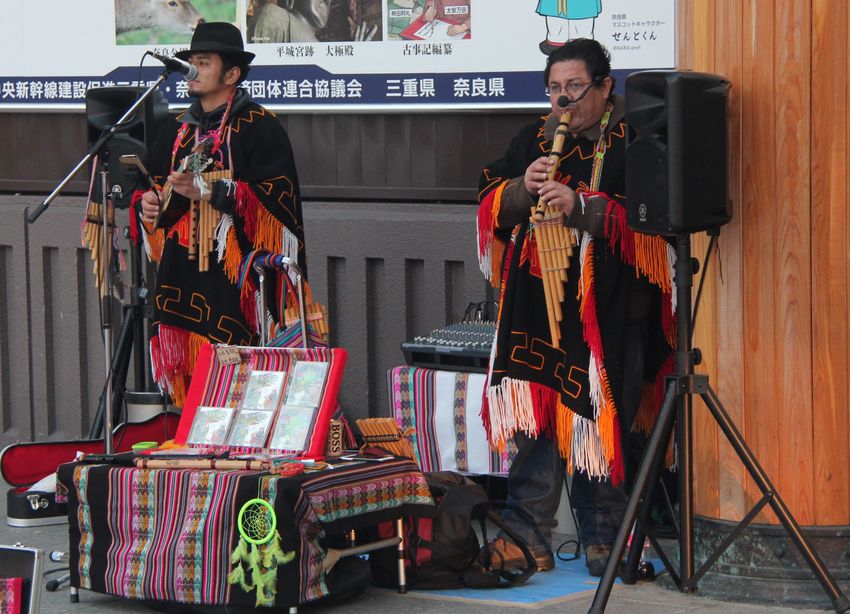
This image is the property of the course convenor
CRICOS
CRICOS Provider Code: 00098G
MUSC2116 // Term 3, 2021 // published at 09-08-2021 © UNSW Sydney, 2021
12
Powered by TCPDF (www.tcpdf.org)You can also read


