ASEE SOUTHEASTERN ANNUAL SECTION CONFERENCE - MARCH 8-10, 2020 - DELIVERING STUDENT-ORIENTED ENGINEERING EDUCATION - ASEE-SE
←
→
Page content transcription
If your browser does not render page correctly, please read the page content below
ASEE SOUTHEASTERN
ANNUAL SECTION CONFERENCE
DELIVERING STUDENT-ORIENTED ENGINEERING EDUCATION

                  MARCH 8-10, 2020
       AUBURN UNIVERSITY
                 ASEE • MARCH • AUBURN,  ALABAMA
                              8-10, 2020            1
              AUBURN UNIVERSITY • AUBURN, ALABAMA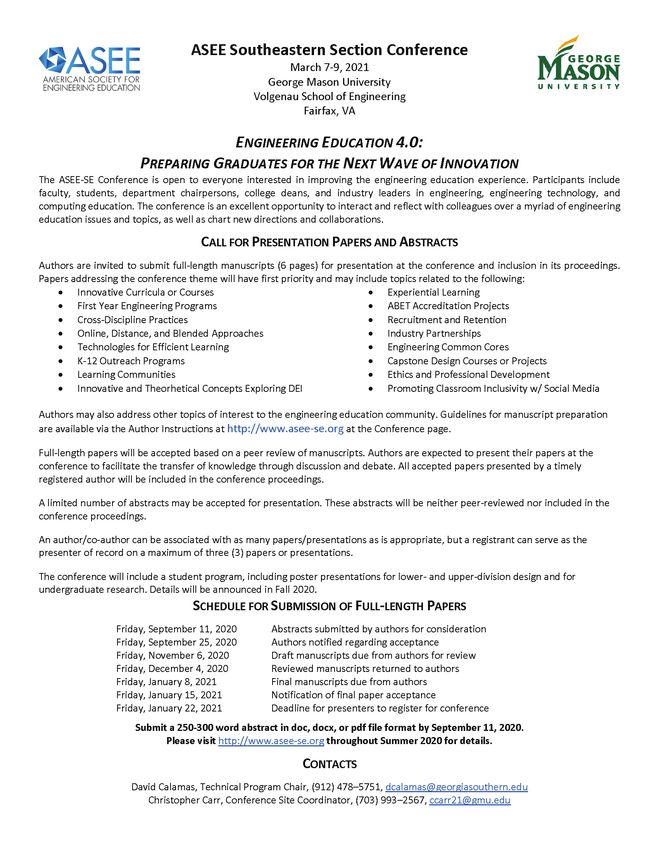
ASEE SOUTHEASTERN
    ANNUAL SECTION CONFERENCE
    DELIVERING STUDENT-ORIENTED ENGINEERING EDUCATION

       MARCH 8-10, 2020 • AUBURN UNIVERSITY • AUBURN, ALABAMA

                       Technical Program Chair
              David Calamas • Georgia Southern University
                    dcalamas@georgiasouthern.edu

                          Proceedings Editor
                  John Brocato • University of Georgia
                        john.brocato@uga.edu

                      Site Chair and Coordinator
                    John Y. Hung • Auburn University
                         hungjoh@auburn.edu

                         Workshop Coordinator
                     Jeffrey Rice • Auburn University
                           jjr0033@auburn.edu

                      Student Poster Coordinator
                 Natalia H. Cardelino • Mercer University
                        cardelino_nh@mercer.edu

                           Program Editor
                    Danny Doyle • Auburn University
                       dannydoyle@auburn.edu

2                          ASEE • MARCH 8-10, 2020
                     AUBURN UNIVERSITY • AUBURN, ALABAMA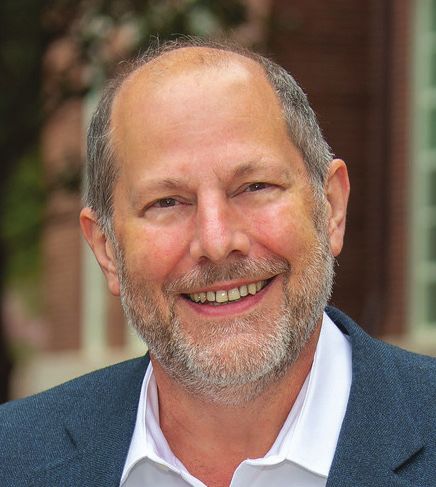
MAPS

The Samuel Ginn College of Engineering occupies most of the northeast corner of Auburn
University’s main campus, located at the famous fixture called Toomer’s Corner. On the map, the
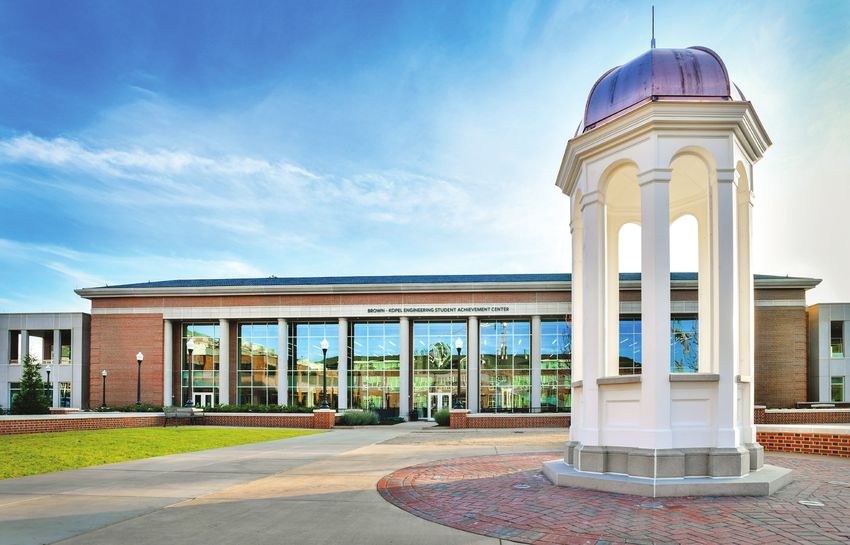
AU Hotel and Brown-Kopel Engineering Student Achievement Center (B-K) are highlighted
in dark navy – an 8-minute walk.

                    MAGNOLIA AVE.                    MAGNOLIA AVE.                          TOOMER’S
                                                                                             CORNER

                                                     CE              CE
                        CSSE
                  ISE

                                                                          AE
                                                    MAT’L

                                       BROWN-
            ME
                                        KOPEL

                           ECE

                                                                               THACH AVE.

                                                                                            SOUTH COLLEGE STREET
                                                                                                                     AU
                                                                                                                    HOTEL

The majority of ASEE-SE activities, as well as the K-12 special workshop day, will be on Level 2 of
Brown-Kopel. Enter the building on Level 1. Most doors are on the north side (Grand Atrium),
but there is one door on the east side of Level 1 (look for signs to the Atrium). The registration
desk is in the Grand Atrium. Take the wide staircase up to Level 2. Elevators (cross-boxes on the
map) and restrooms are on the ends of the building.

                                       ASEE • MARCH 8-10, 2020                                                              3
                                 AUBURN UNIVERSITY • AUBURN, ALABAMA
MOBILE APP

We are using a conference app called “Sched”.
       > On a computer/laptop go to: https://aseese2020.sched.com/
       > Mobile device users download and install the Sched app, and then search for the meeting name:
         ASEE-SE 2020

NUMBERS TO KNOW

Assistance at the conference..................................... 919-349-1925
Emergency........................................................................... Dial 9-1-1, and stay on the phone
Auburn University Hotel & Conference Center............... 334-821-8200

PROCEEDINGS

Proceedings are available at:
http://www.asee-se.org/proceedings/ASEE2020/2020proceedings.htm or https://paper.asee-se.org

REGISTRATION DESK

The Registration desk is on Level 1 (Grand Atrium) of the Brown-Kopel Center.
Saturday - 8:00 am – 1 pm (for attendees registered for “Regular Plus” or “Graduate Plus”)
Sunday - 11:30 am – 1:00 pm
Monday - 7:30 am – 3:00 pm (closed for lunch)
Tuesday - 8:00 am – 10:00 am

STUDY ROOMS

Located in the Grand Foyer area, nine 6-seat study rooms (2125, 2127, 2135, 2137, 2145, 2147, 2153,
2159, 2161) have been reserved for ASEE-SE impromptu meetings. Other study rooms in the area may
also be open. Feel free to use any of these facilities on a first-come, first-served basis.

WEBPAGE                Conference website URL: https://aub.ie/asee-se-2020

WI-FI ACCESS                  There are two options for Wi-Fi access.

Option A: For participating eduroam members:
		             a) Connect to WiFi network: eduroam
		             b) When prompted for username/password, enter your full e-mail address for the user
                  name and the password from your home institution.
Option B: Using Auburn University-provided Guest account
		             a) Connect to WiFi network: AU-Open
		             b) Open a web browser and authenticate using the guest username/password provided.

4                                                      ASEE • MARCH 8-10, 2020
                                                 AUBURN UNIVERSITY • AUBURN, ALABAMA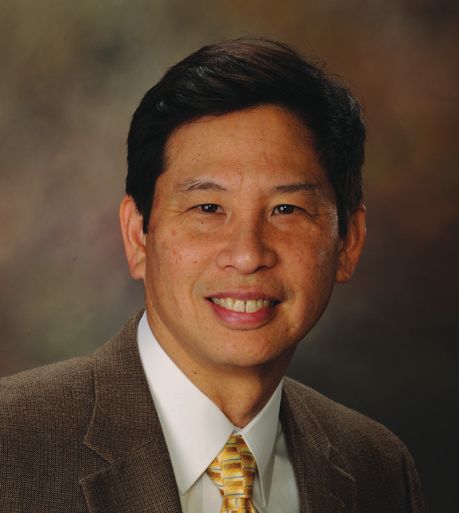
TABLE OF CONTENTS

Maps.................................................................................................................. 3
General Information....................................................................................... 4
              Conference Mobile App
              Numbers to Know
              Proceedings
              Registration Desk
              Study Rooms
              Webpage
              Wi-Fi Access
K-12 Workshops Schedule............................................................................ 6
ASEE-SE 2020 Conference at a Glance...................................................... 6
Division Meetings........................................................................................... 6
               Monday morning Divisions
               Tuesday morning Divisions
Conference Schedule Details....................................................................... 7
Technical Session Paper Placement............................................................ 8
Technical Paper ID Index............................................................................... 10
Author Index.................................................................................................... 14
Roundtable Discussions................................................................................ 16
Workshops........................................................................................................ 16
Welcome Messages........................................................................................ 17
              Chris Roberts, Dean – Samuel Ginn College of Engineering
              Tim Wilson, ASEE-SE Section President
              John Y. Hung, 2020 Site Coordinator
Monday Plenary Session Speaker............................................................... 20
Thomas C. Evans Engineering Education Paper Award......................... 20
Monday Awards Banquet Featured Guest................................................ 22
2019-2020 ASEE Southeastern Section Officers..................................... 23
Instructions for Technical Session Moderators........................................ 24
2021 Call for Papers (George Mason University)....................................... 25
Blank Notes...................................................................................................... 26

                                      ASEE • MARCH 8-10, 2020                                                              5
                                AUBURN UNIVERSITY • AUBURN, ALABAMA
K-12 WORKSHOPS SCHEDULE

Saturday, 7 March 2020
Note: This is an add-on event for ASEE-SE 2020. Conference attendees are welcome to add this day to
their regular registration ($20 to cover lunch and coffee breaks).

8:00 AM – 1:00 PM.............................................................. Registration desk
9:00 AM – 11:30 AM........................................................... K-12 workshops
11:45 AM – 1:15 PM............................................................ Lunch + Curriculum exposition
1:30 PM – 4:00 PM.............................................................. K-12 workshops

K-12 workshop titles are on the ASEE-SE website https://aub.ie/asee-se-2020

ASEE-SE 2020 CONFERENCE AT A GLANCE

Sunday, 8 March 2020
          12:00 PM – 300 PM.......................................... ASEE-SE workshops
          1:00 PM – 4:00 PM........................................... Tours
          3:00 PM – 5:00 PM........................................... Executive Board Meeting
          6:00 PM – 8:00 PM........................................... Welcome Reception

Monday, 9 March 2020
         8:30 AM – 9:30 AM........................................... Opening & Plenary Session
         9:30 AM – 10:30 AM........................................ Student Poster session
         10:00 AM – 11:30 AM...................................... Technical Session 1
         11:30 AM – 12:30 PM...................................... Roundtable discussions
         1:00 PM – 3:30 PM........................................... Technical Session 2
         3:45 PM – 5:15 PM........................................... Technical Session 3
         6:00 PM – 9:00 PM........................................... ASEE-SE awards dinner

Tuesday, 10 March 2020
          9:00 AM – 10:30 AM........................................ Technical Session 4
          10:30 AM – 12 PM............................................ Technical Session 5

DIVISION MEETINGS

ASEE-SE Division meetings are concurrent with breakfasts on Monday and Tuesday, in Room 2151/2157
(Grand Hall 1 & 2). Feel free to also meet in the study rooms around the Grand Foyer area.

Monday morning Divisions (5)                     Tuesday morning Divisions (10)
        • Administrative                         • Bioengineering                                  • Engineering Graphics
        • Instructional                          • Chemical Engineering                            • Engineering Technology
        • Research                               • Civil Engineering                               • Industrial Engineering
        • Professional Skill                     • Computer Engineering                            • Mechanical Engineering
        • K-12                                   • Electrical Engineering                          • Software Engineering

6                                                   ASEE • MARCH 8-10, 2020
                                              AUBURN UNIVERSITY • AUBURN, ALABAMA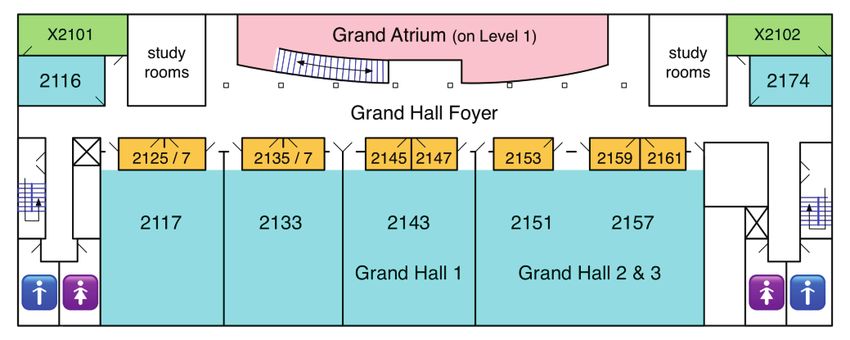
CONFERENCE SCHEDULE DETAILS

      ASEE • MARCH 8-10, 2020                         7
AUBURN UNIVERSITY • AUBURN, ALABAMA
TECHNICAL SESSION PAPER PLACEMENT (BY PAPER ID)

8                             ASEE • MARCH 8-10, 2020
                        AUBURN UNIVERSITY • AUBURN, ALABAMA
TECHNICAL SESSION PAPER PLACEMENT (BY PAPER ID)
ASEE • MARCH 8-10, 2020 9
AUBURN UNIVERSITY • AUBURN, ALABAMATECHNICAL PAPER ID INDEX
ID Title: Authors – Affiliation
2 Student Involvement in the Life Cycle of a 3D Yearbook Product: Scott Schultz, Sinjae Hyun - Mercer University
4 Effect of Letting Students Choose the Weight of Each Assessment Category on Semester Grade: Autar Kaw - University
of South Florida
5 Senior Design Project: Design of a Heated Pet Washer: William Janna, Jeffry Marchetta - University of Memphis
7 Are our Undergraduate Students Ready to Occupy Positions at Renewable Energy Companies?: Sadegh Poozesh,
Lauren Beckingham, Karen McNeal, Henry Aribisala - Tuskegee University
8 Engaging Middle and High School Students in Cybersecurity through Summer Camps: Xiaohong Yuan, Jinsheng Xu,
Xiuli Qu, Joaquin Hernandez - North Carolina Agricultural and Technical State University
9 Educating STEM Teachers on Thermoelectrics – a Promising, Emerging Technology: Lenwood Fields, Jada Meeks -
The University of Memphis
10 Industry Product Data Management (PDM) Tool Integration into Undergraduate Engineering Design Courses: Sean
R. Niemi, Michael W. Griffis, Ryan A. Smolchek, Matthew C. Banks, Noel A. Thomas, Matthew J. Traum - University of
Florida
11 A Problem Based Approach to Facilitate Linking Theory and Practice: Sankar Raghavan - University of Tennessee,
Knoxville
12 Gamification in a Graduate Fluid Dynamics Course: John Palmore, Jr. - Virginia Tech
13 Using Peer Led Team Learning (PLTL) approach to improve retention in ECE gateway courses: Harish Chintakunta,
Suleiman Alsweiss, Jorge Vargas, Douglas Holton - Florida Polytechnic University
14 Implementing an Effective Large-Enrollment Engineering Capstone Design-and-Build Program: Matthew J. Traum,
Sean R. Niemi, Michael W. Griffis, Noel A. Thomas, W. Gregory Sawyer - University of Florida
15 Additively Manufactured 2D Truss Demonstration: Daniel Crifasi, Chandan Roy, Edmon Perkins - Mercer University,
Macon
16 A Focus on Functional-Based Teams in the Development of Prototypes of Innovative Technology: Observations from a
QEP Grant Implementation at Tennessee Tech: Stephanie Jorgensen, Andrea Arce-Trigatti, J. Robby Sanders, Pedro E.
Arce - Tennessee Technological University
17 Constraining the Landscape: Unpacking the Inquiry Learning Aspects of the Foundry Model for the Purpose of
Curriculum Design: Andrea Arce-Trigatti, Stephanie Jorgensen, J. Robby Sanders , Pedro E. Arce - Tennessee
Technological University
19 Energy Themed Laboratory Experiments in Mechanical Engineering: Stephanie Hulsey, Shubhamkar Kulkarni, Douglas
Byrd - Clemson University
22 Speech Pathology Clinical Shadowing and Research Experiences for Undergraduate Engineers & Computer Scientists:
Todd Freeborn, Memorie Gosa, Debra McCallum, Erika Steele - The University of Alabama
23 Modification of the Three-Moment Equation for Improved Student Learning: Sajjad Ali, Shane Palmquist - Western
Kentucky University
24 Challenges Integrating Entrepreneurial Training into Summer Research Experiences for Undergraduate Engineering
Students: Todd Freeborn, Susan Burkett, Debra McCallum, Erika Steele, Ying Qin - The University of Alabama
25 Preliminary Feedback on Learning in Advance Courses to Prepare Engineering Students for Gateway Courses: Todd
Freeborn, Susan Burkett, Debra McCallum, Erika Steele, Sarah Dunlap, Paul Hubner, Aibek Musaev, Patricia Sobecky -
The University of Alabama
26 Developing a Probability and Statistics Course for Civil and Construction Engineering Students: David Greenburg, Jeff
Davis - The Citadel School of Engineering
27 Introduction to Forecasting Methods for Engineering Students Using R: David Greenburg, James Righter - The Citadel
School of Engineering
28 Scholastic Considerations for Selection and Design of an Honors Project in Structural Engineering: Shahnam Navaee,
Gustavo Maldonado, Kayla Allen - Georgia Southern University
10 ASEE • MARCH 8-10, 2020
AUBURN UNIVERSITY • AUBURN, ALABAMATECHNICAL PAPER ID INDEX
30 Interdisciplinary Research in Communications Sciences and Disorders and Software Engineering to Develop Online
Phonetics Educational Training Modules: Sicheng Li, Marisha Speights Atkins, Dallin Bailey, Jueting Liu, Yang Cao,
Robertson Bassy, Cheryl Seals - Auburn University
32 Towards a High-Precision Personalized Learning Tool for Solving STEM Word Problems: Quintana Clark, Jason Clark -
Purdue University
33 A Media-Enhanced Thermodynamics Primer: Georg Pingen - Union University
34 A Sixth-Tenth Grade Engineering Summer Camp – Drawing, 3D Printing, and Building a 4 Cylinder Combustion
Engine Model: Georg Pingen, Betsy Pingen - Union University
35 Understanding Learning Environments at the Graduate Level: A Qualitative Analysis of Doctoral Engineering
Education Programs within the United States: Bobby Adams, Andrea Arce-Trigatti, Pedro Arce - Tennessee
Technological University
36 Infographic Design and Audience Expectations: A Technical Communication Assignment: Amy Barton - Mississippi
State University
39 Assessment of Experiments in a Controls Course: Chiu Choi - Univ. of North Florida
41 Learning CAD: Who is the champion?: Arash Afshar, Nasim Rezvanpour - Mercer University
42 Indirect Assessment of Deflategate, a High School Chemistry Experiment Simultaneously Measuring Pressure &
Temperature Inside a Football: Shuaicheng Tong, Sharon L. Karackattu, Matthew J. Traum - Engineer Inc.
44 Capstone Design Project- String Wound Cartridge Filter Restoration Project: Jeffery Plumblee, Emily Bierman, Jason
Howison - The Citadel
45 Capstone project - Designing a testing system and solution for an Air Pollution Reduction Solution (APRS) for
applications in developing communities: Emily Bierman, Jeffery Plumblee, Jason Howison - The Citadel
46 Current Status and Future Directions of Data Science Education in Engineering: Peter He, Jin Wang, Shiwen Mao, Laura
Parson, Peng Zeng, Bo Liu, Daniel Henry - Auburn University
47 Data-Enabled Engineering Projects (DEEPs) Modules for Data Science Education in Engineering: He, Peter He, Jin
Wang, Shiwen Mao, Laura Parson, Bo Liu, Peng Zeng, Daniel Henry - Auburn University
50 Capstone Design Project - Solar Powered Production of Clean Water: Jason Howison, Jeffery Plumblee, Emily Bierman,
Trevon Elliot-Ford - The Citadel
51 Quantitative Analysis on Students Success and Class Satisfaction by Comparing Three Different Modalities of
Assessments for a Large Engineering Gateway Course.: Ricardo Zaurin - University of Central Florida
52 Blended Instructional Delivery for a Large Engineering Course: A Step by Step Case Study Description.: Ricardo Zaurin
- University of Central Florida
54 Rubrics for Formative and Summative Student Writing Assessment in Industrial Engineering: Lesley Strawderman, Kiley
Forsythe - Mississippi State University
56 IF Programming Concepts are Eliminated from the Curriculum THEN Civil Engineers will...: Charles Newhouse, Tanjina
Afrin, Ramniceanu Andrei, Swenty Matthew - Virginia Military Institute
57 Slido as a student response system in engineering education: Nandan Shetty, Simon Ghanat - The Citadel
58 The Future of Creative Engineering Education: Application of Virtual Reality for Water-Energy-Food Nexus: Seneshaw
Tsegaye, Tanya Kunberger, Janusz Zalewski, Thomas Culhane, Garrett Fairburn, Maximilian Honigfort - Florida Gulf
Coast University
59 Curricular Predictors for Success on the Civil Fundamental of Engineering (FE) Exam: Thomas Timmes, Tanjina Afrin,
Charles Newhouse, Andre Ramniceanu, Swenty Matthew - Virginia Military Institute
60 Impact of Laboratory Section Size on Student Perception of Learning in Materials Laboratory Course: Simon Ghanat,
Nandan Shetty - The Citadel
61 Teaching Thermodynamics via Site-Synchronous Technology: Priya Goeser - Georgia Southern University - Armstrong
Campus
ASEE • MARCH 8-10, 2020 11
AUBURN UNIVERSITY • AUBURN, ALABAMATECHNICAL PAPER ID INDEX
62 Utilization of Visual Workbook as Supplement to a Textbook: Pyo-Yoon Hong - University of Guam
63 Fostering Institutional Innovation through an Engineering Education Ideas Forum: Tris Utschig, Adeel Khalid -
Kennesaw State University
64 Students' perception of performance before and after exams In a Surveying Course: Kweku Brown, Dimitra Michalaka,
William J. Davis - The Citadel
65 The Effects of Entrepreneurship Learning on the Engineering Identity of HBCU Students: Jerald Dumas - Hampton
University
66 Study of Properties of Coastal Pluff Mud at The Citadel: Simon Ghanat, Calvin Pitts, Marc Dolder - The Citadel
67 Pedagogical Techniques Employed in a Freshman Seminar Course: Simon Ghanat - The Citadel
68 Reflections about Using a Hybrid Inverted Classroom in a Sophomore Environmental Engineering Course: Richard
Mines - Mercer University
69 Delivering High Impact STEM Experiences to Underrepresented K-12 Students in Informal Settings: Strategies and
Best Practices from Two Case Studies: Tameshia Baldwin, Evelyn Brown - North Carolina State University
70 Improving Pass Rates for SolidWorks CSWA Exam: Emily Spayde, Shane Brauer, Dustin Spayde - Mississippi State
University
71 Evaluation of Student Learning Outcomes and Motivation in an Innovative Engineering Course: Madison Levan, Rachel
Saunders , Peter Tkacik , Jerry Dahlberg, Jae Hoon Lim - University of North Carolina at Charlotte
72 Orbital Mechanics Competitions as Experiential Learning Opportunities for Undergraduates: Sean Domermuth, Patrick
Bass, Nathan Washuta, Rafael Gonzalez - The Citadel
73 Development of a MATLAB App for Improving Student Learning of the Use of Arrays: Thomas Murphy, Christopher
Williams - Georgia Southern University
75 Impact of Goal-Setting during Student Advisement Sessions on Academic Performance, Study Skills, and Happiness in
Major: Carlie Cooper, Fred Beyette - University of Georgia
76 Incorporating Grand Challenges and Developing a Grand Challenges Scholars Program at a Large Land Grant
University: Edward Davis - Auburn University
79 Engineering Learning Strategies Course Supports Student Retention: Elizabeth Stephan, Abigail Stephan, Laurel
Whisler, Matthew Miller, Andrew Neptune - Clemson University
80 Design, Build, Install: An Experiential Implementation of Freshman Engineering Design: Louie Elliott, Cecelia Wigal -
The University of Tennessee at Chattanooga
81 Assessing Graduate Student Understanding of Leadership Compared to Management: David Greenburg, Dimitra
Michalaka - The Citadel
83 An Analysis of the Software Engineering Curriculum Using the Guideline Models: Massood Towhidnejad, Omar
Ochoa, Anton Kiselev - Embry-Riddle Aeronautical University
84 "But the First Amendment Will Save Me": Key Communication Laws and Policies That Your Engineering Students Get
Wrong: Alexis Nordin - Mississippi State University
85 Best Practices for Managing Large Capstone Classes: Harry Powell - Univ of Virginia, Elect & Computer Eng
86 Recruiting and Retaining Women in Engineering through Car Maintenance Outreach Program: Alta Knizley, Emily
Spayde - Mississippi State University
87 Development of Naval Challenges Motivated High School Curriculum Units: Edward Davis, Joni Lakin, Virginia Davis -
Auburn University
88 Efficacy of Teaching Professional Engineering Ethics to Engineering Students: Hodge Jenkins - Mercer University
90 Using Community and Gaming Concepts in Projects to Improve Student Learning: Ramana Pidaparti - University of
Georgia
91 The Design of a New Lab for Mechanical Evaluations of Molded and 3 D Printed Polymers: Dorina Mihut, Arash Afshar,
Dylan Kennedy - Mercer University
12 ASEE • MARCH 8-10, 2020
AUBURN UNIVERSITY • AUBURN, ALABAMATECHNICAL PAPER ID INDEX
94 Significance of Proper Math Placement for First Year Minority Engineering Students: Phenique Parker, Angela Verdell,
Jada Boone - Bagley College of Engineering, Mississippi State University
95 Implementation of a Student Designed Material Wear Tester in a Mechanical Engineering Lab to Better Understand
Student Learning as it pertains to ABET EAC Student Outcome 6: Stephen Hill, Dorina Mihut, Brian Laue, Brandon
Matthews - Mercer University
96 Continuing Laboratory Changes: Looking Forward and Back: Kenneth Marek, Robert Gill - Mercer University
98 Which skills are more important in the engineering world? Perceptions of college students, recent graduates, and
employers: Dimitra Michalaka, Emanuele Giogli - The Citadel
99 Adopting ASCE ExCEEd Model for Engineering Education: Lessons Learned and Implementation Strategies: Mostafa
Batouli, Timothy Wood, Dimitra Michalaka, Kweku Brown, Ronald Welch - The Citadel
101 Using Science and Engineering History to Increase Engagement and Conceptual Learning: Aaron Smith - Mississippi
State University
103 Enhancing K-12 Outreach Programs Through the Implementation of Discipline Specific Demonstrations: Emily
McCabe, Morgan Green - Mississippi State University
104 Preemptive Topic Exposure to Enhance Student Interactions with Potential Employers: Dustin Spayde, Morgan Green,
Kirk Kinard - Mississippi State University
107 Aquaculture Development to Address Nutritional and Economic Needs in the Central Plateau of Haiti: Adam
Abdulrahman, David Vaughn - Clemson Engineers for Development Countries
108 Developing an Inquiry-guided Laboratory Manual with ABET-centered Student Learning Objectives for Chemical
Engineering Transfer Science Courses: Bobby Adams, Andrea Arce-Trigatti, Pedro Arce - Tennessee Technological
University
109 Analysis of Student Perception in Thermodynamics: Nancy Moore - North Carolina State University
110 Predicting Student Performance in Thermodynamics: Nancy Moore - North Carolina State University
111 Comparison of Faculty and PhD. Candidate-Instructed Capstone Senior Design Classes: Chau Tran - North Carolina
State University
113 Science and Engineering Fairs as a Pathway for Diversifying Engineering Programs: Virginia Davis, Joni Lakin, Mary Lou
Ewald , Emily Hardy , Janie Marino, Haruka Wada, Allen Landers, Paul Cobine - Auburn University
116 Framing Engineering as Community Activism for Values-Driven Engineering: Virginia Davis, Joni Lakin, Daniela
Marghitu, Edward Davis - Auburn University
117 Comparing Serious Games for Cyber Security Education: Winston Hill, Mesafint Fanuel, Xiaohong Yuan - North
Carolina A&T State University
123 Assessing Urban High School Students' Interest in the Business of Engineering: Isi Ero-Tolliver , Jerald Dumas,
Otsebele Nare - Hampton University
126 STEM-Attraction through Model-Eliciting Activities: Quintana Clark, Jason Clark - Auburn University
127 Model-Eliciting Activities for Promoting Diversity & Inclusion: Quintana M. Clark, Jason Clark, Erin Garcia, Jeffrey
Fergus, Pamala V. Morris - Auburn University
129 Student Perception on Ethics and Intercultural Issues in Introduction to Mechanical Design Course: Monika Bubacz,
Deirdre Ragan, Kevin Skenes - The Citadel
130 Undergraduate Student Preferences Regarding Textbook Medium: Anna Howard, David Calamas - North Carolina
State University
131 Introducing Competition to Improve Design Aptitudes in Introduction to Mechanical Design Course: Monika Bubacz,
Kevin Skenes, Nathan Washuta, Deirdre Ragan - The Citadel
132 Implementation of MATLAB/Simulink into A Vibration and Control Course for Mechanical Engineering Students:
Yucheng Liu - Mississippi State University
133 Completion of a Small Scale Geothermal Heat Sink Experiment: Jesse Barnard, Trevor Elliott, Chuck Margraves -
University of Tennessee at Chattanooga
ASEE • MARCH 8-10, 2020 13
AUBURN UNIVERSITY • AUBURN, ALABAMAAUTHOR INDEX
LAST NAME, FIRST NAME PAPER ID LAST NAME, FIRST NAME PAPER ID
Abdulrahman, Adam 107 Elliott, Trevor 133
Adams, Bobby 35, 108 Ero-Tolliver, Isi 123
Afrin, Tanjina 56, 59 Ewald, Mary Lou 113
Afshar, Arash 41, 91 Fairburn, Garrett 58
Ali, Sajjad 23 Fanuel, Mesafint 117
Allen, Kayla 28 Fergus, Jeffrey 127
Alsweiss, Suleiman 13 Fields, Lenwood 9
Andrei, Ramniceanu 56 Forsythe, Kiley 54
Arce-Trigatti, Andrea 16, 17, 35, 108 Freeborn, Todd 22, 24, 25
Arce, Pedro 35, 108, 16, 17 Garcia, Erin 127
Aribisala, Henry 7 Ghanat, Simon 57, 60, 66, 67
Atkins, Marisha Speights 30 Gill, Robert 96
Bailey, Dallin 30 Giogli, Emanuele 98
Baldwin, Tameshia 69 Goeser, Priya 61
Banks, Matthew C. 10 Gonzalez, Rafael 72
Barnard, Jesse 133 Gosa, Memorie 22
Barton, Amy 36 Green, Morgan 103, 104
Bass, Patrick 72 Greenburg, David 26, 27, 81
Bassy, Robertson 30 Griffis, Michael W. 10, 14
Batouli, Mostafa 99 Hardy, Emily 113
Beckingham, Lauren 7 He, Peter 46, 47
Beyette, Fred 75 Henry, Daniel 46, 47
Bierman, Emily 44, 45, 50 Hernandez, Joaquin 8
Boone, Jada 94 Hill, Stephen 95
Brauer, Shane 70 Hill, Winston 117
Brown, Evelyn 69 Holton, Douglas 13
Brown, Kweku 64, 99 Hong, Pyo-Yoon 62
Bubacz, Monika 129, 131 Honigfort, Maximilian 58
Burkett, Susan 24, 25 Howard, Anna 130
Byrd, Douglas 19 Howison, Jason 44, 45, 50
Calamas, David 130 Hubner, Paul 25
Cao, Yang 30 Hulsey, Stephanie 19
Chintakunta, Harish 13 Hyun, Sinjae 2
Choi, Chiu 39 Janna, William 5
Clark, Jason 32, 126, 127 Jenkins, Hodge 88
Clark, Quintana M. 32, 126, 127 Jorgensen, Stephanie 16, 17
Cobine, Paul 113 Karackattu, Sharon L. 42
Cooper, Carlie 75 Kaw, Autar 4
Crifasi, Daniel 15 Kennedy, Dylan 91
Culhane, Thomas 58 Khalid, Adeel 63
Dahlberg, Jerry 71 Kinard, Kirk 104
Davis, Edward 76, 87, 116 Kiselev, Anton 83
Davis, Jeff 26 Knizley, Alta 86
Davis, Virginia 87, 113, 116 Kulkarni, Shubhamkar 19
Davis, William J. 64 Kunberger, Tanya 58
Dolder, Marc 66 Lakin, Joni 87, 113, 116
Domermuth, Sean 72 Landers, Allen 113
Dumas, Jerald 65, 123 Laue, Brian 95
Dunlap, Sarah 25 Levan, Madison 71
Elliot-Ford, Trevon 50 Li, Sicheng 30
Elliott, Louie 80 Lim, Jae Hoon 71
14 ASEE • MARCH 8-10, 2020
AUBURN UNIVERSITY • AUBURN, ALABAMAAUTHOR INDEX
LAST NAME, FIRST NAME PAPER ID LAST NAME, FIRST NAME PAPER ID
Liu, Bo 46, 47 Sanders, J. Robby 16, 17
Liu, Jueting 30 Saunders, Rachel 71
Liu, Yucheng 132 Sawyer, W. Gregory 14
Maldonado, Gustavo 28 Schultz, Scott 2
Mao, Shiwen 46, 47 Seals, Cheryl 30
Marchetta, Jeffry 5 Shetty, Nandan 57, 60
Marek, Kenneth 96 Skenes, Kevin 129, 131
Marghitu, Daniela 116 Smith, Aaron 101
Margraves, Chuck 133 Smolchek, Ryan A. 10
Marino, Janie 113 Sobecky, Patricia 25
Matthew, Swenty 56, 59 Spayde, Dustin 70, 104
Matthews, Brandon 95 Spayde, Emily 70, 86
McCabe, Emily 103 Steele, Erika 22, 24, 25
McCallum, Debra 22, 24, 25 Stephan, Abigail 79
McNeal, Karen 7 Stephan, Elizabeth 79
Meeks, Jada 9 Strawderman, Lesley 54
Michalaka, Dimitra 64, 81, 98, 99 Thomas, Noel A. 10, 14
Mihut, Dorina 91, 95 Timmes, Thomas 59
Miller, Matthew 79 Tkacik, Peter 71
Mines, Richard 68 Tong, Shuaicheng 42
Moore, Nancy 109, 110 Towhidnejad, Massood 83
Morris, Pamala V. 127 Tran, Chau 111
Murphy, Thomas 73 Traum, Matthew J. 10, 14, 42
Musaev, Aibek 25 Tsegaye, Seneshaw 58
Nare, Otsebele 123 Utschig, Tris 63
Navaee, Shahnam 28 Vargas, Jorge 13
Neptune, Andrew 79 Vaughn, David 107
Newhouse, Charles 56, 59 Verdell, Angela 94
Niemi, Sean 10, 14 Wada, Haruka 113
Nordin, Alexis 84 Wang, Jin 46, 47
Ochoa, Omar 83 Washuta, Nathan 72, 131
Palmore, Jr., John 12 Welch, Ronald 99
Palmquist, Shane 23 Whisler, Laurel 79
Parker, Phenique 94 Wigal, Cecelia 80
Parson, Laura 46, 47 Williams, Christopher 73
Perkins, Edmon 15 Wood, Timothy 99
Pidaparti, Ramana 90 Xu, Jinsheng 8
Pingen, Betsy 34 Yuan, Xiaohong 8, 117
Pingen, Georg 33, 34 Zalewski, Janusz 58
Pitts, Calvin 66 Zaurin, Ricardo 51, 52
Plumblee, Jeffery 44, 45, 50 Zeng, Peng 46, 47
Poozesh, Sadegh 7
Powell, Harry 85
Qin, Ying 24
Qu, Xiuli 8
Ragan, Deirdre 129, 131
Raghavan, Sankar 11
Ramniceanu, Andre 59
Rezvanpour, Nasim 41
Righter, James 27
Roy, Chandan 15
ASEE • MARCH 8-10, 2020 15
AUBURN UNIVERSITY • AUBURN, ALABAMAROUNDTABLE DISCUSSIONS
16 ASEE • MARCH 8-10, 2020
AUBURN UNIVERSITY • AUBURN, ALABAMAWELCOME MESSAGES
Christopher B. Roberts, Dean
Samuel Ginn College of Engineering
ASEE Southeastern Section Members,
Welcome to Auburn University and the Samuel Ginn College of Engineering!
I would like to thank you for attending the ASEE Southeastern Section Annual
Conference in beautiful Auburn, Alabama. It is a tremendous honor to host fellow
engineering educators here on the Auburn campus as we collectively strive to advance
our ability to educate the next generation of engineers. This is a tremendously important endeavor, and we are
delighted and proud to host you on our campus.
This year’s conference theme is “Delivering Student-Centered Engineering Education,” and Auburn is the perfect
fit for such a charge. As the 23rd largest undergraduate engineering program in the nation, the Samuel Ginn
College of Engineering is fully committed to providing our students with a truly exceptional student-centered
engineering experience. Moreover, our faculty and students have built a highly transformative research enterprise
that is changing lives and driving economies in strategic areas such as advanced manufacturing and materials;
infrastructure and transportation; cybersecurity and intelligent systems; energy and the environment; and health
and biomedical engineering, among others. In order to have this impact, we have assembled an exceptional team
of engineering educators and researchers on our faculty who exemplify excellence and innovation in their actions.
I am very pleased that you will be spending time with members of our Auburn Engineering team as we learn
together through this conference.
We hope you will take the time to explore our magnificent new Brown-Kopel Engineering Student Achievement
Center, along with the rest of our beautiful campus. As The Princeton Review recently named Auburn students as
the happiest in the nation, we hope you’ll experience that same joy during your time here.
Thank you again for visiting us here in Auburn, and we hope you will come back soon.
War Eagle!
ASEE • MARCH 8-10, 2020 17
AUBURN UNIVERSITY • AUBURN, ALABAMAWELCOME MESSAGES
Tim Wilson Engineering, Mechanical Engineering, Software
ASEE-SE Section President Engineering) plus unit officers for the Awards and
Recognition Unit and the Publications and Promotions
Unit. Division and unit officers service is structured
On behalf of the leadership as a progression: One volunteers for and serves one
of the ASEE Southeastern year as secretary, moves up to vice chair the year after
Section, I want to welcome that, and then to chair in the third year. Division chairs
you to our 2020 conference. are responsible for assigning reviewers to papers in
Whether you are a repeat that division and are eligible to serve as unit officers.
participant or joining us Finally, I hope you will still be here for our Tuesday lunch
for the first time, I believe you will find these few days meeting, where we elect our section officers from a
an opportunity to join with like-minded individuals slate prepared by the section’s Nominations Committee
in seeking ways to facilitate our students’ learning as part of our annual business meeting. I have found
experiences. The conference theme, “Delivering serving at each of the division, unit, and section levels
Student-Centered Engineering Education” reminds highly rewarding, and I hope you will, too. If you are
us of why we are engaged in this enterprise in the able, please volunteer and join us in leading this
first place: For our students. Of all the professions, organization.
engineering (in the USA, at least) is unique in not
requiring a post-baccalaureate degree. We are On behalf of the section, let me express our gratitude
responsible to ensure that those who complete to our hosts at Auburn University: To Dr. Jay Gogue,
our undergraduate programs are ready to assume Auburn’s President, to Dr. Bill Hargrave, its Provost
their professional duties. The conference’s technical and Vice President for Academic Affairs, and to Dr.
sessions, roundtables, and opportunities to network Christopher Roberts, Uthlaut Professor and Dean of the
with colleagues from other institutions all give each of Samuel Ginn College, we extend our deepest thanks
us a chance to improve and grow as guides, resources, for making your state of the art facilities, particularly the
mentors, and future colleagues to our student charges. Brown-Kopel Engineering Student Achievement Center,
available for our use. We are also indebted to our
An outstanding feature of this conference is the local hosts, Dr. John Hung, of Auburn’s Electrical and
way we break bread together. Besides our opening Computer Engineering department, and his team, who
reception, our Monday luncheon (featuring ASEE VP have made extraordinary efforts to ensure you have a
for Member Affairs, Gary Steffen, and a presentation productive and enjoyable conference.
by the recipient of our Thomas Evans Outstanding
Engineering Education paper) and our Monday evening I presume that you, like me, enjoy learning: otherwise,
Awards Banquet, please join us at our other meals, why would we be in the academy? This conference
where we conduct section business, primarily the affords each of us multiple opportunities to learn
election of division, unit, and section officers. Monday something new, to be reminded of something we’d
morning’s breakfast will see us choose officers for forgotten, and to try on different perspectives regarding
“operational” divisions (Administrative, Instructional, how we approach our roles. Just as we seek to support
Research, Professional Skills, and K–12) as well as student-centered education, ASEE and your section’s
those of the Programs Unit. On Tuesday morning, we’ll leadership look to support your growth and success
select officers for “technical” divisions (Bioengineering, as an educator. If I can do anything to make your time
Civil Engineering, Engineering Graphics, Engineering with us more productive and rewarding, please don’t
Technology, Industrial Engineering, Computer hesitate to reach out and let me know. I hope you have
Engineering, Chemical Engineering, Electrical a wonderful and successful conference.
18 ASEE • MARCH 8-10, 2020
AUBURN UNIVERSITY • AUBURN, ALABAMAWELCOME MESSAGES
John Hung
2020 Site Coordinator
War Eagle, and welcome to Auburn! We are delighted that you're here, and look
forward to serving you throughout the event. Please do not hesitate to call the
conference phone number (919-349-1925).
I echo Tim Wilson's observation that Section service is highly rewarding – that has
certainly been my experience over the past two years. Great professional friendships
birthed and grew, especially with the Section officers (see the listing on page 20), past presidents Sally Pardue
(Tennessee Tech University) and Hodge Jenkins (Mercer University), and the 2019 conference coordinator Anna
Howard (North Carolina State University). It has been a delight to work with Technical Program Chair David
Calamas (Georgia Southern University).
Please join me in thanking these members of the local team. Each one truly embodies the spirit that make Auburn
University a wonderful place.
Danny Doyle.............Program booklet, working down to the wire...
Steve Duke................Visionary, “John, let's delay a year and host in 2020; Brown-Kopel will be finished.”
Faith Fain...................Correcting my day-to-day errors, “Set the right atmosphere – NO black tablecloths!”
Katie Hardy...............Brown-Kopel Center manager, “We can certainly do that... (everything I requested).”
Joni Lakin..................K-12 workshops coordinator
Angie Lemke............Hotel liaison
Aileen Manos............Registration
Tyler Patterson..........Website support
P. K. Raju....................Tours
Jeffrey Rice...............ASEE-SE workshops coordinator
Thad Roppel.............“Sched “online app
ASEE • MARCH 8-10, 2020 19
AUBURN UNIVERSITY • AUBURN, ALABAMAPLENARY SESSION SPEAKER (MONDAY)
Bonnie Ferri
Georgia Tech
Bonnie Ferri is the vice provost for Graduate Education and Faculty Development at
Georgia Tech. Ferri is also a professor in Electrical and Computer Engineering (ECE).
She previously was associate chair for undergraduate affairs in ECE and also served as
the associate chair for graduate affairs in ECE.
Ferri does research in embedded control systems and in engineering education, and has received honors includ-
ing the 2017 IEEE Undergraduate Teaching Award and the 2016 Regent’s Award for the Scholarship of Teaching
and Learning. In addition, Ferri is the co-chair of a campus-wide commission at Tech on the future of higher edu-
cation, and she was an invited speaker at a National Academy of Engineering workshop on education.
Ferri has been active with the IEEE Control Systems Society and served two terms on its Board of Governors. She
received a bachelor's degree in electrical engineering from the University of Notre Dame and a master's degree
in mechanical engineering and aerospace engineering from Princeton University. Ferri then worked for Honeywell
for two years prior to returning to school to earn her Ph.D. in electrical engineering from Tech.
THOMAS C. EVANS ENGINEERING EDUCATION PAPER AWARD
An assessment of bias and precision in instructor grading was undertaken at several private and public institutions
with civil engineering programs. At five institutions, undergraduate civil engineering majors completed a concept
inventory at the conclusion of their first course in geotechnical engineering. The ten-question instrument focused
on fundamental concepts in geotechnical engineering to assess students’ knowledge gained throughout the
course. A random sample of ten surveys was collected from each of the five institutions, leading to a dataset of n
= 50 concept inventories encompassing a breadth of student populations. A team of geotechnical engineering
professors from nine institutions (including four institutions not included in the dataset) independently graded
the 50 concept inventories, using an established solution to the instrument. The end result was a distribution
of nine instructor scores for each question within the dataset of student responses. The objectives of this study
were (1) to quantify instructor bias in grading concept inventories by examining whether there are differences
between instructors' grading of their own students and instructors' grading of anonymous surveys, and (2) to
quantify instructor precision (instructor-to-instructor variability) in grading. Statistical analyses were performed on
the scores of the concept inventories to quantify the distributions of instructor grading within the distributions
of student scores. In the context of an undergraduate geotechnical engineering course, this paper discusses the
concept inventory, grading criteria, institutional contexts, statistical analyses, and suggestions for future research.
Recommendations are provided for reducing bias and increasing precision in instructor grading in undergraduate
civil engineering courses.
20 ASEE • MARCH 8-10, 2020
AUBURN UNIVERSITY • AUBURN, ALABAMATHOMAS C. EVANS ENGINEERING EDUCATION PAPER AWARD (cont.)
Simon Thomas Ghanat P.E., (The Citadel - Associate Professor of Civil and Environmental Engineering) received
Ph.D., M.S., and B.S. degrees from Arizona State Univ. His research interests are in engineering education
and geotechnical earthquake engineering. He previously taught at Bucknell Univ. and Arizona State Univ.
James Kaklamanos, (Merrimack College - Associate Professor of Civil Engineering/ Zampell Family Faculty
Fellow) received B.S., M.S. and Ph.D. degrees from Tufts Univ. He specializes in geotechnical engineering,
foundation engineering, earth retaining structures, earthquake engineering, engineering mechanics, and
engineering probability and statistics.
Tanya Kunberger P.E., (Florida Gulf Coast Univ. - Professor and Chair of the Environmental and Civil Engineering
Dept.) received her B.C.E. from the Georgia Institute of Technology, and M.S. and Ph.D. from North
Carolina State Univ. Her areas of specialization are geotechnical and geo-environmental engineering, self-
efficacy and persistence in engineering, and developing STEM interest in K-12 students.
Corrie Walton-Macaulay, P.E., (Saint Martin’s Univ. - Assistant Professor of Civil and Environmental Engineering)
received B.S. and M.S. degrees from the Univ. of Arkansas, and the Ph.D. from the Univ. of Kentucky. He
teaches soil mechanics, civil engineering materials, mechanics of materials, and pavement design. His
research is in unsaturated soil mechanics, energy geotechnics, and infrastructure resiliency.
Suresh Immanuel P.E., (Univ. of Evansville - Associate Professor of Civil Engineering) holds a Ph.D. from Auburn
Univ. His research interests are in engineering education, pavement design and analysis, pavement
management, and pavement instrumentation. He teaches courses such as transportation engineering, soil
mechanics, geotechnical engineering, advanced pavement design and management, and surveying.
David A. Saftner, (Univ. of Minnesota Duluth - Associate Professor) received a B.S. from the United States Military
Academy, and M.S. and Ph.D. in Civil Engineering from the Univ. of Michigan.
Brock E. Barry P.E., (U.S. Military Academy - Professor of Engineering Education) holds a B.S. from Rochester
Institute of Technology, M.S. from Univ. of Colorado, and Ph.D. from Purdue Univ. His areas of research
include assessment of professional ethics, teaching and learning in engineering education, nonverbal
communication in the classroom, and learning through historical engineering accomplishments.
Shawn Griffiths, (Univ. of Wyoming - Assistant Professor of Civil Engineering) holds a B.S from Utah State Univ.,
M.S. from the Univ. of Arkansas, and a Ph.D. from the Univ. of Texas. He believes school is the place to make
mistakes, and encourages students to be brave enough to “try, try again,” until they succeed.
Craig M. Shillaber, (Northeastern Univ. - Assistant Teaching Professor of Civil and Environmental Engineering)
earned B.S. from the Univ. of New Hampshire, and the M.S. and Ph.D. from Virginia Tech. His research
interests include sustainability education in civil engineering, geotechnical subsurface characterization,
developing and improving methods for assessing life-cycle embodied energy and carbon emissions for
the geotechnical profession, and sustainable geotechnics.
Chris Swan, (Tufts Univ. - Dean of Undergraduate Education, School of Engineering; Associate Professor) His
engineering education research interests focus on community engagement, service-based projects and
examining whether an entrepreneurial mindset can be used to further engineering education innovations.
He also does research on the development of reuse strategies for waste materials.
ASEE • MARCH 8-10, 2020 21
AUBURN UNIVERSITY • AUBURN, ALABAMAAWARDS BANQUET FEATURED GUEST
Larry Monroe
B.S. Chemical Engineering, Auburn University '79
Ph.D. Chemical Engineering, Massachusetts Institute of Technology '89
Southern Company (retired)
The quality of life for the people of Alabama is better because of Larry Monroe’s
attention to environmental innovation. His research and development efforts made
a significant bottom-line impact in the production of clean, affordable electricity.
He served as a public leader, industry expert and a research innovator to make the
environment a better place, leaving a legacy sure to be felt by generations to come.
Monroe demonstrated his commitment to protecting and conserving natural resources through research and
development in academia as well as government and industry research. He retired as Southern Company’s chief
environmental officer in 2017.
Growing up in Arab, Alabama, he graduated from Auburn University in 1979 with a bachelor’s degree in chemical
engineering. He went on to earn his doctoral degree, also in chemical engineering, from the Massachusetts
Institute of Technology in 1989. He arrived back in Alabama in 1990 to work for the Southern Research Institute in
Birmingham. In 1998, he joined Southern Company and served in a wide variety of capacities, including research
consultant and program manager, before his leap to chief environmental officer and senior vice president of
research and environmental affairs. Among his work was groundbreaking research on mercury control from power
plants at Alabama Power’s Plant Gaston in Wilsonville, which highlighted mercury emissions and regulations.
Gaining national media attention, the work also garnered an R&D 100 Award from R&D magazine in 2003.
Included among his honors is being ranked in 2013 as No. 16 among the top 25 most influential people in
the power industry during the past 25 years, according to Power Engineering magazine. He was also honored
by the Electric Power Research Institute with six technology transfer awards, which recognize leaders who
transfer research into applied results. In late 2017, he was appointed by the Environmental Protection Agency’s
Administrator to serve on EPA’s Science Advisory Board.
22 ASEE • MARCH 8-10, 2020
AUBURN UNIVERSITY • AUBURN, ALABAMA2019-2020 ASEE SOUTHEASTERN SECTION OFFICERS
ASEE • MARCH 8-10, 2020 23
AUBURN UNIVERSITY • AUBURN, ALABAMAINSTRUCTIONS FOR TECHNICAL SESSION MODERATORS
Be Prepared to Moderate the Session
Arrive 10 minutes early to the room where the session you are moderating is being held. Meet the
presenters as they enter the room and go over the pronunciation of their names. Make sure all
presentations are loaded on the classroom computer and ready to go before the session starts. Bring a
timing device (smartphone, watch).
Provide Presentation Guidelines at the Beginning of the Session
Introduce yourself at the beginning of the session. Remind presenters of the time limitations and that
you will give a hand signal to warn that there are 5 minutes and then 2 minutes remaining.
Introduce the Presenter (or presenters) Prior to Their Presentation
At the end of each presentation, the next speaker should come up and ready their slide show.
Introduce the presenter when ready.
Maintain the Presentation Schedule
One primary responsibility of the moderator is to ensure that the presenters begin and finish their
presentations on time, as shown in the Technical Session Paper Placement tables. Maintaining the
presentation schedule helps to guarantee fair treatment for all presenters. If a presenter (who is not
last in the session) is not present or has canceled, please wait to begin the next paper at the scheduled
time, so that all who planned to attend the remaining paper(s) can do so. The moderator has the
authority to stop a presentation in a respectful manner that is about to run overtime.
This conference abides by the ASEE Meeting Code of Conduct found at:
www.asee.org/documents/conferences/annual/2019/Code_ of_Conduct_for_ASEE_Meetings.pdf
Moderators should feel empowered to curtail any inappropriate behavior they witness.
For assistance during the conference, call the phone number 919-349-1925.
24 ASEE • MARCH 8-10, 2020
AUBURN UNIVERSITY • AUBURN, ALABAMAASEE • MARCH 8-10, 2020 25 AUBURN UNIVERSITY • AUBURN, ALABAMA
NOTES

26            ASEE • MARCH 8-10, 2020
        AUBURN UNIVERSITY • AUBURN, ALABAMA
NOTES
ASEE • MARCH 8-10, 2020 27
AUBURN UNIVERSITY • AUBURN, ALABAMADELIVERING STUDENT-ORIENTED
ENGINEERING EDUCATION
connect with us!
@ASEE_SEConf
28 ASEE • MARCH 8-10, 2020
AUBURN UNIVERSITY • AUBURN, ALABAMAYou can also read


