COMMUNICATION STUDIES - 1%TOP - AUT
←
→
Page content transcription
If your browser does not render page correctly, please read the page content below
COMMUNICATION
STUDIES
UNDERGRADUATE
PROGRAMME GUIDE
2021

                        1
                        %
                  TOP

                            UNIVERSITIES
                            WORLDWIDE
Celebrating                                       Welcome to AUT

20 years as a                                      E ngā mana, e ngā reo

  university
                                                   E te iti, e te rahi
                                                   E ngā mātāwaka o ngā tōpito o te ao
                                                   Ngā mahuetanga iho e kawe nei i ngā
                                                   moemoeā o rātou mā
                                                   Tēnā koutou katoa

                                                   Piki mai rā, kake mai rā,
                                                   Nau mai, haere mai ki tēnei o ngā wānanga
                                                   Whakatau mai i raro i te korowai āhuru
                                                   o Te Wānanga
                                                   Aronui o Tāmaki Makau Rau

                                                   To the prestigious, the many voices
                                                   The few, the great
                                                   To those of all races and creeds
                                                   We who remain to fulfil the dreams and
                                                   aspirations of the ancestors
                                                   Greetings one and all

                                                   Climb, ascend
                                                   Embark on the journey of knowledge
When AUT became a university in January
2000, it had a clear vision for its future:        Let us at AUT embrace and empower you
to provide its students with exceptional
                                                   To strive for and achieve excellence
learning experiences, and send them into
the world as outstanding graduates. AUT has
been a university for 20 years now and that
student-centred vision has helped guide the
development of world-class programmes,             Te whakatupu i te kōunga, i te mana taurite me ngā
teaching, research, facilities and partnerships.   tikanga matatika, i ngā pūkenga ako,
                                                   i ngā pūkenga whakaako me te āta rangahau hei hāpai
Today, AUT is New Zealand’s second-largest         i ngā hāpori whānui o te motu, otirā, o te ao.
university, with 29,250 students, 994 doctoral
candidates, 3,400 staff, 195 professors
and associate professors, and more than            To foster excellence, equity and ethics in learning,
100,000 AUT alumni. Ranked in the top 1%           teaching, research and scholarship, and in so doing
of universities worldwide, AUT is the top          serve our regional, national and international
millennial university in Australasia, and ranked   communities.
first in New Zealand for its global research
impact and international outlook.
Contents

Course information                                                          About AUT
                                                                            02    AUT’s faculties and schools
Bachelor of Communication Studies                                           03    Qualifications and study pathways
08 Overview                                                                 04    Why study communication studies at AUT?
10 Advertising and Brand Creativity                                         24    Campus map
11 Digital Communication
12 Journalism                                                               Applying for your programme
13 Public Relations                                                         18    How to apply
14 Radio and Audio Media                                                    20    University entrance
15 Screen Production                                                        22    Fees and payment
16 Minors                                                                   23    Find out more

17 Overview of our postgraduate qualifications

Key: F/T = full-time, P/T=part-time
Cover credit: Rendering by Jared Patterson.
Top 1%: AUT is ranked in the world’s top 251-300 universities (Times Higher Education World University Rankings 2020).

Disclaimer: Although every reasonable effort is made to ensure accuracy, the information in this document is provided as a
general guide only for students and is subject to change. All students enrolling at AUT should consult its official document,
the AUT Calendar, which is available online at aut.ac.nz/calendar, to ensure that they are aware of, and comply with, all
regulations, requirements and policies.
International students should visit aut.ac.nz/international for entry requirements and detailed application information.
The information contained in this programme guide was correct at the time of print, December 2019.

                                                                                                                                01
AUT’s faculties and schools

     AUT has five faculties and 17 schools. The light orange box in the diagram below shows where the programmes in this
     programme guide sit within AUT.

       FACULTY OF BUSINESS, ECONOMICS                                 FACULTY OF CULTURE AND SOCIETY
       AND LAW                                                        TE ARA KETE ARONUI
       TE ARA PAKIHI, TE ŌHANGA ME TE TURE
                                                                      School of Education
       Business School                                                Te Kura Mātauranga
       Te Kura Kaipakihi
                                                                      School of Hospitality and Tourism
       Law School                                                     Te Kura Taurimatanga me te Mahi Tāpoi
       Te Kura Ture
                                                                      School of Language and Culture
       School of Economics                                            Te Kura Reo me te Ahurea
       Matauranga Ōhanga
                                                                      School of Social Sciences and Public Policy
                                                                      Te Kura Pūtaiao ā-iwi me ngā Kaupapa Tūmatanui

       FACULTY OF DESIGN AND CREATIVE
       TECHNOLOGIES
       TE ARA AUAHA                                                   FACULTY OF HEALTH AND
                                                                      ENVIRONMENTAL SCIENCES
       School of Art and Design                                       TE ARA HAUORA A PŪTAIAO
       Te Kura Toi a Hoahoa
                                                                      School of Clinical Sciences
       School of Communication Studies                                Te Kura Mātai Haumanu
       Te Kura Whakapāho
                                                                      School of Interprofessional Health Studies
       School of Engineering, Computer and                            Te Kura Pākeho Ngaiotanga o Ngā Marau Akoranga Hauora
       Mathematical Sciences
       Te Kura Mātai Pūhanga, Rorohiko, Pāngarau                      School of Public Health and
                                                                      Psychosocial Studies
       School of Future Environments                                  Te Kura Hauora Tūmatanui
       Huri te Ao
                                                                      School of Science
                                                                      Te Kura Pūtaiao

                                                                      School of Sport and Recreation
                                                                      Te Kura Hākinakina

       TE ARA POUTAMA
       FACULTY OF MĀORI AND INDIGENOUS
       DEVELOPMENT

02
Qualifications and study pathways
 UNDERGRADUATE

                                                                        Conjoint programme/
                                                                           Double degree:                        Double degree:
                                         Bachelor of                                                              Bachelor of
                                                                         Bachelor of Business                   Communication
                                       Communication                              &
                                           Studies                                                                  Studies
                                                                             Bachelor of                               &
                                                                           Communication                        Bachelor of Laws
                                                                               Studies
 POSTGRADUATE

                                                           Postgraduate                        Postgraduate
                                                            Diploma in                         Certificate in
                                                          Communication                       Communication
                                                             Studies                             Studies

                                                            Master of
                                                          Communication                    Master of Philosophy
                                                             Studies

                                                                         Doctor of Philosophy

Note:
1) Completion of one qualification doesn’t guarantee entry to a higher-level qualification.
2) Apply for the qualification you are best suited for – you don’t necessarily have to enrol in the qualification that appears at the top of the above diagram.
3) Some qualifications in the above diagram may be prerequisites to – and not credit towards – higher-level qualifications.

For more information, visit aut.ac.nz/communications

                                                                                                                                                          03
WHY STUDY
     COMMUNICATION
     STUDIES?

                          for communication
          TOP 200         and media studies

          WORLDWIDE

                                              Cutting-edge
                                               TV studios

            State-of-the-art
            radio studio

04
2

                                                                            1              3

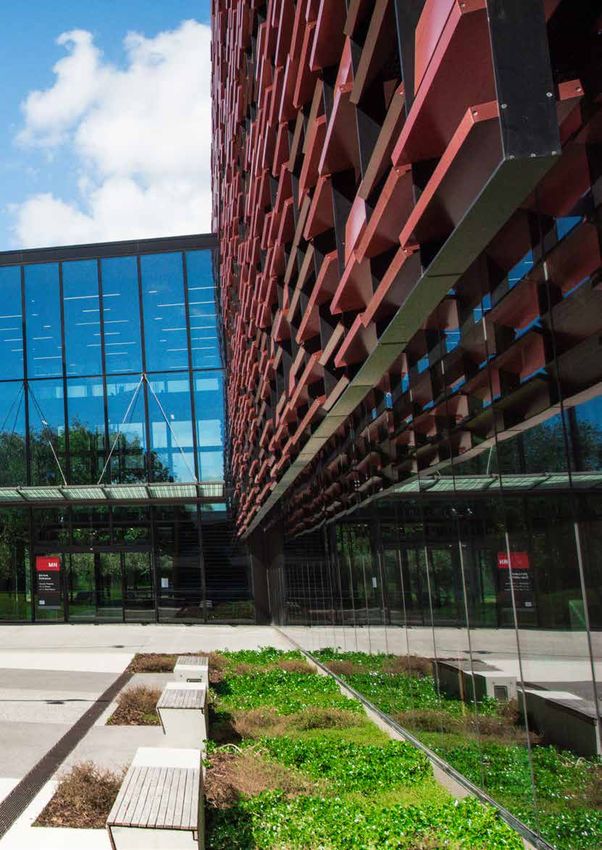
1 The Sir Paul Reeves Building (WG) offers industry standard facilities, and great spaces to socialise and study 2 Our state-of-the-art screen and television studio
3 Students honing their skills at Static FM, AUT’s student radio station

      Creating world-ready graduates                                                  A global outlook
      AUT’s mission is to create great graduates, and each                            We’re consistently ranked first in New Zealand for
      member of our staff contributes to this. AUT’s Bachelor                         international outlook by world rankings organisations
      of Communication Studies will give you a valuable                               QS and Times Higher Education. Many of our academic
      foundation for key roles in many industries, not only                           staff were born overseas, and they often share their
      in the media and communications fields. Our students                            international experience and connections with their
      and alumni are internationally recognised, and you                              students. You can also gain valuable international
      can find them in key roles across the media and                                 experience as part of your degree and go on a student
      communication industries. We encourage innovation                               exchange to one of our partner universities in Europe,
      and entrepreneurship, and the ability to explore new                            Canada, Mexico or the US. When you’re in the final year
      technologies, challenge routine thinking and solve                              of your degree you could also apply for the AUT Internz
      problems in new ways. As part of your Bachelor of                               programme, which gives new graduates a once-in-a-
      Communication Studies you could work on live projects                           lifetime opportunity to apply their learning in a global
      for real clients, or complete workplace experience or                           context and intern at some of the world’s best known
      internships for major industry organisations. You’ll have                       companies in the US, Canada, Europe and Asia.
      access to our industry standard facilities, which include a
      screen and TV studio, performance studio, radio station,                        Innovative and relevant research
      sound and edit suites, digital media computer labs and a
      media centre; all under one highly modern roof.                                 AUT is ranked first in New Zealand for global research
                                                                                      impact by Times Higher Education and the US News
      World-class teaching and learning                                               Global Universities Rankings. We have a number of
                                                                                      world-class research centres, and our researchers
      We’re proud to be one of the world’s best modern                                have expertise across the field of communication
      universities - Times Higher Education has ranked us                             studies, including Asia-Pacific media, journalism, media
      as the top millennial university in Australasia and we’re                       performance, multimodal analysis; online, social and digital
      ranked among the top 1% of universities in the world.                           media; political economy of communication, popular
      Our communications programmes are well regarded                                 culture, public relations and radio. We’re committed to
      by the industry, and ranked in the top 200 in the world                         research that advances knowledge, serves the community,
      in the QS World University Subject Rankings 2019. We                            and helps our students become future leaders in the
      receive strong support from industry organisations and                          communication and media industry. Our research also
      professional bodies like PRINZ (Public Relations Institute                      feeds back into the classroom, and students can contribute
      of New Zealand) and CCC (Commercial Communication                               to and learn from these research discoveries.
      Council). Our industry partners advise on current best
      practice, help us draft and assess industry briefs, and
      consider proposed programme changes - all to ensure
      that our graduates are world-ready when they leave AUT.
                                                                                                                                                                05
Life at AUT                                                   Creating career-ready graduates
                                                                  The AUT Employability and Careers team
                                                                  helps you plan in advance for your future
    AUT is a modern and innovative university with endless        career by developing job search and interview
    opportunities and a supportive culture that celebrates        skills, while building your personal brand and
    diversity. Studying at AUT is your chance to meet new         networking skills. We’ll also introduce you to
    people and develop lifelong skills, while getting the         employers looking to recruit AUT graduates.
    support you need to succeed at university and beyond.

    We’re proactive in enabling all students to succeed, and
                                                                  Gain an edge on the competition
    our comprehensive student support services ensure             The AUT Edge Award and Beyond AUT Award
    that you have an amazing experience inside and outside        challenge, reward and formally acknowledge
    the classroom.                                                the ‘C skills’ – collaboration, co-operation,
                                                                  community, curiosity, communication and
                                                                  creativity – gained through your volunteering,
    We’re here to help                                            leadership and employability activities.
    No matter what the problem, our Student Hub advisors
    are here to help. You can find a Student Hub on each          International study opportunities
    campus and our specialist staff can help with anything from
    enrolment and student ID cards to academic advice, fees       An international student exchange offers an
    and financial support, and services for our diverse student   amazing opportunity to study overseas as part
    communities including the international, disability and       of your degree. Study for a semester or a year
    rainbow community.                                            at one of our partner universities around the
                                                                  world, immerse yourself in another culture,
                                                                  make lifelong friends and get international
    Dedicated support for new students                            experience before you graduate.
    From Orientation to our many academic and cultural
    support programmes, our Student Services team is
    there to make starting out as a new student as
    easy as possible.

6
Helping you succeed in                           Free access to digital tools and resources
your studies                                     We offer students all the digital tools needed to succeed,
Our library and learning support team offers a   including free Wi-Fi on campus, the full Office 365 suite
wide range of services and resources designed    for up to five devices and free access to LinkedIn Learning
to help develop your academic skills.            (lynda.com), a world-leading online learning platform.
The Library also runs a range of workshops
to help you get the most out of your studies,    Getting involved in campus life
and our peer mentoring programme enables
students to learn from others who have already   Joining a club is a great way to meet like-minded people
completed the same paper.                        and make lifelong friends outside of lectures. Choose from
                                                 a range of student-run social, sustainability, academic and
                                                 cultural clubs – a great way to meet new people, participate
Top internships around the world                 in events and get involved in campus life.
A good internship can be the foundation of a
great career. That’s why AUT Internz places      Join a gym or sports team
students and graduates with top companies in
                                                 AUT is New Zealand’s leading sports university, with state-
New Zealand, North America, Asia and Europe
                                                 of-the-art sports facilities, on-campus gyms, and a huge
– including Paramount Recording Studios, the
                                                 number of sports teams and events. As an AUT student you
Sundance Institute and Westpac Institutional
                                                 can participate in a wide variety of sports, from social
Bank in New York.
                                                 on-campus games to elite international competitions.

A launchpad for entrepreneurs                    Holistic approach to wellness
Every entrepreneur starts somewhere.
                                                 AUT offers comprehensive medical, and counselling and
At AUT, the best place for aspiring
                                                 mental health services. We also run Wiser at AUT events
entrepreneurs is CO.STARTERS@AUT. This
                                                 where students can develop better self-knowledge and a
nine-week programme helps you turn your
                                                 greater sense of purpose and meaning in their lives.
entrepreneurial ideas into a viable business.

                                                 Disability student support and resources
An outstanding
learning environment                             Our Disability Support team is committed to helping you
                                                 participate as fully as you can in learning and student life.
At AUT you study in an innovative and            We work with students before they start at AUT to help
interactive environment that embraces            identify their specific needs and ensure they’re set up
creativity, collaboration, and the sharing of    for success.
ideas and culture. A number of our buildings
have won prestigious architecture awards,
and we’re constantly improving our built         Getting around
environment to offer students the best           Whether it’s finding your way to campus or getting around
possible learning experience.                    between lectures, AUT offers a range of resources to help
                                                 you navigate your new environment, including shuttle buses
                                                 that travel between campuses and interactive online maps.

                                                 Safe and friendly campuses
                                                 We make sure our students are safe when they're on
                                                 campus. Our friendly security staff are available day and
                                                 night to help if you have any concerns.

                                                                                                                 7
UNDERGRADUATE

   Bachelor of Communication Studies                               [   BCS | AK3303   ]
   Overview

 QUICK FACTS                                   AUT’s communication studies degree is very well regarded by
                                               industry. That’s because our people pick up top jobs in the best
                                               companies and media outlets and they win awards, lots of awards.
  Level:       7
                                               Our students and graduates are internationally recognised, having
                                               won the Sally Logan-Milne Young Practitioner of the Year award,
  Points:      360
                                               CAANZ AXIS award, ORCA awards, Cannes International Advertising
                                               award and NZ Student Marketer of the Year award. You have access
  Duration:    3 years F/T only
                                               to industry standard facilities and equipment, including a media
                                               centre, radio studio and fully equipped television studio, and gain
  Campus:      City
                                               invaluable workplace experience before you graduate.
  Starts:      22 Feb 2021
                                               Entry requirements
                                               Minimum entry requirements
                                               University Entrance or equivalent.

                                               English language requirements
                                               IELTS (Academic) 6.0 overall with all bands 5.5 or higher; or equivalent.

                                               Useful New Zealand school subjects
                                               Language rich subjects.

                                               What this qualification covers
                                               Majors available2
                                               • Advertising and Brand Creativity • Public Relations
 Jamey Vaa’etasi Solomua		                     • Digital Communication            • Radio and Audio Media
 William Bailey                                • Journalism                       • Screen Production
 Samoan/Ngāti Porou
 Curatorial Assistant Intern, Smithsonian
                                               You can also choose one of these majors as a second (double)
 Institution, Washington, DC
 Bachelor of Communication Studies in          major or a minor.
 Television and Screen Production¹
                                               Minors available
 “I had decided early on in high school
 that telling stories was what I enjoyed       • Advertising and Brand Creativity   • Multi-Camera Production
 most, and radio seemed the most               • Communication for Social           • Professional Performance
 obvious choice. Throughout my first             Change                               Communication
 year at AUT I was introduced to a whole       • Digital Communication              • Public Relations
 world of production mediums, and
                                               • Journalism                         • Radio and Audio Media
 towards the end of the second year it
 was clear that video had become the           • Media and Power                    • Screen Production
 medium I felt most powerful with. At
 AUT there were frequent reminders that        You can also choose to study a major or minor from another
 the opportunities are there for those         programme at AUT as part of your Bachelor of Communication
 that want to take advantage of them. I        Studies. To see the wide range of majors and minors available visit
 think the teaching style throughout my        aut.ac.nz/minors
 degree really fit well with my personality.
 AUT always wanted to see me do well,
 and I can’t thank them enough for all         Year 1
 that their support has enabled me to do.      You’ll be introduced to the media world and essential communication
 Working so closely with our tutors really     theories and practice. The first year is common to all students and
 broke down the power distance between         gives you an overview of the field of communication studies.
 teacher and student.”

      8
You study the following papers:
• Text, Image and Sound • Media Production Foundations
• Communication Ethics • Media Production Studio
• Media, Technology and Society • Mahitahi | Collaborative
• Intercultural Communication Practices
• Media, Politics and Citizenship
Year 2 & 3 Work experience and industry
You begin to develop important skills in your chosen fields. projects in PR, advertising,
journalism and more
The degree is flexible enough to enable you to specialise in more
than one communication discipline, or to take a major or minor from
outside the School of Communication Studies.
You choose:
A Bachelor of Communication Studies major (120 points) and one of
the following options:
• A second major from the Bachelor of Communication Studies
(120 points); or
• A major from another AUT degree (120 points); or
• A first minor from communication studies (60 points) and a second
minor (60 points)3; or
• A communication studies minor (60 points) and elective papers
(60 points)
Double your career options – study communications and:
Jess Smith
Business Radio Integration Operations Coordinator,
MediaWorks Radio
Studying both communications and business as part of a conjoint Bachelor of Communication Studies in Radio
programme or as a double degree combination, is the perfect start to
a creative career with a commercial edge. In as little as four years you “I’ve always had a huge interest in
develop skills and knowledge from two complementary disciplines, and the media industry, especially TV,
will be prepared for numerous career opportunities. advertising and radio. I decided to study
communications because it offers an
insight into the different aspects of the
Law industry and enables you to find the
Enhance your communication skills with a legal understanding by area that best suits you. What I loved
completing the Bachelor of Communication Studies and Bachelor of about AUT is that a lot of the papers are
Laws. You can study the two degrees concurrently in just over five practical and that the facilities at AUT
years compared to the seven years it would take if you studied them are a step ahead. When I was deciding
separately. To study a double degree, you enrol in the two programmes which university to attend, I checked out
the AUT City Campus and knew it was
separately and have to complete all required papers for each degree.
where I wanted to study. The radio and
TV studios are what sold me on AUT.
I’m now working at MediaWorks Radio,
and am responsible for planning and
executing client campaigns across all of
1. This major is now called Screen Production. the company’s radio brands; The Edge,
2. Entry into your desired major is subject to your first-year results; it isn’t guaranteed. Mai, More FM, George FM, The Rock,
3. From communication studies or elsewhere at AUT.
Breeze, Sound and Magic.”
For more details visit aut.ac.nz/communications
9UNDERGRADUATE
Advertising and Brand Creativity
Successful advertising campaigns transform creative original ideas
into a story that captures people’s minds and hearts. Technology
has revolutionised communication and the transfer of ideas through
various platforms, but it hasn’t changed the need for the generation
of ideas. This is where advertising creativity comes in. Advertising
starts with an insightful idea and then you choose various media to
create a great advertising campaign.
AUT is the only New Zealand university that teaches advertising
creativity specifically and at degree level. We work closely with
the advertising industry, and regularly invite guest speakers from
leading advertising agencies and client companies like TVNZ, Spark,
MediaWorks, Saatchi & Saatchi, DDB, Colenso BBDO, FCB New
Sophie Aitken Zealand and Film Construction.
Junior Copywriter,
Colenso BBDO
Bachelor of Communication Studies What you study
in Advertising Creativity¹
The first year of the Bachelor of Communication Studies is
“I’ve always wanted to be a copywriter. common to all students, and gives you an overview of the field of
AUT’s communications degree communication studies.
and advertising major kept being
recommended by people and In Year 2 and 3, our advertising creativity papers help you develop a
organisations in the industry as the professional advertising portfolio you can use to apply for work as a
course to study if you want to work in copywriter, art director and other roles in an ad agency. You collaborate
advertising. I loved that every major in with your classmates on advertising briefs, writing and designing ads
the communications degree includes
for real products and clients.
hands-on time in the industry, which is
so essential. Clients and agencies brief our students directly, and your completed
“My final year was the highlight of my work may even be published in the media. Many students are also
studies. I was able to focus entirely on offered workplace experience at leading advertising agencies.
advertising. Working closely with my
Papers may include:
tutors and other advertising students
was essential for figuring this industry • Advertising and Brand • Advertising and Brand
out and creating a portfolio that I’ve Creativity I Creativity III
taken with me beyond AUT and into • Advertising and Brand • Applied Creativity for
the workplace. Creativity II Social Change
“I’m grateful to have been a finalist in • Creative Principles and Strategy • Industry Practice Studio
both the ORCA Student Radio Awards • Visual Communication • Applied Creative Strategies
and the AXIS Student Awards. I can’t
thank my tutors enough for the effort,
Career opportunities
time, and seemingly immeasurable
patience they give their students. • Account director or planner • Media buyer/planner
“After graduating at the end of 2018, I
• Art director • Strategic planner
interned at creative agency FCB West in • Copywriter • Web content creator
San Francisco through the AUT Internz • Digital creative or strategist
International Scholarship Programme.
I got to work at a great international
ad agency with big clients on exciting
projects. It’s been a little bit of deep
end swimming, and there were things
that weren’t like home. However, it was 1. This major is now called Advertising and Brand Creativity.
a time full of learning experiences and
new skills I’m going to take on with me
throughout my career, and my life.” For more details visit aut.ac.nz/communications
10Digital Communication
An exponentially growing industry, digital communication focuses on
telling stories and communicating via digital platforms made possible
through computers, mobile technologies and networks. But this field
is about more than ‘media with digital tools’. Digital communication
professionals optimise digital tools, strategies and platforms to
engage and empower users, customers and audiences.
If you’re driven by a thirst for new knowledge and skills in cutting-
edge digital platforms, live and breathe social media, and love
to tell stories using image, sound and words, a career in digital
communication could be for you.
What you study
Hulu Tu’inukuafe
The first year of the Bachelor of Communication Studies is common to Administrative Assistant,
Digital Arts Network
all students, and gives you an overview of the field of communication
Master of Communication Studies
studies. with First Class Honours
Bachelor of Communication Studies
In Year 2 and 3, our digital communication papers cover how to make in Digital Media1
digital media communicate effectively, look great, sound great and
tell a great story. You may work on various digital communication “AUT’s communication studies degree
projects, and deliver your work via mobile devices, broadcast media or has a great reputation as so many of the
broadband communication, on time and on budget. You develop a high AUT communications alumni now have
successful jobs in the media industry.
level of critical thinking and strategic planning skills, and manage the
AUT offers practical classes and as a
production cycle from idea to final product. person who enjoys learning through
Papers may include: practical work, there was no doubt that
AUT was the university for me.
• Moving Image Communication • Web Media
• Online and Interactive • Motion Media “In my second year at AUT, I took a paper
Communication • Digital Communication Project on interactive media, and was fascinated
by the creation of apps and how they
• Visual Communication • Online Strategies help people in their everyday lives. I soon
• Digital Video decided that I really wanted to make an
app that represented me. In the final
Career opportunities year of my Bachelor of Communication
Studies, I created an app about Tonga to
• Digital strategist • Mobile content developer provide visitors with information about
• Digital communication project • Motion graphics designer the island and Tongan culture.
manager, producer or consultant • Post-production special effects
“Through my studies at AUT, I have
• Digital video specialist designer discovered what I want to do and who
• Instructional media designer • Production assistant I want to be. This is a huge step in my
• Interactive media producer or • Visual designer for print and life as I was unsure what I wanted to do
consultant online media when I started university. My plan is to
keep designing apps that help people
• Mobile app designer • Web administrator/designer
learn something new and at the same
time make their lives easier. I hope to
bring people together through my work,
share an interest in learning more about
different cultures and embrace each
other’s differences.”
1. This major is now called Digital Communication.
For more details visit aut.ac.nz/communications
11UNDERGRADUATE
Journalism
Great journalists are driven by a thirst to find out about what is going
on locally, nationally or globally, and write about it accurately, and
without bias or fear. News journalists have to turn news reports
around rapidly and across many platforms and media, always racing
to break the latest news while keeping it accurate and fair. Lifestyle
journalists need to be great story-tellers who can engage and
entertain readers across topics like food, sport, beauty and lifestyle.
The internet has transformed the content and delivery of news as
blogging and vidblogs have changed the space that was traditionally
the domain of professional journalists. But journalistic skills
including quality writing, the ability to verify user-generated
material, and a talent for interviewing are still needed to cut through
Briony Sowden the noise.
Broadcast Journalist,
BBC World News, London
Bachelor of Communication Studies What you study
in Journalism
The first year of the Bachelor of Communication Studies is
“I produce, report and output shows common to all students, and gives you an overview of the field of
on BBC World News and for the BBC communication studies.
World Service (radio) and work across
a number of award-winning shows In Year 2 and 3, our journalism papers cover skills for a career in
including Global and Outside Source. journalism or a number of other career pathways that utilise these
I’m often blown away by the stories I’m capabilities. You can gain experience in news reporting, different
writing about; real historic events that writing styles, bicultural and cross-cultural reporting, media law and
are shaping the political landscape.
ethics. You’re encouraged to participate in live reporting exercises.
“I’m surrounded by other journalists who
Papers may include:
are as driven by news and who inspire
me to be a better journalist. Some of • New Production • Newsdays
the people I sit next to and get to work • The Laws and Ethics of Newswork • Creative Non-fiction Narratives
with are the best in the business, and • Newslab Live
I’m constantly learning from them. They
motivate me to strive to be better at my Many of our students complete internships at leading news
job and that in itself is rewarding. organisations and publications, including the New Zealand Herald,
“I work in the second biggest newsroom Newstalk ZB, Radio Sport and NZME news agency, Fairfax community
in the world. My day begins with an papers, Stuff.co.nz, Newshub, TVNZ and Radio New Zealand.
editorial meeting where we discuss the
biggest stories of the day and how we Career opportunities
want to cover it. We chase guests on the
ground, put together our own packages, • News reporter for newspapers, • Specialist writer
and bid for major players in stories. I magazines, television, radio or • Production journalist
also build and output shows, which gives online media • Web editor
me editorial control over the structure
• Freelance journalist
of a programme and which story has
significance over another. I have to
sub-edit and lead a team of producers -
picking up mistakes before we go to air.”
For more details visit aut.ac.nz/communications
12Public Relations
First impressions make a huge impact. How did you find out about
your latest cell phone, a new political party, charity, sporting event or
night club? Chances are, it was the work of a public relations (PR) team
that first inspired you. Public relations communicators plan, develop
and manage communication and media strategies for organisations
and people, from businesses, nations, cities and communities, to
charities, politicians, celebrities and individuals.
We have strong ties with leading industry organisations, including
the Public Relations Institute of New Zealand (PRINZ) and public
relations consultancies like Porter Novelli, Acumen, Botica Butler
Raudon PR, Mango, Network Communication, Professional Public
Relations, and Sparkactivate.
Suzanne Suisuiki
Marketing and Communications
What you study Manager, Pacific Cooperation
Foundation
The first year of the Bachelor of Communication Studies is Bachelor of Communication Studies
common to all students, and gives you an overview of the field of in Public Relations
communication studies.
“I chose communications because I
In Year 2 and 3, our public relations papers cover topics like reputation felt that it was a broad field, from PR
management, strategic communication, communication in a business to journalism and advertising. But
environment, sponsorship and promotion, internal communication, storytelling will always be at the heart
persuasion, social media and communicating with diverse audiences. of things – it’s powerful and leaves a
lasting impression on the people you
Papers may include: are influencing. I had relatives who had
• Public Relations Practice and • Public Relations Theory and studied at AUT and during my high
school term breaks I would go along with
Specialisms Practice
them. I was really impressed with what
• Power and Persuasion • Global Communications I saw, particularly the genuine support
• Strategic Messaging • Public Image and Campaigns AUT students received from staff.
• Reputation Management • Public Relations Industry Project
“The highlight of my time at AUT was
connecting with other Pacific students or
Our students can plan and execute PR strategies through Outside
alumni from communications. Studying
the Square (OTS), our student-run consultancy. You work in teams to towards a degree is a unique journey
interpret a brief from a real client, develop a communication strategy for anyone but for me what made my
and implement the plan on time and on budget. Recent clients included uni journey more meaningful and less
Hockey New Zealand, Surf Life Saving, Problem Gambling Foundation of daunting was connecting with others
New Zealand, The NZ Music Foundation and Starship Foundation. from similar backgrounds who shared
the same passions, dreams, interests
and faced familiar struggles. I found
Career opportunities that empowering.
• Corporate communication • Government communicator
“As the marketing and communications
executive • Internal communications advisor manager for the Pacific Cooperation
• Public relations consultant • Media relations manager Foundation, I enjoy the variety of my
• Marketing communication • Community relations manager role – from creating content for the
executive organisation’s digital platforms and
• Social media manager
writing press releases, CEO statements
and stories, to mentoring marketing
and communication students from the
French Territories. What I love most,
however, is facilitating the internship
programmes for interns from across the
Pacific region.”
For more details visit aut.ac.nz/communications
13UNDERGRADUATE
Radio and Audio Media
Radio is fast-paced, dynamic and immediate. It’s often the first
medium to break the news and it’s a primary source of entertainment
and information for our busy lives. Audio media, including podcasts
and documentaries, are rapidly becoming core parts of our media diets
as the traditional boundaries between radio, audio and other media
dissolve. Radio and audio are flourishing on the internet.
Personalities are the public faces of radio and audio media, taking on
personas to suit the audience. But many other people work in other
essential roles to get shows on air and podcasts online, including
producers, journalists and sound engineers. This major enables you
to explore the intersections of radio, audio and new media on the one
hand with music, popular culture, change, creative practice and self-
Ollie Wards expression on the other.
Content Director, triple j,
Sydney, Australia
Bachelor of Communication Studies What you study
in Radio
The first year of the Bachelor of Communication Studies gives you an
“Anyone who works in radio will tell you overview of the field of communication studies.
they love the immediacy. We can have a
funny idea and it’s on air the next minute. In Year 2 and 3, you develop key skills for a career in radio and the audio
But the audience is also right there with media industries. You’ll design and produce podcasts and run a FM and
us – they’re always funnier, can make online radio station with other students. You’ll be on-air and learn to
your idea better or were there at the produce and develop programmes and features, host radio shows, make
thing you’re talking about. documentaries and develop sophisticated audio engineering skills using
industry-standard studios.
“We’re a national station with over two
million weekly listeners and millions of Papers may include:
followers of our content including the • Radio Production: Context and • Sound Production: Podcasting
Like a Version weekly live music video.
Creativity • Radio Project
Having two million plus music loving
and creative people wanting to join in is • Radio Production: Programming • Radio Studio
the best. Live and interactive; there’s no and Performance • Applied Radio Practice
other medium quite like radio. • Web Media for Radio • Radio and Society
“I’m the lead creative of the station –
setting strategy and direction but also
You interact with key people from Radio New Zealand, MediaWorks,
leading the operations. One minute I’ll NZME and The Radio Bureau. Our radio students are also sought after
be brainstorming some weird talkback or by the major media companies in Auckland for part-time work and
a prank, then I’ll be discussing election exciting careers after they graduate.
coverage before meeting with the TV
department about our music festival Check out our student radio station in Auckland, Static 88.1 FM or
going live on YouTube. visit static.co.nz
“Just thinking about what I’ve done so far
is pretty surreal. For example, I co-hosted
Career opportunities
the centenary of Anzac Day live from • Announcer/host • Audio engineer
Gallipoli. As the dawn service happened • Copywriter • Programme director
I was there at Anzac Cove with a radio
mic, telling people listening from all over • Media sales account executive • Promotions or station manager
Australia how it felt. I also got to see and • Media planner • Website content manager
meet so many of my favourite bands.” • Music director • Journalist
• Content producer
For more details visit aut.ac.nz/communications
14Screen Production
Screen production is all about telling a good story in an exciting
and innovative way. The evolution of the moving image has been
dramatic, and consumers today have a wide array of viewing choices
in the online space and across multiple media outlets. TV and screen
production professionals have to be versatile, adaptable, creative
and technically competent in a number of specific roles or across a
number of areas within a production.
AUT graduates are well-known for their pre-production, production
and post-production skills, and can be found in leading roles in film,
TV and screen production around the world. If you’re fascinated by
moving image and storytelling, then screen production may offer
great career opportunities for you.
Julian Braatvedt
Freelance Camera Operator
What you study Bachelor of Communication
Studies in Television and Screen
The first year of the Bachelor of Communication Studies gives you an Production1
overview of the field of communication studies.
“When I applied for AUT’s Bachelor
In Year 2 and 3, you develop creative and professional skills to assist of Communication Studies, I thought
on productions and sets, manage schedules and be part of a thriving I wanted to become a war journalist. It
industry with varied roles. You work on practical TV and screen was only a little later that I realised it
production projects, using AUT’s industry standard TV studio facilities. wasn’t the right choice for me, and by
my second year at AUT I knew that
Papers may include: I wanted to pursue documentary
• Creative Documentary Production filmmaking as a career.
• Screen Theory in Action “I’ve always had a passion for Africa, and
• Short Film Production now almost all of my work is based in
• Studio Production central and southern Africa. When I’m
• Creative Screen Practice filming things like gorillas in Rwanda I
can’t help thinking how amazing it is that
• Creative Screen Project someone is actually paying me to film
• Story Lab this. For me, this is a childhood dream
come true.
Career opportunities “One of the things I’m particularly proud
• Camera operator of was filming wild dogs and hyenas for
National Geographic Channel’s Africa’s
• Director Hunters. Wild dogs are historically
• Producer or production manager difficult to film, and I’m very proud of the
• Promotions manager footage I’ve managed to get for Africa’s
• Reporter Hunters. My next project will be Camp
Zambia, a Canadian production filmed in
• Researcher
Zambia’s South Luangwa National Park.
• Television presenter or programmer
• Writer “In addition to my work, I’ve also created
the short film Elephant I Miss You, in
conjunction with the Lilongwe Wildlife
Trust. In Malawi, elephants are expected
to become extinct in 10 years’ time
due to poaching, and my film aims to
encourage Malawians to look after the
1. This major is now called Screen Production. elephants for future generations.”
For more details visit aut.ac.nz/communications
15UNDERGRADUATE
Minors
Bachelor of Communication Studies
You can tailor your Bachelor of Communication Studies Professional Performance Communication
to your interest and include one or two of our minors Develop your confidence and skills for pitching
as part of your degree. ideas, public speaking and successfully participating
in meetings. This minor integrates the theories and
Communication for Social Change practices of voice production and movement that are
Explore the communication processes, techniques relevant to professional communication but are often
and media that can bring about equitable change, based on more “traditional” performance contexts
social transformation, and empowerment in society. like acting.
This minor has a global focus with particular
attention to issues facing the Asia-Pacific region. You Other communication studies minors
examine the role of non-governmental organisations, You can also study any Bachelor of Communication
supranational institutions and multinational Studies major as a minor:
corporations - alongside nation-state governments - • Advertising and Brand Creativity – see page 10
as key actors in social change communication. • Digital Communication – see page 11
• Journalism – see page 12
Multi-Camera Production
• Public Relations – see page 13
Develop transferable skills for team-based media
• Radio and Audio Media – see page 14
production and management. You discover the
importance of multi-camera production in broadcast and • Screen Production – see page 15
online media to cater for fast turn-around productions
and streaming of live events. This minor has a strong Other minor options
work-integrated ethos, emphasising management as You can also choose to study a major or minor from
well as creative processes. The Multi-Camera Production another programme at AUT as part of your Bachelor
minor is open to screen production students who want of Communication Studies. To see the wide range of
to further their skills, as well as to students from other majors and minors available visit aut.ac.nz/minors
communication studies disciplines.
Media and Power
This minor considers how the technologies, institutions
and networks of communication are shaped by
economic and political power. Become familiar with how
media-communication institutions/industries work,
critique the exercise of power through contemporary
electronic networks, and reflect upon the significance of
contemporary media issues in Aotearoa/New Zealand.
16POSTGRADUATE
Overview of our
postgraduate qualifications
Postgraduate Certificate in Master of Philosophy
Communication Studies
The Master of Philosophy is a one-year research-only
This intensive one-semester programme offers a flexible master’s degree. It gives you the opportunity to
entry into postgraduate study in communications. undertake a research project of an applied or
It’s a great option if you have a three-year bachelor’s professional nature, under the supervision of
degree in a relevant discipline but don’t meet the entry communication studies staff. It can also serve as a
requirements for the Master of Communication Studies. pathway to more advanced research at doctoral level.
Postgraduate Diploma in Communication Studies Doctor of Philosophy
From investigative journalism to screen productions, The Doctor of Philosophy is a thesis-based research
from digital media to public relations, and from degree that leads to advanced academic and theoretical
organisational change to radio, this intensive one-year knowledge in a specialist area. It enables you to make
programme covers advanced skills in a chosen area an original contribution to understanding in the field
of communications. You can either choose a generic of communication, and meet recognised international
pathway and select papers that suit your interests, or a standards for such work. You work closely with a
specialised pathway that enables you to focus on one supervisor to prepare a thesis, which is then examined
particular area within communications. Specialised by independent experts applying contemporary
pathways available are Digital Media, Journalism, Public international standards.
Relations and Screen Production.
Master of Communication Studies
The Master of Communication Studies is a postgraduate
research degree. You complete a number of advanced
communications papers, and then extend your
knowledge through your research project. Our
supervisors have expertise across a range of fields,
from journalism to organisational communication, radio
to critical discourse analysis, political economy to digital
media production, and film studies to public relations.
For more details visit aut.ac.nz/communications
17POSTGRADUATE
HOW TO APPLY
Below is the step-by-step guide to the
applications process. For more information
visit aut.ac.nz/apply
1 2
APPLY EARLY COMPLETE THE
Places are limited. Submit your application APPLICATION FORM
well before the semester starts. • Apply online
APPLYING FOR 2021 • Indicate your programme(s) of choice and
major (if known)
• Semester 1
- apply by 7 December 2020 International students can also apply using an
AUT approved international agent. For a list of
AUT registered agents visit
aut.ac.nz/international-agents
SUBMIT YOUR APPLICATION
WE ACKNOWLEDGE
YOUR APPLICATION
• We will send you an acknowledgment
email, which explains how to check the
status of your application
• We will contact you if we need more
information
18 183
WE ASSESS
YOUR APPLICATION
• We assess your application to ensure
you have met the entry criteria for the
programme(s) you are applying for ACCEPT YOUR OFFER
• We consider your academic history and
relevant experience to ensure you can
succeed in your programme
• We let you know if your application has
been successful
POSSIBLE OUTCOMES
CONFIRMED We would like to offer you a
place to study at AUT
PROVISIONAL You have met some of the
criteria for entry to your chosen programme
of study and we would like to offer you a
provisional place to study at AUT. If you don’t
meet the rest of the requirements, then this
offer will be withdrawn
CONDITIONAL You have to meet the
conditions and approvals listed in your
conditional offer to be able to secure a
formal offer of place
DECLINED If you don’t meet the entry
requirements or all places are taken, we may
offer you an alternative programme
19University admission to AUT bachelor’s degrees
For New Zealand citizens and residents and international students studying in a high school in New Zealand
To gain admission to bachelor’s degrees, you must have Admission categories
met the requirements for University Entrance plus any You may be granted University Entrance under one of
specified admission requirements for a programme, such the following categories:
as specific subjects, portfolios and interviews.
• CEA University Entrance
N
For more information on entry requirements, including • Ad Eundem Statum admission (at an equivalent level)
entry requirements for international students, refer to – this includes Cambridge International Examinations
the AUT Calendar or visit aut.ac.nz/calendar (CIE) and International Baccalaureate Diploma
Programme (IB)
Please note: AUT, like all other New Zealand universities,
is required to manage enrolments. This is because • Discretionary Entrance
of government policies that restrict the number of • Special Admission
funded places available for domestic students in tertiary
education.
Common University Entrance requirements
STANDARD NCEA CIE IB2
Overall Require NCEA level 3 certificate which A minimum of 120 points on the IB Diploma with minimum 24 points
consists of 80 credits, including at least 60 UCAS Tariff 1 at A or AS level from an
credits at level 3 or higher. Can include up approved list (equivalent to NCEA
to 20 credits at level 2. approved subject list).
Note: Credits to achieve NCEA Must include at least three subjects
level 3 may include unit standards from (excluding Thinking Skills) with grades
non-approved subjects. D or above.
Subject credits
Total of 42 level 3 credits including:
• 14 credits from one approved subject
• 14 credits from a second approved subject
• 14 credits from a third approved subject
Numeracy At least 10 level 1 (or higher) numeracy A minimum grade of D in IGCSE3 Any mathematics subject – IB Group 5
credits (can be achieved through a range mathematics or any mathematics
of subjects) subject at AS or A level.
Literacy Total of 10 level 2 (or higher) literacy A minimum grade of E in English Literature or language and literature (SL
credits including: Language and/or English Literature or HL) – IB Group 1, with English as the
• 5 reading credits subject at AS or A level. language.
• 5 writing credits
From specific standards in a range of
NZQA English language rich subjects.
1. UCAS (Universities and Colleges Admissions Services for the UK) Tariff = system which converts AS and A level grades into points.
2. New Zealand residents who have taken IB but have not been awarded the Diploma may apply for discretionary entrance.
3. IGCSE = International General Certificate of Secondary Education.
Where programmes require a specific subject, it is AUT language rich subject list
expected that a student will have achieved a minimum Art History, Business Studies, Classical Studies, Drama,
of 14 NCEA credits in that subject (or equivalent), unless
Economics, English, Geography, Health Education,
indicated otherwise.
History, Media Studies, Physical Education, Social
Studies, Te Reo Māori, Te Reo Rangatira.
NCEA approved subjects
For a list of NCEA approved subjects for University Alternative pathways into AUT bachelor’s
Entrance visit the NZQA website, nzqa.govt.nz degrees
Students who have just missed University Entrance
or did not get into their chosen degree could consider
enrolling in one of the foundation programmes
offered at AUT. Please visit
aut.ac.nz/universityentrance
20Discretionary Entrance • Have successfully gained University Entrance through
Discretionary Entrance is available to applicants who CIE or IB or an approved qualification from a New
have attained a high level of achievement in Year 12 and Zealand secondary school of special character
want to undertake university study. • Have successfully completed a recognised foundation
programme or other recognised tertiary qualification/
International students can’t apply for Discretionary study of at least 120 points at level 3, or at least 60
Entrance. points at level 4 in one course of study and have
completed Year 13 at a NZ secondary school, or
You can apply if you: equivalent.
• Have not completed Year 13 in a New Zealand • Have qualifications from an overseas secondary
secondary school or have done Year 13 but not school or tertiary institution deemed by AUT to be
attempted to gain University Entrance sufficient for entry into an undergraduate degree
• Have not otherwise qualified for admission (or have programme.
attempted University Entrance)
• Are a domestic student (New Zealand or Australian Please note: Applicants will be required to supply an official
citizen or permanent resident). If Australian, your most academic transcript with their application.
recent schooling must have been in New Zealand
Bursary
• Are under 20 years of age on the first day of the
semester in which you begin study and meet other If you sat Bursary (prior to 2004) rather than NCEA
requirements of the programme for which you apply please refer to the AUT Calendar or visit
aut.ac.nz/calendar
People who missed University Entrance in Year 13 may be
considered for mid-year admission in the following year. Special Admission
You can’t apply for admission for Semester 1 if you New Zealand citizens or residents who are over 20 years
studied in Year 13 after 1 June. However, you can apply of age on or before the first day of semester can apply
for admission into Semester 2. for degree-level entry through Special Admission.
Minimum academic criteria for Discretionary Entrance English language
• NCEA level 2 certificate endorsed with minimum of
Merit or CIE/IB equivalent
requirements
• Minimum of 14 credits in each of four NCEA level 2 (or If you don’t have English as your first language, you may
higher) subjects, at least three of which must be on the have to show evidence of your English language skills.
approved subject list
International students studying at secondary school
• Meet UE literacy and numeracy standards, or their
and applying for University Entrance must achieve
equivalent.
UE Literacy through New Zealand secondary school
The application is a two-step process. First, you indicate qualifications NCEA, CIE or IB. IELTS can’t be substituted.
you want to apply through Discretionary Entrance on
In all other cases another form of English language
the standard application form. If you meet the criteria
testing is required. Minimum IELTS requirements for
you are sent a second form in which you provide further
each programme are included on the relevant pages
information and a school recommendation.
in this publication. For other recognised English tests
The recommendation will provide proof of your maturity, and more information, visit
motivation, capability and readiness to undertake aut.ac.nz/englishrequirements
degree-level study and also verify that you were not
enrolled in Year 13 beyond 1 June in the year prior to
admission. Please refer to the AUT Calendar or visit International students
aut.ac.nz/calendar Contact us for information regarding studying at AUT if
you’re not a citizen or permanent resident of New Zealand
Please note: Applicants are considered on a case-by-case or Australia, or a citizen of the Cook Islands, Niue or
basis and must also meet other selection criteria for Tokelau islands.
the programme for which they have applied. There is a
Visit aut.ac.nz for entry requirements for specific
non-refundable assessment fee of $50.00.
countries.
Admission at equivalent level If you have any questions, you can contact us at
(Ad Eundem Statum) aut.ac.nz/enquire
An applicant will be considered for Ad Eundem Statum
admission if they:
21Fees & scholarships
Cost is an important factor when thinking about Scholarships and awards
university study. This page gives you an idea of Scholarships and awards are a great way to fund your
the approximate tuition fees at AUT, and different university study. There is a wide range of scholarships
options to help you fund your education including and awards available to AUT students at all stages
scholarships, student loans and allowances. of their study. Visit the scholarships website for a
To give you an idea of approximate costs, the 2020 current list of scholarships offered by AUT and external
tuition fees are shown below (based on full-time study funders, as well as application forms and closing dates.
and completing 120 points per year). All fees are in NZ You can also contact AUT’s Scholarships Office for
dollars and include GST. The 2021 tuition fees will be advice on scholarships, awards and the scholarship
advertised on aut.ac.nz/fees as soon as they have been application process.
set. To find out more call +64 9 921 9837 or visit
aut.ac.nz/scholarships
Domestic student tuition fees
First-time domestic students are entitled to one year of Support for scholarship students
fees free. Undergraduate scholarship students – whether the
Undergraduate programmes scholarship was awarded for academic endeavour or for
excellence in sports, culture or leadership – have access
Fee (per year) Approximately $6,242.00 - $7,174.001 to an extensive programme of support, including
1. Part-time students pay a proportion of the fee based on the professional development and networking opportunities,
number of academic points they are studying. and one-on-one support.
International student tuition fees Student loans and allowances1
Undergraduate programmes If you are a full-time domestic student, you may qualify
Fee (per year) Approximately $29,670.00 for a student loan or allowance. Student loans and
allowances are administered and paid by StudyLink. The
Other fees you may have to pay: application process can take some time, so it’s a good
idea to apply early. You can apply for a student loan
• 2 020 Compulsory Student Services Fee - $760.00 for or student allowance before your enrolment at AUT is
120 points or $6.33 per academic point complete.
• 2020 Building Levy - $76.00 for 120 points or $0.63
per academic point To find out more call 0800 88 99 00 or visit
• Additional fees for course materials or elective papers studylink.govt.nz
(check with your faculty if there are additional fees for 1. For domestic students only
your programme)
Please note that you have to pay your fees in full by the Help with planning and budgeting
date specified on your fees invoice. We know that sometimes things happen and financial
To find out more about fees call +64 9 921 9779 or stress can impact your academic success. That’s why we
0800 AUT AUT (0800 288 288). offer financial support that ranges from offering grocery
or fuel vouchers, to helping with that unexpected bill.
Free fees for your university study
StudyLink website
Eligible domestic students starting tertiary education
receive one year of full-time study fees-free¹. Visit studylink.govt.nz for tools, tips and information
to help you plan and understand the costs you will have
To check if you’re eligible for fees-free study in 2021 while studying.
visit aut.ac.nz/fees
1. Domestic students only, not available to international students.
22You can also read


