ASSOCIATION OF CERTIFIED FRAUD EXAMINERS SOUTH AFRICA CHAPTER - 1 AUGUST 2020 - 31 JULY 2021
←
→
Page content transcription
If your browser does not render page correctly, please read the page content below

ASSOCIATION OF CERTIFIED FRAUD EXAMINERS
          SOUTH AFRICA CHAPTER

       INTEGRATED
         REPORT

            1 AUGUST 2020 - 31 JULY 2021
TABLE OF CONTENTS
          03
          ABOUT THE INTEGRATED REPORT

          04
          MESSAGE FROM THE CEO

          06
          MESSAGE FROM THE PRESIDENT

          08
          ABOUT THE ACFE

          10
          STRATEGIC PLAN & OBJECTIVES

          12
          CORPORATE GOVERNANCE

          13
          BOARD OF DIRECTORS

          24
          PROFESSIONAL BODY STATUS

          25
          ANNUAL CONFERENCE

          28
          IFAW

          28
          CREATING NEW STANDARDS

          30
          OPPORTUNITIES & SUCCESSES

           35
           CHALLENGES

           36
           HUMAN CAPITAL

          40
          MEMBERSHIP

           43
           2020 ACFE AFRICA AWARDS

          45
          MEET OUR CORPORATE SPONSORS

          46
          KEY STAKEHOLDERS & PARTNERS

          49
          AFRICA CHAPTERS

          51
          TREASURER'S REPORT
ABOUT THE INTEGRATED REPORT
The Association of Certified Fraud Examiners (ACFE SA) is committed to transparent reporting and aims to provide information to its
stakeholders that will allow them to make informed decisions about the Organisation’s ability to create value by following best practices
and international standards when compiling our Integrated Report.

Integrated reporting is a process founded on integrated thinking that results in a periodic integrated report by an organisation about
value creation over time and related communications regarding aspects of value creation. An integrated report is a concise
communication about how an organisation’s strategy, governance, performance and prospects, in the context of its external
environment, lead to the creation of value in the short, medium and long term. (IR Framework, 2021)

  SCOPE OF THE REPORT                                                     Accordingly,    the   ACFE    SA   applies   a   combined
  The scope of this report is to illustrate the ACFE SA’s                 assurance model which incorporates and optimises all
  value creation process and strategic thinking for the                   assurance services and functions to enable an
  period 1 August 2020 to 31 July 2021. It covers the                     effective control environment, to support the
  risks, opportunities and outcomes attributable to the                   integrity of information used for internal decision
  ACFE SA and its stakeholders that have a significant                    making by management, the governing body and its
  effect on the ability of the ACFE SA and its service                    committees and also supports the integrity of the
  offering.                                                               organisation’s external reports. The ACFE SA’s
                                                                          financial, operating, compliance and risk management
  PREPARATION OF THE REPORT                                               controls are assessed by the ACFE SA’s Finance and
  The following reporting requirements, guidelines and                    Audit Committee. The audit opinion expressed by the
  frameworks were considered when preparing this                          external auditors is included in this report as part of
  report:                                                                 the Consolidated Annual Financial Statements.
     The Companies Act of South Africa;
     The principles of the King IV Report on Corporate                    FORWARD-THINKING STATEMENT
     Governance™ or King IV™ (King IV)*; and                              This report contains forward-looking statements
     International Financial Reporting Standards (IFRS)                   which are based on assumptions and management’s
                                                                          view of the ACFE SA’s future performance. Such
  The ACFE SA continues to progress on the journey                        statements are, by their nature, estimates, subject to
  outlined by King IV, while ensuring increased                           risks and uncertainties, which may result in ACFE
  integration of reported financial, social, governance                   SA’s actual performance is different from that
  and environmental information. The ACFE SA uses the                     expressed or implied in any forward-thinking
  concepts, guiding principles and content elements                       statements. These statements have not been audited
  contained in the Framework as a platform for this                       by ACFE SA’s external auditors.
  integrated report.

                                                                          BOARD RESPONSIBILITY
  MATERIALITY
                                                                          The Board acknowledges overall responsibility and
  The ACFE SA’s integrated report focuses on
                                                                          accountability for the integrity of this report and has
  information that is material to the ACFE SA. It
                                                                          applied its collective mind to the preparation and
  provides a concise overview of the ACFE SA’s
                                                                          presentation of this report. The Board believes that
  performance, prospects and ability to provide
                                                                          this report is a balanced and appropriate
  sustainable value for all its stakeholders. The
                                                                          representation of the financial and operational
  legitimate interests of all stakeholders have been
                                                                          performance of the ACFE SA. Upon recommendation
  taken into account and all material information has
                                                                          from the finance and audit committee, the Board
  been included in this report.
                                                                          approved this report on 10 September 2021.

  ASSURANCE
  The ACFE SA is on a journey of maturity with regards
  to combined assurance and is in its infancy of having
  a mature combined assurance model. The Board of
  directors of the ACFE SA (the Board), assisted by the
  Finance and Audit Committee, is responsible for                         DE WET FERREIRA
                                                                          PRESIDENT
  ensuring the integrity of the integrated report and
  validation of the financial statements.
                                                                                                                              PAGE 03
MESSAGE
FROM THE
CEO
Jaco de Jager

Dear member.

If I have learned one thing from Covid, time                members can also use to increase their
and opportunities wait for no one. Many used                deliverance to their clients. For that reason,
it as an excuse not to work, defraud others,                the Board revised our strategy, ensuring we
and     create    new    opportunities      and      new    adapt to future expectations, member needs,
thriving businesses coming forward with new                 and growth.
tools and ideas. Most will also agree that it
taught us that there are not enough hours in a              From this report, you will see that we focused
day to say to those close to you that we love               on     creating    more   awareness   about    the
them, we appreciate them, or that we respect                importance of professionalisation, growth of
them. Please take a moment with me to think                 the brand, moving Affiliates over to become
back and recognise all our colleagues, friends,             Associate Members and provide members with
and family members we lost during this past                 added benefits. We even roped in independent
year.    With     time   not    standing    still,    we    consultants to help us restructure our Board
sometimes need to sit back, stop and make                   and review our MoI to ensure our Board’s
time thinking of all those we lost. My deepest              ongoing independence, objectivity and that we
condolences to all the family and friends,                  maintain our separation between operational
colleagues, and fellow fraud fighters who lost              and Board management.
someone this past year. May you find comfort
in God and all the fond memories you have of                The Board appointed Candor Governance to
those lost, and may we never forget them.                   assist us with this vital task. From their
                                                            findings, it was clear that we have come to a
One term I refuse to use is living in the “new              point where we no longer needed a board
normal” so often referred to by speakers and                where the board members were more than the
writers in blogs. As social beings, it is not               staff we employed. In the past, we depended
normal to be unable to interact directly with               on our Board as volunteers to roll up their
other people, not hug or shake hands, or be                 sleeves and assist the ACFE SA in driving
forced    to     close   your   business,   or       have   more awareness of the organisation and help
lockdown rules in place restricting us to move              with     the      operational   functions.    With
freely and do business willingly. For sure, this            permanent staff now employed and a well-
is not normal, and I will never accept it as the            functioning operating system in place, it is
future for us all in SA or Africa, for that                 time for the Board to ensure it remains
matter. I do, however, see it as an opportunity             strategic thinking in nature and that the staff
of looking at things differently, help our                  focus on the operational issues at hand.
members through the obstacles faced, and                    Candor further highlighted that we needed to
improve on our service delivery by working                  update the ACFE SA MoI (something that they
smarter and by implementing new tools

                                                                                                          PAGE 04
assisted us with) and restructure the Danie du            staff members during 2020 and in 2021, a
Plessis     Foundation       Board      to      ensure    further 80 to complete their CFE exams. The
independence at all levels. I want to thank               need for skilled staff and consultants is clear
Candor for their role in guiding us and believe           from the training events registered for this
that our GRC process is set out to ensure no              past year and the number of tenders going out
more      confusion/perceptions       regarding     the   demanding       that   CFEs   get    appointed    on
roles and responsibilities of the ACFE SA                 projects. I am proud to welcome all 350+ CFEs
Board, employees or service providers of the              who wrote their exams during 2020/2021 and
ACFE SA.                                                  look forward to seeing the impact they make
                                                          in the fight again fraud.
I want to thank Servaas du Plessis for helping
establish the Danie du Plessis Foundation,                Through the careful investment of our capital
registering the company, and helping set up               and expenses, we managed to ensure a
the structures. Servaas stepped down as                   financially stable organisation. This assisted
chairperson     of   the    Foundation,        allowing   us further not to increase our 2021/2022
Jonathan le Roux to take over this role to                membership fees nor increase our conference
finalise the process with the Board to register           fees. We further assisted more than 110 people
the Foundation as a PBO with SARS for tax                 who lost their income due to retrenchments to
exemption. I have also stepped down as                    meet their CPE requirements and help carry
director of the Foundation, allowing others to            their membership fee burden while they
drive the Foundation forward. The Foundation              struggle to find work.
will remain a 100% shareholder in the AFRICA
Training      Academy,      looking      for      more    So what lies ahead? From this report you will
opportunities to expand the footprint of CFE’s            notice that we have started looking at new
and the ACFE brand.                                       initiatives such as providing members with
                                                          section 205 and section 334 rights, create more
The ACFE SA ventured into new unterritorial               awareness, ensuring that more emphasis is
grounds registering ourselves as a Work                   placed on employing CFEs, and ongoing
Placement Provider. The ACFE SA has more                  growth of our brand in Africa. We looked into
roles to fulfil in South Africa than regulate the         the possibility of compiling a POPI Code of
Fraud     Examination      industry    and     provide    Conduct to guide our members better and also
training. We also need to adhere to the                   commented on the newly proposed legislation.
economic request in helping to grow a healthy             The ACFE SA has always been a membership
and economic environment in South Africa                  organisation, and we will continue to strive to
through job creation and guiding others in                serve our members. I want to thank our
acting ethically. This year we appointed five             Board, my staff and our members for helping
students through the FASSET work placement                us make 2020/21 a huge success. To the two
program whom you will be meeting at our                   ladies   Charmaine       Lisse      (emigrating    to
ACFE Africa Conference.                                   Switzerland) and Chantell Schoeman (who
                                                          started her venture), I hope you are blessed
A further success story was the registration of           beyond    all    expectations.      Our   marketing
the Fraud Examiner as a critically needed skill           Officer, Zanel Jordaan and her husband, were
in South Africa. We acquired sponsorship for              blessed with the birth of their first child in
60 students, helping them write the CFE                   July. Congratulations to the Jordaan family.
exam, thereby ensuring that we address the
critical skills need identified by the SETAS and          I hope you enjoy this report and are as excited
Department of Labour. We continue to see an               as we are about our achievements.
increase in the demand for CFEs both in the
private and the public sector, with some
companies registering so much as fifty

                                                                                                            PAGE 05
MESSAGE
                                                                    FROM THE
                                                                    PRESIDENT
                                                                    De Wet Ferreira

Dear fellow ACFE and ACFE SA members,                         put ample time and effort into something new,
colleagues, sponsors, speakers, guests and                    challenging, and successfully hosting our first
everybody else part of the 14th Africa Anti-                  virtual conference. One needs to understand
Fraud Conference, no matter where you are in                  that we had speakers from all over the globe,
the world. I want to take this opportunity to                 and we had to manage it from our offices to be
provide you with highlights of some of our                    on time, clear, and of quality and standard
achievements you will find in this report.                    that we hold for ourselves and our members.

First, we have to take a moment to give                       Besides the conference, 2020 in itself had
recognition and remembrance to those who                      several challenges. We managed to remain
lost the fight during the COVID pandemic and                  focussed and provide more than the usual CPE
those who lost family and friends during this                 and   assistance     to   our       members,     albeit
trying time. I had a fellow CFE contact me in                 virtually. Some of our partners, clients, and
despair about all the CFEs and members we                     corporate members welcomed the time they
lost in the last year, that she was afraid to                 now had to attend training without sitting in
read any more emails with all the bad news,                   traffic    for   hours.   It    allowed       many    to
how close it is to home with people passing                   participate in more than the usual 3 or 4
away that is close to us. Although it is not                  events per year per region.
always nice to read, we need to remember
them for their contribution and inform the                    This year we embarked on key initiatives to
rest of the members of their passing.                         keep the profession and specifically the CFE
                                                              designation in high regard. Some of the
Things did not change much since last year’s                  initiatives implemented were, amongst others,
conference besides the fact that we all, both                 starting a “Shadow Committee”, where we
young and old (even those born before PC),                    requested CFE’s under the age of 35 to make
had    to   learn    how      to     operate    virtually,    use of the opportunity of becoming part of the
communicate online, and trust our colleagues                  regional    committee’s        to   add   a    younger
to work from home and still be effective and                  perspective, learn from the current members
productive.     The      success        of     the     2020   and grow future leaders within the ACFE SA
conference      was        truly      welcomed         and    membership. Another initiative came from the
appreciated.        From       the     response        and    Heads of Forensics Imbizo, where that we
compliments         received       from      people    and    investigate and look into providing CFEs with
businesses who attended or took part in the                   the power to obtain section 205 Subpoenas.
2020    conference,      it    was     clear    that    the   We are in the process of having discussions
conference was an overwhelming success. I                     with the Government and the SAPS to enable
want to thank Jaco and the team they have

                                                                                                                   PAGE 06
members to apply for Sec 205 themselves and
hope to provide positive feedback within the
near future.

The most significant initiative we took this
year       as   a    Board   was     changing    the
Memorandum of Incorporation to comply with
the    legislative    changes   in   various    acts,
including the recommendations made in the
King IV report. The changes made ensure that
we lead the way as a Board and a business.
The changes proposed to our members were
not made lightly. Through research and input
from various stakeholders and ultimately our
members who approved the changes through a
special vote, we managed to change the Board
structure and made changes to the MoI,
ensuring the ACFE SA sits with a smaller yet
more effective Board and a robust GRC
process. The ACFE SA remains committed to
advocating the crucial role that corporate
governance, ethical and effective leadership
can and must play in returning our country
and its institutions to sound financial and
moral health.

As President of the ACFE SA, I want to thank
my fellow Board members, Jaco and the team
of ladies, for helping us grow in a time of
economic uncertainty when members turned
to professional bodies such as the ACFE SA to
guide and assist them during these difficult
times.

A special thank you to our outgoing board
members Chris Graham, Helen du Toit, and
Lizette Kritzinger for their commitment these
last few years. Your insight, support, and
guidance have led us to where we are now and
will be valued for years to come.

I look forward to the 2021 ACFE African
Conference, interacting with the attendees
(although virtually), and to a prosperous 2022
for all.

                                                        PAGE 07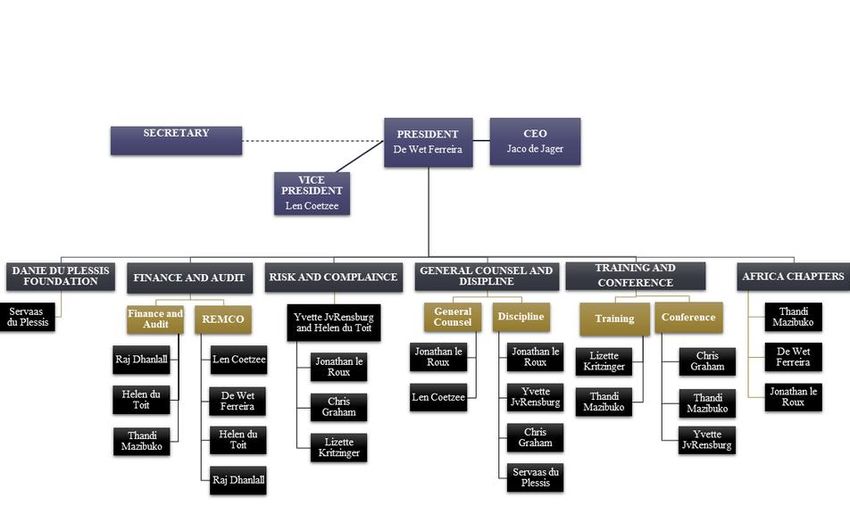
ABOUT THE ACFE INTERNATIONAL

The ACFE is the world's largest anti-fraud organization and premier provider of anti-fraud
training and education. Together with nearly 90,000 members, the ACFE is reducing business
fraud worldwide and inspiring public confidence in the integrity and objectivity within the
profession. As fraud becomes increasingly more prevalent and complicated, the ACFE is
continually researching and developing new publications, self-study products, and cutting-edge
fraud training conferences designed to educate and prepare fraud examiners for the challenges
they face.

As an ACFE member, you receive many valuable benefits that help to promote your professional
and career development. These benefits include access to members-only services and resources
as well as discounts on many of ACFE’s valuable products. Membership is open to any person who
qualifies and is interested in, or engaged in, the practice or teaching of preventing, detecting or
deterring fraud. There is no better time than now to enhance your career and invest in your
future by becoming a Member of the Association.

Since the launch of the ACFE in Austin Texas by Dr Joseph T Wells in 1988, the ACFE and CFE
designations have been globally recognised in more than 183 countries and have nearly 90,000
members with the same goal: to join hands in the fight against fraud and white-collar crime. This
year the ACFE (Association of Certified Fraud Examiners) celebrated its 33rd Anniversary, while
the ACFE SA is celebrating 23 years of professional service in fighting fraud and white-collar
crime.

             MEMBERS GLOBALLY

             90,000

                 34%
                           CFEs earn 34% more than those without
                           the CFE credential.

                           The CFE credential is one of the most
                           marketable credentials today.

                                                                                              PAGE 08
ABOUT THE ACFE SOUTH AFRICA

     The ACFE SA is registered as a Chapter (Chapter 91) of the ACFE International with the
     responsibility to maintain the Ethical and Professional standards in South Africa and the
     respective African countries it supports.

     The ACFE SA was established in 1998 due to the need to raise the standard of fraud examination in
     Southern Africa and for a Professional Body not limited to a specific profession such as
     accounting or law. This Chapter’s mission is to provide a community environment in which local
     forensic examination practitioners can associate. This chapter is a collection of individuals from
     all industries and professions, all with a single goal in mind; the reduction of white-collar crime
     in South Africa.

     The ACFE SA is registered as a Professional Body by the South African Qualifications Authority
     (SAQA) as per the requirements set out in the National Qualifications Framework Act (NQF Act).
     Being a member of the ACFE and ACFE SA has become a requirement in both the public and
     private sector, and the CFE designation has become a sought-after designation.

     Due to the exponential growth of the ACFE, the ACFE SA was able to host the first Africa
     Conference in 2008, which is now recognised as the second biggest Anti-Fraud Conference in the
     world next to that of the ACFE International Conference. The ACFE SA has grown from strength
     to strength, creating awareness all over Southern Africa.

OUR GOAL is to help, encourage and create an ethical, value-driven   OUR MISSION is to reduce the incidence of fraud and white-
environment in reducing the incidence of fraud and white-collar      collar crime and to assist the members in fraud detection and
crime in our daily working environment.                              deterrence.

                                                                     To accomplish our mission, the ACFE:
Our immediate, specific goals include:
                                                                         Provides bona fide qualifications for Certified Fraud
   Networking opportunities                                              Examiners through the administration of the CFE
   Practical training                                                    Examination and registered learnership programme called
   Technical updates                                                     the ACFE SA Learnership: Certified Forensic Practitioner.
                                                                         Sets high standards for admission, including demonstrated
   Ongoing updates of what is happening in the forensic industry
                                                                         competence through mandatory Continuing Professional
   and the situation we are currently facing                             Education.
   Regulation of the Forensic Profession                                 Requires members to adhere to a strict code of professional
   The setting of ethical and professional standards                     conduct and ethics.
                                                                         Serves as the international representative for Certified Fraud
   Help establish industry-specific standards
                                                                         Examiners to business, government and academic
                                                                         institutions.
                                                                         Provides leadership to inspire public confidence in the
                                                                         integrity, objectivity and professionalism of Certified Fraud
                                                                         Examiners.

                                                                                                                            PAGE 09
STRATGIC PLAN & OBJECTIVE
     Since embarking on its strategy in 2019, the ACFE SA has made great progress towards building a sustainable organisation while navigating the
     negative impact of the pandemic.

     STRATEGIC OBJECTIVES                                  ACTVITIES & OUTPUT                                     INTO THE FUTURE

MEMBERSHIP DEVELOPMENT                                DESIGNATION REGISTERED WITH SAQA                    ALLOCATE TIME AND RESOURCES TO THE YOUTH OF
WE PRIORITISE MEMBER DEVELOPMENT                      REGISTERED FRAUD EXAMINER AS A PROFESSION ON        SA
                                                      THE OFO FRAMEWORK                                   SEC 205 INITIATIVE
                                                       AND AS A PRIORITY/SCARCE SKILL                     POPIA CODE OF CONDUCT
                                                      INVOLVED IN EDUCATION                               CREATE A CURRICULUM TO ENABLE SCHOOL LEAVERS
                                                      ONE-FEE STRUCTURE                                   TO BECOME CFES

                                                      ENSURED LONG-TERM SUSTAINABILITY THROUGH
                                                                                                                        Leslin Marcus
                                                                                                          FACILITATE BOARD EVALUATIONS
GOVERNANCE AND TRANSFORMATION                         GOVERNANCE FRAMEWORK, STRUCTURE AND                               Legal
                                                                                                          INCREASE FEMALE      Assistant
                                                                                                                          MEMBERSHIP
WE ENSURE LONG-TERM SUSTAINABILITY                    SUCCESSION PLANNING                                 INVOLVE UNDER 35S AT REGIONAL AND BOARD LEVEL
THROUGH PROPER GOVERNANCE                             INVOLVED IN VARIOUS FORUMS SUCH AS THE KING
                                                      COMMITTEE AND SABS/ISO FORUMS ENSURING THAT
STRUCTURES AND THE TRANSFORMATION                     FRAUD EXAMINERS IS RECOGNISED
OF THE ACFE SA                                        FOCUSED ON THE OVERALL DIVERSITY OF THE ACFE
                                                      SA

                                                      NEGOTIATED A ONE-FEE STRUCTURE WITH THE ACFE        APPLY FOR FUNDING FROM THE SETAS
SUSTAINABLE FUNDING MODEL                             INTERNATIONAL                                       CONTINUE WITH THE SCHOLARSHIP PROGRAMME
WE CREATE NEW FUNDING MODELS TO                       CREATED A NEW FUNDING MODEL TO ASSIST IN            APPLY FOR FUNDING FROM INTERNATIONAL
ASSIST WITH THE REDUCTION OF                          REDUCING MEMBERSHIP AND TRAINING FEES               SPONSORS TO ASSIST OTHER AFRICAN COUNTRIES TO
                                                                                                          TRAIN FRAUD EXAMINERS
MEMBERSHIP AND TRAINING FEES

                                                      EXPAND THE ACFE FOOTPRINT
MARKETING                                             MEDIA EXPOSURE
                                                                                                          ALLOCATE TIME AND RESOURCES TO THE AFRICA
                                                                                                          COUNTRIES
WE CREATE MORE AWARENESS ABOUT THE                    MEDIA RELEASES PRODUCED
ACFE AND OUR PROFESSION THROUGHOUT                    MEMBERSHIP SUBSCRIPTIONS
                                                      MONTHLY NEWSLETTERS AND/OR VERITAS
AFRICA
                                                      MAGAZINES

                                                      ENSURED THAT TRAINERS AND CONTENT MEET
TRAINING                                              INTERNATIONAL STANDARDS
                                                                                                          ENSURE THAT THE VALUE PROPOSITION RELATES TO
                                                                                                          THE NEEDS AND EXPECTATIONS OF OUR MEMBERS
WE PROVIDE QUALITY AND APPROPRIATE                    ALIGNED THE ACFE SA WITH THE GUIDELINES SET         AND THE GENERAL PUBLIC
TRAINING                                              OUT IN THE NQF ACT BY ESTABLISHING THE AFRICA
                                                                                                          CREATE NEW EVENTS
                                                      TRAINING ACADEMY IN 2018                            DEVELOP NEW PROGRAMMES
                                                      VETTED ALL SERVICE PROVIDERS AND ENSURED THAT
                                                                                                          ENSURE THAT TRAINING MEETS INTERNATIONAL AND
                                                      THOSE APPOINTED MEET AND ADHERE TO THE              NATIONAL STANDARDS/EXPECTATIONS
                                                      STANDARDS SET BY THE ACFE, ACFE SA, SAQA AND
                                                      QCTO
                                                      DEVELOPED NEW MATERIAL AND PROGRAMMES

ADVOCACY                                              THE ACFE SA ISSUED INDUSTRY STANDARDS               STRENGTHEN THE ACFE BRAND TO ENSURE IT
                                                                                                          BECOMES STANDARD PRACTICE TO REQUEST
WE INFLUENCE INDUSTRY STANDARDS AND
                                                                                                          ASSISTANCE FROM AND APPOINT CFES
LEGISLATION

ANNUAL CONFERENCE                                     SELECTED QUALITY/HIGH CALIBRE SPEAKERS FOR          ENSURE ATTENDANCE FROM AFRICA AND THE REST
WE ENSURE THAT THE EVENT MEETS                        THE CONFERENCE, TO ENSURE VALUE FOR MONEY           OF THE WORLD, CREATING AWARENESS
                                                      AND QUALITY TRAINING                                ENSURE SPEAKER REPRESENTATION AND
INTERNATIONAL STANDARDS                               HOSTED THE FIRST VIRTUAL CONFERENCE -               PARTICIPATION FROM OTHER AFRICA COUNTRIES
                                                      MEMBERS RECEIVED QUALITY TRAINING AND
                                                      REQUIRED CPE POINTS

REGULATORY                                            ACFE SA MEMBERS RECEIVE AN EXEMPTION FROM           ADVOCATE FOR THE AMENDMENT OF THE PSIRA ACT
WE ENSURE THAT WE COMPLY WITH                         PAYING PSIRA MEMBERSHIP FEES                        CREATE AWARENESS OF MEMBERS LEGAL
                                                      THE ACFE SA DISCIPLINARY PROCEDURE HAS BEEN         RESPONSIBILITIES
LEGISLATION AS WELL AS THE                            AMENDED AND ENSURES THAT THE ACFE SA                RECOGNITION AS A REGULATORY BODY FOR THE
REQUIREMENTS SET BY THE ACFE                          COMPLIES WITH LEGISLATION AS WELL AS THE            FORENSIC INDUSTRY
INTERNATIONAL                                         REQUIREMENTS SET BY THE ACFE INTERNATIONAL          CREATE A CODE OF CONDUCT THAT CAN BE
                                                      THE ACFE SA FORMS PART OF THE AEPF FORUM,           INCORPORATED INTO POPIA
                                                      WHERE THE RESPECTIVE PROFESSIONAL BODIES
                                                      ASSIST ONE ANOTHER

INTERNATIONAL                                         SUPPORTED AND ADMINISTERED 8 OTHER ACFE             INCREASE AWARENESS REGARDING THE PROFESSION
                                                      AFRICA CHAPTERS                                     AND THE NEED FOR SPECIALIST FRAUD EXAMINERS
WE FOCUS MORE AND MORE ON THE
                                                      PROVIDED THE AFRICA CHAPTERS WITH TIME AND          TO THE PUBLIC AND PRIVATE WORLD:
PARTICIPATION OF THE RESPECTIVE AFRICA                RESOURCES TO GROW THE LOCAL CHAPTER AND             FOCUS ON THE PARTICIPATION OF THE RESPECTIVE
COUNTRIES                                             MEET THEIR CHAPTER BY-LAW OBLIGATIONS               AFRICAN COUNTRIES.
                                                                                                          INVEST TIME AND RESOURCES INTO AFRICAN
                                                                                                          COUNTRIES.

                                                                                                                                           PAGE 10
THE CFE CREDENTIAL
The Certified Fraud Examiner (CFE) credential denotes proven expertise in fraud prevention, detection and
deterrence. CFEs are trained to identify the warning signs and red flags that indicate evidence of fraud and fraud risk.
CFEs around the world help protect the global economy by uncovering fraud and implementing processes to prevent
fraud from occurring in the first place. CFEs have a unique set of skills that are not found in any other career field or
discipline; they combine knowledge of complex financial transactions with an understanding of methods, law, and
how to resolve allegations of fraud.
SETTING HIGH STANDARDS FOR THE ANTI-FRAUD PROFESSION
To become a CFE, an individual must pass a rigorous test on the four major disciplines that comprise the fraud
examination body of knowledge:
• Fraud Prevention and Deterrence
• Financial Transactions and Fraud Schemes
• Investigation
• Law
Prospective CFEs must also meet high professional, educational and ethical standards, as well as continuing
professional education requirements.
RECOGNISED AS THE “GOLD STANDARD”
According to the 2020 Compensation Guide for Anti-Fraud Professionals, CFEs earn 34 percent more than their non-
certified colleagues. In a recent study by Robert Half International, a leading specialist in financial staffing, the CFE is
listed as one of the most marketable credentials today. ACFE research indicates that organizations with CFEs on staff
uncover fraud 50 percent sooner and experience fraud losses that are 62 percent smaller than organizations that do
not have CFEs on staff.
“Bringing staff with the CFE on board, enables employers to develop a more skilled workforce. Professionals who earn
and maintain this accreditation establish themselves as leaders in their field and gain insight into industry trends and
best practices in the process,” said DeLynn Senna, executive director of Finance & Accounting at Robert Half
International.
A.E. Feldman, a leading executive search firm, states, “…the CFE has emerged as the gold standard in the area of
fraud.”
The CFE credential is recognized in the hiring and promotion policies of leading organizations, including the FBI, the
U.S. Department of Defense, and the Forensic Audits and Special Investigations Units of the U.S. Government
Accountability Office .
“CFEs Are Leading the Fight Against Fraud Worldwide ”
ACFE CODE OF ETHICS & PROFESSIONAL STANDARDS
The ACFE’s Research and Knowledge base is of the highest standards and is continually being updated. The ACFE
Code of Ethics and Professional Standards are internationally accepted, and all members are obligated to adhere to
these standards. Chapter participation allows members to meet other anti-fraud professionals in their area who are
facing the same challenges. Sharing insights, techniques and experience, in addition to promoting fraud awareness, is
invaluable to the global fight against fraud.
All ACFE Members must meet the rigorous criteria for admission to the Association of Certified Fraud Examiners.
Thereafter, they must exemplify the highest moral and ethical standards and must agree to abide by the bylaws of the
ACFE and the ACFE Code of Professional Ethics.
PROFESSIONAL STANDARDS
Members have a professional responsibility to their clients, the public interest and each other, a responsibility that
requires subordinating self-interest to the interests of those served. The Standards express basic principles of ethical
behaviour to guide members in the fulfilling of their duties and obligations. All Members are expected, to strive and
demonstrate commitment to excellence in service and professional conduct.
Click here to view the ACFE Code of Ethics & Professional Standards
PAGE 11CORPORATE GOVERNANCE
In support of the fight against white-collar crime, the Board is the core of our governance
structure. The Board aligns with our organisation’s unique value proposition and addresses
relevant issues while embracing opportunities to protect the public interest, advance the ACFE
membership and meet the profession’s needs.
The ACFE SA’s governance framework arises from the fiduciary obligations and responsibilities of
directors as defined by the Companies Act and King IV best practice principles of oversight and
control. It is based on accountability and line of authority to ensure the governance objectives are
met. The pillars of ACFE SA’s governance framework represent the key processes or mechanisms
applied to effectively uphold, sustain, defend and enforce the ethical values of good governance
throughout the organisation.
The ACFE SA upholds the principles of the King IV and
strives, through ethical and effective leadership, to achieve
the governance outcomes of an ethical culture, good
performance, effective control and legitimacy.
We feel that by adopting King IV principles and practice suggestions while taking into account
proportionality in terms of our size, resources, and the complexity of our activities, we are able to
preserve the ideals of King IV and achieve the needed governance objectives.
The Board is composed of 10 leaders in the profession and the public, representing the diverse
perspectives and expertise of the membership and stakeholders we serve. They extensively
monitor the external environment and key trends that could have the most significant
implications for the profession and organisation in the future. With that insight, they help shape
and ultimately oversee the development and approval of the ACFE SA’s 3-year strategic plan and
budget, monitor performance against goals and provide overall enterprise risk management.
PAGE 12BOARD OF DIRECTORS
Len Coetzee | Lizette Kritzinger | Chris Graham | Helen du Toit | Jonathan le Roux | De Wet Ferreira | Yvette Botha | Jaco de Jager | Thandi Mazibuko | Raj Dhanlall
PAGE 13MEET THE BOARD of 2020
5/5 4/5 4/5 5/5 4/5
5/7 3/7 2/7 5/7 7/7
LEN COETZEE LIZETTE KRITZINGER CHRIS GRAHAM HELEN DU TOIT JONATHAN LE ROUX
VICE-PRESIDENT PAST PRESIDENT
INDEPENDENT NON- INDEPENDENT NON- INDEPENDENT NON- INDEPENDENT NON- INDEPENDENT NON-
EXECUTIVE DIRECTOR EXECUTIVE DIRECTOR EXECUTIVE DIRECTOR EXECUTIVE DIRECTOR EXECUTIVE DIRECTOR
BOARD EXPERIENCE BOARD EXPERIENCE BOARD EXPERIENCE BOARD EXPERIENCE BOARD EXPERIENCE
16 YEARS 3 YEARS 3 YEARS 13 YEARS 7 YEARS
BOARD COMMITTEES BOARD COMMITTEES BOARD COMMITTEES BOARD COMMITTEES BOARD COMMITTEES
CHAIR OF THE CHAIR OF THE CHAIR OF THE CHAIR OF THE RISK CHAIR OF THE
REMUNERATION TRAINING CONFERENCE AND COMPLIANCE GENERAL COUNSEL
COMMITTEE COMMITTEE COMMITTEE COMMITTEE COMMITTEE
MEMBER OF THE MEMBER OF THE MEMBER OF THE MEMBER OF THE CHAIR OF THE
EXECUTIVE RISK AND DISCIPLINARY FINANCE AND AUDIT DISCIPLINARY
COMMITTEE COMPLIANCE COMMITTEE COMMITTEE COMMITTEE
MEMBER OF THE COMMITTEE MEMBER OF THE CHAIR OF THE WC MEMBER OF THE
Adv. Minette Niemann Leslin Marcus
GENERAL COUNSEL CHAIR OF THE JHB RISK AND REGIONAL AFRICA CHAPTERS
Legal Officer Legal Assistant
CHAIR OF THE KZN REGIONAL COMPLIANCE COMMITTEE COMMITTEE
REGIONAL COMMITTEE COMMITTEE MEMBER OF THE
COMMITTEE CHAIR OF THE EC DESIGNATIONS AND EXECUTIVE
DESIGNATIONS AND REGIONAL QUALIFICATIONS COMMITTEE
DESIGNATIONS AND QUALIFICATIONS COMMITTEE CFE MEMBER OF THE
QUALIFICATIONS CFE CA (SA) RISK AND
CFE PIA DESIGNATIONS AND CERTIFIED ETHICS COMPLIANCE
NATIONAL DIPLOMA QUALIFICATIONS OFFICER COMMITTEE
POLICE OTHER PROFESSIONAL CFE BCOMPT HONS
MANAGEMENT BODY MEMBERSHIP MBA HIGHER DESIGNATIONS AND
MANAGEMENT IIA SA CERTIFICATE IN QUALIFICATIONS
ADVANCEMENT OTHER PROFESSIONAL INSURANCE CFE
PROGRAMME BODY MEMBERSHIP COMPLETED COACH CERTIFIED ETHICS
NONE PRACTITIONER OFFICER
OTHER PROFESSIONAL PROGRAMME SACAP POST GRADUATE
BODY MEMBERSHIP SANTAM LEADERSHIP DIPLOMA IN
NONE DEVELOPMENT MANAGEMENT
PROGRAMME IN 2014 PRACTICES
AND VARIOUS OTHER NATIONAL DIPLOMA
TRAINING; INTERNAL AUDITING
LEADERSHIP AND
MENTORING OTHER PROFESSIONAL
COURSES BODY MEMBERSHIP
BCI
OTHER PROFESSIONAL IRMSA
BODY MEMBERSHIP TEI
SAICA
SAICB
BOARD
MEETING
EVENTS
PAGE 14MEET THE BOARD of 2020
5/5 4/5 5/5 2/5 3/5
6/7 6/7 7/7 5/7 5/7
DE WET FERREIRA YVETTE BOTHA JACO DE JAGER THANDI MAZIBUKO RAJ DHANLALL
PRESIDENT CEO FINANCE DIRECTOR
INDEPENDENT NON- INDEPENDENT NON- EXECUTIVE DIRECTOR INDEPENDENT NON- INDEPENDENT NON-
EXECUTIVE DIRECTOR EXECUTIVE DIRECTOR EXECUTIVE DIRECTOR EXECUTIVE DIRECTOR
BOARD EXPERIENCE BOARD EXPERIENCE BOARD EXPERIENCE BOARD EXPERIENCE BOARD EXPERIENCE
8 YEARS 3 YEARS 13 YEARS 3 YEARS 23 YEARS
BOARD COMMITTEES BOARD COMMITTEES BOARD COMMITTEES BOARD COMMITTEES BOARD COMMITTEES
CHAIR OF THE MEMBER OF THE MEMBER OF THE CHAIR OF THE CHAIR OF THE
BOARD OF CONFERENCE EXECUTIVE AFRICA CHAPTERS FINANCE AND AUDIT
DIRECTORS COMMITTEE COMMITTEE COMMITTEE COMMITTEE
CHAIR OF THE MEMBER OF THE MEMBER OF THE MEMBER OF THE MEMBER OF THE
EXECUTIVE DISCIPLINARY CONFERENCE CONFERENCE EXECUTIVE
COMMITTEE COMMITTEE COMMITTEE COMMITTEE COMMITTEE
MEMBER OF THE MEMBER OF THE MEMBER OF THE MEMBER OF THE
Adv. Minette Niemann Leslin Marcus
DESIGNATIONS AND RISK AND FINANCE AND AUDIT FINANCE AND AUDIT REMUNERATION
Legal Officer Legal Assistant
QUALIFICATIONS COMPLIANCE COMMITTEE COMMITTEE COMMITTEE
CFE COMMITTEE MEMBER OF THE MEMBER OF THE
CERTIFICATE TRAINING TRAINING DESIGNATIONS AND
PROGRAMME IN DESIGNATIONS AND COMMITTEE COMMITTEE QUALIFICATIONS
FRAUD EXAMINATION QUALIFICATIONS MEMBER OF THE CHAIR OF THE CFE
ADVANCED CFE RISK AND CENTRAL REGIONAL CA (SA)
CERTIFICATE IN PIA COMPLIANCE COMMITTEE CIA
FRAUD EXAMINATION BCOM INTERNAL AUDIT COMMITTEE BACHELOR OF
B-TECH FORENSIC DESIGNATIONS AND ACCOUNTING (UKZN)
INVESTIGATION OTHER PROFESSIONAL DESIGNATIONS AND QUALIFICATIONS CERTIFICATE IN
(HON) BODY MEMBERSHIP QUALIFICATIONS CFE FORENSIC
M-TECH FORENSIC IIA SA CFE BCOM ACCOUNTING
INVESTIGATION CISA BCOM LAW FRAUD EXAMINATION
(MASTER’S DEGREE) POST GRAD IN OTHER PROFESSIONAL (UP)
FORENSIC BODY MEMBERSHIP
OTHER PROFESSIONAL ACCOUNTING AND IOD SA OTHER PROFESSIONAL
BODY MEMBERSHIP INVESTIGATION BODY MEMBERSHIP
PSIRA HIGHER DIPLOMA IN IRBA
FRAUD SAICA
MODERATION OF IIA SA
OUTCOME-BASED
ASSESSMENT
OUTCOME-BASED
ASSESSMENT
OTHER PROFESSIONAL
BODY MEMBERSHIP
EPA
IOD SA
SAPFED
BOARD
MEETING
EVENTS
PAGE 15BOARD OF DIRECTORS MAIN FUNCTIONS
• The setting of the strategic objectives for the ACFE SA
• Ensuring that the ACFE SA staff continue to meet the set goals and objectives
• Ensuring the financial well-being of the ACFE SA
• Preparation of the Integrated Report
• Risk management
• Duty to exercise skill and care
• Execute all powers for its proper purpose Independent judgment in decision making
• Sustainability of the organisation
GUIDELINES AND GOVERNANCE FOR BOARD OF DIRECTORS
At the beginning of each year, all Directors are provided with the ‘Guidelines for Board of
Directors’ and the ACFE Chapter Bylaws. All Directors must ensure that they are familiar with the
Chapter Bylaws and understand their roles and responsibilities. In order for the Board to meet
their responsibilities and to ensure there is no conflict of interest, internal controls are found in
the Guidelines, as well as other relevant documents, which need to be completed and signed
annually by each member serving on the Board.
The President of the Board also takes all directors through an informal induction giving them
background to the ACFE SA strategic objectives as well as each portfolio's roles and
responsibilities. During 2019, a specialist's services was acquired (sponsored by PwC) helping the
Board to review its current strategic objectives and helping the Board plan for the way forward.
The Board is required to declare conflict of interest every six months to ensure the board adheres
to the structured guidelines. This provides reasonable assurance, in a cost-effective manner to
ensure that all transactions and actions are performed and recorded in accordance with our
policies and procedures.
The roles of the President and CEO are separate, with a clear division of responsibilities to ensure
a balance of power and authority between them. The CEO is the only executive director, with the
rest of the members being independent non-executive directors. The independent non-executive
directors are volunteers and do not receive any remuneration outside of reimbursement for out-
of-pocket expenses.
EXCO
The Executive Committee (Exco) currently consists of five Directors focusing on the operational
aspects of the ACFE SA, whereas it remains the responsibility of all the Directors to focus on the
strategic aspects.
The following portfolios make up the EXCO:
President: De Wet Ferreira
Vice President: Len Coetzee
Past President: Jonathan le Roux
Finance Director: Raj Dhanlall
CEO: Jaco de Jager
PAGE 16BOARD REPORT SUMMARY
As part of the ongoing process of ensuring governance through all our interactions, the
following serves as a summary of the initiatives, guidance and associated actions that
continue to enhance the roles and responsibilities that the Board are required to fulfil.
RECURRING ITEMS ON THE BOARD’S AGENDA
Consideration of Board composition and succession.
Approval of amended MoI.
Approval of proposed Board structure.
Approval of Board committees, including re-structuring and discontinuation of certain
existing Committees.
Approval of each Board committee’s terms of references.
Approval of Corporate Governance Framework.
Approval of delegation of authority.
Actual, potential and/or perceived conflict of interest.
Informal discussion on Board performance and attendance for 2020.
Approval of Integrated Report and Annual Financial Statements.
Approval of 2021 business plan and budget.
Oversight of tax exemption status.
Approval of internal policies.
Overview of key stakeholder relationships.
Review of CEO’s performance.
Ratification of designation awards.
Member disciplinary sanctions.
Risk register updates of the ACFE SA and overall performance.
CONTRIBUTIONS
Implementing strategies within their organisations, ensuring that employees receive the
training required for identifying and preventing fraud.
While sitting at board level, Regional Chairs have been in a position to communicate the
strategic objectives of the Board to the rest of the committee, ensuring that they focus on
these points, thereby creating more awareness on the functions of CFEs and highlighting
that they will be held accountable when not adhering to our Code of Ethics and
Professional Standards.
Assisting with the planning and execution of Regional Events:
scheduling regional committee meetings
attending regional committee meetings
contributing to planning in terms of professional speakers, sponsors and topics
acting as chairperson on the day of the event
The Board’s involvement in Regional events ensured an overwhelmingly positive response
from members and resulted in many successful online and face-to-face events.
Raising awareness of the ACFE as a professional organisation.
Increasing the ACFE SA membership.
PAGE 17Providing topical, relevant and stimulating training and thought leadership to the
respective regional members.
Providing a forum for professionals from all sectors to share ideas and network.
Creating communication channels for various regional committees to enhance
communication between committee members and to create a sense of familiarity.
Encouraging engagement and dialogue between stakeholders and any other interested
parties.
Continuously promoting collaboration with other institutions in all sectors in raising
awareness to achieve maintain a corruption-free environment.
Assisting with the planning and execution of the International Fraud Awareness Week and
to use own initiatives to further create awareness within their own industries ad
companies.
Coaching and mentoring upcoming youth who have shown an interest in fraud
examination.
Establishing of the "Young CFE Award" for CFEs under 30's.
Aligning the ACFE SA’s Governance framework and structure with best international
practice.
CHALLENGES
The global pandemic resulted in many challenges – most of which could be overcome.
Making the shift from face-to-face to online events:
This resulted in uncertainty from members as to whether online events would be as
valuable as face-to-face events.
Many members struggled to access the required technology to attend events.
Financial/economic implications:
Many members could no longer afford the training due to retrenchments.
Many companies could no longer afford to send employees for training due to budget
cuts or company closure.
Sponsorships:
Sponsorships have been dwindling over the past couple of years due to financial
pressures – the 2020 economic tumble resulted in an even more strenuous
environment.
Time constraints:
Board members act on the board on their own accord and have other full-time jobs
and responsibilities. This means that finding the time to attend and arrange meetings
and events is challenging. The ACFE SA commends the board for always pulling their
weight and for committing to the cause of reducing the incidence of fraud and white-
collar crime.
Taking the above into consideration, you will see that the current Board helped pave the way
to a better ACFE SA. Furthermore, they proved that no current challenge is too great to
overcome.
PAGE 18INTO THE FUTURE
STATE OF GOVERNANCE
The ACFE SA is an autonomous legal entity, incorporated in South Africa, which has entered into
an Affiliation Agreement with the ACFE International, a legal entity incorporated in the state of
Texas, United States of America. In terms of this Affiliation Agreement, the Chapter not only
complies with the South African Companies Act 71 of 2008 as amended, but also complies with the
ACFE Bylaws, Chapter Handbook, and other applicable requirements. Within this context, the
Board determines what is required to effectively govern the ACFE SA. The Board started to
explore new avenues for the organisation and approached independent consultants to review the
ACFE SA Governance framework, structure and MoI.
After an independent facilitated review, key changes to the ACFE SA’s Governance framework,
structure and MoI were proposed to ensure efficiency, objectivity and independence of the board.
Affiliation Memorandum of
Chapter Bylaws
Agreement Incorporation
Board of Directors (Max 9)
Chair Person
Non-Executive Director: Non-Executive:
Executive Director:
Finance & Audit Lead Independent
CEO
Treasurer Director(s)
Governance, Nomination and
Audit sub-
Risk & Remuneration Committee
committee
Compliance
Regional Council
Chairperson
SA REGIONAL AFRICA REGIONAL
CHAIRS CHAIRS
PTA BOTSWANA
JHB ZIMBABWE
KZN LESOTHO
EC ESWATINI
FS NAMIBIA
WC MALAWI
KENYA
MADAGASCAR
PAGE 19LEGAL & DISCIPLINE
Jonathan le Roux
The ACFE SA, more so than most organisations, require consistent legal
oversight and advice. In an ever-changing legal landscape, it is imperative
to keep up with the pace of change. 2020/21 brought new challenges with
the sudden introduction of preventative measures to safeguard people
around the globe against a fast-spreading pandemic.
The ACFE SA, more so than most organisations, require consistent legal oversight and advice.
In an ever-changing legal landscape, it is imperative to keep up with the pace of change. 2020
has brought new challenges with the sudden introduction of preventative measures to
safeguard people around the globe against a fast-spreading pandemic. The ACFE SA is not
only striving to comply with the laws and regulations of the country but is also involved in a
wide range of activities focused on elevating the fight against fraud and corruption.
The Disciplinary Committee fulfils a role in the overall legal services of the ACFE SA, mainly
to monitor the professional practice and conduct of its members. The committee adjudicates
reports and complaints to ensure that the behaviour of our members and their actions
respect the Code of Professional Ethics of the ACFE.
The Committee consists of three Board members, an independent legal practitioner and the
ACFE SA Legal Officer. The committee, based on requirements, will invite other members of
the Board, the ACFE SA CEO, and/or advisors to attend committee meetings to clarify and
provide insights into some of its enquiries.
At the beginning of August 2020, we had 6 active cases (2 from 2019 and 4 from 2020). We had
12 new reported cases between August 2020 and July 2021. 13 matters were closed during this
period with the following findings made:
Unsubstantiated / insufficient evidence: 2 matters – closed
Found to have acted within the Code of Ethics: 3 matters - closed
No jurisdiction (subject not a member): 2 matters
Referred to ACFE USA for further action: 5 matters – 3 closed and 2 open investigations
Director conduct & fiduciary duties: 2 matters – closed
On hand: 4 matters – open enquiries
Two members received formal written reprimands and were placed under censure for 6
months. We have four matters that are still active and under different review stages:
One at Stage 1: Acknowledgement of complaint sent to the complainant – request
additional information, Update Case register, Inform DC Chair of new Case received with
One at Stage 3: Forward implicated member's response to the complainant for final input
and comments;
One at Stage 4: Referred to an independent legal practitioner for review and
recommendation; and
One at Stage 5: Recommendation of the legal practitioner sent to the DC for the final
decision (Formal disciplinary hearing, refer to ACFE International or close matter).
PAGE 20Due to the pandemic, some enquiries dragged on longer than anticipated having to rely on
the committee video-calling to interview witnesses, subjects and complainants. These
matters are, however, receiving constant attention and will be processed as soon as
reasonably possible. The committee continues to strive towards the fulfilment of the
expectations of the portfolio in an impartial manner. It however needs to be stressed that the
Disciplinary Committee has no investigative power and acts solely on the information
provided by both the complainant and the member against whom the complaint was lodged.
We've seen an increase in the complexity and nature of disciplinary matters brought to the
committee's attention, necessitating consultation and, in some cases, handing these matters
over to the ACFE International for review and disciplinary sanction. To educate our members,
we have decided to provide an overview of the type of complaints that we have received, to
ensure that others do not make similar mistakes in the future, and/or are aware of potential
“potholes” to circumvent.
Lack of formalising the scope/mandate with the client, thereby creating dissatisfaction
and misunderstanding between the provider/consultant and the client.
Misrepresentation of a designation that they did not hold.
Members not keeping to their mandate and then invoicing for work outside the scope of
business.
Manipulating financial reports/results, tax evasion and financial irregularities.
Alteration of investigations reports.
Interference in tender/procurement process.
Threatening/intimidating/assaulting staff members and people interviewed.
Sexual assault.
Unsafe brandishing of a firearm.
Misuse of the ACFE logo and CFE Seal by individuals and companies on letterheads,
websites and signatures.
Undisclosed potential or actual conflict of interest.
Overcharging & manipulation of timesheets/travel expenses.
We can improve and caution members to ensure they
understand the importance and adhere to the ACFE Code
of Ethics and Professional Standards.
PAGE 21TRAINING FEEDBACK
Lizette Kritzinger
in 2020 we managed to host, with the support of other Africa Chapters,
another highly successful ACFE Africa Conference, increasing the number of
attendees thanks to our members' response providing more than 40
CPE/CPD to those who attended. 2020/21 has seen the ACFE SA training go
virtual due to COVID-19 and this year we will be hosting our SECOND
virtual conference running 40 sessions over three days.
We changed our business strategy to still provide a quality service to our members during the
lockdown period. By going virtual we experienced an increase in member attendance with our
first event seeing more than 900 people registering. Virtual events also provided the ACFE SA
with the opportunity to reduce the price per member for events and host more free events. It
further assisted us to expand our footprint into countries such as Malawi and launched another
chapter in Madagascar after successfully arranging a CFE training session with the World Bank in
Madagascar. We will continue to expand into Africa creating more awareness regarding our
profession, the ACFE, ACFE SA and our Code of Ethics and Professional Standards.
The ACFE training courses are benchmarked to the highest local and international standards and
is recognised as such. This is proven by the high attendance rates at all our events, with other
learning institutions increasingly looking to use the ACFE material to assist in their courses, such
as the University of Pretoria, University of Cape Town, Nelson Mandela University, University of
KwaZulu-Natal and UNISA.
The ACFE SA, in recognition of the need expressed by members, is pursuing the creation of
further specialist qualifications. Our research and knowledge base is of the highest standard and
is being continually updated to keep abreast with the latest trends, legislation, and technology.
Through the various ACFE SA Industry Forums, the ACFE SA accepted and endorsed various
industry standards which can be viewed on our website. The Forum committees are currently
pursuing academic accreditation for the material developed thereby creating further career and
specialisation paths for members.
The CFE credential remains sought after as can be seen from the increased demand for the CFE
training course. Over the last two years, we have seen more than 828 attend the CFE and
workshop courses thanks to our sister company the AFRICA Training Academy and companies
supporting the profession through further skills development. We anticipate a decrease in
membership by the end of the year due to non-compliance to CPE requirements, however, it
remains our responsibility to protect the reputation of our profession, the ACFE SA, our members
who do comply, as well as the general public. We will start auditing CPE compliance from
November 2021 assisting the ACFE with this responsibility. From this year more events will be
presented virtually which makes it easier to audit.
The Board decided to reduce the number of face-to-face events and increasing virtual events
allowing more members to attend events in other regions that interest them. I look forward to
another successful ACFE Africa Conference this year and hope to virtually meet and greet as
many of you as possible. I also look forward to hearing from you relating to any training needs
you may have identified.
PAGE 22REGIONAL EVENTS
23
46 2
EVENTS
HOURS OF TRAINING EVENTS PER REGION
BEST 2020/21 REGIONAL EVENTS
MADAGASCAR: FIGHTING FRAUD BY
AFRICA EMPOWERING STAFF THROUGH
PROFESSIONALISATION
CYBER ANATOMY OF A BITCOIN SCAM
THE IMPACT OF THE POPI ACT ON FINDING THAT NEEDLE IN THE
EC FORENSIC INVESTIGATORS PTA HAYSTACK
MIRROR TRADING INTERNATIONAL MIRROR TRADING INTERNATIONAL
FS (MTI) AS A CASE STUDY L (MTI) AS A CASE STUDY
LIFESTYLE AUDITS: AN INVALUABLE
JHB UNPACKING THE FRAUD CASE
WC TOOL IN YOUR ANTI-FRAUD STRATEGY
KZN PRACTICAL FORENSIC ACCOUNTING
MOST ATTENDED NATIONAL EVENTS
1. CODE OF ETHICS AND PROFESSIONAL STANDARDS
NATIONAL 2. THE IMPACT THE NEW CYBER CRIME BILL HAS ON COMPANIES AND INVESTIGATORS
PAGE 23QCTO
The ACFE SA has been in contact with the QCTO continuously regarding the re-registration
of the NQF 7 qualification (Advanced Certificate: Fraud Examination), which was de-
registered by SAQA due to the qualification being misallocated under QCTO, instead of the
CHE. On 16 July 2021 the ACFE SA was informed by the QCTO that the NQF 7 qualification
was re-registered by SAQA, based on a recommendation received from the QCTO.
FASSET has been informed of these developments and they will continue to be the ETQA
(Education and Training Quality Assurance Body) for the NQF 7 qualification. The ACFE SA
will continue to initiate processes to review this qualification to ensure its continuation in the
future.
In addition to the above, the ACFE SA is still in the process to obtain approval to offer the NQF
8 qualification (Occupational Certificate: Fraud Examiner). The QCTO changed the entire
process for professional bodies in that the SETA’s now need to be involved in the QA process.
The QCTO is busy signing agreements with the SETAs after which we hope to start training
the NQF8 qualification.
PROFESSIONAL BODY STATUS
The ACFE SA has been registered as a non-statuary Professional Body with SAQA since 27
September 2017. As a result, the ACFE SA has been subjected to regular review processes to
ensure that we comply with the NQF Act.
Section 20 of the NQF Act states that a Professional Body will be re-recognised by SAQA for a
five-year period subject to the favourable outcome of a monitoring and evaluation process.
With an interim review that we passed in 2020, the end date of the ACFE SA’s five-year term
is 26 September 2022. Failure to comply with the set requirements, may lead to the de-
recognition of the Professional Body as well as its Professional Designation.
On 28 June 2021, SAQA informed the ACFE SA that the Professional Body is due for a midterm
monitoring review process. The ACFE SA has submitted the required documentation for the
upcoming review on 12 July 2021. The ACFE SA has been informed that the next mid-term
evaluation will take place on 4 October 2021.
PAGE 24ANNUAL CONFERENCE
Chris Graham
The Annual ACFE Africa Conference & Exhibition is
recognised as the largest anti-fraud event in Africa and
the second largest in the world, bringing together
hundreds of anti-fraud professionals from over 20
countries. The 13th Annual ACFE Africa Conference &
Exhibition was the first virtual conference hosted by the
ACFE SA.
In light of the pandemic, the safety of our members was
our priority which is why we decided not to host a face-
to-face conference. While many other professional
bodies had to cancel or postpone their events, we
managed to host a virtual conference with 760 delegates
in attendance. Unfortunately, many companies who sent
employees to attend our conference in the past are
dealing with retrenchments and budget cuts that
resulted in a drop in numbers. While we were
enthusiastic that a virtual conference would attract over
1 000 delegates, the global economic crisis proved to be
even direr than we anticipated.
Apart from offering our delegates and members an
opportunity to receive training on anti-fraud practices
by expert speakers, delegates could still earn their CPEs
in a time where it was jeopardized due to other events
and opportunities being cancelled. Not only did members
have an opportunity to earn CPEs, but during 2020
attendees could earn double the required CPE/CPD. We
extended our usual three-day conference to five days to
ensure that delegates could attend all of the sessions and
earn up to 40 CPEs which would ensure that they keep
their CFE status and they could carry 10 points over to
the next year in case the pandemic still affected events
and training. We hope that the points carried over along
with the 22 CPE points that delegates can earn at this
year’s conference assist CFEs to maintain their status as
COVID still takes its toll.
I am excited to announce that we have reached the tip of
1000 registrations for 2021. I eagerly look forward to
virtually meeting as many of you as possible this year at
our 14th ACFE Africa Conference.
PAGE 25You can also read


