Behavioral Considerations for Covid-19 Vaccine Take-up - Designing social media campaigns at scale - Pubdocs ...
←
→
Page content transcription
If your browser does not render page correctly, please read the page content below
Behavioral Considerations for
Covid-19 Vaccine Take-up

Designing social media campaigns at scale

                                            March 2021
Increasing COVID-19 vaccine take-up and communication

1. How to tailor communications to address information gaps and hesitancy?

 •   Messages and framing
 •   Messengers
 •   Norms

2. How to support health workers?

 •   Their beliefs
 •   Processes
Approach

• Measure: intentions, beliefs, norms, trust, access and behaviors
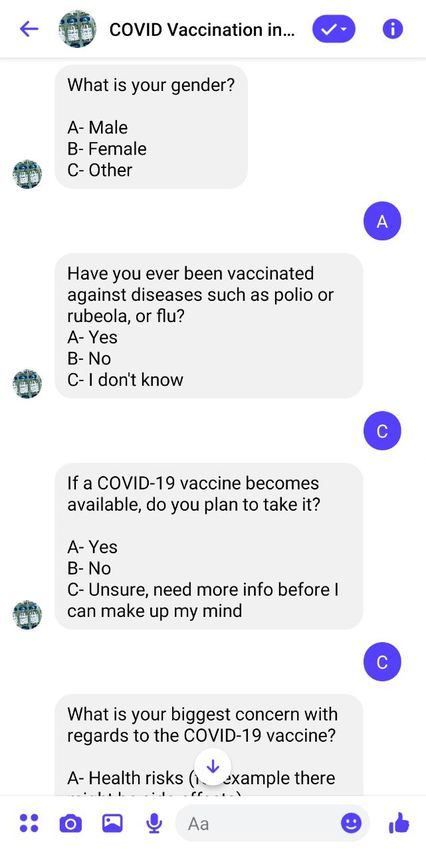
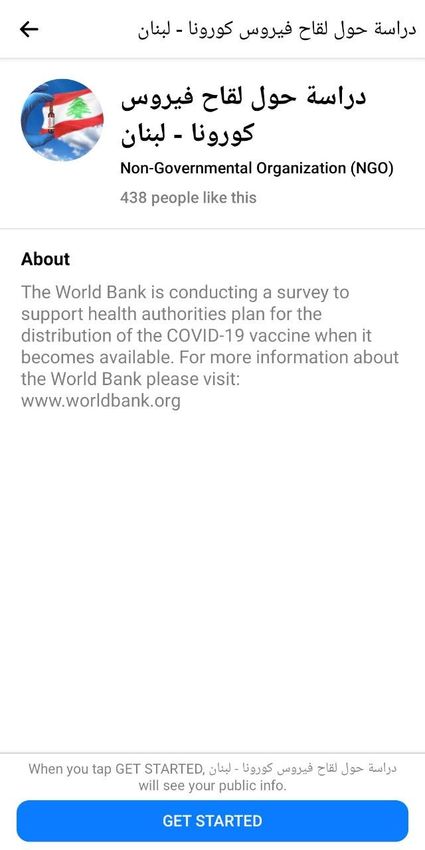
• Chat bot through FB ads and Messenger
• Sampling
    •     Stratification based on age, gender and region
    •     Population weights using existing data (also using education and household size)
•       Timing – 2 weeks
•       Reach – 1-2m
•       Final sample – aim for 5,000
•       Cost -
User experience

Understand intention to take up vaccine
Take up intention is low – hesitancy prevails

                                                        I will take the COVID-19 vaccine when it's available
                                60

                                                                                 48

                                40
                      Percent

                                                                                                               28
                                                  24

                                20

                                 0
                                                  No                           Unsure                          Yes

                                  Anti-vax?                Low trust?                       Curious?                 Champions?
                                (Non-believers)        (Needs better info)              (needs more info)            (Proactive)
basic framing only.
Take up intention varies across regions, gender, and age and education
I will take the COVID-19 vaccine when it's available
Region Gender
60 60
40 37
Percent
33 40
Percent
31
28
26
23 21
20 20
20
0
Beirut Beqaa Mount Nabatieh North South 0
Lebanon Lebanon Lebanon Male Female
Age Education
60 60
38
40 40
Percent
Percent
33 32
27 27 28
21
20 20
0 0
18 - 29 30 - 39 40 - 49 50 - 59 60+ Secondary or less Tertiary or above
basic framing only.Health workers and take-up: hesitancy also abounds
• 13% of respondents involved in the health sector
Rest of population Healthcare
60
48
46
40
36
Percent
27
25
20 18
0
No Unsure Yes No Unsure Yes
basic framing only.Take-up attitudes, champions and anti-vax groups
I will take the COVID-19 vaccine when it's available
Prefer to get the vaccine right away 55
I believe family and friends will get the vaccine 45
I believe family and friends think is important to get the vaccine 42
Refugee 41
25-34 old 39
Male 37
Health work
Government response to COVID-19 effective
Everyone should get vaccine to protect others 34
35
36
Champions
High income 34
Everyone should get vaccine
33
34 Early adopters
Mount Lebanon
18-24 old 32
32
Pro-vaccine social context
Locus of control (getting sick)
Tertiary or above
31
32 Health work
Past vaccinations (self or kids)
Beirut 31
Work, attend school at home 29
Weak religious beliefs 29
Live with senior or vulnerable 29
Wash your hands regularly 29
Avoided handshakes/physical greetings 29
No COVID-19 in house 29
Beqaa 28
Do not participate in gatherings 28
Always wear a mask in public 28
Secondary or less 28
Work, attend school out of the house 28
Do not wear a mask in public 27
Strong religious beliefs 27
No health work 27
Participated in any gatherings 27
Do not live with senior or vulnerable 26
Non-refugee 26
Nabatieh 26
COVID-19 in house 26
External Locus of Control (getting sick) 25
Low income 25
Handshakes/physical greetings 24
+50 old 24
Not everyone should get vaccine 23
North Lebanon 23
Anti-vax
Wait for others to get vaccine first 22
South Lebanon 21
Never vaccinated (self or kids) 21
20
Female
35-49 old 19 Government respond ineffective
19
Do not wash their hands regularly
I believe family and friends won't get the vaccine 9 Not altruistic
9
I believe family and friends don't think is important to get the vaccine
Disagree to get vaccine to protect others 7 Anti-vax social context
Government response to COVID-19 is not effective 4
0 20 40
basic framing onlyUnderstanding concerns, information gaps, messengers
Understanding informational gaps that everyone needs

                                                        Desired information, by vaccination intent
                                              No                                                    Unsure                                                     Yes

                Expert                                               Expert                                                    Expert
        recommendation                   15                  recommendation                    22                      recommendation                         30

                      Efficacy                36                      Efficacy                      33                          Efficacy                       33

             Family and                                           Family and                                                Family and
                 friends             7                                friends         4                                         friends         1
        recommendations                                      recommendations                                           recommendations

               Safety (side                                        Safety (side                                              Safety (side
                   effects)                   36                       effects)                       38                         effects)                22

           Where to get it           6                          Where to get it       3                                   Where to get it           15

                                 0       20   40   60   80                        0       20         40      60   80                        0       20         40    60   80

                                                                                  Percent
basic framing only.
Understanding messengers
Trusted Source for Medical Advice by Vaccination Intention
No Unsure Yes
Celebrities and
social media 0 1 0
influencers
Community
leaders 2 0 1
Doctors/nurses/
health workers 51 58 62
Equivalent of a
traditional 2 1 2
healer
Family and
friends 23 10 12
Pharmacist 5 1 1
Religious
leaders 5 2 2
Scientists and
epidemiologists 12 26 20
0 20 40 60 0 20 40 60 0 20 40 60
Percent
basic framing only.Designing effective communication – testing messages and messengers
The power of framing – experimental evidence

                                  I will take the COVID-19 vaccine when it's available, by treatment status
            60

                                                                                                               +61%*

            40

                                                       +21%*                      +21%*
  Percent

            20

            0
                              Control                  Experts            Experts and celebrities   Experts and religious leaders
* Statistically significant
The power of framing – health workers
I will take the COVID-19 vaccine when it's available,
by treatment status (health workers only)
60
+44%*
40 +6%*
-6%*
Percent
20
0
Control Experts Experts and celebrities Experts and religious leaders
* Statistically significantThe power of framing – desired information
I will take the COVID-19 vaccine when it's available,
by treatment status and desired information
Expert recommendation Efficacy Safety (side effects)
60
+41%*
+68%
+14%
40 +36% +111%*
+89%*
-11% +78%*
+11%
Percent
20
0
Control Experts Experts and Experts and Control Experts Experts and Experts and Control Experts Experts and Experts and
celebrities religious celebrities religious celebrities religious
leaders leaders leaders
* Statistically significantEarly lessons so far
Hesitancy abounds
• But driven by meaningful concerns that can be addressed with clear communication
Health workers are humans too (address own beliefs and as trusted messengers)
Communicating behaviorally can have large early effects
• All 3 framings increase the overall effect on the intention to get the vaccine across different
countries and population subgroups
Tailor messages and messengers to what people need
• Health workers respond most to information sent by health peers (40%)
• Those concerned with safety respond most to information about safety (up to 111%)Communicating with personas – design considerations Safety – use available research on high effectiveness, increasing amounts of safety data from real- world use and trials) Health workers – use local and international health authorities with clear, consistent, and concise messages; keep them updated with the latest results from real life data on safety and efficacy Low trust – focus on increase trust and transparency around the development and distribution of vaccine. Focus locally to leverage trusted leaders, institutions, peers and community norms Unaware/uninformed: Tailor messages using evidence around the science of the virus - presence of antibodies, new vaccine variants and reinfection, benefits of vaccinating for low-risk groups. Anti-vaxx: Information not enough. Approaches that focus on increasing trust in health institutions and medical practitioners may help. Champions: provide information to enable them help their networks overcome intention to action gaps (logistics, planning, sign up information).
Scaling
Leverage cost effectiveness and speed of social media platforms

Monitoring and dynamic trends
 • Repeat every few weeks
 • Weekly take-up intention question to get trends

Real-life testing at scale
 • Expand rapid testing of content (messages, audiovisuals)
 • Wider national and subnational social media campaigns targeting personas/groups
 • Explore various platforms (online and beyond)
eMBeD@worldbank.org

worldbank.org/embed

#embed_wb

bit.ly/eMBeDNews
You can also read


