BERKS SCHUYLKILL 2019-2020 - WSCM CURRICULUM & CONTEST GUIDE - WWW.WHATSSOCOOL.ORG - WHAT'S SO COOL ABOUT ...
←
→
Page content transcription
If your browser does not render page correctly, please read the page content below
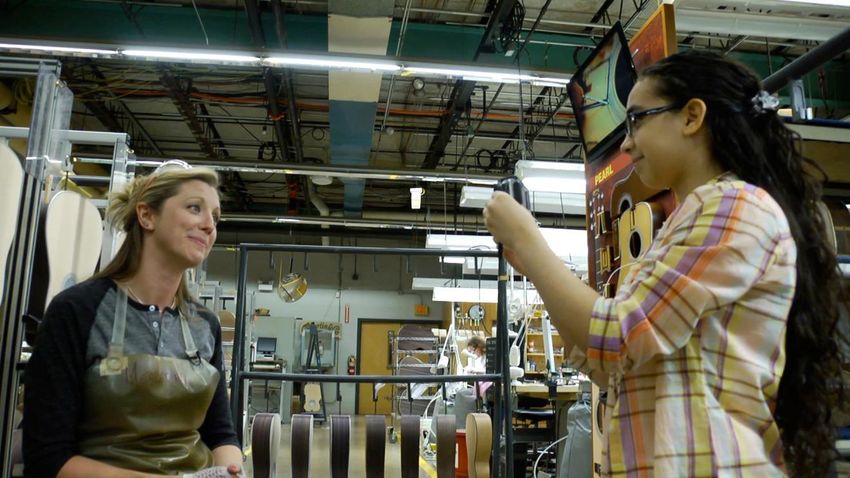
WSCM Curriculum & Contest Guide
  Berks Schuylkill 2019-2020

         www.WhatsSoCool.org
Dear Teacher Coach,

Thank you for participating in the What’s So Cool About
Manufacturing? Career Awareness Program!

The eMediaWorkshop Training Series contains six short programs
designed to guide students through the process of educational media
production. The WSCM Curriculum & Contest Guide will help you
successfully lead your student teams by providing:

     1. Instruction materials about the production process.
     2. Interactive worksheets for each section.
     3. Equipment information and tips for proper operation.
     4. Rules and regulations for the contest.
     5. Contest Timeline and Teacher Coach Checklist.
     6. Optional practice activities.
     7. WSCM Lesson Plan as a requirement for the PA ESSA Plan.
     8. Waivers and Release forms.
     9. Pennsylvania State Standards Alignment.

We anticipate that the time and effort your students spend researching
and producing this film will open their eyes to the world of career
opportunities in innovative manufacturing environments.

If you have any questions or comments, don’t hesitate to contact:
Angie Hensley
(484) 513-3155
ahensley@eisenhauerconsulting.com

We look forward to finding out What’s So Cool About Manufacturing with you
and your student team this fall!

Best of luck!

The WSCM Team

                                WATCH
                         Contest Preview Video

                                    2
eMediaWorkshop
       Training Guide

    PART I
INTRODUCTION

               WATCH
Contest Guide Video Part I: Introduction

                   3
At eMediaWorkshop, we start every project with three questions.
Question #1: Who is the audience?
Ask yourself, “Who will see this film?” When answering this
question, be as specific as possible so that you can put yourself in
the viewers’ shoes.
_________________________________________________________
_________________________________________________________
Question #2: What is the central message?
Ask yourself, “What am I trying to communicate?” Think about
the most important message that you want to communicate -
then, add supporting messages as needed.
_________________________________________________________
_________________________________________________________
Question #3: What is the desired impact?
Ask yourself, “What do I want the audience to think, feel and do
after viewing this program?”
_________________________________________________________
_________________________________________________________
Once you’ve answered these three questions, you’re on your way to
creating effective educational media!
4
PART II
PRE-PRODUCTION

                 WATCH
Contest Guide Video Part II: Pre-Production
                     5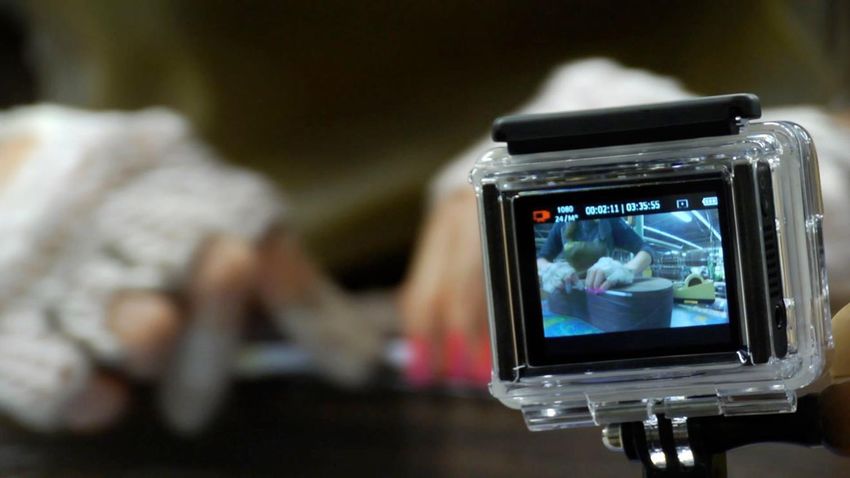
Pre-production is all about planning! There are many things to
consider during the preparation stage of your project.
Early Preparation
• What is the vision for your program?
_________________________________________________________
_________________________________________________________
• What is the content?
_________________________________________________________
_________________________________________________________
• Who are the people who will appear in your film?
_________________________________________________________
_________________________________________________________
• You will need to decide who will be on your production team.
Producer: ___________________________
What does a Producer do?
Camera: _____________________________
What does a Camera Operator do?
Sound: _____________________________
What does a Sound Tech do?
Editor: ________________________________
What does a Media Editor do?
6
Production Equipment
• Make sure you have the proper gear and that it is in good
working order!
• Use a checklist! It should include items such as:
o Camera
o Microphones
o Tripod
o Release forms
o Headphones
o Script Material
o Batteries
o Memory cards
o Props
Research
• Learn about the people and the settings you are going to visit
before you arrive at the location.
• Determine rules and conditions and dress appropriately.
Scheduling
• In order to begin the scheduling process for your shoot, you
will need a contact person at the location. Make it a goal to
establish a positive rapport and be considerate of their time.
7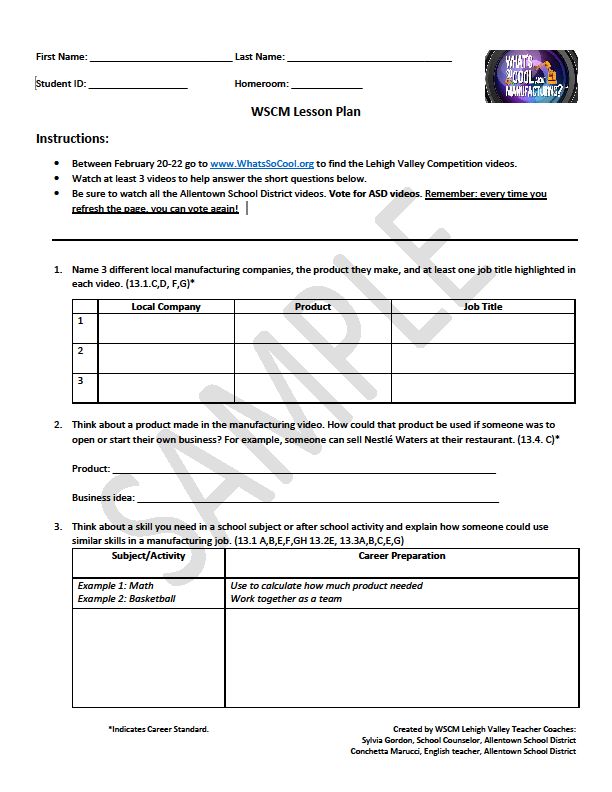
Interview Questions
• Remember that good interviews start with good questions!
• Your interview questions should always relate to your
central message.
• Central Message __________________________________________
_________________________________________________________
_________________________________________________________
• Question #1 ______________________________________________
_______________________________________________________________
_______________________________________________________________
• Question #2 _____________________________________________
______________________________________________________________
______________________________________________________________
• Question #3 _____________________________________________
______________________________________________________________
______________________________________________________________
• Question #4 _____________________________________________
______________________________________________________________
______________________________________________________________
8
Shot List Worksheet
Interview Subject 1 Name
Position/Job Description
ACTION 1
Wide Shot ________________________________________________
____________________________________________________________
____________________________________________________________
Medium Shot _____________________________________
___________________________________________________________
_____________________________________________________
Close-Up Shot 1___________________________________
___________________________________________________________
Close-Up Shot 2 ___________________________________
___________________________________________________________
Close-Up Shot 3 ___________________________________
___________________________________________________________
ADD MORE ACTIONS AS NEEDED!
9
Shot List Worksheet
Interview Subject 2 Name
Position/Job Description
ACTION 1
Wide Shot ______________________________________________
__________________________________________________________
__________________________________________________________
Medium Shot ____________________________________
__________________________________________________________
__________________________________________________________
Close-Up Shot 1___________________________________
__________________________________________________________
Close-Up Shot 2 __________________________________
__________________________________________________________
Close-Up Shot 3 __________________________________
__________________________________________________________
ADD MORE ACTIONS AS NEEDED!
10Shot List Worksheet
Interview Subject 3 Name
Position/Job Description
ACTION 1
Wide Shot _______________________________________________
___________________________________________________________
___________________________________________________________
Medium Shot _____________________________________
___________________________________________________________
___________________________________________________________
Close-Up Shot 1___________________________________
___________________________________________________________
Close-Up Shot 2 ___________________________________
___________________________________________________________
Close-Up Shot 3 ___________________________________
___________________________________________________________
ADD MORE ACTIONS AS NEEDED!
11 Practice
• Remember that doing anything well is a process. Challenges
may arise and plans may change last minute, so successful
producers always have a Plan A and a solid Plan B.
• Your team should practice shooting interviews and B-Roll
before going to your location.
• Editing your practice material will help your shooting skills -
the best camera people are editors first.
• See the Practice Activity in the Appendices.
• Remember your project goals.
• Stay positive!
WATCH
Sample Video: Martin Guitar Company
12PART III
PRODUCTION
WATCH
Contest Guide Video Part III: Production
13Lights, Camera, Action!
Making Good Choices
• Be on time and stay on schedule.
• Be respectful of people and property.
• SAFETY FIRST. Never put yourself or others at risk while
shooting.
• When shooting an interview it is best to have the subject in a
setting that helps tell the story.
• Walk around the location to find good camera angles before
you start.
• Everything in the frame counts. Whenever possible, remove
unsightly objects from the setting.
• If ambient sound impacts the quality of your audio, change
location to record the interview.
• Playback your recording to make sure the sound is clear, not
too loud and not too soft.
Equipment
• Make sure your camera is in good operating condition.
• Make sure that all your batteries are fully charged.
• Make sure you have your lapel mic and spare battery.
• Use your checklist to account for all necessary gear.
Set-up for Recording
• Make sure your camera lens is clean before shooting.
• Perform a test record on location for picture and audio.
• Use headphones to monitor your audio. Playback your
recording to make sure sound is clear - not too loud and not
too soft.
Audio
• Microphone placement is important. Lapel microphones
should be placed near the subject's mouth and the wire
should be hidden neatly.
• If machine noise interferes with your interview sound, you
may politely ask that it be turned off. If this is not possible,
change locations to record the interview and return later for
B-Roll.
14 Image
• It is recommended that you shoot with available light. That
is, whatever light already exists in the interview setting.
• Position the subject so that the available light is most
flattering to their image. Choose an even lighting, one that is
not too bright, but not too dark.
Framing
• The way images are arranged in a frame tells the story in a
creative way. Look for frames that have important
information in the foreground and the background.
• Headroom is the space between the top of subject's head and
the top of the camera frame. Leave a small but definite space
above the head to create a balanced frame.
• Once you have placed the microphone, established a camera
angle that flatters the subject in an appropriate setting,
begin recording.
Starting the Interview
• Help your subjects relax by asking them to say and spell
their name and job title.
• Politely ask if subjects can focus their eye contact directly at
the camera lens.
• Educational media has a positive atmosphere. It helps the
programs if subjects look happy. You may ask them to smile
periodically if it will help them relax.
During the Interview
• Listen carefully. A good interviewer talks very little, just
enough to get the subject talking. Your questions are
designed to reveal something interesting. Listen for
information you want to learn more about then follow up
with focused questions or prompts.
• In order to keep a subject’s answer lively, you can prompt
them with active phrases, like “I love my job because...” and
ask them to complete the sentence.
• By identifying key points in a subject’s answer, you can help
them make the answer more concise.
• Do multiple takes whenever possible. This allows you to have
options once you get to the edit room.
15• Change angles between takes to help with editing answers in
post-production.
• Listen for visual cues that you can shoot later. The
interview subject will tell you a lot about the visual elements
you will need to cover their sound.
Multiple Camera Shots
• Wide Shot: When shooting for coverage, make sure to get a
wide shot that includes the action and setting.
• Medium Shot: This is still a full frame that reveals the
subject, setting, and action. It is closer than a Wide Shot and
wider than a Close-Up and is designed to give the viewer
more detail.
• Close-Up Shot: Close-ups are tightly framed shots that focus
viewer attention on details of action. This is your chance to
be creative. The details you choose will strongly influence
the message and atmosphere of your film. Shoot as many
close-ups as your schedule allows
Shooting for Sequence
• Physical action makes good B-Roll. You may ask your
subject to stage an activity so that you can shoot the action
from multiple angles.
• An action sequence has a beginning, middle, and end; you
should shoot several angles of each part of the activity.
• Be active when you're shooting. Cameras can pan, tilt, and
track.
• You can shoot on a tripod or hand held. Be sure to keep your
camera work steady.
• Look for movement, color, and beautiful light in the location.
• Vary camera angles dramatically - low angles, high angles,
side angles will cut together nicely.
16 Practice
Pick an activity that has physical action, like frying an egg, and
fill in the actions:
Activity _______________________________________
Beginning ______________________________________________
Middle _________________________________________________
End ____________________________________________________
How would you shoot each phase of the action?
(Hint: Remember the three questions.)
Beginning:
Wide Shot ___________________________________
Medium Shot ______________________________________ _
Close-up Shots _____________________________________
Middle:
Wide Shot ___________________________________
Medium Shot ______________________________________
Close-up Shots ____________________________________
End:
Wide Shot ___________________________________
Medium Shot ______________________________________
Close-up Shots ____________________________________
17PART IV
POST-PRODUCTION
WATCH
Contest Guide Video Part IV: Post-Production
18 Organize Footage
• Create a new project and give it a name. You will draw from
these collections as you edit your program.
• Select and isolate interview answers into a folder.
• Locate and set aside the best shots (smiles, close-ups, etc.).
• Look for shots that will work well in the beginning and end of
your film as well as transition shots.
• Music is an essential part of the film. Choose an
instrumental underscore that defines the atmosphere, pace,
rhythm and the energy of your program.
Editing
• Create a new sequence and call it "A-Roll 1"
• Drop your music into the time line, loop it if necessary and
lock the tracks for now.
• Put together the best of your interview selects. Choose clear
portions of each answer to form complete thoughts.
• Start at the beginning of the music track to build the open
sequence. It is important that the first 10-15 seconds of your
program be lively and engaging. Arrange several sound bites
that together establish:
o Subjects
o Message
o Location
o Tone
• Introduce your central message early and reinforce it
throughout the program by adding details.
• Let this version run long - you will tighten and refine it in
later versions.
• Look for strong phrases to start and end each interview
section.
• Evaluate and choose interview selects according to:
o Content
o Presentation
o Energy
o Composition
o Camera Work
• Create a natural rhythm and speech pattern by carefully
editing words and phrases.
• The goal is to make your edits invisible to the viewer – that
is, you want the viewer to be focused on the content not the
technique.
19 Cover with B-Roll (great pictures)
• Find important places in the A-Roll (audio story) where you want to
leave your interview subjects on camera.
• Drop photos and other videos in places where you want to show
more action and detail.
• Keep the pace lively by changing the shot every 2-3 seconds.
• Remember to save some great shots for your big finish.
• Compile several short sound bites that reinforce your central
message and make your subjects shine.
• Be patient, editing takes time.
Polish
• Refine edit points to optimize the rhythm of your film.
• Adjust audio and video level.
• Add graphics where appropriate.
Exporting Instructions
Every editing program is a little different, but in general you should be able to select
“Export..” from one of your file menus in the application. When prompted on what setting
to export the file there are couple of things to keep in mind:
1. FILE NAME - name the file with your contest name (ex:“BS” for Lehigh Valley Contest), underscore,
school name, underscore, and version (USE: “Aroll”, “Broll”, “preFinal”, “Final”, “Final_v1”). For
example: BS_WashingtonMS_Aroll or BS_MountainViewMS_FINAL
2. FILE TYPE - for uploading you will want to export as a QuickTime movie (.mov) or an Mpeg (.mp4)
using a “CODEC” called H.264 - In general the “CoDec” is what makes the movie file a smaller file size
while maintaining the quality of the video. Many applications default to H.264 , anticipating you are
going to upload to the web.
3. Resolution (or Dimensions) - whenever possible export it so the movie is 1920x1080. If your program
sets limitations on resolution size please make it at least 1280x720.
4. Uploading - When your file has been created onto your computer or external hard drive:
1) Go to www.WhatsSoCool.org
2) Select “Team Portal”, then select “Video Upload Page”
3) Choose your contest
4) Follow the Instructions to upload your video file (using the correct FILE NAME as noted above)
*** FOR EXPORTING INSTRUCTIONS SPECIFIC TO MOST EDITING APPLICATIONS
SEE THE LINKS ON THE VIDEO CONTEST RESOURCES PAGE ****
Media Ethics
• Make it a point of pride to always make people feel good
about how they appear.
That’s a
WRAP!
20EXTRAS 21
Practice Activity
1. Choose an interview subject who can talk about and demonstrate
some interesting activity. For example, tying a fly for fishing, making a
kite from newspaper, building a house of cards, etc. The activity should
include physical props and action and have a narrative structure with
a beginning, middle, and end. Ideally your interview subject will be
knowledgeable and enthusiastic, can bring the props to school, and be
dressed appropriately for the camera.

Then schedule a setting for the interview and B-Roll shooting that
communicates something about the topic. For example, if the interview
is about making clay sculpture, the art room would be a good setting.
Ideally the location will be quiet enough to capture clean interview
sound.

2. Shoot the interview. The content of your interview should be
determined by your choice of audience and the central message you
wish to communicate to them. For example, if the film is for your
teacher you will design the interview differently than if it is for your
younger brother. Pick an audience and a specific message to convey
about your chosen activity and write four prompts.

Here's a sample:
Prompt 1: Kite building is a cool way to learn about ...
Prompt 2: There are lots of things you can use to make a kite...
Prompt 3: My favorite design is...
Prompt 4: I want to eventually learn how to...

Shoot the interview from at least three different angles, attempting to
vary the background and framing. Remember that everything the
camera sees matters – position the subject, camera, and other objects
to suit your frame. Get multiple takes of each prompted answer helping
your subject to be upbeat. Make it fun!

3. Shoot the activity several times from start to finish. You can shoot
o n a tripod or hand-held – being careful to keep your camera work
steady. Start by recording a Wide Shot of the action that establishes the
person, the setting and the activity. Then repeat the action in order to
shoot a Medium Shot. You can vary the angle to find interesting ways
to reveal more detail about the activity – try moving the camera around

                                     22
the subject to frames that look good to you. Then shoot at least 12
different Close-Ups of the person and the action - be creative in finding
the visual details that tell the story.
4. Edit your material together into a short film, one minute or less in
duration. As you make your selections, consider what impact you want
to have on your chosen audience. That is, what do you want them to
think, feel, and do once they've seen your film?
Pick an instrumental music track and mix it down to a level that allows
us to hear the interview sound clearly.
Edit the best prompted responses together – you will probably need to
shorten them by selecting only the most essential words need to tell the
story. Choose at least two spots in the interview where we will see the
subject on camera – should be at or near the beginning and again at or
near the end.
Then cover the rest of the interview with shots of the activity.
Sometimes, it is helpful to edit the beginning and end the sequences
first, then choose the shots to cover the middle section. For example,
laying out newspaper on a table could be a beginning action and flying
the kite made from that newspaper could be the final action. Remember
to look through all your raw footage and only use the best shots in your
project. Polish the video and sound in your time line, then export
and upload your film for review.
STUDENT TEAM Pre-Test Activity – Due by October 30
1. Interview the members of your team (using the mic). Ask questions like:
• Name, grade and school
• What comes to mind when you hear the word “manufacturing”?
• What do you think a job in manufacturing looks like?
• What are you most excited about in creating a video about (your
company)?
• What do you expect to learn through participating in the contest?
2. Use camera hints from “Pre-Production” (pp13-17) & “Practice Activity” (p23).
3. Upload your Test Video per the “Exporting Instructions” found on page 20.
23Rules and Regulations
Berks Schuylkill Student Video Contest
1. Projects must be completed by students with guidance and support from Teacher Coaches.
2. All video footage of final projects must be produced by student teams to qualify for an award. No
company and/or professional video is permissible.
3. The majority of the project must be completed using video equipment provided by MRC. Students
are not permitted to use cell phones, tablets or other devices while in the Featured Manufacturer’s
location.
4. All unapproved footage must remain in the possession of the Teacher Coach at all times.
5. Ask Featured Manufacturer for permission to “share” any photos taken at the facility.
6. The use of drones is not permissible.
7. All sound and images captured in relation to the project are the property of MRC and should
not leave the school computer without express permission from MRC.
8. Production teams must complete training curriculum as outlined in the WSCM Contest
Guide (online version at www.WhatsSoCool.org).
9. Final projects must run between 2 and 2.5 minutes in duration.
10. Final projects must contain at least 3 interviews and appropriate images of the
manufacturing setting.
11. Final projects must contain logos as indicated (each logo should appear for
approximately 2 seconds):
At the top of your program
• What's So Cool About Manufacturing? logo (or animation)
• Manufacturer’s Logo
At the end of your program
• School/District logo
• WSCM Panel with this logos for this year’s partners (provided to you)
12. Teacher Coaches are responsible for leading and monitoring all activities associated with
contest related activities, including being in regular contact with manufacturer for updates
and scheduling.
13. All MRC MEDIA RELEASE FORMS must be delivered before production to:
MRC, 7200A Windsor Drive, Allentown PA 18106; Attention Angela Hensley
OR scan and email to ahensley@eisenhauerconsulting.com
14. Each team must meet Contest Deadlines as posted and deliver final project files to the host
(see Timeline, pp 26,27; Email reminders will be sent).
15. Each Teacher Coach is responsible for returning all unused footage to MRC or destroying all
unused footage by April 15, 2020.
16. The winner of the Outstanding Outreach Plan Award must be in the top 5 contestants for the
Viewers Choice Award.
17. Each qualifying team competes to win one award, with the exception of also being able to
win the Viewers Choice Award by gaining the greatest number of online votes by the public.
18. MRC reserves the right to investigate and/or disqualify a school from the Viewers Choice Award if
there is evidence to suggest that any tactics of automation and/or computer programming have
been used to inflate voting totals in a matter that is not statistically natural.
24WSCM Lesson Plan
To be used for school-wide career awareness as a requirement for the
ESSA Plan student folders. Digital WSCM Lesson Plan can be edited and is
located at https://www.whatssocool.org/team-portal/resources-and-rules/
25Teacher Coach Timeline
Berks Schuylkill Contest
2019-2020
TRAINING & REGISTRATION
Oct 2-Berks Training for Berks County Teacher Coaches
Oct 3-Schuylkill Training for Schuylkill County Teacher Coaches
Oct 3 - Oct 30 Training for Student Teams
-Use Cool Contest Guide, located at WhatsSoCool.org
1. View GoPro Camera tutorials, located at
WhatsSoCool.org/team portal/contest resources
2. Watch training videos using Contest Guide pp 3-17
• Contest Preview Video
• Contest Guide Video: Part 1- “Introduction”
• Contest Guide Video: Part 2- “Pre-Production”
• Contest Guide Video: Part 3- “Production”
By Oct 30 Team Registration Completed
1. Upload #1: “TEST” Video
(Test Video on Contest Guide p 23; Uploading instructors on p 20)
2. Email MRC Media Waivers (Contest Guide p 27)
-Include a list of your student team names
3. Research assigned manufacturer
4. Schedule half day at manufacturer for filming (10/30-11/8)
PRODUCTION RE-Watch “Production” (Contest Guide pp 13-17)
Oct 30- Nov 8 Visit Manufacturer and FILM!!
Hints:
-Re Watch Production video prior to filming
-Film at manufacturer using guidelines/helps in Contest Guide
26POST PRODUCTION RE-Watch “Post-Production” (Contest Guide pp 18-20)
Nov 8 - Dec 9 Create A-ROLL (Contest Guide, pp 18-20)
Produce 2 minute “A-Roll”, the audio story line for your video
Dec 9 Upload #2: “A-ROLL” for EDITING FEEDBACK
Dec 9 – Jan 17 Create B-ROLL
Hint:
Add “B-Roll” (cool pictures) to your 2 minute “A-Roll” (audio story)
Dec 18 Draft OUTREACH PLAN Due for feedback from SahlComm
Jan 17 Upload #3: “B-ROLL” for EDITING FEEDBACK
Jan 17 – Feb 3 Revise video based on comments
Jan 29 Final OUTREACH PLAN Due (mandatory)
Feb 3 Upload #4: “preFINAL” for EDITING FEEDBACK
Feb 3 - Feb 14 Revise changes based on comments
THE FINISH LINE
Feb 14 Upload #5: “FINAL” for REVIEW
Hints: Remember to include:
-The WSCM screen at the beginning
-The manufacturer’s logo at the beginning
-The school logo and/or student team names at the end
-The WSCM partners/sponsors screen last
Feb 14 – Feb 21 Featured Manufacturer’s REVIEW
Feb 21 – Feb 26 Judges
Feb 21 – Feb 25 Approved Videos uploaded @ WhatsSoCool.org
Feb 26 – Feb 28 Online VOTING!
MARCH 3, 2020!! Awards Event & Dessert Reception, 6:30-8:30
at the DoubleTree by Hilton, Reading
27TEACHER COACH RELEASE FORM
DATE: __________________________
Project: What’s So Cool About Manufacturing? Video Contest
I hereby grant my consent to use and license the use of my name and likeness, whether in still or in
motion pictures, my photograph and/or other reproduction, including my voice and features, with or
without my name, for any editorial, promotion, trade, business or other purpose whatsoever. MRC may
exercise their rights in any way they see fit for their productions, for advertising, promotions and for other
purposes.
For good and valuable consideration, including my appearance in the Project specified above
(“Project”), I hereby authorize MRC to record my name, likeness, image, voice and performance on
film, tape or otherwise (“Materials”). I represent that I am a bona fide amateur. I agree that the
materials may be edited as desired and used in whole or in part in any form, format, manner or
media, now known or hereafter devised, for any distribution purpose, throughout the world in
perpetuity. I understand and agree that the Materials may be used in the Project or in any other
materials at MRC sole discretion. I understand that I have no rights to the Project, Materials and any
other products or benefits derived therefrom.
I represent that I have the right to enter into this Agreement and that my performance and the rights I
have granted in this Agreement will not conflict with or violate any commitment or understanding I
have with any other person or entity. I agree to indemnify and hold harmless MRC from and against
all claims, losses, expenses, and liability of every kind including reasonable attorney’s fees arising
out of the inaccuracy or breach of any provision of this Agreement. I expressly release MRC from
any and all claims arising out of the use of the Materials.
This Agreement represents the entire understanding of the parties with respect to the subject matter
hereof. This Agreement and all rights hereunder, shall be fully assignable by MRC. This Agreement
is entered into with the Commonwealth of Pennsylvania and shall be governed and construed in
accordance with Pennsylvania law as if this Agreement were to be fully performed within the
Commonwealth of Pennsylvania without giving effect to principles and conflicts of laws. The parties
agree to submit solely and exclusively to the jurisdiction of the state and federal courts of the
Commonwealth of Pennsylvania to resolve any disputes arising hereunder.
□ I have read and agree to the terms of the Teacher Coach Release Form
□ I have read and agree to the terms of the attached Rules and Regulations
□ I have received video equipment and accessories on (or about) this date
_____________________
Teacher Coach Name-please print Teacher Coach Signature
School District School
Email Address Cell Phone
28Student Media Release Form
DATE: ___________________
Project: What’s So Cool About Manufacturing? Student Video Contest
Production Date: ___________________
Production Location: ____________________________________
I hereby grant my consent to use and license the use of my name and likeness, whether in still or in
motion pictures, my photograph and/or other reproduction, including my voice and features, with or
without my name, for any editorial, promotion, trade, business or other purpose whatsoever. MRC may
exercise their rights in any way they see fit for their productions, for advertising, promotions and for other
purposes.
For good and valuable consideration, including my appearance in the Project specified above
(“Project”), I hereby authorize MRC to record my name, likeness, image, voice and performance on
film, tape or otherwise (“Materials”). I represent that I am a bona fide amateur. I agree that the
materials may be edited as desired and used in whole or in part in any form, format, manner or
media, now known or hereafter devised, for any distribution purpose, throughout the world in
perpetuity. I understand and agree that the Materials may be used in the Project or in any other
materials at MRC sole discretion. I understand that I have no rights to the Project, Materials and any
other products or benefits derived therefrom.
I represent that I have the right to enter into this Agreement and that my performance and the rights I
have granted in this Agreement will not conflict with or violate any commitment or understanding I
have with any other person or entity. I agree to indemnify and hold harmless MRC from and against
all claims, losses, expenses, and liability of every kind including reasonable attorney’s fees arising
out of the inaccuracy or breach of any provision of this Agreement. I expressly release MRC from
any and all claims arising out of the use of the Materials.
This Agreement represents the entire understanding of the parties with respect to the subject matter
hereof. This Agreement and all rights hereunder, shall be fully assignable by MRC. This Agreement
is entered into with the Commonwealth of Pennsylvania and shall be governed and construed in
accordance with Pennsylvania law as if this Agreement were to be fully performed within the
Commonwealth of Pennsylvania without giving effect to principles and conflicts of laws. The parties
agree to submit solely and exclusively to the jurisdiction of the state and federal courts of the
Commonwealth of Pennsylvania to resolve any disputes arising hereunder.
Student Name School
Parent Name Parent Signature
Phone Number Date
__________________________________________________________________________________
Email Address Cell Phone
29Media Release for Individuals
As an employee of ____________________________________________________________________, (the
Company), I hereby authorize the Company, Manufacturers Resource Center, their successors and assigns,
the irrevocable right to use, without compensation, my name, likeness, still or moving image, voice, quotes,
appearance, and performance in print, video or internet marketing and communications.
This authorization includes without limitation the right to edit, mix or duplicate and to use or re-use these
materials in whole or in part, with or without my name. I acknowledge that I have no interest or ownership in
the materials, finished products or copyrights. I waive any right to inspect or approve the finished version(s),
including written copy that may be created in connection therewith. I also grant the right to broadcast,
exhibit, market and otherwise distribute the materials or finished products for any lawful purpose, including
publicity, illustration, advertising and web content.
I am of full age. I have read this release and am fully familiar with its contents.
Project: ______What’s So Cool About Manufacturing? Video Contest_______
Printed Name: ______________________________________________________
Signature: _____________________________________________________
Date: _________________
30Pennsylvania State Standards Alignment
Students engaged in the WSCM program process will work toward the development of many PA
Academic Standards. The following list provides a sampling of Standards that align with the WSCM
process. Please note, this is not a comprehensive list nor will all teams address every standard listed.
Standard Area 1.6.8: Speaking and Listening
1.6.8.A: Listen critically and respond to others in small and large group situations.
Respond with grade level appropriate questions, ideas, information, or opinions.
1.6.8.B: Demonstrate awareness of audience using appropriate volume and clarity
in formal speaking presentations.
Standard Area 1.8.8: Research
1.8.8.A: Develop an inquiry-based process in seeking knowledge. 1.8.8.B: Conduct
inquiry and research on self-selected or assigned topics, issues, or problems using a
variety of appropriate media sources and strategies.
1.8.8.C: Produce an organized product that presents and reflects on findings,
draws sound conclusions, and gives proper credit to sources.
Standard Area 1.9: Information, Communication, and Technology
Literacy
1.9.8.A: Use media and technology resources to support personal productivity,
group collaboration, and learning throughout the curriculum.
Standard Area 3.4: Technology and Engineering Education
S7.A.2.2.2: Apply measurement systems to record and interpret observations
under a variety of conditions.
S7.A.2.2.3: Describe ways technology is used to enhance scientific study and/or
human life.
Standard Area 13: Career Awareness and Preparation
13.1.8.A: Relate careers to individual interests, abilities, and aptitudes
13.1.8 B: Personal Interests
13.1.8 C: Non-Traditional Workplace Roles
13.1.8 D: Local Career Preparation Opportunities
13.1.8 E: Career Selection Influences
13.1.8 F: Preparation for Careers
13.1.8 G: Career Plan Components
13.1.8 H: Relationship between Education and Career
13.2.8 A: Interviewing Skills
13.2.8 E: Career Acquisition Process
13.3.8 A: Work Habits
13.3.8 B: Cooperation and Teamwork
13.3.8 C: Group Interaction
13.3.8 E: Time Management
13.3.8 F: Workplace Changes
13.3.8 G: Lifelong Learning
31You can also read


