Better Later Living in the Manawatū District - Supporting Information December 2020 - June 2022 - Manawatū ...
←
→
Page content transcription
If your browser does not render page correctly, please read the page content below
Better Later Living
in the Manawatū
District
Supporting Information

December 2020 - June 2022

www.mdc.govt.nz

Contents

                                                                          Introduction                                                                         4

                                                                          MDC’s Community Development Strategy                                                 4

                                                                          Better Later Life strategy                                                           4

                                                                          Bringing the BLLS and the CDS Together                                               5

                                                                          International Goals:                                                                 5

                                                                          10 Year Plan 2021-31                                                                 6

                                                                          Manawatū District - Demographic Context                                              6

                                                                          Recent engagement on matters of concern to seniors                                   6

                                                                          Seniors Action Plan Hui                                                              7

                                                                          Current Services                                                                     8

                                                                      Draft Seniors Action Plan – Text Version                                                 9

                                                                          Planning and Design                                                                  9

                                                                          Funding                                                                              10

                                                                          Collaboration                                                                        10

                                                                          Advocacy                                                                             10

                                                                      Bibliography                                                                             11

2   Better Later Living in the Manawatū - December 2020 - June 2022                          Better Later Living in the Manawatū - December 2020 - June 2022        3
Introduction                                                                                                                There are five key areas in the Better Later Life Strategy:

The population of the Manawatū District is aging and it is more important than ever to support the wellbeing of                             1.   Financial security and economic participation. This includes combating stereotypes that limit
our older residents. This plan flows out of the Manawatū District Council (MDC) Community Development Strategy                                   work    opportunities for older people, helping aging people plan their finances, and providing
2020, with an action listed to “Develop a local action plan for seniors that links to the NZ Better Later Life Strategy”.                        supplementary assistance when required.
                                                                                                                                            2. Health, both mental and physical. Addressing health issues throughout New Zealanders’ lives
MDC’s Community Development Strategy                                                                                                           will improve individuals’ wellbeing when they reach later life. It is important to make sure health
The Community Development Strategy uses the Te Whare Tapa Whā model of health, which was developed by                                          care for older people is respectful of diverse cultural backgrounds. It is also important to improve
Mason H Durie (Ngāti Kauwhata). This is a holistic way of viewing health and wellbeing by using four key perspectives:                         access for vulnerable groups.
                                                                                                                                            3.   Suitable housing choices. Diverse options need to be available and affordable for older people.
    •   Te taha wairua (spiritual wellbeing)                                                                                                     Tools and services will be needed to ensure older people can find adequate housing. Support is
    •   Te taha tinana (physical wellbeing)                                                                                                      necessary for seniors in rental or homeless situations as the number of older people who do not
                                                                                                                                                 own their own home increases.
    •   Te taha whanau (social wellbeing)
                                                                                                                                            4. Social connection and inclusion. Opportunities include work, volunteering, or community
    •   Te taha hinengaro (mental wellbeing)                                                                                                   groups. As well as creating opportunities for older people to connect to their community, work
                                                                                                                                               can also be done to ensure younger people connect with, and respect, older members of their
                                                                                                                                               communities. Keeping older people connected and included will also involve making sure they
                                                                                                                                               are able to overcome the barriers that new technology and lack of digital literacy may provide.
                                                                                                                                               Accessibility. Physical environments, facilities and public spaces should reflect older people’s
                                                                                                                                               mobility and needs, and not be a barrier to their use or enjoyment.
                                                                                                                                            5.   Accessibility. Physical environments, facilities and public spaces should reflect older people’s
                                                                                                                                                 mobility and needs, and not be a barrier to their use or enjoyment.

                                                                                                                            Bringing the Better Later Life Strategy and the Community Development Strategy Together
                                                                                                                            The key areas in the Better Later Life Strategy are like building blocks for the four walls of wellbeing, for example:

                                                                                                                               1.   Financial stability and economic participation contributes to physical wellbeing by supporting our seniors
                                                                                                                                    to provide for their wants and needs, and spiritual wellbeing by giving older people a sense of worth and
                                                                                                                                    identity.
                                                                                                                               2. Improving lifelong health outcomes contributes to physical and mental wellbeing.
                                                                                                                               3.   Suitable housing contributes to physical wellbeing and spiritual wellbeing.
                                                                                                                               4. Social connection and inclusion contributes to social wellbeing and spiritual wellbeing.
                                                                                                                               5.   Accessibility contributes to physical wellbeing, cognitive wellbeing, and social wellbeing.
This seniors approach will support all tapa, or walls, of wellbeing for our seniors.

Council funds service providers whose work aligns with the Community Development Strategy. This plan will be
renewed in line with these three-yearly funding rounds, in June 2022, as well as desktop reviews when required.

Better Later Life Strategy
The Office for Seniors He Oranga Kaumātua has developed the strategy Better Later Life He Oranga Kaumātua 2019-
2034, with the vision that older New Zealanders lead valued, connected and fulfilling lives. MDC’s approach aligns
with this strategy.

The strategy identifies values and issues to focus on and outlines the need for preparation for the continued
increase in the number of older people in New Zealand. This preparation will require actions from central and local
government, community groups, and private sector organisations, as well as whānau and individuals.

4                             Better Later Living in the Manawatū - December 2020 - June 2022                                                             Better Later Living in the Manawatū - December 2020 - June 2022                            5
International Goals:                                                                                                         Recent engagement on matters of concern to seniors
 Promoting the wellbeing of our growing number of seniors also reflects some international goals:                             Manawatū District Council has already collected some feedback from our community on what older people
                                                                                                                              appreciate about the district and what they would like to see improved. From feedback on the Senior Strategy
    •    United Nations (UN) Sustainable Development Goal 3 – Good health and wellbeing by promoting health for
                                                                                                                              Workshop (20 August 2018) and the seniors workshop from the Town Centre Vision project (November 2018)
         seniors and promoting inclusive life time health initiatives and outcomes.
                                                                                                                              we already know that our seniors appreciate aspects of life in the Manawatū District such as having a friendly,
    •    UN Sustainable Development Goal 8 – Decent work and economic growth by promoting civic participation,                fun community, and feeling confident driving in the district. Areas that may need improvement include rates
         employment, and financial stability for seniors. (United Nations, 2020).                                             affordability, affordable recreation options, improved health initiatives, more social inclusion, and improved
                                                                                                                              accessibility for those who do not travel by car.

 Some cities in New Zealand are aligned with the World Health Organisation (WHO) Strategy and Action Plan on Aging            Seniors were consulted for the Community Development Strategy at a workshop on 20 February 2019. Their
 and Health. A key concept from this is that “healthy aging” should not be correlated with absence of disease – there         responses included acknowledging the existing identity and friendly feeling, but also showed that there is more
 is much more to health than this. Further, many seniors do have health conditions but this does not preclude them            to be done to include and support diversity, including refugees, vulnerable people, and seniors. While some older
 from a happy and healthy later life (World Health Organisation, 2020). The WHO has an accreditation system for               people are connected, others continue to feel isolated. Mobility was pointed out as an issue, including accessibility
 “Age Friendly Cities”, but it is still useful to acknowledge these principles even if not currently seeking accreditation.   of footpaths and public transport. Some participants also noted that they sometimes struggle with the distance
                                                                                                                              from parking to recreational areas. There is interest in smaller but more frequent green spaces and free leisure
                                                                                                                              areas, including parks and reserves. There were concerns about the lack of housing, and different types of housing,
 10 Year Plan 2021-31
                                                                                                                              for seniors.
 Manawatū District Council is in the process of developing our 10 Year Plan 2021-2031. This plan will be adopted              A report written for the Manawatū Community Trust (Elliott, 2017) found that older people feel Feilding is a safe
 in June 2021 and will be the basis for our service delivery for the next ten years. The 10 Year Plan includes six            and friendly place to retire, with a high quality of life and a variety of services available. There were areas in which
 strategic priorities that guide Council decision making. These priorities are:                                               seniors would like to see improvement, including the safety of walking in the town centre, and lack of transport
    1.   A place to belong and grow                                                                                           including to social activities and grocery shops. There was also concern about the cost of medical appoibtments,
                                                                                                                              which meant many older people avoided seeing the doctor. Lastly, older people in Feilding may need support
    2. A future planned together
                                                                                                                              when downsizing their homes.
    3.   An environment to be proud of
    4. Infrastructure fit for the future
                                                                                                                              Seniors Action Plan Hui
    5.   A prosperous, resilient economy
                                                                                                                              A hui was held with Council staff, elected members, and service providers on 24 September 2020. Council sought
    6. Value for money and excellence in local government                                                                     feedback on the needs of seniors in our district in the context of the Better Later Life Strategy, and with awareness
                                                                                                                              of the impact of the COVID-19 lockdown.
 Actions described in this plan will help contribute to a place to belong and grow, a future planned together, and a          Many of the issues faced by seniors and support organisations in early 2020 were not unique “lockdown”
 prosperous, resilient economy.                                                                                               challenges, but exacerbations of ongoing concerns.
                                                                                                                              Some seniors struggle with communication, especially those with limited internet access or digital literacy. This
 Manawatū District - Demographic Context                                                                                      can mean seniors struggle to access or understand the resources available to them. Making these resources more
                                                                                                                              known and used requires respect for the independence of seniors, as attendees agreed that many seniors prefer
 The estimated resident population of the Manawatū District in 2020 was 32,693. (Infometrics, 2020) and 18% of                not to ask for help.
 the district’s population was over 65. By 2051 the number of people aged 65+ in the district is forecast to be 21.0%
 of the total resident population. The projected increase in the percentage of residents aged 85+ is from 2% of               A success that many services noted from lockdown was the communication and collaboration established through
 residents in 2021 to 5.7% of residents by 2051. The 65+ population is higher in Feilding than the district average, at       frequent virtual meetings between organisations. While daily meetings were an emergency response measure,
 21.2% of residents.                                                                                                          Council seeks to support continued collaboration between services.

 The Manawatū District is predominantly bi-cultural. Most people in the district identify as European or Māori. In            Several other common themes emerged during the hui:
 the 2018 Census, 14.1% of people in the district identified as Māori. 91.4% of people in the district identified as
 European, a higher proportion than the 70.2% of people who identify as European nationally. (Stats NZ, 2020)                  Financial Stability       Health                     Suitable Housing           Social Inclusion        Accessibility
 Nationally, nearly one in four people aged 65+ are continuing to work, out of preference or economic necessity
                                                                                                                               • Cost of living vs.      • Access to Clinics        • Education and            • Pop-up or permanent   • Footpaths
 (He Oranga Kaumātua, 2020), while in the Manawatū District this is closer to one in ten (Stats NZ, 2020). Others                superannuation                                       support in                 space for seniors
                                                                                                                                                         • Cost                       transitioning and                                • Shuttle bus
 over 65 live off the fixed income of NZ Super, investments or other retirement funds.                                         • Difficulty navigating                                                         • Accessible
                                                                                                                                                         • Navigation of health       understanding                                    • Access, training for
                                                                                                                                 systems                                              options                    communications
 It is always a challenge for Council to balance affordable rates with desired levels of service, and as the number of                                     system                                                                        technology
                                                                                                                               • Reluctance or lack                                 • Support for families
 retirees in the district grows, this will remain a challenge for Manawatū District Council.                                     of knowledge when                                    as well as seniors
                                                                                                                                 accessing support
                                                                                                                                                                                    • Cost, lack of
                                                                                                                               • Need for education                                   availability
                                                                                                                                 and support

6                              Better Later Living in the Manawatū - December 2020 - June 2022                                                                Better Later Living in the Manawatū - December 2020 - June 2022                                   7
Across all topics, there was discussion of rural transport options for seniors, which would help with access for
 spaces and services that support all of the key areas. Another concept raised was providing a space for seniors that
 was enjoyable and welcoming (such as a library or café space) which provides older adult education, community
 programmes, and social worker or other support. It was envisioned that this space and service could connect seniors
 with other services and support across all key issues.

 Current Services
 Council is aware of the many services and organisations working with seniors in our community, but have limited this
 table to services Council provides, and services that Council is currently funding to deliver services for seniors. We
 also have noted some of the regional and national government services in which Council can play an advocacy role.

                          Financial Stability      Health                   Housing                  Social                Accessibility

    Manawatū District                                                                                                      • Built environment
    Council                                                                                                                  (parks, footpaths)

    Age Concern                                    • Health promotion                                • Accredited          • Life without a car
                                                                                                       visiting service      workshops
                                                   • Exercise
                                                     programmes                                                            • Driving lessons

    Makino Aquatic         • Senior rates          • Aquatic Fitness
    Centre                                           programme

    Manawatū                                       • Built and owns         • 205 housing
    Community Trust                                  Feilding Health          units, rented to
                                                     Centre                   elderly and the
                                                                              disabled

    Manawatū District      • Programmes that                                                         • Programmes eg
    Libraries                can help with                                                             Board games for
                             employment                                                                seniors

    Manchester House       • Advocacy              • Exercise                                        • Hosting Meetings    • Assistance
    Senior Leisure                                   programmes                                        e.g. Heart            obtaining mobility
    Centre                 • Budget advice                                                             Foundation,           scooter
                                                   • Counselling                                       Alzheimer’s, RSA
                                                                                                                           • Information and
                                                                                                                             connection to
                                                                                                                             other services

    Neighbourhood                                                                                    • Helping             • Answering cries
    Support                                                                                            neighbours            for help
                                                                                                       connect
                                                                                                                           • Practical advice
                                                                                                     • organising social     on safety
                                                                                                       events

    Sport Manawatū*                                • Lead agency for
                                                     Live Stronger
                                                     for Longer
                                                     - promotes
                                                     exercise
                                                     programmes and
                                                     refers clients

    Horizons                                                                                                               • Bus services
                                                                                                                           • Transport service
                                                                                                                             and subsidy for
                                                                                                                             people with
                                                                                                                             disabilities

    Central                • NZ Super                                       • Social housing
    Government
                           • SuperGold Card
                             – free off-peak
                             transport

                           Strategies, plans, regulations and advice intended to support all aspects of wellbeing

    *Sport Manawatū is partially funded by MDC, in collaboration with other Councils.

8                                    Better Later Living in the Manawatū - December 2020 - June 2022                                              9
The Community Development Strategy uses the Te Whare Tapa Whā model of
health, which was developed by Mason H Durie (Ngāti Kauwhata). This is a holistic
way of viewing health and wellbeing by using four key perspectives: 14,000
• Te taha wairua (spiritual wellbeing) • Te taha whanau (social wellbeing) 12,000
• Te taha tinana (physical wellbeing) • Te taha hinengaro (mental wellbeing) 10,000
8,000
This seniors approach will support all tapa, or walls, of wellbeing for our seniors. 6,000
Manawatū District Council’s approach to Better This approach aligns with Better Later Life He Oranga Kaumātua 2019 to 2034,
Later Living flows out of Council’s Community 4,000
the Ministry of Social Development’s strategy for making the future better for New
Development Strategy. The Strategy outlines Zealanders as we age. 2,000
how Council and our community can work The key areas for action in this strategy are: 0
2021 2031 2041 2051
together to make our district a fantastic place to
grow up, grow old, and everything in between. 65-69 75-79 85+
Accessibility Housing Social Health Financial 70-74 80-84
icons © OFS 2019
Planning & Design Funding
Our work at Council involves: Council supports four community organisations who provide services for seniors
• Lifestyle and recreation options such as in the District:
° Accessible community venues, parks, walking and cycling tracks, roads and footpaths • Manchester House Social • Age Concern Palmerston North
° District libraries Services and Districts
° Makino Aquatic Centre ° Exercise programmes ° Driving courses
• Affordable housing options (MDC is currently developing a housing strategy) ° Budget support ° Life Without a Car courses
• Actions and considerations for seniors included in Council’s key strategic documents ° Social workers ° Exercise programmes
• A culture that reflects diversity and inclusion - including age diversity ° Senior Leisure Centre ° Elder abuse response
• Neighbourhood Support • Manawatū Community Trust
° Intergenerational buddy ° Housing for seniors and the
reading disabled
Accessibility
° Music and movement
Housing
Social
Collaboration Advocacy
There are many organisations in our district, including
• Council responds to regional and central
iwi, working hard to support our seniors. Council will Health Financial government initiatives, representing the views
help these services connect and collaborate on ideas and
and needs of our seniors
projects to support our residents in their senior years.
• Active member of Manawatū District Health
• Council will co-ordinate regular hui with these and Wellbeing Group
organisations to improve collaboration
10 Better Later Life icons ©: Office for Seniors 2019 Dec 2020-June 2022 11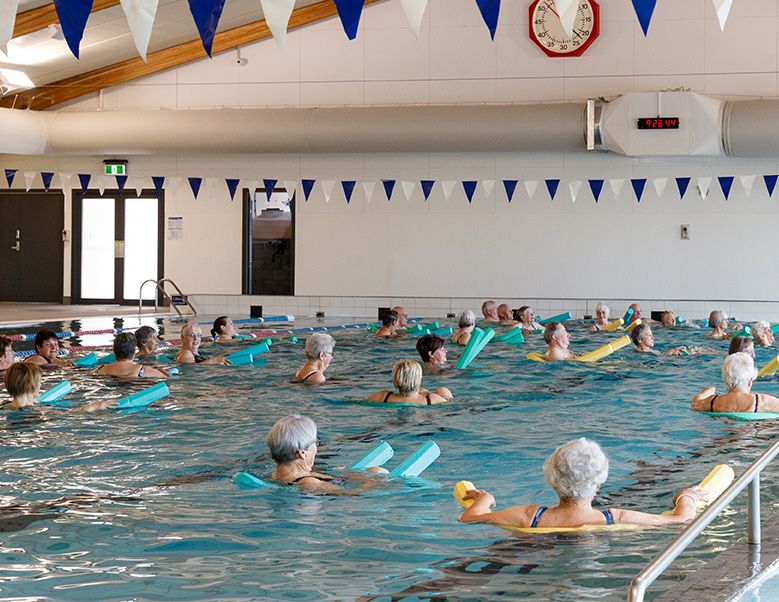
Better Later Living in the Manawatū District                                                                                     Funding

 Our approach to an aging population                                                                                              Council supports four community organisations who provide services for seniors in the district:

 Manawatū District Council’s approach to Better Later Living flows out of Council’s Community Development                            •   Manchester House Social Services
 Strategy. This Strategy outlines how Council and our community can work together to make our district a fantastic
                                                                                                                                         -   Exercise programmes
 place to grow up, grow old, and everything in between.
                                                                                                                                         -   Budget support
 The Community Development Strategy uses the Te Whare Tapa Whā model of health, which was developed by                                   -   Social workers
 Mason H Durie (Ngati Kauwhata). This is a holistic way of viewing health and wellbeing by using four key perspectives:                  -   Senior Leisure Centre

     •   Te taha wairua (spiritual wellbeing)
                                                                                                                                     •   Neighbourhood Support
     •   Te taha tinana (physical wellbeing)
                                                                                                                                         -   Intergenerational buddy reading
     •   Te taha whanau (social wellbeing)                                                                                               -   Music and movement
     •   Te taha hinengaro (mental wellbeing)
                                                                                                                                     •   Age Concern Palmerston North and Districts
 This seniors approach will support all tapa, or walls, of wellbeing for our seniors.                                                    -   Driving courses
                                                                                                                                         -   Life Without a Car courses
 This approach aligns with Better Later Life He Oranga Kaumātua 2019 to 2034, the Ministry of Social Development’s
 strategy for making the future better for New Zealanders as we age.                                                                     -   Exercise programmes
                                                                                                                                         -   Elder abuse response
 The key areas for action in the Better Later Life Strategy are financial stability, health, suitable housing, social inclusion
 and accessibility.
                                                                                                                                     •   Manawatū Community Trust
 Better Later Life information can be found here:                                                                                        -   Housing for seniors and the disabled

 http://superseniors.msd.govt.nz/about-superseniors/ageing-population/index.html

 With the Community Development Strategy, Better Later Life Strategy and feedback from our community in mind,
 Council has identified four key roles we play in supporting our seniors.

 These are:

     •   Planning and design
     •   Funding
     •   Collaboration
     •   Advocacy

 Planning and Design
 Our work at Council involves:

     •   Lifestyle and recreation options such as
         -    Accessible community venues, parks walking and cycling trails, roads and footpaths
         -    District libraries
         -    Makino Aquatic Centre

     •   Affordable housing options (MDC is currently developing Housing Strategy)
     •   Actions and considerations for seniors included in Council’s key strategic documents
     •   MDC’s work culture reflects diversity and inclusion, such as age diversity

12                                 Better Later Living in the Manawatū - December 2020 - June 2022                                                             Better Later Living in the Manawatū - December 2020 - June 2022      13
Collaboration
  There are many organisations in our district, including iwi, who work hard to support our seniors. Council will help
  these services connect and collaborate on ideas and projects to support our residents in their senior years. This may
  include expanding on and pursuing ideas raised in previous hui that are not yet being addressed.

     •   Council will co-ordinate regular hui with these organisations to improve collaboration

  Advocacy
     •   Council responds to regional and central government initiatives, representing the views and needs of our
         seniors
     •   Active member of Manawatū District Health and Wellbeing Group

  Bibliography
  Elliott, C. (2017). Community Wellbeing of the Older Person in Feilding. Massey University - School of Social Work

  He Oranga Kaumātua. (2020, 10 20). Better Later Life Strategy. Retrieved from SuperSeniors:
         http://superseniors.msd.govt.nz/documents/better-later-life/better-later-life-strategy.pdf

  Infometrics. (2020, August). Medium Population Projections.

  Stats NZ. (2020, 10 20). 2018 Census. Retrieved from Stats NZ:
          https://www.stats.govt.nz/2018-census/

  Stats NZ. (2020, 10 20). Industry (subdivision) and work status by age group and sex, for the employed census
          usually resident population count aged 15 years and over, 2006, 2013, and 2018 Censuses (RC, TA, DHB).
          Retrieved from Stats NZ:
          http://nzdotstat.stats.govt.nz/OECDStat_Metadata/ShowMetadata ashx?Dataset=TABLECODE8450&
          ShowOnWeb=true&Lang=en

  United Nations. (2020, 10 20). Sustainable Development Goals. Retrieved from United Nations:
         https://www.un.org/sustainabledevelopment/sustainable-development-goals/

  World Health Organisation. (2020, 10 20). Aging and Life-Course. Retrieved from World Health Organisation:
         https://www.who.int/ageing/healthy-ageing/en/

  Better Later Life icons credit: Office for Seniors 2019

14                                                                                                                        15
Manawatū District Council   P 06 323 0000
135 Manchester Street       F 06 323 0822
Private Bag 10001           E public@mdc.govt.nz
Feilding 4743               www.mdc.govt.nz
You can also read


