BIG STEPS IN VARIETY TRIALS - BANANASIssue: 59 | AUGUST 2020 FUTURE LOOKING BRIGHT - Australian Banana Growers ...
←
→
Page content transcription
If your browser does not render page correctly, please read the page content below
BANANAS
                                           Issue: 59 | AUGUST 2020

 BIG STEPS IN VARIETY TRIALS
                                FUTURE LOOKING BRIGHT

TRACKING TR4 SPREAD PAGE 7
COVID CONSUMER TRENDS PAGES 12-13
BANANA FARMING LEGACY PAGE 26
                                                abcg.org.au
                                                              1
Keep banana
  pests pinned
  down.
  Stop the suckers and borers wherever they’re
  hiding in your banana crop, with the innovative
  combination of the two active ingredients of
  Movento Energy insecticide:
           ®

  • Controls actively feeding larvae of banana weevil borer.
  • Controls early nymph stages of rust thrips (Cavendish variety only).
  • When used as directed does not cause mite flare.
  Always ensure the product is handled appropriately
  and in accordance with the Precautions and Safety
  Directions on the Movento Energy label.
  To learn more visit:
  crop.bayer.com.au/moventoenergy
  or talk to your local Bayer Crop
  Science representative.

Movento® is a Registered Trademark of the Bayer Group.
Bayer CropScience Pty Ltd ABN 87 000 226 022. Level 1, 8 Redfern Road, Hawthorn East, VIC 3123, Australia. Technical Enquiries: 1800 804 479 enquiries.australia@bayer.com
EDITORIAL
Sonia Campbell
0428 038 330
sonia@abgc.org.au
Lea Coghlan
0439 005 946
lea@abgc.org.au
ART DIRECTION & DESIGN
Impress Art Graphic Designs
0438 176280
impressart.com.au
PUBLISHER
Australian Banana
Growers’ Council Inc.
ABN: 60 381 740 734
CHIEF EXECUTIVE OFFICER
Jim Pekin
INDUSTRY STRATEGY MANAGER
15 Michelle McKinlay
R&D MANAGER
Dr Rosie Godwin
CONTENTS
EXECUTIVE OFFICER
Leanne Erakovic
ADVERTISING
Issue: 59 | AUGUST 2020 Hilary Opray
info@abgc.org.au
BOARD OF DIRECTORS
Chairman
REGULARS BANANA FEATURE Stephen Lowe
Deputy Chairman
CEO’s Report 4 Banana farming legacy continues 75 years on 26-28 Leon Collins
Chair’s Report 5 Building a bright future in bananas 40 Treasurer
Banana levy rate 4 Banking on the banana 43 Ben Franklin
Directors
QBAN list 37
Under the Microscope 42 RESEARCH Stephen Spear
Paul Inderbitzin
Marketing update 44 National Plant Protection project Jade Buchanan
kicking major goals 16-17 Doriana Mangilli
Andrew Serra
INDUSTRY NEWS Panama disease research program learnings 18
ALL MAIL TO
Waterways report card 6 Results from NT TR4 screening trial 20-21 PO Box 309
Senate hears feral pigs impact 6 National extension program renewed BRISBANE MARKET
QLD 4106
Lakeland edges closer to long-term water security 7 for five more years 23
AUSTRALIAN BANANAS
Duranbah closure 8 Moko in Latin America 32 Australian Bananas is published three times a year
Update on spread of TR4 9 by the Australian Banana Growers’ Council Inc. as
REEF NEWS manager of the Banana Industry Communications
COVID-19 12-14 Project. This project is funded by Horticulture
Improve record keeping with BetterBunch App 6
Carnarvon production drops 15 Innovation Australia (Hort Innovation) using
Journey to a stable farming future 11 the banana levy and funds from the Australian
Next Gen ensuring future of banana
Constructed wetland trial 39 Government.
research in good hands 19 DISCLAIMER
2021 Nuffield Scholarships open 29 BANANA CELEBRATIONS Horticulture Innovation Australia (Hort Innovation)
and ABGC make no representations and expressly
Lessons learnt from QLD TR4 experience 33 National Banana Day 46-47 disclaim all warranties (to the extent permitted by
Keeping Panama front of mind 34 law) about the accuracy, completeness, or currency
of information in this magazine. Users of this material
Inspectors at coalface of Banana Bunchy Top fight 35
should take independent action to confirm any
Biosecurity Code of Practice 36 information in this magazine before relying on it in
Uncovering fruit quality issues in northern NSW 38 any way. Reliance on any information provided by
Hort Innovation and ABGC is entirely at your own risk.
Congress 2021 45 Hort Innovation and ABGC are not responsible for,
and will not be liable for, any loss, damage, claim,
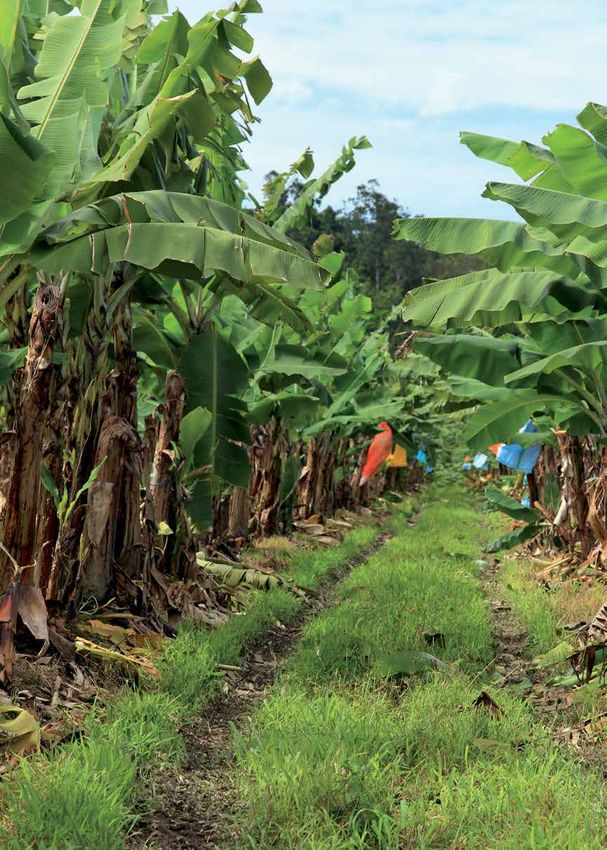
Front page: ABGC Chair Stephen Lowe is trialling a Cavendish selection from Taiwan on his Tully farm. The variety showed good levels of resistance expense, cost (including legal costs) or other liability
to Panama TR4 at screening trials in the NT, and is being assessed now for its commercial suitability. Production is expected to start in the coming arising in any way (including from Hort Innovation’s
weeks. Stephen is pictured with DAF Research Horticulturist Katie Ferro. and ABGC’s or any other person’s negligence or
otherwise) from your use or non-use of the magazine,
or from reliance on information contained in the
magazine or that Hort Innovation and ABGC provide
to you by any other means.
6 23 40
/abgc | /abgc | abgc.org.au 3
COMMENT

CEO COLUMN
                                                                                     Jim Pekin, CEO

                                    Surveillance                    After the signing of the MoU and CSD, the Board                      This disease will continue to spread, however with
                                                                    is now focussing on a review of the TR4 Program’s
                                    strategy                        surveillance strategy in the Northern Banana
                                                                                                                                         so many potential risk pathways for TR4 we know
                                                                                                                                         that the best way to protect your farm is to keep the
                                    review                          Biosecurity Zone.
                                                                                                                                         disease from entering your farm, and this means
                               The new Panama TR4                   Depending on the outcomes of this review, it could                   maintaining good on-farm biosecurity.
                               Program Management                   affect different growers in different ways.
                               Board was due to                     This review is likely to result in a change in the                   COVID-19 Health
                               meet for the second
time on July 15, but had to post-pone, due to
                                                                    frequency of surveillance visits for most growers.                   Management Plans
                                                                    For some, it will mean more surveillance, for others                 By now, most growers would be aware that the
unforeseen circumstances.
                                                                    it will mean less. ABGC and BQ will be in a position
The Board – which will oversee the continued                                                                                             Queensland Government has stepped up its
                                                                    to provide further details on the outcomes of the
delivery and governance of the Panama TR4                           review once the Board has approved the strategy.                     compliance monitoring activities to ensure all farms
Program - will now meet on August 10, via                                                                                                have a COVID-19 Health Management Plan in place.
                                                                    You will see from the graph on Page 7 of the
teleconference.
                                                                    magazine that TR4 continues to spread slowly in                      This was a direct response to a positive case of
On 30 June, the Australian Banana Growers’ Council                  the Tully Valley on the infested farms, therefore all                COVID-19 on a farm in Bundaberg earlier this
(ABGC) and Biosecurity Queensland (BQ) signed a                     growers in this area and beyond should continue to                   year. ABGC understands that the Government is
Memorandum of Understanding (MoU) and Cost                          be vigilant and report any suspect plants.
Sharing Deed (CSD) establishing the joint funding                                                                                        planning to increase compliance monitoring across
                                                                    So far, the collaborative efforts of industry and                    Queensland.
arrangement and management of the Program by
                                                                    government have limited the spread of this disease,
industry and government.                                                                                                                 Workplace Health and Safety Queensland and
                                                                    however early detection will always be key.
The signing was a culmination of many hours of                                                                                           Queensland Police targeted, in early July, farms
                                                                    As at 14 July 2020, 85 plants had been confirmed
work by ABGC and BQ to fine tune how the two                                                                                             across three regional growing regions, Burdekin and
                                                                    with TR4 in the Tully Valley, which have been
parties will jointly oversee and fund the Panama
                                                                    destroyed across 34 different destruction sites,                     Bowen-Gumlu, Sunshine Coast and Caboolture and
TR4 Program until 30 June, 2023.
                                                                    across the four infested farms since 2015.                           Gayndah-Mundubbera.
(See funding table below)
    Financial Year                                       2019/2020           2020/2021          2021/2022          2022/2023             If you are unsure of your requirements as an
    Industry share                                          10%                 25%                40%                50%                employer, you can find more information on
    Industry monetary amount                               $0.4M                $1M               $1.6M              $1.6M               the ABGC’s website www.abgc.org.au or email
    QG share                                                90%                 75%                60%                50%                DAFCOVID19Enquiries@daf.qld.gov.au
    QG monetary amount                                     $3.6M                $3M               $2.4M              $1.6M
    Total                                                   $4M                 $4M                $4M               $3.2M

     ANNUAL BANANA VOLUMES                                                                                                             Years ending 30th June (in ‘000 tonnes):
                                                                                                                                       2013               341
     The national banana levy collected by the Federal Department of Agriculture is compulsory for
     commercial banana growers. It is 2.19 cents per kilogram of bananas sold.                                                         2014               371
     The dollars collected show an estimate of production for the previous financial year. Right is a table                            2015               371
     of the levy-based banana volumes. For non-industry participants, please note this is an approximation                             2016               393
     of production, but not all bananas grown are sold, i.e. some don’t make the retailer-required                                     2017               414
     specifications.
                                                                                                                                       2018               388
     Also, there is a lag factor, in that levies paid on June sales (at least) are paid in the following financial
                                                                                                                                       2019               372
     year. Exemptions from paying the levy and other details are to be found at
     agriculture.gov.au/ag-farm-food/levies/rates/bananas                                                                              2020               381* (*not yet audited)

     BANANA LEVY RATE
     The make-up and purpose of the various components of the Banana Industry Levy are as follows.
     Levy Amount Purpose                                                                             The Banana PHA levy currently funds the containment of the first TR4 infested farm that the
     0.50c /kg	Plant Health Australia (PHA) levy: The Department sends the funds to PHA, for        industry purchased and the industry’s part of the cost-sharing deed with the Queensland
                   the ongoing containment and management of Panama Tropical Race 4 disease,         Department of Agriculture and Fisheries for TR4 containment.
                   and to conduct activities that aim to improve biosecurity within the banana
                                                                                                     It also funds the pre-existing commitments – Torres Straight Exotic Fruit Flies Eradication
                   industry.
                                                                                                     Response, PHA membership/meetings and Government levy collection.
     1.69c /kg	Hort Innovation (HIA) levy. The Department sends the funds to HIA for R&D and
                   Marketing: 0.54 c/Kg is for Banana R&D, which is matched dollar for dollar by     Further information:
                   the Department and 1.15 c/kg for Banana Marketing                                 Jim Pekin. CEO, ABGC: Email - jim.pekin@abgc.org.au
                   Total = 2.19c /kg* (32.85c per 15kg carton).                                      Phone – 07 3278 4786

4                      AUSTRALIAN BANANAS MAGAZINE | AUGUST 2020
COMMENT

CHAIR COLUMN
                                                             Stephen Lowe, ABGC Chair

                             COVID-19                     Some of these measures may have seemed arduous             And, in many cases, decisions - including the
                                                          at the time, but I believe that it has assisted industry   decision to regulate some banana farming practices
                               Last magazine the
                                                          greatly to minimize the transmission of this virus,        - are based on modelling and assumptions that are,
                               COVID-19 pandemic
                                                          especially amongst our seasonal workforce.                 at best, questionable.
                               was just taking hold
                               globally - and four        The Australian Banana Growers’ Council (ABGC)              The ABGC would like to see more resources put
                               months later there still   assisted growers with implementing some of these           towards water quality science as it relates to
                               remains a great deal of    on-farm changes by developing a ‘COVID-19 Guide            the farming practices of the banana industry. In
                               uncertainty, both here     for Banana Growers’. The guide includes steps              relation to the regulations recently approved by the
on home soil and internationally.                         to help farm owners/managers to implement                  Queensland Government, the banana industry is
For our industry, the pandemic has presented some         measures within their businesses to limit the
                                                                                                                     prepared to work with the nutrient and sediment
distinct supply and demand challenges, which I’m          spread of the virus, as well as steps that need to be
                                                                                                                     erosion control provisions as they align closely to
sure we’ll continue to face for some time.                taken if an employee displays or reports symptoms
                                                                                                                     the industry’s existing Best Management Practice
                                                          of COVID-19.
While Queensland has faired quite well in the                                                                        Guidelines. The ABGC however strongly opposes
pandemic, in comparison to the likes of Victoria          The guide can be found on the ABGC website at              any additional regulation that will impact on the
and NSW, consumer buying patterns nationally              www.abgc.org.au
                                                                                                                     industry’s ability to be profitable through efficient
have affected demand, and wholesale prices, for
industry across the board.
                                                          Water quality Senate hearing                               expansion at a reasonable cost. The Queensland
                                                          At the time of writing this report, I was preparing        Government’s desire to regulate the banana
On page 12, Mackays Marketing CEO Richard                                                                            industry needs to be justified by evidence and this
                                                          to address a Senate inquiry on 27 July to assist the
Clayton provides an interesting insight into how                                                                     is currently lacking.
                                                          members of this Committee to develop evidence-
consumer buying habits have changed during
                                                          based regulation of on-farm practices that impact          There is no doubt that profitable farming and
COVID and what we may see influence sales into
                                                          water quality outcomes on the Great Barrier Reef           the reef can co-exist but there needs to be
the future.
                                                          (GBR).                                                     improvements made to the systems, processes and
Another logistical factor that has affected the
                                                          This meeting was due to take place in March of this        culture that are currently in place.
banana supply chain has been the closure of
several major distribution centres (DCs) in Victoria      year, however it was postponed due to COVID.               I know that banana growers are making significant
in June/July, following confirmed coronavirus cases       Basically, the inquiry aims to establish whether           investment and are achieving significant changes to
amongst staff. The closures caused temporary stock        there is enough valid, scientific evidence to justify      the way they farm their land.
shortages at Coles and Woolworths stores across           new water quality regulation of farming practices in       It concerns me that these changes are not showing
the state.                                                the GBR catchment.
                                                                                                                     up in government modelling and environmental
On-farm, growers continue to take steps to protect        Previously, ABGC (on behalf of North Queensland            Report Cards. This disconnect between actions and
their workers and families against COVID, to not          banana growers) have argued that there is a lack           results is causing resentment and scepticism among
only safeguard their health, but to ensure their          of scientific evidence available, about run-off and        our growers who are rightly questioning the validity
farms can continue to operate.                            nutrient leaching from commercial banana farms.            of the modelling being used.
                                                                                                                     In addressing the inquiry, I proposed that
                                                                                                                     government, researchers and industry work
                                                                                                                     together to agree on a way to measure and show
                                                                                                                     the progress that is actually happening on farms.
                                                                                                                     We need to leave egos and politics at the door and
                                                                                                                     have a genuine discussion about mapping a way
                                                                                                                     forward.

                                                                                                                     WA storm damage
                                                                                                                     Our thoughts were with Carnarvon banana growers
                                                                                                                     in May when they suffered an estimated 30 per
                                                                                                                     cent production loss across the growing region as a
                                                                                                                     result of ex-tropical cyclone Mangga.
                                                                                                                     As growers, we all know the devastation mother
 ABGC Chair Stephen Lowe (third from left) and ABGC deputy chair Leon Collins (far left) met with LNP
 Shadow Minister for Agriculture Tony Perrett (far right) and Shadow Minister for Natural Resources Dale             nature can inflict at times on our businesses and we
 Last at Mourilyan (Far North Queensland) on June 24 during the LNPs regional tour to discuss issues of              wish the Carnarvon growers affected by the recent
 importance to the banana industry in the lead-up to the next election.                                              storms a fast recovery.

                                                                                                            /abgc |          /abgc | abgc.org.au                   5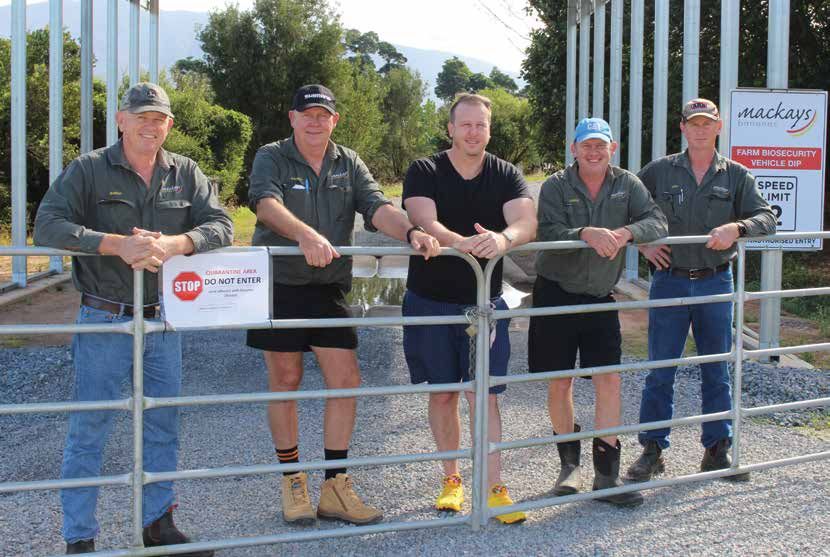
INDUSTRY NEWS

    DURANBAH CLOSURE

                                                                                                               Banana field day held at the Duranbah trial site.

The curtain has closed on the NSW Department of Primary Industries (DPI) long history
of banana research at the Duranbah trial site in northern NSW.                                                  COVID-19 GUIDE
The final trials at the site were completed in April   including plant height, girth, cycling time and bunch    FOR BANANA
this year.                                             data.
                                                                                                                GROWERS
The work at the Duranbah site was part of a            Phase 3 – Standout varieties, called ‘best bets’,
national project, Improved Plant Protection for the    were grown in semi-commercial plantings to               When the COVID-19 health pandemic
Banana Industry, specifically addressing pest and      determine ripening and handling conditions and to        took hold earlier this year, the
disease issues.                                        undertake consumer acceptance.                           Australian Banana Growers’ Council
                                                                                                                (ABGC) moved swiftly to ensure
Funded by Hort Innovation through the banana           NSW DPI Industry Development Officer Tom                 growers were kept abreast of the
funded project BA16001, the Duranbah research          Flanagan said the negative impacts of ongoing            rapidly changing environment, which
focussed on Panama disease tropical race 1 and         drought and pests meant that trial results weren’t       had the potential to seriously impact
cold tolerance.                                        definitive, with further research needed.                farms.
There were three trial phases undertaken:              “Plans to relocate this valuable research to a new       A key feature of the ABGC’s COVID-19
Phase 1 – Plants were grown with the sole              site are underway,” Mr Flanagan said.                    communication activities was the development
purpose of determining if they survived Panama         “Growers can be assured the NSW DPI is                   of a comprehensive guide which provides
disease R1.                                                                                                     advice to growers on how to mitigate the risks
                                                       committed to investing and engaging in subtropical
                                                                                                                and other important information.
Phase 2 – Varieties that showed Panama disease         banana research to help strengthen and develop
R1 resistance were grown to collect growth data        the industry.”                                           The Guide for Banana Growers on COVID-19 does
                                                                                                                not constitute legal advice, or advice from a
                                                                                                                qualified medical professional, however, it is
    MANDATORY HEALTH PLANS                                                                                      designed to represent current best-practice.

    Growers who employ seasonal workers, including visa holders, must have a health                             It is drawn from official government advice
    management plan in place to manage the risk of COVID-19.                                                    and ABGC’s representation on a number of
                                                                                                                key state and federal government and industry
    The Seasonal Workers Health                        reduce the risk of transmission and managing             working groups.
    Management Plan Direction came into                workplace staff information.
    effect on 5 May 2020, and states – “Workplace                                                               It covers a range of issues intended to help
                                                       A detailed FAQs about the management plan is             growers mitigate the COVID-19 risk including
    health management plans are mandatory for
                                                       available on the ABGC website (https://abgc.             business continuity, managing risks on farm
    agribusinesses employing seasonal workers from
                                                       org.au/wp-content/uploads/2020/06/clean-                 (social distancing, hygiene, transporting
    the date of commencement of the Seasonal Workers
                                                       employer-faqs-7-june-2020.pdf)                           workers, education), government assistance
    Health Management Plan Direction.”                                                                          and what measures to put in place if a worker
    Completed and signed plans must be submitted       If growers are unsure of their                           tests positive to COVID-19.
    to covid.plans@health.qld.gov.au and must          requirements as an employer, email                       The guide can be found on the ABGC
    detail daily health screening steps, measures to   DAFCOVID19Enquiries@daf.qld.gov.au                       website www.abgc.org.au

6                  AUSTRALIAN BANANAS MAGAZINE | AUGUST 2020
INDUSTRY NEWS

UPDATE ON THE SPREAD OF TR4
Panama TR4 continues to spread slowly                               The increase in the number of TR4 infested plants and destruction sites
in the Tully Valley, but escalation of the                                                 from March 15 to July 20
disease is always a constant threat.                           90
The number of plants confirmed with TR4, and                   80
the number of sites where these plants have been
destroyed on infested farms (destruction sites), is            70
increasing as time goes on (see graph right).                  60
As of 14 July, 2020, 85 plants have been confirmed
                                                      NUMBER
with the disease which have been destroyed across              50
34 different sites, across the four infested farms.            40
The sustained effort by industry, growers and
government over the past five years has meant only
                                                               30
four farms in Queensland have been confirmed                   20
with TR4 since 2015.
                                                               10
The threat of further spread, however, remains
present and growers are reminded the best way to                0
                                                                        2015         2016          2017           2018         2019          2020
protect their farm is by keeping the disease out of
                                                                                                          YEAR
their farm.
                                                                                        Infested plants                  Destruction sites
For those growers who haven’t already done so,
now is the time to install on-farm biosecurity                  For further advice please ring ABGC or one of the industry extension officers:
measures or review the procedures already in place                   QLD- Shanara Vievers (07 4220 4149), Ingrid Jenkins (07 4220 4108)
                                                                                      or Stewart Lindsay (07 4220 4120)
to make sure they are still effective.
                                                                                     NSW -Tom Flanagan (02 6626 1352)

                                                                                                 /abgc |         /abgc | abgc.org.au             7
INDUSTRY NEWS

    SENATE HEARS FERAL PIG IMPACTS
Following ABGC’s submission to the                       risks feral pigs posed to the industry as a vector
inquiry into the impact of feral deer,                   of Panama tropical race 4 (TR4). He also outlined
pigs and goats in Australia, ABGC Deputy                 the extensive work conducted by the industry in
Chair, Leon Collins, was invited to speak                eliminating close to 6000 feral pigs since July 2017
at Parliament House on Tuesday 21 July.                  in TR4 hot spots in the Tully Valley.
Due to COVID restrictions, Leon addressed                Leon explained that the control of feral pigs was
the Senate Environment and Communications                another way to help contain and slow the spread
References Committee via teleconference to               of TR4, giving industry time to adapt, and noted
highlight the impact of feral pigs on the banana         that the ABGC has asked for ongoing assistance and     ABGC Deputy Chair Leon Collins addresses the
industry and the control activities of growers to                                                               Senate Environment and Communications
                                                         funding from the Department of Agriculture to help     References Committee to highlight the impact of
suppress pig numbers.                                    the banana industry manage the ongoing feral pig       feral pigs on the banana industry.
He informed the Committee on the biosecurity             problem.

    UPCOMING BOARD MEETINGS                                                                                      IMPROVE RECORD
    ABGC directors will meet for their next quarterly board meeting at Lakeland on                               KEEPING WITH
    10-11 September, subject to COVID-19 travel restrictions.                                                    BETTERBUNCH
    The Board’s Annual General Meeting will be held in Tully on 11 November. All ABGC members are
    welcome to attend. The general quarterly Board meeting will be held at Mission Beach on 11-12
                                                                                                                 APP
    November.                                                                                                    Record keeping can be an onerous
                                                                                                                 and time-consuming task for growers.

    WATERWAYS
                                                                                                                 Banana growers need to record fertiliser and
                                                                                                                 chemical usage for food safety accreditation
                                                                                                                 and under the government reef regulations.

    REPORT CARD
                                                                                                                 The BetterBunch app is a free, easy to use app
                                                                                                                 that has been helping growers since 2016.
                                                                                                                 The app allows growers to record farming
                                                                                                                 data, including application and calibration
    Elaine Seager, Terrain                                                                                       schedules for fertilisers and chemicals,
    Water quality in the Tully, Johnstone,               The lowest water quality score for the Tully,           weather conditions, irrigation scheduling and
    Russell and Mulgrave freshwater rivers               Russell and Mulgrave is for dissolved inorganic         planting records.
    and estuaries continues to be in ‘good’              nitrogen (DIN), although the Tully and Russell          The app works across your computer, tablet
    overall condition, according to the                  basins improved their DIN scores from ‘poor’ to         and smartphone and can be used without
    latest Wet Tropics Report Card (July                 ‘moderate’.                                             internet connection in the field.
    2018-June 2019).                                     The Johnstone is scored ‘good’ for DIN. Pesticide       Laura Smith, Project Officer for Tully-based
    The grades are an average across the entire          scores were graded ‘good’ across the board.             banana growers Mackays, said “When starting
    year and are an assessment of the condition of                                                               to use the BetterBunch program, Robert
    waterway health – for example, the condition                                                                 Mayers, from Australian Banana Growers’
    of the water supporting fish. By contrast, the                                                               Council, provided excellent one on one
    Reef Report Card is based on an estimate of the                                                              training, with continuous support.
    quantity of pollutants going to the reef.
                                                                                                                 “The app is very user friendly, and produces
    Wet Tropics Waterways Chair Professor Steve                                                                  great reports, especially for the requirements
    Turton said the underlying scores reflect the
                                                                                                                 under Freshcare.”
    pressure put on waterways by the record-
    breaking dry periods followed by extreme flood                                                               ABGC is currently reviewing the app to ensure
    events in 2018-19.                                                                                           it continues to meet the needs of our industry
                                                                                                                 and is keen to hear from growers who use it
    “Climate variability and heavy rainfall are a
                                                                                                                 and those who do not.
    feature of the Wet Tropics, but this was the first
    year since we launched the Report Card in 2016                                                               Over the next few weeks, Robert will be talking
    that we’ve been able to see the impact of a                                                                  to growers to gauge their experiences in using
    typical wet season,” Mr Turton said.                                                                         the Betterbunch app to make it better for the
                                                                                                                 future.
    “High concentrations of suspended nitrogen and
    phosphorus were recorded near river mouths of                                                                If you’d like to provide feedback, have
    the Tully, Russell and Mulgrave during and after                                                             any questions or would like to start using
    flood events. Scores for inshore water quality                                                               BetterBunch please contact Robert on
                                                          The Wet Tropics Report Card
    were the lowest in five years.                                                                               0447 000 203 or Robert.mayers@abgc.org.au

8                   AUSTRALIAN BANANAS MAGAZINE | AUGUST 2020
INDUSTRY NEWS

LAKELAND EDGES STEP                                                                                             CHEMICAL
CLOSER TO LONG-TERM                                                                                             UPDATE
WATER SECURITY
Lakeland is a step closer to realising long-         project management and stakeholder engagement
                                                                                                                Entrust Organic (Corteva) has
                                                                                                                recently been registered for the
                                                                                                                banana industry for use in organic
term water security with the Queensland              plans.
                                                                                                                production.
Government making the first milestone                Professional Engineering and Development
payment towards the Lakeland Irrigation              consultants, SMEC, has been appointed the                  The active ingredient in Entrust is spinosad,
Area Business Case.                                  principal project manager.                                 which is produced through the fermentation
In June, the Government paid the $10 million for     The detailed business case is due to be completed          of a naturally occurring soil bacterium, and
the detailed business case for a new dam on the      in September 2022.                                         provides control of rust thrips and sugarcane
Palmer River.                                                                                                   bud moth in bananas.
                                                     The regionally significant project will open up
The river flows west to the Mitchell catchment and   10,000 hectares of agricultural land and support           There are currently no supplies of Entrust in
into the Gulf of Carpentaria.                        1000 jobs during construction and 1200 full-time           Australia, but stock is expected in October
Milestone 1 will see the creation of instrumental    positions upon completion.                                 2020.

  BANANA                                             COLES ADDS FAIR FARMS
                                                     CERTIFICATION TO ETHICAL
  SARP
  Earlier this year the Banana Strategic             SOURCING PROGRAM
  Agrochemical Review Process (SARP)                 In May, Coles announced that growers no longer have to use internationally recognised
  was conducted through desktop audit                Supplier Ethical Data Exchange (Sedex) to supply the supermarket.
  and industry liaison to:
                                                     Growers supplying Coles can now alternatively            Ombudsman, the Federal Department of
  •	Assess the importance of the diseases,          register with Fair Farms to satisfy the requirements     Agriculture and AUSVEG.
     insects and weeds that can affect each          of the Coles Ethical Sourcing Program, which sets
     industry                                        out detailed standards for treatment of workers          Coles General Manager of Produce Craig Taylor said
  •	Evaluate the availability and effectiveness     in the supply chain that suppliers are required to       adopting Fair Farms Certification meant farmers
     of fungicides, insecticides and herbicides      follow and demonstrate their compliance.                 now had another way to become approved under
     (pesticides) in the control of these plant      Growcom developed the Fair Farms Certification           the Coles Ethical Sourcing Program, which also uses
     pests                                           Program with support from the Fair Work                  Sedex.
  •	Determine any gaps in the current pest
     control strategy
  •	Identify suitable new or alternative                                                                                                    GO
     pesticides to address the gaps.                                                                                                        ST ING
                                                                                                                                          SIN RONG
                                                                                                                                             CE 1
  Many growers and industry stakeholders                                                                                                         988
  provided valuable input into the process and
  the final report has now been published on
  the Hort Innovation web site.
  The SARP report will assist in directing ongoing
  efforts to ensure the availability and access to     REFRIGERATED HAULAGE CONTRACTORS
  effective chemical controls for the industry, to
                                                                  Loading vans daily from North Queensland for:
  address needs and gaps.
  This may relate to pursuing chemical                 • BRISBANE • SYDNEY • MELBOURNE • ADELAIDE • PERTH •
  registration with agrichemical companies,
  or minor use permits with the Australian
                                                               TULLY                 TOWNSVILLE                  MAREEBA                   BRISBANE
  Pesticides and Veterinary Medicines Authority           (07) 4068 4444             (07) 4774 3782            (07) 4092 0400            (07) 3055 3555
  (APVMA).
                                                             CAIRNS                   INNISFAIL                   MACKAY
  Growers can read about industry
                                                          (07) 4033 1544            (07) 4061 4300             (07) 4954 5082
  priorities and future options outlined
  in the SARP Report at:
  www.horticulture.com.au                                            Modern airbag fleet specialising in bananas

                                                                                                    /abgc |          /abgc | abgc.org.au                    9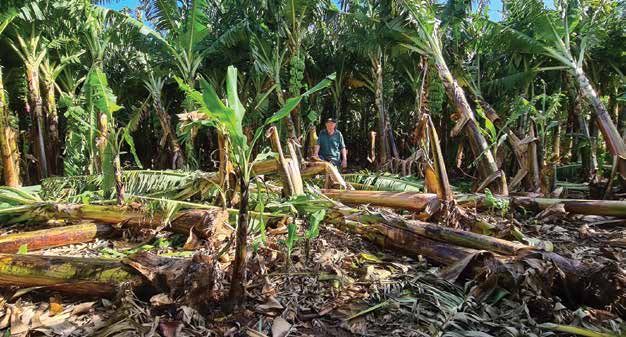
Purchase YaraRega™ 13-2-21
                                        and go in the draw to win an
                                        ENGEL 40 litre fridge-freezer
                                        and transit bag worth $1600!

                                         YaraRega 13-2-21 is a high quality water-soluble NPK
                                         compound fertiliser that can be applied via fertigation or
                                         spreading, allowing you to apply vital nutrients on time.
                                         It delivers a balanced blend of plant-available nitrogen,
Terms and conditions: Purchase a
total of 24 tonnes of YaraRega™          potassium and micro-nutrients in a coated formulation
13-2-21 between 01/06/20 and             that protects granules during handling and storage yet
31/08/20 and receive one entry in
the draw to win one of two prizes,       leaves negligible insolubles. Contact Yara and find how
each comprising an ENGEL 40 litre
                                         YaraRega fits into your crop nutrition program.
fridge-freezer and transit bag (total

                                                                                YaraRega™
$1600 rrp). Register at yara.com.au
with proof of purchase.

© 2020 Yara YAR20212                        1800 684 266   au.sales@yara.com   @yara_australia   yara.com.au
REEF NEWS
JOURNEY TO A STABLE ABGC Best Practice Management
Coordinator Amelia Foster said BMP
FARMING FUTURE
projects were funded under a sliding
scale, depending on who accrues the
most benefit – the grower or the
By Lea Coghlan environment.
“Grants of up to $45,000 are currently on
offer, with co-funding from the applicant,
to assist growers to make on-farm
improvements,” Mrs Foster said.
“There are growers who are changing their
practices in line with the best management
guidelines – making on-farm improvements
like automated fertigation, building sediment
control structures, improving drainage and
purchasing slashers to increase ground cover.
“Funding is also available for innovative
growers to undertake projects that will trial
new ways of reducing nutrient and sediment
loss and improve industry knowledge in this
space.”
Mrs Foster said the project being delivered
by Shayne and Blaise was significant for the
Fourth generation farmer Shayne Cini on the bank of the South Johnstone River which runs beside his
benefits it will deliver to the environment.
banana farm at Wangan.
Just like farming, looking after the environment runs through Shayne Cini’s veins.
Together with wife Blaise and daughters Kari of the Great Barrier Reef, to stabilise a further 50m “This site consisted of a drain constructed to collect
and Eden, the fourth-generation farmer grows section of the riverbank. sediment moving off farm and direct the flow of
bananas on 99.5 hectares on the banks of the South farm runoff, stopping all riverbank erosion caused
Between 2020 and 2022, the Australian Banana
Johnstone River near Wangan, south of Innisfail in by runoff. Although the rock has prevented erosion,
Growers’ Council has $750,000 in BMP grants
Far North Queensland. the riverbank continues to substantially subside
available to help growers change practices to better
The Cini family has an inter-generational connection further upstream.”
align their farming systems with recommended best
with the river. practice. The new project will be managed by the Cassowary
Just as his father Danny did, and his grandfather Coast River Improvement Trust and involve placing
The grant will fund 75 per cent of this project.
Willy before him, Shayne has embarked on his own basalt rock at the bottom of the riverbed to stabilise
Shayne and Blaise will contribute the additional 25
journey of continued environmental improvement, the toe (the foundation) and gradually build up
per cent.
which has focussed primarily on riverbank with rock.
stabilisation to repair badly eroded sections along Shayne’s grandfather first started work to stabilise
Once the bank is stabilised, it will be revegetated
the riverway which runs beside the property. the riverbank and reduce erosion and sediment loss
with suitable plant species.
into the river more than 40 years ago.
“There is so much pressure on growers to look after
Shayne and Blaise have embraced practice change
the environment and reduce sediment and nutrient The new project is an extension of earlier works
in a number of areas on the farm.
losses and run-off from farms into the river system which Shayne estimates used some 6000 tonnes of
and ultimately, the Great Barrier Reef lagoon,” rock. Work is scheduled to start later this year. They manage farm runoff and sediment control
Shayne said. through laser levelling paddocks, ground covered
“We have already completed extensive riverbank
“We see the loss of the riverbank as a major inter-rows, gravelled roadways and drainage. The
erosion control measures over the past few years
contributor of fine sediment to the river system, far crop is under drip irrigation, and all paddocks are
at two different locations on our property,” Shayne
greater than what we lose off farm. fertigated at least weekly.
explained.
“Restoring the riverbank helps the environment, “The soil is one of our most important assets, so we
“The first site consisted of a rock wall, incorporating
but it also helps us farm sustainably and leaves believe putting measures in place to protect it is a
a spillway to direct farm runoff to a designated area
this farm in the best possible position for the next logical approach,” Shayne said.
in order to reduce erosion. The second lot of works
generation.” were undertaken to protect an irrigation pump site “If everyone is serious about looking after the
Shayne and Blaise recently secured an incentive and stabilise the existing riverbank also from further environment, projects like ours have got to be a
grant through the BMP project, funded by the Office erosion.” good prevention.”
/abgc | /abgc | abgc.org.au 11COVID-19
COV I D E F F E C TS O N
The COVID-19 pandemic has seen significant supply and demand challenges and a definitive shift in customer
buying trends Australia-wide.
Here, Richard Clayton, CEO of Mackays Marketing provides some consumer insights on the new reality that’s
affecting customer demand for bananas and other fresh produce.
2020 started with Australia impacted by the situation, and there are new consequences that not increased remarkably. This begs the
double whammy of drought and bushfires, which will continue to influence sales and consumer question. Are we struggling to be available to
was very visually brought to life for those of us behaviour. consumers when they need bananas or are
living in urban areas of Australia. In our office in NSW we have regular discussions they choosing longer-life snacks?
Sydney consumers saw a lot of items at higher around COVID and this is what we believe are key 5. Many consumers are out of work, also
than usual prices, due to drought impacting changes. affecting household budgets.
supply. Vegetables were particularly hard hit, yet 1. As a healthy snack, banana consumption The quicker we get control of the virus in our
demand remained, due to sentiment towards has been affected by gyms being closed and community, the quicker we can return to
supporting the bush. no weekend sport. (There is an associated normality. However, being able to maintain
We were thinking the banana crop might have habit between exercising and eating the disciplines required in the community to
been bigger than 2019 and with what was bananas which has affected banana snacking keep the spread at bay is unpredictable. On
happening in other fruit lines we were not occasions.) the positive, health will always be important
daunted by this sales challenge, and the year 2. Fruit can be an impulse purchase and (particularly during the pandemic) and bananas
looked promising for bananas. Working from home has also changed are well positioned to ride the well-being wave
I was overseas the first week of March and snacking habits. For city office workers, the into the future.
was being sent clips of empty shelves due regular trip to the local metro supermarket But let’s consider for bananas;
to COVID panic buying. On the transit back provided an opportunity to regularly buy
• How mindful will we need to be of
fresh bananas for a snack/breakfast.
through America I did not see any community or consumers’ willingness and ability to
Working from home means less bananas
government concern, and I was unsure of what I increase their AWOP on a tight budget?
‘within easy reach’ and therefore either less
was coming back to. • During times of banana oversupply what are
consumption or more local consumption
On my first day back in the office, I clearly saw within walking distance, ie the local fruit the substitutes that consumers will opt out of
the results of the unprecedented panic buying shop or IGA. to buy additional bananas instead.
frenzy. Most supply chains - for the vast majority • Will retailers need to offer deeper discounts
3. People are cooking more at home and
of products in the supermarkets - were being to attract purchases in times of oversupply?
missing the convenience food close to their
broken, to the point it took months for them to workplace. Food waste is lower due to In 2021 what will “value” look like?
recover. using up what is at home and being more
• The cheapest price?
At the time of writing this, that scramble had conscious of meal planning to create
stopped, and we were able to reflect on how we efficiency and/or reduce household stress. • The healthiest product that gets eaten by the
thought the situation unfolded. household?
4. People are shopping less at majors and
We are forever challenging ourselves to predict more locally, most likely at independent • Less chance of ending up as food waste ie
what lies in front of us. It appears to us that IGAs and green grocers. Average weight flexible, multiple uses?
the consumer has reacted to this ever-evolving of purchase (AWOP) at the majors has • Portion size that suits the consumer?
During April, both major retailers Woolworths and Coles promoted bananas in store with double displays.
12 AUSTRALIAN BANANAS MAGAZINE | AUGUST 2020INDUSTRY
COVID-19
NEWS
BANANA CONSUMPTION
JAN-FEB
Timeline COVID 2020:
No real impact to consumers as yet,
though drought affecting veg prices.
MARCH
Panic buying, restaurant/café closures,
stockpiling of long life veg, supply chains
broken. Working from home begins.
CBDs become ghost towns. Multiple
shopping trips to multiple stores to
source essentials – trend to local retailers.
JobKeeper announced. Online shopping
stopped, then redirected to the needy.
APRIL
KEY FACTS April – Home schooling commences and
school holidays. The start of shift to thrift,
Financial confidence is low: • Shopping days have changed to include particularly less food waste through meal
planning, shopping to lists. Trend to baking
• Australians are in two camps, either more mid-week shops, thanks to the and cooking from scratch. Online reopens
still financially ‘insulated’ (56%) or now flexibility of working from home. with double capacity and supermarket
financially ‘constrained’ 44% (Source: Health trends and eating out: shelves starting to restock.
Nielsen). • People are looking to increase consumption Businesses work on how to use JobKeeper
and also adjust salaries and working hours
• 20% of the working population have either of fresh fruit and veg to boost immunity and to maintain minimum staff. Routines
lost their job or had their hours/pay cut. health. greatly disrupted.
This and the approaching recession is • Households are eating out less and cooking Woolworths and Coles make the most
driving a ‘shift to thrift’. at home more regularly which is expected of increased banana availability and run
• Couples and families are key groups to continue for health and budget reasons. promotions with massive merchandising
and marketing support (TV, catalogue,
impacted financially, which impacts banana More affluent households have gone back
instore, recipes, double displays).
sales as they are key purchasers. to eating out more.
• Charities are seeing huge increases in • Food service is making a comeback but still
requests for financial and food assistance. impacted (no events, cruise ships, etc)
MAY
Shopping differently: • Mental health is suffering and services are Restrictions ease in NSW. Schools
• Consumers have been shopping more oversubscribed. $500 million has been encouraged to go back.
locally (IGA, independent green grocer) and injected by the Government already this
year.
online sales are increasing. JUNE
• Convenience is key as people are avoiding Uncontrollable shutdowns:
crowded areas where possible. This might Lockdowns have removed control of shopping “COVID-15” weight loss health kick
becomes a trend. Restaurants reopened
mean one to two big shops at a big retailer habits (i.e. Victoria at time of writing) and COVID and people wanting to get out and
and ‘top-up’ shops either not happening at cases have created supply chain issues (eg. support local restaurants as they reopen.
all, or happening close to home. there have been cases in stores and Distribution
Centres).
JULY
School holidays on. Travel to support
regional areas. Concern with Greater
WATCH THIS SPACE Melbourne lockdown. Spreading across
Australia.
Australia eats about one third of the horticulture we produce.
Amid COVID, uncertainty surrounds the future exported and if some of this stock were to end AUG - DEC
of export markets – and we also lack freight up on the domestic market (due to low export To be discovered. Many are resetting
options. General uncertainty remains with the their lives to do less, with significant
strength of overseas markets. For example, large demand) there would be additional competition reflection on why do we need to be so
volumes of table grapes and citrus are usually for sales. busy?
/abgc | /abgc | abgc.org.au 13COVID-19
RESPONSE TO PANAMA
vs A GLOBAL PANDEMIC –
DIFFERENT… BUT SAME?
A global pandemic may seem a complete world away from a disease that threatens
Australia’s banana industry. However, on-farm responses by banana growers’ to COVID,
compared to efforts to continue to control Panama disease tropical race 4 (TR4), have some
distinct parallels.
By Sonia Campbell
When COVID-19 gripped the globe earlier pandemic on farm. then quarantine is your only control, and that’s
this year, it was - and continues to be - an why Panama and COVID are the same.”
He said these growers were accustomed
unprecedented crisis no Australian in the present
to constant checks and balances, including Mr Lindsay also drew comparisons between
day has experienced before. disseminating information to their workforces ‘flattening the curve’ of COVID-19 and managing
For banana growers who have biosecurity quickly in times of need. infected farms.
protocols in place to keep diseases such as “I think those people who put their biosecurity “With COVID we’re saying flatten the curve by
Panama tropical race 4 (TR4) at bay, unwittingly in place (for TR4), bit by bit, early on, it’s about doing the things that mean you are not infecting
their responses to COVID - to keep staff safe from working with people. And, if you have systems anyone else. That’s really what managing these
infection and ultimately keep their farms running in place, then people almost develop that as a infected farms with Panama is effectively trying to
viably – have been similar in many ways. habit,” Mr Lindsay said. achieve,” Mr Lindsay said.
South Johnstone banana grower and former “So, similarly with COVID, you’re reinforcing new “If we had done nothing, the chance of Panama
Australian Banana Growers’ Council (ABGC) chair behaviours. But it does take time to become spreading to other farms and other districts would
Doug Phillips recently sat down with Australian second nature, because you’re asking people to have been much higher, so by locking down farms
Bananas magazine to consider this interesting change the habits of a lifetime.” and imposing conditions, including destroying
analogy. infected plants, that’s achieving that flattening of
Mr Lindsay agreed with Mr Phillips that there
“Certainly, if you look at the responses in general were many parallels between industry’s response the curve that everyone talks about with COVID.”
(to TR4 and COVID-19) the ‘principals’ are almost to TR4 and the pandemic. Mr Phillips believed there were other benefits of
identical. Different in application, but in principle on-farm responses to both COVID and TR4.
“Neither disease can actively seek out a suitable
the same,” Mr Phillips said.
host, they both rely on distribution by other “All of the measures that have been introduced
“You talk about early identification? Where you means. Both also have a period without obvious for COVID such as increased hand washing and
find it (Panama and COVID), you go into strict symptoms when they can be moved into close increased social distancing, are going to have a
containment and controlled movement. proximity of other hosts and infect them, so when positive influence on the infection rates of other
you find infected hosts (people or plants) you are diseases, like influenza and other things like that,
“If you talk about early identification? With TR4 we seeing the disease distribution in the past, rather
have risked-based surveying of farms, the same in the same way that good biosecurity practices
than where it is right now,” he said. bring about additional positive outcomes.
way we do (in the community) with COVID 19. The
trace forward, trace back, that’s a critical part of “That’s why good quarantine practices have to “If you are more structured in your planting
that risk identification, with both COVID and TR4. assume that everywhere and everyone else is material and you’re using clean planting material,
So really the principles of what we are trying to infected, and have practices that treat people and you’re not spreading other things through your
achieve with COVID, as opposed to what we are farms as if they are. farm. You’re not potentially importing nematodes,
doing with TR4 are the same.” “So when you think about it, the (COVID) virus you are not importing other diseases and you’re
is not making the pandemic, we are. It’s human not spreading other things through your farm,” Mr
Department of Agriculture and Fisheries (DAF)
behaviour that decides whether there is a second Phillips said.
Team Leader of Banana Production Systems,
wave.
Stewart Lindsay believes those growers with good “So you sit down and start to list the benefits (of
biosecurity protocols in place pre-COVID were at “It’s the same with any disease (of) plant, animal the responses to TR4 and COVID), and you see
an advantage when it came to responding to the or whatever. If you don’t have an effective control, similarities there as well.”
14 AUSTRALIAN BANANAS MAGAZINE | AUGUST 2020WA NEWS
CARNARVON PRODUCTION DROPS
30 PER CENT AFTER CYCLONE DAMAGE
Carnarvon banana grower and former ABGC director Tom Day in his plantation the morning after ex-tropical Cyclone Mangga
By Lea Coghlan
Carnarvon banana growers suffered an estimated with self-insurance. Compensation is paid when
COMPENSATION FUND
30 per cent production loss across the growing visible damage to a plantation is in excess of 15 per HELPS CYCLONE-
region as a result of ex-tropical cyclone Mangga cent across the entire farm. DEVASTED GROWERS
which wreaked havoc on the coast of Western “The funding gives some growers an opportunity RECOVER
Australia in May. to receive money up front to replant,” Ms Mangili When Tropical Cyclone Olwyn wiped out
The out-of-season storm whipped up a fury of dust, said. Carnarvon’s banana industry in 2015, a unique
wind and rain leaving a trail of destruction. “It’s paid per the individual farm’s production or grower-funded insurance scheme was a saving
ABGC director and Sweeter Banana Co-operative what it would have been, prior to the damage.” grace for the 45 growers impacted.
business manager Doriana Mangili said the damage Shortly after the event, Sweeter Bananas urged The region’s banana growers applied for
varied depending on plantations’ exposure. Western Australian consumers to look beyond and were granted a 100 per cent payout
“We were looking at 2020 being the biggest year for blemished fruit as the region’s growers recover. each under the Carnarvon Banana Producers
production in ten years as we’ve been able to ramp The organisation is well known for producing the Compensation Scheme. It was the largest
up production in the last five years,” Ms Mangili iconic premium Sweeter Lunchbox Banana, but Ms payout in the scheme’s history.
said. Mangili warned this fruit would be slightly more Since it started in the early 1960s, there have
“It was the first time since Tropical Cyclone Olwyn blemished due to crop damage.
been 24 claims totalling $10.39 million for
struck in 2015 that we have had a severe weather Consumers were also encouraged to consider cyclones, flooding, heat and fire damage.
event - no cyclones, no floods and no heatwaves for another product called Smoothies, a term given
Some 41 growers across 45 plantations
just over five years. to fruit that doesn’t meet premium supermarket
with a total production area of 170 hectares
specifications.
“This enabled us to ramp up production and this contribute 30c/carton to the scheme.
will hopefully help us in a ‘holding pattern’ until “The strong winds from the storm and the number
of trees brought down has increased the fruit with It is administered by the APC Banana Growers
growers get back on their feet.”
markings and the volumes of Smoothies bananas Producers’ Committee, which sits under
Former ABGC Director Tom Day, who owns a Western Australia’s Agricultural Produce
has tripled,” Ms Mangili said.
banana farm on the Gascoyne River, said he had Commission.
never seen dust storms as severe as they were “Smoothies have been such a great help to our
growers. Since we developed the product over Grower and long-serving chair Bruce Munro,
during the ex-tropical cyclone.
two million kilos of bananas have been eaten by who stepped down in June (he was replaced
“The severe storm delivered eleven hours of dust,” Western Australians instead of being dumped back as chair by committee member John Kearney),
Mr Day recalled. in the paddocks as mulch. said the scheme was unique and had been an
“You couldn’t see 30m in front. But we only got “The damage consists of light skin markings on the immense benefit over the years.
15-20mm of rain.” fruit caused by the leaves rubbing on the bunches “I think the fact that it’s a voluntary scheme is
Ms Mangili said growers were able to access as they grow. It’s cosmetic damage and doesn’t key to its success,” Mr Munro said.
compensation through the APC Carnarvon Banana impact the fruit inside. Growers use the money to cover operating
Producers Compensation Scheme. “The simple action of purchasing a less than perfect costs to enable them to recover and restart
The unique fund, to which growers contribute a levy looking product has a real impact on farm incomes after a natural disaster.
to for each carton produced, provides the industry and reducing global food waste.”
/abgc | /abgc | abgc.org.au 15RESEARCH
NATIONAL PLANT PROTECTION PROJECT
KICKING MAJOR BANANA VARIETY GOALS
AT THE HALFWAY MARK
The Australian banana industry’s search for new varieties resistant to diseases such as Panama tropical race
4 (TR4) and Panama disease race 1 is looking brighter than ever, thanks to major inroads being made by a
national plant protection project.
Most recently, the project has managed to access five Cavendish selections and one Dwarf Ducasse selection
from Taiwan, all with reported resistance to TR4.
By Stewart Lindsay, Department of Agriculture and Fisheries, South Johnstone, Queensland.
The project “Improved Plant Protection for the world, many overseas banana breeding programs available for the next round of research screening
Australian Banana Industry” (BA16001) is now a are restricting access to their material to try and trials.
little over halfway completed and is achieving major maximise the opportunity to commercialise the Screening new varieties
goals for the banana industry. The five-year project intellectual property in the varieties they have
is funded by Horticulture Innovation via the banana produced. The project has provided a network of field
industry research and development levy, with co- screening trials in New South Wales, north
Accessing new varieties Queensland and Northern Territory to assess for:
investment from the Department of Agriculture and
Fisheries, NT Department of Primary Industries and The project has been successful in negotiating • Panama disease Race 1 resistance and cold
Resources, NSW Department of Primary Industries access to 35 new varieties, primarily from breeding tolerance, and agronomic performance and
and contributions from the Australian Government. programs focusing mainly on breeding dessert consumer acceptance for selected varieties –
banana types familiar to the Australia market Duranbah, New South Wales
The project combines a full range of activities from – selections of Cavendish and Lady Finger, and
identifying, importing and screening new banana hybrids of Lady Finger and Silk/Sugar bananas. • Agronomic performance and Yellow Sigatoka
varieties for disease resistance to undertaking leaf spot resistance – South Johnstone,
research activities into the highest priority pest The project has managed to access five Cavendish Queensland
and disease issues. These activities are grouped selections and one Dwarf Ducasse selection from
Taiwan with reported resistance to TR4, which • Panama disease TR4 resistance and agronomic
as theme areas, and some of the key activities and performance – Coastal Plains Research Farm,
outcomes from the program so far are outlined entered the quarantine tissue culture laboratory
in mid-July 2020. From Brazil the project has Northern Territory
below.
successfully negotiated access to 25 varieties, At the Duranbah site, 19 varieties were planted
Theme 1 – Accessing and screening mostly Lady Finger and Silk/Sugar hybrids with in February 2018 and have been assessed for
banana varieties for pest and disease reported resistance to Panama disease Race 1, with their Panama disease Race 1 resistance, with a
resistance 12 of these arriving in April 2020 and entering the number of varieties showing promise. The site was
This aspect of the project aims to access plant quarantine screening system. In 2018 the project also used to assess the production performance
varieties from overseas breeding programs and was able to access four varieties from the French and consumer acceptance of PKZ and FHIA17,
then conduct research trials to screen for disease breeding program, including two novel hybrids and resistant varieties identified from the previous plant
resistance against Panama disease Race 1 and two hybrids reported as similar to the Silk/Sugar protection program. The consumer acceptance
Tropical Race 4 (TR4), Yellow Sigatoka leaf spot and banana variety, with reported Panama disease and assessments compared FHIA-17 and PKZ with
to assess yield and performance characteristics. leaf spot resistance. These lines successfully cleared Cavendish sourced from North Queensland and
With the increasing spread of TR4 around the the quarantine screening process and will be northern New South Wales, with the consumer
The early stages (Jan 2020) of an on-farm trial site of resistant varieties. A TR4 resistant Cavendish variety under assessment at South Johnstone.
16 AUSTRALIAN BANANAS MAGAZINE | AUGUST 2020RESEARCH
Horticulture and Forestry Science Tissue Culture Team members Emily Rames
and David Gibson with some new banana varieties recently accessed from
Taiwan and are currently going through quarantine processes Applied Plan
Growers have been kept up to date with progress of new variety trials with
Biotechnology Laboratory at Maroochy Research facility before undergoing
regular tours of trial sites, including South Johnstone and Duranbah.
trials for TR4 resistance.
tasting revealing that while PKZ and FHIA-17 conditions on farms. These trials are supervised by agreements. Between April 2019 and May 2020, a
possess some desirable agronomic attributes DAF with restrictions around plant propagation and total of 5575 plantlets were provided and different
and disease resistance, they did not appeal to marketing to maintain the intellectual property of accessions accessed 127 times. The collection and
consumers when compared to Cavendish bananas the originating breeding program. Between 100 and tissue culture laboratory are playing an important
sourced from NQ and NNSW. As a result it was not 300 plants of up to three Cavendish varieties with role in multiplying and providing the plants
recommended that PKZ or FHIA-17 be pursued for good TR4 resistance have been established on four required for the next round of variety screening
commercialisation. The trial site at Duranbah has properties across the North Queensland production
trials at South Johnstone and the Northern Territory.
now been closed with the cessation of the lease, districts between October 2019 and May 2020.
and a new site is being planned for the NSW DPI A trial is also planned for planting later this year New activities coming up
facility at Alstonville. in the NT as well. These trials aim to gather some The variety screening efforts are continuing with
At South Johnstone, 32 varieties were planted in data and assessments by growers of the important new trial plantings planned in the Northern
September 2018, with harvest for the plant crop commercial characteristics. These assessments will
Territory and North Queensland later this year.
spreading from May to December 2019. The trial then be shared with the broader banana industry
These trials will continue screening activities for
is assessing a range of mostly Cavendish varieties, via extension activities and magazine articles.
agronomic performance and TR4 resistance.
including all the selections in Australia from Taiwan Theme 2 – Managing the variety
with reported TR4 resistance. The first ratoon importation process, and providing access The project is also continuing the assessment and
harvest is progressing well with more than 60% to clean planting material selection of improved Goldfinger and Cavendish
of the varieties harvested so far. The results of the types developed through the mutation breeding
The project provides for the registration and
plant crop assessments were presented in an article efforts undertaken in the recently completed project
management of the only post-entry quarantine
in the previous edition of the Australian Bananas “Fusarium wilt TR4 research program” (BA14014).
facilities in Australia for importing banana varieties.
magazine. In that project 20 selections of Goldfinger with
New varieties identified and received by the
The trials at Coastal Plains Research Farm in the project are managed and assessed through these improved eating characteristics, and 27 selections
Northern Territory are proceeding well with disease facilities to ensure they are clear of the many of TR4 resistant Cavendish varieties with improved
assessment and agronomic data for the plant crop different exotic banana pests and diseases. This bunch and plant characteristics have been
completed and analysed. There are two trials being process takes between 1.5-2 years and has ensured made. These selections need to undergo more
undertaken, the main trial assessing 19 commercial that Australia has maintained its freedom from rigorous assessment to identify the outstanding
varieties and a sub-trial investigating resistance devastating new diseases and pests while still being performers for their disease resistance, agronomic
in 14 important breeding lines. The results from able to import new banana varieties to test. DAF characteristics and consumer acceptability. Currently
the plant crop of both trials are presented in an has recently increased the size of the post-entry the Cavendish selections are only present in the
article in this Australian Bananas edition. There are quarantine facilities at both the EcoSciences Precinct
promising results so far with four new Cavendish Northern Territory, and the project team in Theme
in Brisbane and at the Maroochy Research Facility
selections, along with three hybrids from the French 2 has been busy developing a safe and effective
at Nambour, successfully passing the auditing and
breeding program showing good resistance in the protocol with biosecurity authorities in Queensland
registration for both sites.
plant crop. The two cooking bananas Dwarf French and the Northern Territory to allow for tissue-
Plantain and Tonga have also performed well. This component of the project is also responsible cultured plantlets of each selection to be imported
for managing the Australian banana germplasm
Pre-commercialisation trials on farms safely back into Queensland.
collection. The collection continues to be used to
Once varieties have been screened in the research support banana research trials and to supply plants So exciting times ahead for the banana industry
trials, those candidates with promising performance for grower evaluation, where they are not restricted investment in the search for new, disease resistant
are then assessed under commercial production due to Material Transfer Agreements or research banana varieties.
/abgc | /abgc | abgc.org.au 17You can also read


