Branch Handbook - 2020 Queensland Justices Association
←
→
Page content transcription
If your browser does not render page correctly, please read the page content below

Branch
 Handbook

2020

Queensland Justices Association

The intention of this Handbook is to assist members of
       a Branch Committee, especially people who may not
           have been a member of a committee before.
      These are guidelines only and you should refer to a full
          copy of the By–Laws of the Queensland Justice
                Association for more information.

QJA Branch Handbook V3       Feb 2020                 Page | 2
Table of Contents                                                          2

QUEENSLAND JUSTICES ASSOCIATION                                             4

1.        About Us                                                          4
     a)     QJA Board                                                       5
     b)     QJA Staff                                                       6
     c)     Branch Patrons                                                  7
     d)     Branches                                                        8

2.        QJA Branches                                                      9
     a)      Setting up a local Branch                                      9
     b)      What is the Purpose and Mission of a QJA Branch?               9
     c)      What does this mean?                                          10

3.        Branch Committee Responsibilities                                13
     a)      Membership of the Committee                                   13
     b)      What if we can’t form a Branch Committee?                     14
     c)      What do Contact Groups do?                                    14

4.        Branch Committee Roles                                           15
     a)      Branch Chairman                                               15
     b)      Branch Secretary                                              17
     c)      Branch Treasurer                                              18
     d)      Branch Publicity Officer                                      18
     e)      Branch Training Officer                                       19
     f)      Branch Social Coordinator                                     19

5.        The How Tos                                                      20
     a)      Running Meetings                                              20
     b)      The Agenda                                                    21
     c)      Meeting Minutes                                               22
     d)      Branch Emails                                                 23
     e)      Banking                                                       24
     f)      End of Financial Year                                         29
     g)      Annual General Meeting:                                       31
     h)      Record Keeping:                                               31
     i)      Contact Lists and Bulk Emails                                 31
     j)      Branch Meeting Reminders                                      31
     k)      Pre- Appointment Training                                     32
     l)      Events                                                        33
     m)      Registered Trademark Use                                      36
     n)      Branch Office 365 Account                                     37
     o)      Branch PD Resources                                           40

QJA Branch Handbook V3                               Feb 2020   Page | 3
Queensland Justices Association
   1. About Us

The Queensland Justices Association was first established in 1918 as an association for
Justices of the Peace in Queensland and its objectives were to promote good practice,
promote the status of Justices of the Peace and help members in the performance of
their duties.

Today, the association has a similar vision and mission.

Our Mission is the:
 Provision of exceptional products, services and programs that enable QJA members
    to be highly competent and professional practitioners serving the community

Our Vision is to be:
               A network of JPs and Cdecs delivering professional services

The strategic role of Branches

The QJA Branches and Contact Groups play a vital and integral role in the delivery to
members of QJA’s mission, vision and values.

The maintenance of a robust & effective branch network is an essential part of QJA’s
strategic vision. This network delivers an outcome that competitor JP organisations are
unable to match:
     Well organised and highly focused groups of experienced and professional JP
     practitioners (who are also committed advocates of QJA’s mission, vision and
     values) in a multitude of localities throughout the State.

QJA Branch Handbook V3                Feb 2020                        Page | 4
a) QJA Board
The association is a company limited by guarantee, incorporated in 1948. The
association operates under the Corporations Act that is administered by ASIC. The
association is governed by a board consisting of a president, vice-president and eight
directors.

There are several sub-committees of the board which are either governance
committees – whose primary purpose is to ensure compliance with standards, strategic
whose primary purpose is around long- term activities and strategic goals or special
purpose whose purpose is around a particular activity or function.

The diagram below explains the types of committees, how they relate to each other
and their functions:

QJA Branch Handbook V3                Feb 2020                        Page | 5

b) QJA Staff
The QJA State Office is based in Woolloongabba and office hours are 8:30am – 4:30pm
Monday to Thursday and 7:30am – 3:30pm Friday.

The office has a signing facility that is open for 4 hours per day, 4 days a week.
There are 4 full-time staff in the office. Each staff member is (or will soon be) an
appointed Justice of the Peace (Qualified) and QJA member.

QJA Members are welcome to visit the office during office hours. We have a range of
merchandise at the office for purchase. We can also attend to member renewals,
event registrations or general enquiries.

QJA Members may also need to call the office for enquiries, renewals, event
registrations or for advice on witnessing documents.

Staff Roles
Whilst the key responsibility areas are defined below, all staff assist with duties in the
membership, financial, training, events, merchandise and provision of member advice
functions.

The Business Manager/Registrar (Wendy La Macchia) is responsible for managing the
operational functions of the QJA both on a day to day and long-term basis so that the
Association’s key strategic goals can be met whilst maintaining integrity and good
governance of the Association’s activities.

QJA Branch Handbook V3                 Feb 2020                          Page | 6

Administration Officer – Memberships (Gabor Beres) is responsible for providing
bookkeeping and membership management so that the administration needs of the
company are supported in a way that contributes to providing excellence in service to
the association’s members.

Administration Officer - Merchandise (Aaron Dunster) is responsible for processing of
merchandise sales and training support so that the administration needs of the
company are supported in a way that contributes to providing excellence in service to
the association’s members.

Training Co-ordinator (Pamela Currie) is responsible for the co-ordination of training
delivery and student management so that the administration needs of the company
are supported in a way that contributes to providing excellence in service to the
association’s members.

   c) Branch Patrons
Each branch is assigned a QJA Director to act in a patron role for the branch. The
Branch Patron is a conduit between the branch and State Office and the branch and
the QJA Board. Their role is to assist your branch to become successful in whatever
way possible.

QJA Branch Handbook V3                Feb 2020                        Page | 7
d) Branches
The Association’s branches are established in regional areas and in SE QLD. Members
are assigned, when joining either as a student or non-student, to a branch based on
approximate geographical area. Branches are grouped into Regions:

Brisbane                                Brisbane North
                                        Brisbane South
                                        Redland City,
                                        Western Suburbs
                                        Wynnum Manly
Logan Gold Coast:                       Logan
                                        Gold Coast
South West Qld                          Toowoomba
                                        Ipswich
                                        Greater Springfield
                                        Lockyer
Moreton Sunshine Coast:                 Hornibrook
                                        Pine Rivers
                                        Caboolture
                                        Caloundra
                                        Maroochydore
                                        Noosa
Fraser Coast Burnett                    Gympie
                                        Maryborough
                                        Bundaberg
                                        Hervey Bay
                                        South Burnett
Central Qld                             Rockhampton
                                        Gladstone
                                        Central Highlands
North Qld                               Mackay
                                        Townsville
                                        Mareeba

QJA Branch Handbook V3              Feb 2020                       Page | 8
2. QJA Branches
   a) Setting up a local Branch
A local Branch may be established by the QJA Board at the request of at least 5
members in the local area, or on its own motion. A Branch will be established
according to the ‘By–Laws’ of the QJA.

The By-Laws and other governance references are available on the QJA SharePoint site
under Company Resources>Governance.

   b) What is the Purpose and Mission of a QJA Branch?
Once a Branch has been established, the Branch Committee should develop a plan and
decide what functions they should offer the local Members.

A Branch should consider providing/delivering the following:
•     Professional Development meetings & workshops
•     Peer support, mentoring and networking services
•     Engagement with their local community
•     Engagement and networking with all Members in the Branch catchment area
•     Identifying opportunities or issues that should be escalated to the Board, State
      Office or appropriate Government Departments
•     Establishment and support of all local signing facilities

QJA Branch Handbook V3                Feb 2020                        Page | 9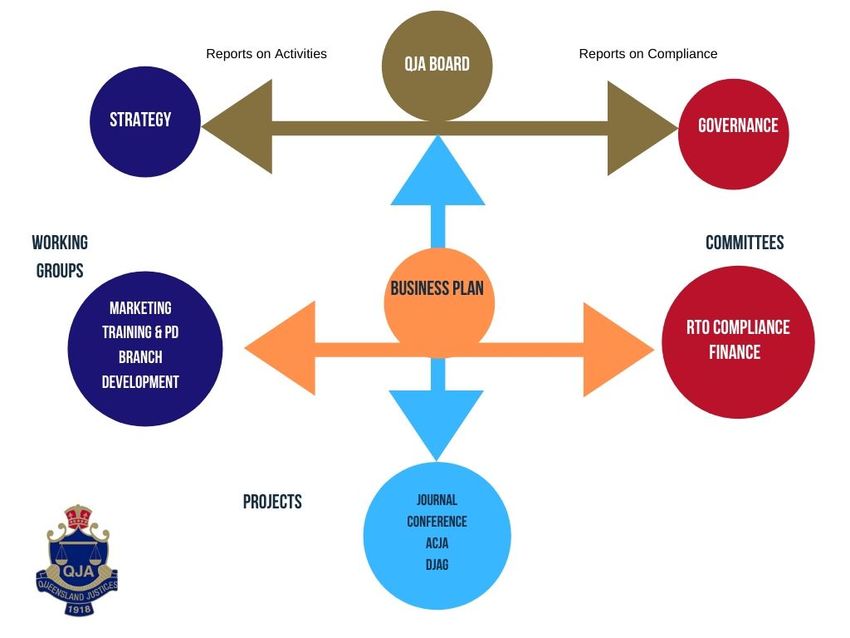
c) What does that mean?
Professional Development
The QJA mission is to ensure that our members are the best JPs and Cdecs they can. An
essential component of this is for members to keep their skills up to date.
Volunteering at a signing site is a good way to stay current, but more importantly
undertaking some professional development is also necessary.

As we know, things change when it comes to witnessing requirements. The recent
changes to verification of identity for Land Titles forms and certifying Photo ID for
APHRA are good examples.

Branches can provide vital and needed professional development at branch meetings
and workshops. Recently QJA developed and made available PD resources for branches
to use on the Branch learning site. Here you can view or download our role play
videos, quizzes, activity documents and presentations to use as refreshers at your
branch meetings and workshops.

This just requires a branch customer ID and password to logon to the site which the
branch can share as it does not require two-factor authentication at this stage.

Peer support, mentoring and networking
Sometimes it is worthwhile to talk about the challenges we have when dealing with the
public, such as angry or upset clients or difficult witnessing requirements. A good way
of providing that support is to set aside time at the branch meetings for such
discussion like “I had this really challenging client” or “I had a document to witness that
wasn’t straightforward”

Attendees at meetings are usually quite happy to share and discuss their witnessing
experiences in this way. Experienced and knowledgeable branch members can also
individually mentor, guide and assist those who are less experienced.

Engagement with the local community
It is also part of our development as JPs and Cdecs to be aware of social issues and
familiar with community services in our area. As we are part of the local community
and involved with it on a voluntary basis it is good to be connected to other groups and
organisations.
QJA Branch Handbook V3                  Feb 2020                       Page | 10
Not only does this mean that we can learn from each other, but we can provide
support in the voluntary activities they undertake. This also means that QJA has a
profile in the local community and members of the public can identify that we provide
a service.

Branches are encouraged to participate in community events such as local school fetes
or a stand at the local market to engage with the community other than just at the
regular signing sites. Some branches have had sausage sizzles at Bunnings, held
community forums or had a stand at a community volunteer event or event had a
representative address a community group such as Probus, Rotary, Lions or Apex.

Engagement and networking with all Members in the Branch catchment area

                                     Photo by Perry Grone on Unsplash

As is the case for a lot of other organisations with community branches, there is almost
always a contingent of regular meeting attendees who are the stalwarts of the branch.
It is great to have a core of members for the branch, but this represents a small group
of the members in the branch area.

A key role for the branch is to engage or try to engage those QJA members who aren’t
regular meeting attendees. QJA is not the only community organisation that can find
this to be a challenge.

QJA Branch Handbook V3                Feb 2020                          Page | 11
There is a good opportunity to draw more members to branches by hosting an event to which all members are invited such as an afternoon tea, morning tea or drinks and canapes type of event. It is within the QJA guidelines for branches to expend some of their funds to host events for the members in the branch area. This is a way to connect with members who may not regularly attend meetings or have never been to one. Another way to connect with the members in the area is to contact them and invite them to a meeting – it is often easier for someone who is new to a group to attend a meeting where they don’t know anybody, if there is just one person there to welcome them. Branches are provided with contact lists twice a year by State office, for this purpose. It is also important for branch meeting notices to go to the membership rather than just the regulars – this achieves two things. 1) it reminds people who don’t regularly attend about the meeting and 2) it signals that there is a QJA branch in the area and they are “breathing”. State office can facilitate this for you as they hold the contact details for all members, have the software program to do a bulk email and members are more likely to keep their email addresses up to date with the office. Identifying opportunities or issues for escalation to relevant authorities Branches have the unique position of being the “front line” for QJA when it comes to the public and signing facilities. Sometimes issues arise that concern us or witnessing requirements change and create uncertainty. Sometimes this can be the local courts, real estate agents, law firms or banks. It is useful to QJA to be aware of this instances and general issues so that we can make attempts to resolve them either at a local issue or through working with JP Branch of DJAG. Establishment and support of all local signing facilities. Although most public signing sites come under the umbrella of the JPs in the Community program, it does not mean QJA has no role to play. QJA Branch Handbook V3 Feb 2020 Page | 12
Local branch members often act as the site coordinators for the sites, many volunteers
at the sites and the branch supports the site and often takes care of the local site
management issues such as its location or access.

We need to make sure that participation in the JPs in the Community program isn’t the
pre-requisite for attending and participating in branch meetings. Branches need to be
mindful that the QJA Members include those who don’t participate in the JPs in the
Community program but might be providing their services elsewhere which is just as
important. For this reason, signing site matters shouldn’t dominate the meetings.

   3. Branch Committee Responsibilities
What they do:
  • plan and organise events at a local level.
  • maintain communication with Branch Members, QJA Board & State Office

And they need to:
  • meet at least five times per year as per QJA By-Laws
  • finance any event the branch arranges

And should:
  • keep meetings interesting and fresh, ensuring that high standards are
      maintained
  • provide a systematic professional development program

   a) Membership of the Committee

                                                           •   Chairman
Must have:                   Executive members
                                                           •   Secretary
(you must have these to be                                 •   Treasurer
a branch)
Optional                     Deputy executive roles        •   Vice Chairman
                                                           •   Vice Secretary
                                                           •   Vice Treasurer
Other                        Non executive roles           •   Publicity Officer
                                                           •   Social/Events
                                                               Coordinator
                                                           •   Others as required

QJA Branch Handbook V3                Feb 2020                             Page | 13
Members of the Branch Committee must be financial members of QJA and are
elected by a majority of members at the AGM (or other meetings if a vacancy arises).
A Quorum for a Branch Committee Meeting will be the Branch Executive plus one of the
Branch Members privileged to attend (financial member of QJA) and vote in accordance
with the Constitution.
Other suggested requirements for membership of the committee would be:
• in good standing in community
• living in or adjacent to the Branch’s territory
• able to work harmoniously with others
• willing to be actively involved in the activities of the committee
• able to keep confidences
• prepared to work as a member of a team.
• willing to contribute to the discussions and participate in the decision-making
process of the committee.
• open and frank in committee discussions
b) What if we can’t form a Branch Committee?
If a group is having difficulty in forming/maintaining an Executive Committee
(Chairman, Treasurer and Secretary) because there are inadequate nominations for
these positions, formation of a contact group should be considered.
c) What do Contact Groups do?
Unlike a branch, a contact group does not have any formal committee structure or
hold any QJA funds. Contact groups have generally been established in those places
where there is a concentration of QJA members but insufficient interest to support the
onerous By-Laws obligations placed on branches.
The name "contact group" can be misleading. It is sometimes just a single person who
has indicated their preparedness to be the QJA contact in their locale. In other cases, it
is a loose grouping of QJA members in the one place who stay in touch in a less formal
manner than a branch structure.
QJA Branch Handbook V3 Feb 2020 Page | 14In some places, the coordination of a JPs in the Community signing site is the sole
function of the contact group.
Contact groups can still undertake the roles of the branches such as peer support,
professional development and supporting local signing sites. Contact groups can also
affiliate with a nearby branch for further support and to assist in arranging events.
4. Branch Committee Roles
a) Branch Chairman
The purpose of the role of Branch Chairman is to provide direction to the
Branch committee so that the aims of the QJA are achieved
Duties
• Give leadership to the committee fostering a team spirit
• Encourage committee members to develop their skills
• With the Secretary, prepare the agenda for committee meetings
• Convene and chair committee and executive meetings
• Be impartial
• Edit a draft copy of the committee meeting minutes
• As a member of the Branch executive, assist in decision making when
the resolution of a matter cannot wait until the next committee meeting
• Ensure that the policies of QJA Board are followed and that any
instructions from the QJA Board are carried out
• Liaise with the appointed QJA Patron Director to seek help or advice
within the area of responsibility
• Be responsible for the detailed running of events, ensuring all members
attend to their areas of responsibility prior to and during events
Personal Qualities Required
• Leadership,
• Organising ability
• The ability to foster team spirit
• Develop leadership skills in others
• Computer literacy
QJA Branch Handbook V3 Feb 2020 Page | 15Guidelines for the Branch Chairman
• Become well acquainted with the QJA Branch Rules (By-Laws) and encourage
other committee members to do the same.
• Follow QJA policy and procedures in all committee activities.
• Delegate as much as possible and entrust committee members to carry out their
individual responsibilities.
• Encourage and expect committee members to keep you informed.
• Sensitive contact may sometimes be needed to encourage completion of tasks.
• Chair Committee Meetings
• There are good sources of help to become an efficient committee chairman such
as books and courses on meeting procedure (e.g. Meeting Procedures - by
Renton)
An effective Chairman should:
• Encourage quiet members to take part in discussion and deal firmly with
those who are compulsive talkers
• Keep a happy but business-like atmosphere in the meeting
• Encourage the committee to work as a team
• Start the meeting on time, remembering there must be a quorum
before decisions are made - do not wait for latecomers
• After adequate time for discussion, summarise points and have the
committee decide. When the Secretary has recorded a decision that has
been made, ask for it to read aloud so that the wording and sense can be
confirmed for the minutes.
• All remarks should be addressed through the chair
QJA Branch Handbook V3 Feb 2020 Page | 16b) Branch Secretary
The purpose of the role of Branch Secretary is to carry out the business of the Branch
Committee.
Photo by Daniel McCullough on Unsplash
Duties:
• Arrange the agenda for Branch meetings in liaison with the Branch Chairman
and send a copy to all Branch members
• Take minutes at Branch meetings and send a draft copy to the Branch
Chairman within two weeks of the meeting
• Send copies of minutes to all Branch members and QJA Head Office
• Notify committee members of the Annual General Meeting and send
Committee Nomination Forms to all Branch members
• Prepare ballot papers for the AGM as required
• Notify QJA Office of any changes
• Complete Accident/Incident Form as required and forward the original to QJA
Office
• Order any QJA promotional items from QJA State Office
• Liaise with the QJA Regional Director for seek help and advice
• Book event speakers prior to events
Personal Qualities Required
• Ability to communicate clearly through correspondence
• Methodical and organised
• Good computer skills
QJA Branch Handbook V3 Feb 2020 Page | 17c) Branch Treasurer
The purpose of the role of Branch Treasurer is to ensure that the finances of the
committee are managed according to the policies of QJA.
Duties
• Keep a manual or computerised cash book recording all money received and
banked, accounts paid, gifts given, etc.
• Present a statement at each Branch meeting so members are kept informed of
the Branch’s financial position
• Prepare a budget for all events
• Attend to counting of money at all events
• Bank all money and pay expenses promptly
• Order stationery from the QJA Head Office
• Arrange for books to be reviewed annually
Personal Qualities Required
• Understanding of and experience in the skills needed to be a treasurer
• An ability to treat finances as strictly confidential
• Computer literacy essential
d) Branch Publicity Officer
The Role of the Branch Publicity Officer is to publicise all Branch events and
coordinate the promotion of QJA events
Duties:
• Seek to advertise events as widely as possible
• Coordinate the design of brochures
• Submit all brochures/ advertising to the Executive for approval
• Oversee the printing of brochures and all advertising material
• Compile and update a mailing list for publicity purposes
• Coordinate the promotion of QJA Branch events
Personal Qualities Required
• Ability to communicate effectively
• Enthusiasm and creativity
• Computer literacy and skills are essential
QJA Branch Handbook V3 Feb 2020 Page | 18e) Branch Training Officer The Branch Training Officer is required to organise and run in-Branch training for the branch on all aspects of being a JP. The training may include: A of a range of presentation including lectures, demonstrations, guest speakers, forums, quizzes and any other appropriate mode of delivery, Training may be organised as a one-off session or part of a branch meeting. The in-branch trainer does not need to be formally qualified as a trainer - although that would be preferable. Personal Qualities Required • Good Listener and Negotiator • Ability to communicate across all strata of society f) Branch Social Coordinator A Social coordinator takes on the role of organising social functions. This is a great way to bring members together outside the branch meetings. There is a variety of ways of holding a social function for example morning/ afternoon tea, BBQ lunch a night at a local theatre group. The branch may like to join with another branch group for a day bus trip. Personal Qualities Required A great organiser Ability to communicate QJA Branch Handbook V3 Feb 2020 Page | 19
5. The How Tos
  a) Running Meeting s
  • Committee meetings as per the QJA By-Laws (Model Branch Rules) and the dates
    should be determined well in advance of the meetings
  • Chairing is not imposing your will on others. It is allowing freedom of expression,
    tempered with an ability to guide
    members to make a decision.
    Discussion should be relevant to the
    matter at hand.
  • The Secretary, together with the
    Chairman, will prepare an agenda for
    the meeting. Care should be taken
    not to predetermine the conclusions
    of the committee. Note items from
    the previous meeting that still require
    attention and list them under the
    heading of 'Business Arising'.
  • The Chairman needs to understand
    the simple form of meeting procedure:
  • There must be a properly prepared
    agenda.
  • Minutes of the previous meeting are
    read and confirmed at the beginning
                                                         Photo by Adrien Olichon on Unsplash
    of the meeting. If copies have been
    circulated prior to the meeting, the
    minutes can be taken as read but must be confirmed. The Treasurer's financial
    statement is presented and adopted.
  • Other reports are to be given as required.

QJA Branch Handbook V3                 Feb 2020                          Page | 20
b) The Agenda
The committee Secretary, together with the Chairman, prepares an agenda for
committee meetings. Note items from the previous meeting that still require
attention, and list them under the heading of 'Business Arising'. It may be helpful to
time items on the agenda.
The Secretary should prepare a copy of the agenda for all Branch members.
A typical Agenda might be:
QJA (Branch Name) + Logo
BRANCH NAME COMMITTEE MEETING, DATE, TIME PLACE
AGENDA
7.00 pm sign-in
8.00 pm Present and Apologies
8.05 pm Confirmation of Minutes
8.10 pm Business Arising out of Minutes (list)
8.20 pm Correspondence Inward - read Outward - list
8.30 pm Financial Statement
8.40 pm Other reports
8.50 pm General Business (Professional Development element)
9.30 pm Date of Next Meeting and venue
9:45pm Close
QJA Branch Handbook V3 Feb 2020 Page | 21c) Meeting Minutes Minutes are the agreed record of a meeting and are therefore an important tool in planning, decision making, conflict resolution, training and should be considered as an important outcome of any meeting. As soon as possible after the meeting and within two weeks, a draft copy of the minutes should be prepared and sent to the Chairman. This is to ensure that all details are correct before the final copy is produced. All Branch members should receive a copy of the minutes as soon as possible after the meeting with relevant passages marked where action is needed. Minutes can be attached to branch meeting reminders sent to all members in the area. A copy of the minutes must be sent to QJA Head Office. Official Branch minutes must be recorded clearly as a record of the meeting. The official copy signed and dated by the Branch Chairman, should be retained in a folder and kept by the Branch Secretary for seven years. Taking Minutes – General The business of the Branch meeting should be recorded in such a way that people who were not at the meeting are able to read the minutes and know what took place. All Branch members should clearly understand what is required of them and all decisions must be recorded. A summary of discussion is recorded, but all decisions must be recorded verbatim and whether approved or rejected. Mover and Seconder names may also be included. When in doubt, ask. Don't be embarrassed about clarifying an issue that is unclear because it is important that the minutes are correct. Decision making is a collective process and no individual member should be singled out unless: • the Chairman directs it • the committee member requests their name be recorded • credit is given • a committee member abstains from voting • particularly strong sentiment is expressed by an individual member of the Branch QJA Branch Handbook V3 Feb 2020 Page | 22
Taking Minutes – Correspondence
All correspondence tabled by any Branch member needs to be listed in the minutes.
    • Any business arising from correspondence should be recorded under a suitable
       heading.
    • All relevant and official correspondence should be read in full. It is the
       Secretary's responsibility to ensure that other Branch members who receive
       correspondence present it and read it to the meeting.
    • Ensure that all relevant correspondence and information is readily available for
       matters being discussed.
    • Correspondence and telephone calls arising from the decisions of the Branch
       meeting should be attended to promptly and recorded appropriately.
    • Correspondence relating to ongoing matters must be kept until no longer
       relevant.
    • Regular correspondence only needs to be kept for twelve months.

   d) Branch Emails
All email correspondence must be sent from a QJA email address in the form of
Branch@qja.com.au. Email communications to the branch from the QJA Board
members and State Office will be sent to the branch email address

No other email accounts should be used.
Emails must conform to the following:
   • Have the QJA standard footer which contains the disclaimer
   • Not be sent to multiple recipients where all recipient email addresses are
      present.
   • If bulk emails are sent, they must have an unsubscribe option for recipients.
   • Must bear the QJA Logo, Name of Branch Secretary and/or mobile contact
      details.

State Office can send branch meeting invitations/reminders on your behalf which will
conform to requirements. The advantage of doing so is that it uses the QJA MailChimp
account which is updated with current member email details from the member
database and so is as up to date as possible, doesn’t get black-listed and the invitation
can be send to members residing in adjacent branch areas.

QJA Branch Handbook V3                 Feb 2020                        Page | 23
Photo by Austin Distel on Unsplash e) Banking All committees should open a Commonwealth Bank account that is linked to the main QJA Account. This is for governance and transparency of the account. The nominated branch executive committee members (Treasurer plus 1 other) will still have authority and control of the account. The account transactions can be viewed by those with access to the main QJA bank account. Some QJA Branches hold society type accounts with other financial institutions These accounts may be exempt from account-keeping fees with banks offering this type of account. Either the official name: “Queensland Justices Association (Branch Name)” or “QJA (Branch Name)” must be used. QJA Branch Handbook V3 Feb 2020 Page | 24
Equipment for the Treasurer
  • A bank deposit book - issued by the bank when the account is opened.
  • A cheque book - issued by the bank when the account is opened.
  • Either a manual cash book (available from a stationer or newsagent) or a
     computerised system such as a spreadsheet set up appropriately.
  • Duplicate receipt books - available from a stationer or newsagent.

Payment of Accounts
All accounts must be paid as soon as possible after they are received. All payments
must be authorised by the committee. Accounts that are received between committee
meetings may be paid if authorised by the Branch executive. The committee should
ratify any such payments at the next meeting.

Signatories
The committee must appoint three committee members, including the Treasurer, to be
signatories of the committee account(s). Cheques must be signed by any two of the
appointed signatories. If you open a Commonwealth bank account, the signatories will
be issued with tokens and security devices and given a login account to use Commbiz to
set up and authorise transactions.

Receipts
A receipt must be written for all money received and should state what the money is
for. The receipt would read:

      Received from:             Janet Brown
      AMOUNT (in words):         Fifty dollars
      For (reason):              Training
      Amount (in numbers)        $50.00
      Signed:                    Name and signature of receiver,
      Date:                      The day's date

A receipt must be written for all money received and should state what the money is
for.

QJA Branch Handbook V3                Feb 2020                      Page | 25
All money should be banked as soon as possible. The amount banked should balance
with the total amount of receipts written since last banking e.g.
J Smith Donation $5.00
L Green QJA SF $12.00
Anonymous donations $20.00
Sub Total $37.00
The amount to be banked is $37.00
At events, issue a receipt only if it is requested. At the end of an event write separate
receipts for the total of different items e.g.
Sale of merchandise $20.00
Donations $20.00
Donations to QJA Sponsorship Fund $12.00
Entrance fees $0.00
If the event is one where tickets are pre-sold, individual receipts are not necessary
because the ticket is a form of receipt. However, a receipt should be written for sums
of money received from those selling tickets.
A receipt needs to be written for each registration fee received for a weekend event
including the GST component. If members have registered and paid via the QJA
Website, State Office will issue a tax receipt for the payment
Counting of Cash takings
The cash receipts should be counted by the Treasurer and at least one other member
of the Committee before leaving the venue. A receipt should be written, signed by the
Treasurer and countersigned by the person assisting.
The Cash book
It is best to have at least four money columns to each page and have a double page -
one side for receipts and one side for payments
QJA Branch Handbook V3 Feb 2020 Page | 26Receipts — suggested column headings
Receipt Date Dinners Sundries ETC Banked
No Rec
017 1/7 100
018 3/7 85 $185.00
019 9/7 50.00 50.00
020 10/7 6.00
021 10/7 10.00
022 30/7 5.00 $21.00
Month total $256.00
Payments - suggested column headings
Chq
Date. To For Amount
No
Printing of
456 4/7 John Brown & Co $257.00
brochures
457 5/7 Mrs E Jones Speaker’s gift $30.00
Reimburse
458 5/7 cash $35.00
Secretary stationery
459 30/7 Secretary Printer ink $30.00
EOM total $352.00
NB: Receipt numbers and cheque numbers should be entered in numerical sequence.
Balancing and Reconciling
Write up the cash book, listing receipts and cheques on the appropriate side of the
page. On the bank statement check the deposits listed making sure they agree with the
deposit book and the amounts listed in the banked column of the cash book. Also check
for bank interest and other income and add to cash book receipts.
On the bank statement compare cheques listed on the statement with the amount on
the cheque butts and the amounts listed in the cash book. Also check for bank fees and
other charges and add to cash book expenses.
Total the cash book receipts and payments ensuring that the: Total of all receipt
columns equals the total of the 'Banked' column.
Total of all payment columns equals the total of the 'Payment' column.
QJA Branch Handbook V3 Feb 2020 Page | 27Prepare a reconciliation statement as shown below.
Reconciliation Statement
Cash Book balance as at xx/xx/xxxx 430.00
Plus, receipts as per cash book 3,560.00
Subtotal 3,990.00
Less payments as per cash book 2,967.00
Closing balance as at xx/xx/xxxx 1,023.00*
Bank Statement balance as at xx/xx/xxxx 1,034.00
Less unpresented cheques.
743 5.00
750 6.00 11.00
Closing balance as at xx/xx/xxxx 1,023.00*
This reconciliation statement must be written in the cash book below the totals for the
period. These figures should be the same as Preparing a Financial Statement. The
Treasurer should prepare financial information for each committee meeting.
One of the following options may be used:
It could simply be 'The bank balance remains xxx.xx', when there has been no change
since the previous meeting.
It could be 'Since the last meeting the following expenses have been paid:
Secretary's petty cash xx.xx
Printing of brochures xx.xx ……. xx.xx
This leaves a balance of xxx.xx
At times it may be appropriate to prepare a more formal statement
Accounts should be presented at a committee meeting to be passed for payment.
The following motion may be used:
As treasurer, I move the financial report be accepted and the accounts ratified for
payment
This will require a seconder - then a vote of acceptance.
QJA Branch Handbook V3 Feb 2020 Page | 28f) End of Fina ncial Year The Branch financial year ends on 30 June. The accounts and financial statements must be audited as soon as possible after that date. The accounts must be audited by someone with definite financial expertise, but not necessarily an accountant. The auditor should not be a member of the Committee, or a close friend or relative of the Committee Treasurer. One copy of the Annual Branch Financial Report must be completed, and two additional photocopies made. All three copies are signed by the auditor and the committee Treasurer. One copy should be sent to the QJA State Office, one copy filed securely in the Cash Book and the third copy included with the official AGM minutes. The audited financial accounts are presented at the AGM. Copies of the signed auditor’s statement should be made for distribution to the Branch with the next report Audit of Accounts A copy of the audited Branch Annual Financial Report is received from the Branch Treasurer and distributed to all Branch members, QJA Head Office and filed with the official AGM minutes. Note: Accounts do not need to be audited by a qualified auditor, an independent person or branch member who is not an executive committee member can review the accounts. g) Annual General Meeting: The Branch Annual General Meeting must be held no later than 30 July of each year. This is to ensure that Branch Financial reports can be included into the QJA Board Financial Report to their general membership. Branch Executive Committee Elections: Elections for the Branch Executive Committee must occur every 2 years, alternatively a Branch may with consent of the QJA Board, hold annual elections. Rules governing Branch Executive member election procedures are published on the QJA web site. QJA Branch Handbook V3 Feb 2020 Page | 29
Generally, nominations for the Branch Executive and non-executive positions will be
called by the standing secretary. Nominations can only be made by financial members
and must be seconded by a financial member. The nominated member must sign
acceptance/ agreement to the nomination.

The details regarding the advertising/ notification, format, procedure of the AGM is
published on the QJA website

Election Procedure:
The Secretary is responsible:
   • Notifying Branch members of the Branch Annual General Meeting.
   • Sending Nomination Forms to all Branch members
   • preparing Ballot Papers if more than one person is nominated for any one
       position
The following provides details of a sample agenda for an Annual General Meeting:

                                   QJA (Branch Name) plus Logo
                           QJA (Branch Name) ANNUAL GENERAL MEETING
                                       Day, Date, Time Place

      AGENDA
      7.30 pm      Present and Apologies
      7.35 pm      Confirmation of Minutes of last Annual General Meeting
      7.40 pm      Financial Statement for year
      7.45 pm      Election
      8.10   pm    Close

QJA Branch Handbook V3                  Feb 2020                            Page | 30
h) Record Keeping:
Minutes
The Secretary must keep official committee minutes for seven years. Individual
committee members hold copies from the past twelve months.
Financial Records:
All financial records must be kept for seven years.
Correspondence:
If relating to ongoing matters must be kept until no longer relevant. Regular
correspondence only needs to be kept for twelve months.
Records should be passed onto incoming committee members by outgoing committee
members. Records should not be kept by former committee members.
i) Contact Lists and Bulk Emails
Periodically, QJA State Office will send a contact list of members and students to the
branch for members and student in the branch area. The purpose of sending the
contact lists is so that the branch has the information necessary (phone and email) to
contact its local members or volunteers at signing sites. The branch should not keep a
running database of member contact details, as all changes to member contact details
need to be directed to the QJA State Office where the central member database is
held. The information on such lists is to be kept confidential and is not to be used for
any other purpose.
j) Branch Meeting Reminders
It is preferred that branch meeting reminders be sent by QJA State Office via its bulk
email marketing program. There are several reasons why this is preferred:
• QJA State Office maintain member contact details via the database so the
information is likely to be up to date
QJA Branch Handbook V3 Feb 2020 Page | 31• The email marketing program enables recipients to unsubscribe as per the Anti-
Spam Act.
• We can ensure the emails are sent out with consistent appearance and branding
• QJA State Office can send to a wider audience, e.g. the region, whereas the
branch only has local branch email addresses
Photo by Estée Janssens on Unsplash
• When meeting reminders are sent by QJA State Office, they are also posted to
social media accounts
• 2 weeks’ notice is required for branch meeting reminders
k) Pre- Appointment Training
Branches are encouraged to host pre-appointment training. This requires the branch to
provide a venue and refreshments (tea and coffee). The branch will be reimbursed for
hosting pre-appointment training on a per student basis. Pre-appointment training
needs to be hosted in coordination with the assigned trainer. All enquiries on hosting
pre-appointment training need to be directed to the Training Program Coordinator.
QJA Branch Handbook V3 Feb 2020 Page | 32l) Events
Planning Events
All Branch events should be planned well in advance and in consultation with QJA
State Office to ensure there are sufficient and appropriate resources made available. A
planning meeting should be held about mid-year to consider the events to be held in
the following year. Although not all details need to be decided at this meeting, the
following items should be planned:
• Target group
• Speaker
• Venue
• Type of event
The Branch Secretary (or their delegate) is responsible for the correspondence
required for every event held by the Branch committee.
Confirmation of Booking
When the Speaker has accepted the committee’s invitation, the Vice-Chairman or
delegate will forward a copy of the Speaker’s Reply to the Branch Secretary.
This form should contain the Speaker's name, postal, email addresses, professional
biographic information, telephone numbers and any special accommodation, travel or
allergy details if required.
Event Registrations
QJA State Office needs to be notified about your event well in advance. This enables
the event to be set up on the QJA Website for online registrations. QJA State Office has
credit card and EFTPOS facilities.
QJA State Office will promote registration for the event via email marketing and social
media campaigns. On completion of the event QJA State Office will forward any
registrations received to the branch. The branch will be kept updated with registration
numbers and lists.
QJA Branch Handbook V3 Feb 2020 Page | 33Support for Events QJA State Office can also provide you with giveaways for the event or alternatively the branch can purchase QJA branded gift items for speakers. The office may also donate items for raffle prizes. For events within 100km of State Office, a State Office representative may also attend to assist with the event and may offer merchandise for sale at the event. The branch may also purchase merchandise at cost for re-sale to members. Organisers must advise attendees that any photos may be used in QJA Journal, posted on the QJA website. At this time, if an official photographer is present, he/ she must be identified to all in attendance. Ask that all attendees exercise sensitivity when taking photos for personal use, by taking into consideration both the subjects of the photos and the people in the background. Remind attendees that it is good practice to ensure that consent is given by all who are having their photo taken. Note: Official event photographers must be briefed on the parameters in which they are being asked to work, including about those who do not want to be photographed. The briefing is the responsibility of the Branch Event Organisers. Event Accounting Following an event, a statement listing income and expenses and showing the amount of profit or loss should be provided to the committee. Preparing an Event Budget A budget must be prepared for every event. The aim is that each event be self-funding. The following list will help you in the preparation of a budget for each event. Add or remove headings as required: QJA Branch Handbook V3 Feb 2020 Page | 34
For example:
      Hire of venue
      Hiring equipment (tables, chairs etc.)
      Catering costs
      Speaker - accommodation
      Speaker - travel
      Speaker - gift/s
      Speaker - other
      Committee - Total the above figures
      Total Anticipated Costs accommodation/travel
      •      Advertising
      •      Printing
      •      Stationery
      •      Postage
      •      Telephone
      •      Provision for unexpected expenditure

To calculate admission charge or cost of tickets, divide total costs by the estimated
minimum attendance expected at the event.
      Example of a Financial Statement
      Omit items that do not apply.
                 QJA Branch Name Statement of Receipts and Expenditure For
                               the period xx/xx/xx to xx/xx/xx
      Monies received
      Detail of monies income Other (specify
      Sales
      Bank Interest
      Other Income (specify)

      Total other income Less Expenditure Details of expenditure
      Expenses
      Hire of venue and equipment Catering costs
      Speaker (gift, expenses, etc.) Chairman/Other participants Stationery/Literature
      Postage/Telephone
      Other (specify)
      Closing Balance Profit/ loss at end of project
      $xxxxx.xx Closing bank balance as at xx/xx/xxx

QJA Branch Handbook V3                       Feb 2020                            Page | 35
m) Registered Trademark Use
Definition: A trademark is a word, name, symbol or device (or a
combination thereof) that identifies the goods and services of a
person or company and distinguishes them from the goods and
services of other companies.
A trademark assures consumers of consistent quality with respect to
those goods or services
Registered Trademarks:
The following have been registered as trademarks of the QJA:
• The Business acronym “QJA”
• The Business name “Queensland Justices Association”
• The QJA Logo
Correct Use of Trademarks:
When using a registered name of the QJA, distinguish the trademark from the
surrounding text.
Use the standard font HELVETICA NEUE-BOLD and HELVETICA NEUE- ROMAN for the
name Queensland Justice Association.
Use the standard font TIMES ROMAN for subheadings Use the standard font TRAJAN
BOLD for indexes.
Use the standard font CALIBRI for general text.
When using the registered logo of the QJA use the company standard colours defined as
Pantone PMS colours:
Red PMS 200 (RGB 186, 18, 43)
Blue PMS 2748 (RGB28. 20, 117)
Gold PMS 871 (RGB 133, 112, 64)
Always use the name Queensland Justices Association or QJA never any other
abbreviation. Branches will be known as Queensland Justices Association or QJA name
Branch. Contact Groups will be known as Queensland Justices Association or QJA name
Contact Group.
QJA Branch Handbook V3 Feb 2020 Page | 36Only use the taglines “Established since 1918” or “Serving Queensland’s Honorary
Justices since 1918” Any requirement to publish an ACN or ABN number the QJA
number must be used.
All nonstandard artwork must be approved, by the Board, prior to use in conjunction
with the QJA registered trademarks.
It is not permissible to:
• Remove, distort or alter any element of a registered trademark without the prior
approval of the board.
• Incorporate the trademark into any other logo or name.
• Display the Queensland Justices Association brand in any manner that implies a
relationship or affiliation with the Queensland Justices Association by the Board
of Directors when that is not the case.
n) Branch Office 365 Account
How to access the QJA intranet site
Each branch has an Office 365 account in the name of branch@qja.com.au.
The login credentials are usually forwarded to the Branch Secretary but the usern a m e
(email address). Outgoing Branch Secretaries should ensure that the login credentials
are passed onto the incoming Branch Secretary.
Branches may opt to have a second Office 365 account in the name of
info_branch@qja.com.au. This is useful if other committee members wish to be able
to send emails on behalf of the branch.
The accounts use two-factor authentication, requiring either a mobile or alternative
email address for confirmation. There is an app that can be installed on an iOS device
or Android device.
If assistance is needed to access the Office 365 account, please contact the
Registrar/Business Manager.
To logon to Office 365, to go https://www.office.com/ Select Sign In
The following login in page will display: (see image next page)
QJA Branch Handbook V3 Feb 2020 Page | 37The sign in is the branch email address
The next page will ask for a password, first select “work or school account”
Then enter the password
QJA Branch Handbook V3 Feb 2020 Page | 38The apps screen will display:
Select Outlook for emails and SharePoint to get to the Branch Link site. The other
apps are available for use also. The SharePoint site looks like this:
From this page you can to the Branch link site which contains documents and
references for branches. Branch minutes and financial reports can be stored under the
branch document file.
QJA Branch Handbook V3 Feb 2020 Page | 39o) Branch PD Resources
A collection of PD resources similar to those in our online pre-appointment training
course have been made available for branches to use as part of the meeting PD
sessions. This is accessed via our learning platform Moodle using a customer ID
(member number) and password allocated to the branch. This does not require two
factor authentication so the username and password can be shared.
To access:
1. From the QJA Website
a. Front page
b. Once you’ve clicked, this page will display:
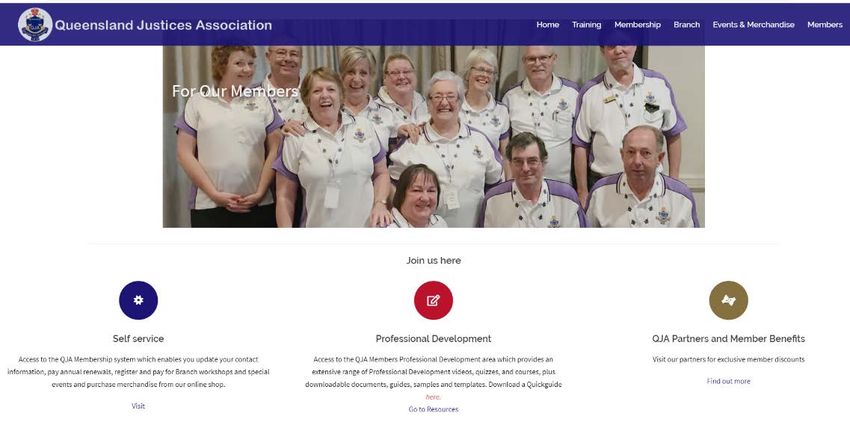
QJA Branch Handbook V3 Feb 2020 Page | 40c. Click on “Professional Development” – the red button in the middle
d. Log in with the branch customer ID and password – then click "Continue”
2. THE BRANCH PD RESOURCES
a) Whilst logged into the portal you can go to the member resources
QJA Branch Handbook V3 Feb 2020 Page | 41b) Which should take you here
Click on “Click here to go to Publications and Tools”
Scroll down to Branch PD Resources
The first time you log in you will need to “enrol” in the course, to do this select “Enrol
Me”
QJA Branch Handbook V3 Feb 2020 Page | 42Select the topic you want resources for: QJA Branch Handbook V3 Feb 2020 Page | 43
Here you will find a range of PD Resources including checklists, forms, technical
     bulletins, videos and workshop materials – quizzes and activity documents

QJA Branch Handbook V3              Feb 2020                        Page | 44
You can also read


