Briefing for the Incoming Minister of Revenue - October 2017 - Beehive.govt.nz
←
→
Page content transcription
If your browser does not render page correctly, please read the page content below
Briefing for the Incoming
   Minister of Revenue
       October 2017
Contents
Opening letter from the Commissioner of Inland Revenue Why transform?
What transformation will achieve
o Maintaining momentum while managing risk
Introduction o Policy
Executive summary o Funding
Your role and how we can support you Overview of transformation
Your priorities o Implementing transformation
What we do for New Zealand o Transforming our organisation
What we do for our customers o Providing assurance
o Individuals
o Businesses
Appendix
How Inland Revenue works with the supports the Minister of
Part One – Our vision and strategy Revenue
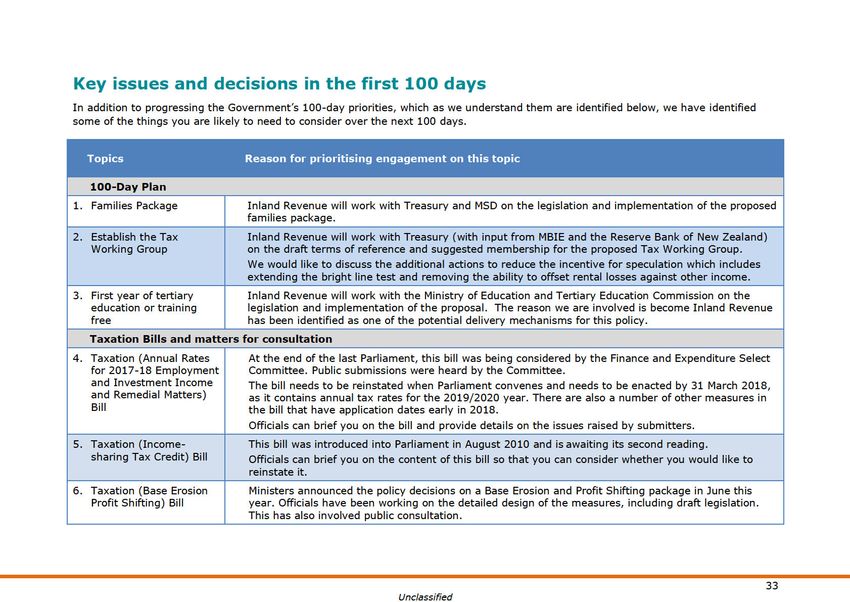
Our operating environment Key issues and decisions in the first 100 days
Our outcomes Our structure
Our strategic objectives Leadership team
Our contribution to a joined-up Government
IR for the Future
Part Two – Tax policy
Introduction to tax policy
o Working with The Treasury
New Zealand’s tax system
o Broad-based, low-rate framework
o Generic tax policy process
Tax policy work programme
o Influences on future tax policy
Part Three – Transformation
Opening letter from the Commissioner of Inland Revenue
Dear Minister Nash

Welcome to your portfolio, and your new role as Minister of Revenue.

We understand that you have key priorities for tax and social policy administered by Inland Revenue
including Manifesto Commitments. These include your Families Package, the establishment of a Tax
Working Group that will consider among other things a capital gains tax and land taxation, other
housing taxation changes to be introduced ahead of the Tax Working Group process, and a Research
and Development (R&D) tax credit.

We are looking forward to working with you and meeting to discuss your priorities for the portfolio as
well as Inland Revenue’s role, the work we have underway and the opportunities and challenges we
face. We are ready to support you in any way we can.

I look forward to meeting and working with you.

Naomi Ferguson
Commissioner and Chief Executive of Inland Revenue

                                                                                                         3
                                                              Unclassified
Introduction

                   4
    Unclassified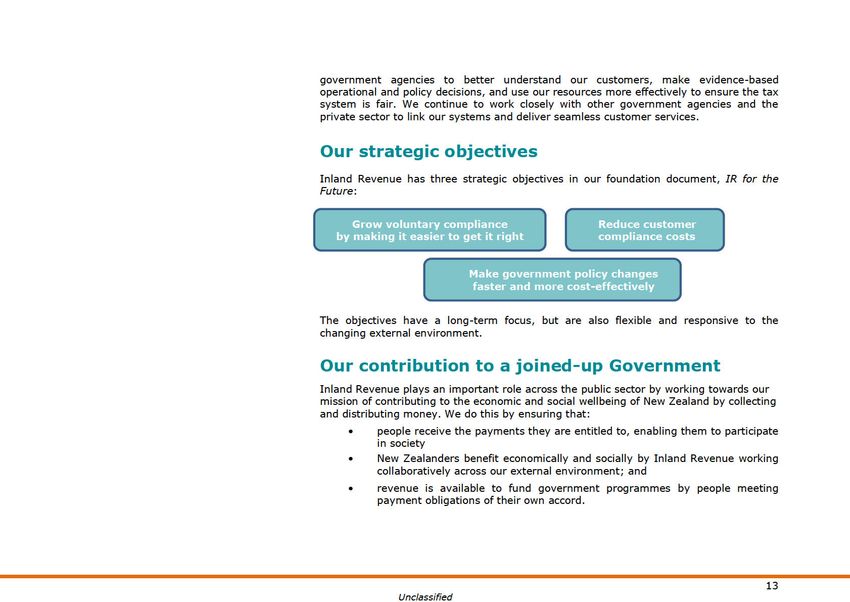
Executive summary
This briefing introduces you to your portfolio, your role and Inland Revenue. This
document “sets the scene” to the work we do and how we can support you, and outlines
the strategic context of our work and the major transformation project we have
underway.

Your role and how we can support you
As Minister of Revenue, you are accountable for the overall working of New Zealand’s
tax system, for Inland Revenue as a government department, and for protecting the
integrity of the tax system (details here). You are also responsible for policy direction
and priorities, and decisions on Inland Revenue’s overall budget.

Decisions on tax and social policy delivered by Inland Revenue have historically been
made jointly by the Minister of Revenue and the Minister of Finance, or the appropriate
Minister in the case of social policy.

As the Minister of Revenue you are likely to receive correspondence on a diverse range
of issues, often issues that have had recent media attention. These topics include: child
support, student loans, secondary tax, GST, capital gains tax, the cost of doing
business, organisational design, KiwiSaver, charities, and base erosion and profit
shifting (BEPS).

How we can support you
We are responsible for supporting you to carry out your ministerial functions, and
servicing the aims and objectives you set. We do this by advising you on policy and
strategy, implementing government policy, and carrying out the day-to-day functions of
the department. We provide you with written and verbal advice, and meet with you as
required. We draft responses to the correspondence you receive, and can also provide
you with private secretary support to liaise with us. We look forward to discussing your
preferences in working with us.

                                                                                        5
               Unclassified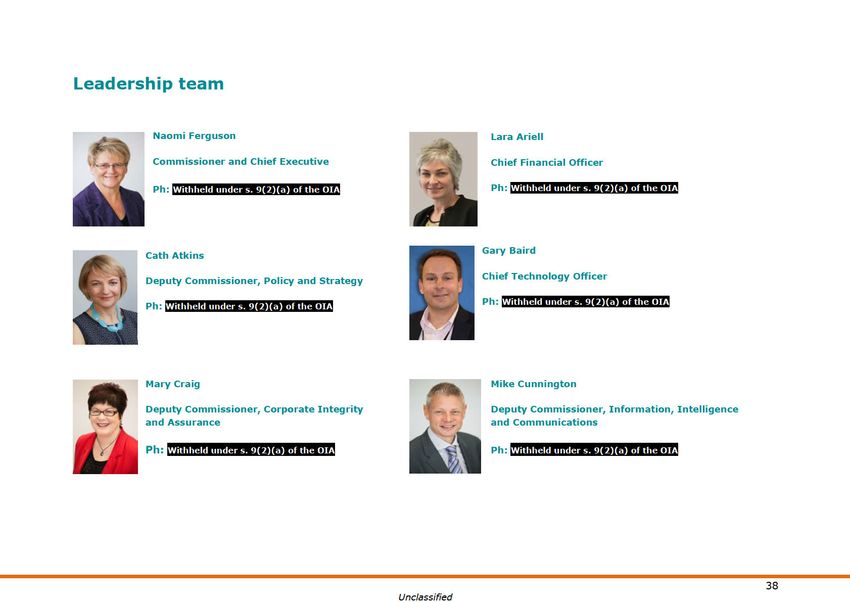
Complementary roles: the Minister and the Commissioner
The Minister of Revenue and the Commissioner of Inland Revenue have important and
complementary roles in providing a good tax and social-policy system. Tax can only be
levied according to the laws enacted by Parliament. Inland Revenue has an obligation to
levy tax in accordance with the law to the best of its ability.

The Commissioner has statutory independence from Ministers, to ensure Inland
Revenue can levy tax and carry out its duties independently. The Commissioner also
carries primary responsibility for Inland Revenue’s performance.

The Tax Administration Act 1994 imposes the responsibility to protect the integrity of
the tax system on the Minister of Revenue as well as on Inland Revenue. Protecting the
integrity of the tax system includes protecting taxpayers’ trust in Inland Revenue; their
right to confidentiality; and their right to have their tax determined fairly, impartially
and according to the law.

Your priorities
As noted in the introductory letter and the Appendix, we understand that you have a
number of key priorities for tax and social policy. We look forward to working with you
on the detail of these policies and to understand your relative priorities and timeframes.
The Appendix has a list of matters that you may want to consider in your first 100 days.
This includes what we understand to be the Government’s 100-day plan.

What we do for New Zealand
Inland Revenue plays a critical role in improving the economic and social wellbeing of
New Zealanders. We do this by collecting and distributing money—we collect over 80%
of the Crown’s revenue, and collect and distribute social support payments. The money
we collect helps pay for services that all New Zealanders benefit from, including
healthcare, education, justice, housing and roads.

Our vision is to be a world-class revenue organisation recognised for service and
excellence. We are in the middle of a large-scale transformation that will enable us to

                                                                                         6
               Unclassified
better serve all New Zealanders and the government. Our transformation is not only
                                              about a change in IT platforms, but is also about how our people, processes and
                                              structure deliver greater value to our customers.

                                              Although the opportunities and benefits from transformation are significant, the
                                              transition process is complex and requires careful sequencing to manage operational
                                              risk and ensure that our customers continue to receive high-quality services. The good
                                              news is that we are on track.

                                              By April 2019, a major milestone will have been achieved: all tax products will have
                                              been migrated to our new system, and the Government will have more ability to make
                                              timely changes to the tax system. We propose to transition the remaining social policy
                                              products progressively to new systems and processes, completing transformation by
                                              2021, within the agreed timeframe and budget. There are options for sequencing these
                                              changes, and we welcome the opportunity to brief you in more detail on the options
                                              available to ensure we can address your priorities.

                                              Transformation creates the opportunity to rethink our policy settings to make it simpler
                                              and more certain for customers to meet their tax obligations. There are a number of
                                              significant policy initiatives underway and now is also a great time to refresh the tax
                                              policy work programme to reflect your priorities.

                                              What we do for our customers
Statistics are for the tax year
      ended March 2016                        In the most recent financial year, Inland Revenue collected $70.1 billion to fund
                                              government services for communities, families and businesses.

     Individuals: nearly 3.7 million people   Individuals
     paid PAYE or filed a personal tax        Income
     return.
                                              Inland Revenue deducts tax on income from salary, wages, benefits and taxable pensions
                                              under the PAYE (pay as you earn) system. We also deduct the ACC earners’ levy on some
                                              income (“personal effort” income). If people have earned income that has not had tax
                                              deducted, or if they have not paid the correct amount of tax during the year, they can file
                                              a personal tax return so we can deduct the correct amount of tax or issue a refund.

                                                                                                                                       7
                                                             Unclassified
Working for Families Tax Credits: with     Working for Families tax credits
the Ministry of Social Development, we     We administer Working for Families tax credits, which are made up of: family tax credits,
distributed $2.4 billion in entitlements   in-work tax credits, minimum family tax credits and parental tax credits.
to support working families.
                                           Inland Revenue holds overall responsibility for administering Working for Families tax
                                           credits. However, customers receiving a benefit from the Ministry of Social
                                           Development (MSD) may also have their Working for Families entitlement paid by MSD.

 Child support: we collected               Child support
 $468 million from over 166,000            Inland Revenue’s role in administering child support is to calculate entitlements and/or
 liable parents who pay child support,     obligations, generally using the standard formula set out in legislation, and to collect and
 and distributed $279 million to           distribute payments as they are received.
 carers.
                                           Carers receiving a sole-parent benefit are required to apply for child support through
                                           Inland Revenue, and their entitlement is paid to the Crown. This is so financial
                                           contributions from liable parents help to offset the cost of benefits that support their
                                           children.

 Paid parental leave: We made              Paid parental leave
 $274 million in payments to 28,400        We administer paid parental leave on behalf of the Ministry of Business, Innovation
 parents.                                  and Employment. Paid parental leave payments were extended to a maximum of
                                           18 weeks from 1 April 2016.

KiwiSaver: We transferred                  KiwiSaver
$5.6 billion to scheme providers. At       Inland Revenue administers KiwiSaver on behalf of KiwiSaver providers and employers
30 June 2017, 2.8 million people           by collecting employer and employee contributions and transferring them to scheme
                                           providers for investment, processing enrolments and opt-outs, and paying out the
were enrolled in KiwiSaver.
                                           member tax credits (MTC).

                                                                                                                                     8
                                                          Unclassified
Student loans: We had 733,000           Student loans
student loan borrowers, and collected   Inland Revenue jointly administers student loans with the Ministry of Education and
almost $1.36 billion in repayments.     StudyLink (part of the Ministry of Social Development). The Ministry of Education
                                        is the Government’s lead advisor on education policy, and students apply for a student
                                        loan to StudyLink. The Minister of Education has overall responsibility for any policy
                                        decisions regarding student loans.

                                        A focus for Inland Revenue is collecting student loan debt from borrowers who live
                                        overseas. There have been some high-profile arrests of student loan borrowers trying to
                                        leave New Zealand. This has resulted in a significant increase in repayments and contacts
                                        from borrowers in debt who are living overseas.

                                        Charitable giving
                                        The tax system encourages charitable giving by offering tax benefits for donations to
                                        approved charities. People can donate directly to the charities or make payments directly
                                        from their wages (payroll giving).

                                        Payroll giving allows employees to receive immediate tax credits, which Inland Revenue
                                        administers on behalf of Charities Services (part of the Department of Internal
                                        Affairs). By doing this, we help Charities Services to encourage the effective use of
                                        charitable resources. Charitable organisations are also exempt from income tax if
                                        Charities Services approve them to be added to the Charity Register.

                                                                                                                               9
                                                        Unclassified
Businesses
Employers
Employers: nearly 203,000 employers
Employers are responsible for making the correct deductions from employees’ pay for
filed over 2 million employer monthly
income tax (PAYE), KiwiSaver contributions, child support payments and student loan
schedules with PAYE deductions for payments, which we then administer for employees.
employees.
Filing GST: 633,000 registered GST
customers filed over 3 million GST We collect goods and services tax (GST): a 15% tax added to the price of most goods
returns. and services in New Zealand, including most imported goods and some imported
services.
Companies: 396,000 company tax Companies
returns were filed. We collect tax at the rate of 28% on companies’ profits.
10
UnclassifiedOUR VISION and STRATEGY
Inland Revenue’s vision is to be a world-class revenue organisation
recognised for service and excellence.
11
UnclassifiedOur operating environment
Inland Revenue is well on the way to achieving our vision of being a world-class revenue
organisation recognised for service and excellence. We are facing the same challenges
and compare well to other tax administrations, and our transformation is recognised as
leading in our field.
We have faced challenges in the last year, but still achieved 45 out of 52 of our
performance targets for 2016-17. Our performance results reflect the hard work and
effort our people put in for our customers.
This section explains the environment we are operating in. We continually evaluate this
environment to identify existing and emerging trends, risks and opportunities. This is so
Inland Revenue can be ready to respond, ensuring the sustainable and successful
delivery of our services and the achievement of our vision and mission.
The increasing complexity of global business means that there are good reasons for
Inland Revenue to be actively involved in international solutions to protect revenue. An
example is our participation in the work led by the Organisation for Economic
Cooperation and Development (OECD) on base erosion and profit shifting (BEPS) by
multinationals. The decisions that you will make, will determine our involvement in future
work led by the OECD.
We need to keep pace with rapid technology changes, the expectations of our customers,
and their increasing digital literacy and access to mobile devices. To do this, we will
enable customers to manage their own affairs in a more cost-effective way through
digital channels. New Zealand’s population is changing, with increasing numbers of
migrants who have different needs. We are always seeking to understand these
population changes and develop the capabilities, skills and organisational culture required
to meet our customers’ changing needs.
We hold a large amount of information. This information is an important asset that can
help improve how we deliver our services to New Zealanders, and make a positive
contribution towards public-sector performance. We are improving the way we manage,
analyse and use information to develop intelligence. This will help us and other
12
UnclassifiedWe achieve these outcomes through joint development and delivery with other
government agencies and the private sector, and by sharing information. For example,
we are one of the four contributing agencies to the development of SmartStart, the first
product built around life events, not agencies. SmartStart has all the government
information and services for new and expectant parents, and Te Hokinga ā Wairua—End
of Life, makes it easier to access information and services about bereavement and death.
Examples of our information sharing include an Approved Information Sharing Agreement
(AISA) with the Ministry of Social Development, a large range of data sharing with
Statistics NZ, which forms the backbone for their Integrated Data Infrastructure, and
sharing information with New Zealand Police to help combat serious crime.
We are closely involved in the Digital Government Partnership Framework, which
provides new opportunities to support the broader public sector by putting people and
businesses at the centre of design and delivery of digital services.
IR for the Future
Our foundation document, IR for the Future, sets out how we will achieve our strategic
objectives, mitigate our risks and meet Government expectations.
The six strands of our corporate strategy, set out in IR for the Future, are: customer;
people; digital; external collaboration; policy agility; and information and intelligence.
We can provide you with a copy of IR for the Future, and talk through our corporate
strategy and the attributes and behaviours we have agreed are the most important in
how we work, if that would be useful to you.
14
UnclassifiedTAX POLICY
15
UnclassifiedIntroduction to tax policy
Your decisions on tax policy shape the tax system. The primary purpose of a tax system
is to raise revenue to fund government expenditure. In conjunction with the transfer and
welfare systems, the tax system also has an important role in redistributing income.
Working with The Treasury
New Zealand is unusual in that both The Treasury and Inland Revenue are involved in
providing first-opinion tax policy advice. In New Zealand, much of the tax policy resource
is provided by Inland Revenue, while in most other countries, the Treasury leads tax
policy. An advantage of Inland Revenue having a lead role in tax policy is that
implementation can better inform policy design.
New Zealand’s tax system
Our tax system has been designed to:
act neutrally regarding economic activity
minimise the economic burden, relative to the revenue being raised, that
taxes impose; and
treat taxpayers fairly, so that different taxpayers with similar amounts of
income pay similar amounts of tax. The tax system is progressive, so that
those who are better off pay a greater proportion of their incomes in tax.
We consider that New Zealand is starting from a strong place – we have a good tax
system, with sound tax administration and good tax policy.
Two key features contribute to New Zealand’s tax policy settings. The first is our broad-
based, low-rate (BBLR) framework. The second is our Generic Tax Policy Process (GTPP).
16
UnclassifiedBroad-based, low-rate framework
New Zealand’s personal and company income tax and GST settings have been based on a
broad-based, low-rate (BBLR) framework. New Zealand has much broader bases than
most other countries, at tax rates which in most cases are below the OECD average. We
will shortly publish a benchmarking document showing how New Zealand’s settings
compare with those in other countries. A copy is attached for your information.
New Zealand’s BBLR framework provides a coherent way of designing a tax system. We
levy tax on a very broad range of income and expenditure at rates which are designed to
“stick” and not easily be structured around. Good tax design requires having a clear idea
of what it is we want to tax, and then levying tax on the appropriate tax bases as
consistently as possible. Our BBLR framework has been important in supporting a
coherent approach to taxation.
Broad bases help ensure that taxes are fair and efficient, and impede economic growth as
little as possible. They also allow a government to collect the revenue necessary to fund
its spending at as low rates as possible. This, in turn, provides a benefit in promoting
fairness, efficiency and growth.
Our BBLR framework has wider benefits as well. A coherent and consistent approach to
tax policy helps courts to decide what is, and what is not, tax avoidance. Tax avoidance
is very difficult to define unless there are clear principles underlying tax reform. A
coherent and consistent approach also supports healthy consultation on tax policy issues.
Discussions can be framed around whether or not tax policy is consistent with a
framework, rather than whether or not one group is getting a bigger tax break than
another.
Reviews of New Zealand’s tax system, including the McLeod Review in 2001 and the Tax
Working Group in 2010, have strongly endorsed our BBLR framework.
Although tax bases are broad, an apparent exception to our “low rate” approach is our
company tax rate, which at 28% is now above the OECD average. However, having only
small differentials between the company rate, the trust rate and the top personal rate
has been important in constraining the ability of high-income individuals to shelter their
17
Unclassifiedincome from higher rates of personal tax. It also helps with the integrity of the tax
system.
Other countries have been cutting their company rate, and at some stage the question
will arise of whether New Zealand should follow suit. Cutting the company rate would
promote investment and tend to support labour productivity. However, other options
could have similar effects, including considering whether there are any areas where
depreciation deductions are too slow and discourage investment, or whether there are
asymmetries in the tax system that can discourage risky investment. We would be keen
to talk to you about these options.
While New Zealand’s income tax base is broad, a possible exception is our lack of a
general capital gains tax. Introducing a general capital gains tax could be a way of
broadening New Zealand’s base. However, the question of how best to introduce a capital
gains tax is complex, and the pros and cons of a general capital gains tax would depend
on its design. The proposed establishment of a tax working group will provide a good way
of working through these issues. A tax working group also creates the opportunity for a
broader set of tax areas to be considered.
Generic tax policy process
Tax changes are developed through a consultative process called the Generic Tax Policy
Process (GTPP). This interactive process helps ensure that tax policy changes are well
thought-out and workable in practice. The key element of this process is public
consultation. Consultation works well, as New Zealand’s private sector is particularly well
informed on tax policy issues.
Consulting with the public does increase the time it takes to develop and implement tax
policy. However, we believe the GTPP is a valuable and essential part of building and
maintaining a good tax system.
It is important that we keep evolving and improving how we consult, to ensure that GTPP
stays ahead of the game and adapts to new opportunities. We look forward to discussing
these opportunities with you.
The effectiveness of BBLR and GTPP has, to a large extent, been possible due to trusted
18
Unclassifiedrelationships with our stakeholders. We rely on stakeholders to identify issues and help
us to refine tax policy. No one group has a monopoly of wisdom on tax reform, and it is
important that tax policy continues to benefit from the input of tax practitioners and the
wider New Zealand community. At times, there will be disagreements on tax policy, but
GTPP helps to ensure that any changes are well informed and carefully considered.
Tax policy work programme
You set the tax policy work programme. The tax policy work programme establishes the
priorities for tax policy reform and will need to be updated to meet your priorities. It is
updated regularly to take into account changing government priorities, new
interpretations of the law, innovations in business practices, key stakeholders’ concerns,
and tax policy developments in other countries.
We support you to update the programme using the GTPP, which includes consultation
with a large number of stakeholders.
Influences on the tax policy work programme
In recent times, the tax policy work programme has been grouped under three themes:
business transformation
international, including base erosion and profit shifting (BEPS), and
improvements to tax and social policy within the BBLR framework.
As noted above, the tax policy work programme will need to be updated to reflect your
priorities. There are important projects in progress within the three areas noted above
that we recommend be carried forward, and we look forward to discussing these with
you.
19
UnclassifiedTransformation
The Government has the opportunity to shape and frame how tax and social policy is
administered as Inland Revenue’s business transformation programme progresses. The
changes associated with transformation will improve the administration of the system
and taxpayers’ compliance by simplifying rules and processes, and integrating tax
responsibilities into taxpayers’ normal business activities. This applies not only to the tax
system, but also social policies administered by Inland Revenue, such as Working for
Families.
Discussion documents have been issued that look at ways to improve the Tax
Administration Act, the tax system for individuals, Working for Families, child support and
student loans. We will report to you on the submissions we received.
For individuals, the main proposal is that people who only receive income that is reported
to us, for instance by their employer or financial institutions, and has had tax withheld
from it would no longer have to provide year-end income information or file income tax
returns. We would automatically calculate and issue refunds or request payment of tax
owed, above agreed thresholds.
For Working for Families and child support, the main proposals are to use up-to-date
information about actual income, instead of an estimate, to determine payments. For
student loans, the proposal is to help borrowers to stay on top of their loans by making
regular payments throughout the year, rather than a big payment at the end of the year.
When we report to you on the submissions received, you will have the opportunity to
make decisions on the policy design.
Other initiatives relating to business tax and penalties and interest are in development.
We would like to discuss the priority of these initiatives with you. Various issues will arise
where there is a need to align the legislation with the tax system, especially, and as
discussed later, while our old and new IT systems coexist as we transform.
20
UnclassifiedInternational tax
One part of the tax policy work programme is negotiating double-tax agreements with
other countries. These agreements help to ensure that New Zealand’s tax systems
integrate well with tax systems in other countries, which make it easier for businesses to
operate across borders.
New Zealand is participating in the OECD’s base erosion and profit shifting (BEPS)
initiatives, while remaining mindful that we want New Zealand to be an attractive place
to do business in. We are implementing relevant features of the OECD’s BEPS action
plan. Current initiatives focus on improving our tax settings regarding transfer pricing
and permanent establishments, hybrid instruments and interest limitation. We will brief
you on the results of consultation on these policies, and the development of appropriate
legislation to seek your direction on how we proceed.
Improvements to tax and social policy within broad-based, low-rate settings
We work on issues that we have identified as weaknesses, or that stakeholders have
raised because they think the current settings produce unfair or inefficient outcomes.
Important projects include the work on employee share schemes, to ensure share-based
remuneration is taxed appropriately. Most of the proposals for dealing with this issue
have been taken forward into legislation which has been referred and partially considered
by the Finance and Expenditure Committee.
Business groups have been particularly concerned that there are instances where our tax
rules fail to provide deductions for valid business expenses. An example is black-hole
feasibility expenditure, where businesses feel they should be able to claim more of the
early exploratory work involved in testing whether a proposal should proceed. Work is
being progressed on this issue and we are keen to seek your direction.
21
UnclassifiedTRANSFORMATION
22
UnclassifiedWhy transform?
Our transformation is a key investment for the Government. Given the scale of this
A modern, digital revenue system investment, we would like to meet with you on key elements as the programme
will serve the needs of all progresses.
New Zealanders
Transformation will enable Inland Revenue to better serve all New Zealanders and the
Government.
Transformation will modernise New Zealand’s revenue system; it is far more than just an
upgrade of technology. Transformation will mean the revenue system fits seamlessly into
people’s lives. It will help them get their tax and social policy payments right first time,
avoid errors, and give them a clearer view of what they have paid and what they owe
during the year.
The systems that support Inland Revenue’s business processes and services to customers
have reached the end of their life and are not sustainable in the medium to long term.
Our heritage system (FIRST) is aging, extremely complex, difficult and costly to
maintain, and inflexible to respond to our changing environment and Ministerial priorities.
In November 2015, Cabinet approved a financial delegation of $1,870 million to complete
transformation, with Inland Revenue agreeing to contribute between 40–50% of the
programme’s costs through re-investment of administrative savings, re-prioritisation of
baseline funding and by drawing on capital reserves.
Although the opportunities and benefits from transformation are significant, the transition
process is complex and requires careful sequencing to manage operational risk and
ensure that customers continue to experience high-quality services.
What transformation will achieve
People will need to spend far less time and effort to ensure they meet their obligations
and receive their correct entitlements, as tax will be withheld correctly, and assistance
provided when it is needed.
23
UnclassifiedTransformation has significant benefits for customers and the Crown. This investment
will:
provide confidence in the continued collection of tax and distribution of
entitlements
improve the Government’s ability to make policy changes faster and more cost-
effectively
grow voluntary compliance by making it easier for people to get tax right
create an information asset to deliver improved outcomes for New Zealand
deliver cumulative additional Crown revenue of $2,880m–$6,175m1 by 2023/24
deliver cumulative compliance cost savings (economic benefits) until 2023/24 of
between $1,330m to $2,265m, and
enable Inland Revenue to realise administrative savings of $495m–$580m by
2023/24.
Maintaining momentum while managing risk
We took a significant and public step forward with the successful implementation of the
first stage of transformation in February 2017, when GST was migrated to new systems
and processes.
Inland Revenue is now operating two core systems, FIRST (the old system) and START
(the new system), and operational risk has increased due to the co-existence of these
systems. The plan is to transition all our products and information from FIRST to START
in a sequenced way, to create as little disruption to customers as possible. Any delays
are likely to increase operational risk and costs. Completing the migration of all tax and
social policy products and services to START as quickly as possible is the best way to
manage risk and minimise disruption for our customers.
Although we can make changes to FIRST (our legacy system, still in use for all tax types
1
All financial benefits include inflation.
24
Unclassifiedexcept GST), any changes now will also need to be repeated later in our new system,
START.
Policy
Transformation has provided an opportunity to review policy and legislative settings to
ensure they support better outcomes, and to synchronise the delivery of policy changes
with the programme’s roadmap.
As discussed in the Policy section, we will need to update the tax policy work programme
to reflect your priorities. There are also a number of policy and legislative proposals that
await your consideration, and public consultations that we look forward to gaining your
direction on.
Funding
Transformation is funded partially by the Crown and partially by Inland Revenue. A
contingency is held by the Minister of Finance and the Minister of Revenue. To date, the
programme is tracking to be delivered within budget of the $1,870 million approved by
Cabinet.
Programme costs and timelines assume that implementation of policy changes are
aligned with the four-stage roadmap (explained below). Inland Revenue’s funding
contribution was made on the understanding that any additional significant external
imperatives (including Government policy changes) that require changes to be
implemented in our legacy systems would need to be fully funded.
Overview of transformation
Transformation will modernise New Zealand’s revenue system in four stages. Stage 1 has
been successfully implemented, and we are well into Stage 2. The following roadmap
shows our current implementation plan:
25
Unclassified26 Unclassified
Implementing transformation
Transformation Stage 1
Stage 1 has been successfully
implemented In February 2017, GST was migrated to new systems and processes. Better digital
services have given customers more control. It’s now easier for customers with simple
and straight-forward transactions to file and pay their GST on time. They can choose
from more filing and paying options, can set up reminders for due dates and change their
previous returns, all without needing to contact Inland Revenue.
Customers with more complex circumstances, particularly tax agents, have experienced
some challenges. We are working with tax agents on what they have told us are their
biggest challenges. Improvements have been introduced since go-live in February 2017,
and more are planned between now and April 2018.
We are on track to realise the benefits committed from the implementation of GST. The
benefits of Stage 1 are: improved experiences for customers, compliance cost reductions
for small and medium-sized businesses, and administrative savings.
Transformation Stage 2
Stage 2 is significantly
GST is a relatively simple tax. Complexity increases significantly from here, as both
more complex
Stages 2 and 3 are substantially more complex than Stage 1. There are also
dependencies between these stages, meaning that they will overlap and run concurrently
for a period during 2018/19.
Stage 2 will be implemented in a series of releases over 2018 and 2019. Improvements
to how income information is collected and used will be made progressively from April
2018:
a new option for calculating provisional tax, the Accounting Income Method (AIM),
will be introduced from 1 April 2018 (this is known as Release 2)
customers will be able to voluntarily meet new reporting requirements from
1 April 2018 for PAYE, and 1 April 2019 for investment income, before these
requirements become mandatory a year later (subject to legislative change), and
27
Unclassified financial institutions will be able to voluntarily report non-residents’ information
for the Automatic Exchange of Information (AEOI) with international tax treaty
partners, before this becomes mandatory from 30 June 2018.
We plan to migrate income tax and Working for Families to new systems and processes
together, to avoid splitting the administration of Working for Families across two
systems.
These changes will affect a wider group of stakeholders over a longer period of time,
compared to implementing GST. Business customers, employers, tax agents, and payroll
intermediaries will need to adapt their systems and processes, to ensure they continue to
meet their obligations and/or customers’ needs.
We are working with stakeholder groups, such as software developers and small business
accountants, to ensure changes are designed to meet our customers’ needs.
Completing transformation by 2021
By April 2019, a major milestone will have been achieved and the Government will have
more agility to shape the tax system to meet our changing environment and reflect policy
decisions.
We propose to transition the remaining social policy products (KiwiSaver, student loans
and child support) progressively to new systems and processes, completing
transformation by 2021. This plan allows us to complete the delivery of Stages 3 and 4
within the agreed timeframe and within budget.
There are options for sequencing these changes. We welcome the opportunity to brief
you in more detail on the options available for ensuring we can address your priorities.
28
UnclassifiedTransforming our organisation
We have taken the first steps towards putting our future organisation in place. Our new
organisation design is underpinned by five key shifts:
1. customer segments will create end-to-end customer experiences and
accountability
2. teams will come together quickly from across Inland Revenue and be empowered
to solve customer issues
3. people with the right skills will be close to customers, providing capability when
and where it’s needed
4. fewer, broader roles will allow people to deliver end-to-end customer services, and
5. there will be a greater emphasis on leading and coaching, new performance
measures, new decision-making frameworks and delegations, and new workflows.
Some roles will be disestablished, and we expect our overall workforce to reduce by 25 to
30%. However, we do not expect total workforce numbers to reduce significantly until
2019/20. Transforming our organisation will take time. The customer-facing groups and
some of the key capabilities that support them will be put in place first, representing
approximately two-thirds of our total workforce.
All front-line staff received an offer in October 2017 to be appointed or confirmed into a
role in the new customer-facing groups, commencing in February 2018. This represents
about 3,300 people. There will be no reduction in frontline services, and we will maintain
our presence in the communities we are working in today.
In addition, there are about 900 further positions on offer, with around the same number
of positions affected. The make-up of these positions is different, with fewer
management positions and more specialist roles. Selection processes for these roles are
underway and are expected to be completed by December 2017.
Three new organisational groups will be established, effective from February 2018.
Moving a large number of people into new structures, teams and roles, while at the same
time changing the processes and systems they use to do their jobs, is not without its
challenges. We are exploring alternatives if the new organisation design cannot be fully
29
Unclassifiedimplemented on 12 February 2018 as planned, due to some concerns raised by one of
the unions about the selection processes for some of the new roles. While this will not
prevent the implementation of Release 2 in April 2018, it may compromise the
effectiveness of our new ways of working.
Further change is expected to take place in 2019/20 across the whole organisation. As
much as possible, we will manage any reductions in the numbers of people through
attrition and flexible workforce arrangements.
Nonetheless, as noted above, embedding a new organisation design, systems and
processes as we seek to downsize our workforce will be challenging and will take time.
During this time, clear and honest communication with our people and constructive
engagement with our unions will continue to be our key areas of focus.
Providing assurance
A robust assurance management plan is in place for transformation, incorporating regular
independent quality assurance (IQA) and Gateway reviews. KPMG is Inland Revenue’s
IQA provider. You will receive copies of all IQA reports, and will have the opportunity to
meet with the reviewers if you wish.
We provide Cabinet with a transformation update in July and December each year. The
most recent update was considered by the Cabinet Committee for State Sector Reform
and Expenditure Control on 26 July 2017.
We also provide monthly status reports to you and the Minister of Finance.
30
UnclassifiedAPPENDIX
31
UnclassifiedYou can also read


