Bulimia Nervosa - National Eating Disorders Collaboration
←
→
Page content transcription
If your browser does not render page correctly, please read the page content below

Evidence   Experience   Expertise

Bulimia Nervosa
Any person, at any stage of their life, can experience an eating
disorder. More than one million Australians are currently living with
an eating disorder (1).

Of people with eating disorders, 12% have bulimia nervosa
compared to 3% with anorexia nervosa, 47% with binge eating
disorder and 38% with other eating disorders (1). Of people with
bulimia nervosa, 70% are female (2).

Eating disorders are not a choice but are serious mental illnesses.
Eating disorders can have significant impacts on all aspects of a
person’s life – physical, emotional and social. The earlier an eating
disorder is identified, and a person can access treatment, the
greater the opportunity for recovery or improved quality of life.       Figure 1: Prevalence of eating disorders by diagnosis

                                                   What is bulimia nervosa?
     Bulimia nervosa frequently                    Bulimia nervosa is a serious, potentially life-threatening
     begins during or after a                      mental illness. Bulimia nervosa is characterised by recurrent
     period of dieting. A person                   episodes of binge eating, followed by compensatory
     with bulimia nervosa will                     behaviours, such as vomiting or excessive exercise to prevent
     experience a sense of lack                    weight gain.
     of control and will eat
     a large amount of food                        A person with bulimia nervosa can become stuck in a cycle
     within a relatively short                     of eating in an out-of-control manner, followed by attempts
     period of time. The person                    to compensate for this, which can lead to feelings of shame,
     will often feel guilt and                     guilt and disgust. These behaviours can become more
     shame during or after the
                                                   compulsive and uncontrollable over time, and lead to an
     episode and will engage in
                                                   obsession with food, thoughts about eating (or not eating),
     compensatory behaviours
     with the intention to                         weight loss, dieting and body image.
     prevent weight gain.                          These behaviours are often concealed and people with
                                                   bulimia nervosa may attempt to keep their eating and
                                                   exercise habits secret. As a result, bulimia nervosa may go
                                                   undetected for a long period of time.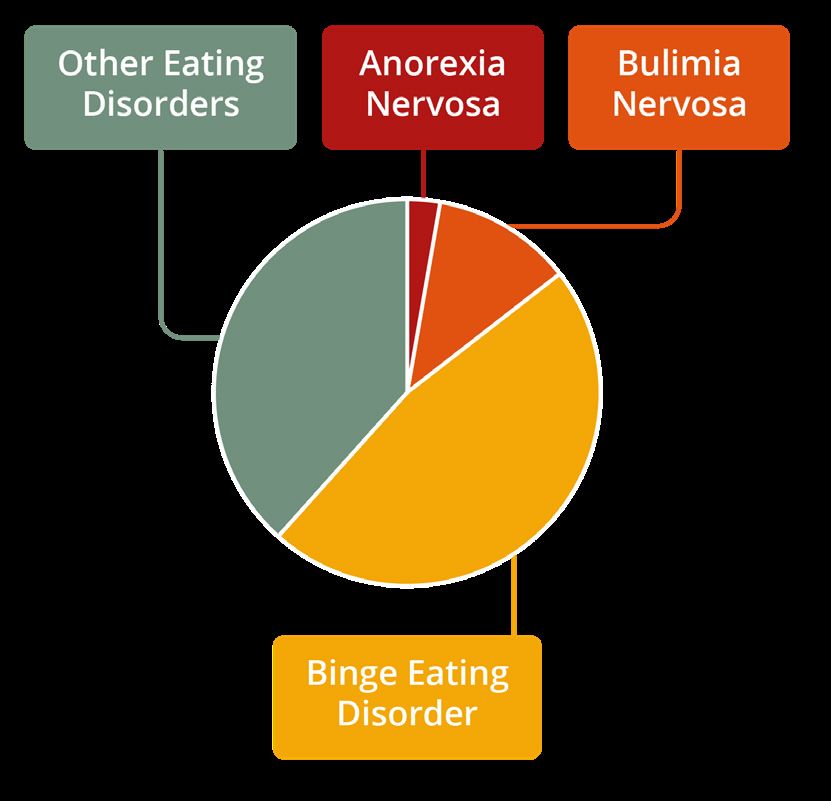
Characteristics of bulimia nervosa
Binge eating                                                     Risk factors
Binge eating involves two key features:                          The elements that contribute to the

 • Eating a very large amount of food within a                   development of bulimia nervosa are

   relatively short period of time (e.g., within two             complex, and involve a range of biological,

   hours)                                                        psychological, and sociocultural factors.
                                                                 Any person, at any stage of their life, is at
 • Feeling a sense of lack of control over eating
                                                                 risk of developing an eating disorder. An
   (e.g., feeling unable to stop yourself from eating)
                                                                 eating disorder is a mental illness, not a
                                                                 choice that someone has made.
Compensatory behaviours
Compensatory behaviours are used as a way of
trying to prevent weight gain after binge eating
episodes. They include:

 • Vomiting

 • Misusing laxatives or diuretics

 • Fasting

 • Excessive exercise

 • Use of any drugs, illicit, prescription and/or ‘over the counter’, inappropriately for weight control

Self-evaluation
A person with bulimia nervosa places an excessive emphasis on body shape or weight in their self-evaluation.
This can lead to the person’s sense of self-esteem and self-worth being largely defined by the way they look.

Warning signs
The warning signs of bulimia nervosa can be physical, psychological, and behavioural. It is possible for a
person with bulimia nervosa to display a combination of these symptoms, or no obvious symptoms.

Physical
 • Signs of damage due to vomiting including swelling around the cheeks or jaw, calluses on knuckles, damage
   to teeth and bad breath

 • Feeling bloated, constipated or developing intolerances to food

 • Loss of or disturbance to menstruation

 • Fainting or dizziness

 • Fatigue or lethargy

 • Sleep disturbances

 • Compromised immune system (e.g., getting sick more often)

 • Sudden weight loss, gain or fluctuation

             To find help or learn more, visit
             nedc.com.au                                                                                         2
Psychological
• Preoccupation with eating, food, body shape and weight
• Intense fear of gaining weight
• Preoccupation with food or activities relating to food
• Heightened anxiety or irritability around mealtimes
• Heightened sensitivity to comments or criticism (real or perceived) about body shape or weight, eating or
exercise habits
• Low self-esteem and feelings of shame, self-loathing or guilt
• Body dissatisfaction and negative body image
• Depression, anxiety, self-harm or suicidality
• Obsession with food and need for control
Behavioural
• Repetitive dieting behaviour such as counting calories, skipping meals, fasting or avoidance of certain foods
or food groups
• Evidence of binge eating such as disappearance or hoarding of food
• Evidence of vomiting or misuse of laxatives, appetite suppressants, enemas and/or diuretics
• Frequent trips to the bathroom during or shortly after meals
• Patterns or obsessive rituals around food, food preparation and eating
• Avoidance of, or change in behaviour in social situations involving food
• Social withdrawal or isolation from friends and family
• Secretive behaviour around eating
• Compulsive or excessive exercising
• Substance misuse
• Inappropriate hydration behaviours
It is never advised to ‘watch and wait’. If you or someone you know may be experiencing
an eating disorder, accessing support and treatment is important. Early intervention is
key to improved health and quality of life outcomes.
To find help or learn more, visit
nedc.com.au
3Impacts and complications
A person with bulimia nervosa may experience serious medical and psychological consequences (3, 4).
Medical
Some of the medical impacts and complications associated with bulimia nervosa include:
• Chronic sore throat, indigestion, heartburn and reflux
• Inflammation and rupture of the oesophagus and stomach from frequent vomiting
• Stomach and intestinal ulcers
• Chronic irregular bowel movements, constipation and/or diarrhoea due to deliberate misuse of laxatives
• Heart problems including slow heart rate, irregular heartbeat and low blood pressure
• Electrolyte disturbance, including potassium and sodium
• Osteoporosis or osteopenia: a reduction in bone density caused by a specific nutritional deficiency
• Fatigue and lethargy
• Loss of or disturbance to menstruation
• Increased risk of infertility
• Death
Psychological
Some of the psychological impacts and complications associated with bulimia nervosa include:
• Extreme body dissatisfaction/distorted body image
• Obsessive thoughts and preoccupation with eating, food, body shape and weight
• Social withdrawal
• Feelings of shame, guilt, and self-loathing
• Depressive or anxious symptoms and behaviours
• Self-harm or suicidality
• Substance misuse
Recovery
It is possible to recover from bulimia nervosa, even if a person has been living with the illness for
many years. The path to recovery can be long and challenging, however, with the right team and
support, recovery is possible. Some people may find that recovery brings new understanding,
insights and skills.
To find help or learn more, visit
nedc.com.au
4Treatment options
Access to evidence-based treatment has been shown to reduce the severity, duration and impact of bulimia
nervosa.
Evidence-based psychological therapies to Evidence-based psychological therapies
consider for the treatment of bulimia nervosa to consider for the treatment of bulimia
in children and adolescents include: nervosa in adults include:
• Eating disorder-focused CBT (CBT-ED) with • Guided self-help CBT-ED
family involvement
• CBT-ED
• Bulimia nervosa-focused family therapy (5)
• Interpersonal psychotherapy (IPT) (5)
Most people can recover from an eating disorder with community-based treatment. In the community, the
minimum treatment team includes a medical practitioner such as a GP and a mental health professional.
Inpatient treatment may be required when a person needs medical and/or psychiatric stabilisation, nutritional
rehabilitation and/or more intensive treatment and support.
Getting help
If you suspect that you or someone you know may have bulimia nervosa, it is important to seek help
immediately. The earlier you seek help the closer you are to recovery. Your GP is a good ‘first base’ to seek
support and access eating disorder treatment.
To find help in your local area go to NEDC Support and Services.
References
1. Deloitte Access Economics. Paying the price: the economic and social impact of eating disorders in Australia. Australia: Deloitte Access Economics; 2012.
2. Hay P, Girosi F, Mond J. Prevalence and sociodemographic correlates of DSM-5 eating disorders in the Australian population. J Eat Disord. 2015;3(1):1-7.
3. Gibson D, Workman C, Mehler PS. Medical complications of anorexia nervosa and bulimia nervosa. Psychiatr Clin North Am. 2019;42(2):263-74.
4. Allen KL, Byrne SM, Oddy WH, Crosby RD. DSM–IV–TR and DSM-5 eating disorders in adolescents: prevalence, stability, and psychosocial correlates in a
population-based sample of male and female adolescents. J Abnorm Psychol. 2013;122:720-32.
5. Heruc G, Hurst K, Casey A, Fleming K, Freeman J, Fursland A, et al. ANZAED eating disorder treatment principles and general clinical practice and training
standards. J Eat Disord. 2020;8(1):63.
The National Eating Disorders Collaboration (NEDC) is funded by the Australian Government Department of Health.
This fact sheet is for general information only and should not be a substitute for medical or health advice. While every effort is made to ensure the information is
accurate NEDC makes no warranties that the information is current, complete or suitable for any purpose. Reviewed and updated in May 2021.
To find help or learn more, visit
nedc.com.au
5You can also read


