Business Travel in India - Emerging Trends & Opportunities - January 2017 - FCM Travel
←
→
Page content transcription
If your browser does not render page correctly, please read the page content below
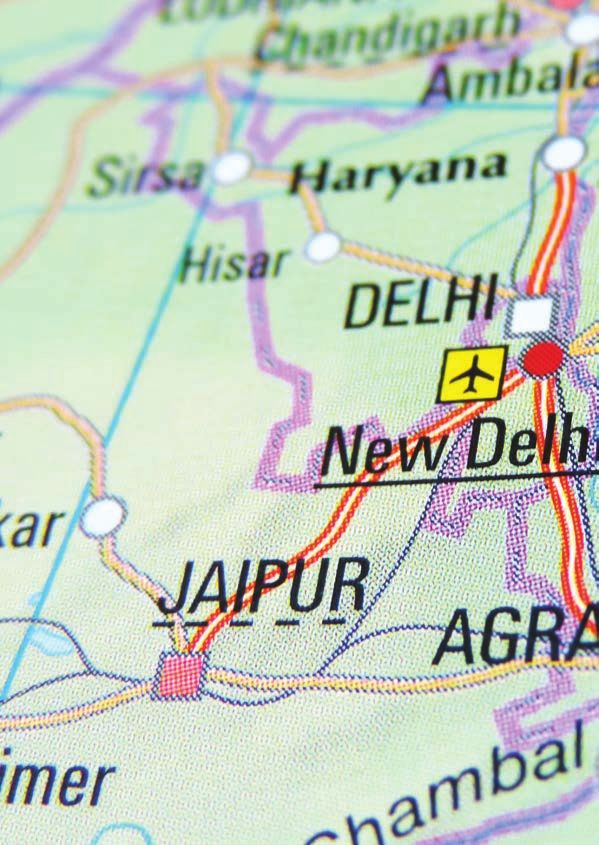
Business
Travel in
India
Emerging Trends
& Opportunities

January 2017
Table of Contents
1.   Foreword                                   01

2.   Executive Summary                          03

3.   Global Business Travel Market              09

4.   Business Travel Market in India            15

5.   Trends Changing Business Travel in India   27

6.   The Indian Regulatory Environment          37

7.   Way Forward                                41

8.   Glossary                                   45

01

     Forewords
     The Indian travel industry has been one of the major          The fast growing travel and tourism sector in India is
     contributors to the India growth story. Large population,     dominated by Leisure travel at present. However the
     increasing per capita incomes and the zeal to explore         business travel segment is growing at a higher rate and
     the world have been the primary drivers for the growing       the sustained double digit growth in corporate travel
     travel market in India.                                       spends makes India one of the fastest growing business
                                                                   travel markets in the world. In fact, the growth rate of
     The industry is also vulnerable to the growing geopolitical
                                                                   business travel in India is on par with other leading
     and technological events and disruptions. Technological
                                                                   industries in the country showing that the segment
     disruptions caused by emergence of online travel
                                                                   plays an important role as a driver of economic growth
     aggregators has enhanced transparency resulting in
                                                                   and jobs.
     massive competitive onslaught between travel service
     providers and travel management companies in providing        The combination of an aspirational middle class, positive
     the best in class services to business travellers.            government reforms and strong economic sentiment
                                                                   has resulted in increased demand for business travel.
     Business travellers on the other hand, are becoming
                                                                   Further the shift towards electronic payments is making
     increasingly aware of the available travel choices. While
                                                                   it easier for companies to track travel expenditure as
     Indian business travellers have been on the forefront
                                                                   well as more convenient for employees to manage their
     of embracing technology for all aspects of their travel
                                                                   spending. Infrastructure impediments and multiplicity
     needs, the “touch and feel” factor imbued in the Indian
                                                                   of taxes continue to pose a challenge to the sector, but
     culture, have amplified their travel expectations. Today’s
                                                                   with the government making infrastructure development
     Indian business traveller is younger, empowered and
                                                                   a priority and the impending implementation of GST, the
     assertive. At the same time, he/she is more sensitive,
                                                                   sector is expected to receive further impetus.
     requires care and support at each stage to ensure the
     most productive use of travel time.                           In this context, the purpose of this report is to present
                                                                   a holistic and comprehensive view of business travel
     As one of the world’s largest travel management
                                                                   market in India. We aim to assess the size of the
     companies, we believe we are trustees of our clients’
                                                                   opportunity, the growth drivers, the industry value chain,
     travel related economic and physical wellness. We also
                                                                   what are the expectations of Indian corporate travellers,
     have a duty to ensure that our clients benefit from the
                                                                   what influences the corporate travel spends and what
     latest thinking and developments in this field. While the
                                                                   emerging innovations can potentially disrupt the market.
     spectrum of clients and their approach to business travel
                                                                   The report also identifies some of the hurdles that stand
     is wide, there are certain common threads to pain points,
                                                                   in the country’s path as it looks to build out a strong
     cost control, traveller wellness and traveller insight.
                                                                   business travel market and provides recommendations
     This report highlights the evolution of business travel in    that may play an important role in overcoming these
     India, Indian companies’ response to changing traveller       challenges and facilitate further growth in the sector.
     needs and how various stakeholders can work together
     to deliver the ultimate objective: Cost efficient seamless
     business travel.

     Rakshit Desai                                                 Jaideep Ghosh
     Managing Director                                             Partner and Head
     FCM Travel Solutions – India                                  Transport, Leisure and Sports
     FCM is part of Flight Centre Travel Group, Australia          KPMG in India
02

03

Executive
Summary
04

Global Business Travel Market
According to WTTC1, the travel and tourism industry                                                                  in the Asia Pacific region. Global business travel spends
comprising business and leisure segments was a USD                                                                   are highly skewed with the Top 15 countries accounting
7.2 trillion market globally in 2015, dominated by leisure                                                           for 82 per cent of the travel spends. In terms of users,
spends. Compared to the overall market growth of 3.1 per                                                             financial services and pharmaceutical sectors dominate
cent, business travel spends grew by 5 per cent, led by                                                              with a combined share of 28 per cent. The top 6 sectors
growing business activity in developing countries largely                                                            accounted for 64 per cent of the total spends2.

                                                                                         Netherlands
                                                                                            1.5% Germany
                                                                                                     5.1%                                                                Russia
                                                                                      U.K.                                                                               1.4 %
                              Canada
                               1.9 %                                                 3.8%
                                                                                 France
                                                                                  3.0%
                               USA                                             Spain
                              23.4 %                                                                                                                                 China                                    Japan
                                                                               1.6%                                                                                                                           5.0 %
                                                                                                                                                                     23.6 %
                                                                               Italy
                                                                               1.5%                                                                                                        South Korea
                                                                                                                                                                                              2.6 %

                                                                                                                                                 India
                                                                                                                                                 2.4 %
                                                                  Brazil
                                                                  2.5 %
                                                                                                                                                                                           Australia
                                                                                                                                                                                            1.8 %

                                                                                       Region                               Curr. 2015               Proj. 2019
                                                                                       Asia Pacific                         36.8 %                   39.9 %
                                                                                       North America                        25.3 %                   23.8 %
                      Top 15 markets                                                   Western Europe                       17.5 %                   17.8 %
                      Rest of the World                                                Rest of the World                    20.4 %                   18.5 %

Source : “Global Business Travel Spend Topped Record – Breaking $ 1.2 Trillion USD in 2015, Will Reach $ 1.6 Trillion by 2020”, Global Business Travel Association, dated 11th July 2016, as accessed on 15th July 2016.

The key trends, drivers and challenges of business travel market are summarized in the table below.

Table 1: Global Business Travel Market- Key drivers, trends and challenges

     Drivers                                                              Trends                                                                          Challenges

                   Increasing global trade                                             Adoption of managed travel for cost                                            Growing security concerns
                                                                                       and service considerations                                                     due to political uncertainties

                   Growing demand from the                                             Increasing reliance on technology                                              Increasing traveller expectations
                   Asia Pacific region                                                 and analytics for travel management                                            and demand for customized services

                   Affordable travel costs due                                         TMCs targeting M&As for                                                        Weak demand growth
                   to cheaper crude prices                                             differentiation and innovation                                                 from developed economies

1. “Travel and Tourism: Economic Impact 2016”, WTTC (World Travel and Tourism Council), as accessed on                 2. Euromonitor, as accessed on 25th July 2016
    26th July 2016
05

     India Business Travel Market
     According to GBTA1, India was the tenth largest business                                                      In terms of demand, air travel dominates spends followed
     travel market with spends of USD 29.6 billion (INR 1,926                                                      by hotel and other spends comprising rail, local transport,
     billion) in 2015 and will be the fastest growing market in the                                                etc. Growing internet and smartphone penetration has also
     world led by favorable political, economic and demographic                                                    enabled greater use of online mode for travel bookings and
     factors.                                                                                                      management.

     Figure 2: Business travel spends-Dominated by                                                                           Figure 3: Trends in online business travel spends
     air travel
                                                                                                                                                             Current                               Projected
                                                                                                                                                                                                               174
                                                                                          Air travel
                                                                                                77%

                                                                                                                    Business travel spends INR Billion
     Others 3%                                                                                                                                                                                      151
                                                                                                                                                                                        %
                                                                                                                                                                                     18

                                                                                                                                                                                            123

                                            INR 1,926
                                                                                                                                                                               89
                                           Billion (2015)

     Hotel 20%
                                                                                                                                                                       56

                                                                                                                                                             34

                                                                                                                                                            2009       2011   2013          2015    2017       2019

     Till about 5-6 years ago, travel agents /travel management                                                    Indian companies too are enhancing technology usage
     companies (TMCs) were the key point of contact for                                                            through automation of travel bookings by developing
     end users with travel service providers partnering with                                                       in-house automated self booking tools or using booking
     them to supply services to the users. Increasing internet                                                     tools offered by service providers including TMCs and OTAs
     penetration and ease of online travel bookings have enabled                                                   (online travel aggregators)
     travel service providers to directly target end users.

     Figure 4: Emerging corporate travel servicing model

                                                          TM
                                                          TMC
                                                                                                                                                         yy In the earlier model, TMCs were the only
                                                                                                                                                            point of contact between travel service
                                                                                                                                                            providers i.e. airlines, hotels, cab rental
                                                                                                                                                            operators etc. and their corporate clientele.

                                                                                                                                                         yy Emerging online booking tools have
                                                                                                                                                            enabled these service providers to directly
                                                                                                                                                            target corporate users. TMCs, however,
                                                                                                                                                            still remain the dominant source for travel
                                                                                                                                                            bookings due to need for travel plan
                                                                                                                                                            coordination and service customization.

     1. “Travel and Tourism: Economic Impact 2016”, WTTC (World Travel and Tourism Council), as accessed on 26th
         July 2016
06

Figure 5: Evolution of travel booking tools
  Increasing automation

                                      Evolution of                          yy Email and manual booking is the most
                                     travel booking                            popular corporate booking tool prevalent in
                                          tools
                                                                               Indian companies

                                       Email booking                        yy Larger corporates with high travel spends
                                                                               are increasingly adopting automated tools
                                    Self booking through                       to enhance the efficiency of travel booking
                                     computer/laptop
                                                                            yy Companies believe that an “On the Go”
                                      “On The Go”                              mobile application for employees would
                                    mobile self booking
                                                                               be the next stage of technology evolution
                                                                               for travel bookings

Key trends observed in the Indian business travel industry
Figure 6: Key trends driving the future of business travel in India

                                                                                      Business travel is emerging as a “”service” function from
                          Growth in business travel spends is dominated
                                                                                      an “administrative” function driven by growing traveler
                          by larger companies in few sectors
                                                                                      expectations

                          Travel managers are increasingly looking for                TMC appointment process is evolving from a low cost
                          more visibility and control over travel costs               selection towards value for money considerations

                          Companies are increasing dependence on                      TMCs are using M&As as a strategy to enhance their
                          technology for covering all aspects of travel               capabilities and target niche segments in the highly
                          management                                                  diverse business travel market

Key challenges faced by Indian business travelers
Business travelers in India companies face significant                      inconsistent regulatory enforcement and lack of seamless
challenges due to limited customization of travel services                  travel planning in companies due to multiple booking
provided by TMCs leading to coordination issues, less                       platforms and usage of multiple service providers for
developed transport infrastructure, safety concerns,                        different services.

Figure 7: Indian business travelers’ key challenges

                             Limited customization in travel              Infrastructure,                              Lack of seamless
                             bookings and range of services               regulatory and safety                        travel planning and
                             provided                                     issues                                       coordination
07

     Evolving regulatory environment in India
     The role of the Government as a key enabler of the
     travel ecosystem in terms of favourable regulations,                    Figure 8: Business travelers and travel managers
     infrastructure and safety is critical to enhancing ease of              expect the government to…
     travel & business in the country. Government efforts to
     develop world class infrastructure in Tier II/III towns and                                                         Simplify
     make India a knowledge economy are expected to bolster                               Regulate
                                                                                                                         travel
     the travel industry. One of the key regulatory reforms in                            fares
                                                                                                                         procedures
     the Indian travel industry is the proposed introduction of
     Goods and Services Tax (GST). While the GST law is yet
     to be finalized, it is expected that in the absence of tax                           Develop                        Provide 24/7
     abatements in the Draft GST Bill, the higher overall tax                             business friendly              assistance
     incidence on travel including business travel is expected                            infrastructure                 during distress
     to increase travel costs.

     Table 2: GST to increase overall business travel costs

         Travel service           Air travel                  Rail travel               Hospitality services      Cab rental services

       GST cost impact
         @ 18% rate

     Impact of Demonetization on business travel
     On 8th November 2016, the Government of India, through                 Some of the key business travel segments which have
     an unscheduled live television announcement made by                    been impacted due to this development include business
     the Hon. Prime Minister Shri Narendra Modi, declared that              class spenders, SME travelers, bleisure spends and forex
     the current Rs. 500 and Rs. 1,000 bank notes (or SBN i.e.              purchases through unorganized players. Demonetization will
     specified bank notes) amounting to ~ 86% of the total cash             enhance competitiveness of organized TMCs and enables
     in circulation in the Indian economy would be invalid with             larger TMC’s to target smaller business travelers, whose
     immediate effect. The sudden announcement has forced                   needs were otherwise not addressed by them due to price
     travelers to either withhold or postpone their travel plans            competitiveness offered by unorganized travel agents
     due to sudden cash crunch, fear of scrutiny and lack of clarity        through lower taxes and cash acceptance options offered
     in rules in using cash post 30th December 2016 when SBNs               by them (which escapes the tax department scrutiny hence
     can no longer be exchanged or deposited with banks.                    reduces tax portion of travel expense).
08
Way Forward
India has come a long way from a ‘touch and feel’ market to opportunity for travel service providers & TMCs to innovate.
a technology driven market as users and travel managers Striving towards and delivering ‘one stop-solutions’ for
continue to demand more seamless, cost efficient and smart travellers is expected to be the way forward for the
personalized travel experiences. While meeting rising user Industry.
expectations is a key challenge, the same also presents an
Key recommendations
Table 3: Stakeholder wise recommendations
For For For
Industry Users Government
• Industry players led by TMCs may form • Business travel managers may consider • Airfares may be fixed within a band
an Indian Business Travel Association incorporating seamless IT platforms in (minimum and maximum price)
(IBTA) their travel management systems according to different stage lengths of
the flights.
• More TMCs may consider providing • Business travel managers may obtain
value added services such as data user feedback electronically as part of • The Ministry of Tourism in discussion
analytics, travel spend optimization claim submission system and integrate with the Ministry of Civil Aviation and
services, safety and security, solutions the same with data analytical tools to Ministry of Railways may formulate
around safety & security, automation identify common areas of concern for policies as well as update information
solutions, etc. timely action. on registered/ authorized travel service
portals
• More TMCs may seek to have greater
knowledge of their corporate clients’ • The Ministry of External Affairs
business, their frequent travel may develop SOPs for travelers and
destinations, select and partner with embassies/ consulates to enable timely
local service providers. assistance for Indian travelers
• The Ministry of Civil Aviation and DGCA
may prescribe development standards
for modernizing airports.09 Global Business Travel Market
10

 Key markets and their outlook
1: Top 15 Business Travel Markets                                                                     Table 4: Top 15 Business Travel Markets in the
                                                                                                      World4
Travel and tourism is one of the largest businesses globally
contributing about USD 7.2 trillion or 9.8% of the global GDP
in 2015. The industry is also one of the largest employers                                                                        Business Travel              CAGR %              CAGR %
                                                                                                       #      Country
globally contributing to nearly 1 in 11 jobs in the world4. The                                                                   Spend Billion $              (‘11-’15)           (‘16-’20)
industry comprises of two key segments – leisure and
business travel.                                                                                       01.    China               291.3                        14%                 8%
Leisure is the dominating segment with overall spends of                                               02.    US                  289.8                        4%                  3%
USD 6 trillion4 and is growing at 3%, in line with the overall
market growth.                                                                                         03.    Germany             63.5                         6%                  7%

Business travel, on the other hand, has been growing at 5%                                             04.    Japan               62.1                         -2%                 3%
with a global spend of USD 1,237 billion in 2015 according
to GBTA. Unlike the diverse leisure travel market, the global                                          05.    UK                  47.1                         4%                  3%
business travel market is highly skewed with top 15 countries                                          06.    France              37.1                         1%                  5%
accounting for about 82% of the total spends.
                                                                                                       07.    South Korea         32.6                         2%                  5%
Table 4 represents the market size and growth of business
travel in the top 15 business travel markets. It can be                                                08.    Italy               31.6                         -3%                 5%
observed that business travel spends are expected to
become more concentrated amongst the top 15 markets                                                    09.    Brazil              30.5                         3%                  4%
with only 4 of the top 15 markets expected to grow at less
                                                                                                       10.    India               29.6                         9%                  12%
than market growth rate.

Another significant observation is the growing Chinese                                                 11.    Canada              23.1                         2%                  8%
influence. In 2015, China pipped US to become the world’s                                              12.    Australia           21.7                         1%                  5%
largest travel market and is expected to dominate over the
next 5 years as well.                                                                                  13.    Spain               19.4                         0%                  6%

Figure 9 clearly demonstrates that India (12%) and China                                               14.    Netherlands         18.2                         -1%                 6%
(8%) are expected to be the fastest growing business travel
markets in the world driven by increasing business activities                                          15.    Russia              17.2                         -4%                 5%
and investments in these countries driven by increasing
                                                                                                              Global              1236.8                       5%                  5%
business activities and investments in these countries.

Figure 1: Top 15 Business Travel Markets (Growth rate)

                                                                                                     > 7% CAGR                 > 5-7% CAGR                              > 5% CAGR

                                                                                                                       India

                 China

                                                                                                                               Canada
                                                       Germany                                                                                                     Netherlands
                                                                                  France                                                                Spain
                                                                                                    Italy
                                                                                                                                       Australia                               Russia
                                                                                      South Korea            Brazil
                                                                           UK
                        US                                   Japan

        Note: Size of bubble indicates Business Travel Spend (2015)

                                                                                                                               Source: GBTA article dated 11th July 2016, accessed on 25th July 2016

4. Source: World Travel and Tourism Council report 2015, accessed on 18th July 2016
   Note: GBTA – Global Business Travel Association
11
2: Global Business Travel Market The region wise key drivers for corporate travel spends is
summarized below.
In terms of region wise spends, Asia Pacific (APAC) is
the dominant market followed by North America (NA), yy Asia Pacific – Large population base, high consumption
Western Europe (WE) and balance with the rest of the economies, investments in infrastructure, manufacturing
world (RoW). and growing inter – Asia trade
Figure 10 represents the region wise share of business yy North America – Key export market for Asian exporters,
travel market in 2015 and the project share in 2018. APAC recovery in the US economy due to shale gas and the
is expected to remain as the dominant business travel subsequent economic recovery
market led by growing demand from China, Japan, South yy Western Europe – Key export market for Asian exporters,
Korea and India. North America and Western Europe are Europe’s position as leading tourist destination, Germany’s
expected to grow at lower rates. growing influence as the leading European manufacturer
Figure 10: Region wise share of business travel market
RoW 20% APAC 37% RoW 18% APAC 40%
2015 2018
WE 18% NA 25% WE 18% NA 24%
Note: APAC: Asia Pacific Region; ROW: Rest of the World
Source: GBTA article dated 11th July 2016, accessed on 25th July 2016
Figure 11: Industry wise spends5
Figure 11 illustrates the top 6 sectors globally,
which account for about 64% of total business travel
spends5. Globally, the banking and financial services
leads business travel spends with nearly USD 1 out of
17% 11% 11% every USD 6 spent on business travel.
Banking Pharma Manufacturing
& Finance & Health While the industry wise travel spends is largely
related to its respective contribution to global GDP, it
is expected that going forward, manufacturing and
trading sectors will remain the key drivers of business
10% 9% 6% travel spends.
Retail & Government Energy
Consumer
Source: Technavio Analysis, EMIS Database, accessed on 25th July 2016
5. Technavio Analysis, EMIS Database, accessed on 25th July 201612
Key trends and drivers
The key trends driving global business travel market spends and growth include –
Adoption of Growing demand Increasing TMC consolidations
managed travel by from the APAC Globalization Technology adoption and tie-ups
smaller companies region
The concept of “managed Growing business Companies are increasing Greater access to Travel Management
travel” or appointing activities in the APAC investments in developing technology tools and the Companies (TMCs)
travel management region especially in their business operations ability to spot cheaper are facing challenging
companies (TMCs) China and India led globally to enhance deals online coupled with times due to growing
for arranging travel by high consumption their profitability and high user expectations competition from OTAs
requirements, once demand and competitive competitiveness, which is forcing companies to (online travel aggregators).
considered a large unit production costs is is driving global business increasingly use “On In order to acquire scale
company concept, is driving business travel travel. The Go” applications to and invest in technology
being increasingly especially in sectors manage their travel. to enhance business
adopted by smaller such as technology, travelers’ experience,
companies in order pharmaceuticals, TMCs are looking at
to benefit from the manufacturing, construction avenues to consolidate
economies of scale and and energy. Further, the by tying up with sharing
expertise provided by Indian government’s economy service
TMCs. initiatives such as “Make providers; operations of
in India”, “Digital these service providers
India” etc. are attracting are increasingly rolled
investments thereby into the booking and
driving the need for travel expense tools of the
in and out of India. former in order provide
seamless, consistent
and economical business
travel experience.
Key Challenges
The Business Travel Market faces several ‘challenges’, Every business travel program needs to consider the above
which has not only influenced travel dynamics but also mentioned trends and challenges. The key elements of a
business traveler behavior. Some of the key challenges successful business travel program are outlined in Figure
include: 12 below.
yy Security threats due to terrorism, political events such as
Brexit, Istanbul military coup etc. and political instability in
the Middle East, Africa, North Korea etc. have intensified Figure 12: Key elements of a successful
safety concerns impacting business travel. business travel program
yy Volatility in Average Ticket Price (ATP) due to complex Business Travel
airline pricing strategies (mix of cost based pricing,
demand based pricing, service based pricing) and external
factors such as fuel pricing, makes predictive analysis and
management of travel program/ control of travel budgets
difficult and sometimes out of control.
Cost Technology enabled
yy Demanding business travelers due to enhanced competitive integrated services
travel awareness poses a challenge to travel teams to
increasingly deploy tools for customized and user friendly
travel options while also ensuring policy compliance.
yy Weak global economy due to slowing growth in
developed economies owing to stagnant population Reliability and Employee
ease of servicing safety
growth and saturated demand.
yy Technology has facilitated business conduct through
video conferencing, VoIP, video calling etc. and impacted Source: KPMG Analysis 2016
business travel needs.13
Role of TMCs in managing business travel
Role of TMCs in managing business travel use the services of an external vendor or a TMC (travel
management company), which has the expertise to achieve
Travel and Entertainment (or T&E) expenses are considered these twin objectives than the company itself.
as the second most controllable expense after manpower
costs. In a highly competitive environment, control over TMC’s provide an array of services from travel via air,
travel costs is considered as an important competitive road, rail to hotel bookings to value added services such
advantage. as enhanced employee safety measures, travel expense
management, data analytics, seamless travel management,
Travel managers in companies are constantly under bleisure etc. with pre-agreed KPI’s on cost, service, quality
pressure to optimize their travel costs while also enhancing and others.
travel experience. According to the travel head of a leading
construction company, “One of our KPIs is to keep our ATP The services provided by TMC’s can be classified into four
(Average Ticket Price) lower than the previous year”. broad categories as summarized in Figure 13
Travel managers believe that one way to enable a
balance between costs and quality travel service is to
Figure 13: Scope of services of TMCs6
• Overseeing Long term contracts with suppliers
• Price Negotiation with airlines, hotels, car rentals, and others
• Advisory services to businesses for deals & negotiations with suppliers
Sourcing &
Procurement and others
• Itinerary management, route & cost optimization
• Visa & travel documentation facilitation
• Notifications & Alerts during travel to aid policy compliance
Planning • Foreign exchange services
& Booking
• MICE (Meetings, incentives, conferences, events)
• Technology & tools for central billing function- travel invoice settling &
matching, expense management and others.
• Duty of care support including flash news, alerts and updates on
Account geopolitical developments at all times
Management • Travel assistance and management during disruptions and emergencies
• Analysis, matching & reporting of travel data from various sources-
TMC’s, credit cards, SBT’s, expense reports, bills and others.
• Market data & insights, sourcing management, diagnostics &
benchmarking, third party data integration services and others.
Measuring • Use of advanced analytics, business intelligence tools for powerful
& Reporting
insights
6. Technovia Analysis, accessed on 23rd July 201614
According to industry estimates7, the value of travel booked/ The emergence of online travel aggregators (OTAs) such as
managed through TMCs was about USD 175 billion or about Expedia, Booking.com etc. targeting smaller businesses by
14% of the global travel spends. assisting them with “Managed Business Travel” services
has opened a new segment in the managed business travel
The lower share of TMCs can be attributed to business
market.
travel being dominated by small businesses, whose small
volumes do not justify using the services of a TMC. These With OTAs increasingly targeting the market traditionally
smaller businesses either book their travel themselves dominated by TMCs as an alternative service provider, it
through online or offline sources including OTAs. is imperative for TMCs to enhance the range of offerings
by using alternative booking channels and differentiating
Some of the leading global TMCs in the managed business
themselves through more value added services considering
travel segment include (listed alphabetically)
their ability to offer higher degree of personalized services
yy American Express Global Business Travel compared to OTAs.
yy BCD Travel
yy Carlson Wagonlit Travel
yy FCM Travel Services
yy Hogg Robinson Group
yy Travel Leaders Group LLC
7. Euromonitor Article titled “Rise of Online Leisure Channel Drives Consumerization of Corporate Travel,
dated 27th August 2015, accessed on 7th August 201615 Business Travel Market in India
16

Overview
1: Overview of India Business Travel Market                                                                   Indian economy, which was earlier vulnerable to volatile
                                                                                                              economic developments has become increasingly resilient
According to GBTA1, India was the 10th largest market for
                                                                                                              to recent developments such as Brexit, 2008 US economic
business travel in the world in 2015 with total spends of
                                                                                                              crisis etc. led by strong domestic demand and improving
USD 29.6 billion. GBTA estimates that India is expected to
                                                                                                              fiscal performance. This has enhanced global confidence in
be the fastest growing business travel market and will be
                                                                                                              the Indian economy resulting in growing investments and
the 7th largest market globally by 2020, overtaking Brazil,
                                                                                                              the resultant need for business travel
Italy and South Korea.
                                                                                                              Demographics/Social – Growing per capita income and
The key drivers for this growth include
                                                                                                              demand for imported products is driving the need to travel
 Political & Regulatory – The Government of India’s                                                           overseas by Indian businesses to source and supply these
 current emphasis on investments and economic growth                                                          products.
 is expected to enhance India’s “Ease of Doing Business”
                                                                                                              Besides, growing competition and the need for
 ranking and lead to a more favorable business environment.
                                                                                                              personalized services has also been a key driver driving
 Some of the measures taken by the government include:8
                                                                                                              business travel demand especially amongst SME business
 Visa on arrival/e-visa scheme for inbound tourists has been                                                  travelers.
 extended to over 150 countries
                                                                                                              Technology – India’s growing technological prowess
 Make in India and Invest India coupled with further opening                                                  and low cost skilled manpower has been a key driver in
 up of tourism related sectors including 100% FDI in airport                                                  enhancing India’s position in the global technology map.
 development                                                                                                  Increasing cost pressures by global corporations coupled
                                                                                                              by India’s cost and language advantages has increased
 Emphasis on digitization is expected to further drive
                                                                                                              outsourcing of key business and technology processes
 technology & internet penetration.
                                                                                                              to Indian companies thereby driving business travel from
The proposed rollout of GST in April 2017 is expected to                                                      India. Besides, TMCs based in India have been enhancing
make India more competitive globally thereby further                                                          their capabilities through “offshoring services” thereby
enhancing international trade and drive more business                                                         enabling growth of India as a business travel management
travel                                                                                                        destination.

 Economy & Markets – The Indian economy is the fastest                                                        The PEST Analysis in Figure 14 outlines the key drivers of
 growing economy in the world with strong macro-economic                                                      business travel spends in India
 fundamentals, forex reserves & moderate inflation. The

 Figure 14: PEST Analysis of Indian Business Travel Market

                                                                                                Market Drivers                    Economy & Markets
 Political & Regulatory
                                                                                                                                    yy India is a trillion dollar economy; the world’s fastest
 The Government has undertaken a host of initiatives to                                                                                growing economy, growing by ~USD 150 Billion a
 facilitate corporate travel:                                                                                                          year
   yy Government’s visa on arrival scheme for inbound                                                                               yy Stable economy with strong fundamentals, low
      tourists enabling ease of travel to India                                                                                        inflation, yet growing at 8% a year
   yy Encourage overseas investments through tax and                                                                                yy Growing per capita income and international trade
      regulatory reforms encouraging inbound business travel                                                                           driving global travel

 Technology                                                                                                        Social/Demographic
   yy Increasing outsourcing/offshoring of IT and related services                                                   yy Indian culture for personalized service requires businessmen to
      to Indian companies by global corporations driving need for                                                       travel and meet customers
      overseas travel by Indian employees                                                                            yy High preference for imported products result in international
   yy Offshoring services provided by India based TMCs enabling                                                         travel to countries by Indian businesses
      growth of India as a business travel booking destination                                                       yy Geographic diversity and distance between business hubs
                                                                                                                        driving need for domestic business travel

1. “Travel and Tourism: Economic Impact 2016”, WTTC (World Travel and Tourism Council), as accessed on 26th    8. Ministry of Tourism website, Ministry of Civil Aviation website, Draft GST Bill 2016 accessed on 15th July
    July 2016                                                                                                     2016
17
Demand Analysis
GBTA estimates that Indian business travel spends to grow and SMEs through travel agents, TMCs and directly with
at a CAGR of 12%9. Considering this growth rate, the Indian travel service providers i.e. airlines, railways, bus service
business travel market is expected to reach INR 3,000 providers, hotel stay and taxi operators. Offline channel
billion by 2019. continues to be the dominant channel for travel bookings,
however, the online channel is slowly emerging as an
Business travel spends can be categorized into three major
alternative choice due to the perceived convenience and
areas: Air travel, hotel/stay expenses and other travel
multiple travel options offered.
spends (includes taxi/cab, value added services etc.).
Figure 15 illustrates the share of business travel spends
into air travel, hotel costs and other travel costs. While air Figure 15: Share of Business Travel Spends
travel being the most preferred mode of transport due to 3%
time savings, the low share of hotel stays can be attributed 20% Other travel spends
Hotel spends ~ INR 380 ~ INR 46 Billion
to the propensity to travel for shorter time periods to save Billion (USD 6 Billion) (USD 0.7 Billion)
on costs.
An important aspect of this spend is the increasing
business spend using online booking tools. The emergence
of OTAs in India such as Makemytrip, Cleartrip, Yatra etc.
have altered the way travel is booked and managed in India Business
travel spend
India. The emergence of OTAs in India such as Makemytrip, INR1926 Billion
Cleartrip, Yatra etc. have provided alternatives to the way (~ USD 30 Billion)
travel is booked and managed in India. In terms of travel
booking channels, the Indian business travel market can be 77%
classified into – online segments and offline segment. Air travel
spends ~
While the online segment (~ INR 20 Bn) comprises of INR1500 Billion
(USD 23 Billion)
bookings made through OTAs, the offline segment (~ INR
1,906 Bn) comprises the rest of the market which includes
bookings made by business users i.e. large businesses Source: Euromonitor, accessed on 15th July 2016
Online booking trends
Indian business travelers are increasingly using the online
route to book their travel needs whether air, rail, hotel or
taxi/cab. This is evident from the strong growth of online
business travel sales booking value which has more than
tripled from INR 34 billion in 2009 to INR 109 billion in 2014.
This trend is expected to continue in the future as well.
Figure 16 illustrates the current and expected growth in
online sales of business travel bookings over the next 3 – 4
years. The growth is expected to be slower in business
travel due to:
yy High base effect as initial low online penetration was
capitalized by the leading players
yy Growing competition is driving smaller, unorganized
TMCs to invest in technology and/or online travel
management systems to enhance their offerings for
corporate customers
yy Large corporations are investing in own technology
tools and using TMCs only to manage bookings,
thereby making price and value added services the key
differentiator in TMC services
9. Article titled “Global Business Travel Spend Topped Record – Breaking $ 1.2 Trillion USD in 2015, will reach $ 1.6
Trillion by 2020”, dated 11th July 2016, accessed on 15th July 2016, Fx rate INR/USD = INR 6518
Figure 16: Online Business Travel Sales in India (INR Billion)
2009-2014 2015-2019
R: 9% 174
109 CAG 164
151
2 6%
R: 89 137
G
CA 123
70
56
45
34
2009 2010 2011 2012 2013 2014 2015 2016 2017 2018 2019
Source: Euromonitor, accessed on 24th July 2016
Figure 17 represents the segment wise sales breakup of with IRCTC operating a dedicated platform for online rail
the total online business travel sales. The dominance of bookings.
air travel sales can be explained by the early penetration of
The share of air travel in the overall online spends is
the segment and large number of OTAs as well as service
expected to increase, led by growing preference and
providers i.e. airlines providing the service. Other transport
lowering cost of air travel.
comprises of rail and bus travel, predominantly rail travel
Figure 17: Category wise online sales breakup (% share of total)
2015 2019
1% Lodging 27% Other Transport 72% Air 1% Lodging 21% Other Transport 78% Air
0% Travel 0% Car Rental 0% Others 0% Travel 0% Car Rental 0% Others
Insurance Insurance
Note (1): Online implies transactions done through major online travel agencies (OTA’s) who have a sizeable retail segment as well and transactions done by TMC’s doing bookings online
Note (2): The very small share of business online lodging is due to majority hotel/accommodation booking done through offline channel (brick & mortar travel agencies/bookings through relationships with hotel suppliers)
Note (3): The above diagram neglects actual total hotel sales (done mostly offline through relationships & not GDS), other offline bookings. Also, unorganized business travel sales (transactions that are not dictated by a legal
contract specifying transactions to be booked under corporate/business head) are not part of the split shown for business travel.
Source : Euromonitor, accessed on 24th July 201619
Supply Analysis
The supply of travel services requires interaction of 4 2. Travel service providers are progressively targeting the
entities i.e. travel service providers, GDS system providers, end users aided by technology
travel agents/TMCs and the users. 3. Higher availability of travel options and mounting
In the traditional model, the agents/TMCs were the traveler expectations makes the travel agent’s/ TMC’s
interface point for the end user with travel service providers role crucial and indispensable for smooth and seamless
partnering with them to supply services to the users. service delivery.
4. OTAs which were primarily operating in the B2C
However, the emergence of online booking tools and OTAs (Business to Consumer) segment are increasingly
has resulted in a fundamental shift in travel service delivery. targeting business travelers through niche offerings.
These include: Yatra and OYO rooms are targeting SME business
1. Emergence of GDSs, which provide a real – time travelers with customized offerings
interface between TMCs/agents and service providers Figure 18 below outlines the changing trends in business
through an online tool traveler targeting model.
Figure 18: Business traveler targeting strategy (Traditional v/s Emerging model)
through own/
TMC GDS platform
TMC
Traditional model Emerging model
Source: Primary discussions, KPMG Analysis 2016
Industry structure range of services whereas OTAs are currently providing
largely trip planning, bookings and travel data management
In terms of supply of services, the Indian business travel
services. TMCs differentiate themselves through dedicated
market is dominated by TMCs/travel agents. These include
customer account management and data analytics support
large global & local players, regional players and other travel
services.
agents providing complete travel solutions to business
travelers.
Figure 19: Industry Structure10
Besides TMCs, OTAs are increasingly making their
presence felt in the business travel market. According Carlson Sourcing &
to industry estimates10, the share of business travel WagonLit, FCM Procurement
Solutions, BCD Planning &
spend handled by TMC’s and OTAs is estimated at 94:6, Travels, Amex Booking
dominated by TMCs. This includes all online and offline Comprehensive GBT, Thomas Account
Cook/ Kuoni Management
modes of bookings made by organized business travel service providers
SOTC, Uniglobe, Measuring &
market. An organized business travel market is one where 94% Cox & Kings Reporting
a business enters into a formal agreement with a travel
service provider i.e. TMC, OTA, airlines, hotels etc. Online booking Easygo, Planning,
services only Yatra, Booking
Figure 19 outlines the current industry structure, where 6% MMT, ibibo, Measuring
TMCs led by large MNC service providers provide a wide
10. Primary discussions with key service providers, KPMG Analysis 201620
Operating Models
TMCs provide a wide range of services to their yy Integration of TMC platforms with company technology
corporate clients ranging from basic ticketing services to platform is an important criterion for TMC selection for
complete strategic travel management services. In the most corporates due to data/information security risk.
Indian business travel market, there are three models
Additional services like visa & passport services, Forex
predominantly being used.
services, travel insurance and others may be provisioned
Model 1: Companies opting for Self Booking Tools through a single TMC or companies may contract multiple
(SBT) vendors for the same.
This model (Figure 20) works as follows Accordingly, the SBT’s provisioned may include options for
all segments of trip booking and may integrate expense
yy Company employees use Online/ Self Booking Tools management/re-imbursements for a seamless travel
(SBT) that is integrated with human resource repository experience as well.
of the company for relevant policy compliance/ The self booking tool incorporates
approvals and with finance of the company for expense
yy Travel requisition
management.
yy Booking management
yy This SBT is generally provided by TMC’s or procured
from system supplier or developed in-house. yy Expense booking and re-imbursements
yy The TMC’s GDS powers SBT, which is used by Figure 20 illustrates how the self booking model is typically
employees to plan trips and bookings. operated in companies opting for the same
Figure 20: Typical SBT Operating Model
Global Distribution Online/ Self Travel Policy &
System Booking Tool Request Systems
Hotel GDS
Car Rental GDS Service Input
Airline GDS
Train/other travel
services GDS
Service
Other services - Visa, Service Input
Forex, Insurance
Service
y
Travel Management Company
Company
MIS/Analytics/ Strategic
expense management Service
Service B Input to B
A B provided by A A B provided by A
Possible Service B Possible Input to B
A B provided by A A B provided by A
Source: Primary discussions with users, key service providers, KPMG Analysis 201621
Model 2: Companies not opting
for a self – booking tool Global Distribution Travel Policy &
System Request Systems
Under this model,
yy The travel desk/ TMC receives Service Input
email requests from employees to
book travels.
yy The TMC performs trip planning
through their GDS in compliance Other services - Visa, Input
with company policy. Forex, Insurance
yy This model limits the number Service
of transactions serviced basis
on a given TMC team size as
compared to Model 1 where
higher transactions are facilitated Service Travel Management Company
through the use of SBT for greater Company
MIS/Analytics/ Strategic
employee autonomy. expense management
yy This model is currently the most
prevalent among large corporates
in India. A B Input to B A B Service B
provided by A provided by A
Figure 21 illustrates how the non
Possible Input to A B Possible Service
SBT model is typically operated in A B B provided by A B provided by A
companies opting for the same.
Source - Primary discussions with key service providers, KPMG Analysis 2016
Model 3: Companies opting for
OTAs, not TMCs
Global Distribution Online/ Self Self /Online Booking
Under this model, System Booking Tool Tool powered by OTA
GDS with limited/
yy Companies tie up with OTAs to No policy integration
Input
have access to the OTA booking making policy
tool and GDS. compliance difficult
yy Policy integration into the OTAs
booking tool is a challenge due to
confidentiality, compliance and
cost control issues
Service
yy For this reason, the model is not
popular amongst large companies
in India, as the above mentioned
issues are not faced in Model 1 and Travel Management Company
2 above. Company
A B Service B
provided by A
Figure 22 illustrates how the
OTA model is typically operated in A B
Possible Service
B provided by A
companies opting for the same.
Source - Primary discussions with key service providers, KPMG Analysis 2016
Inspite of multiple operating models emerging, users believe that the industry needs to address certain issues
and challenges in order to enhance the service delivery, adapt to the changing business traveler needs and most
importantly enable businesses to keep their travel costs in check.22
Current Challenges
KPMG conducted primary discussions with various Current challenges faced and their significance, identified
stakeholders in the business travel ecosystem including based on weighted average of responses across these
select corporates, their CXO’s and travel service providers. respondents, is represented in Table 5 below
The respondents managed close to 5% of all India
corporate travel spend.
Table 5 : Key Challenges for Indian Business Travelers
Area Key Challenge Description Significance
Travel • TMCs do not customize their solutions enough to meet user needs.
customization • Integrating their systems with TMC IT platforms is a significant challenge
Customized
solutions
• Cumbersome trip planning due to culture of contracting multiple vendors for
different services, driven by lower contracting costs
• Multiple desks for different solutions results in loss of productive employee
Limited visibility
time during trip planning.
on cost savings
• Lack of culture for contracting TMCs for end to end travel management due
to perception of higher cost of services despite multiple vendors being a
barrier to a seamless experience
• Lack of technology/processes for faster movement in and out of airport for
Lack of frequent travelers
differentiated
offerings • Services such as in-flight Wi-Fi are yet to be introduced in India, making
business travel timings restrictive due to “non-productive” daytime travel
• Limited preferable routes to Tier II/III towns leading to longer travel time
than necessary.
Systemic & Poor infrastructure
for business travel • Need to develop & improve airport infrastructure in order to reduce
Infrastructure
congestion and delays
related
• Infrastructure/ public transport systems for seamless connectivity between
airports and central business districts.
Lack of effective
• Air fares not regulated stringently: Last minute air fares higher resulting in
price regulation in
significantly advance travel planning required
air travel
• Limited co-ordination between flight & hotel timings; hotel & lodging
Lack of seamless suppliers need to enable flexible check in and check out timings
travel experience • Lack of travel processes/systems standardization across regions; state
tourism boards need to make information available and online.
Source : Primary discussions with users, TMCs, KPMG Analysis 2016
Key:
Very High High Medium Low Very Low23
Table 2 : Key Challenges for Indian Business Travelers (contd)
Area Key Challenge Description Significance
• Need for greater ‘design for safety’ in Indian airports/ railway stations to
ease congestion and minimize probability of potential accidents.
• Need to install intelligent systems at airports to track domestic and
Lack of traditional international passengers,
culture for safety
& security • Need for instituting SOPs for local embassy support to Indian travelers
abroad in case of emergency situation.
• Integrating sharing economy travel options requires greater emphasis on
employee security
• Seamless travel planning & booking is seen as a challenge due to a
perception of higher costs involved due to
Limited seamless 1. Integration of platforms of different functions- Travel, HR, Finance
travel planning &
booking solutions 2. Integration of TMC technology platform with the company platform.
Technology
related 3. Integration of multiple vendor platforms into a single travel platform &
booking tool.
Inertia for
technology • Culture for high touch services proving to be a roadblock to fast technology
adoption & culture adoption and extensive use of self-booking tools despite cost and
for high touch productivity benefits
services
Source : Primary discussions with users, TMCs, KPMG Analysis 2016
Key:
Very High High Medium Low Very Low
Travel managers believe that while some of these challenges can be addressed through technology, “personal
touch” through TMCs is also inevitable to address these challenges as they play a key role in customizing and
integrating travel plans to enable a smooth and hassle – free travel24
Emerging Practices
The Indian business travel market is at the inflexion point productivity and lower travel costs, companies , TMCs and
of innovation and technology adoption to address some travel service providers have implemented solutions that
of the challenges faced in corporate travel management. are changing business travel experience. Some of these
While most companies are working internally or with their emerging practices are discussed below in Table 6
TMC partners to develop innovative solutions to enhance
Table 6: Emerging practices in Indian Business Travel
Emerging Practice 1: Enhanced Corporate Booking Tool
• An advanced corporate booking tool incorporates end to end systems from requisition request to trip bookings
(based on exclusive corporate deals and value added services like meals and other related) to complete travel
management services.
• Key features11 of an enhanced Corporate Booking Tool includes:
–– Alignment with GDS
Description
–– Flexible system allowing company guests to plan and book.
–– Integration with platforms of critical support functions i.e. HR, Finance,
–– Ability to support multiple payment methods
–– Policy compliance & support including alerts on non-compliance
–– Site management: More prominent display of preferred/ top rated suppliers
–– Others: Integration of platform with sharing economy service providers to provide seamless travel experience
and guarantee duty of care
Challenges addressed • Seamless travel planning & experience with potentially better cost savings
• Customized travel experience which is policy compliant
• Single tool which integrates various platforms
Emerging Practice 2: “On the Go” Mobile App for Travel
• An “On-the go” mobile application & mobile self-booking tool for travel to deliver personalized/ customized on-the
go travel information
• Key features of the “On-the go” mobile app integrated with the company’s travel management program may
include:
–– Flight status updates
Description
–– Itinerary management
–– Mobile check-ins
–– Travel alerts (regarding events, security waiting time, etc.)
–– Policy compliance
–– Destination information (maps & directions)
–– GPS check-ins
–– Expense management and social network based trip sharing
Challenges addressed
• Seamless travel planning & experience with potentially better cost savings
• Customized travel experience which is policy compliant
11. Primary interviews, KPMG Analysis25
Emerging Practice 3: City Check In’s to ease airport congestion by Delhi Metro12
Description • City check-in terminals near corporate hubs/city centers for baggage check in and receipt of boarding pass
allowing business travelers to avoid airport queues and minimize transit time
Challenges addressed
• Value added service/ differentiated offering for corporate travelers
Emerging Practice 4: Next generation GDS with enhanced app integration13
• Integrated multi GDS providing fare options for air travel, hotel, car, rail and tours. The next generation GDS
is integrated with decision support systems providing intelligence on fare trends, travel seasonality, alternate
airports (if any), to predict best time to book & alternate options to minimize travel expense.
• The key features of the next generation GDS includes:
–– Flight tracking and monitoring alerts including country specific requirements
Description –– CRM: Adding itinerary options and information into existing PNRs.
–– E-mail solutions giving live updates to users through social media/email/messaging
–– Meetings/MICE/Events: Applications for finding global events & locating hotels around event locations, adding
event as itinerary option in PNR
–– Productivity tools: Apps to match frequent flyer database of various airlines with PNR, apps for group travel &
group seat selection, pricing applications
–– Quality control: Apps to highlight availability in preferred carrier, preferred hotel
–– Reporting: Sales reports, carbon emission calculator, recently viewed PNR
Challenges addressed • Seamless travel planning
• Cost savings
Emerging Practice 5: Enhanced Travel Risk Management with Duty of Care Features
• Employee management & Communication platform consolidating GDS, TMC, HR data and integrated with Mobile
Messenger for effectively tracking, communicating and assisting traveling employees
Description • Key features of the platform includes:
–– Development of automated workflows based on world events & their impact analysis, risk-level assessments
–– Pre-trip alerts, risk-level information, destination intelligence
–– Interactive maps, Real-time two way communication system that triggers messages through phone/ email,
text, app
–– Color coded maps to track communication with employees
Challenges addressed • Enhanced well-being,
• Duty of care/safety & security of employees
12.. Delhi Metro website, accessed 8th August, 2016
13. https://www.sabreredappcentre.sabre.com/directory/cat/e-mail-solutions, accessed 4th August, 2016, Primary interviews, KPMG Analysis26
Emerging Practice 6: Use of Business Intelligence/ Analytics by TMCs
• TMCs are increasingly using big data/ analytics for strong insights to companies on how best to provide
customized/ preferred travel experience to its employees within the companies’ managed travel programs
• Key features of service include:
Description –– Measuring traveler satisfaction through text analytics
–– Measuring travel behavior through data on previous bookings, semantic analysis of browsing history
–– Detailed traveler profiling based on booking behavior from earlier bookings
–– Benchmarking & community analytics to compare performance metrics
–– Other insights on sources of ancillary spending, program leakage, travel spend through integrated credit card
& expense data
Challenges addressed • Seamless travel planning & experience with potentially better cost savings
• Highly customized travel experience that is policy compliant27 Trends Changing Business Travel in India
28

Trends Changing Business Travel in India
Trend 1: Growth in business travel spends are                                                          Companies believe their travel costs are expected to
being dominated by larger players in few sectors                                                       increase as part of their business growth and expansion
                                                                                                       plans. According to the travel manager of one of the
 In order to understand the trends in business travel spends,
                                                                                                       technology companies, “We expect a double digit increase
 KPMG analyzed the travel spends of India’s top 100
                                                                                                       in our travel spends over the next few aided by our growing
 companies14.
                                                                                                       contract wins in the overseas markets”.
The top 100 companies spent approximately INR 200 billion
                                                                                                       Figure 23 summarizes the growing share of the top 100
in FY15 up 38.3% from INR 145 billion in FY13. During the
                                                                                                       companies in the total business travel spend over the last
same period, overall business travel spend increased by
                                                                                                       2 years compared to rest of the market
21.2% indicating that larger companies led higher growth in
travel spends with respect to the market.

 Figure 23: Business Travel Spends in India (Top 100 companies v/s Rest of the market)
                               FY 2013
        FY 2013                                                             FY 2015

                                      10%                                                             11%

                           INR 1,47115                                                       INR 1,78315
                             billion                                                           billion
                                                                                                                                                         Top 100 Companies

                            90%                                                              89%
                                                                                                                                                         Rest of the Market

In terms of sectoral breakup, travel spends amongst                                                    Figure 24 below illustrates the spending patterns of top 5
100 companies was led by IT/technology companies                                                       sectors. In terms of sectoral share, the pharma sector has
followed by pharma/healthcare, natural resources, auto                                                 witnessed a significant increase in share of total spends.
and construction companies. While the share of the top                                                 The sector wise drivers of travel spends and future outlook
5 sectors in FY13 was 78%, it increased to 82% in FY15                                                 is discussed further.
indicating the increasing dominance of few sectors in
travel spends.

 Figure 24: Business Travel Spends in India (Top 100 companies)

  FY 2013                                                                                       FY 2015

7%                                                          22%                               5%                                                       18%

 8%                                                                                           7%

                                                               42%                                                                                         45%
11%                    INR14514 billion                                                       10%               INR20014 billion

10%                                                                                           15%

   Others              Technology                Pharmaceuticals                    Nat. Resources              Auto                Construction

14. Annual Reports of Top 100 Companies (as per Business Today 500 rankings November 2015) accessed     15. Annual spends (Jan – Dec) converted to (Apr – Mar) for respective years , KPMG Analysis 2016
    between 20th July & 2nd August 2016.
You can also read


