Capacity Audit of FEMA Grant Funds Awarded to the Puerto Rico Aqueduct and Sewer Authority - April 9, 2020
←
→
Page content transcription
If your browser does not render page correctly, please read the page content below
Capacity Audit of FEMA
Grant Funds Awarded to
the Puerto Rico Aqueduct
and Sewer Authority

                     April 9, 2020
                       OIG-20-24
DHS OIG HIGHLIGHTS
               Capacity Audit of FEMA Grant Funds Awarded to
                the Puerto Rico Aqueduct and Sewer Authority

 April 9, 2020                             What We Found
 Why We Did                                Williams, Adley & Company-DC, LLP (Williams Adley)
                                           found the Federal Emergency Management Agency
 This Audit                                (FEMA) did not ensure the Puerto Rico Central Office of
                                           Recovery, Reconstruction, and Resiliency (COR3) and its
 The DHS Office of                         Aqueduct and Sewer Authority (PRASA) established and
 Inspector General                         implemented policies, procedures, and practices to
 contracted with Williams                  account for and expend Public Assistance (PA) grant
 Adley to conduct an                       funds according to Federal regulations and FEMA
 audit to determine                        guidance. Specifically, PRASA did not follow established
 whether FEMA ensured                      policies and procedures for: (1) recording the capacity
 Puerto Rico COR3 and                      size and rate of its force account equipment; and (2)
 PRASA established and                     ensuring each vendor had a certificate of eligibility
 implemented policies,                     before receiving a contract award.
 procedures, and
 practices to account for                  This occurred because FEMA did not consistently
 and expend PA grant                       provide adequate oversight and PRASA did not review
 funds according to                        for accuracy its recording of force account generator
 Federal regulations and                   usage or the cost claimed to FEMA. In addition, PRASA
 FEMA guidance.                            did not take adequate steps to comply with its
                                           contracting procedures that require verification of
 What We                                   vendor eligibility before awarding a contract.

 Recommend                                 As a result, FEMA overpaid PRASA $72,304 in force
                                           account equipment costs, which we questioned.
 We made two                               Additionally, PRASA may have awarded contracts to
 recommendations to                        vendors that were ineligible, increasing the risk of
 FEMA Region II to                         substandard service delivery and unallowable costs.
 improve COR3 and
 PRASA’s management of
 FEMA PA funds,                            FEMA’s Response
 ensuring they are
 expended according to                     FEMA concurred with the two recommendations. Appendix B
 Federal regulations and                   includes FEMA’s response in its entirety.
 FEMA guidance.

 For Further Information:
 Contact our Office of Public Affairs at
 (202) 981-6000, or email us at
 DHS-OIG.OfficePublicAffairs@oig.dhs.gov

www.oig.dhs.gov                                                                            OIG-20-24
OFFICE OF INSPECTOR GENERAL
                       Department of Homeland Security
                        Washington, DC 20528 / www.oig.dhs.gov

                                   April 9, 2020

MEMORANDUM FOR:          Thomas Von Essen
                         Regional Administrator, Region II
                         Federal Emergency Management Agency

FROM:                    Sondra F. McCauley  y
                         Assistant Inspectorr General for Audits

SUBJECT:                 Capacity Audit of FEMA Grant Funds Awarded to the
                         Puerto Rico Aqueduct and Sewer Authority

Attached for your action is our final report, Capacity Audit of FEMA Grant Funds
Awarded to the Puerto Rico Aqueduct and Sewer Authority. We incorporated the
formal comments provided by your office.

The report contains two recommendations aimed at improving Puerto Rico
Aqueduct and Sewer Authority grants management. Your office concurred with
the two recommendations. Based on information provided in your response to
the draft report, we consider Recommendation 1 to be resolved and closed and
Recommendation 2 to be open and resolved. Once your office has fully
implemented the recommendation, please submit a formal closeout letter to us
within 30 days so that we may close the recommendations. The memorandum
should be accompanied by evidence of completion of agreed-upon corrective
actions and the disposition of any monetary amounts. Please send your
response or closure request to OIGAuditsFollowup@oig.dhs.gov.

Consistent with our responsibility under the Inspector General Act, we will
provide copies of our report to congressional committees with oversight and
appropriation responsibility over the Department of Homeland Security. We
will post the report on our website for public dissemination.

Please call me with any questions at (202) 981-6000, or your staff may contact
Maureen Duddy, Deputy Assistant Inspector General for Audits, at
(617) 565-8723.

Attachment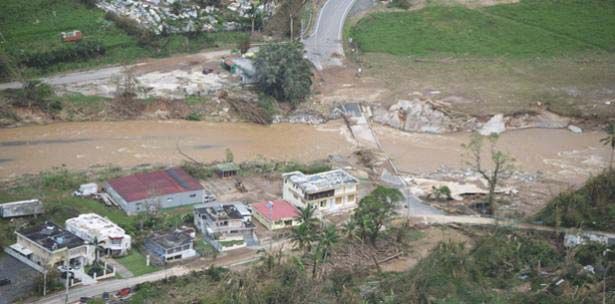

OFFICE OF INSPECTOR GENERAL
                                    Department of Homeland Security

Table of Contents

Background ...................................................................................................... 2

Grant Management Requirements ..................................................................... 3

Results of Audit ................................................................................................ 4

   Subrecipient Did Not Comply with Federal Requirements............................... 4

Recommendations............................................................................................. 6

Appendices

Appendix      A:   Objective, Scope, and Methodology .............................................. 8
Appendix      B:   FEMA Comments to the Draft Report.......................................... 10
Appendix      C:   Description of the FEMA Public Assistance Program ................... 11
Appendix      D:   FEMA Schedule of Equipment Rates for 2017 – Generators ........ 15
Appendix      E:   Report Distribution..................................................................... 16

Abbreviations

COR3               Central Office of Recovery, Reconstruction, and Resiliency
EMMIE              Emergency Management Mission Integrated Environment
FEMA               Federal Emergency Management Agency
GAO                Government Accountability Office
OIG                Office of Inspector General
PRASA              Puerto Rico Aqueduct and Sewer Authority
OFFICE OF INSPECTOR GENERAL
Department of Homeland Security
Background
On September 6, 2017, Hurricane Irma’s center passed 50 nautical miles north of
Puerto Rico as a category 5 hurricane causing severe wind and rain inundation to
the island. Two weeks later, on the morning of September 20, 2017, Hurricane
Maria made a direct hit to Puerto Rico as a category 4 hurricane. Although the
storm moved offshore in the early afternoon of September 20, 2017, tropical
storm-force winds continued late into the night causing catastrophic damage to
electrical utilities, roads, bridges, and other public infrastructure throughout
Puerto Rico. According to the National Hurricane Center, Hurricane Maria was
the most intense hurricane to make landfall in Puerto Rico since 1928.1 The
President declared Hurricanes Irma and Maria as major disasters on September
10, 2017 and September 20, 2017, respectively.
The Puerto Rico Aqueduct and Sewer Authority (PRASA)2 is one of the
subrecipients in Puerto Rico that received assistance under the Federal
Emergency Management Agency’s (FEMA) Public Assistance (PA) grant program.
Figure 1: Aerial view of the Guajataca Dam rupture
Source: Newspaper First Hour - https://www.primerahora.com/noticias/puerto
rico/nota/rupturaenembalseguajatacatodaviarepresentaunriesgoinminente-1248519/
1
Puerto Rico Hurricanes – Status of FEMA Funding, Oversight, and Recovery Challenges,
Government Accountability Office (GAO), GAO-19-256, March 2019
2 PRASA was created by Puerto Rico Law Number 40 on May 1, 1945. It is a government-
owned corporation in Puerto Rico and is responsible for water quality, management, and
supply on the island. At the time of our audit, PRASA had more than 1.2 million customers,
and maintained 8 dams, 114 water treatment plants, and 51 wastewater treatment plants.
www.oig.dhs.gov 2 OIG-20-24OFFICE OF INSPECTOR GENERAL
Department of Homeland Security
Immediately following the disaster declaration, FEMA began working directly
with PRASA to provide guidance and monitor its recovery effort related to PA
grant funds. In April 2018, the Governor issued Executive Order 2017-065 to
establish the Central Office of Recovery, Reconstruction, and Resiliency (COR3)
of Puerto Rico. This office assumed responsibility, as the Governor’s
Authorized Representative, to monitor PRASA’s management of disaster
recovery funds.3 In June 2018, COR3 contracted with ICF Incorporated, LLC
to review grant reimbursement claims and assist PA grant applicants with
project formulation, and Deloitte & Touche, LLP to provide disaster recovery
strategic and compliance services.
As of December 14, 2018 ― the cutoff date of our audit ― FEMA had obligated
more than $314 million in PA grant funding to PRASA under 20 Project
Worksheets (PW)4 for water transport, generator usage, security services,
floating pumps, and repairs.
Grant Management Requirements
According to the Code of Federal Regulations (CFR) (2 CFR 200.331(d)),
recipients are responsible for the proper administration of grants. For
example, recipients are responsible for managing the day-to-day operations of
grant- and subgrant-supported activities. In addition, recipients must ensure
subrecipients are aware of and comply with Federal regulations to ensure
compliance with applicable Federal requirements and achievement of
performance goals.
It is FEMA’s responsibility to monitor the state to ensure the recipient is
performing proper grant administration.5 Federal regulations require the
Governor — acting for the state — and the FEMA Regional Administrator to
execute an Agreement.6 The FEMA-State Agreement outlines the
understandings, commitments, and conditions under which Federal disaster
assistance is to be provided. Federal regulations also require the state to
develop a State Administration Plan outlining the actions the state will take to
fulfill its duties and responsibilities to FEMA.7 Accordingly, FEMA is
3
http://www.p3.pr.gov/assets/cor3-memorandum-2018-001.pdf
4 A Project Worksheet is the primary form used to document the location, damage description
and dimensions, scope of work, and cost estimate for each project (Public Assistance Program
and Policy Guide, April 2018, p. 174). It is the basis for a subgrant and the Public Assistance
grant funding (SOP9570.14, Dec. 2013, p. 4 of 32).
5
PA Program Management and Grant Closeout (FEMA SOP 9570.14), Section 6.3 FEMA
Responsibilities: www.fema.gov/medialibrary/assets/ documents/86377
6 44 CFR 206.44(a)
7 44 CFR 206.207
www.oig.dhs.gov 3 OIG-20-24OFFICE OF INSPECTOR GENERAL
Department of Homeland Security
responsible for holding the state accountable to the terms and conditions of
both the FEMA-State Agreement and the State Administration Plan.
In its FEMA-State Agreements,8 COR3 agreed to comply with, and require its
subrecipients to comply with, all applicable laws and regulations, including the
Stafford Act9 and applicable FEMA policies and guidance. Federal regulations
require recipients to monitor subrecipients’ activities to ensure subawards are
in “compliance with Federal statutes, regulations, and the terms and
conditions of subawards.”10
Results of Audit
Subrecipient Did Not Comply with Federal Requirements
PRASA did not adhere to policies and procedures that required it to document
the correct capacity size and rate of its force account equipment. Additionally,
PRASA did not follow established procedures to ensure that each vendor had a
certificate of eligibility on file prior to receiving a contract award. PRASA needs
additional training and monitoring to ensure compliance with Federal
accounting and procurement regulations.
Incorrect Capacity Size Recorded for Force Account Equipment
PRASA overstated its cost reimbursement claim for the use of generators by
$72,304 (PW 87). We selected 22 items from a population of 1,908 generator
usage recordings and noted PRASA incorrectly recorded the capacity size of its
generators in 4 of the 22 items sampled (valued at $6.7 million). PRASA
prepares an equipment listing to record the information related to its
generators (e.g., capacity in kilowatts (KW), usage, location, and FEMA rate).
Table 1 shows a breakdown of the $72,304, 1.07 percent of the total sampled
amount, in force account equipment costs that were overstated on PRASA’s
equipment listing, based on the incorrect capacity size and corresponding
FEMA rate:
8 FSA-4336-FEMA-DR-state (Hurricane Irma) and FSA-4339-FEMA-DR-state (Hurricane Maria)
9 Robert T. Stafford Disaster Relief and Emergency Assistance Act, as amended
10 2 CFR 200.331(d)
www.oig.dhs.gov 4 OIG-20-24OFFICE OF INSPECTOR GENERAL
Department of Homeland Security
Table 1: Overstatement of Force Account Equipment Claimed
Per PRASA Equipment Sheet
Per Auditor
Costs That
Size FEMA FEMA Costs Size Per FEMA FEMA Over-
# Should Have
Recorded Code Rate Claimed Support Code Rate statement
Been Claimed
2 537 KW 8319 $222 $118,326 400KW 8318 $153 $81,709 $36,617
5 60 KW 8313 $35 $41,241 40 KW 8325 $15 $17,464 $23,777
15 46.5 KW 8313 $35 $18,279 40 KW 8325 $15 $ 7,740 $10,539
20 50 KW 8313 $35 $ 2,377 40 KW 8325 $15 $ 1,006 $ 1,371
Total Overstatement of Force Account
$72,304
Equipment Costs Claimed
Source: PRASA Equipment Listing and FEMA 2017 Schedule of Equipment Rates Table
FEMA obligated an expedited PW on October 11, 2017 for $70.3 million for
usage of generators under PW 87. PRASA reconciled the force account
equipment costs for PW 87 against the advance and has claimed
reimbursement of such costs from FEMA.
PRASA stated the errors on the equipment listing were due to its employees
entering the kilovolt-ampere unit rather than the KW unit for the generators.
PRASA did not follow its existing policies and procedures to document and
review the correct capacity size of its equipment before submitting claims to
FEMA. As a result, FEMA overpaid PRASA $72,304 in force account
equipment costs.
According to 2 CFR 200.313 (d)(1), property records must be maintained that
include a description of the property; a serial number or other identification
number; the source of property; who holds title; the acquisition date; the cost
of the property; the percent of Federal participation in the cost of the property;
the location, use, and condition of the property; and any ultimate disposition
data, including the date of disposal and sale price of the property.
FEMA’s 2017 Schedule of Equipment Rates Table provides rates for force
account equipment for disaster declarations on or after September 1, 2017.
Cost rates for generators start with FEMA code 8310. (See Appendix D.)
Failure to Adhere to Procurement Controls for Vendor Eligibility
PRASA did not ensure vendors had the proper certificate of eligibility on file for
2017, the year PRASA awarded the contracts, for 5 of 21 contract samples
valued at $9,687,524.
www.oig.dhs.gov 5 OIG-20-24OFFICE OF INSPECTOR GENERAL
Department of Homeland Security
PRASA outsourced its procurement duties to the Administración de Servicios
Generales (ASG).11 We noted PRASA did not follow established procedures to
ensure all vendors awarded contracts in 2017 possessed the required
certificates of eligibility from ASG indicating the vendors had not been
suspended or debarred. PRASA stated that computer system outages
prevented it from confirming eligibility for the five vendors on the ASG website.
Therefore, as an alternative solution PRASA selected vendors from a list of
companies it had awarded contracts to in the past. During testing, we
determined the five vendors had not been suspended or debarred in 2017, so
we are not questioning the $9,687,524. Although not identified during our
testing, PRASA may have awarded contracts to vendors that were ineligible,
increasing the risk of substandard service delivery and unallowable costs.
According to 2 CFR 200.213, non-federal entities are subject to the non-
procurement debarment and suspension regulations implementing Executive
Orders 12549 and 12689, 2 CFR part 180. These regulations restrict awards,
subawards, and contracts with certain parties that are debarred, suspended, or
otherwise excluded from or ineligible for participation in Federal assistance
programs or activities.
Recommendations
Recommendation 1: We recommend the Regional Administrator, FEMA
Region II, work with COR3 to:
x determine if the $72,304 in force account equipment costs were
improperly claimed for PW 87 and collect any amount determined to be
unallowable; and
x review all force account equipment costs for the period under audit to
identify other potential overpayments.
FEMA Comments
Recommendation 1: Concur. Since the time of the audit period, the Puerto
Rico Aqueduct and Sewer Authority (PRASA) has provided photos of each
generator plate and a signed certification by a PRASA supervisor, which when
taken together, provide all information required to determine the appropriate
11 ASG is a state agency of the Commonwealth of Puerto Rico. ASG is responsible for
implementing public policy related to purchase of goods and services for the Executive Branch,
the municipalities, and some public corporations. ASG evaluates, under objective criteria, all
bidders interested in being bound contractually with the Government of the Commonwealth of
Puerto Rico through a series of certifications and documents allowing ASG to determine
eligibility to bid.
www.oig.dhs.gov 6 OIG-20-24OFFICE OF INSPECTOR GENERAL
Department of Homeland Security
usage rate for each generator. Further, PRASA adjusted its claim based on the
information, which resulted in an additional obligation of $350,000. PRASA
also submitted documentation for additional force account equipment use,
increasing the claim for PW 87 by $14.5 million. FEMA validated the entire
claim and no costs are unallowable. FEMA requests this recommendation be
considered resolved and closed.
OIG Analysis
FEMA’s corrective actions are responsive to the recommendation. PRASA
submitted to FEMA detailed information about each generator sufficient to
determine the appropriate usage. Further, FEMA obtained, reviewed, and
validated all costs reported by PRASA for PW 87 and determined that those
costs are allowable. We determined that FEMA’s response meets the intent of
this recommendation. Therefore, we consider this recommendation resolved
and closed.
Recommendation 2: We recommend the Regional Administrator, FEMA
Region II, work with COR3 to:
x require PRASA to adhere to its procurement policy to address the
requirement related to vendor eligibility in 2 CFR 200.213 prior to
contract award;
x require PRASA to confirm vendor eligibility for the five contracts tested;
for contracts PRASA determines as ineligible, ensure those costs are
recovered; and
x conduct training with PRASA personnel on the importance of verifying
vendor eligibility
FEMA Comments
Recommendation 2: Concur. The FEMA Region II Regional Administrator will
work with COR3 to require PRASA to adhere to its procurement policy, confirm
vendor eligibility for the five contracts tested, and conduct training with PRASA
personnel. ECD February 28, 2021
OIG Analysis
FEMA’s corrective actions are responsive to the recommendation. However, the
recommendation will remain resolved and open until we have received and
reviewed evidence that the FEMA Region II Regional Administrator has worked
with COR3 to ensure that PRASA adheres to its procurement policy, confirms
the eligibility of the five contracts tested, and conducts training for PRASA
personnel.
www.oig.dhs.gov 7 OIG-20-24OFFICE OF INSPECTOR GENERAL
Department of Homeland Security
Appendix A
Objective, Scope, and Methodology
Our audit objective was to determine whether FEMA ensured PRASA
established and implemented policies, procedures, and practices to ensure PA
grant funds awarded to disaster areas are accounted for and expended
according to Federal regulations and FEMA guidance.
We audited the capacity of PRASA to manage FEMA PA grant funds. We
conducted this audit early in the grant process to identify areas in which
PRASA may need additional technical assistance or monitoring to ensure
compliance with Federal procurement regulations.
To answer the objective, we:
x reviewed FEMA, COR3, and PRASA policies, procedures, and practices
for ensuring PA grant funds are accounted for and expended in
accordance with Federal regulations and FEMA guidance; and
x performed test work in the areas of internal controls, accounting system,
insurance, procurement, and claimed costs
We noted one finding in the area of claimed costs related to lack of adherence
to policies and procedures for documenting equipment costs. See Finding 1,
Incorrect Capacity Size Recorded for Force Account Equipment, on page 4 of this
report.
We also noted a finding in the area of procurement for failure to adhere to
controls over vendor eligibility. See Finding 2, Failure to Adhere to Procurement
Controls for Vendor Eligibility, on page 5 of this report.
We found policies and procedures were established and working in the areas of
accounting system and insurance and found no issues in these areas.
Our audit covered the period September 5, 2017 through December 14, 2018
and covered the following disaster numbers:
x EM-3384: emergency declared on September 5, 2017 due to Hurricane Irma
x DR-4336: disaster declared on September 10, 2017 due to Hurricane Irma
x DR-4339: disaster declared on September 20, 2017 due to Hurricane Maria
Table 2 summarizes the value amounts of the samples selected:
www.oig.dhs.gov 8 OIG-20-24OFFICE OF INSPECTOR GENERAL
Department of Homeland Security
Table 2: Value Amounts of Contracts Tested
Contracts Tested
Population $143,943,987
Sample $38,490,057
Percent (%) Tested 26.74%
Source: PRASA PA contract data
We assessed the reliability of contract data by (1) performing testing of required
data elements, (2) reviewing existing information about the data, and (3)
interviewing agency officials knowledgeable about the data. In addition, we
traced a statistically random sample of data to source documents. We
determined the data was sufficiently reliable for the purposes of this report.
To accomplish our objective, we interviewed FEMA, COR3, and PRASA
personnel. We also reviewed and gained an understanding of the policies,
procedures, and practices PRASA uses and plans to use to account for and
expend Federal grant funds, and to procure and monitor contracts for disaster
work. We performed testing as appropriate in the areas of accounting system,
insurance, contracting, claimed costs, and costs not yet claimed.
We conducted our performance audit between October 2018 and May 2019
pursuant to the Inspector General Act of 1978, as amended, and according to
Government Auditing Standards. Those standards require that we plan and
perform the audit to obtain sufficient, appropriate evidence to provide a
reasonable basis for our findings and conclusions based upon our audit
objectives. We believe the evidence obtained provides a reasonable basis for
our findings and conclusions based upon our audit objectives.
www.oig.dhs.gov 9 OIG-20-24OFFICE OF INSPECTOR GENERAL
Department of Homeland Security
Appendix B
FEMA Comments to the Draft Report
www.oig.dhs.gov 10 OIG-20-24OFFICE OF INSPECTOR GENERAL
Department of Homeland Security
www.oig.dhs.gov 11 OIG-20-24OFFICE OF INSPECTOR GENERAL
Department of Homeland Security
www.oig.dhs.gov 12 OIG-20-24OFFICE OF INSPECTOR GENERAL
Department of Homeland Security
Appendix C
Description of the FEMA Public Assistance Program
The Robert T. Stafford Disaster Relief and Emergency Assistance Act of 1988,
as amended, 42 U.S.C. 5121-5207 (Stafford Act) authorizes the Public
Assistance (PA) Grant Program. Following a major Presidential disaster
declaration, the Stafford Act authorizes FEMA to provide PA funding for
disaster relief to state, local, and tribal governments and to certain non-profit
organizations. The PA grants can be authorized, among other things, for:
• Assistance for debris removal (Category A) (Section 407 of the Stafford
Act);
• Assistance essential to meet immediate threat to life and property
resulting from a major disaster (Category B) (Section 403 of the Stafford
Act);
• Assistance for the repair, restoration, and replacement of damaged
facilities (Categories C-G) (Section 406 of the Stafford Act), which
includes certain hazard mitigation measures.
The PA Program is administered through a coordinated effort between FEMA,
the recipient (usually a state), and the subrecipients (applicants). While all
three entities must work together to meet the overall objective of quick and
effective program delivery, each has a different role.
FEMA and the recipient share responsibility for making PA funds available to
subrecipients. FEMA uses a Project Worksheet (project) for each project to
record the scope of eligible work, estimated or actual costs necessary to
complete the work, and special considerations associated with the work. The
project serves as the basis for Federal funding. Once FEMA approves a project,
it obligates the Federal share of the approved amount and makes it available to
the recipient. The obligated funds are available to the recipient via electronic
transfer and reside in a Federal account until the recipient approves funding to
eligible subrecipients.
The recipient is responsible for notifying the subrecipients that funds are
available, and for disbursing those funds to the subrecipients. The recipient is
also responsible for providing technical advice and assistance to eligible
subrecipients, ensuring all potential subrecipients are aware of the available
assistance programs, providing support for damage assessment operations,
monitoring subrecipients' activities to ensure the subaward is used in
compliance with Federal statutes and regulations, and submitting the
necessary paperwork for grant awards. Subrecipients are responsible for
identifying damage, providing data for developing scopes of work and estimates
of costs on projects, managing projects funded under the PA program (day-to
www.oig.dhs.gov 13 OIG-20-24OFFICE OF INSPECTOR GENERAL
Department of Homeland Security
day operations), and documenting claimed costs. The PA program is a cost
reimbursement program.
For disasters declared after November 13, 2007, the recipient receives a fixed
management cost rate of 3.34 percent (capped at $20 million) of the expected
disaster costs that can be shared with the subrecipients at the discretion of the
recipient. FEMA is required to review this rate periodically to determine
whether adjustments are necessary. In addition, subrecipients can claim
direct administrative costs for each project (no allocated costs).
On January 29, 2013, the Sandy Recovery Improvement Act (SRIA) was signed
into law. Part of the legislative intent of SRIA was to streamline administrative
procedures and improve the effectiveness of several disaster assistance
programs authorized by the Stafford Act, including Public Assistance. Section
1102 of SRIA revises the Stafford Act by creating a new Section 428 authorizing
the FEMA Administrator to establish and adopt alternative procedures for
debris removal and permanent work projects effective for major disasters
declared on or after May 20, 2013.
Section 20601 of the Bipartisan Budget Act of 2018 authorizes FEMA to
provide assistance, pursuant to Section 428 of the Stafford Act, for critical
services as defined in Section 406. This new authority allows FEMA to provide
assistance to restore disaster-damaged facilities or systems that provide the
specifically identified critical services to an industry standard without regard to
pre-disaster condition. The authority is exclusive to assistance authorized by
the major disaster declarations issued to Puerto Rico and the United States
Virginia Islands following Hurricanes Irma and Maria. The Bipartisan Budget
Act of 2018 also allows the Oversight Board12 to review any federal funds
exceeding $10 million that are designated for recovery from Hurricanes Irma
and Maria.
12 The Oversight Board was created as a result of the Puerto Rico Oversight, Management, and Economic
Stability Act of 2016 (Public Law 114-187).
www.oig.dhs.gov 14 OIG-20-24OFFICE OF INSPECTOR GENERAL
Department of Homeland Security
Appendix D
FEMA Schedule of Equipment Rates for 2017 – Generators
FEMA Code ID Equipment Description
Cost Code Equipment Specifications Capacity/Size Horsepower Notes Unit 2017 Rate
8310 Generator Prime Output 5.5 KW to 10 Hour $3.35
8311 Generator Prime Output 16 KW to 25 Hour $7.45
8312 Generator Prime Output 43 KW to 65 Hour $15.00
8313 Generator Prime Output 100 KW to 125 Hour $34.95
8314 Generator Prime Output 150 KW to 240 Hour $50.00
8315 Generator Prime Output 210 KW to 300 Hour $62.45
8316 Generator Prime Output 280 KW to 400 Hour $80.40
8317 Generator Prime Output 350 KW to 500 Hour $90.50
8318 Generator Prime Output 530 KW to 750 Hour $153.30
8319 Generator Prime Output 710 KW to 1000 Hour $222.00
8320 Generator Prime Output 1100 KW to 1500 Open Hour $349.00
8321 Generator Prime Output 2500 KW to 3000 Hour $533.75
8322 Generator Prime Output 1,000 KW to 1645 Enclosed Hour $403.30
8323 Generator Prime Output 1,500 KW to 2500 Enclosed Hour $511.22
8324 Generator Prime Output 1100KW 2500 Enclosed Hour $495.80
8325 Generator Prime Output 40KW 60 Hour $14.80
8326 Generator Prime Output 20KW 40 Hour $13.32
Source: FEMA 2017 Schedule of Equipment Rates Table
www.oig.dhs.gov 15 OIG-20-24OFFICE OF INSPECTOR GENERAL
Department of Homeland Security
Appendix E
Report Distribution
Department of Homeland Security
Secretary
Deputy Secretary
Chief of Staff
Deputy Chiefs of Staff
General Counsel
Executive Secretary
Director, GAO/OIG Liaison Office
Assistant Secretary for Office of Policy
Assistant Secretary for Office of Public Affairs
Assistant Secretary for Office of Legislative Affairs
Office of Management and Budget
Comptroller
Chief, Homeland Security Branch
DHS OIG Budget Examiner
Congress
Senate Committee on Homeland Security and Governmental Affairs House
Committee on Oversight and Government Reform
Government Accountability Office
Comptroller General
www.oig.dhs.gov 16 OIG-20-24Additional Information and Copies
To view this and any of our other reports, please visit our website at:
www.oig.dhs.gov.
For further information or questions, please contact Office of Inspector General
Public Affairs at: DHS-OIG.OfficePublicAffairs@oig.dhs.gov.
Follow us on Twitter at: @dhsoig.
OIG Hotline
To report fraud, waste, or abuse, visit our website at www.oig.dhs.gov and click
on the red "Hotline" tab. If you cannot access our website, call our hotline at
(800) 323-8603, fax our hotline at (202) 254-4297, or write to us at:
Department of Homeland Security
Office of Inspector General, Mail Stop 0305
Attention: Hotline
245 Murray Drive, SW
Washington, DC 20528-0305You can also read


