Career & Technical Education - PENNSYLVANIA 2019
←
→
Page content transcription
If your browser does not render page correctly, please read the page content below

COLLEGE READY • CAREER SKILLED • INNOVATION FUELED

               Career &
      PENNSYLVANIA

    Technical Education
                C O L L E G E A N D C A R E E R PA T H WAY S F O R T H E 2 1 S T C E N T U R Y

  The mission of the Pennsylvania Department of Education is to lead and serve the educational
community, to enable each individual to grow into an inspired, productive, fulfilled lifelong learner.
COMMONWEALTH OF PENNSYLVANIA
                                                OFFICE OF THE GOVERNOR

Dear Fellow Pennsylvanians,

        Career and technical education (CTE) in Pennsylvania prepares students for today’s dynamic and technology-
driven workplace by offering more than 1,700 approved programs in over 200 schools1. At the foundation of every CTE
program is the development of rigorous academic, technical, and employment skills to prepare students for both college
and career.

        Pennsylvania’s CTE students have tremendous opportunities and are held to high academic and technical skill
expectations. Many earn industry-recognized credentials, early college credits, and real work experience in addition to
meeting all graduation requirements. CTE students are expected to demonstrate proficiency on statewide academic
assessments, and in addition, take a widely respected end-of-program technical assessment. Students thrive in career
and technical education and are motivated to succeed because learning is relevant and meaningful; CTE connects what
students are learning today to their personal goals and aspirations for tomorrow.

        CTE students develop a range of significant, real world skills that prepare them for a successful transition to
postsecondary opportunities. Participation in Career and Technical Student Organizations allows students to develop
leadership skills, engage in community service, and compete in regional, state, and national competitions. Through
ongoing and in-depth career exploration and planning, students make informed decisions about their future whether it
includes college, a training or apprenticeship program, or immediate entry into a skilled career. CTE students leave
high school with a clear vision of where they want to go next in life and what it takes to get there.

        At the heart of Pennsylvania’s robust CTE programs are skilled CTE educators who deliver engaging
instruction aligned with academic standards and program competencies. In addition to having years of field experience,
CTE educators also earn a Pennsylvania teaching certification and complete a rigorous induction program at the local
level. Every CTE teacher receives ongoing guidance from members of their program’s locally convened Occupation
Advisory Committee.

        The significant value that career and technical education provides extends to students, local communities, and
the commonwealth. We are proud to offer young people high-quality career and technical education that prepares them
to contribute to Pennsylvania’s economy, the welfare and future of their local community, and their own financial
independence.

                                                      TOM WOLF
                                                      Governor
                                                      2018

1As of March 2018, 1,762 approved CTE programs are offered in 219 schools: 108 career and technical centers, 110
district high schools, and one charter school.
                       225 Main Capitol Building | Harrisburg, PA 17120 | 717.787.2500 | Fax 717.772.8284 | www.pa.gov
Pennsylvania’s Career and Technical Education System
Changing Workforce                                            In 2018, there are 1,747 state-approved career and
                                                              technical programs are offered to students in 84 regional
Drives Program Improvement                                    career and technology centers (CTC) and 140 high
Pennsylvania’s career and technical education                 schools in Pennsylvania. 16 of the CTCs operate as
(CTE) system is focused on providing young                    comprehensive high schools; students complete a CTE
                                                              program and all other graduation requirements leading
people with the skills, knowledge and habits                  to a high school diploma in one building.
needed to succeed in college and careers: a
strong academic and technical foundation;                     Additionally, approximately 1,000 postsecondary CTE
                                                              programs (two-year degree programs) and 344 adult CTE
opportunities to explore and experience
                                                              programs (offering less than a two-year degree) are in
careers; and, engagement in activities that                   operation.
develop employability skills.
                                                              The majority of CTCs in Pennsylvania operate as a shared
In the past, students who were not planning to attend         time option; students spend about half of the day at the
college were often guided toward vocational education         CTC engaged in a CTE program and the other half of the
programs leading to direct entry into the workforce.          day at their home or “sending” high school where they
This model worked well for many years; high school            take required academic courses and earn a high school
graduates who attended “vo-tech” were typically able          diploma. Twelve CTCs operate as comprehensive high
to secure low or middle skilled jobs offering a path          schools, meaning students may complete a CTE program
to middle class with only a high school diploma and           and all other graduation requirements leading to a high
entry level skills. But the economy for which traditional     school diploma.
vocational education was designed longer exists. Today’s
economy demands a workforce with more advanced                There is no cost for students to participate in CTE programs
academic and technical skills. Further, workers are           at either a shared time or comprehensive high school and
expected to adapt quickly to changes in technology            transportation from students’ home high school to the
and have stronger communication, critical thinking,           regional CTC is provided at no cost to the student.
collaboration and creative skills.
                                                              While the federal Carl D. Perkins Act authorized
Career and technical education in Pennsylvania has kept       funding and program criteria to support CTE programs,
up with these changes by offering academically rigorous,      Pennsylvania provides a critical state investment of
technology-rich programs that prepare students for many       approximately $62 million in funding for CTE, including
postsecondary options. Today, a significant percentage of     some funding for competitive equipment grants
students enrolled in CTE programs pursue two- and four-       and adult training. At the local level, approximately
year college degrees, and an increasing number begin          five percent of a CTC’s budget comes from Carl D.
accumulating college credits and industry-recognized          Perkins federal funds (amount varies regionally due to
credentials while still in high school. For others, CTE       demographics), 10 percent or less comes from State
programs lead to competitive apprenticeship and               Career and Technical Education Subsidy and 85 percent
training programs or direct entry into skilled careers that   or more comes from member school districts.
offer advancement opportunities.
                                                              THE STORY OF CTE
CTE DELIVERY IN PENNSYLVANIA                                  CTE is more than programs, buildings and funding; it’s
Since 2011-12, enrollment in CTE programs have                people – students, parents, educators and employers –
increased by five percent, while overall high school          working together to prepare learners for their future. The
public school enrollment has decreased by three and a         remainder of this brochure tells more about the story of
half percent.                                                 Pennsylvania’s outstanding career and technical education.

                                                                                                                             1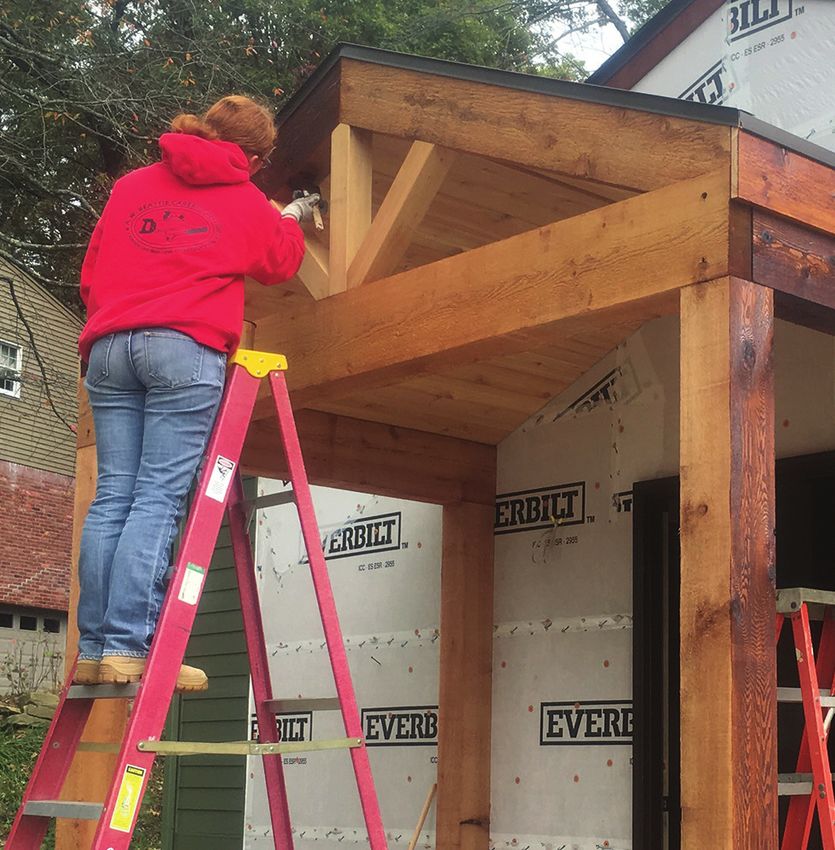
CTE Student Success Story

Jayden Todd
                                                                  automation system design. Our classroom is a state-of-
                                                                  the art lab where theory and principles come together
                                                                  through hands-on learning, computer-based lessons, use
                                                                  of technical equipment and student-created projects.
    Jayden Todd is certain that attending Berks Career            At BCTC, this program is also part of our Technical
    and Technology Center’s Mechatronics Engineering              Academy which gives students the opportunity to earn
                                                                  college credits and begin building a college transcript.”
    Technology program is giving him a head start
    on his college and career plans. In fact, Jayden
    is already earning college credit through dual
    enrollment. As a senior, Jayden is wrapping
    up his third and final year in Mechatronics
    Engineering Technology and plans to major
    in engineering or a related field at a four-year
    university.

    Jayden’s interest in engineering prompted him to join
    the Technology Students Association (one of many
    Career Technology Student Organizations, known as
    CTSOs) at his home school. When he learned about
    Berks Career and Technology Center’s (BCTC) half-
    day mechatronics program, Jayden decided to give it
    a try and never looked back.

        “One aspect of the program that I
        really enjoy is hands-on learning,
        using the same equipment that
                                                                  BCTC isn’t the only place Jayden may engage in
        professionals use. Right now, I’m                         learning. After hearing him speak before 350 employers
        working on my senior project which                        and educators at a symposium, the CEO and president
        involves the conceptualization,                           of the region’s largest employer invited Jayden to
                                                                  participate in an internship before he graduates. Not
        design and building of a remote
                                                                  surprisingly, Jayden welcomes the opportunity.
        control robot. It’s a collaborative                       A high-achieving student at his home school, at BCTC
        project that BCTC students will work                      Jayden is a member of the National Technical Honor
        on for the next few years.”                               Society and Skills USA (another CTSO), organizations
                                                                  that offer opportunities to develop employability and
    Hands-on learning is integrated with instructor-led           leadership skills through community service, skills
    theory lessons. Online tutorials focusing on 3-D printing     competitions and other activities.
    are also available to students.
                                                                  What does Jayden recommend to students interested in
    According to Jayden’s teacher, Mr. Charles Stricker,          career and technical education programs? “Go for it! Get
    “The Mechatronics Engineering Technology Program              a start on your career. BCTC has definitely been the right
    is ideal for students interested in electronics, electrical   choice for me.”
    engineering, mechanical engineering and robotics and

2
Best Practice Profile

Building Tiny Houses
Offers Real World Experience
for CTE Students
In response to a popular national trend, students at
Lancaster County Career and Technology Center designed
and built a tiny house in order to apply academic,
technical and employability skills to a real world project.
The yearlong endeavor involved nearly 200 students        program area. Many of the students involved in the
from various CTE programs including Plumbing;             project also participated in cooperative learning – part-
Electrical Construction; Cabinetmaking and Wood           time employment coordinated through the school
Technology; Architectural CAD/Design; Painting;           and during school time that often leads to full-time
Ceramic Tile and Vinyl; and, HVAC/R. In addition to       employment after graduation.
their specific trade area, students practiced problem
solving, communication, critical thinking and other in-   The school’s tiny house was displayed and marketed
demand employability skills.                              at regional events such as the Lancaster Spring Home
                                                          Show where it received positive attention.
Authentic learning leads to student engagement and
success, and the majority of students
who participated in the project scored
Competent or Advanced on their end-
of-program NOCTI exam, a nationally
recognized assessment taken by CTE
program completers. Further, nearly all
students earned at least one industry-
recognized certification in their technical

                                                                                                                      3
GETTING RESULTS
    TECHNICAL SKILL ATTAINMENT                                  give greater consideration (and higher starting pay) to
    All students in the commonwealth, including                 candidates who hold them.
    those enrolled in CTE programs, are expected to
    demonstrate proficiency on state required academic          CAREER EDUCATION AND WORK STANDARDS
    assessments. In addition, students on track to              A significant goal of CTE is that students gain
    complete a CTE program sit for an end-of-program            broad and transferable skill sets as well as the
    assessment to demonstrate achievement of technical          capacity to adapt to changing technologies and job
    skills and knowledge. In most programs, an exam             responsibilities. To further support the development
    developed by NOCTI, a national skill assessment             of a well-educated and skilled workforce, Pennsylvania
    organization, is used for this purpose. Statewide,          Department of Education requires all public schools
    the percentage of students scoring Competent                to integrate approved Academic Standards for
    or Advanced on NOCTI and other assessments                  Career Education and Work (CEW). These CEW
    continues to increase:                                      standards describe what students should know and
                                                                be able to do in four areas: Career Awareness and
            PERCENT OF STUDENTS WHO SCORED                      Preparation; Career Acquisition; Career Retention and
          COMPETENT OR ADVANCED ON NOCTI AND                    Advancement; and Entrepreneurship. While these
              SIMILAR ASSESSMENTS, BY YEAR
    100                                                         standards apply to all schools, by the very nature of
                                                                their programs, CTE teachers have been integrating
                                       84%                      these concepts into program curriculum and
     80                                                         classroom experiences for many years.
                           70%
     60       55%
     40
                                                                   Graduation Rates: In school
                                                                   year 2016-2017, 99 percent
     20                                                            of Pennsylvania CTE students
                                                                   who successfully completed
      0
               2006         2010        2017                       at least 50 percent of their
                                                                   CTE program graduated from
    This steady increase may be attributed to a continuous
    cycle of CTE program reviews, professional                     high school.
    development and leadership development provided
    in large part through the state sponsored Pennsylvania
    Technical Assistance Program (see below).

    INDUSTRY CERTIFICATIONS
    In addition to obtaining in-demand technical skills,
    CTE students have the opportunity to earn industry-
    recognized certifications. In 2016-17, 29 percent of
    CTE students earned at least one certification. In total,
    students earned 35,132 certificates during that school
    year. Employers value these certifications and may
                                                                                                                          Image Credit: Vecteezy

4
Supports for CTE Programs, Educators and Students
                                        Pennsylvania Technical Assistance Program: Improving Academic and
                                        Occupational Achievement in Career and Technical Education
                                        The Pennsylvania Department of Education (PDE), Bureau                    superintendent from one of the member school districts
                                        of Career and Technical Education (BCTE) facilitates an                   is designated the CTC’s Superintendent of Record; this
                                        ongoing statewide initiative intended to increase the                     responsibility typically rotates among the member school
                                        quality and impact of CTE programs and assure that they                   district superintendents each school year.
                                        align with the commonwealth’s economic
                                        and workforce development priorities.                                                     OCCUPATIONAL ADVISORY
                                        Two key goals of the initiative are to                                                    COMMITTEES
                                        increase academic and occupational                                                        Offering teachers and administrators
                                        achievement and success for all CTE                                                       industry-related guidance regarding CTE
                                        students.                                                                                 program curriculum, equipment and
                                                                                                                                  workplace trends, a locally convened
                                        Supporting these goals is a Technical                                                     occupational advisory committee (OAC)
                                        Assistance Program (TAP) that offers                                                      is in place for every CTE program. OAC
                                        participating schools multiple services to                                                members are leaders in their field and
                                        address locally identified areas in need of                                               provide a vital link between CTE programs
                                        improvement. A designated Career and                                                      and business and industry.
                                        Technical Distinguished School Leader
                                        (CTDSL) is assigned to each school                                                      CAREER AND TECHNICAL STUDENT
                                        and acts as an improvement coach for                                                    ORGANIZATIONS
                                        teachers and administrators. Through TAP,                                               Career and Technical Student
                                        teachers engage in professional learning                                                Organizations, or CTSOs, are an integral
                                        opportunities that drive improvements in instruction, and                 part of the CTE experience. These not-for-profit
                                        administrators participate in leadership classes to further               organizations, authorized by the U.S. Congress in
                                        develop their capacity and effectiveness.                                 the Perkins Act, align with career clusters and career
                                                                                                                  pathways. Each CTE program in Pennsylvania is
                                        Career and Technical Education Promising Practices                        connected to at least one CTSO allowing over 70,000
                                        Effective and innovative practices are taking place in                    students to participate in more than 1,000 local chapters.
                                        CTE around the commonwealth. To capture and share
                                        these practices, BCTE supports the Pennsylvania CTE                       Relevant and engaging CTSO activities are integrated
                                        Resources website (http//.www.pacteresources.com).                        into curriculum and extra-curricular activities. Through
                                        This website documents hundreds of promising practices                    CTSO involvement, students develop and enhance
                                        that are taking place in the classroom, school or region                  many career, leadership, employability and life skills
                                        and are believed to contribute to improved student                        that contribute to being a productive member of the
                                        results. Dedicated to the notion that successes should                    workforce and society. According to a National Research
                                        be recognized and replicated, the goal of this resource is                Center for CTE report, the more students participate
                                        simple: CTE educators can learn from one another and,                     in Career Technical Student Organization activities,
                                        in doing so, improve students’ educational experiences                    the higher their academic motivation, academic
                                        and opportunities.                                                        engagement, grades, career self-efficacy, college
                                                                                                                  aspirations and employability skills.2
                                        JOINT OPERATING COMMITTEES
                                        A Joint Operating Committee (JOC) that acts as a school                   NATIONAL TECHNICAL HONOR SOCIETY
Image Credit: https://penntap.psu.edu

                                        board governs each regional Career and Technology                         Students’ academic and technical achievement is
                                        Center. JOC members are drawn from the school boards                      recognized through the highly competitive National
                                        of the districts that are permanent members of the                        Technical Honor Society. To be considered for induction,
                                        CTC. This ensures that member school districts have a                     students meet rigorous criteria including an overall grade
                                        direct stake in governance of the CTC. Additionally, a                    point average of 3.0 or higher on a 4.0 scale.

                                        2 Alfred et al., Looking Inside the Black Box: The Value Added by Career and Technical Student Organizations to Students’ High School
                                        Experience, National Research Center for CTE, 2007                                                                                      5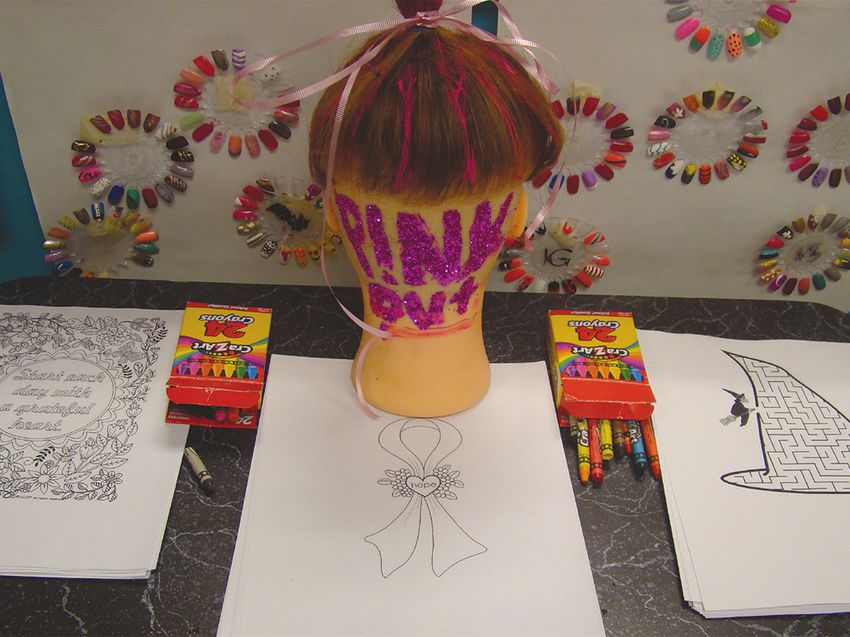
Where are the JOBS?
       Many Americans are surprised to learn that a majority           • By 2020, 65 percent of all jobs in the U.S. are
       of our nation’s jobs demand “middle skills,” and                  expected to require at least some postsecondary
       these are often obtained through two-year technical               education: 35 percent of job openings will require
       degrees and training programs. Clearly, a traditional             at least a bachelor’s degree and 30 percent will
       four-year college degree is not the only path to                  require some college or an associate’s degree.
       middle and high skill careers paying family-sustaining
       wages. Consider the following data:3                            • 31 percent of young workers with an associates
                                                                         degree earn more than those with a bachelor’s
       • According to the National Skills Coalition,                     degree.
         about 50 percent of all jobs in Pennsylvania are
         considered middle skilled, and that percentage is             • 27 percent of young workers with licenses and
         slightly higher than the national average of 48%                certificates earn more than those with a bachelor’s
         middle skilled jobs.4                                           degree.

                                                                       3 A. P. Carnevale, et al. Recovery: Job Growth and Education
       • Across the nation, 30 million jobs offering an
                                                                       Requirements Through 2020. Georgetown University Center on
         average salary of $55,000 a year do not require a             Education and the Workforce, 2013
         bachelor’s degree.                                            4 National Skills Coalition. https://www.nationalskillscoalition.
                                                                       org/resources/publications/2017-middle-skills-fact-sheets/file/
                                                                       Pennsylvania-MiddleSkills.pdf

                 Examples of careers requiring less than a four-year degree include the following:5

                 ASSOCIATE’S DEGREE:
                                                     Entry Level Annual Wage Average Annual Wage
                 Registered Nurse                             $50,560		            $67,550
                 Computer Programmer                          $48,360		            $78,830
                 Dental Hygienist                             $48,060		            $62,830
                 Electrical Engin. Tech                       $38,240		            $55,620
                 Paralegal                                    $34,520		$53,390
                 Cardiovascular Tech                          $33,160		            $51,850
                 Web Developer                                $38,160		            $62,830
                 Construction Manager                         $65,400		            $115,520

                 SOME POSTSECONDARY TRAINING OR ON-THE-JOB TRAINING:
                 Cement Mason                    $30,960		           $46,640
                 Construction Equipment Operator $33,150		           $47,900
                 Pipelayer                       $36,440		$51,150
                 Correctional Officer            $35,600		           $50,380

5 Retrieved March 2018 from the Pennsylvania Department of Labor and
Industry, Center for Workforce Information and Analysis
http://www.workstats.dli.pa.gov/Documents/PA%20IDOL/PA%20IDOL.pdf

6
Linking CTE to                              High Priority
  Pennsylvania’s
                                              Occupations
To compete regionally, nationally and globally,
Pennsylvania needs skilled workers to fill
positions in high priority, high impact industries.
Even during a severe economic downturn, some
skilled jobs go unfilled because there is not a
sufficient supply of prepared workers, while in other
industries and occupations there may be more
skilled workers than available jobs. The problem is
even more pronounced during a time of high overall
employment.

While this is an ongoing challenge, CTE leaders
work to keep pace with the ebb, flow and
evolution of job market demands and industry
changes by maintaining a tight alignment
between the CTE programs offered to students
and the current industry demands as this is in
the best interest of students and the economy.

The Pennsylvania Departments of Labor and
Industry, Community and Economic Development
and Education worked together to identify industry
sectors impacting employment opportunities in
the commonwealth. It was determined that twelve
industry clusters – groups of industries that are
linked by similar product markets, labor pools,
supply chains and other economic ties – account
for nearly 82 percent of all employment in the
commonwealth6 (see next page). This information
helps drive the creation of new CTE programs as
well as determine when an existing program no
longer offers viable job opportunities.

6 Pennsylvania Department of Labor and Industry Center for
Workforce Information and Analysis, retrieved March 2018,
http://www.workstats.dli.pa.gov/Products/PAIndustryClusters/
Pages/default.aspx
                                                               7
Pennsylvania’s 12 Targeted Industry Clusters                                                                                        7

    An industry cluster consists of a group of industries that are closely linked by common product
    markets, labor pools, similar technologies, supplier chains, and /or other economic ties.
    Clusters can take on strategic importance because activities that benefit one group member
    will generally have positive spillover effects on other members of the cluster.

    Nine industry clusters, with critical sub-clusters, have been identified for workforce strategies.
    These nine clusters account for nearly 69 percent of all employment in the Commonwealth.

            ADVANCED MANUFACTURING                                          HOSPITALITY, LEISURE & ENTERTAINMENT

     • Welder                                                              • Culinary Chef
     • Machinist                                                           • Amusement and Recreation Attendant
     • Production Supervisor                                               • Customer Service Representative

            AGRICULTURE & FOOD PRODUCTION                                                              ENERGY
         • Veterinarian                                                         • Drill Operator
         • Environmental Engineer                                               • Maintenance and Repair
         • Food Scientist                                                       • Operations Manager

                         BIOMEDICAL                                                            HEALTH CARE
     • Chemist                                                             • Nurse
     • Industrial Engineer                                                 • Mental Health Counselor
     • Medical and Clinical Laboratory Technologist                        • Medical Secretary

                  BUILDING & CONSTRUCTION                                           REAL ESTATE, FINANCE & INSURANCE
         • Carpenter                                                            • Insurance Sales Agent
         • Electrician                                                          • Loan Officer
         • Plumber                                                              • Personal Financial Advisor

                    BUSINESS SERVICES                                        WOOD, WOOD PRODUCTS & PUBLISHING
     • Accountant                                                          • Prepress Technician
     • Sales Manager                                                       • Graphic Design
     • Securities, Commodities and Financial                               • Cabinetmaker
       Services Sales Agent

                             EDUCATION                                                  LOGISTICS & TRANSPORTATION

         • Teacher or Teacher Assistant                                         • Tractor Trailer Truck Driver
         • Bus Driver                                                           • Cargo and Freight Agent
         • Office Staff                                                         • Packer and Packager

     7 Pennsylvania Department of Labor and Industry Center for Workforce Information and Analysis, retrieved March 2018, http://www.
     workstats.dli.pa.gov/Products/PAIndustryClusters/Pages/default.aspx

8
Best Practice Profile
“Pink Out Week”
at Susquehanna
County Career and
Technology Center
Cosmetology students at Susquehanna
County Career and Technology Center
(SCCTC) practice technical and employability
skills while raising money for the American
Cancer Society Relay for Life. Pink Out Week,
started in 2007, takes place the last week of
every October. During this much-anticipated
event, students provide exciting cosmetology
services to Elk Lake Elementary students in the
SCCTC cosmetology lab.
With parental permission, elementary student
choose from age-appropriate services such as
pink glitter manicures, temporary tattoos and
unique hair braiding. A reasonable donation
is suggested for each service with all profits
going directly to the American Cancer Society.
Each year, between 500 and 600 elementary
students purchase services, resulting in more
than a $1,000 annual donation to the charity.
Pink Out Week is a win-win for all involved.
Cosmetology students practice technical and
customer service skills in a low-pressure and
fun environment while also contributing to a
worthy cause. Elementary students are excited
to be pampered and get a glimpse into career
and technical education.
9Best Practice Profile
Emerging Energy and
Infrastructure Training at
Central Pennsylvania Institute of
Science and Technology
In response to the region’s hydraulic assessment of CPI’s strengths and the industry’s
needs, the program was implemented.
fracturing (“fracking”) for natural
gas extraction, Central Pennsylvania Students in the program develop technical, academic
Institute of Science and Technology’s and employability skills that are in high-demand.
Innovative learning methods are embedded and
(CPI) has developed an Emerging
include authentic industry equipment supported
Energy and Infrastructure Training by one-on-one interaction with instructors, well
Program that provides training for organized written curricula and a website that
careers in fields related to natural provides animations, videos, virtual trainers and
online skill building exercises.
gas processing, renewable energy,
advanced manufacturing, water The Emerging Energy and Infrastructure Training
quality management and other Program includes certificate programs in water
and wastewater, natural gas, solar power and wind
industries.
power and offerings in industrial maintenance,
electromechanical and mechatronics. Through this
Regionally, manufacturing is in high demand due in
program, CPI provides a much-needed pipeline
large part to Marcellus Shale fracking for natural gas
of qualified technicians and, equally important,
extraction. In fact, it is estimated that as many as 70
is having a direct impact on the quality and
percent of the job openings in central Pennsylvania
effectiveness of the current workforce, helping
are for skilled technicians. As a result of this demand
companies be more successful and competitive.
and after several years of planning, including an
10CTE Student Success Story
Hanna Gibson
A. W. Beattie Career Center’s Carpentry/Building
Construction Program provided Hanna Gibson with
experiences and preparation typically not included
in a high school education. Hanna, a 2017 graduate,
contends, “Not only did I get real work experience
in a field that interested me, but I was also better
prepared for college.” CTE enriched Hanna’s overall
high school experience. “It didn’t stop me from
doing the things other high school students did. I
still participated in my home school’s marching band
and played lacrosse. At A. W. Beattie, I was a member
of SkillsUSA and competed at the state and national By participating in a career program at
level. I had the best of both worlds in both schools.” A. W. Beattie Career Center, especially one
Hanna was also a member of the National Honor dominated by male students, Hanna feels
Society and National Technical Honor Society.
she developed greater self-confidence and
important life skills including the ability to
Engaging in CTE for two hours daily allowed Hanna
the time needed to learn new technical skills and set goals and reach them; time management;
build a positive relationship with the instructor. “The interpersonal communications; and teamwork.
teachers at the career center make you feel like
you’re one of their own. They tell you when you’re
doing great, and they tell you when you need to step
it up. They invest in you and your future.” Through
a summer job in construction, Hanna earned “good
money” and made connections with employers in
the field who, along with program instructor Mr. John
Brown, mentored Hanna as she made the decision to
pursue construction as a career path.
Hanna is a full-time student at Pennsylvania
College of Technology (PCT) where she majors in
Building Construction and minors in Construction
Management. At PCT, Hanna “watched fellow
students who didn’t attend CTE struggle with the
simplest tasks. I knew what to expect in my college
program, and I have the foundation to succeed
at PCT because I attended A. W. Beattie.” While in
college, Hanna is continuing her commitment to
extracurricular activities by participating in clubs
such as Penn College Woman in Construction, Penn
College Construction Association and Skills USA
Alumni. Her ongoing commitment to academics has
landed Hanna on PCT’s Dean’s List.
11Best Practice Profile
Berks County Technical Academy
Imagine graduating from high school with 27
credits on a college transcript. Beginning as
early as grade ten, students attending Berks
Career and Technology Center (BCTC) and
Reading Muhlenberg Career and Technology
Center (RMCTC) may enroll in the Technical
Academy, an innovative college and career
pathway program designed in partnership with
the Reading Area Community College (RACC)
and Bloomsburg University. The program,
open to students in three career areas, allows
students to earn college credits through dual
enrollment courses, saving them time and
money on their path to in-demand careers.
Thanks to extensive collaboration between CTE
and college staff, career and technology center
instructors use RACC curricula, textbooks and
assessments to teach the courses. High school
seniors may earn additional credits toward the
associate degree by attending courses on the
community college campus. It is not unusual for
students to complete half or more of the courses
required for the associate degree while in high
school.
After high school graduation, Technical Academy
students are expected to complete the two-year
degree at RACC. With this achieved, they may enter
the workplace or complete a Bachelor of Applied Technical Academy
Science in Technical Leadership from Bloomsburg
University. A significant benefit is that students
Entrance Requirements
STUDENTS MUST BE IN GRADES 10 OR 11
may earn the bachelor’s degree without moving to
Bloomsburg; all required courses are offered on the
• 3.0 overall GPA (unless special permission is granted)
RACC campus at a fraction of the state university
tuition rate. The Bloomsburg University courses are
• Must be math and reading proficient
offered during day and evening hours and some are
available online.
• Must remain in a college prep academic sequence
throughout high school
The Technical Academy is an outstanding example
of innovation in Pennsylvania’s career and technical
• Sign a Letter of Understanding to attend RACC to earn
education.
an associate degree
12Best Practice Profile
Culminating Career Portfolios at
Dauphin County Technical School
As part of the Dauphin County Technical School
(DCTS) curriculum, each student is expected to
complete a Culminating Career Portfolio by the
end of senior year. Implemented over a decade
ago, the portfolio ensures that all DCTS students
develop effective plans for a successful future;
skills necessary for post-secondary success; and,
a tool to use during the job application and
interview process.
The portfolio is introduced during the required
Freshman Seminar and consists of four major
COMMUNITY SERVICE
components:
Students secure and complete twenty hours of
community service (five hours per year). DCTS
COMPREHENSIVE CAREER AND TECHNICAL BEST
administrators provide assistance with finding
WORKS
opportunities when needed.
Students self-select their best work, commensurate
with the highest level of competency attained in the
Students are provided extensive support and
program area each year. Students also include written
resources as they work on their portfolio. The project
explanations and reflections designed to prompt self-
is directed and monitored by a team of educators
assessment and evaluation of critical academic, career
and local employer. DCTS administrators feel strongly
and technical and career education skills.
that the Career Culminating Portfolio provides an
opportunity for every student to receive instruction,
INTERVIEW AND SENIOR EXIT SURVEY
guided practice, independent practice and mentoring
In an effort to improve job interview skills, students
in career acquisition and retention skills.
participate in mock interviews conducted by business
and industry leaders in their junior year. As seniors,
students are required to complete an exit survey.
ACQUISITION DOCUMENTS
Students are required to research careers, plan
courses, identify personal strengths and weaknesses
related to careers and document their progress
as they do so. Throughout high school, students
complete a career inventory, create a resume, write a
cover letter and develop other documents related to
professional and career communication.
13Creating Programs of Study
to Link CTE, Core Academics,
Postsecondary Education and Training
An important element in Pennsylvania’s
CTE design is the link between CTE and EACH STATE-APPROVED CTE PROGRAM OF
academic courses and between high STUDY MUST ADHERE TO THE FOLLOWING:
school and postsecondary education. These
connections are meant to develop students’ • Align to High Priority Occupations as identified
college and career readiness and a seamless by the PA Department of Labor and Industry
transition into postsecondary education and
• Align to PA Academic Standards
training. This is organized through well-
planned CTE Programs of Study. • Articulate to postsecondary institutions,
providing opportunities for students to
articulate college credits and/or earn credits
through dual enrollment
• Utilize an approved competency list
• Offer opportunities for students to obtain
industry-recognized credentials when possible
• Align to an end-of-program technical
assessment
• Further, CTE teachers must have field
experience, earn a Pennsylvania teaching
credential and meet all other teaching
requirements.
14Pennsylvania Recommended Career Plan of Study
Cluster: Production Occupations • Pathway: Advanced Material and Diversified Manufacturing (AMDM): Machine Tool Technology
SOCIAL CAREER/TECHNICAL INDUSTRY
GRADE ENGLISH MATH SCIENCE STUDIES EDUCATION CERTIFICATIONS
Middle School Cluster: Production Occupation
7 English 7 Math Gen Science Choose personal electives and extra
Social Studies None
curricular activities based upon
personal career interests, abilities and
academic strengths.
8 English 8 Algebra I Gen Science Choose personal electives and extra
Social Studies None
curricular activities based upon
personal career interests, abilities and
academic strengths.
High School Pathway: Advanced Materials & Diversified Manufacturing
9 English I Geometry Earth & Space Explore occupation based upon
American History I None until
interest assessment. Learn about Grade 12
employment outlook information,
hiring outlook, and wage information.
10 English 2 Algebra II Chemistry Precision Machining program of study
American History II None until
includes: safety, layout work, part Grade 12
inspection, bench work activities,
operating a drill press and grinding
machine.
11 English 3 Trig/Algebra III Physics Precision Machining POS includes:
Government None until
lathe operation, milling machine
Civics and Grade 12
Economics operation, power saw operation,
maintenance of precision machines
and tools, metallurgy, use of charts
and references, reading blueprints,
Computer Numerically Controlled
(CNC) Programming.
12 English 4 Calculus Environmental World Precision Machining POS includes: National Institute For
Science additional training in Computer
History Metalworking Skills
Numerically Controlled (CNC) (NIMS) Level I
Programming, metallurgy, use of certification
charts and references, reading
blueprints.
Students attending a part-time career and technical center are provided with transportation to and from
their home high school. Due to school schedules, students sometimes take one core academic course
at the career and technical center. In most cases, students are able to participate in extra-curricular
activities such as sports, theater or clubs at their sending high school.
15Best Practice Profile
Lenape Technical School Biomedical Technology Programs
Students at Lenape Technical School in Ford City
have the opportunity to enroll in a BioMedical
Technology Program, one of only a few such
programs in the state. This three-year program,
part of the school’s health care occupations
cluster, prepares students for postsecondary
education and careers in the high-demand
health care fields as well as biotechnological,
clinical, forensic and research laboratories.
Involving more than an introductory health
program, students gain a substantial background a diploma program that provides opportunities for
in biotechnology, anatomy and physiology, entry-level employment in health care professions
medical terminology, pharmacology, immunology, in smaller systems and medical practices within
microbiology, genetics, forensics and bioethics. surrounding communities. With that in mind, the
Hands-on training in laboratory techniques used in program also includes components that foster
the clinical, biomedical research and forensic settings preparation for job opportunities typically available
are a significant part of the program. Students in residential and rural communities, such as medical
may earn several industry-recognized certificates technologist, surgical technician, practical nurse or
including American Heart Association CPR.AED, veterinarian technician.
Bloodborne and Airborne Pathogens and AHA First
Aid. Training for the Pharmacy Technician certification An advisory committee of various stakeholders,
is included in the course, preparing students to sit for including local biotechnology professionals and
the exam upon graduation. faculty from Penn State, the Community College of
Allegheny County and Butler County Community
The program is designed as a college preparatory College provided guidance when the program was
sequence of courses, and students in the program designed.
are typically enrolled in honors-level academic
classes. The core program is completed in two years; Throughout the program, students experience
a third year is dedicated to independent study. several dynamic out-of-school learning opportunities,
including a visit to a large hospital where they
Upon graduation, some students choose to pursue observe open-heart surgery and participate in a tour
postsecondary education at a bachelor’s degree, of the animal research facility at the University of
while others may complete an associate’s degree or Pittsburgh.
Image Credit: Vecteezy
16As depicted in this brochure, career and technical education in Pennsylvania is
engaging, innovative and systematically organized. Through CTE curricula and
activities, our youth gain in-demand technical and employability skills that serve
them well in college, career and life.
We look forward to continually improving CTE for our students, their families
and our economy. If you have questions about career and technical education,
please do not hesitate to contact me or one of our regional career and
technical centers.
Best wishes,
Lee Burket, Ed.D.
Director, Bureau of Career and Technical Education
717.787.5530
lburket@pa.gov
Key Pennsylvania CTE Contacts
Pennsylvania Association of Career & Technical Administrators (PACTA) • www.pacareertech.org
Pennsylvania Association for Career and Technical Education (PA-ACTE) • https://www.acteonline.org/
pennsylvania-association-for-career-and-technical-education/
Pennsylvania State Education Association, Department of Career & Technical Studies (PSEA-DCTS )
http://www.psea.org/general.aspx?ID=1256&coll_id=30
Career and Technical Education Resource Center at Penn State Greater Allegheny • www.careertechpa.org
National CTE Information
U.S. Department of Education • cte.ed.gov
Association of Career and Technical Education • www.acteonline.org
National Association of State Directors of CTE Consortium • www.careertech.org
National Research Center for Career Technical Education • www.nrccte.org
17Pennsylvania’s Investment
IN CAREER AND TECHNICAL EDUCATION
Through the leadership of the Governor
and the General Assembly, Pennsylvania
is making a strategic investment in
CTE which annually helps prepare
over 200,000 Pennsylvania youths and
adults for the highly skilled, competitive
workforce. Pennsylvania provides a critical
state investment of approximately $62
million in funding for CTE, including some
funding for competitive equipment grants
and adult training. Pennsylvania supports
84 CTCs, as well as 111 school districts/
charter schools and 32 postsecondary NORTHWEST PENNSYLVANIA CTC’S
institutions offering CTE. These career and CENTRAL/NORTH CENTRAL PENNSYLVANIA CTC’S
technical centers, colleges, universities, NORTHEAST PENNSYLVANIA CTC’S
SOUTHWEST PENNSYLVANIA CTC’S
and private postsecondary institutions
SOUTH CENTRAL PENNSYLVANIA CTC’S
offer over 1,700 secondary approved
SOUTHEAST PENNSYLVANIA CTC’S
programs, over 1,100 postsecondary
programs, and over 350 adult programs.
The Pennsylvania Department of Education does not discriminate in its educational programs, activities or
employment practices based on race, color, national origin, sex, sexual orientation, disability, age, religion, ancestry,
union membership, or any other legally protected category. This policy is in accordance with state law, including the
Pennsylvania Human Relations Act, and with federal law, including Title VI and Title VII of the Civil Rights Act of 1964,
Title IX of the Education Amendments of 1972, Section 504 of the Rehabilitation Act of 1973, the Age Discrimination
in Employment Act of 1967 and the Americans with Disabilities Act of 1990.
The following persons have been designated to handle inquiries regarding the non-discrimination policies:
FOR INQUIRIES CONCERNING FOR INQUIRIES CONCERNING NON-DISCRIMINATION
NON-DISCRIMINATION IN EMPLOYMENT IN ALL OTHER PENNSYLVANIA DEPARTMENT OF
Pennsylvania Department of Education Education Programs and Activities
Equal Employment Opportunity Representative Pennsylvania Department of Education
Bureau of Human Resources School Services Unit Director
333 Market Street, 11th Floor 333 Market Street, 5th Floor
Harrisburg, PA 17126-0333 Harrisburg, PA 17126-0333
Voice Telephone (717) 787-4417 Voice Telephone (717) 783-3750
Text Telephone: (717) 783-8445 Text Telephone (717) 783-8445
Fax (717) 783-9348 Fax (717) 783-6802You can also read


