Careers in the dental team - Caring, compassionate, committed Make a difference with a career in health - NHS Health Careers
←
→
Page content transcription
If your browser does not render page correctly, please read the page content below
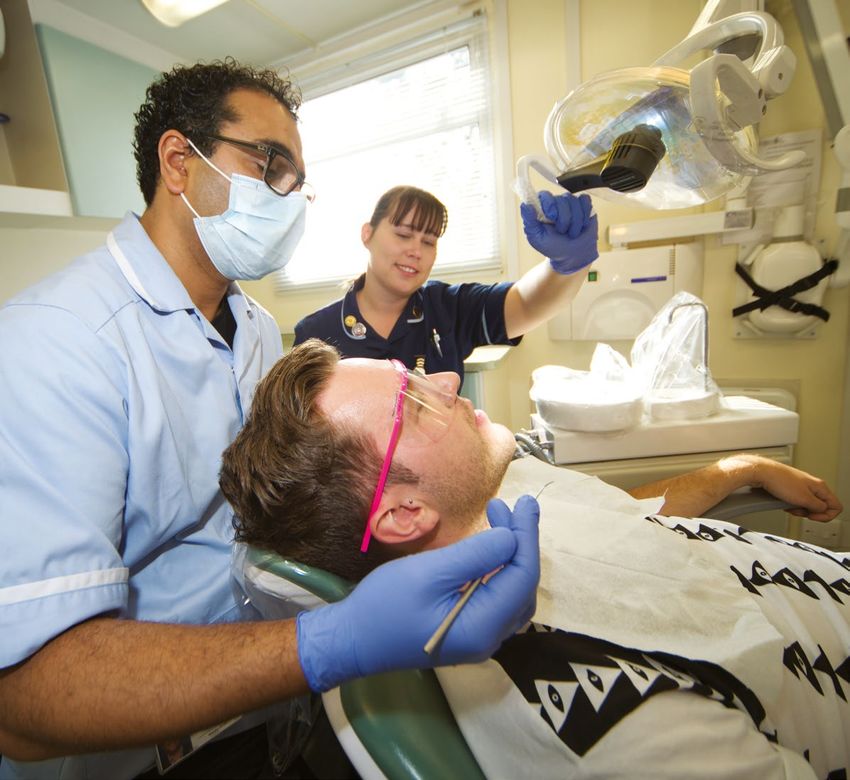
Careers in
the dental team
Caring, compassionate, committed
Make a difference with a career in health
Welcome

A career for you                                    NHS values and the 6Cs
                                                    of compassionate care
There are more than 350 roles in health, and
many of them are part of a wider team which         To apply for any job in the NHS or in an
works alongside other health professionals          organisation that provides NHS services, or
for the benefit of patients and the public.         for a course with clinical placements in the
As well as the NHS itself, a great many large       NHS, you’ll need to show how you think the
and smaller organisations provide healthcare        values of the NHS Constitution would apply
and work to prevent ill health in the UK.           in your everyday work.
These include public and private sector
organisations, community interest companies,        The NHS Constitution values are:
social enterprises and charities, and you could
work for the NHS or any one of these other              Working together for patients
organisations in a health role.                         Respect and dignity
                                                        Commitment to quality of care
Some roles give you direct contact with                 Compassion
patients, while in others you are part of               Improving lives
a vast support network vital to delivering              Everyone counts
healthcare and preventing ill health, and good
team-working is essential. Some jobs are in         These values may also be promoted as
hospitals, others are based in the community:       the 6Cs of compassionate care, which are:
increasingly, health and social care services are
integrated or co-ordinated in order to provide          Care
a seamless service for people with a range              Compassion
of needs.                                               Competence
                                                        Communication
We actively recruit people of all ages,                 Courage
backgrounds and levels of experience,                   Commitment
including people who have worked in other
sectors or who bring life experience from
outside the world of work. This helps us to
understand the different needs of patients,
families and carers, and to provide the best
possible service every day.                                     more about
                                                       Find out more  about the
                                                                            the NHS
                                                                                NHS Constitution
                                                                                    Constitution
                                                               xCs at:
                                                       and the 6Cs at

                                                           www.healthcareers.nhs.uk/
                                                           www.healthcareers.nhs.uk/
                                                           nhsconstitution
                                                           nhsconstitution

                                                           www.healthcareers.nhs.uk/xCs
                                                           www.healthcareers.nhs.uk/6Cs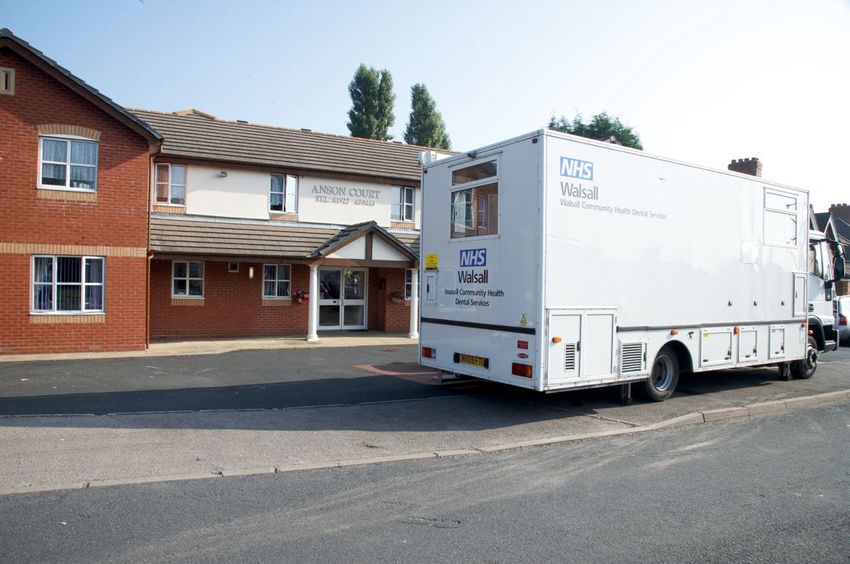
Contents
  Your career in the dental team .............................................. 4

  Frequently asked questions (FAQs) ....................................... 5

  Which role is right for you? ................................................... 6

  Dental care roles at a glance .................................................. 8

         i        Dental hygienist ....................................................................        8
         i        Dental nurse..........................................................................       9
         ii       Dental technician and Clinical dental technician ....................                       10
         iii      Dental therapist ....................................................................       11
         iv       Dentist .................................................................................   12
         v        Orthodontic therapist ...........................................................           13

  Real-life stories ........................................................................ 14

  Getting started in the dental team ........................................ 20

  Next steps and progressing your career ............................... 23

  Benefits of working in the NHS ............................................. 27

  Example career routes ............................................................ 29

                                                                                                Careers in the dental team   5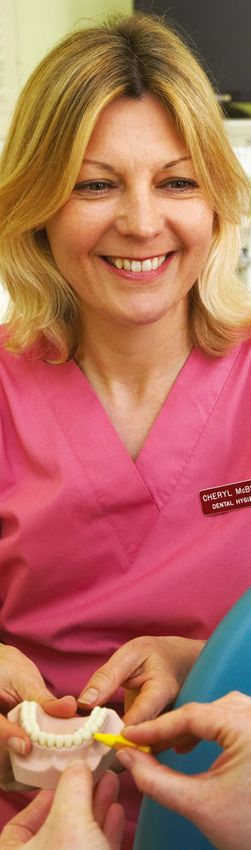
Your career in
                                 the dental team

                                 Dental care is an important part of healthcare.
                                 As well as looking after the nation’s mouths,
                                 the dental team contributes to the wider care of
                                 patients. You’ll have day-to-day contact with a
                                 wide range of people and your work will make
                                 a real difference to their lives.

                                 Whatever your academic background,
                                 you can find a role that’s right for you.

                                           The dental team may work in a variety of
                                           settings including general high street
                                           practices, hospitals, community services or
                                           in universities, and this gives you different
                                           options on how to further your career.
                                           Some skills and qualities are needed by
                                           everyone working in the dental team:

                                           •   willingness to learn
                                           •   good manual dexterity
                                           •   an eye for detail
                                           •   excellent people skills so you can deal
                                               with a broad range of people
                                           •   ability to offer advice and educate others
                                           •   team working

4   Careers in the dental team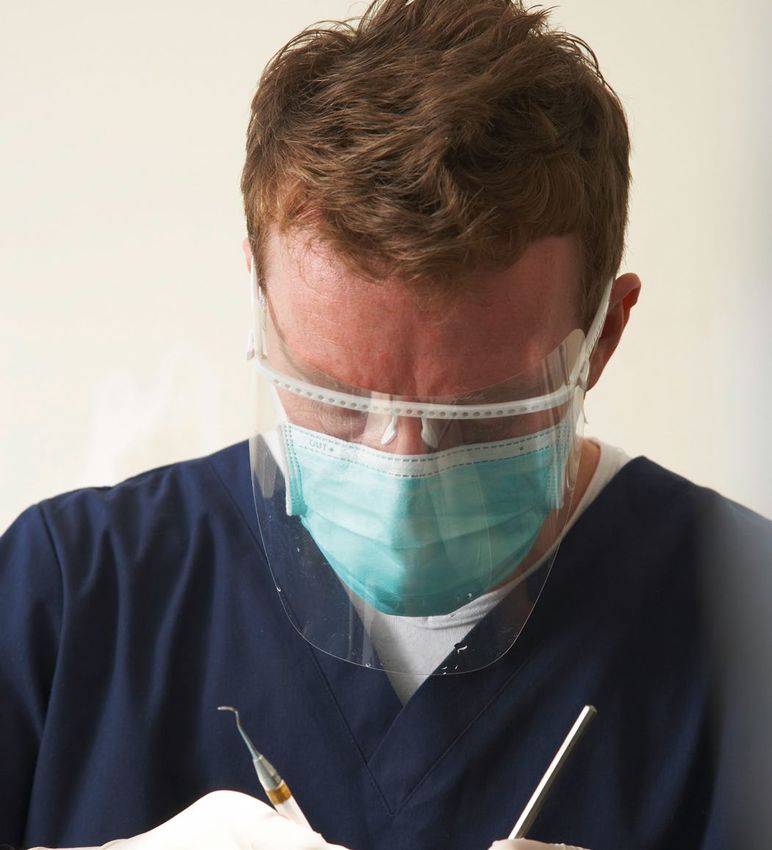
FAQs
Who works in the dental team?                            How do I train to be a
                                                         dental nurse?
The dental team includes dentists, dental nurses,
dental therapists, dental hygienists, dental             You can usually work as a trainee dental nurse
technicians and clinical dental technicians and          without academic qualifications, but to progress
orthodontic therapists. There are opportunities to       to being a qualified dental nurse, you will need to
progress into more specialised roles.                    study for a course in dental nursing, either part
                                                         or full time, that is approved by the General
How do I train to be a dentist?                          Dental Council.

You’ll need to start by going to university to do        Can dental nurse training be
an approved degree in dentistry. Find out more
                                                         done without working in a
about studying for a career in the dental team at
www.healthcareers.nhs.uk/dentaltraining.
                                                         dental environment?
                                                         You’ll need to put what you learn into practice:
Visit our course finder to search for the dental
                                                         so even if you do a full time course, there
schools/universities approved to run degree
                                                         will usually be dental nurse placements or time
courses in dentistry:
                                                         spent in the dental school’s practice. Visit
www.healthcareers.nhs.uk/courses.
                                                         www.healthcareers.nhs.uk/dentalnursing
                                                         for details of the training.
How do I train to be a dental
hygienist or dental therapist?                           Is there financial help while
You’ll need to go to university to do an approved
                                                         I’m training?
diploma or degree course in dental hygiene or
                                                         Students currently taking degrees in dentistry
dental therapy. Some courses combine both areas.
                                                         receive some financial help from the NHS.
Visit our course finder to search for the universities
approved to run degree courses in dental hygiene
                                                         However, financial support for eligible students
and dental therapy:
                                                         on other courses is changing. Most students on
www.healthcareers.nhs.uk/courses.
                                                         approved degrees in dental hygiene or dental
                                                         therapy continued to receive financial support for
Find out more about studying for a career in
                                                         entry in 2017, but the situation for students starting
the dental team at:
                                                         these courses from 2018 onwards is unclear at the
www.healthcareers.nhs.uk/dentaltraining.
                                                         time of printing this booklet.

                                                         Find out more about the financial help currently
                                                         available at: www.nhsbsa.nhs.uk/students and
                                                         www.healthcareers.nhs.uk/financialsupport

                                                         If you are applying for a course in dentistry, dental
                                                         hygiene or dental therapy, please check directly with
                                                         the university or course provider for the very latest
                                                         information about financial support.
                                                                                   Careers in the dental team   5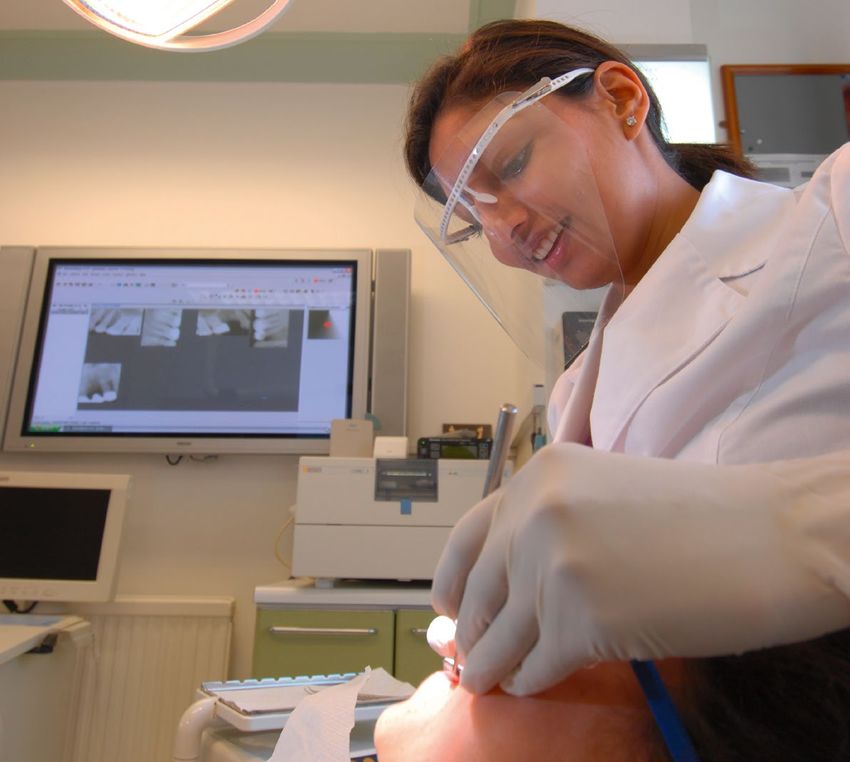
Which role is right for you?

Providing dental care for the community or in a hospital setting is a team responsibility.
Each member of the dental team has an important role to play in promoting and
maintaining oral health. If you like the idea of working with people, as a respected
professional, in a career which offers flexibility and security, a role in the dental team
could be right for you.

            You could train to be a dentist and run a          In recent years, oral health has improved as
            high street practice, work as a dental             more of us are looking after our teeth better.
            hygienist to help prevent dental disease or        The skills of the dental team, coupled with
            train as a dental nurse and help the team          advances in dentistry, mean that a visit to the
            deliver treatment and advice. Alternatively,       dentist is seen as a positive way to support
            you could train as a dental technician and         health and well-being. There are still high
            make dentures, crowns, bridges and                 levels of oral diseases to address, as well as
            retainers for patients.                            maintaining and improving oral and general
                                                               health. Most dental diseases are preventable,
            Whatever your role, you’ll be making a big         so it is important that all members of the
            contribution to the oral health of the nation.     dental team are skilled and qualified.

                                                             There are opportunities for members of the
                                                             dental team to work in the British Army,
                                                             Royal Navy and Royal Air force. For further
                                                             information about careers in the armed
                                                             forces, visit the Ministry of Defence website:
                                                             www.gov.uk/government/
                                                             organisations/ministry-of-defence

6   Careers in the dental team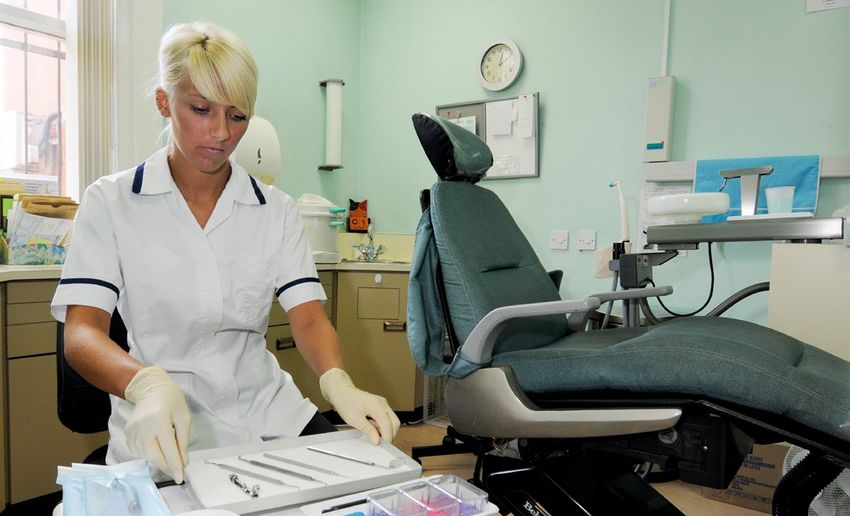
Dental team roles at a glance

You can find more detailed information about
                                                                              See real-life stories of
all the dental roles listed below on the Health
                                                                              people working in some
Careers website at                                                            dental team roles at the
www.healthcareers.nhs.uk/dentalteam                                           end of this section.

               1

          Dental hygienist

          Most hygienists work in high street practices,     life-changing surgery. In the community, you
          but you could opt to work in hospitals or          could work with people with a wide variety
          community-based services, where you may also       of specific and additional requirements, such
          visit people in their own homes and residents      as people with additional needs, for example,
          of care homes. You will usually work with a        a disability.
          team of dental professionals, although it is now
          possible for hygienists and therapists to set up   Your main responsibilities include:
          their own practices or work independently.
                                                             •   scaling and polishing teeth and applying
          Good people and communication skills are               sealants – a coating to protect teeth
          very important for all dental hygienists.          •   demonstrating a wide range of good
                                                                 dental/oral cleaning techniques
          As a dental hygienist, your main role is to help   •   helping patients with additional needs
          prevent the development of dental disease.             such as children with high levels of
          You will show children and adults how to look          dental disease
          after their teeth and gums on an individual
          basis or in groups. You will be highly skilled,
          working inside patients’ mouths, scaling (at
          times under local anaesthetic), polishing teeth
          and applying sealants (coatings that protect
          teeth). Your work will help prevent gum
          disease, maintain good oral health and help
          people get rid of associated problems like bad
          breath. If you work in a hospital, you will help
          patients who may have had major surgery or
          complicated orthodontic treatment. Patients
          may be very ill, apprehensive or unsure after

                                                                                Careers
                                                                                 Allied health
                                                                                        in the dental
                                                                                               professions
                                                                                                      team   7
2

             Dental nurse

             Most dental nurses work in high street            You will work closely with the dentist,
             practices. You could also work in a hospital      maintaining the surgery and assisting during
             dental department or a community-based            dental treatment. You will also work with
             service looking after patients with additional    your team to improve the quality of care and
             or special needs.                                 the efficiency of the practice. You will have
                                                               the opportunity to develop your skills to take
             You will help the dentist deliver a range         x-rays for patients, advise patients on oral
             of treatment and advice to patients from          health, take impressions and apply fluoride
             check-ups to more complicated treatment.          to prevent tooth decay.
             You’ll need to reassure people and put
             them at ease, while supporting the                Professionalism and discretion are important
             dentist in all aspects of patient care.           qualities for a dental nurse, as you will be
             It is a responsible and rewarding job.            handling confidential patient information and
                                                               caring for people who may be anxious.
             Dental nursing offers good job security.
             During your career, you will develop systems      Your main responsibilities include:
             and procedures that help patients with their
             care and treatment.                               •   welcoming patients and putting them
                                                                   at ease
             In a dental practice you will welcome patients    •   preparing dental materials
             and provide direct support with the treatment     •   helping patients with all aspects of
             itself, take responsibility for the                   their treatment
             decontamination of instruments and                •   making sure equipment and the surgery
             maintenance of dental equipment, and ensure           are clean
             that all relevant materials and supplies are in
             place. You will look after patient records and
             you may help the dentist with note taking.

8   Careers in the dental team
Dental technician

Dental technicians work in dental laboratories,    Your main responsibilities include:
and some also work in hospital settings
providing more specialised work.                   •   making dentures, crowns, bridges
                                                       and retainers
As a dental technician, you support the dental     •   working with the dental and medical
team by making the dentures, crowns, bridges           teams to construct appliances that meet
and retainers that can improve a patient’s             individual needs
appearance, speech and ability to chew.
                                                   As you acquire more experience and skills,
Technicians use a wide range of                    you may focus on one of four areas:
materials to design and construct
appliances to meet each patient’s needs.           •   prosthodontics – designing and
As well as knowing about the properties                making dentures
of these materials, you will need an               •   conservation – crown and bridge work
excellent understanding of dental and              •   orthodontic appliances – retainers to
facial anatomy.                                        correct teeth positioning
                                                   •   maxillofacial – more complex
Artistic ability and good dexterity are                reconstruction of faces damaged by
important as much of the work is done by               accident or disease
hand, and you will also work with equipment
in the laboratory. Since each patient is unique,   Clinical dental technician
precision is essential if a device is to be        Clinical dental technicians are qualified and
comfortable and effective for the patient.         registered dental technicians who have
                                                   undertaken specific clinical training to design,
Dental technicians may also work directly          create, construct, modify and fit removable
with patients in a clinic alongside a dentist      dental appliances for patients.
or as a clinical dental technician.
                                                   In this role you are able to provide dentures
                                                   direct to patients with no natural teeth. For
                                                   patients with some teeth, you can provide
                                                   what are known as partial dentures, when
                                                   working with a dentist. You would also
                                                   check on the patient’s oral health. This is an
                                                   interesting option for dental technicians who
                                                   are interested in working directly with patients.

                                                                      Careers in the dental team   9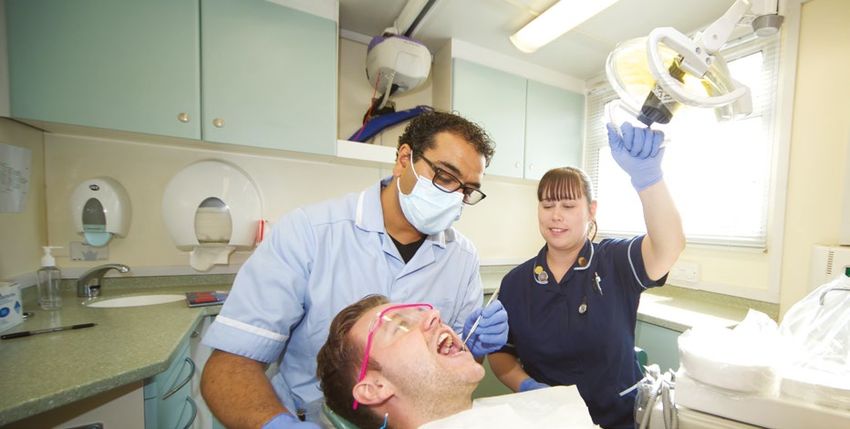
3

             Dental therapist

             Most dental therapists work in high street        You will need the confidence to work on
             dental practices, but may also work in hospital   your own and the ability to put even
             and community-based settings.                     the youngest of patients at ease. You may
                                                               also work with children, older people and
             Dental therapists provide advice and treatment    those with special needs, especially in
             to patients. Therapists may work on their own     hospital and community settings.
             or with a dental nurse.
                                                               Your main responsibilities include:
             Dental therapists carry out treatment such as
             fillings, extraction of baby teeth and scaling    •   clinical work, including fillings and simple
             and polishing. They usually work with a               extractions, scaling, polishing and
             dentist but sometimes treat patients without          applying sealants
             a dentist referral.                               •   teaching patients how to keep their
                                                                   mouths healthy
             Educating patients on preventing oral disease
             is another important part of the dental
             therapist role.

10 Careers in the dental team
4
Dentist
Dentists mainly work in high street dental (complex crown and bridgework and
practices, but may also work in community- implants). There are also non-clinical roles
based settings in hospitals and university in the management and organisation of
settings. You’ll need the skills and confidence dentistry and in dental research.
to diagnose and treat problems and provide
good advice to patients, as well as having high An increasing amount of a dentist’s work
levels of manual dexterity to carry out intricate is preventive, protecting teeth and gums
surgical and dental procedures. You will have from decay and disease. When your patients
excellent knowledge of human anatomy and do have problems, you’ll need to put them
oral diseases, as well as good clinical skills. at ease, gain their confidence and deal
It’s also important for you to be able to lead sympathetically with their fears. You will hold
your team effectively, so you’ll need good a position of trust, so you will need to behave
managerial and administrative skills. with integrity, tact and understanding.
Dentists working in general practice will either Your main responsibilities include:
be employed by, or be partners in, a dental
practice. Some may be self-employed, dividing • diagnosing and treating problems
their time between different practices and • carrying out preventive dentistry and
other settings for providing care. education to protect teeth and gums
from decay
Most dentists work as general • leading the dental team and managing
practitioners so, on the whole, your a general dental practice
patients will come from your local • carrying out dental treatment, such as
community. You will need to be able to fillings, extractions, minor oral
communicate well with everyone from surgery, crowns, bridges, dentures and
young children to the elderly. dental implants
Dentists may also want to specialise and focus Dentists may also work part or full time
in specific areas of dentistry. This may include providing private treatment.
orthodontics, special care dentistry (dentistry
for patients with special needs), periodontics
(the study of gums), endodontics (study
of tooth roots) and prosthodontics
Careers in the dental team 115
Orthodontic therapist
Orthodontic therapists form an important Under the direction of an orthodontist,
part of the orthodontic team. They assist orthodontic therapists:
orthodontists with day-to-day treatments
including treating crooked or crowded teeth. • clean and prepare tooth surfaces ready
for orthodontic treatment
Orthodontic therapists are generally • identify, select, use and maintain
dental nurses with additional training who appropriate instruments
assist dentists when they are carrying out • insert removeable orthodontic braces
orthodontic treatment. Under the direction • insert removeable braces activated or
of a dentist or orthodontist, you will provide adjusted by a dentist
treatment including impression-taking, fitting • insert or remove braces, orthodontic
brackets and wires and giving oral hygiene adhesives and cement
instructions directly to patients.
12 Careers in the dental teamReal-life
stories
Careers in the dental team 131
Dental hygienist
Name
Cheryl McBroom
Job title
Dental hygienist, York
“As a hygienist, you can work
Entry route
in a range of different places
Dental nursing course
with different patients.”
How I got into the role The best bits
After I left school aged 16, I studied dental nursing The job itself is also extremely varied. In the hospital
at college and later developed my career in the outpatient clinic I see all sorts of patients, from
dental team as a dental hygienist. children undergoing orthodontic work to cancer
patients who are having chemotherapy and need
What I do help to keep their mouths moist, as the treatment
can leave them with sore and dry mouths.
Many people don’t realise what being a dental
hygienist involves. I was a dental nurse for five years before training to
be a hygienist. There are opportunities to continue
I work as part of a team in a general hospital to learn and develop and I may consider teaching
where I see people who are very ill, depressed and when I am a bit older.
anxious. One of the rewarding parts of the job is
being able to spend time talking to them – not just
about their treatment, but about their life, their
family and so on.
As a hygienist, you can work in a range of different
places with different patients. When I was training,
I had placements in a community dental clinic, an
acute mental health trust and a school for children
with special needs.
14 Careers in the dental team2
Dental nurse
Name
Emma Nelson
Job title
Dental nurse, Bracknell, Berkshire
Entry route
“It’s not for the squeamish
National Examining Board for Dental
Nurses National Certificate – but it is very rewarding.”
How I got into the role What I do
I never planned to be a dental nurse. I was just looking I work part time, three days a week, which gives
for a job, but I soon started to enjoy the work. me time to look after my young family. It is a busy
job, with a lot of contact with patients. On a typical
Within a few months I decided to do a course day I’ll start off by getting out the notes for all the
leading to my National Examining Board for Dental patients due that day, then check the surgery to
Nurses National Certificate. My dentist paid for this make sure everything’s in order. Throughout the day
and helped me in other ways, such as testing me I’m likely to be spending time supporting the dentist
while I worked. with treatments and working on reception.
I passed the exam, then worked for two more years The best bits
to become qualified. I’m keen to carry on training.
I recently passed exams on dental radiography and I’d say to anyone interested in dental nursing that
dental sedation nursing. I’d like to study oral health it’s not an easy job – and it’s not for the squeamish
education and practice management in the future. – but it is very rewarding, especially if you like
I’m also interested in teaching dental nurses, so working with people. The flexibility has meant I
that’s another route I could take. can manage my work and family life.
Careers in the dental team 153
Dental therapist
Name
Dave Martin
Job title
Dental therapist,
Manchester and Thameside “One of the joys of the job is
Entry route helping someone who is nervous
Working in a dental lab
get through their treatment.”
How I got into the role The best bits
Although I started out working in a dental lab, after One of the joys of the job is helping someone who
a while I wanted to get involved in the clinical side is nervous get through their treatment and become
of things. I worked for a short while as a dental more confident. I like the huge range of patients
nurse, and then trained for two years full time to be you see in the NHS.
a dental hygienist. I followed that with two years’
part time training as a dental therapist. It’s good to work with children – teaching them good
habits that will keep their teeth and gums healthy.
The NHS helped me to move up the career ladder
with a grant and a small bursary for me to train as I am self-employed and I work in different practices,
a dental therapist. carrying out routine work under the direction of
the dentist, allowing the dentist to focus on more
What I do advanced procedures.
The role of dental therapist is a relatively new one. I really enjoy the job and earn a good living!
Dentists are beginning to realise that we can make
a real difference in helping to cut waiting times for
patients. For example, I see around 12 patients on
a typical day. It means the practice as a whole can
see more people more quickly – and that’s really
important if you are a patient in pain.
16 Careers in the dental team4
Senior dental officer
Name
Manoj Kumar
Job title
“One moment I’m
Senior dental officer (dental surgeon),
dental services, Birmingham undertaking an extraction
Community Healthcare NHS Trust
and the next offering school
Entry route
children oral health advice.”
Dentistry degree
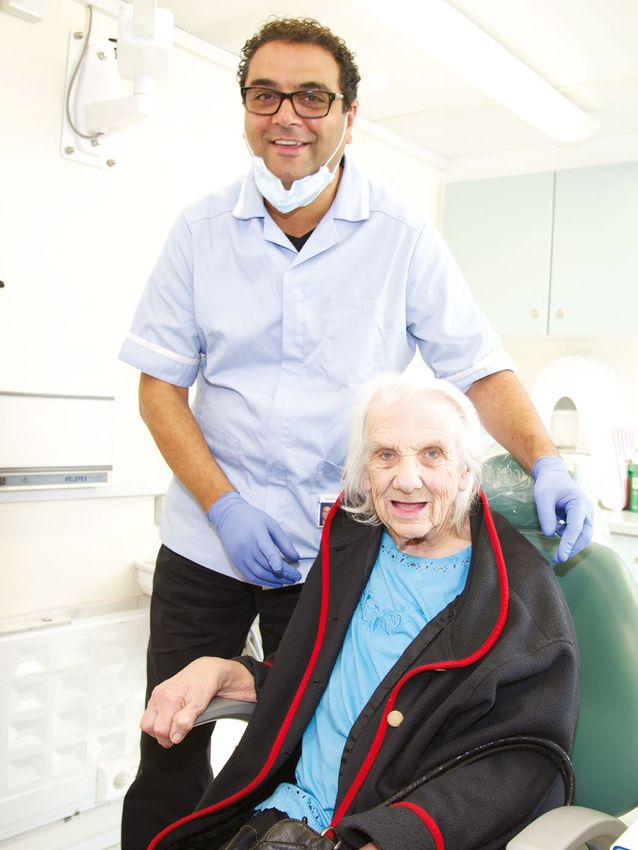
How I got into the role I often treat patients in the dental access centre but
sometimes I work in the mobile dental unit. This
I always enjoyed science and helping people. During allows me to see patients who would not normally
my A-levels, I decided that dentistry was the career come to the dentist or find it hard to make the
for me. Since qualifying I have practised dentistry as journey, such as those in care homes. I love being
a clinical dental surgeon at NHS hospitals, practices able to get out into the community and meeting the
and community dental services. I have progressed wide range of people living in Walsall.
to my current role as senior dental officer through
continuing professional development (CPD), which The best bits
the NHS has really supported me with. CPD allows
me to continually learn and update my knowledge My job is often challenging but also rewarding,
while working. and relieving a patient’s pain and providing them
with the best possible dental care and advice is a
What I do fantastic feeling. Knowing that I am making a real
difference to a person’s health makes the whole
My job is so varied and includes many aspects of job worthwhile and is what drives me to get up in
dental treatment. One moment I’m undertaking the morning.
an extraction and the next offering school children
advice on how to better look after their oral health.
I also get to see a mix of people including those
who are anxious about seeing a dentist! Making
these patients feel relaxed gives me a great sense
of achievement.
Careers in the dental team 175
Medical technical officer
(orthodontic laboratory manager)
Name
Neil Valder
Job title
Medical technical officer (orthodontic
“I really enjoy advising
laboratory manager), Eastman Dental clinicians about
Hospital (part of University College
London Hospitals NHS Foundation Trust) appliance designs.”
Entry route
City and Guilds training scheme
How I got into the role junior staff. In 1996, I successfully applied for the
position of senior chief dental technician. The role
I always enjoyed working with my hands at school, later changed to orthodontic lab manager, but both
and was looking for a career that was practically were graded at band 8a.
oriented. A teacher suggested I consider a career in
dentistry, so I applied to the City and Guilds training What I do
scheme and never looked back.
In the lab, I supervise three dental technicians
I started my NHS career in 1973 as a band 4 trainee and a laboratory administrator and we provide
dental technician at the Eastman Dental Hospital via appliances to more than 40 clinicians. I really enjoy
the three-year City and Guilds training scheme. The working closely with clinicians and advising them
course really allowed we trainees to experience both about appliance designs that are suitable for their
practical and theoretical training at the college, and patients’ treatment plans. Here at the Eastman
then to apply that knowledge when working with Dental Hospital, I liaise with clinicians in the
patients at the hospital. paediatrics department to construct appliances for
children with disabilities. I find this part of my job
After I completed the course, I was offered a very rewarding, as the clinician and I speak directly
permanent job at the Eastman Dental Hospital as a with the children’s parents to assess what type of
band 5 basic grade technician. I worked in this role appliance is needed.
for a year and was then given the opportunity to
study for an advanced City and Guilds certificate The best bits
in orthodontic technology. I was promoted to a
band 6 senior dental technician role where I learnt Keeping up to date with new techniques and
to construct more complicated appliances. After a developments in my field is another important part
few years, I was promoted again to a band 7 chief of what I do. Having this knowledge is a real benefit
dental technician, where I took a more active role for everyone in the lab and it’s always good to learn
in the running of the lab and supervising the more something new!
18 Careers in the dental teamGetting started in the
dental team
There are a number of ways to start your career as a member of the dental team. For
most jobs, you will need some formal qualifications but there are different entry routes
depending on your skills and experience. Whatever role you choose, and whatever level
you start at, you will get all the support you need to develop your career. See the section
Next steps and progressing your career for further information on different options and
how you can specialise after you have qualified. For more information on dental training,
visit www.healthcareers.nhs.uk/dentaltraining
Work placements and Apprenticeships
volunteering
Doing volunteer work or arranging a work Apprenticeships provide you with the
placement is the best way to find out if a role opportunity to study towards relevant dental
is right for you. It will give you experience of qualifications, while working. Apprenticeships
the working environment, show you the kind in dental nursing are often advertised around
of work you would be doing and the people the country. Many of these will be in high
you would be helping, and let you talk with street dental practices. Apprenticeships
people who are already doing the job. in dental technology are also becoming
available.
The number and type of work placements
or volunteering opportunities available vary, Apprenticeship vacancies in health can
depending on where you are in the country. be found on the NHS Jobs website
Experience doesn’t always need to be www.jobs.nhs.uk and the government
gained in the NHS either, so think about the Apprenticeships website
independent health sector, charities and other www.gov.uk/apply-apprenticeship
organisations where you could provide care
for people as a way of gaining experience.
More information on apprenticeship
opportunities in health is available
For more information about opportunities at www.healthcareers.nhs.uk/
in your area, get in touch with local apprenticeships
dental surgeries, your local community
healthcare provider or voluntary
organisations to find out what is available.
You can also find more information
on gaining experience at www.
healthcareers.nhs.uk/experience
Careers in the dental team 19Remember that if you’re applying for a role either directly in the NHS or in an
organisation that provides NHS services, you may be asked to show how you
think the values of the NHS Constitution apply in your everyday work.
Find out more at www.healthcareers.nhs.uk/nhsconstitution and
www.healthcareers.nhs.uk/6Cs
Professional training Registration
Each training provider (including universities) has To begin and continue practising as a
its own admission criteria and course structure, dentist or dental care professional, you must
and the length of each course will vary. be registered with and regulated by the
General Dental Council. You need to apply
Entry to degree/diploma courses at university for registration once you have successfully
usually requires three A-levels which will completed your training course, and then
need to be at very high grades for degrees provide evidence of continuing learning and
in dentistry. However, universities may development to maintain your registration
recognise comparable qualifications at level 3. in future.
You will also usually need relevant experience
of care work. For more information, visit www.gdc-uk.org
If you already have a degree in a relevant
discipline, there are a few graduate-entry For more information on training for a
degrees in dentistry. career in the dental team visit www.
healthcareers.nhs.uk/dentaltraining
Whether you are applying for a course in
dentistry, dental hygiene, dental therapy, For more information about current
dental technology or dental nursing, you financial support from the NHS, visit
should check with each university/training www.nhsbsa.nhs.uk/students
provider directly to find out what their entry
requirements are in terms of qualifications, For information about changes to
skills and relevant experience. financial support for students on health-
related courses, visit
www.healthcareers.nhs.uk/
Make sure your course is recognised financialsupport
by the General Dental Council
(GDC), which is the regulatory body To search for jobs in your area, visit
for dentists and the dental care www.jobs.nhs.uk
professions. For more information,
visit www.gdc-uk.org
20 Careers in the dental teamProfessional qualifications
Dentists Becoming a practitioner
After a year as a foundation dentist, you will
A university degree be ready to practise on your own. In general
Your route to becoming a dentist will begin in practice or a community-based service, the
a school of dentistry attached to a university. usual route is to begin as an associate, later
Courses usually require five years of becoming a partner or specialist or setting up
full time study, with an optional extra year for your own practice.
further research. There is a lot of competition
for places, so good A-level grades or the If you choose to work in a hospital, you will
equivalent are usually required. Some dental probably start as a dental core trainee, working
schools offer one-year pre-dental courses in different departments, and then you might
for students without science A-levels/ specialise working in a general dental practice
qualifications at level 3. in a specific area of dentistry and eventually
become a hospital consultant or a specialist to
Whatever your academic background, whom other dentists refer cases.
dental schools will usually look for
evidence of work experience within a Dental nurses
healthcare environment.
Qualifications
During your course, you will study a wide You do not necessarily need any academic
range of life sciences and disease processes qualifications to work as a trainee dental nurse,
that cause problems in the mouth. You will although in order to progress, you will need to
start to develop the practical clinical skills of study for qualifications, some of which require
a qualified dentist and the interpersonal skills GCSEs or equivalent for entry as a minimum.
that will help put patients at ease. Employers will expect a friendly, responsible
attitude, a positive approach to people and a
Foundation training willingness to learn.
Once you have qualified and registered
with the GDC, you will have to do dental Becoming a practitioner
foundation training before you can work To work as a dental nurse, you have to be
in the NHS as a principal or associate in registered with the GDC or be enrolled on
a general dental practice, or start further an approved training course. To be eligible
specialist training if you want to work in to register, you will need a recognised
one of the dental specialties. qualification, such as:
Foundation training introduces new graduates • Diploma in Dental Nursing awarded by
to general practice and gives them a the National Examining Board for Dental
protected environment to work in for a year. Nurses (NEBDN)
Each foundation dentist has a trainer dentist • Level 3 Diploma in Dental Nursing
in the same practice and attends weekly day awarded by City and Guilds
release study days. The trainer provides the • Certificate of Higher Education in
foundation dentist with supervision and help Dental Nursing awarded by some dental
whenever it’s needed, and meets with them training institutions
for regular tutorials.
Careers in the dental team 21Your employer will generally encourage you to Apprenticeships
study for a qualification at a local college, on Some NHS trusts and some dental
a day release basis or at evening classes. Some practices offer apprenticeships in dental
dental hospitals provide bursaries for dental nursing. Qualifications are awarded to
nurses in training, and some universities offer dental nurses who have passed the
foundation degree courses in dental nursing. examination and completed two years’
full time surgery experience.
Some dental hospitals and further education
colleges currently run full time, one or two-
year courses leading to the National Diploma. For a list of GDC-approved
Some dental practices will take you on as qualifications in dental nursing,
a trainee dental nurse, provided you are use our course finder:
enrolled on a course and studying for one of www.healthcareers.nhs.uk/courses
the above qualifications.
22 Careers in the dental teamNext steps and progressing
your career
If you want to work in health, it’s important to find out as much information as you can
about the qualifications you need and the opportunities that are available.
If you need a degree, you can get a list of community clinics and treat patients under
the institutions running approved courses close supervision.
leading to eligibility to apply for registration • Postgraduate dental training.
by using the Health Careers course finder at Most dental graduates complete dental
www.healthcareers.nhs.uk/courses. foundation training. However, it is optional
to continue training in a hospital or
For a place on a degree course, you usually community setting as a dental core trainee.
need to apply through UCAS. • Continuing professional development
(CPD). Once you have successfully
For some roles, you can pursue a number of completed your undergraduate dental
different options and specialisms once you education, you will need to register with
have qualified. the General Dental Council. You will
need to undertake continuing professional
Dentistry development (CPD) throughout your
dental career, to maintain your registration
If you are a dentist, there are opportunities and keep your dental skills and knowledge
to work in 13 specialties after qualifying up to date.
while undertaking further study and training.
Health Education England’s local offices can Dental nursing
advise on the range of training opportunities
and funding available to support them. As an experienced and qualified dental nurse,
Specialty training posts last between three you will continue to develop your skills.
and five years and are highly competitive.
Career progression is based on demonstrating You could go on to acquire specialist
your abilities and competencies against set qualifications in areas such as sedation,
standards and gaining experience in a variety dental radiography and oral health
of settings and specialty areas. promotion and education.
Dental education comprises: You might take on more responsibility as a
trainer and assessor for other dental nurses
• Undergraduate dental education. or move into a management role within your
To qualify as a dentist you must complete dental practice.
undergraduate training leading to a
dental degree. You will spend much of You could apply for a course to qualify as a
this time learning practical skills as well as dental hygienist, therapist, dental technician,
attending academic lectures and seminars. clinical dental technician, orthodontic
You will attend a variety of hospital and therapist or oral health educator.
Careers in the dental team 23Dental hygienist Dental technician/technologist
You will have a range of options as a dental Career progression within the NHS can lead
hygienist. Many hygienists are self-employed, to senior technician grades and the role of
working in a variety of practices and in chief technician in charge of a laboratory
hospitals. Others work as a salaried member or group of laboratories. You could also
of staff in a large practice or hospital. become involved in education and training for
future technicians. With additional training in
Later in your career you could move into sciences, clinical skills and interpersonal skills,
teaching dental hygiene, working with oral you could become a clinical dental technician
health promotion teams, or open your own and provide dentures for patients in the
dental hygiene clinic. community or in hospitals.
You may also be able to apply for the NHS
Scientist Training Programme in reconstructive
sciences (maxillofacial prosthetics). See our
booklet Careers in healthcare science for details.
Whatever position you’re in now, the Health For job vacancies with other health
Careers service can help. organisations, visit www.gov.uk/jobsearch
Call us on 0345 60 60 655, email
advice@healthcareers.nhs.uk or visit our For job vacancies in local government,
website at www.healthcareers.nhs.uk visit www.lgjobs.com
To search for jobs with organisations See the individual role pages at
providing NHS services, visit www.healthcareers.nhs.uk/dentalteam
www.jobs.nhs.uk for information about the professional
bodies that represent staff in the dental
care team.
24 Careers in the dental teamHere are some other things you can be doing, depending on where
you are right now:
Where are What should you do now? Who can help?
you now?
Studying for Visit www.stepintothenhs.nhs.uk Health Careers
your GCSEs Check what your likely exam grades/results will be. Subject teachers
Explore routes into your chosen career – will you Your careers adviser
need a degree or other qualification before you Professional bodies
join, or will the NHS train you on the job? Can you
start as an assistant? Are apprenticeships available
in your area?
Are there any particular skills or experience that
will improve your chances of getting into your
chosen career?
Enquire about volunteering or work experience.
Find out if you need any specific A-levels, or
equivalent qualifications at level 3.
Studying for As GCSEs, plus: Health Careers
A-levels or If you need to study a particular degree, Subject teachers
another course investigate which universities offer it. Your careers adviser
at your school or Investigate any further qualifications you might National Careers
a local college need for your chosen role. Service
Find out what financial support is available and UCAS
whether you’ll need to take out a student loan. NHS Student Bursaries
Search the NHS Jobs website at Professional bodies
www.jobs.nhs.uk and speak to your local trust NHS Jobs
to get an idea of current vacancies. Universities
Consider the option of an apprenticeship.
At university As A-levels, plus: Health Careers
If you’re doing a degree in a subject not relevant University careers
to dentistry, investigate your options for switching service
courses, or going on to do a graduate-entry Professional bodies
degree in dentistry, approved by the General NHS Jobs
Dental Council. Regulatory bodies
Looking for As A-levels, plus: Health Careers
a new career Find out if you will need to retrain before you Careers adviser
apply for new roles or if the NHS will train you National Careers
while you are working. Service
Jobcentre Plus
Professional bodies
NHS Jobs
UCAS
Careers in the dental team 25Fulfil your potential
The NHS is committed to offering development The example career routes on p.30-31
and learning opportunities for all full time and make it easy to see at a glance how you
part time staff. If you work for the NHS, no can progress within your chosen career.
matter where you start, you’ll have access to
extra training and be given every chance to Other organisations that provide healthcare
progress within the organisation. You’ll receive and work to prevent ill health will offer similar
an annual personal review and development development opportunities and the chance to
plan to support your career progression. review your work. It’s a good idea to discuss
career development with any employer you
You will also be encouraged to extend your are considering.
range of skills and knowledge and take on
new responsibilities through the Knowledge
and Skills Framework (KSF). The KSF is
available on the NHS Employers website:
www.nhsemployers.org/SimplifiedKSF
26 Careers in the dental teamBenefits of working in the NHS
If you work as a dentist or dental care professional directly for the NHS, you will enjoy
one of the most competitive and flexible benefits packages offered by any employer in
the UK and a wealth of opportunities to develop your career. You will join one of the
country’s most respected organisations and one which has the values of compassionate
care and staff wellbeing at its very heart.
If you work as a dentist or dental care professional in the private or voluntary sectors
or another public sector organisation, your pay and benefits will vary depending on
your employer.
Your pay as a dental care professional Your pay as a dentist
If you work as an NHS employee in the dental As foundation dentists, core trainee dentists,
team, most jobs are covered by the Agenda or specialty trainees, you will be paid a salary
for Change (AfC) pay scales. This pay system during your dental foundation training.
covers all staff except doctors, dentists and
the most senior managers. The NHS job NHS dentists are mostly self-employed
evaluation system determines a points score, contractors. A committed NHS dentist can
which is used to match jobs to pay bands and expect to earn a good income from NHS
determine levels of basic salary. Each pay band contracts, particularly those who decide to
has a number of pay points. Staff will normally buy and run their own dental practice.
progress to the next pay point annually until
they reach the top of the pay band. Dentists in the salaried dental services have
plenty of scope to move up within pay bands,
Your career in the dental care team could start especially with increasing training and
at an AfC band 2 as a clinical support worker skills development.
(dentistry) rising to band 7 as a dental
technician (advanced), with higher bandings for Senior dentists undertaking management and
managerial level posts. Examples of other roles, clinical leadership responsibilities for a whole
with typical AfC pay bands, include dental salaried primary dental care service can earn
nurse entry level at band 3, rising to band 5 for a substantial salary.
a dental nurse specialist or dental technician.
Dentists working in the hospital dental service
and dental public health areas are broadly paid
on the same scales as doctors.
For more information on NHS pay bands and the most up-to-date salary information
in your chosen career, visit www.healthcareers.nhs.uk/pay
For more information on pay for dentists, visit www.healthcareers.nhs.uk/dentistpay
and for information about pay for other dental care professionals, visit
www.healthcareers.nhs.uk/dentalteampay
Careers in the dental team 27One of the UK’s best pension schemes Health and wellbeing at work and your
work-life balance
The NHS Pension Scheme is one of the most
generous in the UK. Every new employee The NHS is committed to helping staff to
automatically becomes a member, unless you stay well, including serving healthier food,
choose to opt out. promoting physical activity, reducing stress,
and providing health checks covering mental
Other employment benefits for NHS staff health and musculoskeletal problems.
Everyone employed under the NHS Agenda
The NHS will help you combine
for Change pay system is entitled to:
your work with commitments in your
everyday life and at different stages of
• a standard working week of 37.5 hours
your career - whether you’re studying
• holiday entitlements of 27 days per year,
for a new qualification, raising a
plus eight general and public holidays,
family or have other responsibilities.
rising to 33 days after ten years’ service
• pay enhancements to reward out-of-
hours, shift and overtime working The size and diversity of the NHS means we
• career and pay progression based on the can offer you a range of flexible working and
application of knowledge and skills retirement opportunities. Part time roles and
• annual personal development review to job-share opportunities are often available, as
support career aspirations occupational well as term-time only, evening and weekend
health services positions. Many people take an extended
• study leave for sponsored courses break to look after young children or other
dependants who need special care, or to
Many of these benefits apply across the whole study full time.
of the NHS, although local organisations
may offer additional benefits, such as cycle As well as advice and support for people
to work schemes and nurseries. Many local looking after sick or elderly relatives, the NHS
shops, restaurants and services offer discounts provides a range of childcare services for
to health staff too, including most gyms and employees, including:
leisure centres. Health Service Discounts
is an employee benefit provider for many NHS • nursery care
organisations and offers discounts and deals for • after-school and breakfast clubs
NHS staff on shopping, holidays and financial • holiday play schemes
services from well-known brands: • emergency care
www.healthservicediscounts.com
Get more information about the benefits You can find more information
and opportunities offered by the NHS on health and well-being at work
at www. healthcareers.nhs.uk/ at www.nhsemployers.org/
payandbenefits healthyworkplaces
28 Careers in the dental teamExample career routes
The diagram on pages 30 and 31 has been designed to provide examples of how staff
can progress throughout their career in health.
It gives an illustration of a range of health careers The real-life story on page 18 describes how Neil
and how someone could progress through different Valder has progressed within the dental team. You
levels. It is not exhaustive; details on other careers can follow his career path in the white boxes on
can be found in the relevant Health Careers the diagram, alongside other potential paths in the
booklets and on the Health Careers website. different areas of health.
Careers in the dental team 29Senior healthcare Assistant practitioners/
Initial entry level jobs Support workers
assistants/technicians Associate practitioners
Therapy clinical support Occupational therapy Assistant practitioner in
Allied health
professions
worker rehabilitation assistant occupational therapy
Patient transport service Emergency medical Control room duty officer
service team
Ambualance
driver dispatcher
Dental nurse Student dental Trainee dental
Dental care
technician technician
team
Health records assistant Support desk assistant Medical records clerk Helpdesk adviser
informatics
Health
Phlebotomist Newborn hearing Critical care technologist
Healthcare
screener
science
General office manager
Management
Healthcare assistant Maternity support
Midwifery
(maternity) worker
Nurse cadet Healthcare assistant Senior healthcare Community care assistant
Nursing
(nursing) assistant
Pharmacy porter Medicines counter Senior pharmacy Pharmacy technician
Pharmacy
assistant assistant
Healthcare assistant Care support worker Assistant clinical
Psychological
therapies
(mental health) (mental health) Mental psychologist
health support worker Trainee psychological
wellbeing practitioner
Young Health Health champion Health trainer Stop smoking adviser
Public health
champion
Health trainer team leader
Porter Maintenance assistant Security officer Medical secretary
healthcare
Wider
team
30 Careers in the dental teamSenior practitioners/ Advanced Consultant
Practitioners More senior staff
specialist practitioners practitioners practitioners
Occupational therapist Senior occupational Advanced occupational Consultant
therapist therapist (team leader) occupational therapist
Paramedic Specialist paramedic Advanced paramedic Consultant paramedic Clinical director of
service
Dental technician Senior dental Chief dental Orthodontic
technologist technician laboratory manager
Web developer Special projects Head of Access, booking and Director of
manager communications choice manager information
management and
technology
Cardiac physiologist Senior biomedical Specialist respiratory Consultant clinical Director of regional
scientist physiologist scientist (medical genetics services
physics)
Payroll manager Projects manager Head of accounts Maxillofacial laboratory Director of human
manager resources
Midwife Community midwife Head of midwifery Consultant midwife Director of maternity
services
Staff nurse Senior staff nurse Clinical charge nurse Nurse consultant in Director of nursing
stroke
Pre-registration Pharmacist Lead pharmacist for Director of clinical
pharmacist admissions support services
Psychological wellbeing High intensity therapist Consultant clinical Assistant director -
practitioner Psychotherapist psychologist clinical professional
Trainee clinical practice
psychologist
Health improvement Senior health Specialty registrar in Public health Director of public
practitioner improvement public health consultant health
practitioner Advanced health
improvement practitioner
Catering manager Chaplain Head of estates
Careers in the dental team 31For further copies of this
booklet please contact:
Health Careers
PO Box 27079
Glasgow G3 9EJ
Tel: 0345 60 60 655
email: advice@healthcareers.nhs.uk
www.healthcareers.nhs.uk
NHSCB07 April 2018
@HealthCareersUK
/healthcareersuk
Healthcareers
Health Careers
healthcareers
32 Careers in the dental teamYou can also read


