Cavalier King Charles Spaniels: What a Unique Breed!
←
→
Page content transcription
If your browser does not render page correctly, please read the page content below
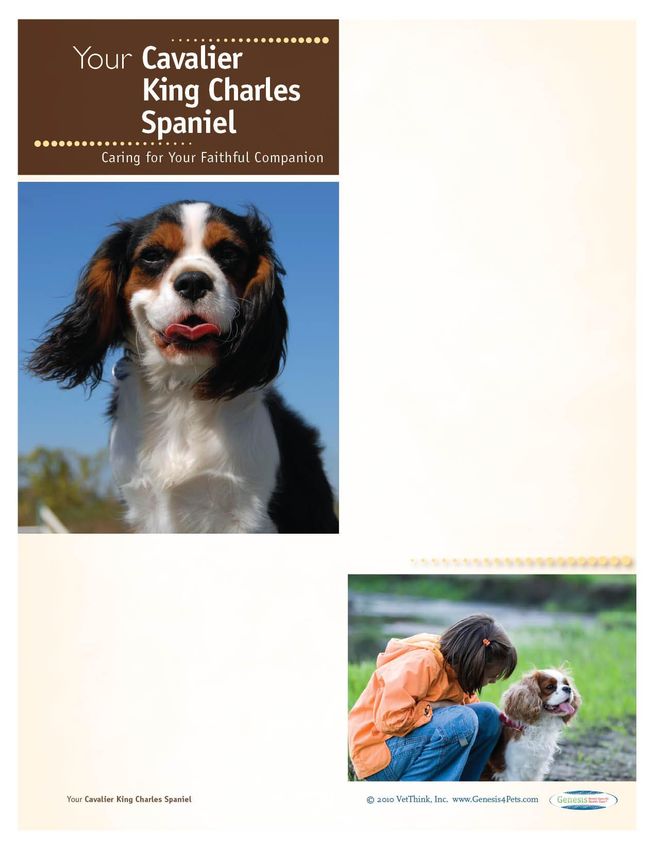
Cavalier King Charles
Spaniels: What a Unique
Breed!
Your dog is special! She’s your best friend and
companion and a source of unconditional love.
Chances are that you chose her because you like
Cavalier King Charles Spaniels, and you expected her
to have certain traits that would fit your lifestyle:
A snuggly lap dog and true companion
Willing to please and responsive to positive
reinforcement
Affectionate, easygoing, and sweet
Good with children and other pets
Agile and athletic—readily participates in outdoor
activities
No dog is perfect, though, and you may have noticed
these characteristics, too:
Prone to separation anxiety and associated
barking and chewing behaviors
Long coat sheds quite a bit and needs to be
brushed regularly
Has a tendency toward shyness and fear-based
aggression if not socialized properly
Strong prey drive—will chase and grab small
things that run
Prone to several health problems, including early
heart disease
Is it all worth it? Of course! She’s got her own
personality, and you love her for it.
Drs. Den Herder, Cherney & Taylor
974 Home Plaza
Waterloo, IA 50701
319-232-5292
dhvh@mchsi.com
www.denherdervet.com
www.facebook.com/denherdervet
Den Herder Veterinary Hospital * 319-232-5292 * www.denherdervet.com
more opaque—meaning they look cloudy instead of
                                                                clear—when we examine him. Many dogs adjust well to
                                                                losing their vision and get along just fine. Surgery to
                                                                remove cataracts and restore sight is an option.

                                                                Dental Disease
                                                                Dental disease is the most common chronic problem in
                                                                pets, affecting 80% of all dogs by age two. It starts with
                                                                tartar build-up on the teeth and progresses to infection of
                                                                the gums and roots of the teeth. If we don’t prevent or
                                                                treat dental disease, your buddy will lose her teeth and
                                                                be in danger of damaging her kidneys, liver, heart, and
                                                                joints. In fact, the disease could shorten your pet’s life
                                                                by one to three years! We’ll clean your dog’s teeth
                                                                regularly and let you know what you can do at home to
                                                                keep those pearly whites clean.

                                                                Dry Eye
                                                                Dry eye, also known as keratoconjunctivitis sicca or KCS,
                                                                is a disease common in Cavalier King Charles Spaniels.
Your Cavalier King Charles                                      The tear glands no longer produce enough tears to keep the
Spaniel’s Health                                                eye moist, which results in eye sores and infections. Ouch!
                                                                Symptoms include a thick discharge, squinting, pawing at
We know that because you care so much about your dog,           the eye, or a dull, dry look instead of a glistening, shiny
you want to take good care of him. That’s why we’ll tell        eye. This is a painful condition; please call us
you about the health concerns we’ll be discussing with you      immediately if you notice any of these signs. We’ll
over the life of your Cavie.                                    conduct a tear test when we examine her and, if she has
                                                                this disease, we’ll prescribe ointment that you’ll need to
Many diseases and health conditions are genetic, meaning        apply for the rest of your dog’s life.
they’re related to your pet’s breed. That doesn’t mean your
dog will have these problems; it just means that he’s more
                                                                Eye Injuries
at risk than other dogs. We’ll describe the most common
                                                                Because your Cavie has eyeballs that bulge, he is
issues for Cavalier King Charles Spaniels to give you an
                                                                particularly susceptible to having his eye pop out of the
idea of what may come up. Of course we can’t cover every
                                                                socket (called proptosis). It’s a truly horrifying sight! It
possibility here, so always check with us if you notice any
                                                                happens when there is too much pressure or squeezing on
unusual signs or symptoms.
                                                                the neck, such as from a choke chain. If surgery is
                                                                completed within a few hours and the eye doesn’t get
This guide, and the health evaluation schedule it contains,
                                                                injured while it’s exposed, the eyeball can usually be
helps us and you plan for your pet’s health-care needs. At
                                                                replaced with no loss of vision. You must use a harness
the end of the booklet, we’ve included a description of
                                                                and not a neck collar when walking your pet, and never
what you can do at home to keep your Cavalier looking
                                                                use a choke chain. Straining against a leash can raise the
and feeling his best. You’ll know what to watch for, and
                                                                pressure on the eye, making it more likely that this will
we’ll all feel better knowing that we’re taking the best
                                                                happen to your friend.
possible care of your pal.

Cancer                                                          Heart Disease
                                                                Cavaliers are prone to two genetically linked types of heart
Cancer is the most common cause of death of dogs in their
                                                                failure: mitral valve disease and dilated cardiomyopathy
golden years, including your pal. Half of all cancers are
                                                                (DCM). DCM is a condition where the heart becomes so
cured by surgically removing them, and some types are
                                                                large, thin, and weak that it can no longer effectively pump
treatable with chemotherapy. Early detection is critical!
                                                                blood to the body. Watch for your friend acting weak or
We’ll do periodic blood tests and look for lumps and
                                                                tired, fainting or collapsing, breathing in a labored way, or
bumps when we examine your pet. If she is overweight,
                                                                coughing. Mitral valve disease is a leading cause of death
we’ll discuss exercise and diet because obesity is a risk
                                                                of Cavies, and in fact half of them will develop the disease
factor for some types of cancer.
                                                                by age five. It is caused by deterioration of a valve in the
                                                                heart. We’ll perform diagnostic tests to check for heart
Cataracts                                                       disease starting when your dog is a young adult. If heart
Cataracts are a common cause of blindness in older              disease is diagnosed early, we may be able to prescribe
Cavaliers. We’ll watch for the lenses of his eyes to become

    Den Herder Veterinary Hospital * 319-232-5292 * www.denherdervet.com
back of the roof of the mouth, can be too long and may
                                                                hang down into the airway. Cavalier King Charles
                                                                Spaniels’ nostrils are often too small, and sometimes the
                                                                trachea, or windpipe, is narrow and undersized. All these
                                                                things lead to a narrow and obstructed airway. Some of
                                                                these dogs can barely breathe! Watch for exercise
                                                                intolerance, loud breathing, coughing, bluish gums, and
                                                                fainting. Ideally, we’ll correct the problem surgically early
                                                                on when we spay or neuter your dog, but we can also
                                                                complete the surgery later in life if necessary.

                                                                With her short nose, she is also more likely to develop
                                                                other problems, such as flatulence from excessive air
                                                                intake, pneumonia from aspirating food, and heat stroke.
                                                                Being overweight also increases the likelihood of
                                                                breathing problems, so be sure to keep her on the trim side.

medications that could prolong her life for many years.         Skin Infections
Remember that proper dental care and weight control go a        Your Cavie is prone to a form of skin infection called lip-
long way in preventing heart disease.                           fold pyoderma, which occurs because the folds of skin
                                                                along the lower jaw are usually moist. Bacteria can readily
Infections                                                      gain a foothold and cause a reddened, smelly area that is
Cavalier King Charles spaniels are susceptible to bacterial     uncomfortable for your dog. We will check for this
and viral infections—the same ones that all dogs can get—       condition upon examination, but let us know if you see
such as parvovirus, rabies, and distemper. Many of these        signs. We’ll recommend treatment with ointments and
infections are preventable through vaccination, which           antibiotics as necessary. When symptoms are severe, the
we’ll administer to your dog based on the diseases we see       excess skin folds can be surgically removed.
in our area, his age, and other factors.
                                                                Spaying or Neutering
Obesity                                                         One of the best things you can do for your Cavalier King
Obesity is a significant health problem in dogs and a           Charles spaniel is to have him neutered (called spaying in
serious disease that may cause arthritis, some types of         females). In males, this means we surgically remove the
cancer, back pain, and heart disease. Though it’s tempting      testicles, and in females, it means we surgically remove the
to give your pal food when she looks at you with those          uterus and ovaries. Spaying or neutering decreases the
soulful eyes, you can love her to death with human food         likelihood of certain types of cancers and eliminates the
and treats.                                                     possibility of your pet becoming pregnant or fathering
                                                                unwanted puppies
Parasites
All kinds of worms and bugs can invade your dog’s body,
inside and out. Everything from fleas to ticks to ear mites
can infest his skin and ears. Hookworms, roundworms,
heartworms, and whipworms can get into his system in any
number of ways: drinking unclean water, eating or
stepping on feces, or being bitten by an infected mosquito.
Some of these parasites can be transmitted to you or a
family member and are a serious concern for everyone.
For your friend, these parasites can cause pain, discomfort,
and even death, so it’s important that we test for them at
least twice a year. We’ll also recommend monthly
heartworm preventative medication to keep him healthy.

Respiratory Distress Syndrome
This disease, also known as brachycephalic syndrome,
affects dogs with a short nose, like your Cavalier King
Charles Spaniel. She has the same amount of tissue in her
nose and throat as other dogs, but there’s no place for it to
go. As a consequence, the soft palate, the soft part of the

  Den Herder Veterinary Hospital * 319-232-5292 * www.denherdervet.com
Itchy skin (scratching or licking)
Taking Care of Your Cavalier Change in appetite or water consumption
King Charles Spaniel at Home Scratching or shaking the head, or discharge in the ear
Redness or a foul odor about the lips
Much of what you can do to keep your dog happy and
Gums that are not pink
healthy is common sense, just like it is for people. Watch
Fainting or collapsing
his diet, make sure he gets plenty of exercise, regularly
brush his teeth and coat, and call us when something seems
unusual (see “What to Watch For” below). Be sure to
adhere to the schedule of examinations and vaccinations Health Evaluation Schedule for
that we recommend for him. This is when we’ll give him
the necessary “check-ups” and test for diseases and Cavalier King Charles Spaniels
conditions that are common in Cavies. Another step many Now that you’ve read about the health issues we’ll be
pet owners consider is purchasing pet health insurance. monitoring, we wanted to give you an at-a-glance
There will certainly be medical tests and procedures he summary of what services we’ll provide to keep your
will need throughout his life, and pet health insurance will Cavie happy and healthy. It may seem like your pet is
help you cover those costs. prone to quite a few problems, but don’t worry; we’ll take
the lead in keeping her healthy for a lifetime. We’ll review
Routine Care, Diet, and Exercise these health-care steps with you in more detail, but please
Build her routine care into your schedule to help your feel free to ask questions or voice concerns at any time.
Cavalier King Charles spaniel live longer, stay healthy,
and be happier during her lifetime. We cannot Studies to determine the frequency of inheritance or
overemphasize the importance of a proper diet and disease in this breed either have not been completed or are
exercise routine. Overweight Cavies are more prone to inconclusive. There is a general consensus among canine
cancer, heart disease, arthritis, and other problems. genetic researchers and veterinary practitioners that the
Brush her coat at least weekly. conditions we’ve described herein have a significant rate
Brush her teeth at least three times a week. of incidence and/or impact in this breed.
Keep your dog’s diet consistent, and don’t give her
people food.
Feed a high-quality diet appropriate for her age.
Exercise your dog regularly, and don’t overdo
exercise.
Clean the ears with rubbing alcohol and cotton balls
twice a week. We will show you how to do this.
What to Watch For
Give us a call immediately if you notice any of these signs
in your Cavalier King Charles spaniel:
Vomiting or chronic diarrhea
Weight loss or weight gain
Lumps, bumps, and moles
Lethargy, mental dullness, or excessive sleeping
Fearfulness, aggression, or other behavioral changes
Limping or lameness
Hair loss
Coughing or difficulty breathing
Episodes of weakness
Pot-belly appearance
Inability or straining to urinate
Cloudiness, redness, itching or any other abnormality
involving the eyes
Den Herder Veterinary Hospital * 319-232-5292 * www.denherdervet.comCavalier King Charles Spaniel–Specific
Puppy to Adolescent:
Infant to 17 in People Years
(√) Age Services We’ll Provide Problems We’re Looking For
6–8 Head to tail physical examination Heart murmurs
weeks Internal parasite test: fecal sample Hernias
Vaccinations & Deworming Proper dental alignment
Discuss housebreaking & positive Parasites
reinforcement program
How We’ll Keep Your Cavalier King Charles Spaniel Healthy
10–12 Head to tail physical examination Proper growth rate
weeks Heartworm prevention Behavioral problems
Vaccinations & Deworming Parasites
Discuss caring for your dog’s teeth at home
14–16 Head to tail physical examination Adult teeth coming in properly
weeks Internal parasite check: fecal sample Skin infections
Vaccinations & Deworming Tonsillitis
Discuss obedience training, nail trimming, Parasites
and grooming
Schedule spay/neuter surgery
4–6 Head to tail physical examination Internal organ health prior to spay/neuter surgery;
months Presurgical blood & EKG for spay or neuter establish a baseline for future testing.
Respiratory distress syndrome
1 year Head to tail physical examination & EKG Skin infections
Heartworm test Excessive weight gain
Internal parasite check: fecal sample Behavioral problems
Vaccinations & Deworming Heartworms and other parasites
Discuss diet, weight, and exercise Urinary bladder infection
Urinalysis: please bring urine sample
2 years Head to tail physical examination & EKG Skin infections
People Years
Adult: 18 to 39 in
through Internal organ health evaluation (alternating Dental disease
8 years blood & urine every other year) Healthy weight
Tear test Internal organ health and function (pancreas, heart
Heart health check & liver disease)
Internal parasite check: fecal sample Dry eye
Heartworm test Heart disease
Vaccinations & Deworming Heartworms and other parasites
Urinalysis (every other year)
9 years Head to tail physical examination & EKG Skin infections
in People Years
Senior: 40 to 59
through Senior internal organ health evaluation (yearly) Cataracts
11 years Tear test Dental disease
Heart health check: EKG, x-ray, & blood tests Healthy weight
Internal parasite check: fecal sample Arthritis
Heartworm test Internal organ health and function (pancreas, heart,
Vaccinations & Deworming liver & kidney disease)
Urinalysis (yearly) Dry eye
Heart disease
Heartworms and other parasites
12 years Head-to-tail physical examination & EKG Skin infections
in People Years
Senior: 40 to 59
and older Golden years internal organ health evaluation Cataracts
(yearly) Dental disease
Cancer screen: blood, x-ray Healthy weight
Tear test Arthritis
Glaucoma screen - Tonopen Internal organ health and function
Heart health check Signs of cancer
Internal parasite check: fecal sample Dry eye
Heartworm test Glaucoma
Vaccinations & Deworming Heart disease
Urinalysis (yearly) Heartworms and other parasites
Note: We recommend twice-a-year examinations so that we may diagnose problems sooner.
This approach also gives you the budget-friendly option of spreading preventive testing over two visits rather than one.
Den Herder Veterinary Hospital * 319-232-5292 * www.denherdervet.comYou can also read


