Celebrate Tokyo 2020 online and at The Olympic Museum! From 18.03 until 21.11.2021 - Olympics
←
→
Page content transcription
If your browser does not render page correctly, please read the page content below
Celebrate Tokyo 2020 online      From 18.03
and at The Olympic Museum!    until 21.11.2021

                                       Manga by URASAWA Naoki

 Full programme
  online and at
   the Museum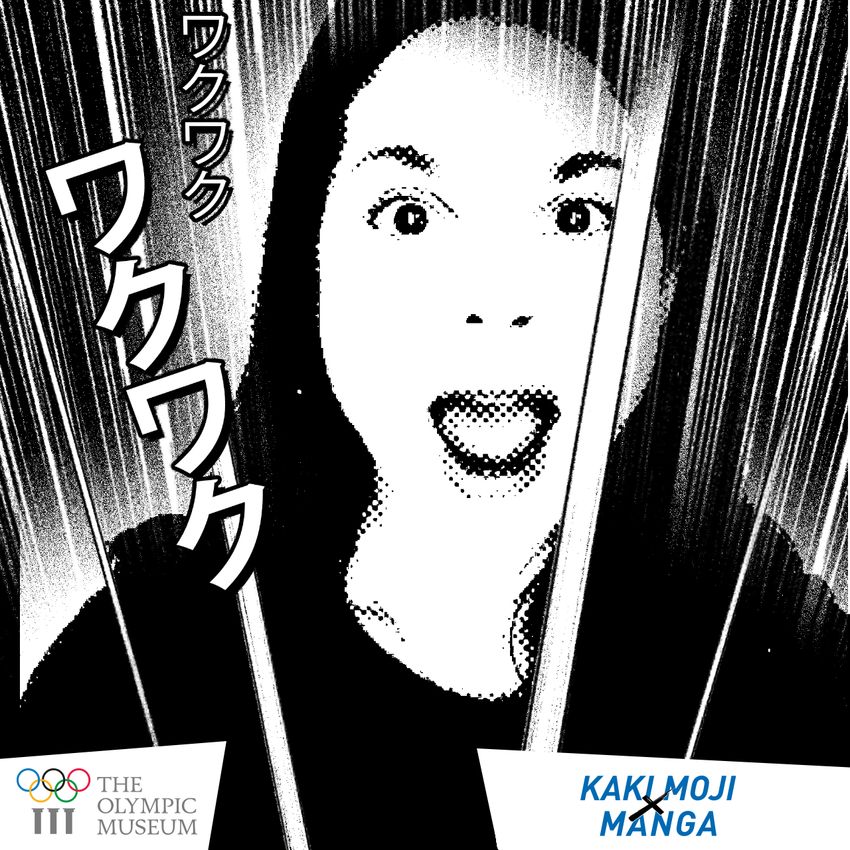
URASAWA ABOUT
                           THE PROGRAMME POSTER

                                  "Sports manga are a particularly popular form of
                                 Japanese manga. They appear in weekly magazines,
                                 and the matches described generate even greater
                                 passions than “real” sport. In this poster, I have
                                concentrated the whole essence of Japanese sports
                                manga. In the bottom-left box, you can see the text
                                meaning “To be continued!” Because, in real manga,
                               readers have to contain their impatience for a whole week
                              to find out what happens next."

                                                                      – URASAWA Naoki,
                                   mangaka and the illustrator of the Programme poster
    *
        To be continued!

              つづく!*

                                                                 URASAWA NAOKI (1960- )

                               is a Tokyo-based mangaka, who has created a large
                               number of manga, including Monster and 20th Century
                               Boys. His work, now published in at least 20 countries, has
                               won numerous national and international awards. One of
                               his best-known manga, YAWARA!, can be seen in the SPORT
                               X MANGA exhibition at The Olympic Museum in Lausanne.
2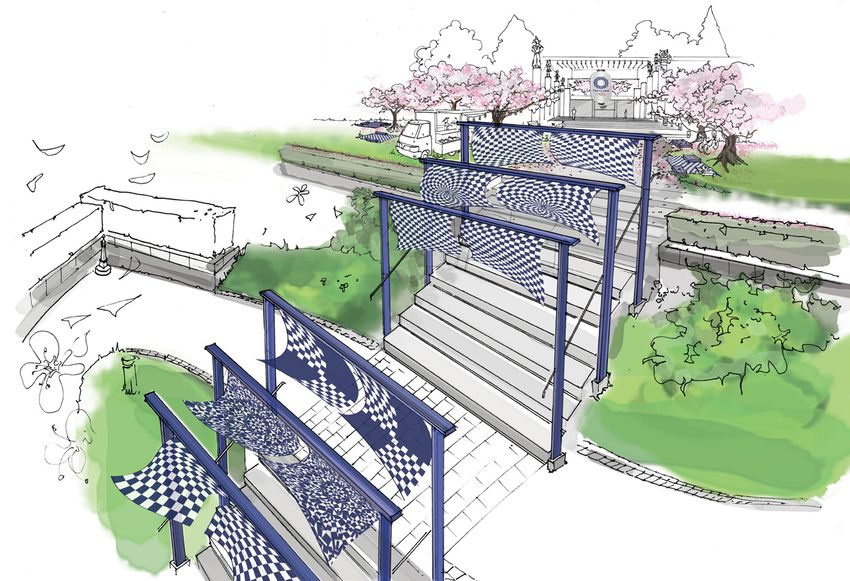
TOKYO 2020 AND JAPAN TAKE
     OVER THE OLYMPIC MUSEUM
       FROM 18.03 TO 23.11.2021

    IN 2020, THE OLYMPIC MUSEUM WAS PREPARING TO LIVE AND
    BREATHE ALL THINGS JAPANESE. WITH THE POSTPONEMENT OF THE
    GAMES, THE MUSEUM ADJUSTED THE DATES AND CONTENT OF ITS
    PROGRAMME, AND WILL NOW BE DELIVERING ON ITS PROMISE TO
    PUT ON EXCLUSIVE ACTIVITIES THAT EXPLORE THE GAMES OF THE
    XXXII OLYMPIAD.

    STAYING FAITHFUL TO ITS PRIMARY MISSION, THE MUSEUM WISHES
    TO CELEBRATE SPORT AND ITS VALUES WHILST SHOWCASING THE
    HOST COUNTRY’S CULTURE. THE MUSEUM OFFERS A BACKDROP
    THAT FOSTERS A COMPLETE IMMERSION INTO THE VARIOUS
    ASPECTS OF JAPANESE CULTURE SHOWCASED OVER THE COURSE
    OF THE PROGRAMME.

3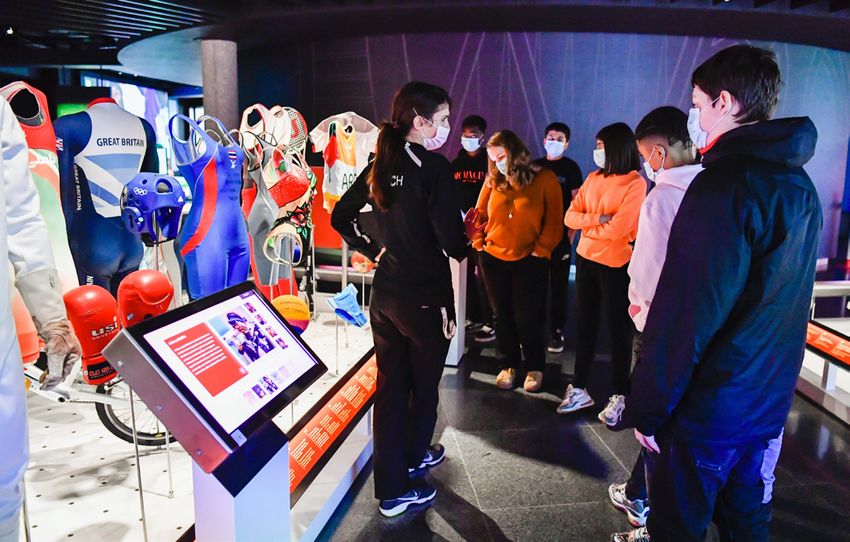
JAPANESE ATMOSPHERE

    The adventure begins in the museum’s gardens, where visitors walk
    through a series of gateways, loosely inspired by the famous toriis
    placed in front of Shinto temples.

                                                                  © STUDIO GOLEM

                         The indigo blue of the gateways and the drapes featu-
                         ring traditional chequered designs (ichimatsu moyo)
                         evoke the visual identity of Tokyo 2020.

                         During the walk up to the entrance, visitors can find in the
                         Pavilion a photo exhibition on the Tokyo 1964 Games.

                         There is also a series of panels, dotted around the park,
                         featuring 20 Japanese athletes who have made their
4                        mark on the sporting history of their country.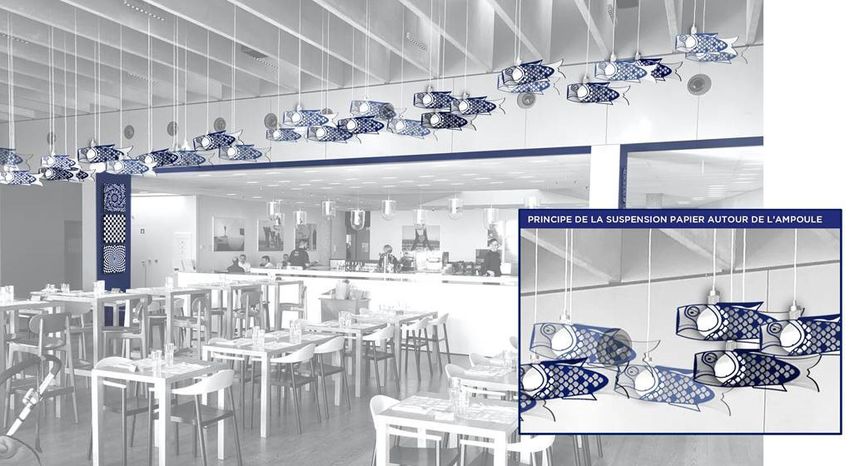
Once inside the Museum, the visitors are welcomed by
     the Olympic and Paralympic mascots, Miraitowa and
     Someity. The two large cuddly toys are ready for a
     photoshoot session.

             Another unmissable item is the Olympic torch. Created by
             designer YOSHIOKA Tokujin, it gradually opens out into five
             sections forming elegant metal petals, culminating in a
             sakura cherry blossom, from which the flames emerge.

                                       Tokyo 2020 Olympic Torch
                                       © CIO / PETER, Grégoire

                GO ON AN IMAGINARY JOURNEY
               USING AN AUGMENTED REALITY APP
    AR

     With blossoming sakura and koi carp, Japan comes
     alive to visitors in the most poetic way.
     The app also offers an intercultural and digital
     experience, with its augmented collage feature.
     The app can be downloaded via QR codes, using
     the Wi-Fi available at three hotspots in the
     Olympic Park. It can also be downloaded free of
     charge from the App Store and Google Play.

5                                                                          © CIO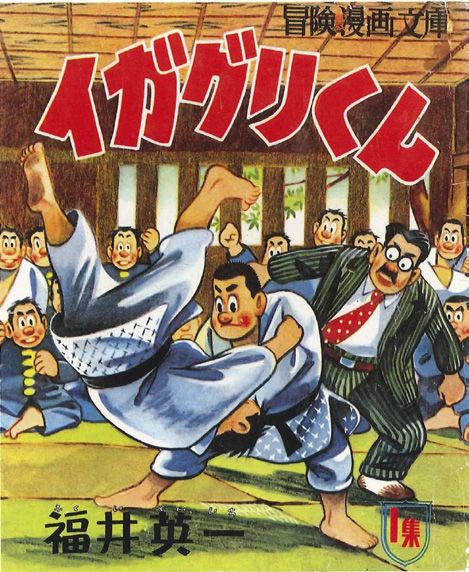
TOKYO 2020

                                  Tokyo is hosting the Olympic Summer Games for the second time,
                                  and for the second time the Games are synonymous with national
                                  regeneration. In 1964, they helped Japan to emerge as a major
                                  economic power, despite the damage inflicted during the Second
                                  World War. In 2021, they will provide another boost, following the
                                  disaster that devasted the Fukushima region in 2011, and will also
                                  serve as a symbol of hope and resilience in the context of the glo-
                                  bal COVID-19 pandemic.

                                        But Tokyo 2020 also marks a new chapter in the history of the
                                  Olympic Games, as the host countries can now propose new sports
                                  for the Olympic programme.
                                        The exhibition therefore shines a spotlight on the five sports
                                  making their Olympic debut this year: skateboarding, surfing, sport
                                  climbing, baseball/softball and karate.

                                        It also presents the Japanese capital and the various competi-
                                  tion venues spread out around two geographical regions of the city.
                                  The Heritage Zone groups together several iconic venues from the
                                  1964 Games, but also includes the new National Stadium. The Tokyo
                                  Bay Zone features new venues specially designed for the Games,
                                  such as the Ariake Gymnastics Centre.

                                                            THE NEW NATIONAL STADIUM

                                                       The National Stadium is presented in
                                                      the form of a scale model and opens its
                                                     doors thanks to the Augmented Reality
                                                    App. Thus, visitors can imagine how an
                                                    athlete feels when entering the stadium.
    © Getty Images / Carl Court

6
                                                                                                AR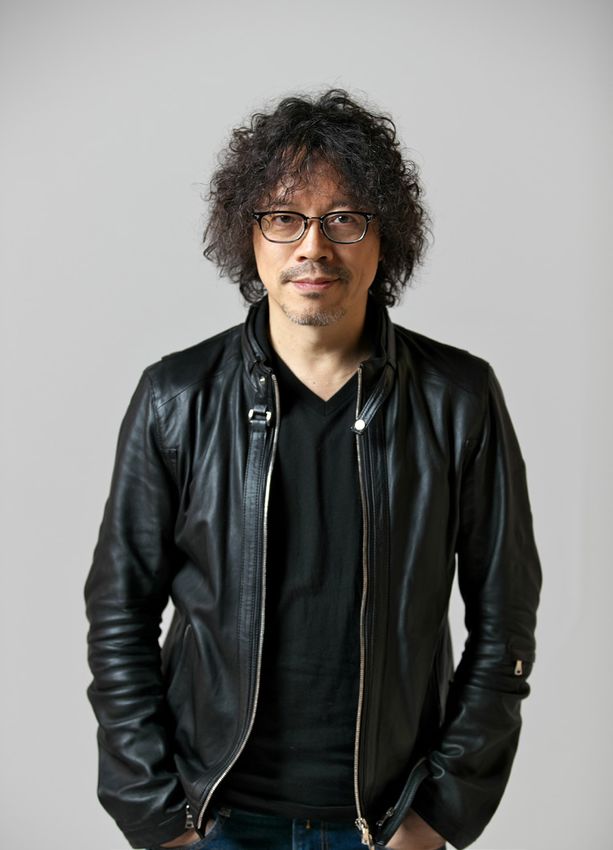
SPOTLIGHT ON JAPANESE POP CULTURE

    Manga is the ambassador of Japanese pop
    culture around the world. Who, these days,
    doesn’t know about manga? This fantasy
    world includes series ranging from Gren-
    dizer and Saint Seiya to Sailor Moon.
    Whether you are an avid reader or not,
    manga never fails to impress.
          With its SPORT X MANGA exhibition,
    The Olympic Museum is shining the spotlight
    on sports manga.
          This exhibition reaches out to anyone
    interested in Japan, its history and its society,
    whether they are manga-enthusiasts or not.
    Since the Second World War, manga has
    maintained a constant dialogue between
    sports disciplines and Japanese society, one
    that has become inextricably linked to the
    reconstruction of the country. It is this rela-
    tionship, from 1945 to the present day, that
    the exhibition aims to address, while also
    paying homage to Captain Tsubasa’s spe-
    cial moves and other extraordinary elements
    that sport has inspired for the mangakas.                       Captain Tsubasa
                                                        ©Yoichi Takahashi/SHUEISHA

      The SPORT X MANGA exhibition has been orga-
      nised in close collaboration with the Angoulême
      International Comics Festival. Its former
      Co-Artistic Director, Stéphane BEAUJEAN,
      curated the exhibition.

7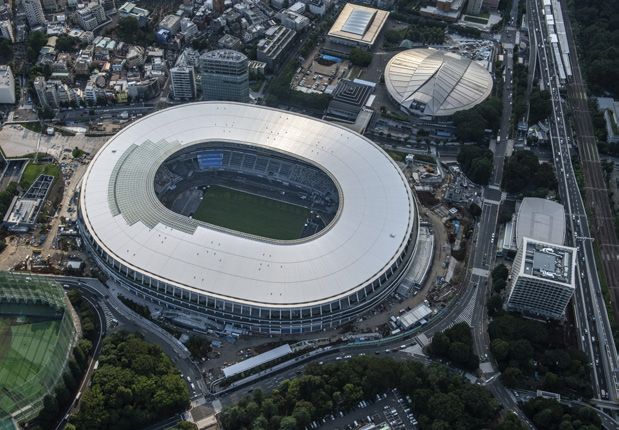
8                                     YAWARA!
    ©URASAWA Naoki – Studio Nuts / Shogakukan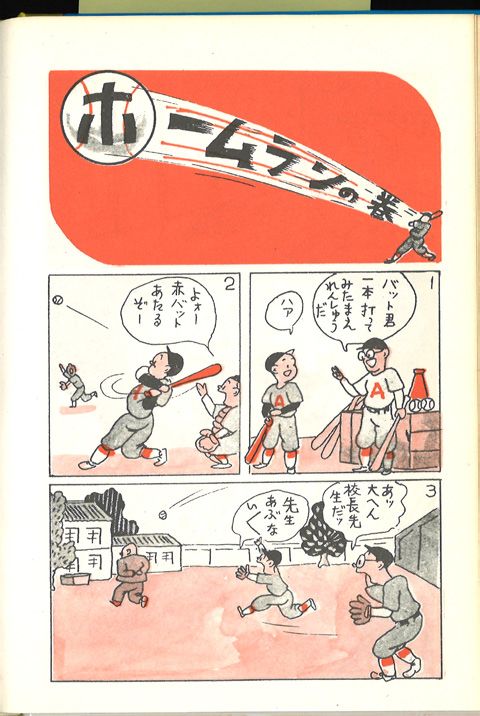
SPORTS MANGA

              Sports manga appeared after the Second World War and played
              a key role in promoting the practice of sport in Japan – especially
              in getting the western approach accepted. This phenomenon
              affected Japanese youngsters in particular (the post-War
              generation and those that followed), who developed a truly
              passionate relationship with manga. In manga production, the
              theme of sport rapidly became highly prevalent. Practically all of
              the authors have covered the world of sport. This is how some of
              the comic-book stars were born; and some of the greatest names
              in sport have seen their own career reflected in the stories.

     In return, sports manga has had actual repercussions in real life.
    A number of successful series are known to have boosted atten-
    dance at sports clubs, and even – in the case of football and bas-
    ketball – been behind the creation of professional leagues. Man-
    ga also reflects the way in which people, through sport, come
    together behind an athlete or team to express their national
    pride, an essential notion in Japanese identity. For all that, sports
    manga is not only a creation that stems from the country’s speci-
    fic culture, the preserve of Japanese readers. It also conveys va-
    lues and universal messages. Those of sport, such as those pro-
    moted by the Olympic Movement and, more broadly, those of a
    victorious and fraternal form of humanity.

    “[…] READING MANGA SEEMS
    AS IMPERATIVE AS EATING OR
    GETTING DRESSED.”
                                                               – SUZUKI HARUHIKO,
9                                                                   MANGA EDITOR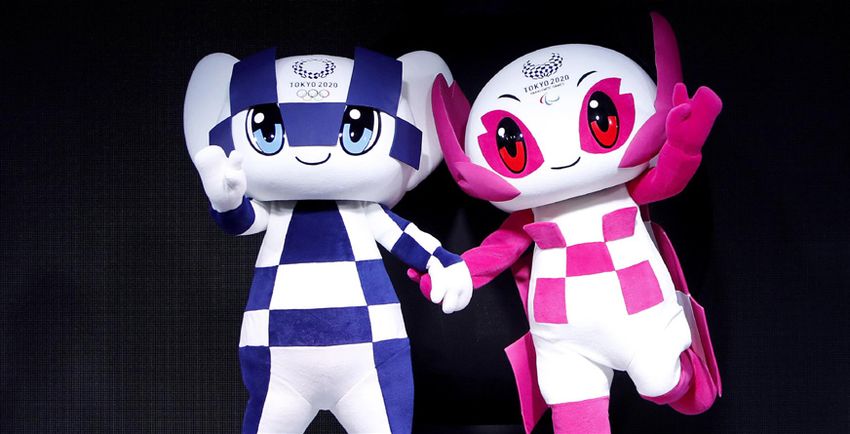
10
     Touch
     ©ADACHI Mitsuru / Shogakukan
EXHIBITION SUMMARY
Numerous Japanese authors and publishers are featured in this ex-
hibition, which makes the Sport X Manga project a rare and original
experience. The Olympic Museum thanks Kodansha, Shogakukan
and Shueisha for their kind assistance.
The exhibition is clustered around the Olympic and
Paralympic mascots, placed in the centre. As ambas-
sadors for the Games, they demonstrate the close link
between manga and Japanese society.
The Manga for Dummies corner offers newbies an
introduction to manga: its origins, history, codes and
relationship with Japanese society and the world of art.
The nine 3D manga panels present nine major sports
manga and help to trace the evolution of this cultural
phenomenon in Japanese society from 1945 to the pre-
sent day. The stories and characters featured in these
manga illustrate the eras in which they were created.
This section also shows to what extent the heroes had an
influence on real life, and vice versa.
WHAT ARE THE NINE
FLAGSHIP MANGA?
• Batto-kun, INOUE Kazuo
• Igaguri-kun, FUKUI Eiichi
• Kyojin no Hoshi, KAJIWARA Ikki / KAWASAKI Noboru
• Attack No.1, URANO Chikako
• Ashita no Joe, TAKAMORI Asao / CHIBA Tetsuya
• Touch, ADACHI Mitsuru
• Captain Tsubasa, Yoichi TAKAHASHI
• YAWARA!, URASAWA Naoki
11 • SLAM DUNK, INOUE TakehikoASHITA NO JOE
© Asao Takamori, Tetsuya
Chiba / Kodansha
The Japan X Manga film summarises post-War Japan
and how sports manga has evolved, through a series of
archive images and manga extracts on a giant screen.
The Discovery space for further exploration: for fans or
those with an inquisitive mind, there are three interac-
tive terminals, which allow visitors to explore around 100
sports manga titles to learn more about the characters,
authors and the relationship that Japanese society has
with sport.
12Exclusive interviews with three mangakas (CHIBA
Tetsuya, Ashita no Joe; Yoichi TAKAHASHI, Captain
Tsubasa; and URASAWA Naoki, YAWARA!) and an editor
(SUZUKI Haruhiko) give an insight into the process of
creating manga from a more personal perspective.
Paralympic sports in manga: for Tokyo 2020, many man-
gakas have created manga on Paralympic sports and
Paralympians – themes that are still not widely covered in
the media.
A series of devices invite visitors to:
• Replicate Captain Tsubasa’s special moves
•Discover the facial expressions of the characters
created by OSAMU Tezuka
• Listen to onomatopoeia sounds
13 Attack No.1 © URANO Chikako - All Rights Reserved.KAKI MOJI CAPSULES
Three photobooths, in the shape of
Japanese “capsule hotels”, invite the visitor
to take a selfie inspired by kaki moji.
©Big Company
14 Igaguri-kun © FUKUI Eiichi Batto-kun © INOUE KazuoMIRAITOWA AND SOMEITY,
MANGA-STYLE MASCOTS
When the Olympic Games were organised in Tokyo in 1964,
the elements chosen to present Japanese culture stemmed
from the traditional arts. The country was then in the midst of
social reform, modernity synonymous with western influence,
reconstruction and technological research. Today, Japanese
culture has become a byword for a fantasy world full of
exceptional heroes. It is therefore natural that the imagery for
the Tokyo 2020 Games should draw on a dynamic and colourful
aesthetic. With indigo chequerboard patterns for the Olympic
Games and pink for the Paralympic Games, these mascots have
magical powers: teleportation, the ability to communicate with the
natural elements, and telekinesis… These mascots are the perfect
embodiment of kawaii imagery, where tradition and modernity
come together, redefining Japanese culture. The name Miraitowa
combines the Japanese words mirai (future) and towa (eternity) to
symbolise faith in a bright future. Someity is an anglicisation of the
Japanese term for the famous white cherry blossom, “somei-yoshino”,
and echoes the expression “so mighty”.
© TOCOG
DID YOU KNOW?
TOKYO 2020 IN MANGA
The hosting of the 2020 Olympic Games in Tokyo was
already mentioned in the 1980s in the science fiction
manga Akira by OTOMO Katsuhiro – 40 years in advance!
15
W ow !100 PER CENT JAPANESE EVENTS *
In person and/or online, depending
on the health restrictions.
100 per cent digital event
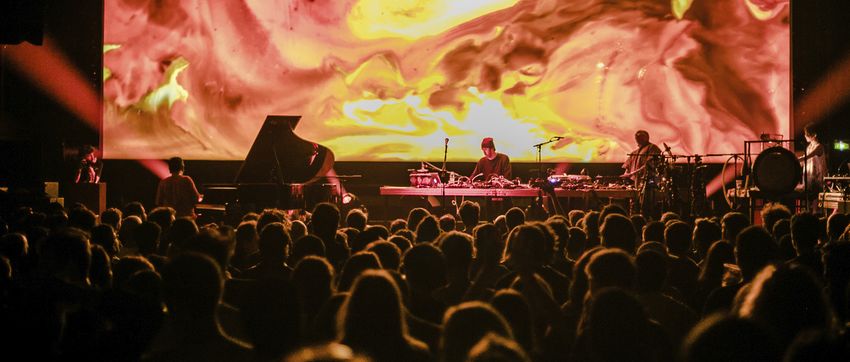
LAUNCH EVENING LIVE FROM THE MUSEUM
18 March, 7 to 8 p.m.
With Stéphane BEAUJEAN, the curator of the
SPORT X MANGA exhibition.
100 per cent digital event
AN EVENING WITH GEORGES BAUMGARTNER
May (date TBC), 7 to 7.30 p.m.
Open discussion with Georges BAUMGARTNER, who worked as the RTS
correspondent in Japan for 30 years. Launch of The Olympic Museum’s
new “Experts” podcast series.
TAKAHASHI AND NAKAYAMA ©LEVIET.ORG
16 *Programme subject to modificationKUMA KENGO
Live-streamed on Facebook from the Auditorium, with
an audience if the situation allows
MEET ARCHITECT KENGO KUMA
May or June (date TBC), 7 to 8 p.m.
A unique chance to meet one of Japan’s greatest contemporary
architects and the main designer of the Tokyo National Stadium, the
setting for some of the Games competitions. What were the constraints
when devising the project? How can such a structure become fully
integrated into the city?
In the Museum and the Olympic Park
24 HOURS OF J-POP
13 June, from 10 a.m.
Day- and night-time entertainment centred on manga culture and Japanese
pop culture. Featuring retro gaming, manga drawing and kendama
workshops. Japanese anime films to be shown in the park in the evening.
EXPERIENCE THE GAMES AT THE MUSEUM
23 July to 8 August 2021
Live broadcast of the Games Opening Ceremony on 23 July (12-8 p.m.) and
exclusive concert by Japanese Afrobeat group Ajate.
For three weeks, there is an opportunity to experience the Tokyo 2020
Olympic Games. Every day, the Games will be broadcast live in the Galerie,
and cultural workshops and experiences linked to various facets of Ja-
panese culture will be organised.
LIVE
17 Full and updated programmeTOM CAFÉ
JAPANESE FOOD IS ALSO ON THE MENU
The redecorated TOM Café is offering dishes inspired by Japanese
cuisine, specially prepared for the occasion.
Yes, it’s absolutely possible to admire the Alps whilst immersed in a
Japanese atmosphere!
TOM Café customers can try their luck at making an
original origami creation to obtain a 20% discount
on Tokyo 2020 products in the TOM Shop.
May not be combined with other offers or
promotions. Valid only until 21 November 2021.
THE MENU
This menu will be offered
→ Miso soup
from the TOM Café’s
→ Chirashi with soy-marinated tuna
reopening until
→ Vegetable gyoza
21 November 2021.
→ Ramen with crunchy vegetables
and organic tofu
→ Chicken teriyaki
The items on the menu may be subject to change
depending on the season and availability.
ITADAKIMASU !
ENJOY YOUR MEAL IN TOM CAFÉ!
© STUDIO GOLEM
18TOM SHOP
TOKYO 2020 MERCHANDISING AND THE BEST PRODUCTS FROM
JAPANESE POP CULTURE ON SALE AT THE MUSEUM SHOP.
The TOM Shop is the only worldwide point of sale (outside
Japan) for official merchandise of the Olympic Games Tokyo
2020. From traditional yukata to mascot backpacks, there is
something for everyone looking to take home a souvenir of
Tokyo 2020.
Also on offer: unusual Japanese beauty secrets, manga, totally
kawaii soft toys, jade green tableware… and much more!
© TOCOG
19TOM SCHOOLS
Two workshops and an educational kit
to celebrate Tokyo 2020
“LAUSANNE-TOKYO AR”
WORKSHOP
WHEN TECHNOLOGY BRINGS CULTURES TOGETHER
Ages 11 and upwards
Accompanied by a TOM coach, the pupils will learn about the
history and culture of Japan and will be invited to express their
creativity by producing an “augmented collage” on tablets using a
library of images inspired by Japanese culture.
The Lausanne-Tokyo AR workshop will be an opportunity to
explore augmented reality (AR) technology and discuss cultural
differences and diversity.
20
THE OLYMPIC MUSEUM © C. MORATAL“KAKI MOJI!”
WORKSHOP
Age 7 and upwards
A workshop that explores the fascinating world of sports
manga. Through the graphic codes of onomatopoeia, students
become familiar with Japanese culture. By transforming themselves
into athletes’ heroes of a sports scene, they express their emotions
and creativity, while becoming aware of the diversity of
communication systems. The result is original pictures!
Kaki moji are words integrated into manga drawings. Like
onomatopoeia, they can express sounds, but also emotions and
physical sensations. This workshop allows to discover the
inventiveness of manga in this field which is both graphic and
linguistic.
Educational Kit
To introduce the topic or prolong the class experience, there is our
Experience and learn about the Olympic Games Tokyo 2020
educational kit (available on the website and free of charge), which
contains ready-to-use information and activity suggestions.
From 1 January 2021, all our educational offer are free
for groups of children under 16.
Tuesday to Friday, from 23 March to 19 November 2021
45-minute educational workshop.
The workshop can be combined with an unaccompanied
self-guided tour visit or a 45-minute guided tour of the
temporary exhibition.
→ INFORMATION AND BOOKING
www.olympic.org/museum/visit/school-visits
21ABOUT THE SPEAKERS
GEORGES BAUMGARTNER (1952- )
has been living in Japan since 1982, which makes him
an expert on Japanese culture. BAUMGARTNER is a
journalist and was a correspondent in Japan for Radio
Télévision Suisse (RTS) until 2012 and was the President of
the prestigious Foreign Correspondents’ Club of Japan
from 2010 to 2013. He is especially well known for the way
he signs off his reports: “Georges Baumgartner, Radio
suisse romande, Tokyo”.
© G. BAUMGARTNER
KUMA KENGO (1954- )
is considered as one of the most significant contempo-
rary Japanese architects. He has worked on many pro-
jects abroad, including the ArtLab at the Federal Insti-
tute of Technology Lausanne (EPFL, Switzerland). More
recently, he has taken part in the creation of the National
Stadium for the Olympic Games Tokyo 2020.
©STRELKA INSTITUTE FOR MEDIA
STÉPHANE BEAUJEAN (1976- )
the curator of the SPORT X MANGA exhibition, was the
Co-Artistic Director of the Angoulême International
Comics Festival for four years.
© CÉLINE VILLEGAS
22GLOSSARY
Traditional Japanese folding technique for wrapping gifts or trans-
porting objects
FUROSHIKI
Traditional chequered pattern
A very short poem, made up
of three phrases formed of
ICHIMATSU MOYO
5, 7 and 5 syllables
A Japanese bar HAIKU
IZAKAYA
Words that transcribe sound
effects such as WHACK! BOOM!
SPLASH! etc
Cute
KAWAII KAKI MOJI
A skill toy, similar to the cup-and-ball game
KENDAMA
Cybercafé with individual booths
where you can read manga on a
Manga artist
self-serve basis
MANGAKA
MANGA KISSA
Cherry blossom
Traditional Japanese
festivals
MATSURI SAKURA
Plastic food models on display in Manga for boys
Japanese restaurant windows
SHŌNEN
SAMPURU
Genre of sports manga
involving a hero with a
strong determination never
A traditional gateway that marks to give up
the entry to Shinto shrines
SUPOKON
TORII
23WARNING ! THIS PRESS KIT IS PUBLISHED
IN THE MANGA READING DIRECTION (FROM RIGHT TO LEFT),
SO HERE YOU ARE AT THE END
…
3 2
1
OPENING TIMES
9 a.m. to 6 p.m.
All year round (Tuesday to Sunday) closed on Mondays (except Easter
Monday or for special events), 24 & 25 December and 31 Dec & 1st January
Due to the health situation, the programme presented in this press kit may be subject
to change. The final programme will be available on the Olympic Museum website:
www.olympic.org/museum
CONTACT Like, follow, comment, share!
Aline Méan
Promotion Manager
Aline.Mean@olympic.org
+41 21 621 67 62 #olympicmuseum
The Olympic Museum
Quai d’Ouchy 1
1006 Lausanne
Switzerland
olympic.org/museumYou can also read


