Chemical Society & Royal Society of Chemistry - The Presidents of
←
→
Page content transcription
If your browser does not render page correctly, please read the page content below

The Presidents of the
Chemical Society &
Royal Society of
Chemistry
(1841–2024)
Contents
Introduction                                                                     04
Chemical Society Presidents (1841–1980)                                          07
Royal Society of Chemistry Presidents (1980–2024)                                34
Researching Past Presidents                                                      45
Presidents by Date                                                               47

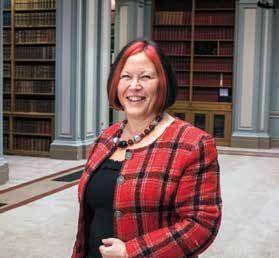
Cover images (left to right): Professor Thomas Graham; Sir Ewart Ray Herbert Jones;
Professor Lesley Yellowlees; The President’s Badge of Office
Introduction
On Tuesday 23 February 1841, a meeting was convened by Robert Warington that resolved to form

                                                                                                       Introduction
a society of members interested in the advancement of chemistry. On 30 March, the 77 men who’d
already leant their support met at what would be the Chemical Society’s first official meeting; at
that meeting, Thomas Graham was unanimously elected to be the Society’s first president.
The other main decision made at the 30 March meeting was on the system by which the Chemical
Society would be organised:
     “That the ordinary members shall elect out of their own body, by ballot, a President,
     four Vice-Presidents, a Treasurer, two Secretaries, and a Council of twelve, four of
     whom may be non-resident, by whom the business of the Society shall be conducted.”

At the first Annual General Meeting the following year, in March 1842, the Bye Laws were formally
enshrined, and the ‘Duty of the President’ was stated:
     “To preside at all Meetings of the Society and Council. To take the Chair at all ordinary
     Meetings of the Society, at eight o’clock precisely, and to regulate the order of the
     proceedings.
     A Member shall not be eligible as President of the Society for more than two years in
     succession, but shall be re-eligible after the lapse of one year.”
Little has changed in the way presidents are elected; they still have to be a member of the Society
and are elected by other members. However, nowadays the candidates undergo greater scrutiny;
after the nominations have been called and received, they are evaluated by the Nominations
Committee. The committee produces a list of candidates who meet the requirements of the role
descriptor, who can demonstrate the requisite skills and experience to fulfil the role and who
confirm their willingness to serve in this way. Successful candidates are then put forward for
election.
The president is elected biennially by the membership, they then serve two years as president
elect then two years as president. Their time of office starts from the Royal Society of Chemistry’s
Annual General Meeting held in July.
In 1841, the number of Fellows was 77; in 2021, membership had grown to 50,000. At the first
meeting, votes were cast in person; today, votes are cast online.

                                                                                                        05
The Presidents in brief:
Introduction
• The youngest was Thomas Graham who was 35 when he became president
• Two fathers and sons have been president: Edward Frankland (16th) and Percy Faraday Frankland
(37th), William Henry Perkin (23rd) and William Henry Perkin Jnr. (38th)
• Four men were president of the Chemical Society twice: Thomas Graham (1st and 3rd), William
Miller (8th and 13th), Alexander Williamson (12th and 15th) and Warren de la Rue (14th and 20th)
• There are eight Nobel Laureates among the past presidents: Sir William Ramsay (1904), Sir Walter
Norman Haworth (1937), Sir Robert Robinson (1947), Sir Cyril Norman Hinshelwood (1956), Lord
Alexander Todd (1957), Lord George Porter (1967), Sir Derek Barton (1969), Sir Harry Kroto (1996)
• One president resigned (for health reasons), Professor Arthur Crossley in 1926
• One president died in office, Professor James Philip in 1941
• Sir Ewart Ray Herbert Jones was president of both the Chemical Society (64th) and the Royal
Society of Chemistry (1st)
• The first woman president was Professor Lesley Yellowlees in 2012
Notes:
1. In 1980, the Royal Society of Chemistry was formed with the amalgamation of the Chemical
Society, the Society for Analytical Chemistry, the Royal Institute of Chemistry and the Faraday
Society. Each Society represented a different aspect of the chemical profession, though it was
very common for people to be members of more than one Society, each Society had its own
president. This booklet only includes the presidents of the Chemical Society and then the Royal
Society of Chemistry in order to provide a more linear history of the Society. Future versions could
include the presidents of the other societies, until then, their names are listed at the back of the
booklet.
2. In order to demonstrate the length of time both Societies have existed, some historic milestones
are included to show how far we’ve come in the areas of science & technology and in the
representation of diverse groups within society at large and within the Societies themselves.
3. Some of the information in this introduction was taken from ‘The Chemical Society 1841–1941’ by
Tom Sidney Moore and James Charles Philip. Philip was president of the Chemical Society at the
time and had written four chapters of this book by the time of his death in 1941; his widow sent
the manuscript to the Chemical Society who engaged the services of Moore to complete it.
4. Whilst every effort has been made to thoroughly fact-check the contents of this brochure, we
acknowledge there may be some points that could be disputed. Please submit any suggested
amendments to library@rsc.org
06Chemical Society Presidents (1841–1980)
1 2 3
Chemical Society Presidents
(1841–1980)
1841–1843 1843–1845 1845–1847
Professor Arthur Aiken Professor
Thomas Graham (1773–1854) Thomas Graham
(1805–1869) (1805–1869)
• Born in Warrington
• Born in Glasgow • A founder member (and first • See entry for 1st president
• Twice president of the Chemical treasurer) of the Chemical
Society (1st and 3rd) Society
• A founder member of the • Studied under Joseph Priestley 16 October 1846 | William
Chemical Society • Lectured on chemistry at Guy’s Morton is the first person to
Hospital for 32 years successfully demonstrate
• His studies on the diffusion of
anaesthesia
gases resulted in ‘Graham’s Law’ • One of the founders of the
• Discovered dialysis, resulting Geological Society of London
from his studies in colloids in 1807
• Last person to hold the office of
‘Master of the Mint’ after which
the role was amalgamated into 24 May 1844 | The first
the office of the Chancellor of telegraph message sent, by
the Exchequer Samuel Morse from Washington
to Baltimore
084 5 6
Chemical Society Presidents (1841–1980)
1847–1849 1849–1851 1851–1853
Professor Professor Professor
William Brande Richard Phillips Charles Daubeny
(1788–1866) (1778–1851) (1795–1867)
• Born in St James’s, London • Born in the City of London • Born in Stratton, Gloucestershire
• A founder member of the • A founder member of the • A founder member of the
Chemical Society Chemical Society Chemical Society
• Son of a former apothecary to • Dr Thomas Thomson • President of the British
George III pronounced him one of the first Association
• Lectured with Faraday for modern analytical chemists • Professor of Chemistry at the
20 years • Lectured in chemistry at the University of Oxford
• Superintendent of the Coining London Hospital, at the Royal • Chemist, botanist and geologist
and Die Department at the Military College Sandhurst and
at St Thomas’s Hospital • Has a type of waterlily
Royal Mint named after him, Nymphaea
• Curator of the Museum of Daubenyana
Practical Geology, Jermyn Street
• Lived in the Oxford Physic
1847 | Baron Lionel Nathan
(now Botanic) Garden. After
de Rothschild became the
transforming it, he opened it up
UK’s first Jewish MP. However, 1849 | Pfizer founded by
to the public
he was unable to take his Charles Pfizer and Charles
seat until 1858 when the Erhart in Brooklyn, New York
requirement to swear the
Christian oath was lifted
097 8 9
Chemical Society Presidents (1841–1980)
1853–1855 1855–1857 1857–1859
Colonel Professor William Lord Lyon Playfair
Philip James Yorke Allen Miller (1818–1898)
(1799–1874) (1817–1870)
• Born in Meerut, India
• Born in England • Born in Ipswich • A founder member of the
• A founder member of the • A founder member of the Chemical Society
Chemical Society Chemical Society • Studied under and became lab
• Appointed Colonel during the • Twice president of the Chemical assistant to Thomas Graham
Crimean War Society (8th and 13th) • Fellow student of David
• Chemist and mineralogist • Received a Gold Medal from the Livingstone
Royal Astronomical Society for • Studied under Justus Liebig at
his work, with William Huggins, Giessen; undertook research
1854 | An epidemic of cholera in their attempts to identify the alongside Robert Bunsen
in London killed 10,000 elements in stars using spectral • Chemist to the Geological
people. Dr John Snow traced analysis Survey
the source to a single water • The Miller crater on the southern • Oversaw the Chemical Society’s
pump in Soho, half a mile from part of the moon was named move from Cavendish Square to
Burlington House after him in 1935 Burlington House
• MP for Leeds South from 1868
and ennobled as Baron Playfair
1856 | William Perkin upon leaving the House of
invented Mauveine, the first Commons in 1892
synthetic dye
1010 1859–1861 11 1861–1863 12 1863–1865
Chemical Society Presidents (1841–1980)
Sir Benjamin Collins Professor August Professor Alexander
Brodie (1817–1880) Wilhelm von William Williamson
Hofmann (1818–1892) (1824–1904)
• Born in Sackville Street,
Piccadilly • Born in Giessen, Germany • Born in Wandsworth, London
• His father was Britain’s leading • Studied under Justus Liebig at • Studied under Leopold Gmelin
surgeon and president of the Giessen at Heidelberg and Liebig at
Royal Society Giessen
• His research on aniline, with
• Studied under Justus Liebig at Sir William Henry Perkin, helped • Twice president of the Chemical
Giessen lay the basis of the aniline-dye Society (12th and 15th)
• Did original analysis of beeswax industry • In 1863, five students from the
for which he was given a • First Director of the Royal Choshu Clan in Japan came
Fellowship of the Royal Society College of Chemistry to London to study under his
• After his presidency, and guidance
inspired by the success of the • Was blind in his right eye and
1859 | The publication of Chemical Society, he returned semi-paralysed in his left arm
Charles Darwin’s ‘The Origin of to Germany and in 1867 was
the Species’
• Developed the theory of
co-founder of the German etherification
Chemical Society (GDCh)
1864 | Louis Pasteur invents
the Pasteurisation process
1113 1865–1867 14 1867–1869 15 1869–1871
Chemical Society Presidents (1841–1980)
Professor Dr Warren de la Rue Professor Alexander
William Allen Miller (1815–1889) William Williamson
(1817–1870) (1824–1904)
• Born in Guernsey
• See entry for 8th president • Twice president of the Chemical • See entry for 12th president
Society (14th and 20th)
• A founder member of the
31 January 1865 | The 13th Chemical Society 1869 | Creation of the Periodic
Amendment abolishing slavery • Pioneer in astronomical Table by Mendeleev
in the United States is passed photography. In July 1860, he
by Congress travelled to Rivabellosa in Spain
to photograph the solar eclipse
using the Kew Photoheliograph
and made the first lunar
stereograph images
• The De La Rue crater on the
north-east of the moon is named
after him
• His father, Thomas, founded the
DeLaRue company
1216 1871–1873 17 1873–1875 18 1875–1877
Chemical Society Presidents (1841–1980)
Sir Edward Professor William Sir Frederick
Frankland (1825–1899) Odling (1829–1921) Augustus Abel
(1827–1902)
• Born in Churchtown, near • Born in Southwark, London
Lancaster • Fullerian Professor of Chemistry • Born in London
• First president of the Royal at the Royal Institution • One of the original 26 students
Institute of Chemistry (1877–1880) • President of the Royal Institute at the Royal College of
• Became the first Professor of of Chemistry (1883–1888) Chemistry when it first opened
Chemistry at Owen’s College, • Contributed to the development in 1845
Manchester (1851) of the Periodic Table • President of the Royal Institute
• Father of Percy Frankland (37th • Studied medicine at Guy’s of Chemistry (1880–1883)
president) Hospital and later became a • An expert in the field of
• Originated the concept of demonstrator there explosives; in 1889, he invented
combining power (valence) in Cordite with Sir James Dewar
chemistry • President of the Institution of
• One of the originators of Electrical Engineers
organometallic chemistry
• Discovered (and named) helium
with Sir Norman Lockyer and 10 March 1876 | Alexander
Pierre Jules Cesar Janssen Graham Bell made the first
successful telephone call
1872–1876 | HMS Challenger
undertakes the world’s first
large–scale oceanographic
expedition
1319 1877–1879 20 1879–1880
Chemical Society Presidents (1841–1980)
Professor John Hall Gladstone Dr Warren de la Rue
(1827–1902) (1815–1889)
• Born in Hackney, London • See entry for 15th president
• In 1844, was one of the 12 men, with George
Williams, at the founding meeting of the YMCA in
London
• Studied under Thomas Graham at University College
and then under Liebig at Giessen
• First president of the Physical Society (now the
Institute of Physics) in 1874
• An original Fellow of the Institute of Chemistry
• Sat on the Royal Commission on Lighthouses
• His daughter, Margaret MacDonald had a statue
erected in her honour for her work on social reform
near her home in Lincoln’s Inn Fields where she’d
lived with her husband Ramsay MacDonald
• Closely related to Lord Kelvin, by marriage
• Lecturer on Chemistry at St Thomas’s Hospital
• Fullerian Professor of Chemistry at the Royal
Institution
1877 | Thomas Edison invented
14 the phonograph21 1880–1882 22 1882–1883 23 1883–1885
Chemical Society Presidents (1841–1980)
Sir Henry Enfield Sir Joseph Henry Sir William Henry
Roscoe (1833–1915) Gilbert (1817–1901) Perkin (1838–1907)
• Born in London • Born in Hull • Born in London
• The mineral Roscoelite is named • Studied under Liebig at Giessen • Studied chemistry under and
after him • Worked at the University later worked with Professor
• Studied and worked with of Glasgow under Thomas Hofmann
Bunsen Thomson • Discovered Mauveine, the first
• MP for Manchester South • Established Rothamsted aniline dye (at age 18) which
(1885–1895) Experimental Station in 1843, later led to the foundation of the
with Sir John Bennet Lawes coal-tar colour industry
• Professor of Chemistry at
Owen’s College, Manchester • Father of Sir William Henry
Perkin Jnr. (38th president)
• Noted for his work on vanadium
and photochemical studies • President of the Faraday Society,
1907 (died in office)
• Uncle of Beatrix Potter
• President of the Society of
Chemical Industry
July 1885 | Louis Pasteur
developed the first successful
vaccine against rabies
27 January 1880 | Thomas
Edison received the patent for
the incandescent light bulb
1524 1885–1887 25 1887–1889 26 1889–1891
Chemical Society Presidents (1841–1980)
Dr Hugo Müller Sir William Crookes Dr William James
(1833–1915) (1832–1919) Russell (1830–1909)
• Born in Tirschenreuth, Bavaria • Born in Regent Street, London • Born in Gloucester
• Studied chemistry, physics, • Studied under, then assisted, • The first Demonstrator in
mineralogy and geology Professor Hofmann at the Royal Chemistry at Owen’s College,
• Assistant to Justus Liebig College of Chemistry Manchester
• Invited to London by Professor • Pioneer of vacuum tubes • President of the Royal Institute
Hofmann and became private • Invented the Crookes Tube and of Chemistry (1894–1897), and
assistant to Warren de la Rue the Crookes Radiometer original Fellow
• Worked at Messrs. De La Rue • Discovered the element • It was at Dr Russell’s suggestion
& Co. helping to develop the Thallium in 1861 in 1882 that Council decided to
lithographic colour printing for ‘institute a series of permanent
• Founder and editor of ‘Chemical
stamps carbon photographs of all
News’
the Past Presidents of the
• Resigned as a Fellow of the
[Chemical] Society, and strongly
Chemical Society in 1915 due to
recommend that the series be
his nationality, stating that ‘it is 1888 | John J. Loud patented continued in the future’.
not desirable for a person in my the ballpoint pen
position to be a member or to
take any part in the affairs, of any
public concern or enterprise.’
29 January 1886 | Karl Benz
patented his ‘vehicle powered
by a gas engine.’
1627 1891–1893 28 1893–1895 29 1895–1897
Chemical Society Presidents (1841–1980)
Professor Alexander Professor Henry Professor Augustus
Crum Brown Edward Armstrong George Vernon
(1838–1922) (1848–1937) Harcourt (1834–1919)
• Born in Edinburgh • Born in Lewisham, London • Born in Chelsea, London
• The first candidate to be awarded • Studied under Edward • Sir Benjamin Brodie was
the Doctorate of Science from Frankland Harcourts’ mentor at Christ
London University in 1862 • At the Royal College of Church, Oxford
• Worked under Bunsen at Chemistry developed a • Became a friend of Charles
Heidelberg then with Kolbe at method of determining organic Dodgson (Lewis Carroll) whilst at
Marburg impurities in drinking water Oxford; Harcourt is believed to
• Professor of chemistry and • A pioneer in organic have been an inspiration for the
chemical pharmacy at the crystallography White Knight in ‘Alice Through
University of Edinburgh the Looking Glass’
• A member of Chemical Society
• Taught James Dewar and council from the age of 15 until • Taught at Christ Church, Oxford
Prafulla Chandra Ray (the father his death • One of the first scientists to do
of Indian chemistry) quantitative work in the field of
• Had a lifelong fascination for chemical kinetics
knitting having invented a 19 September 1893 | New • Invented the Harcourt
knitting machine as a child, in Zealand became the first Chloroform Regulator and the
later life he knitted mathematical country in the world to enact Harcourt Pentane-air Lamp
models of interlocking surfaces women’s suffrage
1896 | Henri Becquerel
6 July 1892 | Dadabhai Naoroji discovered radioactivity
became the UK’s first Asian MP
1730 1897–1899 31 1899–1901 32 1901–1903
Chemical Society Presidents (1841–1980)
Sir James Dewar Sir Thomas Edward Professor James
(1842–1923) Thorpe (1845–1925) Emerson Reynolds
(1844–1920)
• Born in Kincardine, Scotland • Born in Manchester
• Chemist and physicist • Assistant to Henry Roscoe • Born in Dublin
• Taught by, and later became • Professor of Chemistry at • Professor of Chemistry at the
assistant to, Lyon Playfair the Andersonian Institution, Royal College of Surgeons,
• Invented the Dewar Flask Glasgow Dublin
(Thermos) • Designed the Government • Chair of Chemistry at Trinity
• Developed Cordite with Laboratory at Clement’s Inn College, Dublin
Frederick Abel • Invented the phrase ‘Motor • Discovered Thiocarbamide in
• Has a crater on the far side of Spirit’ for David Lloyd George’s 1869
the Moon named after him introduction of a tax on petrol in
1909
10 December 1901 | First
1898 | William Ramsay and Nobel Prizes awarded
Morris Travers discovered neon
1833 1903–1905 34 1905–1907
Chemical Society Presidents (1841–1980)
Sir William Augustus Tilden Professor Raphael Meldola
(1842–1926) (1849–1915)
• Born in London • Born in Islington, London
• President of the Royal Institute of Chemistry • Son of the Chief Rabbi of London
(1891–1894) • Assistant to Joseph Norman Lockyer
• Dean of the Royal College of Science • In April 1875, he took charge of the Royal Society
• Discovered that Isoprene (a precursor to synthetic eclipse expedition to Camorta in the Nicobar
rubber) could be made from Turpentine Islands
• President of the Society of Chemical Industry
(1908–1909)
17 December 1903 | First controlled flight, by • President of the Royal Institute of Chemistry
Orville & Wilbur Wright (1912–1915)
• Discovered the dye ‘Meldola Blue’
8 May 1904 | Marie Curie admitted as the first
female Honorary and Foreign Fellow of the
Chemical Society
1905 | Einstein’s Special Theory of Relativity
published
1935 1907–1909 36 1909–1911 37 1911–1913
Chemical Society Presidents (1841–1980)
Sir William Ramsay Professor Harold Professor Percy
(1852–1916) Baily Dixon (1852–1930) Faraday Frankland
(1858–1946)
• Born in Glasgow • Born in Marylebone, London
• Worked under Bunsen at • Studied under Augustus George • Born in London
Heidelberg Vernon Harcourt at Christ • Son of Sir Edward Frankland
• Professor of Chemistry at UCL Church, Oxford (16th president)
• Isolated argon, helium, neon, • Amateur footballer; in 1873, • President of the Royal Institute
krypton and xenon played as a forward for Oxford of Chemistry (1906–1909)
University AFC in the second
• Original Fellow of the Institute of • Professor of Chemistry in the
ever FA Cup Final, against
Chemistry University of Birmingham
Wanderers. They lost 2–0
• Nobel Prize in Chemistry, 1904 • Served on a number of
• Professor of Chemistry at Owens
‘In recognition of his services boards during the First World
College Manchester
in the discovery of the inert War including the Admiralty
gaseous elements in air, and his • Worked at Balliol College, Inventions Board and the
determination of their place in Oxford and advocated for the Anti-Gas and Chemical Warfare
the periodic system’ admission of women chemistry Committee
students to his lectures, this was
accepted in 1886
1907 | Karl M. Baer, from • Specialised in the rate of 1911 | Ernest Rutherford
Germany, became one of explosion in gases, working with identified the atomic nucleus
the first trans people to gain the Home Office during the First using a ‘scattering’ experiment
full legal recognition of their World War
gender identity • President of the Manchester 1911 | Marie Curie became the
Literary and Philosophical first woman to win a Nobel
Society (1923–1925) Prize for Chemistry
2038 1913–1915 39 1915–1917 40 1917–1919
Chemical Society Presidents (1841–1980)
Sir William Henry Dr Alexander Scott Sir William Jackson
Perkin Jnr. (1860–1929) (1853–1947) Pope (1870–1939)
• Born in Sudbury, Middlesex • Born in Selkirk, Scotland • Born in London
• Son of Sir William Henry Perkin • Conducted an inquiry into • Professor of Chemistry at the
(23rd president) the conditions of objects at University of Cambridge
• Worked under Adolf von Baeyer the British Museum that were • Worked closely with Henry
in Munich said to have deteriorated after Armstrong
being stored in the London
• Professor of Chemistry at • President of the Society of
Underground during the
Heriot-Watt College, Edinburgh Chemical Industry (1920–1921)
First World War
• Professor of Organic Chemistry • President of IUPAC (1922–1925)
• Established and became
at Manchester University
Director of British Museum
Laboratory
6 February 1918 | The
• In 1923, visited Luxor and
Representation of the People
worked with Howard Carter to
Act gave all men and some
advise on the preservation of
women the right to vote in
the Tut-ankh-Amun relics
the UK
December 1918 | Constance
1916 | St. Elmo Brady became Markievicz became the first
the first African American to woman elected as an MP but,
attain a PhD in chemistry in as a member of Sinn Fein, did
the United States, from the not take her seat
University of Illinois at
Urbana-Champaign
2141 1919–1921 42 1921–1923 43 1923–1925
Chemical Society Presidents (1841–1980)
Sir James Johnston Sir James Walker Professor William
Dobbie (1852–1924) (1863–1935) Palmer Wynne
(1861–1950)
• Born in Glasgow • Born in Dundee
• Director of the Royal Scottish • Studied under, and later worked • Born in Stafford
Museum in Edinburgh with, Alexander Crum-Brown at • Private research assistant to
• Worked on the Research the University of Edinburgh and Henry Armstrong
Committee of the War Cabinet F.W. Ostwald in Leipzig
• Undertook researches on the
and the Nitrogen Products • Manager of H.M. Factory, chemistry of naphthalene
Committee during the First Craigleith during the First World
• Dean of the Faculty of Science in
World War War
the University of Sheffield
• President of the Royal Institute • Professor of Chemistry in
of Chemistry (1915–1918) University College, Dundee then
at the University of Edinburgh
10 February 1920 | Women are
admitted for the first time as 26 November 1922 | Howard
Fellows of the Chemical Society Carter and Lord Carnarvon
enter the antechamber of
Tut-ankh-Amun’s tomb
2244 1925–1926 45 1926–1928 46 1928–1931
Chemical Society Presidents (1841–1980)
Professor Arthur Professor Herbert Sir Jocelyn Field
William Crossley Brereton Baker Thorpe (1872–1940)
(1869–1927) (1862–1935)
• Born in London
• Born in Accrington • Born in Blackburn • Worked under Professor William
• Professor of Organic Chemistry • Taught by, and then became Perkin Jnr. at Owen’s College,
at Kings College London assistant to, Harold Baily Dixon Manchester
• During the First World War, acted at Balliol College, Oxford • During the First World War was
as Secretary to the Advisory • Director of the Chemistry a member of the Chemical
Committee of the Chemical Department at Imperial College Defence Committee
Warfare Service and later as • Discovered a compound to • President of the Royal Institute
Lieut.-Colonel R.E. in charge of absorb the phosgene deployed of Chemistry (1933–1936)
the new experimental station in by the Germans in their poison • Discovered the Thorpe Reaction
Porton gas attacks in the First World and the Thorpe-Ingold Effect
• Resigned as president of the War, the helmet was known as
Chemical Society early due to the ‘Phenate Helmet’
ill health 1928 | The Equalities Franchise
Act in the UK gave women the
26 January 1926 | John same voting rights as men
Logie Baird gave the world’s
first public demonstration 28 September 1928 | Alexander
of television, at the Royal Fleming discovered penicillin
Institution
2347 1831–1833 48 1933–1935 49 1935–1937
Chemical Society Presidents (1841–1980)
Professor George Sir Gilbert Thomas Professor Nevil
Gerald Henderson Morgan (1870–1940) Vincent Sidgwick
(1862–1942) (1873–1952)
• Born in Essendon, Hertfordshire
• Born in Glasgow • Assistant to William Tilden at • Born in Oxford
• Regius Professor of Chemistry at the Royal College of Science, • Nephew of Sir Benjamin Brodie
the University of Glasgow London
• Consultant at the Dept. of
• An authority on the chemistry • Mason Professor of Chemistry at Explosive Supplies of the
of terpene hydrocarbons, the University of Birmingham Ministry of Munitions during the
sesquiterpene chemistry and • Associate Member of the First World War
the chemistry of India rubber, Chemical Warfare Committee • President of the Faraday Society
balata, and gutta-percha during the First World War (1932–1934)
• President of the Society of
Chemical Industry (1914)
• President of the Royal Institute
of Chemistry (1924–1927)
2450 1937–1939 51 1939–1941 52 1941
Chemical Society Presidents (1841–1980)
Sir Frederick Sir Robert Robinson Professor James
George Donnan (1886–1975) Charles Philip
(1870–1956) (1873–1941)
• Born in Rufford, Derbyshire
• Born in Columbo, Sri Lanka • Appointed the first Professor • Born in Fordoun, Scotland
• Blind in one eye as the result of of Pure and Applied Organic • Professor of Physical Chemistry
a childhood accident Chemistry in the University of at Imperial College
Sydney
• A pupil of Sir William Ramsay • Proposed a resolution on 8 May
• Nobel Prize for Chemistry 1919 at an EGM of the Chemical
• President of the Faraday Society
(1947) ‘for his investigations Society ‘That women should
(1924–1926), and founder
on plant products of biological be admitted to the Society on
member
importance, especially the the same terms of men’. The
• The Donnan Equilibrium (aka alkaloids’ resolution passed and women
The Gibbs-Donnan Effect)
• Known for the development of were admitted as Fellows the
organic synthesis following year
• Discovered the molecular • President of the Society of
structures of morphine and Chemical Industry
penicillin • Died in office, six months after
becoming president of the
Chemical Society
7 January 1939 | Marguerite
Perey discovered the
element Francium, the last
naturally occurring element
to be discovered
2553 1941–1944 54 1944–1946 55 1946–1948
Chemical Society Presidents (1841–1980)
William Hobson Sir Walter Norman Sir Cyril Norman
Mills (1873–1959) Haworth (1883–1950) Hinshelwood
(1897–1967)
• Born in London • Born in Chorley
• Friend and colleague of Nevil • Senior Demonstrator under • Born in London
Sidgwick Sir Edward Thorpe at Imperial • Worked on the Chemical
• Worked as a demonstrator for College Defence Board of the Ministry of
Sir James Dewar • Nobel Prize in Chemistry Supply during the Second World
• Lecturer at Jesus College, (1937) ‘for his investigations on War
Cambridge carbohydrates and vitamin C’ • President of the Royal Society
• Married fellow chemist Mildred • Married Violet Chilton Dobbie, • Nobel Prize in Chemistry (1956);
May Gostling. In 1904, she was the daughter of Sir James awarded jointly with Nikolay
one of the 19 female chemists Dobbie Nikolaevich Semenov ‘for their
to sign a letter to the Chemical • Developed the Haworth researches into the mechanism
Society requesting that women Projection, a method for of chemical reactions’
be accepted as Fellows representing the three- • President of the Faraday Society
dimensional structure of sugar (1961–1962)
on paper
1947 | Marie Maynard Daly
13 June 1946 | Alan Turing became the first African
was awarded the Order of the American woman to attain
British Empire insignia of the a PhD in chemistry, from
Fourth Class (OBE) for his Columbia University
work at Bletchley Park during
the Second World War
2656 1948–1950 57 1950–1952 58 1952–1954
Chemical Society Presidents (1841–1980)
Sir Ian Morris Sir Eric Keightley Sir Christopher Kelk
Heilbron (1886–1959) Rideal (1890–1974) Ingold (1893–1970)
• Born in Glasgow • Born in Sydenham • Born in Forest Gate, London
• Assistant Director of Supplies in • Studied for his PhD under • One of the founders of the
Greece for the army during the Professor Anschutz in Bonn electronic theory of organic
First World War, gained the rank • During the First World War, chemistry
of Lieutenant Colonel worked with Edward Harrison • Worked with Jocelyn Field
• Was a scientific advisor at the on the development of the gas Thorpe at Imperial College
Ministry of Supply and the respirator. He also went to the • Lecturer in Organic Chemistry at
Ministry of Production during Somme to supervise the water Imperial College then Professor
the Second World War supplies to the Australian troops of Chemistry at UCL
• Emeritus Professor of Organic • President of the Faraday Society
Chemistry at the University of (1938–1945)
London • President of the Society of 1953 | James Watson, Francis
Chemical Industry (1945–1946) Crick, Maurice Wilkins and
Rosalind Franklin discovered
the structure of DNA
1950 | Ralph Bunche became
the first black person to win a
Nobel Prize (for peace)
2759 1954–1956 60 1956–1958 61 1958–1960
Chemical Society Presidents (1841–1980)
Professor William Sir Edmund Langley Professor Harry
Wardlaw (1892–1958) Hirst (1898–1975) Julius Emeleus
(1903–1993)
• Born in Newcastle-on-Tyne • Born in Preston
• During the Second World War • Professor of Organic Chemistry • Born in London
he was joint secretary of the at Bristol University • Seconded to the Manhattan
War Cabinet Scientific Advisory • Served on several committees of Project at Oak Ridge, US during
Committee the Ministry of Supply during the the Second World War for work
• President of the Royal Institute Second World War on uranium hexafluoride
of Chemistry (1957–1958) • Dean of Science at Edinburgh • President of the Royal Institute
• Worked under Percy Faraday of Chemistry (1963–1965)
Frankland • Professor of Organic Chemistry
• Professor at Birkbeck College 4 October 1957 | Launch of at Cambridge University
London Sputnik 1
2862 1960–1962 63 1962–1964 64 1964–1966
Chemical Society Presidents (1841–1980)
Lord Alexander Professor John Sir Ewart Ray
Robertus Todd Monteath Robertson Herbert Jones
(1907–1997) (1900–1989) (1911–2002)
• Born in Glasgow • Born in Auchterarder, Scotland • Born in Wrexham
• Nobel Prize for Chemistry (1957) • Gained international recognition • Was a Gas Officer in London
‘for his work on nucleotides and for his pioneering research on during the Second World War
nucleotide co-enzymes’ the elucidation of molecular • Waynflete Professor of
• President of IUPAC structure by X-ray diffraction Chemistry at Oxford University
• President of the British • Scientific advisor to the Royal Air • President of the Royal Institute
Association Force during the Second World of Chemistry (1970–1972)
War
• Was made Baron Todd of • 64th president of the Chemical
Trumpington in 1962 • Gardiner Chair of Chemistry Society and first president of the
at the University of Glasgow Royal Society of Chemistry
(1942–1970)
12 April 1961 | Yuri Gagarin
became the first human in 1964 | Dorothy Hodgkin
space 16 June 1963 | Valentina became the first British
Tereshkova became the first woman to win a Nobel Prize
woman to travel in space (in Chemistry)
28 August 1963 | Martin Luther
King Jnr. gave his ‘I Have a
Dream’ speech on the steps
of the Lincoln Memorial in
Washington DC
2965 1966–1968 66 1968–1970
Chemical Society Presidents (1841–1980)
Sir Harry Work Melville Sir Ronald Sydney Nyholm
(1908–2000) (1917–1971)
• Born in Edinburgh • Born in Broken Hill, Australia
• Scientific Advisor to the Chief Superintendent of • President of the Royal Society
Chemical Defence during the Second World War of New South Wales (1954)
• President of the Faraday Society (1958 and 1960) • Professor of Inorganic Chemistry at UCL
• Professor of Chemistry at the University of Aberdeen • Played a leading role in the launch of ‘Education
• Chairman of the Science Research Council in Chemistry’
• Principal of Queen Mary College, University of
London
28 June 1969 | Riots following a police raid on
the Stonewall Inn in New York City act as the
catalyst for the global gay rights movement
27 July 1967 | The Sexual Offences Act
partially decriminalised homosexuality in
20 July 1969 | Neil Armstrong became the
England and Wales
first human to set foot on the moon
3067 1970–1972 68 1972–1973 69 1973–1974
Chemical Society Presidents (1841–1980)
Lord George Porter Lord Frederick Sir Derek Harold
(1920–2002) Sydney Dainton Richard Barton
(1914–1997) (1918–1998)
• Born in Stainforth, Yorkshire
• Nobel Prize in Chemistry • Born in Sheffield • Born in Gravesend
(1967) jointly awarded to • President of the Faraday Society • Regius Professor of Chemistry at
Ronald Norrish and Porter ‘for (1965–1966) the University of Glasgow
their studies of extremely fast
• Chancellor of the University of • Nobel Prize in Chemistry (1969)
chemical reactions, effected by
Sheffield awarded jointly with Odd Hassel
disturbing the equilibrium by
• Chair of Physical Chemistry at for their ‘contributions to the
means of very short pulses of
Leeds development of the concept of
energy’
conformation and its application
• The first to detect the triplet • Author of The Dainton Report on
in chemistry’
state by flash photolysis secondary schools in the UK
• The Barton-McCombie
• Director of the Royal Institution • Chairman of the British Library
deoxygenation organic reaction
Board
• Baron Porter of Luddenham is named after him and Stuart
• Named Baron Dainton of Hallam McCombie
Moors in 1986
3170 1974–1975 71 1975–1976 72 1976–1977
Chemical Society Presidents (1841–1980)
Dr Jack Wheeler Frank Arnold Professor Cyril
Barrett (1912–1998) Robinson (1907–1988) Clifford Addison
(1913–1994)
• Born in Cheltenham • Born in Holywell Green,
• Worked at the London Yorkshire • Born in Plumpton, Cumbria
Essence Co Ltd working on the • President of the Royal Institute • Inorganic chemist
formulations of essences and of Chemistry (1972–1974)
• Member of the Chemical
perfumes • Director of Research at Allen & Inspection Department, Ministry
• Director of Research at Harburys of Supply (1939–1945)
Monsanto • Director of Twyford Laboratories • Professor of Inorganic Chemistry
• President of IChemE at Nottingham University
(1971–1972) (1946–1978)
1975 | International Women’s
Year declared by the
February 1974 | Maureen United Nations, since then
Colquhoun became the first International Women’s Day
openly lesbian MP is held on 8 March
3273 1977–1978 74 1978–1979 75 1979–1980
Chemical Society Presidents (1841–1980)
Professor Alan Sir Theodore Morris Dr Alfred Spinks
Woodworth Sugden (1919–1984) (1917–1982)
Johnson (1917–1982)
• Born in Triangle, Yorkshire • Born in Littleport,
• Born in Newcastle-upon-Tyne • During the Second World Cambridgeshire
• Obtained an ICI Fellowship War, worked on methods for • Final president of the Chemical
to work with Lord Todd in eliminating gunflash from Society (1979–1980)
Cambridge weapons of various calibres • At ICI, he worked on the
• Professor of Chemistry at the • Director of Research at the Shell development of cardiovascular
University of Sussex Thornton Research Centre drugs; he later became Research
• Master of Trinity Hall Director
• Won the Davy Medal in 1980 ‘In
recognition of his distinguished • Chairman of the Government • Chairman of the Advisory
contributions to the chemistry Advisory Committee on Nuclear Council for Applied Research
of natural products including Safety and Development
vitamin B12 porphyrins, plant
germination factors and insect
hormones and pheromones’ 25 June 1978 | Gilbert Baker’s 4 May 1979 | Margaret
rainbow flag flew for the first Thatcher became the UK’s
time, in San Francisco first female Prime Minister
20 August and 5 September
1977 | Voyager 1 and Voyager
2 launched. Voyager 1 reached
interstellar space on 25
August 2012. As of 2021, both
were still transmitting data
back to Earth
33Royal Society of Chemistry Presidents (1980–2024)
1 2 3
Royal Society of Chemistry Presidents
(1980–2024)
1980–1982 1982–1984 1984–1986
Sir Ewart Ray Professor Sir Professor Sir
Herbert Jones John Ivan George Richard Norman
(1911–2002) Cadogan (1930–2020) (1932–1993)
• See entry for 64th president of • Born in Pembrey, Wales • Born in London
the Chemical Society • Discovered the indole-forming • Final president of the Royal
cyclisation reaction that now Institute of Chemistry
bears his name (1978–1980)
8 May 1980 | The World Health • Director of Research at BP • The first Head of Chemistry at
Organisation declared smallpox (1981–1992) the University of York
to be the first and, so far, only
• Instrumental in facilitating the • Chief Scientific Advisor to the
disease to be completely
widespread use of DNA analysis Ministry of Defence (1983–1988)
eradicated globally
in the English criminal justice • Knighted in 1987
system
12 April 1981 | The first orbital
flight in NASA’s Space Shuttle • Knighted in 1991
program 11 September 1984 | Alec
Jeffreys discovered DNA
fingerprinting
354 5 6
Royal Society of Chemistry Presidents (1980–2024)
1986–1988 1988–1990 1990–1992
Lord Jack Lewis Professor John Sir Rex Edward
(1928–2014) Mason Ward Richards (1922–2019)
(1921–2014)
• Born in Lancashire • Born in Colyton, Devon
• The 1970 Inorganic Professor of • Was Head of Chemistry at the • Warden of Merton College,
Chemistry at Cambridge for 25 Central Electricity Research Oxford (1969–1984)
years Laboratory • Vice-Chancellor of the University
• The first Warden of Robinson • Oversaw the move of the of Oxford (1977–1981)
College when it was founded in majority of the society’s staff to • Chancellor of the University of
1975 its main site at Thomas Graham Exeter (1982–1998)
• Named Baron of Newnham in House in Cambridge
• Director of the Leverhulme Trust
1989 • Honorary Professor at the
• Knighted in 1977 for services to
University of Surrey
nuclear magnetic spectroscopy
11 June 1987 | Diane Abbott
became the first female May 1988 | Section 28 was
black MP put onto the statute books;
repealed on 18 September 2003
March 1989 | Tim Berners-Lee
wrote his first proposal for the
World Wide Web
367 8
Royal Society of Chemistry Presidents (1980–2024)
1992–1994 1994–1996
Professor Charles Wayne Professor John Howard
Rees (1927–2006) Purnell (1925–1996)
• Born in Cairo, Egypt • Born in the Rhondda, South Wales
• Professor of Organic Chemistry at the University • Director of Studies in the Natural Sciences at Trinity
of Leicester Hall, Cambridge
• Professor of Organic Chemistry at the University • Professor of Physical Chemistry at Swansea
of Liverpool • Vice-President of the Faraday Division of the Royal
• Hofmann Professor of Organic Chemistry at Society of Chemistry
Imperial College London
27 April 1994 | Black South Africans able
to participate in elections for the first time
marking the end of apartheid and the
election of Nelson Mandela as president
379 10 1998–2000
Royal Society of Chemistry Presidents (1980–2024)
1996–1998
Professor Edward Professor Anthony Ledwith
William Abel (1933–2015)
• Born in Kenfig Hill, South Wales • Born in Wigan
• Professor of Inorganic Chemistry, University of • Campbell Brown Professor of Industrial Chemistry
Exeter (1972–1997), now Emeritus at the University of Liverpool
• Imperial College • Director of Pilkington
• Awarded the RSC Tilden Prize in 1980 • Head of the Chemistry Department at the
• Awarded a CBE in 1997 ‘for services to Chemistry’ University of Sheffield
May 1997 | David Blunkett became the first
visually impaired person to hold a position in
the Cabinet, Mohammed Sarwar became the
first Muslim MP and Chris Smith became the
first openly gay Cabinet Minister
3811 2000–2002 12 2002–2004
Royal Society of Chemistry Presidents (1980–2024)
Professor Steven Victor Ley Professor Sir Harold Kroto
(1939–2016)
• Born in Stamford, Lincolnshire
• Professor of Organic Chemistry at the University • Born in Wisbech
of Cambridge, Fellow of Trinity College • Discovered a third form of carbon,
• Expert in the field of the total synthesis of buckminsterfullerene’s (C60)
biomolecules • Awarded the Nobel Prize in Chemistry in
• Pioneered the use of immobilised reagents and 1996 with Professors Curl & Smalley ‘for their
flow techniques in multi-step organic synthesis discovery of fullerenes’
• Published 900 papers • His friend Peter Hall, named a wine after him,
• Fellow of the Royal Society, Fellow of Academy of the ‘Breaky Bottom Cuvée Sir Harry Kroto’
Medical Sciences • Knighted in 1996 for services to chemistry
• First recipient in the UK of the Arthur C. Cope
Award from the American Chemical Society
• Appointed CBE in 2002 for services to chemistry May 2002 | Paul Boateng became the first
black Cabinet member
April 2003 | The Human Genome Project
19 December 2000 | The Netherlands
completed
became the first country in the world to
legalize same-sex marriage
May 2003 | Valerie Amos became the first
female black Cabinet member
3913 2004–2006 14 2006–2008
Royal Society of Chemistry Presidents (1980–2024)
Sir Simon Campbell Professor W James Feast
• Born in Lapal, Halesowen • Born in Birmingham
• Studied in Birmingham, Valparaiso (Chile) and • Emeritus Research Professor at Durham University
Stanford (USA) and Eindhoven University of Technology
• Professor Universidade de Sao Paulo • Awarded a CBE in 2007 ‘for services to polymer
• Senior Vice-President for World-wide Discovery and chemistry’
Medicinals R&D at Pfizer in Sandwich • Awarded a Royal Medal ‘for his outstanding
• Invented the drugs Doxazosin and Amlodipine contributions to chemical synthesis with far reaching
implications, particularly for the field of functional
• Played a leading role in the discovery of Sildenafil
polymeric materials’
(Viagra)
• Fellow of the Royal Society and the Academy of
Medical Sciences
• Awards include the Sir James Black Award for Drug
Discovery, RSC-BCMS Lifetime Achievement Award,
RSC-BCMS Hall of Fame, Herschberg Award (ACS)
• Awarded a CBE in 2006 for services to science
• Awarded a Knighthood in 2015 for services to
chemistry
4015 2008–2010 16 2010–2012
Royal Society of Chemistry Presidents (1980–2024)
Professor C David Garner Professor David Phillips
• Born in Wilmslow, Cheshire UK • Born in Kendal
• Founding president of the Society of Biological • Wolfson Professor of Natural Philosophy the Royal
Inorganic Chemistry Institution (1980–1989), Deputy Director (1986–1989)
• Studied at Nottingham University and California • Hofmann Professor of Chemistry Imperial College
Institute of Technology London (1989–2002), Dean of Sciences (2002–2006),
• Professor of Chemistry at the University of Professor Emeritus (2006–present), Research in
Nottingham photochemistry and photophysics
• Recipient of the RSC Tilden Medal, the Joseph • Faraday Medal, Royal Society for science
Chatt Lectureship, the Inorganic Biochemistry communication 1999
Award and the Ludwig Mond Lectureship • Appointed Fellow of the Royal Society in 2015
• Appointed CBE in 2012 for services to chemistry
10 September 2008 | The Large Hadron
Collider was started for the first time 2010 | The introduction of The Equalities Act
in the UK
20 January 2009 | Barack Obama
inaugurated as the first African American 6 May 2010 | Rushanara Ali, Shabana
president of the United States Mahmood & Yasmin Qureshi became the first
female Muslim MPs
4117 2012–2014 18 2014–2016
Royal Society of Chemistry Presidents (1980–2024)
Professor Lesley Yellowlees Professor Dominic Tildesley
• Born in London, lived mostly in Edinburgh • Born in London
• Head of Chemistry and the College of Science • Studied at Universities of Southampton and
and Engineering at the University of Edinburgh Oxford, Cornell University and Pennsylvania State
• First female president of the Royal Society of University
Chemistry • Lecturer and Professor of Chemical Physics at
• Research focused on developing in situ Southampton University and Imperial College
spectroelectrochemical techniques • Chief Scientist for Unilever’s Home and Personal
• Champion of equality, diversity and inclusion Care Business
throughout STEM • Director of the European Center for Atomic and
• First female President of the RSC Molecular Calculations (CECAM) at the EPFL in
Switzerland
• Appointed MBE in 2005 for services to science
and CBE in the 2014 for services to chemistry • Recipient of the Marlow medal, the Tilden lecture
and medal
• Awarded the CBE in 2014 for services to science
4 July 2012 | The Higgs Boson particle first and industry
observed, at CERN
29 March 2014 | Peter McGraith and David 7 May 2015 | Alan Mak became the first
Cabreza became one of the first same sex British Chinese MP
couples to be legally married in the UK
4219 2016–2018 20 2018–2020
Royal Society of Chemistry Presidents (1980–2024)
Professor Sir John Holman Professor Dame Carol Robinson
• Born in Bath • Born in Bromley
• Emeritus Professor of Chemistry at the University • Royal Society Research Professor and the Dr Lee’s
of York Professor of Physical and Theoretical Chemistry at
• First RSC president to come from a school the University of Oxford
teaching background. Taught chemistry at all ages • Distinguished for research on the application of
from 11-year olds to undergraduates mass spectrometry to problems in chemical biology
• Founded the National Science Learning Centre, • Established that macromolecular complexes can be
2005 generated in the gas phase and their electrospray
• Knighted in 2010 for services to education mass spectra recorded
• Defined the folding and binding of interacting
proteins in large complexes
• Founded the company OMass Therapeutics;
harnessing spectrometry to drive drug discovery
• Appointed DBE in 2013 for services to science and
industry
April 2019 | The Event Horizon Telescope
took the first ever image of a black hole, at
the centre of galaxy Messier 87
4321 2020–2022 22 2022–2024
Royal Society of Chemistry Presidents (1980–2024)
Professor Thomas Welton Professor Gill Reid
• Born in London • Born in Grangemouth, Scotland
• Studied at University of Sussex • Studied at the University of Edinburgh
• Dean of the Faculty of Natural Sciences at Imperial • Head of Chemistry, University of Southampton
College 2014–2019 (2016–2020)
• World’s first Professor of Sustainable Chemistry • Royal Society of Chemistry Award for
• Awarded OBE in 2017 for services to diversity and Achievement in the Promotion of Chemistry
education • Vice-Chancellor’s Award for Learning & Teaching
• Member of the British Athletics Supporters Club in Chemistry
• Inorganic coordination chemist
25 May 2020 | The murder of George Floyd
sparked a global movement for Black Lives Matter
8 Dec 2020 | The first vaccine against COVID-19
administered
44Researching Past Presidents
The information about the past presidents in this booklet was predominantly taken from sources
Researching Past Presidents
                              linked to from the Royal Society of Chemistry’s Library catalogue. As well as holding the records
                              for the book and journal collections and the archive, the catalogue contains many thousands of
                              records that will help those wishing to conduct historical research on individuals.
                              The Biographical Database of historical profiles and obituaries of past Society fellows and scientists
                              was imported to the catalogue in February 2020. Moving the database to the catalogue created a
                              more integrated search experience for the end user; instead of searching separate platforms for
                              obituaries, images, the book and journal collections, and the archive, we now provide this single
                              resource.
                              The catalogue can be searched at rsc.org/opac; access to the content linked to in the records
                              is free to RSC Members with some information being free to all. Further information on how to
                              search the catalogue can be found in the document ‘Historical Biographical Research’ available
                              available via the catalogue home page; additional assistance can be requested by contacting the
                              Library library@rsc.org
                              Another valuable source of information for researchers is the Historical Collection pubs.rsc.org/
                              historical-collection with individual items being linked to from the catalogue. As some of the
                              information with regards to the workings of the early days of the Society was written by hand
                              or may have an obscure typeface, performing a keyword search within the document won’t be
                              effective; it would be then that the researcher would need to peruse the document page-by-page
                              as if they were looking through the physical item.

                              Selected bibliography
                              Chemical Society 1896, ‘History of the Development of the Society’, The Jubilee of the Chemical
                              Society, pp. 113–292 (Available from the Journal Archive)
                              Moore, TS & Philip, JC 1947, The Chemical Society 1841–1941: A Historical Review, Chemical Society,
                              London. (Available from the Historical Collection)

      46
Presidents by Date
Chemical Society Presidents (1841–1980)
Presidents by Date

                     1. Thomas Graham (1841–1843)                      40. William Jackson Pope (1917–1919)
                     2. Arthur Aiken (1843–1845)                       41. James Johnston Dobbie (1919–1921)
                     3. Thomas Graham (1845–1847)                      42. James Walker (1921–1923)
                     4. William Thomas Brande (1847–1849)              43. William Palmer Wynne (1923–1925)
                     5. Richard Phillips (1849–1851)                   44. Arthur William Crossley (1925–1926)
                     6. Charles Daubeny (1851–1853)                    45. Herbert Brereton Baker (1926–1928)
                     7. Philip Yorke (1853–1855)                       46. Jocelyn Field Thorpe (1928–1931)
                     8. William Allen Miller (1855–1857)               47. George Gerald Henderson (1931–1933)
                     9. Lyon Playfair (1857–1859)                      48. Gilbert Thomas Morgan (1933–1935)
                     10. Benjamin Brodie (1859–1861)                   49. Nevil Vincent Sidgwick (1935–1937)
                     11. August Wilhelm von Hoffmann (1861–1863)       50. Frederick George Donnan (1937–1939)
                     12. Alexander William Williamson (1863–1865)      51. Robert Robinson (1939–1941)
                     13. William Allen Miller (1865–1867)              52. James Charles Philip (1941–August 1941)
                     14. Warren de la Rue (1867–1869)                  53. William Hobson Mills (1941–1944)
                     15. Alexander William Williamson (1869–1871)      54. Walter Norman Haworth (1944–1946)
                     16. Edward Frankland (1871–1873)                  55. Cyril Norman Hinshelwood (1946–1948)
                     17. William Odling (1873–1875)                    56. Ian Morris Heilbron (1948–1950)
                     18. Frederick Augustus Abel (1875–1877)           57. Eric Keightley Rideal (1950–1952)
                     19. John Hall Gladstone (1877–1878)               58. Christopher Kelk Ingold (1952–1954)
                     20. Warren de la Rue (1879–1880)                  59. William Wardlaw (1954–1956)
                     21. Henry Enfield Roscoe (1880–1882)              60. Edmund Langley Hirst (1956–1958)
                     22. Joseph Henry Gilbert (1882–1883)              61. Harry Julius Emeleus (1958–1960)
                     23. William Henry Perkin (1883–1885)              62. Alexander Robertus Todd (1960–1962)
                     24. Hugo Muller (1885–1887)                       63. John Monteath Robertson (1962–1964)
                     25. William Crookes (1887–1889)                   64. Ewart Ray Herbert Jones (1964–1966)
                     26. William James Russell (1889–1891)             65. Harry Work Melville (1966–1968)
                     27. Alexander Crum Brown (1891–1893)              66. Ronald Sydney Nyholm (1968–1970)
                     28. Henry Edward Armstrong (1893–1895)            67. George Porter (1970–1972)
                     29. Augustus George Vernon Harcourt (1895–1897)   68. Frederick Sydney Dainton (1972–1973)
                     30. James Dewar (1897–1899)                       69. Derek Harold Richard Barton (1973–1974)
                     31. Thomas Edward Thorpe (1899–1901)              70. Jack Wheeler Barrett (1974–1975)
                     32. James Emerson Reynolds (1901–1903)            71. Frank Arnold Robinson (1975–1976)
                     33. William Augustus Tilden (1903–1905)           72. Cyril Clifford Addison (1976–1977)
                     34. Raphael Meldola (1905–1907)                   73. Alan Woodworth Johnson (1977–1978)
                     35. William Ramsay (1907–1909)                    74. Theodore Morris Sugden (1978–1979)
                     36. Harold Baily Dixon (1909–1911)                75. Alfred Spinks (1979–1980)
                     37. Percy Faraday Frankland (1911–1913)
                     38. William Henry Perkin Jnr. (1913–1915)
                     39. Alexander Scott (1915–1917)
    48
You can also read


