Chronic fatigue syndrome/myalgic encephalomyelitis (or encephalopathy)
←
→
Page content transcription
If your browser does not render page correctly, please read the page content below
Chronic fatigue syndrome/myalgic
            encephalomyelitis (or
            encephalopathy)

            Diagnosis and management of CFS/ME in adults
            and children

            Issued: August 2007

            NICE clinical guideline 53
            guidance.nice.org.uk/cg53

NICE has accredited the process used by the Centre for Clinical Practice at NICE to produce
guidelines. Accreditation is valid for 5 years from September 2009 and applies to guidelines produced
since April 2007 using the processes described in NICE's 'The guidelines manual' (2007, updated
2009). More information on accreditation can be viewed at www.nice.org.uk/accreditation

© NICE 2007
Chronic fatigue syndrome/myalgic encephalomyelitis (or NICE clinical guideline encephalopathy) 53 Contents Introduction .................................................................................................................................. 4 Patient-centred care ..................................................................................................................... 6 Key priorities for implementation .................................................................................................. 8 1 Guidance ................................................................................................................................... 11 1.1 General principles of care ............................................................................................................... 11 1.2 Presentation ..................................................................................................................................... 13 1.3 Diagnosis.......................................................................................................................................... 17 1.4 General management strategies after diagnosis ............................................................................ 18 1.5 Referral to specialist CFS/ME care .................................................................................................. 24 1.6 Specialist CFS/ME care ................................................................................................................... 25 1.7 Management of setbacks/relapses .................................................................................................. 32 1.8 Review and ongoing management................................................................................................... 34 1.9 Key principles of care for people with severe CFS/ME .................................................................... 34 2 Notes on the scope of the guidance .......................................................................................... 37 3 Implementation ......................................................................................................................... 38 4 Research recommendations ..................................................................................................... 39 4.1 Extrapolating use of intervention strategies .................................................................................... 39 4.2 Delivery of standard methods of care .............................................................................................. 39 4.3 Prevalence and course of the illness ............................................................................................... 40 4.4 Measuring outcome.......................................................................................................................... 40 5 Other versions of this guideline ................................................................................................. 41 5.1 Full guideline .................................................................................................................................... 41 5.2 Information for the public.................................................................................................................. 41 6 Related NICE guidance ............................................................................................................. 42 7 Updating the guideline............................................................................................................... 43 © NICE 2007. All rights reserved. Last modified August 2007 Page 2 of 56
Chronic fatigue syndrome/myalgic encephalomyelitis (or                                                                      NICE clinical guideline
encephalopathy)                                                                                                                                  53

Appendix A: The Guideline Development Group ......................................................................... 44

  Members of the GDG from the National Collaborating Centre for Primary Care (NCC-PC) .................. 45

  NCC-PC technical team ......................................................................................................................... 46

Appendix B: The Guideline Review Panel.................................................................................... 47

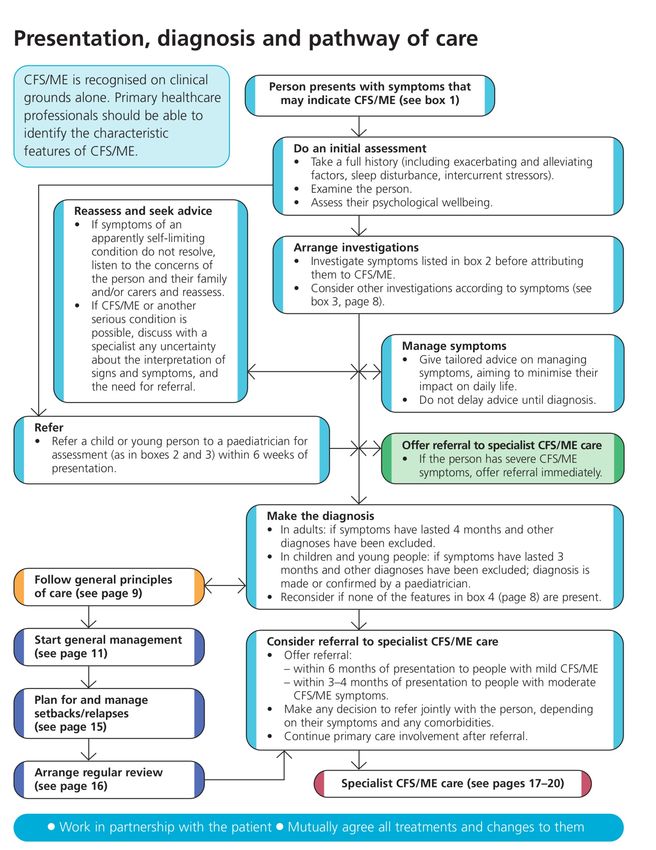
Appendix C: The algorithms ......................................................................................................... 48

  Care pathway ......................................................................................................................................... 49

Appendix D: Definitions used in this guideline ............................................................................. 51

About this guideline ...................................................................................................................... 55

© NICE 2007. All rights reserved. Last modified August 2007                                                                                Page 3 of 56
Chronic fatigue syndrome/myalgic encephalomyelitis (or                          NICE clinical guideline
encephalopathy)                                                                                      53

Introduction

Chronic fatigue syndrome (CFS)/myalgic encephalomyelitis (or encephalopathy) (ME) is a
relatively common illness. The physical symptoms can be as disabling as multiple sclerosis,
systemic lupus erythematosus, rheumatoid arthritis, congestive heart failure and other chronic
conditions. CFS/ME places a substantial burden on people with the condition, their families and
carers, and hence on society.

There is a lack of epidemiological data for the UK, so population estimates are based on
extrapolations from other countries. Overall, evidence suggests a population prevalence of at
least 0.2–0.4%. This means that a general practice with 10,000 patients is likely to include up to
40 people with CFS/ME; half of these people will need input from specialist services.

Many different potential aetiologies for CFS/ME – including neurological, endocrine,
immunological, genetic, psychiatric and infectious – have been investigated, but the diverse
nature of the symptoms can not yet be fully explained. The World Health Organization (WHO)
classifies CFS/ME as a neurological illness (G93.3), and some members of the Guideline
Development Group (GDG) felt that, until research further identifies its aetiology and
pathogenesis, the guideline should recognise this classification. Others felt that to do so did not
reflect the nature of the illness, and risked restricting research into the causes, mechanisms and
future treatments for CFS/ME.

CFS/ME comprises a range of symptoms that includes fatigue, malaise, headaches, sleep
disturbances, difficulties with concentration and muscle pain. A person's symptoms may fluctuate
in intensity and severity, and there is also great variability in the symptoms different people
experience. CFS/ME is characterised by debilitating fatigue that is unlike everyday fatigue and
can be triggered by minimal activity. This raises especially complex issues in adults and children
with severe CFS/ME.

CFS/ME, like other chronic conditions for which the causes and disease processes are not yet
fully understood, poses significant problems for healthcare professionals. It can cause profound,
prolonged illness and disability, which has a substantial impact on people with CFS/ME and their
carers. Uncertainties about diagnosis and management, and a lack of clinical guidance for
healthcare professionals, have exacerbated this impact.

© NICE 2007. All rights reserved. Last modified August 2007                                Page 4 of 56
Chronic fatigue syndrome/myalgic encephalomyelitis (or                      NICE clinical guideline
encephalopathy)                                                                                  53

The recommendations in this guideline emphasise the importance of early symptom
management, making an accurate diagnosis, ensuring that significant clinical features are
investigated, and working in partnership with people with CFS/ME to manage the condition.
Different combinations of approaches will be helpful for different people.

Definitions used in this guideline are provided in Appendix D.

© NICE 2007. All rights reserved. Last modified August 2007                            Page 5 of 56
Chronic fatigue syndrome/myalgic encephalomyelitis (or                          NICE clinical guideline
encephalopathy)                                                                                      53

Patient-centred care

This guideline offers best practice advice on the care of people with CFS/ME.

Treatment and care should take into account patients' individual needs and preferences.

People with CFS/ME should have the opportunity to make informed decisions about their care
and treatment. For children and young people with CFS/ME, this will depend on their age and
capacity to make decisions. It is good practice for healthcare professionals to involve the young
person's parent(s) or guardian(s) in the decision-making process.

If patients do not have the capacity to make decisions, healthcare professionals should follow the
Department of Health's advice on consent and the code of practice that accompanies the Mental
Capacity Act. In Wales, healthcare professionals should follow advice on consent from the Welsh
Government.

Good communication between healthcare professionals and people with CFS/ME is essential. All
healthcare professionals should have a high standard[ ] of consultation and communication skills
                                                              1

and use a consulting style that enables people with CFS/ME (and their families and/or carers as
appropriate) to participate as partners in all decisions about their healthcare, taking fully into
account their socioeconomic status, culture, cognitive ability and any specific needs.

Communication should be supported by evidence-based written information tailored to the
person's needs. Treatment and care, and the information people with CFS/ME (and their families
and carers as appropriate) are given about it, should be culturally appropriate. It should also be
accessible to people with additional needs such as physical, sensory or learning disabilities, and
to people who do not speak or read English.

Carers and relatives should have the opportunity to be involved in decisions about the patient's
care and treatment, unless the patient specifically excludes them.

Carers and relatives should also be given the information and support they need.

Adult and paediatric healthcare teams should work jointly to provide assessment and services to
young people with CFS/ME. As part of the transition process from paediatric to adult services,

© NICE 2007. All rights reserved. Last modified August 2007                                Page 6 of 56
Chronic fatigue syndrome/myalgic encephalomyelitis (or NICE clinical guideline encephalopathy) 53 diagnosis and management should be reviewed and, throughout, there should be clarity about who is the lead clinician to ensure continuity of care. Transitional care should be planned and managed according to the best practice guidance described in Transition: getting it right for young people. [ 1] The standards detailed in the video workbook 'Summative assessment for general practice training: assessment of consulting skills – the MRCGP/summative assessment single route' are a good example of standards for consulting skills. © NICE 2007. All rights reserved. Last modified August 2007 Page 7 of 56
Chronic fatigue syndrome/myalgic encephalomyelitis (or                            NICE clinical guideline
encephalopathy)                                                                                        53

Key priorities for implementation

General principles of care

     Shared decision-making between the person with CFS/ME and healthcare professionals
     should take place during diagnosis and all phases of care. The healthcare professional
     should:

              Acknowledge the reality and impact of the condition and the symptoms.

              Provide information about the range of interventions and management strategies as
              detailed in this guideline (such as the benefits, risks and likely side effects).

              Provide information on the possible causes, nature and course of CFS/ME.

              Provide information on returning to work or education.

              Take account of the person's age (particularly for children younger than 12 years), the
              severity of their CFS/ME, their preferences and experiences, and the outcome of
              previous treatment(s).

              Offer information about local and national self-help groups and support groups for
              people with CFS/ME and their carers (see also the NHS Expert Patients
              Programme[ ]). 2

     Healthcare professionals should be aware that – like all people receiving care in the NHS –
     people with CFS/ME have the right to refuse or withdraw from any component of their care
     plan without this affecting other aspects of their care, or future choices about care.

     To facilitate effective management of the condition, healthcare professionals should aim to
     establish a supportive and collaborative relationship with the person with CFS/ME and their
     carers. Engagement with the family is particularly important for children and young people,
     and for people with severe CFS/ME.

     Healthcare professionals should provide diagnostic and therapeutic options to people with
     CFS/ME in ways that are suitable for the individual person. This may include providing
     domiciliary services (including specialist assessment) or using methods such as telephone
     or email.

Diagnosis and initial management

© NICE 2007. All rights reserved. Last modified August 2007                                  Page 8 of 56
Chronic fatigue syndrome/myalgic encephalomyelitis (or NICE clinical guideline
encephalopathy) 53
Advice on symptom management should not be delayed until a diagnosis is established.
This advice should be tailored to the specific symptoms the person has and be aimed at
minimising their impact on daily life and activities.
A diagnosis should be made after other possible diagnoses have been excluded and the
symptoms have persisted for:
4 months in an adult
3 months in a child or young person; the diagnosis should be made or confirmed by a
paediatrician.
Healthcare professionals should proactively advise about fitness for work and education,
and recommend flexible adjustments or adaptations to work or studies to help people with
CFS/ME to return to them when they are ready and fit enough. This may include, with the
informed consent of the person with CFS/ME, liaising with employers, education providers
and support services, such as:
occupational health services
disability services through Jobcentre Plus
schools, home education services and local education authorities
disability advisers in universities and colleges.
Specialist CFS/ME care
Any decision to refer a person to specialist CFS/ME care should be based on their needs,
the type, duration, complexity and severity of their symptoms, and the presence of
comorbidities. The decision should be made jointly by the person with CFS/ME and the
healthcare professional.
An individualised, person-centred programme should be offered to people with CFS/ME. The
objectives of the programme should be to:
sustain or gradually extend, if possible, the person's physical, emotional and cognitive
capacity
manage the physical and emotional impact of their symptoms.
© NICE 2007. All rights reserved. Last modified August 2007 Page 9 of 56Chronic fatigue syndrome/myalgic encephalomyelitis (or NICE clinical guideline
encephalopathy) 53
Cognitive behavioural therapy and/or graded exercise therapy should be offered to people
with mild or moderate CFS/ME and provided to those who choose these approaches,
because currently these are the interventions for which there is the clearest research
evidence of benefit.
[ 2]
For more information see Expert Patients Programme or Education Programme for Patients
Wales
© NICE 2007. All rights reserved. Last modified August 2007 Page 10 of 56Chronic fatigue syndrome/myalgic encephalomyelitis (or NICE clinical guideline
encephalopathy) 53
1 Guidance
The following guidance is based on the best available evidence. The full guideline ('CFS/ME:
diagnosis and management of adults and children') gives details of the methods and the
evidence used to develop the guidance (see section 5 for details).
1.1 General principles of care
1.1.1 Shared decision-making
1.1.1.1 Shared decision-making between the person with CFS/ME and healthcare
professionals should take place during diagnosis and all phases of care. The
healthcare professional should:
Acknowledge the reality and impact of the condition and the symptoms.
Provide information about the range of interventions and management strategies as
detailed in this guideline (such as the benefits, risks and likely side effects).
Provide information on the possible causes, nature and course of CFS/ME.
Provide information on returning to work or education.
Take account of the person's age (particularly for children younger than 12 years),
the severity of their CFS/ME, their preferences and experiences, and the outcome
of previous treatment(s).
Offer information about local and national self-help groups and support groups for
people with CFS/ME and their carers (see also the NHS Expert Patients
Programme[ ]). 3
1.1.1.2 When providing care for children and young people, healthcare professionals
should follow best practice as described in the national service frameworks for
children for England or for Wales[ ]. 4
1.1.1.3 Healthcare professionals should be aware that – like all people receiving care
in the NHS – people with CFS/ME have the right to refuse or withdraw from
© NICE 2007. All rights reserved. Last modified August 2007 Page 11 of 56Chronic fatigue syndrome/myalgic encephalomyelitis (or NICE clinical guideline
encephalopathy) 53
any component of their care plan without this affecting other aspects of their
care, or future choices about care.
1.1.1.4 Healthcare professionals should recognise that the person with CFS/ME is in
charge of the aims and goals of the overall management plan. The pace of
progression throughout the course of any intervention should be mutually
agreed.
1.1.1.5 Healthcare professionals should provide diagnostic and therapeutic options to
people with CFS/ME in ways that are suitable for the individual person. This
may include providing domiciliary services (including specialist assessment) or
using methods such as telephone or email.
1.1.2 Support and information
1.1.2.1 To facilitate effective management of the condition, healthcare professionals
should aim to establish a supportive and collaborative relationship with the
person with CFS/ME and their carers. Engagement with the family is
particularly important for children and young people, and for people with
severe CFS/ME.
1.1.2.2 A named healthcare professional should be responsible for coordinating care
for each person with CFS/ME.
1.1.2.3 Healthcare professionals should provide accurate information to people at all
stages of CFS/ME, starting from when a diagnosis is first being considered.
This should be tailored to the person's circumstances, including the stage and
duration of the condition, symptoms experienced and relevant personal and
social factors.
1.1.2.4 Information should be available in a variety of formats if appropriate (printed
copy, electronic and audio), which people with CFS/ME and their carers can
refer to at home and in the clinical setting.
© NICE 2007. All rights reserved. Last modified August 2007 Page 12 of 56Chronic fatigue syndrome/myalgic encephalomyelitis (or NICE clinical guideline
encephalopathy) 53
1.1.3 Provision of care
1.1.3.1 Healthcare professionals responsible for caring for people with CFS/ME should
have appropriate skills and expertise in the condition.
1.1.3.2 Every person diagnosed with CFS/ME should be offered:
information about the illness (see section 1.1.2)
acceptance and understanding
assistance negotiating the healthcare, benefits and social care systems
assistance with occupational activities including work and education if appropriate
(see section 1.4.5).
1.1.3.3 An individualised management plan should be developed with the person with
CFS/ME, and their carers if appropriate. The plan should be reviewed and
changes documented at each contact. It should include:
relevant symptoms and history
plans for care and treatment, including managing setbacks/relapses
information and support needs
any education, training or employment support needs
details of the healthcare professionals involved in care and their contact details.
1.2 Presentation
1.2.1 Presenting symptoms suspicious of CFS/ME
1.2.1.1 CFS/ME is recognised on clinical grounds alone. Primary healthcare
professionals should be familiar with and be able to identify the characteristic
features of CFS/ME.
1.2.1.2 Healthcare professionals should consider the possibility of CFS/ME if a person
has:
© NICE 2007. All rights reserved. Last modified August 2007 Page 13 of 56Chronic fatigue syndrome/myalgic encephalomyelitis (or NICE clinical guideline
encephalopathy) 53
fatigue with all of the following features:
new or had a specific onset (that is, it is not lifelong)
persistent and/or recurrent
unexplained by other conditions
has resulted in a substantial reduction in activity level
characterised by post-exertional malaise and/or fatigue (typically delayed, for
example by at least 24 hours, with slow recovery over several days)
and
one or more of the following symptoms:
difficulty with sleeping, such as insomnia, hypersomnia, unrefreshing sleep, a
disturbed sleep–wake cycle
muscle and/or joint pain that is multi-site and without evidence of
inflammation
headaches
painful lymph nodes without pathological enlargement
sore throat
cognitive dysfunction, such as difficulty thinking, inability to concentrate,
impairment of short-term memory, and difficulties with word-finding, planning/
organising thoughts and information processing
physical or mental exertion makes symptoms worse
general malaise or 'flu-like' symptoms
dizziness and/or nausea
palpitations in the absence of identified cardiac pathology.
© NICE 2007. All rights reserved. Last modified August 2007 Page 14 of 56Chronic fatigue syndrome/myalgic encephalomyelitis (or NICE clinical guideline
encephalopathy) 53
1.2.1.3 Healthcare professionals should be aware that the symptoms of CFS/ME
fluctuate in severity and may change in nature over time.
1.2.1.4 Signs and symptoms that can be caused by other serious conditions ('red
flags') should not be attributed to CFS/ME without consideration of alternative
diagnoses or comorbidities. In particular, the following features should be
investigated[ ]: 5
localising/focal neurological signs
signs and symptoms of inflammatory arthritis or connective tissue disease
signs and symptoms of cardiorespiratory disease
significant weight loss
sleep apnoea
clinically significant lymphadenopathy.
1.2.2 History, examinations and investigations
1.2.2.1 A full history (including exacerbating and alleviating factors, sleep disturbance
and intercurrent stressors) should be taken, and a physical examination and
assessment of psychological wellbeing should be carried out.
1.2.2.2 A child or young person who has symptoms suggestive of CFS/ME should be
referred to a paediatrician for assessment to exclude other diagnoses within 6
weeks of presentation.
1.2.2.3 The following tests should usually be done:
urinalysis for protein, blood and glucose
full blood count
urea and electrolytes
liver function
© NICE 2007. All rights reserved. Last modified August 2007 Page 15 of 56Chronic fatigue syndrome/myalgic encephalomyelitis (or NICE clinical guideline
encephalopathy) 53
thyroid function
erythrocyte sedimentation rate or plasma viscosity
C-reactive protein
random blood glucose
serum creatinine
screening blood tests for gluten sensitivity
serum calcium
creatine kinase
assessment of serum ferritin levels (children and young people only).
Clinical judgement should be used when deciding on additional investigations to
exclude other diagnoses.
1.2.2.4 Tests for serum ferritin in adults should not be carried out unless a full blood
count and other haematological indices suggest iron deficiency.
1.2.2.5 Tests for vitamin B12 deficiency and folate levels should not be carried out
unless a full blood count and mean cell volume show a macrocytosis.
1.2.2.6 The following tests should not be done routinely to aid diagnosis:
the head-up tilt test
auditory brainstem responses
electrodermal conductivity.
1.2.2.7 Serological testing should not be carried out unless the history is indicative of
an infection. Depending on the history, tests for the following infections may be
appropriate:
chronic bacterial infections, such as borreliosis
© NICE 2007. All rights reserved. Last modified August 2007 Page 16 of 56Chronic fatigue syndrome/myalgic encephalomyelitis (or NICE clinical guideline
encephalopathy) 53
chronic viral infections, such as HIV or hepatitis B or C
acute viral infections, such as infectious mononucleosis (use heterophile antibody
tests)
latent infections, such as toxoplasmosis, Epstein–Barr virus or cytomegalovirus.
1.2.3 Advice on symptom management before diagnosis
1.2.3.1 Advice on symptom management should not be delayed until a diagnosis is
established. This advice should be tailored to the specific symptoms the
person has, and be aimed at minimising their impact on daily life and activities.
1.2.4 Re-assessment before diagnosis
1.2.4.1 If symptoms do not resolve as expected in a person initially suspected of
having a self-limiting condition, primary healthcare professionals should listen
carefully to the person's and their family and/or carers' concerns and be
prepared to reassess their initial opinion.
1.2.4.2 If considering the possibility of CFS/ME or another serious alternative
condition, primary healthcare professionals should consider discussion with a
specialist if there is uncertainty about the interpretation of signs and symptoms
and whether a referral is needed. This may also enable the primary healthcare
professional to communicate their concerns and a sense of urgency to
secondary healthcare professionals if symptoms are unusual.
1.3 Diagnosis
1.3.1 Making a diagnosis
1.3.1.1 A diagnosis should be made after other possible diagnoses have been
excluded and the symptoms have persisted for:
4 months in an adult
3 months in a child or young person; the diagnosis should be made or confirmed by
a paediatrician.
© NICE 2007. All rights reserved. Last modified August 2007 Page 17 of 56Chronic fatigue syndrome/myalgic encephalomyelitis (or NICE clinical guideline
encephalopathy) 53
1.3.1.2 When a diagnosis of CFS/ME is made, healthcare professionals should
provide honest, realistic information about CFS/ME and encourage cautious
optimism.
Most people with CFS/ME will improve over time and some people will recover and
be able to resume work and normal activities.
However, others will continue to experience symptoms or relapse and some people
with severe CFS/ME may remain housebound.
The prognosis in children and young people is more optimistic.
1.3.1.3 The diagnosis of CFS/ME should be reconsidered if none of the following key
features are present:
post-exertional fatigue or malaise
cognitive difficulties
sleep disturbance
chronic pain.
1.4 General management strategies after diagnosis
1.4.1 Symptom management
1.4.1.1 There is no known pharmacological treatment or cure for CFS/ME. However,
symptoms of CFS/ME should be managed as in usual clinical practice.
1.4.1.2 No research evidence was found to support the experience of some people
with CFS/ME that they are more intolerant of drug treatment and have more
severe adverse/side effects. However, if people with CFS/ME have concerns,
healthcare professionals may consider starting drug treatment for CFS/ME
symptoms at a lower dose than in usual clinical practice. The dose may be
increased gradually, in agreement with the patient.
1.4.1.3 Specific drug treatment for children and young people with CFS/ME should be
started by a paediatrician. However, prescribing may be continued in primary
© NICE 2007. All rights reserved. Last modified August 2007 Page 18 of 56Chronic fatigue syndrome/myalgic encephalomyelitis (or NICE clinical guideline
encephalopathy) 53
care, depending on the preferences of the patient and their carers, and local
circumstances.
1.4.1.4 If a person experiences nausea as part of CFS/ME, this should be managed
conventionally, including giving advice on eating little and often, snacking on
dry starchy foods and sipping fluids. The use of anti-emetic drugs should be
considered only if the nausea is severe.
1.4.1.5 Although exclusion diets are not generally recommended for managing CFS/
ME, many people find them helpful in managing symptoms, including bowel
symptoms. If a person with CFS/ME undertakes an exclusion diet or dietary
manipulation, healthcare professionals should seek advice from a dietitian
because of the risk of malnutrition.
1.4.2 Function and quality-of-life management
Sleep management
1.4.2.1 Healthcare professionals should provide tailored sleep management advice
that includes:
Explaining the role and effect of disordered sleep or sleep dysfunction in CFS/ME.
Identifying the common changes in sleep patterns seen in CFS/ME that may
exacerbate fatigue symptoms (such as insomnia, hypersomnia, sleep reversal,
altered sleep–wake cycle and non-refreshing sleep).
Providing general advice on good sleep hygiene[ ]. 6
Introducing changes to sleep patterns gradually.
Regular review.
1.4.2.2 If sleep management strategies do not improve the person's sleep and rest,
the possibility of an underlying sleep disorder or dysfunction should be
considered, and interventions provided if needed.
© NICE 2007. All rights reserved. Last modified August 2007 Page 19 of 56Chronic fatigue syndrome/myalgic encephalomyelitis (or NICE clinical guideline
encephalopathy) 53
1.4.2.3 Sleep management strategies should not include encouraging daytime
sleeping and naps. People with CFS/ME should be advised that excessive
sleep does not generally improve physical or mental functioning, and
excessive periods of daytime sleep or frequent napping may further disrupt the
sleep–wake cycle.
Rest periods
1.4.2.4 Restperiods are a component of all management strategies for CFS/ME.
Healthcare professionals should advise people with CFS/ME on the role of
rest, how to introduce rest periods into their daily routine, and the frequency
and length appropriate for each person. This may include:
Limiting the length of rest periods to 30 minutes at a time.
Introducing 'low level' physical and cognitive activities (depending on the severity of
symptoms).
Using relaxation techniques (see recommendation 1.4.2.6).
1.4.2.5 Healthcare professionals should review the use of rest periods regularly as
part of the patient's management plan.
Relaxation
1.4.2.6 Relaxation techniques appropriate to the person with CFS/ME should be
offered for the management of pain, sleep problems and comorbid stress or
anxiety. There are a number of different relaxation techniques (such as guided
visualisation or breathing techniques) that can be incorporated into rest
periods.
Pacing
1.4.2.7 People with CFS/ME have reported pacing to be helpful in self-managing CFS/
ME. However, healthcare professionals should advise people with CFS/ME
that, at present, there is insufficient research evidence on the benefits or harm
of pacing.
© NICE 2007. All rights reserved. Last modified August 2007 Page 20 of 56Chronic fatigue syndrome/myalgic encephalomyelitis (or NICE clinical guideline
encephalopathy) 53
1.4.3 Diet
See also recommendations on managing nausea (1.4.1.4) and bowel symptoms (1.4.1.5), and
use of supplements (1.4.7.2–4).
1.4.3.1 Healthcare professionals should emphasise the importance of a well-balanced
diet in line with 'The balance of good health'[ ]. They should work with the
7
person with CFS/ME to develop strategies to minimise complications that may
be caused by nausea, swallowing problems, sore throat or difficulties with
buying, preparing and eating food.
1.4.3.2 Healthcare professionals should emphasise the importance of eating regularly,
and including slow-release starchy foods in meals and snacks. The
physiological consequences of not doing so should be explained to the person
with CFS/ME.
1.4.4 Equipment to maintain independence
1.4.4.1 For people with moderate or severe CFS/ME, providing or recommending
equipment and adaptations (such as a wheelchair, blue badge or stairlift)
should be considered as part of an overall management plan, taking into
account the risks and benefits for the individual patient. This may help them to
maintain their independence and improve their quality of life.
1.4.5 Education and employment
1.4.5.1 Having to stop their work or education is generally detrimental to people's
health and well-being. Therefore, the ability of a person with CFS/ME to
continue in education or work should be addressed early and reviewed
regularly.
1.4.5.2 Healthcare professionals should proactively advise about fitness for work and
education, and recommend flexible adjustments or adaptations to work or
studies to help people with CFS/ME to return to them when they are ready and
fit enough. This may include, with the informed consent of the person with
CFS/ME, liaising with employers, education providers and support services,
such as:
© NICE 2007. All rights reserved. Last modified August 2007 Page 21 of 56Chronic fatigue syndrome/myalgic encephalomyelitis (or NICE clinical guideline
encephalopathy) 53
occupational health services
disability services through Jobcentre Plus
schools, home education services and local education authorities
disability advisers in universities and colleges.
1.4.5.3 For people with CFS/ME who are able to continue in or return to education or
employment, healthcare professionals should ensure, with the person's
informed consent, that employers, occupational health or education institutions
have information on the condition and the agreed management plan.
Education
1.4.5.4 Healthcare professionals should follow the guidance from the Department for
Children, Schools and Families[ ] on education for children and young people
8
with medical needs, or equivalent statutory guidance.
1.4.5.5 Healthcare professionals should work closely with social care and education
services to ensure a common understanding of the goals of the person with
CFS/ME. The use of a flexible approach should be discussed, including home
tuition and use of equipment that allows a gradual reintegration into education.
1.4.5.6 Time in education should not be used as a sole marker of progress of CFS/ME,
and education should not be the only activity a person undertakes. There
should be a balance between time spent attending school or college and doing
homework, and time spent on home and social activities.
Employment
1.4.5.7 If possible, and with the informed consent of the person with CFS/ME,
healthcare professionals should discuss employment issues with occupational
health professionals, who will communicate with the person's manager or
human resources representative. If there is no access to occupational health
services, the responsible clinician should liaise with the employer directly[ ].
9
© NICE 2007. All rights reserved. Last modified August 2007 Page 22 of 56Chronic fatigue syndrome/myalgic encephalomyelitis (or NICE clinical guideline
encephalopathy) 53
1.4.6 Strategies that should not be used for CFS/ME
1.4.6.1 The following drugs should not be used for the treatment of CFS/ME:
monoamine oxidase inhibitors
glucocorticoids (such as hydrocortisone)
mineralocorticoids (such as fludrocortisone)
dexamphetamine
methylphenidate
thyroxine
antiviral agents.
1.4.6.2 The following strategies should not be offered to people with CFS/ME:
Advice to undertake unsupervised, or unstructured, vigorous exercise (such as
simply 'go to the gym' or 'exercise more') because this may worsen symptoms.
Specialist management programmes (see section 1.6) delivered by practitioners
with no experience in the condition.
1.4.6.3 Although there is considerable support from patients (particularly people with
severe CFS/ME) for the following strategies, healthcare professionals should
be aware that there is no controlled trial evidence of benefit:
Encouraging maintenance of activity levels at substantially less than full capacity to
reserve energy for the body to heal itself (sometimes known as the envelope
theory).
Encouraging complete rest (cognitive, physical and emotional) during a setback/
relapse.
1.4.6.4 Strategies for managing CFS/ME should not include:
© NICE 2007. All rights reserved. Last modified August 2007 Page 23 of 56Chronic fatigue syndrome/myalgic encephalomyelitis (or NICE clinical guideline
encephalopathy) 53
Prolonged or complete rest or extended periods of daytime rest in response to a
slight increase in symptoms.
An imposed rigid schedule of activity and rest.
1.4.7 Complementary and supplementary therapies
1.4.7.1 There is insufficient evidence that complementary therapies are effective
treatments for CFS/ME and therefore their use is not recommended. However,
some people with CFS/ME choose to use some of these therapies for
symptom control, and find them helpful.
1.4.7.2 There is insufficient evidence for the use of supplements – such as vitamin B12,
vitamin C, co-enzyme Q10, magnesium, NADH (nicotinamide adenine
dinucleotide) or multivitamins and minerals – for people with CFS/ME, and
therefore they should not be prescribed for treating the symptoms of the
condition. However, some people with CFS/ME have reported finding these
helpful as a part of a self-management strategy for their symptoms.
1.4.7.3 People with CFS/ME who are using supplements should be advised not to
exceed the safe levels recommended by the Food Standards Agency[ ]. 10
1.4.7.4 Some people with CFS/ME need supplements because of a restricted dietary
intake or nutritional deficiencies. Healthcare professionals should seek advice
from a dietitian about any concerns.
1.5 Referral to specialist CFS/ME care
1.5.1.1 Any decision to refer a person to specialist CFS/ME care should be based on
their needs, the type, duration, complexity and severity of their symptoms, and
the presence of comorbidities. The decision should be made jointly by the
person with CFS/ME and the healthcare professional.
1.5.1.2 Referral to specialist CFS/ME care should be offered:
within 6 months of presentation to people with mild CFS/ME
© NICE 2007. All rights reserved. Last modified August 2007 Page 24 of 56Chronic fatigue syndrome/myalgic encephalomyelitis (or NICE clinical guideline
encephalopathy) 53
within 3–4 months of presentation to people with moderate CFS/ME symptoms
immediately to people with severe CFS/ME symptoms.
1.6 Specialist CFS/ME care
1.6.1.1 After a patient is referred to specialist care, an initial assessment should be
done to confirm the diagnosis.
1.6.1.2 If general management strategies (see section 1.4) are helpful for a person
with CFS/ME, these should be continued after referral to specialist CFS/ME
care.
1.6.2 Cognitive behavioural therapy, graded exercise therapy and activity
management programmes
Choosing and planning treatment
1.6.2.1 An individualised, person-centred programme should be offered
to people with CFS/ME. The objectives of the programme should be to:
sustain or gradually extend, if possible, the person's physical, emotional and
cognitive capacity
manage the physical and emotional impact of their symptoms.
1.6.2.2 The rationale and content of the different programmes, including their potential
benefits and risks, should be fully explained to the person with CFS/ME.
Healthcare professionals should explain that no single strategy will be
successful for all patients, or during all stages of the condition.
1.6.2.3 Healthcare professionals should recognise that the person with CFS/ME is in
charge of the aims of the programme. The choice of the programme, its
components, and progression throughout the programme should be mutually
agreed and based on:
the person's age, preferences and needs
© NICE 2007. All rights reserved. Last modified August 2007 Page 25 of 56Chronic fatigue syndrome/myalgic encephalomyelitis (or NICE clinical guideline
encephalopathy) 53
the person's skills and abilities in managing their condition, and their goals (such as
improvement or treatment of deterioration of symptoms, prevention of relapse or
maintenance)
the severity and complexity of symptoms
physical and cognitive functioning.
1.6.2.4 Cognitive behavioural therapy (CBT) and/or graded exercise therapy (GET)
should be offered to people with mild or moderate CFS/ME and provided to
those who choose these approaches, because currently these are the
interventions for which there is the clearest research evidence of benefit.
1.6.2.5 If a full CBT or GET programme is inappropriate or not available, components
of CBT or GET should be offered, either individually or more effectively in
combination with:
activity management strategies (see 1.6.2.22)
sleep management (see 1.4.2.1–3)
relaxation techniques (see 1.4.2.6).
1.6.2.6 The choice of programme, its components and progression through it should
be reviewed regularly, taking into account the goals and abilities of the person
with CFS/ME, and other approaches agreed as necessary.
1.6.2.7 Healthcare professionals should advise people with CFS/ME to contact them if
they experience an increase in symptoms that lasts for longer than a few days
after starting the specialist programme, or if symptoms are severe or
distressing.
Cognitive behavioural therapy (CBT)
1.6.2.8 A course of CBT should be delivered only by a healthcare professional with
appropriate training in CBT and experience in CFS/ME, under clinical
supervision. The therapist should adhere closely to empirically grounded
therapy protocols.
© NICE 2007. All rights reserved. Last modified August 2007 Page 26 of 56Chronic fatigue syndrome/myalgic encephalomyelitis (or NICE clinical guideline
encephalopathy) 53
1.6.2.9 CBT should be offered on a one-to-one basis if possible.
1.6.2.10 CBT for a person with CFS/ME should be planned according to the usual
principles of CBT, and should include:
Acknowledging and validating the person's symptoms and condition.
Explaining the CBT approach in CFS/ME, such as the relationship between
thoughts, feelings, behaviours and symptoms, and the distinction between causal
and perpetuating factors.
Discussing the person's attitudes and expectations.
Developing a supportive and collaborative therapeutic relationship.
Developing a shared formulation and understanding of factors that affect CFS/ME
symptoms.
Agreeing therapeutic goals.
Tailoring treatment to the person's needs and level of functioning.
Recording and analysing patterns of activity and rest, and thoughts, feelings and
behaviours (self-monitoring).
Establishing a stable and maintainable activity level (baseline) followed by a gradual
and mutually agreed increase in activity.
Challenging thoughts and expectations that may affect symptom improvement and
outcomes.
Addressing complex adjustment to diagnosis and acceptance of current functional
limitations.
Developing awareness of thoughts, expectations or beliefs and defining fatigue-
related cognitions and behaviour.
Identifying perpetuating factors that may maintain or exacerbate CFS/ME symptoms
to increase the person's self-efficacy (sense of control over symptoms).
© NICE 2007. All rights reserved. Last modified August 2007 Page 27 of 56Chronic fatigue syndrome/myalgic encephalomyelitis (or NICE clinical guideline
encephalopathy) 53
Addressing any over-vigilance to symptoms and related checking or reassurance-
seeking behaviours by providing physiological explanations of symptoms and using
refocusing/distraction techniques.
Problem solving using activity management and homework tasks to test out
alternative thoughts or beliefs, such as undertaking pleasure and mastery tasks
(tasks that are enjoyable and give a sense of accomplishment).
Building on existing assertion and communication skills to set appropriate limits on
activity.
Managing sleep problems, for example by addressing any unhelpful beliefs about
sleep, behavioural approaches to sleep disturbance, stress management, and/or
relaxation training (see recommendations 1.4.2.1–6).
Treating any associated or comorbid anxiety, depression or mood disorder
according to NICE clinical guidelines on these conditions (see section 6).
Offering information on managing setbacks/relapses (see section 1.7).
Graded exercise therapy (GET)
1.6.2.11 GET should be delivered only by a suitably trained GET therapist with
experience in CFS/ME, under appropriate clinical supervision.
1.6.2.12 GET should be offered on a one-to-one basis if possible.
1.6.2.13 People with mild or moderate CFS/ME should be offered GET that includes
planned increases in the duration of physical activity. The intensity should then
be increased when appropriate, leading to aerobic exercise (that is, exercise
that increases the pulse rate).
1.6.2.14 GET should be based on the person's current level of activities (such as
physical activity, daily routines, sleep patterns and frequency of setbacks/
relapses) and emotional factors, vocational or educational factors and
individual goals (details of these may be obtained from an activity diary). The
programme should also include sleep and relaxation strategies (see
recommendations 1.4.2.1–6).
© NICE 2007. All rights reserved. Last modified August 2007 Page 28 of 56Chronic fatigue syndrome/myalgic encephalomyelitis (or NICE clinical guideline
encephalopathy) 53
1.6.2.15 When planning GET, the healthcare professional should:
Undertake an activity analysis to ensure that the person with CFS/ME is not in a
'boom and bust' cycle before they increase the time spent in exercise.
Discuss with the person the ultimate goals that are important and relevant to them.
This might be, for example, a twice-daily short walk to the shops, a return to a
previous active hobby such as cycling or gardening, or, for people with severe CFS/
ME, sitting up in bed to eat a meal.
Recognise that it can take weeks, months or even years to achieve goals, and
ensure that this is taken into account in the therapy structure (for example, by
setting short- and medium-term goals).
Explain symptoms and the benefits of exercise in a physiological context.
1.6.2.16 When starting GET, the healthcare professional should:
Assess the person's current daily activities to determine their baseline.
Agree with them a level of additional low-intensity exercise that is sustainable,
independent of daily fluctuations in symptoms, and does not lead to 'boom and bust'
cycles. This may be sitting up in bed or brushing hair, for example, for people with
severe CFS/ME, or gentle stretches or a slow walk.
Encourage them to undertake this exercise for at least 5 days out of 7, or build up to
this level if and when possible.
Advise them that this level of exercise may mildly increase symptoms for a few days
(for example, a mild to moderate increase in stiffness and fatigue), explain why this
may occur and discuss strategies to mitigate it.
Offer information on the management of setbacks/relapses (see section 1.7).
Progressing with GET
1.6.2.17 When the low-intensity exercise can be sustained for 5 days out of 7 (usually
accompanied by a reduction in perceived exertion), the duration should be
reviewed and increased, if appropriate, by up to 20%. For example, a 5-minute
© NICE 2007. All rights reserved. Last modified August 2007 Page 29 of 56Chronic fatigue syndrome/myalgic encephalomyelitis (or NICE clinical guideline
encephalopathy) 53
walk becomes 6 minutes, or a person with severe CFS/ME sits up in bed for a
longer period, or walks to another room more often. The aim is to reach 30
minutes of low-intensity exercise.
1.6.2.18 When the duration of low-intensity exercise has reached 30 minutes, the
intensity of the exercise may be increased gradually up to an aerobic heart rate
zone, as assessed individually by a healthcare professional. A rate of 50–70%
maximum heart rate is recommended.
1.6.2.19 Exercise intensity should be measured using a heart rate monitor, so that the
person knows they are within their target heart rate zone.
1.6.2.20 If agreed GET goals are met, exercise duration and intensity may be increased
further if appropriate, if other daily activities can also be sustained, and in
agreement with the person with CFS/ME.
Maintaining exercise
1.6.2.21 After completing a GET programme, the healthcare professional and the
person with CFS/ME should continue working together to develop and build on
strategies to maintain exercise. Support should be available, if needed, to
enable the person to reinforce the learning and lifestyle changes made and
continue GET beyond discharge.
Activity management
1.6.2.22 Activity management is a goal-oriented and person-centred approach tailored
to the needs of the person with CFS/ME. It should include:
Understanding that activities have physical, emotional and cognitive components,
and identifying these components.
Keeping a diary that records cognitive and physical activity, daytime rest and sleep.
This will help to set baseline levels of activity (a stable and sustainable range of
functioning), identify patterns of over- and underactivity, and develop an activity/
exercise strategy.
© NICE 2007. All rights reserved. Last modified August 2007 Page 30 of 56Chronic fatigue syndrome/myalgic encephalomyelitis (or NICE clinical guideline
encephalopathy) 53
Establishing a baseline; specific activities may need to be increased or decreased
while this is happening.
Gradually increasing activity above the baseline in agreement with the person.
Planning daily activities to allow for a balance and variety of different types of
activity, rest and sleep. This may include making a weekly activity schedule.
Spreading out difficult or demanding tasks over the day or week.
Splitting activities into small achievable tasks according to the person's level of
ability/functioning, followed by gradual increases in the complexity of the tasks.
Monitoring, regulating and planning activities to avoid a 'boom and bust' cycle.
Goal setting, planning and prioritising activities.
Explaining the role of rest in CFS/ME and helping the person work out how to build
in rest periods and achieve a productive day (see recommendations 1.4.2.1–6).
Regularly reviewing activity levels and goals.
Offering information on the management of setbacks/relapses (see section 1.7).
1.6.3 Pharmacological interventions for symptom control
1.6.3.1 If chronic pain is a predominant feature, healthcare professionals should
consider referral to a pain management clinic.
1.6.3.2 Prescribing of low-dose tricyclic antidepressants, specifically amitriptyline,
should be considered for people with CFS/ME who have poor sleep or pain.
Tricyclic antidepressants should not be offered to people who are already
taking selective serotonin reuptake inhibitors (SSRIs) because of the potential
for serious adverse interactions.
1.6.3.3 Melatonin may be considered for children and young people with CFS/ME who
have sleep difficulties, but only under specialist supervision because it is not
licensed in the UK.
© NICE 2007. All rights reserved. Last modified August 2007 Page 31 of 56Chronic fatigue syndrome/myalgic encephalomyelitis (or NICE clinical guideline
encephalopathy) 53
1.7 Management of setbacks/relapses
1.7.1 Preparing for a setback/relapse
1.7.1.1 People with CFS/ME should be advised that setbacks/relapses are to be
expected as part of CFS/ME.
1.7.1.2 Healthcare professionals and people with CFS/ME should develop a plan for
managing setbacks/relapses, so that skills, strategies, resources and support
are readily available and accessible when needed. This plan may be shared
with the person's carers, if they agree.
1.7.2 During a setback/relapse
1.7.2.1 Setbacks/relapses may be triggered by factors such as unexpected/unplanned
activities, poor sleep, infection or stress. Healthcare professionals, in
discussion with the person with CFS/ME, should try to identify the cause(s) of
a setback/relapse, but it should be recognised that this may not always be
possible.
1.7.2.2 When managing a setback/relapse, the management plan should be reviewed.
Healthcare professionals should discuss and agree an appropriate course of
action with the person with CFS/ME, taking into account:
the person's experience
possible causes of the setback/relapse, if known
the nature of the symptoms
the severity and duration of the setback/relapse
the current management plan.
1.7.2.3 When managing setbacks, healthcare professionals should put strategies in
place that:
Include relaxation and breathing techniques.
© NICE 2007. All rights reserved. Last modified August 2007 Page 32 of 56Chronic fatigue syndrome/myalgic encephalomyelitis (or NICE clinical guideline
encephalopathy) 53
Maintain activity and exercise levels if possible, by alternating activities with breaks
and pacing activities, as appropriate.
Involve talking to families and carers, if appropriate.
Recognise distressing thoughts about setbacks/relapses such as 'this means I'll
never get better', but encourage optimism.
Involve reconsidering and revising the levels and types of symptom control.
1.7.2.4 In some setbacks/relapses, it may be necessary to reduce, or even stop some
activities and increase the frequency and/or duration of rest periods to stabilise
symptoms and re-establish a baseline activity level. This should be discussed
and agreed with the person with CFS/ME.
1.7.2.5 People with CFS/ME should be advised to minimise daytime sleep periods.
However, healthcare professionals should recognise that this is not always
possible, depending on the severity of a person's symptoms and the setback.
1.7.3 After a setback/relapse
1.7.3.1 After a setback/relapse, healthcare professionals should review the person's
activity levels to re-establish a baseline and review the management plan. A
gradual return, when possible, to previous exercise and functional routines
should be encouraged. Activity should be increased gradually.
1.7.3.2 Healthcare professionals should advise on:
Slowly decreasing the frequency and duration of rest periods.
Continuing the use of relaxation techniques, even when the person with CFS/ME is
beginning to feel better.
1.7.3.3 After a setback, healthcare professionals and people with CFS/ME should
review the experience to determine, if possible, whether triggers can be
managed in the future, and put strategies in place to do this.
© NICE 2007. All rights reserved. Last modified August 2007 Page 33 of 56You can also read


