COL in the Commonwealth - TONGA
←
→
Page content transcription
If your browser does not render page correctly, please read the page content below
L E A R N I N G   F O R   S U S T A I N A B L E   D E V E L O P M E N T

                                                                          AFRICA
                                                                          ASIA
                                                                          C ARIBBEAN/AMERIC AS
     COL in the
                                                                          EUROPE
     Commonwealth
     TONGA | 2015–2021
                                                                          PACI F I C

COL in the
Commonwealth
    TONGA
   2015–2021
Acknowledgements

All Education Specialists and their Programme Assistants at the Commonwealth of Learning (COL) and colleagues
at the Commonwealth Educational Media Centre for Asia (CEMCA) have contributed to the development of this
document.

The following people are thanked especially for their role in the design and publication of
COL in the Commonwealth: 2015–2021 Country Reports:

Direction

Professor Asha S. Kanwar, President and Chief Executive Officer
Dr Venkataraman Balaji, Vice-President

Compilation and Co-ordination
Dr Natalia Angheli-Zaicenco, Stakeholders Relations Manager
Ms Helen Askounis, Knowledge Management Co-ordinator
Mr Ricky Cheng, Knowledge Services Manager
Ms Rebecca Ferrie, Knowledge Management Assistant

Review
Dr K. Balasubramanian, consultant

Design and Production
Ms Ania Grygorczuk, Designer/Production Co-ordinator
Mr Arifin Graham, consultant
Dr Dania Sheldon, consultant
Mr Terry Sunderland, consultant
Foreword

COL in the Commonwealth: 2015–2021 Country Reports              Caribbean and Americas, Europe and the Pacific. The
summarise COL’s activities over the last six years,             regional summaries are followed by individual country
detailing what we have achieved in each Member                  reports, which highlight some of the results achieved.
State and across the Commonwealth. The reports
                                                                You will be pleased to note that COL has exceeded
describe not only how COL has addressed country
                                                                the targets identified for the six-year plan. External
needs in education and training but also how its work
                                                                evaluators, who conducted a meta-evaluation to
supports the priorities of its development partners:
                                                                assess the impact of the Strategic Plan 2015–2021,
Australia, Canada, New Zealand and the United
                                                                concluded that “COL programming over the period
Kingdom.
                                                                assessed… was relevant, effective, and efficient.
The COVID-19 pandemic forced the global community               COL is having an impact in many dimensions and
to embrace distance and online delivery to keep                 across several initiatives; and in many cases, where
the doors of learning open. The current crisis has              government has taken interest and is assuming more
highlighted, yet again, the uneven development of               leadership, there are good reasons to believe some of
technology across the Commonwealth. COL has been                the changes at the institutional and government levels
promoting the use of a range of technologies, from              are sustainable.”
print, radio and TV to the Internet, to reach learners
                                                                This success has been possible through the support
in different contexts. As an intergovernmental
                                                                that COL has received from ministries of education
organisation established by Commonwealth Heads
                                                                as well as partner organisations and experts. COL
of Government to promote distance learning and
                                                                in the Commonwealth is also the result of collective
technologies for human resource development,
                                                                effort and collaboration. Partners on the ground have
COL’s role has never been more important.
                                                                diligently provided COL with updates, while COL staff
COL’s Strategic Plan 2015–2021 was based on the                 have tracked and assessed results obtained through
conviction that learning leads to sustainable develop-          meticulous monitoring and evaluation. I am very
ment. COL has continued to use its expertise in                 grateful to everyone involved for their valuable inputs.
distance education and technology-based approaches
                                                                Pandemics, natural disasters and widening inequalities
to promote lifelong learning that leads to sustainable
                                                                will continue to challenge our systems. The lessons
development, which means economic growth, social
                                                                learned in the past will help shape a better future. COL
inclusion and environmental conservation. This aligns
                                                                will support Member States in their efforts to rebuild
COL’s work with SDG4, which aspires to provide
                                                                robust and resilient systems of education and training
equitable access to quality education and lifelong
                                                                by providing bold and imaginative solutions to
learning for all.
                                                                address future risks and uncertainties. Your continued
To accelerate progress towards this goal and enhance            support will be key to achieving these goals.
impact, COL has been fostering partnerships, building
capacity, supporting the development of materials
and replicable models, and enabling policy. Focusing
on these core strategies, this compendium begins with
a Pan-Commonwealth section, which describes COL’s               Professor Asha S. Kanwar
initiatives under Education and Skills, with Gender as          President and Chief Executive Officer
a cross-cutting theme. This is followed by a section            Commonwealth of Learning
containing brief regional overviews for Africa, Asia, the

                                  CO L I N T H E CO M M O N W E A LT H : 2 015 – 2 0 21

                                                            v
TARGETS 2021                             ACHIEVED by April 2021

                                                                     Target   EXCEEDED

Improved sustainable livelihoods
300,000 PEOPLE                                            389,544
                                                                 people

                                                                 Target    EXCEEDED

                      470
     ORGANISATIONS
      Improved organisational                                  764
      capacity to leverage ODL                               organisations

                                                            Target      EXCEEDED

           1.4 million
            PEOPLE
      Increased and equitable                           2,059,159
   access to and use of quality                                   people
       learning opportunities

                CO L I N T H E CO M M O N W E A LT H : 2 015 – 2 0 21

                                         vi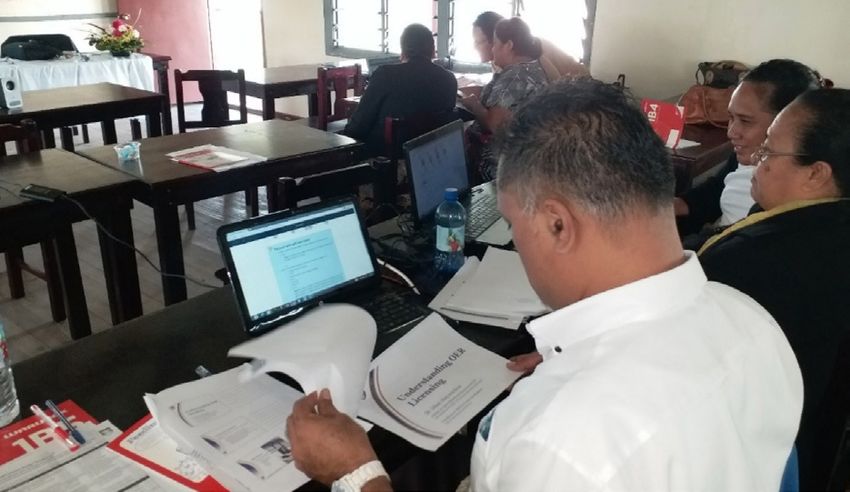
Pan-Commonwealth Activity

Located in British Columbia, Canada, the                          secure “our common future.” As well, at the triennial
Commonwealth of Learning (COL) is an                              Conferences of Commonwealth Education Ministers
intergovernmental organisation that serves the                    (CCEM) and the meetings of the Commonwealth
education and training needs of the 54 independent                Education Ministers’ Action Group, COL reports on
states that comprise the Commonwealth and their                   its progress in promoting learning for sustainable
combined population of 2.4 billion, of whom                       development.
more than 60% are under the age of 30. COL
was established by the Commonwealth Heads of
Government specifically to help ministries, institutions
and organisations expand the scale, efficiency and                     At the 20th CCEM, in Fiji in 2018, the
quality of learning by using open, distance and                        Commonwealth Education Ministers commended
technology-based approaches.                                           COL “for its emphasis on Lifelong Learning
                                                                       for employment, entrepreneurship and
COL participates in the Commonwealth Heads of                          empowerment which supported the ongoing
Government Meetings (CHOGM) and presents its                           efforts of Member States to achiev[e] SDG4…
progress report to foreign ministers. During the 25th                  [and] its global leadership in Open Educational
CHOGM, in London in April 2018, COL highlighted                        Resources (OER) and innovations in educational
at various forums the paradigm shifts required to                      technologies.”

      2nd World OER Congress                                      COL leverages its impact through a wide range
      COL partnered with UNESCO, The William and                  of partnerships that include institutions, national
      Flora Hewlett Foundation and the government of              organisations, international development agencies and
      Slovenia to organise the 2nd World OER Congress, in         non-governmental organisations. Inter-governmental
      Ljubljana, Slovenia from 18 to 20 September 2017.           partners include the Commonwealth Secretariat,
      The ensuing 2017 Ljubljana OER Action Plan provided         the Commonwealth Foundation, the International
      recommendations to stakeholders in five strategic           Labour Organisation (ILO), UN Women, UNESCO and
      areas: building the capacity of users to find, reuse,       UNESCO’s Institute for Information Technologies (IITE)
      create and share OER; language and cultural issues;         and UNESCO Institute for Lifelong Learning (UIL).
      ensuring inclusive and equitable access to quality          COL also works with donor agencies such as the World
      OER; developing sustainability models; and developing       Bank, regional organisations such as the Arab League
      supportive policy environments.                             Educational, Cultural and Scientific Organisation,
                                                                  national and regional distance education associations,
                                                                  industry, and private-sector foundations such as
                                                                  The William and Flora Hewlett Foundation.

                                                                  COL assists governmental, non-governmental and
                                                                  community partners in developing policy, building
                                                                  capacity, refining models, creating materials and
                                                                  nurturing collaborative networks.

                                    CO L I N T H E CO M M O N W E A LT H : 2 015 – 2 0 21

                                                              1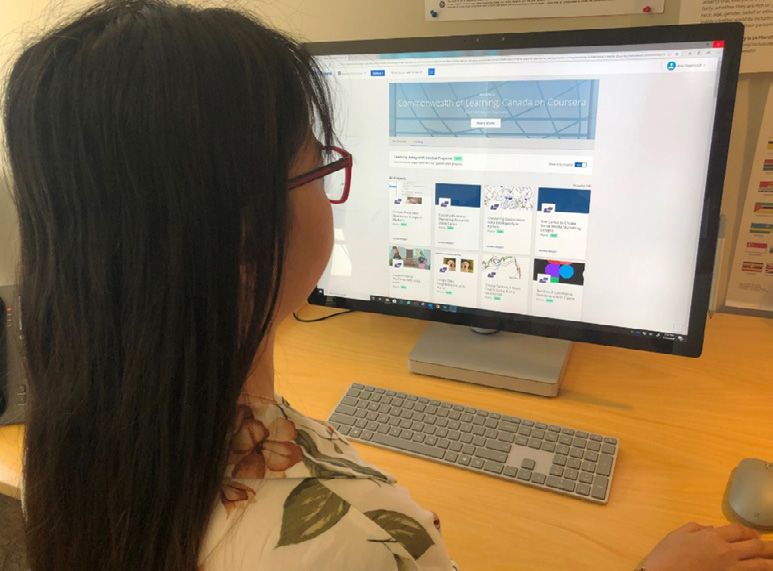
COL’s response to COVID-19
COL has been quick to respond to the urgency of              go-to resource for educators across the world. The
the situation and the evolving needs across the              COL–Coursera Workforce Recovery Initiative has
Commonwealth by initiating relevant projects and             provided access to free online courses to almost
targeted country interventions and joining global            150,000 Commonwealth citizens, many of whom have
coalitions.                                                  lost their livelihoods due to COVID-19.

COL has joined the UNESCO Global Education                   In an effort to help young women and girls become
Coalition and “Combat COVID-19: Keep Learning”,              successful in their fields of interest and build
spearheaded by IITE. COL also initiated the                  future generations of leaders, COL has launched
International Partnership of Distance and Online             CommonwealthWiseWomen. This new mentoring
Learning for COVID-19, commonly known as                     programme offers unique networking opportunities
OpenDoor, bringing together over 60 organisations            to women and girls from underserved communities
and institutions around the world. COL’s online              across the Commonwealth by pairing them with
repository of curated content and tools became a             successful and influential women in leadership roles.

                                         Report to Commonwealth Education Ministers: From
                                         Response to Resilience

                                         “What lessons can be drawn from the COVID-19 experience to make
                                         education systems more resilient in future? This policy brief provides
                                         examples of how governments and institutions made it possible for people
                                         to continue their education during the pandemic and identifies factors that
                                         contributed to success. The responses required are reviewed from social,
                                         pedagogical, technological and psychological perspectives.”

                               CO L I N T H E CO M M O N W E A LT H : 2 015 – 2 0 21

                                                         2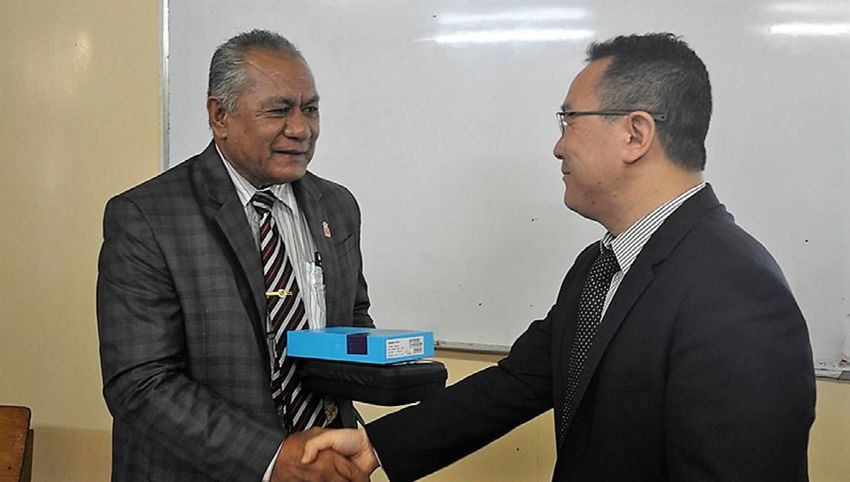
COL’s Programmes
           Education and Skills are COL’s
           two programme sectors, with
           gender as a cross-cutting theme.                        COL’s activities and projects are relevant
                                                                   to achieving SDG4, to the priorities of the
                                                                   Commonwealth countries COL works in, and
OPEN/INNOVATIVE SCHOOLING (OIS)                                    both relevant and appropriate to achieving the
Open/innovative schooling is increasingly recognised               aims of the current Six-Year Plan.
as a viable solution to the growing demand for
                                                                   • COL is accepted and seen as a leader in
equitable access to secondary education, especially
                                                                     ODL. It has the mandate, over 30 years
for girls and marginalised groups, and particularly in
                                                                     of experience, a large repository of
remote locations. Governments are seeking to redefine
                                                                     OER materials, tools and highly skilled
the way secondary education addresses societal needs
                                                                     international experts on staff and at the
by diversifying the curriculum. This means making
                                                                     governance level.
technical and vocational programmes available
alongside academic offerings — something that open                 • COL’s innovative approaches to teacher
schools are well positioned to do.                                   development, blended learning, and
                                                                     institutional capacity building in ODL, OER
      Activities                                                     and TEL are at the cutting edge.
OIS currently works in Bangladesh, Belize, Botswana,               • COL is committed to learning from doing
Eswatini, Guyana, India, Kenya, Malawi, Mozambique,                  and adapts its work based on the evidence
Namibia, Nigeria, Papua New Guinea, Sri Lanka,                       coming from M&E and internal studies.
Tanzania, Trinidad and Tobago, Vanuatu and Zambia.
COL also supports the information-sharing activities of            Key Evaluation Findings. Meta-Evaluation Report
the Commonwealth Open Schooling Association.                       Stage 2: Strategic Plan 2015–2021

COL has supported the development of policies and
strategies in Bangladesh, Kenya, Nigeria, Sri Lanka and
Tanzania; developed and enhanced open schooling
models in Belize, Malawi, Mozambique, Trinidad                 has been building capacity in course development,
and Tobago, Vanuatu and Zambia; and promoted                   delivery and assessment in Guyana and Papua
quality OER, including for persons with disabilities, in       New Guinea.
Bangladesh, Botswana, Eswatini and Namibia. It also
                                                                    Outcomes
                                                               According to the Meta-Evaluation Report Stage 2:
                                                               Strategic Plan 2015–2021, the current model for OIS
                                                               is relatively new and involves developing, piloting,
                                                               scaling and mainstreaming OER, ODL, eLearning
                                                               methods and open educational practices in order
                                                               to have a large-scale systemic impact. Since the
                                                               implementation of this model started in 2017,
                                                               educators in six countries have developed curriculum-
                                                               based OER and have piloted or are close to piloting
                                                               their use. The pilots in Mozambique and Zambia are
                                                               currently reaching about 800 formerly out-of-school
                                                               youths per year, and both countries are now looking
                                                               towards scaling. In addition, as part of their response

                                 CO L I N T H E CO M M O N W E A LT H : 2 015 – 2 0 21

                                                           3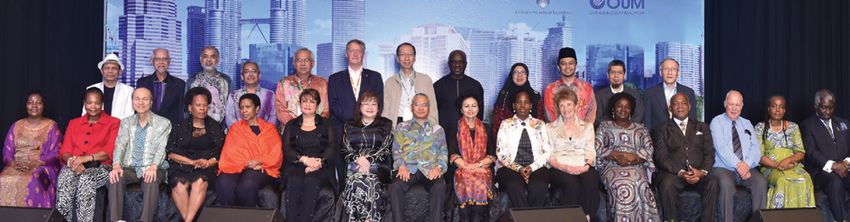
to the pandemic lockdowns, participating countries            COL’s Educational Podcasting for Innovative
shared some of the OER they had in development,               Classrooms is a response to the increased need for
and these were downloaded more than 26,000 times              practices, processes and systems for effective last-mile
in 2020. In a similar vein, curriculum-based resources        teaching and teacher professional development in
created for use by learners in Kenya were viewed on           partner countries.
YouTube more than 20,000 times in the first eight
weeks and, it is estimated, were viewed by more than               Outcomes
150,000 learners in Kenya and Tanzania when first
                                                              According to the Meta-Evaluation Report Stage
broadcast.
                                                              2: Strategic Plan 2015–2021, the model has been
                                                              replicated in ten countries. The findings from
                                                              the evaluations and interviews with key actors at
TEACHER EDUCATION
                                                              institutional and government levels suggest that
                                                              the model is succeeding in West Africa, particularly
                                                              The Gambia, Ghana, Nigeria and Sierra Leone, and it
                                                              shows potential for scale, with the strategic selection
                                                              of institutions by governments.

                                                              HIGHER EDUCATION
                                                              COL continues to support policy makers, institutions
                                                              and leaders in higher education to harness the
                                                              potential of ODL and technology and enable them to
                                                              cope with the increasing demand for quality higher
                                                              education in the face of rising costs and diminishing
                                                              public funding. COL has developed action plans
                                                              aligned to the priorities of specific countries to
Teaching quality is considered to be the most
                                                              increase access to quality higher education, while also
important factor affecting learning in schools in
                                                              forging partnerships with international and regional
most Commonwealth countries. COL’s focus is on
                                                              organisations to leverage its impact.
improving teacher quality through school- and
technology-based training models, which can cut
                                                                    Activities
costs and achieve scale. Working in partnership
with government agencies and teacher education                Institutions in Bangladesh, Botswana, Cameroon,
institutions, COL supports capacity development in            Eswatini, Ghana, Guyana, Jamaica, Kenya, Lesotho,
the integration of technology and OER into pre- and           Malawi, Mauritius, Namibia, Nigeria, Pakistan,
in-service training.                                          Rwanda, Seychelles, South Africa, Sri Lanka,

     Activities
COL is working with ministries of education as well
as non-governmental organisations and teacher
education institutions in The Gambia, Ghana, India,
Jamaica, Kenya, Kiribati, Nigeria, Rwanda, Sierra
Leone, South Africa, Sri Lanka and Uganda to develop
capacity and resources for school-based teacher
development.

In response to partner needs and emerging
pedagogies, the initiative has also developed online
courses, including MOOCs and webinars for educators
and education leaders.

                                CO L I N T H E CO M M O N W E A LT H : 2 015 – 2 0 21

                                                         4
Uganda and Zambia have partnered with COL in
various projects.
COL is collaborating with 12 higher education
institutions across the Commonwealth to offer
the Commonwealth Executive Master in Business
Administration and Commonwealth Executive Master
in Public Administration programmes.
Through the Partnership for Enhanced and
Blended Learning project, led by the Association of
Commonwealth Universities, COL is supporting the
development of quality assurance mechanisms for
blended learning courses at 23 higher education
institutions located in Kenya, Rwanda, Tanzania and Solomon Islands) — promoting eLearning, supporting
Uganda. the development of OER and providing learning
opportunities at certificate, diploma and degree levels.
Outcomes VUSSC has supported the development of a series
The evaluation of Higher Education initiatives in the of blue economy MOOCs in which close to 6,000
Meta-Evaluation Report Stage 2: Strategic Plan 2015– learners from across the world have participated.
2021 found that student performance had improved
In response to the increasing need to transition to
and student satisfaction had increased. There is
online delivery, VUSSC has supported institutions in
evidence that systemic investments in technology, staff
Africa and the Caribbean to manage and use learning
training, materials development and quality assurance
management systems to create and offer courses.
policies have all had a positive impact.
As part of a tripartite Commonwealth initiative with
the Commonwealth Secretariat and the University of
THE VIRTUAL UNIVERSITY FOR SMALL
the West Indies Open Campus, VUSSC has repurposed
STATES OF THE COMMONWEALTH (VUSSC)
and made available an online undergraduate
Strengthening and improving the quality and scope of degree programme in Youth Work Development to
existing tertiary institutions is a key priority for small universities that are members of the Commonwealth
states. The VUSSC partnership represents 32 small Higher Education Consortium for Youth Work.
states of the Commonwealth dedicated to sharing
educational resources and expanding access to tertiary Outcomes
education. VUSSC works with ministries of education
According to the Meta-Evaluation Report Stage 2:
and their agencies, post-secondary institutions and
Strategic Plan 2015–2021, there is strong support
non-governmental organisations to build capacity
from ministers of education in the small states of
in online course development, pedagogy and
the Commonwealth, and COL offers a variety of
assessment. It promotes technology-enabled learning
courses responding to the unique needs of small
through the provision of a learning platform and
states in areas such as the blue economy, sustainable
enables the transfer of credits across small states
agriculture, eco-tourism, disaster management
through the use of the Transnational Qualifications
and port management. VUSSC has played a major
Framework.
role in the development of OER that have led to
educators’ pedagogical development and students’
Activities
improved educational performance. The Transnational
VUSSC has been active in small states across three Qualifications Framework, which allows for the
regions — Africa (Botswana, Mauritius, Namibia, recognition of qualifications earned in one nation by
Seychelles), the Caribbean (The Bahamas, Belize, 31 other nations, is a major strength.
Dominica, Grenada, Guyana) and the Pacific (Fiji,
CO L I N T H E CO M M O N W E A LT H : 2 015 – 2 0 21
5The Skills sector addresses
the needs of both formal and
non-formal learning. The
initiatives in this sector are:
Technology-Enabled Learning,
Lifelong Learning for Farmers,
GIRLS Inspire, and Technical and
Vocational Skills Development,
including Skills Online.
TECHNOLOGY-ENABLED LEARNING (TEL) in Action (C-DELTA) platform has had over 13,500
This initiative aims to encourage more governments registered users. Over 24,000 learners have benefited
and institutions to integrate TEL and OER policies and from MOOCs organised in partnership with Athabasca
practices to improve teaching and learning for skills University, Canada. Since 2018, COL’s online course
development. COL believes that for technology to Understanding OER has been used by over 13,000
have a transformative effect in teaching and learning, people worldwide; in 2020, it won a prestigious
a focus on policy–technology–capacity is needed, and Brandon Hall Group Silver Award.
practice must be based on research evidence.
Outcomes
Activities According to the Meta-Evaluation Report Stage 2:
This initiative is being implemented in Antigua and Strategic Plan 2015–2021, TEL demonstrates the
Barbuda, Bangladesh, Belize, Fiji, Grenada, India, systematic use of technology to offer quality education
Kenya, Malaysia, Malta, Mauritius, Nigeria, Pakistan, at scale. The C-DELTA (seven modules) and Online
Papua New Guinea, Saint Lucia, Samoa, South Africa, Course on Open Education Resources (LearnOER)
Sri Lanka, St. Vincent and the Grenadines, Tanzania, platforms are examples. TEL provides peer-reviewed
Uganda and Zambia. Since its launch in 2018, COL’s and quality-assured tools and resources to help
Commonwealth Digital Education Leadership Training any educational institution integrate technology in
teaching and learning so as to improve the quality of
PCF8
PCF8 was held in Kuala Lumpur, Malaysia from 27 to 30 November 2016. More than 500 participants from 59 countries joined
COL and host partner Open University Malaysia for four days of speeches, presentations and discussions on the theme Open,
Online and Flexible Learning: The Key to Sustainable Development. In the framework of the forum, education ministers from
five countries held a Ministerial Roundtable, where they discussed learning and sustainable development, including issues
of access and capacity. Forum delegates adopted the Kuala Lumpur Declaration with a set of ten recommendations for
governments, institutions, the private sector and civil society, on topics that included lifelong learning, ODL, access and equity,
teacher education, OER, education of women and girls, research and innovation.
CO L I N T H E CO M M O N W E A LT H : 2 015 – 2 0 21
6student learning and success. The Advanced ICT Skills of staff at the Bank of Tanzania through a visit to India
Development Project has developed 26 OER courses and subsequent follow-up training workshops.
to make the teaching and learning of advanced ICT
skills affordable. These courses are developed as OER Outcomes
textbooks that can be adapted by institutions to offer
According to the Meta-Evaluation Report Stage 2:
courses. In addition, this initiative works to improve
Strategic Plan 2015–2021, since being piloted in
TEL policies.
2006, the L3F programme has been demonstrated to
enhance crop productivity, household incomes and
empowerment, not simply through learning but also
LIFELONG LEARNING FOR FARMERS (L3F)
by linking small-holder farmers to sources of financing
This programme empowers vulnerable rural women and to other actors in the supply chain. Participants
and their families to gain knowledge, create their invest their incomes in children’s education, better
own self-directed learning processes, and organise food and improved housing, as well as increasing
themselves to solve the challenges of lack of access their assets and diversifying their income-generating
activities, which multiplies the development impact.
COL’s ability to broker partnerships is a key strength:
the L3F model links participants with microfinance,
agricultural extension workers and agricultural supply
chains using a social-capital approach.
TECHNICAL AND VOCATIONAL SKILLS
DEVELOPMENT (TVSD)
COL is building the capacity of TVET government
agencies and institutions to increase access to quality
TVSD through using ODL and learning technologies.
COL is supporting selected partners to implement
Skills in Demand projects, which blend online learning
to credit and finance to improve their livelihoods.
with learning in the workplace or community. Tapping
In this model, COL is a catalyst in bringing together
into the physical and human resources in these
institutions, civil society and the private sector to build
contexts helps overcome TVET-specific challenges
the capacity of communities through gender-sensitive
of how to develop practical skills while still reaching
learning.
marginalised learners in informal sectors and remote
locations.
Activities
Antigua and Barbuda, The Bahamas, Ghana, India,
Jamaica, Kenya, Sri Lanka, Tanzania, Tonga, Uganda
and Zambia are currently implementing the L3F
model. Nearly 800,000 farmers, more than half of
them women, have participated in L3F learning
activities. COL has also trained over 100,000 learners
across several countries of the Commonwealth using
MOOCs - to scale up L3F through building capacity in
agricultural extension. During the COVID-19 lockdown
in 2020, about 42,000 learners were trained using
innovative mobiMOOCs. Banks in various countries
collaborate with L3F, including NABARD, a large
agricultural bank in India, and Andhra Pradesh State
Cooperative Bank. COL has been building the capacity
CO L I N T H E CO M M O N W E A LT H : 2 015 – 2 0 21
7from five African countries who have had their
capability in eLearning built through COL.
As well, Skills Online aims to support the efforts
of Member States to disseminate skills required
for employment and entrepreneurship. Through
hybrid models that apply ODL techniques, it helps
women, girls, youths, persons with disabilities,
entrepreneurs and the unemployed to acquire
relevant 21st-century skills and access in-country
mentorship support. It enhances the ODL capabilities
of both TVET institutions and other non-governmental
organisations involved in skills development.
The COL–Coursera partnership has been offered
Activities in 50 Commonwealth countries, resulting in over
one million course enrolments and over 182,000
Since 2015, COL has trained more than 3,000 TVET
certificates. In addition, COL has collaborated with
educators across the Commonwealth in flexible and
Udemy Inc., facilitating access for vulnerable youths
blended learning. COL is supporting government
in Bangladesh, Ghana, Kenya and Rwanda to 4,000
agency partners in The Gambia, Jamaica, Kenya,
highly curated online courses that have benefited over
Nigeria, Papua New Guinea and Zambia to implement
8,100 learners. In India, COL has helped reskill 2,100
national change strategies for flexible and blended
auto-technicians, tailors and beauticians to become
TVET. COL has seven Skills in Demand projects
sanitation hygiene entrepreneurs and train 5,000
underway in Kenya, Nauru, Nigeria, Papua New
women digital entrepreneurs to meet new demands
Guinea, Tuvalu and Zambia, and across the Caribbean
created by COVID-19.
in partnership with the Caribbean Association of
National Training Agencies. Skills being developed
are project management, gardening, construction, GENDER
computer and mobile phone repair, furniture making,
Gender is a cross-cutting theme that underpins and
and teaching and assessment for TVET teachers and
complements all COL initiatives. COL recognises that
workplace trainers.
the advancement of gender equality and women’s
empowerment is central to its agenda of learning for
Outcomes
sustainable development. COL supports partners in
According to the Meta-Evaluation Report Stage 2: mainstreaming gender and in implementing holistic
Strategic Plan 2015–2021, more than 100 partners are projects to address specific gender issues. Targeted
implementing flexible and blended (FaB) learning programmes tackle the distinct challenges faced by
approaches to varying degrees, and there is evidence
that organisations are moving toward more flexible
TVSD. COL has online OER to build capacity in
flexible skills development, allowing countries to
cost-effectively scale up institutional capability
through training trainers to use COL’s OER. COL’s new
Skills in Demand model was found to meet the needs
of national TVET agencies and bring government
support that allowed work to scale rapidly across
institutions and workplaces. TVSD also promoted
learning networks: the INVEST Africa Community
Learning Network has more than 2,000 members, and
the African Foundation for Quality e-Learning for TVET
(AFQueT) was founded in 2019 by nine individuals
CO L I N T H E CO M M O N W E A LT H : 2 015 – 2 0 21
8girls/women and boys/men in regions where they history and relationships give it credibility. Three of
are most disadvantaged, while also shifting the social the gender projects — the Social Safety Net project,
norms that create and perpetuate gender inequalities. Lifelong Learning for Mothers, and the Gender
Mainstreaming project — have developed strategies
Activities and mechanisms for implementation that can be
scaled up. The Gender Mainstreaming model has
Projects are being implemented in Botswana, Ghana,
clear guidelines, and the three phases of the gender
Guyana, India, Malawi, Papua New Guinea, Solomon
mainstreaming strategy are logically connected
Islands, Sri Lanka, and Trinidad and Tobago. Through
and relevant. In addition, COL has developed tools,
a variety of skills-building activities in Africa, Asia
including a Gender Audit Tool and a Gender Road
and the Pacific, COL has been empowering women
Map template. A social protection mobile application
to achieve sustainable livelihoods. In Sri Lanka and
has also been developed for Solomon Islands.
Tanzania, COL has trained girls and young women in
ICT, and in the Caribbean, it has helped address issues
of boys’ underachievement. In 2020, COL launched
COMMONWEALTH EDUCATIONAL MEDIA
a gender-equality capacity-building project with the
CENTRE FOR ASIA (CEMCA)
participation of 11 partners in nine countries of Africa,
Asia, the Caribbean and the Pacific. COL’s regional office in Asia is based in New Delhi,
India. CEMCA promotes the meaningful, relevant and
appropriate use of media and technology to serve the
education and training needs of the Commonwealth
Member States of Asia. CEMCA works in education
and skills development, with a focus on community
media, particularly community radio.
Activities
Through activities with partners in Bangladesh,
Brunei Darussalam, India, Malaysia, Maldives,
Pakistan, Singapore and Sri Lanka, CEMCA has helped
institutions improve their capacity to leverage ODL for
increased access to education. During the COVID-19
lockdown in the region in 2020, CEMCA offered
training to faculty and leaders in ODL institutions to
help with the transition to online learning. Recently,
virtual labs have been introduced.
As well, a special project, GIRLS Inspire, has aimed
to provide schooling and skills development to some
of the hardest-to-reach girls in the Commonwealth.
COL has worked in Bangladesh, India, Mozambique,
Pakistan, Sri Lanka and Tanzania to provide education
and training to almost 100,000 girls to equip them
for employment and entrepreneurship. This project
has been supported by Global Affairs Canada and
Australia’s Department of Foreign Affairs and Trade.
Outcomes
According to the Meta-Evaluation Report Stage 2:
Strategic Plan 2015–2021, COL has the ability to
influence as well as support partners, and its long
CO L I N T H E CO M M O N W E A LT H : 2 015 – 2 0 21
9REGIONAL CENTRES
Outcomes
According to the Meta-Evaluation Report Stage 2:
Strategic Plan 2015–2021, CEMCA operates with a
small academic staff and well-developed networks.
Its advocacy efforts and technical support have
led to the successful adoption of institutional OER
policies. Similarly, capacity building with institutions
has created improvements in knowledge, changes
in attitude, and changes in systems and practices,
leading to the increased use of OER to create learning
materials. In a few cases, partner institutions have
shared their experience with other universities,
creating a multiplier effect. CEMCA has also been able
to obtain additional contributions from other donors
or development agencies. COL supports regional centres in Western and
Southern Africa, Europe and the Pacific. These are
hosted by ODL institutions (in Botswana, Fiji and
Nigeria) or ministries (in Malta). They carry out
activities that are aligned to COL’s mandate and
programmes.
Outcomes
According to the Meta-Evaluation Report Stage 2:
Strategic Plan 2015–2021, the regional centres are
centres of excellence focused on advocacy and
research in ODL. They have generated activities that
can be replicated by new partners. In addition, they
PCF9 have well-developed networks of consultants to help
them expand activities. The evaluation found that the
Close to 550 policy makers, practitioners and thought
regional centres are becoming increasingly relevant
leaders from across the Commonwealth and beyond
in their respective regions. The more established
gathered at the historic Murrayfield Stadium in
ones have developed networks and partnerships,
Edinburgh, Scotland for PCF9, themed Innovations
significantly increasing ODL capacity in their regions.
for Quality Education and Lifelong Learning. It was
organised from 9 to 12 September 2019 in partnership
with The Open University, UK. The four days of SERVICES
insightful keynote addresses, engaging plenary panels,
COL’s eLearning for International Organisations
informative parallel sessions, and other programme
(eLIO) is a service initiative that works with
highlights provided a unique opportunity to bridge
international organisations on a fee-for-service basis
traditional divides between borders and sectors.
to develop and deliver professional development
Discussions centred around four key sub-themes —
courses and projects. Over the past 20 years, eLIO
Opening Up Education, Equity and Inclusion, Technology,
has progressively diversified its services to provide
and Employability — and delegates appreciated the
innovative solutions to meet the needs of globally
focus on new forum features: artificial intelligence, youth
dispersed staff and enable learning for sustainable
and girls’ education, and learners with special abilities.
development.
Under the auspices of PCF9, COL hosted a ministerial
roundtable with participation from six education
ministers.
CO L I N T H E CO M M O N W E A LT H : 2 015 – 2 0 21
10COL IN THE PACIFIC
Open, online and distance learning (ODL) has always have been designed to achieve socially inclusive and
played a key role in providing access to education to gender-sensitive human resource development at low
remote and rural students and disadvantaged groups economic and environmental costs.
in the Pacific. In fact, it could be argued that without
ODL, the levels of educational attainment in this
region would be much lower. However, there is work On 6 September 2018, the Right Honourable Jacinda
to be done, as some countries in the region still have Ardern, Prime Minister of New Zealand, announced a
infrastructure problems, such as insufficient Internet package of NZ$ 9 million to make it easier for Pacific
connectivity and availability, which directly impact students to access education.
access to online and distance learning. For example,
As part of the package, the Prime Minister also
while only about 50% of the global population has
announced a partnership with USP and COL
access to the Internet, the percentage is even lower
to expand open, distance and flexible learning
in the Pacific (33%). Access to mobile subscriptions is
opportunities at the secondary and tertiary
higher and stands at 85.5% in the Pacific, presenting
levels. “We are pleased to be able to draw on the
an opportunity to build a system of teaching and
considerable expertise of the University of the
learning that is cloud based and mobile friendly,
South Pacific and the Commonwealth of Learning to
supported with other affordable and accessible
increase access to high-quality secondary and tertiary
technologies (Report to Commonwealth Education
education in the Pacific,” Ardern said.
Ministers: From Response to Resilience 2020).
COL focuses on adding value to the countries’
efforts to reach the Sustainable Development Goals, The Pacific Centre for Flexible and Open Learning
particularly SDG4. It supports the Commonwealth for Development (PACFOLD), based in Fiji, is a
governments and institutions of the Pacific in the use centre for capacity building in ODL in the region.
of appropriate, affordable technologies to improve COL and the University of the South Pacific (USP)
and expand learning for sustainable development. Its work collaboratively in supporting PACFOLD, which
initiatives in formal education include emphasising is hosted by USP. The centre’s priorities include:
quality and inclusive secondary and higher education advocacy and capacity building for flexible and
and strengthening teacher development programmes. open learning for sustainable development; the
In the area of skills, COL supports the expansion development of regional and national policies on
of access to technical and vocational education, the open, distance and flexible learning; and research in
reinforcement of non-formal education in agriculture, flexible and open learning.
and technology-enabled learning (TEL). These initiatives
PACI F I C
CO L I N T H E CO M M O N W E A LT H : 2 015 – 2 0 21
11The Meta-Evaluation Report Stage 2: Strategic Plan by 28 staff members from various faculties and
2015–2021 concluded that COL’s activities improve disciplines.
education access and quality and are focused
• A three-day OER Integration in Courses workshop
on capacity building, policy development and
was held at USP in August 2017. This was
institutional technology support for education, TVET,
organised by the Centre for Flexible Learning,
agriculture, and women’s and girls’ empowerment.
USP, as a follow-up to the OER policy developed
The focus is relevant to both COL objectives and
in May 2017. USP has incentivised OER
national priorities.
integration in its courses, with 30 teachers to
COL’s major regional initiatives in the Pacific date supported in this project.
Commonwealth countries between 2015 and 2020
• The Pacific OER Regional Consultation, which
are outlined below.
provided opportunities for delegates to learn
• More than 1,500 learners signed up for a more about OER in the lead up to the 2nd World
MOOC titled Climate Change and Pacific Islands, OER Congress, was held in Auckland, New
developed by COL in partnership with USP and Zealand in May 2017.
UNESCO and made available to learners globally
in August–October 2015. Approximately 70% of
participants were from countries in the Pacific.
• An eLearning workshop co-facilitated by
COL, on eLearning pedagogies and materials
development using ODL and OER, was held in
May 2016 at USP and attended by participants
from Fiji, Solomon Islands and Tuvalu.
• A regional workshop for participants from nine
Pacific countries, on OER course design for
TVET, was held in June 2017 in Suva, Fiji. The
workshop was hosted by the Pacific Technical
and Further Education Institute at USP and • COL’s Aptus, a low-cost, off-grid, offline device
aimed to address the needs and priorities of the that allows teachers to create a classroom
Pacific island states. Twenty-six TVET educators without walls, has undergone trials at local
from 12 partner institutions attended. institutions in Fiji and is being used in Fiji,
Kiribati and Samoa. A total of 20 devices have
also been shipped to Vanuatu and another 40
devices were delivered to Kiribati. Shortly after
cyclone Gita hit Tonga in February 2018, 25
Aptus devices were deployed to help restore
classroom teaching in the country’s schools and
colleges.
• The Pacific regional meeting of the COL Focal
Points took place on 16 and 17 February 2018 in
Nadi, Fiji to strengthen the effectiveness of COL’s
work in addressing key priorities for education
and training in the region, and to share
information related to learning for sustainable
• COL supported a workshop organised at USP in development. On 26 May 2020, COL held online
May 2017 to enable the university to develop an consultations with Focal Points from the Pacific
OER policy. The two-day workshop was attended as part of the development of its new strategic
plan (2021–2027).
CO L I N T H E CO M M O N W E A LT H : 2 015 – 2 0 21
12• COL and PACFOLD ran a series of activities to
sensitise constituents to TEL in Kiribati, Samoa,
Solomon Islands and Tonga. In particular,
participants were encouraged to employ TEL
for course development and to use COL’s Aptus
device.
• COL aims to promote and enrich national
capacities in good governance. In 2018–2020,
COL supported 52 students from Pacific island
countries to complete the Professional Diploma
in Legislative Drafting.
• The school-based teacher development model
Teacher Futures is being implemented in Kiribati.
The programme supports collaborative learning
• The Capacity-Building Workshop on
among teachers and teacher educators through
Professionalising Youth Workers was held at USP’s
communities of practice as well as school-based
Laucala Campus, in Suva, in June 2019. There
training. A total of 334 teachers and teacher
were 37 participants from eight Pacific island
educators have been reached.
countries present. Based on outputs from this
engagement, COL partnered with Lakehead • In response to a request from the Ministry
University, Canada, to develop a series of six of Education in Fiji for support for teachers
MOOCs for Youth Work in the Pacific. The first engaged in remote teaching due to school
module was delivered in the last quarter of 2020 closures, COL, in partnership with PACFOLD,
with 331 learners. developed and implemented a short course
called OER for Online Learning: An Introduction.
• COL, in partnership with USP and New
The course reached over 820 teachers in most of
Zealand’s Ministry of Foreign Affairs and Trade,
the Pacific island countries.
commissioned a situational analysis to inform
the implementation of open, distance and • Working in collaboration with various
flexible learning in the Pacific. The analyses were institutions and experts from the region, COL
presented and deliberated over in stakeholder has offered tailored training through a series
meetings, including regional consultations in of MOOCs to improve teacher capacity in
Fiji, and in the UK at PCF9, as well as national responding to new demands for distance and
consultations in Papua New Guinea (PNG) and online learning during COVID-19. The courses
Kiribati. These consultations (organised in July– include Cybersecurity Training for Teachers,
October 2019) have informed COL’s response to Mobile Learning with Multimedia (focusing on
Member States in the Pacific who have requested educational podcasting), OER for Online Learning
support for online and distance learning during and Teaching Mathematics with Technology,
the COVID-19 crisis. among others. These have attracted over 290
participants from nine countries in the Pacific.
• A Memorandum of Understanding between
COL and USP was signed in December 2020 to • COL supported Fiji National University to
support PACFOLD in building capacity in open, build teacher capacity in problem-based
distance and flexible learning and TEL within learning and in facilitating online and blended
the region. This includes higher education, learning, leading to the development of 33
secondary schooling, teacher education, and blended courses. COL supported the National
technical and vocational skills development and University of Samoa to develop and implement a
PACI F I C
activities that will align with the strategic plans technology-enabled learning policy.
of both COL and USP.
CO L I N T H E CO M M O N W E A LT H : 2 015 – 2 0 21
13• Dame Carol Kidu (PNG), Letuimanu’asina
Dr Emma Kruse Va’ai (Samoa), Dr Caroline
A research report on student learning and teacher Seelig (New Zealand) and Professor Belinda
pedagogical transformation at the National University Tynan (Australia) are mentors in COL’s
of Samoa after the adoption of a technology-enabled CommonwealthWiseWomen programme, aimed
learning framework and a series of capacity-building at developing the leadership potential of women
workshops with COL’s support indicated that blended and girls in the Commonwealth.
learning offered the instructors an opportunity to
cater to different learning styles. As a result of COL’s • More than 600 learners from the Pacific
interventions, students were more engaged, contributed joined the COL–Coursera Workforce Recovery
more, and had access to all the course resources. Initiative, gaining free and unlimited access to
4,000 online courses taught by highly reputed
– The Impact of Technology-Enabled Learning professors and mentors from top universities and
Implementation at the National University of Samoa companies around the world. They earned over
450 certificates, boosting their employability in
the face of COVID-19.
• With COL’s assistance, a TEL policy has been
developed at the University of Papua New • A video-on-demand platform,
Guinea, and teachers have increased their www.pacificregionalchannel.org, with over 800
capacity to integrate TEL in teaching and curated OER targeting local curriculum needs,
learning. was launched in response to a request from
partners in the Pacific island states. Fiji, Nauru,
• In Tonga, COL developed courses aimed to
Samoa and Tonga have already joined the
improve the financial inclusion of farming
initiative.
communities, particularly women, in the
economy.
• COL has been working in PNG and Solomon
Islands to leverage ICT to provide timely and
relevant information about available social
services, especially for women’s safety.
• Fiji National University, the National University
of Samoa, the University of Papua New Guinea,
USP, the Flexible Learning Association of New
Zealand, the OERu network in New Zealand
and the Open Polytechnic of New Zealand
are all members of the COL-led International
Partnership of Distance and Online Learning for
COVID-19 (OpenDoor). • With funding from New Zealand’s Ministry of
Foreign Affairs and Trade, COL launched the
Pacific Partnership for Open, Distance and
Flexible Learning. The five-year project aims to
enhance the capacity and efficiency of the Pacific
education sector through greater use of
innovative delivery mechanisms and technology,
and it is implemented in partnership with
PACFOLD.
CO L I N T H E CO M M O N W E A LT H : 2 015 – 2 0 21
14Tonga
Introduction
Tonga (population: 104,494 in 2019) has a primary struck, the government announced it would pay the
net enrolment rate of 85.9% (2015) and a secondary term 2 school fees for all students in government
school completion rate of 82.1% (2015). The Tonga and non-government secondary schools.
Institute of Higher Education (TIHE), a tertiary educa-
tion branch of the Ministry of Education and Training
COL BOARD OF GOVERNORS
(MOET), provides several programmes that focus
on educating students in a variety of professional The Honourable Hu’akavameiliku of Ha’asini,
aptitudes and vocations. Teacher education is offered Minister of Education and Training, Kingdom of
by MOET’s Tonga Institute of Education (TIOE). Tonga, represents the Pacific Region on COL’s Board
Tonga is a partner in the regional University of the of Governors.
South Pacific (USP), which supports public efforts
to increase access to affordable and relevant tertiary COL FOCAL POINT
educational services within the region.
Dr Raelyn Esau, Deputy Chief Executive Officer,
Internet connectivity is available to 41% (2017) of the Tonga Institute of Higher Education, Ministry of
population, and mobile-cellular subscriptions are at Education and Training, is COL’s Focal Point for
59 per 100 people (2019). Infrastructure is available Tonga.
for distance and technology-enabled learning and for
expanding access to education and training in Tonga. NOTABLE MENTIONS
The late Dr S. Langi Kavaliku was an COL
BUILDING EDUCATION RESILIENCE IN THE Honorary Fellow.
FACE OF COVID-19
The COVID-19 crisis has had an unprecedented
impact on education. Shortly after the pandemic
PACI F I C
CO L I N T H E CO M M O N W E A LT H : 2 015 – 2 0 21
15COL’s Work in Tonga: Six-Year Review
2015−2021
COL’s work in Tonga has been in the areas of Lifelong from the support of the Pacific Centre for Flexible and
Learning for Farmers, OER for skills development, Open Learning for Development. Learners from Tonga
technical and vocational skills development, and have also benefited from COL’s offline, off-grid Aptus
tertiary education through the Virtual University for device, open online courses and other resources.
Small States of the Commonwealth. Tonga benefits
Education Sector Overview
VIRTUAL UNIVERSITY FOR SMALL STATES
OF THE COMMONWEALTH (VUSSC) “The legislative drafting programme . . . has assisted
In the past few years, VUSSC has connected institu- me in criminal prosecutions, legal advice, legal
tions through online technologies to promote drafting and legal analysis, allowing me to interpret
eLearning and the collaborative sharing of educational and analyse the laws differently and in a manner that I
resources using multi-institutional partnerships. never did before. It’s been an eye-opener for me.”
The emphasis is now on supporting institutions so – Joycelyn Sikalu
they can offer VUSSC courses and programmes, and
promoting the use of the Transnational Qualifications
Framework. Ms Sipola Halafihi, TIHE, serves on its
to complete the Professional Diploma in Legislative
Management Committee. Currently, 41 courses are
Drafting in 2018–2020.
available to partners via www.colvee.org.
In 2020–2021, COL’s VUSSC initiative offered four
COL aims to promote and enrich national capacities
MOOCs on the blue economy in partnership with the
in good governance. Through the School of Law
University of Seychelles. Learners from Tonga were
at USP, COL supported three students from Tonga
among the nearly 6,000 participants in these courses.
Skills Sector Overview
TECHNICAL AND VOCATIONAL SKILLS As a result, a workshop was organised in collabora-
DEVELOPMENT (TVSD) tion with MOET to build capacity and develop a
national OER policy for Tonga. The COL Adviser: OER
The Vice President of COL visited Tonga in September
conducted a workshop in Nuku’alofa titled Strategic
2016, and from that visit, key areas were identified
OER Implementation at TIOE and TIHE, in collaboration
where COL could assist in Tonga, including: i) build-
with MOET. In all, 34 full-time teachers, including
ing capacity in OER and developing OER courses; ii)
senior management from TIOE and TIHE, participated
supporting MOET in developing a policy framework
in the workshop.
for OER; and iii) strengthening eLearning, particularly
the capability to use Moodle. The Pacific regional workshop on OER Course Design,
held in Fiji in June 2017, covered: instructional video
CO L I N T H E CO M M O N W E A LT H : 2 015 – 2 0 21
16production for online courses and MOOCs; using free
and open-source software to repurpose various types
of OER media formats; and understanding the Moodle
learning management system through MoodleCloud.
Nine Pacific countries, including Tonga, were
represented. The workshop was used as a successful
field test of a 12-part Instructional Video Production
Course and of the new Creating and Repurposing OER
Using FOSS: A How-To Guide for Teachers and Learn-
ers, developed by the Open University of Sri Lanka.
These sessions resulted in participants gaining all the
necessary skills to develop more video-based materials
on their own using available technologies, such as
smartphones and open-source software.
Under the Strategic OER Implementation in Tonga
project, 20 teachers from TIOE and TIHE were trained
Unde‘Ilaisaane Lolohea Manu (Tonga) appreciated an
in developing and delivering OER-based online
opportunity to learn new ideas, skills and techniques
courses. A COL consultant worked virtually with the
and meet new friends through the COL–Coursera
teachers during the pre-workshop session to develop
initiative. She managed to complete 18 courses,
detailed course blueprints for four OER-based online
which she called an investment in personal and
courses: Thinking and Learning Skills, Working and
professional development. She is now determined to
Social Skills, Information Technology and Restorative
bring innovative methods and solutions to the work
Practices in Education.
that she does, for the wider benefit of Tonga.
A hands-on workshop was conducted in November
2017 at TIHE, where the course development teams
from the two institutions developed approximately
through this initiative, including from Tonga. The
60–70% of the course materials to be delivered
Honourable Richard-Hyde Menke, Deputy Minister of
online. COL set up two Moodle platforms for TIHE
Education, delivered a special address at the event.
and TIOE. During the workshop, the teachers were
trained in developing and delivering courses online
using Moodle. In 2018, TIHE offered two of the online LIFELONG LEARNING FOR FARMERS (L3F)
courses they had developed during the workshop —
L3F in Tonga endeavours to improve the financial
Working and Social Skills and Thinking and Learning
inclusion of farming communities, particularly
Skills — to 30 learners.
women, in the economy. L3F has been implemented
The TVSD initiative has been offering ongoing online in partnership with the Tonga Business Enterprise
training across the Commonwealth via three courses: Centre (TBEC) and the Tonga Chamber of Commerce
Facilitating Online Courses, Flexible Skills Development and Industry. L3F was initiated in Tonga for the first
and Blended Learning in the Classroom. Learners in time with guidance from the National Reserve Bank
these courses use Moodle via https://tvsd.colvee.org. of Tonga, with the pilot phase being directed toward
building TBEC’s capacity in the development and
A total of 105 learners from Tonga have benefited from delivery of multimedia-based ODL courses. Activities
online courses in the framework of the COL–Coursera undertaken included training TBEC staff in the devel-
Workforce Recovery Initiative, supported by TIHE and opment of gender-sensitive ODL courses on financial
MOET, boosting their employability skills in the face literacy, packaging the courses in multimedia formats
of economic disruptions caused by COVID-19. On and disseminating them to farming communities. The
17 March 2021, COL and Coursera hosted a virtual pilot phase of the initiative reached 200 learners; the
PACI F I C
convocation to celebrate the achievements of 127 aim is to replicate it throughout Tonga.
learners from the Pacific who had earned certificates
CO L I N T H E CO M M O N W E A LT H : 2 015 – 2 0 21
17With COL’s support, TBEC brought together nine development, agriculture disaster preparedness and
partners to support L3F, including the Ministry of climate-smart agriculture.
Agriculture, Food and Forestry, the Department of
Local Government, civil society organisations, export- TECHNOLOGY-ENABLED LEARNING (TEL)
ers and ICT service providers. These partnerships Participants from Tonga joined COL and USP for a
will be helpful as the project progresses to scale. The week-long workshop on eLearning pedagogies and
organisation developed a financial literacy course in materials development using ODL and OER, at USP
both print-based and mobile phone-based formats. headquarters in Fiji in May 2016.
The print-based course reached 202 learners (40% of
them women), while the mobile phone-based course In collaboration with MOET, COL has worked to
is being delivered to at least 100 participants via text mainstream OER at TIOE and TIHE. The vision of
messages. The messages are transmitted through the Tongan Minister of Education and Training was
two mobile service providers: Digicel and Tonga to harness the full potential of the country’s new
Communications Corporation. The majority of project fibre-optic infrastructure to upskill Tongan youths for
participants have also expressed a preference for using higher education opportunities and employment in
radios for learning, so these will be integrated in the Australia and New Zealand. This project approached
next project phase. The unique aspect of L3F in Tonga the mainstreaming of OER in a systematic manner
is that it has attracted young people (ages 20–49) on that included advocacy, policy development, capacity
a wide scale and may therefore provide a model for building, course development and TEL.
sharing with other Commonwealth regions that are In the project framework, TIOE and TIHE staff have
still struggling to attract youths to agriculture. been trained in the use of OER in course development,
TBEC uses ODL-based strategies to improve the finan- instructional video production, as well as develop-
cial inclusion of marginalised communities, especially ing and delivering OER-based online courses using
women. Staff have been trained in the use of ICT and Moodle. In the process, four life-skills courses were
ODL strategies for capacity building with farmers and developed: Thinking and Learning Skills, Working and
other secondary stakeholders, and TBEC is currently Social Skills, Information Technology and Restorative
offering training in financial literacy, enterprise Practices in Education. These are now being delivered
to Tongan youths as online courses through Moodle.
CO L I N T H E CO M M O N W E A LT H : 2 015 – 2 0 21
18You can also read


