COLLEGE OF EDUCATION EDPR201 - Paper Outline 2018 - University of Otago
←
→
Page content transcription
If your browser does not render page correctly, please read the page content below
COLLEGE OF EDUCATION

                                        EDPR201

Relationships and the Practice of Early Childhood
                    Teaching – Dunedin Campus
                                Paper Outline 2018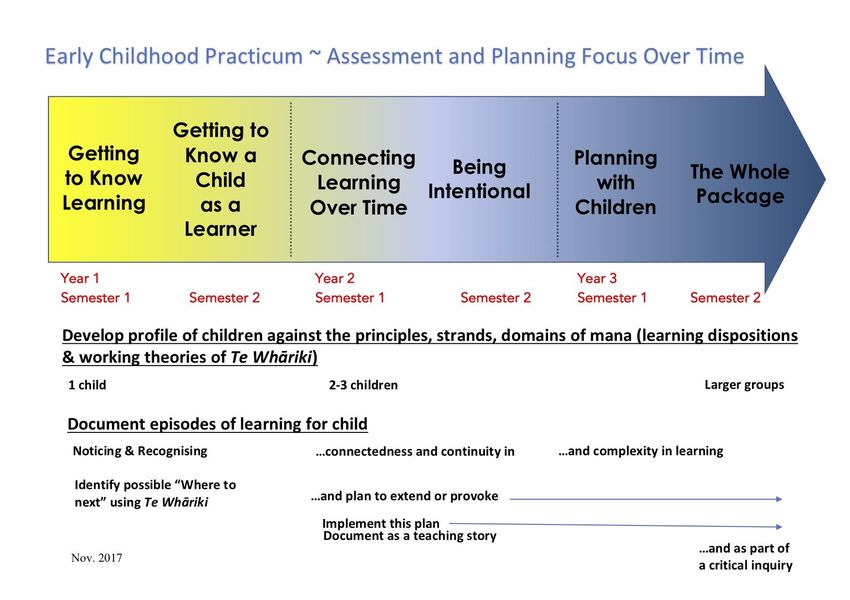
All rights reserved.
                This material is for the sole use of students enrolled in the course for which it was produced.
     It may not be reproduced by any means without the written authority of the Registrar, University of Otago,
                                       P O Box 56, Dunedin, New Zealand

Contents                Page

Welcome/Introduction ..................................................................................................................... 1
Contacts ............................................................................................................................................ 1
Communicating with you .................................................................................................................. 1
Paper Details ..................................................................................................................................... 2
Attendance ...................................................................................................................................... 10
Professional Practice/Experience.................................................................................................... 10
Assessment ..................................................................................................................................... 11
Assessment Criteria for all Assignments ......................................................................................... 12
Assignments .................................................................................................................................... 13
Teaching Practice ............................................................................................................................ 14
May Practicum - Requirements for Assignment 2a ........................................................................ 15
November Practicum - Requirements for Assignment 2b .............................................................. 21
Our Code Our Standards (Education Council, 2017) ....................................................................... 30
Student – Associate/Mentor Teacher Contract .............................................................................. 31
Your Online Learning System .......................................................................................................... 33
Required and Recommended Reading ........................................................................................... 33
College Website .............................................................................................................................. 35
Important Note ............................................................................................................................... 35

                                                                               0
Welcome/Introduction
Tena koe, ngā mihi o te tau hou.
This full year paper is used to give you the conceptual and theoretical tools that you will use in your two
practicum placements.

Contacts
Paper Coordinator
Sonya Gaches

Contact Information
Phone: 03-479-8949
Email: sonya.gaches@otago.ac.nz
Office Location: S3-08

How I can help you
I endeavour to respond to emails within 24 hours or you are welcome to try my office.

Staff

           Name                    Location                   Phone                      Email

                                    S3-08
        Sonya Gaches                                        479 8949           sonya.gaches@otago.ac.nz
                                 Tower Block

Communicating with you
The primary means of University communications with students is through the student email address
allocated by the University. If you don’t regularly check your student email you can forward messages
to your personal email address.
Ctrl + click on the following link and then follow the Ask ITS instructions:
How do I forward my University of Otago StudentMail to another email address?
IMPORTANT – DO THIS NOW.

                                                      1
Paper Details
Prescription
Students will critically reflect on how relationships contribute to professional and pedagogical practice
in inclusive early childhood settings. There will be a particular focus on examining practices that
facilitate all children’s learning using the curriculum framework of Te Whāriki.
Pre-requisite: EDPR101. Students must have achieved a pass in the Literacy Competence Test (ELIT199)
or ELIT 198 Essential Literacy for Teaching; and a pass in the Information and Communication
Technologies Competency Test (EICT 199) or EICT 198 Essential ICT for Teaching; or equivalent as
approved by the Head of Department.
Restriction: EDUE221
Limited to: BTchg and BEdSt (Early Childhood Education)
Learning Outcomes (Aims and Objectives)
1. To critically reflect on how relationships contribute to professional practice in early childhood.
2. To critically examine pedagogical practices in inclusive early childhood settings
3. To explore strategies for increasing the complexity of children’s learning using the framework of Te
Whāriki.
4. To integrate te reo me ngā tikanga Maori into pedagogical practice.
Content
Professional relationships in early childhood
Responsive, reciprocal and respectful relationships
Children
Staff
Parents/whanau
The critically reflective teacher
Models of reflection – focusing on the interpersonal
Pedagogical practices in inclusive early childhood settings
Inclusion and diversity
Incorporating te reo Maori
Increasing the complexity of children’s learning
What this means in the context of Te Whāriki
Sociocultural assessment
Showing connectedness and continuity
Refer to “Early Childhood Practicum ~ Assessment and Planning Focus Over Time” document
attached here (Big Arrow graphic)
Creating learning environments
Positive guidance
Environments that include all children
2Timetable
Please follow your timetable as on eVision. This has your room schedule on it with up-to-date room
information.
Day/Date/Time Room Lecturer
Thursday 9:00 – 9:50am Semester 1 – OBS230 Sonya Gaches
(Otago Business School)
Semester 2 – 97ALBG02
(97 Albany St Seminar Room )
Workload Expectations
180 hours
Tutorial Programme
The aim of the tutorials is to provide you with an opportunity to explore interpersonal relationships,
pedagogical practices and their links to learning and bicultural understandings in early childhood
education and to link your thinking and readings to practical situations. The tutorials are designed to
assist you as you prepare for your practicum experiences and to provide an opportunity for group
discussion and critique following your practicum. A central component of this paper is providing you
with an opportunity to develop the knowledge, understandings and dispositions of an effective early
childhood teacher. A key part of this process is critically reflecting on how relationships contribute to
professional and pedagogical practice in inclusive early childhood settings. There will be a particular
focus on examining practices that facilitate all children’s learning using the curriculum framework of Te
Whāriki.
The aim of these weekly collaborative discussion sessions is to assist you to integrate your readings, and
course work into the practical context. You are expected to come to tutorials prepared to share your
reading and thinking.
There will be a required reading for each session. However, it is expected that you will extend your
reading beyond the set readings and take the opportunity each week to explore other readings in the
library or in your texts.
3Uni. Week
Content /Topic Readings/Questions/Tasks
Week beginning
SEMESTER ONE
9 26 Feb Intro to course Required Reading:
Our Code, Our Standards Our Code, Our Standards (2017) Education Council
Our Values at the start
Our Codes
Our Standards
EDPR201 Learning Outcomes
10 5 March Beginning with reflecting back Required Reading:
Connecting last year’s Broadley & Fagan (2010). Process, not perfections: the art of
practicum with this year’s work reflective practice. Chapter 8 in B. Clark & A. Grey
Beginning your Year 2 portfolio Perspectives on early childhood education Āta kitea te pae –
Scanning the Horizon
Portfolio work:
Critically Reflecting on last semester’s practicum
Thinking about goal setting for next practicum
Connections to Our Codes Our Standards
Setting up and getting started on your “Key Readings”
section
11 12 March Relationships, Teaching and Required Reading:
Learning Duhn & Craw (2010). Embracing the complexity of a socio-
cultural pedagogy: interpersonal relationships as a vehicle for
learning. Chapter 6 in B. Clark & A. Grey Perspectives on early
childhood education Āta kitea te pae – Scanning the Horizon
Portfolio work:
Revising/Adding to your goals
Connections to Our Codes Our Standards
Adding to your “Key Readings” section
12 19 March Teacher – Child Relationships Required Reading:
Heald & Manuela (2013). Children as teachers and teachers
as learners. Chapter 8 in A. Grey & B. Clark Transformative
teaching practices in early childhood education Ngā
Hurihanga ako Kōhungahunga
Portfolio work:
Revising/Adding to your goals
Connections to Our Codes Our Standards
Adding to your “Key Readings” section
13 26 March Relationships and Family’s Funds Required Reading:
of Knowledge Hedges, H., Cullen, J. & Jordan, B. (2011). Early years
curriculum: funds of knowledge as a conceptual framework
for children’s interests. Journal of Curriculum Studies, 43(2),
185-205.
Portfolio work:
Revising/Adding to your goals
Connections to Our Codes Our Standards
Adding to your “Key Readings” section
14 2 April Mid-semester break
4Uni. Week
Content /Topic Readings/Questions/Tasks
Week beginning
15 9 April Environments and Learning Required Reading:
Cornhill & Grey. (2010). Learning environments. Chapter 7 in
in B. Clark & A. Grey Perspectives on early childhood
education Āta kitea te pae – Scanning the Horizon
Portfolio work:
Revising/Adding to your goals
Connections to Our Codes Our Standards
Adding to your “Key Readings” section
16 16 April Providing Positive Guidance Required Reading:
Dunkin, D. & Hanna, P. (2001). Thinking Together Quality
Adult:Child Interactions, Wellington: NZCER Distribution
Services.
Portfolio work:
Revising/Adding to your goals
Connections to Our Codes Our Standards
Adding to your “Key Readings” section
17 23 April Te Whāriki, Children and Required Reading:
Teaching Podmore, V. (2009) Questioning evaluation quality in early
childhood. In A. Anning, J. Cullen & M. Fleer, M. (Eds.) Early
Childhood Education. Society & Culture (pp. 158-168),
London: Sage
Portfolio work:
Revising/Adding to your goals
Connections to Our Codes Our Standards
Adding to your “Key Readings” section
18 30 April Assessment for Learning – Required Reading:
Making connections Carr & Lee (2012). Making Connections Across Boundaries
Between Places. Chapter 4 in Learning Stories: Constructing
learner identities in early education.
Portfolio work:
Revising/Adding to your goals
Connections to Our Codes Our Standards
Adding to your “Key Readings” section
19 7 May Preparing for Practicum – Practicum Handbook
Logistics and Practicum
Handbook Returning to: Broadley & Fagan (2010). Process, not
perfections: the art of reflective practice. Chapter 8 in B.
Clark & A. Grey Perspectives on early childhood education Āta
kitea te pae – Scanning the Horizon
Returning to: Podmore, V. (2009) Questioning evaluation
quality in early childhood. In A. Anning, J. Cullen & M. Fleer,
M. (Eds.) Early Childhood Education. Society & Culture (pp.
158-168), London: Sage
Portfolio work:
Revising/Adding to your goals
Connections to Our Codes Our Standards
Creating Week One Personal Plan of Action
5Uni. Week
Content /Topic Readings/Questions/Tasks
Week beginning
20 14 May Professional Practice Block Portfolio work:
Reflecting upon your goals as per tasks on pgs. 17-18 here
o Daily
o End of week
Connections to Our Codes Our Standards
o Daily
o End of week
Creating Week Two Personal Plan of Action
21 21 May Professional Practice Block Portfolio work:
Reflecting upon your goals as per tasks on p. 19 here
o Daily
o End of week
Connections to Our Codes Our Standards
o Daily
o End of week
Putting together your final summative report that
includes looking back at your goals for this practicum and
beginning to plan your goals for next semester
22 28 May Pulling it all together Workshopping your portfolio
Portfolio due Friday, 1 June (hand in at College Reception)
23 4 June
24 11 June Exams
25 18 June
26 25 June
Semester Break
27 2 July
SEMESTER TWO
28 9 July What does it mean to ‘build from Hedges, H., Weisz-Koves, T., Cooper, M. & Lovatt, D. (2017)
children’s interests’? Beyond activities: Exploring real questions for deeper
understandings of children’s interests. Early Childhood Folio,
21(2), 8-14.
Portfolio work:
Critically Reflecting on this recent practicum
Thinking about goal setting for next practicum
Connections to Our Codes Our Standards
Adding to your “Key Readings” section
29 16 July What does it mean to ‘build from Hedges, H. & Cooper, M. (2016). Inquiring minds: Theorizing
children’s interests’? children’s interests. Journal of Curriculum Studies, 48(3), 303-
322.
Portfolio work:
Revising/Adding to your goals
Connections to Our Codes Our Standards
Adding to your “Key Readings” section
30 23 July From children’s interests to Claxton, G., & Carr, M. (2004). A Framework for teaching
dispositions learning: The Dynamics of disposition. Early years, 24(1), 87-
97.
Portfolio work:
Revising/Adding to your goals
Connections to Our Codes Our Standards
Adding to your “Key Readings” section
6Uni. Week
Content /Topic Readings/Questions/Tasks
Week beginning
31 30 July Children’s interests and working Hedges, H. Young children’s ‘working theories’: Building and
theories connecting understandings. Journal of Early Childhood
Research, 12(1), 35-49.
Portfolio work:
Revising/Adding to your goals
Connections to Our Codes Our Standards
Adding to your “Key Readings” section
32 6 Aug What’s behind working theories? Lovatt, D. & Hedges, H. (2015). Children’s working theories:
invoking disequilibrium. Early Child Development and Care,
185(6), 909-925.
Portfolio work:
Revising/Adding to your goals
Connections to Our Codes Our Standards
Adding to your “Key Readings” section
33 13 Aug Dispositions and working theories Hedges, H. & Jones, S. (2012). Children’s working theories: The
neglected sibling of Te Whāriki’s learning outcomes. Early
Childhood Folio, 16(1), 34-39.
Portfolio work:
Revising/Adding to your goals
Connections to Our Codes Our Standards
Adding to your “Key Readings” section
34 20 Aug Working with children’s working Peters, S. & Davis, K. (2011). Fostering children’s working
theories theories: Pedagogic issues and dilemmas in New Zealand. Early
Years: An International Journal of Research and Development,
31(1), 5-17.
For further knowledge and understanding:
Davis, K. & Peters, S. (2011). Moments of wonder, everyday
events: children’s working theories in action. Teaching 7
Learning Research Initiative. www.tlri.org.nz
Portfolio work:
Revising/Adding to your goals
Connections to Our Codes Our Standards
Adding to your “Key Readings” section
35 27 Aug Mid-Semester Break
36 3 Sept Working theories and identity Davis, K. & McKenzie, R. (2016). Rainbows, sameness, and
building other working theories about identity, language and culture.
Early Childhood Folio, 20(1), 9-14.
Portfolio work:
Revising/Adding to your goals
Connections to Our Codes Our Standards
Adding to your “Key Readings” section
7Uni. Week
Content /Topic Readings/Questions/Tasks
Week beginning
37 10 Sept Assessment for Learning – Carr & Lee (2012). Recognising and re-cognising learning
recognising and building continuity continuities. Chapter 5 in Learning Stories: Constructing
learner identities in early education.
Portfolio work:
Revising/Adding to your goals
Connections to Our Codes Our Standards
Adding to your “Key Readings” section
38 17 Sept Assessment, working theories and Lovatt, D. (2014). How might teachers enrich children’s
teaching working theories? Getting to the heart of the matter. Early
Childhood Folio, 18(1), 28-34.
Portfolio work:
Revising/Adding to your goals
Connections to Our Codes Our Standards
Adding to your “Key Readings” section
39 24 Sept Children’s learning continuities and Carr, M. (2011). Young children reflecting on their learning:
teaching teachers’ conversation strategies. Early Years: An
International Journal of Research and Development, 31(3),
257-270.
For further knowledge and understanding:
Simmons, H., Schimanski, L., McGarva, P., Cullen, J. &
Haworth, P. (2005) Teachers researching young children’s
working theories. Early Childhood Folio, 9, 18-22.
Portfolio work:
Revising/Adding to your goals
Connections to Our Codes Our Standards
Adding to your “Key Readings” section
40 1 Oct Children’s learning continuities and Areljung, S. & Kelly-Ware, J. (2017). Navigating the risky
teaching terrain of children’s working theories. Early Years: An
International Journal of Research and Development, 37(4),
370-385.
Portfolio work:
Revising/Adding to your goals
Connections to Our Codes Our Standards
Adding to your “Key Readings” section
41 8 Oct Preparing for Practicum – Logistics Practicum Handbook
and Practicum Handbook
Returning to: Broadley & Fagan (2010). Process, not
perfections: the art of reflective practice. Chapter 8 in B.
Clark & A. Grey Perspectives on early childhood education Āta
kitea te pae – Scanning the Horizon
Returning to: Podmore, V. (2009) Questioning evaluation
quality in early childhood. In A. Anning, J. Cullen & M. Fleer,
M. (Eds.) Early Childhood Education. Society & Culture (pp.
158-168), London: Sage
Portfolio work:
Revising/Adding to your goals
Connections to Our Codes Our Standards Creating Week
One Personal Plan of Action
8Uni. Week
Content /Topic Readings/Questions/Tasks
Week beginning
42 15 Oct Exam Period
43 22 Oct Professional Experience Block Post Weekly Teaching Story to Blackboard
Portfolio work:
Reflecting upon your goals as per the tasks on pgs. 23-24
o Daily
o End of week
Print and include in your portfolio a copy of your weekly
Teaching Story
Connections to Our Codes Our Standards
o Daily
o End of week
Creating Week Two Personal Plan of Action
44 29 Oct Professional Experience Block Post Weekly Teaching Story to Blackboard
Portfolio work:
Reflecting upon your goals as per the tasks on pgs. 25-26
o Daily
o End of week
Print and include in your portfolio a copy of your weekly
Teaching Story
Connections to Our Codes Our Standards
o Daily
o End of week
Creating Week Three Personal Plan of Action
45 5 Nov Professional Experience Block Post Weekly Teaching Story to Blackboard
Portfolio work:
Reflecting upon your goals as per the tasks on pgs. 27-28
o Daily
o End of week
Print and include in your portfolio a copy of your weekly
Teaching Story
Connections to Our Codes Our Standards
o Daily
o End of week
Putting together your final summative report that includes
looking back at your goals for this practicum and beginning to
plan your goals for next semester
46 12 Nov Pulling it all together – Preparing Workshopping your portfolio
for 3rd year
Portfolio due Wednesday, 14 November
(hand in at College Reception)
9Attendance
Any enrolled student should aim to attend all classes and tutorials.
If a planned absence from class is anticipated, students should complete an Application for Planned
Absence from Class form. Download a copy from the College website:
http://www.otago.ac.nz/education/forstudents.html#General_Information.
You are enrolled in a professional programme. As you enter a profession you also commit to a set of
professional and ethical obligations. On completion of your programme the College is required to attest
to the Education Council of Aotearoa New Zealand your fitness to be a teacher. Fitness to teach is
evidenced by:
• Professional behaviour
• Commitment to being fully prepared for professional experience
• Engagement with colleagues
• Reliability and trustworthiness
Your on-campus classes are structured to prepare you for your professional experiences out in
schools/centres. These classes are an important and integral part of preparing you for this professional
experience and your future teaching profession. In our experience, students who miss lectures and/or
workshops are often inadequately prepared for their professional experience in schools/centres. We
reserve the right to not allocate you a place in professional experience where we determine that you are
not sufficiently prepared. This could result in failure of the entire professional experience paper for that
year. Should exceptional circumstances arise regarding attendance, students need to contact College
Reception, phone 479 4914 or email uoce.attendance@otago.ac.nz as soon as possible.
If you are ill and unable to attend classes or professional experience you may need to complete a
Health Declaration for Special Consideration Application. For further information, refer to Information
for University of Otago College of Education Students Enrolled in Teacher Education Papers.
Professional Practice/Experience
Completion of all professional practice/experience is a requirement for provisional registration as a
teacher. Therefore you must meet the full requirements in terms of hours in the class and in
schools/centres. Of course unexpected events can occur. If you are unable to go to your allocated
school/centre for professional practice/experience, you need to communicate with your school/centre
and the College of Education:
• Phone your Mentor Teacher/school/centre before 8:30 am.
• Phone or email the Practicum Administrator:
ECE 03 479 4225 ecepracadmin@otago.ac.nz
• If you are due to be visited by your University Mentor, you must also contact that person.
10Assessment
Summary of Assignments
NOTE: All assignments are due at 12.00 noon on or before the due date.
Students must pass all components to pass this paper.
The Education Council of Aotearoa New Zealand has the responsibility for determining whether an
applicant for teacher registration is satisfactorily prepared to teach. Students are required to
demonstrate their participation in the required professional practice classes and practicum to the
satisfaction of the Dean of the University of Otago College of Education. This is in accordance with The
Education Council of Aotearoa New Zealand requirements for preservice teacher education.
Students are expected to attend ALL classes for which they are scheduled and each day of practicum. If
you are ill and unable to attend practicum you must notify the Practicum Administrator and visiting
lecturer (ecepracadmin@otago.ac.nz) and arrangements must be made to make up all missed time.
NOTE: All assignments are due at 12 noon on or before the due date. No extensions will be granted.
Assessment# Due Date Assessment
type
Practicum Students will demonstrate competence 14 – 25 May Pass/Fail
2a against established criteria as judged by the (assessed on
(semester 1) associate teacher and the visiting lecturer. practicum)
Students are only able to commence Practicum
2b if they pass 2a.
Portfolio A portfolio which will provide documented Friday, 1 June Formative
2a evidence of : (hand in at Assessment
Weekly reflections on practice related to the College
learning outcomes, assessment data, evidence Reception)
of planning for children’s learning and the
incorporation of te reo me ngā Māori. This
documentation will be supported by reference
to learning theories, research and related
concepts that underpin practice. The portfolio
will be formatively assessed after practicum 2a
and summatively assessed after practicum 2b
Reflective Report – this report will draw on
daily/weekly reflections documented in the
reflective diary
Continued on next page
11Practicum Students will demonstrate competence against 23 October – Pass/Fail
2b established criteria as judged by the associate 9 November
(semester teacher and the visiting lecturer. (assessed on
2) practicum)
Please note:
Practicum may not be
regarded as complete
until after 9
November, when any
missed time has been
made up
Portfolio – See Portfolio 2a Wednesday 14 Summative
2b November (hand Assessment
in at College
Pass/Fail
Reception)
No extensions
will be granted.
Assessment Criteria for all Assignments
All assessments will be evaluated using the “Early Childhood Lecturer’s Teaching Practice Report
Second Year” form attached to this course outline and the Associate Teacher Evaluation.
12Assignments
Refer to the College website: http://www.otago.ac.nz/education/forstudents.html and download the
following documents:
• An Assignment Cover Page (located under the heading ‘General Information’) must be
completed and attached to the front of each assignment.
• It is students’ responsibility to read the detailed Information for University of Otago College
of Education Students Enrolled in Teacher Education Papers. It includes details relating to
assignments, including any penalties for lateness or assignment length that may be applied and
important policies and procedures you should be familiar with, e.g. Academic Integrity and
Academic Misconduct Information for Students, Initial Teacher Education – Professional
Standards and Criminal Offences Policy, Disclosure of Charges or Convictions for Criminal
Offences, Health Declaration for Special Consideration Application, etc.
Deadlines for Handing in Assignments
1. Assignments are to be submitted on or before the due date.
Due dates for assignments have been given well in advance and it is the responsibility of the
student to plan ahead in order to meet deadlines for essay submission.
N.B. Having a heavy load of assignments and/or tests for other courses is NOT an adequate reason
for an extension to be given.
2. The UOCE Assessment Policy clearly states that no assignments can be accepted
(a) after marked scripts have been returned to students, and/or
(b) after the last day of the Semester, and/or
(c) more than seven days late: the assignment will not be marked.
3. Information about how to apply for an extension and penalties that will be applied, for assignments
that are submitted after the due date without an extension, can be found on the College website
– refer to the UOCE Assessment Policy.
4. Word limits may be applied for some assignments. For information on word limits and penalties
that are applied for exceeding these – refer to the UOCE Assessment Policy.
Submission of Assignments
1. All assignments must be submitted via the specified process described in the assignment details.
2. It is expected that students will keep a photocopy (or be able to supply a copy) of all work
submitted for assessment.
Resubmission of Assignments
The UOCE recommends that this practice is only used in courses which consist of distinctly different
components where a pass is required in each component to pass the course, for example a curriculum
course with components from different curriculum learning areas. In such courses, students who have
failed one assignment only, may be given the chance for a one time resubmission of that assignment or
an equivalent assignment, and will receive a maximum grade of C- for the resubmitted assignment.
13Referencing Style
You are required to use APA referencing for the assignments on this paper.
To learn more about the reference style required for this paper, visit the University of Otago Library
website: http://otago.libguides.com/citation_styles
Teaching Practice
Two block practicums:
May – two weeks, 14 - 25 May
October/November – three week, 23 October (Tuesday) – 9 November
If in a kindergarten students will complete the entire shift and start and finish at the same time as
their associate teacher.
If in an education and care centre, students will complete a 35-hour week (7 hrs per day which
excludes a lunch break). Students should strive to gain experience of a variety of early and late
shifts.
14May Practicum - Requirements for Assignment 2a
Practicum 2a – you will be assessed on your practicum by your associate teacher and by a visiting
lecturer from College, based on the learning outcomes.
Portfolio 2a - you are to develop a professionally presented and indexed practicum portfolio/folder the
content of which is explained below.
Your portfolio folder will contain all the documentation related to this practicum, and the related tasks
(described later). As part of this, you will keep a reflective diary and complete daily and weekly
reflections, on the required tasks outlined. These reflections will demonstrate your critical thinking and
learning in relation to the learning outcomes, applying what you have been learning in your classes and
papers to your practice. You will draw on these reflections to complete the Reflective Report which
summarizes your learning.
It is expected that you will be up to date with your written work and will have it available for your
associate and visiting lecturer at all times.
Table 1 provides an overview of expectations for your practice for this practicum. This outlines a
minimum requirement. We would expect you to challenge and extend yourself beyond these when and
where appropriate and in discussion with your associate. It will be important for you to set goals for
yourself to meet and think about HOW you will meet them. You will be constantly reflecting on,
evaluating and developing your practice. This process is what drives your own professional
development.
15Table 1 - Expectations and personalised planning for May practicum
Year 2 Practicum 2a (EDPR 201) Goals Reflections
To critically reflect on how Prepares a professionally presented and indexed practicum folder including all the stated requirements as per the course
relationships contribute to outline.
professional practice in Reflects on:
early childhood. Relationships with children, staff and parents
The relationships the setting has with Government; non-Government organizations, and other services and
agencies, as explored in EDPR202.
Professional behaviour – confidential; ethical; respectful
Reflects on practice in relation to the Our Code Our Standards
To critically examine Reflects on:
pedagogical practices in Skills as a teacher and the effectiveness of specific pedagogical approaches and strategies used
inclusive early childhood Effectiveness of inter-personal relationships and related strategies
settings Relevant theory and research
To explore strategies for Develops formative assessment skills - notice, recognise and respond to children’s working theories & dispositions,
increasing the complexity domains of mana, being mindful of those related to Maths; Technology and ICT from EDCR101; and multi literacies from
of children’s learning using EDCR102 as well as EDCR202 wherever appropriate (especially if you are in an under 3s setting).
the framework of Te Develops assessment–writing style to identify and plan for valued learning (dispositions; working theories; domains of
Whāriki mana; learning strategies, features of the learning context)
Plans to provoke further learning, with a focus on resources; experiences; events; teaching approaches and strategies to
ensure connectedness in children’s learning
Uses Te Whāriki for assessment and planning purposes
Reflects on development of assessment for learning
To integrate te reo me ngā Takes every opportunity to increase confidence in the use of te reo Māori me ngā tikanga Māori including:
tikanga Māori into Greetings and farewells; praise; instructions; kiwaha (sayings); whakatauki (proverbs); Māori waiata
pedagogical practice. Contextual instructional language reflecting language learned in EDPR202
Intentional/planned integration of contextual te reo Māori; Māori pukapuka (books); Māori pῡrākau.
Reflects specific mātauranga (knowledge) Māori in a tika (correct) manner.
Reflects and articulates Māori understandings of the principles, strands and domains of mana of Te Whāriki in their practice
Reflects on and providing examples of Tātaiako competencies as seen in personal practice.
REFLECT ON PRACTICE RELATED TO EACH LEARNING OUTCOME AND ON FEEDBACK FROM ASSOCIATE AND VISITNG LECTURER
AND SET GOALS FOR YOUR NEXT PRACTICUM IN OCTOBER.
16May practicum - Week One
During week 1 begin recording your responses to the following tasks in your practicum folder. This
reflective journaling should demonstrate your development towards meeting the learning outcomes
for this practicum paper and Our Code Our Standards.
To make these connections explicit, throughout all of these reflections you must identify, in brackets,
links to Our Code Our Standards evident in your discussion, eg. (Our Code 2.4) or (Our Standards,
Professional Relationships). Please keep in mind that you may link to more than one value, goal
and/or standard.
1. To critically reflect on how relationships contribute to professional practice in early childhood.
TASK – Record your reflections about (1) your professional conduct and (2) how you developed
relationships with other teachers, children and families/whānau. What strategies did you use and how
effective were these? Consider how you were confidential, respectful and ethical and how you adhered
to your setting’s philosophy and practices. How do these experiences relate to Te Whāriki as well as
literature of the field and Our Code Our Standards?
2. To critically examine pedagogical practices in inclusive early childhood settings.
TASK – Record your reflections about how you ensured children’s participation and engagement as you
were involved in all aspects of your setting (e.g., routines, experiences, events, etc). Identify successful
approaches and strategies that you used or saw others using. How do these relate to Te Whāriki as
well as literature of the field and Our Code Our Standards?
3. To explore strategies for increasing the complexity of children’s learning using the framework of
Te Whāriki.
TASK - Notice, recognise and respond to learning as you engage with children, using your curriculum
content knowledge to identify key concepts/developing working theories, learning dispositions and
domains of mana. Pay particular attention to concepts and processes in relation to Maths; Technology
and ICT from EDCR101; and multi literacies from EDCR102 as well as EDCR202 wherever appropriate
(especially if you are in an under 3s setting).
SPECIFICALLY - Along with your associate, identify 2-3 children with whom you could pay particular
attention and for whom you could document their learning. Read their profile books/portfolios to
provide you with a richer picture of the each child as a learner. Begin to document significant vignettes
of each child’s learning as narratives with a PAST PRESENT FUTURE focus by the end of your third day.
As part of this process, discuss your narratives with your associate and share what you have written
with these children, identifying the learning goals they has for themselves.
The emphasis this semester is on making connections to the child’s learning across time and contexts.
How does this significant moment that you noticed relate to what you already know about the child?
You will be drawing upon children’s profile book/portfolio, other learning stories, and Te Whāriki
throughout this process.
If possible, from these discussions you may identify the “future”/ “where to next” for learning. Think of
the many ways you could provoke this learning across the curriculum, and the strategies you will use,
and document this. This is your planning for learning. You should be able to discuss this documentation
with your associate, other teachers, and your visiting lecturer. You will continue to document stories of
children’s learning that result from this process, and continue to plan to provoke learning.
17NB: Your associate must countersign all narratives and intentions for provoking/revisiting learning.
You must not take any photographs of the children without the permission of your associate. If you
are including photographs in your narratives please make sure you have the permission of the
associate and the parents. Use the consent form on BlackBoard if needed. It is suggested you only
include photos in which the children are not identifiable (e.g., photos taken from behind or below
the neck of the child/ren.
4. To integrate te reo me ngā tikanga Māori into pedagogical practice.
TASK – Refer to Table 1 for specific expectations. You will be expected to have set goals for this week
and be working towards these.
As part of your intentional planning for learning you are expected to identify related te reo and tikanga
Māori and integrate this into your teaching. Identify successful approaches and strategies that you
used or saw others using. How do these relate to Tātaiako, literature of the field and Our Code Our
Standards?
18May practicum - Week Two
During week 2 complete the following tasks to show your development towards meeting the learning
outcomes. To make these connections explicit, throughout all of these reflections you must identify,
in brackets, links to Our Code Our Standards evident in your discussion, eg. (Our Code 2.4) or (Our
Standards, Professional Relationships). Please keep in mind that you may link to more than one
value, goal and/or standard.
1. To critically reflect on how relationships contribute to professional practice in early childhood.
TASK – Record your reflections about how you developed relationships with other teachers, children
and families/whānau. What new thinking and/or strategies did you use and how effective were these?
Also note the relationships the setting has with Government; non-Government organisations, and other
services and agencies, as explored in EDPR202. How do these experiences relate to Te Whāriki as well
as literature of the field and Our Code Our Standards?
2. To critically examine pedagogical practices in inclusive early childhood settings.
TASK – Record your reflections about your skills as a teacher and the pedagogical practices you used
and identify successful approaches and strategies used. This week focus on interpersonal relationships
and how they impacted on children’s engagement/participation and learning. How do these relate to
Te Whāriki as well as literature of the field and Our Code Our Standards?
3. To explore strategies for increasing the complexity of children’s learning using the framework of
Te Whāriki.
TASK – Continue to Notice, recognise and respond to learning as you engage with children, using your
curriculum content knowledge to identify key concepts/developing working theories, learning
dispositions and domains of mana. Continue to pay particular attention to concepts and processes in
relation to Maths; Technology and ICT from EDCR101; and multi literacies from EDCR102 as well as
EDCR202 wherever appropriate (especially if you are in an under 3s setting).
SPECIFICALLY - As in week 1, continue to document significant vignettes of the identified children’s
learning as narratives, and plan from this. Your focus this week should build upon the connections
(past, present, future) you identified last week. You should have at least 2 trails of connected learning
and related potential planning driving your teaching. You will be drawing on Te Whāriki throughout
this process.
Reminder: Your associate must countersign all narratives and intentions for provoking/revisiting learning. You must not take
any photographs of the children without the permission of your associate. If you are including photographs in your narratives
please make sure you have the permission of the associate and the parents. Use the consent form on BlackBoard if needed. It
is suggested you only include photos in which the children are not identifiable (e.g., photos taken from behind or below the
neck of the child/ren.
4. To integrate te reo me ngā tikanga Māori into pedagogical practice.
TASK – Refer to Table 1 for specific expectations. You will be expected to set new goals for week 2 and
be working towards these.
As part of your intentional planning for learning you are expected to identify related te reo and tikanga
Māori and integrate this into your teaching. Identify successful approaches and strategies that you
used or saw others using. How do these relate to Tātaiako, literature of the field and Our Code Our
Standards?
19Assignment 2a: Portfolio
Pass/Fail
Due ................................................. by Midday on or before Friday 1 June
Where to hand in work .................. Assignment box, College Reception
Detailed Requirements for Assignment
Your portfolio should be a clearly referenced folder/ring binder in which you keep all material
pertaining to your blocked teaching practicums. This must be up to date and with you on your
practicum each day. Your portfolio will be formatively assessed following the May practicum and
summatively assessed after the November practicum.
Following May Practicum, your portfolio will include each of the following sections:
1. Summary Report (see below)
2. Detailed responses to the tasks listed just prior across the two weeks. These responses should
make explicit reference to the Education Council’s Our Code Our Standards document as well
literature from the field.
3. Key readings as summarised and reflected upon each week.
4. An APA-style reference list of all readings included in sections 1-3
5. Resource ideas/materials you have collected during your practicum. (Be sure to obtain permissions
and further information about resources/ideas gathered from your practicum’s setting.)
Summary Report – 2000 words
Your report will not be a repetition of the notes and reflections taken over the 2 weeks but will draw on
and develop key ideas from these.
Using a model of reflection explored in class to frame your discussion, identify what you have learned
from your practice about yourself as a teacher in relation to each of the learning outcomes:
1. To critically reflect on how relationships contribute to professional practice in early childhood.
2. To critically examine pedagogical practices in inclusive early childhood settings
3. To explore strategies for increasing the complexity of children’s learning using the framework
of Te Whāriki.
4. To integrate te reo me ngā tikanga Māori into pedagogical practice.
You are expected to make links to related theory, concepts and readings explored in your course to
date.
You must also identify, in brackets, links to Our Code Our Standards evident in your discussion, eg. (Our
Code 2.4) or (Our Standards, Professional Relationships). Please keep in mind that you may link to
more than one value, goal and/or standard.
Set Goals for the November practicum as a result of this thinking. Include these at the end of your
report.
20November Practicum - Requirements for Assignment 2b
Practicum 2b – you will be assessed on your practicum by your associate teacher and by a visiting
lecturer from College, based on the learning outcomes.
Portfolio 2b - you are to develop a professionally presented and indexed practicum portfolio/folder
the content of which is explained below.
Your practicum folder will contain all the documentation related to this practicum, and the related
tasks (described later). As part of this, you will keep a reflective diary and complete daily and weekly
reflections on the required tasks outlined. These reflections will demonstrate your critical thinking and
learning in relation to the learning outcomes, applying what you have been learning in your classes and
papers to your practice. You will draw on these reflections to complete the Reflective Report which
summarizes your learning.
It is expected that you will be up to date with your written work and will have it available for your
associate and visiting lecturer at all times.
Table 2 provides an overview of expectations for your practice for this practicum. This outlines a
minimum requirement. We would expect you to challenge and extend yourself beyond these when
and where appropriate and in discussion with your associate. It will be important for you to set goals
for yourself to meet and think about HOW you will meet them. You will be constantly reflecting on,
evaluating and developing your practice. This process is what drives your own professional
development.
21Table 2 - Expectations and personalised planning for November practicum - Practicum 2b
Year 2 Practicum 2b (EDPR 201) Goals Reflections
CContinues developing the practicum folder, maintains its currency and has it available at all times.
To critically reflect on how Reflects on:
relationships contribute to
Relationships with children, and staff and the value of engaging in conversations with parent/whānau
professional practice in
The relationships the setting has with Government; non-Government organisations, and other services and agencies, as explored in
early childhood.
EDPR202, and the importance of these.
Professional behaviour– confidential; ethical; respectful
Reflects on practice in relation to the Our Code Our Standards
Reflects on:
To critically examine
Skills as an inclusive teacher
pedagogical practices in
Skills working with small groups of children
inclusive early childhood
The effectiveness of specific pedagogical approaches and strategies used
settings
Effectiveness of inter-personal relationships
Relevant theory and research, drawing on content from EDCR202.
How the relationships the setting has with Government; non-Government organisations, and other services and agencies, as explored in
EDPR202, informs the practice of kaiako to ensure inclusive settings.
Develops formative assessment skills - notice, recognise and respond to children’s working theories & dispositions, domains of mana,
To explore strategies for
being mindful of those related to Maths; Technology and ICT from EDCR101; and multi literacies from EDCR102 as well as EDCR202
increasing the complexity of
wherever appropriate (especially if you are in an under 3s setting).
children’s learning using the
Develops assessment–writing style to identify and plan for valued learning (dispositions; working theories; domains of mana; learning
framework of Te Whāriki.
strategies, features of the learning context)
Plans to provoke further learning, with a focus on resources; experiences; events; teaching approaches and strategies to ensure
continuity and connectedness in children’s learning
Uses Te Whāriki for assessment and planning purposes
Reflects on development of assessment for learning
Integrate te reo Māori me ngā tikanga Māori into pedagogical practice, continuing to develop confidence and competence by responding to goals
To integrate te reo me ngā set in semester 1 practicum, demonstrating:
tikanga Māori into
Greetings and farewells; praise; instructions; kiwaha (sayings); whakatauki (proverbs); Māori waiata
pedagogical practice.
Contextual instructional language reflecting language learned in EDPR 202
Intentional/planned integration of contextual te reo Māori; Māori pukapuka (books); Māori pῡrākau.
Reflects specific mātauranga (knowledge) Māori in a tika (correct) manner, drawing on the content explored in EDCR203
Reflects and articulates Māori understandings of the principles, strands and domains of mana of Te Whāriki in personal practice
Reflects on and providing examples of Tātaiako competencies as seen in personal practice.
REFLECT ON PRACTICE RELATED TO EACH LEARNING OUTCOME AND ON FEEDBACK FROM ASSOCIATE AND VISITNG LECTURER AND SET GOALS
FOR YEAR 3
22November practicum - Week One
During week 1 begin recording your responses to the following tasks in your practicum folder. This
reflective journaling should demonstrate your development towards meeting the learning outcomes
for this practicum paper and Our Code Our Standards.
To make these connections explicit, throughout all of these reflections you must identify, in brackets,
links to Our Code Our Standards evident in your discussion, eg. (Our Code 2.4) or (Our Standards,
Professional Relationships). Please keep in mind that you may link to more than one value, goal
and/or standard.
1. To critically reflect on how relationships contribute to professional practice in early childhood.
TASK – Record your reflections about (1) your professional conduct and (2) how you developed
relationships with other teachers, children and families/whānau. What strategies did you use and how
effective were these? Consider how you were confidential, respectful and ethical and how you adhered
to your setting’s philosophy and practices. How do these experiences relate to Te Whāriki as well as
literature of the field and Our Code Our Standards?
2. To critically examine pedagogical practices in inclusive early childhood settings.
TASK – Record your reflections about how you ensured children’s participation and engagement as you
were involved in all aspects of your setting (e.g., routines, experiences, events, etc). Identify successful
approaches and strategies that you used or saw others using. How do these relate to Te Whāriki as
well as literature of the field and Our Code Our Standards?
3. To explore strategies for increasing the complexity of children’s learning using the framework of Te
Whāriki.
TASK - Notice, recognise and respond to learning as you engage with children, using your curriculum
content knowledge to identify key concepts/developing working theories, learning dispositions and
domains of mana. Pay particular attention to concepts and processes in relation to Maths; Technology
and ICT from EDCR101; and multi literacies from EDCR102 as well as EDCR202 wherever appropriate
(especially if you are in an under 3s setting).
SPECIFICALLY - Along with your associate, identify 2-3 children with whom you could pay particular
attention and for whom you could document their learning. Read their profile books/portfolios to
provide you with a richer picture of the child as a learner. Begin to document significant vignettes of
each child’s learning as narratives with a PAST PRESENT FUTURE focus by the end of your third day.
As part of this process, discuss your narratives with your associate and share what you have written
with the child, identifying the learning goals he/she has for themself.
The emphasis this semester is on making connections to the child’s learning across time and contexts.
How does this significant moment that you noticed relate to what you already know about the child?
You will be drawing upon children’s profile book/portfolio, other learning stories, and Te Whāriki
throughout this process.
If possible, from these discussions you may identify the “future”/ “where to next” for learning. Think of
the many ways you could provoke this learning across the curriculum, and the strategies you will use,
and document this. This is your planning for learning. You should be able to discuss this documentation
with your associate, other teachers, and your visiting lecturer. You will continue to document stories of
children’s learning that result from this process, and continue to plan to provoke learning.
23NB: Your associate must countersign all narratives and intentions for provoking/revisiting learning.
You must not take any photographs of the children without the permission of your associate. If you
are including photographs in your narratives please make sure you have the permission of the
associate and the parents. Use the consent form on BlackBoard if needed. It is suggested you only
include photos in which the children are not identifiable (e.g., photos taken from behind or below
the neck of the child/ren.
4. To integrate te reo me ngā tikanga Māori into pedagogical practice.
TASK – Refer to Table 1 for specific expectations. You will be expected to have set goals for this week
and be working towards these.
As part of your intentional planning for learning you are expected to identify related te reo and tikanga
Māori and integrate this into your teaching. Identify successful approaches and strategies that you
used or saw others using. How do these relate to Tātaiako, literature of the field and Our Code Our
Standards?
5. Weekly Teaching Story posted to Blackboard
TASK - At the end of week one think of a particular event, engagement or interaction that caught your
attention throughout the week. Thinking about that event, engagement or interaction complete the
following sections:
a) Description of the event, engagement, interaction, etc. Tell this as a story that brings that
moment to life.
b) Think about what this moment could mean in terms of the children’s questions (adapted from
Podmore, 2009):
i. How do you appreciate and understand my interest and abilities and those of my
family? Do you know me?
ii. How do you meet my daily needs with care and sensitive consideration? Can I trust
you?
iii. How do you engage my mind, off challenges and extend my world? Do you let me fly?
iv. How do you invite me to communicate and respond to my own particular efforts? Do
you hear me?
v. How do you encourage and facilitate my endeavours to be part of the wider group? Is
this place fair for us?
c) How will this self-evaluation guide your practice going forward? What changes do you need to
make to your teaching practices as a result of this self-evaluation?
d) Post these reflection to your Discussion Board thread on Blackboard AND print them off to
include in your portfolio.
24November practicum - Week Two
During week 2 complete the following tasks to show your development towards meeting the learning
outcomes. To make these connections explicit, throughout all of these reflections you must identify,
in brackets, links to Our Code Our Standards evident in your discussion, eg. (Our Code 2.4) or (Our
Standards, Professional Relationships). Please keep in mind that you may link to more than one
value, goal and/or standard.
1. To critically reflect on how relationships contribute to professional practice in early childhood.
TASK – Record your reflections about how you developed relationships with other teachers, children
and families/whānau. What new thinking and/or strategies did you use and how effective were these?
Also note the relationships the setting has with Government; non-Government organisations, and other
services and agencies, as explored in EDPR202. How do these experiences relate to Te Whāriki as well
as literature of the field and Our Code Our Standards?
2. To critically examine pedagogical practices in inclusive early childhood settings.
TASK – Record your reflections about your skills as a teacher and the pedagogical practices you used
and identify successful approaches and strategies used. This week continue to focus on interpersonal
relationships and how they impacted on children’s engagement/participation and learning. Also
focus on how your relationships with families/whānau are supporting your responsiveness to
children, documenting new thinking and, on how the relationships the setting has with Government;
non-Government organisations, and other services and agencies, as explored in EDPR202, informs the
practice of kaiako to ensure inclusive settings. How do these relate to Te Whāriki as well as literature of
the field and Our Code Our Standards?
3. To explore strategies for increasing the complexity of children’s learning using the framework of
Te Whāriki.
TASK – Continue to Notice, recognise and respond to learning as you engage with children, using your
curriculum content knowledge to identify key concepts/developing working theories, learning
dispositions and domains of mana. Continue to pay particular attention to concepts and processes in
relation to Maths; Technology and ICT from EDCR101; and multi literacies from EDCR102 as well as
EDCR202 wherever appropriate (especially if you are in an under 3s setting).
SPECIFICALLY – As in week 1, continue to document significant vignettes of each child’s learning as
narratives, and plan from this. Your focus this week is on ensuring the connectedness and continuity
of learning is visible in your documentation and that you are also articulating this to the child. You
should have at least 2 trails of connected learning and related planning driving your teaching. You will
be drawing on Te Whāriki throughout this process.
Reminder: Your associate must countersign all narratives and intentions for provoking/revisiting learning. You must not take
any photographs of the children without the permission of your associate. If you are including photographs in your narratives
please make sure you have the permission of the associate and the parents. Use the consent form on BlackBoard if needed. It
is suggested you only include photos in which the children are not identifiable (e.g., photos taken from behind or below the
neck of the child/ren.
25You can also read


