Parent Engagement Practices Improve Outcomes for Preschool Children
←
→
Page content transcription
If your browser does not render page correctly, please read the page content below

issue brief

Parent Engagement Practices
Improve Outcomes for
Preschool Children

This issue brief, created by The Pennsylvania State University with support from the
Robert Wood Johnson Foundation, is one of a series of briefs that addresses the need
for research, practice and policy on social and emotional learning (SEL). SEL is defined
as the process through which children and adults acquire and effectively apply the
knowledge, attitudes, and skills necessary to understand and manage emotions, set
and achieve positive goals, feel and show empathy for others, establish and maintain
positive relationships, and make responsible decisions.

Learn more at www.rwjf.org/socialemotionallearning.

1 | The Pennsylvania State University © 2017 | January 2017
issue brief

Executive Summary

Children begin learning at home long before they ever
reach the classroom, so parents play a critical role in        One half of children from low-income homes
supporting early childhood learning and school readiness.      are not “ready to succeed in school,” according
                                                               to kindergarten teachers. Effective parent
But low-income families often face many barriers to
                                                               engagement programs help address this need.
providing high-quality early educational opportunities
for their children. As a result, there is a wide achievement
gap between children from low-income families and
those from high-income families. This gap starts early.
Kindergarten teachers report fewer than half of children
from low-income homes are “ready to succeed in school.”

Supporting parents’ efforts to help their children develop     Programs that promote home learning activities
during the preschool years improves child school               and effective teaching strategies. These programs
readiness, reduces child behavior problems, enhances           are typically delivered individually during home visits, or
child social skills, and promotes academic success.            through a series of school-based parent group meetings.
Effective parent engagement programs can help close the        Parents are given learning materials and shown how to
gap in school readiness associated with family income.         use them to help their children enjoy learning.

Many preschools do include efforts to support parent           Programs that strengthen parent-teacher partnerships.
engagement but many lower income families do not               By facilitating communication and collaboration between
participate. Rigorous intervention studies with low-income     parents and teachers, these programs boost child
parents suggest that intensive, strategic efforts are needed   academic and social-emotional skill development.
to ensure preschool children are ready for school.
                                                               Programs that emphasize child physical health. These
Many effective parent support programs focus on the            programs are designed to increase parent knowledge
earliest years of life (ages 0-3). To address children’s       about nutrition and/or physical activity, build parenting
school readiness needs, however, parent engagement             skills (particularly parenting strategies around healthy
efforts need to intensify during the preschool years. The      eating and exercising), and restructure the home
following approaches, based on randomized-controlled           environment to facilitate healthy and active lifestyles.
trials, provide the strongest evidence that focused parent
engagement programs during the preschool years can             With 32 million children in the United States living in
improve child outcomes.                                        poverty or low-income homes, it’s imperative that we
                                                               come together and build on what works to promote
Programs that promote positive parenting practices             parent engagement, reduce the income-based
and parent-child relationships. During multiple sessions,      achievement gap, and give all children the opportunity
parents are taught how to focus attention on their children,   for school readiness.
set clear expectations, use praise to reinforce positive
behavior, and effectively set limits to reduce parent-child
conflict and negative parenting practices.

2 | The Pennsylvania State University © 2017 | January 2017
issue brief

Introduction

Fifty years of research in early childhood development highlight the
central influence that parenting attitudes and behaviors have on children’s
development.1 During the preschool years (ages 3-5), the ways that parents
interact with their children and the relationships they form with their children’s
caregivers and teachers play an important role in supporting a child’s social-
emotional, cognitive, and physical readiness for school.2,3

Social-emotional, cognitive, and physical readiness for school in turn sets
the stage for school success. When children are ready for kindergarten
with strong language, thinking, and self-management skills, as well as good
health, they are likely to have success in elementary and middle school.
The ability to follow instructions and routines, pay attention, get along with
others, and manage strong feelings in kindergarten is especially important
for positive school adjustment, high school graduation, and long-term
employment.4,5 Indeed, teachers have long identified children’s social skills
and behavioral adjustment as a key marker of children’s readiness for the
demands of kindergarten.

For these reasons, schools, communities, and families can benefit from
implementing programs and practices that support parent engagement
and parenting practices and that help parents support their children’s
school readiness. This research brief describes current approaches and
highlights findings from recent studies with preschool children (ages 3-5)
that document both the promise and challenge of effectively engaging
families and children at risk for poor school readiness. We focus in particular
on effective parent engagement models that improve school readiness
outcomes in well-controlled studies. Systematic approaches and next
generation research are recommended to improve the impact of parent
engagement programs in order to reduce disparities in school readiness
associated with family socioeconomic status.

Key Findings

Parent Engagement During the Preschool Years is Key to
Children’s Success

During the toddler and preschool years, important changes occur in children’s
capacity to communicate and learn about the world. Language and thinking
skills blossom, and children become increasingly social, building new friendships
and sustaining play and learning activities. These advances reflect rapid
maturation in the frontal part of the brain that strengthens children’s ability to

3 | The Pennsylvania State University © 2017 | January 2017
issue brief

control their attention, manage their feelings, share ideas and solve
problems with others. High-quality preschool programs catalyze this
developmental potential, promoting long-term benefits including
higher rates of high school graduation and increased earnings, along
with lower levels of unemployment and crime.6,7 Engaging parents as
key partners in children’s development during the preschool years is          What is Parent Engagement?
particularly important because of the positive impact that parenting
practices have on child school readiness, reducing child behavior             Parent engagement involves parents,
problems, enhancing child social skills, and promoting academic               caregivers, and family members
success.2 In addition, when preschools engage parents effectively and         working with schools to improve child
coordinate the efforts of teachers and parents in partnership, it sets the    learning, development, and health. It
stage for positive parent engagement in subsequent school years.              reflects both the efforts adults make
                                                                              to promote their children’s social-
                                                                              emotional, cognitive, and physical
Parent Engagement Efforts are Especially Critical                             development, and the efforts initiated
for Children Growing Up in Low-income Families                                by schools, child-care programs,
                                                                              and communities designed to foster
Children growing up in poverty or low-income homes and communities            partnerships to support family
are disadvantaged in their early learning, showing a slower pace of           wellness and children’s well-being.
language, social-emotional, and thinking skills. Despite high levels of       Children grow up in a wide variety of
emotional investment in their children, parents living in poverty lack        family settings, with parents, extended
resources and supports and face disproportionate burdens that impair          family members, or other adults caring
positive parenting practices and limit parental involvement in children’s     for them. For simplicity and to reflect
schooling. These include overcrowded and unsafe living conditions, low        the research cited, this brief will use
levels of parental education, frequent single-parenting, and elevated         the word parent to refer to any adult
parental health and mental health disabilities.8,9 Compounding these          caring for a child.
difficulties, preschools in low-income communities often lack sufficient
resources and are low-quality.6 Using data from a national study (the
                                                                              What is School Readiness?
Early Childhood Longitudinal Study – Birth Cohort), the Brookings
Institute found that 75 percent of children from families with moderate       School readiness refers to the
to high incomes were prepared to enter kindergarten, compared to 48           acquisition of the competencies,
percent of children from families living in poverty.10 Currently, more        attitudes, and behaviors that promote
than 15 million children in the United States (21 percent of U.S. children)   school success at kindergarten entry.
live in families with incomes below the federal poverty level, and            Physical health and basic academic
another 23 percent live in low-income families, making the reduction of       knowledge (knowing letters and
these educational disparities a national priority.11                          numbers) promote early learning. In
                                                                              addition, social-emotional skills are
Positive parent involvement and support for learning can improve              essential to school readiness and
disadvantaged children’s school readiness and start to close this gap         sustained school success, including the
in school success. For example, one study with parents of children            capacity to manage emotions, focus
attending Head Start found that home-based parenting practices,               attention, constructively approach
including parent-child reading and learning activities, predicted             learning tasks, and establish positive
substantial growth during preschool in areas of attention and                 relationships with peers and teachers.
language skills, and reduction in problem behaviors.12 Furthermore,
a study with parents in an urban school district showed that
when parents got involved at school (e.g., participating in school
activities, volunteering in the classroom, or attending parent-teacher
conferences), their prekindergarten children showed accelerated

4 | The Pennsylvania State University © 2017 | January 2017
issue brief
growth in social and academic skills, suggesting another important
component of parent engagement.2 When parents increase their involvement
over time, children show concomitant increases in achievement, with the
effects strongest for children in low-income families.13 Finally, the quality of
communication and collaboration between teachers and parents also is an
important predictor of child school readiness.2
Early Education Programs Set Parent Engagement Goals
but Challenges Remain
Based on this research, efforts to promote parent engagement are a key
feature in programs that have promoted long-term gains in child outcomes.
Efforts to engage parents are required for accreditation by the National
Association for the Education of Young Children (NAEYC)14,15,16 and are included
Readiness for School
in the 2016 Every Student Succeeds Act (ESSA).17 Because of these policies, % of children prepared to
many preschools include active efforts to support parent engagement. enter kindergarten
Reviewing current practices, the National Institute for Early Education
Research (NIEER) found that 93 percent of state-funded preschool programs 75%
reported one or more types of family engagement activities. These included
opportunities for parents to become involved in activities at school (85%), 48%
parent conferences or home visits to support parent-teacher communication
(79%), and parenting support or training programs (51%).18
However, when schools create opportunities for parent involvement, family
Children from Children from
background characteristics, including parental education, family income, home
families with families living
language, parental feelings of efficacy, and social support play a strong role moderate to high in poverty
in determining rates of participation, with more advantaged families showing incomes
higher participation rates.19,20,21 If preschool-based efforts do not attract
disadvantaged families and if they do not successfully increase the parent
attitudes and behaviors that directly affect child development, they will not Currently, more than
improve child school readiness or reduce socio-economic disparities in school 15 million children in the
readiness and success.17 We have learned much about the types of effort United States (21 percent of
needed to effectively engage vulnerable families in their children’s schooling U.S. children) live in families
from recent studies that have successfully improved child school readiness. with incomes below the
federal poverty level.
Parent Engagement Programs Can Promote Positive
School Outcomes for Children
A careful look at rigorous intervention studies with socio-economically
disadvantaged parents suggests that intensive and strategic efforts are
needed to promote sustained positive changes in the school readiness of
preschool children. The following sections provide an overview of evidence-
based approaches tested using randomized-controlled trials that provide
the strongest evidence that parent engagement programs can improve
child outcomes. Most of these programs use home-visit or parent group
interventions to promote parenting practices associated with child social-
5 | The Pennsylvania State University © 2017 | January 2017issue brief
emotional or academic readiness. Others target child physical well-being to
reduce child obesity, or alternatively, have focused on promoting preschool
teacher-parent partnerships to support child learning.
Programs that promote positive parenting practices
and parent-child relationships. One type of program
focuses on improving parenting practices and parent-child
relationship quality to reduce child problem behaviors (e.g., Three Ways to Improve
noncompliance and aggression) and improve child social
competence. Typically, these 10-14 session programs target School Readiness
specific parenting skills, and are delivered either via school- or community-
based groups or during individual face-to-face sessions. For example, parents
are taught how to focus positive attention on their children, set clear
expectations, use praise to reinforce positive behavior, and effectively set
limits. The goal is to reduce parent-child conflict and negative parenting
practices and to increase positive parent-child interactions. Examples of
these programs include the Incredible Years Parent Training Program,22
Chicago Parent Program,23 Dare to be You,24 12-Ways/Safe-Care Planned
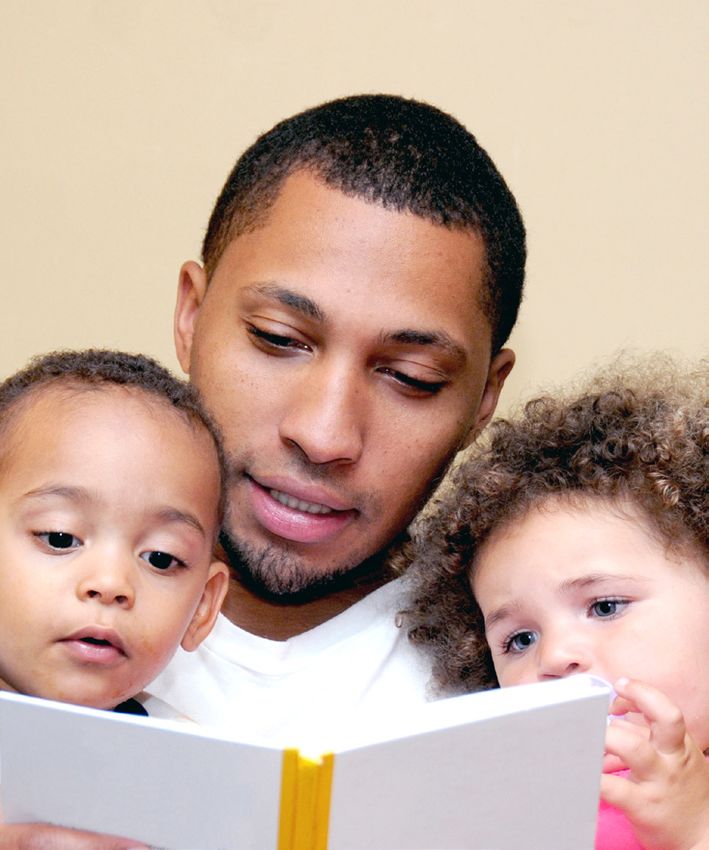
Activities Training,25 and Parent Corps,26 among others. Each program has Reading at home
been studied with rigorous methods, and shown benefits for both parents and
children: Positive parenting behaviors increase, harsh punishment decreases,
and the quality of parent-child relationships improve. Particularly when paired
with similar teacher training programs, child behavioral improvements are
evident at school and home, including reduced behavior problems at school
and improved relationships with teachers and with peers.
Programs that promote home learning activities and
effective teaching strategies. A second type of effective
parent program for preschool children focuses on Supporting school activities
promoting child learning readiness. These programs are
typically delivered individually during home visits, or
through a series of school-based parent group meetings.
Parents are given learning materials and shown how to use them to help their
children enjoy learning. These programs enhance child readiness by (1)
enriching the learning materials available at home, and (2) by improving the
quality of parent-child interactions in ways that will foster thinking skills,
learning motivation, and in some cases, self-regulation and social
competence. A few programs use parent workshops (1-2 sessions) to
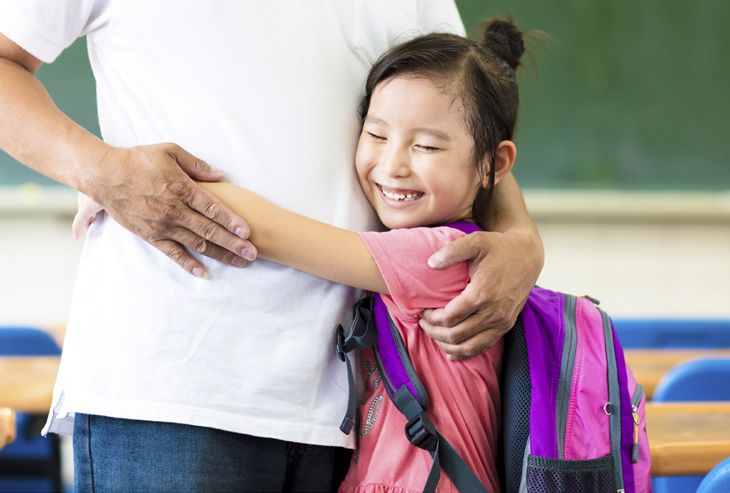
Participating in parent–teacher conferences
introduce specific teaching strategies such as interactive reading. These
programs show that, after brief presentations, parents can learn to use
specific teaching strategies, but benefits for children are often only short-
term. In contrast, significant and lasting benefits are emerging for programs
that include more coaching for parents (ranging from 8-40 sessions).
Several programs (Family Mathematics Curriculum,27 Getting Ready for
School,28 Companion Curriculum29) offer parents and children multi-session
workshops (8-12 sessions) taught by preschool teachers. Teachers demonstrate
learning activities, and provide parents with materials to use at home with
6 | The Pennsylvania State University © 2017 | January 2017issue brief
their children. These programs documented gains in child academic skills in
the specific areas that were targeted. Other programs used home visitors to
introduce learning activities and talk with parents about the best ways to use
them with their children (Let’s Play in Tandem30 HIPPY,31 and REDI-P32). All three
programs documented improvements in child cognitive skills and improved
behavior or social competence. An important key to success in these home
programs was the provision of developmentally sequenced learning games and
activities for children, along with support for parents in effective use.
Programs that strengthen parent-teacher partnerships.
A third approach to parent engagement during preschool
focuses on strengthening teacher-parent partnerships. Two
programs provide examples of this approach (Getting Ready
Program,33 Companion Curriculum29). Both provide teachers
with training in how to build strong relationships with
parents. The Getting Ready Program supports teachers in making regular home
visits and hosting collaborative planning conferences with parents; it has
produced gains in child language use and pre-reading skills, as well as positive
learning behavior in the classroom. The Companion Curriculum features Family
Corners in preschool classrooms to welcome parent visitors. By facilitating
communication and collaboration between parents and teachers, these
programs boost child academic and social-emotional skill development.
However, simply having parents spend time or volunteer at their children’s
schools has not emerged as a strategy that boosts child outcomes.
Programs that emphasize child physical health.
Recognizing the critical importance of child physical well- When positive parenting
being and motor development for early learning,34 other behaviors increase, harsh
parent engagement programs focus on promoting preschool
punishment decreases, and
children’s healthy physical development. These programs are
the quality of parent-child
designed to increase parent knowledge about nutrition and/
or physical activity, build parenting skills (particularly parenting strategies around relationships improve.
healthy eating and exercising), and restructure the home environment to
facilitate healthy and active lifestyles. For example, one program (Buffalo
Healthy Tots) includes 10 group sessions about diet and physical activity with an
emphasis on parenting and behavioral strategies. Parents also keep food and
physical activity diaries and meet individually with a coach before or after group
sessions to develop and review goals. A recent trial indicated that this approach
reduced parent and child body mass index (BMI).35 Other group-based parent
programs focusing on nutrition and physical activity (e.g., Salud con la
Familia, Pediatric Overweight Prevention through Parent Training Program),
typically 7-12 sessions in length, also have shown positive impacts on child
BMI.36,37,38 Another program (Healthy Habits, Happy Homes) also reduced child
BMI and weekend television time by providing parents with four home visits
emphasizing motivational coaching by health educators, along with educational
materials, phone calls, and weekly text messages.39 In contrast, very brief
counseling for parents delivered in the primary care setting does not appear to
produce similar impacts on children’s BMI.40,41
7 | The Pennsylvania State University © 2017 | January 2017issue brief
Future Research Needs
The existing research demonstrates that parent engagement programs can
be an effective way to improve school outcomes for children, and may play
an important role in reducing the school readiness gap that exists for children
from economically-disadvantaged families. However, a number of important
research questions relevant for policy and practice remain.
First, effective parent programs for preschoolers with impact on child
outcomes have tended to focus on a single domain—improving child social-
emotional skills, academic readiness, or physical health. Little is known about
whether boosting outcomes in one area (for example, improving social-
emotional functioning alone) might also enhance learning outcomes and vice
versa, but evidence for cross-domain synergy is emerging.42 A key question is
whether program effects are domain-specific and, if so, how they might be
combined to produce benefits for children across multiple areas of well-being,
without losing their strategic focus (and hence impact).
Second, it is important to better understand how the length of a parent
engagement program and the delivery format (e.g., group sessions, home
visits) impact parent participation and program impact. In general, very short
programs (1-2 sessions) appear to offer limited benefits, but moderately long
programs (10-16 sessions) may be as effective as very long programs. If the
impact of these program characteristics were better understood, it would help
A number of important research
guide the design of optimally cost-effective programs. In addition, a better
understanding of the key mechanisms of action that account for program
questions relevant for policy
effects could help refine intervention design and implementation. and practice remain regarding
how parent engagment
The parent programs with strong effects on child outcomes are generally programs can improve school
longer and more intensive than standard preschool practice, raising issues outcomes for children.
regarding how effective practices might be paid for and sustained. Future
research should clarify the key factors or critical program elements that
produce benefits for children to determine whether programs could be
streamlined without a loss of impact. A related question for the future is the
degree to which technology-assisted intervention components or delivery
systems might increase the accessibility of parent engagement programs
and decrease their costs. For example, one recent intervention used regular
text messages (three per week during the school year) to remind parents to
engage in different home activities that could help their children learn to read,
promoting improved child letter-sound knowledge.43
Finally, issues regarding how to motivate and support stressed parents to
improve participation rates in parent engagement programs require greater
attention. Understanding the extent to which program modifications are
needed to effectively support children with different school readiness needs,
and the degree of modification needed to adapt to different family or cultural
8 | The Pennsylvania State University © 2017 | January 2017issue brief
contexts, is also important. Recent research suggests that family background
and culture can influence engagement practices and preferences, suggesting
that more inclusive and culturally-responsive programming could increase
engagement in teacher-parent partnerships.44
Conclusion and Implications Authors/Affiliations
Karen Bierman, Ph.D., is an Evan Pugh
University Professor in the College of
Parents play the lead role in supporting their children’s early development and
the Liberal Arts at the Pennsylvania State
school readiness. When parents are able to provide nurturing care and strategic University; Pamela Morris, Ph.D., is Vice Dean
support for learning, they foster child brain development in ways that increase for Research and Faculty Affairs, Steinhardt
capacity for learning—building early attention, memory, and problem-solving School of Culture, Education, and Human
skills. The quality of early parental care also shapes the development of child Development, New York University; Rachel
skills for making friends, getting along with others, and managing emotions Abenavoli is a post-doctoral fellow at New
York University. The authors gratefully
and behavior. Because these core school readiness skills grow rapidly during
acknowledge Christine M. McWayne, Ph.D., of
the preschool years, it is a developmental period when parent engagement Tufts University for her helpful comments on
can have a particularly strong impact on child school readiness and future an earlier version of this brief.
school success. In addition, positive parent-teacher partnerships established
when children are just beginning school set the stage for on-going parent Suggested Citation
engagement and home learning support in the school years that follow.
Bierman, K.L., Morris, P.A., Abenavoli, R.M.
(2017). “Parent Engagement Practices Improve
Schools, child-care programs, and communities can support parent practices Outcomes for Preschool Children.” Edna
and enhance child outcomes by providing parents with support and guidance Bennett Pierce Prevention Research Center,
in the use of home learning materials and support warm and responsive Pennsylvania State University.
parenting, while also providing opportunities for parents to get involved at
About the Robert Wood Johnson
school, using conferences and/or home visits to support parent-teacher
Foundation
communication and collaboration.
For more than 40 years the Robert Wood
Yet, a gap still exists, as stress and socio-economic disadvantage often Johnson Foundation has worked to improve
health and health care. We are working with
undermine parent engagement by decreasing access to capacity-building
others to build a national Culture of Health
resources and burdening parents with other pressing priorities. Evidence from enabling everyone in America to live longer,
rigorous research studies suggests that the parent engagement programs that healthier lives. For more information, visit www.
support the most vulnerable families and effectively reduce gaps in child school rwjf.org. Follow the Foundation on Twitter at
readiness associated with socio-economic disadvantage must be intensive www.rwjf.org/twitter or on Facebook at www.
and strategic, considerably longer and more involved than the kinds of parent rwjf.org/facebook.
engagement practices that are widespread in preschools now.
About Pennsylvania State University
A national commitment to the provision of systematic supports for parent Founded in 1855, the Pennsylvania State
engagement in early childhood has the potential to promote optimal University is a renowned public research
university that educates students from around
development for all children. Building upon the growing research base
the world and collaborates with partners to
of “what works,” additional program development and research is needed
share valuable knowledge that improves the
to identify strategic and cost-effective parent engagement strategies with health and well-being of individuals, families
sufficient intensity to close the school readiness gap and with the potential to and communities. For more information, visit
go to scale in cost-effective ways. www.psu.edu.
9 | The Pennsylvania State University © 2017 | January 2017issue brief
References
1 Bornstein MH, ed. (2002). Handbook of Parenting. 2nd ed. Mahwah, N.J.: Erlbaum. 26 Brotman, L. M., Calzada, E., Huang, K.-Y., Kingston, S., Dawson-McClure, S.,
Kamboukos, D., … Petkova, E. (2011). Promoting effective parenting practices and
2 Powell, D.R., Sona, S., Fileb, N., & San Juan, R.R. (2007). Parent–school relationships preventing child behavior problems in school among ethnically diverse families
and children’s academic and social outcomes in public school pre-kindergarten. from underserved, urban communities. Child Development, 82(1), 258–276.
Journal of School Psychology, 48, 269-292.
27 Starkey, P., & Klein, A. (2000). Fostering parental support for children’s
3 Rimm-Kaufman, S. E., & Pianta, R. C. (2001). An ecological perspective on the mathematical development: An intervention with Head Start families. Early
transition to kindergarten. Journal of Applied Developmental Psychology, 21(5), Education and Development, 11, 659-680.
491–511.
28 Noble, K. G., Duch, H., Darvique, M. E., Grundleger, A., Rodriguez, C., & Landers,
4 La Paro, K. M., & Pianta, R. C. (2001). Predicting children’s competence in the C. (2012). Getting Ready for School: A preliminary evaluation of a parent-focused
early school years: A meta-analytic review. Review of Educational Research, 70(4), School-readiness program. Child Development Research, 201
443–484.
29 Mendez, J. (2010). How can parents get involved in preschool? Barriers and
5 McClelland, M. M., Acock, A. C., & Morrison, F. J. (2006). The impact of kindergarten engagement in education in ethnic minority parents of children attending Head
learning-related skills on academic trajectories at the end of elementary school. Start. Cultural Diversity and Ethnic Minority Psychology, 16, 26-36.
Early Childhood Research Quarterly, 21, 471–490
30 Ford, R. M., McDougall, S. J., & Evans, D. (2009). Parent‐delivered compensatory
6 Yoshikawa, H., Weiland, C., Brooks-Gunn, J., Burchinal, M. R., Espinosa, L. M., education for children at risk of educational failure: Improving the academic
Gormley, W. T., ... & Zaslow, M. J. (2013). Investing in Our Future: The Evidence and self-regulatory skills of a Sure Start preschool sample. British Journal of
Base on Preschool Education. Psychology, 100(4), 773-797.
7 Barnett, W. S. (2011). Effectiveness of Early Educational Intervention. Science, 333, 31 Baker, A. J. L., Piotrkowski, C. S., & Brooks-Gunn, J. (1998). The effects of the Home
975-978. Instruction Program for Preschool Youngsters on children’s school performance
8 Blair, C., & Raver, C.C. (2012). Child development in the context of adversity: at the end of the program and one year later. Early Childhood Research Quarterly,
Experiential canalization of brain and behavior. American Psychologist, 67, 309-318. 13(4), 571–586.
9 Merz, E.C., Landry, S.H., Williams, J.M., Barnes, M.A., Eisenberg, N., Spinrad, 32 Bierman, K.L., Welsh, J., Heinrichs, B.S., Nix, R.L., & Mathis, E.T. (2015). Helping Head
T.L., The School Readiness Research Consortium. (2014). Associations among Start parents promote their children’s kindergarten adjustment: The REDI parent
parental education, home environment quality, effortful control, and preacademic program. Child Development.
knowledge. Journal of Applied Developmental Psychology, 35, 304-315. 33 Sheridan, S. M., Knoche, L. L., Kupzyk, K. A., Edwards, C. P., & Marvin, C. A. (2011). A
10 Isaacs, J. (2012). Starting School at a Disadvantage: The School Readiness of Poor randomized trial examining the effects of parent engagement on early language
Children. Washington, DC: Brookings Institution, Center on Children and Families. and literacy: The Getting Ready intervention. Journal of School Psychology, 49,
361-383.
11 National Center for Children in Poverty (2016). Children in Poverty.
34 Tandon, P.S., Tovar, A., Jayasuriya, A.T., Welker, E., Schober, D.J., Copeland, K… &
12 Fantuzzo, J., McWayne, C., Perry, M. A., & Childs, S. (2004). Multiple dimensions of Ward, D.S. (2016). The relationship between physical activity and diet and young
family involvement and their relations to behavioral and learning competencies for children’s cognitive development: A systematic review. Preventive Medicine
urban, low-income children. School Psychology Review, 33, 467−480. Reports, 3, 379-390.
13 Dearing, E., Kreider, H., Simpkins, S., & Weiss, H.B. (2006). Family involvement in 35 Quattrin, T., Roemmich, J.N., Paluch, R., Yu, J., Epstein, L.H., & Ecker, M.A. (2012).
school and low-income children’s literacy performance: Longitudinal associations Efficacy of family-based weight control program for preschool children in primary
between and within families. Journal of Educational Psychology, 98, 653-664. care. Pediatrics, 130, 660-666.
14 Campbell, F. A., Ramey, C. T., Pungello, E., Sparling, J., & Miller-Johnson, S. (2002). 36 Barkin, S.L., Gesell, S.B., Po’e, E.K., Escarfuller, J., & Tempesti, T. (2012). Culturally
Early childhood education: Young adult outcomes from the Abecedarian project. tailored, family-centered, behavioral obesity intervention for Latino-American
Applied Developmental Science, 6, 42-57 preschool-aged children. Pediatrics, 130, 445-456.
15 Schweinhart, L. J., Montie, J., Xiang, Z., Barnett, W. S., Belfield, C. R., & Nores, M. 37 Berry, D., Colindres, M., Sanchez-Lugo, L., Sanchez, M., Neal, M., & Smith-Miller,
(2005). Lifetime effects: The HighScope Perry Preschool study through age 40. C. (2011). Adapting, feasibility testing, and pilot testing a weight management
Ypsilanti, MI: HighScope Press intervention for recently immigrated Spanish-speaking women and their 2- to
16 http://www.naeyc.org/files/academy/file/OverviewStandards.pdf 4-year-old children. Hispanic Health Care International, 9, 186-193.
17 National Association for Family, School, and Community Engagement. (2015). 38 Slusser, W., Frankel, F., Robison, K., Fischer, H., Cumberland, W.G., & Neumann, C.
Quick review of the Every Student Succeeds Act (ESSA): What’s in it for parents? (2012). Pediatric overweight prevention through a parent training program for 2–4
Bethesda, MD: Author. year old Latino children. Childhood Obesity, 8, 52-59.
18 Henrich, C. C., & Blackman-Jones, R. (2006). Parent involvement in preschool. In E. 39 Haines, J., McDonald, J., O’Brien, A., Sherry, B., Bottino, C.J., Schmidt, M.E., &
Zigler, W. S. Gilliam & S. M. Jones (Eds.), A vision for universal preschool education Taveras, E.M. (2013). Healthy Habits, Happy Homes: Randomized trial to improve
(pp. 149–168). New York: Cambridge University Press. household routines for obesity prevention among preschool-aged children. JAMA
Pediatrics, 167, 1072-1079.
19 Hindman, A.H., Miller, A.L., Froyen, L.C. & Skibbe, L.E. (2012). A portrait of family
involvement during Head Start: Nature, extent, and predictors. Early Childhood 40 Birken, C.S., Maguire, J., Mekky, M., Manlhiot, C., Beck, C.E., DeGroot, J., … Parkin,
Research Quarterly, 27, 654-667. P.C. (2012). Office-based randomized controlled trial to reduce screen time in
preschool children. Pediatrics, 130, 1110-1115.
20 McWayne, C.M., Melzi, G., Limlingan, M.C., & Schick, A. (2016). Ecocultural patterns
of family engagement among low-income Latino families of preschool children. 41 Sherwood, N.E., JaKa, M.M., Crain, L., Martinson, B.C., Hayes, M.G., & Anderson, J.D.
Developmental Psychology, 62, 1088-1102. (2015). Pediatric primary care–based obesity prevention for parents of preschool
children: A pilot study. Childhood Obesity, 11, 674-682.
21 Waanders, C., Mendez, J.L., & Downer, J.T. (2007). Parent characteristics, economic
stress and neighborhood context as predictors of parent involvement in preschool 42 Nix, R. L., Bierman, K. L., Domitrovich, C. E., & Gill, S. (2013). Promoting preschool
children’s education. Journal of School Psychology, 45, 619-636. social-emotional skills with the Head Start REDI Program enhances academic
and behavioral outcomes in kindergarten. Early Education and Development, 24,
22 Webster-Stratton, C., Reid, M. J., & Hammond, M. (2001). Preventing conduct 1000-1019.
problems, promoting social competence: A parent and teacher training partnership
in Head Start. Journal of Clinical Child Psychology, 30(3), 283-302. 43 York, B. N., & Loeb, S. (2014). One step at a time: the effects of an early literacy text
messaging program for parents of preschoolers (No. w20659). National Bureau of
23 Gross, D., Garvey, C., Julion, W., Fogg, L., Tucker, S., & Mokros, H. (2009). Efficacy Economic Research.
of the Chicago Parent Program with low-income African American and Latino
parents of young children. Prevention Science, 10(1), 54-65. 44 McWayne, C.M., & Melzi, G. (2014). Validation of a culture-contextualized measure
of family engagement in the early learning of low-income Latino children. Journal
24 Miller-Heyl, J., MacPhee, D., & Fritz, J. J. (1998). DARE to be You: A family-support, of Family Psychology, 28, 260-266.
early prevention program. Journal of Primary Prevention, 18(3), 257-285.
25 Carta, J. J., Lefever, J. B., Bigelow, K., Borkowski, J., & Warren, S. F. (2013).
Randomized trial of a cellular phone-enhanced home visitation parenting
intervention. Pediatrics, 132(2), S167-S173.
10 | The Pennsylvania State University © 2017 | January 2017You can also read


