Developed by a workgroup of diverse educators, leaders, and community stakeholders from across Louisiana hosted by the Louisiana Department of ...
←
→
Page content transcription
If your browser does not render page correctly, please read the page content below
Developed by a workgroup of diverse educators, leaders, and community stakeholders
      from across Louisiana hosted by the Louisiana Department of Education

                               MARCH 2021
CONTENTS
WORKGROUP MEMBERS................................................................................................. 3

PURPOSE OF FAMILY LITERACY ENGAGEMENT WORKGROUP.......................................... 4

DEFINITION.................................................................................................................... 4

FRAMEWORK................................................................................................................. 4

OUTLINE OF THIS GUIDANCE DOCUMENT........................................................................ 5

PRIORITY CATEGORIES................................................................................................... 6
         Literacy Across Content..................................................................................................... 7

         School Environment........................................................................................................... 8

         Cultural Responsiveness.................................................................................................... 9

         Community Connections...................................................................................................10

         At-Home Literacy Activities.............................................................................................. 11

         Overall Considerations.....................................................................................................12

SHARING LITERACY PLANS........................................................................................... 13

INCORPORATING FAMILY LITERACY ENGAGEMENT INTO YOUR LOCAL LITERACY PLAN........14
         Family Literacy Engagement Plan Template.........................................................................14

         Family Literacy Engagement Plan Sample............................................................................14

SAMPLE FAMILY LITERACY ENGAGEMENT SURVEY......................................................... 15

STRATEGIES TO OVERCOME BARRIERS...........................................................................16

REFERENCES AND RESOURCES..................................................................................... 17

   FAMILY LITERACY ENGAGEMENT STRATEGIC PLAN FOR SCHOOLS AND SCHOOL SYSTEMS                                                                2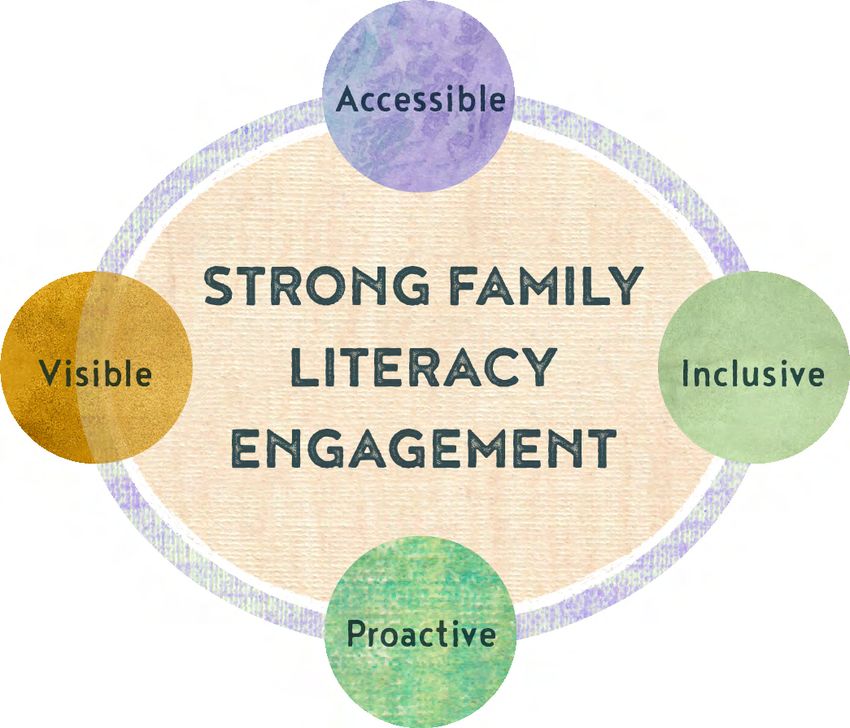
WORKGROUP MEMBERS

    Dr. Lisa Holliday, Facilitator                  Alice Garcia                      Jasmin Porter
Louisiana Department of Education       Louisiana Department of Education             Teaching Lab
         Literacy Specialist                  EL Program Coordinator              Partnerships Manager

          Shanna Beber                         Dr. Mary Ghongkedze                  Kristin Roccaforte
Louisiana Department of Education            Grambling State University             Riverside Academy
        Director of Literacy            Curriculum and Instruction Professor      Elementary Supervisor

         Dr. Phaedra Early                      Michelle Joubert                      Cindy Rushing
Louisiana Department of Education                Calcasieu Parish                     Rapides Parish
         Literacy Specialist                  Educator Development               Early Childhood Director

          Christal Aguillard                     Breonne LaSalle                  Dr. Erin Scott-Stewart
      East Baton Rouge Parish                    Jefferson Parish                  Southern University
        Elementary Principal                 Executive Master Teacher              Assistant Professor

          Kennette Bardell                     Brandie McNabb                          Alex Stubbs
     St. John the Baptist Parish           Zachary Community Schools           Stand for Children Louisiana
           Literacy Coach                     Elementary Teacher               Educator Advocacy Manager

                                                                                        Ada Webre
          Amanda Colon                          Jackie Mendoza
                                                                                    St. Charles Parish
Louisiana Department of Education        West Baton Rouge Parish Schools
                                                                               K-2 Curriculum & Assessment
  Early Childhood Family Support                  Social Worker
                                                                                         Facilitator

            Susan Connick                        Justin Overacker                     Jean Woodside
        Hynes Charter School                   Monroe City Schools               University View Academy
       Instructional Facilitator            High School English Teacher         Virtual Elementary Teacher

            Karen Creel                         Michele Pellissier
         Washington Parish                       Jefferson Parish
        High School Teacher              Middle School Special Education

          Dr. Joyce Farrow                         Laura Poirier
Louisiana State University-Shreveport            St. James Parish
          Reading Professor                  High School Social Worker

     FAMILY LITERACY ENGAGEMENT STRATEGIC PLAN FOR SCHOOLS AND SCHOOL SYSTEMS                                 3
PURPOSE OF FAMILY LITERACY ENGAGEMENT WORKGROUP
•   The Department’s Literacy Division believes families play an essential role in the literacy development of children.

•   The purpose of the workgroup was to develop a strategic plan to improve communication to families
    around literacy.

•   Through the launch and expansion of literacy initiatives across the state, accessible opportunities will
    be provided at the state and local levels for families to engage with their child’s literacy education at all
    ages and stages.

                                                  DEFINITION
Family Literacy Engagement is more than just reading books and attending school activities.

It is active involvement in authentic communication, building meaningful relationships, and fostering a learning
community among school leaders, teachers, families, and students.

It is experiencing literacy through learning, speaking, reading, writing, listening, expressing, and sharing with
accessible resources and ongoing support.

                                                FRAMEWORK

                                                              This framework provides the foundation for strong
                                                              family engagement practices around children’s literacy
                                                              development. The strategies and activities within
                                                              this guide overcome common barriers to accessible,
                                                              inclusive, proactive, visible family engagement.

                                                              ACCESSIBLE: using multiple modes of
                                                              communication to ensure all families have access

                                                              INCLUSIVE: making all communication available in
                                                              home languages and respecting cultural differences

                                                              PROACTIVE: ensuring timely notifications and
                                                              avoiding unintentional exclusions

                                                              VISIBLE: reaching out during uncertain times and
                                                              keeping all lines of communication open to families

      FAMILY LITERACY ENGAGEMENT STRATEGIC PLAN FOR SCHOOLS AND SCHOOL SYSTEMS                                             4
OUTLINE OF THIS GUIDANCE DOCUMENT

PRIORITY CATEGORIES
The workgroup identified six priority categories that organize specific strategies and resources for implementing
and supporting family engagement around literacy. Each section focuses on engaging families in the priority
categories.

PREPARING TO ENGAGE
After stating the importance of each category, a brief section outlines the basic steps for schools to take to
effectively prepare to engage families in the identified areas.

SCHOOL STRUCTURES
On-site organizations, programs, or activities will be listed to provide schools with ideas for how they can
incorporate family literacy engagement and build structures to sustain communication.

TRENDING TECHNOLOGY
In each category, there is a featured section highlighting ways that current trends in technology can support
engagement around literacy for families.

STRATEGIES TO OVERCOME BARRIERS
One of the most challenging features of any type of family engagement is barriers that prevent two-way
communication between schools and families. Specific strategies can help schools and families overcome
common barriers to effective engagement.

REFERENCES AND RESOURCES
The sources of information used by the workgroup when developing this strategic plan provide opportunities for
additional research and exploration around the topic of family literacy engagement.

      FAMILY LITERACY ENGAGEMENT STRATEGIC PLAN FOR SCHOOLS AND SCHOOL SYSTEMS                                      5
PRIORITY CATEGORIES
LITERACY ACROSS CONTENT
SCHOOL ENVIRONMENT
CULTURAL RESPONSIVENESS
COMMUNITY CONNECTIONS
AT-HOME LITERACY ACTIVITIES
OVERALL CONSIDERATIONS
FAMILY LITERACY ENGAGEMENT STRATEGIC PLAN FOR SCHOOLS AND SCHOOL SYSTEMS 6Literacy Across Content
The ability to read and comprehend text is necessary to succeed in math, science, and social studies courses, not
just English Language Arts. In order to effectively engage parents at all ages and stages of their child’s literacy
development, literacy should be incorporated into all content areas.
PREPARING TO ENGAGE
• Provide professional development to prepare teachers on how to integrate literacy in other content areas.
Use teacher leaders who have demonstrated an ability to incorporate literacy to train and mentor other
teachers.
• Teacher candidates need a deep knowledge of literacy to be able to engage families. Provide training,
mentorship, and ongoing support to new teachers.
• Training for parents to help students with strategies used in school such as citing textual evidence, which can
be done in all subjects. Training activities can take place at some of the school-based events, but be sure to
also send home easy-to-interpret information for those who cannot attend.
SCHOOL STRUCTURES
• Career Night
• Content Family Nights
› Share ways to integrate literacy into all areas.
• Academic Parent Teacher Teams (APTT)
› Provide on-demand assistance on standards and strategies.
• Mentor Programs
› Partner with high school students
› Host student-led and student-focused book clubs.
• Literacy Expositions
› Allow parents to engage with texts and tasks across content.
› Include content from all subject areas.
• Cross-Curricular Themes
› Many reading curricula incorporate other subjects such as science and social studies into thematic units.
Add or extend tasks that promote cross-curricular discussions and activities.
› Teachers of all subjects should listen to students read and respond to text and provide individualized
support as needed. Dialogue and reading comprehension are key to success in all content areas.
TRENDING TECHNOLOGY
• Audio texts across grade levels
• Podcast discussions on content
• Screencast commentary around assigned texts
› Improves dialogue and accessibility
FAMILY LITERACY ENGAGEMENT STRATEGIC PLAN FOR SCHOOLS AND SCHOOL SYSTEMS 7School Environment
A positive, welcoming school climate can strengthen bonds between students, teachers, leaders, and families.
Schools should aim to maintain an open-door policy where strong relationships can be formed. No level
of engagement around literacy development or any other content can be successful without a supportive
environment.
PREPARING TO ENGAGE
• Promoting a positive, welcoming school climate means all hands on deck!
• Build staff capacity to implement family engagement and communication strategies.
• Build strong, positive relationships and bonds among faculty and staff that can extend to families.
• Recruit retired teachers and educators to support and strengthen engagement efforts. If you have a student
teacher on campus, involve them as well.
• Maintain visibility during uncertain times such as school closures due to health pandemics or extreme
weather. Be safely accessible and friendly.
SCHOOL STRUCTURES
• Family Literacy Center › Students should see representations of
› This can be a designated space in the themselves in the school through displays,
school for families to have access to internet, posters, and pictures that feature the cultures
community resources and programs, and and languages present in the student
information on at-home activities. population.
› Make every effort to communicate and
• Positive Behavior Intervention Support (PBIS) connect without language barriers such as
using interpreters when language barriers exist.
• Parent Teacher Organization (PTO)
Make resources available in the languages
• Reading for Enjoyment represented by students and families.
› Bulletin boards dedicated to reading › Develop an equity and literacy framework to
promote grounding principles and provide a
› Reading corners or classroom libraries foundation of support for diverse families.
› Dedicated reading time daily or weekly › Provide cultural awareness and sensitivity
› Enriching literacy activities that are not training for faculty and staff. This can be
connected to assessments provided by a vendor and many offer webinars
or workshops free of charge. This can also
• Diversity Inclusion include training on diversity and Adverse
› Use a strengths-based approach to engage Childhood Experiences (ACEs) for teachers
families in their child’s literacy development by to be informed of the impact on these
focusing on the positive assets of students and experiences and how they manifest in the
families to improve relationships. classroom.
› Keep educational jargon to a minimum. Define › Connect using multiple modalities such as
and explain terms in ways that families can paper, websites, text updates, and emails to
easily understand and apply. accommodate diverse communication needs.
TRENDING TECHNOLOGY
• Zoom or social media livestream meetings in a hybrid or virtual environment
FAMILY LITERACY ENGAGEMENT STRATEGIC PLAN FOR SCHOOLS AND SCHOOL SYSTEMS 8Cultural Responsiveness
Different cultures have different norms, beliefs, and languages, all of which are worthy of respect and
accommodation. The diversity of Louisiana’s classrooms may require different types of access when it comes
to literacy and learning. Students perform best when they feel cared for, supported, and their basic physical,
mental, and emotional needs are met.
PREPARING TO ENGAGE
• Open lines of discussion regarding diversity, equity, and inclusion among staff, faculty, and families. Provide
and model safe, supportive dialogue practices and encourage respectful and productive conversations
around sensitive subjects. Mediation by the school counselor or other unbiased professional can be helpful
and provide support through these practices.
• Conduct frequent stakeholder surveys using a variety of methods including written forms, phone calls, or
digital formats to accommodate diverse response needs.
SCHOOL STRUCTURES
• Participate in community outreach programs that engage community organizations such as social service
agencies and nonprofit groups to promote diverse literacy through read alouds, book donations, and
presentations from community members.
• Promote exposure to multiple cultures through diverse supplemental texts.
• Host cultural fairs throughout the school year to celebrate the customs, foods, languages, and traditions of
other cultures, especially those represented in the student population. Facilitate space for more than just
certain weeks or months to be dedicated for cultural celebrations.
• Ensure supporting documents and resources are available in the spoken languages represented by the
student and family populations.
TRENDING TECHNOLOGY
• Teachlets are quick, 5-minute recaps of what kids are learning in school. They can be provided in the form of
videos or modules shared through social media or email.
• Encourage schools to create virtual documents which celebrate student and family culture. A template could
be provided. Varying forms of literary pieces could be contributed by families (poetry, short stories, videos of
dances or songs).
FAMILY LITERACY ENGAGEMENT STRATEGIC PLAN FOR SCHOOLS AND SCHOOL SYSTEMS 9Community Connections
Strong connections with the community increase access to local resources, programs, and organizations. Building
relationships with community liaisons and mentors provides ongoing access to resources. It is imperative to foster
partnerships from birth and early literacy stages through higher education.
PREPARING TO ENGAGE
• Determine what resources are already available and capitalize on it. For example, many community
organizations such as reading councils and other nonprofit groups already exist that promote literacy and
diversity, but they are waiting on an invitation or response from schools.
• Designate a person to serve as a family liaison to connect with community offices and organizations. Within
the school, Mentor Teachers, Content Leaders, or Teacher Leaders could serve in that capacity.
SCHOOL STRUCTURES
Engage local organizations through: Engage high school or college students through:
• Community Helpers Features • Saturday morning sessions to teach parents skills
› Highlight public service employees such as law and provide interactive practice at the school
enforcement officers, firefighters, and grocery › Grant funds to cover associated expenses
clerks and invite them to read stories and › High school or college students to provide
share experiences. assistance or lead sessions
› Invite community leaders to get involved at • Morning or afternoon tutoring or homework
literacy events and book drives. assistance
• Partnerships with community groups or services to • Buddy system to read together, share books, and
share books and resources create projects
› Library
» Story time
» Night events TRENDING TECHNOLOGY
» Bookmobiles • Blog to share read alouds and activities with
parents
» Rewards/incentives for families to
participate • Zoom capability for tutoring or practice sessions
» Field trips to local libraries
› Family doctor offices
› Pediatricians
› Mental health centers
› Regional organizations
› Local community groups or organizations
› Family advocacy groups
› Reading councils
› Law enforcement
• Donations of books representing diversity or
supporting high-quality curriculum
› Large companies
› Churches
FAMILY LITERACY ENGAGEMENT STRATEGIC PLAN FOR SCHOOLS AND SCHOOL SYSTEMS 10At-Home Literacy Activities
Families are a child’s first educator and can serve as valuable partners throughout a child’s literacy development.
Providing families with quick, easy-to-use activities and strategies to use at home strengthens school-home
connections and deepens learning.
PREPARING TO ENGAGE
• Allot time for planning ahead of events so that teachers and support personnel have adequate time to
prepare engaging, interactive, sustainable activities.
• Encourage families to take pictures at home or do so at school and have the student provide the words to tell
a story. Publish and leave around the community for others to read while waiting.
SCHOOL STRUCTURES
While these are activities that are designed to promote at-home interaction, the school plays an essential role in
setting families up for success. Schools can promote at-home family literacy engagement by sharing ideas with
families including:
• Family Book Clubs • Table Topics
› Trade books with other families in the class or › Place topics in a bowl and pull one each night
community. and discuss.
• Other at-home activities
• Storytelling
› Recipes
› Read and tell stories.
» Read the ingredients and steps with your
› Document or write stories. child while cooking a favorite dish.
› Record stories on a phone. › Bedtime reading
» Let your child select a book that you or
• Family Fun or Game Night
they can read aloud.
› Reading is involved in lots of games and
› Environmental labels
activities like charades, board games, or card
games. » Read road signs, grocery items, and
building signs.
› Something as simple and fun as reading
directions to a board game provides real- » Label items around home.
world practice and application.
• School-based challenges
• Family Movie Night › Host contests with reading goals in classrooms
› Read books first then watch the movie. or school-wide.
TRENDING TECHNOLOGY
• Living Literature
› Tell a tik-tok story
› Share on Instagram stories
› Retell a text, chapter, or section using video, props, and creativity
• Documentaries on Netflix, Hulu, or TV
› They often align thematically with literature from school.
FAMILY LITERACY ENGAGEMENT STRATEGIC PLAN FOR SCHOOLS AND SCHOOL SYSTEMS 11Overall Considerations
Family engagement around literacy development must be a priority for schools with the following goals:
• Sustainable partnerships with families and community programs
• Ongoing, open communication with families
• Accessible resources and activities for all
The biggest questions about any program or strategy implementation are When? and How? When should
schools and school systems plan, set goals, and implement family literacy engagement strategies and activities?
How can schools and school systems achieve those goals and effectively implement strategies and activities?
WHEN?
• While challenging, time considerations for teachers and families are part of the planning and preparation for
strong, sustainable family literacy engagement.
• With family literacy engagement as a priority, schools and school systems can incorporate strategies and
activities into existing plans and structures to maximize effective implementation.
• Effective planning includes enlisting the help of:
› Mentor Teachers
› Teacher Leaders
› Content Leaders
› Student teachers
› Teacher candidates
› High school students
› Community leaders
HOW?
• Check with your school or district’s financial office to determine which funding sources can be used to support
family literacy engagement efforts.
• Conduct needs assessment surveys from families to determine where to focus your efforts and energy. To
model inclusiveness, collect data a variety of ways to ensure everyone has access and a voice.
• Don’t try everything at once! Based on family’s needs and wants from the survey results, start small, find out
what works, and build on that.
• Form a “Family Engagement Committee” that includes a diverse representation of families to review
recommendations. The committee can create a 1-, 3-, and 5-year plan to accomplish goals and track
progress.
• Provide the materials that are needed for parents to be successful participants in the chosen activities.
• Be proactive. Make sure everything is accessible for different language and modality needs.
• Through all communications with families, consider educational levels, family backgrounds, economic status,
and technology availability to ensure equitable access.
• Don’t use any educational jargon - keep the language simple and easily understandable for all families.
• Utilize the family engagement resources on the Department’s Literacy Division website.
• Administrative support is key to successful implementation and sustainability of any initiative at a school.
FAMILY LITERACY ENGAGEMENT STRATEGIC PLAN FOR SCHOOLS AND SCHOOL SYSTEMS 12SHARING LITERACY PLANS
Once literacy activities and campaigns have been selected, the next most important step is to consider the best
methods for sharing information and resources for the planned activities and events.
SHARING WITH TEACHERS AND FACULTY MEMBERS
• Create or provide webinars with guidance for teachers of what activities and resources can be shared.
• Leaders share newsletters and press releases sent from the Department with all faculty and staff.
SHARING WITH FAMILIES
• Establish a resource library.
• Conduct regular informational meetings with teachers.
• Create and maintain updated class websites.
• Monthly or weekly tutorial videos featuring educators in action teaching skills that can be practiced at home.
• Send home informational packets, brochures, flyers, newsletters, or kits with activities and resources.
• Maintain a family literacy calendar with activities, ideas, and events.
• Personalize invitations to literacy events.
• Share information via email, social media, and newsletters to maximize impact.
SHARING WITH STUDENTS
• Promote student-led literacy meetings or activities.
• Recruit local celebrities, whether it be someone widely-known like a famous sports player or a local celebrity,
to produce quick videos encouraging literacy activities and involvement.
TRENDING TECHNOLOGY
• Padlet videos or links with frequent interactive posts
• Zoom events with demonstrations of taught literacy skills and supporting activities
• Social media platforms, including groups, to promote literacy and demonstrate quick activities
• QR codes linked to at-home literacy activities and practice, videos, or quick demos
• YouTube videos
• TikTok videos
• Text messaging services
• Google apps
› Google Doc with activities and resources
› Google Sheet with lists of mentor or community organization contact information
› Google Classroom to help organize activities and resources
FAMILY LITERACY ENGAGEMENT STRATEGIC PLAN FOR SCHOOLS AND SCHOOL SYSTEMS 13INCORPORATING FAMILY LITERACY ENGAGEMENT INTO YOUR
LOCAL LITERACY PLAN
Develop action steps that outline your school’s plans for family engagement around literacy. Include the Overall
Considerations from the previous section when developing an action plan. This plan can stand alone as a Family
Literacy Engagement Plan or be built into an existing School Improvement Plan or Local Literacy Plan.
Family Literacy Engagement Plan Template
Activity Materials Needed Person(s) Involved Success Criteria
Family Literacy Engagement Plan Sample
Activity Materials Needed Person(s) Involved Success Criteria
Community Read-aloud books Classroom teachers 1. Each classroom experienced a read aloud
Helpers Feature connected to theme Community leaders and conversation with a community leader
or volunteer.
Family members
2. Family members were involved in
recommending and assisting community
leaders.
3. Diverse communities and families were
represented.
Literacy Texts from all subject Classroom teachers 1. All subject areas were well-represented with
Exposition areas that have Family members a connection to how literacy is embedded.
thematic connections
High school 2. Family members and volunteers had a clear
Displays (tables, posters, student volunteers role in supporting the event.
boards, etc.)
FAMILY LITERACY ENGAGEMENT STRATEGIC PLAN FOR SCHOOLS AND SCHOOL SYSTEMS 14SAMPLE FAMILY LITERACY ENGAGEMENT SURVEY
Never Sometimes Always
My child’s school uses several methods for two-way
communication about important literacy information and events.
I am well-informed of what is going on at school with my child’s
Accessible
literacy development.
I am able to provide input to my child’s teacher about my child’s
literacy development.
I receive information from my child’s school in our home
language.
I am able to communicate with my child’s school in my home
Inclusive
language through an interpreter or other resource.
I see my family’s culture represented throughout my child’s school
and in textbooks.
I know about my child’s literacy development and school events
around literacy in advance.
Proactive I am invited to be involved in literacy events at school.
I feel like my child’s school makes every effort to ensure my family
receives information about literacy learning and events.
Even in uncertain times such as school closures, my family
receives support from my child’s teacher including strategies and
activities to use to improve literacy.
Two-way communication methods are available during school
Visible
closures or other unexpected events.
I feel like I can reach my child’s school or teachers when I need
help with literacy activities.
A SPECIAL NOTE FOR FAMILIES: “Literacy” means the ability to read and write, but it includes many other
skills including spelling, speaking, and comprehending. Literacy is not just limited to English Language Arts
classrooms. Strong literacy skills are needed to succeed in reading and understanding math problems, social
studies and science lessons, and directions on any task or activity.
FAMILY LITERACY ENGAGEMENT STRATEGIC PLAN FOR SCHOOLS AND SCHOOL SYSTEMS 15STRATEGIES TO OVERCOME BARRIERS
Barrier to
Research-based Strategies
Engagement
• Offering transportation to family literacy events
• Providing multiple offerings of the same event at various times to accommodate
variety of work schedules
Transportation and
schedule • Locating family literacy events close to where families are located e.g. in their
neighborhood, library, or organization (e.g. mobile family literacy events in a bus)
• Hosting/attending multiple enrollment events in small, localized communities
throughout the school system
• Collaborating with interpreters to participate in family literacy events
• Enlisting parent volunteers, faith-based leaders, or community leaders who speak
Language barriers
the same language, come from the community, and have access to the housing
• Utilizing translation services
• Hosting family literacy events in the communities near where children and families live
• Providing materials that emphasize the short- and long-term benefits of literacy
Lack of information at all stages of development
• Initiating family volunteers of students to share information about literacy with
their neighbors or coworkers
• Building authentic relationships with families in the community prior to activities
and events
Families with
• Partnering with social service providers or other organizations that have trusting
previous negative
relationships with families to disseminate information
experiences
• Connecting with leaders and teachers across grade levels to spread the
important of family engagement around literacy
• Coordinating the distribution of outreach materials with the social worker or
homeless liaison located in each school system
Housing
• Collaborating with the local housing authority to share resources and referral
information
FAMILY LITERACY ENGAGEMENT STRATEGIC PLAN FOR SCHOOLS AND SCHOOL SYSTEMS 16REFERENCES AND RESOURCES
Fowler, Thompson, Tompkins, et al. (2013). Strategies for Enrolling Traditionally Underserved Families in Early
Childhood Education Programs. https://ecrp.illinois.edu/v15n2/fowler.html
Henderson and Mapp. (2002). A New Wave of Evidence: The Impact of School, Family, and Community
Connections on Student Achievement. https://files.eric.ed.gov/fulltext/ED474521.pdf
Kraft and Rogers. (2014). The Underutilized Potential of Teacher-to-Parent Communication: Evidence from
a Field Experiment. https://scholar.harvard.edu/files/mkraft/files/kraft_rogers_teacher-parent_
communication_hks_working_paper.pdf
Voorhis, Maier, Epstein, and Lloyd. (2013). The Impact of Family Involvement on the Education of Children Ages
3-8: A Focus on Literacy and Math Achievement Outcomes and Social-Emotional Skills. https://files.eric.ed.gov/
fulltext/ED545474.pdf
For additional support on implementing family literacy engagement strategies and activities,
visit the Department’s Literacy Division Family Resources.
FAMILY LITERACY ENGAGEMENT STRATEGIC PLAN FOR SCHOOLS AND SCHOOL SYSTEMS 17You can also read


