Community Benefit Plan & Implementation Strategy - Gr andview Medical Center 2014 - Kettering ...
←
→
Page content transcription
If your browser does not render page correctly, please read the page content below

201 4
   Gr andview Medical Center

 Community Benefit Plan
& Implementation Strategy
[GRANDVIEW
MEDICAL
CENTER
IMPLEMENTATION
STRATEGY]
2014-‐2016
TABLE OF CONTENTS
INTRODUCTION
..........................................................................................................................................................................
2
Grandview
Medical
Center
Service
Area
.....................................................................................................................
2
Community
Health
Needs
Assessment
........................................................................................................................
2
Data
Collection
.......................................................................................................................................................................
2
SELECTION
OF
COMMUNITY
HEALTH
PRIORITIES
...................................................................................................
3
Top
Inpatient
Diagnoses
....................................................................................................................................................
3
Top
ED
Diagnoses
.................................................................................................................................................................
3
Leading
Causes
of
Death
....................................................................................................................................................
3
UNADDRESSED
HEALTH
PRIORITIES
..............................................................................................................................
4
HEALTH
NEEDS
TO
BE
ADDRESSED
.................................................................................................................................
4
IMPLEMENTATION
STRATEGY
...........................................................................................................................................
5
PRIORITY:
Diabetes
..............................................................................................................................................................
5
PRIORITY:
Breast
Cancer
...................................................................................................................................................
9
APPENDIX
A:
GRANDVIEW
MEDICAL
CENTER
HEALTH
PRIORITIES
............................................................
12
Diabetes
..................................................................................................................................................................................
12
Breast
Cancer
.......................................................................................................................................................................
13
APPENDIX
B:
IMPLEMENTATION
STRATEGY
SYNTHESIS
..................................................................................
14
Diabetes
..................................................................................................................................................................................
14
Breast
Cancer
.......................................................................................................................................................................
15
INTRODUCTION
1
[GRANDVIEW
MEDICAL
CENTER
IMPLEMENTATION
STRATEGY]
2014-‐2016
INTRODUCTION
Grandview
Medical
Center
is
one
of
seven
hospitals
in
the
Kettering
Health
Network
(KHN).
Being
a
part
of
KHN
gives
the
hospital
access
to
the
Network’s
resources
such
as
a
vast
network
of
specialist
physicians
as
well
as
specialized
centers
and
services.
Grandview Medical Center Service Area
The
primary
service
area
for
Grandview
Medical
Center
is
defined
as
Montgomery
County
located
in
West
Central
Ohio.
This
service
area’s
health
care
infrastructure
is
comprised
of
15
hospitals
of
which
10
are
short-‐term
acute
care
hospitals,
39
State
licensed
nursing
homes,
31
State
licensed
residential
care
facilities,
four
hospice
centers,
four
HMOs,
14
State
licensed
ambulatory
surgery
facilities,
and
12
State
licensed
dialysis
centers,
per
the
Ohio
Department
of
Health.
According
to
the
Health
Resources
and
Services
Administration,
County
residents
are
also
served
by
6
community
health
centers
and
5
Federally
Qualified
Health
Centers
(FQHC).
Community Health Needs Assessment
In
2013,
Grandview
Medical
Center
partnered
with
member
hospitals
of
the
Greater
Dayton
Area
Hospital
Association
and
Wright
State
University
to
prepare
the
Community
Health
Needs
Assessment
(CHNA)
for
the
hospital’s
service
area.
A
community
health
needs
assessment
engages
community
members
and
partners
to
collect
and
analyze
health-‐related
data
from
many
sources.
Data Collection
To
prepare
the
CHNA,
secondary
data
from
multiple
sources
was
collected
to
paint
a
detailed
picture
of
the
Grandview
Medical
Center
Service
Area.
Secondary
data
is
reprocessing
and
reusing
information
that
has
already
been
collected
such
as
institutional
records
from
sources
such
as
hospitals
and
the
Ohio
Department
of
Health.
The
CHNA
reported
previously
gathered
survey
data
from
the
Montgomery
County
Behavioral
Risk
Factor
Surveillance
System
(BRFSS)
as
presented
in
the
Community
Health
Assessment
prepared
by
Public
Health-‐Dayton
&
Montgomery
County.
Aggregate
hospital
ICD-‐9
emergency
department
and
hospital
inpatient
discharge
diagnoses
data
were
obtained
from
the
Ohio
Hospital
Association
via
the
Greater
Dayton
Area
Hospital
Association.
Cancer
data
and
vital
statistics
were
obtained
from
the
Ohio
Department
of
Health.
Other
data
were
obtained
from
national
sources
such
as
the
Health
Resources
and
Services
Administration
(HRSA),
the
Bureau
of
the
Census,
and
the
Robert
Wood
Johnson
Foundation;
and
other
State
sources
such
as
the
Ohio
Development
Services
Agency.
Using
the
findings
from
the
CHNA,
stakeholders
identified
and
prioritized
strategic
areas
of
concern
for
Grandview
Medical
Center’s
service
area
that
were
used
to
develop
the
Implementation
Strategy.
The
following
report
outlines
the
process
for
identifying
and
prioritizing
strategic
issues
and
the
implementation
plan
that
will
address
these
issues.
INTRODUCTION
2
[GRANDVIEW
MEDICAL
CENTER
IMPLEMENTATION
STRATEGY]
2014-‐2016
SELECTION OF COMMUNITY HEALTH
PRIORITIES
The
following
lists
contain
all
of
the
health
priorities
identified
by
the
Grandview
Medical
Center
Community
Health
Needs
Assessments
(CHNA)
ranked
according
to
seriousness.
Top Inpatient Top ED Diagnoses Leading Causes of
Diagnoses 1. Unintentional
Death
1. Hypertension
Injury
1. Malignant
2. Non-‐ischemic
heart
2. Alcohol
and
drug
neoplasms
disease
3. Hypertension
2. Diseases
of
heart
3. Diabetes
4. Abdominal
pain
3. Chronic
lower
4. Alcohol
and
drug
5. Spinal
disorders
respiratory
diseases
5. Heart
6. Chest
pain
4. Accidents
attack/ischemic
7. Diabetes
5. Alzheimer’s
Disease
heart
disease
6. Cerebrovascular
6. Complications
of
disease
pregnancy
and
childbirth
7. Chronic
obstructive
pulmonary
disease
In
addition
to
prevalence,
the
trends
and
impact
of
each
health
concern
were
taken
into
consideration
when
selecting
the
top
health
priorities
for
the
Grandview
Medical
Center
service
area.
The
criteria
used
to
select
the
health
priorities
are:
! Proportion
of
population
impacted
Degree
to
which
the
issue
is
worse
than
the
State
and/or
Nation
SELECTION
OF
COMMUNITY
HEALTH
PRIORITIES
!
! Rapid
increase/decrease
of
the
issue
! Number
of
hospitalizations/
ED
visits
! Number
of
deaths
! Impacts
on
other
health
outcomes
! Seriousness
of
the
consequences
of
not
addressing
the
issue
Once
all
of
these
criteria
were
applied,
the
top
five
priorities
were
selected
according
to
the
criteria
above
and
the
prevalence
of
their
contributing
factors.
For
example,
diabetes
was
chosen
as
one
priority
area
because
the
incidence
of
diabetes
is
higher
in
the
County
than
in
the
State
and
Nation,
diabetes
is
the
number
three
inpatient
diagnosis
and
is
on
the
rise,
and
the
contributing
factors
of
diabetes
(hypertension,
obesity
and
lack
of
diabetic
screenings)
are
also
prevalent
in
the
medical
center’s
service
area.
The
other
health
priorities
identified
for
the
service
area
are
breast
cancer,
heart
disease,
chronic
lower
respiratory
disease,
and
cerebrovascular
disease.
3
[GRANDVIEW
MEDICAL
CENTER
IMPLEMENTATION
STRATEGY]
2014-‐2016
This
hospital
facility
will
only
address
two
of
the
five
needs
identified
through
the
CHNA,
diabetes
and
breast
cancer.
Appendix
A
presents
tables
containing
the
health
data
used
to
select
the
top
two
health
priorities.
The
other
three
health
needs
will
not
be
addressed
by
this
facility,
as
they
are
being
addressed
by
other
organizations
in
the
service
area.
The
following
section
contains
information
about
how
the
unaddressed
health
needs
will
be
met
by
other
organizations.
UNADDRESSED HEALTH PRIORITIES
Using
the
criteria
above,
five
health
priorities
were
identified
for
the
service
area:
heart
disease,
breast
cancer,
diabetes,
chronic
lower
respiratory
disease
and
cerebrovascular
disease.
However,
only
two
of
these,
diabetes
and
breast
cancer,
will
be
addressed
by
Grandview
Medical
Center.
Kettering
Medical
Center
will
address
Heart
Disease
in
its
Implementation
Strategy
for
this
service
area.
Chronic
Lower
Respiratory
Disease
and
Cerebrovascular
Disease
will
be
addressed
by
Public
Health-‐Dayton
&
Montgomery
County
(PHDMC)
in
their
Community
Health
Improvement
Plan
(CHIP).
Please
refer
to
the
table
below
for
more
information
about
these
programs.
Montgomery
County
Health
Priority
Organization
Action
Plan
Heart
Disease
Kettering
Medical
Center
2014-‐2016
Implementation
Strategy
addresses
heart
disease
through
heart
health
outreach
and
education
initiatives
such
as
women-‐focused
health
events
and
community
cardiac
presentations.
Also,
the
Implementation
Strategy
will
address
access
to
cardiac
care
through
patient
assistance
programs
and
use
of
the
Fellows
Clinic
for
follow-‐up
appointments.
Chronic
Lower
Dayton
and
Montgomery
To
be
addressed
in
the
2014
CHIP,
Respiratory
Disease
County
Public
Health
according
to
PHDMC
Community
Health
Assessment
Cerebrovascular
Dayton
and
Montgomery
To
be
addressed
in
the
2014
CHIP,
Disease
County
Public
Health
according
to
PHDMC
Community
Health
UNADDRESSED
HEALTH
PRIORITIES
Assessment
HEALTH NEEDS TO BE ADDRESSED
Grandview
Medical
Center
representatives
reviewed
the
selected
health
priorities
in
conjunction
with
the
Medical
Center’s
services
and
programs,
areas
of
expertise,
resources,
and
existing
community
assets
to
determine
which
priority
areas
it
could
best
address.
Specialists
from
the
Kettering
Breast
Evaluation
Center
(KBEC)
and
the
Joslin
Diabetes
Center,
along
with
representatives
from
the
President’s
Office,
the
Hospital
Foundation
Office,
the
Marketing
Office
and
the
Community
Outreach
Group
came
together
to
determine
the
health
factors
that
this
facility
is
best
positioned
to
influence
during
the
upcoming
planning
cycle
based
on
the
Medical
Center’s
programs
and
accessible
resources.
Priorities
identified
include:
4
[GRANDVIEW
MEDICAL
CENTER
IMPLEMENTATION
STRATEGY]
2014-‐2016
! Diabetes
! Breast
Cancer
IMPLEMENTATION STRATEGY
In
support
of
the
2013
Community
Health
Needs
Assessment
and
ongoing
community
benefit
initiatives,
Grandview
Medical
Center
plans
to
implement
the
following
strategies
to
impact
and
measure
community
health
improvement.
As
Grandview
Medical
Center
moves
forward
with
each
initiative,
community
needs
will
be
continually
monitored
and
programming
and
services
will
be
adjusted
accordingly.
PRIORITY: Diabetes
Rationale
From
2005
to
2010,
the
self-‐reported
incidence
of
adults
newly
diagnosed
with
diabetes
in
Montgomery
County
has
been
on
the
rise
–
from
11.2
per
1,000
in
2005
to
13.0
in
2010.
At
its
peak
in
2008,
the
rate
of
adults
with
newly
diagnosed
cases
of
diabetes
was
13.7
per
1,000
residents.
Similarly,
diabetes
prevalence
has
also
been
on
the
rise
from
9.6%
of
the
adult
population
self-‐
reporting
they
have
received
a
diabetes
diagnosis
by
a
medical
professional
in
2004
to
12.5%
in
2010.
These
rates
are
similar
to
the
State
of
Ohio,
but
persistently
higher.
In
Montgomery
County,
mortality
due
to
diabetes
over
this
same
period
peaked
in
2006
at
58.4
deaths
per
100,000
residents
tapering
off
to
48.4
deaths
per
100,000
in
2009,
increasing
again
to
54.4
per
100,000
in
2011.
Mortality
rates
due
to
diabetes
have
been
consistently
higher
than
the
State’s
rate
since
2003.
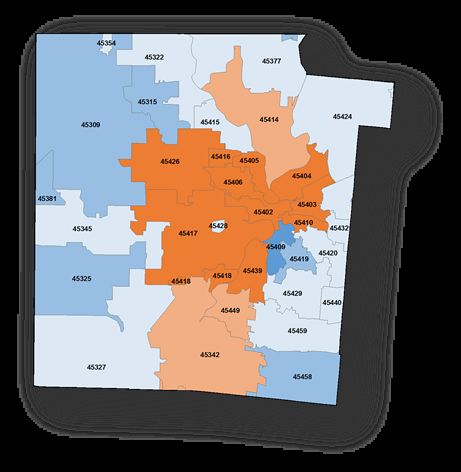
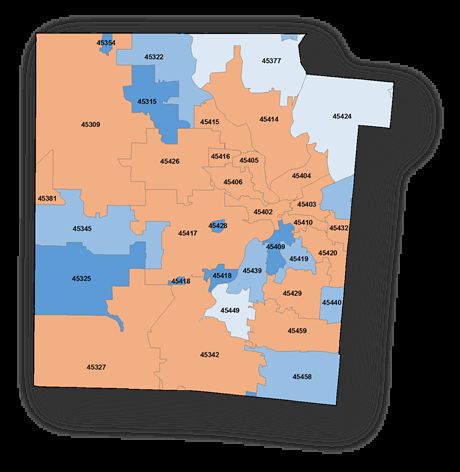
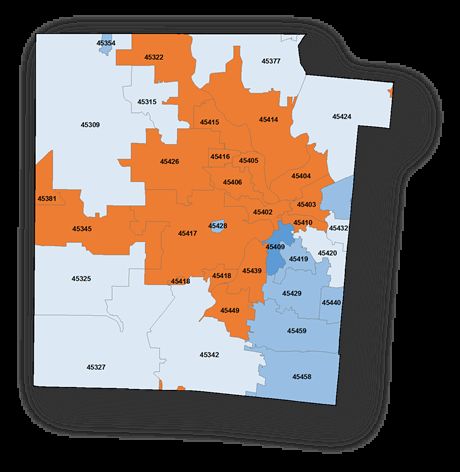
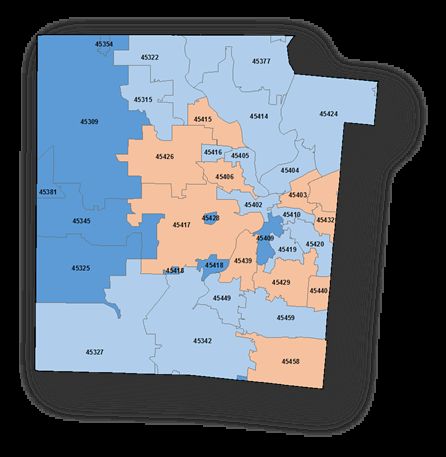
The
maps
on
the
following
page
present
those
zip
codes
in
orange
where
hospitalization
(based
on
primary
and
secondary
diagnoses
at
time
of
discharge)
or
mortality
due
to
diabetes
is
higher
than
the
State’s
rate.
Refer
to
the
tables
below
for
rates.
The
mortality
rate
is
higher
than
the
State’s
rate
in
over
half
of
the
County’s
zip
codes,
while
Emergency
Department
discharge
rates
are
highest
for
residents
only
in
the
central
zip
codes
of
the
County.
Adult
D iabetes,
2 010
Montgomery
County
Ohio
Self-‐reported
Diagnosis
Number
Rate
Percent
New
Adult
Cases
4,571
13.0/1,000
11.0/1,000
Total
Adult
Cases
49,857
12.5%
10.8%
Source:
Centers
for
Disease
Control
and
Prevention:
National
Diabetes
Surveillance
System.
IMPLEMENTATION
STRATEGY
Adult
D iabetes
H ospitalizations,
2 011
Montgomery
County
Ohio
Discharge
Diagnoses
Number
Percent
Percent
Emergency
16,897
4.1%
3.9%
Inpatient
16,277
3.9%
3.8%
Source:
Ohio
Hospital
Association
and
Greater
Dayton
Area
Hospital
Association
Adult
M ortality
d ue
t o
D iabetes,
2 011
Montgomery
County
Ohio
Mortality
Rate
per
Rate
per
Diabetes
Number
100,000
100,000
Montgomery
County
225
54.4
41.7
5
[GRANDVIEW
MEDICAL
CENTER
IMPLEMENTATION
STRATEGY]
2014-‐2016
Source:
Vital
Statistics
Program,
Ohio
Department
of
Health,
2000-‐2012.
IMPLEMENTATION
STRATEGY
6
[GRANDVIEW
MEDICAL
CENTER
IMPLEMENTATION
STRATEGY]
2014-‐2016
Cause
of
Death,
Diabetes,
2011
Emergency
Department
Adult
Primary
&
Inpatient
Adult
Primary
&
Secondary
Secondary
Diabetes
Discharge
Diagnosis,
Diabetes
Discharge
Diagnosis,
2011
2011
IMPLEMENTATION
STRATEGY
7
[GRANDVIEW
MEDICAL
CENTER
IMPLEMENTATION
STRATEGY]
2014-‐2016
Impact on/by Other Health Issues
According
to
the
CDC,
adults
with
diabetes
are
2-‐4
times
more
likely
to
die
of
a
heart
attack
or
stroke.
The
incidence
of
diabetes
in
the
County
is
higher
than
in
the
State
and
Nation,
and
diabetes
is
the
third
most
common
inpatient
discharge
diagnosis
and
these
diagnoses
are
increasing.
Also,
the
high
incidence
of
hypertension,
obesity
and
the
lack
of
diabetic
screenings
contribute
to
this
health
outcome.
Objective:
From
2014-‐2016,
increase
by
2%
annually
the
number
of
diabetes
screenings
provided
to
adults
ages
18+
who
attend
education
and
outreach
initiatives
implemented
by
a
partnership
between
the
Joslin
Diabetes
Center
and
Community
Outreach.
Strategy One: Increase diabetes education and outreach
Activity One: Make
diabetes
education
more
accessible
to
the
underserved
population.
1. Deliver
diabetes
education
at
the
Good
Neighbor
House
to
serve
the
indigent
population.
Participants
do
not
have
to
have
a
referral
to
attend
the
training.
After
the
class,
participants,
who
need
to,
receive
follow
up
as
a
patient.
2. Partner
with
churches
to
begin
a
diabetes
education
program.
3. Offer
diabetes
education
in
Senior
Centers.
4. Deliver
a
Wellness
Event
with
the
KHN
Joslin
Diabetes
Center.
Strategy Two: Increase access to diabetes care via the Kettering Health
Network and community partners
Activity One: Partner
with
the
KHN
Joslin
Diabetes
Center.
1. Provide
certification
training
to
Primary
Care
Physicians
(PCPs).
This
certification
program
will
use
an
endocrinologist
to
train
PCPs
annually
in
the
treatment
of
type
2
diabetes.
2. Help
Grandview’s
diabetic
inpatients
to
transition
to
outpatient
care.
Acceptance
into
the
Joslin
Center
requires
a
PCP
referral,
which
results
in
a
partnership
for
outpatient
care
between
the
Joslin
Center
and
the
PCP.
Activity Two: Partner
with
the
Community
Health
Centers
of
Greater
Dayton
to
create
a
diabetes
care
network.
1. Collaborate
with
the
Community
Health
Center
and
Joslin
Diabetes
Center
to
coordinate
diabetes
care.
IMPLEMENTATION
STRATEGY
8
[GRANDVIEW
MEDICAL
CENTER
IMPLEMENTATION
STRATEGY]
2014-‐2016
PRIORITY: Breast Cancer
Rationale
Breast
cancer
diagnosis
in
Montgomery
County
decreased
from
245.4
adult
female
cases
in
2005
to
211.3
cases
in
2006,
but
in
2007
the
rates
began
increasing
again.
In
2011,
breast
cancer
prevalence
was
252.9
cases
per
100,000
adult
females.
The
mortality
rate
due
to
breast
cancer
and
inpatient
hospitalizations
(based
on
primary
and
secondary
discharge
diagnoses)
due
to
breast
cancer
have
exhibited
similar
trends
over
this
same
period.
Breast
cancer
incidence
and
mortality
due
to
breast
cancer
is
higher
in
the
County
than
in
the
State,
while
inpatient
hospitalization
is
lower.
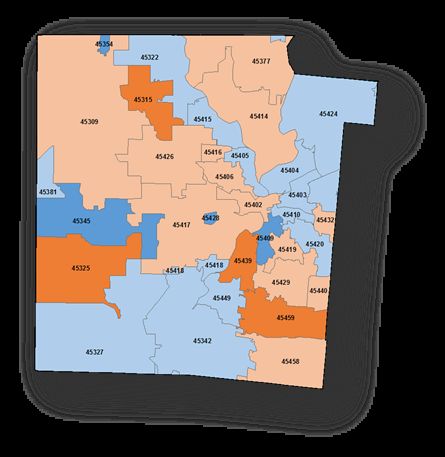
The
maps
present
those
zip
codes
in
orange
where
adult
female
breast
cancer
diagnosis,
hospitalization
(based
on
primary
and
secondary
diagnoses
at
time
of
discharge),
or
mortality
due
to
breast
cancer
is
higher
than
the
State’s
rate.
Refer
to
the
tables
below
for
rates.
In
many
of
the
zip
codes
where
the
rate
for
breast
cancer
diagnosis
for
Montgomery
County
adult
female
residents
is
lower
than
the
State’s
rate,
the
mortality
rate
is
higher.
These
trends
indicate
that
the
population
may
not
be
seeking
preventive
and
treatment
services.
Breast
C ancer
D iagnosis,
A dult
F emales,
2 011
Montgomery
County
Ohio
Discharge
Diagnosis
Number
Rate/100k
Rate/100k
Breast
Cancer
552
252.9
224.5
Source:
Ohio
Department
of
Health
Ohio
Cancer
Incidence
Surveillance
System
Breast
Cancer
Hospitalization,
Primary
&
Secondary
Discharge
Diagnosis,
Adult
Females,
2011
Discharge
Montgomery
County
Ohio
Diagnosis
Number
Rate/100k
Rate/100k
Inpatient
304
139.3
147.6
Source:
Ohio
Hospital
Association
and
Greater
Dayton
Area
Hospital
Association
Adult
M ortality
D ue
t o
B reast
C ancer,
F emales,
2 011
Mortality
Montgomery
County
Ohio
Breast
Cancer
Number
Rate/100k
Rate/100k
Adult
Females
101
46.3
40.0
Source:
Vital
Statistics
Program,
Ohio
Department
of
Health,
2000-‐2012.
IMPLEMENTATION
STRATEGY
9
[GRANDVIEW
MEDICAL
CENTER
IMPLEMENTATION
STRATEGY]
2014-‐2016
Cause
of
Death,
Adult
Females
–
Breast
Cancer,
2011
Ohio
Cancer
Incidence
Surveillance
System
Inpatient
Care
Primary
&
Secondary
Breast
Breast
Cancer
Diagnosis,
Adult
Females,
2011
Cancer
Diagnosis,
Adult
Females
–
2011
IMPLEMENTATION
STRATEGY
10
[GRANDVIEW
MEDICAL
CENTER
IMPLEMENTATION
STRATEGY]
2014-‐2016
Impact on/by Other Health Issues
The
late
effects
of
breast
cancer
and
its
treatment
include
emotional
distress
and
depression,
lymphedema,
and
weight
gain
among
others.
Breast
cancer
is
the
most
prevalent
form
of
cancer
in
the
County,
the
rate
increased
from
2006-‐2011,
and
cancer
is
the
number
one
cause
of
death
in
the
County.
Also,
the
contributing
factors,
obesity,
excessive
use
of
alcohol
and
lack
of
mammography
screenings,
are
less
favorable
in
the
service
area
than
in
the
State
and
when
compared
to
the
national
benchmarks.
As
mentioned
above,
Grandview
Medical
Center
serves
a
population
with
low
breast
cancer
diagnosis,
but
has
a
higher
than
average
mortality
rate
due
to
breast
cancer.
Grandview
has
a
long
history
of
serving
the
West
Dayton
and
Western
Montgomery
County
population.
At
the
same
time,
it
lacks
digital
mammography
imaging
equipment,
which
is
what
is
commonly
prescribed.
If
the
population,
which
is
loyal
to
Grandview,
cannot
obtain
prescribed
services
from
them,
the
population
tends
not
to
receive
the
services
at
all.
Objective:
Purchase
digital
mammography
imaging
equipment
to
provide
modern
mammography
screening
services
to
Grandview
Medical
Center’s
customer
base.
Strategy One: Increase mammography screenings among women in the
service area
Activity One: Update
mammography
screening
technology
to
allow
for
on-‐site
imaging.
1. Invest
in
digital
mammography
imaging
equipment
to
provide
state-‐of-‐the
art
mammography
services
to
Grandview
Medical
Center’s
loyal
customer
base.
Activity Two: Educate
women
about
ACA
coverage
of
screening
mammograms.
If
age
requirements
are
met,
a
physician
referral
is
not
necessary.
Strategy Two: Increase
physician
involvement
in
cancer
care.
Activity One:
Increase
Primary
Care
Physician
(PCP)
training
in
cancer
care.
1. Use
Medical
Education
Teams
as
a
means
of
involving
PCPs
in
breast
biopsy
analysis
to
increase
their
understanding
of
cancer
care.
IMPLEMENTATION
STRATEGY
11
[GRANDVIEW
MEDICAL
CENTER
IMPLEMENTATION
STRATEGY]
2014-‐2016
APPENDIX A: GRANDVIEW MEDICAL
CENTER HEALTH PRIORITIES
Diabetes
APPENDIX
A:
GRANDVIEW
MEDICAL
CENTER
HEALTH
PRIORITIES
12
[GRANDVIEW
MEDICAL
CENTER
IMPLEMENTATION
STRATEGY]
2014-‐2016
Breast Cancer
APPENDIX
A:
GRANDVIEW
MEDICAL
CENTER
HEALTH
PRIORITIES
13
[GRANDVIEW
MEDICAL
CENTER
IMPLEMENTATION
STRATEGY]
2014-‐2016
APPENDIX B: IMPLEMENTATION
STRATEGY SYNTHESIS
Diabetes
Objective:
From
2014-‐2016,
increase
by
2%
annually
the
number
of
diabetes
screenings
provided
to
adults
ages
18+
who
attend
education
and
outreach
initiatives
implemented
by
a
partnership
between
the
Joslin
Diabetes
Center
and
the
Community
Outreach
office.
Background
Strategies
and
Activities
• According
to
the
CDC,
adults
1. Increase
diabetes
education
and
outreach.
with
diabetes
are
2-‐4
times
a. Make
diabetes
education
more
accessible
to
the
more
likely
to
die
of
a
heart
underserved
population.
attack
or
stroke
• Deliver
diabetes
education
at
the
Good
Neighbor
House
• Individuals
with
to
serve
the
indigent
population.
Participants
do
not
undiagnosed
type
II
have
to
have
a
referral
to
attend
the
training.
After
the
diabetes
are
at
significantly
class,
participants
who
need
to
receive
follow
up
as
a
higher
risk
patient.
• The
risk
of
developing
type
• Partner
with
churches
to
begin
a
diabetes
education
II
diabetes
increases
with
program.
age,
obesity
and
lack
of
• Offer
diabetes
education
in
Senior
Centers.
physical
activity
and
is
more
• Deliver
a
Wellness
Event
with
the
KHN
Joslin
Diabetes
common
in
individuals
with
Center.
a
family
history
and
in
2. Increase
access
to
diabetes
care
via
the
Kettering
Health
members
of
certain
Network
and
community
partners.
racial/ethnic
groups
a. Partner
with
the
KHN
Joslin
Diabetes
Center.
APPENDIX
B:
IMPLEMENTATION
STRATEGY
SYNTHESIS
• The
incidence
of
diabetes
is
• Provide
certification
training
to
Primary
Care
higher
in
the
County
than
in
Physicians
(PCPs).
This
certification
program
will
use
the
State
and
Nation
an
endocrinologist
to
train
PCPs
annually
in
the
• It
is
the
third
most
common
treatment
of
type
2
diabetes.
inpatient
discharge
• Help
Grandview’s
diabetic
inpatients
to
transition
to
diagnosis,
and
the
number
outpatient
care.
Acceptance
into
the
Joslin
Center
of
inpatient
diabetes
requires
a
PCP
referral,
which
results
in
a
partnership
diagnoses
are
increasing
for
outpatient
care
between
the
Joslin
Center
and
the
• The
high
incidence
of
PCP.
hypertension,
obesity
and
b. Partner
with
the
Community
Health
Centers
of
Greater
lack
of
diabetic
screenings
Dayton
to
create
a
diabetes
care
network.
contribute
to
this
health
• Collaborate
with
the
Community
Health
Center
and
outcome
Joslin
Diabetes
Center
to
coordinate
diabetes
care.
14
[GRANDVIEW
MEDICAL
CENTER
IMPLEMENTATION
STRATEGY]
2014-‐2016
Breast Cancer
Objective:
Purchase
digital
mammography
imaging
equipment
to
provide
modern
mammography
screening
services
to
Grandview
Medical
Center’s
loyal,
urban
customer
base.
Background
Strategies
and
Activities
• The
late
effects
of
breast
cancer
1. Increase
mammography
screenings
among
women
in
and
its
treatment
include
the
service
area.
emotional
distress
and
a. Update
mammography
screening
technology
depression,
lymphedema,
and
to
allow
for
on-‐site
imaging.
weight
gain
among
others.
• Invest
in
digital
mammography
• Breast
cancer
is
the
most
imaging
equipment
to
provide
state-‐
prevalent
form
of
cancer
in
the
of-‐the
art
mammography
services
to
County,
the
rate
increased
from
Grandview
Medical
Center’s
loyal
2006-‐2011.
customer
base.
• Cancer
is
the
number
one
cause
b. Educate
women
about
ACA
coverage
of
of
death
in
the
County.
screening
mammograms.
If
age
requirements
• The
contributing
factors
of
are
met,
a
physician
referral
is
not
necessary.
breast
cancer,
obesity,
2. Increase
physician
involvement
in
cancer
care.
excessive
use
of
alcohol,
and
a. Increase
Primary
Care
Physician’s
(PCP)
lack
of
mammography
training
in
cancer
care.
screenings
are
worse
in
the
• Use
Medical
Education
Teams
as
a
service
area
than
in
the
State
means
of
involving
PCPs
in
breast
and
the
national
benchmark.
biopsy
analysis
to
increase
their
understanding
of
cancer
care.
APPENDIX
B:
IMPLEMENTATION
STRATEGY
SYNTHESIS
15
You can also read


