COMMUNITY HEALTH ASSESSMENT 2013
←
→
Page content transcription
If your browser does not render page correctly, please read the page content below
Community Health Assessment
Williamson County and Cities Health District
WilCo Wellness Alliance

                                               2013

 COMMUNITY
 HEALTH
 ASSESSMENT
 WILLIAMSON COUNTY, TEXAS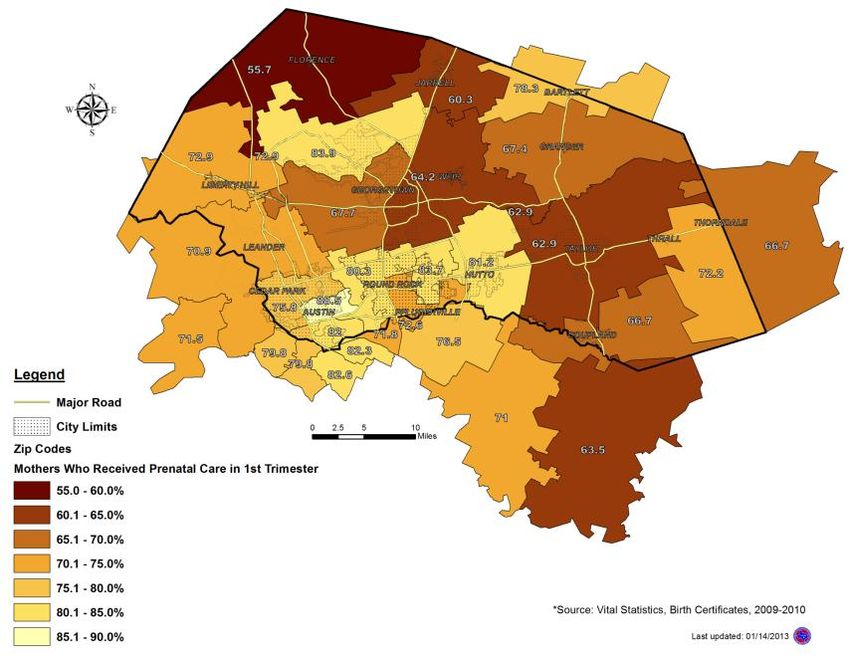
Community Health Assessment
Williamson County and Cities Health District                                                             1
WilCo Wellness Alliance

           ACKNOWLEDGEMENTS AND KEY INFORMANTS
Williamson County and Cities Health District, in conjunction with a dedicated WilCo Wellness
Alliance Community Health Improvement Steering Committee, was the convening body for this
project. Individuals representing many other entities—non-profit organizations, business, healthcare
organizations, city and county governments, and faith-based alliances—contributed to the formation
of the Williamson County Community Health Assessment.

WilCo Wellness Alliance Participating Organizations

ACTIVE Life                                              Electric Reliability Council of Texas, Inc.
American Diabetes Association                            Faith in Action
American Heart Association                               Family Eldercare
Austin Community College                                 Georgetown Health Foundation
Austin/Travis County Health & Human Services             Georgetown Housing Authority
Bluebonnet Trails Community Services                     Habitat for Humanity of Williamson County
Capital Area Rural Transportation System                 Healthy Knights Committee
Capital Idea                                             Hill Country Bible Church
Carino's Italian                                         Hill Country Ministries
Catfish Parlour                                          Hired Texas
Cedar Park Farms 2 Market                                Hired Texas / 50+ Club
Cedar Park Regional Medical Center                       ICC-Centex
Chamber of Commerce - Cedar Park                         Coupland ISD
Chamber of Commerce - Georgetown                         Florence ISD
Chamber of Commerce - Greater Austin Area                Georgetown ISD
Hispanic                                                 Hutto ISD
Chamber of Commerce - Greater Leander                    Leander ISD
Chamber of Commerce - Round Rock                         Round Rock ISD
Chamber of Commerce - Taylor                             Taylor ISD
CHASCO Family YMCA                                       Thrall ISD
Children at Heart Foundation                             Leander Health Care Center
Children's Mental Health                                 LifeSteps
Children's Optimal Health                                Lone Star Circle of Care
Chirofit Wellness Center                                 Lone Star Circle of Care - Behavioral Health
Chisholm Trail Community Foundation                      Lone Star Circle of Care - Dell Children's Circle
Christ Fellowship Church of Taylor                       of Care at Hutto
City of Cedar Park                                       Lone Star Circle of Care - Health Center at
City of Georgetown                                       Taylor
City of Hutto                                            Luby's Round Rock
City of Leander                                          Monument Café
City of Liberty Hill                                     Round Rock Area Serving Center
City of Round Rock                                       Round Rock Housing Authority
City of Taylor                                           Sacred Heart Community Clinic
Community Impact                                         Samaritan Health Ministries
Community Resource Centers of Texas, Inc.                Scott & White - Cedar Park Clinic
CoreSpeed 101                                            Scott & White Healthcare
Culinary Heritage Institute

    2/26/13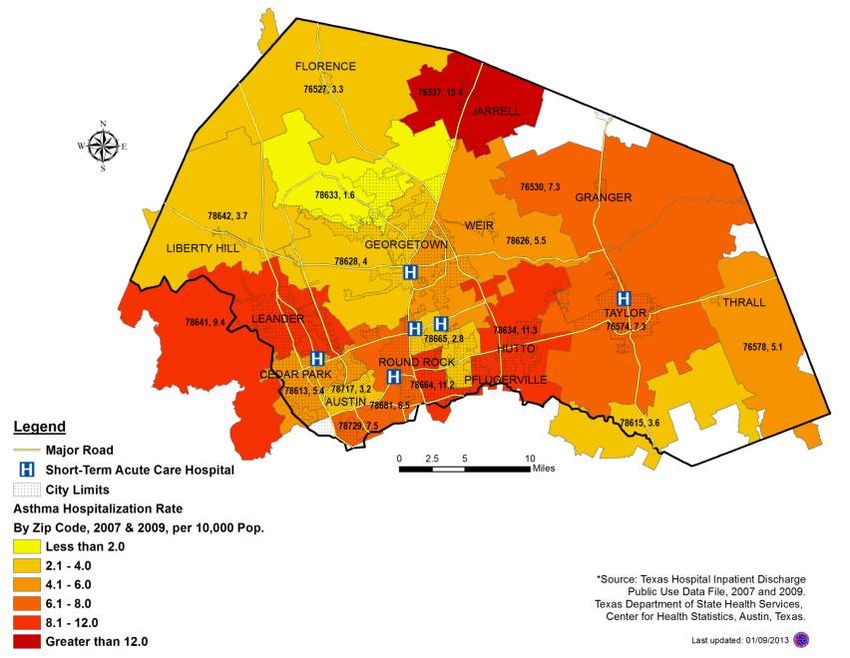
Community Health Assessment
Williamson County and Cities Health District                                                2
WilCo Wellness Alliance

WilCo Wellness Alliance Participating Organizations (cont.)
Scott & White Hospital - Round Rock             The Wesleyan at Estrella, Independent Living
Scott & White Hospital - Taylor                 United Way Capital Area 211
Seton Healthcare Family                         United Way of Williamson County
Seton Medical Center Williamson                 United Way of Williamson County Board
Sodexo Health Care
                                                Ventanilla de Salud
Southwestern University
                                                Williamson Burnet County Opportunities, Inc.
St. David's Georgetown Hospital
St. David's Round Rock Medical Center           Williamson County
Taylor Farmers Market                           Williamson County - Commissioners Court
Texas A&M University - College of Medicine      Williamson County - EMS
Texas A&M University - College of Nursing       Williamson County - Justice Courts
Texas A&M University - School of Rural Public   Williamson County - Juvenile Services
Health                                          Williamson County - Mobile Outreach Team
Texas AgriLife Extension                        Williamson County - Parks and Recreation
Texas Department of Agriculture                 Williamson County - Sheriff’s Office - CIT
Texas Department of State Health Services       Williamson County and Cities Health District
Texas PTA
                                                Williamson County and Cities Health District -
Texas State University - Round Rock Campus
                                                Board of Health
The Caring Place
                                                Williamson County Indicators Project
The Georgetown Project
                                                YMCA of Williamson County
The University of Texas at Austin
                                                Zion Lutheran Church & School
The Wesleyan at Estrella, Assisted Living

    2/26/13
Community Health Assessment
Williamson County and Cities Health District                                              3
WilCo Wellness Alliance

WilCo Wellness Alliance Community Health Improvement Steering Committee

Name                                   Organization
Katie Arnold, MPA                      Williamson County and Cities Health District
Angela Atwood                          Family Eldercare
Nelson Avery, MD                       Texas A&M University - College of Medicine
Matt Balthazar                         Seton Healthcare Family
David Bastis, MPH                      Williamson County and Cities Health District
Ernie Bovio                            Scott & White University Medical Center Round Rock
Sarah Brackmann                        Southwestern University
George Brightwell, MBA                 Community Member
Barbara Brightwell                     Georgetown Health Foundation
Hugh Brown, FACHE                      St. David's Georgetown Hospital
Jim Burdine, BS, MPH, DrPH             Texas A&M University - School of Rural Public Health
Melissa Cammack, MS, CHES              Williamson County and Cities Health District
Wayne Cavalier, JD                     Williamson County and Cities Health District – Board
                                       of Health
Yannique Champion, MBA, BSN, RN, BC-NE Seton Medical Center Williamson
Rick Danko, DrPH                       Texas A&M University- School of Rural Public Health
Jim Donovan, MD                        St. David's Georgetown Hospital
Kelly Drake, MPH                       Texas A&M University - School of Rural Public Health
Tamarah Duperval-Brownlee, MD, MPH,    Lone Star Circle of Care
FAAFP
Patti Ellisor, RN, MSN, MHA, CNAA      St. David's Round Rock Medical Center
Gracie Fitch                           Williamson County and Cities Health District
Jessica Funke                          Texas A&M University - School of Rural Public Health
Kimberly Garrett, CPRP                 City of Georgetown
Judge Dan Gattis                       Williamson County
Cynthia Guerrero, MEd                  Williamson County and Cities Health District
Rob Hardy, FACHE, CMPE                 Williamson County and Cities Health District - Board of
                                       Health
Grant Hills                            Community Member
Cindy Hudson, DNSc, RN, PHCNS-BC-CNE   Texas A&M University - College of Nursing
Leslie Janca                           The Georgetown Project
Mark Janes, MD                         Bluebonnet Trails Community Services
Denise Kablaitis, RN, MSN              Hutto ISD
Doug Kurkul, MPA                       Chamber of Commerce - Round Rock
Andre Lai                              Bluebonnet Trails Community Services
Tiffany Lunt, MD                       Texas A&M University - College of Medicine
Deborah Marlow, RS                     Williamson County and Cities Health District
Anita Martinez                         Williamson County and Cities Health District
Mary McKenna, BSN, RN                  Georgetown ISD
Linda Frasher Meigs                    Children's Mental Health Advocate
Lola Okunade, MD                       Lone Star Circle of Care
Vickie Orcutt, MSW                     Family Eldercare

    2/26/13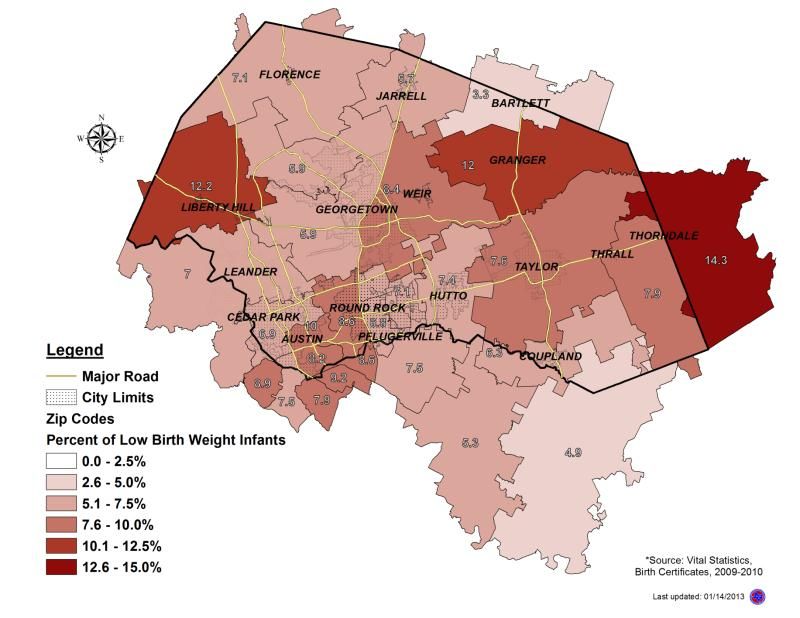
Community Health Assessment
Williamson County and Cities Health District                                                      4
WilCo Wellness Alliance

WilCo Wellness Alliance Community Health Improvement Steering Committee
(cont.)

 Name                                          Organization
 Barbara Pearce, RN                            Williamson County - Indicators Project
 Mel Pendland                                  Chamber of Commerce - Georgetown
 Norma Perales                                 Georgetown Housing Authority
 Kathy Pierce                                  Williamson County - Commissioners Court
 Diane Plas, RN, BSN                           Seton Medical Center Williamson
 LeAnn Powers                                  United Way of Williamson County
 Suzanna Pukys                                 Georgetown Health Foundation
 Chip Riggins, MD, MPH, FACPM, FAAFP           Williamson County and Cities Health District
 Bride Roberts, LBSW                           Williamson County and Cities Health District
 Michelle Robertson, MBA                       Seton Medical Center Williamson
 Kerry Russell, JD                             Williamson County and Cities Health District -
                                               Board of Health
 Manisha Salinas                               Texas A&M University - School of Rural Public
                                               Health
 Andrew Shell                                  Williamson Burnet County Opportunities, Inc.
 Ed Sherwood, MD, FACP                         Texas A&M University - College of Medicine
 John Sneed                                    Williamson County - EMS
 Mike Sorenson                                 Williamson County - Sheriff’s Office - CIT
 Tara Stafford                                 Scott & White Healthcare
 Mary Faith Sterk, MSW, LCSW                   Williamson County and Cities Health District
 Julie Stevens, MPS, LCDC, ACPS                LifeSteps
 Erich Wallschlaeger                           Cedar Park Regional Medical Center
 Esther Walton                                 City of Taylor
 Mike Weir, MD                                 Chisholm Trail Community Foundation
 Deborah Williams                              Round Rock Housing Authority

    For further information or questions, please contact Mary Faith Sterk, LCSW, WCCHD Director
    of Data, Reporting and Information Management at msterk@wcchd.org or call 512-248-7638.

    2/26/13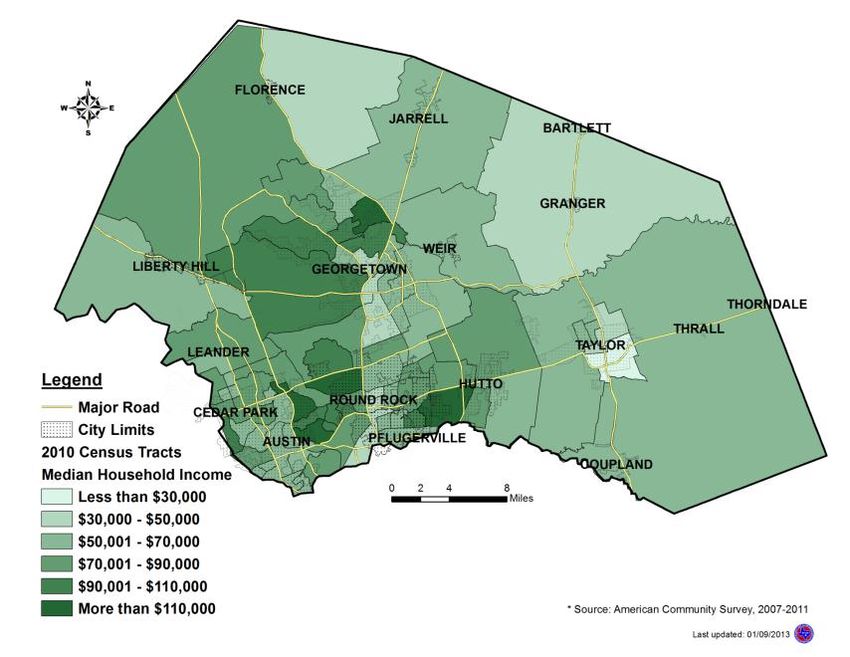
Community Health Assessment
Williamson County and Cities Health District                                                                                                   5
WilCo Wellness Alliance

                                                TABLE OF CONTENTS

    ACKNOWLEDGEMENTS ..........................................................................................................1

    EXECUTIVE SUMMARY ..........................................................................................................6

               Our Community .........................................................................................................7

               Components of Our Community Health Assessment Process ...................................11

    KEY ASSESSMENT FINDINGS .................................................................................................12

               Forces of Change Assessment ...................................................................................12

               Assets and Strengths Assessment ..............................................................................17

               Health of the Community Assessment .......................................................................21

               Local Public Health Systems Assessment .................................................................27

    SUMMARY ..............................................................................................................................34

    APPENDICES ...........................................................................................................................36

               Appendix A: Mobilizing for Action through Planning and Partnerships (MAPP)....37

               Appendix B: Community Health Assessment Methods ...........................................38

               Appendix C: Maps of Williamson County ...............................................................40

               Appendix D: Public Health System Emergency Management Cycle .......................52

               Appendix E: WilCo Wellness Alliance Framework .................................................53

               Appendix F: National Public Health Performance Standards...................................54

    2/26/13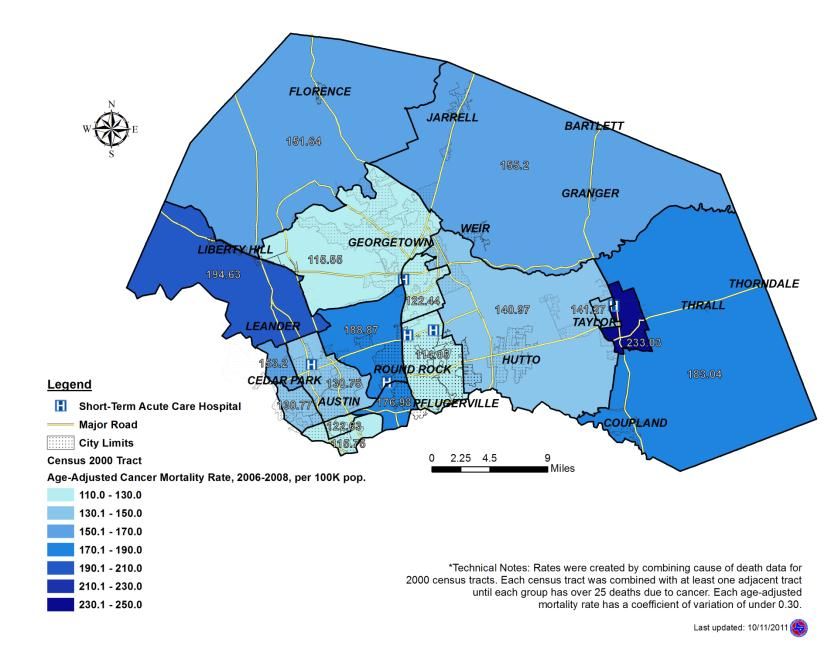
Community Health Assessment
Williamson County and Cities Health District 6
WilCo Wellness Alliance
EXECUTIVE SUMMARY
The goal of this report is to provide information to the local community to assist in decision
making, planning and collaboration to improve the health of all Williamson County residents.
This report provides perspective on community health, community assets, community needs, the
public health system, and opportunities for improvement. The intent of this report is to form the
foundation for the creation of the Community Health Improvement Plan.
Community input and opinions provided in this report were obtained through activities initiated
by the WilCo Wellness Alliance. The Alliance, formed in 2009, is a health and wellness coalition
that works to build healthier communities in Williamson County through policy, systems and
environmental change. Current efforts have focused primarily on decreasing obesity, diabetes,
and heart disease as well as increasing healthful eating, physical activity, and smoke free
environments. The Alliance has used a healthy communities‘ model since its inception and
officially adopted the Mobilizing for Action through Planning and Partnerships (MAPP) model
in 2011. There is broad representation from the community: local government, community
organizations, schools, healthcare, faith-based, businesses, and residents. Currently 146
organizations and 402 individuals make up the countywide WilCo Wellness Alliance.
Approximately 74 individuals participate at the leadership level on the Community Health
Improvement Steering Committee.
This assessment describes:
Forces of change
Community health status
Assets and strengths
Public health systems
Community health assessment is an ongoing process that informs the activities undertaken in the
community to promote health. The assessment considers those factors which affect individual
and population health, such as economics, education, and environment -- the social determinants
of health.
Health is a state of complete physical,
mental and social well-being and not
merely the absence of disease or
infirmity.
- World Health Organization, 1948
2/26/13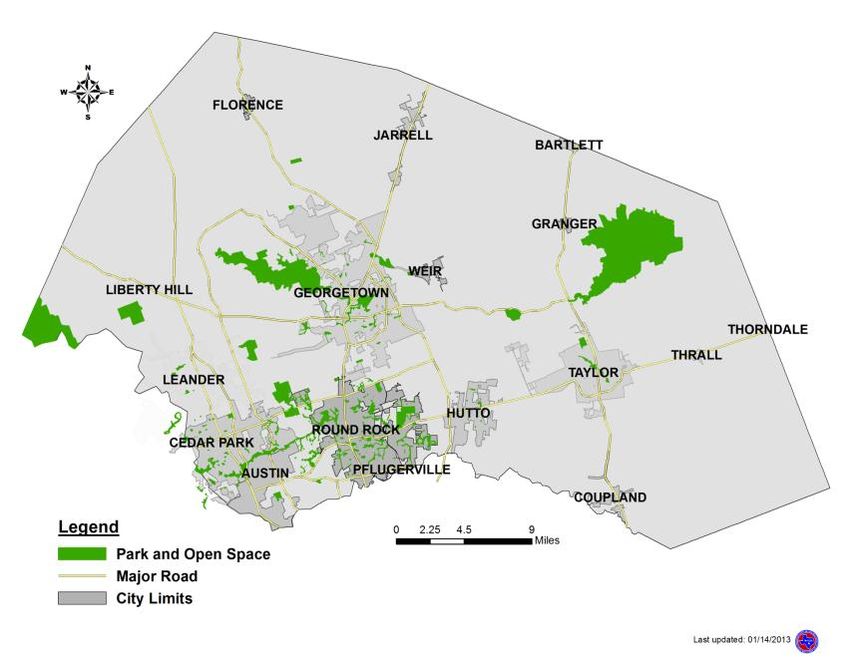
Community Health Assessment
Williamson County and Cities Health District                                                             7
WilCo Wellness Alliance

                                          OUR COMMUNITY
    The communities and people of Williamson County reflect recent dramatic economic and
    business growth, unique environment and geography, and the county‘s history of perseverance
    and resiliency in the face of natural disasters and other events. Over the past ten years, the
    population of the county grew 69%. The most recent population estimate for the county was
    442,782 in 2011. With the exception of Liberty Hill, population has increased in the incorporated
    areas of cities throughout the county since 2000.

    The eastern region of the county has many areas still considered rural, but is transitioning away
    from an economy dominated by agriculture. Strong support of farmers‘ markets throughout the
    county may help sustain some level of diversified agriculture. Overall, growth has occurred in
    eastern Williamson but at a slower pace than in western Williamson. The notable exception to
    this is the City of Hutto, which grew 1075% from 2000 to 2010 according to the US Census.
    Outside of Hutto, the population in eastern Williamson tends to be older and medically
    underserved.

    Williamson County communities have evolved to be more self-sustaining with less dependency
    on Austin. While the county continues to benefit from an abundance of high technology firms,
    including the corporate headquarters of Dell Incorporated, economic development efforts to
    diversify are evidenced by solid job growth in higher education, healthcare, manufacturing, and
    retail. In addition to Dell Inc., the principal employers in the county are Round Rock, Leander
    and Georgetown ISDs, the retail outlets HEB Grocery, Sears (Teleserve) and Wal-Mart,
    government agencies, as well as hospitals. The county's unemployment rate trends below state
    and national averages on the strength of consistent new job creation.

    The county‘s environment attracts people who enjoy being outdoors and physically active. The
    western half of the county has been the target of residential development because of the rolling
    terrain, vistas, hardwood trees, abundant wildlife, and rivers and streams. Included in Williamson
    County‘s 1,134 square miles are well-developed trail systems and parks inviting residents to
    walk or ride bicycles in Georgetown and from Round Rock to Cedar Park. Ronald Reagan
    Boulevard has become a regional focal point for cyclists.

    Underlying a strong economy are unique qualities that contribute to the building of a healthy and
    vibrant Williamson County: community pride and resiliency, independence, passion for serving
    and improving the quality of life for all residents, and responsible governance. These qualities
    were clearly evident during the 1997 Jarrell tornado, the incredible sheltering operations in 2005
    for hurricanes Katrina and Rita, the 2009 influenza pandemic, the devastating flooding in 2010,
    and drought in 2011 – 2012.

    2/26/13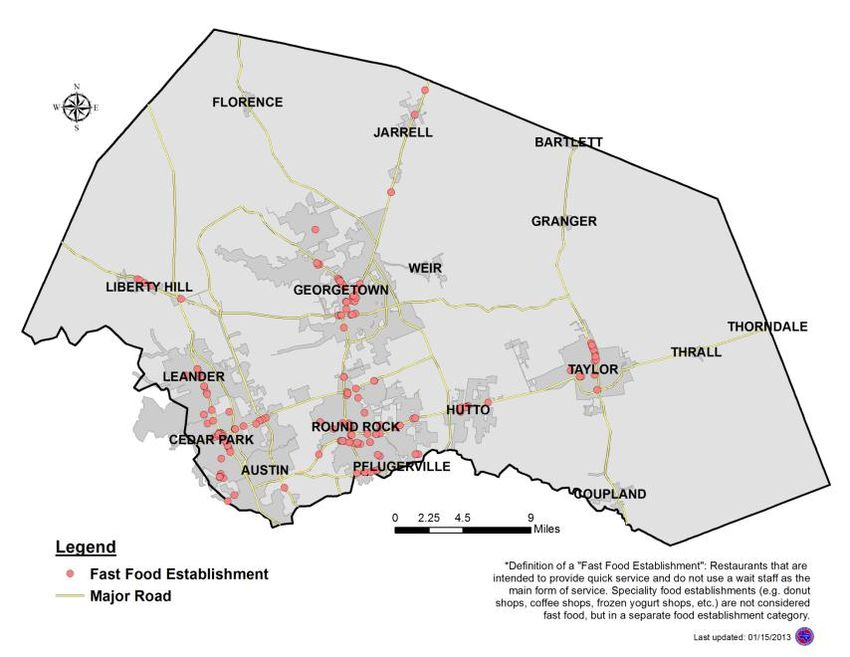
Community Health Assessment
Williamson County and Cities Health District 8
WilCo Wellness Alliance
Demographic Profile
Significant demographic changes countywide include growth of the Hispanic, Non-White
population, which grew from 17% of the population in 2000 to 23% of the population in 2010.
Countywide, the median age increased from 30 to 32 from 2000 to 2010. Approximately 25,000
individuals in the county speak English less than ―very well.‖
When considering the countywide measures that can affect health, it is important to understand
demographic, educational and income variations across our county:
The City of Georgetown has the highest median age at 44 years, while Hutto has the
lowest median age at 29 years.
The percentage of households in Hutto that have children is 53%, while only 27% of
households do in Georgetown.
The Hispanic, non-White population ranges from 19% in Cedar Park and Liberty Hill to
43% in Taylor.
The percentage of individuals speaking English less than ―very well‖ ranges from 4% in
Hutto to 12% in Taylor.
Demographics
Measure Williamson Cedar Georgetown Hutto Leander Liberty Round Taylor
County Park Hill Rock
Population (2010) 422,697 48,937 47,400 14,698 26,521 967 99,887 15,191
Population
growth, 2000 to
2010
Number 172,730 22,888 19,061 13,448 18,925 -523 38,751 1,616
Percent 69% 81% 73% 1,075% 249% -35% 63% 11.9%
Median Age 34 33 44 29 31 34 32 34
(2010)
Households with 42% 43% 27% 53% 51% 47% 46% 34%
Children (2007-
11)
Race/Ethnicity
(2010)
White, Non- 64% 69% 72% 51% 66% 76% 54% 45%
Hispanic
Hispanic or 23% 19% 22% 31% 25% 19% 29% 43%
Latino
Black or African 6% 4% 3% 14% 4% 2% 9% 9%
American
Asian 5% 5% 1% 1% 2% 1% 5% 1%
Two or more or 3% 3% 2% 3% 3% 2% 3% 2%
other race
Speak English less 6% 6% 6% 4% 5% 11% 8% 12%
than “very well”
(2007-2011)
2/26/13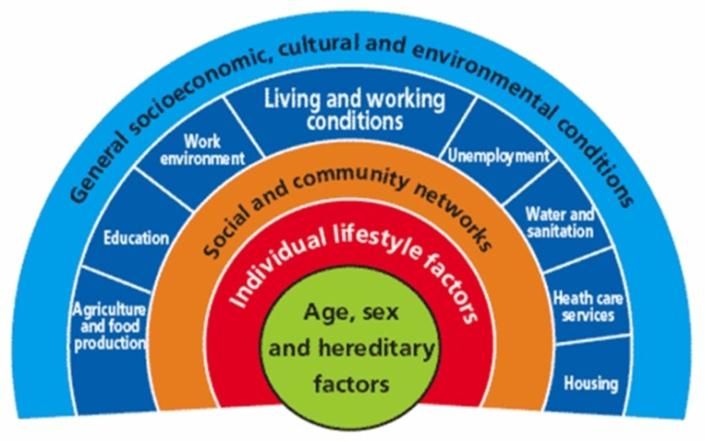
Community Health Assessment
Williamson County and Cities Health District 9
WilCo Wellness Alliance
The percentage with less than a high school degree (age 25 and over) ranges from 5% in
Georgetown and Hutto to 20% in Liberty Hill and Taylor.
Individuals in Taylor and Liberty Hill have on average lower educational attainment;
high school or less than high school was the most education received by 51% of residents
of Liberty Hill and by 60% of residents of Taylor.
Higher educational attainment and income are closely correlated. Liberty Hill and Taylor
are the cities with the lowest median income. The city with the highest median income is
Cedar Park. Round Rock, where 37% earned a bachelor‘s degree or higher, also has a
high median income (see Appendix C for a map of median income in the county).
Education and Income
Measure Williamson Cedar Georgetown Hutto Leander Liberty Round Taylor
County Park Hill Rock
Education (population 25 years and older, 2007-2011)
Less than high 8% 10% 5% 5% 9% 20% 9% 20%
school
High School 21% 20% 17% 32% 23% 31% 20% 40%
Diploma or GED
Vocational, some 33% 30% 36% 48% 37% 27% 34% 24%
college, or
Associates
Degree
Bachelor‘s 26% 25% 30% 11% 22% 20% 26% 12%
Degree
Graduate Degree 11% 15% 11% 3% 8% 1% 11% 4%
Income
Median Household $71,346 $74,030 $61,636 $66,581 $71,042 $56,955 $72,108 $43,484
Income (2007-
2011)
Percent in Poverty 6% 6% 10% 5% 4% 14% 6% 17%
(2007-2011)
Children 8% 8% 18% 8% 5% 26% 8% 25%
Governance
At all levels, county and city, leadership is committed to effective governance, providing a
superior quality of life for residents through teamwork and collaboration to ensure continual high
quality services. The focus of the County organization is judicial, health and human services, law
enforcement, and jail services. The County is also responsible for the road and bridge
maintenance for all unincorporated areas of Williamson County. The County‘s governing body,
Commissioners Court, is made up of the County Judge and four commissioners.
Among city governmental functions are police and fire protection, sanitation services, street
construction and design, transportation systems, and enforcement of land use restrictions and all
other city ordinances, rules, and regulations. For larger cities final authority on policy decisions
generally belongs to an elected mayor and city council, with an appointed city manager serving
2/26/13Community Health Assessment
Williamson County and Cities Health District 10
WilCo Wellness Alliance
as administrator. Municipal governments are key partners for public health in many different
areas, including the built environment. Our cities play a pivotal role in revitalization of urban
areas and neighborhoods.
In 1989, the Williamson County Health Department became the Williamson County and Cities
Health District (WCCHD) – a separate governmental entity under Texas law. The WCCHD
Board of Health is the administrative authority for the Health District, with member cities
appointing citizen representatives to serve on the board. This governance has allowed a degree of
adaptability and accountability less likely to be found in other health departments tied to a larger
government bureaucracy. Complementing government are many non-profit organizations that
provide essential services to residents every day.
The WilCo Wellness Alliance
The WilCo Wellness Alliance was formed as a result of Williamson County being designated an
ACHIEVE (Action Communities for Health, Innovation, and EnVironmental changE)
community in 2009. The mission of the Alliance is to empower the people of Williamson County
to lead healthy lifestyles by promoting a safe environment through public and private initiatives.
The Alliance, grassroots and volunteer organizations, civic groups, philanthropy and foundation,
and other groups provide forums for community members and leaders to come together to
discuss and plan action in communities. Alliance leadership identified the history of coalitions
and other alliances as well as citizen and leadership support for health and quality of life
measures as a major strength of Williamson County. Leadership also recognizes the county‘s
interactive values for being helpful and resourceful, supportive, sharing and caring about each
other, having intergenerational and close-knit communities, connectedness, being proactive and
involved in issues, and having a common unity.
Communities Served by the WilCo Wellness Alliance
WilCo Wellness Alliance Community Groups Williamson County
2/26/13Community Health Assessment
Williamson County and Cities Health District 11
WilCo Wellness Alliance
COMPONENTS OF OUR COMMUNITY HEALTH
ASSESSMENT PROCESS
The WilCo Wellness Alliance and the WCCHD began using the MAPP model for community
health improvement in 2011 (see Appendix A). Supporting activities and documents provide the
necessary information to complete the four MAPP assessments (see Appendix B).
The Community Health Assessment (CHA) summarizes findings from multiple sources:
community meetings, surveys, healthcare data, epidemiology studies and reports created through
local serving agencies. Each assessment answers questions to identify assets, organizational
strengths, community goals, and opportunities:
The Forces of Change Assessment discovers trends, factors, and events in our
community. This is done to help provide a comprehensive, but focused list showing the
key forces in the community and their impacts.
The Assets and Strengths Assessment examines what is important to the community, the
perception of quality of life in the community, and the assets available to improve
community health.
The Health of the Community Assessment evaluates the health of our residents and the
health status of the community.
The Local Public Health Systems Assessment (LPHSA) focuses on many of the
organizations and entities that contribute to the public's health. The LPHSA identifies
components, activities, competencies, and capacities of our local public health system
and defines how the ten Essential Public Health Services are provided to our community.
2/26/13Community Health Assessment
Williamson County and Cities Health District 12
WilCo Wellness Alliance
FORCES OF CHANGE ASSESSMENT
The opportunities and challenges identified in this section come from brainstorming sessions of the WilCo Wellness Alliance‘s
Community Health Improvement Steering Committee and Community Groups, leadership and strategic planning of WCCHD‘s Board
of Health, and multiple discussions with WCCHD staff and community members.
Trends, Factors, Events Challenges Opportunities
Shifting Demography and Economic Rapid population growth has strained all Economic growth, increase in incomes created
Access to Basic Needs levels of the infrastructure, including: opportunities:
General population growth
Public schools Businesses can take a more proactive role
Shift from majority rural to Healthcare infrastructure in leadership and policy influence
county with rural, urban and Data systems Infrastructure growth—road and bridge or
suburban characteristics Law enforcement data systems—creates employment
Fire safety opportunities
Suburban flight, resulting in Parks development Growing veteran and active military
increase in higher educated, Road infrastructure, traffic population forms a strong employment
higher income residents management pool and resource base for the region
Public transportation Increasing incomes help provide residents
Growing veteran and active Access to basic needs—food, with the economic means to be healthy
military population affordable housing, transportation Increasing numbers of well-educated
and childcare retirees have a high level of engagement
Shifting age structures (i.e. Sun Pressure to plan for projected and volunteerism
City expansion has fueled the population increases
growth of the retiree
population)Community Health Assessment
Williamson County and Cities Health District 13
WilCo Wellness Alliance
National Trends Showing Improved Poorly informed consumers with low A new funding opportunity, the Medicaid 1115
Health Literacy and Consumerism health literacy are further impacted by: Waiver, would allow Williamson County to
draw down increased funding to address these
The WilCo Wellness Alliance Health education messages not gaps. Projects to be implemented in 2013 include
has identified the need for taught consistently within the the following:
improved understanding of school system;
personal health and how to High prenatal and teen pregnancy Expansion of access to preventive primary
make informed decisions. needs; care, offering same day appointments and
Nationally highlighted trends Need for more identified walk-ins for preventive services and
impact concerns locally, i.e. breastfeeding-friendly businesses; pregnancy testing, and reducing ER usage for
increase in childhood obesity Limited access to primary care those services.
physicians in rural communities; Expansion of capacity for prevention and
Lack of public transportation in education to rural areas. Ambulance crews in
both suburban and rural rural areas will assist residents with blood
communities; pressure checks, diabetes testing, and
Limited resources for health monitoring of asthmatic and Chronic
education; and Obstructive Pulmonary Disease (COPD)
Need for improved collection and patients.
reporting of data at the sub-county Promotion of preventive health awareness to
level. identified target populations, specifically
women of child bearing age and persons
diagnosed with chronic conditions.
Utilization of Program Navigators to leverage
healthcare resources and referrals in the
county, linking to medical homes and/or the
appropriate level of healthcare services.
Intervention services to frequent users of
emergency medical services to reduce
inappropriate usage of ambulance and
emergency department services.
2/26/13Community Health Assessment
Williamson County and Cities Health District 14
WilCo Wellness Alliance
Understanding of the Interaction of Active Living: The WilCo Wellness Alliance is now in its
the Public Health System and the fourth year of addressing policy and
Built Environment is Prevalent in Need for physical activity environmental changes to improve the health of
Public and Private Endeavors resources which are perceived as the community. Community working groups are
safe engaged in these projects:
Our community has recognized that Need for free opportunities for
health status is tied directly to the physical activity targeted at older Health Promotion
accessibility of safe spaces for physical adults Exercise is Medicine
activity, outlets for healthy food, and Healthy Schools
safe housing and workplaces (i.e., the Worksite Wellness
built environment). We recognize the Healthy Eating: Nutrition
need to transform the spaces in which
Clusters of fast food restaurants Por Vida/For Life
we live, work and play.
and the need to serve or identify Produce in Community
healthful foods Community Gardens
Presence of few community Mother/Baby Friendly
gardens in poverty-stricken areas Physical Activity
or areas of high chronic disease WilCo Walking Trails
rates Tobacco Use and Prevention
Need for more free nutrition Tobacco Free Worksites
education resources (i.e., cooking Mass Media Campaigns
classes, grocery store tours)
marketed to low-income The WilCo Wellness Alliance will continue to
populations offer opportunities for increased communication,
awareness, education and health literacy—to
foster healthy lifestyles and lead to more
effective community design.
2/26/13Community Health Assessment
Williamson County and Cities Health District 15
WilCo Wellness Alliance
Built Environment:
Zoning regulations offer little
support to address areas with low
access to healthful foods (food
deserts) and underutilized urban
space (gray fields)
Identified need for more bikeable
and walkable communities
(complete streets)
Policy changes required to ensure
smoke-free and tobacco-free
environments countywide
Effective Collaboration and WCCHD, hospitals and other WCCHD, hospitals and other community
Communication Becoming Essential organizations have identified need partners propose to initiate, fund and manage
Components of Public Interaction for a common dashboard for a data portal/website that will optimize the
publicly available data use of community-level indicators in
While community assets include a
Additional data needed to guide understanding and improving the quality of
number of organizations, leaders and
and track progress toward life of Williamson County residents.
learning collaborations, effective
community health improvement The Healthy Communities Network has been
communication is essential in order for
Need to build community support identified as one opportunity to leverage
the community to operate as an
for data collection through surveys community resources and information
effective, cohesive unit. Refining
and healthcare data analysis, and technology capacity.
shared visions, priorities and strategies
epidemiologic studies The WilCo Integrated Care Collaboration
are next steps in the community health
(WilCo ICC) and the Health Data Users
improvement process.
Group are working to increase and enhance
the collection and analysis of community
data. Opportunities for even greater
collaboration exist.
2/26/13Community Health Assessment
Williamson County and Cities Health District 16
WilCo Wellness Alliance
Recognized Need for Increased Need for expanded behavioral Williamson County‘s Mental Health Task
Behavioral (Mental) Health Services health services for youth and Force has been active for many years,
at All Levels adults creating intervention services such as the
Need for increased co-location of Mobile Outreach Team and the Crisis
Existing capacity for behavioral Intervention Team. Several subgroups focus
primary care and behavioral health
health services is inadequate in on specific issues including youth behavioral
services
meeting the needs of an
Decreased funding in the school health and hoarding.
expanded population.
systems for qualified staff (i.e., Two new behavioral care facilities presently
An increased recognition of the under construction will increase inpatient
counselors, school nurses) at the
interdependency of physical and capacity.
same time behavioral and
mental health.
substance abuse issues are Lone Star Circle of Care is the only
The public health system must increasing in the classroom integrated behavioral and primary healthcare
support a consistent focus on outpatient system in the county. While they
prevention and early currently serve a large number of patients,
intervention in all age groups. the opportunity for expansion of these
services is essential.
National Changes to the Healthcare Businesses are concerned about The need for cost effective healthcare creates
System Impact the Local Community the cost of ACA and will take the opportunities to promote wellness and health
course of action that results in the promotion through partnerships, policy, and
A historic shift brought about by the
least economic impact to their incentives.
Affordable Care Act (ACA) will
businesses.
radically change cost structures, impact
the insurance industry and business
investment, and create new choices for
consumers. Healthcare system priorities
are being redefined.
2/26/13Community Health Assessment
17
Williamson County and Cities Health District
WilCo Wellness Alliance
ASSETS AND STRENGTHS ASSESSMENT
WilCo Wellness Alliance
In September 2012, members representing the WilCo Wellness Alliance Community Groups
were asked to provide input on member involvement and expectations. Through this process the
WilCo Wellness Alliance has been identified as a major strength that shows community
engagement in action. Responses are summarized below:
Why is my organization involved in the WilCo Wellness Alliance?
Leverage resources
Reach many community areas
Build on current system rather than building new ones
What does my organization expect to get out of my involvement?
Help promoting health
Promotion of healthy foods
Increase community awareness of services
Learn needs of the community
Make connections
Focus on whole community health
What can my organization contribute so this community change movement is sustained?
Provide community culture of wellness
Focus on youth needs
Serve diverse populations to spread message of health
Encourage sustainable practices
Additional community assets and strengths have been identified through the WilCo Wellness
Alliance utilizing social determinants of health data, first person observations of the community
(windshield surveys), identification and mapping of community resources, discussion, and
interviews. A summary of the identified assets and strengths follows.
2/26/13Community Health Assessment
Williamson County and Cities Health District
WilCo Wellness Alliance 18
Assets and Strengths Challenges Opportunities
Parks and Trails System Current priorities for parks and trails are: Williamson County plans to more
than double the miles of trails
With nearly 30,000 acres of parks and Creating awareness through through the countywide trails
open space, 208 miles of existing trails, marketing and community events; expansion project.
and plans for new parks and trails, the Developing signage such as mile WilCo Wellness Alliance
Parks & Trails System is identified as a markers and general health members have identified a
major community asset (see Appendix C messaging; and potential need to bring parks and
for Trails Map and Parks Map). Building connectivity between trails planners of both urban and
trails and communities. rural communities together.
Rural communities often have less full-
time paid staff, if any, to dedicate to this
community asset.
Healthcare System Current priorities for the healthcare Although the healthcare system is brought
system are: up as a major community asset,
Williamson County has an extensive opportunities still exist.
healthcare system comprised of eight Creating synergy among
hospitals, a local federally qualified health healthcare providers so that Residents of rural communities
center with 18 locations, two volunteer consumer health information is often have longer commutes and
community clinics, and a local public securely available across provider fewer resources available to them.
health department with four public health networks (i.e., the electronic The underserved, in particular,
center (PHC) locations. Health Information Exchange); often must wait many weeks for a
and new patient appointment.
Creating awareness and Although the uninsured rate in
understanding of services provided Williamson County is 17%, lower
and hours of service. than the state average,
approximately 75,000 residents
have no insurance – greater than
the population of most Texas
counties.Community Health Assessment
Williamson County and Cities Health District 19
WilCo Wellness Alliance
Public School System Current priorities for the school system Opportunities for providing standardized
are: health education messaging within the
There are 15 independent school districts school system exist.
wholly or partially in Williamson County. Engaging the broad community in
Nutrition and food services, health health activities; and Health education has largely been
services, after school programs, school Meeting the health and wellness removed from the public school
health advisory councils (SHAC), and needs of employees and students system.
parent engagement have all been while balancing reductions in Where it does still exist, children
identified as major strengths of the school qualified staff and budget. and youth receive differing health
system. Health service staff from all information across the county.
districts collaborate with public health/ Opportunities for increasing the
private health agencies to manage needs of availability of nutritious foods in
school community populations. The schools also exist.
WilCo Nurses Conference and the WilCo
Mental Health in Schools Conference are
held separately each year.
Business Community Some current priorities from the Round Opportunities for Chambers to become
Rock business community include (see more actively involved in health and
Williamson County has approximately http://roundrockchamber.org/policy- wellness exist.
seven Chambers of Commerce: Cedar advocacy/agenda-for-economic-vitality/):
Park, Georgetown, Hutto, Leander, Some communities have formed
Liberty Hill, Round Rock and Taylor. Healthcare Health Subcommittees of their
There are also at least two regional Improved access and affordability Chambers while others are taking
Chambers of Commerce: the Hispanic of healthcare insurance for an active role in the WilCo
Chamber and the African American employers, as well as reasonable Wellness Alliance.
Chamber. The business community is seen efforts to reduce healthcare costs,
as a major strength of the community such as incentive programs for
because they create connectedness among healthy lifestyles
businesses, encourage economic Improving efficiencies in the
development, and provide community Medicaid program
information. Economic Development
Job referral, job training, and
volunteer opportunities for Texans
who collect unemployment
2/26/13Community Health Assessment
Williamson County and Cities Health District 20
WilCo Wellness Alliance
benefits
Public Education
Providing a strong K-12 academic
foundation, as well as developing
21st century skills for college and
career readiness, with a focus on
science, technology, and
engineering and math (STEM)
Higher Education
Partnering with our local
educational institutions to develop
local, industry-specific training so
businesses have maximum access
to a trained workforce
Intergenerational Community Identifying creative strategies to Because we have such vibrant
engage populations of all ages aging and youth populations, we
Compared to most Texas counties, Utilizing social media creatively to have the opportunity to create
Williamson County boasts an extremely engage youth on public health strong intergenerational
intergenerational population. concerns communities.
In 2012, Georgetown was
nationally recognized as one of the
five leading intergenerational
communities by the Met Life
Foundation/Generations United.
(Best Intergenerational
Community Award)
Faith Community Gaining a better understanding of Coordination of volunteer
how various organizations can opportunities through the faith
Williamson County has multiple coordinate with the faith based community
ministerial alliances. community
2/26/13Community Health Assessment
Williamson County and Cities Health District 21
WilCo Wellness Alliance
HEALTH OF THE COMMUNITY ASSESSMENT
The health status assessment phase provides a strong understanding of the community‘s health.
Data lies at the foundation of the community health assessment process. Analysis of these data
reveals demographic and socioeconomic characteristics, and health resource availability. It
reveals strengths and risk factors that impact community health, such as behavioral risk factors
and environmental health indicators. Many different data sources are utilized to discover the
overall health status of the community including mental health, causes of death, and infectious
diseases, among others. Our county is regularly recognized as one of the state‘s healthiest
counties.
Some positive measures leading to this designation are
(indicated by a green circle for “status” in the following pages):
Availability of Primary Care Providers
High percentage of mothers who receive early prenatal care
Low diabetes prevalence, hospitalization, and death rates
Low cancer diagnosis and death rates
Low heart disease death rate
Low child abuse rates
Low percentage of low income obese preschool children
Low rate of new cases of HIV
Although many indicators reveal need for improvement, the following selection of specific
measurable health indicators show greatest need
(indicated by a red or yellow circle for “status” or a red square for “Healthy People 2020”):
Utilization and availability of health insurance, especially for children
Active living and healthy eating: fruit and vegetable consumption, overweight and obese
weight status, fast food restaurant density, and Supplemental Nutrition Assistance
Program store density (Food Stamps)
Mental health and substance abuse: adults with poor mental health, suicide rate, and
adults who drink excessively
Babies with very low birth weight
Breast and prostate cancer incidence rates
Stroke death rate
Linguistic isolation
Communicable diseases: whooping cough or pertussis, salmonella, gonorrhea, chlamydia,
animal rabies and cryptosporidiosis (water-borne disease)
2/26/13Community Health Assessment
Williamson County and Cities Health District 22
WilCo Wellness Alliance
Community Health Indicators
Indicator Comparison Williamson Trend Disparities† Status Healthy
Value People 2020
Health Resource Availability
Hispanic or
Latino, Other
Adults with health insurance US Counties 81% Stable
Race, Young
Adults
African
American, Low
Children with health insurance US Counties 89% Decreasing*
income
children
65 providers
Primary care provider ratio (no Some rural Not
US Counties per 100K Stable
OB/GYN) areas applicable
population
Behavioral Risk Factors and Obesity
Not available
Adults who drink excessively US Counties 16% Stable
at publish date
Percent adults consuming 4 or Not available
Not Available Not
fewer servings of fruits and US 77% at publish
at publish date applicable
vegetables per day‡ date
Not available
Adults who are overweight or Not available Not
US 67% at publish
obese‡ at publish date applicable
date
Mental Health
Not available
Adults with 5+ poor mental health Not available Not
US Counties 12% at publish
in past 30 days at publish date applicable
date
Death rate due to suicide (age-
adjusted)‡
9 per 100K Increasing* Not available
Texas
population at publish date
= Better than the central tendency (mean or median). = Worse than the central tendency (mean or median).
= Much worse than the central tendency (mean or median).
= Worse than the Healthy People 2020 measure = Better than the Healthy People 2020 measure
* Statistical significance was not tested.
† Statistical significance was not tested. Disparity is identified when a segment of the population displays the indicator at a noticeably higher rate than
other segments of the population.
‡ Comparison is not to the median for all counties, but the rate for Texas of US. Red indicates that the Williamson County rate is higher than the Texas
or US rate. Green indicates that the Williamson County rate is lower than the Texas or US rate.
2/26/13Community Health Assessment
Williamson County and Cities Health District 23
WilCo Wellness Alliance
Community Health Indicators
Indicator Comparison Williamson Trend Disparities† Status Healthy
Value People 2020
Maternal and Child Health
Mothers over
age 30, Black or
Texas African
Babies with very low birth weight 1.5% Increasing
Counties American, Other
Race
Black or African
Mothers who receive early Texas American,
78% Increasing
prenatal care Counties Hispanic or
Latino
Diabetes
Not
Diabetes diagnosis US Counties 7% Stable Low income
applicable
111 per Male, Black or
Texas African Not
Diabetes hospitalization 100K Increasing
Counties American applicable
population
Males, Hispanic
Death due to diabetes (age- Texas 13 per 100K or Latino Not
Decreasing*
adjusted) Counties Population applicable
Cancer
123 per White, Non-
Breast cancer incidence rate (age- Not
US Counties 100K Decreasing* Hispanic
adjusted) applicable
females
Black or African
Prostate cancer incidence rate 146 per Not
US Counties Decreasing* American
(age-adjusted) 100K males applicable
423 per
All cancer incidence rate (age- Not
US Counties 100K Decreasing* Males
adjusted) applicable
Population
137 per Males, Black or
Death rate due to cancer (age-
US Counties 100K Stable African
adjusted)
Population American
Heart Disease and Stroke
126 per Males, Black or
Death rate due to heart disease Texas African Not
100K Stable
(age-adjusted) Counties American applicable
population
Death rate due to stroke (age- Black or African
adjusted) Texas 34 per 100K Stable American,
Counties population Hispanic or
Latino
= Better than the central tendency (mean or median). = Worse than the central tendency (mean or median).
= Much worse than the central tendency (mean or median).
= Worse than the Healthy People 2020 measure = Better than the Healthy People 2020 measure
* Statistical significance was not tested.
† Statistical significance was not tested. Disparity is identified when a segment of the population displays the indicator at a noticeably higher rate than
other segments of the population.
‡ Comparison is not to the median for all counties, but the rate for Texas of US. Red indicates that the Williamson County rate is higher than the Texas
or US rate. Green indicates that the Williamson County rate is lower than the Texas or US rate.
2/26/13Community Health Assessment
Williamson County and Cities Health District 24
WilCo Wellness Alliance
Community Health Indicators
Indicator Comparison Williamson Trend Disparities† Status Healthy
Value People 2020
Children
6 cases per
Not Available at
Child abuse rate TX Counties 1,000 Decreasing
publish date
children
Not Available at Not
Low income preschool obesity US Counties 13% Stable
publish date applicable
Social Environment
Linguistic Isolation (households
with each member aged 14 + or Not Available at Not
US Counties 3% Stable
has some difficulty speaking publish date applicable
English.)
Black or African
‡
American, Not
Poverty Status US 6% Increasing Hispanic or applicable
Latino
Communicable Disease
Pertussis or Whopping Cough‡ 20 per 100K
Texas NA Hispanic infants
population
31 per 100K Not Available at
Salmonella‡ Texas NA
population publish date
54 cases per
Gonorrhea Incidence Rate TX Counties 100K Decreasing Not available
population
Black or African
295 Cases American,
Hispanic or Not
Chlamydia Incidence Rate TX Counties per 100K Increasing
Latino, applicable
population
Age 15 to 24
5 per 100K Not
New HIV Cases‡ Texas Stable Not available
population applicable
Built Environment
69 per 100K
population Not
Fast food restaurant density US Counties Stable Not applicable
applicable
.4 stores per
1,000 Not
SNAP Certified Stores US Counties Increasing Not applicable
population applicable
Meets recommendations for
moderate or vigorous physical Not Available at Not
Texas 45% Not Available
activity‡ publish date applicable
= Better than the central tendency (mean or median). = Worse than the central tendency (mean or median).
= Much worse than the central tendency (mean or median).
= Worse than the Healthy People 2020 measure = Better than the Healthy People 2020 measure
* Statistical significance was not tested.
† Statistical significance was not tested. Disparity is identified when a segment of the population displays the indicator at a noticeably higher rate than
other segments of the population.
‡ Comparison is not to the median for all counties, but the rate for Texas of US. Red indicates that the Williamson County rate is higher than the Texas or
US rate. Green indicates that the Williamson County rate is lower than the Texas or US rate.
2/26/13Community Health Assessment
Williamson County and Cities Health District 25
WilCo Wellness Alliance
Health Disparities
Health disparities, those differences in health status and health behaviors that disproportionally
affect segments of communities, present challenges to communities and local serving agencies.
Many of these measures of community health show great variation in different parts of our
county. Where data is available at the sub-county level, we can locate the areas with populations
of lower health status (see appendix C for Maps and Community Health Profiles at
http://www.wcchd.org/statistics_and_reports/):
Students in Taylor ISD are more frequently found at risk for type 2 diabetes (9% referred
on average).
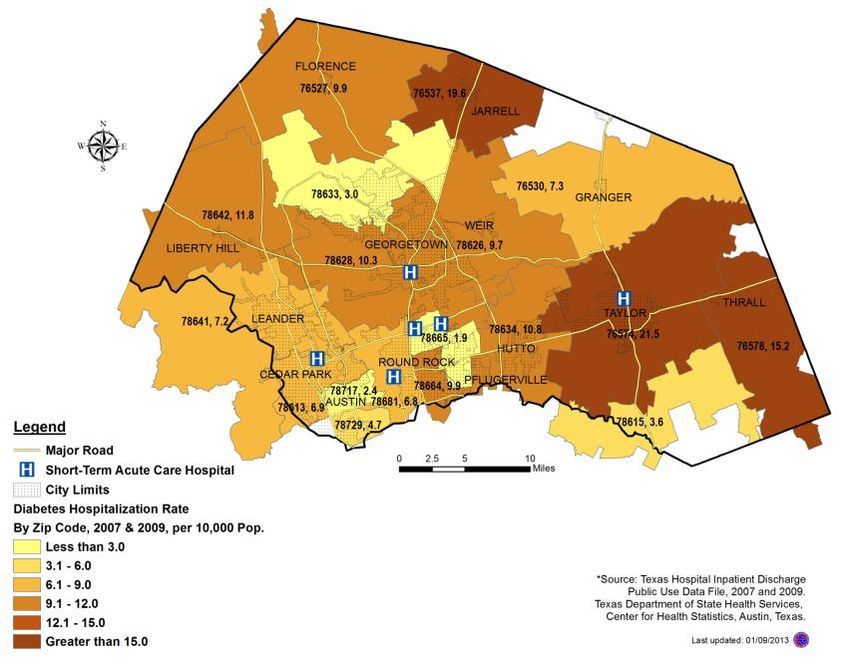
Individuals in Taylor and Jarrell experience a higher rate of hospitalization for diabetes.
The cancer mortality rate is highest in the most eastern part of the county, including the
eastern part of Taylor. Leander and portions of Round Rock also have higher rates of
cancer mortality than the state.
The age-adjusted mortality rate for heart disease is highest in Leander and Taylor.
The rate of early prenatal care is lowest in the cities and areas surrounding Georgetown,
Jarrell, Florence, and Taylor.
Asthma hospitalization rates are highest in Jarrell and surrounding areas, the eastern part
of Round Rock, and Hutto and surrounding areas.
The areas with the highest percentage of children with low birth weight are both suburban
and rural. They include: the cities and surrounding areas of Granger and Liberty Hill, the
eastern part of Georgetown, the city of Weir, and the western portion of Round Rock.
Note: While in each of these instances we consider rates of disease, it is also important to
consider the relative population of each area of our county. For instance, although Taylor may
have the highest mortality rate for heart disease, there are more deaths due to heart disease in
higher population areas.
Social and built environments greatly affect health disparities as well as overall chronic disease
health outcomes. Most indicators show that individuals identifying as a specific race or ethnicity,
those who are male, and those who are on either end of the age spectrum are more commonly
experiencing adverse health behaviors and outcomes. There are many underlying causes,
including access to care, transportation, and the social and built environments in which children
and adults live:
2/26/13Community Health Assessment
Williamson County and Cities Health District 26
WilCo Wellness Alliance
5,041 households have no access to an automobile (3.2%).
1,048 housing units lack complete plumbing (1%).
29% of households with a mortgage spend 30% of income or more on owner costs.
45% of households paying rent spent 30% of income or more on renter costs.
The 2011 Texas Homeless Network, Point in Time Report estimate that the homeless
population in Williamson and Burnet Counties is 701 annually and 588 at any one point
in time.
Families who live in poverty disproportionally identify as Hispanic or Latino, African
American, or ―other race.‖
The high school dropout rate is higher for individuals identifying as Hispanic, Latino, or
African American.
Women and young adults (age 18 to 34) disproportionately live below the poverty level.
Child poverty is increasing as a percentage of our population.
Fair and Poor Health by Education, Income, and Ethnicity, Williamson County, 2007-2010
35%
30%
25%
20%
15%
10%
5%
33% 14% 6% 25% 18% 6% 23% 8%
0%
Less than High School College Income Less Income Income Hispanic or White, Not
High School Graduate Graduate than $25,000 to Greater than Latino Hispanic or
and Some $25,000 $50,000 $50,000 Latino
College
2/26/13Community Health Assessment
Williamson County and Cities Health District 27
WilCo Wellness Alliance
LOCAL PUBLIC HEALTH SYSTEMS ASSESSMENT
In 2003, the Institute of Medicine described the public health system as ―a complex network of
individuals and organizations that have the potential to play critical roles in creating the
conditions for health.‖ In Williamson County, our local public health system is comprised of
many healthcare providers, agencies, organizations, businesses, and services, depicted below,
who all contribute to the health of the public.
Within this complex system, Williamson County has leveraged the strength of its parts through
collaborations, enhanced communication and purposeful efforts to join and link systemic pieces
in a meaningful way. These linkages within the public health system are conceptualized as 1)
community-wide models and 2) an internal, public-health agency model that, together provide a
foundation for the public health system.
2/26/13Community Health Assessment
Williamson County and Cities Health District 28
WilCo Wellness Alliance
External Assessment of the Local Public Health System
In summer 2012, the WilCo Wellness Alliance‘s Community Health Improvement Steering
Committee (CHIC) was formed and provided feedback on the health of the Williamson County
local public health system.
SOME KEY FINDINGS FROM ASSESSMENT WORKSHOP NOTE LPHS STRENGTHS:
A strong history of collaboration among diverse sectors, agencies and organizations
(Essential Service #4: Mobilize Community Partnerships to Identify and Solve
Health Problems.)
Large, growing healthcare delivery system with strong sense of community and
commitment to data-driven health improvement through the Health Data Users
Group and Integrated Care Collaborative. (Essential Service#1: Monitor Health
Status to Identify Community Health Problems.)
Members of the CHIC expressed their involvement as part of the public health system;
ownership was evident, as was understanding of the ―complex network‖ that
comprises our public health system.
KEY AREAS FOR IMPROVEMENT OF THE LOCAL PUBLIC HEALTH SYSTEM WERE SUMMARIZED:
Need for shared communication and cohesiveness in the important decisions being
made among jurisdictions, organizations, leaders and members (Essential Service #5:
Develop Policies and Plans that Support Individual and Community Health Efforts.)
Better use of existing resources that could be leveraged to improve the health of the
community (i.e., faith communities and school districts); (Essential Service #4: LPHS
Model Standard 4.2 Community partnerships and strategic alliances…)
Community health would be enhanced if the community was more aware of resources
available, including the ―what, where and how‖ of ways to improve health and quality of
life. (Essential Service #3: Inform, Educate, and Empower Individuals and
Communities about Health Issues.)
2/26/13Community Health Assessment
Williamson County and Cities Health District 29
WilCo Wellness Alliance
Internal Assessment of the Local Public Health System
WCCHD, as the local public health department, is charged with the role of convener, connector
and communicator for much of the ―complex system‖ that is public health in Williamson
County, and with ensuring that the ten Essential Public Health Services (EPHS) are provided,
connected and effective.
In August of 2012, the WCCHD Leadership Team completed an internal performance
assessment, using the National Public Health Performance Standards checklist. The WCCHD
Board of Health completed their assessment using the same tool, Governance Standards. The key
findings from the team‘s internal evaluation mesh well with the CHIC‘s evaluation.
STRENGTHS INCLUDE:
Renewed commitment and resourcing of the capability to ―Monitoring of community
health status to identify community health problems:‖
Diagnosing and investigating health problems and health hazards. Dedicated staff for
communicable disease and emergency preparedness allow for enhancement of
Community Health Improvement Process.
Mobilizing community partnerships to identify and solve health problems. Dedicated
staff with training to facilitate and support community groups and working groups.
A strong, respected, and committed Board of Health overseeing the Agency.
AREAS NOTED IN NEED OF IMPROVEMENT INCLUDE:
Inform, educate and empower people about health issues; taking the next step in
engaging the community directly and through strategic alliances.
Evaluate effectiveness, accessibility and quality of personal and population-based health
services. Leverage the investment in data collection and analysis for program
evaluation and informed decision making.
2/26/13You can also read


