Conservation and Health in the - products Transformed Livelihoods, Luangwa Valley, Zambia
←
→
Page content transcription
If your browser does not render page correctly, please read the page content below
How Peanut Butter (and other
products) Transformed Livelihoods,
 Conservation and Health in the
     Luangwa Valley, Zambia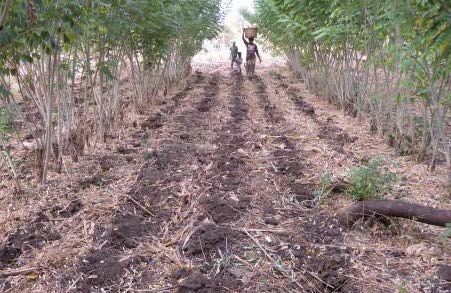
Community Markets for Conservation (COMACO Ltd.)
     66,995 farmer members
     Sales in 2012-13FY: $2.71 million

   A brand promise of delivering healthy, pesticide-free
   food products derived from farmers who feed themselves,
   take care of their soils, and stop poaching.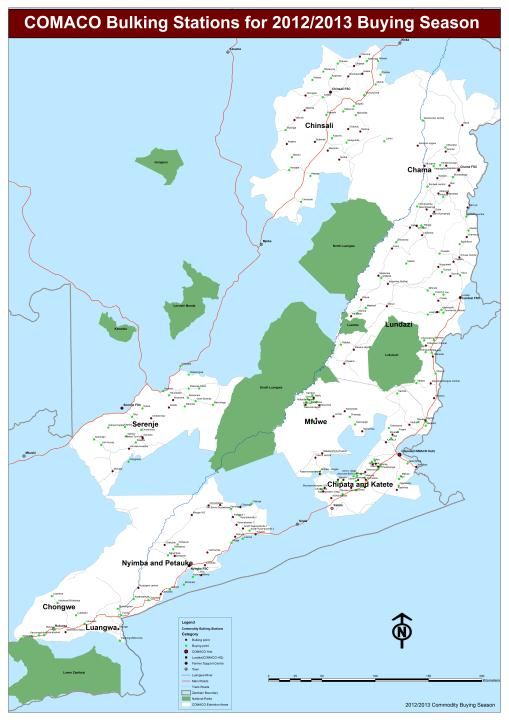
Organizational elements:

Producer groups: 3,939
Lead farmers: 1,139
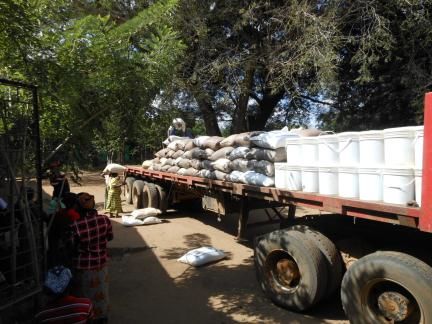
Bulking centres: 259
Community trading depots: 58
Farmer Support Centers: 7
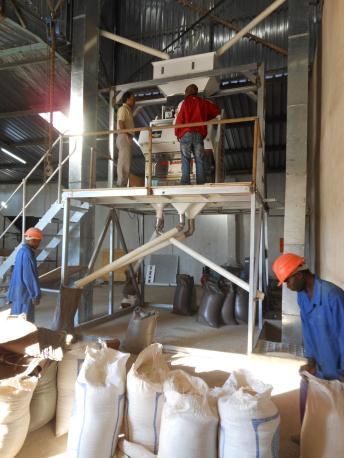
Manufacturing hubs: 4
Sales and distribution centres: 2
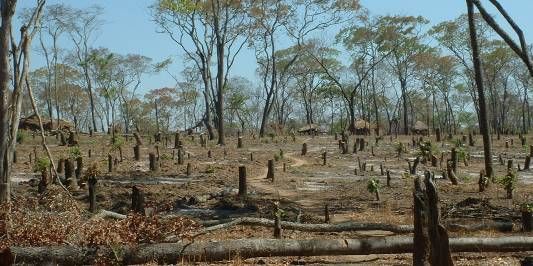
Land use Practices an Environmental Threats
The transformation process…
Small-scale farmer Business
Trading centers Sales centers
Farm Crop Soil Increased Transaction Product Marketing
Sales,
practices divers. improv. yields Storage manufact.
accounts
at local
depots
Conservation incentives
Trade
benefits Dividend Commodity
price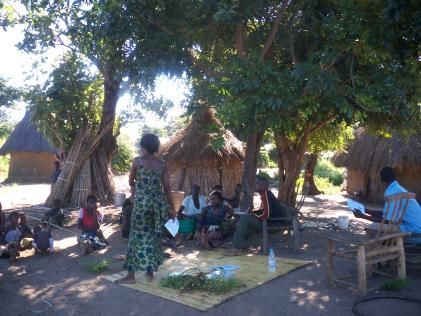
COMACO Farming: The Wrong Approach

                     • Non-food crop farming
                     • Mono-culture approach
                       with dependence on
                       fertilizers and pesticides
                     • Long fallow period

                     •   Ridge-farming, high labour
                     •   More prone to drought
                     •   Low yield without fertilizer
                     •   Poor understanding of soils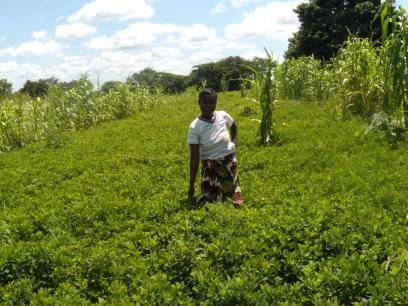
COMACO Farming: The RIght Approach
                         • Low tillage, water
                           conservation
                         • Crop rotation with legumes
                           using agroforestry
                         • Mulching
                         • Composting
                         • No-burning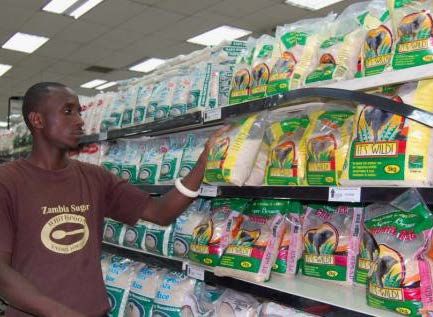
The business behind the transformation process

                  COMACO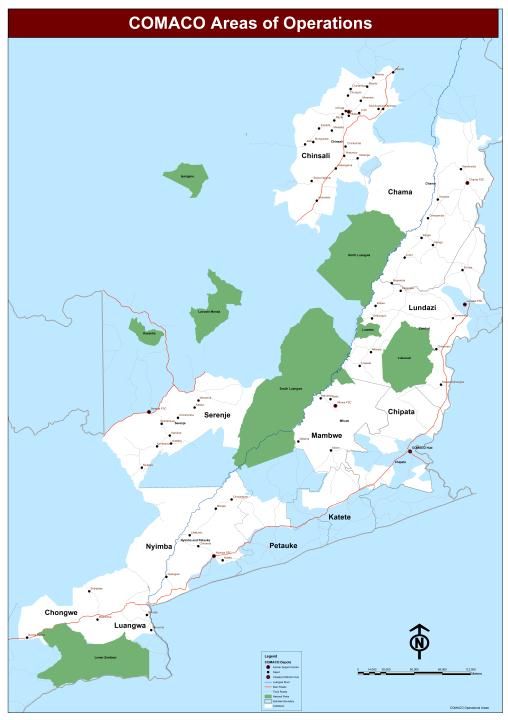
Cost to service a farmer: $30-35/yr
Correlated environmental trends

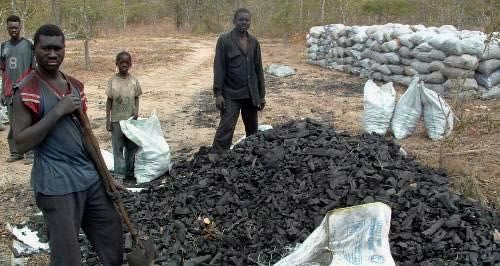
Firearms surrendered: 2069

Snares surrendered: 80,220
“Broad-stroke” livelihood impact

    •    Food insecurity led to hunger and poverty.
    •    50% of children in Eastern Province are underweight
    •    Zambia’s fertility rate is 6.2 children per family with low contraceptive use
    •    Health outposts are often 12 kilometers from the community
    •    Need to link health, food security, markets with conservation

Farmers
(lead                                                                        Consumers
farmers,
producer
groups)

        Bulking   Depot   Farmer Support Center/    Sales          Retail
        points            Manufacturing hub         Centre         stores
“Broad-stroke” livelihood impact
• Increased food-crop yields
(30-40%)
• Increased income and income
source
• crop diversification
• 65% adoption of sustainable agriculture
practices
• group knowledge sharing,
• increased leadership activity by women,
• increased family stabilityAdded social impact from the COMACO approach
Better Life Books: covers
tops of agriculture, off-farm
income activities, nutrition,
family health, family
planning
Distributed to over 3000
producer groups
Lead farmers direct the use
and training from these
books
Supplemented by radio
broadcastsFueling social impact with partners ( Balance Project
and Flex Fund)
• Lead farmers (Adult Peer Educators)
have become agents for local clinics
to distribute family planning
products
• MOU with Ministry of Health for
COMACO to be agents of local
clinics for FP products
• Thousands of women now
understand their reproductive
health and many are able to avoid
pregnancies
• 1000’s of condoms and 100’s of pills
distributed to current users.
Hundreds of referrals for new users.
• 2.5 year program and cost $90,000Other partners General Mills: R&D for new products, food safety, supply chain, production design, etc. Cornell University: R&D for new products, food safety, village chickens research, social surveys USAID and Royal Norwegian Embassy: Compliance standards, M&E support Cquest: Carbon market development
Summary - What have we learned?

• It starts with loving the farmer (stop vilifying the
  poacher!)
• Focus on food security and soils
• Value-added markets, as opposed to commodity
  markets, will probably drive the COMACO approach
• Consumers can be integrated into the solution with
  the right marketing and with good products
• Small farmers can be our best conservation allies
• COMACO structure provides important avenues for
  on-going social improvement
Summary - What have we learned?
• Science and technology are available through partners
  who see opportunistic synergies with COMACO
• Needs a corporate governance structure accountable to a
  business plan and the Brand Promise
• COMACO is a robust, holistic model that reduces donor
  costs over time
• It requires donor support for a least 10 years with a
  commitment of $10-15 million
• Conservation results are largely a zero-cost by-product,
  enhanced with compliance related, added incentives
Challenges
• Sustainability requires scale, introduces risks and
  increased costs and complexities
• Commitment to a supply chain originating from small
  farmers, often in remote places
• Requires highly talented, motivated professionals to lead
  it and manage it – can be hard to find such people
• Complex approach that is cross-cutting and requires broad
  understanding of different disciplines
Challenges
• There will be disasters, need to have a strong team to
  weather through
• Difficult to find investors and not easy to sustain growth
  with a model that is not purely for profit
• There is urgency to grow the model because
  environmental clock is ticking, investors tend to think
  purely business and risk avoidance
• We need more social capital in the market to help finance
  enterprises like COMACO
You can also read


