Contractor &
Developer Academy
←
→
Page content transcription
If your browser does not render page correctly, please read the page content below

Contractor & Developer Academy
CONTENTS
02   Foreword

03   Contractor & Developer Academy Programmes

03   Contractor Support Programme

     04
     		Programme Inception

05   Contractor Support Services

     05
     		Information Sessions
     		-    Information sessions conducted

     06
     		Contractor Training
     		-    Trainings conducted
     		-    Feedback from Emerging Contractors

     11
     		Contractor Mentorship

13   Developer Support Programme

     15
     		Home-owner    Developers
     16 Entrepreneur (Micro) Developer

     17
     		 Chartered Accountants Venturing into
     		 Affordable Rental Development
     18
     		Take-away

                          Contractor & Developer Academy (CDA) is a programme of Development Action Group (DAG).
                  DAG is a registered Non-Profit Organisation: No. 006-194 NPO | DAG is a Public Benefit Organisation:
                    No. 930016961 PBO | DAG is a Non-Profit Company without members: No. 1993/006859/08 NPC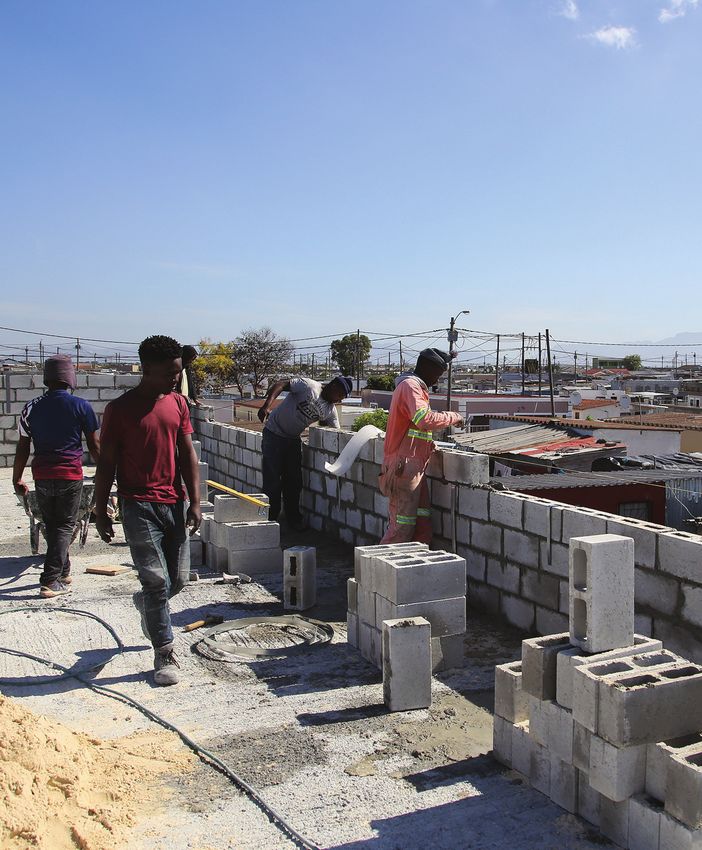
FOREWORD
 The Contractor    'There has never been a greater influence on urban South Africa,
                   than the policy of Apartheid which forced segregated and uneven
  and Developer
                   development; ultimately producing the fragmented cities inhabited
 Academy (CDA)     today. Apartheid not only influenced urban development during
aims to improve    its oppressive reign, between 1948 and 1994, but left a legacy of
                   segregation which has proven difficult to thwart. Ever since, South
   and enhance
                   African planners have faced a continuous increase in the demand for
  the capability   low-cost housing, restricted resources to meet needs and an urban
    of emerging    structure which protects the real-estate assets of the wealthy, but
                   continues to segregate communities according to income level and
    contractors
                   subsequently, race.' (Lategan & Cilliers, 2013)
   and builders.
                   South Africa continues to be one of the most unequal countries in
                   the world, with high levels of unemployment, poverty, and illiteracy.
                   The inclusion of the masses of previously disadvantaged groups into
                   the economic activities of the country requires effort from multiple
                   stakeholders. The construction sector is one of the largest employers
                   of unskilled labourers and the Construction Industry Development
                   Board has the largest number of registered contractors in Grade 1 and
                   2. The Development Action Group identified this as one of the opportune
                   areas to develop high impact projects through the capacitation and
                   development of emerging contractors.

                   Within the same Built Environment is the growing need for affordable
                   housing, with a reported backlog of about 2.3million. The state alone
                   will not be able to ensure the progressive realisation of the increasing
                   demand of houses within its available resources. This requires an
                   innovative supply chain where it recognises the role of emerging
                   contractors and micro-developers. DAG recognises the crucial role
                   micro-developers play in contributing to affordable housing provision
                   and has embarked on an advocacy journey for well-located rental
                   solutions. Given that backyarding is one of the fastest growing rental
                   housing schemes, the Contractor Developer Academy provides various
                   forms of support for improved quality of rental stock and services to
                   landlords and backyard tenants. Emerging developers are building
                   small-scale affordable rental units that generally represent a safer and
                   more dignified option than traditional shacks made of zinc.

                                                 DAG Contractor and Developer Academy | Foreword 02
CONTRACTOR AND
DEVELOPER ACADEMY
PROGRAMMES

                               01                 Contractor Support
                                                  Programme
                CDA defines                       73% of total construction industry employees employed
     Emerging Contractors                         by contractors are employed by small and medium-sized
                                                  contractors (Dlungwana & Rwelamila, 2004). A development
 as any contractor with the                       intervention focused on small and medium-sized contractors
capacity to execute projects                      can have a huge impact on the economic development of
         below R6,5 million.                      developing countries in terms of providing management skills
                                                  that the enterprise creates sustainable employment. There
                                                  are a number of additional benefits that can be realised,
       According to the CIDB                      such as increased spending in the local economy through
  categories, these would be                      participation of local enterprises, growing entrepreneurship
                                                  pool among the country’s citizens and improved delivery of
      grade 1 - 4 contractors.                    infrastructure through the use of competent contractors.

                                                  While there are other capacity development programmes led
                                                  by the public sector, few of them understand the capacity gaps
                                                  for these emerging contractors and how best to engage with
                                                  large private property developers, investors, and construction
                                                  companies. DAG, with strong links at a grassroots level, and
                                                  with a strong network of developments and construction
                                                  industry stakeholders, provides the perfect nexus to host this
                                                  integrated programme.

03 DAG Contractor and Developer Academy | Contractor Support Programme
Programme Inception                                                            capital, thus DAG played a pivotal role of negotiating
                                                                               with a private material supplier to open a 30-day
                                                                               account for these contractors. This enabled the
In 2015, DAG successfully completed a 3-year                                   emerging contractors to procure material, deliver
construction project of 2173 Enhanced People’s                                 and upgrade their CIDB grading.
Housing Project (EPHP) in Khayelitsha, Cape
Town. The project was funded by subsidies                                      One of the fifteen contractors who took advantage
from the Western Cape Department of Human                                      of this approach and excelled beyond expectations
Settlements to the value of R64 million and                                    is Kuhle Quality Projects (KQP), who upgraded
benefited 2173 households in Khayelitsha.                                      from GB 1 to GB 4 graded at a level 4 by the
                                                                               Construction Industries Development Board (CIDB).
Instead of working with the well-established CIDB                              Currently he is able to bid for work opportunities
grading 7 and above construction companies, DAG                                beyond the confides of Khayelitsha and employs
took an unprecedented approach of working with                                 over 15 permanent staff. In 2017, Development
15 Khayelitsha based CIDB grading 1 emerging                                   Action Group (DAG) incubated the Contractor &
contractors. The notion of this unprecedented                                  Developer Academy (CDA) to improve and enhance
approach was to contribute toward the                                          the capacity and capability of emerging contractors
sustainability of the emerging contractors who                                 and builders through tailor-made training
were unlikely to benefit from any public sector                                programmes. The incubation of CDA was in direct
projects and would fall into the vicious cycle of                              capacity building needs from lived-experiences of
being cheap labour brokers to the well-established                             the Khayelitsha PHP project.
construction companies.
                                                                               The CDA is a recognition that government alone
'A road less travelled approach which required                                 cannot deliver on its mandate of housing and
strategic social facilitation with the beneficiaries,                          economic transformation. In fact, only through
community based forums, street committees                                      support for emerging entrepreneur and businesses,
and other key stakeholders in order to realise the                             can we realise a complete rethink of the economy,
successful completion of the project.' It is widely                            job creation and ultimately the housing crisis
documented that the majority of newly established
companies are unable to access project start-up
                                                                                                    Relationships

Growth ladder for                                                                                       Continuous strengthening of
                                                                             Advocacy                   relationships with private, public
Emerging Contractors
and Developers:                                                                  Buy-in from private to prioritise
                                                     Mentorship                  emerging contractors

                                                         Ongoing                 Linking public sector work
                              Training                   support                 Linking private sector work

                                  6 weeks contractor training course             One-day practical workshop based
       Information                - linked to live projects                      on Gaps/Needs

          Highlight               Baseline               Identify                Walk-in Advice
          Compliance              Information            Gaps/Needs              Service

           The construction and development sector remains untransformed - billions of public sector investment has fostered a radically transformed
          developmental space. As the second largest economic driver in the Western Cape, the transformation of the development industry is central
                                                                                         to redressing poverty and delivering housing/infrastructure.

                                                                 DAG Contractor and Developer Academy | Contractor Support Programme 04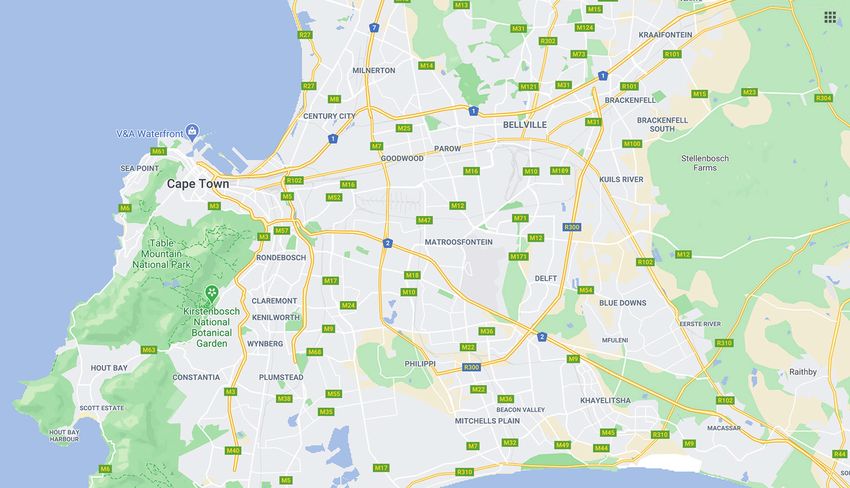
Contractor Support Services

                                      Information Sessions
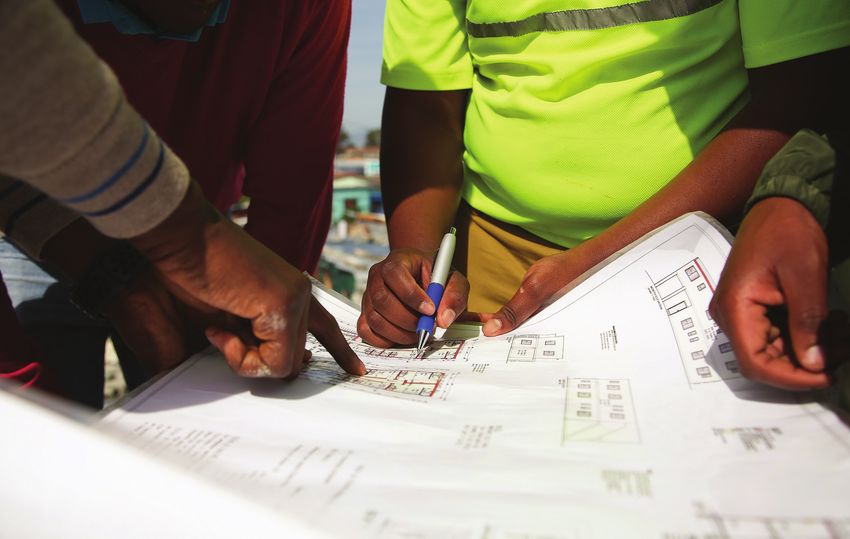
                                      To highlight the minimum compliance documents requirement that are
                                      required to distinguish the emerging contractors from bakkie builders /
                                      labour brokers and for them to source for contracts from the public and
                                      private sector.

                                      Provide a walk-in advice service to emerging contractors on technical
                                      issues, finance, contracting, building approvals etc. The programme will
                                      include emerging contractors below CIDB grade 2 level who, studies have
                                      shown, have little or no experience in the formal construction sector.

                                      Information sessions conducted

Since the inception,
    CDA has hosted
      8 information
  sessions with 137
       participants.

                                                                         16%   Quotation & Pricing
                                                                         17%   Procurement & Tendering
                                                                         11%   Measuring & Drawings
                                                Contractor
                                                                         7%    OH&S
                                                  Overall
                                                 Training                14%   Business Management
                                                  Needs
                                                                         8%    Financial Management

                                                                         25%   Other Skills

                                                                         2%    Resources

05 DAG Contractor and Developer Academy | Contractor Support Programme
Female       Male

                            80

                            60

                            40

                            20

                             0
                                 Khayelitsha   Mfuleni   Gugulethu   Bloekombos Wallacedene

Contractor Training                                                              There is a compelling need
                                                                                     to elevate development
Emerging contractors have varying needs, from                                   of previously disadvantaged
start-ups who need the know-how of running                                      individuals and enterprises.
construction projects and businesses, to more
                                                                                                          (cidb, 2011)
established small firms who need to improve
their performance and grow.

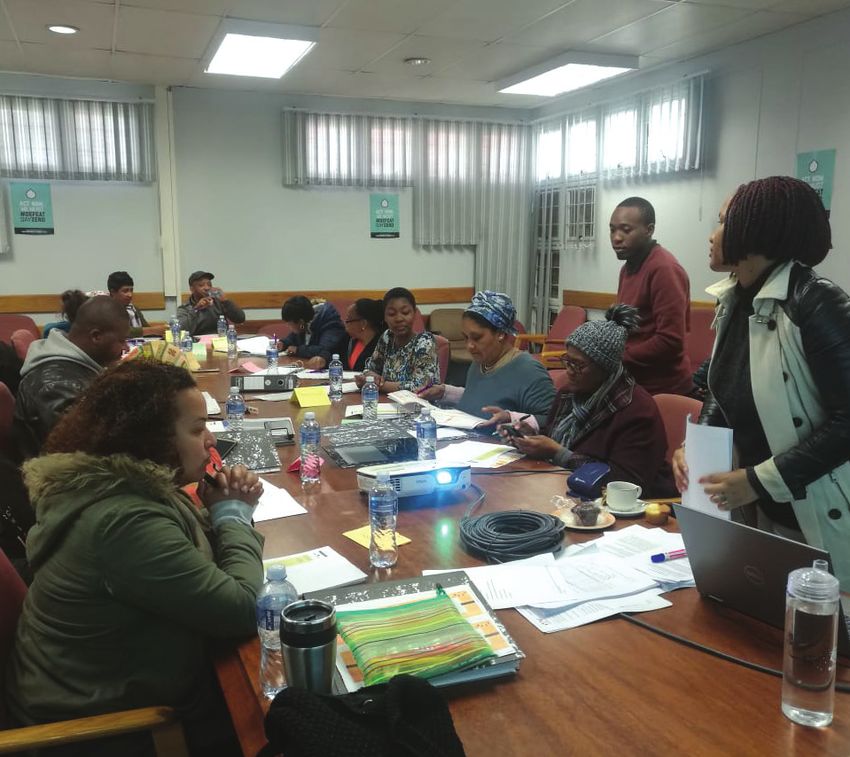
CDA customises training programmes to suit individual contractor needs starting with
pre-assessment in numeracy and literacy skills from the aptitude test. These individual needs are then
included in the design of the training programme to be offered to the identified cohort of contractors,
ensuring all the contractors priority areas for training, are attended to.

                                                  DAG Contractor and Developer Academy | Contractor Support Programme 06
Building/Civil
                                                     and Construction
                                                    Management Skills
     The customised
  learning packages
      are taken from
       designed core
       competencies                                                      Emerging                   Laws,
                                                                                                 Regulations
      that emerging                                                      Contractor              and Policies
         contractors                        Business
        need to have.                      Management
                                             Skills

                                                                                 Personal
                                                                                 Development

                                      In response to Covid-19, CDA introduced virtual training in 2020, as
                                      physical sessions were no longer possible due to the limitations and
                                      regulations. The virtual classes were a success, with minor teething
                                      problems like connectivity issues, (and some beyond the control of
                                      DAG) like load shedding and power outages. On the bright side - the
                                      contractors enjoyed the virtual classes, the flexibility of learning in the
                                      comfort of their own environments and having access to the online
                                      drive with training content for repetitive viewing.

                                      The modules for the training programme are be practical and topical:

                                            Covid-19 Work Protocols

                                            Bills of quantities and procurement processes

                                            Project management, ethics, and risk management

                                            Business development and diversifying income streams

                                            Tenant management, contract conditions & financial management

                                            Personal development

07 DAG Contractor and Developer Academy | Contractor Support Programme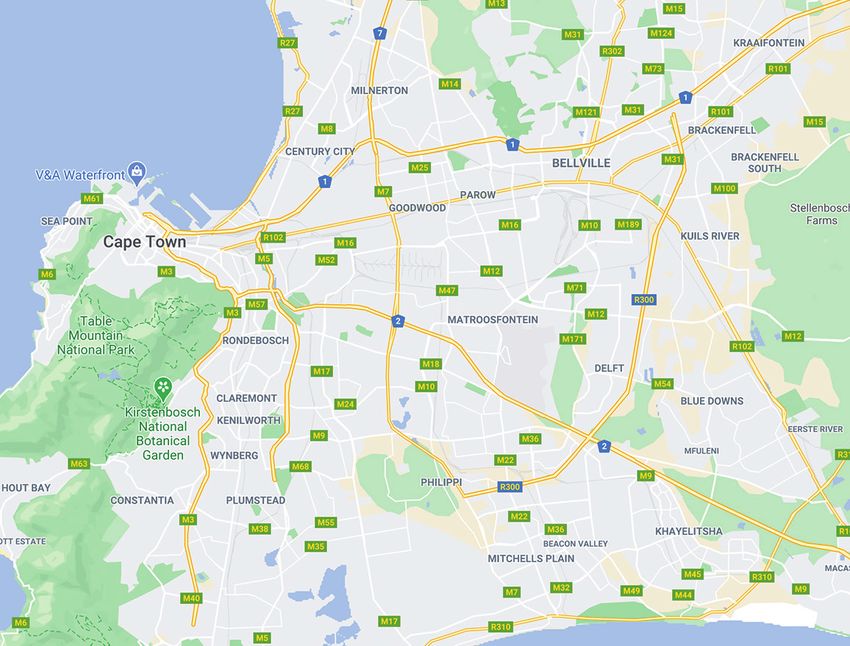
DAG Contractor and Developer Academy | Contractor Support Programme 08
Trainings conducted

                                      Contractors trained through CDA Programme

       More than 50%                  25
                                                                                        Total number of contractors trained
       of participants                                                              Number of women-owned businesses
                                      20
        in all of CDA's                           21

          training are                15
                                                                                                               16
       women-owned                                             13
                                      10
         construction
                                                                                9                                          9
           businesses.                 5
                                                                                             5
                                       0

                                                        2018                        2019                            2020
                                                All CIDB Grading 1            All CIDB Grading 1          1 CIDB Grading 4; 1 CIDB
                                                                                                        Grading 3; 6 CIDB Grading 2;
                                                                                                              8 CIBD Grading 1
"I want to thank DAG,
    wow you are good
  facilitators indeed. I              CDA’s customised training ensures that the areas contractors identify as
                                      both need and priority are attended to. The Legend is sorted by order of
learnt a lot and these
                                      what most contractors identified as the main training need, Quotations
  workshops gave me                   and Pricing being top, Procurement and Tendering as second overall
 the boost physically                 priority and need with Measurement and drawings making the top three.
      and emotionally.
     Now I am not the
 person waiting for a                 No. of Contractors trained in each area of their need
 site container in my
  area to ask for work
                                                   21
    opportunities. The
                                                   21
    tools shared allow                                                                                               16
                                                   21
me to source for work                                                                                                16
                                                   21
         opportunities                                                                                               16
                                                   21
and network with the                                                                                                 16

                                                   21                                                                16
            big bosses."                                                                                             16
                                                   21
                                                                                    9                                16
                                                   21                               9
                                                                                    9                                16

                                                  2018                           2019                               2020

                                      1    Quotation & Pricing      2   Procurement & Tendering     3    Measuring & Drawings          4   OH&S

                                      5    Business Management            6   Financial Management         7   Other skills    8   Resources

09 DAG Contractor and Developer Academy | Contractor Support Programme
Feedback from Emerging Contractors
All of the contractors strongly agreed that:
Contractors were • The content was as discussed and the training met their needs.
• They would recommend the training to other contractors.
asked to evaluate
• The facilitator is a good communicator, approachable,
the program and knowledgeable and professional.
their responses • The material was presented in an organised manner.
• They would be interested in attending more workshops.
were positive.
"The sessions that have been conducted have been
very constructive and we will definitely implement
what I have learnt. I would like to express my sincere
appreciation and gratitude for empowering me, I
am honoured."
DAG Contractor and Developer Academy | Contractor Support Programme 10Contractor Mentorship
Emerging contractors are allocated mentors who will coach and guide
them in their respective fields, whether in the civil or building sector.
Each contractor will have a main mentor depending on the needs of the
specific contractor. Mentorship could be received from a whole host of
different individuals within the Built Environment. A mentor could be a
well experienced contractor, tradesman, built environment professional,
successful business owner, public sector official operating within the
construction sector, private sector developer, finance practitioners or any
other individual that is willing and capable to coach and guide.
The CDA strongly
believes in the
mantra of each
one teach one.
As a testament to this principle is
Hlumantombazane Civils and Construction,
a CE 4 & GB 3 grading company that is a
mentor to emerging contractors.
She recently came in 3rd place at the
CIDB’s National ERWIC AWARDS as
a mentoring entity.
11 DAG Contractor and Developer Academy | Contractor Support ProgrammeOpposite Page:
Nosiphiwo Msitweni-Sixhaso
Managing Director of
Hlumantobazane Civils
and Construction.
Top Right:
DAG facilitator Chuma
Giyose visiting Nosiphiwo
Msitweni-Sixhaso at
her office.
Middle Right:
CDA's award ceremony,
seen on the picture is
Phunyezwa Maguda
demonstrating an exercise.
Bottom Right:
CDA's award ceremony:
Nosiphiwo Msitweni-Sixhaso
facilitating a reflections
session of her experience of
being part of the contractor
training programme.
DAG Contractor and Developer Academy | Contractor Support Programme 1202 Developer Support
Programme
Insufficient and A further symptom of the seriousness of the South African
inadequate housing housing situation is the large proportion of households
occupying rental accommodation. A recent survey of formal
for the urban poor African townships in six major cities estimated that around
has a long history 55 percent of the population were renting. The urban
in South Africa. shelter problem has become more serious in recent years as
more people have been able to move into the cities. 'The high
(Lemanski, 2009) cost related to well-located land which would provide access
to socio-economic opportunities and the facilities located
in urban centres, has continued to force low-cost housing
projects to the urban periphery and beyond.'
(Lategan & Cilliers, 2013)
13 DAG Contractor and Developer Academy | Developer Support ProgrammeIn the past years DAG has embarked on represent a safer and more dignified option than
an advocacy journey for affordable rental traditional shacks made of zinc. These developers
accommodation built on well-located land. Given purchase vacant plots, especially those plots close
that backyarding is one of the fastest growing to transport routes and build two to three-story
rental housing schemes, the CDA provides various walk-ups with support from emerging contractors.
forms of support for improved quality of rental Through practice, the CDA has been able to
stock and services to landlords and backyard categorise two types of developers: Home-owner
tenants. Emerging developers are building developers and Entrepreneur developers
small-scale affordable rental units that generally (Micro-developers).
Site analysis to establish Access to finance based
space availability. on the homeowner's
Fac qualification/preference.
ion
Verification of ownership ili
documentation. at Appointment of
ta
architect and engineers
ti
tio
Ini
Draft plans and to finalise building
building cost estimate. To assist
n
plans and submission
developers to build to local authorities.
Project feasibility study.
at scale, the following
Contractor bids and
support is offered appointments.
Cap
ion
to them:
a
tat
cit
Bu
en
y
ild
ing le m
Imp
Financial literacy. Building enrolment
and insurance.
Drawing up of
lease agreements. Project management
until completion and
Tenant placement and skills transfer.
conflict resolution
strategies.
Property
maintenance plan.
DAG Contractor and Developer Academy | Developer Support Programme 14Home-owner Developers
• An individual who benefited from a Government subsidised house
or bond registered house.
• Employed, semi-employed or social welfare beneficiary.
• Develops a maximum of 6 rental units.
• Average unit size 15 m2 - 20 m2.
Backyard development of 4 (20 m2)rental units
Some of the GAPS identified:
• Lack of access to affordable finance packages catering for this sector.
• Need access to built environment professionals to support (Engineers,
South Africans have
Architects, Construction Managers etc.)
been forced into the
Trades/Work Packages Amount (R) Material Prices Quantity Unit Amount (R)
backyards of their
subsidy-housed Earthworks 5 614,10 Blocks 2245,5 no 21 017,88
Concrete works 25 258,97 Cement 141,25 bags 11 935,63
compatriots due to a Masonry 44 904,84 Sand 31,75 m3 12 700,00
Waterproofing 5 613,10 Stone 19 m3 13 300,00
shortage in housing Roof coverings, claddings etc. 53 324,49 Mesh reinforcements 10 sheets 7 792,40
Carpentry and joinery 14 032,76 DPC 4 rolls 1 341,92
and the unsuitable Ceilings, partitions and flooring 11 226,21 DPM 30m x 3m 1 rolls 496,45
Floor coverings, wall linings etc. 27 010,60 Brickforce 49 rolls 1 903,65
locations generally Ironmongery 2 806,55 Windows 8 no 12 000,00
Metalwork 2 806,55 Doors 8 no 4 360,00
sourced for the Plastering 19 645,87 Lintels 10 no 860,00
Glazing 1 403,28 Ceiling boards 69 m2 7 107,00
development of Plumbing and drainage 17 400,62 Paint 12 20ft 10 200,00
Electrical works 16 558,62 Tiles 69 m3 19 994,22
low-income projects. Paintwork 17 216,38 Ironmongery 8 set 4 232,00
External work 2 806,55 Roof work 1 sum 9 315,00
(STATSSA, 2011:68) Provisional sums 38 633,13 Sundries
Formwork
1
1
sum
sum
33 678,63
15 228,00
Total Building Cost 306 262,62 Total Material Cost (Only) 187 462,78
(Labour & Material)
15 DAG Contractor and Developer Academy | Developer Support ProgrammeEntrepreneur (Micro) Developer
• An individual or property stokvel would enter into a brownfield
development with the intention of having multiple developments
(building a portfolio).
• Business owners or permanently employed.
• Self-finances the developments through personal savings and
personal bank loan.
• Well-located, close to social and public amenities.
• Develops a minimum of 10 rental units per property.
• Average unit size 17m2 -25m2.
Brownfield development of 61 (22m2) rental units
Some of the
GAPS identified: Trades/Work Packages Amount (R) Material Prices Quantity Unit Amount (R)
• Lack of access to Earthworks 88 915,39 Blocks 36044 no 338 816,63
Concrete works 400 119,26 Cement 2135 bags 202 855,65
affordable finance models Masonry 711 323,12 Sand 493 m3 73 995,97
(equity, development, Waterproofing 88 915,39 Stone 54 m3 37 517,74
Roof coverings, claddings etc. 229 609,15 Mesh reinforcements 149 sheets 29 026,69
securities in the form of Carpentry and joinery 222 288,48 DPC 835 rolls 70 031,45
Ceilings, partitions and access 177 830,78 DPM 30m x 3m 12 rolls 5 957,00
bank guarantees) for Floor coverings, wall linings etc. 310 694,40 Brickforce 175 rolls 6 800,63
scaling up. Ironmongery 95 114,20 Windows 186 no 279 000,00
Metalwork 44 457,70 Doors 124 no 186 000,00
• Lack of appropriate Plastering 311 203,87 Lintels 124 no 10 836,00
Glazing 22 228,85 Ceiling boards 1072 m2 58 960,00
Land-use regulations Plumbing and drainage 275 637,71 Paint 46 20ft 39 291,94
and planning Electrical works 262 300,40 Tiles 1072 m3 182 240,00
Paintwork 111 144,24 Ironmongery 124 set 65 596,00
approval processes. External work 44 457,70 Roof work 1 sum 158 351,14
Provisional sums 509 436,10 Sundries 1 sum 533 492,34
• No sector coordination Formwork 1 sum 517 739,37
for collective bargaining
– Micro-Developers, Total Building Cost 3 905 676,74 Total Material Cost (Only) 2 796 508,54
Built Environment (Labour & Material)
Professionals & Finance
institutions are operating
as individuals.
DAG Contractor and Developer Academy | Developer Support Programme 16Chartered Accountants Venturing
into Affordable Rental Development
The developers raised more than R450 000 from 2018 and invested
in the purchasing of land in Mfuleni township. Late 2019, the CDA was
introduced to Ezinkulu Investments by the finance institution funding
the development to support with the development of 15 rental units.
This development is a typical collaborative approach between the
entrepreneur-developers, finance institution, emerging contractor, built
environment professionals and the facilitation done by CDA to realise
affordable rental stock.
Ezinkulu
Investment is a
company formed
by 5 Chartered
Accountants
who share the
same vision
of developing
dignified affordable
rental stock
in previously
disadvantaged
communities
across the Cape
Metropole.
• Development to yield 15 units, 2 parking bays.
• NHBRC enrolment.
• Engineer & CoCT’s building inspector involved.
17 DAG Contractor and Developer Academy | Developer Support ProgrammeHomeowner
The CDA is 14 units
Homeowner
currently working 2 - 4 units
on 8 projects across Homeowner
3 - 4 units
the Cape Metropole Homeowner
6 units
at various stages, Micro-Developer
61 units
collectively the
Micro-Developer
projects will yield 15 units
Micro-Developer
121 affordable 9 units
rental units. Micro-Developer
8 units
Take-away
CDA general acknowledgements for support and collaborations, key
stakeholders to realise well-built and managed affordable rental stock.
CA
Property PA
CY & Tenant
Management
CI
CA
Policy & Training
Regulation TA
VO
Reform CDA TI
AD
ON
Land-use
Regulation Emerging Emerging
Developer Contractor
Affordable
Rental Stock
Building
Insurance Finance
Institution
Built
Environment
Professionals NHBRC
IMP
LEMENTATION
DAG Contractor and Developer Academy | Developer Support Programme 18The CDA is a recognition that government alone
cannot deliver on its mandate of housing and economic
transformation. In fact, only through appropriate
support for emerging entrepreneurs and businesses,
can we realise a complete rethink of the economy and
ultimately the housing crisis.
+27 (0)21 448 7886 | dag@dag.org.za
101 Lower Main Road, Observatory, Cape Town, 7925
www.dag.org.zaYou can also read


