Annual Plan 2019/ 2020 - Bay of Plenty Civil Defence Emergency Management Group
←
→
Page content transcription
If your browser does not render page correctly, please read the page content below
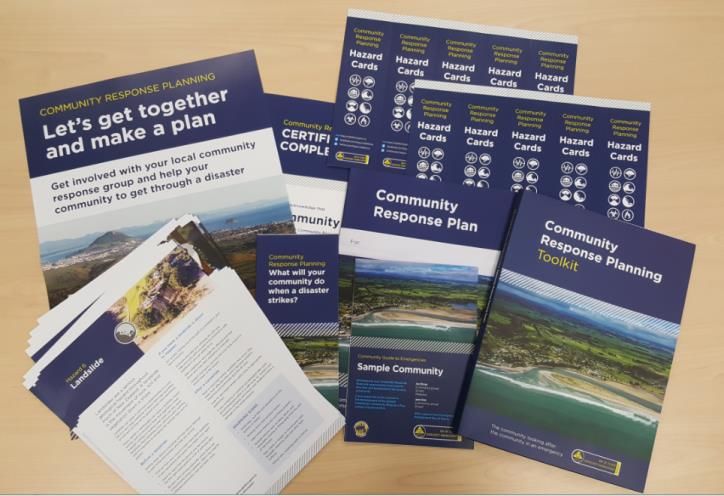
Annual Plan
2019/ 2020

Bay of Plenty Civil Defence
Emergency Management Group

           Bay of Plenty Civil Defence Emergency Management Group
           Annual Plan 2019-2020                                    1
TABLE OF CONTENTS
He kōrero timatanga - Introduction .................................................................................................................................................................. 3
He wawata - Our Vision ..................................................................................................................................................................................... 3
He whāinga - Our Goals..................................................................................................................................................................................... 4

He whai tikanga - Our Priorities ....................................................................................................................................................................... 5

He huanui - Our Workstreams .......................................................................................................................................................................... 5

    Community Empowerment - enabling individuals, communities and businesses to strengthen and sustain their own readiness/
    resilience ......................................................................................................................................................................................................... 6
    Operational Excellence - ensuring effective emergency response and recovery ......................................................................................... 9
         Welfare ..................................................................................................................................................................................................... 12
         Recovery .................................................................................................................................................................................................. 14
         Lifelines .................................................................................................................................................................................................... 16
    Organisational Excellence - ensuring effective governance and performance .......................................................................................... 17
    Understanding our natural hazard risks - promoting awareness and understanding ............................................................................... 18
Budget .............................................................................................................................................................................................................. 20
Appendix 1: Annual Governance / Management Activities.......................................................................................................................... 21

                                                                  Bay of Plenty Civil Defence Emergency Management Group
                                                                  Annual Plan 2019-2020                                                                                                                                 2
HE KŌRERO TIMATANGA - INTRODUCTION
The Bay of Plenty CDEM Group Annual Plan (the Annual Plan) sets out our key operational work-streams, projects and initiatives that are
linked to the delivery of one or more of our goals/ strategic objectives as set out in the Bay of Plenty CDEM Group Plan 2018-2023 (the
Group Plan). It has been developed as a framework to provide a direction from which we can all work together to attain the shared outcomes
of the Group Plan in an aligned and mutually supporting manner, whilst retaining the ability to facilitate local operational commitments.

This Annual Plan is designed to serve as a guide for all Bay of Plenty CDEM Group members in the conduct of their business to
collaboratively achieve specific outcomes on behalf of our communities in a shared responsibility approach. It focuses on the key
deliverables for the 2019-2020 financial year in detail and an outline to 2021/22 to show our future intentions. The measures and
deliverables listed represent the highest priorities for the Bay of Plenty CDEM Group; day-to-day activities of the Bay of Plenty Group are too
extensive to include in this plan (and are often already referenced within member council Annual and Long-Term Plans).

Given the unpredictability of our operating environment, we must remain receptive to change, able to review and adapt our priorities and
efforts to best meet the needs of our communities. As such, the Annual Plan should be seen as a living document; one which may change
as new information becomes available or new priorities arise. To support this, we will review it annually to ensure that the work that we are
doing is contributing to the strategic goals and objectives of the CDEM Group Plan in the most effective and efficient manner.

Accountability for the tasks and projects within this Annual Plan will be monitored and reported upon by Emergency Management Bay of
Plenty through Quarterly and Annual Reporting. Progress snapshots will be provided to Joint Committee and Coordinating Executive Group
(and Operations Sub Committee) quarterly meetings to enable more informed decision making and direction setting.

HE WAWATA - OUR VISION
                                         A safe, strong Bay of Plenty, together
                              Toi Moana, kia haumaru, kia kaha, mā tātau katoa

                                                Bay of Plenty Civil Defence Emergency Management Group
                                                Annual Plan 2019-2020                                                                     3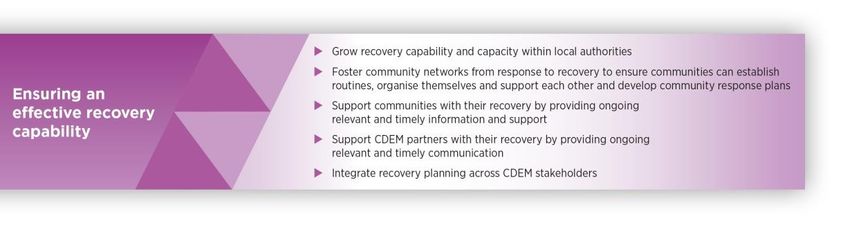
HE WHĀINGA - OUR GOALS
The following Goals and Objectives are set out in the Group Plan. It shows the long-term goal on the left, with the medium term objectives
alongside.

                                           Bay of Plenty Civil Defence Emergency Management Group
                                           Annual Plan 2019-2020                                                                             4
HE WHAI TIKANGA - OUR PRIORITIES
The Bay of Plenty CDEM Group will focus on the following priorities over the next three year period:
Priority 1: Encouraging/ empowering our communities to be prepared
Priority 2: Strengthening our emergency management capabilities and capacities
Priority 3: Implementing the Government’s decisions and the Group Review’s recommendations to improve our
consistency in and delivery of CDEM outcomes
Priority 4: Enhancing our governance and management processes
Priority 5: Enhancing our collective awareness and knowledge of our hazards.
HE HUANUI - OUR WORKSTREAMS
To achieve the identified priorities above, we have aligned the Annual Plan’s activities into four workstreams:
Community empowerment
Operational excellence, including sub-sections for:
Welfare
Recovery
Lifelines.
Organisational excellence
Understanding and manging our natural hazard risks.
The workstream sections that follow provide the details of what we intend to progress.
Bay of Plenty Civil Defence Emergency Management Group
Annual Plan 2019-2020 5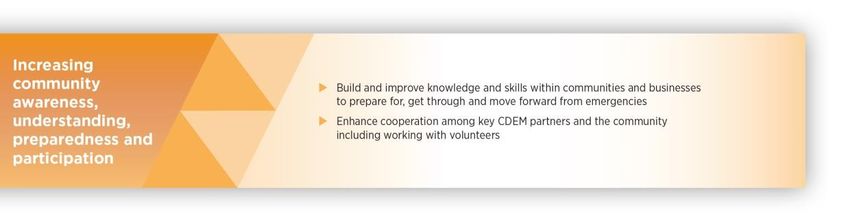
Community Empowerment – enabling individuals, communities and businesses to
strengthen and sustain their own readiness/ resilience
This programme of work focuses on enhancing the resilience of the Bay of Plenty through empowering and engaging individuals, organisations and communities to make
their own decisions on how they will prepare for and cope during an emergency.

Our Community Response Plan and Marae Preparedness Plan programmes are our                              Bay of Plenty CDEM Group to utilise a resilience baseline to prioritise where, when and how we
cornerstone means for empowering iwi/ communities to increase their resilience, connectedness           conduct community/ iwi and business resilience engagement in a more localised manner. We will
and response capacities. Local Authorities will continue to prioritise their co-development with        also engage with iwi to commence development of a te ao Māori CDEM Framework that is more
communities/ iwis as our key platforms for engagement and enhancing resilience. Alongside our           cognisant of the role culture has across the 4 R’s, especially readiness and response.
partners and local business networks, we will also scope a business resilience programme to aid
                                                                                                        We will also support the development of a ‘national framework for volunteers working in emergency
the development of business continuity across the Bay of Plenty.
                                                                                                        management’, integrating its principles into an updated Bay of Plenty CDEM Group Volunteer
To help deliver a more systematic, whole-of-district approach to resilience, we will review and         Plan that influences Local Authority Volunteer Plans.
update our Bay of Plenty Community Resilience Strategy. This multi-year project will enable the

Community Empowerment Work Stream Project Table
CDEM Group Objectives                               Outcomes                                            Activities                         Delivery       Annual 2019/20 2020/21 2021/22

Build and improve                                                                     Review and update the Bay of Plenty Community
knowledge and skills within                                                           Resilience Strategy to enable measurement and
                                 Structured pathways for engaging with community/
communities and businesses                                                            prioritisation of localised resilience efforts.
                                 iwi to reduce the socioeconomic impact of                                                                  EMBOP
to prepare for, get through
                                 disruptive events.
and move forward from
emergencies.                                                                          Develop and implement a Bay of Plenty te ao
                                                                                      Māori CDEM framework.

                                                    Bay of Plenty Civil Defence Emergency Management Group
                                                    Annual Plan 2019-2020                                                                                                                              6
CDEM Group Objectives Outcomes Activities Delivery Annual 2019/20 2020/21 2021/22
Individuals, communities/ iwi and private/ public Engage with mana whenua/ community groups to
organisations take responsibility to minimise the Local New
promote/ facilitate the development of risk
impacts of emergencies through the preparation Authorities KPIs
awareness and individual/ collective readiness.
and adoption of appropriate mitigation measures.
This includes those who understand the nature of Engage with local businesses, business
the hazard, have emergency action plans and who representative groups, professional bodies and Local New
Foster community networks
monitor and respond to emergency messaging and institutions to promote/ facilitate the development Authorities KPIs
from response to recovery to
alerts. of Business Continuity Plans.
ensure communities can
establish routines, organise Community initiative1 KPI measures until 2021
Scope and develop a Business Resilience
themselves and support include: EMBOP
Enhancement Programme.
each other and develop Rotorua Lakes Council - 9
community response plans. Bay of Plenty Regional Council – 8
Tauranga City Council – 8
Western Bay of Plenty District Council – 8 With support from partner agencies, support
EMBOP New
community/ iwi led response and preparedness
Whakatāne District Council – 8 RLC KPIs
planning.
Kawerau District Council – 4
Ōpōtiki District Council – 4.
Strategy exists for the recruitment, retention and Update the Bay of Plenty CDEM Group Volunteer
Enhance cooperation among EMBOP
ongoing training of volunteers, linkages with Plan.
key CDEM partners and the established volunteer groups, addresses motivation
community including and barriers, manages Good Samaritans and
working with volunteers. spontaneous volunteers, and enhances community Develop local Volunteer Plans. Local
social capital. Authorities
1 Community initiatives are those activities that:
increase awareness of natural hazards and their possible impacts – i.e. natural hazard and 4R’s public education/ awareness activities, enabling/ facilitating research/ knowledge sharing
build capacity to enable communities to anticipate risk, limit impacts, and rapidly adapt to/ learn from emergency events – i.e. training, marae preparedness planning/ community response planning
increase connectedness through creating/ strengthening relationships before, during and after an emergency event – i.e. facilitating/ supporting community events/ development activities to increase social capital
foster cooperation through activities that enhance trust, reciprocity and interdependence – i.e. community-driven response planning and community-driven opportunities for cooperation.
Bay of Plenty Civil Defence Emergency Management Group
Annual Plan 2019-2020 7
CDEM Group Objectives                         Outcomes                                              Activities                          Delivery     Annual 2019/20 2020/21 2021/22

                                                                                 Update Bay of Plenty CDEM Group Public
                            Public education strategy exists for enhancing                                                               EMBOP
                                                                                 Education strategy.
                            public disaster awareness and understanding of the
                            hazards that may affect them. Individuals,
                            communities/ iwi and organisations understand the                                                          EMBOP &
                            role they should play during an emergency.           Deliver focussed public education campaigns.            Local
Build the community’s                                                                                                                  Authorities
knowledge and
understanding of their                                                                                                                 EMBOP &
                                                                                 Increase community participation levels in national
hazards and risks so they                                                                                                                Local
                                                                                 ShakeOut activities.
can make informed                                                                                                                      Authorities
decisions.
                            Communities are aware of the hazards that may
                                                                                 Encourage increased followership of Bay of Plenty     EMBOP &
                            affect them and understand the role they should                                                              Local
                            play during an emergency.                            CDEM internet/ social media platforms.
                                                                                                                                       Authorities

                                                                                 Encourage greater subscriptions to the Bay of         EMBOP &
                                                                                                                                         Local
                                                                                 Plenty CDEM Group alerting platforms.
                                                                                                                                       Authorities

                                              Bay of Plenty Civil Defence Emergency Management Group
                                              Annual Plan 2019-2020                                                                                                              8
Operational Excellence – ensuring effective emergency response and recovery
This programme of work focuses on ensuring effective collaborative pre-emergency planning is conducted, training and exercises develop and realistically test organisational
capability and coordination plans, and problems are identified and subsequently addressed in partnership across the emergency management system.

People manage emergencies. They require training and exercising to ensure that they can                         As part of increasing our awareness of response links between agencies, we will finalise the
develop/ conduct response activities with partners who have different roles and responsibilities. To            stocktake of multi-agency emergency response plans across the Bay of Plenty. This will
support our people with effective procedures to follow in response, we will build upon the success              support the development of a CDEM Group Response Concept of Operations as part of creating
of the Checklist Compendium and develop complimentary Standard Operating Procedures                             a shared-view of how responses will be coordinated within the Bay of Plenty.
(SOPs). Once national guidance on standards and accreditation for CDEM professional
development is released, we will update the Group’s Training and Exercise Plan as part of our                   We will also initiate a multi-year programme to identify which priority CDEM buildings needed
continued focus on professional development and continuous improvement.                                         in an emergency are required to meet Importance Level 4 (IL4) standards and develop a
                                                                                                                strategic approach to identifying buildings for use in response.
With technology becoming an increasingly important tool for response, we will review our
technological response support systems to ensure we can continue to issue timely public
information and warnings. Territorial Authorities will specifically review compliance of their
tsunami sirens with the national Technical Standard [TS03/14]. We will also conduct live tests of
our public alerting capabilities.

Operational Excellence Work Stream Project Table
      CDEM Group
                                                    Outcomes                                                  Activities                          Delivery       Annual 2019/20 2020/21 2021/22
       Objectives
                                                                                           Review and implement changes to technological
                                                                                                                                                   EMBOP
                                                                                           response support systems.
                                Technological response support systems are kept
Enable the community and
                                up to date, used to their full capacity, integrated with
CDEM partners to take                                                                      Support national response support system projects.      EMBOP
                                other systems where appropriate, enhancing our
action by providing good
                                ability to gather and disseminate information and
communication networks.                                                                    Develop an integrated GIS capability to enable        BOPRC and
                                warnings.
                                                                                           shared situational awareness the Group’s               Territorial
                                                                                           operations/ coordination centres.                     Authorities

                                                                       Bay of Plenty Civil Defence Emergency Management Group
                                                                       Annual Plan 2019-2020                                                                                                                9
CDEM Group
Outcomes Activities Delivery Annual 2019/20 2020/21 2021/22
Objectives
Participate in national Emergency Mobile Alerting
EMBOP
platform tests.
Conduct live tests of Group public alerting systems. EMBOP
Enable the community and Messages to the public and CDEM partners/
CDEM partners to take stakeholders at all stages of emergency
management are planned, coordinated, prompt, Review TLA tsunami siren compliance with Territorial
action by providing good Technical Standard [TS03/14]. Authorities
reliable and actionable. Messages are clear,
communication networks. consistent, and accessible.
Encourage the community to: EMBOP &
‘opt-in’ to the Red Cross Hazard App Local
follow the Bay of Plenty CDEM Group social Authorities
media (twitter and Facebook) platforms.
Complete the regional stocktake of multi-agency
EMBOP
response plans.
Develop a CDEM Group Response Concept of
EMBOP
Shared, multi-agency, all-hazards framework exists Operations and functional sub-plans.
Integrate response
for response and recovery coordination that Integrate national response plan (i.e. WENIRP,
planning across CDEM
increases interoperability and understanding of National CDEM Fuel Plan) tasks into the Bay of
stakeholders. EMBOP
roles and responsibilities. Plenty CDEM Group Response Concept of
Operations and Training & Exercise Plan.
Develop functional Standing Operational
EMBOP
Procedures for GECC/ EOCs.
CDEM Group capability development framework
integrates knowledge development through training Update the Bay of Plenty CDEM Group’s Training
Grow the capacity and EMBOP
and exercising, supported by a continuous and Exercise Plan.
capability of the Bay of improvement process.
Plenty CDEM Group to
respond to emergencies. CDEM Group operational leadership is better
Lead the delivery of Controller and Recovery
prepared to meet the conditions and challenges EMBOP
Manager professional development.
faced during an emergency.
Bay of Plenty Civil Defence Emergency Management Group
Annual Plan 2019-2020 10CDEM Group
Outcomes Activities Delivery Annual 2019/20 2020/21 2021/22
Objectives
Deliver ITF courses to enable 85% of GECC/ EOC
EMBOP
identified staff to be qualified on the ITF New KPI
RLC
Intermediate Course.
Deliver exercises to enable 85% of GECC/ EOC
EMBOP
CDEM Group has appropriate levels of trained, identified staff to attend an exercise within the last New KPI
RLC
capable and supported people to effectively two (2) calendar years.
undertake all aspects of emergency management EMBOP &
Support/ participate in the inter-group Hikurangi
Local
Response Plan Tier 3 exercise (April 2020).
Authorities
EMBOP &
Participate in the national Alpine Fault earthquake
Local
Tier 4 exercise (September 2020).
Authorities
Grow the capacity and Conduct twice yearly audits and activation checks EMBOP &
capability of the Bay of of the GECC. BOPRC
Plenty CDEM Group to
respond to emergencies. EMBOP &
Conduct twice yearly audits and activation checks
Local
CDEM Group has or can readily access appropriate of individual EOCs.
Authorities
infrastructure and equipment during an emergency
to enable effective and efficient response Identify which CDEM buildings must be immediately EMBOP &
management. operational after an earthquake, requiring IL4 Local
compliance. Authorities
Develop a Group strategic approach for identifying WBOPDC2 &
buildings for use in pre- and post-disaster response. EMBOP
EMBOP &
EMBOP has the workforce and operational Review, propose and implement EMBOP workforce
CDEM Group
capability and capacity to successfully deliver and resource changes to deliver delegated
Administrative
delegated functional roles and responsibilities. functions, roles and responsibilities.
Authority
2 Western Bay of Plenty District Council has initiated work on this policy as a local initiative. Once complete, it will be utilised across the CDEM Group.
Bay of Plenty Civil Defence Emergency Management Group
Annual Plan 2019-2020 11Welfare
This programme of work focuses on ensuring that Responsible Agencies and supporting agencies have strong relationships, and clear plans and arrangements are in place
for the provision of relevant emergency welfare services across the region as a whole, and for each of the Territorial Authorities within the Bay of Plenty CDEM Group.
With the recent release of the Bay of Plenty CDEM Group Welfare Plan 2019/2024, we will initially initiate a Welfare Coordination Group and Local Welfare Manager induction
be focusing on operationalising it through working with responsible and supporting agencies to: program
lead the development of CDEM specific and support the development of develop position descriptions, induction and training programs.
responsible agency specific welfare sub-function plans
initiate the development of Territorial Authority Local Welfare Plans
Welfare Sub-Work Stream Project Table
CDEM Group
Outcomes Activities Delivery Annual 2019/20 2020/21 2021/22
Objectives
Group &
Develop position descriptions, induction and training
Local
programs for Group and Local Welfare Managers,
Capability and capacity of Local Welfare Welfare
Welfare Staff and CDC Supervisors.
Committees is enhanced, roles and responsibilities Managers
clarity increased, and development pathways are
available. Scope and develop Local Welfare Plans to Local
operationalise Local Authority requirements of the Welfare
Grow the capacity and Bay of Plenty CDEM Group Welfare Plan. Managers
capability of the Bay of
Develop welfare sub-functional plans for:
Plenty CDEM Group to
respond to emergencies. ‘Needs Assessment’/ Registration Group
‘Emergency Shelter’ Welfare
Shared, multi-agency operational guidelines exist ‘Household Goods and Services’ Manager
for collaborative delivery of emergency welfare Emergency Relief.
services within the Bay of Plenty.
Support Responsible Agencies to develop their Group
relevant welfare sub-functional plans, including Welfare
business continuity. Manager
Bay of Plenty Civil Defence Emergency Management Group
Annual Plan 2019-2020 12CDEM Group
Outcomes Activities Delivery Annual 2019/20 2020/21 2021/22
Objectives
Grow the capacity and
Connectedness and understanding of roles and Group
capability of the Bay of Develop and implement a WCG and Local Welfare
responsibilities in delivery of emergency welfare Welfare
Plenty CDEM Group to Manager induction program.
services is enhanced. Manager
respond to emergencies.
Shared, multi-agency, all-hazards framework exists
Group
Integrate response planning for response and recovery coordination that Support the development of the CDEM Group
Welfare
across CDEM stakeholders. increases interoperability and understanding of roles Response Concept of Operations.
Manager
and responsibilities.
Bay of Plenty Civil Defence Emergency Management Group
Annual Plan 2019-2020 13Recovery
This programme of work focuses on ensuring that the Bay of Plenty CDEM Group has an effective recovery capability to support local disaster recovery management.
Drawing on recent recovery experiences, we will review and update our Group Recovery Plan to Alongside enhancing community/ iwi readiness through the Community Response Plans and
ensure that we are well-placed and supported to manage recovery from future emergencies. Marae Preparedness Plans, we will concurrently initiate integration of recovery planning
principles into them.
As part of integrating strategic recovery planning, we will appoint Local Authority Recovery
Managers (and alternates) and support the development of Recovery Task Group Leads (Built,
Economic, Social, Natural [and Cultural where appropriate]).
Recovery Sub-Work Stream Project Table
CDEM Group
Outcomes Activities Delivery Annual 2019/20 2020/21 2021/22
Objectives
Foster community networks
from response to recovery
to ensure communities can Group
Recovery planning principles are integrated into Integrate recovery planning principles into
establish routines, organise Recovery
community response/ marae preparedness plans. Community Response/ Marae Preparedness Plans.
themselves and support Manager
each other and develop
community response plans.
Local
Local Authorities have the resources and skills to Review and update the Group Recovery Plan.
Authorities
support impacted communities to recover and
& Group
achieve the best possible outcomes across the Build recovery capacity within and between
Recovery
Grow recovery capability natural, built, social and economic environments. organisations, Task Groups and TLAs.
Manager
and capacity within Local
Authorities. Local
Undertake strategic recovery planning to identify Authorities
Communities are well-placed to recover from
resourcing and coordination that may be required & Group
emergencies from the hazards and risks identified in
during recovery to minimise potential consequences
the Bay of Plenty CDEM Group plan. Recovery
on businesses and communities.
Manager
Bay of Plenty Civil Defence Emergency Management Group
Annual Plan 2019-2020 14CDEM Group
Outcomes Activities Delivery Annual 2019/20 2020/21 2021/22
Objectives
Grow recovery capability CDEM Group operational leadership is better Group
Lead the delivery of Recovery Manager professional
and capacity within Local prepared to meet the conditions and challenges Recovery
development.
Authorities. faced during an emergency. Manager
Shared, multi-agency, all-hazards framework exists
Group
for response and recovery coordination that Support the development of the CDEM Group
Recovery
increases interoperability and understanding of roles Response Concept of Operations.
Manager
Integrate response planning and responsibilities.
across CDEM stakeholders. Shared procedures and methodologies exist that
effectively manage disaster generated waste(s),
Progress the Disaster Waste Management tool into
minimise environmental and public health issues, BOPRC
an integrated digital platform.
increase reuse/recycling post emergency, and aid
economic and social recovery.
Bay of Plenty Civil Defence Emergency Management Group
Annual Plan 2019-2020 15Lifelines
This programme of work focuses on maintaining a collaborative partnership with lifeline utility entities within the Bay of Plenty and promotion of coordinated arrangements for
response and recovery.
We will review and update the CDEM Group Fuel Plan to ensure alignment with the National We will support the Bay of Plenty Lifelines Group to stress-test lifeline utility business
CDEM Fuel Plan and to integrate lessons from the 2017 Wiri pipeline incident. continuity processes as part of enhancing resilience.
The Bay of Plenty Lifelines Group will initiate the scoping and conduct of a Climate Change
Adaptation project to examine the possible influences on current and future lifeline utility
infrastructure.
Lifelines Sub-Work Stream Project Table
CDEM Group
Outcomes Activities Delivery Annual 2019/20 2020/21 2021/22
Objectives
Understanding of roles and responsibilities for
regional emergency fuel management is enhanced, Review and update the Bay of Plenty Regional
EMBOP
and procedures/ requirements are updated to align CDEM Fuel Plan.
with the new national CDEM Fuel Plan.
Increased understanding of the risks posed by
Increase the regions Scope, develop and implement a Climate Change
climate change to lifeline utilities that enables more
environmental and Risk Assessment/ Adaptation project for the BOPLG
informed resilience building and infrastructure
infrastructure resilience. Lifelines networks of the Bay of Plenty.
investment decision making.
Increased assurance that lifeline utilities can meet
their statutory responsibilities under the CDEM Act Stress-test lifeline utility business continuity
EMBOP
2002 to be able to function to their fullest possible processes.
extent during and after an emergency.
Bay of Plenty Civil Defence Emergency Management Group
Annual Plan 2019-2020 16Organisational Excellence – ensuring effective governance and performance
This programme of work is focused on continuous improvement of our governance and management processes to ensure their effectiveness, transparency, and consistency.
Our regular Standing Annual Activities are at Appendix 1.
As part of our focus on continual improvement, we will develop a Bay of Plenty CDEM Group Annual Plan into a multi-year Plan and refreshing our Quarterly and Annual Reports to focus on
Assurance Framework to enhance our monitoring and evaluation processes, help identify outcomes sought and progress achieved. We will also develop a Risk Reporting Framework that
opportunities for collaborative improvement, embed a culture of continuous improvement and focuses on our operational capabilities and capacities to complement our natural hazard risk work.
ensure we deliver effective CDEM outcomes for our communities. As part of embedding a culture of continuous improvement, we will commence the development
and implementation of performance standards and an assurance framework
Our recent initiated independent review has highlighted areas for improvement for how the Group
seeks to achieve its objectives. The accepted recommendations from the review will be
implemented through a service delivery reform programme. We will focus initially on refining our
Organisational Excellence Work Stream Project Table
CDEM Group
Outcomes Activities Delivery Annual 2019/20 2020/21 2021/22
Objectives
Develop and Implement Bay of Plenty CDEM Group EMBOP &
Emergency Management Performance Standards Local
Performance management processes (monitoring, for endorsement by CEG. Authorities
evaluation and reporting) promote excellence and
Grow the capacity and support continuous improvement. Develop and implement a Bay of Plenty CDEM
capability of the Bay of Group Assurance Framework for endorsement by EMBOP
Plenty CDEM Group to CEG.
respond to emergencies. Risk management focuses on both natural hazard
and output delivery risks to enable effective Develop and implement a Risk Reporting
EMBOP
collective direction setting and resource Framework for CEG and Joint Committee.
prioritisation.
Bay of Plenty Civil Defence Emergency Management Group
Annual Plan 2019-2020 17Understanding and managing our natural hazard risks – managing our risk
exposure and promoting risk awareness and understanding
The activities within this section enhance our collective knowledge about our natural hazard risks, the vulnerability and resilience of our communities, and implement projects/
programmes to reduce our risks from natural hazards.
The Bay of Plenty Natural Hazards Programme, led by the Bay of Plenty Regional Council, is our Our public education activities will focus on increasing community risk awareness, highlighting
keynote method for developing, collating, assessing and sharing information on natural hazard where to go for further information, and how to be better prepared. We will engage with them
risks within the Bay of Plenty region. Its current focus is on understanding the risks and through regular social media posts and attendance at community events/ activities to provide
consequences that earthquakes, tsunami and flooding pose to our region. The Bay of Plenty CDEM local risk information/ resources that enable informed decision making.
Group is also supporting the ECLIPSE caldera research project; a collaborative hazard-centric
The BayHazards – Bay of Plenty Natural Hazards viewer is our interactive map-based viewer for
research project focused on caldera volcanoes.
provision of natural hazard information that is easy to understand and access for our public. We will
Our attendance at Regional Hazard Risk Management Special Interest Group forums/ continue to increase awareness of its existence and content amongst the public, and manage its
workshops and hosting of the Bay of Plenty Natural Hazard Forum will ensure that the Bay of content to meet community needs.
Plenty CDEM Group is well informed of evolving risk management activities and research.
Our key note public education activities 2019/2020 will be supporting the annual national
As we understand more about the natural hazards we are exposed to, Local Authorities will be ShakeOut earthquake drill and tsunami hikoi, aiming to increase levels of community
more able to effectively implement programmes to avoid or mitigate natural hazard risks of participation from the previous year.
now and into our immediate future as part of increasing our infrastructure and environmental
resilience.
Understanding and managing our natural hazard risks Work Streams
CDEM Group Objectives Outcomes Activities Delivery Annual 2019/20 2020/21 2021/22
Review Asset Management Plans to incorporate
Local
infrastructure resilience outcomes into Council Long
Increase the regions Our people, places and resources are resilient, able Authorities
Term Plans.
environmental and to withstand and recover quickly from natural
infrastructure resilience. hazards. Implement infrastructure optimisation/ renewal/
Local
replacement programmes to build/ improve asset
Authorities
resilience and level of service capacity.
Bay of Plenty Civil Defence Emergency Management Group
Annual Plan 2019-2020 18CDEM Group Objectives Outcomes Activities Delivery Annual 2019/20 2020/21 2021/22
Implement earthquake-prone building programmes to
Increase the regions Our people, places and resources are resilient, able
ensure buildings are assessed and strengthened to Local
environmental and to withstand and recove4r quickly from natural
reduce the risk to people and property during Authorities
infrastructure resilience. hazards.
earthquakes.
Integrate natural hazards information and research
Local
into the Bay Hazards viewer and Bay of Plenty CDEM
Authorities
Group website.
Share research, knowledge and information with
communities/ iwi to encourage them to understand the Local
risks associated with natural hazards and to be able to Authorities
Build the community’s make informed decisions.
knowledge and EMBOP &
Scientific research and knowledge is made available Promote the BayHazards viewer as the trusted source
understanding of their Local
to our communities in readily accessible and for hazard/ risk information.
hazards and risks so they Authorities
understandable ways.
can make informed EMBOP &
Promote the Bay of Plenty CDEM Group website as a
decisions. Local
trusted source for preparedness information.
Authorities
Support the Hikurangi Response Plan project to
identify impacts and vulnerabilities posed by a EMBOP &
Hikurangi trench tsunamigenic earthquake, and Local
engage with communities to enable them to better Authorities
understand their risk exposure.
EMBOP &
Support the Bay of Plenty Natural hazards
Local
Programme.
Authorities
Integrated research, risk assessment and knowledge Partner with Local Authorities, research institutions,
Manage natural hazards EMBOP
sharing about our natural hazards, where they are lifeline utilities and other key stakeholders in risk
through a risk based
most likely to occur and what impacts they may have BOPRC
approach. research projects.
on people, property and the environment.
BOPRC
Support the ECLIPSE caldera research project to
RLC
better understand caldera risks.
EMBOP
Bay of Plenty Civil Defence Emergency Management Group
Annual Plan 2019-2020 19BUDGET
Table 1: The Bay of Plenty Civil Defence Emergency Management Group and Emergency Management Bay of Plenty budgets for the 2019-
2020 Financial Period
Local Authority 2019/20 Budget
Region Wide CDEM Services Bay of Plenty Regional Council* $2,425,000
Local Authority 2019/20 Budget
Territorial Authority Contributions Kawerau District Council $40,500
to Emergency Management Bay of
Plenty Ōpōtiki District Council $58,080
Rotorua Lakes District Council Nil
Tauranga City Council $598,860
Western Bay of Plenty District Council $222,220
Whakatāne District Council $192,540
Total $1,112,200
Total Bay of Plenty CDEM Budget $3,537,200
* The Bay of Plenty Regional CDEM Rate is collected by Bay of Plenty Regional Council on behalf of the Bay of Plenty CDEM Group. It
consists of the Bay of Plenty CDEM Group Budget and the Bay of Plenty Regional Council contributions to Emergency Management Bay of
Plenty.
Table 2: Bay of Plenty Lifelines Budget for the 2019-2020 Financial Period
Bay of Plenty Lifelines Group Contributions
Member Contributions $73,200
Surplus held in reserves $42,500
Total $115,700
The Bay of Plenty CDEM Group and Emergency Management Bay of Plenty budgets for the 2019-2020 financial period are
outlined in Table 1 above3. The operating expenditure for Emergency Management Bay of Plenty is a combination of the Bay of
Plenty CDEM Group and Emergency Management Bay of Plenty contributions. For the 2019-2020 financial period, the
Operation Expenditure budget will be $3,498,410
Table 2 outlines the Bay of Plenty Lifelines Group (BOPLG) budget for the 2019-2020 period. The membership contributions
figure relies on all members paying their voluntary contributions. The majority of this budget is expected be spent on the climate
change risk assessment project.
The Bay of Plenty CDEM Group has been allocated $89,922 funding from the National CDEM Training Fund available for
volunteer training to approved courses. This is not included in the budget outlined above and is limited to volunteer training for
approved courses over the 2019 calendar year.
3 This is based on the adoption of the proposed regional targeted rates in Bay of Plenty Regional Council Long Term Plan (LTP)
Bay of Plenty Civil Defence Emergency Management Group
Annual Plan 2019-2020 20APPENDIX 1: Standing Annual Activities
The following table provides details of the standing enablers that we deliver each year alongside our key projects and
initiatives highlighted in the Annual Plan.
Objective Activity Measure Responsible
Advocate for risk reduction
through local, regional and Chair natural hazard forum meetings,
minimum of two per year BOPRC
national planning including administrative support.
frameworks
Quarterly Joint
Committee, Coordinating
Support Governance Committees EMBOP (CEG) and
Executive Group, and
with governance and secretariat BOPRC (Joint
Coordinating Executive
support. Committee)
Group Operations Sub-
Committee
Three Quarterly Reports
Monitor Annual Plan progress. EMBOP
and one Annual Report
Chair/ host Regional Emergency
Management Coordination Quarterly EMBOP
Committee meetings.
Enhance cooperation among
key CDEM partners and the Host/ coordinate regional PIM Group PIM &
Minimum of two
community including forums. EMBOP
working with volunteers Chair/ host Local Welfare Committee Territorial
Quarterly
meetings. Authorities
Attend/ participate in Local Territorial
Emergency Services Committee Quarterly Authorities &
meetings. EMBOP
Chair/ host Welfare Coordination Group Welfare
Quarterly
Group meetings. Manager
Chair/ host an annual welfare Group Welfare
Minimum of one
responsible agencies forum. Manager
Chair/ host Group recovery manager Group Recovery
Minimum of two
meetings. Manager
Maintain a 24/7 duty capability for:
disseminating information
to the public 24/ 7 Duty coverage of:
liaising with CDEM Duty Controller EMBOP & BOPRC
partners Duty Manager (PIM)
Integrate response planning disseminating warnings/ Duty PIM
across CDEM stakeholders advisories Manager.
initiating response
coordination.
Maintain a CDEM radio network to
EMBOP & Local
enable communications during Weekly tests
Authorities
telecommunications failure.
Support the risk reduction Provide administrative and project minimum of one meeting
activities of the Bay of Plenty management support to the BOPLG. EMBOP
per year
Lifelines Group (BOPLG)
Bay of Plenty Civil Defence Emergency Management Group
Annual Plan 2019-2020 21You can also read


