DIVISION OF VASCULAR SURGERY STRATEGIC PLAN - Vascular Surgery
←
→
Page content transcription
If your browser does not render page correctly, please read the page content below
Vascular Surgery

DIVISION OF VASCULAR SURGERY STRATEGIC PLAN
                 2015-2020
I.      Table of Contents

I.      Message from the Division Chairman .............................................................................................. 1

II.     Strategic Plan: Summary of Strategic Directions & Objectives ........................................................ 2

III.    The Context for Strategic Planning .................................................................................................. 3

IV.     The Strategic Planning Process Defined .......................................................................................... 4

V.      Division Of Vascular Surgery Retreat – February 28, 2015 .............................................................. 5

VI.     The Vision, Mission & Values of the Division of Vascular Surgery ................................................... 6

VII.    Strategic Directions 2015 – 2020 ..................................................................................................... 7

VIII.   Supporting & Enabling Activities.................................................................................................... 13

IX.     IMPLEMENTATION FRAMEWORK .................................................................................................. 15

X.      Vascular Surgery Strategy Map ...................................................................................................... 17

XI.     Faculty of the University of Toronto Division of Vascular Surgery ................................................ 18

XII.    University of Toronto Division of Vascular Surgery Executive ……………….………………………………….19
Division of Vascular Surgery
                                                                                STRATEGIC PLAN 2015-2020

I.     Message from the Division Chair

               It is my pleasure to present the new strategic plan for the Division of Vascular Surgery
at the University of Toronto. The Division has a long and illustrious history since being formed as a
separate Division at the University of Toronto in 1982 with Dr. K. Wayne Johnston named the first
Division Chair. Dr. Thomas Lindsay completed his term as University Division Chair in 2014 and I’m
proud to have followed these leaders in September 2014. Our clinical activities are based at three
main academic hospitals, St. Michael’s, Sunnybrook and University Health Network and two affiliate
sites, Humber River and Trillium.

Our Division has a long and established track record of clinical excellence, academic productivity, and
excellence in education, but our surgeons were unanimous in their views that we can be doing more
and can truly become a world leader in vascular care. The central coordination of academic and
research activity at the University of Toronto makes this vision possible. Toronto is the 4th largest city
in North America and unlike the larger cities of Mexico City, New York and Los Angeles has only one
medical school with a single Vascular Surgery program. Our scale and this unique structure allows
our surgeons to work together and perform research and teaching in one academic unit at a
University that is consistently ranked in the world’s top 20.
On a cold Saturday in February, 23 enthusiastic surgeons from 5 hospitals came together to discuss
our goals, our aspirations and the hurdles that stand in the way. I want to thank Dr. James Rutka,
Chair of the Department of Surgery, for kicking off the day and providing some important perspective
and guidance. This process would not have been possible without the expertise of David MacCoy of
First Leadership Ltd.
Of course any such strategic exercise would not have been possible without the enthusiasm of the
vascular surgeons in our Division. Thanks to all of you for embracing the process and helping us
arrive at an exciting and bold vision for the future: United in a Tradition of Leadership, Discovery &
Excellence. I look forward to working with all of you to make this vision and its associated strategic
directions a reality.

Thomas L. Forbes, MD, FRCSC, FACS
Professor & Chair
Division of Vascular Surgery
University of Toronto

                                                                                                      1
Division of Vascular Surgery
STRATEGIC PLAN 2015-2020
II. Strategic Plan: Summary of Strategic Directions & Objectives
Strategic Direction Objectives
Clinical Excellence 1.1 – Privileges
1.2 – Partnerships in the Coordination of Clinical Activities
1.3 – Clinical Sub-specialties
1.4 – Best Practices & Quality Improvement
1.5 – Outreach
Discovery & Innovation 2.1 – Fundraising, Endowed Chair(s)
2.2 – Research Director
2.3 – Research Database
2.4 – Academic Publications
2.5 – Clinical Outcomes Research
2.6 – Integrate Pure Scientists with Clinical Teams
2.7 – Investment in Basic Science
Superior Education 3.1 – Train Tomorrow’s Leaders in Academic Vascular Surgery
3.2 – Innovative Education Initiatives
3.3 – Career Planning
3.4 – Faculty Development: Early, Mid and Later Career Stages
3.5 – Faculty Review
Respect, Recognition & 4.1 – Communications
Collaboration 4.2 – Division Annual Meeting and Social Events
4.3 – Annual Survey of Division Members
4.4 – Build the “Brand”
2Division of Vascular Surgery
STRATEGIC PLAN 2015-2020
III. The Context for Strategic Planning
The following themes and issues were identified in an External Review of the Division
conducted in November 2013. Many of the issues were used to conduct interviews and
design a survey.
These resulting findings helped to prepare members of the Division to engage in the Strategic
Planning process.
Organization of the Vascular Surgery Division
Responsibilities of the Program Director
Division-wide coordination
Unity of the Vascular Surgery Division
Relationship between Sunnybrook and downtown hospitals and others
Integration
The Alternative Payment Plan
Clinical volumes and CritiCall coverage
Status of Trillium Healthcare and Humber River Regional Hospital
Upcoming external review by the Royal College
Education
Resident allocation and fellow support
Innovative teaching
Rotations
Competition for exposure in TGH ORs
The Surgeon Scientist Training Program
Fellowships for international surgeons
Administration of the residency training program
Service to education ratio
Research
Basic science
Clinical research
Grant funding
Research productivity
Research database
University Institutional Review Board
3Division of Vascular Surgery
STRATEGIC PLAN 2015-2020
Faculty development
Freedom from clinical demands
Review Cycle
IV. The Strategic Planning Process Defined
The planning framework employed to develop the Division’s strategic plan is based on an
interactive model that engages members to identify the following:
Vision .......................... The desired future or “north star”, an aspirational stretch intended to
guide strategic direction.
Mission........................ An organization’s core purpose or reason for being; what it does.
Shared Values ............. Guiding concepts, beliefs and principles.
Strategic Directions .... “What” we want to achieve over the next three to five (to ten) years
supported by Objectives and metrics wherever possible.
Objectives ................... The measureable steps of Strategic Directions.
Supporting & Enabling Activities
The Vascular Surgery Division Executive Group will be tasked as the Core Group with
overseeing the implementation of the strategic plan. In addition, some individuals in the
Division will be asked to participate in special groups or sub-committees to focus on these
and other key aspects of plan implementation.
Implementation Plan – “How” we will achieve our goals over a multi-year planning horizon.
4Division of Vascular Surgery
STRATEGIC PLAN 2015-2020
V. Division of Vascular Surgery Retreat – February 28, 2015
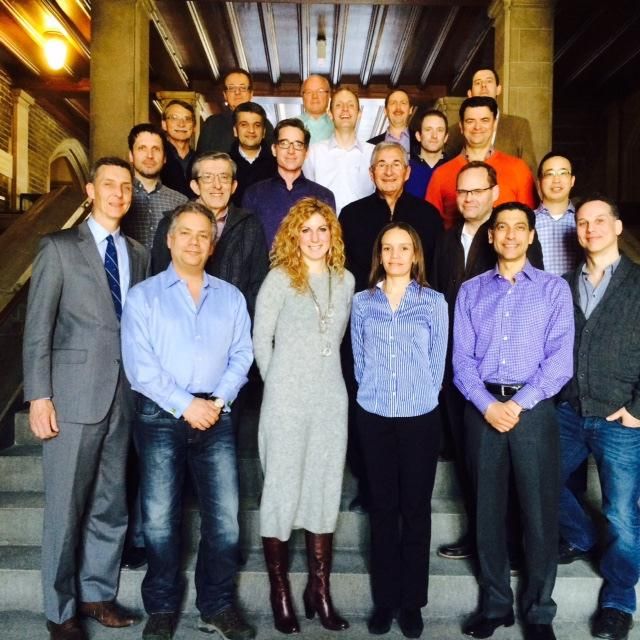
A one-day, Division retreat was conducted at Hart House on the University of Toronto campus
on February 28, 2015. Guests included Department of Surgery Chair, Dr. James Rutka, and
the retreat was facilitated by David MacCoy of First Leadership Ltd. Twenty-three members
of the Division, from 5 hospitals, attended to engage in review and dialogue of the issues and
shape a strategic plan for the future. Prior to the retreat interviews had been completed by
an external consultant with twelve Division members and an on-line survey engaged twenty-
one members. Any strategic process has two key strategic elements: deciding “what to go
for” and working out “how best to get there”.
Members worked in facilitated large and small group sessions to identify challenges, key
priorities and actions to be taken over the next five years and beyond. Strategic themes and
activities were developed to contribute to the preparation of this plan and move the Division
toward the Vision.
5Division of Vascular Surgery
STRATEGIC PLAN 2015-2020
VI. The Vision, Mission & Values of the Division of Vascular Surgery
• United in a Tradition of Leadership, Discovery & Excellence
VISION
• To improve vascular health through clinical excellence, innovation, discovery
and the training of tomorrow’s leaders.
MISSION
• Excellence – We strive to provide excellent care to every patient, in every situation.
• Quality – As we strive for clinical excellence we work in an environment of continuing
quality improvement where he track, improve and report our outcomes so they serve as
benchmarks for others.
• Collaboration – We encourage the principle of “virtual centres of excellence” through
teamwork and collaboration with Division members throughout the city, other
physicians, specialties and allied health personnel.
SHARED
• Integrity & Responsibility – We expect honesty, transparency and integrity from
VALUES ourselves and others as we practice to the highest ethical standards.
• Recognition & Respect – We recognize and support the contributions of ALL our
colleagues, and celebrate their accomplishments and our legacy.
• Diversity & Inclusiveness – We celebrate the diversity of the various communities we
serve.
6Division of Vascular Surgery
STRATEGIC PLAN 2015-2020
Strategic Directions
A culture of
Clinical Discovery & Superior respect,
Excellence Innovation Education recognition &
collaboration
VII. Strategic Directions 2015 – 2020
STRATEGIC DIRECTION 1 – CLINICAL EXCELLENCE
We will ensure that our surgical practice is socially and economically responsible and results in
the best outcomes for patients while facilitating world class research and teaching. This will
be supported by the alignment of privileges, stronger partnerships and linkages, development
of sub-specialties, consolidating best practices, coordinated outreach to university and
community hospitals and coordination of clinical services.
Objective 1 – Privileges
In order to promote collaborative clinical exercises within our hospitals and centres,
surgeons at each academic hospital will have courtesy privileges at the other academic
hospitals in the Division.
Objective 2 – Partnerships in the Coordination of Clinical Activities
Clinical excellence will be improved by developing strong partnerships, for example,
with medical imaging, cardiac surgery, cardiology, nephrology and other groups of
healthcare providers. In addition, we will strengthen external linkages with referring
physicians to improve clinical coordination and collaboration. We will develop “virtual
centres of excellence” within our Division and with physicians from other specialties.
These initiatives will align with those of the Cardiac Centres and Heart & Vascular
Institutes at our individual hospitals.
7Division of Vascular Surgery
STRATEGIC PLAN 2015-2020
Objective 3 – Clinical Sub-specialties
The Division will continue the process of developing Vascular Surgery sub-specialties,
or areas of expertise, including complex aortic surgery, complex limb salvage, wound
and diabetes management and hemodialysis, among others. These subspecialty
interests and expertise will drive clinical coordination within the University Division
and result in collaborative and multidisciplinary academic and educational initiatives.
Objective 4 – Best Practices & Quality Improvement
In order to lead in the development of vascular surgery best practices, we will
carefully collect data on all procedures. All vascular surgery procedures will eventually
be included in CQI database (s) with appropriate risk adjustment, reporting and
outcome measurement. This will assist in best practices and guideline development
and provide benchmarks for performance improvement.
Objective 5 – Outreach
We will coordinate outreach efforts with university affiliated and community
hospitals. In addition, we will develop initiatives to optimize the delivery of urgent
and elective vascular surgery provision through equitable and fair processes.
STRATEGIC DIRECTION 2 – INCREASE DISCOVERY & INNOVATION
To become a global leader in our field, we will expand discovery and innovation initiatives
increasing Division wide resources and capabilities; appointing a Division of Vascular Surgery
Research Director; building a research database; increasing joint grant-writing and the output
of peer reviewed publications; building capacity in clinical outcomes research; integrating pure
scientists with clinical teams, and increasing investments in basic science.
Objective 1 – Fund Raising
Currently the University Division’s ability to financially support protected time,
centralized research resources and academic salary support is limited. Fundraising,
philanthropy and endowed, or term, positions are vital instruments to promote
Division wide academic productivity. Centralized research needs, such as grant writing
and statistical support, as well as individual investigator support would be supported
8Division of Vascular Surgery
STRATEGIC PLAN 2015-2020
with these positions. An important objective for the Division will be finding sources of
funding for these positions from foundations, corporations and grateful patients.
Objective 2 – Division Research Director
In view of the importance the Division places on Discovery and Innovation, a Research
Director will be appointed. Taking the lead for our overall research strategy, the
Research Director will engage members of the Division in developing a research
agenda and needed resources to encourage research and innovation collaboration
across the various hospitals.
Objective 3 – Research Database
The Division will develop a Research Database. As a first step, we will amass an
inventory of research, innovation activities and interests of Division members to
develop a research agenda. Next, we will take steps to collect and assemble data in
order to build a usable Divisional Research Database accessible to all members.
Objective 4 – Increase Academic Productivity
Over the next five years, we will aim to increase the number of grants for research and
double the output of peer reviewed publications. Objective bibliometrics, such as
number of citations and h-factor, will be used as measurements of academic
productivity at the Division and individual surgeon levels. In addition, we will
encourage Division members to get involved in professional conferences and societies
and make presentations on topical issues in vascular surgery. To achieve this, the
Division will increase joint grant-writing, and develop statistical and research
resources in support of members.
Objective 5 – Clinical Outcomes Research
We are committed to pursuing a significant increase in clinical outcomes research. To
this end, the Division will recruit a clinical trials specialist to champion this objective.
Centralized research resources will also be developed so we take advantage of the
breadth of clinical activity within our Division’s individual hospital groups. Also, the
eventual coordination of hospital based Ethics Review Boards will allow more city
wide clinical trials with our University Division being a prime site for industry and non-
industry funded clinical trials.
9Division of Vascular Surgery
STRATEGIC PLAN 2015-2020
Objective 6 – Integrate Pure Scientists with Clinical Teams
We will explore the opportunities of integrating pure scientists with clinical teams to
enhance discovery and clinical outcomes. Recruitment of pure scientists will be an
objective in 2016/17.
Objective 7 – Investment in Basic Science
To deepen our understanding of the mechanisms involved in vascular disease, the
Division will seek funding for opportunities to support basic science research in
focussed areas of research.
STRATEGIC DIRECTION 3 – PROVIDE SUPERIOR EDUCATION & CAREER DEVELOPMENT
The Division will continue to provide excellent education of academic surgeons and the next
generation of leaders in vascular surgery taking steps to adopt innovative education initiatives
and technology; faculty development including career planning for trainees; a mentoring
program for new faculty while aligning and balancing clinical, research and academic
priorities, respectful retirement planning, and a fair process for faculty review.
Objective 1 – Train Tomorrow’s Leaders in Academic Vascular Surgery
Our Division will build on our tradition of leadership and academic excellence by
selecting residents and fellows who are best suited for an academic career.
Enrollment in the Surgeon Scientist Training Program will be increased so as many
trainees as possible receive the research training necessary for a successful academic
career.
Objective 2 – Innovative Education Initiatives
We will take steps to continue and expand innovative education initiative such as the
Vascular Surgery Boot Camp, Vascular Surgery Half-Days and the Canadian
Endovascular Skills Summit with a view to making them available throughout the
Division and beyond. We will seek to invest in simulation labs and other innovative
technology that will keep us at the leading edge of vascular education. In addition, we
will offer to pilot competency based, learner focused education and evaluation of
10Division of Vascular Surgery
STRATEGIC PLAN 2015-2020
trainees. Collaborative fellowship programs will be developed to align with clinical
sub-specialties and “virtual centres of excellence” (see Objective 1.2)
Objective 3 – Career Planning
We will design and introduce a process to advise trainees in long range career
planning and to assist them in obtaining suitable employment or fellowships upon
graduation. Milestones for knowledge, skills, attitudes and performance will be
established with support systems to assist graduates with career development.
Leadership training will begin at the resident level.
Objective 4 – Faculty Development: Early, Mid and Later Career Stages
We will provide support to faculty at the early, mid and later stages of career. For new
faculty, we will establish a strong mentoring and transition program to draw on the
expertise of established faculty members. Steps will be taken to align and balance
clinical, research and academic priorities for all new faculty. The Division will create a
Collaborative Leadership Development Program for early and mid-career faculty
including academic scholarship initiatives such as research, administrative and
education skills workshops, advanced education programs and inter-professional
education programs, and advice on arrangement of relevant sabbaticals. To ensure
respectful retirement for later career faculty, we will align with Department of Surgery
policy on end of career surgeons which is being developed.
Objective 5 – Faculty Review
We will work to develop a “fair process” for faculty review that aligns the expectations
of the Division, the Department and the hospital, with the individual’s job description
and academic role category. Teaching, academic productivity and clinical service will
be cornerstones of faculty review. However, we need a transparent process that takes
into account many other important factors including innovation, community service,
mentoring, collegiality and external recognition for example.
11Division of Vascular Surgery
STRATEGIC PLAN 2015-2020
STRATEGIC DIRECTION 4 – EMBED A CULTURE OF RESPECT, RECOGNITION &
COLLABORATION
We will strive to nurture and build a culture of respect, recognition and collaboration among
members of the Division and the partners with whom we work. This will be supported through
enhanced communications, meetings, surveys, recognition of contributions, and building the
Division “brand”.
Objective 1 – Communications
We will strive to enhance communication ensuring that all members, including
administration and allied health are informed in a timely manner of Division
developments and accomplishments. In addition to the Division Newsletter, we will
explore communication initiatives using social media to connect all stakeholders.
Objective 2 – Division Annual Meeting and Social Events
The Division will hold an Annual Meeting to engage members in discussion about key
issues and accomplishments and to review progress with respect to this plan. We will
also plan social events at suitable times to bring members and their families together.
Objective 3 – Conduct Annual Survey of Division members
In order to assess the state of the Division, a survey of members will be conducted
annually with the results shared.
Objective 4 – Build the “Brand”
We will take steps to build the “brand” of the Division ensuring that it is seen as the
best place to train and work. We will ask key stakeholders to assess our “brand”
identity, achievements and reputation. Members of the Division have had many
accomplishments over the years. We will celebrate our history of leadership by
interviewing, video-recording and publishing the experiences of retired faculty. We
will celebrate their teaching, research and clinical accomplishments in a variety of
ways including publishing their stories in the Newsletter.
12Division of Vascular Surgery
STRATEGIC PLAN 2015-2020
VIII. Supporting & Enabling Activities
The following activities have been identified as key activities to support the implementation of the
Strategic Directions. The Vascular Surgery Division Executive Committee will be tasked as the Core
Group overseeing the implementation of the strategic plan. In addition, some individuals in the
Division will be asked to participate in special groups or sub-committees to focus on these and other
key aspects of plan implementation. To support and enable the Strategic Plan, we will undertake
fundraising activities and appoint a Division Research Director. We will establish a central resource
centre to support the Division’s research initiatives. We will develop a comprehensive
communications plan and a human resources plan to serve the Division.
I. Implementing the Strategic Plan
The Division Chair will lead the implementation of the Strategic Plan. He will appoint
various members to lead specific initiatives as required. Each hospital will be
represented in special groups or sub-committees wherever feasible.
II. Fundraising Initiative (supporting Strategic Direction 2)
Fund Raising to solicit the contributions of grateful patients, government funders and
foundations in order to fund endowed positions within the University Division will be a
key priority.
III. Central Resource Centre to Support the Division (supporting Strategic Direction 2)
The Division will create a central resource centre to support all research initiatives.
For example, we will collaborate to obtain the services of a grant-writer and a
statistician. The Division’s Research Director will be appointed and will also develop
an inventory of current and ongoing research initiatives within the Division.
IV. Division of Vascular Surgery Communications Plan (supporting Strategic Direction 4)
We will undertake several new and several ongoing communication initiatives to
support and enhance the culture of respect, recognition & collaboration. We will
continue to publish the Newsletter as a means of updating all members about
accomplishments, issues and events. We will continue City Rounds and Chair visits to
engage all members in ongoing developments. We will use Social Media as a means of
connecting regularly on immediate topics of interest with members.
13Division of Vascular Surgery
STRATEGIC PLAN 2015-2020
V. Division of Vascular Surgery Human Resources Plan (supporting Strategic Direction 1, 2 & 3)
We will design a Division Human Resources Plan aligned with other University of
Toronto HR plans that will institute Division-wide mentoring of new faculty; a fair
faculty review process; and a faculty leadership development process. We will also
develop a plan and process to assist graduates in obtaining suitable employment.
14Division of Vascular Surgery
STRATEGIC PLAN 2015-2020
IX. IMPLEMENTATION FRAMEWORK
STRATEGIC DIRECTION ACTION & OUTCOME IN 5 YEARS MECHANISM & START TIMELINE
1 – CLINICAL EXCELLENCE
1.1 Privileges Increase in opportunities for Grant courtesy privileges to
Collaborative clinical exercises surgeons in academic hospitals by
end of 2015.
1.2 Partnerships in the Increase opportunities for greater Negotiate agreements 2016.
Coordination of collaboration intra and inter hospitals.
Clinical Activities
1.3 Clinical Sub- Increased the volume of complex aortic Identify champions for sub-
Specialities surgery and the development of multi- specialties 2016. Align with
hospital, multi-divisional and multi- Division’s HR plan.
disciplinary training for surgeons.
1.4 Best Practices & Collection of data on surgery outcomes Continue with current CQI data
Quality Improvement to identify promising and best practices, collection and best practices
guideline development. Our Division to criteria (VQI & NSQIP). All
become the Canadian benchmark for hospitals to input data to common
vascular surgery outcomes CQI database by end of 2016.
1.5 Outreach Coordinated outreach efforts with Coordinated outreach plan by
university affiliated and community 2016.
hospitals and initiative to improve
emergency coverage and increase
referrals and elective surgery volumes.
2 – DISCOVERY & INNOVATION
2.1 Fundraising, Endowed Endowed position(s) to enable long term Seek funding sources 2015 – 2020.
position (s) commitments to academic mission.
2.2 Division Research Leadership for our overall research Identify and appoint a Vice Chair
Director strategy in Vascular Surgery. Increase in by end of 2015.
grants and academic publications.
2.3 Research Database A research database available to all Inventory of research, innovation
members of the Division. activities, and interests 2016.
2.4 Academic Double output of contributions to peer Publications plan to be led by
Publications reviewed publications in 5 years. Research Director. Use
bibliometrics to assess academic
productivity by end of 2015.
2.5 Clinical Outcomes Increased volume of clinical outcomes Recruit a clinical trials specialist to
Research research & clinical trials across the lead this direction 2017.
Division.
2.6 Integrate pure Enhanced discovery and clinical Find opportunities to recruit and
scientists outcomes. integrate 2016.
2.7 Investment in Basic Greater understanding of the Seek funding to support research
Science mechanisms involved in vascular in basic science 2018.
disease.
15Division of Vascular Surgery
STRATEGIC PLAN 2015-2020
STRATEGIC DIRECTION ACTION & OUTCOME IN 5 YEARS MECHANISM & START TIMELINE
3 – SUPERIOR EDUCATION
3.1 Train Tomorrow’s Graduates of our training programs will Recruitment of trainees best
Leaders in Academic work at academic centers throughout suited for academic careers
Vascular Surgery the world. (immediate). Increase enrollment
in SSTP (2016).
3.2 Innovative Education Innovative education initiatives applied Comprehensive plan for
Initiatives throughout the Division (simulation, educational innovation 2016/17.
technology and competency based
evaluation).
3.3 Career Planning All trainees have experienced the career Design career plan process with
planning process. milestones 2018.
3.4 Faculty Development: All new faculty have a mentor and Initiate as part of HR plan 2019.
Early, Mid and Later balanced priorities. Leadership program
Career Stages and retirement plans in place.
3.5 Faculty Review Fair process in place for faculty review. Design and implement in 2016.
4 – CULTURE OF RESPECT, RECOGNITION & COLLABORATION
4.1 Communications All staff are informed in a timely manner Institute existing and new
of Division developments and communication mechanisms 2016.
accomplishments.
4.2 Annual Meeting & Annual meetings are held in Establish a master plan for
Social Events January/February each year with an meetings 2015-16.
overview of the Division’s activities.
Increased number of social events
involving family.
4.3 Annual Survey Survey is conducted in January each Place in master plan for Division.
year.
4.5 Build the “Brand” The U of T Division of Vascular Surgery Initiate development of a “brand”
“brand” is known and admired in strategy 2016-17.
healthcare.
5 – SUPPORTING & ENABLING
5.1 Core Group Oversight Strategic Priorities are implemented as Leads and sub-committees for
appropriate on a timely basis by Strategic Directions 2015 – 2016.
committed leads and Core Group
members.
5.2 Fundraising Endowed position(s) Fund Raising strategy 2015-16.
5.3 Central Resource Services of a grant-writer and a Fundraise, recruit; plan for
Centre statistician; location of database. database 2016.
5.4 Communications Plan Newsletter; City Rounds; Remote Comprehensive Plan 2016.
Rounds; Social Media
5.5 Human Resources Mentoring; Fair Review Process; HR Plan 2016.
Plan Leadership Development; Employment
process for new graduates; retirement
process; recruitment plan.
16Division of Vascular Surgery
STRATEGIC PLAN 2015-2020
X. Vascular Surgery Strategy Map
VISION
United in a Tradition of Leadership, Discovery & Excellence
MISSION
To improve vascular health through clinical excellence, innovation, discovery
and the training of tomorrow’s leaders
VALUES
Excellence Quality Collaboration Integrity & Recognition & Diversity &
Responsibility Respect Inclusiveness
STRATEGIC DIRECTIONS
1. Ensure clinical 2. Expand discovery & 3. Deliver superior 4. Embed a culture of
excellence innovation education & respect, recognition
development & collaboration
We will ensure that our To become a global leader The Division will continue to We will nurture and build a
surgical practice results in in our field, we will expand provide excellent education culture of respect,
the best outcomes for discovery and innovation of academic surgeons and recognition and
patients while facilitating initiatives increasing the next generation of collaboration among
world class research and Division wide resources and leaders in vascular surgery members of the Division
teaching. This will be capabilities; appointing a taking steps to improve and the partners with
supported by the Division of Vascular Surgery innovative education whom we work. This will be
alignment of privileges, Research Director; building initiatives and technology; based on enhanced
stronger partnerships and a research database; faculty development communications, meetings,
linkages, development of increasing joint grant- including career planning surveys, recognition of
sub-specialties, writing and the output of for trainees; a mentoring contributions, and building
consolidating best peer reviewed publications; program for new faculty the Division “brand”.
practices, coordinated build capacity in clinical while aligning and
outreach to university and outcomes research; balancing clinical, research
community hospitals and integrating pure scientists and academic priorities,
coordination of urgent and with clinical teams, and respectful retirement
non-urgent services. explore investments in basic planning, and a fair process
science. for faculty review.
SUPPORTING & ENABLING ACTIVITIES
I. II. III. IV. V.
implementation of Fundraising Centralized Division Division Human
the Strategic Plan Initiatives Resources to Communications Resources Plan
Support the Plan
Division
17Division of Vascular Surgery
STRATEGIC PLAN 2015-2020
XI. Faculty of the University of Toronto Division of Vascular Surgery
Al-Omran, Mohammed Maggisano, Robert
Beder, Aaron Moloney, Tony
Byrne, John Oreopoulos, George
Campbell, Vern Papia, Giuseppe
Cardella, Jonathan Pope, Marc
Dueck, Andrew Roche-Nagle, Graham
Forbes, Thomas Rubin, Barry
Graybiel, Kerry Tanner, Wayne
Greco, Elisa Tse, Leonard
Johnson, William Vucemilo, Ivica
Johnston, K.Wayne Werneck, Christiane
Kucey, Daryl Wheatcroft, Mark
Lindsay, Thomas Wooster, Doug
Lossing, Al
18Division of Vascular Surgery
STRATEGIC PLAN 2015-2020
XII. University of Toronto Division of Vascular Surgery Executive
Dr. Thomas L. Forbes (Chair)
Dr. Mohammed Al-Omran (Division Head, St. Michael’s)
Dr. Aaron Beder (Division Head, Humber River)
Dr. Andrew Dueck (Division Head, Sunnybrook)
Dr. Thomas Lindsay (Division Head, UHN)
Dr. Marc Pope (Division Head, Trillium)
Dr. George Oreopoulos (Director, Postgraduate Medical Education)
Dr. Elisa Greco (Director, Undergraduate Medical Education)
Dr. Mark Wheatcroft (Director, Fellowship Program)
Dr. Giuseppe Papia (Quality & Best Practices)
2You can also read


