EMERGENCY MANAGEMENT PLAN
←
→
Page content transcription
If your browser does not render page correctly, please read the page content below
Dublin Port Company Emergency Management Plan (Public)

      EMERGENCY MANAGEMENT PLAN

The aim of the Dublin Port Company Emergency Management Plan is to outline the
structures and arrangements that will be used in response to an emergency in order to
mitigate:

-   Loss of life or injury to employees, contractors, visitors and local residents
-   Damage to the environment
-   Damage to the facilities, plant and equipment of DPC, its commercial partners, tenant
    companies and neighbours

The plan also aims to ensure that DPC emergency management structures and
arrangements are compatible with the requirements of the 2006 Framework for Major
Emergency Management.”

         Public version No.   Date of Issue   Approved by       Page No.
                 3.0          Jan 2019               EMA        Page 1 of 23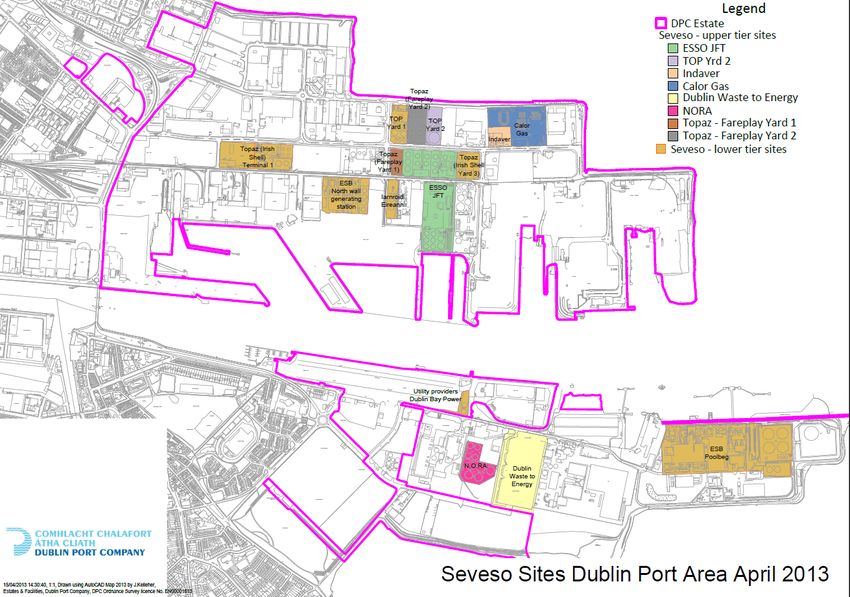
Dublin Port Company Emergency Management Plan (Public)

                                                     Contents
1. INTRODUCTION ................................................................................................................. 3
2. OBJECTIVES ...................................................................................................................... 4
3. SCOPE AND ASSUMPTIONS ............................................................................................ 5
4. ABBREVIATIONS USED THROUGHOUT THIS PLAN ...................................................... 7
5. DPC EMERGENCY RESPONSE ORGANISATION AND ROLES ...................................... 8
6. PORT WIDE ALARM ACTIVATION .................................................................................. 13
7. COMMUNICATIONS ......................................................................................................... 16
8. TRAINING, EXERCISE AND MAINTENANCE PLAN ....................................................... 17

ANNEX A: CONTACT DETAILS: SECURITY MANAGERS, HARBOUR POLICE &
PORT SECURITY, EMERGENCY OPERATIONS CENTRE & FIRE WARDENS
(OIL JETTY)……………………………………………………………………………………….19

ANNEX B: DPC PORT MAP & EVACUATION PLAN.………………………………………20

ANNEX C: DUBLIN PORT SEVESO SITES..………………………………………………..22

NOTES…………………………………………………………………………………………….23

              Public version No.         Date of Issue            Approved by                Page No.
                      3.0                Jan 2019                        EMA                 Page 2 of 23
Dublin Port Company Emergency Management Plan (Public)
1. INTRODUCTION
Dublin Port covers an area in excess of 650 acres, within which many activities of a
marine, commercial and industrial nature take place. This Emergency Management
Plan (EMP) is designed to provide guidelines to the Dublin Port Company (DPC) for
responding to an emergency within their area of jurisdiction.
The maritime jurisdiction of Dublin Port is defined under the Harbours Act 1996 (as
amended). The land based limits are detailed in the Map at Annex J-1.
Operations at Dublin Port include the following:
a. Vessel arrivals, departures and shifts.
b. Pilotage, towage & vessel traffic services (VTS)
c. Lo-Lo terminals operated in common user area and in designated terminals.
d. Ro-Ro terminals facilitating both freight and passenger traffic.
e. Facilities for handling petroleum products, LPG and molasses.
f. Common oil pipeline linking the oil berths with the storage facilities.
g. Dry bulk handling facilities for handling concentrate, peat, oil, grain, animal
feedstuff, fertilizer, sand, coal, petroleum coke, slags, scrap metals and
cement.
h. Warehouse space
i. Vehicle storage facilities.
j. Cruise liner operations.
k. Leisure craft mooring and movements at Poolbeg and Dublin City Marinas.
In addition to the activities listed, the Dublin Port road network caters for the movement
of up to 15,000 vehicle movements through the port per day.
Tenant companies operate several industrial/commercial sites within the DPC estate.
Several of these companies are the de-facto ‘operating company’ of those sites, and
have ultimate responsibility for emergency planning within those facilities.
There are currently eight upper tier Seveso sites within the DPC estate, and a number
of lower tier sites (See Annex C on page 22). These sites are operated by DPC tenant
companies and are regulated under EU Control of Major Accident Hazards involving
dangerous substances legislation (Known as COMAH regulations), and transposed
into Irish law in SI No. 74/2006.
It should be noted that the DPC Emergency Plan (Public) is an unrestricted document;
therefore annexes to the plan are not included in this document for general safety and
security, ISPS and confidentiality reasons.
For further information please contact the Dublin Port Company: Land Operations
Manager on 01 8876000.
Public version No. Date of Issue Approved by Page No.
3.0 Jan 2019 EMA Page 3 of 23Dublin Port Company Emergency Management Plan (Public)
2. OBJECTIVES
The objectives of this plan are to
a. Provide an emergency management organisation structure and arrangements
which will enable DPC to respond rapidly and efficiently to any emergency in order
to prevent injury to personnel, damage to property or the environment as well as
minimizing or eliminating the impact to neighbouring communities.
b. Ensure all appropriate and relevant resources are identified in advance and made
available as quickly as possible during an emergency within Dublin Port.
Public version No. Date of Issue Approved by Page No.
3.0 Jan 2019 EMA Page 4 of 23Dublin Port Company Emergency Management Plan (Public)
3. SCOPE AND ASSUMPTIONS
The Dublin Port EMP outlines the DPC structures and arrangements for responding to
emergencies that may occur within Dublin port.
The plan is intended for guidance purposes only and may be adapted depending on the
circumstances of a particular emergency. The actions to be taken in any given emergency
will be decided by the Emergency Management Team (EMT).
This plan may be activated by the CEO of DPC, the Emergency Management Marine
Coordinator (EMMC) OR the Emergency Management Land Coordinator (EMLC), or their
alternates, depending on the circumstances and severity of the incident.
The plan is designed to cater for both marine and land based emergencies.
Marine Emergency Scenarios include:
Major incident on-board a vessel such as fire, flooding or cargo related.
Collision between vessels or between a vessel and a fixed object.
Grounding of a vessel.
Major oil spillage from a vessel or jetty.
Major oil spill at sea or oil entering the port from a source upriver.
A security incident, involving a ship, which has the potential to escalate into an
emergency situation.
Land Emergency Scenarios include:
Major fire within the general port area.
Major oil spill.
Major spill of hazardous material.
A vehicle accident involving hazardous material.
Chemical incidents (e.g. toxic cloud).
Major incident in an oil, gas or hazardous material storage facility.
Marine & Land Emergency Scenarios include:
Infectious Disease (Human or Animal) on Ship due to enter Dublin Port.
Incident involving transportation or storage of dangerous goods
Severe weather event
Public version No. Date of Issue Approved by Page No.
3.0 Jan 2019 EMA Page 5 of 23Dublin Port Company Emergency Management Plan (Public)
The scenario specific sub-plans for the above events have been developed as part of the
overall plan. These focus on the immediate actions to be taken by internal sections,
functions or departments of the port authority and are therefore restricted and not
included in the public document. However it should be noted that the scenarios are for
operational and emergency planning purposes as well for use in training and exercises.
DPC adheres to an ‘all hazards approach’ to Emergency Management, in that the same
structures, resources and personnel will be used to respond to all emergencies occurring
in or affecting the port.
This plan makes the following assumptions:
All personnel with specific roles and responsibilities are familiar with their role in the
plan, and have been exercised in the implementation of the plan.
All contact details for key stakeholders are up to date at the date of the last plan
revision.
That the resources outlined in the plan are available and maintained.
Public version No. Date of Issue Approved by Page No.
3.0 Jan 2019 EMA Page 6 of 23Dublin Port Company Emergency Management Plan (Public)
4. ABBREVIATIONS USED THROUGHOUT THIS PLAN
AAR After Action Review (formal debrief).
AGS An Garda Siochana
CA Competent Authority
COP Common Oil Pipeline
CEO Chief Executive Officer
DTTAS Department of Transport, Tourism and Sport
DCC Dublin City Council
DFB Dublin Fire Brigade
DG Dangerous Goods
DoH Department of Health
DPC Dublin Port Company
EMA Emergency Management Administrator
EMLC Emergency Management Land Coordinator
EMMC Emergency Management Marine Coordinator
EMP Emergency Management Plan
EMT Emergency Management Team
EOC Emergency Operations Centre
EPA Environmental Protection Agency
ESRVP Emergency Services Rendezvous Point
HM Harbour Master
HP/PS Harbour Police/Port Security
HSA Health & Safety Authority
HSE Health Service Executive
IHR International Health Regulations (2005)
IMDGC International Maritime Dangerous Goods Code
IRCG Irish Coast Guard
ISPS International Ship and Port Facility Security (code)
MCIB Marine Casualty Investigation Board
MSDS Material Safety Data Sheet
NOG National Operations Group (oil spill)
NOK Next of Kin
OFA Occupational First Aid
PES Principal Emergency Services
PRA Principal Response Agencies
PFSP Port Facility Security Plan
POC Port Operations Centre
SIC Site Incident Controller
SSP Ship’s Security Plan
SWEAT Severe Weather Event Assessment Team
SWEP Severe Weather Event Plan
VTS Vessel Traffic Services
Public version No. Date of Issue Approved by Page No.
3.0 Jan 2019 EMA Page 7 of 23Dublin Port Company Emergency Management Plan (Public)
5. DPC EMERGENCY RESPONSE ORGANISATION AND ROLES
DPC CEO
Tenant Company DPC EMT Principal Response
EMT Agencies and
Representative Principal Emergency
Services
EMT Admin
Support Officer
DPC Ops External DPC Staff
Support Support
Team - An Garda
Siochana
- HSE
- DCC
Emergency Dublin Metropolitan - Dublin Fire Brigade
call takers Area Major - Ambulance
Emergency Plan - IRCG
Tenant
Company
Support Team
Public version No. Date of Issue Approved by Page No.
3.0 Jan 2019 EMA Page 8 of 23Dublin Port Company Emergency Management Plan (Public)
DPC Emergency Management Team Structure
EMT Role Appointment holder
Chief Executive Officer CEO
Emergency Management Marine Coordinator Harbour Master
(EMMC)
Alternate Deputy Harbour Master
Emergency Management Land Coordinator Land Operations Manager
(EMLC)
Alternate Security Manager
Infrastructure and Services Coordinator Engineering Services Manager
Alternate Port Engineer
Personnel and Welfare Coordinator Head of Employee Relations &
Human Resources and Cruise
Business Manager
Alternate Human Resource Officer
Communications Coordinator Company Secretary
Alternate Communications Manager
Information and Technology Coordinator IT Manager
Alternate IT Officer
Facilities Coordinator Head of Property
Alternate TBC
EHS Coordinator EHS Manager
Alternate EH&S Officer
EMT Administration Support Officer Clerical/ Admin Officer
Emergency Management Administrator Land Operations Manager
Public version No. Date of Issue Approved by Page No.
3.0 Jan 2019 EMA Page 9 of 23Dublin Port Company Emergency Management Plan (Public)
EMT Organisation Chart
DPC CEO
EMT Chairman
(EMMC or EMLC)
Site Incident
Coordinator
Admin Support
Officer
Marine Land Personnel & Welfare Communicatio Information &
Infrastructure & EHS
Function Operations Coordinator n Coordinator Technology
Services
Function Coordinator Coordinator
Coordinator
VTS Marine
Pilots Tugs Terminal
operators Operatives Port Harbour Fire General
CSO and General H&S Officer
Security Police Wardens Workers Crafts
PFSO Workers
Public version No. Date of Issue Approved by Page No.
3.0 Jan 2019 EMA Page 10 of 23Dublin Port Company Emergency Management Plan (Public)
EMT - Overview and role
The EMT is made up of senior DPC managers drawn from the key functional areas of
the company. The specific roles and responsibilities of team members largely reflect
their day-to-day responsibilities.
The DPC CEO has overall responsibility for all operations in the port, both marine and
land. Many of the day-to-day tasks are delegated to the EMMC and the EMLC, as well
as to other management functions. Each EMT member has a designated alternate or
deputy, capable of standing in for the primary EMT member should they be unavailable
for any reason. Alternates receive the same training for EMT operations as primary
team members. Others not listed on the core team may be drafted to the team if their
expertise is required.
The Chair of the EMT reports to the DPC CEO, who may in certain situations decide to
chair the EMT him/herself.
In general terms the overall role of the EMT is to:
Coordinate and control the DPC response to an emergency within the port area
of responsibility
To liaise with the external emergency services and provide all reasonable
support to them
To manage DPC’s interaction with external stakeholders throughout the
response to an incident.
Emergency Management Administrator (EMA)
The EMP will be maintained by the Emergency Management Administrator (EMA) who
will ensure the plan is kept up to date, and is responsible for arranging training and
exercises for EMT members and support staff. The EMA will also ensure the
Emergency Operations Centre (EOC) is fit for purpose. The EMA is not an EMT
operational role as all tasks associated with the role are undertaken outside of EMT
operations. The EMA will ensure the plan is reviewed internally each year and
externally once every 5 years
Site Incident Coordinator (SIC)
In the event of an emergency occurring within the port area of operations, on the
marine or the land side, DPC will appoint a ‘Site Incident Coordinator’. This will usually
be the EMMC or EMLC, their alternate or a person appointed by him. The SIC’s role is
to manage the DPC resources at the site, to liaise with external agencies responding to
the emergency and to keep the EMT up to date with the situation at the emergency site.
The SIC will be in direct contact with the Port Operations Centre (POC) by radio, and
will be equipped with a mobile phone.
Public version No. Date of Issue Approved by Page No.
3.0 Jan 2019 EMA Page 11 of 23Dublin Port Company Emergency Management Plan (Public)
Emergency Call Takers
A panel of emergency call takers has been identified and trained in assisting the
receptionist with responding to calls to DPC in the event of an emergency. The call
takers take all emergency related calls and ensure the calls are logged and/or passed
to the appropriate EMT or DPC person.
Vessel Traffic Services (VTS) Operator
The VTS operator is the primary point of contact in the event of any marine related
incident. In the event of an incident the VTS operator will immediately contact the duty
Harbour Master (HM) who will decide what action should be taken, including
mobilisation of the EMT. If the duty HM deems it appropriate, the VTS operator will
contact emergency services and mobilise the tugs. VTS & HP/PS will liaise closely
during all emergencies.
Marine Operatives
Marine Operatives of the port will support the VTS staff and the tugs, and will act on all
instructions issued by the Harbour Master during an emergency.
Harbour Police/Port Security (Contact details at Annex B)
The HP/PS has a critical role in the security of port facilities, roads and infrastructure,
which include the control and coordination of emergencies including initiating the
immediate response to an emergency incident. They also play a key role in alarm
monitoring, receipt of calls, gathering of information, notification of emergency services,
meeting the emergency services at the ESRVP, guiding them to the site of an
emergency within the port, and controlling traffic within the port.
DPC Fire Wardens (Contact details at Annex B)
DPC Fire Wardens staff the oil jetty’s on a 24/7/365 basis. They are responsible for the
safety and security of all shipping operations on the Oil Jetty, the Common Oil Pipeline
(COP), and can communicate directly with the POC and COP users via specific radio
telephone channels.
DPC Fire Marshals
DPC has identified and trained a number of Fire Marshals who have a key role in
accounting for personnel in their designated area during an emergency. Fire Marshals
have been appointed in all DPC buildings, and they have a key role in accounting for
personnel in their facility during evacuations, and in keeping the EOC informed of
events in their area.
Public version No. Date of Issue Approved by Page No.
3.0 Jan 2019 EMA Page 12 of 23Dublin Port Company Emergency Management Plan (Public)
DPC Occupational First Aiders
DPC has a number of qualified Occupational First Aid (OFA) staff suitable for
deployment in the event of an emergency. OFA’s report to the Incident Site Coordinator
once they have been accounted for by their Fire Marshal, and are prepared to
administer first aid and to assist the emergency services on request.
The Emergency Operations Centre (EOC) (Contact details at Annex B)
The primary EOC is located on the 1st floor of the POC located at the southern end of
Breakwater Road. The EMT will meet here in the event of an emergency being
declared. Should the emergency affect the POC then the alternate EOC will be used
and is based in the IT training room located on the lower ground floor of the Port Centre
on Alexandra Road. Should both locations be unavailable then the EMT Chair will
decide on an appropriate location and inform other EMT members. Both the primary
and alternate EOC are equipped for emergency operations.
Emergency Services
In the event of an emergency in Dublin Port, Emergency Services should go
immediately to the Emergency Services Rendezvous Point (ESRVP), located at the
junction of East Wall Road & Tolka Quay Road west. HP/PS will meet with and guide
the emergency services to the area of emergency, if safe to do so. The primary unit of
the initial lead agency will attend the scene and relay information to emergency
services gathered at or near the ESRVP. In a multi-agency response the lead agency
will generally appoint a senior officer as the Incident Commander or Coordinator at a
safe forward point and senior operational staff from each emergency service and the
DPC appointed SIC will collectively manage the emergency from this location.
EMT Member - Administration Support Officer. (Administrative/ clerical officer)
Provide all administrative support required in by the EMT, including but not
limited to
The setting up of the EOC on activation of the EMT
Maintain an incident log throughout the emergency
Acting as a conduit between the EMT and the administrative support
personnel (call takers, secretarial support etc.)
Information Management Officer (IMO).
The IMO is responsible for maintaining the information display boards in the EOC. This
role should be filled by an EMT member who has been trained in the role but can be
filled by any EMT member if a trained IMO is not available. The panel of EMT IMO’s
should receive refresher training every two years, and should be practiced in the role
when the EMT is exercised.
Public version No. Date of Issue Approved by Page No.
3.0 Jan 2019 EMA Page 13 of 23Dublin Port Company Emergency Management Plan (Public)
6. PORT WIDE ALARM ACTIVATION
The DPC fire alarm panel system is located in the HP/PS Control Room, situated on the
ground floor of the POC, Breakwater Road, Dublin Port. The fire alarm system
monitors approximately 21 sites, and break glass units located throughout the port
estate.
The fire alarm system can be activated manually or automatically from various points
around the port directly linked to the system. When activated, the HP/PS are alerted
and investigate the alarm before deciding on what action is required.
The port wide sirens are located at the ESB North Wall Power Station, the Oil Jetties
and Port Centre, and are generally regularly on a scheduled basis. With the exception
of alarm tests, all pumping stops immediately on sounding of the port wide siren.
For confirmed alarm activations, the affected site and HP/PS must call 999/112 and
request emergency services attendance, whilst clearly stating the nature of the
emergency, name and location of the site affected.
In passing information to the Emergency Services the E.T.H.A.N.E. pneumonic should
be used:-
- Exact location of the emergency
- Type of emergency – e.g. Fire; hazardous material spill; Road Traffic
Accident.
- Hazards, present and potential
- Access route to the emergency
- Number and type of casualties (if known)
- Emergency Services – those present and those required
Once confirmed HP/PS will immediately open the emergency gates located at the
western end junction of Tolka Quay Road and East Wall Road and this immediate area
operates as the ESRVP.
DFB will be dispatched to the Port to deal with the incident, whilst HP/PS will implement
a traffic control plan, with the support of Gardaí, as required.
The port wide alarm system is a continuous wailing alarm sound, similar to an air-raid
siren. On hearing this alarm port users should:
- Be aware that an incident is on-going.
- Account for staff, visitors and contractors.
- Continue to operate as normal unless instructed otherwise or individual company
SOP’s indicate otherwise.
- Wait for further instructions from the HP/PS or the PES.
Public version No. Date of Issue Approved by Page No.
3.0 Jan 2019 EMA Page 14 of 23Dublin Port Company Emergency Management Plan (Public)
Port users, and members of the wider community, are asked to bear in mind that calling
DPC by telephone during sounding of the port wide siren may block telephone lines at
a vital time. Port users should await further information from the HP/PS, whilst
members of the public should tune in to a national radio station for updates.
A new port-wide fire-main was installed in 2015 and replaced the former Salt Water
mains system that covers the majority of bulk fuel storage facilities in Dublin Port. The
system is fully automated and is controlled from the Port Operations Centre Control
Room that is manned 24/7 by HP/PS.
Port Evacuation
During an emergency it may be necessary to evacuate the port, or parts of the port, for
safety reasons.
The HP/PS will control traffic flow throughout the port in the event of an evacuation of
one or more areas.
The details of port evacuation routes are included at Annex B to this plan.
Public version No. Date of Issue Approved by Page No.
3.0 Jan 2019 EMA Page 15 of 23Dublin Port Company Emergency Management Plan (Public)
7. COMMUNICATIONS
In the event of an emergency in Dublin Port the media and social media will be critical in
informing the public of the incident. The perception of what has happened and whether
people perceive themselves at risk will depend on what they see and hear. The
importance of managing this relationship with the media cannot be overstated especially
concerning information released via formal and informal (social media) channels.
Members of the public seeking information should tune in to local and national radio and
television stations; social media platforms e.g. Facebook, Twitter.
Concerned members of the public can contact DPC by phone, email or social media;
however DPC’s first priority will be to assist Emergency Services in the protection of life,
property and the environment and that patience will be required when trying to contact
them during an emergency. The primary point of contact for incidents on port tenants
sites should be the company itself or for general port incidents 01 8876000 or by
emailing info@dublinport.ie
Telephone Enquiries
The response to callers by reception staff at DPC will be determined by the information
they may have at the time, and the specific instructions of the EMT as issued through
the EMT Communications Coordinator.
DPC Spokesperson
The DPC CEO in conjunction with the EMT Communications Coordinator will appoint a
spokesperson to speak directly to the media and/or issue media releases.
Public version No. Date of Issue Approved by Page No.
3.0 Jan 2019 EMA Page 16 of 23Dublin Port Company Emergency Management Plan (Public)
8. TRAINING, EXERCISE AND MAINTENANCE PLAN
General
DPC’s Emergency Management competency is continuously enhanced through
participation in training and exercises at different levels. DPC management regularly
participate in Emergency Management exercises on tenant sites, as well as exercising
as the DPC EMT in a stand-alone capacity, at least twice annually. Whilst there are a
number of scenario specific sub-plans associated with the overall EMP, DPC adheres to
an ‘all hazard approach’ to Emergency Management.
It will be the responsibility of the EMA to ensure all aspects of the Training, Exercise &
Maintenance Plan are implemented. Training and exercising within the context of DPC’s
EMP is generally concerned with achieving the following objectives:
Continuously developing the competence of the EMT organisation
in implementing the plan.
Continuously improving the plan by identifying potential gaps in the
plans during training exercising and taking action to ensure these
are addressed.
Continuously familiarising the EMT members and supporting staff
with the plan and with their roles during plan implementation.
Objective
The objective of this ‘Training, Exercise and Maintenance Plan’ is to provide a
structured framework for training and exercising the members of the EMT in their roles
as well as providing a sound basis for maintaining the integrity of the information
contained within the plan.
Annual Training Requirement
Training will be conducted annually as follows:
EMT members and their alternates will receive (induction or refresher) training in
relation to the nature of emergencies and their role in the Emergency
Management System.
The EMT will exercise formally in the implementation of the EMP.
Administrative staff and potential support group members (e.g. emergency call
takers) will receive Emergency Management familiarisation training.
Security, reception and other staff will receive training on the EMP sub-plans and
their role in implementing the plans, as appropriate.
Public version No. Date of Issue Approved by Page No.
3.0 Jan 2019 EMA Page 17 of 23Dublin Port Company Emergency Management Plan (Public)
The EMA will ensure training records are maintained for all EMT training activities.
EMT exercises will consist of two exercises per year, one land and one marine based
to ensure all possible emergency situations are regularly covered.
In addition to DPC specific EMT training, management and staff of DPC regularly
participate in or observe at tenant site emergency exercises, many of which are
attended by the PES.
Public version No. Date of Issue Approved by Page No.
3.0 Jan 2019 EMA Page 18 of 23Dublin Port Company Emergency Management Plan (Public)
Annex A: Contact Details
For Security Managers, Harbour Police & Port Security, Emergency Operations Centre
and Fire Wardens
SECURITY MANAGERS, HARBOUR POLICE & PORT SECURITY
Name Phone E-mail
Security 01 8876000
Managers
Fire Wardens 01 8559010
Harbour Police & 01 8876858 controlroom@dublinport.ie
Port Security &
Control Room 01 8876859
EMERGENCY OPERATIONS CENTRE
EOC Line Number
1 01 8876833 or 01 7040833
2 01 8876834 or 01 7040834
Fax Number 01 8876057
Public version No. Date of Issue Approved by Page No.
3.0 Jan 2019 EMA Page 19 of 23Dublin Port Company Emergency Management Plan (Public)
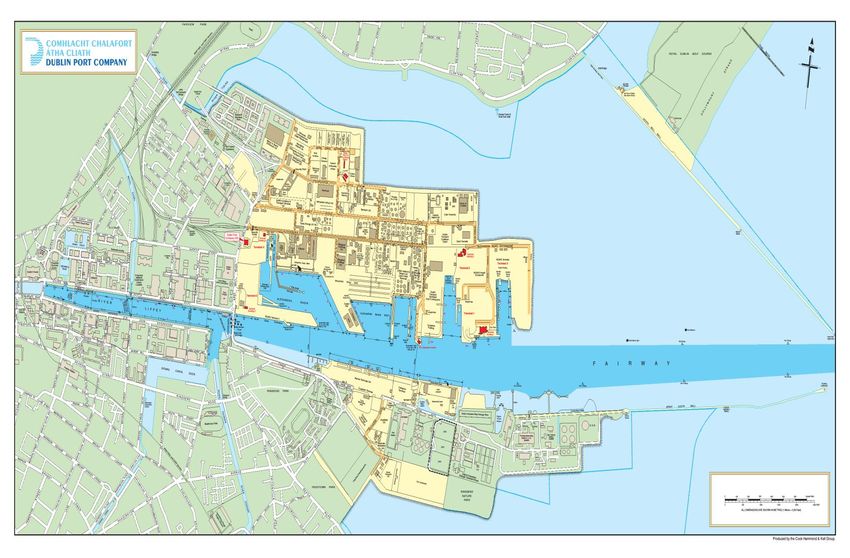
Annex B – Port Map & Evacuation Plan
1
2
3
654
Public version No. Date of Issue Approved by Page No.
3.0 Jan 2019 EMA Page 20 of 23Dublin Port Company Emergency Management Plan (Public)
Dublin Port Company Evacuation Plan
DPC has circa 155 employees located at the following locations.
Port Centre, Corner of East Wall Road & Alexandra Road.
Maintenance & Services Building, Bond Drive Extension
Oil Jetty Control Room, Jetty Road
Port Operations Centre, Breakwater Road
Terminal 1 Building, Terminal Road South
All locations have individual emergency evacuation Standard Operating Procedures
including assembly points. Due to the nature of business carried out within the port via
the common oil pipeline and the bulk storage of petroleum products, LPG and molasses
there is always the potential for a serious event to occur, which could require a full or
partial evacuation.
Six evacuation and or alternative routes to exit/enter the port environs have been
designated for all port users, including emergency services in attendance.
1. Promenade Road
2. Tolka Quay Road (locked gates, keys held by HP/PS)
3. Alexandra Road
4. Port Operations Centre (facilitated by HM via Marine Operatives)
5. East Oil Jetty (life boat capsule)
6. West Oil Jetty (life boat capsule)
In addition to the above, Alexandra Road (DFT terminal between Breakwater Road &
Terminal Road) is a designated evacuation route. In addition to the above, DPC
acknowledge there are other alternative evacuation routes available to be utilised,
however the nature or extent of the event, along with the directions of emergency
services would dictate the actions of all parties involved.
Public version No. Date of Issue Approved by Page No.
3.0 Jan 2019 EMA Page 21 of 23Dublin Port Company Emergency Management Plan (Public)
Annex C – Dublin Port SEVESO sites
Public version No. Date of Issue Approved by Page No.
3.0 Jan 2019 EMA Page 22 of 23Dublin Port Company Emergency Management Plan (Public)
Notes
Public version No. Date of Issue Approved by Page No.
3.0 Jan 2019 EMA Page 23 of 23You can also read


