Coronavirus A Northern Health (COVID-19) guide for your community - This document will be updated as new information
←
→
Page content transcription
If your browser does not render page correctly, please read the page content below
Coronavirus
                             (COVID-19)
A Northern Health
  guide for your
   community
This document will be updated as new information
              becomes available.
      Northern Health Communications - August 5, 2020

                                                  the northern way of caring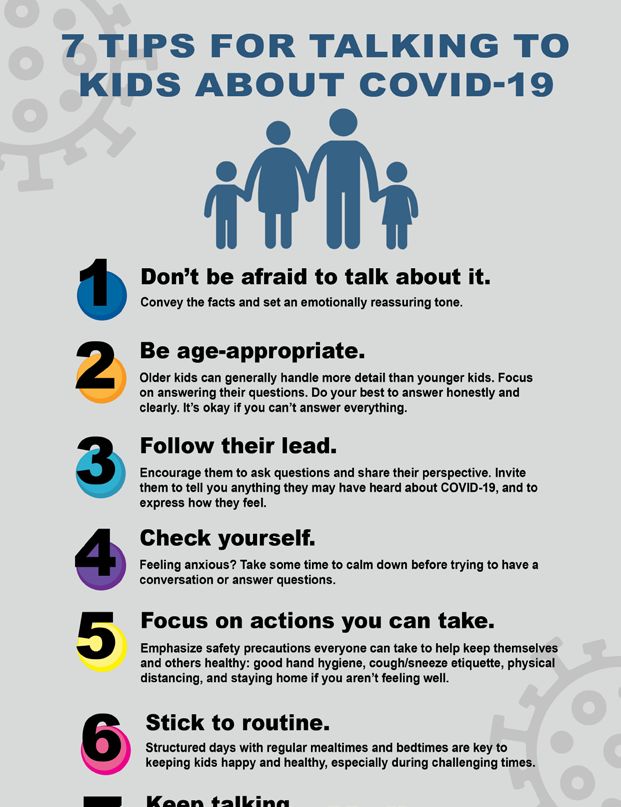
A message from Northern Health,
These are uncertain times and many Northerners are feeling
anxious or worried. As your health authority, we wanted to let you
know what we’re doing during the COVID-19 pandemic.

We also want to talk about the vital role that we all have in
preventing infection and slowing the spread, so we can all stay as
safe as possible.

This guide is intended for Northerners and their families,
municipalities, community groups, businesses, and other
organizations.

Please share this guide with friends and family, and stay connected
with Northern Health for up-to-date and reliable information for your
community.

          @Northern_Health

          @NorthernHealth

          @Northernhealthbc

          www.northernhealth.ca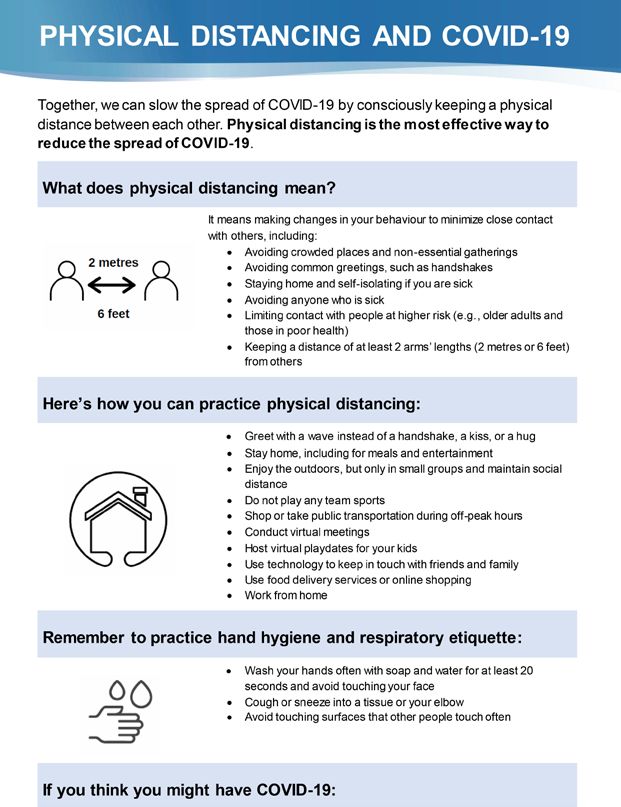
Table of Contents
 Section 1: COVID-19: Key facts . . . . . . . . . . . . . . . . . . . . . . . . . . . . . . . . . . . . . . . . . . . . . . . . . . . . . . . . . 5
     What is Coronavirus/COVID-19? . . . . . . . . . . . . . . . . . . . . . . . . . . . . . . . . . . . . . . . . . . . . . . . . . . . . . . . 6
     What are the symptoms? . . . . . . . . . . . . . . . . . . . . . . . . . . . . . . . . . . . . . . . . . . . . . . . . . . . . . . . . . . . . . 6
     How serious is it? . . . . . . . . . . . . . . . . . . . . . . . . . . . . . . . . . . . . . . . . . . . . . . . . . . . . . . . . . . . . . . . . . . . 6
     Who’s most at risk of severe illness? . . . . . . . . . . . . . . . . . . . . . . . . . . . . . . . . . . . . . . . . . . . . . . . . . . . 6
     What’s the risk in pregnancy? . . . . . . . . . . . . . . . . . . . . . . . . . . . . . . . . . . . . . . . . . . . . . . . . . . . . . . . . . 6
     How is COVID-19 spread? . . . . . . . . . . . . . . . . . . . . . . . . . . . . . . . . . . . . . . . . . . . . . . . . . . . . . . . . . . . 7
     How can I avoid getting and spreading the virus? . . . . . . . . . . . . . . . . . . . . . . . . . . . . . . . . . . . . . . . . . 7
     Tips for physical distancing . . . . . . . . . . . . . . . . . . . . . . . . . . . . . . . . . . . . . . . . . . . . . . . . . . . . . . . . . . . 9
     Physical distancing now . . . . . . . . . . . . . . . . . . . . . . . . . . . . . . . . . . . . . . . . . . . . . . . . . . . . . . . . . . . . 10
     Physical distancing: Guidance on compliance/ enforcement . . . . . . . . . . . . . . . . . . . . . . . . . . . . . . . 11
     Is it safe? NH Activity Matrix . . . . . . . . . . . . . . . . . . . . . . . . . . . . . . . . . . . . . . . . . . . . . . . . . . . . . . . . . . 12
     More information . . . . . . . . . . . . . . . . . . . . . . . . . . . . . . . . . . . . . . . . . . . . . . . . . . . . . . . . . . . . . . . . . . 13

Section 2: BC’s Restart Plan. . . . . . . . . . . . . . . . . . . . . . . . . . . . . . . . . . . . . . . . . . . . . . . . . . . . . . . . . . . . 14
  Golden rules. . . . . . . . . . . . . . . . . . . . . . . . . . . . . . . . . . . . . . . . . . . . . . . . . . . . . . . . . . . . . . . . . . . . . . . 15
     Guidance on mass gatherings. . . . . . . . . . . . . . . . . . . . . . . . . . . . . . . . . . . . . . . . . . . . . . . . . . . . . . . . . 16
     Wearing a mask? Make sure you’re doing it safely. . . . . . . . . . . . . . . . . . . . . . . . . . . . . . . . . . . . . . . . . 17
     What do the phases mean?. . . . . . . . . . . . . . . . . . . . . . . . . . . . . . . . . . . . . . . . . . . . . . . . . . . . . . . . . . . . 18
     WorksafeBC tools for returning to safe operation. . . . . . . . . . . . . . . . . . . . . . . . . . . . . . . . . . . . . . . . . 19

Section 3: Looking after yourself, your family, and your community . . . . . . . . . . . . . . . . . . . . . . . .20
  Stay healthy: Help stop the spread of germs . . . . . . . . . . . . . . . . . . . . . . . . . . . . . . . . . . . . . . . . . . . . 21
     It’s safe to get health care . . . . . . . . . . . . . . . . . . . . . . . . . . . . . . . . . . . . . . . . . . . . . . . . . . . . . . . . . . . . 22
     7 tips for talking to kids about COVID-19 . . . . . . . . . . . . . . . . . . . . . . . . . . . . . . . . . . . . . . . . . . . . . . . 23
     Tips for mental wellness . . . . . . . . . . . . . . . . . . . . . . . . . . . . . . . . . . . . . . . . . . . . . . . . . . . . . . . . . . . . . 25
     Funding opportunities for food programs . . . . . . . . . . . . . . . . . . . . . . . . . . . . . . . . . . . . . . . . . . . . . . 26
     It’s everyone’s role to fight stigma against COVID-19 . . . . . . . . . . . . . . . . . . . . . . . . . . . . . . . . . . . . . 27
     FAQs on donations . . . . . . . . . . . . . . . . . . . . . . . . . . . . . . . . . . . . . . . . . . . . . . . . . . . . . . . . . . . . . . . . . 28
     Translated resources . . . . . . . . . . . . . . . . . . . . . . . . . . . . . . . . . . . . . . . . . . . . . . . . . . . . . . . . . . . . . . . 29
     Printable cards to offer help in your neighbourhood . . . . . . . . . . . . . . . . . . . . . . . . . . . . . . . . . . . . . . . 30
     How to get printable posters from Northern Health . . . . . . . . . . . . . . . . . . . . . . . . . . . . . . . . . . . . . . . 31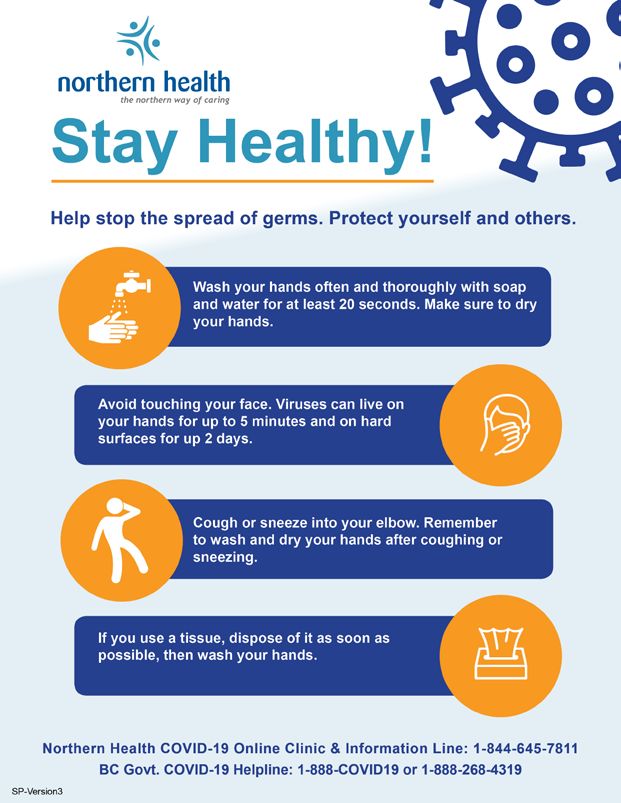
Table of Contents

Section 4: Symptoms, testing, and isolating . . . . . . . . . . . . . . . . . . . . . . . . . . . . . . . . . . . . . . . . . 32
  What should I do if I develop symptoms of COVID-19? . . . . . . . . . . . . . . . . . . . . . . . . . . . . . . . . 33
     Testing capacity increased . . . . . . . . . . . . . . . . . . . . . . . . . . . . . . . . . . . . . . . . . . . . . . . . . . . . . . 34
     Who should be tested for COVID-19?. . . . . . . . . . . . . . . . . . . . . . . . . . . . . . . . . . . . . . . . . . . . . . 35
     How long should I self-isolate for?. . . . . . . . . . . . . . . . . . . . . . . . . . . . . . . . . . . . . . . . . . . . . . . . . . 36
     What’s the difference between self-isolation and physical distancing?. . . . . . . . . . . . . . . . . . . . . 36
     Treatment for COVID-19. . . . . . . . . . . . . . . . . . . . . . . . . . . . . . . . . . . . . . . . . . . . . . . . . . . . . . . . 36

Section 5: Changes to Northern Health services. . . . . . . . . . . . . . . . . . . . . . . . . . . . . . . . . . . . . 37
  Connections bus service. . . . . . . . . . . . . . . . . . . . . . . . . . . . . . . . . . . . . . . . . . . . . . . . . . . . . . . . . 38
  Elective surgeries resuming. . . . . . . . . . . . . . . . . . . . . . . . . . . . . . . . . . . . . . . . . . . . . . . . . . . . . . 39
     Lab services. . . . . . . . . . . . . . . . . . . . . . . . . . . . . . . . . . . . . . . . . . . . . . . . . . . . . . . . . . . . . . . . . . . 39
     Outpatient Hepatitis C testing. . . . . . . . . . . . . . . . . . . . . . . . . . . . . . . . . . . . . . . . . . . . . . . . . . . . . 40
     Cardiac services. . . . . . . . . . . . . . . . . . . . . . . . . . . . . . . . . . . . . . . . . . . . . . . . . . . . . . . . . . . . . . . 40
     Pay parking. . . . . . . . . . . . . . . . . . . . . . . . . . . . . . . . . . . . . . . . . . . . . . . . . . . . . . . . . . . . . . . . . . . 40

Section 6: What’s Northern Health doing?. . . . . . . . . . . . . . . . . . . . . . . . . . . . . . . . . . . . . . . . . . . 41
  Task groups. . . . . . . . . . . . . . . . . . . . . . . . . . . . . . . . . . . . . . . . . . . . . . . . . . . . . . . . . . . . . . . . . . . 42
   Response strategies. . . . . . . . . . . . . . . . . . . . . . . . . . . . . . . . . . . . . . . . . . . . . . . . . . . . . . . . . . . . 44
   Provincial response strategies. . . . . . . . . . . . . . . . . . . . . . . . . . . . . . . . . . . . . . . . . . . . . . . . . . . . 46
SECTION 1
COVID-19: Key facts
 • What is Coronavirus/COVID-19?
 • What are the symptoms?
 • How serious is it?
 • Who’s most at risk of severe illness?
 • What’s the risk in pregnancy?
 • How is COVID-19 spread?
 • How can I avoid getting and spreading the virus?
 • Tips for physical distancing
 • Physical distancing now
 • Physical distancing: Guidance on compliance/ enforcement
 • More information

                                                              5
What is coronavirus/COVID-19?
A new coronavirus has caused an outbreak of                   This is not like the flu. This is
respiratory illness known as COVID-19. Many of
the characteristics of COVID-19 are still unknown,
                                                                   much more serious.
but mild to severe illness has been reported for
confirmed cases.
                                                          Who’s most at risk of severe illness?
What are the symptoms?                                    People of all ages can be infected by the new
The symptoms of COVID-19 are similar to those             coronavirus. People over 70, and people with
of other respiratory infections, including the flu.       pre-existing medical conditions (such as asthma,
COVID-19 symptoms can include some or all of the          diabetes, or heart disease) are more likely to be
following:                                                severely ill.

    •   Cough                                             What’s the risk in pregnancy?
                                                                               Based on the evidence we
    •   Fever
                                                                               have so far, pregnant women
    •   Breathing difficulties                                                 are no more likely to get
                                                                               COVID-19 than the general
    •   Headache                                                               population.
    •   Generalized muscle pain
                                                                               In some women, pregnancy
    •   Sore throat                                                            changes how your body
                                                          responds to severe viral infections. This is something
Some people with the infection will have mild
                                                          midwives and obstetricians have known for many
symptoms, or none at all, but they can still spread
                                                          years and are used to dealing with.
the virus to others – who might develop more severe
symptoms.
                                                          Currently, there is no evidence that pregnant women
                                                          who get this infection are more at risk of serious
How serious is it?                                        complications than any other healthy individuals, but
About 81% of cases are mild, and 19% are serious.
                                                          the amount of evidence available is quite limited, so
“Serious” means the person has to go into hospital.
                                                          if you’re pregnant, please take extra care.
Of those 19%, 5% need intensive care and ventilator       For more information, check www.bccdc.ca/health-
support (a machine to take over breathing for the         professionals/clinical-resources/covid-19-care/
patient while their body fights the virus).               clinical-care/pregnancy

The death rate is 1%, but this is higher in areas
where the health care system is overwhelmed.

A Northern Health guide for your community - August 5, 2020                                                   6
How is COVID-19 spread?                                 h. If you have questions, call your family doctor
COVID-19 spreads mainly through tiny drops of              or nurse practitioner. You can also call the
saliva or discharge from the nose when an infected         NH COVID-19 Online Clinic at 1-844-645-
person coughs or sneezes.                                  7811.

This means it’s very important to cough or sneeze
into your elbow, or into a tissue.
                                                        2         Wash your hands often

How can I avoid getting and
                                                        a. Wash your hands often with soap and water–
spreading the virus?
                                                           for at least 20 seconds.

                                                        b. Always wash your hands when you get home
                                                           or arrive at work.
  1           Practice physical distancing

Practice physical distancing. Physical distancing       3         Use hand sanitizer
saves lives by reducing the chance you will become
infected. It also slows the spread of infection, so
Northern Health has a better chance of keeping              If soap and water are unavailable, use hand
up. It’s everyone’s responsibility to practice social       sanitizer.
distancing, whether you have symptoms or not.

    a. Avoid close contact with other people.
       Keep at least 2 metres (6 feet) away from        4         Use coughing etiquette
       them.

    b. Avoid public transport – buses, taxis, ride-
       sharing.                                         a. Cough or sneeze into your elbow, or into a
                                                           tissue.
    c. Work from home – speak to your employer
       about this.                                      b. Put used tissues in the garbage immediately,
                                                           and then wash your hands.
    d. Avoid social activities such as going to
       cafes, pubs, restaurants, or movie theatres.

    e. Avoid going on children’s playdates, such
       as going to a playground or park.                5         Avoid touching your face

    f. Don’t have visitors to your home. This
       includes friends and family (other than the          Avoid touching your face, eyes, nose, or
       family members you live with).                       mouth.
    g. Don’t go to your doctor’s office without
       phoning ahead.

                                                                                                          7
How can I avoid getting and spreading COVID-19?

Wash hands for 20 seconds                                                            If you don’t have a
with soap and hot water, or               Use a tissue for coughs                 tissue, cough or sneeze
    use hand sanitizer.                        and sneezes.                            into your elbow.

                                                                                      Even if you have
  Avoid touching your eyes,                                                         no symptoms, work
    nose, and mouth with                 Avoid close contact with                 at home if possible and
      unwashed hands.                     people who are unwell.                   avoid social venues.

  What are the symptoms of COVID-19? What should I do if
  I feel sick?
   Fever and
   tiredness

                    Cough

           Breathing
           difficulties
                                                                 Call the Northern
   If you have a new            Practice physical                Health COVID-19
   continuous cough             distancing (stay 2                online clinic at
  or high temperature           meters away from              1-844-645-7811. Don’t      If your symptoms
   you should stay at           other people) and              go to your doctor or       get worse, seek
   home for 10 days.          stay home if possible.            health care facility.      medical advice.

A Northern Health guide for your community - August 5, 2020                                                  8
Tips for physical distancing

We’re asking you to avoid physical contact with people outside your home, including those
you love and enjoy spending time with.

                                          2 metres

                                                6 feet

We know this will be difficult, especially for people who are already isolated. Some tips:

    •   Use technology to connect remotely.

    •   Setting elderly family members up with technology to allow for video calls, such as Zoom or
        Facetime, can be a big help.

    •   Ask your elderly or vulnerable family members, neighbours, and friends if you can drop groceries off
        (on their front porch) for them.

    •   Neighbourhood Facebook or WhatsApp groups can help people connect and look after each other.

    •   Check out the cards at the end of this booklet. If you like, leave some on the front steps of houses
        along your street to offer help to those who are staying at home.

How long will we need to be physically distant?
We all need to follow the recommendations of our public health officer, health authorities, and government.
Right now, it’s everyone’s responsibility to slow the spread.

We don’t know the timeline yet, but you can count on Northern Health to keep you informed.

                                                                                                               9
Physical Distancing
                                        NOW
            AVOID                         USE CAUTION              SAFE TO DO

     • Group gatherings                     • Visits to            • Going for a walk
     • Visits to bars/                        supermarkets         • Jogging
       restaurants                          • Visits to the        • Working in the
     • Sleepovers                             pharmacy               home
     • Playdates                            • Visits to your       • Home improvement
     • Visiting the elderly                   doctor                 projects
       with children                        • Travelling           • Reading
     • Crowded retail                       • Checking on          • Going for a drive
       stores                                 friends and family   • Video calls
     • Gyms                                 • Public transport     • Phone calls
     • Having visitors to
       your home
     • Having non-
       essential workers
       in your home

Symptom-free doesn’t mean infection-free!

A Northern Health guide for your community - August 5, 2020                              10
Physical distancing: Guidance on
compliance / enforcement
As of March 31, BCCDC tipsheet provides information for compliance and enforcement officers on
implementing public health orders for physical distancing. It also includes a useful template message that
enforcement officers can use to respond to complainants.
Compliance and enforcement officers include:
• community safety personnel
• bylaw enforcement officers
• provincial compliance enforcement officers
• etc.
For full details, see Compliance and Enforcement Guidance about Public Health Orders with respect
to Physical Distancing: www2.gov.bc.ca/assets/gov/health/about-bc-s-health-care-system/office-of-the-
provincial-health-officer/covid-19/compliance_and_enforcement_guidance_march_31_2020.pdf
11I would like to do (_insert
___ _ _ _here
activity _ _).
Is “A” a good activity for me to do?
It’s important to stay active and healthy while we’re staying safe during the COVID-19
pandemic. The activity matrix below shows which activities can be safe for your and your loved
ones, and which ones you should avoid. In the matrix below, “A” stands for “my activity.”
Can I do A solo or with
START HERE: members of my household
Am I self-isolating NO
or bubble, maintaining at
OR experiencing any least a 2-metre distance
symptoms of COVID-19? NO from others?
DON’T
RISK IT.
YES How about
something
YES Can I do A in a location else?
open to the public, and
Can I do A indoors or within a short distance NO
in my yard while staying from home?
away from members of my
household?
YES
Could doing A cause any HARM
to my physical, mental, and/or
YE
emotional wellness? S
DON’T
YES NO RISK IT.
How about
NO something
else?
Could doing A BENEFIT my
DON’T physical, mental, and/or emotional
GO FOR wellness? NO
RISK IT.
IT!
How about
Have fun!
something
else?
YES
GO FOR IT!
Have fun!
A Northern Health guide for your community - August 5, 2020 12More information
If you have any questions or concerns, call the Also, BC has a self-assessment website –
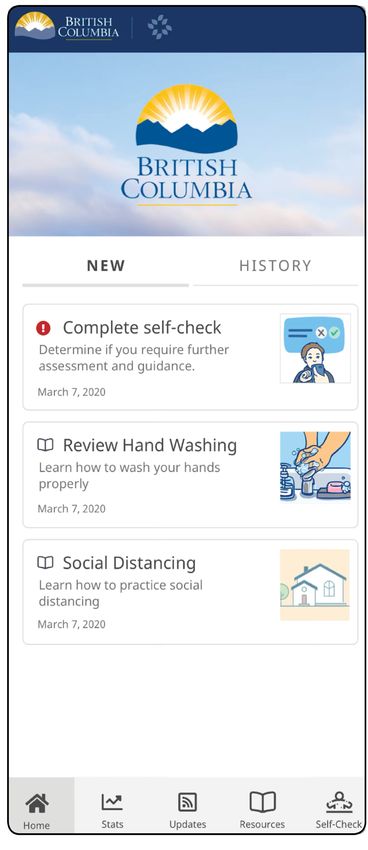
COVID-19 Online Clinic and Information Line for bc.thrive.health – to help people decide whether
Northern BC residents at 1-844-645-7811. they need assessment or testing for COVID-19.
As well, the BC COVID-19 Support app is now Trusted websites:
available on the Apple App Store and Google
• www.northernhealth.ca/health-topics/coro-
Play (for Android). You can self-assess for
navirus-information-covid-19
COVID-19, and the app will also send you the
latest updates, trusted resources, and alerts. • www.bccdc.ca/health-info/diseases-condi-
tions/covid-19
• www.bccdc.ca/health-info/diseases-condi-
tions/covid-19/common-questions
• www.who.int/news-room/q-a-detail/q-a-
coronaviruses
• www.canada.ca/en/public-health/services/
diseases/2019-novel-coronavirus-infection/
canadas-reponse.html
• www.bccdc.ca/health-info/diseases-con-
ditions/covid-19/about-covid-19/translat-
ed-content
13SECTION 2
BC’s Restart Plan
• Golden Rules
• Guidance on mass gatherings
• Wearing a mask? Make sure you’re doing it safely
• What do the phases mean?
• WorksafeBC offers tools for returning to safe operation
A Northern Health guide for your community - August 5, 2020 14BC’s Restart Plan: Golden Rules
The Province of BC recently announced BC’s Restart Plan, an outline for a gradual
return to a new normal. Following the rules below is key to keeping everyone
safe.
Golden rules for everybody
Practice Clean your Stay at home if Increase
physical hands you feel ill - no cleaning at
distancing exceptions home and work
Stay informed Cover your Minimize non- Make spaces
cough essential travel safer
15Guidance on mass gatherings Guidance from the Province of BC: At this time, all event organizers are ordered to limit all public gatherings larger than 50 people. This includes indoor and outdoor sporting events, conferences, meetings, concerts, theatres, religious gatherings or other similar events. A new order from May 22, 2020 replaces the March 16, 2020 order and includes an amendment of no more than 50 vehicles for outdoor drive-in events. See the latest Order of the Provincial Health Officer on Mass gatherings. The timing for a safe restart for activities requiring large gatherings is still to be determined as part of Phase four of BC’s Restart Plan. Opening will be conditional on at least one of the following: wide vaccination, “community immunity” or broad successful treatments. A Northern Health guide for your community - August 5, 2020 16
Wearing a mask? Make sure
you’re doing it safely.

  Golden rules for wearing masks

    If healthy,         Always wash       If sick, stay            Try not to
  distancing is          your hands        home - no            touch your face
  always better                           exceptions

     Reserve medical            Treat everyone            Your mask should fit
     masks for health         with respect - some         snugly, covering your
      care workers            people wear masks             nose and mouth
                                out of courtesy

                                                                                  17
What do the phases mean?
As the BC government and residents work together to implement BC’s Restart
Plan, a phased approach will help ensure a safe return of services.
Each phase will see more services resuming operations under enhanced
protocols.
2 Phase 2: Started May 20, 2020
• Restoration of health services
• Re-scheduling elective surgery
• Medically related services:
• Dentistry, physiotherapy, registered massage therapy, and chiropractors
• Physical therapy, speech therapy, and similar services
• Retail sector
• Hair salons, barbers, and other personal service establishments
• In-person counselling
• Restaurants, cafes, and pubs (with sufficient distancing measures)
• Museums, art galleries, and libraries
• Office-based worksites
• Recreation and sports
• Parks, beaches, and outdoor spaces
• Child care
WorkSafeBC has created a resource for services returning to safe operations during
Phase 2.
A Northern Health guide for your community - August 5, 2020 183 Phase 3: June 2020 to September 2020, if transmission rates remain low or in decline
• Hotels and resorts (June 2020)
• Parks – broader reopening, including some overnight camping (June 2020)
• Film industry – beginning with domestic productions (June/July 2020)
• Select entertainment – movies and symphony, but not large concerts (July 2020)
• Post-secondary education – with mix of online and in-class (September 2020)
• K-12 education – with only a partial return this school year (September 2020)
4 Date to be determined, and conditional on one or more of wide vaccination,
“community” immunity, or broad successful treatment.
• Activities requiring large gatherings, such as:
• Conventions
• Live audience professional sports
• Concerts
• International tourism
For more information, see the Government of BC’s restart plan
WorkSafeBC offers tools for returning to safe operation
WorksafeBC has been given the responsibility of developing the framework around BC’s
Restart Plan.
Every employer must ensure the health and safety of their workers, including developing a plan
on how to assess the risk of COVID-19 exposure in the workplace and implement measures to
keep their workers safe.
A new WorkSafe BC page gives employers information and resources to help minimize the
risks of exposure to the coronavirus at their workplaces: COVID-19 and returning to safe
operation.
In consultation with industry and labour stakeholders in each sector, WorkSafeBC has
developed various general and industry-specific materials, as well as general resources for all
workplaces. These include a COVID-19 safety plan template, workplace posters, information
on cleaning and hygiene practices, and guidance on the selection and use of masks.
For more information, see Returning to safe operation: FAQs.
19SECTION 3
Looking after yourself,
your family, and your
community
• Stay healthy: Help stop the spread of germs
• 7 tips for talking to kids about COVID-19
• Tips for mental wellness
• It’s everyone’s role to fight stigma against COVID-19
• Donations
• Translated resources
• Printable cards to offer help in your neighbourhood
• How to get printable posters from Northern Health
A Northern Health guide for your community - August 5, 2020 20the northern way of caring
Stay Healthy!
Help stop the spread of germs. Protect yourself and others.
Wash your hands often and thoroughly with soap
and water for at least 20 seconds. Make sure to dry
your hands.
Avoid touching your face. Viruses can live on
your hands for up to 5 minutes and on hard
surfaces for up 2 days.
Cough or sneeze into your elbow. Remember
to wash and dry your hands after coughing or
sneezing.
If you use a tissue, dispose of it as soon as
possible, then wash your hands.
Northern Health COVID-19 Online Clinic & Information Line: 1-844-645-7811
BC Govt. COVID-19 Helpline: 1-888-COVID19 or 1-888-268-4319
21It’s safe to get health care
Clinics are still open: Don’t hesitate to call your
doctor or nurse practitioner
Remember, your doctor or nurse practitioner is still here
for you! If you have a health care concern, don’t hesitate to
call.
Please call ahead (don’t drop in), because they may not
be seeing patients in person – many offices are doing
appointments over the phone or online instead.
Please note that emergency departments are still open as
well.
If you have symptoms of a cold, the flu, or COVID-19, call the
NH COVID-19 Online Clinic and Info Line at 1-844-645-7811.
It’s safe for your child to get health care
Health care for your child is safe. Offices, clinics and hospitals have the correct supplies and
procedures in place to keep everyone safe during your visit. Your family can still get essential
medical care.
Very few children and youth have become seriously ill from COVID-19. It is safest for your child to get
the medical care they need, such as routine immunizations. The risks of not seeking medical care
can be much higher than the risks of your child getting sick from COVID-19.
If you’re not sure whether your child needs medical care, use the red, amber and green direction in the
resource linked below to help you decide. If your child has symptoms of COVID-19, call ahead to the
hospital or clinic, if you can, to tell them you’re coming.
For more information, see the full message from Child Health BC
A Northern Health guide for your community - August 5, 2020 227 TIPS FOR TALKING TO
KIDS ABOUT COVID-19
1 Don’t be afraid to talk about it.
Convey the facts and set an emotionally reassuring tone.
2 Be age-appropriate.
Older kids can generally handle more detail than younger kids.
Focus on answering their questions. Do your best to answer
honestly and clearly. It’s okay if you can’t answer everything.
3 Follow their lead.
Encourage them to ask questions and share their perspective.
Invite them to tell you anything they may have heard about
COVID-19, and to express how they feel.
234 Check yourself.
Feeling anxious? Take some time to calm down before trying to
have a conversation or answer questions.
5 Focus on actions you can take.
Emphasize safety precautions everyone can take to help keep
themselves and others healthy: good hand hygiene, cough/sneeze
etiquette, physical distancing, and staying home if you aren’t
feeling well.
6 Stick to routine.
Structured days with regular mealtimes and bedtimes are key to
keeping kids happy and healthy, especially during challenging
times.
7 Keep talking.
Let them know the lines of communication are going to be open,
and that as you learn more, you’ll share the information with
them.
Northern Health COVID-19 Online Clinic: 1-844-645-7811
BC Govt. COVID-19 Helpline: 1-888-COVID19 or 1-888-268-4319
www.northernhealth.ca/health-topics/coronavirus-information-covid-19
the northern way of caring
Credit: Child Mind Institute
A Northern Health guide for your community - August 5, 2020 24TIPS FOR Mental Wellness
Take breaks from social media
Help others if you can
Ensure you are getting regular and good
quality nutrition, sleep, and exercise
Connect with friends & family in a way that
keeps you and others safe: like phone and
video calls
Mental health resouces:
We know that this is an uncertain time and can trigger significant stress. The following resources
can provide tips for managing COVID-19 stress, anxiety, and depression.
Managing COVID-19 Stress, Anxiety, & Depression
www2.gov.bc.ca/gov/content/health/managing-your-health/mental-health-substance-use/managing-
covid-stress
COVID-19 and Anxiety
www.heretohelp.bc.ca/infosheet/covid-19-and-anxiety
New resource on child and youth mental health and
substance use
A new NH resource helps youth and families get help with mental health and substance use
challenges: Child & Youth Mental Health and Substance Use Resources for Families.
Please be aware that there is help available during these difficult times; don’t hesitate to reach
out for yourself or on behalf of a loved one.
25TIPS FOR Mental Wellness
If you need help:
Crisis Intervention and Suicide Prevention Centre
Provides confidential, non-judgmental, free emotional support for people experiencing feelings of
distress or despair, including thoughts of suicide.
Call 604-872-3311 (Greater Vancouver)
Toll-free 1-800-SUICIDE (1-800-784-2433)
www.crisiscentre.bc.ca
The KUU-US Crisis Response Service
Provides 24/7 culturally-aware crisis support to Indigenous Peoples in B.C.
Call 1-800-588-8717
www.kuu-uscrisisline.ca
Funding opportunities for food programs
Ensuring access to food for all is an important part of the COVID-19 response. This
document offers potential granting opportunities for community-based food programs –
see Food Program Funding Opportunities.
If you know of, or represent, a community-based organization that supports food
access, some of these grants may be helpful. Each grant has specific eligibility
guidelines, so be sure to read the information in detail.
A Northern Health guide for your community - August 5, 2020 26“Be safe. Be calm.
Be kind.”
- Dr. Bonnie Henry
It’s everyone’s role to fight stigma
against COVID-19
Now more than ever, it’s important to be kind to one another.
Some groups of people may be experiencing stigma because
of COVID-19, including people diagnosed with COVID-19
and health care workers. Stigma is a negative stereotype or
negative association about people with an illness.
It hurts everyone by creating fear or anger towards other
people, and negatively affecting the mental health of
stigmatized groups and the communities they live in.
How do we stop stigma? Know the facts, share only accurate
information with others, and most of all, be kind.
We all have a role to play. Stop stigma, and please be kind.
27FAQs on donations
Northern Health is extremely grateful for the many offers
we’ve received from individuals and organizations who want
to donate protective equipment, financial support, and time
to our health care workers and hospitals during the COVID-19
pandemic.
Q Can I donate items to Northern Health?
Yes. If you wish to donate any items, please email the details to
ppe.donation@northernhealth.ca so we can better manage these requests
and determine if the item(s) can be used in a healthcare setting.
Please note donated items must be unused and unopened, and unfortunately
we are not accepting homemade items at this time. Please do not drop off
items at any NH facilities without permission.
Q Can I make a financial donation?
Yes. Financial donations can still be made to your local health care foundation
or auxiliary. Information about your local foundation or auxiliary can be found
here: www.northernhealth.ca/about-us/get-involved/hospital-foundations-
auxiliaries#hospital-foundations-and-societies
A Northern Health guide for your community - August 5, 2020 28Translated Resources
COVID-19 rources are available in many different languages in
addition to English and French.
UBC Department of Emergency Medicine
digem.med.ubc.ca/covid-19-multilingual-resources
• Chinese Resources: digem.med.ubc.ca/covid-19-multilingual-resources/chinese-
covid-19-resources-2/
• South Asian Resources: digem.med.ubc.ca/covid-19-multilingual-resources/
south-asian-covid-19-resources-2-2/
• Farsi Resources: digem.med.ubc.ca/covid-19-multilingual-resources/covid-19-
farsi-resources/
• Korean Resources: digem.med.ubc.ca/covid-19-multilingual-resources/korean-
covid-19-resources/
• Italian Resources: digem.med.ubc.ca/covid-19-multilingual-resources/italian-
covid-19-resources/
Fraser Health
Information and downloadable material to help answer questions about COVID-19:
www.fraserhealth.ca/health-topics-a-to-z/coronavirus/coronavirus---resources#.
XouMpZDws2x
• Farsi • Punjabi
• Hindi • Simplified Chinese
• Korean
Indigenous Language Resources
Government of Canada public service announcements about COVID-19
are available in various Indigenous languages: www.sac-isc.gc.ca/
eng/1583781906998/1583781926813#chp1
29Hello! If you’re self-isolating, I can help.
My name is:
I live locally at:
My phone number is:
If you’re self-isolating due to COVID-19, I can help with:
Picking up shopping Posting mail
A friendly phone call Urgent Supplies
Coronavirus (COVID-19) is contagious. Please take every precaution to ensure you
are spreading only kindness. Avoid physical contact (2 metres distance). Wash your
hands regularily. Items should be left on doorstep.
Hello! If you’re self-isolating, I can help.
My name is:
I live locally at:
My phone number is:
If you’re self-isolating due to COVID-19, I can help with:
Picking up shopping Posting mail
A friendly phone call Urgent Supplies
Coronavirus (COVID-19) is contagious. Please take every precaution to ensure you
are spreading only kindness. Avoid physical contact (2 metres distance). Wash your
hands regularily. Items should be left on doorstep.How to get printable posters
from Northern Health
To order posters to put up in your community, visit the Northern Health website:
www.northernhealth.ca/health-topics/coronavirusinformation-covid-19/coronavi-
rus-covid-19-resources
Stay Healthy! Help stop Physical Distancing 7 Tips for Talking to Kids
the spread of germs. and COVID-19 about COVID-19
[Download] [Download] [Download]
31SECTION 4
Symptoms, testing,
and isolating
• What should I do if I develop symptoms of COVID-19?
• Testing capacity increased
• Who should be tested for COVID-19?
• How long should I self-isolate for?
• What’s the difference between self-isolation and physical
distancing?
• Treatment for COVID-19
A Northern Health guide for your community - August 5, 2020 32What should I do if I develop
symptoms of COVID-19?
1. Self-isolate. This means you need to stay at home if you have any of the
following:
a. A fever. If you don’t have a thermometer, you might feel hot to touch on
your chest or back.
b. A new, continuous, dry cough. This means coughing a lot for more
than an hour, or three or more coughing episodes in 24 hours (if you
usually have a cough, it may be worse than usual).
c. Difficulty breathing
d. A sore throat
2. People who live with you also need to self-isolate (see guidelines in the
section on the next page called “How long should I self-isolate for?”).
3. Call the Northern Health COVID-19 online clinic and information line at 1-844-
645-7811. It’s run by nurses, doctors, and nurse practitioners – they will help
you decide if you need to be tested.
4. Don’t go to see your family doctor or nurse practitioner, pharmacist, or
emergency department. Instead of going in person, call your family doctor or
nurse practitioner.
33TESTING
CAPACITY
INCREASED
As of April 8, 2020, BC now has the capacity to test more broadly for COVID-19.
Anyone who has symptoms of the flu, a cold, or COVID-19 can now ask their
doctor or nurse practitioner for a referral to be tested. Any physician or nurse
practitioner can now order a COVID-19 test, based on their clinical judgment.
To get a referral for testing, people can also call the NH COVID-19 Online Clinic
& Information Line at 1-844-645-7811.
Important notes:
• If you don’t have a referral (from your doctor / your nurse practitioner /
the NH Online Clinic), please DO NOT come to collection centres (testing
centres). To keep our staff at the centres safe, we need to know you’re
coming.
• Not everyone needs a test. People who don’t have symptoms should not be
tested for COVID-19
For detailed information on testing, see the next page.
A Northern Health guide for your community - August 5, 2020 34Testing now available more widely
Anyone with symptoms can be tested
Who should be tested for COVID-19?
Any physician can now order a COVID-19 test, based on their clinical judgment.
This is because BC’s laboratory testing capacity has increased.
Important: If you don’t have a referral (from your doctor / your nurse practitioner / the NH
Online Clinic), please DO NOT come to collection centres (testing centres). To keep our staff
at the centres safe, we need to know you’re coming.
People without symptoms should not be tested for COVID-19
Anyone in these two columns SHOULD be tested:
The following groups should be tested The following groups should be tested if they
if they develop new respiratory or develop a fever (over 38 degrees Celsius)
gastrointestinal symptoms, however mild. AND new onset of (or worsening of
chronic) cough or shortness of breath*
This includes fever, cough, shortness of
breath, runny nose, nasal congestion, • Health care workers, including
loss of sense of smell, sore throat, painful community pharmacists
swallowing, headache, muscle aches,
fatigue, loss of appetite, chills, vomiting, or • Residents of remote, isolated or
diarrhea. Indigenous communities
• People living and working in group
• Residents and staff of long-term care settings, such as work camps,
facilities correctional facilities, shelters, group
• Patients requiring admission to homes, assisted living, or seniors’
hospital or likely to be admitted, residences
including pregnant individuals in their • People who are homeless or have
3rd trimester, patients on hemodialysis, unstable housing
or cancer patients receiving radiation or
chemotherapy • Essential service providers, including
first responders (e.g., paramedics,
• Patients who are part of an police officers, firefighters)
investigation of a cluster or
outbreak, as determined by the • Returning travelers identified at a
Medical Health Officer point of entry to Canada
*Consider testing those from this category who have mild symptoms
Northern Health COVID-19 Online Clinic & Information Line: 1-844-645-7811
BC Govt. COVID-19 Helpline: 1-888-COVID19 or 1-888-268-4319
35How long should I self-isolate for?
1. If you have symptoms of COVID-19, you
need to stay home for 10 days. What’s the difference
2. If you’re returning from travel, you need to between self-isolation and
self-isolate for 14 days (even if you don’t have physical distancing?
symptoms).
3. If you live with someone who has symptoms,
you need to stay home for 10 days from the
day the first person in the home started having
symptoms.
a. If you also develop symptoms, you
need to stay home for 10 days from
the day your symptoms began.
4. After 10 days, if your temperature is normal Self-isolation: Avoiding situations
and you feel better, you can return to your where you could infect other people.
routine activities. You might still have a dry
People at high risk of having been
cough, but that’s OK. Your cough might last
for a few weeks, but if you just have a cough
exposed to the illness are asked to
(and no other symptoms), it’s OK to stop self- self-isolate.
isolating after 10 days.
If you have symptoms and you live with someone
who is 70 or older, has a long-term health condition,
is pregnant, or has a weakened immune system, try
to find somewhere else for them (or yourself) to stay
for 10 days.
If you have to stay home together, try to keep away
from each other as much as possible.
Treatment for COVID-19 Physical distancing is a way
There is currently no treatment for COVID-19.
Antibiotics don’t work against viruses, only against
that we can slow the spread
bacteria. of COVID-19 by limiting close
contact with others. Even
• COVID-19 is caused by a virus, so taking
though we’re not sick, we
antibiotics won’t stop you from getting it.
• As well, taking antibiotics won’t help you get should still keep about two
better if you have COVID-19. metres (six feet), or the length
• However, if you’re hospitalized for COVID-19, of a queen-sized bed, from one
you might be given antibiotics because
bacterial co-infection is possible.
another when we can, when
we’re outside our homes.
If you have any of the symptoms of COVID-19, you
need to stay home (along with all other members of
your household) for 10 days after your symptoms
begin.
A Northern Health guide for your community - August 5, 2020 36SECTION 5
Changes to Northern
Health services
• Connections bus service
• Lab services
• Outpatient Hepatitis C testing
• Cardiac services
• Pay parking
37Northern Health
Service Changes
Connections bus service gradually returning to former rules on
who can travel
Passengers who can use the bus now:
• People traveling for non-urgent medical procedures, such as appointments
with chiropractors or massage therapists. You will have to show proof of
your appointment.
• People who have been discharged from hospital or another facility by
health authority hospital staff. (Appointment verification not required.)
• Medically necessary companions
• Northern Health staff & physicians (including health care students), who
are travelling for work
We will not be accepting:
• Passengers travelling without a medical appointment, including seniors
(60+).
Northern Health Connections will continue to run with limited seating and
enhanced safety measures until further notice. Some changes we have
implemented will be permanent, including:
• All travel must now be booked 48 hours in advance.
• We will not be accepting any walk-on passengers: no exceptions.
• Anyone with COVID-19-like symptoms will not be allowed to travel.
• To ensure physical distancing, a maximum of 12 passengers will be
allowed on a coach, and a maximum of five passengers will be allowed on
a minibus.
Northern Health Connections will release further information in the future, as
eligibility further expands.
Reserve your seat by visiting nhconnections.ca or calling 1-888-647-4997.
A Northern Health guide for your community - August 5, 2020 38Elective surgeries resuming: New changes help keep
patients safe
Northern Health is resuming elective surgeries that were postponed due to
COVID-19. We are committed to helping keep patients, medical staff and
support staff safe, and minimizing the risk of transmission of COVID-19.
Where possible, we will do pre-surgical screenings by phone. This means
patients won’t have to come to the hospital in person before their surgeries.
We have begun contacting patients to book procedures and/or to confirm if
they are willing and able to move forward with surgery. We recognize that some
people may still prefer to postpone their surgeries.
Patients who need urgent surgery, emergency surgery, or cancer-related
surgery will continue to be prioritized.
To reduce the risk of COVID-19 for patients, staff and medical staff, Northern
Health will be doing the following:
• Assessing patients by phone before surgery
• Using consistent screening tools and risk assessment guidelines
• Assessing patients 24-72 hours before surgery and on arrival on the day of
surgery
• Scheduling surgeries with extra time for additional cleaning and infection
control.
Patients will be rescheduled based on priority determined by their surgeons.
To provide surgeries as quickly as possible, Northern Health will be back to full
surgical capacity as soon as we can and, where possible, will expand surgical
capacity over the coming months.
This depends on several factors, such as an adequate supply of personal
protective equipment, full commitment of all partners, and monitoring of any
possible fall/winter resurgence of COVID-19.
Laboratory and Diagnostic Imaging
Northern Health sites are in the process of developing site safety plans in order
to restart services. These plans are an Order of the Provincial Health Officer and
required for WorkSafe BC in order to restart. At this time, we don’t have specific
timelines, and it may vary by community. Please stay tuned for more info or
check our website for updated info as it becomes available, here: https://www.
northernhealth.ca/services/hospital-services/lab-services/lab-locations
39Temporary suspension of outpatient Hepatitis C testing
The BCCDC performs all Northern Health’s Hepatitis C testing; however, they
are also currently performing high volumes of COVID-19 testing.
To free up testing capacity for COVID-19 tests, non-urgent outpatient Hepatitis
C serology, viral load and genotype testing will be suspended immediately, with
reassessment on April 17/2020.
Testing will continue to be performed for hospitalized and emergent patients and
for organ donation.
Cardiac services
British Columbia’s health authorities have been directed to move all hospitals
within the province to Outbreak Response Phase 2. This mandates shifting all
hospitals towards prioritizing only urgent and emergent cardiac procedures,
diagnostic testing and clinic outpatient visits.
All non-urgent scheduled cardiac procedures, diagnostic testing or appointments
will be postponed. Further, Northern Health cardiac program has developed
an operational plan to serve as guiding policy for Cardiac Services across the
Northern Health region, in alignment with recent Canadian Cardiovascular
Society recommendations and the outbreak response phase.
Temporary suspension of pay parking at Northern Health sites
In an effort to reduce the risk of COVID-19 transmission, Northern Health is
temporarily suspending pay parking for the public, staff, and medical staff,
effective April 1 through April 30, 2020.
Northern Health’s only public pay-parking site in the region is at the University
Hospital of Northern BC (UHNBC) in Prince George. Northern Health is working
with IMPark, the parking services provider at UHNBC, to implement this change
to public and staff parking immediately.
Pay parking machines require people to touch screens and buttons that may
have been touched by someone previously. Discontinuing the use of pay parking
machines reduces the risk of potential spread of infection and also supports
physical distancing measures that have been mandated by the Provincial Health
Officer.
A Northern Health guide for your community - August 5, 2020 40SECTION 6
What’s Northern
Health doing?
Response strategies
• Task groups
• Response strategies
• Provincial response strategies
41Northern Health
COVID-19 task groups
All NH sites are involved in the ongoing planning and preparation for COVID-19. NH has
an emergency operations centre (EOC) in place to oversee the response to COVID-19.
It includes the following 11 task groups:
Phase Scenario and Population and
1 Response
4 Public Health
Ensuring provincial guidelines,
policy and procedures for
Acute Management & screening, testing, contact
2 Ambulatory Care tracing and isolation are
understood, communicated,
Inventories of capacity, and followed, as they evolve,
equipment, reducing working with industry work
non-urgent procedures, camps to ensure prevention
and services to increase and management of
capacity. COVID-19 is understood.
Long-Term Care
3 Response & Capacity Staffing & Workplace
5 Health & Safety
Capacity inventories,
and protecting residents Reviewing essential
with visitor access service plans and
restrictions, and staff deployment
screening. plans; ensuring staff
have clear PPE use
information, and access
to psychological health
and safety resources.
A Northern Health guide for your community - August 5, 2020 42Logistics and Supply Emergency Departments
6 9 & Patient Transfer
Tracking and managing
supply use; strategies Ensuring EDs are
for mitigating supply prepared and patient
shortages. transfer protocols are
clear; scenario-based
exercises.
Communications
7 Working with Ministry of
Health to develop and Primary and Community
share clear and frequently- 10 Care / Urgent & Primary
updated information to Care Centres
NH clinicians, front-line
health care workers and Establishing virtual options
staff, stakeholders and for screening, assessment
communities. and referral for testing.
Business Continuity
8
Ensuring critical business
areas such as staffing, Infection Prevention &
11 Control & Environmental
payroll and information
systems are not interrupted. Cleaning
In NH facilities.
43Northern Health
COVID-19 response strategies
The Province of BC has a 4-phased outbreak response. Here’s how Northern Health
has implemented it so far:
Phases 1 and 2: Complete
• Created acute care capacity and acute care utilization teams
• Established 1-800 line and virtual clinic
• Created more capacity in surgical, ambulatory care, medical
imaging and lab
• Closed adult care centres and postponed respite care (care plans
being updated)
• Shifted visitor policy
• Completed policy on working remotely
• Completed inventory of non-clinical staff who could be redeployed
• Reviewed pharmacy process, protocols, and business continuity
• Developed algorithms for emergency departments
• Established patient transport office 24/7, and associated protocols
• Updated protocols for kidney, cancer and cardiac care
• Developed protocols for contact tracing, case management, and
self-monitoring
• Completed initial round of public materials and messaging,
including daily staff digests, daily physician updates, weekly
leadership memos, and weekly stakeholder updates
• Updated environmental cleaning
• Reassessed protocols for personal protective equipment (PPE)
• Held tabletop exercises for emergency department presentations
and inpatient admissions
• Inventoried capacity for acute care and long-term care
A Northern Health guide for your community - August 5, 2020 44Phases 3 and 4: Cur rently under way
• Shifting to essential community services
• Creating public health response teams
• Reviewing ground transport
• Working with the Provincial Lab Agency to add testing lab
equipment to the North
• Bolstering patient transport capacity
• Stabilizing supply chain for personal protective equipment (PPE)
• Modeling to inform ventilator distributions
• Forming local emergency operations committees
• Finalizing critical care plan for implementation – intubation,
ventilation, negative pressure rooms, locations
• Creating inpatient areas to cohort those with respiratory symptoms
• Establishing separate emergency room triage areas for those with
respiratory symptoms
• Establishing critical care clinical consultation and support team with
clear process for accessing service
• Finalizing COVID-19 ethics framework and consultation service
45Provincial
COVID-19 response strategies
The Province of BC has put in place a multi-level response structure, headed by the
Premier and Health Minister. Below this are committees and coordination centres
focused on providing information and coordinating the response for Public Health
and health system operations, planning, logistics and finance.
1
Cabinet Sub-Committee
Chaired by Premier John Horgan and Minister of Health
Adrian Dix.
Deputy Minister
2 Committee
Chaired by the Deputy
Minister, Ministry of
Communication and
Information Centre
to serve the general
3
Health and Deputy public.
Minister, Emergency
Management BC.
Health Emergency Coordination Centre (HECC)
4 Incident Commander for the Ministry of Health coordination
centre is Peter Pokorny, Associate Deputy Minister. The
HECC includes the following streams of work:
Public Health Finance
Operations
Health System Operations
Planning
(includes a Health Authority
Chief Operating Officers
Logistics group)
A Northern Health guide for your community - August 5, 2020 46the northern way of caring
Coronavirus
(COVID-19)
SP-Version10 August 5, 2020You can also read


