ON MY MIND Promoting, protecting and caring for children's mental health - THE STATE OF THE WORLD'S CHILDREN 2021 - UNICEF
←
→
Page content transcription
If your browser does not render page correctly, please read the page content below
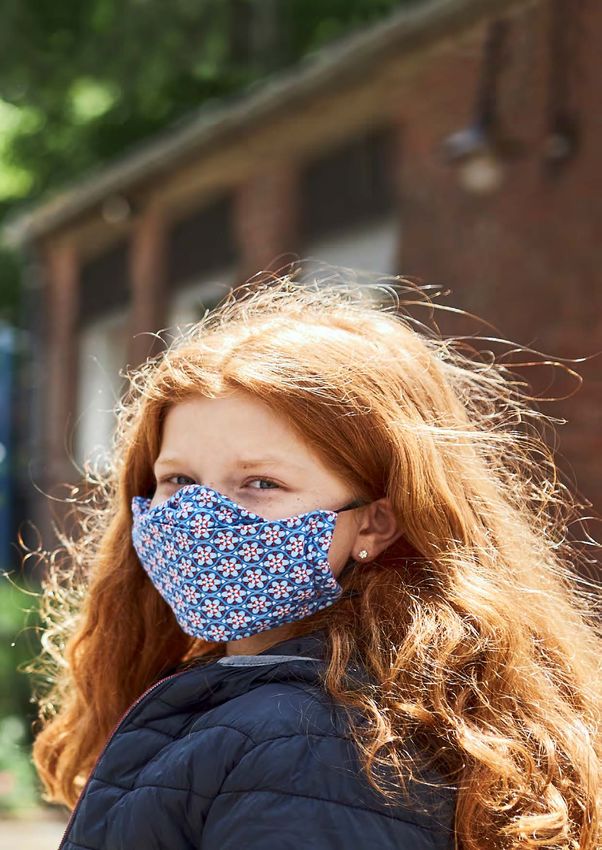
REGIONAL BRIEF: EUROPE

T H E S TAT E O F T H E W O R L D ’ S C H I L D R E N 2 0 2 1

ON MY MIND
      Promoting, protecting and caring
         for children’s mental health
1 THE STATE OF THE WORLD’S CHILDREN 2021

A TIME FOR
LEADERSHIP ON
MENTAL HEALTH
Fear. Loneliness. Grief.                 disrupted learning; and the girl       and caregivers, the connections
                                         dropping out to work on a farm or      they form with friends and their
As the coronavirus pandemic              in a factory. It will hang over the    chances to play, learn and grow.
descended on the world in                aspirations and lifetime earnings of   Mental health is also a reflection of
2019, these powerful emotions            a generation whose education has       the ways their lives are influenced
enveloped the lives of many              been disrupted.                        by the poverty, conflict, disease
millions of children, young people                                              and access to opportunities that
and families. In the early days          Indeed, the risk is that the           exist in their worlds.
especially, many experts feared          aftershocks of this pandemic will
they would persist, damaging the         chip away at the happiness and         If these connections were not
mental health of a generation.           well-being of children, adolescents    clear before the pandemic, they
                                         and caregivers for years to come       certainly are now. COVID-19
In truth, it will be years before we     – that they will pose a risk to the    has put the mental health and
can really assess the impact of          foundations of mental health.          well-being of an entire generation
COVID-19 on our mental health.                                                  at risk, but mental health concerns
                                         For if the pandemic has taught         are not new: Indeed, long before
For even if the potency of the virus     us anything, it is that our mental     the COVID-19 pandemic struck,
fades, the pandemic’s economic           health is profoundly affected by the   parents, teachers and many others
and social impact will linger: over      world around us. Far from being        were voicing growing unease
the fathers and mothers who              simply a question of what is going     about the mental health of children
thought they had left the worst of       on in a person’s mind, the state of    and adolescents.
times behind them, but are once          each child’s or adolescent’s mental
again struggling to put food in a        health is profoundly affected by       This is the reality that is at the
baby’s bowl; over the boy falling        the circumstances of their lives       heart of The State of the World’s
behind in school after months of         – their experiences with parents       Children 2021.

A challenge ignored
Indeed, what we have learned is          is about a young woman having a        and the importance of mental
that mental health is positive – an      sense of purpose in her life and       health in shaping life outcomes,
asset: It is about a little girl being   the self-confidence to take on         are increasingly being
able to thrive with the love and         and meet challenges. It is about       recognized. They are reflected in
support of her family, sharing           a mother or father being able to       the connection between mental
the ups and downs of daily life.         support their child’s emotional        health and the foundations of a
It is about a teenage boy being          health and well-being, bonding         healthy and prosperous world
able to talk and laugh with his          and attaching.                         acknowledged in the Sustainable
friends, supporting them when                                                   Development Goals. Indeed,
they are down and being able to          The links between mental and           that agreement among the
turn to them when he is down. It         physical health and well-being,        nations of the world positioned
Regional Brief: Europe 2

the promotion and protection of          Despite all this, governments and      of children, young people and
mental health and well-being as          societies are investing far, far too   their caregivers.
key to the global development            little in promoting, protecting
agenda.                                  and caring for the mental health

A time for leadership
At the heart of our societies’ failure   in their development to minimize       And we need action: We need
to respond to the mental health          risk – and maximize protective –       to better support parents and
needs of children, adolescents           factors.                               caregivers so that they can better
and caregivers is an absence of                                                 support their children; we need
leadership and commitment.               As well as commitment, we need         schools that meet children’s social
We need commitment – especially          communication: We need to end          and emotional needs; we need to
financial and political commitment,      stigmas, to break the silence on       lift mental health out of its ‘silo’
from global, regional and national       mental health, and to ensure that      in the health system and address
leaders and from a broad range           young people are heard, especially     the needs of children, adolescents
of stakeholders – that reflects the      those with lived experience            and caregivers across a range
important role of social and other       of mental health conditions.           of systems, including parenting,
determinants in helping to shape         Without their voices being heard       education, primary health care,
mental health outcomes. The              and their active participation and     social protection and humanitarian
implications of such an approach         engagement, the challenge of           response; and we need to improve
are profound. They demand that           developing relevant mental health      data, research and evidence to
we set our sights on a clear shared      programmes and initiatives will        better understand the prevalence
goal of supporting children and          not be met.                            of mental health conditions and to
adolescents at crucial moments                                                  improve responses.

A time for action
The COVID-19 pandemic has                parents and caregivers in shaping      The European Union (EU)
upended our world, creating a            mental health in early childhood;      institutions should scale up their
global crisis unprecedented in our       we know too about children’s           action to build back better by
lifetime. It has created serious         and adolescents’ need for              laying down the foundations for
concerns about the mental health         connection; and we know about          more resilient national health and
of children and their families during    the dire impact that poverty,          social protection systems, while
lockdowns, and it has illustrated        discrimination, marginalization        centring the recovery on the new
in the starkest light how events         and domestic violence can have         generation’s well-being with a
in the wider world can affect the        on mental health. And while            focus on making mental health
world inside our heads. It has also      there is still much work to be         services accessible to all who
highlighted the fragility of support     done in developing responses,          need them.
systems for mental health in many        we already know the importance
countries, and it has – once again       of key interventions, such as          We have a historic chance to
– underlined how these hardships         challenging stigmas, supporting        commit, communicate and take
fall disproportionately on the most      parents, creating caring schools,      action to promote, protect and
disadvantaged communities.               working across sectors, building       care for the mental health of
                                         robust mental health workforces,       a generation. We can provide
But the pandemic also offers             and establishing policies that         support for the foundation of a
an opportunity to build back             encourage investment and lay a         generation equipped to pursue
better. As this report sets out,         solid foundation for mental health     their dreams, reach their potential
we know about the key role of            and well-being.                        and contribute to the world.
3 THE STATE OF THE WORLD’S CHILDREN 2021
BY THE NUMBERS
Prevalence of mental disorders 9 million adolescents
The prevalence of mental disorders for boys and girls in Europe aged
aged 10–19 in
10–19 is 16.3 per cent, while the global figure for the same age group Europe live with a
is 13.2 per cent. This means that 9 million adolescents aged 10–19 in
Europe live with a mental disorder.
mental disorder.
Estimated prevalence and number of adolescents with mental disorders in Europe, 2019
6,000,000 20%
18.6%
18%
5,000,000 16.1%
Number of adolescents with mental disorders
15.6% 16%
14.8% 2,296,000
14%
4,000,000 2,260,000
x 12%
Prevalence
3,000,000 10%
2,494,000 8%
2,000,000
2,027,000 6%
4%
1,000,000
2%
0 0
10 to 14 15 to 19
Age group
Number – girls Number – boys Prevalence – girls Prevalence – boys
Note: The number of adolescents with mental disorders are rounded to the nearest 1,000; calculations are based on these disorders: depression, anxiety, bipolar, eating, autism
spectrum, conduct, schizophrenia, idiopathic intellectual disability, attention deficit/hyperactivity (ADHD) and a group of personality disorders.
Source: UNICEF analysis based on estimates from the Institute for Health Metrics and Evaluation (IHME), Global Burden of Disease Study, 2019.Regional Brief: Europe 4
Estimated percentage of mental disorders among adolescents aged 10–19 in Europe, 2019
Girls and boys aged 10–19 Girls aged 10–19 Boys aged 10–19
Country Prevalence % Number Prevalence % Number Prevalence % Number
Austria 18.2% 159,786 18.7% 79,179 17.7% 80,607
Belgium 16.3% 208,372 16.0% 100,137 16.6% 108,235
Bulgaria 11.2% 73,808 10.6% 33,742 11.8% 40,067
Cyprus 17.8% 23,697 18.6% 11,918 17.1% 11,779
Czechia 11.0% 114,767 10.2% 52,123 11.7% 62,645
Germany 16.0% 1,266,180 17.6% 667,356 14.5% 598,824
Denmark 15.0% 102,346 16.3% 54,264 13.8% 48,082
Spain 20.8% 982,291 21.4% 489,830 20.4% 492,461
Estonia 11.6% 15,495 10.9% 7,085 12.2% 8,410
Finland 16.7% 101,237 15.9% 46,845 17.6% 54,392
France 18.3% 1,508,307 19.5% 783,737 17.1% 724,569
United
16.2% 1,237,430 15.9% 594,720 16.4% 642,710
Kingdom
Greece 18.0% 187,808 18.7% 95,394 17.4% 92,414
Croatia 11.5% 49,272 10.9% 22,657 12.1% 26,614
Hungary 11.2% 108,953 10.5% 49,808 11.8% 59,144
Ireland 19.4% 128,782 19.9% 64,661 18.9% 64,120
Iceland 16.6% 7,332 16.9% 3,661 16.4% 3,671
Italy 16.6% 956,071 17.2% 478,554 16.1% 477,518
Lithuania 12.5% 33,623 12.0% 15,740 13.0% 17,883
Luxembourg 16.5% 10,975 16.9% 5,453 16.1% 5,521
Latvia 11.9% 22,332 11.2% 10,288 12.5% 12,044
Monaco 17.3% 604 18.0% 307 16.6% 297
Malta 17.6% 7,175 18.3% 3,628 17.0% 3,547
Netherlands 18.0% 357,457 18.2% 176,199 17.8% 181,258
Norway 18.2% 116,283 18.3% 56,783 18.1% 59,500
Poland 10.8% 409,125 9.8% 181,498 11.7% 227,627
Portugal 19.8% 218,014 21.1% 113,741 18.5% 104,273
Romania 11.2% 238,914 10.5% 108,630 11.9% 130,285
San Marino 17.2% 688 17.7% 351 16.7% 337
Slovakia 11.2% 60,640 10.6% 27,904 11.7% 32,736
Slovenia 11.3% 21,665 10.7% 9,975 11.8% 11,689
Sweden 16.2% 188,991 17.0% 95,769 15.5% 93,222
Switzerland 18.7% 159,921 19.3% 79,909 18.1% 80,012
Note: Figures are based on these disorders: depression, anxiety, bipolar, eating, autism spectrum, conduct, schizophrenia, idiopathic intellectual disability, attention
deficit/hyperactivity (ADHD) and a group of personality disorders.
Source: UNICEF analysis based on estimates from the IHME, Global Burden of Disease Study, 2019.5 THE STATE OF THE WORLD’S CHILDREN 2021
Suicide estimates An estimated
In Europe, suicide is the second most common cause of death
three lives per
among adolescents aged 15–19. Tragically, almost 1,200 children and day are lost to
adolescents aged 10–19 end their own lives every year – that is an
estimated three lives per day lost to suicide in Europe.
suicide in Europe.
Top five causes of death among adolescents aged 15–19 in Europe
Cause Deaths (per 100,000)
Road injury 5
Suicide 4
Congenital anomalies 1
Drowning 1
Drug use disorders 1
Source: UNICEF analysis based on WHO Global Health Estimates, 2019; estimates were calculated using population data from the United Nations Population Division World
Population Prospects, 2019.
Estimates of suicide as a cause of death in Europe by age and sex, 2019
Age 10–19 Age 10–14 Age 15–19
29%
31%
41%
Total: Total: Total:
1,198 161 1,037
59%
69% 71%
Girls Boys
Note: Confidence intervals for estimated number of deaths for adolescents aged 10–19 are 955–1,488; 10–14 are 115–220; 15–19 are 840–1,268.
Source: UNICEF analysis based on WHO Global Health Estimates, 2019; estimates were calculated using population data from the United Nations Population Division World
Population Prospects, 2019.Regional Brief: Europe 6
Anxiety and depression The cost of mental
In 2019, anxiety and depression accounted for
55 per cent of mental disorders among adolescents
disorders in Europe
aged 10–19 in Europe.
Estimates of key mental disorders among
adolescents in Europe, 2019
Boys and girls aged 10–19
100
US$57.6 billion
80
This figure is the annual loss of human
60 54.8% capital from mental disorders based on a
country-specific value of disability-adjusted
40 life years (DALYs). The estimate is based on
the value of lost mental capital – or cognitive
19.5% 18.1%
20 12.2% and emotional resources – that children and
4% young people would contribute to economies
0 0
if they were not thwarted by mental health
conditions. David McDaid and Sara Evans-
Girls aged 10–19
Lacko of the Department of Health Policy of
100 the London School of Economics and Political
Science started with estimates of the burden
80
70.1% of disease attributable to mental health
60 expressed in DALYs. One DALY represents
the loss of a year of healthy living caused by
40 disability or premature death. The researchers
then assigned a monetary value to each
20 13% 10.4% 10.4% disability-free year based on the average output
5% each person contributes in an economy. One
0 DALY is therefore equivalent to a country’s
gross domestic product (GDP) per capita,
Boys aged 10–19
expressed in purchasing power parity (PPP)
100 terms. This formulation allows comparisons to
be made globally. (see The State of the World’s
80
Children 2021 for a full account of the costs of
60 mental disorders.)
Note: The countries in this calculation are: Austria, Belgium, Cyprus, Czechia,
39.6% Denmark, Estonia, Finland, France, Germany, Greece, Hungary, Iceland,
40 Ireland, Italy, Latvia, Lithuania, Luxembourg, Malta, the Netherlands, Norway,
28.6% Poland, Portugal, Slovakia, Slovenia, Spain, Sweden, Switzerland and the
23.1% United Kingdom.
20 10.8%
6.1%
0
Anxiety and depression disorders ADHD Conduct disorder
Bipolar disorder Eating disorder Autism spectrum disorders The analysis in these pages includes data from all European
Union Member States and Iceland, Norway, Switzerland and the
Remaining mental disorders
United Kingdom. IHME data were available for all these countries
Note: The sum of the prevalence of individual disorders exceeds 100 per cent due to the except for Andorra and Liechtenstein; World Health Organization
co-morbidity between the disorders; calculations are based on the disorders noted above. and World Population Prospects data were available for all these
Source: UNICEF analysis based on IHME Global Burden of Disease Estimates, 2019. countries except Andorra, Liechtenstein, Monaco and San Marino.7 THE STATE OF THE WORLD’S CHILDREN 2021
CASE STUDY
Ireland
MindOut: Social and emotional
learning for adolescent well-being
Like his classmates at Gonzaga three issues in Ireland’s National
College, a secondary school Youth Strategy in 2015.
in Dublin County, Jude*
wants to do well in school but MindOut, an evidence-based
sometimes finds the pressure social and emotional learning
overwhelming. programme, aims to address
some of these mental health and
“Some of us do need to well-being concerns.
gain perspective,” Jude, 17,
said. “I’ve seen some people As part of Ireland’s Health Service
having panic attacks before Executive, MindOut is offered to
exams; there definitely 15- to 18-year-olds in schools and
is a sense of pressure.” youth settings. It is also integrated
into the mandatory Social Personal
Besides academic pressure, and Health Education (SPHE)
adolescents also often face curriculum.
peer pressure, social stigma and
restrictive stereotypes, which MindOut features 13 sessions
can take a toll on mental health. based on a structured teacher’s
Indeed, young people identified manual. It uses interactive
mental health as one of the top teaching strategies toOn My Mind: Promoting, protecting and caring for children’s mental health 8
Under pressure: “I have seen some people having panic attacks before exams,” says Jude, 17, a student in Dublin.
© UNICEF/UN0505797/UNICEF Ireland
engage students, focusing on “It really allowed me to see the “I think the course does
imparting essential social and schooling experience through bring up some really useful
emotional skills, including: self- the lens of well-being, whereas stuff,” he said. “There’s
awareness, self-management, so often we are fixated on stuff that you realize you
social awareness, relationship achievement… I was able to know deep down, but it did
management and responsible reflect on my own experience help to go over them. You
decision-making. as a teacher and reframe that in realize when you are under
terms of helping young people at stress that you should be
An evaluation of MindOut in 32 this vulnerable time in their lives,” using these techniques.”
disadvantaged schools indicated Penn said.
that, when implemented well,
it produced improvements in Students have learned skills such
participants’ social and emotional as how to be a good listener,
skills and a reduction in stress and recognizing ways to access
depression. support and reaching out to peers
in need.
Aryn Penn teaches SPHE at
Jude’s school and was trained in MindOut has helped Jude foster
MindOut. The programme helped his communication skills, develop
* Jude’s family name is being withheld to
her become more empathetic to self-acceptance and acquire protect his identity. He was interviewed in
the struggles of her students. coping strategies. Dublin.9 THE STATE OF THE WORLD’S CHILDREN 2021
CASE STUDY
Spain
Journey to Mental Health: A culturally
sensitive approach to mental health
care for migrant young people
According to Dr. Francisco Some of the children and
Collazos, psychiatrist and founder young migrants the programme
of the Transcultural Mental Health reaches out to are in Spain’s
Programme for Unaccompanied child protection system; others
Migrant Children and Young live on the streets. For many,
Migrants at Hospital Vall their circumstances and life
d’Hebron in Barcelona, cultural experiences are complicated,
competence is the guiding including challenges faced even
principle of the programme. before they began their difficult
migration journeys, including
“Our commitment obliges us marginalization in the country of
to seek alternatives that are origin and violence at home, such
equitable, culturally competent as physical violence, abuse and
and adjusted to the particular neglect.
needs of each population group
we serve,” said Collazos. “Culture Once they arrive at a destination,
is considered a risk factor and a many experience anxiety and
protective factor,” said Abdallah frustration over their status as
Denial Kandil, a community migrants or refugees. Some
health agent who works with struggle under the pressure
Collazos. of family expectations and the
difficulty of finding work andOn My Mind: Promoting, protecting and caring for children’s mental health 10
Transcultural: “Each person is unique and has to be treated as such,” says Dr Francisco Collazos, left.
© UNICEF/UN0489155/Erasmo Fenoy
sending remittances to their The success of the programme
families. They often have to deal can be seen in many of the young
with social exclusion and the people Collazos has worked with
challenge of navigating a new over the years in the programme.
language and culture. One example is of a young
Moroccan immigrant who had
Founded in 2001, the Transcultural struggled with substance abuse,
Mental Health Programme homelessness and had run-ins
embraces this complex interplay with the police and immigration
of risks to migrant children’s authorities before finding his way
and young people’s mental to Superacció, where he now
health in order to respond remains active as a volunteer,
effectively. The programme even as he looks for work.
engages professionals from
non-governmental organizations With the support of the Spanish
– such as Superacció – and trains National Committee for UNICEF
community mental health agents and local and regional authorities,
and mental health professionals the Transcultural Mental Health
using a specially designed course Programme is expected to
on culturally aware assessment expand and become integrated
and multidisciplinary assistance. into the child protection system
in Catalonia.11 THE STATE OF THE WORLD’S CHILDREN 2021
WHAT YOUNG
PEOPLE SAY
Background: For this edition of meeting friends can often “Some people may be
The State of the World’s Children be something that, like, ashamed to talk about
report, UNICEF teamed up with calms one from anxiety and [mental health]... because
researchers from the Global stress.” (Older girl, Sweden) in our society, even though
Early Adolescent Study at Johns it has become more like
Hopkins Bloomberg School of “With classes online, for people really say that it’s
Public Health (JHU) to host focus example, I found that it was normal, it may still be that
group discussions on mental health very hard to be motivated some people think it’s kind of
and well-being. From February when we are confined to our embarrassing or something.”
to June 2021, local partners home and there are a lot of (Older girl, Sweden)
facilitated focus group discussions people that completely let go
for adolescents aged 10–14 and because it was online…You Adolescents also pointed out a
15–19 in 13 countries worldwide. don’t realize it but staying at potential generation gap when
In Europe, the focus groups home locked in, it’s really not talking to parents about mental
were implemented in Belgium, the same when you study.” health issues and remarked on
Sweden and Switzerland. This brief (Older girl, Switzerland) some of the challenges of peer
includes quotes from some of the relationships:
adolescents who participated in the “I was really sad for a while
focus groups. A fuller companion because I went out every “If you don’t have a good
report on the discussions will be weekend with my friends relationship with your
released in 2022. and stuff and suddenly parents, well then maybe you,
you weren’t allowed to see you might turn to friends, or
The COVID-19 pandemic has anyone in the beginning maybe siblings who are of an
dramatically shifted the lives and then it was really equal age because they maybe
of young people all over the hard.” (Older girl, Belgium) can understand [you] better.
world. When schools closed, Because I think... that you
adolescents – who increasingly Issues regarding mental health feel that [many adults] don’t
rely on connections with peers as stigma were echoed during the understand because… they are
they mature – were cut off from focus group discussions, in which adults.” (Older girl, Sweden)
those social networks. During adolescents discussed the ways
the focus group discussions, in which such stigma can impede “True friends are not obliged
adolescents described significant help-seeking behaviours: to speak to each other every
impacts on mental health. day. Me, I know that with
Social isolation and challenges “With stress and mental my friends, it’s been years
with remote learning are two illness, for many it’s a [we’ve known] each other.
examples of issues raised: very anxious subject. And We don’t go out together,
you don’t really want to we don’t see each other.
“Not meeting friends… it talk about it... society has But when we speak to each
has probably made many kind of made it into a big other, it’s back to the way
young people’s mental illness thing, that it’s supposed it used to be. And I think
worse. Or, mental health to be something negative.” that it’s a true friendship.”
has deteriorated. Because (Older girl, Sweden) (Older girl, Belgium)Regional Brief: Europe 12
“Well, it’s certainly difficult health is more dangerous “We need to hire people,
for parents to notice such in boys than girls because social workers for example,
things, or it depends on boys cannot talk about it.” to accompany the families.
person to person, but if (Younger boy, Switzerland) The parents need to take
you’re, like, quite introverted their anger out on something
as a person, then maybe “We are scared of being other than us." (Boy, 17)
you hide away quite a lot judged, all the time… I don’t
of emotions and then it is wear skirts… It is harder in “You have to ask the children
difficult for parents to, like, summer. I really like to wear directly, ask them if the child
know what to do, but... a tank tops [but] I have to be is well in his family, if he
person may actually be careful, like always pull it up is doing well. If the child is
very depressed or very, very or put a T-shirt underneath. not well, we should try to
stressed even though it’s not So [even in summer] it’s understand why.” (Girl, 16)
visible.”(Older boy, Sweden) back to… suffering in the
heat.” (Older girl, Belgium)
It was clear from focus group
discussions around the world The focus group discussions
that gender norms matter for also emphasized complexities in
mental health for boys and girls the relationship between digital
alike. Some of the issues raised technology usage and adolescent
by girls reflect concerns with mental health:
body image and experiences of
sexual harassment and violence. “It becomes an obsession. If
Adolescents generally agreed she falls below the bar, for
that girls are less constrained example, of seven hundred
than boys by norms around help- likes, well, she has to find
seeking and could more easily [followers] to subscribe [so
reach out to friends and family she] removes pictures that
members for support: do not get enough likes.
It’s… it’s an obsession.”
“Well, girls speak more (Older girl, Belgium)
about it in general, they have
more opportunities to talk Adolescents in Belgium
about it because between expressed important concerns
girls, with their friends, they about domestic violence and
can cry in each other[’s] emphasized the need of proper
arms, its normal. But us, support to parents and children:
we won’t start crying in
the arms of our buddies. “Parents must not be allowed
It’s evident that for [girls], to hit us anymore. There
it is much more noticeable, must be a law and that law
but… I also think that mental must be respected." (Girl, 15)13 THE STATE OF THE WORLD’S CHILDREN 2021
A FRAMEWORK
FOR ACTION
The State of the World’s Children The cost for us all is incalculable. governments, schools and
2021 has set out the mental other stakeholders in Europe
health challenges facing children It does not have to be this way. do just that, grounded in three
and adolescents and their And it should not be this way. core principles, for every child,
families. It has shown that these everywhere: Commitment from
challenges are global – from the Our priorities are – or should be leaders, backed by investment;
poorest village to the wealthiest – clear. We may not have all the Communication to break down
city, children and their families answers, but we know enough to stigmas and open conversations
are suffering pain and distress. be able to act now to promote on mental health; and Action
At an age and stage of life when good mental health for every to strengthen the capacity
children and young people should child, protect vulnerable children of health, education, social
be laying strong foundations and care for children facing the protection and other workforces;
for lifelong mental health, they greatest challenges. better support families, schools,
are instead facing challenges and communities; and greatly
and experiences that can only This report sets out a framework improve data and research.
undermine those foundations. to help the community,
Commitment, Communication,
and Action for Mental Health
TO COMMIT means strengthening and set priorities to develop Invest in supporting mental
leadership to set the sights of financing models that can help health. Mental health is woefully
a diverse range of partners and bridge the investment gap; to underfunded: Many governments
stakeholders on clear goals and share knowledge and experience do not allocate enough funds to
ensuring investment in solutions on delivering services, building mental health, and allocations
and people across a range of capacity, gathering data and from international development
sectors. evidence, and providing mental assistance are meagre. There
health and psychosocial support is a strong need to scale up
Provide regional leadership. in crisis and emergency settings; investments in different priority
Building on existing efforts to develop with relevant partners areas, such as:
and towards the new health and stakeholders intervention
preparedness and resilience packages co-created and co- • The EU institutions and national
mission for the whole of the EU designed with children and young governments should support
that was recently announced, people to promote a holistic and interventions to facilitate
the EU must lead the way in community-based approach to vulnerable groups’ access to
laying the foundation to ensure mental health, and crucially, to mental health-care services and
that all children have access monitor and evaluate progress. improve regional infrastructures
to mental health services. EU This would position the EU as a through the European Social
leadership is needed to align champion of children in Europe Fund Plus and the European
stakeholders around clear goals and worldwide. Regional Development Fund.Regional Brief: Europe 14
• National governments should Holistic and to create awareness, enhance
include access to mental community-based mental health literacy, combat
health services in their national approaches misinformation about mental
action plan for the Recovery health and tackle stigma related
and Resilience Facilities What are holistic and to mental health conditions.
(RRFs), including exploring community-based approaches
the opportunities offered by to mental health services? Ensure young people have a
digital and online technologies say. Children and young people
to reduce gaps in access to They include expanded are gradually raising their voices
mental health support and to community-based social and sharing concerns about
reach populations traditionally work; schools informed on their mental health and well-
lacking access to these trauma response, equipped being. The EU should provide
services. with mentors and child and support to all children and
• The EU should invest adequate adolescent psychologists young people, especially those
resources to target actions to where relevant; non- with lived experience of mental
train health and social workers institutional approaches to health conditions, with the
on mental health under the mental health services that means for active and meaningful
EU4Health Programme and prioritize access to quality engagement. This can be
under the Asylum, Migration psychiatric and psychological achieved through, for example,
and Integration Fund (AMIF) care; and early interventions investment in community youth
Programme to support to support families and groups, peer-to-peer initiatives
services for children on the young people struggling with and training programmes.
move. addiction and violence. Ensuring that children and young
• The EU should incorporate people have a voice can help
targeted actions on mental mental health services to better
health and psychosocial TO COMMUNICATE means reflect their needs.
well-being in the 20 per cent tackling stigmas around mental
of Official Development health, opening conversations TO ACT means working to
Assistance (ODA) dedicated and improving mental health minimize the risk factors and
to human development in the literacy. It means amplifying the maximize the protective factors
Global Europe instrument, regional conversation on mental for mental health in key areas
as well as in humanitarian health to raise awareness and of children’s and adolescents’
programmes for preparedness, mobilize all stakeholders to take lives, especially the family and
response and recovery, action and facilitate learning. school. More broadly, it also
to meet the needs of all means investment and workforce
populations affected by Break the silence, end development across some key
emergencies. stigma. Misconceptions about sectors and systems, including
• The EU should continue to mental health fuel stigma and mental health services and social
expand its pioneering work discrimination, and prevent protection, and the development
on education in emergencies children and young people from of strong data collection and
and the mainstreaming of child seeking support and participating research.
protection in emergencies, fully in their families, schools
including exploring innovative and communities. A simple Support families, parents
support for mental health and message: It is not just OK to and caregivers. The EU should
psychosocial support across all talk about mental health – it is support national governments
humanitarian responses linked essential. The EU should promote in rolling out programmes
to nutrition, shelter, livelihoods campaigns involving children to support families and
and education. and young people through its caregivers; in the case of the
permanent representations in EU governments, by ensuring
the EU Member States and alignment with the European
its EU delegations worldwide Pillar of Social Rights Action15 THE STATE OF THE WORLD’S CHILDREN 2021
Plan in the EU framework of the access to the means of suicide; Improve data, research and
European Semester. National providing specialized training evidence. Lack of data and
governments should champion for teachers, parents and health evidence renders children with
the promotion of parenting workers; encouraging responsible mental health conditions invisible
programmes – which teach media reporting; and identifying and is a major obstacle to policy
positive parenting and nurturing and removing harmful content development and planning. Greater
caregiving – and support caregiver on social media. Schools should investment is needed across
well-being and mental health. be a crucial partner in suicide national governments in research
prevention, helping to identify at- on children and adolescents,
Ensure schools support mental risk children and providing support. which should be cross-culturally
health. The EU should promote applicable, adaptable to local
a coordinated approach to Strengthen and equip multiple realities and capable of capturing
promoting mental health and systems and workforces to diverse experiences and realities.
psychosocial support in the meet complex challenges. To A determined effort is also needed
framework of its commitment bring mental health services closer to routinely monitor mental health,
towards a European Education to those who currently cannot developing a consensus-based
Area by 2025. The EU should access them, services need to set of core indicators around
promote programmes aiming to be provided not just through child, adolescent and caregiver
build mental health awareness health systems but across a mental health. Additionally, the
and emotional coping skills for wide range of different sectors EU should increase investment in
adolescents in schools, integrating and delivery platforms, such as implementation science, which
mental health counselling education, social protection and investigates how a range of factors
services, training teachers and community care. The EU should can impede or accelerate the
staff, creating safe spaces for support partner countries to build implementation of policies and
children to discuss and to build and strengthen mental health interventions.
their resilience, and preventing services across different sectors
self-harm and suicides. The EU and delivery platforms, strategically Mainstreaming mental health
should support the Safe to Learn using these platforms and the across EU policies. The EU
initiative to end violence in and community to bring services closer should adopt an integrated
through schools so children are to most children, adolescents and and coordinated approach to
free to learn, thrive and pursue caregivers who still cannot access mainstreaming children’s well-
their dreams. such services. Disadvantaged being and promoting children’s
groups require dedicated attention mental health in the EU policies.
Prevent suicide. Regional and and specific programmes to It can do so by adopting a
national suicide prevention ensure services meet their needs. comprehensive EU strategy on
programmes can play an important Additionally, explore opportunities mental health by 2025 as a key
role. The EU should invest and offered by digital and online building block for a reinforced
set priorities, providing guidance technologies to reduce gaps in EU Health Union in line with the
and exchange of best practices, access to mental health support in recommendation made by the
such as identifying at-risk children order to reach all populations. Employment, Social Policy, Health
and adolescents; restricting and Consumer Affairs Council.
In this brief, Europe refers to Member States of the European Union and eight other
European countries: Andorra, Iceland, Liechtenstein, Monaco, Norway, San Marino,
Switzerland and the United Kingdom of Great Britain and Northern Ireland.
© United Nations Children’s Fund (UNICEF)
October 2021
To download the full report, please visit www.unicef.org/sowc.
Cover photo: Changes to everyday life during COVID-19 put a strain on children and young
people. Here a girl heads to school in Germany wearing a protective mask.
©️ UNICEF/UNI332775/BänschYou can also read


