CLIMATE CHANGE AND HUMAN HEALTH - Canadian Public ...
←
→
Page content transcription
If your browser does not render page correctly, please read the page content below
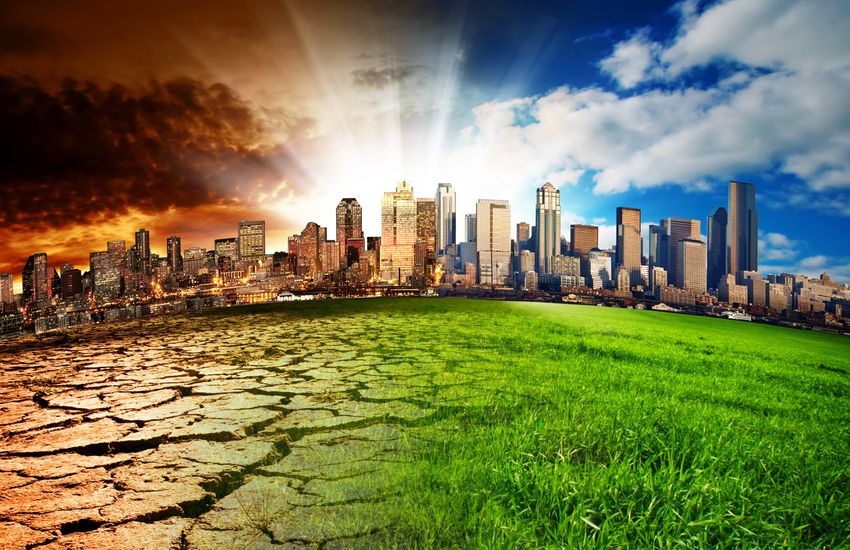
CLIMATE CHANGE
AND HUMAN HEALTH

P O S I T I O N S TAT E M E N T   |   OCTOBER 2019
THE VOICE
OF PUBLIC HEALTH
The Canadian Public Health Association is the
independent national voice and trusted advocate
for public health, speaking up for people and
populations to all levels of government.

We champion health equity, social justice            We inspire organizations and
and evidence-informed decision-making.               governments to implement a range of
We leverage knowledge, identify and                  public health policies and programs that
address emerging public health issues,               improve health outcomes for populations
and connect diverse communities of                   in need.
practice. We promote the public health
perspective and evidence to government               OUR VISION
leaders and policy-makers. We are a                  A healthy and just world
catalyst for change that improves health
and well-being for all.                              OUR MISSION
                                                     To enhance the health of people in Canada
We support the passion, knowledge and                and to contribute to a healthier and more
perspectives of our diverse membership               equitable world.
through collaboration, wide-ranging
discussions and information sharing.

How to cite this document:
Canadian Public Health Association (CPHA). Position Statement: Climate Change and Human Health. October 2019.
Available at https://www.cpha.ca/climate-change-and-human-health.

For more information, contact:
Canadian Public Health Association
404-1525 Carling Avenue, Ottawa, ON K1Z 8R9
T: 613-725-3769     | info@cpha.ca

www.cpha.ca

Copyright © 2019 | Canadian Public Health Association | Permission is granted for non-commercial reproduction only.
P O S I T I O N S TAT E M E N T | OCTOBER 2019
Climate Change and Human Health
ACKNOWLEDGEMENTS Climate change is “the greatest health threat of the
21st century”1 and it is recognized that “the effects
This statement is adapted from a document prepared of climate change are being felt today and future
by Kim Perrotta, former Executive Director; current projections represent an unacceptably high and
Senior Director, Climate, Health and Policy, Canadian potentially catastrophic risk to human health.”2
Association of Physicians for the Environment The enormity of the challenge has been catalogued
(CAPE), with input from Dr. Courtney Howard, in a recent Government of Canada report.3 The
President, CAPE, and representatives of the effects of climate change include: overall changes in
Canadian Medical Association, the Canadian Public temperature, increases in extreme weather events,
Health Association (CPHA), the Canadian Nurses changes in conventional patterns of disease vectors,
Association, and the Canadian Association of Nurses polar ice decline, sea level rise, and changes in plant
for the Environment (formerly Canadian Nurses for food production patterns with their subsequent effect
Health and the Environment). on human health. Our response to climate change
can also be “the greatest health opportunity of this
The purpose of this paper is to clarify CPHA’s century”,4 as many of the policies needed to fight
position on climate change. Its focus is to identify climate change could also produce health benefits,
issues that could be addressed within the ambit of reduce health care costs, and improve social cohesion
Canadian public health systems. The Association and equity in our communities.
also recognizes the need for professional education
concerning climate change and is supporting a Canada is a signatory, with 193 other countries, to the
separate group that has the purpose of advancing Paris Accord5 that provides a global response to the
climate change education for public health students threat of climate change by requiring each signatory
and professionals. to establish carbon reduction goals and to take
actions aimed at keeping a global temperature rise
this century to well below 2°C above pre-industrial
levels, and to pursue efforts to further limit the
temperature increase to 1.5°C. The world is currently
at approximately 1°C warmer since 1880 with
approximately two-thirds of that rise occurring since
the mid-1950s.6
In Canada, the average annual temperature over
land has increased 1.7°C, while the temperatures in
Northern Canada have increased by 2.3°C between
1948 and 2016.7 Federal, provincial, and territorial
governments have committed to making change,8,9 but
the work is far from complete. The Auditor General
of Canada found that climate emissions in 2020 are
THE VOICE OF PUBLIC HEALTH 3C L I M AT E C H A N G E A N D H U M A N H E A LT H
projected to be 111 MT (megatonnes) greater than RECOMMENDATIONS
Canada’s 2020 target of 620 MT.10
CPHA calls on the federal government to work with
Climate change will affect all areas of Canada; provinces, territories, municipalities, communities,
however, it will be most apparent in Canada’s Far Indigenous Peoples, and industries to take action in
North. The Arctic is warming at triple the global rate the following areas:
and is considered one of the more vulnerable regions
to climate change in the world.11 In the Far North, Legislation
permafrost underlies most infrastructure, including
roads, buildings, bridges, landfills, sewage lagoons and • Develop and implement a Pan-Canadian Climate
Change Act to strengthen, support, integrate and
tailings ponds. Ice road networks, built on frozen seas,
enforce existing national and federal frameworks
lakes and rivers, facilitate delivery of food and medical
and commitments, and better coordinate
supplies and enable Indigenous hunting, fishing, and
provincial/territorial, municipal, and industry
gathering traditions. With few permanent roads,
plans.
frozen oceans and land provide transportation links
to hunting grounds. The rapid thawing of permafrost • Strengthen the existing carbon-pricing regime to
and ice roads has profound implications for the further reduce carbon consumption;
health and safety of northern people. By altering
• Direct revenues obtained through Greenhouse
traditional ways of life, these changes will also result
Gas Pollution Pricing Act to the development and
in further physical, social and economic disruption.
use of renewable energy sources.
Furthermore, the animals that make up the base of
the Inuit diet (seal, caribou, arctic char, beluga whale,
and narwhal) are vulnerable to climate change-related
Regulatory and Program Initiatives
conditions, presence or absence of snow or ice, and
• Renew, develop new, and implement effective,
a precipitation regime that determines migration
evidence-based climate action plans that
timing, abundance and health.12
describe how Canada will achieve the emission
reductions needed to do its fair share* to keep
CPHA recognizes the scientific consensus that,
global warming below 1.5°C based on our
without rapid mitigation of greenhouse gas (GHG)
commitments in the Paris Accord and the Pan-
emissions, the public health effects will only
Canadian Framework by:
intensify.13
• Reviewing, establishing and enforcing
scientifically sound emission reduction targets
needed to meet Canada’s 2030, 2050 and
2080 commitments;
• Developing and implementing emissions
monitoring approaches and transparent
* Fair share refers to the concept that the world’s wealthier
countries should take stronger steps to address climate change
than developing countries. Overall, developed countries are the
greatest consumers of resources and as such should pay the
greatest amount to clean up.
4 CANADIAN PUBLIC HEALTH ASSOCIATIONP O S I T I O N S TAT E M E N T | OCTOBER 2019
emissions reporting mechanisms to measure Health of Canadians
progress on meeting target reductions;
• Undertake local and regional climate change
• Integrating a health-in-all-policies approach to
impact assessments, develop adaptation
climate policy, identifying health co-benefits
plans, undertake emergency response
associated with climate change policy, and
planning and training, prepare health equity
integrating health equity impact assessments
impact assessments, develop and implement
into ongoing policy decisions; and
sustainable practices, and support best practice
• Developing and implementing programs to information-sharing among provinces, territories,
support an equitable transition for farmers, municipalities, and Indigenous Peoples;
oil and gas sector workers, and their families
and communities affected by climate change
• Standardize and enhance Pan-Canadian
surveillance and reporting of climate-related
mitigation and adaptation efforts.
health effects, using a health equity lens;
Greenhouse Gas Emissions • Develop and implement communications plans
and educational tools that support the need for
change to maintain Canadians’ quality of life; and
• Reduce emissions from the oil and gas sector,
by phasing out fossil fuel subsidies, regulating
• Support research on the physical and mental
methane emissions, phasing out carbon health effects of climate change, and physical and
extraction and undertaking other actions as psychosocial adaptation opportunities.
necessary;
• Phase out coal-fired power plants in Canada by CPHA further calls upon public health
2030, with this electricity supply being replaced professionals and organizations to:
by improved energy-use efficiency, and increased
use of electricity that comes from non-carbon- • Identify and report on the health implications and
based forms of production; effects of climate change, including a focus on
Indigenous Peoples;
• Reduce greenhouse gas emissions and foster
environmentally-sound innovation in the • Undertake research into the physical and mental
agricultural sector; and health, and health equity implications of climate
change and the health co-benefits of adaptation
• Implement a National Food Policy, based on the
activities;
2019 Food Guide, which incorporates steps to
reduce the consumption of animal-based proteins • Support the development of and transition to a
and promotes consumption of a diet rich in plant- sustainable, just and healthy future; and
based proteins (while respecting the traditional
• Communicate effectively with key stakeholders
diets of Indigenous Peoples). concerning the importance of this issue, the
health implications of our current path and the
health co-benefits of the transition we require.
THE VOICE OF PUBLIC HEALTH 5C L I M AT E C H A N G E A N D H U M A N H E A LT H
CONTEXT • Increases in atmospheric temperature are
projected to increase morbidity and mortality
Climate change is defined as a long-term shift in due to heat-related illnesses such as heat
weather conditions that are identified by changes stroke, heat edema, heat rash, heat stress, acute
in temperature, precipitation, winds, and other cardiovascular disease and renal disease;
indicators. It can involve both changes in average • Reduced air quality from GHGs will likely
conditions and changes in variability, including increase morbidity and mortality due to asthma,
extreme events. Climate change can occur naturally;
14
ischemic heart disease, stroke, acute lower
however, since the beginning of the First Industrial respiratory infections, lung cancer and chronic
Revolution (approximately 1760 to sometime obstructive pulmonary disease;
between 1820 and 1840), human activity has had the • Vector-borne diseases are increasing in
single greatest influence. Its two greatest causes are prevalence and are likely to continue their
the burning of fossil fuels and deforestation. Both advance as warming temperatures expand the
activities result in the release of carbon dioxide into geographic range of insects and other species;
the environment that causes a greenhouse effect that and
increases temperature. • Extreme weather events, including flooding,
droughts, cyclones, hurricanes and wildfires, are
An International Perspective expected to increase in frequency and intensity.
Changes to weather and extreme weather events
The health effects of climate change on a global threaten food security, housing and infrastructure
scale are devastating. The 2018 Lancet Countdown and result in lost income for those affected by
on Health and Climate Change15 report found that 712 the event. Climatic instability is expected to
extreme weather events occurred around the world undermine crop yields, Indigenous hunting and
in 2017, resulting in $326 billion (USD) in economic gathering practices, and fishery production.
losses; nearly a three-fold increase in economic
losses over 2015. It reported that 157 million more This report also paints a bleak picture of the world’s
people were exposed to heat waves in 2017 than were future with 2°C of warming. While it concluded that
exposed in 2000, and that 3.4 billion weeks of work 1.5°C of warming will amplify many of the climate-
were lost due to extreme heat worldwide. It noted an related health effects that we are already experiencing
increase in insect- and water-borne diseases in some at 1oC of warming, the effects of 2°C of warming were
regions of the world and a decrease in agricultural found to be far greater. For example, a 1.5°C target
yield potential in the 30 countries for which data were would protect several hundred million more people
available.15 This report identified undernutrition as from climate-related poverty by 2050 than would a
the largest health effect of climate change in the 21st 2°C target. The World Health Organization agrees;
century.16 it found that health outcomes from undernutrition,
climate-related migration and climate-related
The Intergovernmental Panel on Climate Change infectious disease will be significantly less at 1.5°C of
(IPCC)17 has identified the effects on health resulting warming than at 2°C of warming.18 These reports are
from climate change as: corroborated by Environment Canada’s Report to the
United Nations11 and The Lancet Countdown Report.15
6 CANADIAN PUBLIC HEALTH ASSOCIATIONP O S I T I O N S TAT E M E N T | OCTOBER 2019
The Canadian Situation million per year two decades ago to $2 billion per year
in 2013-14.20 The average annual losses resulting from
The average temperatures in Canada have increased climate change over the period 2007 to 2017 have
at a rate greater than that for the world,7 and have averaged $1.7 billion per year.18
resulted in twelve areas of risk from climate change.
The six major risk areas and their description are Climate change is harming the physical and mental
summarized in Table 1, while the remaining six risks health of Canadians. Cardiorespiratory effects from
include: agriculture and food; forestry; geopolitical worsening air pollution due to wildfires left many
dynamics; governance and capacity; Indigenous ways Canadians ill in recent summers.21,22 Emergency
of life; and water.19 evacuations and population displacement from
wildfires and floods have been associated with
Over the last two decades, Canada has seen a dramatic trauma and post-traumatic stress disorder.23,24 In the
increase in the costs of extreme weather events, such Canadian Arctic, where temperatures have increased
as extremes in temperature, flooding, and wildfires. by 2.3°C since 1948,25 health risks associated with
The Insurance Bureau of Canada reports that claims food insecurity are increasing due to decreased
for natural disasters such as floods and wildfires access to traditional food sources.26 Meanwhile, Lyme
have grown from $400 million per year in previous disease has spread into new regions in Canada,27 and
decades to approximately $1 billion per year today, more intense and prolonged pollen seasons have the
while government funding for flood damage and potential to exacerbate hay fever and asthma.28
other disasters has increased steadily from about $100
Table 1: Top six areas of climate risk facing Canada, from the Council of
Canadian Academies, Canada’s Top Climate Change Risks19
Area of Risk Description
Physical Infrastructure Damage to homes, buildings and critical infrastructure from heavy
precipitation events, high winds, and flooding; increased probability
of power outages and grid failures; and increased risk of cascading
infrastructure damage.
Coastal Communities Damage to coastal infrastructure, property, and people from
inundation, saltwater intrusion and coastal erosion due to sea-level
rise and storm surges.
Northern Communities Damage to buildings, roads, pipelines, power lines, and airstrips
due to thawing permafrost; reduced and disrupted access to
communities and facilities due to warmer summer temperatures;
and increased risks from marine accidents due to increased marine
traffic and reduced summer sea-ice extent.
Health and Human Wellness Adverse effects on physical and mental health due to hazards that
accompany extreme weather events, heatwaves, lower ambient air
quality, and increasing range of vector-borne pathogens.
Ecosystems Threats to biodiversity, ecosystem resilience, and the ability of
ecosystems to produce a range of benefits to people, such as:
environmental regulation, provision of natural resources, habitat, and
access to culturally important activities and resources.
Fisheries Declining fish stocks and less productive/resilient fisheries due to
changing marine and freshwater conditions, ocean acidification,
invasive species and pests.
THE VOICE OF PUBLIC HEALTH 7P U B L I C H E A LT H I N T H E C O N T E X T O F H E A LT H SYS T E M R E N E WA L
Climate change became a reality for many Canadians for water and energy, and altered agricultural
in the summer of 2018. In Ontario, temperatures practices and needs;
exceeded 30°C for 21 days,29 a significant increase over • British Columbia (corresponding to the
the 30-year average of 13.5 days per year that held Northwestern region) will see changes in fresh
until 2005,30 while in Quebec, the only province that water supply due to earlier snowmelt, resulting
monitors heat-related deaths in real-time, extreme in summer droughts. Coastal erosion and sea
heat claimed the lives of more than 90 people.31 British level rise could cause infrastructural problems
Columbia declared a provincial state of emergency and displacement of populations. The increased
as it fought to contain nearly 600 wildfires,32 while frequency of wildfires, insect outbreaks, and
Ontario saw the number of wildfires nearly double disease will increase the rate of forest decline,
from a 10-year average of 716 to 1,312.33 In addition, thereby reducing carbon absorption; and
millions of people in Canada were exposed to levels of • Northern Canada (corresponding to Alaska) will
air pollution rated as “high risk” and “very high risk” see rapidly receding summer sea ice and thawing
for days or weeks because of smoke from wildfires. 34
permafrost, which may damage infrastructure.
Articles on the emergence of eco-anxiety, ecological Shrinking glaciers will cause changes to
grief and solastalgia in Canada are appearing with hydropower production, fisheries, sea levels, and
regularity in mainstream media.24,35 ocean circulation patterns, with resulting effects
on Indigenous Peoples and rural communities.
Anticipated Effects of Climate
Change These effects, however, do not affect all people
and communities equally. The more marginalized
While the changes in temperature and precipitation members of our communities will be inequitably
resulting from climate change are well documented,7 affected, with Indigenous Peoples, young people and
as are the risks in Canada,18 there is less information socially and economically disadvantaged populations
available concerning the anticipated effects of climate being particularly affected.37,38 The pathways for
change at a regional level. However, the anticipated these unequal effects include unequal geographic
effects of climate change in the United States have been distribution of health risks, exclusion from health and
assessed at a regional level36 and can be extrapolated to environmental decision-making, and unequal access to
the corresponding Canadian regions, whereby: health and health care. There will be direct and indirect
• Quebec and the Maritime provinces effects on the general population due to climate
(corresponding to the northeastern region of the change’s influence on existing social support structures,
U.S.) are projected to see increased heat waves, economic security, food security, and housing, yet the
precipitation, coastal erosion, flooding, and storm actions taken to address climate change could result in
surge; co-benefits to population health.39
• Ontario (corresponding to the Midwest) can
expect increased number of heat waves, changes For example, in Canada, chronic exposure to fine
to its forest composition, and changes in the particulate air pollution resulting from the burning of
aquatic ecosystems of the Great Lakes, as fossil fuels is responsible for 7,100 premature deaths
well as alterations to crop yields due to rising and $53.5 billion in health-related costs per year;40
temperature and CO2 levels; thus climate solutions directed at motorized vehicles,
• The Prairie provinces (corresponding to the Plains coal plants, heating homes and other buildings, and oil
states) are projected to see an increased demand and gas extraction, would save lives, reduce rates of
8 CANADIAN PUBLIC HEALTH ASSOCIATIONP O S I T I O N S TAT E M E N T | OCTOBER 2019
heart disease, asthma and lung cancer, and cut health Adaptation policies, however, can help reduce the
care costs, while reducing climate emissions. health effects associated with some elements of
climate change. Those interventions that show signs
Similarly, chronic diseases cost Canada about of effectiveness have been reviewed elsewhere.18
$200 billion per year in treatment and lost time.41 From a human health and wellness perspective,
By increasing levels of physical activity through generic interventions could result in reduction of
investments in public transit, cycling and walking,42 socio-economic disparities and enhancement of
as well as developing food systems that support diets protection and support for vulnerable populations.
rich in plant-based proteins,43 it could be possible Similarly, heat-related effects could be mitigated
to save lives, reduce rates of heart disease, diabetes by issuing timely advisories, providing access to air
and cancer, and cut health care costs, while reducing conditioning and green space and developing and
climate emissions. maintaining resilient power grids. Adverse effects on
physical and mental health could be reduced through
Looking Forward comprehensive disaster preparedness that includes
recovery operations combined with long-term and
The effect of climate change on Canada is increasingly sustainable physical and mental health programs.
well documented and will continue to evolve as Emerging zoonotic infectious threats can be partially
people and communities continue to release carbon mitigated through public advisories, training, and
emissions in excess of target levels. Current emission outreach initiatives. Incumbent with these activities
trajectories have the world on course for 2.6 to 4.8°C is the need for adequate monitoring, surveillance and
of warming by 2100.44 The Lancet Countdown 2018 epidemiological capacity, and research to support
Report concluded that: “Trends in climate change these adaptive approaches.
impacts, exposures, and vulnerabilities demonstrate
an unacceptably high level of risk for the current The United Kingdom reduced its climate emissions by
and future health of populations across the world,” 41% between 1990 and 2016 as a result of the Climate
and that both human lives, and the health systems Change Act, which led to long-term, legislated targets
upon which people are dependent, will be at risk with policies subject to continuous evaluation by an
unless steps are taken to significantly reduce climate independent scientific body.46-48 In Canada during
emissions and increase our resilience to the climate the same period, emissions increased from 603 MT
change that is now inevitable.16 It is essential that to 704 MT.49 A target-based, policy-driven plan with
all people work to reduce their personal carbon broad support should provide a similar response in
footprint. Canada.
To prevent global warming from reaching 2°C, the We are running out of time. By the time today’s
IPCC has concluded that collectively we have to toddlers are in high school, our window for the
reduce climate change-causing emissions by 45% most effective action will have closed. We are the
by 2030 and to zero by 2050.18 To do its fair share, last generation that has the opportunity to make the
Canada will have to double its existing pledge and cut changes needed to avoid catastrophic climate change.
climate emissions by at least 60% below 2005 levels Climate change must be treated like the public health
by 2030.45 Current and future Parliamentarians will be emergency that it is.
responsible for setting this target and establishing the
policies and programs needed to realize it.
THE VOICE OF PUBLIC HEALTH 9C L I M AT E C H A N G E A N D H U M A N H E A LT H
REFERENCES
1. Costello, A., Abbas, M., Allen, A., et al. 2009. Managing the health 22. Howard, C., Rose, C., and Hancock, T. 2017. Lancet Countdown
effects of climate change. The Lancet 373: 1693-1733. 2017 Report: Briefing for Canadian Policymakers. Lancet
2. Whitmee, S., Haines, A., Beyer, C., et al. 2015. Safeguarding human Countdown and Canadian Public Health Association; October 31,
health in the Anthropocene Epoch: Report of the Rockefeller 2017.
Foundation – Lancet Commission on planetary health. The Lancet 23. Dodd, W., Scott P, Howard, C., Rose, C., Scott, C., Cunsolo, A.,
386 (1007) 1973-2028. et al. 2018. Lived experience of a record wildfire season in the
3. Government of Canada, 2019. Canada’s changing climate report: Northwest Territories, Canada. Can J Public Health 109:327–337.
advancing our knowledge for action. A collaborative effort of 24. McCue, D. (2018) Growing ‘ecological grief’ is the mental health
Environment and Climate Change Canada, Fisheries and Oceans cost of climate change. 2018 [October 26, 2018].
Canada, Natural Resources Canada and University experts. April 25. Government of the Northwest Territories. N.d. Climate
2019. Observations in the Northwest Territories (1957-2012).
4. Watts, N., Adger, N.W., Agnolucci, P., et al. 2015. Health and 26. Rosol, R., Powell-Hellyer, S., and Chan, H.M. 2016. Impacts of
climate change: policy responses to protect public health. The decline harvest of country food on nutrient intake among Inuit in
Lancet 386(10006)1861-1914. Arctic Canada: impact of climate change and possible adaptation
5. United Nations Framework Convention on Climate Change 2015. plan. Int J Circumpolar Health 75(1):31127
The Paris Agreement. 27. Ogden, N.H., St-Onge, L., Barker, I.K., Brazeau, S., Bigras-Poulin,
6. Union of Concerned Scientists, n.d. The Planet’s Temperature is M., Charron, D.F., et al. 2008. Risk maps for range expansion of
Rising. the Lyme disease vector, Ixodes scapularis, in Canada now and
7. Bush, E., and Lemmen, D.S. (eds.) 2019. Canada’s Changing with climate change. Int J Health Geogr 7:24.
Climate Report. Ottawa ON. Government of Canada. 28. Berry, P., Clarke, K., Fleury, M.D., and Parker, S. 2014. Human
8. Governments of Canada 2016. Pan-Canadian Framework on Clean Health. In: From Impacts to Adaptation: Canada in a Changing
Growth and Climate Change. Canada’s Action Plan to Address Climate. Natural Resources Canada.
Climate Change and the Economy. 29. Government of Canada. 2017. Environment Canada Weather. Top
9. Government of Canada, 2011. Federal Adaptation Policy Weather Stories in 2017.
Framework. Environment and Climate Change Canada. 30. Government of Canada, 2018. Climate Atlas of Canada.
10. Office of the Auditor General, 2018. Perspective of Climate 31. Woods, A. 2018. More than 90 deaths now linked to heat wave in
Change Action in Canada – A Collaborative Report from Auditor Quebec. July 18, 2018.
Gernerals – March 2018. 32. Government of BC Government News (BC). 2018. Provincial state
11. Government of Canada, 2014. Canada’s Sixth National Report on of emergency declared. August 15, 2018.
Climate change. Actions to meet commitments under the United 33. Government of Ontario. 2018. Emergency Preparedness. Forest
Nations Framework Convention on Climate Change. Ottawa. Fires.
12. Ford, D.J., Smitt, B., Wandel, J., et al. 2007. Climate change in the 34. Government of Canada. 2018. Environment Canada. Weather. Air
Arctic: current and future vulnerability in two Inuit communities in Quality Health Index (AQHI).
Canada. The Geographical Journal 174(1): 45-62. 35. Calabrese, D. 2018. At the edge of Canada, climate change brings
13. Intergovernmental Panel on Climate Change, 2014. AR5 Synthesis ‘ecological grief’ to Labrador Inuit. Special to The Globe and Mail.
Report: Climate Change 2014. IPCC. October 22, 2018.
14. Environment Canada, 2015. Causes of Climate Change. 36. Melillo, J.M., Richmond, T.C., and Yohe, G.W. (eds.) 2014.
15. Watts, N., Amann, M., Arnell, N., Ayeb-Karlsson, S., Belesova, K., Highlights of Climate Change Impacts in the United States. The
Berry, H., et al. 2018. The 2018 report of The Lancet countdown Third National Climate Change Assessment. U.S. Global Change
on health and climate change: shaping the health of nations for Research Program.
centuries to come. The Lancet 392 (10163) 2479-2514. 37. Clean Air Partnership. 2011. Climate Change Adaptation and
16. Watts, Nick et at. 2017. The 2017 report of the Lancet Countdown Health Equity. Background report. Prepared for: Healthy Public
on health and climate change: from 25 years of inaction to a Policy Team, Toronto Public Health.
global transformation for public health. The Lancet 391(10120): 38. Kumar, N. 2018. Cities, Climate Change and Health Equity.
581-630. Wellesley Institute, Toronto.
17. Intergovernmental Panel on Climate Change, 2018. Global 39. Public Health Institute/Center for Climate Change and Health.
Warming of 1.5 degrees Celsius. Special Report. Summary for 2016. Climate Change and Health Equity.
Policy Makers. IPCC. 40. Howard, C., Rose, C., and Rivers, N. 2018. Lancet Countdown 2018
18. World Health Organization (WHO). 2016. WHO Director-General Report. Briefing for Canadian Policymakers. The Lancet.
Keynote address at the Human Rights Council panel discussion 41. Celis-Morales, C., Lyall, D., Welsh, P., Anderson, J., Steell, L.,
on climate change and the right to health. Guo, Y., et al. 2017. Association between active commuting
19. Council of Canadian Academies, 2019. Canada’s Top Climate and incident cardiovascular disease, cancer, and mortality:
Change Risks: The Expert Panel on Climate Change Risks and prospective cohort study. Br Med J 357(:j1456).
Adaption Potential. Ottawa, ON. 42. Public Health Agency of Canada. n.d. Against the Growing Burden
20. Hodgson, G. 2018. The costs of climate change are rising. Special of Disease. Presentation by Kimberly Elmslie, Director General,
to The Globe and Mail. May 15, 2018. Centre for Chronic Disease Prevention, PHAC.
21. Henderson, S.B., and Johnston, F.H. 2012. Measures of forest fire 43. Willet, W., Rockstrom, J., Loken, B., et al. 2019. Food in the
smoke exposure and their associations with respiratory health Anthropocene: the EAT–Lancet Commission on healthy diets from
outcomes. Curr Opin Allergy Clin Immunol 12(3):221-7. sustainable food systems. The Lancet 393(10170) 386-387.
10 CANADIAN PUBLIC HEALTH ASSOCIATIONP O S I T I O N S TAT E M E N T | OCTOBER 2019
44. Intergovernmental Panel on Climate Change. 2013. Summary for
Policymakers: Climate Change 2013: The Physical Science Basis.
Contribution of Working Group I to the Fifth Assessment Report
of the Intergovernmental Panel on Climate Change [(eds.)].
Cambridge University Press, Cambridge, United Kingdom and
New York, NY, USA.
45. Environmental Defence and Stand.earth. 2018. Canada’s Oil & Gas
Challenge: A Summary Analysis of Rising Oil and Gas Industry
Emissions in Canada and Progress Towards Meeting Climate
Targets. Katowice, Poland.
46. Government of the United Kingdom. 2018 [cited 2018]. UK
Regulations: The Climate Change Act.
47. Government of the United Kingdom. 2017. 2016 UK Greenhouse
Gas Emissions.
48. Fankhauser, S., and Averchenkova, A. J. F., 2018. Policy brief. 10
years of the UK Climate Change Act.
49. Government of Canada, 2018. Greenhouse Gas Emissions. 2018
[June 13, 2018.].
THE VOICE OF PUBLIC HEALTH 11The Canadian Public Health Association is the independent national voice and trusted advocate for public health, speaking up for people and populations to all levels of government. For more information, contact: Canadian Public Health Association 404-1525 Carling Avenue, Ottawa, ON K1Z 8R9 T: 613-725-3769 | info@cpha.ca www.cpha.ca
You can also read


