Corporate Sustainability Report 2019 - PROMISE + PROGRESS - SAIL
←
→
Page content transcription
If your browser does not render page correctly, please read the page content below
GRI Sustainability Reporting Standards 2016
in accordance Core option

PROMISE + PROGRESS

Corporate
Sustainability
Report 2019
Sustainable Development Policy
SAIL recognizes that its business activities have
direct and indirect impact on the environment and
society. SAIL is committed to continuously
promote Sustainable Development encompassing
environmental, societal and economic aspects
related to its business activities.

Guiding Principles
£ Affirm its commitment to contributing towards
  a clean and sustainable environment and
  continually enhancing its environment related
  performance as an integral part of its
  business philosophy and values.

£ Strive to integrate its business values in an
  ethical and transparent manner to demonstrate
  its commitment to sustainable development
  and to meet the interests of its stakeholders.

£ Create a positive footprint within the society to
  make a meaningful difference in the lives of
  people by continually aligning its initiatives to
  the goals for sustainable development.

£ Regularly interact with stakeholders to assess
  and achieve sustainability goals associated
  with its business activities, through
  constructive dialogue.

£ Maintain commitment to business and people
  for quality, health and safety in every aspect.

July 2019                 Anil Kumar Chaudhary
                                      Chairman
CONTENT
                            2     Chairman’s Message

                                 4     The SAIL Network

     5   9th Annual Corporate Sustainability Report

                            7     SAIL's Achievements

                             9       SAIL The Maharatna

                                11     Products Portfolio

                       13    Sustainability Approach

17   Partnerships, Associations and Memberships

                       19       Awards and Accolades

                        21       Governance Structure

                             26       Corporate Integrity

                  29    Bonding with Stakeholders           35   Financial Sustainability

                                                            41   Energy Efficiency

                                                            45   Environment Management

                                                            53   Product Stewardship

                                                            59   Safety and Health

                                                            67   Human Capital

                                                            73   Training and Development

                                                            77   Corporate Social Responsibility

                                                            86   GRI Content Index

                                                            90   Abbreviations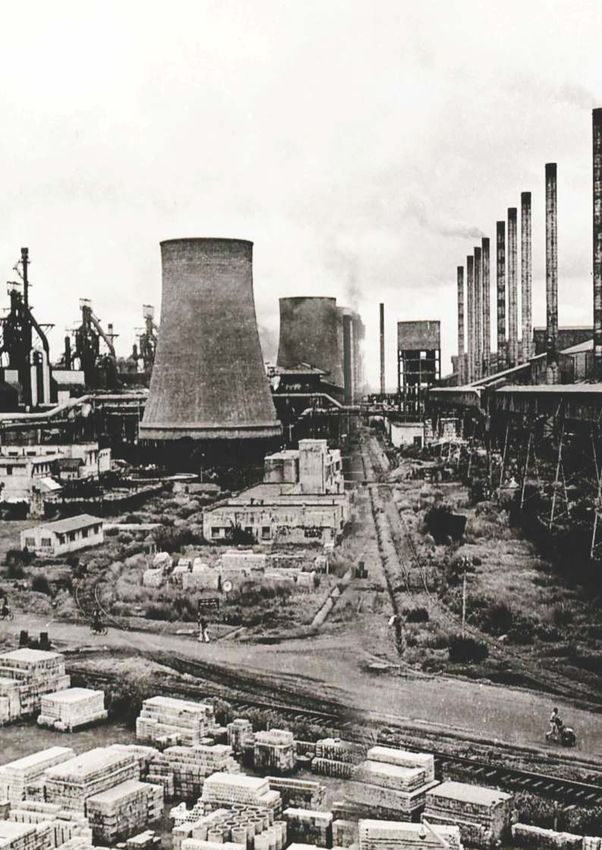
CHAIRMAN’S
                                                         MESSAGE
      Steel Authority of India Limited (SAIL) has staged a remarkable turnaround by bouncing back to see the profitability
      after three years and at this juncture, it is my privilege to present our 9th Sustainability Report of this esteemed Organization for the
      FY 2018-19.
      SAIL is committed for Sustainable Development encompassing environmental, societal and economic impacts related to its
      business activities and this Report is the testimony of our relentless efforts towards Sustainable Development, which integrates
      business and inclusive development in harmony with nature. The Report has been prepared in accordance with the GRI
      Sustainability Reporting Standards 2016.
      During 2018, Global Crude Steel production has increased by 4.6% to reach 1808.6 Million Tonnes (MT) compared to 2017 and
      India became the second largest steel producer in the World with a record production of 106.5 MT, up by 4.9% compared to 2017.
      In consonance with this, I am delighted to share that SAIL has also achieved its highest ever annual production of Hot Metal of
      17.5 MT, Crude Steel of 16.3 MT and Saleable Steel at 15.1 MT, with a growth of 10%, 8 % and 7%, respectively with respect to
      2017-18. With the turnover of `66,267 Cr., the Company earned a net profit (PAT) of `2,179 Cr. during the year.
     During the year, SAIL contributed a remarkable sum of `13,520 Cr. to the national exchequer in payment of taxes and duties to
     various government agencies. Though the market conditions continue to remain volatile, we could achieve success
     due to the hard work and synergy of our dedicated work force. A capital expenditure of `4,303 Cr. was incurred during FY 2018-19
     and capex planned for the Year 2019-20 is `4,000 Cr.
     Partnering with Country's infrastructure development, SAIL continues to be the Nation's trustworthy steel supplier in past 60
     years and consistently supplying its quality steel for various prestigious infrastructure projects including road, rail and highways,
     bridges, hydropower projects, rail & road tunnels, metro lines, etc. SAIL is proud to be associated with numerous projects of
     national importance which have been inaugurated in the recent times like Eastern Peripheral Highway Project, Kishanganga and
     Tuirial Hydropower projects, 111-km long Jiribam-Tupul-Imphal new broad gauge railway project, Bogibeel Road-cum-Rail
     Bridge on the river Brahmaputra in Assam, etc. by way of supplying the major steel requirement with stringent quality control.
     SAIL is ramping up the production of all the newly installed production facilities and you will be happy to note that the 'state of the
     art' Blast Furnace-8, Mahamaya at Bhilai Steel Plant achieved a landmark of 1 MT Hot Metal production in record 8 months and 17
     days after blowing in on 2nd February 2018, fastest in SAIL.
     During the year, with continued innovation, several new products, particularly special steels, with superior product quality
     attributes were developed and commercialized therein addressing stringent application requirement of diverse markets.
     The Company has become the first domestic steel maker to successfully roll NPB–750 (Narrow Parallel Flange Beams) with more
     depth. It has higher load bearing capacity, easier for fabrication which makes the construction more cost effective. We feel
     privileged to supply our special grade of steel for India's first indigenous and biggest artillery gun Dhanush, which was inducted
     into Indian Army. With this, SAIL has once again established its commitment to fulfilling the Country's requirement and
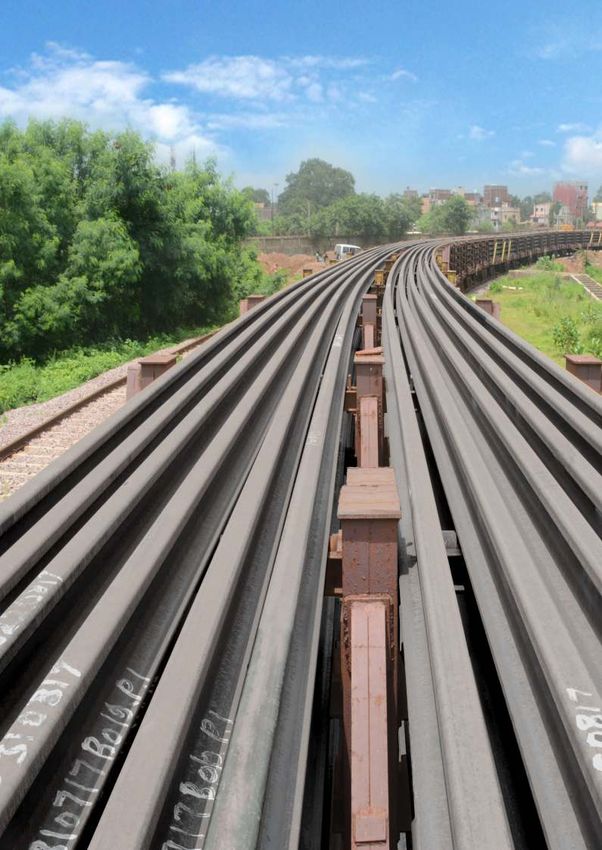
     strengthening India's defence systems. Another important milestone was achieved when the production of UTS-90 Rails by SAIL
     reached highest ever production of 9.85 Lakh Tonne during the FY 2018-19. The Company has also supplied first consignment of
     Linke Hofmann Busch (LHB) wheels to Indian Railways under the 'Make in India' Initiative and also a step towards import
     substitution by SAIL for Indian Railways.
     During 2018-19, the Company achieved its outstanding sales volume of over 14.1 MT, registering a growth of approximately 0.4%
     over CPLY. Advancing its presence in international markets, SAIL has exported 0.76 MT of steel, a growth of approximately 9%
     over the previous financial year. To realize the vast potential of rural India, the Company organized 152 'Gaon Ki Ore' workshops
     in 29 States/Union territories for increasing awareness on usage of steel. Small consumers continued to be a focus area and 0.7
     MT of steel were sold through the retail marketing channels.
     In line with the multi-pronged approach comprising of development of new mines for ensuring raw material security, diversifying
     strategic alliances aiming for leadership in technology, the Company has formed various JV Companies in diverse areas. Raw
     Material security is a major thrust area for SAIL. The ability to source the entire requirement of iron ore from the captive mines is
     SAIL's major strength. In order to further expand the production capacity of the mines, a number of statutory clearances have
     been obtained during the FY 2018-19. In case of coking coal, however, the major requirement is being met through imports due to
     limitation in availability of coal of good quality and required specification within the Country.
     Ensuring a safe and healthy work place for the people working at our various site locations is our topmost priority and we are
     committed to build a safer and healthier workplace. Safety and health issues are monitored and guided from apex level of
     management i.e. SAIL Board as well as Board Sub-committee on Health, Safety and Environment.
     The Company acknowledges the valuable contribution of its Human Resources in imparting the competitive advantage. The
     Company has achieved its present level of excellence through investment in its human resource, where skill and knowledge
     constitute multitude of initiatives in technology and innovation. Developing skills and capabilities of employees to enhance
     manpower utilization, labour productivity and safety is the key thrust area of Human Resource Management (HRM) in the
     Company. Several Large Group Interactions were held encompassing each Unit of the Company. Extensively utilizing the tools of

SAIL Corporate Sustainability Report 2018-19                    (102-14, 102-32)                                                        2
internal communications, employees were contacted for important occasion through numerous channels, comprising of videos
      on safety, targets, achievements, priorities, focus areas, corporate in-house journal SAIL-News, posters and messages. The
      Company realizes the importance of social media in present socio economic context and strengthened its presence in social
      media like Facebook and Twitter.
      Environment Protection including water conservation, self-regulation and self- monitoring through real time online monitoring of
      stacks and effluent quality and quantity, sustainable waste management practices, Water Conservation including treatment and
      recycling, maintaining good work zone and ambient air quality have been our thrust areas during this year. In consonance with the
      Paris Agreement, the Company is geared up to address the Climate Change issues. SAIL is Climate Action Member at World Steel
      Association and has been participating in the Climate Action recognition programme of World Steel Association.
      Concerted efforts across the Organization have resulted in achieving significant improvement in the environmental parameters. In
      last five years, there has been 16% reduction in Particulate Matter (PM) Emission Load, 6% reduction in Specific Water
      Consumption, 17% reduction in Specific Effluent Discharge and 3% reduction in Specific CO2 Emission. To create CO2 Sink,
      since inception, over 20 million trees have been planted in SAIL Plants & Mines. The Company is implementing a Sustainable
      Development (SD) Project for Long Term Maintenance of Ecologically Restored Limestone Mined out area and Water body of
      Mine void at Purnapani Mine, which is in the last lap of implementation.
      SAIL, Durgapur Steel Plant has undertaken the mission project for development of the 409 acres Bio-Diversity Park with seven
      water-bodies aesthetically designed for rain water harvesting, soil conservation and watering the plants, plantation of 60,000
      saplings of 400 different species to attract migratory birds facilitating avian diversity, propagation of rare and medicinal
      plants/ocrhards for maintaining ecological balance, environmental sustainability and benefitting/ educating 75,000 natives.
      Our other initiatives for greening of warehouses, promotion of renewable energy, switching over to LED lights and other
      environmental and pollution control projects have been carried forward during the year too.
      Most of the SAIL Units are operating in allegiance with distinct international standards like ISO 14001 for EMS, ISO 9000 for
      Quality Management Systems, SA 8000 for Social Accountability and OHSAS 18001 for Occupational Health and Safety.
     SAIL's Social Objective is synonymous with Corporate Social Responsibility. Over and above its core business of manufacturing
     steel, the objective of the Company is to take care of the social environment too aiming towards social, environmental and
     economic benefits to the communities and have a transforming and durable impact. The Company has been providing
     specialized and basic healthcare to people living in the vicinity of its Plants/Units through extensive &specialized Healthcare
     Infrastructure. Nearly 172 Lakh people living in the vicinity of its Plants and Units were benefitted during the period 2011-18.
     Education forms the foundation of any society and contributes to the overall growth and development of society. SAIL is
     supporting about 77 schools and providing modern education to more than 40,000 children in the steel townships and assisting
     over 600 Govt. Schools. Our relentless efforts are there for the women empowerment and specialized skill development training
     are also being imparted for sustainable income generation for more than 1000 women. During the year, the Company has signed a
     Memorandum of Association (MOA) with District Administration, Nuh, Haryana to provide support and promote awareness for
     maintaining health and hygiene of the school girls.
     Ekalavya Archery Academy at Kiriburu is now an established name among the aspiring archers in the Country. The Academy
     provides international standard archery training to the young boys and girls and chiseling out the best talents from the obscured
     potentials of Saranda Forest. Established in 2008, the Academy is unique by its own merits in remote tribal region of Saranda
     Forest near Jharkhand and Odisha Border. So far 146 medals including 45 Gold, 58 Silver and 43 Bronze have been won by the
     cadets at National and International meets.
     SAIL has been a front runner in SWACHH BHARAT MISSION. Various Awareness campaign being organized to promote
     Swachhata in work place. Every year, in consonance with Govt. of India's Swachh Bharat Mission initiative, Swatchata
     Pakhawada is being celebrated all across SAIL during 16th to 31st March.
     Sustainability is a journey and this Report is an attempt to yardstick our persistent efforts towards Sustainable Development
     through transparent and impartial reporting of Company's economic, environmental and social performance.
     To conclude, let us preserve and protect our mother Earth which is s a beautiful living planet of the Universe and the common
     habitat of more than seven billion human & millions of other varied species making it the excellent blend of biodiversity and
     ecological balance. As a steel maker, it is our responsibility to make steel in a more sustainable manner, to ensure the life of our
     future generation more secured and safe, as Lord Gautam Buddha said…
     “No One saves us but Ourselves, No One can and no one may. We Ourselves must walk the Path”
     .....Let us reassure our commitment to contribute towards clean and sustainable environment and continue paving the path
     towards Sustainability.
                                                                                                                With best compliments

                                                                                                               Anil Kumar Chaudhary
                                                                                                                          (Chairman)

SAIL Corporate Sustainability Report 2018-19                      (102-14)                                                        3
THE SAIL NETWORK

                                               SAIL organisational network in India

SAIL Corporate Sustainability Report 2018-19            (102-4, 102-6, 102-9)         4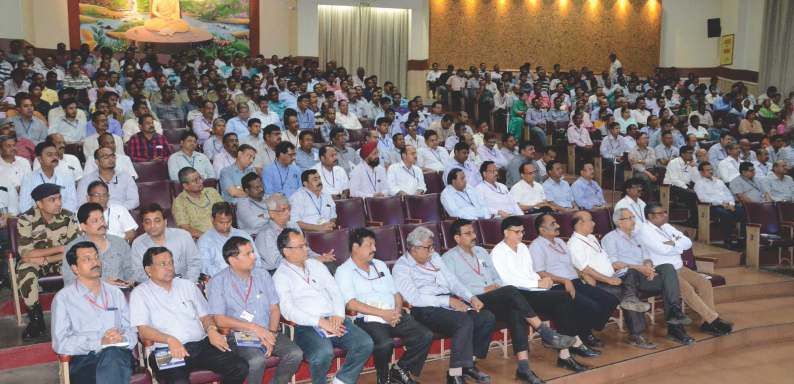
9 ANNUAL
           Corporate Sustainability Report
                                           TH

SAIL Corporate Sustainability Report 2018-19    5
Period
      We are pleased to present our ninth corporate level Annual Sustainability Report, which we have been publishing since the
      Financial Year 2010-11. All our reports have integrated business operations in an ethical and transparent manner while
      demonstrating commitment towards sustainable development, keeping interests of our Stakeholders. The current report covers
      sustainability performance of the Company during the period from April 1, 2018 to March 31, 2019. This ninth report is in
      continuation to our earlier report published for the Financial Year 2017-18.

      Framework
      All Corporate Sustainability Reports of SAIL have followed the framework set out by the Global Reporting Initiative (GRI). The top
      management has once again decided to use the GRI Standards for 2018-19 report. This report has been prepared in accordance
      with the GRI Standards: Core Option. Keeping the focus on materiality and stakeholder inclusiveness, the report displays our
      conscious decision to disclose performance on Economic, Environmental and Social aspects to our stakeholders.

      Scope
     We have used information from the Annual Report of the Company for the Financial Year 2018-19, ending March 31, 2019 for
     presenting financial details in the economic performance section of the Report and social and
     environmental performances of Plants, Units and Mines in the respective sections. Page 10 of the
     report gives information on the boundary of the report covering details on products and services of
     Plants, Units and Mining operations. No Unit has been shifted, divested or closed during the Financial
     Year. We are transparent in sharing all significant events of the past, and the projections of their
     impacts to occur in future. We have maintained the data quality of the report while ensuring accuracy,
     reliability, timeliness, clarity and comparability of figures and periods that form the base of reporting.

     Standards
     We have used International Standards such as ISO 9000, ISO 14001, OSHAS 18001 and SA 8000 for
     reporting on Quality, Environment, Health and Safety management. For reporting financial performance of
     the Company, we have referred the Company Law guidelines. We ensure commitment to Economic and
     Financial systems by regularly getting the statutory audits as well as internal audits done. Our systems are
     open to verification and review by the government authorities. For reporting on Carbon Dioxide (CO2)
     emissions from our Integrated Steel Plants (ISPs), we follow the World Steel Association (WSA) guidelines
     and calculation methodologies. For maintaining the Company’s work environment and safety
     regulations, we diligently follow requisite regulations, issued from time to time by the Ministry of
     Environment, Forest and Climate Change (MOEFCC) and the Factories Act 1948. Materiality
     Assessment has definitely helped us in prioritizing issues pertaining to economic, environment and
     social aspects of Sustainability and stakeholder engagement process. The material topics,
     explained in the respective chapter, are established through this materiality assessment process.

     Distribution and Feedback
     We have used English Language for writing the full report. The report can be downloaded from
     SAIL website (www.sail.co.in) and can be requested via email too. Stakeholder feedback on the
     report shall be reported to the relevant department upon its receipt via email. Any other
     additional information about SAIL’s efforts on sustainable development can be sought at
     sailsustainability@gmail.com

     Assurance
     No External Assurance was carried out for this report.

                                                                             ‘Dhanush’, the biggest artillery gun of Indian Army

                                                 (102-10, 102-48, 102-49, 102-50, 102-51,
SAIL Corporate Sustainability Report 2018-19                                                                                     6
                                                     102-52, 102-53, 102-54, 102-56)
SAIL'S ACHIEVEMENTS
      Financial Year 2018-19 was another remarkable year in the performance of the Company even with, greater challenges like firm
      competition from domestic market and certain operational setbacks. However, SAIL Plants, continued with their journey of
      relentless improvement in production, product-mix and efficiency parameters.
      During the sixtieth year of production, SAIL recorded its highest ever annual production of Hot Metal, Crude Steel and Saleable
      Steel. In its endeavour to become energy and cost efficient, SAIL increased the production of Crude Steel through Continuous
      Casting route and achieved highest ever Crude Steel production. SAIL Plants are carrying out a large number of innovations for
      process improvement and cost competitiveness.

      Financial                                                                                               All values are in ` Crore

      Key Performance Indicators                                                     2016-2017           2017-18             2018-19
      Turnover                                                                           49,180            58,297              66,267
      Net Sales                                                                          43,866            56,893              66,267
      Profit Before Tax                                                                   -4,851              -759               3,338
      EBITDA                                                                                672             5,184              10,283
      Capital Expenditure                                                                 49,39             5,130               4,303
      Total Assets                                                                     1,06,539          1,14,190            1,16,438
      Export Sales                                                                        1,738             2,244               2,873
      Profit After Tax                                                                    -2,833              -482               2,179
      CSR Budget                                                                          29.34                26                  31

      Production                                                                                                  All values are in MT
      Key Performance Indicators                                                        2016-17           2017-18            2018-19
      Plants
      Hot Metal                                                                           15.73              15.94              17.51
      Crude Steel                                                                          14.5              15.02              16.26
      Pig Iron                                                                              0.5               0.27               0.48
      Total Saleable Steel                                                                13.87              14.07              15.07
      Semi-Finished Steel                                                                  3.17                2.6               3.16
      Finished Steel                                                                       10.7              11.47              11.90
      Mines
      Iron Ore Production                                                                 26.44              26.83              28.35
      Flux Production                                                                      2.08               2.05               1.84

      Determined efforts are being put towards reduction of energy consumption and greenhouse gas emissions, increase in water
      reuse and recycling and management of wastes etc. Social impact indicators such as labour productivity, employee training, and
      spending on CSR etc. are also captured to track the performance on social aspect.

      Environmental
      Key Performance Indicators                   Unit                              2016-2017            2017-18            2018-19
      Specific CO2 Emission                         t/tcs                                  2.61               2.56               2.57
      Particulate Matter Emission Load             kg/tcs                                 0.77               0.74               0.70
      Specific Effluent Load                         kg/tcs                                0.086              0.081              0.085
      Specific Effluent Discharge                    m3/tss                                 1.91               1.78               1.80
      Specific Water Consumption                    m3/tcs                                 3.75               3.62               3.44

      Social
      Key Performance Indicators                   Unit                              2016-2017            2017-18            2018-19
      Labour Productivity                          tcs/man/year                            320                344                389
      Training                                     Man-hours/employee/year              104.80              84.80               72.0
      Spending on CSR                              ` Crore                               29.05              25.70              31.18
      Female Employees                             % of total employees                    6.0                6.0                6.0

SAIL Corporate Sustainability Report 2018-19                     (102-7)                                                        7
Panoramic view of
                                               Durgapur Steel Plant
                                               during its inception phase

SAIL Corporate Sustainability Report 2018-19                           8
SAIL
THE MAHARATNA
9Plants
Business Profile Bhilai Steel Plant
Steel Authority of India Limited (SAIL), a Government of India Undertaking Durgapur Steel Plant
and a Maharatna Central Public Sector Enterprise, is the premier steel- Rourkela Steel Plant
making organization headquartered at New Delhi, India. SAIL is a fully Bokaro Steel Plant
integrated iron and steel maker, producing both basic and special steels
IISCO Steel Plant
for domestic construction, engineering, power, railway, automotive and
defence industries and for sale in export markets thereby responsible for Alloy Steels Plant
driving the industrial revolution of modern India for more than six decades. Salem Steel Plant
The Company is among the seven Maharatnas of the Country's Central Visvesvaraya Iron and Steel Plant
Public Sector Enterprises. SAIL produces iron and steel at five Integrated Chandrapur Ferro Alloy Plant
Plants and three Special Plants, located principally in the eastern and
central regions of India and situated close to its captive iron ore, limestone
and dolomite mines which are domestic sources of raw materials.
Units
Central Marketing Organisation
Research and Development Centre
Scope of the Report for Iron & Steel
SAIL Plants, Units & Mines, as mentioned in the panel beside, are covered Centre for Engineering and
in the scope. Technology
SAIL Safety Organisation
SAIL Growth Works, Kulti
Environment Management Division
SAIL has the largest marketing network among all steel producers in the SAIL Refractory Unit
Country. The vital responsibility of carrying out the marketing activity is
carried out by SAIL's own Central Marketing Organization (CMO) that
transacts business through its 37 Branch Sales Offices (BSOs), 10 RMD Mines
Customer Contact Offices (CCOs), 25 Departmental Warehouses and 20
Functional Consignment Agency Yards. Iron Ore Mines
SAIL had been meeting retail demands of TMT bars and Galvanised Kiriburu
products through Dealer channel. In order to deepen the reach to the end Meghahatuburu
customer in the Retail Segment through an efficient distribution channel Gua
and provide value addition in product, delivery and services to customers,
Manoharpur
2-tier Dealer-Distributorship channel was introduced. As on 1st April 2019,
dealer network consisted of 1,789 dealers, out of which 858 dealers have Bolani
been added by the 14 Distributors, appointed under 2-tier distributorship. Barsua
This huge network spreading across the Country helps in meeting the Kalta
requirements of a wide range of customers throughout India.
Flux Mines
Kuteshwar Limestone Mines
Bhawanathpur Limestone Mines
6% Tulsidamar Dolomite Mine
4% Flat Products and
PET Products
BSP Mines
Long Products
Iron Ore Mines
Alloy & Special Steel
Rajhara
Secondary Products Dalli
Jharandalli
Dalli Manual
Mahamaya
Flux Mines
50% Nandini Limestone Mines
40% Hirri Dolomite Mines
VISL Flux Mines
Bhadigund Limestone Mines
Kenchapura Dunite Mines
SAIL Corporate Sustainability Report 2018-19 (102-1, 102-2, 102-3, 102-6, 102-7, 102-45) 10PRODUCTS PORTFOLIO
The Company caters to almost the entire gamut of the mild steel business namely, Flat products in the form of Plates, HR
coils/sheet, CR coils/sheets, Galvanised Plain/Corrugated Sheets and Long products comprising Rails, Structural, Wire-rods and
Merchant Products. In addition, Electric Resistance Welded Pipes, Spiral Welded Pipes and Silicon Steel Sheets form part of
Company's rich product-mix.
Long Products
Flat
Products
Pig Iron
Railway Tubular
Products
Special
Steels
Rerollables
SAIL Seqr
Products
Grades
Dimensions
SAIL Corporate Sustainability Report 2018-19 (102-2) 11First Steel Ingot cast at DSP
on April 24, 1960
SAIL Corporate Sustainability Report 2018-19 12SUSTAINABILITY
APPROACH
13SAIL has adopted a holistic approach for its sustainability framework; addressing the Business, Health & Safety, Environment and
Community management across all the operations. The company has in place the Sustainable Development Policy, supported by
our Operating Model which in turns helps in implementation of this framework and promotes enhanced accountability within the
system.
The sustainability priorities at SAIL are manoeuvred based on the feedback of relevant stakeholders of the company. The
achievements in the field of sustainability are on account of innate dedication and commitment of our corporate family. The
business roles and responsibilities of the employees are designed in such a way that they are aligned with mission and values of
the Company. This sense of social responsibility has not only helped the company in engaging with stakeholders in a constructive
way, but also placed it in a leading role in the global commitment towards Sustainability.
The Company work in tandem with its supply chain, striving towards improvement of product portfolio & quality to improve the
giving of its products to society and to limit the impacts of production. The Company is committed to giving back to the society
through various well designed community initiatives.
Sustainability Strategic Priorities of SAIL
Ÿ To pilot the business of Steel Ÿ To remain socially responsible Company by fulfilling social
Ÿ To conduct business with high ethical standards commitments towards society
Ÿ To develop growth strategies for achieving continuous Ÿ To device participative mechanisms for all our stakeholders
expansion in the market such as employees, customers, suppliers and community so
Ÿ To benchmark operations with the global best practices and that “development with sustainability” remains our focus
achieve excellence across the value chain area
Ÿ To excel in the area of environmental management by Ÿ To keep the business sustainable by adopting multi-
adopting ‘state-of-the-art’ technologies dimensional approaches in the areas of cost and financial
management, technology upgradation, value addition on
Ÿ To monitor and incorporate functional improvements in the products along with addition of new products that align with
all-inclusive business-model of our Company viz-a-viz the future demands
mining, steel making, marketing, human resource
management and peripheral services including community Ÿ To meet the future global and domestic demands through
development accelerated investment in new products and processes
Strengths
Ÿ Among the leading steel producers of the Nation. Ÿ Renowned in-house research establishment in form of RDCIS
Ÿ Most diversified product range offered by any domestic steel Ÿ Availability of Land bank for future expansions
company. Ÿ Captive iron ore resources
Ÿ Modernized units with newer technology for more efficient Ÿ ·Highly qualified professionals with experience in steel
and environment friendly operations. making and well-established systems and procedures
Ÿ Nationwide well established marketing and distribution Ÿ Multi-location production units
network enabling reach of SAIL products across the Country.
Opportunities Growth Strategies
Ÿ Government policies for growth of steel intensive sectors Ÿ Consolidation of leadership position through capacity
such as infrastructure, capital goods, construction, etc. to enhancement
position India as the 2nd largest steel consumer in the Ÿ Strategic alliances for further supporting the growth initiatives
world in the coming years. Ÿ Developing new mines for ensuring raw material security
Ÿ The newly commissioned mills are oriented towards
Ÿ Improving quality of input material
products required to cater to the infrastructure
development. Ÿ Increased focus on value added steel
Ÿ High export potential for markets of Middle East and South Ÿ Continual enhancement in operational efficiencies
East Asia. Ÿ Cost optimization
Ÿ Potential for improving product quality and reducing cost
through operational efficiency and utilization of the new
and modernized units.
SAIL Corporate Sustainability Report 2018-19 (102-15) 14SUSTAINABILITY FRAMEWORK
At SAIL sustainability priorities by and large are result of the inputs/feedbacks of the stakeholders of the Company.
The engagement feedbacks from our important stakeholders are used to identify the material topics based on which we classify
sustainability priorities, impacting our triple bottom line of growth and also assists us in formulation of Strategies in line with
Company's Vision, Goals and Policies.
Engagement with Materiality Issues
Stakeholders Vision
Sustainable
Customers Development Policy Sustainability Priorities
Shareholders Sustainability Strategies
Employees
Goal, Objectives Sustainability Strategy
Suppliers & Targets (Business, Environment
Community
Sustainability and Social performance)
NGOs Projects
Regulators
Competitors Sustainability KPIs
Academic Bodies
Industry Associations
Media Monitoring and Review
Core and Support Functions (Corporate, Plants & Mines)
Operations (Steelmaking and Mining), Marketing, Finance & Accounts Human Resource Management, Infrastructure and
Utilities, Maintenance, IT, Projects, Resource Management, Supply Chain, R&D, Risk Management, Knowledge Management,
Automation, Environment, Health and Safety Management, Community Development.
Implementation, monitoring and review of various sustainability initiatives results in enhancement of sustainability performance are taken care by core and support function.
SAIL Corporate Sustainability Report 2018-19 15First Steel Ingot cast at
DSP on April 24, 1960
Construction site of
of Bloom Cast Mill (1965)
at Alloy Steels Plant
SAIL Corporate Sustainability Report 2018-19 16PARTNERSHIPS, ASSOCIATIONS AND MEMBERSHIPS
World Steel Association (WSA)
SAIL is a member of WSA, the association with WSA has paved way and helped the company to a great extent in achieving the
excellence in steel business over the period of time through knowledge sharing on sustainable steel production and best
practices. The company has also subscribed to WSA principles and is committed to use co-products to reduce CO2 emissions,
adopt better operational practices and new technology for enhancing energy efficiency along with focused research for exploring
innovative technologies. SAIL participate in measuring and reporting of GHG emissions as per WSA methodology.
Montreal Protocol
SAIL has demonstrated its commitment to Montreal Protocol by successfully phasing out Ozone Depleting Substances (ODS),
viz. Carbon Tetrachloride (CTC). Trichloroethylene (TCE) is used as cleaning solvent in our operations.
UN Global Compact
The UN Global Compact is a strategic policy initiative for businesses that are committed to aligning their operations and strategies
with ten universally accepted principles in the areas of human rights, labour, environment and anti-corruption. SAIL business
policies and actions are in line with the Principles of UN Global Compact in letter and spirit.
Stockholm Convention On Persistent Organic Pollutants (POPs)
The Stockholm Convention (SC) on Persistent Organic Pollutants (POPs) recognizes that POPs including polychlorinated
biphenyls (PCBs) as a major public health concern and their production is banned and use is restricted, further the waste also
needs to be disposed off in an environmentally sound manner. Ministry of Environment, Forest and Climate Change (MoEFCC)
and United Nations Industrial Development Organization (UNIDO) have come together to setup a state-of-the-art PCB
management facility at Bhilai Steel Plant (BSP) of SAIL. The facility will have provision for destruction of pure PCB and PCB
containing wastes along with facility for decontamination/treatment of PCB contaminated equipment, transformer oil and wastes
arising from SAIL plants as well as other industries in-line with Stockholm Convention.
Charter on Corporate Responsibility for Environment Protection (CREP)
The charter on Corporate Responsibility for Environmental Protection (CREP) was launched by the MOEF&CC with the purpose to
infuse the spirit of environmental excellence in industries. The charter also enlists industry specific action points so as to help
them to go beyond the compliance of regulatory norms for prevention & control of pollution through various measures including
waste minimization, in-plant process control & adoption of clean technologies. SAIL agreed to comply with the action points
suggested under the charter and developed strategies in-line to improve upon the environmental performance further and
beyond statutory compliance.
Standing Conference of Public Enterprises (SCOPE)
SAIL has been actively involved in the proceedings of SCOPE, a prominent body of the Central Government of India.
OTHER ASSOCIATIONS & MEMBERSHIPS
Ÿ All India Management Association (AIMA) Ÿ Indian Society for Training and Development (ISTD)
Ÿ Centre for Organization Development (COD) Ÿ Indo USSR Chamber of Commerce and Industries
(IUCCI)
Ÿ Confederation of Indian Industry (CII)
Ÿ Institute of Public Enterprises (IPE)
Ÿ Consultancy Development Centre (CDC)
Ÿ Institute of Rail Transport (IRT)
Ÿ Federation of Indian Chambers for Commerce
and Industry (FICCI) Ÿ Project Management Associate (PMA)
Ÿ Forum of Women in Public Sector (WIPS) Ÿ The Energy and Resources Institute (TERI)
Ÿ Indian Institute of Metals, Kolkata (IIM) Ÿ The Indian Iran Chamber of Commerce and Industry
(IICCI)
Ÿ Indian Institute of Plant Engineers (IIPE)
Ÿ World Confederation of Productivity Science (WCPS)
Ÿ Indian Steel Association (ISA)
SAIL Corporate Sustainability Report 2018-19 (102-12, 102-13) 17Key Joint Venture Collaborations
Ÿ NTPC-SAIL Power Company Limited Ÿ TMTSAL SAIL JV Limited
Ÿ Bokaro Power Supply Company Limited Ÿ SAL SAIL JVC Limited
Ÿ mjunction services limited Ÿ SAIL-Bengal Alloy Castings Pvt. Ltd.
Ÿ International Coal Ventures Private Limited Ÿ PrimeGold-SAIL JVC Limited
Ÿ SAIL-RITES Bengal Wagon Industry Pvt. Ltd. Ÿ VSL SAIL JVC Limited
Ÿ SAIL Bansal Service Centre Limited Ÿ Abhinav-SAIL JVC Limited
Ÿ Bhilai Jaypee Cement Limited Ÿ North Bengal Dolomite Limited
Ÿ S&T Mining Company Private Limited Ÿ Romelt-SAIL (India) Limited
Ÿ SAIL & MOIL Ferro Alloys Private Limited Ÿ NMDC SAIL Limited
Ÿ SAIL-SCI Shipping Private Limited Ÿ Bastar Railway Private Limited
Ÿ SAIL SCL Kerala Limited Ÿ GEDCOL SAIL Power Corporation Limited
Ÿ SAIL Kobe Iron India Private Limited
Strategic Initiatives of the Company
Pellet Plant of Suitable Capacity under a Joint Venture with KIOCL: A Memorandum of Understanding with KIOCL Limited
(KIOCL) was signed on January 30, 2019 to undertake a Joint Techno-Economic Feasibility Study (Joint Feasibility Study) for
setting up of a Pellet plant of suitable capacity at any suitable location across SAIL's Integrated Steel Plants. A Joint Working
Group has been constituted to take the project forward.
GEDCOL SAIL Power Corporation Limited, a new Joint Venture Company between SAIL and Green Energy Corporation of Odisha
Limited (a wholly owned subsidiary of Odisha Hydro Power Corporation) formed on September 6, 2018 for setting up of 10 MW
small hydro-electric power plant at Mandira dam, Rourkela, Odisha.
SAIL Corporate Sustainability Report 2018-19 18AWARDS AND ACCOLADES
SAIL
Ÿ Prime Minister's Shram Awards including 6 employees for the Year 2017.
Ÿ 9 Vishwakarma Rashtriya Puraskar for 48 SAIL employees for the Year 2016.
Ÿ Governance Now PSU Award for 'Resilient Growth' in the “Maharatna” category.
Ÿ Winner of ‘Golden Peacock Environment Management Award-2019’.
Ÿ Top Rankers Excellence Award for 'Outstanding Leadership' to Chairman, SAIL.
Ÿ Recognition for "Strong Commitment to HR Excellence” under CII HR Excellence Award.
Ÿ India's Top Challengers Award at the 16th Construction World Global Awards 2018.
Ÿ National Award for Excellence in Cost Management for first place in the category 'Public – Manufacturing – Mega'.
Ÿ 'Runners up' Trophy (in Category-A) under "NIPM National Award for HR Best Practices 2018".
Ÿ Second prize for In-house journal “Ispat Bhasha Bharti” amongst 61 PSUs of Town Official Language Implementation
Committee (TOLIC).
Plant and Units
Bhilai Steel Plant
Ÿ Nari Shakti Samman to Smt. Rajani Rajak, Development Assistant in CSR Deptt. of BSP for outstanding contribution to
women's empowerment for the year 2018
Durgapur Steel Plant
Ÿ ENCON Awards 2018 for Excellence in Energy Conservation by CII, Eastern Region.
Ÿ 10 nos. of Par – Excellence awards at National Convention on Quality Concepts (NCQC) organized by Quality Circle Forum of
India (QCFI).
Rourkela Steel Plant
Ÿ Certificate of Appreciation - theme based award in Prime Minister's Trophy Awards 2016-17 for "Initiative to reduce
turnaround time of BOBS wagons leading to substantial reduction in Demurrage and Optimum Utilization of National
resources".
Ÿ Golden Peacock Award for Corporate Social Responsibility for the year 2018.
Ÿ Srishti G-Cube Good Green Governance Award for excellence in environment management for the year 2018.
Ÿ Par Excellence Award to the Quality Circle Team by QCFI of India.
Bokaro Steel Plant
Ÿ 18th Annual Greentech Environment Excellence Award – Platinum category in Metal & Mining in recognition of excellent
environmental performance Sector for the year 2018.
Ÿ National Water Award in recognition of Best large scale industry for industrial water conservation category in eastern zone of
India by Ministry of Water Resources, River Development and Ganga Rejuvenation for the year 2018.
Chairman SAIL receiving National Award for Excellence in Cost Management
SAIL Corporate Sustainability Report 2018-19 19IISCO Steel Plant
Ÿ West Bengal Best Employer Brand Award in recognition of HR initiatives by World HRD Congress for the year 2018.
Ÿ Golden Peacock National Training Award for the year 2017-18.
Alloy Steels Plant
Ÿ Ispat Suraksha Puraskar for 'No fatal accident' during the Calendar Year 2016 & 2017 under Scheme-II.
Ÿ Ispat Suraksha Puraskar 2018 for 'No fatal accident' involving Contract Labour during the Calendar Year 2016 & 2017
under Scheme-IV
Ÿ Excellence Award to the 2 Quality Circle Team by QCFI of India.
Salem Steel Plant
Ÿ Innovation and Sustainability Award to encourage and recognize the Excellent Performance in various fields by the Institution
of Engineers.
Chandrapur Ferro Alloy Plant
Ÿ Ispat Suraksha Puraskar 2018 for 'No fatal accident' involving Employees under Scheme-IV Group 'B'.
Ÿ Ispat Suraksha Puraskar 2018 for 'No fatal accident' involving contract labour under Scheme-IV Group 'B'.
Research & Development Centre for Iron & Steel (RDCIS)
Ÿ RDCIS bagged several prestigious award during 2018-19 like Metallurgist of the year, O.P. Jinal Gold Medal, Indranil
Award, M. Vishvesvaraya Award etc.
SAIL won more than 30% of the
VISHWAKARMA RASHTRIYA PURASKAR
for the performance year 2016
SAIL Corporate Sustainability Report 2018-19 20GOVERNANCE
STRUCTURE
SAIL Corporate Sustainability Report 2018-19 21At SAIL, we are proud to create transparent Corporate Governance Framework, where disclosures and reporting duly conforms
to the laws, regulations and guidelines, including Department of Public Enterprises (DPE) guidelines. The incisive Corporate
Governance framework at SAIL includes promoting ethical conduct and professional accountability, with the primary objective of
enhancing stakeholder value with corporate risk management and corporate social responsibility. It recognizes that the Board is
accountable to all shareholders and their first duty is towards protecting and promoting the interests of the Company. The
Company is committed to delivering the highest standards of Corporate Governance in the country.
The Corporate Governance is accomplished in accordance with the Company’s Act, 2013, SEBI (LODR) Regulations, 2015 and
DPE Guidelines. Some of the dynamic protocols that we have adopted for governance include well-crafted guidelines, policies
and procedures. Conducting independent internal audit, regular reviews by Audit Committee/ Board, CAG Audit of Corporate
Governance, Independent Audit by Auditors of Corporate Governance in the Company also enables effectiveness of governance.
The Company's Vision and Credo plays a decisive role in guiding the Board of Directors to supervise and conduct business in an
economically, socially and environmentally sustainable manner. The SAIL Board comprises of full time Executive Directors, Non-
Executive Directors and Independent Directors, confirming to the provisions the Company’s ACT, SEBI (LODR) and DPE
Guidelines.
During the Annual General Meeting (AGM), the annual report of the Company together with Audited Accounts for Financial Year is
presented by the Directors. The proceedings of the AGM including the suggestions, comments and feedback from the
shareholders are duly recorded. The concerns of the shareholders are deliberated at the Board Meeting and after evaluation,
these concerns are integrated into the management's business decision.
For adherence to Corporate Governance Agenda, the Company has specialized committees. Some of the key committees are
Audit Committee, Nomination & Remuneration Committee, Stakeholders' Relationship Committee, Corporate Social
Responsibility Committee and SAIL Risk Management Committee. These committees are led and supervised by Independent
Directors. This robust structure, having valuable and varied experience of Independent Directors, enable the Company to have an
independent perception on various governance issues before the same are considered by the Board of Directors.
During the year, besides, these mandatory Committees, various other Board Sub-Committees (BSC) such as BSC on Strategic
Issues & Joint Ventures; Projects; Health, Safety and Environment have also been constituted by the Company. SAIL Risk
Management Committee operates to oversee the risk management function of the Company.
The Board has laid down a Code of Conduct encapsulating the specifications to be complied with by all the Board Members and
Senior Management Personnel of the Company. The Company has been compliant with this Code of Conduct and therefore, no
penalties, strictures have been imposed on the Company by any statutory authority (e.g. Stock Exchange(s), SEBI) during the year
in the matter related to capital markets or compliances during the year.
Chairman SAIL addressing employees
SAIL Corporate Sustainability Report 2018-19 (102-16, 102-18, 102-19, 102-20, 102-21, 102-22, 22
102-24, 102-26, 102-27, 102-30)SAIL being a Government Company, the nomination, appointment and fixation of terms and conditions of Independent Directors
is made by Government of India. No other pecuniary benefit is granted to the Non-Executive Directors (other than the Government
Nominee Directors). Independent Directors are paid only sitting fee for each Board/ Board Sub-Committee Meeting attended by
them. The salary and pay scales of the Whole Time Directors is fixed in accordance with the prevailing rules of the Government.
Various Corporate Office Divisions/ Departments regularly assimilate, compile and monitor diverse issues appropriating to the
management of economic, environmental and social areas. The status reports in conjunction with the agenda papers, prepared
with the valuable inputs provided by the respective Plants/Units, on the economic, environment and social performances
including legal compliance are regularly and methodically put up to the Board for examination, comments and recommendations.
The inputs and observation of the Board are examined and analyzed by the top management and subsequently envisioned for
business decision-making.
There were no transactions by the Company of material nature with Promoters, Directors or the Management, Subsidiaries,
relatives during the year, thereby eliminating any potential conflict of interests between the Company and its stakeholders.
The Company has always been awarded the highest Grade i.e. 'Outstanding' in compliance of the provisions of Corporate
Governance as per the DPE Guidelines on Corporate Governance 2010.
SAIL, by virtue of its 'Maharatna' status enjoys significant operational and financial autonomy. The Government of India owns
75% of the equity and retains voting control in the Company
Board of Directors
As on 9th July 2019, the Board of Directors comprised of one Full Time Chairman, five Whole Time Executive Directors and ten
Non-Executive Directors, comprising of 2 Government Nominee Directors and eight Independent Directors. Eight Board
meetings were held during the course of the year.
There were no complaints pending redressal as on 31st March 2019. All nine shareholders complaints received during the year
were amicably addressed and resolved.
0.05 4.48
Shareholders breakup for SAIL
1.47 as on 31st March 2019
(% of Equity)
4.10
3.05 Government of India
1.83
Financial Institutions
Banks
10.02 Mutual Funds
Foreign Portfolio Investors
Companies
75
Individuals
IEPF Authority
SAIL Corporate Sustainability Report 2018-19 (102-5, 102-18, 102-23, 102-25, 102-28, 102-29, 23
102-31, 102-33, 102-34, 102-35, 102-36, 102-37)CORPORATE
LEADERSHIP
BOARD OF DIRECTORS as on 9th July 2019
Shri Anil Kumar Chaudhary
Chairman
Shri Saraswati Prasad Shri Puneet Kansal
Special Secretary & Financial Adviser, Joint Secretary,
Government of India, Ministry of Steel Government of India, Ministry of Steel
Dr. G. Vishwakarma
Director (Projects & Business Planning)
Ms. Soma Mondal Shri Atul Srivastava Shri Harinand Rai Shri Vivek Gupta
with Additional Charge of Director (Finance) Director (Commercial) Director (Personnel) Director (Technical) Director (Raw Materials & Logistics)
SAIL Corporate Sustainability Report 2018-19 (102-18) 24Prof. Ashok Gupta CA Parmod Bindal Ms. Anshu Vaish Dr. Samar Singh
Independent Director Independent Director Independent Director Independent Director
Shri Nilanjan Sanyal CA Kartar Singh Chauhan Prof. N.K. Taneja Shri Krishan Kumar Gupta
Independent Director Independent Director Independent Director Independent Director
Chief Executive Officers (Permanent invitees)
Shri P. K. Singh Shri Anirban Dasgupta Shri Dipak Chattaraj Shri A. V. Kamlakar
CEO, BSL CEO, BSP CEO, RSP CEO ISP, DSP & ASP
SAIL Corporate Sustainability Report 2018-19 (102-18) 25CORPORATE INTEGRITY
At SAIL, the core value that underpins all its business activities is Integrity. SAIL has earned its status of dependability through
several decades of steadfast value-driven business operations across the country. As a responsible corporate citizen, SAIL not
only seeks to conduct its business in the most ethical manner, it also motivates and encourages its employees to maintain the
same ethical standards and carry forward the influence among the surrounding communities.
To enable its employees to work with integrity and impartiality while upholding the highest ethical and moral standards, the
Company has in place dedicated vigilance departments at all its Plants/Units along with Quality Management System (QMS). In
order to prevent corruption, all operations of SAIL are subject to scrutiny by Vigilance team. A full-fledged Vigilance team of
around 140 employees is headed by a Chief Vigilance Officer; who is appointed by the Central Government on tenure basis. The
Vigilance Wing carries out its work independently and the Chief Vigilance Officer reports to the Central Vigilance Commission
directly on all aspects of corruption.
The Company has also put in place Conduct, Discipline and Appeal (CDA) Rules which prescribe the code of conduct as
applicable mostly to the executives of the Company; whereas the non-executive workmen are covered under the code of
conduct / misconduct as mentioned in the Standing Orders for respective Plants / Units of SAIL.
In July 2007, the Company implemented Integrity Pact for all contracts / procurements valuing Rs. 100 crores and above.
Subsequently, to cover more contracts / procurements, threshold value has been reduced to Rs. 20 crores; and all tenders
related to handling contracts in CMO departmental warehouses, irrespective of threshold value, are also covered under Integrity
Pact. Guidelines on banning of business dealings with bidders / contractors / agencies dealing with SAIL have been
implemented in the Company and made part of the Integrity Pact wherein it has been envisaged that appropriate action shall be
taken against the signatories of Integrity Pact, if they are found involved in unethical practices including corruption and bribery.
SAIL Vigilance has been undertaking numerous Preventive/Participative Vigilance activities to prevent corruption in all the
operations of SAIL; inter-alia including:
Ÿ Conducting Surprise Checks/File Scrutiny/Joint Surprise Checks in various areas
Ÿ Identification of Thrust areas and focussing Vigilance activities towards these areas
Ÿ Undertaking Intensive Examinations and System Improvement Projects
Ÿ Conducting training and awareness programmes to sensitize officials
Ÿ Periodically publishing SAIL Vigilance journal
Ÿ Laying emphasis on updation of existing systems & procedures
Ÿ Ensuring Job rotation in Sensitive areas
Ÿ Giving Preventive & Administrative recommendations on case to case basis as per requirement
Ÿ Monitoring the implementation of Integrity Pact
Ÿ Maintaining List of Officers of Doubtful Integrity and an Agreed List
Ÿ Laying emphasis on technology leverage for increasing e-tendering and e-payment etc.
The vigilance departments receive and investigate complaints as per the Central Vigilance Commission guidelines including
those relating to corruption. During the year 2018-19, 842 complaints were received in SAIL Vigilance and 846 complaints were
disposed off; out of which 307 complaints were found anonymous / pseudonymous, 145 complaints were forwarded to other
departments, 272 complaints were closed as the allegations had no vigilance angle / were not substantiated, 98 were closed with
Release of in-house journal
SAIL Corporate Sustainability Report 2018-19 (102-16, 102-17, 103-1, 103-2, 103-3, 205-1) 26Integrity Pledge being administered by Chairman SAIL
preventive / administrative recommendations whereas regular departmental actions were initiated in 24 complaints. A total of
2,444 surprise checks/file scrutiny were conducted by Vigilance Department in the vulnerable areas/departments of different
Plants/Units.
Vigilance Department also provides inputs on existing system to operating authorities for ensuring greater transparency for
continual improvement on regular basis. During the year, 13 cases of high value procurement/ contracts were scrutinized
comprehensively and necessary recommendations were forwarded to respective departments.
To propagate ethical behaviour in the society at large, Ethics Clubs were formed in the schools of SAIL's Bhilai Steel Plant in 2011.
Encompassing the core values of Honesty, Integrity, Responsibility, Compassion, Unity and Patriotism etc.; value education
through Ethics Clubs is as an extra-curricular activity. Membership to the club is voluntary for students in the age group of 11 to 16
years. Members of the club are designated as Young Champions of Ethics. Schools of other SAIL townships at Rourkela, Bokaro,
Burnpur, Durgapur, Salem and Bhadravati joined the movement and today, Ethics Clubs members in SAIL run into many
thousands. SAIL believes that ethical values imbibed in the Young Champions of Ethics at an early age will lead to ethically
sustainable growth in the years to come.
The following three (3) thrust areas were identified by SAIL Vigilance for the year 2018:
= Surveillance in the areas of receipt, sampling & testing of high value raw materials.
= Audit of SIPs implemented in 2015 & 2016.
= Scrutiny of emergency procurement and contract cases.
In order to create vigilance awareness among the employees on aspects such as Whistle Blower Policy, Purchase/Contract
Procedures, Conduct and Discipline Rules, Common Irregularities, System and Procedures followed in SAIL etc., workshops and
interaction-cum-awareness sessions are organised regularly by Vigilance Department. In the year 2018-19, 178 such vigilance
awareness workshops/trainings were organized at different Plants/Units, covering 2,994 participants.
Vigilance Awareness Week is observed in SAIL for a period of one week during October -November. During 2018-19, the
weeklong activities included workshops/ sensitization programmes, anti-corruption march / walkathon, customers meet, events
like quiz, essay, slogan & drawing/poster, debate competition were organized for SAIL employees and their families. As outreach
measures, various events like Speech/Oratory competition, Poster/Drawing competition, Essay/Slogan competition, Inter school
debate competition, Quiz competition etc. were organized across various townships of SAIL and metro cities of Delhi & Kolkata, in
which around 900 students from 27 Colleges / universities and more than 4000 students from various schools participated.
To enhance Vigilance awareness, an in-house journal 'Inspiration- Prerna' having case studies, informative articles, quiz on policy
matters etc. is also published by SAIL Vigilance Department.
SAIL Corporate Sustainability Report 2018-19 (205-1) 27Levelling work in progress at the site of
Bokaro Steel Plant in the Year 1967
SAIL Corporate Sustainability Report 2018-19 28BONDING WITH STAKEHOLDERS SAIL Corporate Sustainability Report 2018-19 29
Stakeholder Engagement

SAIL Corporate Sustainability Report 2018-19                 30
Stakeholders are broadly defined as those groups or individuals who can be reasonably expected to be significantly affected by
      the organisation's activities, products and/or services and whose actions can reasonably be expected to affect the ability of the
      organisation to successfully implement its strategies and achieve its goals. At SAIL, the identification of stakeholders originates
      from the vision of the Company. The vision indicates that all efforts shall be directed towards quality, productivity, profitability and
      customer satisfaction, whilst establishing value partnership with suppliers and contributing towards social progress of the nation.
      The internal and external stakeholder base of SAIL encompasses the government, shareholders, employees, customers,
      suppliers, community, NGOs, academics, consultants, competitors, financial institutions etc.
     SAIL's Citizen Charter has outlined commitment of SAIL towards its stakeholders, thereby empowering them to demand better
     products and services. Moreover, the Company is committed to excel in communal service delivery through good governance, in
     order to make the service delivery process more effective the Company has laid down process of identifying citizens, assessing their
     expectations and also for communication of Company's key policies to them.
     The feedback mechanisms at SAIL have evolved and matured over several decades. The mechanism one of its own kind, helps
     the Company in collating & addressing the concerns & issues and also identifies risks arising out of the stakeholder concerns
     whilst paving ways to develop strategies for managing them. The frequency of engagement varies with the stakeholder groups
     ranging from regular everyday interaction with employees to Annual General Meetings (AGM) for shareholders.

                                                Implement                        Identify &
                                                    &                          Capture Views
                                               Communicate

                                                            The Stakeholder
                                                           Engagement Model
                                Prepare                                                              Assess &
                                                                at SAIL
                               Action Plan                                                           Evaluate
                                                                                                      Issues

                                                  Identify
                                               Sustainability                      Prioritise
                                                Indicators                          Issues

      Engagement with Stakeholders
      Completeness                                   Materiality                                 Responsiveness
      Ÿ   Knowing & Understanding                    Ÿ   Assessing Significance to                Ÿ   Connecting & responding
          Stakeholders                                   Stakeholders & Management               Ÿ   Providing Access to Information
      Ÿ   Transparent & Balanced Reporting           Ÿ   Deciding what to report

SAIL Corporate Sustainability Report 2018-19                        (102-42)                                                         31
You can also read


