PARTNERSHIP AND INNOVATION - What it takes: SUSTAINABLE DEVELOPMENT REPORT 2011 - Anglo American South Africa
←
→
Page content transcription
If your browser does not render page correctly, please read the page content below
SUSTAINABLE DEVELOPMENT REPORT 2011

What it takes:
PARTNERSHIP
AND INNOVATION
COVER STORY

     What it takes:
 DEDICATION
 AND TEAMWORK
                                                                                                             Other sources of information

                                                                                                             Our website provides additional
01                                                        02
                                                                                                             information on our sustainability
                                                                                                             performance, including
                                                                                                             separate reports from some
                                                                                                             of our individual companies
                                                                                                             and operations.
                                                                                                             More detailed information
                                                                                                             on the financial and corporate
                                                                                                             governance aspects of our
                                                                                                             performance is provided in the
                                                                                                             Anglo American Annual Report.
                                                                                                             Although we have chosen
                                                                                                             not to produce an ‘integrated
04                                                        03
                                                                                                             report’, we have included a
     ISIBONELO WINS NATIONAL SAFETY                                                                          comprehensive overview of
     ACHIEVEMENT AWARD                                                                                       our non-financial performance
                                                                                                             in our Annual Report.
     In 2011, Thermal Coal’s Isibonelo colliery was awarded
     a Safety Achievement Flag by the government of                                                          We report in line with the
     South Africa’s Department of Mineral Resources (DMR).                                                   requirements of the UK
                                                                                                             Corporate Governance Code
     A record-breaking 1,304 consecutive days without incurring
     a single lost-time injury was recognised in April, when
                                                                                                             and in line with the requirements
     Isibonelo was awarded the Safety Achievement Flag for                                                   of the Global Reporting Initiative
     showing the greatest improvement over two consecutive                                                   (GRI) G3 guidelines and Mining
     three-year periods.                                                                                     and Metal Sector Supplement.
                                                                                                             This report received an A+ GRI
     “This is the result of dedicated leadership and a sustained
     effort on the part of everyone on the mine,” said Minister
                                                                                                             application level.
     of Mineral Resources Susan Shabangu.
                                                                                                             Key to icons in this document
     There is no magic formula behind this success. As they say
                                                                                                                 Go to a page in this or another
     at Isibonelo: “Safety is like trying to sweep water uphill; it has                                          publication
     to be worked at all day, every day, by everyone at the mine”.
                                                                                                                 www.angloamerican.com
     Management’s first priority each day is their presence in            Above
     the pit, plant and workshops, demonstrating visible felt             01 T
                                                                              ruck operator                     Video available
     leadership and their commitment to the health and                       Sindy Barnard drives                www.angloamerican.com/media/
                                                                             one of the biggest haul             media_library/media_video
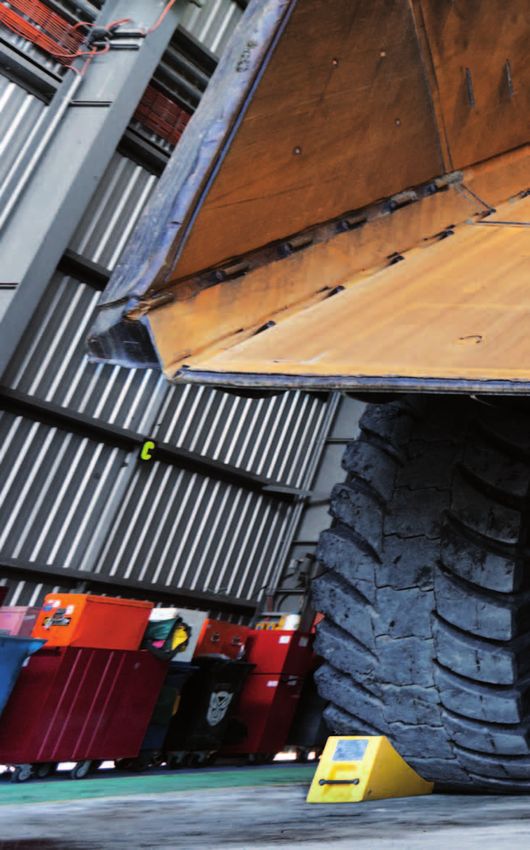
     safety cause.                                                           trucks in the world.
     In the latter part of the year, one member of the team did           02 Inside the open pit.
     suffer an injury resulting in lost time. However, according          03 Isibonelo is a large
     to Isibonelo’s safety superintendent, Rudi Marais, the                   scale, complex opencast
     mine continues to have the culture of open and frank                     mine operating some
     communication, in which leadership focuses on the person                 of the world’s largest
                                                                              earthmoving equipment.
     as well as the procedure, which he regards as essential to               Everyone at the mine
     safety buy-in.                                                           treats safety as their first
                                                                              priority. Foreman Paul
     Anglo American’s Tripartite Health and Safety Initiative also            Masinini, leading a team
     helps, with a flow of information among managers, the DMR                safety briefing on a
                                                                              working day at the mine.
     and trade unions, who are highly supportive of the mine’s
     work on safety.                                                      04 T
                                                                              ruck operator
                                                                             Thami Xaba at work.
         For more information, visit
         www.angloamerican.com                                            Cover
                                                                                          A team at
         To watch the video, visit
         www.angloamerican.com                                                            Isibonelo
                                                                                          colliery
                                                                                          gets involved
                                                                                          in the daily
                                                                                          safety briefing.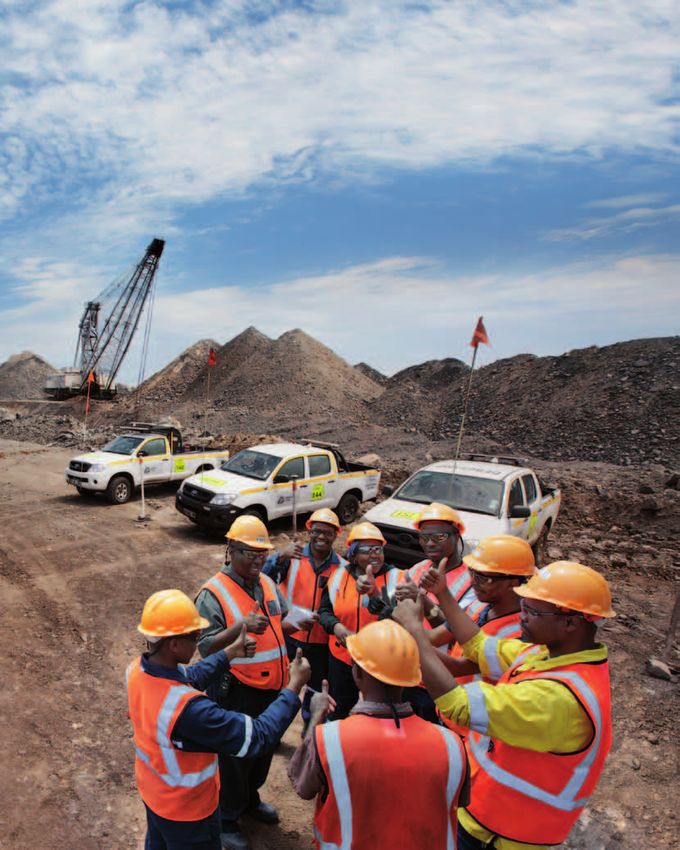
OVERVIEW

What it takes:
SHARING KNOWLEDGE AND
EXPERTISE ON A GLOBAL SCALE

                   Bulk                                                                                                                                     Base metals

Business units     IRON ORE                                      METALLURGICAL                                THERMAL                                       COPPER
                   AND MANGANESE                                 COAL                                         COAL
                   We are in the top five of the                 Metallurgical Coal is the                    In South Africa, Thermal Coal                 Copper has interests in six
                   world’s iron ore producers, with              second biggest Australian                    owns and operates nine mines.                 operations in Chile. These
                   a large high quality resource                 metallurgical coal producer                  In Colombia, we have a one-third              comprise the 75.5% owned
                   base in South Africa and Brazil.              and the number 3 global                      shareholding (with BHP Billiton               Los Bronces and El Soldado
                                                                 exporter of metallurgical coal.              and Xstrata each owning one-                  mines and the Chagres smelter,
                   Iron ore is a key component                                                                third) in Cerrejón, Colombia’s                the 100% owned Mantos
                   in steel, the most widely used                Anglo American is an active                  biggest thermal coal exporter.                Blancos and Mantoverde
                   of all metals. Global steel                   partner in diverse clean coal                                                              mines, and a 44% interest
                   consumption is forecast to                    energy initiatives.                          About 5.1 billion tonnes of                   in the Collahuasi mine. Copper
                   grow in excess of 5% pa over                                                               thermal coal are produced
                                                                 Metallurgical coal is the key                                                              also owns 82% of the Quellaveco
                   the next three years.                                                                      globally each year. Around
                                                                 raw material for 70% of the                                                                project and 100% of the
                                                                                                              40% of all electricity
                                                                 world’s steel industry.                                                                    Michiquillay project in Peru,
                                                                                                              generated globally is powered
                                                                 Demand is driven by economic,                                                              and has a 50% interest in the
                                                                                                              by thermal coal.
                                                                 industrial and steel growth.                                                               Pebble project in Alaska.

                   8                                             3                                            9                                             5
Average number
of employees
(’000s)(1)

                   $4,520 m                                      $1,189 m                                     $1,230 m                                      $2,461m
Share of Group
operating profit

                   41%
                   2010
                                                                 11%
                                                                  2010
                                                                                                              11%
                                                                                                              2010
                                                                                                                                                            22%
                                                                                                                                                            2010
                   $3,681m, 38%                                   $780 m, 8%                                  $710 m, 7%                                    $2,817 m, 29%

                   (1)
                         Excluding contractors and associates’ employees, and including a proportionate share of employees within joint venture entities.
                   (2)
                         De Beers is an independently managed associate. Employee numbers shown represent the average number of employees in
                         De Beers’ managed operations, including 100% of employees in De Beers’ underlying joint ventures.
                   (3)
                         De Beers’ results are shown as share of associate’s operating profit.
Headquarters                         Corporate and representative offices                                    North America            Africa

London, United Kingdom               Beijing, China                    New Delhi, India
                                     Brisbane, Australia               Rio de Janeiro, Brazil                South America            Australia and Asia
                                     Johannesburg, South Africa        Santiago, Chile
                                     Kinshasa, DRC                     São Paulo, Brazil
                                     Luxembourg

                                     Precious                                                                                Other Mining and Industrial

NICKEL                               PLATINUM                               DIAMONDS                                         OTHER MINING
                                                                                                                             AND INDUSTRIAL
Nickel has three operating           Platinum owns the largest              De Beers is the world’s                          Subject to regulatory approvals,
assets, all producing ferronickel:   platinum reserves in the world         leading diamond company                          Anglo American’s programme
the world class Barro Alto mine,     and is the largest primary             and generates about 35%                          to divest of its businesses not
now in its ramp-up phase, and        producer of platinum,                  of global rough diamond                          considered core to the Group
Codemin, both in Brazil; and         accounting for some 40%                production from its operations                   has largely been completed.
Loma de Níquel in Venezuela.         of newly mined supply.                 in Botswana, South Africa,                       Scaw South Africa, the remaining
                                                                            Namibia and Canada.                              part of the Scaw Metals group,
Approximately two-thirds of          Platinum and other platinum
                                                                                                                             is the last such business to be
nickel is used in the production     group metals (PGMs) are                The largest diamond jewellery
                                                                                                                             sold. Catalão (niobium) and
of stainless steel. Just over 20%    primarily used in autocatalysts        market is the US, followed by
                                                                                                                             Copebrás (phosphates)
is used to make other types          and jewellery. They are also           China, Japan and India.
                                                                                                                             are both considered core to
of steel and for super-alloys,       employed in the chemical,
                                                                                                                             the Group and are reported
which can withstand extreme          electrical, electronic, glass
                                                                                                                             within the Other Mining and
temperatures.                        and petroleum industries, and
                                                                                                                             Industrial segment.
                                     in medical applications.

2                                    55                                 16                                                   16
                                                                                  (2)

$57 m                                $890 m                                 $659 m                                           $195 m
                                                                                                (3)

1%
2010
                                     8%
                                     2010
                                                                            6%
                                                                            2010
                                                                                                                             2%
                                                                                                                             2010
$96 m, 1%                            $837 m, 9%                             $495 m, 5%                                       $664 m, 7%
ABOUT THIS REPORT                                                                                     CONTENTS

                                                                                                                                                     Overview
What it takes:
This year’s report focuses on what it takes                                                           Overview
                                                                                                      02 Chairman’s statement
to be a responsible mining company.                                                                   04 Lifecycle of a mine
                                                                                                      06 Interview with the chief executive
It demonstrates our understanding of                                                                  Our approach to sustainability
the challenges we face and the way we                                                                 10 Our strategy and commitments
                                                                                                      10/i Our KPIs
strive to place sustainability at the heart of                                                        12 Our material sustainability issues
decision-making across all our operations                                                             14 Managing sustainability

and every aspect of our business.                                                                     Investing in people
                                                                                                      20 Our people
                                                                                                      24 Safety
                                                                                                      28 Health
ABOUT THIS REPORT                          governments, the media or
                                           academia – that have an interest                           Creating value for society
This report reviews the sustainable
                                           in the sustainability performance of                       34 Social licence to operate
development performance of
                                           Anglo American as a whole. It focuses                      38 Socio-economic development
Anglo American for the period
                                           on those issues that we believe                            43 Payments to governments
1 January to 31 December 2011.
                                           would substantively influence the                          45 Promoting a sustainable supply chain
The report covers those companies,
                                           assessments and decisions of our key
wholly owned subsidiaries and joint
                                           stakeholders and would most affect the                     Minimising our impact on the environment
ventures over which Anglo American
                                           achievement of our business strategy.                      48 Water
has management control; it does
                                           PricewaterhouseCoopers (PwC)                               52 Climate change and energy
not include De Beers or other major
                                           was contracted to perform an                               56 Biodiversity and land stewardship
associates such as Collahuasi, Cerrejón
                                           independent assurance report on                            58 Waste management and air quality
and Samancor. The report is aimed at
                                           key elements of the performance
those of our stakeholders – including
                                           information in this report.                                Data and assurance
employees, local communities, NGOs,
                                                                                                      60 Assurance statement
investors, suppliers, customers,                For more information
                                                turn to page 60                                       62 2011 data

LIVING OUR VALUES
To achieve our ambition of becoming the leading global mining company,
we have identified six values that guide how we behave and interact with others.
Our approach to living these values is reflected throughout this report:

Safety                                     Accountability
This is always first on our agenda.        We take ownership of our decisions,
We truly believe that all injuries are     our actions and our results. We deliver
preventable and that by working            on our promises and acknowledge
together we can make safety a way of       our mistakes. Above all, we never
life, inside and outside the workplace.    pass blame.

Care and respect                           Collaboration
We always treat people with respect,       We are one company with a joint
dignity and common courtesy –              ambition – all working together to
regardless of their background,            make decisions and get things done
lifestyle or position.                     more effectively.

Integrity                                  Innovation
This means taking an honest, fair,         Challenging the way things have
ethical and transparent approach in        always been done is a key priority for
everything we do. It is not about being    us. We do this by actively developing
popular; it is about always doing the      new solutions, encouraging new
right thing.                               ways of thinking and finding new ways
                                           of working.

                                                                                     Anglo American plc Sustainable Development Report 2011     01
OVERVIEW CHAIRMAN’S STATEMENT
IT TAKES LEADERSHIP
AND COLLABORATION
Mining will continue to be a key industry including the Initiative for Responsible Mining
in the 21st century as the demand for Assurance and a multi-stakeholder dialogue
metals and minerals continues to on coal in the Netherlands, where we are
increase, particularly in developing discussing potential improvements in
countries. It is a key driver of economic assurance with customers, government and
growth and a facilitator in transforming civil society representatives. As a company,
people’s lives. But, as an industry that we already invest considerable sums in
extracts a non-renewable resource, developing, implementing and assuring
we have a duty to be especially vigilant against high performance standards. If we
in ensuring that we mine responsibly, can do this within a collaborative framework
engender trust and deliver a fair share that is endorsed by key stakeholders, I believe
of the benefits during the time of our we will go a long way towards building not
operations to host governments and only trust in our industry, but an appreciation
communities, leaving them with a firm of the many positive contributions we make.
foundation for a sustainable future. I also believe that such moves, if well
designed, will yield commercial benefits for
Sir John Parker MINING RESPONSIBLY participating companies, as they have in
several other commodity sectors. It will be
For decades, Anglo American has placed
important to build on much good work done
responsibility firmly at the core of its business
TOTAL VALUE DISTRIBUTED to date, and to learn lessons from other
philosophy and the way in which it does
BY THE GROUP sectors, as these initiatives move forward.
business, and our longstanding commitment
(2010: $22 bn) to sustainable development is now more
$24.8 bn
critical than ever. Our focus on community SAFETY AND HEALTH
involvement, our partnerships with
It is particularly disappointing that there was
governments, our stewardship tools, and
a setback in our safety performance in 2011,
the standards to which we adhere and aspire
with the number of people who died while
have all helped us in demonstrating that our
TOTAL TAX FOOTPRINT – on company business rising to 17 from 15
presence adds value to the countries where
BORNE AND COLLECTED in 2010 and an accompanying plateauing
we operate. They have also all helped to make
(2010: $4.5 bn) in our injury rate. This, despite the significant
us a rather different company from our peers
improvements over the last few years, has
$5 bn
in the way we seek to create and share value.
driven us to redouble our efforts to find
This report provides a wealth of examples
solutions both at corporate centre and site
and allows you to see how we are putting
level. Our Board unequivocally supports
our values into practice, and why they make
our chief executive Cynthia Carroll in her
business sense.
drive to bring about a change in the way
we approach safety; it is only by changing
Anglo American is taking part people’s mindsets, and encouraging a
in a range of initiatives to try to climate of openness, that we will make lasting
improve assurance systems for improvements and start to approach the
the mining industry. ultimate target of zero harm.
We live in an age when trust in government In the health arena, Anglo American remains
and companies is declining, and civil society a leader in the management of HIV/AIDS.
is demanding greater transparency and In southern Africa, the region most blighted
accountability on the part of business. by the disease, more than 90% of our
This is bringing increasing pressure on our employees regularly check their HIV status,
industry to demonstrate that we are acting and employees and dependants who need
in a responsible and transparent way. treatment are offered it by the company.
Such demands are no longer the preserve I believe it is testimony to the values we
of activists and campaigners: investors, hold that we are extending our interventions
suppliers, downstream customers and in health by taking a lead in investing in
final consumers are all demanding greater healthcare systems in developing countries.
responsibility from our sector. I believe We have pledged $3 million over three years
strongly that Anglo American, as a leader to both the Global Fund to fight AIDS, TB
in the global mining industry, should and Malaria, and to the Global Alliance for
demonstrate through its actions, and Vaccines and Immunisations (GAVI), which
the standards to which it adheres, that is increasing access to immunisation in the
it is a leader in this area, too. world’s poorest countries. Both are public/
private partnership models that are working
Anglo American, therefore, is taking part well, and we hope they will be emulated in
in a range of initiatives to try to improve many other areas of development.
assurance systems for the mining industry,
02 Anglo American plc Sustainable Development Report 2011
Overview
COMMUNITY ENGAGEMENT
AND DEVELOPMENT                                       01                                                                 02

At our own operations and projects, our                   Board visit to
internationally recognised, and recently                  Metallurgical Coal,
                                                          Australia
revised, Socio-Economic Assessment                        01 The chairman and chief
Toolbox (SEAT) continues to bring further                 executive at MBD Energy,
rigour, accountability and measurability                  Melbourne, in which we are a
                                                          cornerstone investor. MBD is
to the way in which we engage communities                 researching the use of algae
neighbouring our sites. The skills we are                 to entrap CO2 from power
                                                          station flue gases.
developing in this area are increasingly
important as we seek to deliver future                    02/03/04/05 Board
                                                          members visiting Moranbah
investment projects in the context of growing             North in Queensland,
stakeholder expectations. At our projects, for            Australia, site of a power
                                                          station fuelled by coal seam
example, we are active participants in public             methane from the mine.
multi-stakeholder dialogues and are working
with local communities to seek to fully
understand their concerns and aspirations,
and to determine what a proper and                                                       03

appropriate response to them should be.
We believe that in this way we will gradually                                                                                 “To strive to be the
build trust and reach an equitable solution for                                                                                global leader in
all concerned, leading to a high degree of
buy-in for our future mining developments.
                                                                                                                               responsible,
                                                                                                                               sustainable mining
                                                                                                                               requires commitment,
THE POWER OF PARTNERSHIPS                                                                                                      passion and hard
Finding solutions to the many issues facing our                                                                                work from employees
industry and wider society needs coordinated                                                                                   and management
action across a range of constituencies. That is     04                                                                        and the full support
why, as part of a broader canvas, we continue                                                                                  of the Board.
to be active in such bodies as Business in
the Community (BITC); GBC Health; the
                                                                                                                               Anglo American
International Council on Mining & Metals                                                                                       has it all.”
(ICMM); the UN Global Compact, and the                                                                                         Peter Woicke
World Business Council for Sustainable                                                                                         Non-executive director
Development (WBCSD). We are also an                                                                                            and chairman of the
active participant in the Extractive Industries                                                                                Safety and Sustainable
Transparency Initiative (EITI), and we are                                                                                     Development Committee
promoting an effective but proportionate
solution to the proposed amendments
to the EU Transparency and Accounting                05

Directives through active and constructive
engagement with the European Commission
and Parliament. In a similar vein, we support,       launched a fund to invest in platinum-based               This example, in just one of the countries
and are a signatory to, the Voluntary Principles     technology companies in South Africa; this                where Anglo American operates, is a
on Security and Human Rights and we are              includes a partnership with fuel cell company             reflection of the strength and endurance
providing support to the new Institute for           Altergy and the government to manufacture                 of partner relationships where there is an
Human Rights and Business (IHRB).                    and market fuel cell systems. Anglo American              embedded culture of mutual trust built on
                                                     is also an active and vocal participant in                transparency and accountability. It indicates
                                                     debates that are happening on a global,                   just what we as an industry can do, on the
WATER AND CLIMATE CHANGE                             national and local level about carbon-pricing             ground, to ensure that, when our mine gates
Two of the greatest concerns for our business        mechanisms, and how they can be used to                   eventually close, our host communities are
are water and climate change. Water is probably      reduce carbon emissions.                                  equipped with the capacity and the know-
our Group’s predominant environmental issue                                                                    how to build a viable and sustainable future.
and, with the majority of our operations in          MINING’S POSITIVE LEGACY                                  I believe that, as responsible miners, we
water-stressed regions, we are actively trying to                                                              should be leveraging such interventions to
find ways to both conserve water and increase        Mining is an activity that can help transform
                                                                                                               help build a deeper and wider understanding
its availability. This has led us to establish new   people’s lives in a positive and lasting way.
                                                                                                               of the mining sector, and to demonstrate that
technical standards for water management and         I saw that for myself when I participated
                                                                                                               ours is an industry that seeks to go beyond
we are implementing our new water efficiency         in our enterprise-development trade fair in
                                                                                                               mining and which gives real support not only
target tool across all our operations, while         Johannesburg, South Africa in June. At the
                                                                                                               to host governments and communities, but to
current major water projects include building        fair, I personally met many Anglo American-
                                                                                                               the development of international frameworks
a desalination plant at our Mantoverde               supported suppliers who were proud to have
                                                                                                               and standards in the sustainable development
copper mine in Chile’s Atacama Desert.               the opportunity to showcase their products
                                                                                                               arena, so that our legacy becomes a positive
                                                     and services to the mining industry, and
On the issue of climate change, we recognise                                                                   and lasting one.
                                                     passionate about the achievements that our
our responsibility to help address the causes,       activities had helped make possible. The fair
and mitigate the effects, of climate change.         showed real and tangible examples of mining’s
We are investing in clean coal research and          substantial outreach, and our Zimele model
development projects in the US, Australia and        of job creation is now being extended to other            Sir John Parker
South Africa. Recently, our Platinum business        countries, including Brazil, Chile and Peru.              Chairman

                                                                                              Anglo American plc Sustainable Development Report 2011       03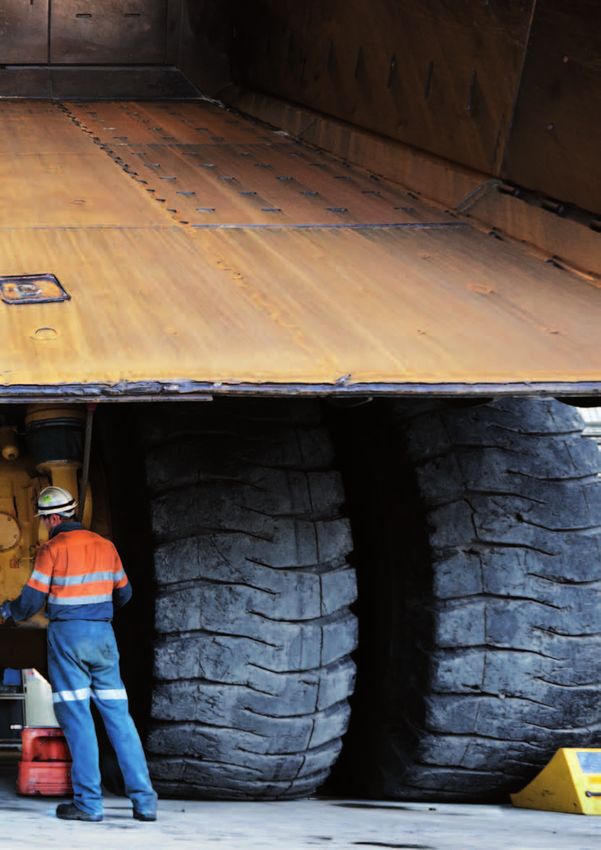
OVERVIEW LIFECYCLE OF A MINE

IT TAKES PLANNING
AND DIALOGUE
Sustainability is part of every stage of a mine’s life, from the
moment we identify a possible exploration site all the way
to a mine’s eventual closure. All of our actions are guided
by the ‘Ways’ – a set of standards and systems to minimise
our impact on people, communities and the environment.

EXPLORATION                                                               BUILDING AND PLANNING
     Timescale: 5–10 years                                                    Timescale: 5–10 years

 SAFE DISCOVERY                                                            LASTING VALUE
 SAKATTI, FINLAND                                                          APPRENTICESHIPS, AUSTRALIA

  Sensitive exploration in Arctic Finland                                   Bridging the skills gap in Australia
  Our Sakatti exploration project has found innovative ways to drill        Metallurgical Coal’s apprenticeship scheme is helping to nurture a
  with minimum disruption to local people and the environment.              new generation of highly skilled mining and engineering talent.
      For more information             To watch the video, visit                For more information            To watch the video, visit
      turn to page 57                  www.angloamerican.com                    turn to page 18/i               www.angloamerican.com

Treading lightly                                                          Seeing the bigger picture
Exploration is the first phase in the life of a new mine. During this     Planning and building a mine involves many complicated decisions –
stage, teams identify and secure access to prospective exploration        so it’s important not to lose sight of the big picture. To ensure the
areas before drilling for samples that we can test for valuable           viability and financial success of a mine, we believe it is essential to
orebodies. Even at this early stage in the process, long term             understand the environmental and social issues associated with the
sustainability is a critical concern for us.                              project and take these factors into account in our decision-making.
                                                                          We have a number of tools and processes in place to help us weigh
Exploration often takes place in remote areas, with little economic
                                                                          financial considerations with long term sustainability issues.
development and untouched natural habitats. We are committed
to treading lightly, respecting these environments and the people         Understanding our impacts
in them.                                                                  One example is our Socio-Economic Assessment Toolbox (SEAT) –
                                                                          our method for assessing the potential social and economic impacts
Our exploration teams are guided by ‘Safe Discovery’ – our vision
                                                                          of a mine, both negative and positive. By using this in conjunction with
for discovering new orebodies in a safe and responsible way. One
                                                                          our Social and Environmental Impact Assessment (S&EIA) standard,
way to realise this vision is to develop new exploration technologies
                                                                          we can align our needs with those of local communities and the
that reduce our environmental footprint. For example, we have
                                                                          environment, so we can plan our operations in ways that maximise
pioneered ‘closed-loop’ drilling techniques for capturing the waste
                                                                          benefits while minimising any adverse effects.
mud and fluids to protect the environment in which the exploration
team is operating.                                                        During the planning stage of a project, we are already looking forward
                                                                          decades into the future, to when the mine eventually closes. We aim
Respectful engagement
                                                                          to make sure that our investments in infrastructure, transport, jobs,
First impressions matter – and securing a licence to operate depends
                                                                          education and other areas will bring lasting value to local communities
on winning the trust and support of governments and communities
                                                                          for generations to come.
at the earliest opportunity. By engaging respectfully with local people
and understanding their needs, we can help make sure that the
long term social and economic impact we bring to communities
is a positive one.

04          Anglo American plc Sustainable Development Report 2011
Overview
 “Speaking of the responsibility that business needs to take,            “Anglo American has provided a great model
  I’m very pleased to say that the integration of biodiversity            and leading example for other companies looking
  within Anglo American is happening through the entire life              to integrate local purchasing and supplier development
  of their mines, from exploration through to closure.”                   as part of their core business process. I have not seen
                                                                          anything like it in the mining, or oil and gas sectors.”
  Pippa Howard Director, Business & Biodiversity Programme
  Fauna & Flora International                                             Robin Weisman Principal Investment Officer, International Finance
                                                                          Corporation, a member of the World Bank Group

OPERATIONS                                                              CLOSURE
    Timescale: 20–120 years                                                 Timescale: 10–30 years

 ENGAGEMENT                                                              STEWARDSHIP
 MANTOVERDE, CHILE                                                       STEFFANUTTI, SOUTH AFRICA

  Improving access to water in Chile                                      Developing a construction workforce in South Africa
  Mantoverde’s new seawater desalination plant will help improve the      Our partnership with a South African construction company is sowing
  critical water shortage in Chile’s Atacama region.                      the seeds of a healthy legacy of skills and jobs in the Northern Cape.
      For more information                                                    For more information
      turn to page 46/i                                                       turn to page 32/i

Operating responsibly                                                   Leaving a positive legacy
One of Anglo American’s four strategic pillars is to operate safely,    Closing a mine without due consideration for the environmental and
sustainably and responsibly. As a company that exploits a finite        social impact can create long term challenges for those who are
resource, we are fully committed to operating our mines in a way that   dependent on it or live close by. We aim to ensure that the value we
brings positive changes to host communities, keeps our employees        create through our mining activities results in a positive social and
safe and leaves behind a healthy environment.                           environmental legacy once the mine closes down.
Our approach to sustainable development (SD) is based on                A structured approach
a belief that exceptional operational value can be realised by          Our Mine Closure Toolbox provides us with a structured approach
embedding SD in everything that we do – from our systems, risk          to closure and covers three main components: strategic planning;
processes and procedures, to the way in which we consult and            assessing the current status of an operation; and scheduling,
work with our stakeholders.                                             resource allocation and budgeting to address the gaps that have
                                                                        been identified.
Putting our vision into practice
Strong governance and risk management processes ensure that we          Experience has taught us that closure planning is best conducted as
deliver on the commitments we make in our various policy documents      early in the life of a project as possible. Our Projects Way includes a
and that we measure up to the standards we set out for ourselves        set of requirements for mine closure, ensuring that mines are planned,
in our Way documents. A dedicated global safety and sustainable         evaluated and designed with closure in mind. All projects must now
development (S&SD) risk and assurance team provides expert              have a closure plan included as part of the project development and
opinion on the adequacy of risk-control measures to ensure that         investment evaluation process. At the end of 2011, 84% of mines had
current and emerging risks are effectively controlled, while our        formal closure plans in place.
corporate and operational subject matter expertise enables us to
                                                                        To ensure a lasting positive legacy, we supplement the value
identify and manage critical safety, health and social, as well as
                                                                        generated through our core activities – paying taxes, salaries, and
environmental, improvement opportunities.
                                                                        payments to suppliers – with initiatives designed to develop host
                                                                        communities in the long term, including investments in health
                                                                        facilities, jobs, skills and infrastructure.

                                                                                Anglo American plc Sustainable Development Report 2011             05
OVERVIEW INTERVIEW WITH THE CHIEF EXECUTIVE

                                                             Cynthia Carroll
                                                             Chief Executive

IT TAKES CARE AND RESPECT
Anglo American chief executive Cynthia Carroll talks about how we are
addressing the main sustainable development issues facing the Group and
shares her thoughts about why building and maintaining trust with stakeholders
must always remain core to our approach to sustainable development.
Q. As a CEO, how do you balance the needs and demands of such a                incompatible with environmental protection, and delivering broader
wide range of stakeholders – investors, governments, communities,              benefits to our host governments and communities.
NGOs, suppliers – that are affected by your business?
                                                                               We are committed to creating long term benefits and, in doing this,
A. Our stakeholders are very diverse groups of people and we need              considering the social, environmental and economic implications of
to be listening to all of them on a continual basis. This is not always        all our decisions and actions.
easy, but our stakeholders matter to us and are integral to our success.
                                                                               This requires us to understand the issues that are going to have an
What we do find, when we get down to it, is that their interests do
                                                                               impact on our business, such as access to water, energy or retaining
coincide. They are concerned with the same kinds of things: whether
                                                                               talented people, and ensuring we can manage those risks. It also
that’s more jobs, better education and healthcare, or having their
                                                                               means actively looking for opportunities, the ways that we can really
voice heard.
                                                                               deliver value over and above the traditional benefits we provide to
We are increasingly focused on activities that help meet these shared          communities where we operate.
objectives. We provide jobs and pay taxes, but we’re also helping to
develop entrepreneurs, and investing in communities in other ways.             Q. What would you single out as Anglo American’s most material
                                                                               sustainability challenges?
Governments and communities expect this of us as a leading, modern
mining company and, in order to meet and exceed these growing                  A. You can argue that, by its very nature, mining is not sustainable
expectations, we have to do it better and better.                              as we are working with a finite resource; but modern society is
     For more on our values                                                    dependent on the resources we mine and it is vital that we meet this
     turn to page 01                                                           demand in the most responsible way possible.

Q. What role does sustainable development play in delivering value             As a major global mining company, we certainly have no shortage of
for stakeholders?                                                              challenges. For me, personally, the main priorities that stand out are:
                                                                               improving our safety performance; managing our relationships with
A. It plays a crucial role and this is widely accepted now. The days           communities; and responding to the challenge of climate change,
where sustainable development was simply seen as a cost with no                which includes securing access to water.
value have gone.
                                                                               I believe that the way we manage these will have a profound influence
Value means different things to different people. Creating financial           on the future of our business, which is why we have embedded the
value for our shareholders is a given, but we believe this is not              principles of sustainable development in everything we do, starting at

06             Anglo American plc Sustainable Development Report 2011
Overview
the top, with our strategy and values, and going right through the COUNTRY INVESTMENT
$3-4bn
organisation to the policies and processes that underpin our work.
On a personal level, I have made safety and sustainable development
a priority since joining Anglo American. Creating a culture of care
and respect is central to how I lead. I believe that building trust and Amount of investment in Peru
demonstrating responsibility are vital to securing, and maintaining,
our licence to operate. And I expect this of our leaders and their teams
within the organisation. ENTERPRISE DEVELOPMENT
Q. Safety is your top priority, but 2011 hasn’t been a good year.
Tell us about what you’re doing to improve your organisation’s
safety performance.
31
Zimele hub offices operating
A. People sometimes ask me: what keeps you awake at night? in South Africa
Well, it’s that employees are continuing to lose their lives on my
watch. This is what really upsets me. Without a doubt, my biggest
disappointment this year has been our safety performance. This ENTERPRISE DEVELOPMENT
47,070
year, 17 of our people have lost their lives in work-related incidents.
This has been particularly disheartening because since I arrived,
we have seen a year-on-year decline in the number of lives lost in
our workplace. And in actual fact, in 2011, we did achieve zero harm Total number of new jobs across
at more than 90% of our operations. Platinum’s safety performance, the world created through our
however, has deteriorated and this has had a significant impact on enterprise development initiatives
our overall progress.
We are getting to the heart of the problem and Platinum is putting in
SAFETY
place a major cultural and compliance programme to begin to address
46
this challenge. But I believe safety is a collective responsibility and so,
in response to our poor performance this year, I instituted a ‘call to
action’, bringing together leaders from all of our businesses, and asked
them to tell me where we need to refocus our attention and efforts. Site-safety reviews undertaken this
year throughout the Group
On a personal level, I remain committed to doing everything I can
to keep our people safe and I won’t rest on this issue until we are
achieving zero harm in every part of our business, every day.
For more information on safety
turn to page 24
Q. The relationships that a mining company has with the communities
around its operations must be critical. But there are many examples of
companies getting this very wrong. How do you respond to this?
A. We rely on the communities around our operations in order to be
successful. So it’s clear to me that we have to reach out to communities
and to governments at all levels to understand their needs. Only then can
we develop relationships with them that are built on trust and respect.
The fact is that some mining companies have left a poor legacy in
communities and, to an extent, we are still dealing with these issues,
even though major mining companies have dramatically changed
the way they manage the environment, work with communities and
contribute to society.
Where mining has had a bad name, we have to work extra hard to be clear
about what we stand for, and deliver very clearly on our commitments.
A good example of this is Peru – a country that has seen more than its
fair share of poor mining practice in the past – where we have a major
copper project called Quellaveco, which represents an investment of
about $3 billion to $4 billion.
(continued overleaf)
Anglo American plc Sustainable Development Report 2011 07OVERVIEW INTERVIEW WITH THE CHIEF EXECUTIVE
Cynthia Carroll takes 02 At MBD Energy in Australia, in
a keen personal interest in which we are a cornerstone
the Group’s sustainable investor. MBD is researching the
development issues: use of algae to entrap CO2 from
power station flue gases.
01 With geophysicist Circé
Malo-Lalande (left) at our 03 Remembering those who
Sakatti exploration site in lost their lives in 2011, during
northern Finland. Platinum’s Safety Day
in October.
When we first started work on Quellaveco, the entrenched distrust
of our sector quickly became apparent. We decided to press the
pause button on the project and engage more with the communities.
Now we are participating in a multi-stakeholder dialogue table,
learning more about people’s concerns and demonstrating that
we are responding to them. We realise this may take some time,
but in my view, that is time well spent.
Q. How can mining companies bring value to communities?
A. Where we are able to operate with the trust and support of
communities, there are amazing opportunities to deliver value for
all stakeholders.
In South Africa, we set up Zimele, our enterprise development
initiative, many years ago to ensure that communities benefit beyond
the life of the mine. When I became chief executive in March 2007 we
had one office in Johannesburg. By the end of this year, we will have
31 hub offices that provide day-to-day support to local entrepreneurs
all around the country, and we’ve now taken this model to Chile, Peru
and Brazil. And it’s working.
We have supported over 38,681 small businesses and entrepreneurs
who have created/sustained almost 47,070 jobs; we have also been
approached by other companies and by government to help them to
set up hubs. Our aim is that these businesses and the jobs that they
create will be sustainable and will continue to provide jobs after the
mines are closed.
01
For more information on Zimele
turn to page 39
Q. You expressed concern about access to water. Why is this of
concern and how are you addressing it?
A. Mining uses a lot of water, so it’s obviously critical to our ability to
operate. It’s a particular challenge, given that so many of our operations
are in water stressed environments where there is competition for
water. This can create tension with communities, so reducing our
water usage has multiple benefits. This is a real focus for our business.
Last year, I tasked every site with reducing their water consumption
and there are many examples of innovative ways in which they are
doing this. At Mantoverde, in Chile, we are building a desalination plant
to provide water for our operations, so that we don’t need to draw from
existing local sources, and, in South Africa we have decided to double
the capacity of our successful water reclamation project in Witbank.
Two of our newly operational growth projects, Los Bronces and
Barro Alto, are using recycled water for their operations and, at our
Quellaveco copper project, we have been engaging actively with the
02 communities and regulators over concerns about access to water.
Stakeholders are also concerned about how mining affects water
quality. Through a combination of strong internal standards and
stricter permitting, we’re in a better position than ever to effectively
manage our impact on this valuable resource.
Q. Climate change is clearly a significant challenge for you,
particularly as a major producer of coal. How are you tackling
this issue?
A. Climate change is a reality and has multiple impacts on our
business, so we need to be responding across a number of different
fronts. We recognise our responsibility to help address the causes of
climate change and to protect our people, assets and communities
against its potential impacts.
03
08 Anglo American plc Sustainable Development Report 2011Overview
This year, we’ve actively engaged with governments on climate policy,
particularly in Australia and South Africa, where both countries have
proposed carbon-pricing mechanisms.
In Australia, I have said to the prime minister that we are willing to
work with the government and we have put money on the table to
collectively support the development of technology required for
carbon reduction, but I do not subscribe to a pricing scheme that
doesn’t address the key issue of carbon reduction.
Similarly, in South Africa, we have very clearly stated our position on
carbon pricing. It’s important that policies recognise the stage of a
country’s development and that they do not negatively affect the
international competitiveness of that country.
We are doing our bit to find ways to advance technology for carbon
reduction. Some examples include: our investment in MBD Energy,
an Australian company that uses by-product CO2 to grow algae and
create bio-fuel and animal feed; the methane-fired power stations at
Moranbah North and Capcoal; the development of two mobile
methane-flaring units (a world first); and two solar power initiatives
in South Africa. We’re also involved in a number of carbon-capture
and storage programmes, and there are a number of energy-
efficiency initiatives that we have implemented at our mines and 01
in our host communities.
PEBBLE PARTNERSHIP
We’re also focused on the opportunities that the metals we mine, Environmental issues are right at the front of the minds of many of our
particularly copper and platinum group metals, provide. Renewable stakeholders for the Pebble project in Alaska. That’s why the Pebble
technologies such as wind turbines rely on copper, while platinum Partnership, in which Anglo American has a 50% interest, has invested
is used in 95% of new cars with autocatalysts to reduce noxious an unprecedented sum of over $120 million to develop one of the most
gas emissions. comprehensive environmental baseline documents ever produced in
Alaska, and perhaps the US, for a project of this kind.
Platinum is a core component for hydrogen-based fuel cells and, in
2011, we found new ways to work with partners and the government in These extensive studies highlight key scientific and socio-economic
South Africa to help build a local fuel cell sector that will create green data that will provide the foundation for a mine plan that delivers on our
commitment to protect the environment and the world class salmon
jobs and help meet the country’s increasing need for clean, reliable,
fishery in the region.
cost-effective power.
Pebble has gone well beyond simple compliance with regulatory
Q. How do you see the challenges that the organisation faces requirements, not only by making such a significant investment in these
today, evolving? studies, but also by disseminating this work to the public and government
agencies well in advance of permitting. It has held a series of workshops
A. These are complex issues and they won’t be resolved from one during the early months of 2012, condensing the 25,000 pages of studies
year to the next. We will continue to strive to improve our performance into meaningful presentations that stakeholders can understand
on these issues because it’s important to all of us. We will also keep and interrogate. These studies and presentations can be found at
listening and talking to our stakeholders to make sure we’re clear www.pebbleresearch.com
about where they stand. In a further demonstration of commitment to transparency, later in the
year Pebble will be opening these studies to independent scientific review
The pressures from society are quite frankly significant. facilitated by the Keystone Center, an organisation that uses scientific
As expectations around responsible performance grow, knowledge and state-of-the-art consensus building in the areas of
our responsibility as a company is to meet and exceed these environmental, health and energy policy.
expectations – that, essentially, is what this report is all about. The Pebble project offers an opportunity for much-needed jobs and
improved livelihoods in one of the most socio-economically depressed
regions of the US.
Pebble plans on completing the pre-feasibility study, initiating permitting
by late 2012, and targeting production early in the next decade.
Above
01 Scientists Jude Simon (left) and Elizabeth Smith, conduct environmental studies in the
Bristol Bay region of Alaska.
For more information, visit
www.pebbleresearch.com
Anglo American plc Sustainable Development Report 2011 09OUR APPROACH TO SUSTAINABILITY OUR STRATEGY AND COMMITMENTS
IT TAKES INTEGRATION
AND COMMITMENT
Mining delivers substantial But mining in itself is not a sustainable
economic value through the activity, and it comes with significant social,
environmental, health and safety risks
products it creates, the people that must be managed appropriately.
it employs and the revenue it We believe that integrating sustainable
generates. It can also make development into every aspect of our
business is the best way to mitigate these
a significant contribution to risks and maximise opportunities from mining
a country’s broader socio- to deliver value for all our stakeholders.
economic development, helping
to create prosperous and
positive futures for people living
around mining operations.
Zero harm
Creating and instilling a company
and industry culture that protects
people from harm and improves
their health and well-being
Benefiting Climate change
INVESTING
World class assets communities Enabling operations
in the most attractive
commodities
Enabling sustainable Operational and local communities
economic and social excellence to address and adapt
development of Realising exceptional to the causes
OPERATING
ORGANISING BECOMING
Safely, communities where operational value by and effects of
THE LEADING
Efficiently
and MINING
sustainably we operate managing safety and climate change
and
effectively COMPANY responsibly sustainable development
risks and identifying
value-creating
EMPLOYING opportunities
The best people
Community health Water security
Facilitating tangible health Providing water security
improvements in local for our operations and
communities and a positive the communities where
influence on health in we operate
developing countries
Group strategy Our sustainable development commitments
Sustainable development is an We have identified a number of commitments that are key to delivering on our
integral part of our strategy. It is strategy. In many of them, Anglo American has already been a pioneer and, by
a critical enabler of our licence leading in each of these areas, we will not only benefit our host nations and local
to operate and a key value driver communities, but secure a clear competitive advantage.
embedded in every aspect of
our business.
10 Anglo American plc Sustainable Development Report 2011OUR APPROACH TO SUSTAINABILITY OUR KPIS
MEASUREMENTS
AND TARGETS
FOCUS 2011 TARGET 2011 PERFORMANCE 2012 AND FUTURE
TARGETS
Safety Zero fatal injuries. It is with deep regret that we report the loss of 17 lives at
Anglo American during 2011.
Zero fatal injuries.
Go to page 24
LTIFR: 0.55. Our 2011 LTIFR remained level at 0.64*, despite LITFR: 0.55.
improvements at almost all business units. This was
principally due to a rise in lost-time injuries at Platinum.
Health Continue downward trend and ultimately
eliminate occupational disease and
The number of new cases of occupational disease dropped
from 268 in 2010 to 197 in 2011. This is a 28% reduction
Continue downward trend and ultimately eliminate
occupational disease and health impairment.
Go to page 28 health impairment. in incidence from 0.284 to 0.205 cases per 200,000 hours
worked.
Self-assessments against the new Group 79% of all operations have completed self-assessments. All remaining sites to complete self-assessments
standards for noise and airborne particulate against the Group standards for noise and airborne
control to be completed by all business units. particulate control.
PEOPLE
Operations to put health improvement plans, based
on self-assessments, in place.
All business units to report and investigate Business units have made considerable progress on the All business units to report and investigate health
health incidents. reporting and investigation of health incidents. incidents.
Achieve 95% uptake of HIV counselling and A 92% uptake was achieved this year. Maintain an HCT uptake of 90% or above.
testing (HCT) in southern Africa.
70% enrolment of estimated HIV cases in A 61% enrolment was achieved during 2011 – an increase 70% enrolment of estimated HIV cases in
Anglo American HIV wellness programmes. in relation to 2010 (59%), but short of our 70% target. Anglo American HIV wellness programmes.
Our people Achieve or exceed various national
diversity goals.
51% of all management-level employees in South Africa
are historically disadvantaged South Africans, while 22%
Achieve or exceed various national diversity goals.
Go to page 20 are female.
Safety & health All operations to have safety and health
management systems, that are certified
93% of all sites that are required to maintain certification to
OHSAS 18001 standards have done so. The remaining 7%
All operations to have safety and health
management systems, that are certified
management to international standards, within two years are predominantly sites that fall marginally outside of the to international standards, within two
of acquisition/commissioning. two year grace period. years of acquisition/commisioning.
system standards
Go to page 24
Social performance Complete annual assessments against
Anglo American’s Social Way requirements for
Assessments for all operations completed. All projects
assessed at each stage gate in the project development
Complete annual assessments against the
Social Way requirements for all operations and
strategy all operations and development projects. process. development projects.
Go to page 34 Achieve 95% compliance with the Social Way 89% compliance achieved for the Social Way, up from 85% Achieve 95% compliance with the Social Way
by end of 2011. in 2010. The score was negatively affected by five mines by end of 2012.
being assessed for the first time and the introduction of our
Group-wide complaints and grievance procedure, which
was included in the assessment for the first time.
Human rights Review final report of UN Special Representative
on Business and Human Rights and make any
Human rights best practice requirements have been
integrated into relevant Anglo American policies, including
Share Anglo American best practices by
publishing SEAT version 3.
Go to page 36 necessary adjustments to procedures to fully the new version of our Socio-Economic Assessment
address recommendations. Toolbox (SEAT).
Ensure all sites are using new complaints and Work is continuing to ensure that this is the case. Ensure all sites are using SEAT version 3.
grievance procedure.
Socio-economic Issue updated (third) version of SEAT manual
and commence roll-out of SEAT3.
The third version of the SEAT manual was finalised and
will be published in Q1 2012.
Commence roll-out of SEAT version 3. Share
Anglo American best practices by publishing
development SEAT version 3.
SOCIETY
Go to page 38
Rural health N/A Health systems strengthening business plan for four
sub-districts in the Eastern Cape of South Africa has
Demonstrating significant progress in at least
two rural health systems strengthening
systems been completed. projects.
strengthening Services at the Bhubezi Community Health Centre in
(HSS) rural Bushbuckridge, Mpumalanga province, South Africa,
have been sustained.
Go to page 31
Access to primary healthcare services in isolated rural
areas of the Northern Cape, South Africa, has been
supported through nine specially equipped mobile health
units and one patient transport unit.
Enterprise Anglo American’s various enterprise
development initiatives to create and sustain
47,070 new jobs created/sustained to date. Create/sustain 50,000 jobs through enterprise
development initiatives.
development 15,000 additional jobs (25,000 in total) in up to
1,500 businesses by 2015.
Go to page 39
Establish small business development A small business development programme has been Undertake feasibility studies of implementing
programme in Peru at Quellaveco project by established at the Quellaveco project in Peru. further programmes in all emerging markets
end of 2011. where we operate.
Establish 10 new hubs by end of 2011. To date, a total of 31 business hubs has been established Increase number of hubs in South Africa.
through the Zimele Community Fund. Six new hubs were
created in 2011.
* Anglo American’s 2010 LTIFR was previously reported as 0.57, but has since been restated to reflect an alignment
in reporting from Metallurgical Coal. This alignment has been taken forward into the 2011 reporting year.
Our KPIs
This scorecard summarises how Anglo American performed against the
commitments and targets that we set ourselves for 2011.Our approach
FOCUS 2011 TARGET 2011 PERFORMANCE 2012 AND FUTURE
TARGETS
Local Achieve or exceed the requirements of the
‘procurement and enterprise development’
In South Africa (SA), total BEE procurement spend by
managed and independently managed businesses and
Achieve or exceed the requirements
of the ‘procurement and enterprise
procurement pillar of the updated Mining Charter for 2011. enterprise development was $3.2 billion ($2.9 billion in development’ pillar of the updated
Achieve the local procurement targets and 2010). Anglo American-managed businesses spent a total Mining Charter for 2012. Achieve the
Go to page 41 show continuous improvement. of $3 billion ($2.4 billion in 2010) with HDSA businesses. local procurement targets and show
All SA business units exceeded the SA Mining Charter’s continuous improvement.
BEE procurement targets for 2011. Business units set
SOCIETY
targets for procuring from suppliers located close to the
operations and these were largely achieved. Spend on
suppliers based in the host communities close to our
operations was $1.13 billion – this was an increase from
9.1% in 2010 to 9.5% in 2011.
Supply chain Engage with prioritised suppliers according
to engagement methodology: inform,
We continue to engage with and audit our prioritised
suppliers. In 2011 we conducted 75 sustainable
Engage with prioritised suppliers
according to engagement
sustainable assess, verify and develop. The majority development audits of our suppliers; 30 improvement methodology: inform, assess, verify
of audited suppliers to have a sustainable plans are in place and a further 36 have been requested. and develop. Where required audited
development development improvement plan in place. suppliers to have a sustainable
Go to page 45 development improvement plan in
place. Safety interventions with high
risk suppliers implemented.
Environmental All operations to have environmental
management systems that are certified to
94% of all sites that are required to maintain certification
to ISO 14001 standards have done so. The remaining 6%
All operations to have environmental
management systems that are certified
management international standards, within two years of are predominantly sites that fall marginally outside of the to international standards, within two
acquisition/commisioning. two year grace period. years of acquisition/commisioning.
system standards
Water Develop new water-efficiency targets
in 2011, for implementation from
Every managed site has set a water savings target
against 2020 business-as-usual consumption
Drive operational excellence on water
through identifying and implementing
Go to page 48 2012 onwards. depending on the area’s degree of water stress. water savings projects, self-assessing
compliance with the standards and
developing action plans to address gaps.
Issue new water management standard A new water management standard and guideline
and guideline document. document has been approved.
Ensure that our water action plans (WAPs) Measures are in place to ensure that all our WAPs
are in line with water management are aligned with the water management standard.
standard.
Upgrade water-reporting parameters. Our water parameters have been broadened to include
water source, quality, discharge and costs.
Commence implementation of water A water technology roadmap has been defined and ‘now’ Establish water research focus areas
technology strategy. and ‘next’ technologies identified. These were used to and initiatives.
inform the water savings targets.
Proactively identify water partnership During the year we continued to engage and partner Engage and partner with governments
opportunities. with our communities and host country governments and other key stakeholders on water
on water issues. This included the launch of the Zimele issues.
ENVIRONMENT
Green Fund which will target projects which save water
(see page 49 for further information).
Energy and A new Group target will be defined
in 2011.
Every managed site has set new energy and carbon
reduction targets against 2015 business-as-usual
Drive operational excellence on energy
and climate through identifying and
climate consumption and emissions. implementing savings projects,
self-assessing compliance with the
Go to page 52 standards and developing action plans
to address gaps.
Commence Group-wide roll-out of the We have developed and are in the process of rolling
new energy and GHG performance out our energy and carbon management programme,
management programme. ECO2MAN.
Develop energy and climate change
technology strategy.
Engage and partner with governments
and other key stakeholders on climate
change and energy issues.
Biodiversity All new sites to have a BAP in place within
two years of acquisition/commissioning.
All operations with potentially significant biodiversity
impacts have BAPs in place.
All new sites to have a BAP in place
within two years of acquisition/
Go to page 56 commissioning.
Conduct BAP peer reviews at a minimum BAP peer reviews were conducted at six sites. Conduct BAP peer reviews at a minimum
of six sites. of six sites.
Four sites to be independently reviewed Four sites were independently reviewed by FFI. Four sites to be independently reviewed
by FFI. by FFI.
No endangered species will be lost or No endangered species, including those listed on the No endangered species will be lost or
adversely affected by operations. IUCN Red List, were reported as having been negatively adversely affected by operations.
affected. However, a small number of protected Belloto
del Norte trees in Chile were destroyed (see page 57).
Waste A strategic review of waste reporting and
targets will be conducted during 2011.
Types of waste and associated risks vary across the
Group. Waste risks are managed through the mandatory
Go to page 58 requirements of the Environment Way, which exceeds
legal compliance. Additional internal reporting
parameters have been introduced for all key waste
streams.
Anglo American plc Sustainable Development Report 2011 10/iYou can also read


