COVID-19 Back to School - Considerations and tips for parents and caregivers
←
→
Page content transcription
If your browser does not render page correctly, please read the page content below
COVID-19 Back to School
  Considerations and tips for parents and caregivers

With September quickly approaching, back-to-school             their routine, and make it more likely they’ll want to wear
preparation previously signaled a time of renewal and          their mask. Avoid stitching to maintain mask integrity.
change, exciting students as they prepared for the highly
                                                              •M
                                                                ake them together. If you make masks or cloth face
anticipated school year. In 2020, that excitement has been
                                                               coverings at home, let older kids help you.
coupled with anxiety and in some instances fear for both
student and parents given the new realities of COVID-19       •H
                                                                elp make it fun. With younger kids, introduce a sense
and our collective attempts to limit the spread and risk of    of play. Kids can pretend to be a doctor or nurse while
infection, while addressing the needs of continued             wearing their masks.
education in safe and productive environments.
                                                              •H
                                                                ave a few masks handy while kids play. This lets them
As school boards across the country prepare for a return       use their imagination about how to use them during
to in-person instruction at elementary, high school and        playtime. It also helps make masks a more normal part
post-secondary levels, a number of safety protocols are        of their everyday world. You can ask your child to put a
being reviewed with some measures yet to be finalized.         mask on a stuffed animal, and then ask follow-up
Although physical distancing and face masks are being          questions about why the stuffed animal is wearing the
recommended for students, teachers and support staff,          mask. Depending on your child’s response, you can clear
regional and provincial considerations and variances exist.    up any confusion and offer reassurance.

For some, wearing a mask may be strange or even a little      Throughout the country different boards have adopted
scary. How can parents help kids wear a mask?1                varying policies with respect to attendance and in-person
                                                              schooling including, full-time in-person attendance, fully
• Help kids get used to masks. Give children time to
                                                              remote or online classes, and a blended approach
   practice wearing their masks before they need to wear
                                                              combining multiple adaptations of both in-person and
   one outside the home. Teach them how to put them on
                                                              remote or online learning. These options combined with
   and take them off.
                                                              the initial apprehension of sending children back to
• Encourage kids to decorate their mask. This may invoke     school, our ability to assume the role of primary educator,
   a sense of ownership and control over the situation. A     the complexities of scheduling and professional
   personal touch can help make it more of a normal part of   obligations make an already difficult decision more
                                                              challenging.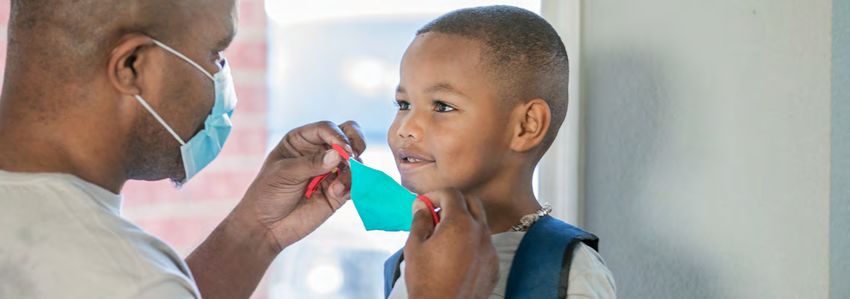
COVID-19 Back to School

Benefits and risks of in-person schooling                         be shared among the parents. If you’re considering a
                                                                  learning pod solution, it’s imperative you understand the
Benefits:
                                                                  financial and time commitments as well as having realistic
• For younger children, the opportunity for social interaction
                                                                  expectations for the learning experience.
   and development, and life experience beyond the home
• For adolescents, social interaction and peer motivation       Here are a few ways in which schools are
• For parents, financial relief with the removal of unexpected responding to COVID-19:
 childcare expenses                                               • Masks or face coverings
                                                                    Many jurisdictions have mandated the use of protective
Risks:
                                                                    face covering for adults and students, with minor
• Potential medical risks for children and families with
                                                                    exceptions for primary school students and those with
   pre-existing conditions
                                                                    pre-existing medical conditions
• Are you confident of the plans and procedures put in place
                                                                  • Handwashing
   by your school board
                                                                    Students and adults should wash hands frequently
Benefits and risks of remote/online schooling                       or apply hand sanitizer, some schools have installed
                                                                    foot-operated sanitization stations
Benefits:
• Reduced exposure to COVID-19                                    • Physical distancing
                                                                     Desks and/or work stations should be spaced at least
• Dependent upon personality and age, some may more
                                                                     six feet apart and the flow of foot traffic at entrances and
  easily understand learning concepts and objectives
                                                                     in hallways should be controlled to ensure adequate
Risks:                                                               distancing
• Requires significant parental involvement with younger
                                                                  • Ventilation
   children
                                                                     For indoor classes, the risk of spread can be reduced by
• Reduced social interaction                                        opening windows and by increasing the flow of fresh air
In preparation for the 2020/2021 school year, boards are            into the room with mechanical ventilation
working to enhance both the in-person and online learning         • Cleaning and disinfecting
experience, while adopting and modifying protocols to                Common and high use surfaces should be cleaned
minimize the risk of spreading COVID-19. Each approach               frequently, including bathrooms, door handles, drinking
may differ slightly based on the prevalence of infection             fountains, and playground equipment
within the community, the availability of well-ventilated
                                                                  • Limiting student interactions
space for in-person classes, the ability to lower class sizes,
                                                                     Some schools may group students into small pods where
and the unique requirements to support younger, older and
                                                                     students learn and break together with no or limited
children with special learning needs. Education planners
                                                                     interaction with other students. Additionally, students
must also consider the needs of teachers and all support
                                                                     remain in a dedicated space where teachers move to the
staff within these facilities.
                                                                     students for different subjects
As an alternative to traditional learning, the concept of
Learning Pods, are growing in popularity. A learning pod is
comprised of a group of parents who share time and pool
resources to offer home-schooling or to supplemental
online/remote learning. Pods may be customized to meet a
collective need or preference with some offering online
instruction, while others offer in-person instruction. The pod
may hire teachers or tutors or teaching responsibilities may
COVID-19 Back to School
• Transportation and staggered schedules from your employer? Is it possible for you to work at
The implementation of physical distancing, ventilation, and different times or on different days? Once you’ve
seat disinfection for school, and the adoption of staggered considered your scheduling needs and constraints, you can
schedules to limit interactions investigate flexible scheduling options with your employer
where applicable. Prepare yourself for a conversation with
Each family is unique your manager as needed. Be open to modifications and
For many families, there is no clear decision about their compromises ensuring a mutually beneficial solution for
child’s schooling during the pandemic. The decisions you both you and your employer.
make around the coming school year will be difficult. Given Most importantly, take care of yourself. The pandemic has
the new realities, we may face feelings of worry, guilt, and brought new worries and uncertainties and higher levels of
potentially fear as we contemplate options. What solution stress to our everyday lives. Pay attention to the stress in
is best for your child? What are the medical risks for both your life and take the necessary steps to ensure you remain
child and the family unit? Many parents feel overwhelmed healthy both physically and mentally.
by these questions, however it’s important to note, many of
us have lived through challenging and traumatic times How to stay productive and motivated:
becoming stronger and more resilient as we define and • Mental health and wellness: If you start to feel
manage the priorities in our lives. Remember, we all react overwhelmed or isolated, remain active and engaged with
differently to stressful situations. Given our diverse your personal and professional support networks. Take
backgrounds and the communities we live in, our beliefs mental health breaks, take care of your body, take deep
and behaviours may vary. breaths, stretch, or meditate when possible and ensure
Stressful reactions during the pandemic may include, but you’re getting plenty of sleep.
are not limited to:2 •E
ating and hydration: Try to maintain healthy eating
• Fear and concern for our health and the health of those patterns and stay hydrated. Avoid high sugar snacks and
you care about beverages to avoid swings in mood and energy levels.
• Changes in sleeping and/or eating patterns •C
reate a dedicated space for work: Select an area of your
• Difficulty sleeping and/or concentrating home that provides you with a suitable workspace, think
about surface space and room to stretch. Avoid your
• Worsening of chronic health problems
bedroom or high traffic zones.
• Increased use of alcohol, tobacco, or other drugs
•C
reate or continue your routines: Maintain your daily
routine in preparation for your workday, establish a
Finding work-life balance
wake-up time and a routine to support a normal working
Many families have now experienced some form of day.
pandemic parenting, with unexpected disruptions during
• T hink about natural light: Helping to maintain a positive
our daily routines and the assumption of primary educator
outlook, natural light plays an important role. Try to find a
for our children. Students and parents will need to expect
spot where natural light is available.
the unexpected throughout the coming school year,
including potential closures or quarantine should a region Returning to school may not feel like it previously has.
or school encounter a resurgence of cases. We may face However, regardless of policies and format, it will require
uncertainties and evolving needs to balance the demands of everyone’s support to ensure our schools remain healthy,
our professional lives including implications to our available safe and equitable for students, teachers, staff and families.
working hours and environments.
When exploring flexible work options there are numerous
considerations, what flexibility or shifts are available to youCOVID-19 Back to School
Back to school checklist: Beyond binders, books • Create a safety kit including masks, sanitizer, gloves and
and backpacks other precautionary items
Here are a few items for the checklist that may surprise • Create and maintain a class contact list for parent and
you:3 homework support, and
• Complete and submit all school forms, both medical and •Basic and standard school supplies
non-medical Please use the following links for details on your return to
• Ensure medical and vaccination requirements are up to school policies and guidelines.
date
• Have the necessary technology in place, including laptops,
printers, and internet access where possible
Province More information on school re-entry
Alberta https://www.alberta.ca/k-to-12-school-re-entry-2020-21-school-year.aspx
British Columbia https://www2.gov.bc.ca/gov/content/education-training/k-12/covid-19-return-to-school
Manitoba https://news.gov.mb.ca/news/index.html?item=48837
https://www2.gnb.ca/content/gnb/en/departments/education/news/news_
New Brunswick
release.2020.06.0344.html
Newfoundland https://www.gov.nl.ca/releases/2020/eecd/0706n01/
Nova Scotia https://novascotia.ca/coronavirus/education/
Ontario https://www.ontario.ca/page/guide-reopening-ontarios-schools
Prince Edward Island https://www.princeedwardisland.ca/en/topic/back-school
Quebec https://www.quebec.ca/en/education/back-to-school-plan-fall-covid-19/
https://www.saskatchewan.ca/government/news-and-media/2020/august/04/safe-
Saskatchewan
school-plan
Nunavut https://gov.nu.ca/education/information/2020-21-opening-plan-nunavut-schools
https://www.gov.nt.ca/en/newsroom/gnwt-releases-reopening-schools-safely-plan-2020-
Northwest Territories
2021-school-year
https://yukon.ca/en/health-and-wellness/covid-19-information/education-and-school-
Yukon supports-covid-19/planning-2020-21#school-operations-in-the-2020%E2%80%9221-
school-yearCOVID-19 Back to School
Other resources: (CTV News: Should I keep my References
children home? Your back to school questions 1. Kids Health. Coronavirus (COVID-19): Helping Kids Get Used to Masks (2020)
answered): Available from: https://kidshealth.org/en/parents/coronavirus-masks.html
2. Centers for Disease Control and Prevention. Manage Anxiety & Stress (2020)
https://www.ctvnews.ca/health/coronavirus/should-i-keep- Available from: https://www.cdc.gov/ coronavirus/2019-ncov/prepare/managing-
my-children-home-your-back-to-school-questions- stress-anxiety.html
answered-1.5068510 3. Centers for Disease Control and Prevention. Back to School Planning: Checklists to
Guide Parents, Guardians, and Caregivers (2020) Available from: https://www.cdc.
Throughout these exceptional circumstances, we may find gov/coronavirus/2019-ncov/community/schools-childcare/parent-checklist.html
ourselves facing moments of inexperience and doubt.
Remember, trust yourself and don’t be afraid that you
may not have any training on the scenarios surrounding
COVID-19.
We’re here to help
Need more information or assistance? All calls are completely confidential.
1-800-663-1142 | TTY: 1-888-384-1152 | International (Call Collect): 604-689-1717
Numéro sans frais - en français : 1-866-398-9505
HomewoodHealth.com
© 2020 Homewood Health™ | HH_COVID19_CMS_Back2School_EN_Aug_2020You can also read


