COVID-19 Vaccine Education - HELPING YOU MAKE AN INFORMED DECISION - The Real Xchange
←
→
Page content transcription
If your browser does not render page correctly, please read the page content below
COVID-19 Vaccine Education
                                            HELPING YOU MAKE AN INFORMED DECISION
                         P R E S E N T E D BY T H E S O U T H E A S T I N F E C T I O N P R E V E N T I O N A N D C O N T R O L H U B A N D
                                                        K I N G S TO N H E A LT H S C I E N C E S C E N T R E
                                                                       Adapted from Sunnybrook Health Sciences Centre COVID-19 Vaccine Education

SE IPAC Hub assumes no liability resulting from any such application or use. This document may be reproduced without permission for non-commercial purposes only and provided that appropriate credit is given to SE IPAC
Hub. No changes and/ or modifications may be made to this document without express written permission from the SE IPAC Hub. Contact SEHubintake@kingstonhsc.ca to request permission.
Purpose of COVID-19 learning module
To provide you accurate information on:
 • COVID-19
 • COVID-19 vaccinations

To help you make an informed decision!

If you have been fully vaccinated or have a medical exemption you may not be
required to complete this learning module; however, the information provided
will still be beneficial and informative.
If you are unsure or have decided not to be vaccinated this learning module
must be completed to ensure you are making an informed decision.
Learning Objectives
• What is COVID-19?
• What are the benefits of COVID-19 vaccination and do they work?
• What are the types of COVID-19 vaccines available and how do
  they work?
• Are COVID-19 vaccines safe?
• What are the common side effects of COVID-19 vaccines?
• What can I expect before, during, and after immunization?

COVID-19 Pandemic Impact – June 2021
       Infection Rate                 Death Rate                  Societal Impacts

• 174 million infections      • Nearly 4 million deaths     • Straining our health care
  worldwide and counting        worldwide                     system
   • Click here to see COVID- • Nearing 10,000 in Ontario       • Delay in surgeries and
      19 infection map        • Variants of Concern (VOC)         treatments
• Ontario: 542,468 cases          • 4 times higher risk of      • Increased hospital
   • Ontario COVID-19 Data           ICU admission                capacity
• Local Health Unit COVID         • 2 times the risk of     • Restrictions on daily life
  Data:                              death
   • Public Heath Regions     • Case-fatality rate is 8-10x
                                higher than seasonal
                                influenza
What is COVID-19?
• SARS-CoV-2 coronavirus
• First identified in Wuhan China-2019
• Causes respiratory illness ranging from mild common cold
  symptoms to severe pneumonia
• May cause severe illness, long-term post-COVID conditions, and
  death
• Impacts individuals, their community, and our health care system
• Affects people of all ages
What are variants of concern?
Variants are SARS-CoV-2 viruses that have changed or “mutated”
COVID-19 viruses become a “variant of concern” or “VOC” when its
changes have a clinical or public health significance that affects one or
more of:
 • Increased transmissibility (spread)              Each time the virus is
 • Increased virulence (severity of disease)        transmitted from person-to-
                                                    person the virus can change,
 • Decreased vaccine effectiveness                  leading to mutation in the
                                                    virus and variants of concern
 • Impact on diagnostic testing

There are currently 4 variants of COVID-19 that are a concern to public
health. They are commonly referred to as the Alpha, Beta, Gamma and
Delta variants, respectively.
Signs and Symptoms of COVID-19
MOST COMMON                                        LESS COMMON
•   Fever                                          •   Sore throat
•   New cough or worsening chronic                 •   Runny nose or nasal congestion
    cough                                          •   Headache or dizziness
•   Shortness of breath or difficulty
                                                   •   Loss of taste or smell
    breathing
                                                   •   Conjunctivitis
•   Tiredness or weakness
                                                   •   Gastrointestinal symptoms
    Remember: If you have these symptoms you           (abdominal pain, diarrhea,
    should self isolate and be tested for COVID-       vomiting)
    19 and potentially other respiratory
    pathogens.                                     •   Skin changes or rashes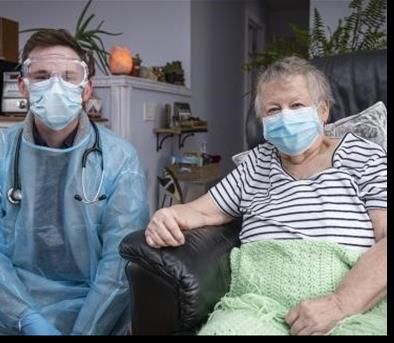
How is COVID-19 Spread?
Person-to-person transmission:
• Direct contact-droplets and short-range aerosols from coughing or sneezing
  when people are within 2m of each other
• In-direct contact-touching an object or surface that has been contaminated
  and then touching your mouth, nose or eyes with unclean hands

      Respiratory Droplets       Direct Contact        Indirect Contact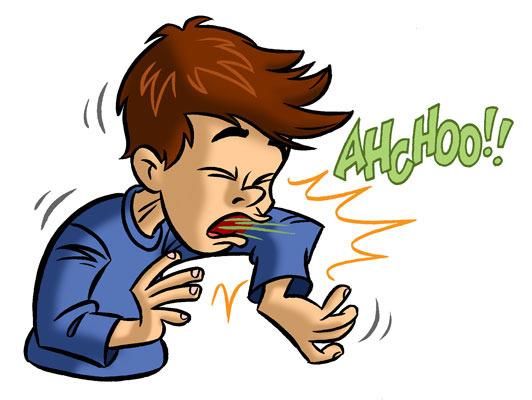
How soon after I’m exposed do I get sick?
Incubation Period = up to 14 days
 • Average=5-6 days
 • Most common=within 11.5 days
When am I contagious to others?
Period of Communicability
 • 2 days (48hrs) before symptom onset → 8-10 days after onset
 • Most infectious immediately prior and at the onset of symptoms

You can be infectious without symptoms, and still spread the virus to
others
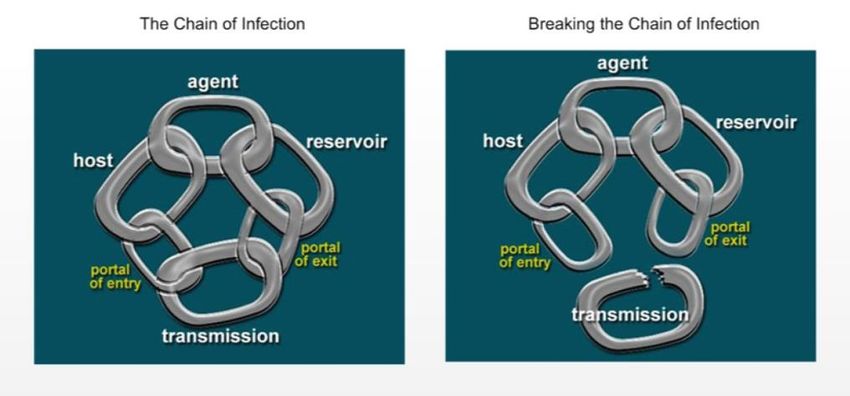
How can I stop the spread of COVID-19?
HEALTHY HABITS:                                FOLLOW PUBLIC HEALTH MEASURES:
 • Clean your hands often                      • Physical distancing
• Respiratory Etiquette                        •   Universal masking
• Avoid touching your eyes, nose               •   Avoiding crowded spaces
  and mouth                                    •   Get vaccinated
• Stay home if you are sick
• Stay away from people who are
  sick
      Stay up to date with your vaccines,
      live a healthy life
      to reduce your risk of being a
      susceptible host by getting vaccinated
QUESTIONS: 1. What is the primary source of transmission for COVID-19? (respiratory particles – large droplets, small droplets/aerosols while in close proximity) 2. COVID-19 affects only those with weak immune systems and the elderly? (False – COVID-19 can affect anyone, any age. There is no way to tell who will have a severe illness or long term complications) 3. What are 3 symptoms of COVID-19? (Fever, New cough or worsening chronic cough, shortness of breath). 4. COVID-19 poses as significant risk to Public Health and our health care system? (True)
What Are The Benefits of COVID-19 Vaccination?
For you, your loved ones and your     For those you care for:
community:                            • Reduces the risk of transmission to
• Vaccination reduces your risk of       your residents and colleagues
   getting COVID-19                   • Community immunity limits the risk of
• Significantly reduces your risk of     outbreaks in congregate care
   severe illness from COVID-19       • Residents who are
• Reduces your risk of passing COVID-    immunocompromised/have co-
   19 to someone who may not survive     morbidities have the highest risk of
   it                                    severe illness or death from COVID-19
• Helps achieve community immunity
   (herd immunity)                                 THEIR BEST DEFENSE!

          YOUR BEST DEFENSE!
Do COVID-19 Vaccines Work? Vaccines approved in Canada: • 70-95% effective at preventing even mild infection • Nearly 100% effective at preventing hospitalization and death from COVID-19
Wave 3
                                                                                         Wave 2

            COVID-19 daily case count LTCH residents and staff in Ontario – April 24, 2020 to June 7th, 2021
                                                                                                           Dec, 14th Start
                                                                                                           of Vaccination
                                                                                                           in LTCH           No Wave 3
                                                    Wave 1
                                                                                                  Wave 2

Source: Ministry of Health, Ontario Cases https://covid-19.ontario.ca/data/long-term-care-homes
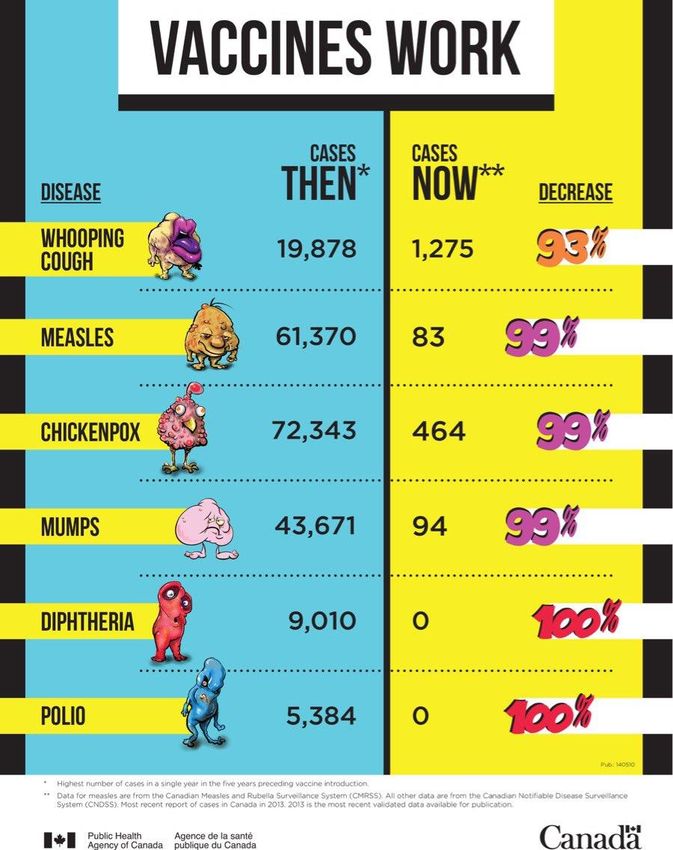
Immunizations Immunization is widely recognized as one of the greatest public health achievements of the twentieth century. Vaccines save lives, prevent the spread of diseases and reduce health care costs. Immunization programs are an important foundation of Ontario’s health system.
What is a vaccine?

                                                                            Click here to play the
                                                                                YouTube video

Video source: Immunize Canada. (February 23rd, 2017). Vaccine Safety - Immunize Canada. Retrieved from: https://www.youtube.com/watch?v=Y4N4_1PNtfk
What are the types of COVID-19 Vaccines available? Currently authorized and recommended COVID-19 vaccines: • Are safe, • Are effective, and • Reduce your risk of severe illness The best? The first one that is available to you! Do not wait for a specific brand! All vaccines are rigorously tested and then reviewed and approved by Health Canada. If you have questions or concerns always speak to a trusted health care provider
Viral Vector Vaccines

                                                                                 Click here to play the
                                                                                     YouTube video

Video source: Healthy Canadians. (June 9th, 2021). What are viral-vector based vaccines and how do they work? Retrieved from https://www.youtube.com/watch?v=wnVLXLHYVes
How Do They Work? Viral Vector COVID-19 Vaccines Use a modified version of a different virus (the vector) to deliver important instructions to our cells • The cell displays the COVID-19 spike protein on its surface • Our immune system recognizes the spike protein, triggering an immune response • Our bodies are now prepared to protect from future COVID-19 exposure
mRNA Vaccines

                                                                               Click here to play the
                                                                                   YouTube video

Video source: Healthy Canadians. (June 9th, 2021). What are mRNA vaccines and how do they work? Retrieved from: https://www.youtube.com/watch?v=zmmdCe8lNOw
How Do They Work? mRNA COVID-19 Vaccines Teaches our cells how to make a protein (or a piece of protein) • The cell displays the protein piece on its surface • Our immune system recognizes the spike protein, and begins building an immune response • Our bodies are now prepared to protect from future COVID-19 exposure New type of vaccine
Myths about COVID-19 Vaccines
General:
• It is NOT possible to get COVID-19 from a COVID-19 vaccine
• Does not affect or change our DNA in any way
Viral Vector Vaccines:
• Do not cause an infection with COVID-19 or the vector used in the vaccine
mRNA Vaccines:
• Does not enter the part of the cell that contains our DNA (cell nucleus)
• Does not remain in our system-the cell breaks down and gets rid of the
   mRNA as soon as it is finished using it
Questions:
1. mRNA vaccines can change your DNA (False - the mRNA in mRNA
   COVID-19 vaccines does not interact with your DNA in anyway.
2. Can you get COVID-19 from the vaccine? (No: it is not possible to
   get COVID-19 from the vaccine. Vaccines only contain the
   blueprint to make a protein on the surface (spike protein) of the
   COVID-19 virus – which is harmless on its own. So your body will
   create antibodies that will recognize and attack the real COVID-19
   virus if you are ever exposed to the virus in the future)
Process of vaccine development

                                                                                Click here to play the
                                                                                    YouTube video

Video source: Healthy Canadians. (December 21st, 2020). COVID-19: How vaccines are developed. Retrieved from: https://www.youtube.com/watch?v=Y51ZgZCS8J0
Are COVID-19 Vaccines safe? As of March 12, 2021: Over 28 million doses given in Canada 287 serious side effect reported (only 0.01%) Safer than using Advil and Tylenol!!
What are the most common side effects from
the COVID-19 vaccines?
        Localized reaction at the    Systemic reaction within the
             injection site:                     body:
     • Redness                      • Mild fever
     • Soreness                     • Chills
     • Swelling                     • Headache
                                    • Fatigue
                                    • Muscle aches
                                    • Joint pain
Severe allergic reaction - Anaphylaxis
Anaphylaxis Blood Clots
• Reported at rate of 0.02%
• Rate consistent with other common • For AstraZeneca, very rare: 1 in
vaccines 55,000 to 1 in 500,000
• Much lower than anaphylaxis rate for • Lower rate than air flights of > 4 hours
common medications like penicillin. which is 1 in 4,655.
• COVID-19 illness increases the risk of
blood clots.Talk to your health care provider if you:
• Are currently unwell or have signs and symptoms of COVID-19
• Have had a previous allergic reaction to any of the ingredients in the
COVID-19 vaccine, or previous vaccines (including first COVID-19
vaccination)
• Have any allergies/allergic conditions
• Are immunosuppressed due to disease/treatment or have been
diagnosed with an autoimmune condition
• Have a bleeding disorder or are taking medication that could affect
blood clotting (this information will help the health care provider
prevent bleeding/bruising at the injection site)
• Have received any other vaccine in the past 14 days
• You can still have your COVID-19 vaccine if you are pregnant or
breastfeeding (consult your health care provider if you have any
questions or concerns)
Not all of these are mean that you should not get the
vaccine, but you should talk to your health care
provider about their recommendation based on your
known or reported health history.Before Immunization
Communication is Key!
Let your health care provider know about any fears,
stressors or anxiety related to immunizations and
what could be done to make the experience more
comfortable.During Immunization
• Sit upright during vaccination
• Wear a short-sleeved or loose-fitting top
• Relax your arm by letting it feel loose
• Use deep breathing to help you relax and feel calm
• If you feel dizzy or faint, tell the person who's vaccinating you right
away
• Distract yourself by reading or listening to music, or have a
conversation
• Talk to your health care provider ahead of time about pain reliefAfter immunization
• Confirm what medications are recommended for any pain, discomfort
at the immunization site or fever. Recommendations can be provided
by clinic immunization staff, pharmacist or your health care provider.
• Side effects vary for everyone but normally last a few hours to a few
days
• Applying a cool compress to the site can reduce swelling and provide
comfort.
• Keep your arm moving
• Drink fluids to maintain hydration
• Some people may schedule their vaccination around pre-scheduled
days off to be home the next dayContinuing Public Health measures
• Continue to stay home when you are feeling unwell
• Follow the current testing guidelines from your local public health
agency if you develop symptoms similar to COVID-19
• Continue to follow public health restrictions that are in place
• Clean your hands often with soap and water or an alcohol based hand
rub
Personal Protective Equipment (PPE) required for use
when providing direct care must still be worn as
indicated. COVID-19 is not the only infectious
organism around!Important reasons to consider the vaccine
• Help protect yourself from getting sick with COVID-19 if you are exposed to the
virus
• Avoid spreading it to other people
• Help control the pandemic
• Help to get back to normal routines and activities
Protect yourself, family, friends, community and your residents and co-
workers, and get back to what you enjoy and have missed the most!#MyWhy on COVID Vaccination
Click here to play the
YouTube video
Video source: Healthy Canadians. (May 27th, 2021). #MyWhy on getting COVID-19 vaccine: Dr. Supriya Sharma. Retrieved from: https://www.youtube.com/watch?v=p13YsMvSd-8Risks of not getting COVID-19 Vaccine Delaying or choosing not to be vaccinated means you are risking the following: • Your health: as you will have an increased risk of severe illness and death. Additionally, you may develop a long-term, post COVID-19 condition • The health of others: as you may unintentionally pass COVID-19 to someone who may not survive such as: friends, family, coworkers and those you provide care to. • The health of your community: as decreased vaccination rates will lower community immunity (herd immunity) and put your community at risk • Delay return to normal: with the continued risk of COVID-19 transmission, there is increased likelihood of additional COVID-19 waves and the social and economic impacts of public health measures used to control transmission or spread.
The decision is yours to make!
What do you choose?

                I would like to proceed with my COVID-19 vaccination

                 I would like to decline COVID-19 vaccination at this
                   time or would like more time to make a decision
CERTIFICATE OF COMPLETION
This certificate acknowledges that
First Name, Last Name
Has successfully completed the COVID-19 Vaccine Education Module
February 04, 20XX
Date Completed onResources COVID-19 Vaccines and Pregnancy: Vaccine Safety: • COVID-19 Vaccine Pregnancy Support Tool • COVID-19 Awareness Resources • WHO Recommendations: Vaccines and Pregnancy • Vaccine Safety COVID-19 Data Trackers: • How Vaccines are Developed (video) • Vaccination Tracker Canada • COVID-19 Vaccine Approval Process and Safety • COVID-19 Global Dashboard • Different COVID-19 Vaccines • Long-Term Care Home COVID Data • COVID-19 Vaccination Recommendations for Special Populations • Ontario COVID-19 Data • Recommendations on the use of COVID-19 Vaccines • Public Health Ontario COVID-19 Data & Surveillance Websites: Booking your COVID-19 Vaccine: • Government of Canada COVID-19 • How to Book a COVID-19 Vaccine • Government of Ontario COVID-19 Local Public Health Unit Vaccine Resources: • Public Health Ontario COVID-19 • Public Heath Regions • Ministry of Health and LTC COVID-19
References
•    Alberta Health Services. (June 16th, 2021). 2020-2021 COVID-19 Immunization Orientation. Retrieved from:
     https://www.albertahealthservices.ca/assets/info/hp/cdc/if-hp-cdc-ipsm-covid-19-imm-orientation-ppt.pdf
•    Centers for Disease Control and Prevention. (March 23rd, 2021). About COVID-19. Retrieved from:
     https://www.cdc.gov/coronavirus/2019-ncov/your-health/about-covid-19.html
•    Centers for Disease Control and Prevention. (April 8, 2021). Long-Term Effects. Retrieved from:
     https://www.cdc.gov/coronavirus/2019-ncov/long-term-effects.html
•    Centers for Disease Control and Prevention. (June 11th, 2021). Guidance for unvaccinated people: protect yourself.
     Retrieved from: https://www.cdc.gov/coronavirus/2019-ncov/prevent-getting-sick/prevention.html
•    Centers for Disease Control and Prevention. (May 27th, 2021). Types of Vaccines Available. Retrieved from:
     https://www.cdc.gov/coronavirus/2019-ncov/vaccines/different-vaccines.html
•    Ministry of Health. (May 27th, 2021). COVID-19 Vaccination Recommendations for Special Populations. Retrieved
     from: https://www.health.gov.on.ca/en/pro/programs/publichealth/coronavirus/docs/vaccine/COVID-
     19_vaccination_rec_special_populations.pdf
•    Public Health Agency of Canada. (May 28th, 2021). An Advisory Committee Statement (ACS) National Advisory
     Committee of Immunization (NACI): Recommendations on the use of COVID-19 Vaccines. Retrieved from:
     https://www.canada.ca/content/dam/phac-aspc/documents/services/immunization/national-advisory-committee-
     on-immunization-naci/recommendations-use-covid-19-vaccines/recommendations-use-covid-19-vaccines-en.pdf
References
• Public Health Agency of Canada. (June 14th, 2021). Coronavirus disease (COVID-19): Symptoms and
treatment. Retrieved from: https://www.canada.ca/en/public-health/services/diseases/2019-novel-
coronavirus-infection/symptoms.html
• Public Health Agency of Canada. (March 12th, 2021). COVID-19: Main modes of transmission. Retrieved
from: https://www.canada.ca/en/public-health/services/diseases/2019-novel-coronavirus-
infection/health-professionals/main-modes-transmission.html
• Public Health Agency of Canada. (February 15th, 2021). COVID-19 for health professionals:
Transmission. Retrieved from: https://www.canada.ca/en/public-health/services/diseases/2019-novel-
coronavirus-infection/health-professionals/transmission.html
• Public Health Agency of Canada. (June 21st, 2021). Vaccines and treatments for COVID-19: Progress.
Retrieved from: https://www.canada.ca/en/public-health/services/diseases/2019-novel-coronavirus-
infection/prevention-risks/covid-19-vaccine-treatment.html
• Public Health Agency of Canada. (April 15th, 2021). The facts about COVID-19 vaccines. Retrieved from:
https://www.canada.ca/en/public-health/services/diseases/2019-novel-coronavirus-
infection/awareness-resources/know-vaccine.html
• Public Health Agency of Canada. (May 14th, 2021). Vaccines for COVID-19: What to expect at your
vaccination. Retrieved from: https://www.canada.ca/en/public-health/services/diseases/coronavirus-
disease-covid-19/vaccines/what-expect-vaccination.html
• Public Health Ontario. (April, 5th, 2021). About Coronavirus (COVID-19). Retrieved from:
https://www.publichealthontario.ca/en/diseases-and-conditions/infectious-diseases/respiratory-
diseases/novel-coronavirus/about-covid-19References
• Public Health Ontario. (May 19th, 2021). COVID-19 Variants of Concern (VOCs). Retrieved from:
https://www.publichealthontario.ca/en/diseases-and-conditions/infectious-diseases/respiratory-
diseases/novel-coronavirus/variants
• Public Health Ontario. (February 8th, 2021). COVID-19 overview of the period of communicability –
what we know so far. Retrieved from: https://www.publichealthontario.ca/-
/media/documents/ncov/covid-wwksf/2021/03/wwksf-period-of-communicability-overview.pdf?la=en
• Public Health Ontario. (May 20th, 2021). COVID-19 Transmission Through Large Respiratory Droplets
and Aerosols… What We Know So Far. Retrieved from: https://www.publichealthontario.ca/-
/media/documents/ncov/covid-wwksf/2021/05/wwksf-transmission-respiratory-aerosols.pdf?la=en
• Sunnybrook Health Sciences Centre. COVID-19 Vaccine module. Accessed through:
https://360.articulate.com/review/content/e77b56e0-45ed-42d0-9d9f-1b51eb8277ed/review
• World Health Organization. (October 12th, 2020). Coronavirus disease (COVID-19). Retrieved from:
https://www.who.int/emergencies/diseases/novel-coronavirus-2019/question-and-answers-hub/q-a-
detail/coronavirus-disease-covid-19#:~:text=symptoms
• World Health Organization. (December 30th, 2020). Vaccines and immunization: what is vaccination?
Retrieved from: https://www.who.int/news-room/q-a-detail/vaccines-and-immunization-what-is-
vaccinationHow to contact our team for questions or support Contact us by email: SEhubintake@kingstonhsc.ca Visit our website at: SE IPAC Hub and Spoke | KHSC Kingston Health Sciences Centre (kingstonhsc.ca)
You can also read


