NEWBORN DEATHS and STILLBIRTHS - ENDING PREVENTABLE 2030 - United Nations ...
←
→
Page content transcription
If your browser does not render page correctly, please read the page content below
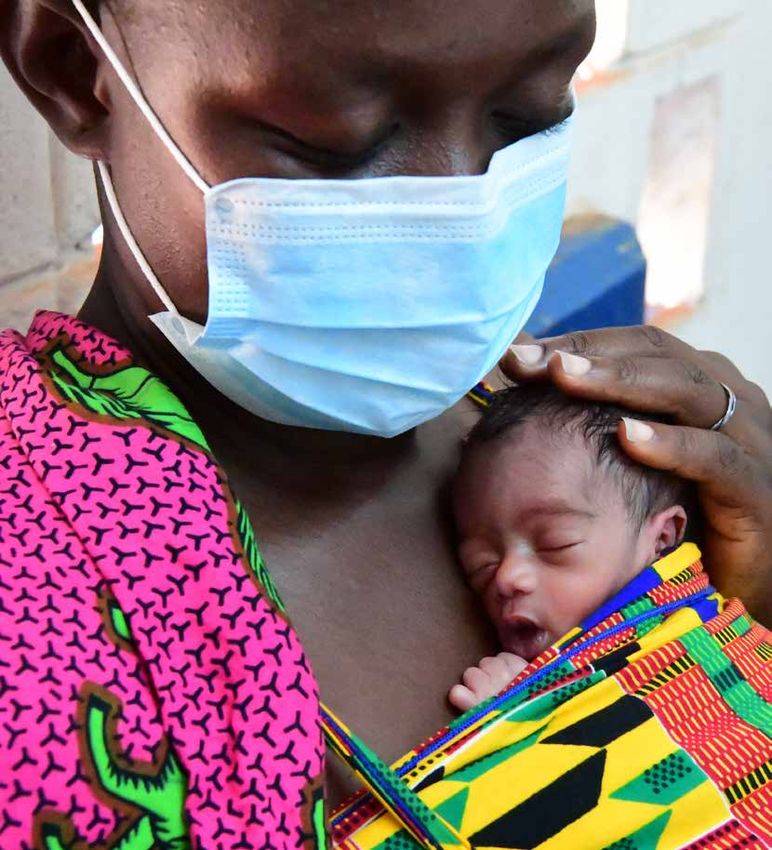
ENDING PREVENTABLE                                       © UNICEF/UNI325619// Frank Dejongh

NEWBORN DEATHS and STILLBIRTHS
by 2030
          Moving faster towards high-quality universal
                health coverage in 2020–2025
                           July 2020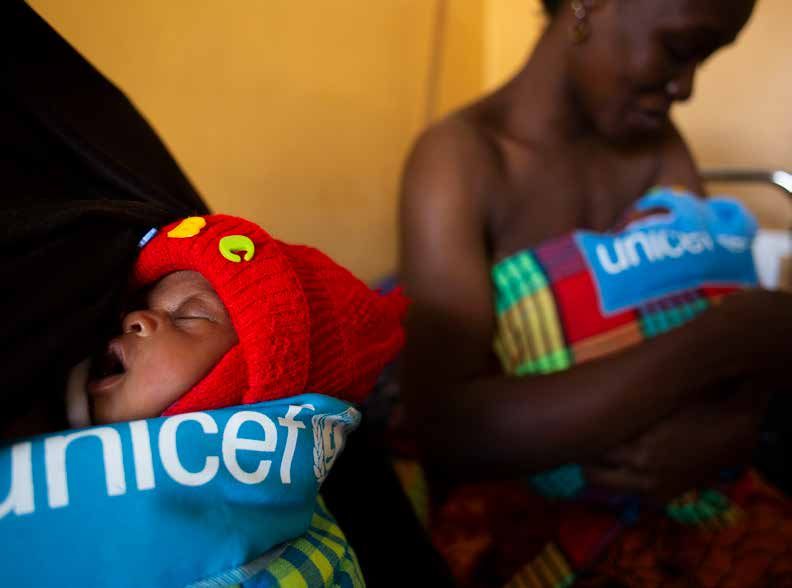
HOW WE ACT NOW WILL DETERMINE THE COURSE
ENDING PREVENTABLE NEWBORN DEATHS AND STILLBIRTHS BY 2030: MOVING FASTER TOWARDS HIGH-QUALITY UNIVERSAL HEALTH COVERAGE IN 2020–2025
OF MATERNAL AND NEWBORN HEALTH FOR THE
NEXT DECADE.
It will also have a powerful positive impact on the health and lives of future generations.
High-quality maternal and newborn health care are essential health Four coverage targets and nine milestones are proposed for 2025,
services, which must be sustained to protect the lives and health to take forward the recommendations of the Every Newborn Action
of women and children. These essential services must be further Plan endorsed by 194 countries at the World Health Assembly in
strengthened to withstand shocks, such as COVID 19, and make the 2014 in resolution WHA67.10. ENAP a roadmap for action, charts the
path towards ending preventable newborn mortality, reducing disability
progress agreed to in global goals for women and children’s health.
and ending preventable stillbirths. ENAP was prepared in response
to country demand and on the basis of the most recent evidence on
The coverage targets and milestones for newborn health and ending
cost–effective clinical interventions and lessons from countries in which
preventable stillbirths presented in this document must be attained
the rates of newborn mortality and stillbirth have been reduced and
to accelerate progress toward the Sustainable Development Goals newborn health outcomes improved. Meeting the recommendations in
(SDGs). Only 10 years remain to the SDG deadline of 2030. The global the Plan will also support attainment of the Global Strategy for Women’s,
goals for child health will not be met by then without investment in Children’s and Adolescents’ Health, universal health coverage for all and
maternal and newborn health now. the SDGs.
© UNICEF/UNI309806// Frank Dejongh
Substantial progress has been made in newborn health The elements necessary to meet the global goals –
and survival and in preventing stillbirths over the past ensuring high-quality maternal and newborn care – are
decade, including in countries with the highest burdens well known and within most countries capacity to
of mortality. Ninety-three countries are implementing the implement.
recommendations of the Every Newborn Action Plan
We know the causes of 80% of newborn deaths and have
and monitoring their progress. They are successfully solutions to address them and prevent lifelong disability (3).
demonstrating that accelerating progress is feasible.
• 80% of all newborn deaths result from three preventable and
This hard-won progress will be eroded if we do not act now. Times of treatable conditions: complications due to prematurity, intrapartum-
health crisis, such as the COVID-19 pandemic, reveal the weaknesses of related deaths (including birth asphyxia) and neonatal infections.
health systems, clearly indicating that the best response is strengthening • Proven, cost-effective, interventions exist to prevent and treat each
them overall. of these main causes of death.
• There are also effective interventions to prevent, manage and
• Stillbirths and neonatal deaths account for most deaths among mitigate suffering due to congenital anomalies (4).
women, children and adolescents but at the same time the
lowest investment along the continuum of their care (1). It is • 1.3 million newborns survive each year with major disabilities and 1
estimated that 6.2 million children under 15 years died in 2018, and million with moderate long-term or mild disability, such as learning
over 290 000 women died due to complications during pregnancy and behaviour difficulties. Most of this disability is preventable (4).
and childbirth in 2017. Of all child deaths, 2.5 million occur in the first
month of life (2), and more than 2 million stillbirths occurred.
An estimated 50% of stillbirths occur intrapartum, i.e. after labour
• Refocusing investment on the greatest burden of deaths and has commenced but before delivery.
disability will result in real change for women’s and children’s
health. Investment in care during pregnancy, childbirth and the first • Almost all intrapartum stillbirths are preventable with the provision
month of life is the smartest investment, with a quadruple return: of quality care during childbirth. Many antepartum stillbirths can be
saving mothers and newborns, preventing stillbirths, reducing prevented through high quality antenatal care (5).
disabilities and paving the way for optimal child development and
lifelong health and well-being.
Poor-quality care accounts for 61% of neonatal deaths and half
• If current trends persist, more than 60 countries will not meet of maternal deaths (6)
the 2030 SDG for reducing neonatal mortality or the global
target for reducing stillbirths (2). Almost 26 million newborn The evidence for the role of quality of care is clear and well known.
deaths are predicted to occur between 2019 and 2030, most are High-quality care requires concrete action to ensure the availability of
preventable (2). Attention should be paid to inequities in countries to essential medicines and commodities, compliance with evidence-based
ensure that newborns in fragile and vulnerable settings receive the clinical interventions and practices, adequate infrastructure and supplies
same essential interventions as all other newborns. to ensure infection prevention and control, competent, motivated staff
• High-quality universal maternal and newborn health care is not a and solid documentation and use of information.
privilege but the right of every child and every pregnant woman
everywhere to access high-quality maternal and newborn care
during and beyond crises. It is the responsibility of all stakeholders
to ensure those rights, which can end preventable child deaths and
suffering for both children and their families. This is possible in all
settings, everywhere.
2
ROADMAP TO PROGRESS:
     THE EVERY NEWBORN ACTION PLAN
A comprehensive, multi-partner initiative, the Every                                                                                                     2030, with reviews in 2020 and 2025. In adopting ENAP, as resolution
Newborn Action Plan (ENAP), calls on all stakeholders to                                                                                                 WHA 67.10 at the World Health Assembly in 2014, 194 countries
                                                                                                                                                         committed themselves to transform the recommendations into action.
take action to improve access to services and the quality                                                                                                Subsequently, the SDGs and the Global Strategy for Women, Children’s
of care for all pregnant women and newborns.                                                                                                             and Adolescents’ Health (7) were endorsed. Both include the target for
                                                                                                                                                         reducing newborn mortality, and the Global Strategy includes the target
ENAP sets out recommendations for countries on how to reduce                                                                                             for reducing stillbirths. Universal health coverage includes prioritizing the
mortality and morbidity and to close gaps in equity accompanied by                                                                                       life-course and a healthy start.
specific goals for reducing mortality, coverage targets and milestones by

GOALS FOR REDUCING NEWBORN MORTALITY AND PREVENTING STILLBIRTHS

Goal 1. End preventable newborn deaths.
By 2030, all countries will have reached the target of 12 or less newborn deaths per 1000 live births and will continue to reduce death
and disability, ensuring that no newborn is left behind.

On current trends, more than 60 countries will not meet the SDG target for reducing newborn mortality (8). By 2019, 78 countries had set targets for
reducing newborn mortality (9).

Fig. 1. Disparities in rates of newborn mortality in regions, 2018

                                                         40
Neonatal mortality rate (deaths per 1,000 live births)

                                                         30

                                                         20

                                                                                                                                                                       ENAP/SDG target in 2030
                                                         12
                                                         10

                                                          0

                                                                   West and   Eastern and   Middle East   South Asia    East Asia       Latin       North       Eastern      Western
                                                                    Central    Southern     and North                  and Pacific   America and   America    Europe and     Europe
                                                                    Africa       Africa        Africa                                 Caribbean               Central Asia

Source: United Nations Inter-agency Group got Child Mortality Estimation (UN IGME) 2019 (2) ENAP, Every Newborn Action Plan

Goal 2. Ending preventable stillbirths
By 2030, all countries will have reached the target of 12 or fewer stillbirths per 1000 total births and will continue to improve equity.

By 2019, 32 countries had set a target for reducing the number of stillbirths (9).

Fig. 2. Global progress towards the Every Newborn Action Plan target to end preventable stillbirths by 2030

                                                              All countries
25                                                                                           2000-15
                                                                                            ARR—1.9%
                                                                                                                  Global SBR
20                                                                                                                2015—18.4

15

                                                                                                                                                    ARR
10                                                                                                                                                 —4.2%                             Target for national
                                                                                                                                                                                     SBR of 12 in 2030

                                                              Developed regions
                         5

                         0

                                                                 2000             2005               2010               2015               2020              2025             2030

Source: Lawn et al. Stillbirths; rates, risk factors and accelerating toward 2030. Lancet. 2016 ARR, average annual reduction rate; SBR, stillbirth rate                                                                                 3
EVERY NEWBORN COVERAGE TARGETS
ENDING PREVENTABLE NEWBORN DEATHS AND STILLBIRTHS BY 2030: MOVING FASTER TOWARDS HIGH-QUALITY UNIVERSAL HEALTH COVERAGE IN 2020–2025
2020–2025
To achieve global goals for child heath, it will be essential to attain care for both small and sick newborns. Currently, data on the coverage
high-quality antenatal care, essential childbirth care, postnatal care and targets for antenatal care, births attended by skilled health personnel and
inpatient care for small and sick newborns, with equity in all countries. postnatal care are derived from population-based household surveys.
Four coverage targets are proposed for 2020–2025, at three levels, The Every Newborn Action Plan is, however, supporting countries in
global, national and subnational. Subnational targets are essential for strengthening their routine health information systems so that they can
assessing equity in access to and use of essential services. capture this information rapidly at subnational level. The targets for
small and sick newborns are currently obtained with the Every Newborn
The four indicators are: four or more antenatal care contacts, births Action Plan tracking tool but could be captured in routine measurement
attended by skilled health personnel, postnatal care within 2 days and systems in the future.
Indicator: Four or more antenatal care contacts
COVERAGE
TARGET 1
Global target 90% global coverage of four or more antenatal care contacts
National target 90% of countries have > 70% coverage
Subnational target 80% of districts have > 70% coverage
EVERY PREGNANT
WOMAN
Indicator: Births attended by skilled health personnel
COVERAGE
TARGET 2
Global target 90% global average coverage of births attended by skilled health personnel
National target 90% of countries with > 80% coverage
Subnational target 80% of districts with > 80% coverage
EVERY BIRTH
Indicator: Early routine postnatal care (within 2 days)
COVERAGE
TARGET 3
Global target 80% global coverage of early postnatal care
National target 90% of countries with > 60% coverage
EVERY WOMAN Subnational target 80% of districts with > 60% coverage
AND NEWBORN
80% of countries have a national implementation plan that is being
implemented in at least half the country, with an appropriate number of
Global target
COVERAGE
functional level-2 inpatient units linked to level-1 units to care for small
TARGET 4
and sick newborns, with family-centred care.
80% of districts (or equivalent subnational unit) have at least one level-2
National and inpatient unit to care for small and sick newborns, with respiratory
EVERY SMALL AND Subnational targets support including provision of continuous positive airway pressure.
EVERY SICK NEWBORN (See Table 1 for definitions of levels 1 and 2 newborn units.)
Box 1. Data review and open consultation to determine attainment of
coverage targets up to 2025
To accelerate progress in reaching global targets for reducing newborn mortality and stillbirths by 2030, the Every Newborn
management team, chaired by WHO and UNICEF, reviewed the coverage of interventions up to 2020 for attaining universal
health coverage by 2025 in order to determine new coverage targets for the period 2020–2025.
Coverage targets were determined by selecting coverage indicators, data review and projection modelling based on the
current trajectory, with options of coverage targets at global, national and subnational levels. Four areas were selected:
antenatal care, births attended by skilled health personnel, postnatal care and care for small and sick newborns. The
indicators focused on contact, as we do not yet have reliable, consistent data on the content of care or effective coverage.
Several options were identified for each indicator, which were reviewed in an open consultation in January–February 2020,
hosted by WHO. Comments were received from 135 individuals in 80 partner organizations and from 43 countries, including
11 ministries of health. The most frequent comments stressed the importance of setting coverage targets for achievement
of the SDGs and requests for direct technical support and investment to achieve the coverage targets.
Countries should make commitments to measure the content and quality of care and to use data. Coverage targets for all
countries between 2026 and 2030 should include measures of quality.
4
Source: Survive and thrive: transforming care for every small and sick newborn. Geneva: World Health Organization; 2018 (4).Table 1. Levels of newborn care and interventions at levels 1, 2 and 3
Immediate newborn care (e.g. delayed cord clamping, drying, skin-to-skin contact), neonatal
resuscitation when necessary, early initiation and support for breastfeeding.
Level 1: Primary care
Essential newborn care, identification and referral of complications, targeted care as necessary (e.g.
prevention of mother-to-child transmission of HIV).
Thermal care, including Kangaroo Mother Care for all stable neonates weighing < 2000g, assisted
feeding and intravenous fluids, safe administration of oxygen, detection and management of neonatal
sepsis with injected antibiotics, detection and management of neonatal jaundice with phototherapy,
Level 2: Secondary care detection and management of neonatal encephalopathy, detection of congenital abnormalities and
referral or management of birth defects.
Transitional care, including management of preterm respiratory distress with continuous positive
airway pressure, follow-up of at-risk newborns, exchange transfusion.
Mechanical assisted ventilation, advanced feeding support (for example, parenteral nutrition),
Level 3: Tertiary care investigation of and treatment for congenital conditions, screening for and treatment of retinopathy
of prematurity.
Source: Survive and thrive: transforming care for every small and sick newborn. Geneva: World Health Organization; 2018
Increased coverage of care for the four Every Newborn targets by 2025 is essential to reach the SDGs.
The annual number of neonatal deaths, stillbirths and maternal deaths could be reduced by an estimated 2.9 million in 81 high-burden countries by
2030 if care is scaled up along the continuum, from preconception nutritional care to care of small and sick newborns (4) (Fig. 3). Although there were
improvements during the past decade, coverage of antenatal care, births attended by skilled health personnel and postnatal care within 2 days is lowest
in the SDG regions of Africa and Central and South Asia. Coverage is lowest among women and newborns in the most marginalized groups, such as
in urban slums and humanitarian and fragile settings.
Fig 3. Estimated effect of scaling-up interventions on maternal and neonatal deaths and stillbirths by 2030,
from 2016 baseline
1
WHO currently recommends a minimum of eight antenatal care contacts during pregnancy. Because of data limitations, however, we will be able to assess progress
only in achieving four or more visits before 2025. Later, progress will be assessed in achieving the recommended eight contacts (10). 5CRITICAL MILESTONES IN PROGRESS BETWEEN
ENDING PREVENTABLE NEWBORN DEATHS AND STILLBIRTHS BY 2030: MOVING FASTER TOWARDS HIGH-QUALITY UNIVERSAL HEALTH COVERAGE IN 2020–2025
2020 AND 2025
Actions to be taken in partnership
To guide countries in reaching the Every Newborn coverage targets, milestones are proposed in improving maternal and newborn survival and health
and preventing stillbirths. The milestones set in the Every Newborn Action Plan to 2020 were reviewed and updated to guide progress between 2020
and 2025. The principles apply to maternal and newborn survival and health, including preventing stillbirths, in all countries, in both humanitarian and
developmental contexts and particularly in high-burden settings.
Milestone 1: Policy and plans
All countries have developed and implemented plans and policies for improving maternal and newborn survival and health and
for preventing stillbirths, in line with the recommendations in the Every Newborn Action Plan and WHO guidelines.
Milestone 2: Response and resilience
All countries have a preparedness and response plan that includes promoting maternal and newborn survival and health and
preventing stillbirths and have a coordinated mechanism in place for its implementation, ensuring procurement of emergency
supplies and monitoring survival and health outcomes.
Milestone 3: Investments
All countries have allocated sufficient domestic and international resources to strengthen their health systems and implement
their plans for improving maternal and neonatal survival and health and for preventing stillbirths.
Milestone 4: Quality of care
All countries have adopted and are implementing the WHO standards for respectful, effective maternal and newborn care,
including prevention of stillbirths and care after death, and have a system for learning from experience.
Milestone 5: Health workforce
All countries have developed and are implementing strategies and plans to increase the number, distribution, mentoring and
retention of personnel for maternal and newborn health and to enhance their competence for respectful maternal and newborn
care, prevention of stillbirths and care after death.
Milestone 6: Medical commodities and technologies
All countries can ensure timely procurement, equitable distribution and access, appropriate use and maintenance of essential
medical commodities and products (equipment, technologies and diagnostics) to facilitate the delivery of high-quality,
affordable maternal and newborn care, including care to prevent stillbirths.
Milestone 7: Data for action
All countries are routinely tracking, collecting and using data to monitor the Every Newborn targets for newborn mortality
and stillbirths, coverage targets to 2025 and the quality of care, using routine data or, if appropriate, data from surveys or
assessments of service readiness, including consideration of inequalities at national and subnational levels.
Milestone 8: Research and innovation
All countries are generating and using emerging evidence, including knowledge exchange, to improve maternal and newborn
health and survival and to end preventable stillbirths.
Milestone 9: Accountability
All countries have developed and implemented accountability mechanisms to improve newborn health and prevent stillbirths,
including coordination of stakeholders, and processes to count and review deaths, and have promoted a shift in potentially
harmful social norms.
2
Including paediatric care and care for small and sick newborns
3
Including paediatric care and care for small and sick newborns
4
Including paediatric care and care for small and sick newborns
6
5
Including the participation of affected families© UNICEF/UNI313546/Abdul
PARTNERSHIPS FOR PROGRESS
The inaugural global conference on newborn health in Johannesburg, data from population-based household surveys and routine health
South Africa, in 2013 was held in response to growing realization that management and information systems, and with the Every Newborn
the Millennium Development Goals did not specifically address newborn tracking tool. The tool was developed in 2014 by the management
survival or health or the prevention of stillbirths, which consequently team to support countries in monitoring their progress towards targets
received less attention and investment. In order to ensure that this trend and milestones and to identify areas in which they required technical
would not continue into the SDG era, the global consultation was held assistance. In 2018, the tool was updated to capture more detailed
to develop the Every Newborn Action Plan. information on implementation of specific policies and programmes. The
findings are analysed to identify areas in which more technical support
Since endorsement of the Every Newborn Action Plan World Health is required from global partners and are published annually in the Every
Assembly in 2014, the Every Newborn management team, chaired by Newborn Progress Report. In 2020, 93 countries that are implementing
WHO and UNICEF, has supported countries in implementing ENAP’s goals the Every Newborn Action Plan in adapted national plans are using the
and recommendations. The team supports country leadership through Every Newborn tracking tool to monitor their progress.
action-oriented subgroups for country implementation, humanitarian
and fragile settings, research and innovation and metrics. Every 2–3 Much progress has been made in high-burden countries in the first years
years, the team prepares an Every Newborn “results framework” of the SDGs era in developing plans and planning and setting targets
according to the milestones, and identify the work required to support for reducing newborn mortality. Now, a stronger focus on implementing
countries in achieving the goals for mortality reduction and coverage. high-quality interventions is needed. Advocacy to improve the quality
The management team oversees and monitors implementation of the of care has gained impetus, and 45 countries now have a national plan
results framework and national progress with a tracking tool and other to implement WHO’s quality of care guidelines. With increasing global
attention to the care of small and sick newborns, 52 countries have
mechanisms and reports periodically to the World Health Assembly.
national strategies for the care of small and sick newborns (unpublished
data from the Every Newborn Tracking tool 2019). With increased
MEASURING PROGRESS attention and investment to prioritize action for maternal and newborn
Progress in newborn health and preventing stillbirths is monitored from health and to accelerate progress, the gains can be leveraged to attain
various data sources, including the WHO survey of policy in reproductive, the four coverage targets and therefore keep our commitment to all
maternal, newborn, child and adolescent health, “Countdown to 2030”, newborns and all infants lost in a preventable stillbirth.
REFERENCES
1. Dingle A, Schäferhoff M, Borghi J, Sabin ML, Arregoces L, 6. Kruk ME, Gage AD, Arsenault C, Jordan K, Leslie HH, Order-
Martinez-Alvarez M, et al. Estimates of aid for reproductive, De Wan S, et al. High-quality health systems in the Sustainable
maternal, newborn, and child health: findings from application Development Goals era: time for a revolution. Lancet Glob Health.
of the Muskoka2 method, 2002–17. Lancet Glob Health. 2018;6 (11):1196–252.
2020;8(3):e374–86. 7. United Nations Secretary-General. Global Strategy for Women’s
2. UNICEF, WHO, World Bank, United Nations. Levels and trends in and Children’s Health. New York City (NY): United Nations; 2015
child mortality report 2018. Estimates developed by the United 8. UNICEF, WHO, World Bank, United Nations. Levels and trends in
Nations Inter-agency Group for Child Mortality Estimation. New child mortality report 2018. Estimates developed by the United
York City (NY): UNICEF; 2019. Nations Inter-agency Group for Child Mortality Estimation. New
3. WHO, UNICEF. Every Newborn Action Plan. Geneva: World York City (NY): UNICEF; 2019.
Health Organization; 2014. 9. WHO, UNICEF. Every newborn progress report 2019. Geneva:
4. Survive and thrive: transforming care for every small and sick World Health Organization; 2020
newborn. Geneva: World Health Organization; 2018. 10. WHO recommendations on antenatal care for a positive
5. Lawn JE, Blencowe H, Waiswa P, Amousou A, Mathers C, Hogan pregnancy experience. Geneva: World Health Organization; 2016.
D, et al. Stillbirths; rates, risk factors and accelerating toward
2030. Lancet. 2016;387(10018):587–603.
7ENDING PREVENTABLE NEWBORN DEATHS AND STILLBIRTHS BY 2030: MOVING FASTER TOWARDS HIGH-QUALITY UNIVERSAL HEALTH COVERAGE IN 2020–2025
© UNICEF/UNI284991/Prinsloo
Every Newborn Management Team
See more:
www.healthynewbornnetwork.org
www.healthynewbornnetwork.org
WHO/MCA/20.04 © WHO 2020. Some rights reserved. This work is available under the CC BY-NC-SA 3.0 IGO licence.
8You can also read


