Workforce Development Part 1: Recruitment and Retention of Behavioral Health Providers - November 28, 2017
←
→
Page content transcription
If your browser does not render page correctly, please read the page content below

Workforce Development
Part 1: Recruitment and
Retention of Behavioral
   Health Providers
     November 28, 2017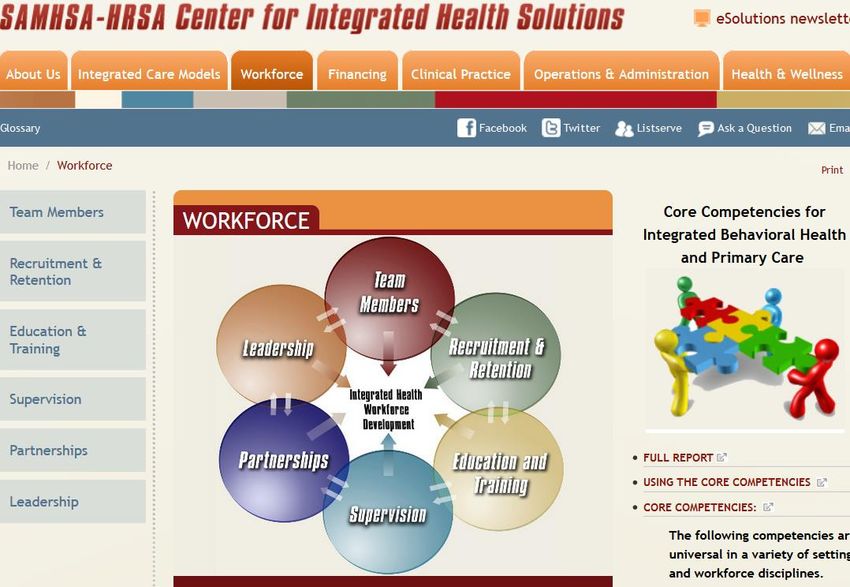
Moderators:

Andrew Philip, PhD, Deputy Director, CIHS      Roara Michael, Senior Associate, CIHS

Before We Begin
•   During today’s presentation,
    your slides will be automatically
    synchronized with the audio, so
    you will not need to flip any
    slides to follow along. You will
    listen to audio through your
    computer speakers so please
    ensure they are on and the
    volume is up.

•   You can also ensure your system
    is prepared to host this webinar
    by clicking on the question mark
    button in the upper right corner
    of your player and clicking test
    my system now.
Before We
         Begin
•   You may submit questions to the
    speakers at any time during the
    presentation by typing a question
    into the “Ask a Question” box in the
    lower left portion of your player.

•   If you need technical assistance,
    please click on the Question Mark
    button in the upper right corner of
    your player to see a list of Frequently
    Asked Questions and contact info for
    tech support if needed.

•   If you require further assistance, you
    can contact the Technical Support
    Center.
     Toll Free: 888-204-5477 or
     Toll: 402-875-9835
Disclaimer:
The views, opinions, and content expressed in this
presentation do not necessarily reflect the views,
opinions, or policies of the Center for Mental Health
Services (CMHS), the Substance Abuse and Mental
Health Services Administration (SAMHSA), the Health
Resources and Services Administration (HRSA), or the
U.S. Department of Health and Human Services (HHS).

Learning Objectives
During the webinar, you will learn:
• Recognize the importance of considering unique
  characteristics of integrated behavioral health environments
  in hiring and retention practices
• Identify the core competencies required for staff to practice
  in integrated behavioral health settings and how to apply
  these during the hiring process
• Apply tools for decreasing provider burnout and creating a
  sustainable behavioral health workforce

Today’s Speakers
Virna Little, PsyD, LCSW-R, MBA, SAP
Associate Director of Strategic Planning,
Center for Innovation in Mental Health at
City University of New York

Craig Kennedy, MPH
Executive Director, Association of
Clinicians for the Underserved

Daniel Do, LICSW, MPH
Program Director, Lynn Community Health
Center

Poll Question 1

1. I am a:
    a) primary care clinician
    b) behavioral health provider
    c) clinic administrator
    d) health system or health center director/executive
    e) other
Workforce and PPS

Virna Little, PsyD, LCSW-r, SAP,
CCM

Virna Little, PsyD, LCSW-R, MBA, SAP
Director Strategic Planning, Center for Innovation of Mental Health

Dr. Little is a nationally and internationally known specialist in the integration of health and behavioral health
services. Dr. Little speaks nationally on topics surrounding integration, the development of viable behavioral
health services in community settings and strategies to implement effective depression identification and
treatment programs in health settings. Dr. Little is currently the national depression expert for HRSA Geriatric
Education Centers with locations around the country. Dr. Little has worked as part of the evidenced based
depression care model, Project IMPACT, as part of the international consulting team since 2004. Dr. Little has
worked with many primary care associations around the country including Ohio, New York, New Jersey and
Alaska and internationally in Singapore. Dr. Little has served as a speaker and trainer for the National Health
Service Corps since 2009 in the area of behavioral health and practicing in integrated settings. Dr. Little has
been instrumental in promoting the use of electronic health technology in behavioral health settings, particularly
in the utilization of physician portals to involve community organizations in patient care and coordination. Dr.
Little has assisted organizations in obtaining patient centered medical home status , NCQ certification and has
helped to lead the health home and accountable care organization efforts in her organization.
The Threshold Visit
•   Should be primary visit type
•   A few exceptions but not the rule
•   Threshold visit provider types
•   It’s all about threshold visit
•   Efficiency counts more than ever
Efficiency and Optimization

•   Scheduling Optimization (Workforce Part II Webinar)
•   Staffing Optimization
•   Billing and Coding
•   Contracting
Medicaid Adult & Child QBP Bonus Measures
Why Quality Dollars:
•   In addition to PPS rate
•   Start small or as a pilot
•   Don’t let perfection block progress
•   Paves readiness for VBP

    • If you are not talking about quality dollars with payers…
Coding is Key • Helps with quality dollars • Demonstrates complexity of population and services • Additional codables like testing, crisis and transitions of care
Don’t Forget Other Payers

• Consider:
   • Medicare
   • Third Party
Changing Staffing

• Filling holes for services previously billable- Case
  Management/ Coordination
• Hiring practices- not hiring non-billable staff...
• Example:
   •   CM vs LMSW
Poll Question 2

1. Which integrated care core competency do you most often
look for when hiring new staff:
   a) Strong collaboration and teamwork
   b) Intervention skills
   c) Cultural competency
   d) Other
Recruitment Strategies
•   Focus on team based
•   Work as part of a team
•   Interview as part of a team
•   Job Description/Posting
•   Virtual job fairs NHSC
    • www.clinicians.org
    • www.peacecorps.gov
Workforce Retention • Be clear on expectations (integrated setting) • Quality indicators – shared accountability • Visit /volume expectations • Collaborative documentation • Balancing Retention vs. Efficiency
CRAIG A. KENNEDY, MPH
Executive Director, Association of Clinicians for the Underserved

Craig joined ACU in 2013 after many years in leadership positions on Capitol Hill and in non-profit association
management. He has management responsibility for all aspects of the Association and reports directly to the
Board of Directors. ACU’s mission is to improve the health of America’s underserved populations and to
enhance the development and support of the health care clinicians serving these populations. ACU was
founded by alumni of the National Health Service Corps and ACU’s commitment to that program continues
today. Craig previously served as the top lobbyist for the National Association of Community Health Centers
(NACHC) during the 2009 Stimulus and 2010 Affordable Care Act negotiations. He also led the negotiations on
the 2008 reauthorization of the National Health Service Corps and the Health Centers’ programs. He began his
tenure at NACHC working to double the Health Centers program (the REACH Initiative) and subsequently
drafted the current growth plan, ACCESS for All America. During the 13 years Craig worked at NACHC, the
program grew from $875 million in annual funding to $5.1 billion today. Prior to working at NACHC, Craig
worked on Capitol Hill and in the Oregon State Legislature. His work on Capitol Hill included a stint in the
Senate Finance Committee, which has jurisdiction over all health, tax and trade issues. He also served as the
Senior Legislative Assistant for a member of the House Appropriations Committee, and later as the Legislative
Director for a member of the House Rules Committee. He received his Masters in Public Health from the
George Washington University School of Public Health in Washington, DC, and has a Bachelor’s of Science
from Willamette University in Salem, Oregon. Craig currently serves on the governing boards for First Focus
Campaign for Children, the National Nurse Practitioner Residency Training Consortium and the Coalition for
Health Funding.
NHSC 101
Poll Question 3

1. True or false: Available loan repayment options can help
   attract and retain qualified candidates
  a) True
  b) False
THE NATIONAL HEALTH SERVICE CORPS
   THE NATIONAL HEALTH SERVICE CORPS (NHSC) builds healthy
communities by supporting qualified health care providers dedicated to working
          in areas of the United States with limited access to care.

     The NHSC is part of HRSA’s Bureau of Health Workforce (BHW).

 BHW improves the health of underserved populations by strengthening the
health workforce and connecting skilled professionals to communities in need.

    27% of BHW funding supports the NHSC and other
       programs that improve the distribution of health
            professionals to underserved areas.
NATIONAL HEALTH SERVICE CORPS: NOW*
*As of September 30, 2015IMPACT OF THE NHSC
MORE THAN
10,000
NHSC
members
are currently
11 MILLION
PEOPLE IN THE UNITED STATES
providing
care to more than…
87% of NHSC members continue to serve in
areas of greatest need after completing their
service obligation.NHSC LOAN REPAYMENT PROGRAM
PROVIDERS RECEIVE LOAN REPAYMENT IN
ADDITION TO A COMPETITIVE SALARY
FROM THEIR EMPLOYERS

           1                                     2

  Providers find a job                       Apply to the
      at an NHSC-
                                 THEN
                                              NHSC for
     approved site
                                           loan repayment

        Watch the NHSC Site Video on the             Find positions at NHSC-approved sites using
        "HRSATube" YouTube channel.                  the NHSC Jobs Center: http://nhscjobs.hrsa.gov
UP TO $50,000 FOR 2 YEARS SERVICE
Offers fully trained primary care clinicians loan repayment in exchange for service in an area of
greatest need, called a Health Profession Shortage Area (HPSA).
With continued
service, providers
may be able to pay
off all their student
loans.
Applicants working at NHSC-approved sites with higher HPSA scores are given priority.LOAN REPAYMENT AWARD
The NHSC Loan Repayment Program offers priority funding to applicants who work at NHSC-approved sites
in high-need areas, as defined by a Health Professional Shortage Area (HPSA) score.
INITIAL
AWARD
AMOUNTS
UP TO UP TO
$50,000 $25,000
FOR 2 YEARS FOR 2 YEARS
Full-time Half-time
In FY15, awards were given to applicants working at sites with HPSA scores of 14 and above.ELIGIBILITY
U.S. citizen or Currently work, or Have unpaid Licensed to practice
national applying to work, at government or in state where
an NHSC-approved commercial loans for employer site is
site school tuition, located
reasonable educational
expenses, and
reasonable living
expenses, segregated
from all other debts
Must be licensed in one of the following eligible disciplines:
Physician (MD or DO) Dentist (general or pediatric) Licensed clinical social worker
Nurse practitioner (primary care) Dental hygienist Psychiatric nurse specialist
Certified nurse-midwife Psychiatrist Marriage and family therapist
Physician assistant Psychologist (health service) Licensed professional counselor- Lucia Lopez, Physician
Assistant, Winston Salem, NC
“I’m working, I’m getting my salary, I’m getting loan repayment,
and I’m doing what I love.”NHSC SCHOLARSHIP
PROGRAMSTUDENTS PURSUING
CAREERS
IN PRIMARY CARE CAN
RECEIVE
A SCHOLARSHIP
NOW AND
SERVE LATER
THE SCHOLARSHIP* INCLUDES:
Payment of tuition and Some other tax-free A monthly living stipend
educational costs (books,
required fees (tax-free) etc.) (taxable)
*Available for up to 4 yearsYEARS OF
SUPPORT
= Scholars commit to serve at an
YEARS OF
SERVICE NHSC-approved site in a high-
need area upon completion of their
training: at least two years of
service.NHSC SITES Service begins upon graduation (and completion of any required primary care residency). The NHSC helps Scholars find a practice site that’s right for them. When in service, Scholars earn a competitive salary paid by their site.
ELIGIBILITY

              U.S. citizen or national

              Full-time student at an
              accredited school, pursuing
              a degree in:
              Medicine (DO or MD)
              Dentistry (DMD or DDS)
              Nurse practitioner
              Certified nurse-midwife
              Physician assistant (primary
                care)
STUDENTS TO SERVICE PROGRAM
UP TO UP TO
$120,000 $120,000
FOR 3 YEARS FOR 6 YEARS
Full-time Service Part-time Service
The NHSC offers up to $120,000 in tax-free loan
repayment for 3 years of full-time service or 6 years of half-
time service. Loan repayment begins during residency.
With continued service, eligible providers may be able to
pay off all their student loans.ELIGIBILITY
U.S. citizen or national Full-time student in the Planning to complete Have unpaid
final year at an an accredited primary government or
accredited school, medical care residency commercial loans
pursuing a degree in an NHSC-approved for school tuition,
in Medicine (MD specialty (Internal reasonable educational
or DO) Medicine, Family expenses, and
Practice, Pediatrics, reasonable living
OB/GYN, Psychiatry expenses, segregated
and Geriatrics) from all other debtsSTATE LOAN REPAYMENT
PROGRAM
37 STATES
ARE GRANTEES
Provides cost-sharing grants to states to
operate their own loan repayment
programs for primary care providers in
underserved areas.
Eligible disciplines vary but may include
physicians, nurse practitioners, physician
assistants, dental professionals,
registered nurses, mental health
professionals, and pharmacists.SUPPORT FOR PROVIDERS
SUPPORT FOR YOU
IN YOUR REGION
Dedicated BHW staff
located in 10 regional
offices provide dedicated
contacts for your area.
SUPPORT FOR YOU
AT YOUR SITE
NHSC Ambassadors
help educate and inform
current and prospective
members.RESOURCES FOR PROVIDERS
NHSC JOBS CENTER
http://www.nhscjobs.hrsa.gov
• View job vacancies at thousands of
NHSC-approved sites nationwide.
Google Maps technology allows users to
view the surrounding community (e.g.,
schools, restaurants, parks, places of
worship, shops)
Narrow your job search by:
o Field of Practice
o Specialty
o HPSA Score
o Site Name
o Zip Code
o Sites with Open PositionsNHSC FUNDING
FY 2018
AND
FY 2017
FY 2019 $310 MILLION
The President’s
budget included a
proposal to fund the
NHSC at $310 million
for the next two years.
Congress is currently debating the funding for FY2018.
The House-passed legislation included $310 million for
FY17 & FY18 for the NSHC. It is currently in committee in
the Senate awaiting further action.OTHER LOAN REPAYMENT &
SCHOLARSHIP PROGRAMS
BUREAU OF HEALTH WORKFORCE
NURSE CORPS:
Loan Repayment Program
Scholarship Program
Native Hawaiian Health Scholarship Program
Faculty Loan Repayment Program
Scholarships for Disadvantaged StudentsQuestions
Lynn Community Health Center
      Daniel Do, LICSW, MPH
Daniel Do, LICSW, MPH Program Director, Lynn Community Health Center Daniel Do, LICSW, MPH is currently a Program Director at the Lynn Community Health Center (LCHC) for the Primary Behavioral Health Care Integration grant through the Substance Abuse and Mental Health Services Administration (SAMHSA). Dan is originally from Ohio and found his way to Boston to complete his Masters in Social Work and Masters in Public Health degrees at Boston University. In between those cities, Dan spent a year in Seattle with City Year. Having spent the past five years in integrated settings, his passions revolve around the facilitation and creation of “the culture of integration” as a way to improve patient care, access to care, and whole person health. This work combines the tools and values of both social work and public health. His team would like to add that his passions revolve around learning, travel, and chocolate.
Lynn Community Health Center

                     Founded in 1971 as a storefront
                        mental health clinic in Lynn, MA
                        in response to the community’s
                        need

                     One of the founders was a pioneer
                       in integrated health and
                       recognized the need to hire a
                       primary care provider
Lynn Community Health Center
Today LCHC is an accredited
Federally Qualified Health
Center offering We have over 600 dedicated staff,
Primary Care including 150 licensed medical,
Behavioral Health behavioral health, dental, eye
Substance Abuse care, and pharmacy providers
Pediatric We have 20 locations, including 13
OB/GYN School Based Health Centers
Dental In 2016, we provided 283,281 visits
HIV and HepC for 40,009 individuals—more
Refugee Care than 40% of Lynn residents.
Eye Care
Onsite Labs and Radiology
Onsite Pharmacy
Additional Specialty ServicesPoll Question 4
1. Which of the following best describes your organization’s
relationship to healthcare training:
a) We have a robust relationship with a university or
training institution and accept trainees regularly and
participate in educational opportunities
b) We have a formal or informal relationship with a
university/training institution and offer presentations or
courses to their students
c) We are aware of a local training program and working
to establish a relationship
d) We have no training affiliationsRecruitment and Retention: Lessons
Learned from Integration
Scope and Frame for Discussion
Retention
Culture, Diversity and Environment
Bringing it back to theory
Recruitment
Characteristics and styles
“Goodness of Fit”
Training the next generation of social workers, therapists,
psychologistsPoll Question 5 1. Following this webinar, I plan to: a) review my current staffing strategies b) hire new staff utilizing a core competency approach c) deploy new marketing strategies for hiring
Additional Resources
• Workforce Connections newsletter: www.hrsa.gov/subscribe

• LinkedIn: www.linkedin.com/company/national‐health‐service‐corps
  www.linkedin.com/company/nurse‐corps

• Twitter:
  twitter.com/HRSAgov twitter.com/NHSCorps

• Facebook:
  facebook.com/HHS.HRSA facebook.com/nationalhealthservicecorps
  facebook.com/HRSANURSECorps
CIHS Tools and Resources
 Visit www.integration.samhsa.gov or
e-mail integration@thenationalcouncil.org
                    • Core Competencies for Integrated
                      Behavioral Health and Primary
                      Care

                    • Primary and Behavioral Health
                      Integration: Guiding Principles for
                      Workforce Development

                    • Building cultural competence in
                      healthcare

                    • Sample Job Descriptions
Thank you for joining us today.
Please take a moment to provide your
feedback by completing the survey at the
end of today’s webinar.You can also read


