0km Health - A collective pathway to systemic change - Scope Impact
←
→
Page content transcription
If your browser does not render page correctly, please read the page content below

0km Health –
 A collective
 pathway to
  systemic
  change.

0km Health
paves the way for
proactive health.

One year on, COVID-19 continues to devastate               locally or virtually, meeting people where they are.
communities and place unprecedented pressure               The pandemic has highlighted the need to accelerate
on health systems. Across the globe, the pandemic          prevention, early detection, and intervention as well
has pushed the health sector already grappling with         as to better support the self-management of health. The
complex challenges to breaking point. Increases in ill     ongoing crisis has also revealed the need for improved
health and mortality, disruptions to essential services,   ways of addressing social determinants of health and
delays in elective care, and a wave of mental health       stronger integration of physical wellness, behavioural, and
problems are some of the heavy burdens the health          mental health aspects into services. Furthermore, there is a
systems will have to bear going forward. These issues,     renewed demand for deeper community engagement and
combined with the physical and mental exhaustion           genuine participation from groups historically excluded
of an already overstretched healthcare workforce           from health sector development efforts.
and the catastrophic financial challenges faced by
the public health sector, paint a bleak picture of the     To deliver on this change, we have to go beyond the idea
future.                                                    of building back better. To transform, we must create
                                                           from the future. By collectively looking across the horizon
The crisis and exposed system weaknesses have              and imagining new ways of doing, we will be able to
accelerated a call to ‘build back better’. The             prepare for and shape a better tomorrow. Equipped with
pandemic has underscored an urgent demand for              an alternative vision and by driving forward the change,
services that can be provided with less dependency         we believe we can accelerate the attainment of health,
on facility-based health workers, accessed both            dignity, and well-being for everyone.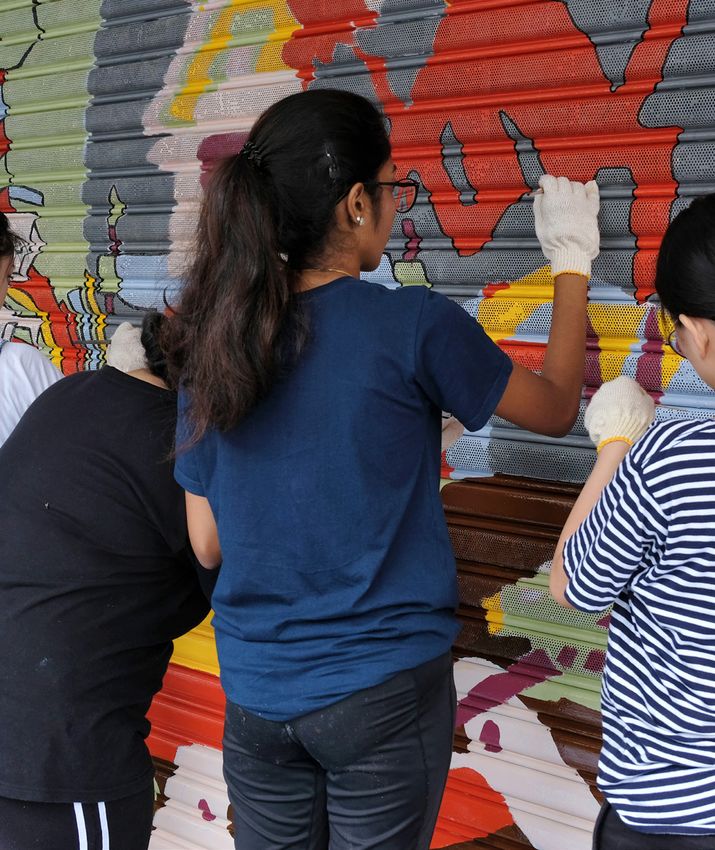
The ‘0km’ approach to
community-centric, proactive
health and well-being.
Through our recent work supporting essential health service innovation,
reimagining the role of community health workers, using futures thinking
for post-pandemic planning, and co-designing new care models, the
concept of 0km Health has emerged. We believe that this proactive and
localised health model, outlined briefly herein, can significantly contribute
to meeting the needs of communities and health systems going forward.

0km Health is inspired by the Italian Slow Food movement. Their 0km
philosophy promotes the prioritisation of healthy, community-centric
food production and consumption for the long-term benefits of the local
economy, environment, and community. 0km Health is rooted in this
thinking. We believe the concept provides the foundation for an inclusive,
localised approach to health with equal, sustained participation from
community, service delivery, government, private sector, and impact
partners. The approach is steeped in respect for differences in knowledge,
skills, and belief systems while embracing diversity as a strength. It is
responsive to context, data, and lived experience. 0km Health is both
optimistic and pragmatic – fuelled by a belief in large-scale change while
rapidly closing the gap between experimentation, practice, and evidence,
making new solutions a reality for people everywhere.

5 key enablers
of 0km Health.
In order to transform our vision into practice, we have
identified five key enablers of 0km Health. We are confident                      1. Responsive,
that focusing on the delivery of these five key areas of                          climate-
change will accelerate the equitable transformation of                            smart primary
health globally and place us in a position of strength to
                                                                                  healthcare.
tackle challenges to come.

                                                               5. Creative                             2. Tech-
                                                               community                               powered
                                                               change-                                 health and
                                                               making.
                                                                                   0km                 wellness.

                                                                                  Health.

                                                                    4.                             3. Holistic
                                                                    Community                      self- and
                                                                    health                         group-care
                                                                    worker 2.0.                    practice.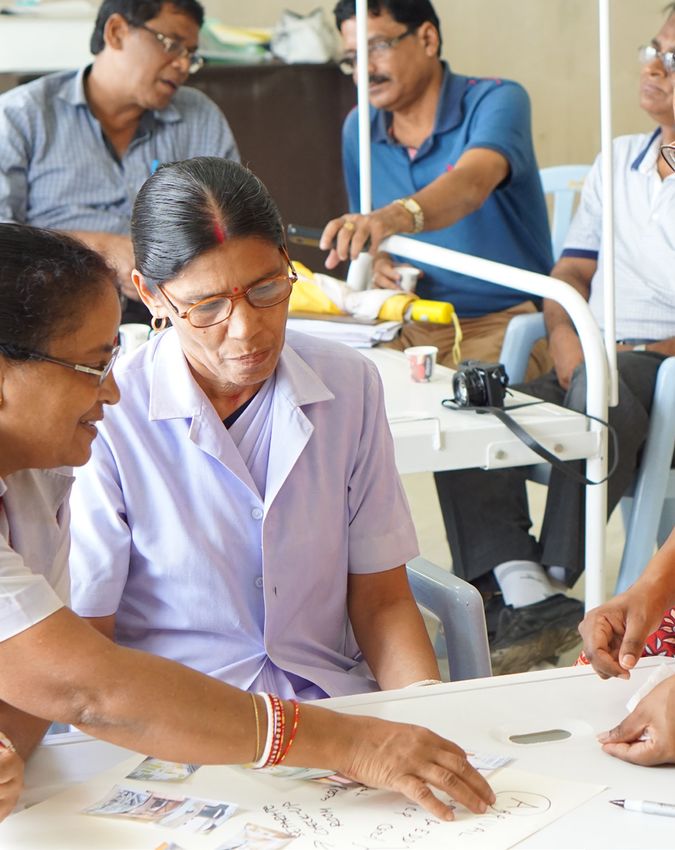
1. Responsive, climate-smart
primary healthcare.
Primary healthcare (PHC) is uniquely positioned to meet
community health needs locally and act as a strategic entry
point for addressing social determinants of health. The pandemic
has demonstrated that strong PHC also plays a central role in
crisis preparedness, response, and recovery. At Scope, we have
identified two areas we believe can further contribute to the
ongoing PHC strengthening and that serve as enablers of 0km
Health:

Responsiveness to local contexts and community engagement
are underlying principles of PHC. Human-centered design
(HCD) has proven to be an effective approach for upholding
this ethos, yet it remains underutilised in public health practice.
The HCD approach and mindset are particularly successful
in aligning service improvement and innovation with people’s
lived experiences and changing health needs. The collaborative
process at the heart of HCD builds trust, ownership, and local
leadership. The rapid testing and refinement cycles lead to
efficient solutions, often saving time, effort, and money along the
way.

Institutionalising collaborative innovation and creative problem
solving is an important element of supporting PHC actors and
communities in responding and adapting to ever-changing
needs. Embedding HCD and resilience-supporting skills within
the community, government, and organisational structures is
important given the need for preventing, preparing for, and
mitigating current and future future challenges, including the
anticipated effects of climate change.
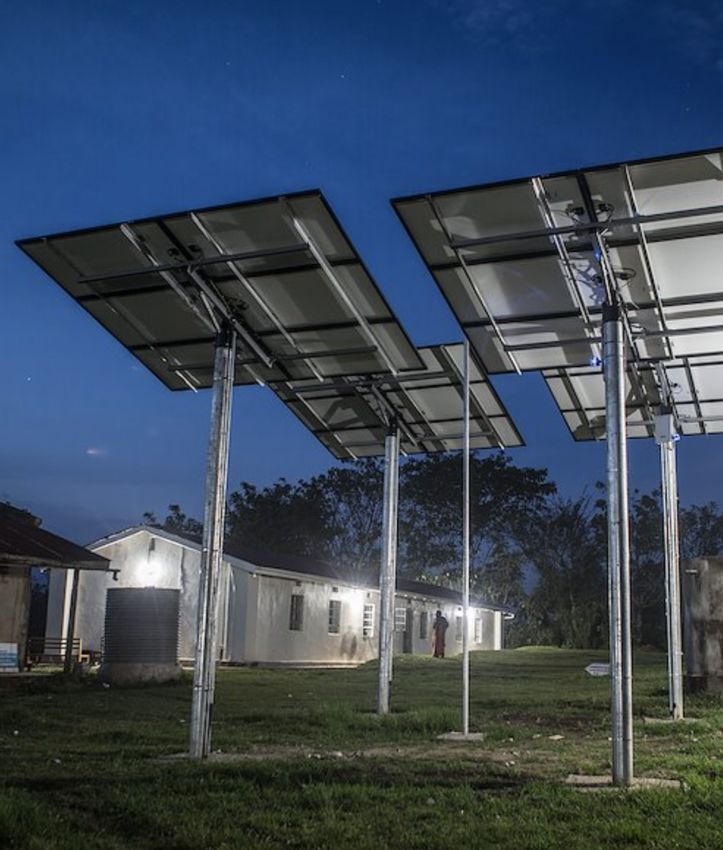
Energy is another critical enabler and a core function of
essential local health services. Continuous energy access
is vital for deliveries, newborn care, storage of vaccines,
provision of emergency services, and supply of clean water.
Access to electricity is equally instrumental in attracting and
retaining skilled health workers, especially in rural areas. Yet,
almost 60% of healthcare facilities in 46 low- and middle-
income countries lack reliable sources of energy. Renewable
energy technology, particularly solar photovoltaic (PV)
technology, is primed for supporting accelerated facility
electrification in rural and resource-constrained locations
lacking regular energy sources. In addition to enabling
access to better care, renewable energy also has the
potential to reduce or reverse health hazards resulting from
carbon and fossil fuel emissions.

However, barriers remain in optimising new climate-smart
technologies. In order to scale access to electrified, quality
PHC, we need to co-design diagnostic, planning, financing,
and capacity building approaches and tools. Designing
and showcasing optimised solar-powered facilities and their
subsequent, positive impact on health, financial sustainability,
and ultimately climate will pave the way for the technology’s
wider use. Harnessing participatory HCD processes to bridge
architecture, technology, and community needs will result in
inviting environments combined with safety and support for
the provision of quality 0km care.
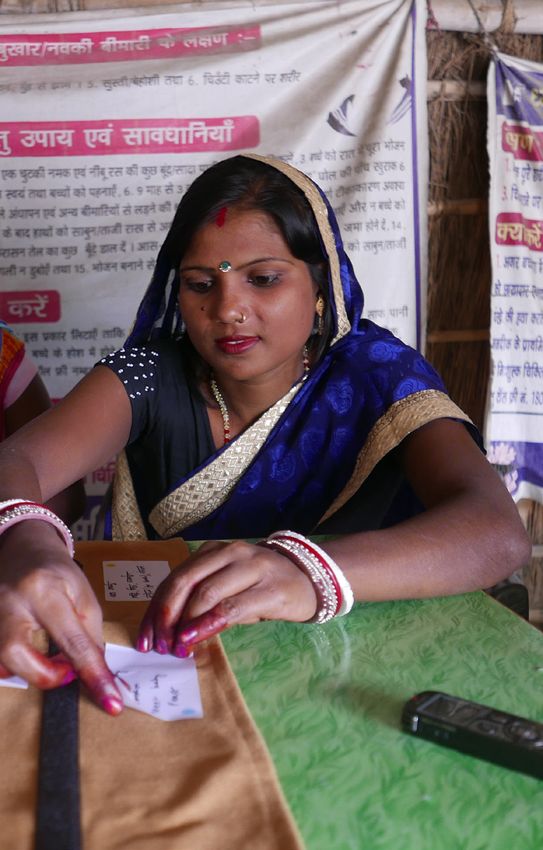
2. Tech-powered health
and wellness.
The pandemic has contributed to the universal demand for new
technology solutions, high-quality data, and artificial intelligence
(AI) driven interventions. This dynamic shift in demand, alongside
technological advances, such as smartphones, 5G networks,
and cloud computing provide gateways for technology-enabled
diagnostics, triage, remote treatment, and care. Always-on health
monitoring and digital therapeutics together with predictive analytics,
personalised genomics, and aggregated genetic data sets pave
the way for preventative disease detection and precision medicine.
Improved decision making, task automation, and better utilisation of
scarce human resources are further advantages ushered in by tech
development.

However, to realise the potential with equal access and benefit, we
need to overcome several hurdles. Digital literacy, affordability, and
access gaps are vast and growing. Data privacy and protection remain
real concerns. Few clear pathways exist for clustering and adapting
contextually relevant solutions for connecting data to public sector
digitised records and for creating a patient-centric continuum of care.

Going forward, designing stepwise, agile pathways for technology-
driven models of care for health systems at differing levels of maturity
will be the key. Demonstrating value and providing evidence related to
health outcomes, efficiencies, cost-saving, and patient satisfaction will
foster wider adoption. Achieving all this requires forming new alliances
to accelerate the innovation, testing, and deployment of technology-
powered public goods that respond to diverse community and public
sector needs.

3. Holistic self- and
group-care practice.

Self-care is not a new practice. Yet recent developments
across devices, products, and drugs provide new
opportunities for self-care and the realisation of 0km
Health. Personalised, preventative self-care plans,
individual and household tailored ‘digital medicine
cabinets’, home testing linked to diagnosing, monitoring,
and digitally assisted counselling are just some feasible
0km Health solutions that currently remain out of reach
for most.

Though inroads have been made in promoting self-
care interventions for a wider population and linking
these interventions into the healthcare system, a series    service tentacles create a holistic self-care practice. New
of barriers remain. These barriers include poorly           solutions have to be designed with and for communities
designed or incorrect information, low health literacy      that have the most to gain from improved self-care and
levels, sub-standard products and services, and most        group-care models; people facing geographical service
importantly, the lack of connection from self-care tools    barriers, economically disadvantaged families, mobile,
to health service follow up. Innovation is also required    migrant and refugee populations, the increasing numbers of
to meet people’s rapidly changing expectations of how       people living in informal urban settlements as well as groups
they wish to interact with and access care, including       facing systemic discrimination and stigmatisation. Moreover,
from within the home, in the community, alongside           the opportunity to support the health, dignity, and well-
peers, through traditional practice, or in connection to    being of the one billion people living with disabilities has
pharmacies and alternative service outlets.                 largely been overlooked. Advancing proactive and self-
                                                            managed 0km care options hold life-changing potential in
The fragmented, disconnected self-care service journey      supporting agency and realisation of the right to health for
needs to be rethought with a life-course perspective        many communities sidelined by medical self-care advances
and multi-service point approach where extended             to date.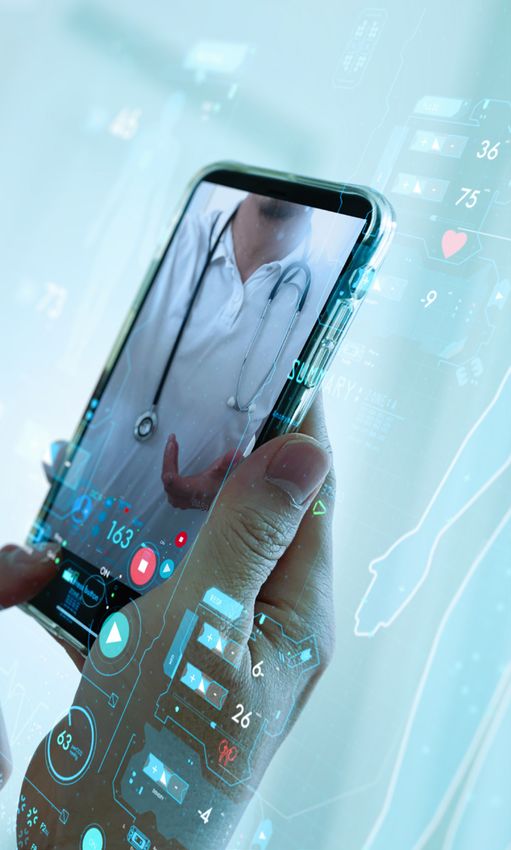
4. Community health worker 2.0.

Community health workers (CHWs) are            resolve task management, prioritisation,
a vital component of localised, primary        mobilisation as well as reminder issues,
health. In carrying out their role, CHWs       enabling CHWs to focus on in-person
play an important bridge function              activities.
between the health system and the
community, serving a triple role of service    Leveraging universal ritualisation
extender, cultural broker, and social          mechanics for CHW-led behaviour
change agent. In practice, however, the        change is also an effective yet
health system has limited its focus to         untapped approach that can support
the service extender aspect of the role,       the integration of the community’s
missing out on the opportunity for the         received wisdom and biomedical
wider benefit of culturally sensitive health   information to better align with
communication, contextualisation of            community motivations and meanings.
practice, leveraging community influencers     Rituals are practised by all communities
as well as weaving together rituals and        to avoid risk and promote health,
traditional practices with biomedically        create cohesion, coordinate collective
recommended health advice.                     action as well as reinforce desired
                                               behaviours. They are highly intertwined
Supporting CHWs in optimising their role       with health, hygiene, and diet. Ritualising
is a key element in advancing particularly     recommended health behaviours will
underserved communities in attaining           play an important part in enabling
better health. This will include, amongst      CHWs to become persuasive social
others, strengthening CHW networks             change agents that can play a critical
with beneficiaries, peers, and community       role in advancing community health and
influencers as well as equipping them with     well-being.
adaptive health communication skills.
Tech enablement and delegation will help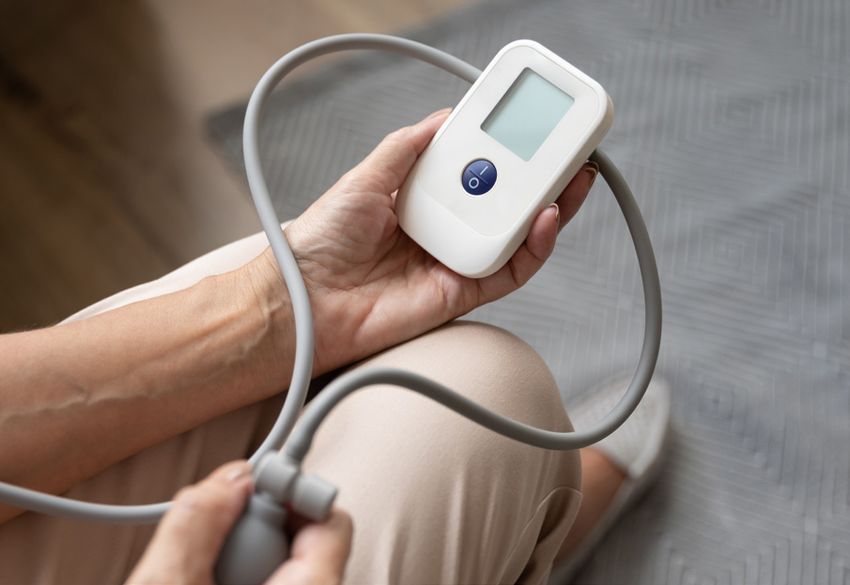
5. Creative community
change-making.
Communities hold within them an abundance of
human capital, entrepreneurship, and innovation
potential. Across the globe, everyday people             as well as supporting communities
develop ideas, build new skills, and pioneer solutions   in gaining externally acquired new
for improved health. Communities generate new            knowledge and resources is an important
resources, press for service improvements and            support mechanism. Bringing together diverse
organise to tackle underlying causes of ill health.      people and perspectives through creativity and
Community-led mobilisation is a proven, effective        arts can provide both a channel and a resource
transformation approach and by its very nature           that the community can use to make sense of
strengthens the ability of people to work together       the world, connect with collective memory, and
for any goal that they deem important.                   reimagine the future. Leveraging the arts, popular
                                                         culture, and community influencers to ignite and
Social circumstances may, however, obstruct              encourage self-expression and engagement can
and hamper community ability and confidence              help shift agency away from institutions and gives
to effectively mobilise to drive change. People          ordinary people the ability to create meaningful
may struggle to unlock existing knowledge, free          change in unprecedented ways. Supporting
resources, or gain access to new skills, information,    particularly women to lead in shaping change
and channels needed to take solutions into wider,        agendas, organising collective action and driving
systemic use. The framing of issues and limited          innovation is critical.
availability of diverse means of participation
may also prevent meaningful engagement or                An inclusive, people-centric approach to exploring
contribution by people with differing levels of          how healthcare should evolve in the years to come
experience, skills, and abilities.                       can also be done through futures thinking and
                                                         scenario building. Futures thinking allows us to
Supporting and encouraging community-led social          reimagine society and a system in which everyone
innovation and mobilisation can take many forms.         has a stake. It serves as a method to engage diverse
Building community capacity in weaving together          views for consensus building and framing public
local know-how, collaboration, and social learning       discourse on health systems of the future.
What’s Next? Shifting prevailing mindsets and changing systems is not easy. Unleashing the full potential of these and other community-centric enablers will require radical collaboration, collective learning, and open innovation. 0km Health is a call for sustainable value creation with communities, organisations, governments, and impact actors alike. By taking the leap together, we can usher in new models for better, more equal health and well-being that is co-created, tech-enabled, and planet positive from the outset. Laying the foundations of tomorrow’s health, well-being, and dignity starts today.
Scope Impact is a social impact
company. We are looking forward
  to collaborating to accelerate
health and social change at scale.

     Please contact us at:
          Scope Impact Oy
        info@scopeimpact.fi
         +358 40 643 3004
        www.scopeimpact.fi
You can also read


