How to get your EHR to match reality for UDS measures on depression - March 28, 2017
←
→
Page content transcription
If your browser does not render page correctly, please read the page content below

How to get your EHR to
 match reality for UDS
measures on depression
       March 28, 2017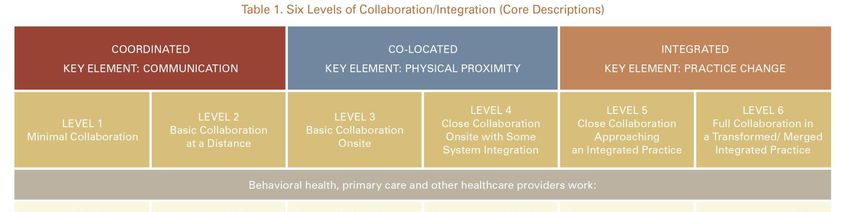
Moderators:

Nick Szubiak, Director, Clinical Excellence in Addictions,     Roara Michael, Associate, CIHS
         Integrated Health Consultant, CIHS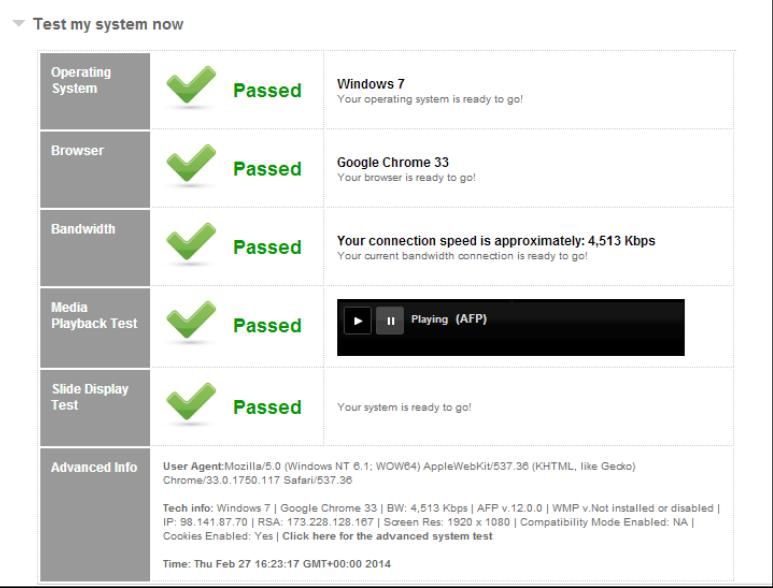
Before We Begin
•   During today’s presentation,
    your slides will be automatically
    synchronized with the audio, so
    you will not need to flip any
    slides to follow along. You will
    listen to audio through your
    computer speakers so please
    ensure they are on and the
    volume is up.

•   You can also ensure your system
    is prepared to host this webinar
    by clicking on the question mark
    button in the upper right corner
    of your player and clicking test
    my system now.
Before We Begin
•   You may submit questions to the
    speakers at any time during the
    presentation by typing a question
    into the “Ask a Question” box in the
    lower left portion of your player.

•   If you need technical assistance,
    please click on the Question Mark
    button in the upper right corner of
    your player to see a list of Frequently
    Asked Questions and contact info for
    tech support if needed.

•   If you require further assistance, you
    can contact the Technical Support
    Center.
     Toll Free: 888-204-5477 or
     Toll: 402-875-9835
Disclaimer: The views, opinions, and content expressed
  in this presentation do not necessarily reflect the views,
  opinions, or policies of the Center for Mental Health
  Services (CMHS), the Substance Abuse and Mental
  Health Services Administration (SAMHSA), or the U.S.
  Department of Health and Human Services (HHS).

Learning Objectives
• Tips and guidance to improve electronic health record
  workflows, data entry and reports for depression screening
  and follow-up interventions

• Key lessons learned from one provider on how changing
  utilization of the EHR improved outcomes

• Practical strategies for sharing data with the team to
  improve benchmarking and quality

Today’s Speakers
 Adrian Bishop
 Director, eHealth and Organizational
 Development, Advocates for Human
 Potential

Ellen Radis, MMHS
Senior Program Manager, Advocated for
Human Potential

Belinda J. Stiles, MA, LISW-S
Behavioral Health Manager, Five Rivers
Health Centers

How to Get Your EHR to
Match Reality for UDS
Measures on Depression
   Adrian Bishop and Ellen Radis,
   Advocates for Human Potential

Agenda
Electronic Health Data – The Big Picture
Depression Screening Data Life Cycle – Data Definition, EHRs and
Clinical Workflow
Five Rivers Health Center – Improving Depression Screening
Depression Screening Data Life Cycle – Data Capture and Data
Validation
Uniform Data System – Depression Screening Measure
– Current Reporting
– UDS Review Strategies
– Validating your Data
Depression Screening Data Life Cycle – Substantive Use
Resources and Questions
Health Integration
Bi-Directional Opportunity

“Just as screening and evaluation for behavioral
health disorders is appropriate in primary care
settings, screening and evaluation for general
health problems should be available to
individuals in behavioral health settings.”

                        Linda Rosenberg, CEO NCBH
Health Integration
Bi-Directional Opportunity
“Integrated primary care is a service that combines
medical and behavioral health services to more fully
address the spectrum of problems that patients bring
to their primary medical care providers. It allows
patients to feel that, for almost any problem, they have
come to the right place.”
Alexander Blount
The Center for Integrated Primary Care
University of Massachusetts Medical SchoolElectronic Health Data The Big Picture
Electronic Health Data ‒ The Big Picture
The Clinical Perspective
        Patient
    Education and                Health
   Self Management             Maintenance

                                             Integrated Care
                                               Management
                     PATIENT

     Orders and                  Disease
      Referrals                Management
Electronic Health Data ‒ The Big Picture
The Systems Perspective
Reimbursement Stakeholder
Reporting
ELECTRONIC Disease
HEALTH Registries
RECORDS
Health
Data Warehouses Information
ExchangeWhy is Electronic Health data important?
Manage patient’s health
Prevention
Chronic Disease Management
– Integration across services
– Manage Public Health
Health threats to individuals and communities
Provide informed health choices
Manage Population Health
Provides claims data and other financial information
Maximizes Efficiency Quality and SafetyUDS Depression Screening
UDS Depression Screening Rates - 2014 - 2016
60.00%
50.60%
50.00%
40.00%
38.80%
?
30.00%
20.00%
10.00%
0.00%
2014 2015 2016Hypertension
An Example of the power of data!
70%
62%
60%
50%
40%
29% 30% 29%
30%
20%
10%
0%
1999 2014
Hypertension Controlled HypertensionDepression Screening Data Life Cycle
Data EHR
Definition
Substantive Clinical
Use Workflow
Data Data
Validation CaptureDepression Screening Data Life Cycle
Data Definition
Data EHR
Definition
Substantive Clinical
Use Workflow
Data Data
Validation CaptureData Definition and Reporting
Data must be defined if it is going to be useable
– Must be in the correct form
– Must be in the correct place within the EHR
– Must be attributable (Patient, provider, location, date etc.)
Reports must be defined
– Attribute
– Numerator
– Denominator
– ExclusionsData Definition and Reporting
All EHRs have multiple reporting capabilities
– Certified reports – Primarily CMS electronic Clinical Quality
Measures (eCQMs)
– Other vendor developed reports – e.g. . Million Hearts, UDS
– Capability to “write” customized reports
– Reporting capability of EHR may be supported by data
warehouses and other reporting tools.
EHR must be regarded as the Data Source of TrutheCQMs – electronic Clinical Quality Measures
Use data from electronic health records (EHR) and/or health
information technology systems to measure health care quality.
Currently 64 eCQMs for Eligible Providers (Clinicians)
The (e) means Electronically Specified
Part of ONC EHR Certification criteria – means that
the reported data for a measure should be consistent regardless of
vendor.
Annual Updates as needed
Where possible, 2016 UDS Clinical Quality Measures
have been aligned with the CMS eCQMs.
CMS eCQM Library
https://www.cms.gov/regulations-and-guidance/legislation/ehrincentiveprograms/ecqm_library.htmleCQM CMS2v5
Preventive Care and Screening: Screening for Clinical Depression
and Follow-Up Plan
– UDS Table 6B Section M, line 21
Universe / Denominator
– The number of patients ages 12 years and older with at least one
medical visit during the measurement period
Numerator
– The number of patients screened for clinical depression on the date of
the visit using an age-appropriate standardized tool and, if screened
positive for depression, for whom a follow-up plan is documented on the
date of the positive screen
Exclusions
– Patients who are already participating in ongoing treatment for
depression. Also excluded are patients with an active diagnosis for
depression or bipolar disordereCQM CMS2v5
Universe / Denominator
– The number of patients ages 12 years and older with at least
one medical visit during the measurement period
Numerator
– The number of patients screened for clinical depression on the
date of the visit using an age-appropriate standardized tool
and, if screened positive for depression, for whom a follow-up
plan is documented on the date of the positive screen
Exclusions
– Patients who are already participating in ongoing treatment
for depression. Also excluded are patients with an active
diagnosis for depression or bipolar disorder.How to find the Screening for Clinical Depression
and Follow-Up Measure Specifications?
https://ecqi.healthit.gov/ep/ecqms-2016-reporting-periodData Definition – CMS2v5
Data Definition – CMS2v5

                       Centers for Medicare &
    Measure Steward:
                       Medicaid Services
CMS 2v5 – Follow-Up Plan
Documented follow-up for a positive depression screening
must include one or more of the following:
– Additional evaluation for depression
– Suicide Risk Assessment
– Referral to a practitioner who is qualified to diagnose and
treat depression
– Pharmacological interventions
– Other interventions or follow-up for the diagnosis or treatment
of depressionCMS 2v5 – Follow-Up Plan
Why do we need to ‘Drill Down’ into the
Depression Measure?
The specifics of the measure provide a road map to
understanding how to configure your EHR and developing
the workflows that are:
– Customized to your setting
– Support the development of Data
Definition
EHR
protocols and best practices
that align with these workflows.
Substantive Clinical
– Generate data for reporting Use Workflow
– Generate data to support
quality improvement Data
Validation
Data
Capture
Applies to all measuresDepression Screening Data Life-Cycle
EHR
Data
Definition
EHR
Substantive Clinical
Use Workflow
Data Data
Validation CaptureWhat is a Certified EHR?
A certified EHR must:
Meet the certification criteria defined by CMS and ONC including:
– Store data in defined structured format(s)
– Meet the defined functionality and security requirements
– Able to share data with other EHRs securely
– Able to report data (including eCQMs)
Be certified as CEHRT (certified electronic health record technology)
by ONC – ONC CHPL https://chpl.healthit.gov/#/search (Complete
EHR and Modular Certifications)
Meet the requirements of CMS EHR incentive programs
(Meaningful Use)
Over 90% of the FQHCs are on CEHRT.What is an Integrated EHR?
Master patient index (Unique patient identifier)
Common Practice Management across programs
– Demographics
– Race / Ethnicity / SOGI
– Scheduling
– Insurances
– Check-in / Check-out
– Revenue Cycle Management
Share clinical data (within the limits of HIPAA and CFR42
Part 2) between programs
Share Care Plans across programs
Support the precept ‘One Patient’Depression Screening Data Life Cycle
EHR Keep up to date with upgrades
and patches
Formally manage by an EHR
Data
team that includes:
Definition EHR
– IT
– Clinical leadership
Substantive Clinical
Use Workflow – Operations
– Finance / billing
Data
Validation
Data
Capture
– Quality Improvement
– Data Analysts
– Team is responsible for
functionality, security and
quality improvementDepression Screening Data Life Cycle
Clinical Workflow
Clinical workflows ‒ all processes that contribute
to the delivery of services
Data The alignment of workflows an EHR
EHR
Definition
configuration
One of the main roles of your EHR Team
Substantive Clinical
Use Workflow Clinical workflows need to be developed
collaboratively across functions and with the
input of all stakeholders if all need are to be met:
Data Data
Validation Capture – Front Desk – Medical Assistant
– Primary Care Providers – Nursing
– Care Coordinator – Referral Coordinator
– Behavioral Health
Workflow stakeholders includes everyone who inputs or
extracts data in the EHR as part of a patient visit or as a result of the visitFive Rivers Health Center Belinda J. Stiles, MA, LISW-S Behavioral Health Manager
Improving Behavioral Health Screening
at Five Rivers Health Center
           Five Rivers Health Center
         UDS Depression Screening Rate

                                96.05%

         45.74%

          2015                    2016
CIHS Levels of Behavioral Health Integration Coordinated: Behavioral services by referral at separate location with formalized information exchange. Co-Located: By referral at medical care location Integrated: Part of the “medical” treatment at medical care location
Overview 20,000+ patients per year Family Practice, Center for Women’s Health/ Pediatrics, Medical Surgical, Homeless Clinic, Dental , Pharmacy. Medical staff is comprised Nurse Practitioners, Physician Assistant , Dietitian, OB’s, Midwives , Psychiatrist, and residents from Wright State University’s school of medicine and Pharmacy students from various schools. Behavioral Health staff is comprised of Social Workers, Professional Counselors, Chemical Dependency Counselors and Case Managers.
Integration Work Flow
Evidence based screening tools; PHQ-9, AUDIT/DAST,
Post-Partum screen
– The PHQ-2 is built into the intake template for the MA’s
rooming the patient. If the PHQ-2 is positive it automatically
triggers the PHQ-9. If the PHQ-9 is positive the medical
provider and behavioral health provider are notified.
– The post-partum screen is built into the system.
– The AUDIT/DAST are smart phrases built into the behavioral
health notes.
– The face sheet of the chart is where information on
“completed” screens are posted.Integration Work Flow
Morning Huddles (all/team specific) powered by the EHR
schedule and review of patient chart.
– The MA’s review the patient schedule for the next day to
identify chronic medical conditions, mental health/substance
abuse history, medication refills, specific behavioral
concerns.
– BH (BHC/CM/SA/PWHCM) specific huddle is a review of the
next day patient list and identifying who needs follow up and
planning for introductions to new patients.
– BH huddles with specialty teams like, Healthy Start -
Community Health WorkersCommunication Our behavioral health department is newly formed and in 2017 our goal is to provide quarterly department team meetings and conduct bi-weekly site specific meetings These meetings will consist of a review of the data measures and how we are doing quarterly and discussion on ways to improve those measures. These meetings also consist of training to attempt the over all data measures supporting diabetes, hypertension etc…
UDS Depression Measure Improvement
Depression Screening Rate increased from 45% –
96% between 2015 and 2016
Better understanding of the data definition and workflow:
– We determined that the “Follow-Up Plan” in the initial visit.
– Patients who scored positive on the PHQ-2 were
automatically screened with the full PHQ-9.
• The screening tools are a part of the intake template in our
EHR and can not be skipped.
– If the PHQ-9 was positive the MA/Nurse, who roomed the
patient would inform the medical provider and the behavioral
health provider of positive screen.UDS Depression Measure Improvement
Depression Screening Rate increased from 45% –
96% between 2015 and 2016
The MA/Nurse rooming the patient makes the patient aware of their
score and the supportive services available at the health center,
calling the behavioral health providers by name.
– “Rebecca, our behavioral health provider will be in to have more
discussion with you regarding your score.” Discussion amongst all
providers happens on the medical floor and a plan of action is created.
Discussion amongst all providers happens on the medical
floor and a plan of action is created.
Patient’s who screened positive are viewed as priority and often, do
not leave that appointment without an intervention from the medical
provider and/or the behavioral health provider.UDS Depression Measure Improvement
Depression Screening Compliance Rate increased
from 45% – 96% between 2015 and 2016
Interventions include:
– Medication from the medical provider
– Brief intervention regarding coping skills from the behavioral
health provider
– Support with scheduling an appointment at a community
mental health agency with the case manager.
Cover sheet of the patient’s chart indicates that a PHQ-9
was conducted and that an intervention was provided.
It also includes patient diagnosis and a snippet of the
last visit note.Depression Screening Data Life Cycle
Data Capture
The correct person putting the
correct data in the correct form
Data EHR
in the correct place!
Definition
Data capture linked very closely
with Clinical Workflows:
Substantive Clinical
Use Workflow – Must operate consistently:
• Staff changes or absences
Data Data • Busy / not busy
Validation Capture
– Often defined by documented
protocol
– Must not “expand” until burdensome
– Exceptions must be formally
Good data is CONSISTENT data! managedDepression Screening Data Life Cycle
Data Validation
Data validation is the process of ensuring
that an EHR operates on clean and
Data
Definition
EHR correct data.
It is a constant process
Substantive Clinical
Data can be verified by:
Use Workflow
– Data audits to ensure that data is
accurate and consistent
Data – Understanding trends and identifying
Data Capture
Validation
“outliers”
– Comparing data from multiple sources
– Confirming by manually sampling
Key reports (e.g. UDS) – Comparing data to state and national
should be run regularly so benchmarks
that it is time to submit data – Formal corrective action taken when
is known to be accurate. data is found to be problematicThree Outcomes of Data Validation
Numerator Issues
– Report not finding evidence of Compliance in charts
Denominator/Universe Issues
– Report including patients that should not be in the universe;
wrong time frame, missing exclusions
Clinical Issues
– Indicated service is not being provided or outcome not being
achievedData Validation ‒ The Path Forward
Numerator Issues
– Workflow
– Structured data
– EHR report programming
Denominator/Universe Issues
– Structured data
– EHR report programming
Clinical Issues
– Policy Protocols
– Clinical decision-making
– Referral data
– TrainingUDS – Depression Screening Measure
2015 UDS Screening Clinical
Measure Results

UDS Screening Measure                                          National Rate

Colorectal Cancer Screening                                        38.35%

Depression Screening and Follow-up                                 50.61%

Cervical Cancer Screening                                          56.03%

Weight Assessment and Counseling for Children and Adolescent       57.89%

Adult Weight Screening and Follow-up                               59.41%

Tobacco Use Screening and Cessation Intervention                   82.83%
2015 UDS Screening Clinical
Measure Results
                   Depression Screening and Follow-up by
                      Various Health Center Descriptor

                                            # of Health
           Health Center Descriptor                         Rate
                                             Centers

 Urban                                        621          51.52%
 Rural                                        754          49.82%
 < 25% Homeless                               1283         50.62%
 > 25% Homeless                                92          50.00%

 < 25% Agricultural Workers                   1338         50.64%

 > 25% Agricultural Workers                    37          49.69%
2015 UDS Depression Screening
Measure Results
Depression Screening and Follow-up by
Various Health Center Size
# of Health
Health Center Descriptor Rate
Centers
< 5,000 patients 363 48.25%
5,000 – 9,999 patients 281 49.22%
10,000 – 19,999 patients 355 50.50%
20,000 – 49,000 patients 286 49.17%
> 50,000 patients 90 53.30%Screening for Clinical Depression and
Follow-up Plan, Line 21
Universe (Denominator), Columns A and B: Patients aged
12 years and older with at least one medical visit during the
measurement period
– Born on or before December 31, 2003
– Had at least one medical visit during the measurement year
Number of Patients
Total Patients Aged 12 Screened for Depression
Preventive Care and Screening: Screening for Clinical Charts Sampled or EHR
Line and Older and Follow-Up Plan
Depression and Follow-Up Plan Total (b)
(a) Documented as
Appropriate (c)
MEASURE: Percentage of patients aged 12 and older who
were (1) screened for depression with a standardized
21 tool, and if screening was positive (2) had a follow-up
plan documented.Screening for Clinical Depression and Follow-up Plan, Line 21 Universe (Denominator), Exclusions: Patients who refuse to participate or who are in urgent or emergent situations Patients whose functional capacity or motivation to improve impacts the accuracy of results Patients with an active diagnosis for depression or a diagnosis of bipolar disorder Patients who are in ongoing treatment for depression
Screening for Clinical Depression and Follow-up Plan, Line 21 Numerator, Column C: Patients screened for clinical depression on the date of the visit using an age-appropriate standardized tool and, if screened positive for depression, a follow-up plan is documented on the date of the positive screen Include patients with screening test results: That were negative That were positive and had a follow-up plan documented
UDS Review – Common Report Issues
(edits)
‘Universe (denominator) in Question’
– Are you including all medical patients over 12 from all of your
sites?
– Have all the patients included had at least one medical visit
during the measurement period?
– Are you excluding patients with current diagnosis of
depression?
– Are you excluding patients currently in treatment for
depression?UDS Review – Common Report Issues
(edits)
‘Compliance Rate Questioned’
– Are you counting only positive depression screenings?
(which would result in a lower compliance rate)
– 100% Compliance rate?
– Is your workflow mapping properly – is the right data getting
to the right place
– Have you validated your data?Validating Your Data
Validating your Data Audit Tool
http://www.hiteqcenter.org/Resources/HealthITEnabledQI/ValidatingDataAccuracy/tabid/141/Default.aspx
Potential Data Issues:
Report Missing Values
– Example: report not picking up patients from all sites/report not
pulling follow-up data
Timing
– Example: report not pulling data from correct time frame
Non-Compliant Value
– Example: report pulling values such as when patient refused
depression screening and is counted as compliantValidating Your Data
Validating your Data Audit Tool
http://www.hiteqcenter.org/Resources/HealthITEnabledQI/ValidatingDataAccuracy/tabid/141/Default.aspx
Potential Data Issues:
Documentation in the wrong location
– Example: Follow-up provided, but documented in free text
Documentation in invalid form
– Example: Follow-up provided, but documented as free text
instead of a check-box
No Service Provided
– Example: Report is not pulling when screening and follow-up
was provided or report is correct and no service providedValidating Your Data
Validating your Data Audit Tool
http://www.hiteqcenter.org/Resources/HealthITEnabledQI/ValidatingDataAccuracy/tabid/141/Default.aspx
Potential Data Issues:
Exclusion Issue
– Example: report is pulling patients with a diagnosis of
depression or currently in treatment for depression.
Service Incomplete
– Example: report is pulling only screening information and not
picking up follow-up provided.Depression Screening Data Life Cycle
Substantive Use
The data you are collecting, reporting
and using is important and meaningful.
– Manage patient’s health and behavioral
Data EHR
Definition
health
– Identify prevention needs of healthy
Substantive
Use
Clinical
Workflow patients
– Support management of patients with
chronic conditions
Data
Validation Data Capture – Supports integration of primary care
and behavioral health services
– Supports improvement activities
– Also supports Public Health and
Population Health activitiesCIHS Resources
Screening Tools
– http://www.integration.samhsa.gov/clinical-practice/screening-tools
Health Information Technology
– http://www.integration.samhsa.gov/operations-administration/hit
Workflow
– http://www.integration.samhsa.gov/operations-administration/workflow
Confidentiality
– Http://www.integration.samhsa.gov/operations-administration/confidentiality
Integrated Care Models
– http://www.integration.samhsa.gov/integrated-care-modelshttp://www.hiteqcenter.org/
Health IT Enabled
Value-Based Payment
Quality Improvement
EHR Selection and Privacy and Security
Implementation
Health Information Electronic Patient
Exchange Engagement
QI/HIT Workforce Population Health
Development ManagementCIHS Tools and Resources Visit www.integration.samhsa.gov or e-mail integration@thenationalcouncil.org
Thank you for joining us today.

  Please take a moment to provide your
feedback by completing the survey at the
         end of today’s webinar.
You can also read


