CYBER CRIME & CYBER SECURITY - TRENDS IN AFRICA Published November, 2016 - The Hague ...
←
→
Page content transcription
If your browser does not render page correctly, please read the page content below
CYBER CRIME
& CYBER SECURITY
TRENDS IN AFRICA
Published November, 2016
CYBER CRIME & CYBER SECURITY
     2
               TRENDS IN AFRICA

CONTENTS
4		Introduction                                                         48 COUNCIL OF EUROPE OVERVIEW OF CYBER
5		Foreword                                                                  CRIME LEGISLATION IN AFRICA
                                                                        49		 The State of Cyber Crime Legislation
6        CYBER SECURITY TRENDS IN AFRICA                                     in Africa – An Overview
7		 The Most Important Trends                                           49		 1. Introduction: Why Should Countries of Africa Adopt
7   Smartphones and The Internet of Things                                   Legislation on Cyber Crime and Electronic Evidence?
9 Infographic: Peek into the Future: The Risk of Things                 49		 2. A Legal Framework on Cyber Crime and
10 Cyber Crime: Ransomware Increased 35 Percent in 2015                      Electronic Evidence: What Is Required?
12 Social Media, Scams, & Email Threats                                 53		 3. The Situation In Africa
13 Infographic: How The Gmail Scam Works                                57		 4. Conclusions
14 Safeguarding Against Social Engineering
14 Conclusions                                                          58   AFRICAN UNION COUNTRY REPORTS
16 Professionalization of Cyber Criminals,                              59   Benin
         Zero Days Explode                                              59   Burkina Faso
17       Infographic: A New Zero-Day Vulnerability Discovered Every     61   Cameroon
         Week in 2015
                                                                        62   Cape Verde
17       Infographic: A New Zero-Day Vulnerability Discovered Every     64   Central African Republic
         Week in 2015
                                                                        65   Chad
18       Major Security Vulnerabilities in Three Quarters of Websites
         Globally                                                       65   Republic of Congo

19		 Global Big Numbers                                                 66   Democratic Republic of Congo
                                                                        67   Egypt
21       MALICIOUS ACTIVITIES REPORT                                    68   Equatorial Guinea
22		 Highlights                                                         69   Gabon
23		 Overall Malicious Activity—Africa                                  70   Gambia
25		 Malicious Activity Data Tables                                     71   Ghana
25 1. Attacks                                                           71   Cote d’Ivoire
26 2. Malware                                                           73   Kenya
27 3. Spam                                                              74   Lesotho
28 4. Phishing hosts                                                    75   Liberia
29 5. Bots                                                              76   Libya
30 6. C&C Servers                                                       77   Malawi
31 Top Attacks Originating from Africa                                  78   Mali
33 Top Attacks Targeting Africa                                         79   Mauritania
35 Top Malware Originating from Africa                                  80   Mauritius
37 Top Malware Targeting Africa                                         81   Mozambique
40 Top Named Botnet Families for Bots Originating from Africa           81   Nigeria
                                                                        83   Rwanda
42 BEST PRACTICE GUIDELINES                                             84   Senegal
43		 Best Practice Guidelines for Businesses                            85   Somalia
46		 Best Practice Guidelines for Website Owners                        86   South Africa
47		 Best Practice Guidelines for Consumers                             90   Sudan
                                                                        91   Togo
                                                                        91   Tunisia
                                                                        92   Zambia
                                                                        94		 Credits
                                                                        95		 About Symantec
                                                                        95		 More Information
CYBER CRIME & CYBER SECURITY
                                                                                                                                   3
                                                                                                   TRENDS IN AFRICA

CHARTS & TABLES
6    CYBER SECURITY TRENDS IN AFRICA                         21   MALICIOUS ACTIVITIES REPORT
8    Cumulative Global Android Mobile Malware Families       23 Figure 1: Malicious Activity Types
8    Cumulative Global Android Mobile Malware Variants       24 Figure 2. Malicious Activity Originating from Africa—2016
8    Mobile Vulnerabilities by Operating System, Global      24 Table 1. Overall Malicious Activity Originating from Africa—2016
9    Infographic: Peek into the Future: The Risk of Things   25 Table 2. Top 10 Source African Countries for Attacks—2016
10   Growing Dominance of Crypto-Ransomware, Global          25 Figure 3. Top 10 Source African Countries for Attacks—2016
11   Crypto-Ransomware Over Time, Global                     26 Table 3. Top 10 Source African Countries for Malware—2016
11   Crypto-Ransomware as Percentage                         26 Figure 4. Top 10 Source African Countries for Malware—2016
     of All Ransomware, Global                               27   Table 4. Top 10 Source African Countries for Spam—2016
11   Global Ransomware Discoveries                           27   Figure 5. Top 10 Source African Countries for Spam—2016
12   Global Social Media                                     28 Table 5. Top 10 Source African Countries for Phishing Hosts—2016
16   Global Zero-Day Vulnerabilities, Annual Total           28 Figure 6. Top 10 Source African Countries for Phishing Hosts—2016
17   Infographic: A New Zero-Day Vulnerability               29 Table 6. Top 10 Source African Countries for Bots—2016
     Discovered Every Week in 2015
                                                             29 Figure 7. Top 10 Source African Countries for Bots—2016
17   Infographic: A New Zero-Day Vulnerability
                                                             30 Table 7. Top 10 Source African Countries for C&C Servers—2016
     Discovered Every Week in 2015
                                                             30 Figure 8. Top 10 Source African Countries for C&C Servers—2016
18   Scanned Websites with Vulnerabilities
                                                             31   Table 8. Top 10 Attacks Originating from Africa—2016
18   Percentage of Vulnerabilities Which Were Critical
                                                             32 Figure 9. Top 10 Attacks Originating from Africa—2016
19   Global Big Numbers
                                                             33 Figure 10. Percentage of Attacks Originating from
                                                                Africa with Global Comparison—2016
                                                             33 Table 9. Top 10 Attacks Targeting Africa—2016
                                                             34 Figure 11. Top 10 Attacks Targeting Africa—2016
                                                             35 Figure 12. Percentage of Attacks Targeting
                                                                Africa with Global Comparison—2016
                                                             36 Table 10. Top 10 Malware Originating from Africa—2016
                                                             36 Figure 13. Top 10 Malware Originating from Africa—2016
                                                             37 Figure 14. Percentage of Malware Originating from
                                                                Africa with Global Comparison—2016
                                                             38 Table 11. Top 10 Malware Targeting Africa—2016
                                                             38 Figure 15. Top 10 Malware Targeting Africa—2016
                                                             39 Figure 16. Percentage of Malware Targeting
                                                                Africa with Global Comparison—2016
                                                             40 Table 12. Top 10 Named Botnet Families for
                                                                Bots Originating from Africa—2016
                                                             41   Figure 17. Top 10 Named Botnet Families for
                                                                  Bots Originating from Africa—2016
CYBER CRIME & CYBER SECURITY
    4
            TRENDS IN AFRICA

INTRODUCTION

This report provides an overview of cyber security and
cyber crime related developments in Africa. It assesses the
major trends around the world and on the Continent. It also
takes stock of the many advances made by government
authorities as well as identifies some of the challenges
in a rapidly connected and ICT-dependent world.
The research for and writing of this report was carried out jointly by the African Union Commis-
sion (AUC) and Symantec, as part of the Global Forum for Cyber Expertise (GFCE) Initiative,
with additional support from the U.S. Department of State and the Council of Europe. The AUC
leveraged their network of official contacts with governments throughout Africa, and in partic-
ular those national agencies or institutions leading cyber security or cyber crime related efforts.1
Symantec gathered information through its global network, which is made up of more than
63.8 million attack sensors and records thousands of events per second. Spam, Phishing, and
Malware data provided by Symantec is captured through a variety of sources including a system
of more than five million decoy accounts, and a threat detection network processing over nine
billion email messages each month and more than 1.8 billion web requests filtered each day
across 13 data centers. Symantec also gathers phishing information through an extensive anti-
fraud community of enterprises, security vendors, and more than 52 million consumers and
175 million endpoints. Other partners contributed with information according to their areas of
expertise. The information reported by government authorities and collected by Symantec and
others yielded useful insights in terms of the trends observed on the Continent, the steps being
taken to address them, and those areas where significant gaps or deficiencies remain.

1   Government authorities provided information voluntarily through a detailed country survey.
CYBER CRIME & CYBER SECURITY
                                                                                                                                 5
                                                                                                          TRENDS IN AFRICA

FOREWORD
November 2016
Africa is growing quickly in terms of population, the                  building. The aim is to identify successful policies, practices
economy, and global influence. Today, Africa is home to                and ideas and multiply these on a global level. Together with
1.21 billion people (up from just 800 million in 2000), with           partners from NGOs, the tech community and academia,
a median age of just 19.5 years, the youngest popula-                  GFCE members develop practical initiatives to build cyber
tion in the world.1 With this prominence of youth comes a              capacity.
diverse population that is looking for productive employ-              In addition to the AUC and Symantec this report represents
ment, social engagement, free expression, and increased                a multi-stakeholder effort, with support from the United
global connectivity. Technology adoption continues to rise             States Department of State and contributions from the
in Africa, with mobile smart device ownership growing                  Organization of American States and the Council of Europe.
exponentially, social media use increasing, and the Internet           The report also provides a truly comprehensive landscape
of Things (IoT) becoming a reality. Even the most conser-              of cyber security in Africa with information submitted by 32
vative metrics show that Africa is poised to make great                countries in Africa. Together, the information provides one of
gains and help fuel global growth into the future. With this           the clearest pictures to date of where the African continent
growing prosperity and digitization however comes new                  stands with regard to cyber security. We acknowledge that
risks and vulnerabilities that could undermine progress. In            this is only a snapshot in time and that the cyber security
order for Africa to realize its full potential and to reap the full    landscape is evolving quickly.
dividend from the development of the digital economy, the
                                                                       Our hope is that this report will serve as a baseline for
most important driver today for innovation, competiveness
                                                                       which to identify areas in need of improvement and also to
and growth, policymakers will need to implement effective
                                                                       recognize many of the great strides African governments
policies and awareness initiatives to stem the rising tide
                                                                       have made on cyber security in recent years. Above all, we
of cyber threats. These same policymakers, technicians,
                                                                       hope that this information will be of assistance in guiding
and other experts have long noted the lack of detailed and
                                                                       and strengthening all of our efforts going forward, particu-
reliable threat information regarding cyber crime threats in
                                                                       larly as we pursue future multi-stakeholder engagements
the region. Such information is invaluable in assessing and
                                                                       to help build a safe, secure and stable digital world.
managing cyber risks by providing governments a more
complete and nuanced understanding of how criminals
and other actors are targeting and exploiting cyber-related            Sincerely,
vulnerabilities in African Countries.                                  Moctar Yedaly
As such, the African Union Commission (AUC) , and                      Head of Information Society Division
Symantec are pleased to partner together in developing                 African Union Commission
this report, Cyber Crime & Cyber Security Trends in Africa
to help provide insight into the African cyber eco-system              Sincerely,
as well as provide specific cyber threat information. This             Bill Wright
opportunity for the AUC and Symantec to partner came                   Director, Government Affairs
about through the extraordinary efforts of the Global Forum            Symantec
for Cyber Expertise (GFCE), a global platform for countries,
international organizations and private companies to
exchange best practices and expertise on cyber capacity

1   http://www.worldometers.info/world-population/africa-population/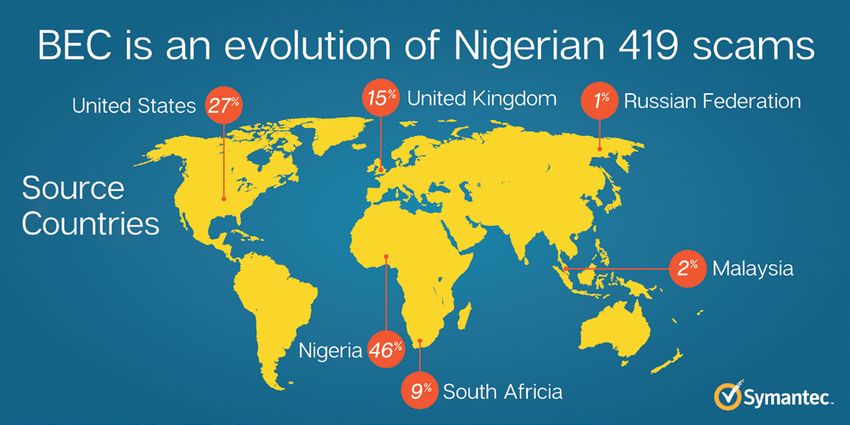
CYBER CRIME & CYBER SECURITY
6
    TRENDS IN AFRICA

    CYBER SECURITY
    TRENDS IN
    AFRICA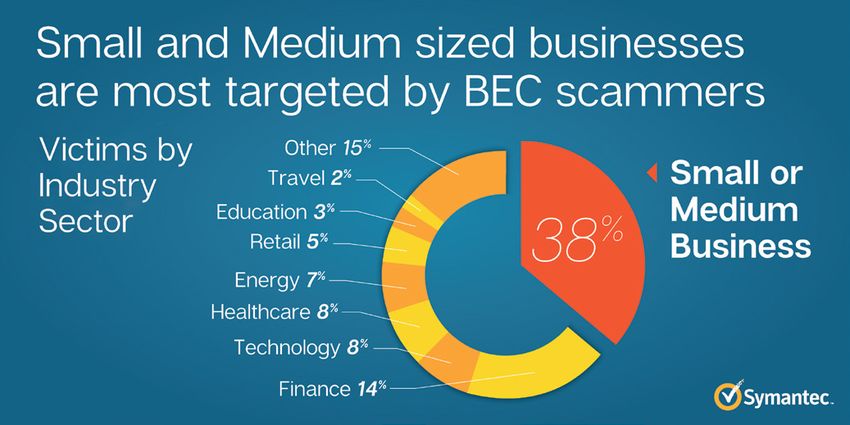
CYBER CRIME & CYBER SECURITY
                                                                                                                                                             7
                                                                                                                               TRENDS IN AFRICA

THE MOST IMPORTANT TRENDS                                                             Symantec discovered more than 430 million new unique pieces
                                                                                      of malware globally in 2015, up 36 percent from the year before.
Africa is a continent on the rise. It is growing quickly in terms                     Perhaps what is most remarkable is that these numbers no longer
of population, the economy, and global influence. Today, Africa                       surprise us. As real life and online become indistinguishable
is home to 1.21 billion people (up from just 800 million in 2000),                    from each other, cyber crime has become a part of our daily lives.
with a median age of just 19.5 years, the youngest population                         Attacks against businesses and nations hit the headlines with
in the world.1 With this prominence of youth comes a diverse                          such regularity that we’ve become numb to the sheer volume and
population that is looking for productive employment, social                          acceleration of cyber threats.
engagement, free expression, and increased global connectivity.
While the downturn in world commodity prices has hit African
economies hard, nearly every African nation is poised to grow                         8.8 million South Africans were
over the coming years. Some will continue on a trajectory putting
them among the fastest growing economies in the world. Tech-                          victims of online crime in the past
nology adoption continues to rise as well, with mobile device
ownership growing exponentially, social media use increasing,
                                                                                      year. Globally, there were 602 million
and the Internet of Things (IoT) quickly becoming a reality. Even                     cyber crime victims over the last 12
the most conservative metrics show that Africa is poised to make
great gains and help fuel global growth into the future. Along                        months.
with this rapid economic growth, comes a burgeoning e-com-                            Norton Cyber Security Insights Report 2016
merce industry that is poised to expand to an estimated $75
billion USD by the year 2025.2
                                                                                      Due to the borderless nature of cyber crime, many of the cyber
With this growing prosperity and digitization however comes
                                                                                      security trends we see globally also are affecting Africa, including
new risks and vulnerabilities that could undermine progress.
                                                                                      the explosion of ransomware, social media scams, and the prolif-
Chief among these is the global rise of cyber crime. As the
                                                                                      eration of new malware and website vulnerabilities. However,
African Continent’s economy moves online, citizens, their
                                                                                      because of how the IT infrastructure evolved in Africa, several of
computer systems, and the Continent’s information technology
                                                                                      these cyber crime trends will become especially acute and pose a
(IT) infrastructure become enticing targets for an increasingly
                                                                                      significant danger.
professional cadre of cyber criminals. The growth of cyber crime
is by no means just an African problem. In fact, in 2013, the
total global direct cost of cyber crime reached an estimated $113
                                                                                      Smartphones and The Internet of Things
billion USD. In South Africa alone, 67% of adults reported expe-                      The world bought more than 1.4 billion smartphones in 2015, up
riencing cyber crime in the last year, which is estimated to have                     10 percent from the 1.3 billion units sold in the previous year,
cost the South African economy $242 million USD. On average,                          according to IDC’s Worldwide Quarterly Mobile Phone Tracker
cyber crime cost each cyber crime victim in South Africa US                           (January 27, 2016). Five out of six new phones were running
$274 per year.3                                                                       Android and one in seven running Apple’s iOS operating system.4
                                                                                      One mobile manufacturer, Ericsson, predicts there could be as
In order for Africa to realize its full potential, policymakers will
                                                                                      many as 6.4 billion smartphone subscriptions globally by the
need to implement effective policies and awareness initiatives to
                                                                                      end of 2020 – almost one per person.5 Globally, the number of
stem the rising tide of cyber threats. Unfortunately, these same
                                                                                      new vulnerabilities identified in mobile software grew a stagger-
policymakers, technicians, and other experts have long noted the
                                                                                      ing 214% in 2014.6 Globally, smartphones are an increasingly
lack of detailed and reliable threat information regarding cyber
                                                                                      attractive target for cyber criminals who are investing in more
crime threats in the region. Such information is invaluable in
                                                                                      sophisticated attacks that are effective at stealing personal
assessing and managing cyber risks by providing governments
                                                                                      data or extorting money from victims. In South Africa, 47% of
a more complete and nuanced understanding of how criminals
                                                                                      spartphone users have experienced mobile cyber crime in 2013.7
and other actors are targeting and exploiting cyber-related
                                                                                      Mobile malware, is an especially concerning problem in Africa
vulnerabilities.
                                                                                      today and will continue to be a major threat into the future.

                                                                                      4   http://www.idc.com/prodserv/smartphone-os-market-share.jsp
1   http://www.worldometers.info/world-population/africa-population/                  5   https://www.ericsson.com/mobility-report
2   http://www.mckinsey.com/industries/high-tech/our-insights/lions-go-digital-the-   6   Symantec Internet Security Threat Report, Volume 21
    internets-transformative-potential-in-africa                                      7   https://www.symantec.com/about/news/resources/press_kits/detail.
3   https://us.norton.com/cyber-security-insights-2016                                    jsp?pkid=norton-report-2013
CYBER CRIME & CYBER SECURITY
           8
                       TRENDS IN AFRICA

Over the past decade, mobile phone networks have transformed                              Mobile Vulnerabilities by Operating System, Global
communications in Africa. The ubiquity of mobile phones has                               TT    Vulnerabilities on the iOS platform have accounted for the greatest number
allowed African communications networks to leapfrog the                                         of mobile vulnerabilities in recent years, with research often fueled by the
entire landline generation of development and go directly to the                                interest to jail-break devices or gain unauthorized access to install malware.
digital age.8 However, the steady rise of mobile malware that
mainly targets Android systems is concerning given that 89% of                                                                                  2013        2014         2015
                                                                                               100%
the smartphone market share in Africa runs on that platform.9                                   90
                                                                                                      82 84 84
For example, according to Symantec data, more than one out of                                   80
every seven mobile devices in Nigeria is currently infected with                                 70
mobile malware.                                                                                 60

                                                                                                50
Cumulative Global Android Mobile Malware Families                                               40
TT    The number of Android malware families added in 2015 grew by 6 percent,                   30
               compared with the 20 percent growth in 2014.                                                                        16
                                                                                                20                      13    11
                                                                                                 10
                                                                                                                                            1    4                  1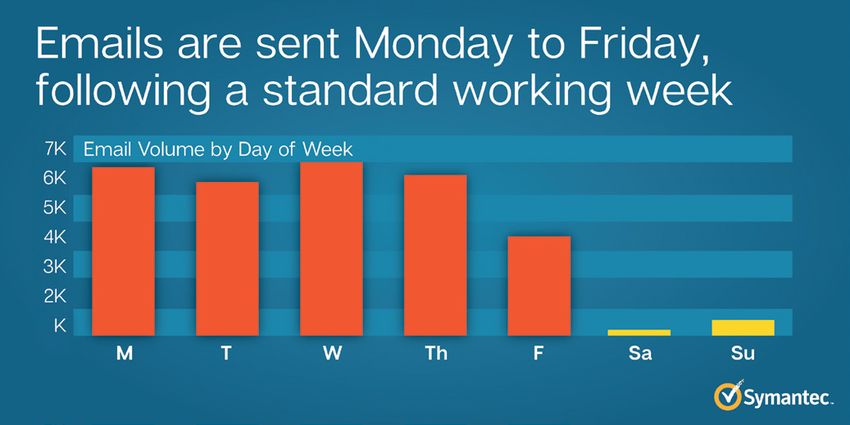
CYBER CRIME & CYBER SECURITY
                                                                                                                                    9
                                                                                                                 TRENDS IN AFRICA

Infographic: Peek into the Future: The Risk of Things

Infographic: Peek into the Future: The Risk of Things

 Peek into the Future:
 The Risk of Things 20.8 billion                                                                                   1

  Internet-connected things
                                                                                             (predicted)
 20            Numbers in billions

  19                  The insecurity of things
  18
                    Medical devices. Researchers have found potentially deadly vulnerabilities in
   17               dozens of devices such as insulin pumps and implantable defibrillators.

  16                Smart TVs. Hundreds of millions of Internet-connected TVs are potentially
                    vulnerable to click fraud, botnets, data theft and even ransomware,
  15                according to Symantec research.

  14                Cars. Fiat Chrysler recalled 1.4 million vehicles after researchers
                    demonstrated a proof-of-concept attack where they managed to
  13                take control of the vehicle remotely. In the UK, thieves hacked
                    keyless entry systems to steal cars.
  12
   11                                              Today in the USA, there are

  10                                             25 connected
                                                devices per
   9                                           100 inhabitants1

   8
   7                                           6.4 billion
   6
                                 4.9 billion
   5
                 3.9 billion
   4
   3
   2
    1

1 Source: gartner.com/newsroom/id/3165317   2014      2015        2016                                             2020
CYBER CRIME & CYBER SECURITY
     10
            TRENDS IN AFRICA

Cyber Crime: Ransomware Increased 35                                             payment cards for card payments, the potential profit criminals
                                                                                 can gain by exploiting stolen credit card details has reduced.
Percent in 2015
                                                                                 Moreover, credit card fraud involves several people to conduct,
Cyber criminals are using encryption as a weapon to                              and consumer legislation ensures the victim’s financial loss is
hold companies’, governments and individuals’ critical                           minimized. In contrast, an attacker can obtain a ransomware
data hostage                                                                     tool-kit from an underground source, and target their intended
The underground economy is booming and cyber crime is                            victims, who may have few alternatives but to pay-up. There are
growing fast across the globe and Africa is no exception. Africa                 no middlemen for the criminal to pay and nothing to mitigate
could be viewed as a permissive environment for cyber criminals                  the losses to the victim, thus maximizing the profits.
due to a lack of security capabilities, absence of relevant legisla-
tion and general lack of awareness of cyber security measures.                   Growing Dominance of Crypto-Ransomware, Global
                                                                                 TT    Percentage of new families of misleading apps, fake security software
Cyber criminals are more professional and are much bolder, not
                                                                                     (Fake AV), locker ransomware and crypto ransomware identified between
only in the targets they choose to go after, but also the sums of                    2005 and 2015.
money they seek. These criminal enterprises are for all intents
and purposes, look like fully-functioning businesses, covering
a multitude of areas, each with their own speciality. Just as                                                 Misleading Apps          FakeAV

legitimate businesses have partners, associates, resellers, and                                               Lockers                  Crypto-Ransomware
vendors, so do those enterprises operating in the shadows.                           100%
While blackmarket prices for email addresses have dropped in
                                                                                      90
recent years, credit card prices have remained relatively low but
stable.13 However, if they come with ‘luxury’ data – verification                     80

that the seller’s accounts are still active or that a credit card                      70

has not yet been blocked – they now fetch a premium price. At                         60
the other end of the market, a drive-by download toolkit, which
                                                                                      50
includes updates and 24x7 support, can be rented for between
US$100 and US$700 per week, while distributed denial-of-ser-                          40

vice (DDoS) attacks can be ordered from US$10 to US$1,000 per                         30
day. At the top of the market, a zero-day vulnerability can sell for                  20
hundreds of thousands of dollars. And while there have been a
                                                                                       10
number of high-profile cyber crime arrests made by law enforce-
ment over the last year, cyber criminals continue to evolve and
diversify their arsenal.                                                                    ’05   ’06   ’07    ’08   ’09   ’10   ’11   ’12   ’13   ’14   ’15

Ransomware has become increasingly dominant in recent
times and continues to evolve. Last year, we saw Crypto-ran-
somware (encrypting files) push the less damaging locker-style
ransomware (locking the computer screen) out of the picture.
Crypto-style ransomware grew 35 percent last year. An                            Overall, 67% of South Africans have
extremely profitable type of attack, ransomware will continue to
ensnare PC users and expand to any network-connected device                      experienced some form of online
that can be held hostage for a profit. In 2015, ransomware found
new targets and moved beyond its focus on PCs to smart phones,
                                                                                 crime — compared to 48% globally.
Mac, and Linux systems. Symantec even demonstrated proof-of-                     Norton Cyber Security Insights Report 2016
concept attacks against smart watches and televisions in 2015.14
Never before have people across the world been subjected to
extortion on such a massive scale as they are today. But why are
criminals favoring ransomware, especially crypto-ransomware?
With the glut of stolen information on the black market and the
introduction of the more secure EMV standard (chip-and-pin)

13   https://www.symantec.com/connect/blogs/underground-black-market-thriving-
     trade-stolen-data-malware-and-attack-services
14   https://www.symantec.com/connect/blogs/how-my-tv-got-infected-
     ransomware-and-what-you-can-learn-it
CYBER CRIME & CYBER SECURITY
11
TRENDS IN AFRICA
Crypto-Ransomware Over Time, Global Crypto-Ransomware as Percentage
TT While more traditional locker-style ransomware is showing a rapid decline, of All Ransomware, Global
crypto-ransomware continues to grow. Crypto-ransomware employs very TT Although the chart indicates a steady decline in traditional ransomware
strong, ostensibly unbreakable key-based cryptography to hold a victim’s
in 2015, crypto-ransomware now accounts for the majority of all
personal files to ransom by encrypting them with a key that only the
ransomware.
criminals have access to.
50,000
Ransomware Crypto-Ransomware
600 100%
Crypto-Ransomware
40,000
as % of All Ransomware 90
500
80
30,000 70
400
THOUSAND
60
20,000
300 50
40
10,000 200
30
20
100
JAN FEB MAR APR MAY JUN JUL AUG SEP OCT NOV DEC 10
2015
JAN FEB MAR APR MAY JUN JUL AUG SEP OCT NOV DEC
2015
Global Ransomware Discoveries
LockDroid KeRanger
CryptoApp XRTN PayCrypt
Encryptor RaaS VaultCrypt Job Cryptor
Global Ransomware Troldesh Radamant Hi Buddy
Discoveries Zerolocker
Coinvault Tox
Cryptvault
Unix.Ransomcrypt Vipasana
Hydracrypt
CryptInfinite
Cryptowall TorrentLocker BandarChor LowLevel404 Umbrecrypt
Gpcoder Reveton Urausy Nymaim Onion TeslaCrypt Locky
2005 2012 2013 2014 2015 2016
Q1 Q2 Q3 Q4 Q1 Q2 Q3 Q4 Q1 Q2 Q3 Q4 Q1
Kovter Linkup Cryptolocker2015 Dumb Ransom32 73v3n
Browlock Slocker Simplocker CryptoJocker
CTB-Locker/Citron VirLock Pacman Mabouia OSX POC Nanolocker
Synolocker Pclock Power Worm LeChiffre
Threat Finder DMA-Locker Magic
Hidden Tear Gomasom Ginx
Source: Symantec ORX-Locker Chimera-LockerCYBER CRIME & CYBER SECURITY
12
TRENDS IN AFRICA
Social Media, Scams, & Email Threats Global Social Media
Cyber crime on the continent of Africa has moved far beyond 100%
the notorious 419 Nigerian email scams, coined after the code of 2013 2014 2015
90
legislation aimed to suppress such scams.15,16 The sophistication 81
of some attacks and tactics used by cyber criminals demon- 80 76
70
strates how vulnerable individuals are online and has chipped 70
away at public confidence in online security and commerce. 60
Data breaches, government surveillance, and good old-fash- 50
ioned scams came together to further encroach on personal 40
privacy, whether it is personal photos, login credentials or
30
medical histories. 23
20 17
In 2015, Symantec saw plenty of traditional scams and 7
10 5 5
malware attacks intended to gather personal information. For 2 2 1 2 0 0CYBER CRIME & CYBER SECURITY
13
TRENDS IN AFRICA
Infographic: How The Gmail Scam Works
How the Gmail Scam Works
555-283-4972
...@gmail.com
Account Help
1 John Doe
...@gmail.com
Get a verification code on my phone: ****555
An attacker obtains a
Receive via:
a text message (SMS)
victim’s email address an automated phone call
and phone number—both
Continue
2
of which are usually
publicly available. The attacker poses as
the victim and
requests a password
reset from Google.
4
3
The attacker then texts
the victim with a Google sends the code to
message similar to: 483829
the victim.
“Google has detected unusual activity
on your account. Please respond with
the code sent to your mobile device to 5
stop unauthorized activity.”
The victim therefore expects the
password-reset verification code
6 483829 that Google sends out and
passes it on to the attacker.
The attacker can then
reset the password and
once they have what
they want or have set up
new password
forwarding, can inform
the victim—again posing
as Google—of their new
temporary password,
leaving the victim none
the wiser.
Source: SymantecCYBER CRIME & CYBER SECURITY
14
TRENDS IN AFRICA
Safeguarding Against Social Engineering Conclusions
Cyber crime costs the global economy up to US$575 billion With a young population that is rapidly adopting new technol-
annually according to Bank of America and Merrill Lynch, ogies, Africa is on the verge of an internet boom. To keep pace,
whose report goes on to say that in a potential worst-case 2020 Africa needs to urgently address efforts to combat cyber crime
‘Cybergeddon’ scenario, cyber crime could extract up to a fifth of and improve its cyber security posture. The current cyber threat
the value created by the Internet. It is everyone’s responsibility landscape in Africa shows that users are being impacted both
to do all they can to prevent that from happening. For consumers, by threats that are trending globally as well as some that more
it’s time kick bad habits. Many people know the basics of good specific to the region. It will take a concerted effort from inter-
cyber security, yet people continue to share their passwords. national governments, industry, and civil society to fight cyber
In fact more than a third of people who share passwords in the crime and improve cyber security so that Africa can reach its
United States have shared the password to their online banking full potential and stay on track to be a major driver of the global
account. People need to start taking more responsibility for economy.
shoring up their online security. For example, in South Africa
alone, 20% of social network users share their passwords with
others, while 21% connect with people they do not know.19
Users should be more wary of who they follow on social media.
Bots can appear more and more like a real person, and are
sometimes difficult to spot. When choosing who to trust on
social media, consider the following advice:
TT Be skeptical of new followers. If a random person follows
you, do not automatically follow them back. Look at their
tweets. Are they retweeting content that looks like spam? If
they are, they are most likely a bot.
TT Numbers can lie. Even if these random followers have tens
of thousands of followers, those numbers can easily be faked.
Do not base your decision to follow them back based on how
many people follow them.
TT Look for the “verified” badge. Twitter users should always
check to see if a well-known brand or famous celebrity has
been verified by Twitter before following. The blue verified
badge denotes that Twitter has authenticated the true owner
of an account.
19 https://www.symantec.com/about/news/resources/press_kits/detail.
jsp?pkid=norton-report-2013CYBER CRIME & CYBER SECURITY
15
TRENDS IN AFRICA
CASE STUDY: BUSINESS EMAIL COMPROMISE (BEC) SCAMS
One particularly successful scam is
the Business E-mail Compromise
(BEC). More than 400 companies
worldwide are targeted with BEC
scams every day. BEC scams are
low-tech financial fraud in which
spoofed emails from CEOs are
sent to financial staff to request At least $3 billion have been lost to BEC scams in the past
three years, with over 22,000 victims globally.1 The BEC scam
large money transfers. While they evolved from the infamous is Nigerian 419 scams, where indi-
viduals were sent emails promising victims riches in return
require little expertise and skill, the for a small donation to help a fictional Nigerian prince. These
financial rewards for the fraudsters scammers have now moved onto targeting businesses and are
using less elaborate ruses to trick victims into transferring
can be high. Almost 40 percent money. Symantec examined a large number of email addresses
of identified victims are small to used by the scammers and found that 46 percent have Nigerian
IP addresses. The rest are operating from the United States,
medium sized businesses. The next the United Kingdom, South Africa, Malaysia, and Russia.
largest category of victim is the
financial sector, at 14 percent.
1 https://www.ic3.gov/media/2016/160614.aspx#ref1CYBER CRIME & CYBER SECURITY
16
TRENDS IN AFRICA
It should come as no surprise that the majority of BEC emails Global Zero-Day Vulnerabilities, Annual Total
are sent on weekdays. The scammers know that this is when TT The highest number of zero-day vulnerabilities was disclosed in 2015,
most businesses would expect emails. And more important- evidence of the maturing market for research in this area.
ly, most financial transactions can only be cleared during
weekdays. BEC scammers are also most active during a typical 70
working day. They will generally begin sending emails from
0700 GMT, take break from 1100 until 1400 GMT and then 60
54
resume sending until 1800 GMT.
50
40
30
23 24
20
13 15 14 14
12
9 8
10
2006 2007 2008 2009 2010 2011 2012 2013 2014 2015
Given the value of these vulnerabilities, it’s not surprising
that a market has evolved to meet demand. In fact, at the rate
BEC scammers keep things simple with most emails contain-
that zero-day vulnerabilities are being discovered, they may
ing a single-word subject line. Subjects always contain one
become a commodity product. Targeted attack groups exploit
or more of the following words: request, payment, urgent,
the vulnerabilities until they are publicly exposed, then toss
transfer, enquiry. Simple, innocuous subject lines are less
them aside for newly discovered vulnerabilities. When The
likely to arouse suspicion and are also harder to filter.2
Hacking Team was exposed in 2015 as having at least six zero
days in its portfolio, it confirmed our characterization of the
Professionalization of Cyber Criminals,
hunt for zero days as being professionalized.3
Zero Days Explode
Vulnerabilities can appear in almost any type of software, but
In 2015, the number of zero-day vulnerabilities discovered
the most attractive to targeted attackers is software that is
more than doubled to 54, a 125 percent increase from the year
widely used. Again and again, the majority of these vulnerabil-
before. In 2013, the number of zero-day vulnerabilities (23)
ities are discovered in software such as Internet Explorer and
doubled from the year before. In 2014, the number held rela-
Adobe Flash, which are used on a daily basis by a vast number
tively steady at 24, leading us to conclude that we had reached
of consumers and professionals in Africa and across the globe.
a plateau. That
Four of the five most exploited zero-day vulnerabilities in 2015
theory was short-lived. The 2015 explosion in zero-day discov- were Adobe Flash. Once discovered, the zero days are quickly
eries reaffirms the critical role they play in lucrative targeted added to cyber criminal toolkits and exploited. At this point,
attacks. millions will be attacked and hundreds of thousands infected
if a patch is not available, if people have not moved quickly
enough to apply the patch, or if people are left unaware of an
update.
2 https://www.symantec.com/connect/blogs/billion-dollar-scams-numbers- 3 https://www.symantec.com/connect/blogs/leaked-hacking-team-windows-
behind-bec-fraud vulnerability-could-facilitate-remote-attacksCYBER CRIME & CYBER SECURITY
17
TRENDS IN AFRICA
Infographic:
Infographic: A New Zero-Day A New Zero-Day
Vulnerability Vulnerability
Discovered Every Week Discovered
in 2015 Every Week in 2015
Infographic:
Infographic: A New Zero-Day A New
Vulnerability Zero-DayEvery
Discovered Vulnerability
Week inDiscovered
2015 Every Week in 2015
A New Zero-Day Advanced attack groups continue to profit
from previously undiscovered flaws in
Vulnerability Discovered browsers and website plugins.
Every Week in 2015
1 In 2015, 54 zero-day vulnerabilities were
discovered.
7 Days Total Time of Exposure 3
eline 1 Day Average Time to Patch
Tim tch
ay pa in 2015
ro-D overy to Public and vendor
become aware
Zeom dis
c
Attack is
fr launched Vendor builds patch
Exploit created
to leverage Patch is
vulnerability Window distributed
of Op
Hacker discovers po
vulnerability rtu
ni
ty
0
IT admin
installs patch
DAY
layer
lash P
obe F
2015 ig h for Ad
d Is N
54 19
2013 2014 En
Total Zero-Day
Vulnerabilities 23 24 (+4%)
%
attacked
10 zero-days found in 2015
4 of the top 5
Flash exploited zero-days
(+125%) Player
2015 Zero-Day Mozilla Firefox and Google Chrome
Not-So-Fun Facts Are Phasing
Out Support
11
new vulnerabilities
used to exploit
open source
software
7
6
ICS vulnerabilities
targeted a variety 2
of manufacturers
1
on average, based on 54 vulnerabilities and devices
2
symantec.com/connect/blogs/third-adobe-flash
-zero-day-exploit-cve-2015-5123-leaked-hacking-team-cache
zero-day
3
Total time of exposure for the top five zero-day vulnerabilities vulnerabilities
discovered in the
Hacking Team
breach
Source: SymantecCYBER CRIME & CYBER SECURITY
18
TRENDS IN AFRICA
Compounding the problem is the fact that many Africans are Scanned Websites with Vulnerabilities
still using outdated, or in many cases unlicensed, software. In TT A critical vulnerability is one which, if exploited, may allow malicious code
fact, one of the drivers behind the increasing rates of cyber to be run without user interaction, potentially resulting in a data breach
crime in Africa could be the widespread use of outdated or and further compromise of visitors to the affected websites.
unlicensed software programs. According to the Business
Software Alliance’s annual Global Software Survey reports 2013 2014 2015
that approximately 57% of software used in Africa and the
77+23 76+24 78+22
Middle East is unlicensed.4 Nearly one quarter of users in
Africa are currently using the operating system, Microsoft
Windows XP which was first released in 2001, and for which
software patches were discontinued in 2014.5
77% 76% 78%
Major Security Vulnerabilities in Three -1% pts +2% pts
Quarters of Websites Globally
Web administrators still struggle to stay current on
patches
Percentage of Vulnerabilities Which Were Critical
There were over one million web attacks globally against
people each and every day in 2015. Many people believe that
keeping to well-known, legitimate websites will keep them safe 2013 2014 2015
from online crime. This is not true. Cyber criminals continue
16+84 20+80 15+85
to take advantage of vulnerabilities in legitimate websites to
infect users, because website administrators fail to secure
their websites. More than 75 percent of all legitimate websites
have unpatched vulnerabilities. Fifteen percent of legitimate
websites have vulnerabilities deemed ‘critical,’ which means 16% 20% 15%
it takes trivial effort for cyber criminals to gain access and +4% pts -5% pts
manipulate these sites for their own purposes. It’s time for
website administrators to step up and address the risks more
aggressively.
4 http://globalstudy.bsa.org/2016/index.html
5 http://www.uneca.org/sites/default/files/PublicationFiles/ntis_policy_brief_1.pdfCYBER CRIME & CYBER SECURITY
19
TRENDS IN AFRICA
GLOBAL BIG NUMBERS
Global Big Numbers
BIG NUMBERS Total Identities Exposed
2013
552M
2014
348M
2015
429M
(GLOBAL) – -37% +23%
BREACHES Total Breaches Average Identities
2013 2014 2015
Exposed per Breach
253 312 318 2013 2014 2015
– +23% +2% 2.2M 1.1M 1.3M
– -49% +21%
Breaches With
More Than 10 Million Median Identities
Identities Exposed Exposed per Breach
2013 2014 2015 2013 2014 2015
8 4 9 6,777 7,000 4,885
– -50% +125% – +3% -30%
EMAIL THREATS, MALWARE AND BOTS
Overall Email Spam Rate
2013 2014 2015
66%
–
60%
-6%pts
53%
-7%pts
66 60 53 New Malware Variants
(Added in Each Year)
2014 2015
Email Phishing Rate (Not Spear Phishing)
317M 431M
2013 2014 2015 – +36%
1 in 392 1 in 965 1 in 1,846
Email Malware Rate (Overall) Crypto-
Ransomware Total
2013 2014 2015
1 in 196 1 in 244 1 in 220 2014 2015
269K 362K
– +35%
Number of Bots
2013 2014 2015 Average Average
Per Day Per Day
2.3M 1.9M 1.1M
– -18% -42%
737 992CYBER CRIME & CYBER SECURITY
20
TRENDS IN AFRICA
MOBILE WEB
New Mobile Web Attacks Blocked per Day
Vulnerabilities
2013 2014 2015
2013 2014 2015
569K 493K 1.1M
127 168 528 – -13% +117%
– +32% +214%
Scanned Websites with Vulnerabilities ...
New Android Mobile
Malware Families 2013 2014 2015
2013
57
2014
46
2015
18
77%
–
76%
-1% pts
78%
+2% pts
77 76 78
– -19% -61%
... Percentage of Which Were Critical
New Android Mobile 2013 2014 2015
Malware Variants 16%
–
20%
+4% pts
15%
-5% pts
16 20 15
2013 2014 2015
3,262 2,227 3,944
– -32% +77%
Websites Found with Malware
2013 2014 2015
VULNERABILITIES 1 in 566 1 in 1,126 1 in 3,172
New Vulnerabilities
2013 2014 2015
SPEAR-PHISHING
6,787 6,549 5,585 (EMAIL TARGETED ATTACKS)
– -4% -15%
Spear-Phishing
Zero-day Vulnerabilities Emails per Day
2013 2014 2015 2013 2014 2015
23 24 54 83 73 46
– +4% +125% – -12% -37%CYBER CRIME & CYBER SECURITY
21
TRENDS IN AFRICA
MALICIOUS
ACTIVITIES
REPORTCYBER CRIME & CYBER SECURITY
22
TRENDS IN AFRICA
HIGHLIGHTS
METRIC DESCRIPTION / PERCENTAGE
ATTACK
Global percentage of attacks originating from Africa 0.6%
Top attack originating from Africa Anonymous open proxy activity detected (38%)
Top attack targeting Africa Microsoft Windows .lnk file code execution (13%)
MALWARE
Global percentage of malware originating from Africa 1.5%
Top malware originating from Africa W32.SillyFDC.BDP Attack (47%)
Top malware targeting Africa Downloader.Dromedan Activity (15%)
SPAM
Global percentage of spam originating from Africa 3.5%
PHISHING HOSTS
Global percentage of phishing hosts originating from Africa 0.8%
BOT
Global percentage of bots originating from Africa 11.4%
Top named botnet family for bots originating from Africa Virut (40%)
C&C SERVERS
Global percentage of C&C servers originating from Africa 2.9%CYBER CRIME & CYBER SECURITY
23
TRENDS IN AFRICA
OVERALL MALICIOUS ACTIVITY—AFRICA
The Overall Malicious Activity metric looks at malicious activity originating from Africa across several
different categories during the reporting period. To determine this, Symantec has compiled geograph-
ical threat data on malware, attacks, spam, phishing hosts, bots, and C&C servers (see Figure 1). See
Appendix A: Methodology for descriptions of these activities.
Figure 1: Malicious Activity Types
Spam Phishing
Hosts
Attacks Bots
Malicious C&C
Malware
Activities Servers
Symantec has observed that malicious activities are often related and detection of any one of these
malicious activities may indicate the presence of others. For example, C&C servers communicate with
bots to relay commands, bots are often used to distribute spam and phishing campaigns, spam can
often have malicious attachments that contain malware, and once infected with malware, a website
can be leveraged to perform attacks on visitors. Malicious activity usually affects computers that are
connected to high-speed broadband Internet because these connections are attractive targets for
attackers. Broadband connections provide larger bandwidth capacities than other connection types,
faster speeds, the potential of constantly connected systems, and typically more stable connections.
Spam incidents originating from Africa accounted for the greatest number of incidents of the six
malicious behaviors during the reporting period (see Figure 2 and Table 1). During the reporting period,
there were 1.1 billion spam events observed by Symantec that originated from Africa, representing
3.5% of the global total. It is not surprising that spam is the top malicious activity since Symantec has
observed that monthly global spam rates in September 2016 were at 53%1. This means that half of
all email messages sent are spam emails. Spam is a financially profitable business that requires very
little infrastructure investment, especially if the actors involved use spam bots to send out the emails.
A few hundred spam bots can send out tens of thousands of spam messages per day. Even if the
click-through rate on these spam campaigns is very small, scammers can still make a large profit on
millions of spam emails.
During the reporting period, bot activity ranked second with 14 million distinct IP addresses accounting
for 11.4% of the global total, while malware activity ranked third with 8.5 million incidents representing
1.5% of the global total. Globally, Africa was not a significant source of malicious activity, accounting for
less than 3% of the worldwide activity total.
1 https://www.symantec.com/security_response/publications/monthlythreatreport.jsp#SpamCYBER CRIME & CYBER SECURITY
24
TRENDS IN AFRICA
Figure 2. Malicious Activity Originating from Africa—2016
12% 11.4%
10%
Global Percentage
8%
6%
4% 3.5%
2.9%
2% 1.5%
0.6% 0.8%
0.0%
Attacks Malware Spam Phishing Hosts Bots C&C Servers
Table 1. Overall Malicious Activity Originating from Africa—2016
MALICIOUS INCIDENT COUNT
GLOBAL PERCENTAGE
ACTIVITY GLOBAL AFRICA
Attacks 201,283,309 1,249,575 0.6%
Malware 559,789,928 8,501,677 1.5%
Spam 32,298,641,930 1,122,760,857 3.5%
MALICIOUS INCIDENT COUNT
GLOBAL PERCENTAGE
ACTIVITY GLOBAL AFRICA
Phishing Hosts 785,770 6,210 0.8%
Bots 122,605,684 14,006,143 11.4%
C&C Servers 69,872 2,017 2.9%CYBER CRIME & CYBER SECURITY
25
TRENDS IN AFRICA
MALICIOUS ACTIVITY DATA TABLES
The data in this section lists the top 10 source African countries for each malicious behavior and their
percentage within the continent. For attacks, malware, and spam, the incident counts, also known
as event counts, are shown. For phishing hosts, bots, and C&C servers, the numbers of distinct IP
addresses are given.
1. Attacks
Table 2. Top 10 Source African Countries for Attacks—2016
PERCENTAGE
COUNTRY RANK INCIDENT COUNT
WITHIN AFRICA
South Africa 1 25% 314,880
Egypt 2 12% 149,685
Kenya 3 9% 106,265
Nigeria 4 7% 89,100
Mauritius 5 6% 73,134
Algeria 6 5% 60,381
Seychelles 7 4% 45,661
Botswana 8 3% 37,880
Morocco 9 3% 34,464
Tunisia 10 3% 32,187
Figure 3. Top 10 Source African Countries for Attacks—2016
30%
25%
25%
Attack Incidents
20%
15%
12%
10% 9%
7%
6%
5%
4%
5% 3% 3% 3%
0%
t
ric
a yp ya er
ia ius ria ell
es na co isi
a
Af Eg Ke
n rit ge wa ro
c n
Nig u Al yc
h s
Mo Tu
ut
h Ma Se Bo t
SoCYBER CRIME & CYBER SECURITY
26
TRENDS IN AFRICA
2. Malware
Table 3. Top 10 Source African Countries for Malware—2016
PERCENTAGE
COUNTRY RANK INCIDENT COUNT
WITHIN AFRICA
South Africa 1 20% 1,716,308
Tunisia 2 14% 1,166,774
Kenya 3 8% 668,194
Nigeria 4 6% 469,018
Cote D’Ivoire 5 5% 407,112
Ghana 6 5% 405,805
Egypt 7 5% 400,679
Algeria 8 4% 304,114
Ethiopia 9 3% 245,172
Cameroon 10 3% 224,546
Figure 4. Top 10 Source African Countries for Malware—2016
25%
20%
20%
Malware Incidents
15% 14%
10%
8%
6%
5% 5% 5%
5% 4%
3% 3%
0%
a a ya ria ire a t ria ia n
fri
c isi n e vo an yp ge iop oo
A Tu
n Ke Nig ' I Gh Eg Al er
ut
h te
D Eth m
So Co CaCYBER CRIME & CYBER SECURITY
27
TRENDS IN AFRICA
3. Spam
Table 4. Top 10 Source African Countries for Spam—2016
PERCENTAGE
COUNTRY RANK INCIDENT COUNT
WITHIN AFRICA
South Africa 1 24% 271,700,021
Tunisia 2 14% 160,301,789
Egypt 3 7% 78,429,009
Kenya 4 7% 78,410,109
Nigeria 5 4% 50,491,804
Algeria 6 4% 50,253,534
Cote D’Ivoire 7 4% 47,632,285
Ghana 8 4% 43,938,441
Morocco 9 3% 32,197,294
Cameroon 10 2% 25,478,566
Figure 5. Top 10 Source African Countries for Spam—2016
30%
25% 24%
Spam Incidents
20%
15% 14%
10%
7% 7%
4% 4% 4% 4%
5% 3%
2%
0%
a a t ya ria ria ire a co n
ric isi yp n ge ge vo an oc oo
Af Tu
n Eg Ke Ni Al D ' I Gh or m
er
h
ut te M Ca
So CoCYBER CRIME & CYBER SECURITY
28
TRENDS IN AFRICA
4. Phishing hosts
Table 5. Top 10 Source African Countries for Phishing Hosts—2016
PERCENTAGE
COUNTRY RANK INCIDENT COUNT
WITHIN AFRICA
South Africa 1 74% 4,621
Morocco 2 5% 319
Egypt 3 3% 184
Kenya 4 3% 160
Nigeria 5 2% 136
Tunisia 6 2% 112
Cameroon 7 1% 57
Libya 8 1% 53
Zimbabwe 9 1% 51
Algeria 9 1% 48
Figure 6. Top 10 Source African Countries for Phishing Hosts—2016
80%
74%
70%
Distinct Phishing Hosts
60%
50%
40%
30%
20%
10% 5%
3% 3% 2% 2% 1% 1% 1% 1%
0%
a co t ya ia a n ya e ria
ric oc yp n er isi oo bw
Af or Eg Ke Nig Tu
n er Lib ba Al
ge
h m
ut M Ca Zim
SoCYBER CRIME & CYBER SECURITY
29
TRENDS IN AFRICA
5. Bots
Table 6. Top 10 Source African Countries for Bots—2016
PERCENTAGE
COUNTRY RANK INCIDENT COUNT
WITHIN AFRICA
Egypt 1 48% 6,778,893
Algeria 2 15% 2,117,402
Tunisia 3 6% 798,121
South Africa 4 5% 768,800
Morocco 5 4% 601,180
Nigeria 6 3% 488,416
Kenya 7 3% 435,032
Ghana 8 2% 282,776
Sudan 9 2% 258,914
Cote D’Ivoire 10 2% 247,672
Figure 7. Top 10 Source African Countries for Bots—2016
60%
50%
48%
Distinct Bots
40%
30%
20%
15%
10% 6% 5% 4% 3% 3% 2% 2% 2%
0%
t ria a ca co ria ya a n ire
yp ge isi fri ro
c e n an da vo
Eg Al Tu
n A Nig Ke Gh Su ' I
ut
h Mo te
D
So CoCYBER CRIME & CYBER SECURITY
30
TRENDS IN AFRICA
6. C&C Servers
Table 7. Top 10 Source African Countries for C&C Servers—2016
PERCENTAGE
COUNTRY RANK INCIDENT COUNT
WITHIN AFRICA
Cote D’Ivoire 1 45% 910
South Africa 2 19% 391
Morocco 3 17% 345
Egypt 4 5% 99
Algeria 5 5% 98
Seychelles 6 3% 61
Tunisia 7 1% 29
Kenya 8 1% 21
Libya 9 1% 19
Mali 10 1% 15
Figure 8. Top 10 Source African Countries for C&C Servers—2016
50%
45%
45%
Distinct C&C Servers
40%
35%
30%
25%
19%
20% 17%
15%
10%
5% 5%
5% 3%
1% 1% 1% 1%
ire a co t ria s a ya ya li
fri
c
oc yp lle isi n Ma
’ I vo or Eg Al
ge ch
e
Tu
n Ke Lib
D hA y
te ut M Se
Co SoCYBER CRIME & CYBER SECURITY
31
TRENDS IN AFRICA
ATTACK ANALYSIS
Attackers use various exploits to gain unauthorized access to a computer or an organization’s
network. Motivations for these attacks can range from gaining financial profit, stealing sensitive infor-
mation, disabling a network, establishing a C&C server, or using the system as a launching point for
future attacks. Attacks can be active such as a brute-force attack that determines a user’s password,
or passive such as a web-based attack that waits for a user to visit a malicious webpage in an
attempt to infect the user’s computer with malicious code.
Top Attacks Originating from Africa
During the reporting period, there were 1,230,038 attack incidents over 363 different attack signatures
originating from Africa. This accounted for less than 1% of the global attacks and as such, Africa was
not a significant source of attacks globally. During the reporting period, the top attack originating in
Africa was the Anonymous open proxy activity detected event with 463,762 incidents, accounting for
38% of the total Africa attacks (see Table 8 and Figure 9).
The Anonymous open proxy activity detected event indicates access to an open proxy has been
detected. This may allow a user to bypass firewall rules which block access to certain internet content
which has been deemed to violate corporate policy. Open proxies are also widely used in repressed
countries which the government restricts internet content to its citizens.
Table 8. Top 10 Attacks Originating from Africa—2016
PERCENTAGE GLOBAL GLOBAL
ATTACK RANK
WITHIN AFRICA RANK PERCENTAGE
Anonymous open proxy activity detected 1 38% 13 6%
Bash CGI Environment Variable CVE-2014-
2 22% 13 6%
6271 Attack
Generic SSH Brute Force Attack 3 6% 17 2%
Fake Scan Webpage 4 5% 12 5%
Microsoft Windows LSASS Buffer Overrun
5 4% 34 1%
Attack
DNS Amplification Attack 6 2% 30 1%
OpenSSL TLS 'heartbeat' Extension
7 2% 23 1%
Information Disclosure
Generic Wordpress Multiple Security
8 2% 23 1%
Vulnerabilities
Wordpress Arbitrary File Download 9 1% 13 2%
Unix/Linux HTTP Server Security Bypass 10 1% 33 1%CYBER CRIME & CYBER SECURITY
32
TRENDS IN AFRICA
Figure 9. Top 10 Attacks Originating from Africa—2016
500 Anonymous open proxy activity
464 detected
Bash CGI Environment Variable
CVE-2014-6271 Attack
400
Generic SSH Brute Force Attack
Event Count (Thousands)
Fake Scan Webpage
300 Microsoft Windows LSASS Buffer
276 Overrun Attack
DNS Amplification Attack
OpenSSL TLS 'heartbeat' Extension
200
Information Disclosure
Generic Wordpress Multiple
Security Vulnerabilities
100 Wordpress Arbitrary File Download
70 62
45 Unix/Linux HTTP Server Security
23 Bypass
19 19 16 14
Globally, there were nearly 16 million Anonymous open proxy activity detected events during the
reporting period, which accounted for 6.0% of all global attacks (see Table 8). For the top 10 African
attacks, Symantec compared the number of attack incidents against the total global number of
incidents to determine whether Africa was a large source of those attacks globally. Symantec
observed that 3% of all Anonymous open proxy activity originated from Africa during the reporting
period (see Figure 10). Globally, Africa was not a significant source for the top 10 attacks.CYBER CRIME & CYBER SECURITY
33
TRENDS IN AFRICA
Figure 10. Percentage of Attacks Originating from Africa with Global Comparison—2016
Anonymous open proxy activity detected 3% 97%
Bash CGI Environment Variable CVE-2014-6271 Attack 1% 99%
Generic SSH Brute Force Attack 1% 99%
Fake Scan WebpageCYBER CRIME & CYBER SECURITY
34
TRENDS IN AFRICA
Figure 11. Top 10 Attacks Targeting Africa—2016
300 EMicrosoft Windows .lnk file code
execution
(LNK_MsWin_Code_Execution)
255
250
Fake Scan Webpage
Event Count (Thousands)
Generic W32.Mabezat Attack
202
200 Fake Scan Webpage Attack
186
Malicious JavaScript Redirection
150 Fake Browser Update
129
Mass Injection Website
100 90 88 Nuclear Exploit Kit Redirect
80 75 73
64 Malicious File Download Request
50 Bash CGI Environment Variable
CVE-2014-6271 Attack
0
Of note during the reporting period, Symantec observed that nearly one in three global Generic W32.
Mabezat Attacks targeted Africa (see Figure 12). This event indicates detection of activity from one of
the W32.Mabezat families of worms. W32.Mabezat2 is a worm that spreads through email, removable
drives, and network shares that are protected by weak usernames and passwords. It can also infect
executable files and encrypts data files, such as PDF, TXT, and Microsoft Office files, on the infected
system. The Mabezat worm spreads by using spam emails with malicious attachments.
2 http://www.symantec.com/security_response/writeup.jsp?docid=2007-120113-2635-99CYBER CRIME & CYBER SECURITY
35
TRENDS IN AFRICA
Figure 12. Percentage of Attacks Targeting Africa with Global Comparison—2016
Microsoft Windows .lnk file code execution
8% 92%
(LNK_MsWin_Code_Execution)
Fake Scan Webpage 1% 99%
Generic W32.Mabezat Attack 31% 69%
Fake Scan Webpage Attack 1% 99%
Malicious JavaScript Redirection 1% 99%
Fake Browser Update 2% 98%
Mass Injection Website 2% 98%
Nuclear Exploit Kit Redirect 2% 98%
Malicious File Download Request 1% 99%
Bash CGI Environment Variable CVE-2014-6271 AttackCYBER CRIME & CYBER SECURITY
36
TRENDS IN AFRICA
Table 10. Top 10 Malware Originating from Africa—2016
PERCENTAGE GLOBAL GLOBAL
MALWARE RANK
WITHIN AFRICA RANK PERCENTAGE
W32.SillyFDC.BDP Attack 1 47% 77CYBER CRIME & CYBER SECURITY
37
TRENDS IN AFRICA
During the reporting period, Africa was a large source of the W32.SillyFDC.BDP Attack, System Infected:
Dark Comet RAT Activity, and Trojan.Cridex Activity (see Figure 14). The following is a summary of the
findings:
• Eighty-five percent of the W32.SillyFDC.BDP Attack events were from Africa. As mentioned, W32.
SillyFDC.BDP is a worm that spreads through removable media and can download other files onto
the compromised computer.6
• Africa was the source of 33% of the global System Infected: Dark Comet RAT Activity attack
incidents. Dark Comet RAT is a remote access tool that has been tied to a number of global inci-
dents.7,8
• Africa was the source of 15% of the global Trojan.Cridex9 activity. Trojan.Cridex is a widespread
banking Trojan that may infect the targeted computer with a bot program.
Figure 14. Percentage of Malware Originating from Africa with Global Comparison—2016
W32.SillyFOC.BDP Attack 85% 15%
Trojan.Cridex Activity 15% 85%
System Infected: Backdoor Houdini Activity 3% 97%
W32.Qakbot Activity 7% 93%
System Infected: W32.Downadup Activity 4% 96%
System Infected : Dark Comet RAT Activity 33% 67%
Possible Conficker InfectionCYBER CRIME & CYBER SECURITY
38
TRENDS IN AFRICA
Table 11. Top 10 Malware Targeting Africa—2016
PERCENTAGE GLOBAL GLOBAL
MALWARE RANK
WITHIN AFRICA RANK PERCENTAGE
Downloader.Dromedan Activity 1 15% 5 4%
VBS.Dunihi!lnk 2 9% 20 1%
System Infected: Backdoor Houdini Activity 3 8% 27 1%
Trojan.Gen 4 6% 4 5%
W32.Ramnit!html 5 4% 16 1%
W32.Chir.B@mm 6 4% 33CYBER CRIME & CYBER SECURITY
39
TRENDS IN AFRICA
Symantec observed that Africa was a large target of System Infected: Backdoor Houdini Activity, VBS.
Dunihi!lnk, and W32.Chir.B@mm global malware incidents during the reporting period (see Figure 16).
The summary details are as follows:
• Thirty percent of global System Infected: Backdoor Houdini Activity events targeted Africa.
Backdoor Houdini is a Trojan that opens a backdoor on the compromised computer. The malicious
software may then download other programs.
• Africa was the target of 28% of the global VBS.Dunihi!lnk malware incidents. This signature
detects .lnk files created by the VBS.Dunihi worm.11 Microsoft Windows uses the .lnk file extension
for shortcuts to local files and executable files. The VBS.Dunihi worm spreads by copying itself
onto removable drives. It creates .lnk files to replace all the files in the removable drive and once
executed, it copies itself onto a computer.
• Twenty-three percent of the global W32.Chir.B activity targeted Africa during the reporting
period. W32.Chir.B W32 is a mass-mailing worm that spreads by sending emails to address book
contacts on the compromised computer.12
Figure 16. Percentage of Malware Targeting Africa with Global Comparison—2016
Downloader.Dromedan Activity 10% 90%
VBS.Dunihi!lnk 28% 72%
System Infected: Backdoor Houdini Activity 30% 70%
Trojan.Gen 3% 97%
W32.Ramnit!html 11% 89%
W32.Chir.B@mm 23% 77%
System Infected: Fake Plugin Activity 4% 96%
Generic W32.Sality Attack 10% 90%
W32.Ramnit.B 18% 82%
System Infected: Downloader.Upatre Activity 5% 95%
0% 20% 40% 60% 80% 100%
Africa Rest of the World
11 http://www.symantec.com/security_response/writeup.jsp?docid=2013-091222-3652-99
12 https://www.symantec.com/security_response/writeup.jsp?docid=2002-072920-3942-99You can also read


