Deal-Making Round-Up - Pharma Intelligence
←
→
Page content transcription
If your browser does not render page correctly, please read the page content below

Deal-Making Round-Up
Pandemic Perspectives: A Lasting Impact On Medtech, But Not
Dealmaking
Executive Summary                                        devastated by the pandemic, as patient volumes
The COVID-19 pandemic has fundamentally                  plummeted last spring. Businesses focusing on
changed health care and the life sciences, KPMG          diagnostics, telehealth and digital therapeutics
analyst Kristin Pothier concludes in a new report        have taken advantage of renewed demand
on the medtech investment outlook.                       in seemingly dormant technologies such as
                                                         rapid lateral flow testing and remote physician
                                                         consultations.

COVID-19 has had disparate effects on                    Market sentiment has also been affected, both
dealmaking and company valuations in medtech.            in positive and negative directions, and merger
                                                         and acquisition activity and valuations have been
Companies producing implants and surgical                impacted greatly.
devices saw their revenues temporarily

Medical device manufacturer valuation changes in 2020

                                            Source: KPMG 2021 healthcare and life sciences investment outlook

In its 2021 healthcare and life sciences outlook,        the tail-end of 2020, and healthcare providers are
KPMG highlighted the significance of the                 still playing catch-up to this day. (Also see “Outlook
pandemic’s impact on valuations. In 2020, 33%            2021: Medtechs Must Look To Late 2021 And 2022
of medical device manufacturers saw their                For A Return To Normal Times” - Medtech Insight,
valuations decrease by more than 20% and only            11 Jan, 2021.)
11% of companies’ valuations grew over the year.
                                                         Although some large deals went through, like
Medtech Insight spoke to Kristin Pothier, the            the Stryker/Wright Medical merger, overall
national and global health care and life sciences        volume was down in 2020. KPMG recorded 82
strategic leader at KPMG and author of the report.       deals in total for the health care space, with
                                                         many brokered in the year prior. (Also see “US,
“The pandemic has profoundly affected how                UK Governments Approve Stryker-Wright Deal
the entire medical system operates,” Pothier             Pending Divestments” - Medtech Insight, 4 Nov,
explained. Many procedures were delayed until            2020.)

2 / March 2021                                                © Informa UK Ltd 2021 (Unauthorized photocopying prohibited.)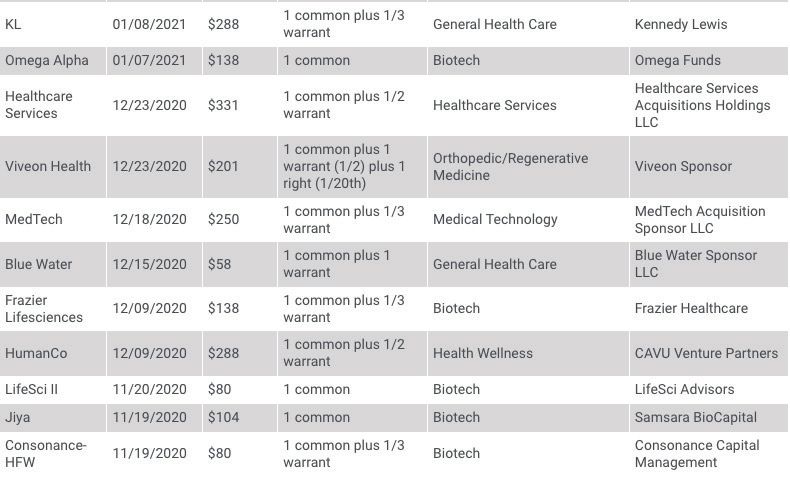
Long Lasting Impact On Dealmaking?                     patient could consult a doctor in any location.
“I do not think that COVID-19 will change              These issues need to be thought about.”
dealmaking forever,” Pothier said. “It has,
however, fundamentally changed health care life        The diagnostics industry also saw radical changes.
sciences and how we deliver care in our hospitals      The need for flexible, scalable technologies that
and our health systems.”                               could test millions of people prompted rapid
                                                       growth in the sector. Pothier said that diagnostics
According to Pothier, the effects of COVID-19          manufactures had “bolstered all of their portfolios
“diversified portfolios, making companies              and are doing very interesting deals” in response
stronger.”                                             to this rapid growth.

“The pandemic happened, dealmaking has some            For example, Roche Diagnostics has launched over
new tools for the healthcare and life sciences         15 products related to COVID-19 throughout 2020
space, and that has allowed us to be stronger not      and 2021, many of them rapid testing solutions.
only in dealmaking, but also in how we deliver         (Also see “Roche Takes Advantage Of COVID-19
care.”                                                 Testing Rush” - Medtech Insight, 4 Feb, 2021.)

The effects of COVID-19 were not all bleak,            Other manufacturers, such as Abingdon
however. Two industries that reared their heads        Health, have grown from small operations to
to improve patient outcomes were diagnostics           rapidly growing businesses by cooperating with
and digital health. “Both are here to stay for very    government agencies to coordinate effective
different reasons,” said Pothier.                      and targeted responses to the pandemic’s
                                                       testing needs. (Also see “Trial Shows Lateral
COVID-19 forced digital health operators to            Flow Antibody Testing Could Be Used To Assess
play their hands and rapidly scale-up to match         COVID-19 Vaccine Efficacy” - Medtech Insight, 24
demand. Actualized in remote physician                 Feb, 2021.)
appointments, the use of artificial intelligence in
diagnostics, advanced remote monitoring, and           In a forward-looking statement, Pothier pointed
many other applications, the pandemic has led to       out the growth of precision medicine over the past
rapid innovation in all aspects of medicine.           decade, something that’s “pushed the envelope
                                                       for diagnostics.” As targeted therapeutics become
Pothier highlighted the strengths of telehealth,       more popular, so will targeted companion
“physicians can fit more visits in, they can be more   diagnostics that identify patients that benefit from
efficient, and they can keep patients safer.” (Also    those drugs.
see “Tyto Care Raises $50M In Series D To Expand
Telehealth Platform” - Medtech Insight, 4 Mar,         Medtech Adjusts To Find Opportunities During
2021.)                                                 COVID-19
                                                       A rapid increase in COVID-19 cases outside
Pothier raised questions that telehealth               the initial epicenter of China in early March
developers and companies are currently asking.         2020 compelled WHO director general Tedros
“How do we improve interfacing? How do we              Adhanom Ghebreyesus to publicly declare a
consolidate companies? How do we bring more            global pandemic on 12 March. The medtech
power to telehealth in general? It also finally        sector rapidly took stock, and while some parts of
opens the idea of being able to think globally. A      the industry were rushed of their feet, others in

3 / March 2021                                              © Informa UK Ltd 2021 (Unauthorized photocopying prohibited.)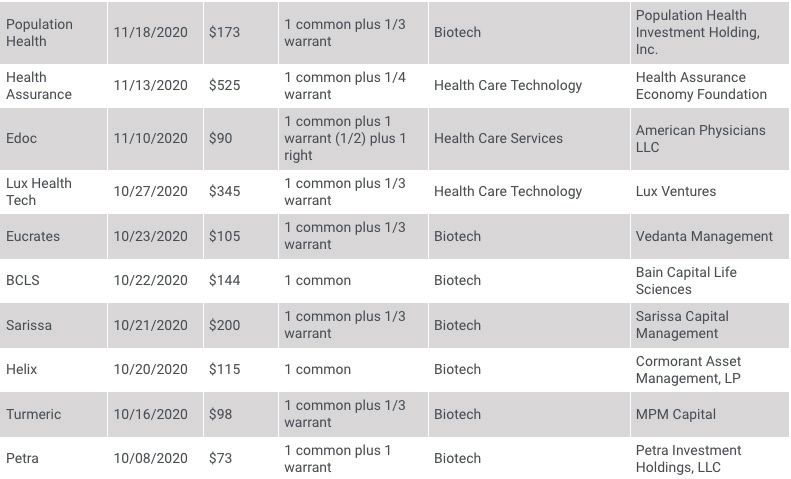
elective care, especially, introduced furloughs and        solution companies are rolled into a “holistic”
other response measures until the beginnings of            solution, providing more wide-ranging services for
a return to normal. One year on from that WHO              patients.
declaration, editors across Pharma Intelligence
have taken a look at the pandemic’s impact and             This process will likely take many years, but
legacy on medtech and pharma. Though you must              already the dealmaking space in digital health
look hard to find any upsides from COVID-19, the           already looks active. Within the past six months,
way that the medtech industry has adapted and              numerous telehealth companies have obtained
made itself potentially “future fit” is certainly one      funding or been acquired, often via a special
of them, as this report from KPMG suggests.                purpose acquisition company, and KPMG expect
                                                           this trend of increased activity to continue. (Also
Predicted Market Maturation in 2021 and                    see “Blank Check Companies’ Hunt For Innovative
Beyond                                                     Medtech Start-Ups To Heat Up Further, Experts
The current market for digital health is in its            Predict” - Medtech Insight, 1 Feb, 2021.)
infancy. Currently, there are hundreds, if not
thousands of companies offering ‘point solutions’          As a result of this, company valuations are
– software that solves a single, often smaller issue.      expected to increase across the board in medtech
                                                           throughout 2021, with diagnostics producers
According to Pothier, there is a “need for                 fairing the best. Pother said, “we expect to
consolidation” in the industry, where point                recovery of all of our major sectors.”

Predicted medical device manufacturer valuation changes in 2021, by subsector

                                              Source: KPMG 2021 healthcare and life sciences investment outlook

4 / March 2021                                                  © Informa UK Ltd 2021 (Unauthorized photocopying prohibited.)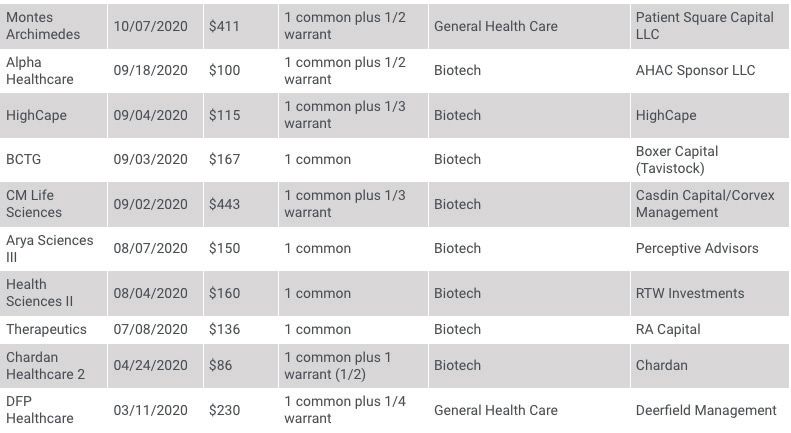
Blank Check Companies’ Hunt For Innovative Medtech Start-
Ups To Heat Up Further, Experts Predict
Executive Summary                                      Medtech Insight.
As the SPAC boom continues, innovative medtechs
are expected to become acquisition targets.            Joseph Hernandez, founder and CEO of Blue
                                                       Water Acquisition Corp., a SPAC that is currently
                                                       looking for an acquisition target in the health
                                                       care space, also expects a lot more deal flow in
January kicked off with a flurry of SPACs, or          medtech, particularly in artificial intelligence,
special-purpose acquisition companies, and             telemedicine, cardiology, joint replacements,
financial experts believe that these financing         diagnostics and genomics.
vehicles will continue to gain steam, with some
targeting medtech.                                     “Medtechs are often undervalued in the market,
                                                       but I think if you look at their risk profile, they are
Jonas Grossman, president and managing partner         usually less risky than biotech companies because
of Chardan Investment Bank, which focuses on           you usually have a product,” Hernandez told
disruption and innovation in the health care           Medtech Insight.
technology space, said that 2020 was a banner
year for SPACs – or “blank check companies” as         Blue Water Acquisition announced on 15
SPACs are often called – because they are formed       December it raised $50m by offering 5 million
specifically to find a start-up, buy it and take it    units at $10. Each unit consists of one share
public. While the majority of SPACs looking for        of common stock and one warrant exercisable
a health care target were focused on biotech in        at $11.50. The underwriter, Maxime Group,
2020, Grossman foresees that in 2021: “We’ll see       exercised its over-allotment option, resulting in
more medtech deals.”                                   $57.5m raised.

According to Chardan’s statistics, as of 27 January,   “We have been a free-trading company for a little
40 health care-focused SPACs with $7.2bn to            bit over 30 days and I can tell you we’ve seen
deploy were actively looking for a company to          a large number of deals – in excess of 40 deals
merge with.                                            we’ve looked at [at] this point – and continue to
                                                       get deal flow here on a daily basis,” Hernandez
About half are focused on biotech with the other       said. Though he feels that the smaller size of the
half looking at other areas including medtech,         SPAC, which puts it at an acquisition target range
digital health and general health care. However,       of roughly $75-$240m, puts it in the “sweet spot.”
with more SPACs looking for disruptive growth
opportunities, the medtech sector has become an        “There’s not a lot of players in this acquisition
attractive target.                                     spectrum,” he said. The majority of deals have
                                                       been on the larger side, where there are more
“I would predict that for 2021, we’ll see a number     SPACs competing for the same private companies.
of pure medtech announcements, and we’ll
also see a number of medtech-focused SPACs             Karim Anani, EY Americas Transactions Accounting
particularly looking at that space,” Grossman told     Advisory Leader and EY Capital Markets Partner

5 / March 2021                                              © Informa UK Ltd 2021 (Unauthorized photocopying prohibited.)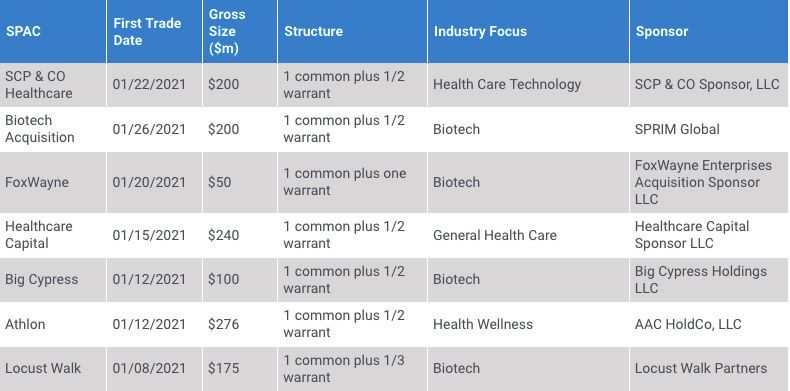
advising companies on strategic transactions, also        According to the Wall Street Journal, some venture
expects the SPACs craze to continue ramping up            capitalists and tech companies saw SPACS as a
in 2021.                                                  way to raise money without being exposed to
                                                          volatile markets.
“We’re also starting to see increased deal sizes, so
the valuations and the size of the companies that         Equally, some investors see SPACs as a big
SPACs are looking to merge with in the medtech            opportunity and a more efficient way for
space are increasing as we progress through 2020          companies to go public, but critics say that they
and go into 2021,” Anani told Medtech Insight.            also leave the door open for backdoor deals.
“The amount of capital, if you consider general
SPACs and what is identified for this industry, is        SPACs Versus Traditional IPO
probably $10-$14bn – it just depends how you              Anani defines SPACs as a hybrid between a capital
want to cut the data.”                                    markets transaction and mergers and acquisitions
                                                          transaction.
A recent example is Compute Health Acquisition
Corp., launched by former Medtronic plc CEO               “It’s not quite an IPO, it’s not quite an M&A
Omar Ishrak, which plans to raise $750m to                transaction,” he said. “The only difference
acquire a company within the health technology            between a SPAC IPO is that there is no history for
sector, according to a SEC filing from 19 January.        the SPAC, there is no operations.”

Compute Health plans to sell 75 million units for         A SPAC is created by a sponsoring investor that is
$10 a share, one unit being one share of Compute          looking to raise capital to put in a trust. It exists
Health and one quarter of a redeemable warrant,           solely to find a private company to take public.
the filing said. Medtronic plans to acquire 1.5
million units in the offering, according to the filing.   “The amount of capital raised by SPACs varies: on
                                                          the small side from $50-$60m, all the way up to
Another example is Longview Acquisition Corp,             $4bn at the IPO date,” Anani explained.
which announced in November it merged with
Butterfly Network Health at a value of $1.5bn.            Typically, before the acquisition, SPACs sell units
This transaction is expected to close at the end          that include a $10 share of the company and
of March, when the company will start trading on          warrants, conferring the right to buy shares at a
the New York Stock Exchange. (Also see “Butterfly         certain price by a certain time.
Network’s CEO Sees Blank Check Deal As Path
To ‘Democratize’ Portable Imaging Platform” -             The vast majority of the proceeds come from
Medtech Insight, 1 Dec, 2020.)                            hedge funds and other institutional investors that
                                                          move early. SPACs then have two years to search
Grossman says the SPACs boom has been                     for a private company to merge with and take
building for years – noting that 20-25% of the IPO        public. Investors backing the SPAC put up their
market has been SPACs in the last four years. The         money before an acquisition target is identified,
market has accelerated during the pandemic.               which means they need to trust the sponsors to
Grossman was behind the first major bio/pharma            find a good target company.
SPAC merger in 2019 when Chardan Healthcare
Acquisition Corp. and Biotech BiomX Ltd merged,           If the SPAC fails to find a suitable company
creating BiomX Inc. then valued at $248m.                 during the two-year time frame, it dissolves. The

6 / March 2021                                                 © Informa UK Ltd 2021 (Unauthorized photocopying prohibited.)
investors get their money back with interest and      investment.
the sponsors lose whatever money they have put
in. If the SPAC finds a company to merge with, the    Scott Platshon, partner at EcoR1 Capital, LLC, a
investors can withdraw their funds with interest if   biotech-focused investment advisory firm, said
they don’t like the deal.                             earlier this month that there is now a trend
                                                      in the health care sector toward “novel” SPAC
When the SPAC merges with a private company,          structuring, where SPACs, for instance, issue
the SPAC typically transforms into the target         common shares, but no warrants.
company and takes on the acquired company’s
name. When the deal closes, investors who own         Another trend is that instead of the SPAC
shares in the SPAC become owners of the new           founders receiving 20% of post-IPO equity, the
entity.                                               promote is “more associated with the success of
                                                      the company and tied to the stock price,” Platshon
SPAC sponsors can emerge as big winners, by           said. Platshon made the comment on a panel
putting up small amount to cover expenses             discussion on “IPOs and the coming age of SPACs,”
before a SPAC goes public and then typically          during the virtual Biotech Showcase sponsored
compensating themselves with a “promote,”             by Informa that ran parallel to the J.P. Morgan
consisting of shares equal to 25% of the SPACs        Healthcare conference. In other cases, SPACs
IPO proceeds, or the equivalent of 20% of post-       sponsors take less of a promote” – “we’ve seen
IPO equity, according to a paper on SPACs by          some with 10% instead of 40%,” he said.
law professors Michael Ohlrogge of New York
University and Michael Klausner of Stanford,          Unlike in a traditional IPO, SPACs do not undergo
and management consultant Emily Ruan. This            the same regulatory scrutiny as traditional IPOs.
allows for returns at several times the original

Healthcare SPAC Mergers - Overview

7 / March 2021                                             © Informa UK Ltd 2021 (Unauthorized photocopying prohibited.)
8 / March 2021 © Informa UK Ltd 2021 (Unauthorized photocopying prohibited.)

Source: Chardan, FactSet,
                                                                          CapIQ, latest close as of 01/25/2021

Also, in a SPAC transaction, the pricing can          But Grossman said that SPACs capture a lot of
change until the night before shares start trading.   value, because they “are providing something of
Compared to a traditional IPO, the valuation is       great value to private companies.”
fixed through a privately negotiated merger deal.
                                                      He noted that SPACs are cheaper than traditional
This has led former SEC chairman Jay Clayton          IPOs and can move faster than a traditional IPO.
to look more closely at SPAC filings. Clayton         One reason for that is there is no need for an
reportedly said during the annual meeting of          extensive roadshow that has become standard
the Securities Industry and Financial Markets         with an IPO or late-stage crossover round that is
Association (SIFMA) on 19 October 2020 that, “On      typically made before a traditional IPO. Grossman
SPACs, I want to make sure, investors, particularly   said that SPACs typically spend less than six
retail investors, understand the incentives of        months to find a target, which is a significant drop
the sponsors and for the selling company in the       from 12 months or longer for a SPAC to find a
‘de-SPACing’ transaction when they vote on it or      merger deal in the past.
make those related investment decisions, and also
understand that it’s not the same as an IPO.”         One example is the telehealth start-up Hims &

9 / March 2021                                             © Informa UK Ltd 2021 (Unauthorized photocopying prohibited.)
Hers Health Inc. which negotiated with SPAC            challenges in terms of “expectations” such as
Oaktree Acquisition Corp for about four months         finding the right sponsor and finding the right-
before reaching a $1.6bn deal in October that          sized deal remain.
closed on January 21, according to the Wall Street
Journal. Since the transaction was completed,          “The trickiest part may be the timing,” he said.
shares have dropped from $16.38 a share to             “Private companies going with a SPAC need to get
about $14.43.                                          the right timing … there needs to be an exclusivity
                                                       commitment to each other at some point with
Anani, explained that typically in a SPAC              valuation and expectations on deal size that
transaction, the valuation given to a medtech          are appropriate within the confines of a moving
company can be higher for one main reason.             market.”

“When you do an IPO, you typically can’t market        Platshon finds that many CEOs and entrepreneurs
the medtech company on future projections and          are having to learn fast about SPAC deals. He
future revenue and other financial measures,           agreed with Grossman that timing is a key issue.
because that’s how IPOs are underwritten
and marketed by investment banks,” he said.            “The great and the bad thing about a SPAC is the
Companies looking to merge with a SPAC,                condensed timeline,” Platshon said. “With IPOs,
by contrast, are allowed to talk about future          you’re able to do your crossover … testing the
projections.                                           waters … and ‘date’ investors to really get to know
                                                       them. With SPACs, it’s two, three, four months –
“You can show the upward momentum that                 what you do normally in two, three, four years.”
the company has, capturing the market share,
launching a service, bringing a product to life … so   SPACs Bubble?
I think the amount of capital raised is typically a    Goldman Sachs Group Inc. CEO David Solomon,
little bit larger in a SPAC transaction,” he said.     among others, have expressed concerns about
                                                       the sustainability of SPACs. Solomon warned in
Grossman added that the private company also           the company’s call in January that the flurry of
has a partner in the SPAC team that either “had a      SPACs is not sustainable in the medium-term.
balance sheet or brings relationships to bear to       Goldman Sachs is among the banks benefitting
make the transaction successful.”                      from the boom.

Hernandez said relationships and having aligned        Grossman also foresees that there will be “slowing
interests are important.                               of the pace,” noting that there are about 250
                                                       SPACs out there.
“There is a big component of ‘Can you see eye-to-
eye on strategy and valuation and management’,”        “Once it gets to 300 or 400, it starts to get crowded
Hernandez said.                                        in each of the different spaces and there’s only a
                                                       limited number of opportunities for public-ready
Grossman said SPAC transactions can be                 companies,” he said. Nevertheless, he believes
“tricky” and require a learning curve that some        that 2021 will be an interesting year.
underestimate. He feels that the high interest
in SPAC transactions has led many private              “I think you’re going to see a lot of innovative
companies to educate themselves more, but              companies go public, especially in medtech.”

10 / March 2021                                             © Informa UK Ltd 2021 (Unauthorized photocopying prohibited.)
Medtech Investment Outlook: In Health Care You Don’t
Become A Unicorn Overnight
Executive Summary with clients via face to face contact – an aspect of
The pandemic has shaken up investor priorities the business that investors take much pride in –
and changed the outlook for health care start-ups there has been “a striking increase in the number
– or has it? Nooman Haque managing director, of series A deals done,” and new investors coming
life sciences and healthcare at Silicon Valley Bank, into companies for the first time.
gives his view of what has changed over the past
year, and looks at future trends. SVB’s latest annual update on health care
investments and exits shows that series A deals
in biopharma in 2020 increased significantly
versus 2019, and median deal size was up by 30%
While investors and executives in the health care at $13m. European series A investment almost
products industry have not remained untouched doubled to $1.1bn in 2020.
by the COVID-19 pandemic, they have not been
as surprised as people might assume about In healthtech, series A deal volume declined
the situation that global economies now find 6%, but series A funding value increased 14%
themselves in, with the second or even third versus 2019. In medtech, US series A deals and
waves of coronavirus in full flow. dollars declined, as most investment was focused
on later-stage clinical and commercialized
That is how Nooman Haque, managing director, investments. Haque predicted that medtech series
life sciences and healthcare at Silicon Valley A deals will bounce back in 2021.
Bank (SVB), has viewed the 11 months since
the pandemic put a stop to normal social and “If there was going to be any type of hit in such a
economic routines. relationship-driven business, that’s where I would
have expected it. In fact, the opposite has been
Investors in medtech and health care have a the case,” said Haque.
strong understanding of disease, its progression
and consequences. Not at the level of clinically Device investment overall was up in 2020, the US
trained professionals, but their experience and Europe combined recording 316 deals with
has taught them to take the longer view. They an aggregate value of $5.4bn, of which the US
understand pandemics, and the realities of accounted for $4.8bn and Europe $569m.
lockdowns, and are not thrown off course by each
new excitable op-ed that appears in the daily Public Confidence In Health Care Grows During
press. Pandemic
The health care sector has adapted well to
Curate’s Egg In Series A business life under lockdown, as seen most
That is one reason why the health care sector has recently in the JP Morgan event. Different to usual
been resilient, operationally as well as financially, – and like so many other events held virtually – it
during COVID, said Haque. was no less a business event for that.
In spite of investors’ ongoing inability to engage There have been unexpected upsides from
11 / March 2021 © Informa UK Ltd 2021 (Unauthorized photocopying prohibited.)the pandemic. Although the sector would have There has been a lot of talk about what the
preferred a different type of spotlight, health post-COVID world will look like. Much attention
care innovation has dominated the headlines for has been given to the advantages of remote
almost a year. “That’s very good for a number consultations, but there are other knock-on effects
of reasons,” said Haque. It allows policy to be for the wider industry. Businesses that in pre-
focused where it is needed: on public health. That pandemic times had valid product propositions,
approach has resonated with the public, he said. in home dialysis to take one example, but had
struggled to put over their value in a traditional
The COVID vaccine breakthroughs are another health care setting, will, post-pandemic, find
reason for increasing levels of confidence in greater resonance for certain innovations, Haque
the sector generally. But this has been no great predicted.
surprise to Haque. “People I’ve spoken to on
the UK government’s Vaccines Taskforce or at “If part of your proposition involves patients not
companies developing vaccines always conveyed needing to travel to a medical center, then it
a high degree of confidence that there was a makes sense, COVID or no COVID.” Care delivered
solution to COVID-19.” in the home and associated digital offerings will
only gain in importance, given the momentum
Fears that medtech as an industrial sector would from the events of 2020.
be hit strongly by the pandemic, compared with
other sectors, were not realized on a large scale; But not everything will need to be software
data from the US showed there was an initial dip related to succeed. A lot of medtech can only be
in medtech activity, but also that levels of activity delivered within a clinical setting, and there will
returned fairly quickly. always be a strong stream of medtech business-
as-usual innovation in many traditional areas,
From a capital perspective, even during that brief Haque stressed.
time when the long term effect of COVID-19 on
medtech businesses could not be predicted, Legacy Of COVID-19
investors remained supportive, Haque observed. “There are two big macro things to come out
That was true even after companies admitted that COVID. One is a renewed focus on public health
their plans, including elements like clinical trials, as a driver of individual health; and the other,
would be delayed. on the commercial investment side, is that non-
traditional health care investors have started to
As hospitals reached their capacity limits under look at the healthtech sector with seriousness.”
COVID-19, some parts of the industry suffered
short-term impacts. “But that does not necessarily The latter is part of a larger trend that has been
affect the fundamental premise of a particular happening in healthtech and digital. Traditional
investment or business,” said Haque. People who software investors are familiar with the nature of
needed treatment before the pandemic will still medical technology and their underlying business
need their treatment after it is over, he reasoned. models have sought to make rapid inroads
into the sector. But they often lack the domain
“There may be a financial impact and potential expertise in understanding how to commercialize
cash shortfalls, but there is a lot of liquidity in the in the health care sector. “You don’t become a
sector.” unicorn overnight,” said Haque.
12 / March 2021 © Informa UK Ltd 2021 (Unauthorized photocopying prohibited.)The drive to open medtech up to non-traditional if a company leads on a COVID relevant product
health care investors was also championed at after people have been vaccinated, that product
government level during the early stages of the might not resonate with investors.
pandemic. The UK set up a “future fund,” under
which the government would issue convertible “We should look at COVID as a push, as a bit of the
loans to a company if its investment was icing on the investment proposition, rather than
matched by private investors. Non-traditional being the fundamental driver of it.”
investors were encouraged by the government’s
preparedness to de-risk investments. He continued, “Say a company is developing a
COVID product thinking it will be a unicorn. They
Medtech can seem a daunting sector to invest in, should be really asking if people will pay for it?”
but the “soft infrastructure” of insight and analysis Haque thinks that the sector will start to see more
can help in investment decision makings, said products related to COVID – but not necessarily
Haque. “Sound business sense, a good network, a directly related – in areas such as remote learning.
positive, healthy skepticism and due diligence on
an investment are the tools needed.” People are The Device Investment Picture In 2020
willing to invest if they can see what returns they A glance at the 2020 device investment patterns
can get. described in SVB’s report reveals that neurology
and non-invasive monitoring (NIM) investment
The spread of new venture investors in medtech almost doubled compared with 2019. The two
identified by SVB include USVP, Tech Coast Angels largest device deals of 2020 (Element Science, Inc.
and HBM. New medtech-focused funds include and Preventice Solutions, Inc.) were both wearable
ShangbayCapital, AMED, Vensana, Sonder and NIM solutions for cardiovascular outpatients.
Treo Ventures. Mayo Clinic, Rex Health Ventures,
Mount Sinai and LifeSci were new medtech Imaging and cardiovascular investment increased,
investors on the corporate side in 2020. the top imaging deals focusing on imaging
workflow (Avail and Exo) and quality (Ionetix,
Bright Spots For Investment In 2021 Lumitron and G-ray). There were seven $30m+
Health care is a slow moving industry, Haque deals in neurology, three of them (Relievant
insisted. Even if lives have been turned upside Medsystems Inc., NeuroPace, Inc. and SetPoint
down by the pandemic, the impact of medtech Medical) raising significantly more than $100m in
is the same. “What we have is an industry with total VC investment.
a long term trend that’s pretty stable.” It is not
immune to occasional excitable episodes related Three deals raised late-stage mezzanine
to new products, and no doubt COVID will be funding rounds prior to going public in 2020:
looked back on as having had a major impact Outset Medical Inc. ($125m series E), Pulmonx
on remote monitoring uptake and public health Corporation ($83m series G) and Eargo Inc. ($82m
related investment. series E), SVB states in its report.
Haque expressed caution over such blips, be they Start-Ups: Changing Behaviors?
positive or negative. “I’m always guarded about As the whole of society has had to change
how much entrepreneurs should focus on current behavior in the past year, so too have start-ups
events,” he said, stressing that fundraising is pitching for investment. The lockdowns meant
usually a six to nine month process. For instance, the need for screen based meetings, initially a
13 / March 2021 © Informa UK Ltd 2021 (Unauthorized photocopying prohibited.)blessing, and still very much so, but Haque is not funding during that time.
the first and won’t be the last to say that remote
meetings carry a fatigue factor. In 2020, there were more deals and more funding
in every major China device segment, except
The requirement to sit through laptop or mobile orthopedic devices, where eight deals were
phone presentations, often of many pages of closed, three fewer than in 2019. But orthopedic
science before a start-up reaches the point, funding volume was up threefold, at $129m. The
while necessary, can be exhausting, he admitted. cardiovascular segment saw the biggest jump,
Presentations can happen multiple times a day. with 25 deals and $559m investment. Imaging
By contrast, in-person presentations are more showed modest growth in deals and investment
natural, the parties around the table being able to value, while in surgical devices, the deal value
exhibit full three-dimensional body language and increased over six-fold to $521m.
animation during the pitch.
Total device funding (private financing by venture-
Differentiation is key. “We’ve advised early stage backed companies in mainland China and Hong
companies to use a degree of empathy and avoid Kong) in 2020 totaled $1.6bn
the blandness and the monotone approach of the
typical TED talk,” said Haque. Being memorable Chinese investors tend to participate in Series B,
using that medium is hard, but differentiated or after, deals. Local firms GT Healthcare and Ally
approaches could pay dividends. Bridge, and Qiming USA, a US-headquartered fund
with a China affiliate, were very active in 2020.
China Opportunities Taking Shape
SVB’s 2021 annual report has for the first time In health care overall, China closed 395 health
separated out China, which is becoming more care deals for a record $12.1bn in 2020; Europe
important as a global source of VC. China is new, closed 377 deals for a total of $8.2bn; and US deal
but growing, said Haque, and is firmly one of funding was over $42bn.
three global areas for VC and investment in early
stage companies, alongside the US and Europe. IPOs And M&A
Japan is less obvious as a center for early stage VC, SVB’s report counted 11 medtech IPOs in 2020.
as its investment in innovation is channeled more This healthy number would have been influenced
through public health, partnerships and large by the wider macro environment – as the capital
pharma. markets always are – and specifically the range of
fiscal and monetary support policies put in place
China is an ecosystem that supports early stage around the globe essentially to keep interest rates
companies, but working with and in China down. Medtech IPOs and private M&A will remain
requires some adjustment. “There will always stable in 2021, Haque predicted.
be cultural barriers to investing in China,” said
Haque, including in methods of communication, The money has to go somewhere, he explained,
China more or less avoiding the use of email, for and health care as an investment option during
instance. the pandemic would have been regarded as more
attractive than, say, travel and hotels.
Over the last two years, 6% of device deals
included China-headquartered investors in their And there has also been a drive away from
syndicate, and these deals captured 13% of device investing in cash, with the current zero or low
14 / March 2021 © Informa UK Ltd 2021 (Unauthorized photocopying prohibited.)interest rates. Moreover, health care is non- pools of funds out there, said Haque. More of a
cyclical and non-correlated with the economy. The Brexit-related concern might be the restriction on
pandemic made it look an even safer option in free movement of people from the EU, and the
that respect. possible negative impact on talent acquisition at
start-ups.
How long that sentiment persists will come
down to confidence in the sector going forward “Innovation thrives on diversity; it is essential
and, essentially, investment returns. Returns in to innovation,” said Haque. “We’re paying close
medtech became harder about a decade ago, said attention to how easy or hard it is to get staff, be
Haque, recalling a time when selling suddenly it in software, biotech or elsewhere.” There has
became longer and harder, and trials more costly not been an impact yet, but as the SVB managing
to run, due partly to health scares surrounding director observed, such things play out over years,
vaginal mesh, among others. rather than weeks and months.
But a sense of proportion must prevail, not 2021 Outlook
least because regulatory uncertainty damages For 2021, Haque underlined the assertion that
confidence and deters investors. “Harder” does device series A will bounce back again, when more
not equate to “failure.” Haque stressed: “In medtech focused firms will be raising new funds.
venture capital, everything is judged relative to “There is more capital around, and the events
everything else, and if not openly described as of last year shook everything up again and drew
“good,” this should be taken to mean that it simply attention to new areas of need. At the same time,
hasn’t been as good at driving returns other investors have now become a bit more ‘savvy’.”
sectors have.”
Most medtech will continue to focus on later-
Similarly, there might have been slightly fewer stage, “mezzdeals” leading to near-term IPOs,
medtech M&A deals in 2020, but those that were Haque predicted. Medtech is a slow and steady
done had very high valuations attached to them. industry, generally. “One reason why this sector
Boston Scientific was uncharacteristically quiet, is of interest is that it is very stable, and fairly
maybe as it considered 2020 was the right year predictable,” he said.
to take a pause. On the other hand, Medtronic
remained aggressive. The biggest legacy of COVID-19 must be the way
in which people, albeit compelled to, have been
“It’s very difficult to look at behaviors last year and appraising their own health status, and have
draw firm conclusions about what it means for actively sought to engage with preventive health
companies going forward. It was a new situation care. Health is a new topic of conversation among
and a new context for everyone,” said Haque. the public, who increasingly view health care from
consumer, rather than patient, point of view. “That
It is similarly hard to say what effect Brexit has fills me with a lot of hope and positivity for the
had on medtech investing patterns in the UK. sector,” said Haque.
One thing is sure: There are ever increasing
15 / March 2021 © Informa UK Ltd 2021 (Unauthorized photocopying prohibited.)JPM 2021: Medtronic, Biogen, Edwards LifeSciences,
Guardant Health, Illumina
Executive Summary Medtronic will offer more information on its ECAP-
The annual J.P. Morgan Healthcare Conference sensing technology on 15 January at the North
includes presentations from many major medtech American Neuromodulation Society conference,
companies outlining their growth strategies and he said.
expectations for 2021. Here are some of the
highlights from the first day of the meeting. Medtronic is also applying the closed-loop concept
to deep brain stimulation for the treatment of
Parkinson’s disease, essential tremor, primary
dystonia, epilepsy and obsessive-compulsive
Medtronic Previews Closed-Loop Pain Therapy disorder. The company recently launched Percept
Medtronic plc CEO Geoff Martha highlighted his PC, the first deep stimulation device that can
company’s neuroscience portfolio during his sense brain signals, which “sets the stage for
presentation at the conference. adaptive, closed-loop deep brain stimulation
therapy,” he said.
“In our neuromodulation business, where we
ceded share over the last few years, we’re A clinical trial of Medtronic’s closed-loop deep
now back on the offensive,” he said. (Also see brain stimulation system began earlier this month,
“Medtronic Lays Out Plans To Achieve 5%+ Annual Martha said.
Growth” - Medtech Insight, 15 Oct, 2020.)
The closed-loop deep brain stimulation
He announced that the company’s “next big technology was one of several long-term
advancement” in spinal cord stimulation will be its technology development projects Martha
closed-loop, evoked compound action potential mentioned during his presentation. He also
(ECAP)-sensing spinal cord stimulation system for highlighted products that the company expects
treating chronic neuropathic pain. The system to launch in the next few quarters, including the
can track the effects of spinal cord stimulation in highly anticipated launch of the MiniMed 780G
real time to make ongoing adjustments that will advanced hybrid closed-loop insulin pump, Hugo
maximize the benefits of the therapy. robotic surgery platform and the DiamondTemp
focal point cardiac ablation system.
The company plans to incorporate this closed-
loop technology with its Intellis spinal cord Accelerating new product development is one of
stimulation platform to compete with Saluda, Martha’s goals in 2021 as the company completes
which is developing the Evoke closed-loop spinal the transition to the new corporate structure,
cord system. Martha said the combination of the announced in October.
closed-loop sensing technology with Medtronic’s
proprietary Differential Target Multiplexed “If we want to maximize our performance and
algorithm and the Overdrive battery technology realize the full potential of our technologies, we
will “differentiate us from the competition … and recognized that we had to make changes to our
really I think grow the pain market.” culture. We needed to improve accountability,
and we needed to act more boldly and be
16 / March 2021 © Informa UK Ltd 2021 (Unauthorized photocopying prohibited.)more competitive and move with speed and “Technology is [providing] a revolution in the way
decisiveness,” he said. “I humbly admit that these we research, develop and commercialize our
were not traits that Medtronic was known for, but products. It is also at the center of empowering
we’re changing that. It will take time to inject these patients to track, manage and improve their
traits into our culture, but it’s been impressive to disease states and potentially treatment,” he said.
see how quickly our employees are embracing “As a leader in neuroscience, we are scaling up our
these changes.” digital capabilities to further meet patient needs,
but also transform the way we operate as an
Apple Partners With Biogen On Cognitive organization.”
Health Study
Apple Inc. announced an agreement with Edwards Looks To Expand Transcatheter Valve
drugmaker Biogen, Inc. to sponsor a “virtual Therapies
study” to evaluate the potential for the Apple In his presentation at the J.P. Morgan meeting,
Watch and iPhone to screen users for declining Edwards Lifesciences Corp. CEO Michael
cognitive health, including mild cognitive Mussallem described his company’s plans to
impairment. expand the transcatheter aortic valve replacement
(TAVR) market.
The multi-year, observational research study
will enroll adults across a wide range of ages Led by its Sapien 3 Ultra TAVR system, Edwards
and cognitive performance to develop digital controls about two-thirds of the worldwide TAVR
biomarkers that will eventually allow researchers market. In 2019, Edwards’ revenue from TAVR
and doctors to identify early signs of cognitive was more than $2.7bn and the company expects
impairment. its TAVR sales will be up about 5% for all of 2020,
despite the severe drop-off in TAVR procedures in
Mild cognitive impairment afflicts 15-20% of the middle of the year, caused by the pandemic.
people over 65, but the onset of symptoms is ( (Also see “Edwards Returns To Growth In The
often subtle and may not be detected for years Third Quarter” - Medtech Insight, 22 Oct, 2020.)
after it begins. But detecting cognitive decline as
early as possible is critical for the development Despite the pandemic, Edwards still expects the
of cost-effective therapies, Biogen CEO Michel worldwide TAVR market will be worth $7bn by
Vounatsos said at the JP Morgan conference. 2024 and eventually reach $10bn. To achieve this
growth, Edwards is trying to expand the indication
Biogen’s collaboration with Apple “is a prime for TAVR by sponsoring “groundbreaking trials”
example of what can result when technology is while increasing the awareness of the benefits of
applied to neurology [and the deal with] Apple the procedure among patients and physicians,
reinforces our ongoing focus on digitalization,” he while continuously improving its TAVR technology.
said.
For example, the US Food and Drug
Digital biomarkers will also be critical to the Administration has approved Edwards’ and
future development of Alzheimer’s and other Medtronic’s TAVR systems for symptomatic
neurological disorders, Vounatsos said. (Also see patients in all risk categories, but not for patients
“J.P. Morgan 2021: The Show Must Go On” - Scrip, with asymptomatic disease. Because aortic
7 Jan, 2021.) disease is often progressive, treating it before it
produces symptoms may reduce patients’ risk of
17 / March 2021 © Informa UK Ltd 2021 (Unauthorized photocopying prohibited.)stroke, hospitalization, and mortality. tricuspid valve repair, lead by the Pascal repair
device and Cardioband annulus-reduction device.
Edwards is currently sponsoring the EARLY TAVR
trial comparing TAVR to clinical surveillance in The company is developing PASCAL Ace, a
patients with asymptomatic severe aortic stenosis. narrower version of Pascal, and expects to launch
It expects the trial to complete the enrollment of the next-generation Pascal delivery system in
over 1,000 patients in the trial by the end of 2021. 2021.
The company is also planning to launch a trial
TAVR in patients with moderate aortic stenosis by The Sapien M3 transcatheter mitral valve
the end of 2021, Mussallem said. replacements is currently being tested in the
ENCIRCLE pivotal trial and Edwards expects to
“Rather than wait until patients are severe, we launch the Evoque transcatheter tricuspid valve
think that treating them earlier when they have replacement system in Europe by 2022. The
moderate disease might be more effective,” he TRISCEND II trial of the Evoque system is enrolling
said. “Waiting too long to treat these patients patients in the US under the FDA’s breakthrough
could result in cardiac damage that’s unable to be pathway designation.
reversed.”
More than 10% of the people in the US over age
The company expects the clinical trial of the 65 suffer from moderate or severe mitral or
next-generation Sapien system, called Sapien tricuspid regurgitation with a one-year mortality
X4, to begin in 2021. “And beyond X4, we have a rate over 20%. The company believes the global
revolutionary new TAVR platform that’s currently market for these systems will be worth $3bn by
under development,” he noted. 2025.
The new system is designed to prevent mild Guardant Health Introduces Guardant Reveal
paravalvular leaks as effectively as a surgical Liquid biopsy company Guardant Health
replacement valve. “If a surgeon did a spectacular announced the introduction of Guardant Reveal,
replacement, he would basically have no leak a blood-only liquid biopsy test for residual
when it was all done, and we are still striving to disease detection and recurrence monitoring
achieve that,” he said. “We think that’s doable with of primarily stage 2-3 colorectal cancer patients
[our] new technology platform.” initially, Guardant Health CEO Helmy Eltoukhy
told Medtech Insight. The target market is about
He also expects future versions of Sapien will be 10,000-12,000 oncologists in the US, 9,000 of
more “forgiving” to accommodate a wider range whom have used the company’s Guardant360 CDx
of patient anatomies, which would also reduce the test, which became the industry’s first US FDA-
burden of planning and testing needed before the approved liquid biopsy test for comprehensive
procedure. genomic profiling. (Also see “Guardant Health
Expects FDA Approval Of Liquid Biopsy Test Will
Edwards also expects the FDA to soon approve Strengthen Coverage, Adoption” - Medtech Insight,
a version of Sapien 3 designed to treat the 11 Aug, 2020.)
pulmonary valve.
“The test would be done right after the curative
Mussallem also highlighted the company’s procedure has been done to assess whether the
pipeline of products for transcatheter mitral and patient does indeed still have the disease or not,”
18 / March 2021 © Informa UK Ltd 2021 (Unauthorized photocopying prohibited.)he said. Eltoukhy has not disclosed the cost for the a 17-20% growth. The company also announced
test, but he hopes that the test will be approved new partnerships with Bristol Myers Squibb
for Medicare patients. Company, Kura Oncology, Merck & Co., Inc. and
Myriad Genetics, Inc. to collaborate on cancer
This year, Guardant Health also plans to launch a diagnostics and the advancement of precision
tissue assay for all solid tumors, which Eltoukhy oncology.
said is targeted for individuals that would need a
tissue test in addition to a liquid biopsy test. He also announced that Grail Inc., which Illumina
bought back for $8bn in September 2020, will
The company is on track to finish enrollment this launch its multi-cancer early detection blood test
year of its 10,000-volunteer ECLIPSE trial for the Galleri in the second quarter and announced that
early detection of colorectal cancer. The company its prospective 6,600-participant PATHFINDER
has reported double-digit revenue growth for study was fully enrolled in December. The
each quarter in 2020. For the third quarter in company plans to present results from the
2020, it reported $75m in revenues, up 23% PATHFINDER study and more clinical validation
from the third quarter in 2019 and said it is “well data from the CCGA study in the first half of
capitalized leading into 2021.” 2021. (Also see “Illumina Will Pay $8Bn To Buy
Back Cancer Screening Start-Up Grail” - Medtech
Illumina Posted $950M in Q4 Revenues; New Insight, 21 Sep, 2020.)
Partnerships
Illumina, Inc.’s CEO Francis DeSouza told an Grail recently announced that the UK’s National
online audience at the J.P. Morgan health care Health Service will pilot Galleri in 2021 with plans
conference that the company’s business has to enroll 165,000 patient and following a success
bounced back after the company suffered pilot the NHS expects to test 1 million people in
interruptions due to COVID-19. 2024 and 2025.
He noted that Illumina had a “very strong finish” (Also see “Grail Starts PATHFINDER Trial To
to 2020 with preliminary fourth-quarter revenue Evaluate Multi-Cancer Blood Test For Early Cancer
reaching about $950m, a 20% growth compared Detection” - Medtech Insight, 20 Feb, 2020.)“Grail
to the third quarter. also plans to launch its diagnostic aid for cancer
later this year to speed time to diagnosis when
For the full year 2020 revenue reached about cancer is expected,” DeSouza told the audience.
$3.2bn, a 9% year-over-year decline, which Grail also announced three new collaborations
DeSouza attributed to the pandemic. For 2021, – Amgen, Inc., AstraZeneca LP and Bristol-Myers
DeSouza expects a recovery from the pandemic Squibb. (Also see “Grail Files For $100M IPO, Plans
to continue through the first half of the year and To Launch Multi-Cancer Early Detection Test In
a return to normal by the second half. He expects 2021” - Medtech Insight, 9 Sep, 2020.)
revenues of $3.79bn to $3.88bn, which represents
19 / March 2021 © Informa UK Ltd 2021 (Unauthorized photocopying prohibited.)JPM 2021: Boston Scientific, Abbott, Dexcom, Insulet,
Silk Road Medical
Executive Summary development and patient outreach in this highly
The annual J.P. Morgan Healthcare Conference underpenetrated patient population,” Mahoney
includes presentations from many major medtech said.
companies outlining their growth strategies and
expectations for 2021. Here are some of the It is also sponsoring trials to expand the indication
highlights from the first day of the meeting. for left-atrial appendage closure, including the
OPTION trial, which is comparing Watchman FLX
to oral anticoagulants in patients undergoing a
cardiac ablation procedure, and CHAMPION AF,
Watchman Helps Boston Scientific Absorb a 2,000-patient trial comparing Watchman FLX
Pandemic Hit to non-vitamin K antagonist oral anticoagulant
Boston Scientific CEO Mike Mahoney highlighted drugs in a broad anticoagulant-eligible patient
the commercial success of Boston Scientific’s population. (Also see “HRS 2020: Boston
Watchman left-atrial appendage closure devices Scientific’s Next-Gen LAAC Device Hits Targets In
during his presentation at the J.P. Morgan PINNACLE FLX Trial” - Medtech Insight, 14 May,
Healthcare conference on 12 January. 2020.)
According to a preliminary report on the Mahoney called Watchman FLX “the cornerstone
company’s fourth-quarter earnings, sales of of our structural heart franchise.”
Watchman devices – including the next-generation
Watchman FLX launched in mid-2020 – were down It will be the most important product for that
56% year-over-year during the quarter. business for at least the next three years now
that the company has decided to discontinue the
However, most of that apparent revenue decline Lotus Edge transcatheter aortic valve replacement
was caused by the company’s change to a (TAVR) system and focus more resources on
consignment inventory model for marketing developing the Acurate neo2 TAVR system with
Watchman FLX. Accounting for that shift, the Sentinel cerebral embolic protection device.
Watchman sales were up 18% and surpassed
150,000 cumulative implants worldwide, Mahoney Mahoney said the launch of Acurate neo2 in
said. Europe, which began in September 2020, has
been successful, but the company does not expect
“Watchman really had a nice fourth quarter the US Food and Drug Administration to approve
despite the impact of the pandemic,” he said. “The it until 2024. (Also see “Boston Scientific Gives Up
Watchman FLX consignment-conversion program On Lotus Edge TAVR” - Medtech Insight, 17 Nov,
was executed very well in the second half and is 2020.)
now essentially completed.”
The pandemic has forced many hospitals
Watchman and Watchman FLX are designed to to postpone surgeries and interventional
prevent strokes in patients with atrial fibrillation. procedures, causing a dramatic slowdown in
The company continues to “drive market sales across the medical device industry, first in
20 / March 2021 © Informa UK Ltd 2021 (Unauthorized photocopying prohibited.)the spring and then again at the end of the year. in 2020, but was accelerated by the pandemic.
Mahoney said that sales were up year-over-year The company announced in May the FDA issued
in October before leveling off in November and emergency use authorization for its molecular
declining in December as the pandemic intensified test for COVID-19 for use on its Alinity molecular
in Europe and the US. (Also see “Boston Scientific laboratory instrument. He noted that the
Exceeds Wall Street’s Expectations In Q3” - placement rate for the diagnostic platform was
Medtech Insight, 29 Oct, 2020.) four times higher than planned.
Boston Scientific remains confident that it will Abbott announced today that it fulfilled the
return to growth in 2021. federal government’s order of 150 million
BinaxNOW COVID-19 Ag tests. The company
“While 2020 was clearly a tough year, our said after fulfilling this order, it will make “tens
procedural acuity, site of service and new product of millions” of the BinaxNOW rapid COVID19
launches will aid our recovery,” Mahoney said. test available per month for direct purchase by
“Post-COVID impact, we continue to strive for schools, workplaces and pharmacies. The test is
above-market revenue growth and remain sold to qualified organizations for $5 per test with
committed to driving operating margin expansion the at-home test going for $25 a test. Results are
and double-digit earnings per share.” available in 15 minutes. (Also see “FDA Authorizes
Abbott’s ‘$5, 15 Minute’ COVID-19 Antigen Test” -
Boston Scientific expects to record $2.71bn in Medtech Insight, 27 Aug, 2020.)
revenue for the fourth quarter, representing an
8% year-over-year decline on an organic basis. He noted that the company is investing in all
For all of 2020, Boston Scientific’s net sales were rapid assays for COVID-19, but also into different
$9.91bn, down 11.3% year-over-year on an assays.
organic basis.
He pointed to the company’s 11 January
The company will provide its full fourth-quarter announcement that the FDA gave 510(k) clearance
report on 3 February. for the first rapid handheld traumatic brain injury
blood test. The test aims to help clinicians assess
Abbott Introduces Blood Test For Concussion, whether a person has sustained a concussion with
Rapid COVID-19 Test results being available in 15 minutes and is run on
Abbott ’s CEO Robert Ford told the audience at the Abbott’s handheld i-STAT-Alinity platform.
J.P. Morgan Healthcare conference that, despite all
the challenges during the pandemic, Abbott has Ford said the test offers Abbott a great
proven to be “incredibly resilient.” He attributed opportunity globally, but especially in the US,
the company’s success to its diversified business pointing to the large number of high schools,
model, culture and people and successful colleges and sports leagues that can benefit
adoption of remote care and digital health from having a rapid blood concussion test before
solutions. sending people to a hospital for a confirmatory CT
scan, which is “pretty costly.”
COVID-19 helped augment the launch of the
company’s Alinity diagnostic platform, Ford On the device side, there has also been a lot of
said during the Q&A fireside today. The launch activity and the company has done very well
was originally planned for the second quarter recently, he said.
21 / March 2021 © Informa UK Ltd 2021 (Unauthorized photocopying prohibited.)You can also read


