Department of Biology - Honours Info Session 4 Nov, 2019
←
→
Page content transcription
If your browser does not render page correctly, please read the page content below

Department of Biology
  Honours Info Session
     4 Nov, 2019
Important Notes on the Honours Programme:
• Honours is a privilege, not a right
• Significant time commitment (summer and/or during semester)

Calendar Requirements:
BSc requirements
• 72 credits in Science, at least 30 at 3000 or 4000 level
Science Core
• 6 credits MATH/COMP (note: MATH 1111 or 1151 is a prerequisite for BIOL
  2701)
• 3 credits physical science
• 3 credits life science
Marks
• min 3.0 CGPA in prescribed Honours work
• min 3.0 CGPA in all coursework after first year
• Thesis grade min “B”
Biology Department Honours (75 credits)

• 60 credits as in the Major, including 3 credits from Biol 2701
or 4711

• 9 credits from BIOL 4990, 4903

• 6 additional credits from Biology at the 3/4000 level

To apply for admission to honours:

• Complete our departmental form found on the Biology
  website
• Once accepted by a supervisor, complete the declaration
  to pursue honours on the Regsitrar’s office website.
Honours in Biology: FAQs
Q. What is it?
A. Students work independently on an original research
    question/problem in collaboration with a faculty member.

Q. Do I need to choose my own project?
A. No, but you can certainly have input into your project. You need
    to commit to a supervisor (and vice versa) and together you will
    come up with your project.

Q. Can I work on anything that interests me?
A. Your project usually needs to fall within the realm of your
supervisor’s research program.
Q. What is the first step?
A. Students should make an appointment to visit potential supervisors and ask
about their research. Be prepared to tell faculty members about yourself.

Q. What are the important considerations in deciding on a project/supervisor?
A. You should keep an open mind. Once you take ownership of a project, you may
be surprised about how much interests you. You should think about:
- how much direct supervision you would like/require.
- the working relationship you will have with your supervisor.
- your goals. Are you interested in potentially publishing your work? Attending
conferences?
- the type of research you like to do (e.g. field, lab, behaviour, ecology, physiology,
   biochemistry, molecular biology, a combination)

Q. What is the Time commitment?
A. You may have the opportunity to begin research in May and work throughout
the summer. Alternatively, some projects can start in September. You should expect
to spend approximately 10 hrs/week on thesis-related work.
Q. How are supervisor-student decisions made?
A. Once you have spoken to several potential advisors, you should let faculty
    know if you would like to work with them. You should also let faculty know
    when you have made a commitment. Faculty talk to each other to try and
    place students appropriately. You must fill out a form by the final day of
    classes in December indicating your top three choices.

Q. What is BIOL 4903
A. As an Honours student, you register in BIOL 4990 (Thesis = 6 credits) and
    BIOL 4903 (3 credits). Both are year-long courses. BIOL 4903 (Current
    Advances) usually meets weekly for either class or a department seminar.
    You engage in thesis-related work (e.g. seminars, discussions).

Q. How am I graded?
A. You receive a grade for 4903 from the 4903 instructor based on the work
    you do in this course. Your 4990 grade comes from your written thesis (60%
    supervisor, 20% committee member) and a presentation you give on
    Honours Day in April (20%).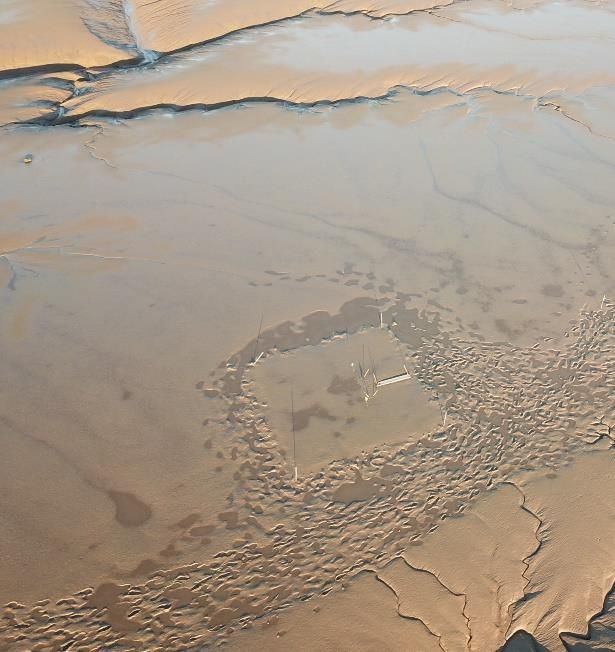
The following faculty members are taking honours
students in 2020-21

 Biology Faculty   Associate Members
 Dr. Campbell      Dr. MacCormack (Chem/Biochem)
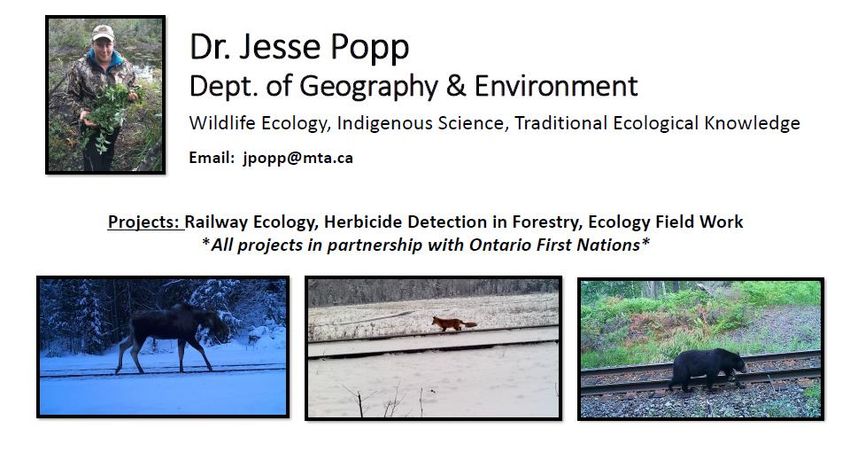
 Dr. Crosby        Dr. Popp (Geog & Env)
 Dr. Hamilton      Dr. Waller (Chem/Biochem)
 Dr. Kaczmarska
 Dr. Liefer
 Dr. Litvak
 Dr. Lloyd
 Dr. Morash

ISRG – Independent Student Research Grant
Applications due ~ 31 January 2020
Brief summaries of faculty
    research interests: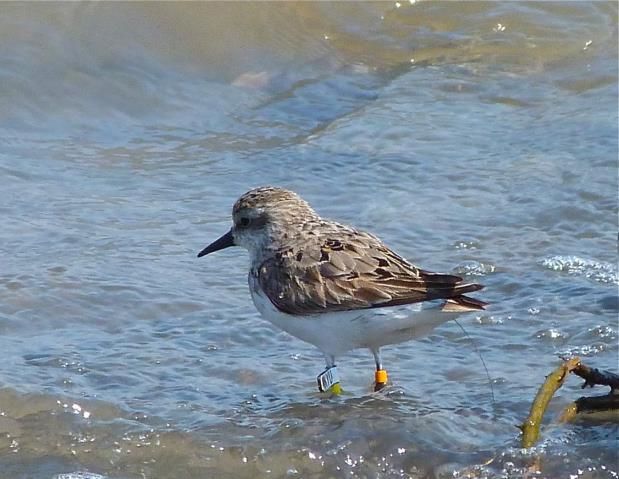
107 Gairdner                           Remote Sensing of
dcampbell@mta.ca                       Mudflat Productivity

2-4 honours possibilities 2020/2021
Many research visitors & exchanges

Students gain transferable skills in
-Quantitative thinking
-Data management & Analyses (R)
-Project management
-Writing                               Reactive Oxygen Stress

Students usually publish

Recent students have progressed to:
-graduate school
-MBA
-Public Health
-instrumentation companies             Photoperiods in the Arctic Ocean
-health professions                    Oceanic Low Oxygen Zones
-environmental policy...               Coastal Eutrophication
                                       (mberthold@mta.ca)
Grit valued over Grades

nomar@mta.ca
mktanton@mta.ca
aamaccormack@mta.ca
Dr. Karen Crosby

Neural Regulation of
  Appetite in Rats
                            Dorsomedial
                           nucleus of the
                           hypothalamus
                        Paxinos & Watson (2009)
Possible Research Questions
• How does stress affect synaptic function in the
dorsomedial hypothalamus?
• Patch clamp electrophysiology using live rat brain
slices
• How does the satiety hormone cholecystokinin
suppress appetite?
• Recovery surgery in rats, injections of drugs into the
brainHonours Students
• I plan to take on 2-3 Honours students
• Highly motivated, hard-working, collaborative
• Funding opportunities:
• New Brunswick Health Research Foundation Summer
Studentship
• Independent Student Research GrantResearch in the ACE (Aquatic Chemical Ecology) Lab
• The biochemistry and physiology of aquatic microbes
• The effect of microbial communities on aquatic consumers and global
processes
• Microbial biotechnology to clean polluted waters and produce
sustainable products
Cellular processes
in microbes
Global
Aquatic Ecology BiogeochemistryHonours opportunities in the ACE Lab
DNA
Project 1: Phosphorus dynamics in marine Nuc
le us
phytoplankton RNA
Phospholipids
• Using new methods to study polyphosphate, a globally Dia
tom Surface P
important and poorly understood molecule cel
l Polyphosphate
• Exploring how a variety of phytoplankton species use
phosphorus, the ocean’s ultimate limiting nutrient
• New biotechnology for wastewater remediation
Project 2: Community ecology of mudflat microbial
food sources (w/ Dr. Hamilton &Dr. Campbell)
• Using chemotaxonomy to examine intertidal mudflat
biofilms that support migratory birds
• Field sampling and manipulative experiments in Fundy
mud!Honours opportunities in the ACE Lab
Project 3: Origins of harmful algal blooms in New
Brunswick lakes (w/ Dr. Kurek)
• Paleoecology of NB lakes to understand why toxic
blooms are increasing
• Field work in remote NB lakes to sample
phytoplankton, zooplankton, and water quality and to
develop new monitoring tools
Project 4: Ecosystem impacts of glyphosate
herbicides (w/ Dr. Jesse Popp)
• Exploring impacts of glyphosate spraying after logging
on terrestrial and aquatic communities
• Collaborating with indigenous communities in Ontario
and applying traditional knowledge to field studies
• Rugged fieldwork in Ontario forests1. Cryobiology of sturgeon germplasm
8. Sexual dimorphism
in sturgeons
Litvak Lab 2. Xenotransplantation.
3. Development of sperm and eggs in
surrogates.
4. Opens up ability to do more work on
7. Spatial ecology of sperm/egg interactions, sperm-to-
juvenile and Atlantic egg ratios, tests of sperm quality and
sturgeon modeling
5. Effect of yolk and lipid
quality on visual
development, larval
6. Stable isotopes—ecology growth and survival--
and as a forensic tool to Zebrafish
catch poachers and stop
illegal trade in caviarComparative Physiology
Evolution of hypoxia/thermal tolerance
Mitochondrial physiology
Cardiac vs. skeletal muscle physiology
Dr. Andrea Morash
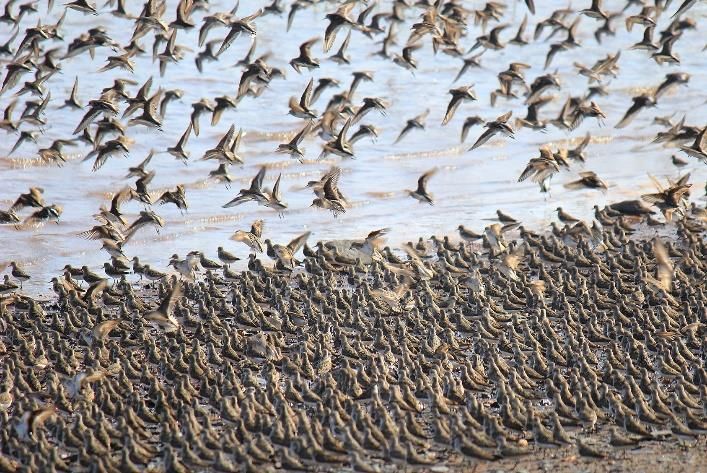
amorash@mta.caShorebird and coastal
ecology
Dr. Diana Hamilton
(dhamilto@mta.ca)Possible projects
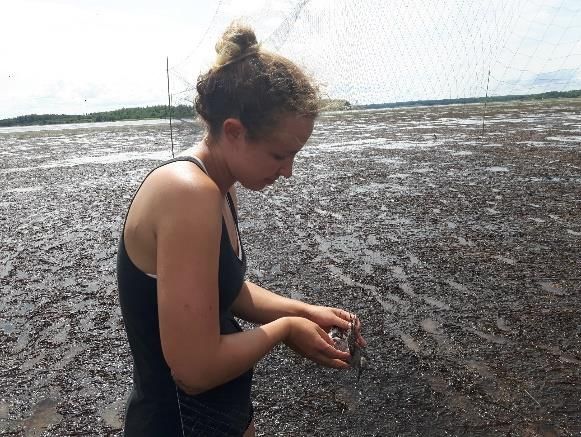
• Shorebird movement, duration of stay and habitat use in
coastal NB
• Capture, tag, radiotrack a variety of species, behaviour and diet work
• Primary productivity on mudflats
• Quantify primary production and standing crop of diatoms, examine
aspects of ecology of biofilms (in conjunction with Drs. Campbell and
Liefer)
• Intertidal community ecology
• Examine top down and bottom up factors, including primary
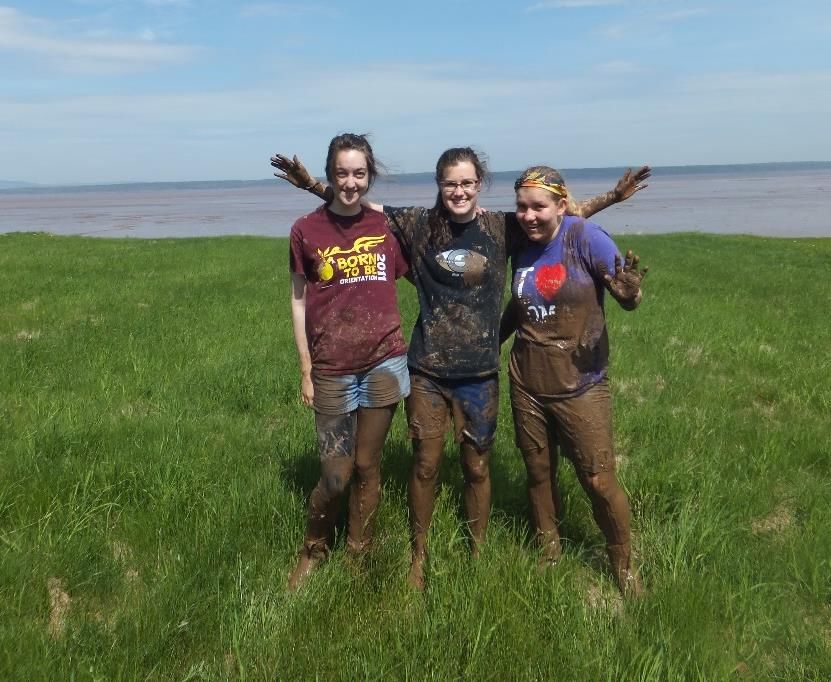
production, influencing intertidal systems.Helpful traits in honours students in my lab • Interest in field ecology, lab analytical techniques, quantitative analyses, and publishing results. • Comfort with strange hours, hard work, unpredictability. • Happy working in groups. • Good birding skills or interest in learning, fondness for mud and things that live in it. If interested in working in my lab, please contact me. I will put you in touch with current and former lab members.
T101T112
                            O+F+O+F+
                  100bp
                  ladder
Vett Lloyd
Tick-vectored diseases/Lyme disease
Zoonoses
Molecular genetics
Potential honours projects: - 2 honours positions - Summer funding likely available but either May or Sept. start is acceptable - Projects all involve and molecular genetics (PCR and friends). Some interaction with Lyme patients and/or the public may be required for some projects - Independent studies students are also welcome
Projects What pathogens are in our ticks? Molecular testing of tick bank specimens to find pathogens Molecular ecology – molecular diet analysis of coyote, fox scat and cat (who’s lunch project) Profiling of oncogenes in human and canine tissues Colorectal cancer – molecular histology (requires summer internship in the Upper River Valley Hospital in Woodstock. Suitable for someone serious about a medical career). Molecular histology and sequence analysis of human tissue
MacCormack Lab – Barclay 101
tmaccormack@mta.ca, maccormacklab.com

• Fish (mostly) physiology and
  metabolism
    • Natural environmental stressors:
      oxygen, temperature, pH
    • Anthropogenic stressors:
      contaminants (nanoparticles)

• Whole animals, isolated organs,
  isolated cells, and protein level
  studies
MacCormack Lab – Barclay 101
tmaccormack@mta.ca, maccormacklab.com
• Fall 2020 projects:
• Role of taurine in supporting cardiac function
• Accelerated growth in salmon reared under hyperoxia (with Morash)
• Cardiotoxicity of nanoparticles
• Students Publish!
• Williams KJ, Cassidy AA, Verhille CE, Lamarre SG, MacCormack TJ. 2019. Diel cycling hypoxia enhances
hypoxia-tolerance in rainbow trout (Oncorhynchus mykiss): Evidence of physiological and metabolic
plasticity. J Exp Biol 222: jeb 206045.
• Campbell LA, Gormley PT, Bennett JC, Murimboh JD, MacCormack TJ. 2019. Functionalized silver
nanoparticles depress aerobic metabolism in the absence of overt toxicity in brackish water killifish,
Fundulus heteroclitus. Aquat Toxicol 213: 105221.
• Callaghan NI, Williams KJ, Bennett JC, MacCormack TJ. 2018. Nanoparticulate-specific effects of silver on
teleost cardiac contractility. Environ Pollut 237: 721-730.
• Henry EF, MacCormack TJ. 2018. Taurine protects cardiac contractility in Fundulus heteroclitus by
enhancing sarcoplasmic reticular Ca2+ cycling. J Comp Physiol B 188, 89-99.You can also read


