Development of a CubeSat Platform for Biomedical and Pharmaceutical LEO Experiments - Daniel Robson
←
→
Page content transcription
If your browser does not render page correctly, please read the page content below

Development of a
CubeSat Platform for
  Biomedical and
  Pharmaceutical
 LEO Experiments
         Daniel Robson
 Chantal Cappelletti, Joel Segal,
Phil Williams, Nathaniel Szewczyk
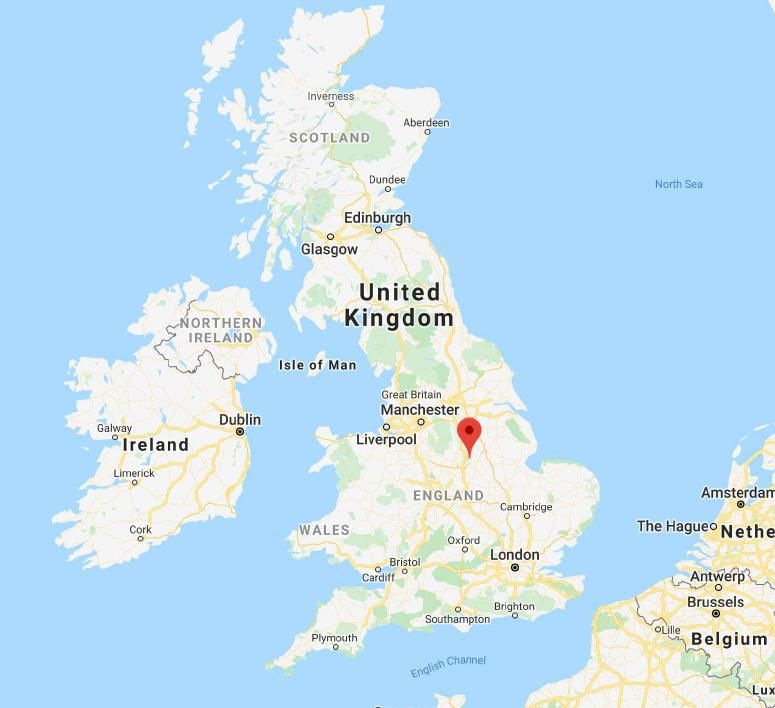
The University of Nottingham

University of Nottingham Space Group

                        Engineering

     …                                    Medicine

                        UoN
                       Space
                       Group

Pharmacy                                   Geography
                        Nottingham
                        Geospatial
                         Institute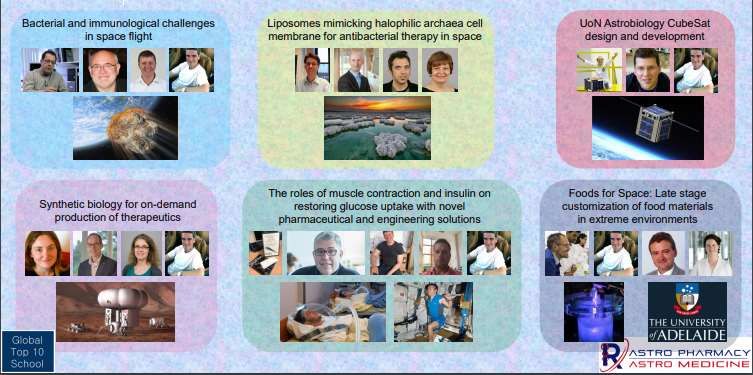
EPSRC Funded Astropharmacy & Astromedicine
Biomedical Applications for Life On & Off Earth
Life (As We Know It) in Space

                                                       1y 72d
                                                       Polyakov

 https://ntrs.nasa.gov/archive/nasa/casi.ntrs.nasa.gov/20190001597.pdf A. Martinez, 2014
Current Life Sciences Research in Space

                     EcAMSat
                    (6U) being
Bion- M1             deployed
                     from ISS

                                 Life in                ISS
                                 Space
                                                Shenzhou 11 on Tiangong 2

               Cotton Plants
               on Chang’e 4
Future Human Life in Space: Expansion and Extension

Expansion of LEO                      Extension of
activities                            Exploration beyond LEO
ISS continuation but transition to    Lunar Gateway
private/commercial activities

Additional "professional" human        New Spacecraft – Orion, “Starship”
platforms – e.g. Chinese Space Station

New Spacecraft – Starliner, Dragon,   Lunar Surface Outposts
Russian Orel, “tourist vehicles”
Private spaceflight and tourism –     Mars?
including unfamiliar, unique
astronaut health profiles

                                      NEO????
How are we going
           to prepare for this?
CubeSats for Biological Research
Life Science Research on the ISS

                            Pros
                            Long-term studies possible
                            Access to "large" amounts of power and
                            storage space
                            Potential for human operation
                            Potential for small animal (rodent/frog)
                            studies
                            Cons
                            Very competitive slots
                            Expensive + lengthy qualifications campaign
                            Human involvement is complicated to plan
                            and costly – if it goes right!
                            May not be environmentally suitable for
                            certain experiments – noise/vibrations
                            leading to “less-than-true” microgravity
Biomedical CubeSats
Pros
Reduced costs allows less wealthy biology
labs to specify/develop their own missions
Greater control over the environmental
conditions – orbit, radiation, launch time
Short development cycle enables many
missions/experiments from same field
Cons
Limited downlink rates
Credit: Upward Magazine/ISS National Lab Return of payloads difficult-impossible
Ethics of launching larger
organisms/animals
Launch delays post-integrationNASA Ames’ Bio-Cubesats (+SpacePharma DIDO 2)
O/OREOS (2010),
GeneSat (2006),
PharmaSat (2009), 3U / 2 bacteriae + other
3U / E. coli/ Cell
3U / “Brewer’s Yeast” / biomolecules / different
growth & Gene
anti-fungal agent radiation exposures /
Expression measured
efficacy / optical optical density +
by light scattering and
density fluorescence
fluorescence
spectroscopy
BioSentinel (2021)
SporeSat (2014),
6U / Artemis-I / EcAMSat (2017),
3U / Fern Spores / Lab-
“Brewer’s Yeast” / deep- 6U / E. coli / anti-biotic
on-Chip measured ion
space radiation effects / efficacy / optical density
concentrations
optical densityOther Bio-CubeSats (In-Development) • AstroBio CubeSat • Cranfield/Exeter - BAMMsat • KTH Sweden – MIST • DIDO 3 • GravSat • Others?...
Our Platform
     University of Nottingham
CubeSats for Biological Research
UoN Bio-CubeSat Platform Objectives
1.1. To prove the University of Nottingham can develop
a platform, capable of supporting biomedical payloads
2.2. To demonstrate the platform is ready to support
other biomedical payloads from the University and
beyond
3.3. To promote education and cooperation between
faculties and staff/students involved in the projectUniversity of Nottingham Bio-CubeSat
• 3U form factor
• ~2U of Payload enclosed in a
pressurised, thermally controlled
environment (flight heritage in
NASA’s PharmaSat, GeneSat…)
• Short optical-depth, optical
microscope, radiation measurements
from scintillator instrument
GeneSat –
NASA, 2006 • Photos (or videos) taken regularly
throughout flight to prove Payload
Culture’s survival
• Photos transmitted along with
flight housekeeping and
environmental sensors’ data“Model” Astronauts
• Caenorhabitditis elegans
• Model organism used extensively in
ground and space research – ageing,
genetics, muscle physiology...
• Adults are ~1mm in size
• Very resilient: typically lab grown at
15 – 25°C
• Rapid life cycle: egg-> egg-laying
adult in 2-4 days, death ~10-20 days)
• Dauer stage enables survival for 6-
months"Model" Astronauts
University of Nottingham Bio-CubeSat

                     • How to keep colony alive while on the
                       launchpad?
                     • C. elegans integrated before launch in
                       “Dauer” state – deprived of food +
                       temperature dependent
                     • Once orbital communications
                       established with CubeSat, food solution
                       released to culture using micro-fluidics
                     • Colony grows as normal and monitored
                       with microscope

                     • …Results compared to lab control
                       cultures
                     • Comparative Measurements can be
                       made of population growth and/or
                       movement speed
Conclusions • There is a human need for cheaper access to space as a biology laboratory. Both for space exploration and improving the quality of life on Earth. • CubeSats are likely (and already are) to be utilised to fulfil the role of a platform to support this. • C. elegans are to be launched as they are: a model organism, robust and can be “persevered” before launch.
Thanks very much for your time!
Daniel Robson
Daniel.Robson@Nottingham.ac.uk
You can also read


